Comsol -leaderboard other pages

Topics

Sensing at quantum limits

Atomic energy levels. Spin orientations in a magnetic field. Resonant modes in cryogenic, high-quality-factor radio-frequency cavities. The transition from superconducting to normal conducting, triggered by the absorption of a single infrared photon. These are all simple yet exquisitely sensitive quantum systems with discrete energy levels. Each can serve as the foundation for a quantum sensor – instruments that detect single photons, measure individual spins or record otherwise imperceptible energy shifts.

Over the past two decades, quantum sensors have taken on leading roles in the search for ultra-light dark matter and in precision tests of fundamental symmetries. Examples include the use of atomic clocks to probe whether Earth is sweeping through oscillating or topologically structured dark-matter fields, and cryogenic detectors to search for electric dipole moments – subtle signatures that could reveal new sources of CP violation. These areas have seen rapid progress, as challenges related to detector size, noise, sensitivity and complexity have been steadily overcome, opening new phase space in which to search for physics beyond the Standard Model. Could high-energy particle physics benefit next?

Low-energy particle physics

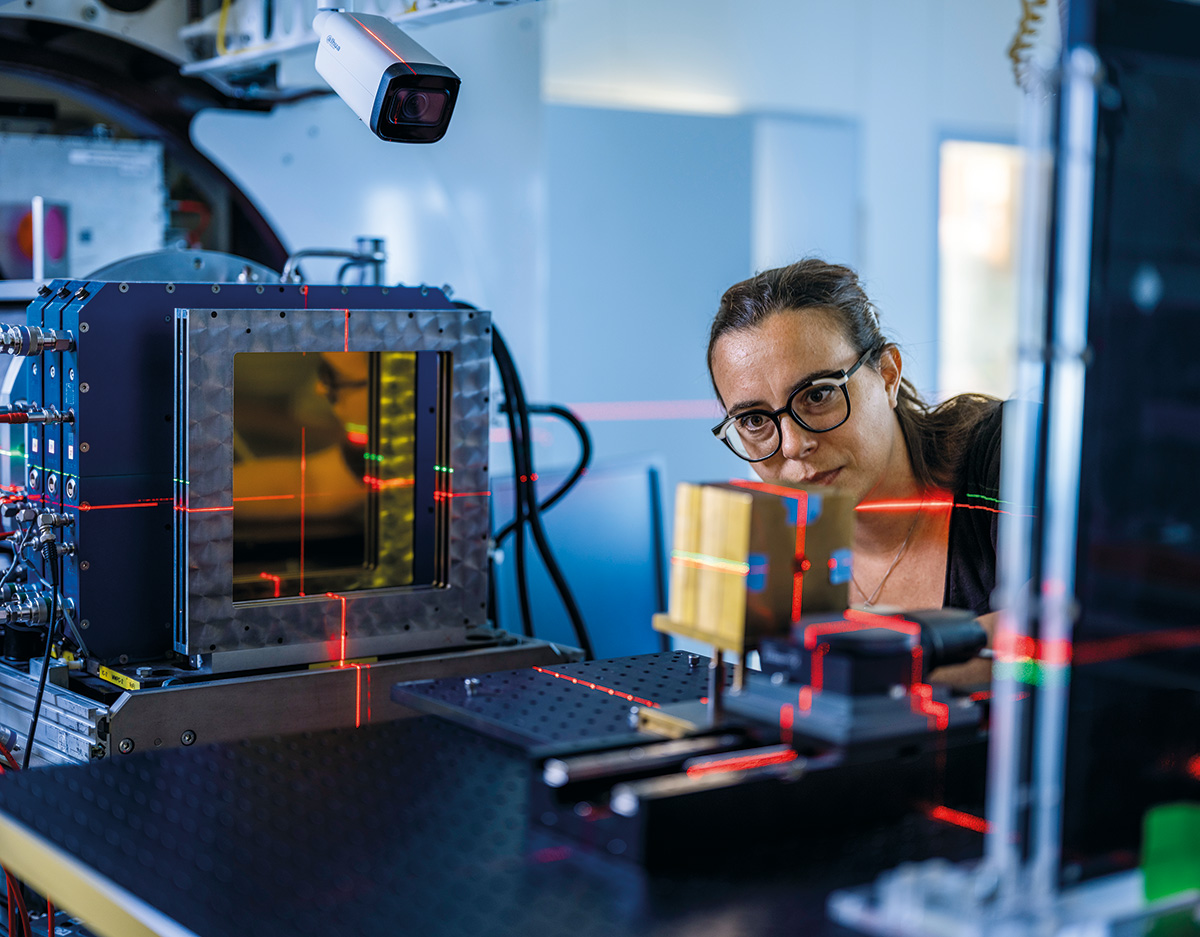
Most of the current applications of quantum sensors are at low energies, where their intrinsic sensitivity and characteristic energy scales align naturally with the phenomena being probed. For example, within the Project 8 experiment at the University of Washington, superconducting sensors are being developed to tackle a longstanding challenge: to distinguish the tiny mass of the neutrino from zero (see “Quantum-noise limited” image). Inward-looking phased arrays of quantum-noise-limited microwave receivers allow spectroscopy of cyclotron radiation from beta-decay electrons as they spiral in a magnetic field. The shape of the endpoint of the spectrum is sensitive to the mass of the neutrino and such sensors have the potential to be sensitive to neutrino masses as low as 40 meV.

Quantum-noise limited

Beyond the Standard Model, superconducting sensors play a central role in the search for dark matter. At the lowest mass scales (peV to meV), experiments search for ultralight bosonic dark-matter candidates such as axions and axion-like particles (ALPs) through excitations of the vacuum field inside high–quality–factor microwave and millimetre-wave cavities (see “Quantum sensitivity” image). In the meV range, light-shining-through-wall experiments aim to reveal brief oscillations into weakly coupled hidden-sector particles such as dark photons or ALPs, and may employ quantum sensors for detecting reappearing photons, depending on the detection strategy. In the MeV to sub-GeV mass range, superconducting sensors are used to detect individual photons and phonons in cryogenic scintillators, enabling sensitivity to dark-matter interactions via electron recoils. At higher masses, reaching into the GeV regime, superfluid helium detectors target nuclear recoils from heavier dark matter particles such as WIMPs.

These technologies also find broad application beyond fundamental physics. For example, in superconducting and other cryogenic sensors, the ability to detect single quanta with high efficiency and ultra-low noise is essential. The same capabilities are the technological foundation of quantum communication.

Raising the temperature

While many superconducting quantum sensors require ultra-low temperatures of a few mK, some spin-based quantum sensors can function at or near room temperature. Spin-based sensors, such as nitrogen-vacancy (NV) centres in diamonds and polarised rubidium atoms, are excellent examples.

NV centres are defects in the diamond lattice where a missing carbon atom – the vacancy – is adjacent to a lattice site where a carbon atom has been replaced by a nitrogen atom. The electronic spin states in NV centres have unique energy levels that can be probed by laser excitation and detection of spin-dependent fluorescence.

Researchers are increasingly exploring how quantum-control techniques can be integrated into high-energy-physics detectors

Rubidium is promising for spin-based sensors because it has unpaired electrons. In the presence of an external magnetic field, its atomic energy levels are split by the Zeeman effect. When optically pumped with laser light, spin-polarised “dark” sublevels – those not excited by the light – become increasingly populated. These aligned spins precess in magnetic fields, forming the basis of atomic magnetometers and other quantum sensors.

Being exquisite magnetometers, both devices make promising detectors for ultralight bosonic dark-matter candidates such as axions. Fermion spins may interact with spatial or temporal gradients of the axion field, leading to tiny oscillating energy shifts. The coupling of axions to gluons could also show up as an oscillating nuclear electric dipole moment. These interactions could manifest as oscillating energy-level shifts in NV centres, or as time-varying NMR-like spin precession signals in the atomic magnetometers.

Large-scale detectors

The situation is completely different in high-energy physics detectors, which require numerous interactions between a particle and a detector. Charged particles cause many ionisation events, and when a neutral particle interacts it produces charged particles that result in similarly numerous ionisations. Even if quantum control were possible within individual units of a massive detector, the number of individual quantum sub-processes to be monitored would exceed the possibilities of any realistic device.

Increasingly, however, researchers are exploring how quantum-control techniques – such as manipulating individual atoms or spins using lasers or microwaves – can be integrated into high-energy-physics detectors. These methods could enhance detector sensitivity, tune detector response or enable entirely new ways of measuring particle properties. While these quantum-enhanced or hybrid detection approaches are still in their early stages, they hold significant promise.

Quantum dots

Quantum dots are nanoscale semiconductor crystals – typically a few nanometres in diameter – that confine charge carriers (electrons and holes) in all three spatial dimensions. This quantum confinement leads to discrete, atom-like energy levels and results in optical and electronic properties that are highly tunable with size, shape and composition. Originally studied for their potential in optoelectronics and biomedical imaging, quantum dots have more recently attracted interest in high-energy physics due to their fast scintillation response, narrow-band emission and tunability. Their emission wavelength can be precisely controlled through nanostructuring, making them promising candidates for engineered detectors with tailored response characteristics.

Chromatic calorimetry

While their radiation hardness is still under debate and needs to be resolved, engineering their composition, geometry, surface and size can yield very narrow-band (20 nm) emitters across the optical spectrum and into the infrared. Quantum dots such as these could enable the design of a “chromatic calorimeter”: a stack of quantum-dot layers, each tuned to emit at a distinct wavelength; for example red in the first layer, orange in the second and progressing through the visible spectrum to violet. Each layer would absorb higher energy photons quite broadly but emit light in a narrow spectral band. The intensity of each colour would then correspond to the energy absorbed in that layer, while the emission wavelength would encode the position of energy deposition, revealing the shower shape (see “Chromatic calorimetry” figure). Because each layer is optically distinct, hermetic isolation would be unnecessary, reducing the overall material budget.

Rather than improving the energy resolution of existing calorimeters, quantum dots could provide additional information on the shape and development of particle showers if embedded in existing scintillators. Initial simulations and beam tests by CERN’s Quantum Technology Initiative (QTI) support the hypothesis that the spectral intensity of quantum-dot emission can carry information about the energy and species of incident particles. Ongoing work aims to explore their capabilities and limitations.

Beyond calorimetry, quantum dots could be formed within solid semiconductor matrices, such as gallium arsenide, to form a novel class of “photonic trackers”. Scintillation light from electronically tunable quantum dots could be collected by photodetectors integrated directly on top of the same thin semiconductor structure, such as in the DoTPiX concept. Thanks to a highly compact, radiation-tolerant scintillating pixel tracking system with intrinsic signal amplification and minimal material budget, photonic trackers could provide a scintillation-light-based alternative to traditional charge-based particle trackers.

Living on the edge

Low temperatures also offer opportunities at scale – and cryogenic operation is a well-established technique in both high-energy and astroparticle physics, with liquid argon (boiling point 87 K) widely used in time projection chambers and some calorimeters, and some dark-matter experiments using liquid helium (boiling point 4.2 K) to reach even lower temperatures. A range of solid-state detectors, including superconducting sensors, operate effectively at these temperatures and below, and offer significant advantages in sensitivity and energy resolution.

Single-photon phase transitions

Magnetic microcalorimeters (MMCs) and transition-edge sensors (TESs) operate in the narrow temperature range where a superconducting material undergoes a rapid transition from zero resistance to finite values. When a particle deposits energy in an MMC or TES, it slightly raises the temperature, causing a measurable increase in resistance. Because the transition is extremely steep, even a tiny temperature change leads to a detectable resistance change, allowing precise calorimetry.

Functioning at millikelvin temperatures, TESs provide much higher energy resolution than solid-state detectors made from high-purity germanium crystals, which work by collecting electron–hole pairs created when ionising radiation interacts with the crystal lattice. TESs are increasingly used in high-resolution X-ray spectroscopy of pionic, muonic or antiprotonic atoms, and in photon detection for observational astronomy, despite the technical challenges associated with maintaining ultra-low operating temperatures.

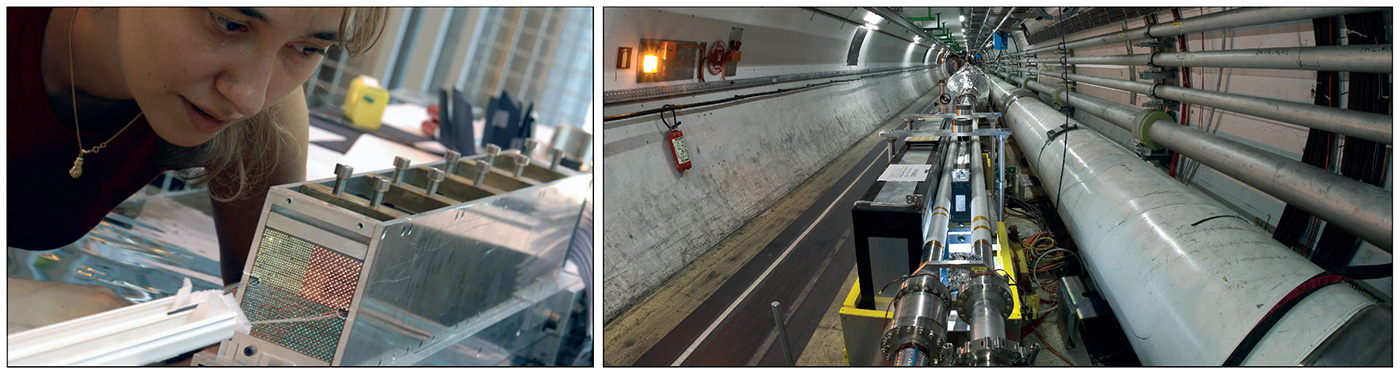
By contrast, superconducting nanowire and microwire single-photon detectors (SNSPDs and SMSPDs) register only a change in state – from superconducting to normal conducting – allowing them to operate at higher temperatures than traditional low-temperature sensors. When made from high–critical-temperature (Tc) superconductors, operation at temperatures as high as 10 K is feasible, while maintaining excellent sensitivity to energy deposited by charged particles and ultrafast switching times on the order of a few picoseconds. Recent advances include the development of large-area devices with up to 400,000 micron-scale pixels (see “Single-photon phase transitions” figure), fabrication of high-Tc SNSPDs and successful beam tests of SMSPDs. These technologies are promising candidates for detecting milli-charged particles – hypothetical particles arising in “hidden sector” extensions of the Standard Model – or for high-rate beam monitoring at future colliders.

Rugged, reliable and reproducible

Quantum sensor-based experiments have vastly expanded the phase space that has been searched for new physics. This is just the beginning of the journey, as larger-scale efforts build on the initial gold rush and new quantum devices are developed, perfected and brought to bear on the many open questions of particle physics.

Partnering with neighbouring fields such as quantum computing, quantum communication and manufacturing is of paramount importance

To fully profit from their potential, a vigorous R&D programme is needed to scale up quantum sensors for future detectors. Ruggedness, reliability and reproducibility are key – as well as establishing “proof of principle” for the numerous imaginative concepts that have already been conceived. Challenges range from access to test infrastructures, to standardised test protocols for fair comparisons. In many cases, the largest challenge is to foster an open exchange of ideas given the numerous local developments that are happening worldwide. Finding a common language to discuss developments in different fields that at first glance may have little in common, builds on a willingness to listen, learn and exchange.

The European Committee for Future Accelerators (ECFA) detector R&D roadmap provides a welcome framework for addressing these challenges collaboratively through the Detector R&D (DRD) collaborations established in 2023 and now coordinated at CERN. Quantum sensors and emerging technologies are covered within the DRD5 collaboration, which ties together 112 institutes worldwide, many of them leaders in their particular field. Only a third stem from the traditional high-energy physics community.

These efforts build on the widespread expertise and enthusiastic efforts at numerous institutes and tie in with the quantum programmes being spearheaded at high-energy-physics research centres, among them CERN’s QTI. Partnering with neighbouring fields such as quantum computing, quantum communication and manufacturing is of paramount importance. The best approach may prove to be “targeted blue-sky research”: a willingness to explore completely novel concepts while keeping their ultimate usefulness for particle physics firmly in mind.

A new probe of radial flow

Radial-flow fluctuations

The ATLAS and ALICE collaborations have announced the first results of a new way to measure the “radial flow” of quark–gluon plasma (QGP). The two analyses offer a fresh perspective into the fluid-like behaviour of QCD matter under extreme conditions, such as those that prevailed after the Big Bang. The measurements are highly complementary, with ALICE drawing on their detector’s particle-identification capabilities and ATLAS leveraging the experiment’s large rapidity coverage.

At the Large Hadron Collider, lead–ion collisions produce matter at temperatures and densities so high that quarks and gluons momentarily escape their confinement within hadrons. The resulting QGP is believed to have filled the universe during its first few microseconds, before cooling and fragmenting into mesons and baryons. In the laboratory, these streams of particles allow researchers to reconstruct the dynamical evolution of the QGP, which has long been known to transform anisotropies of the initial collision geometry into anisotropic momentum distributions of the final-state particles.

Compelling evidence

Differential measurements of the azimuthal distributions of produced particles over the last decades have provided compelling evidence that the outgoing momentum distribution reflects a collective response driven by initial pressure gradients. The isotropic expansion component, typically referred to as radial flow, has instead been inferred from the slope of particle spectra (see figure 1). Despite its fundamental role in driving the QGP fireball, radial flow lacked a differential probe comparable to those of its anisotropic counterparts.

ATLAS measurements of radial flow

That situation has now changed. The ALICE and ATLAS collaborations recently employed the novel observable v0(pT) to investigate radial flow directly. Their independent results demonstrate, for the first time, that the isotropic expansion of the QGP in heavy-ion collisions exhibits clear signatures of collective behaviour. The isotropic expansion of the QGP and its azimuthal modulations ultimately depend on the hydrodynamic properties of the QGP, such as shear or bulk viscosity, and can thus be measured to constrain them.

Traditionally, radial flow has been inferred from the slope of pT-spectra, with the pT-integrated radial-flow extracted via fits to “blast wave” models. The newly introduced differential observable v0(pT) captures fluctuations in spectral shape across pT bins. v0(pT) retains differential sensitivity, since it is defined as the correlation (technically the normalised covariance) between the fraction of particles in a given pT-interval and the mean transverse momentum of the collision products within a single event, [pT]. Roughly speaking, a fluctuation raising [pT] produces a positive v0(pT) at high pT due to the fractional yield increasing; conversely, the fractional yield decreasing at low pT causes a negative v0(pT). A pseudorapidity gap between the measurement of mean pT and the particle yields is used to suppress short-range correlations and isolate the long-range, collective signal. Previous studies observed event-by-event fluctuations in [pT], related to radial flow over a wide pT range and quantified by the coefficient v0ref, but they could not establish whether these fluctuations were correlated across different pT intervals – a crucial signature of collective behaviour.

Origins

The ATLAS collaboration performed a measurement of v0(pT) in the 0.5 to 10 GeV range, identifying three signatures of the collective origin of radial flow (see figure 2). First, correlations between the particle yield at fixed pT and the event-wise mean [pT] in a reference interval show that the two-particle radial flow factorises into single-particle coefficients as v0(pT) × v0ref for pT < 4 GeV, independent of the reference choice (left panel). Second, the data display no dependence on the rapidity gap between correlated particles, suggesting a long-range effect intrinsic to the entire system (middle panel). Finally, the centrality dependence of the ratio v0(pT)/v0ref followed a consistent trend from head-on to peripheral collisions, effectively cancelling initial geometry effects and supporting the interpretation of a collective QGP response (right panel). At higher pT, a decrease in v0(pT) and a splitting with respect to centrality suggest the onset of non-thermal effects such as jet quenching. This may reveal fluctuations in jet energy loss – an area warranting further investigation.

ALICE measurements of radial flow

Using more than 80 million collisions at a centre-of-mass energy of 5.02 TeV, ALICE extracted v0(pT) for identified pions, kaons and protons across a broad range of centralities. ALICE observes v0(pT) to be negative at low pT, reflecting the influence of mean-pT fluctuations on the spectral shape (see figure 3). The data display a clear mass ordering at low pT, from protons to kaons to pions, consistent with expectations from collective radial expansion. This mass ordering reflects the greater “push” heavier particles experience in the rapidly expanding medium. The picture changes above 3 GeV, where protons have larger v0(pT) values than pions and kaons, perhaps indicating the contribution of recombination processes in hadron production.

The results demonstrate that the isotropic expansion of the QGP in heavy-ion collisions exhibits clear signatures of collective behaviour

The two collaborations’ measurements of the new v0(pT) observable highlight its sensitivity to the bulk-transport properties of the QGP medium. Comparisons with hydrodynamic calculations show that v0(pT) varies with bulk viscosity and the speed of sound, but that it has a weaker dependence on shear viscosity. Hydrodynamic predictions reproduce the data well up to about 2 GeV, but diverge at higher momenta. The deviation of non-collective models like HIJING from the data underscores the dominance of final-state, hydrodynamic-like effects in shaping radial flow.

These results advance our understanding of one of the most extreme regimes of QCD matter, strengthening the case for the formation of a strongly interacting, radially expanding QGP medium in heavy-ion collisions. Differential measurements of radial flow offer a new tool to probe this fluid-like expansion in detail, establishing its collective origin and complementing decades of studies of anisotropic flow.

Neutron stars as fundamental physics labs

Neutron stars are truly remarkable systems. They pack between one and two times the mass of the Sun into a radius of about 10 kilometres. Teetering on the edge of gravitational collapse into a black hole, they exhibit some of the strongest gravitational forces in the universe. They feature extreme densities in excess of atomic nuclei. And due to their high densities they produce weakly interacting particles such as neutrinos. Fifty experts on nuclear physics, particle physics and astrophysics met at CERN from 9 to 13 June to discuss how to use these extreme environments as precise laboratories for fundamental physics.

Perhaps the most intriguing open question surrounding neutron stars is what is actually inside them. Clearly they are primarily composed of neutrons, but many theories suggest that other forms of matter should appear in the highest density regions near the centre of the star, including free quarks, hyperons and kaon or pion condensates. Diverse data can constrain these hypotheses, including astronomical inferences of the masses and radii of neutron stars, observations of the mergers of neutron stars by LIGO, and baryon production patterns and correlations in heavy-ion collisions at the LHC. Theoretical consistency is critical here. Several talks highlighted the importance of low-energy nuclear data to understand the behaviour of nuclear matter at low densities, though also emphasising that at very high densities and energies any description should fall within the realm of QCD – a theory that beautifully describes the dynamics of quarks and gluons at the LHC.

Another key question for neutron stars is how fast they cool. This depends critically on their composition. Quarks, hyperons, nuclear resonances, pions or muons would each lead to different channels to cool the neutron star. Measurements of the temperatures and ages of neutron stars might thereby be used to learn about their composition.

Research into neutron stars has progressed so rapidly in recent years that it allows key tests of fundamental physics

The workshop revealed that research into neutron stars has progressed so rapidly in recent years that it allows key tests of fundamental physics including tests of particles beyond the Standard Model, including the axion: a very light and weakly coupled dark-matter candidate that was initially postulated to explain the “strong CP problem” of why strong interactions are identical for particles and antiparticles. The workshop allowed particle theorists to appreciate the various possible uncertainties in their theoretical predictions and propagate them into new channels that may allow sharper tests of axions and other weakly interacting particles. An intriguing question that the workshop left open is whether the canonical QCD axion could condense inside neutron stars.

While many uncertainties remain, the workshop revealed that the field is open and exciting, and that upcoming observations of neutron stars, including neutron-star mergers or the next galactic supernova, hold unique opportunities to understand fundamental questions from the nature of dark matter to the strong CP problem.

The battle of the Big Bang

As Arthur Koestler wrote in his seminal 1959 work The Sleepwalkers, “The history of cosmic theories … may without exaggeration be called a history of collective obsessions and controlled schizophrenias; and the manner in which some of the most important individual discoveries were arrived at, reminds one more of a sleepwalker’s performance than an electronic’s brain.” Koestler’s trenchant observation about the state of cosmology in the first half of the 20th century is perhaps even more true of cosmology in the first half of the 21st, and Battle of the Big Bang: The New Tales of Our Cosmic Origins provides an entertaining – and often refreshingly irreverent – update on the state of current collective obsessions and controlled schizophrenias in cosmology’s effort to understand the origin of the universe. The product of a collaboration between a working cosmologist (Afshordi) and a science communicator (Halper), Battle of the Big Bang tells the story of our modern efforts to comprehend the nature of the first moments of time, back to the moment of the Big Bang and even before.

Rogues gallery

The story told by the book combines lucid explanations of a rogues’ gallery of modern cosmological theories, some astonishingly successful, others less so, interspersed with anecdotes culled from Halper’s numerous interviews with key players in the game. These stories of the real people behind the theories add humanistic depth to the science, and the balance between Halper’s engaging storytelling and Afshordi’s steady-handed illumination of often esoteric scientific ideas is mostly a winning combination; the book is readable, without sacrificing too much scientific depth. In this respect, Battle of the Big Bang is reminiscent of Dennis Overbye’s 1991 Lonely Hearts of the Cosmos. As with Overbye’s account of the famous conference-banquet fist fight between Rocky Kolb and Gary Steigman, there is no shortage here of renowned scientists behaving like children, and the “mean girls of cosmology” angle makes for an entertaining read. The story of University of North Carolina professor Paul Frampton getting catfished by cocaine smugglers posing as model Denise Milani and ending up in an Argentine prison, for example, is not one you see coming.

Battle of the Big Bang: The New Tales of Our Cosmic Origins

A central conflict propelling the narrative is the longstanding feud between Andrei Linde and Alan Guth, both originators of the theory of cosmological inflation, and Paul Steinhardt, also an originator of the theory who later transformed into an apostate and bitter critic of the theory he helped establish.

Inflation – a hypothesised period of exponential cosmic expansion by more than 26 orders of magnitude that set the initial conditions for the hot Big Bang – is the gorilla in the room, a hugely successful theory that over the past several decades has racked up win after win when confronted by modern precision cosmology. Inflation is rightly considered by most cosmologists to be a central part of the “standard” cosmology, and its status as a leading theory inevitably makes it a target of critics like Steinhardt, who argue that inflation’s inherent flexibility means that it is not a scientific theory at all. Inflation is introduced early in the book, and for the remainder, Afshordi and Halper ably lead the reader through a wild mosaic of alternative theories to inflation: multiverses, bouncing universes, new universes birthed from within black holes, extra dimensions, varying light speed and “mirror” universes with reversed time all make appearances, a dizzying inventory of our most recent collective obsessions and schizophrenias.

In the later chapters, Afshordi describes some of his own efforts to formulate an alternative to inflation, and it is here that the book is at its strongest; the voice of a master of the craft confronting his own unconscious assumptions and biases makes for compelling reading. I have known Niayesh as a friend and colleague for more than 20 years. He is a fearlessly creative theorist with deep technical skill, but he has the heart of a rebel and a poet, and I found myself wishing that the book gave his unique voice more room to shine, instead of burying it beneath too many mundane pop-science tropes; the book could have used more of the science and less of the “science communication”. At times the pop-culture references come so thick that the reader feels as if he is having to shake them off his leg.

Compelling arguments

Anyone who reads science blogs or follows science on social media is aware of the voices, some of them from within mainstream science and many from further out on the fringe, arguing that modern theoretical physics suffers from a rigid orthodoxy that serves to crowd out worthy alternative ideas to understand problems such as dark matter, dark energy and the unification of gravity with quantum mechanics. This has been the subject of several books such as Lee Smolin’s The Trouble with Physics and Peter Woit’s Not Even Wrong. A real value in Battle of the Big Bang is to provide a compelling counterargument to that pessimistic narrative. In reality, ambitious scientists like nothing better than overturning a standard paradigm, and theorists have put the standard model of cosmology in the cross hairs with the gusto of assassins gunning for John Wick. Despite – or perhaps because of – its focus on conflict, this book ultimately paints a picture of a vital and healthy scientific process, a kind of controlled chaos, ripe with wild ideas, full of the clash of egos and littered with the ashes of failed shots at glory.

What the book is not is a reliable scholarly work on the history of science. Not only was the manuscript rather haphazardly copy-edited (the renowned Mount Palomar telescope, for example, is not “two hundred foot”, but in fact 200 inches), but the historical details are sometimes smoothed over to fit a coherent narrative rather than presented in their actual messy accuracy. While I do not doubt the anecdote of David Spergel saying “we’re dead”, referring to cosmic strings when data from the COBE satellite was first released, it was not COBE that killed cosmic strings. The blurry vision of COBE could accommodate either strings or inflation as the source of fluctuations in the cosmic microwave background (CMB), and it took a clearer view to make the distinction. The final nail in the coffin came from BOOMERanG nearly a decade later, with the observation of the second acoustic peak in the CMB. And it was not, as claimed here, BOOMERanG that provided the first evidence for a flat geometry to the cosmos; that happened a few years earlier, with the Saskatoon and CAT experiments.

Afshordi and Halper ably lead the reader through a wild mosaic of alternative theories to inflation

The book makes a point of the premature death of Dave Wilkinson, when in fact he died at age 67, not (as is implied in the text) in his 50s. Wilkinson – who was my freshman physics professor – was a great scientist and a gifted teacher, and it is appropriate to memorialise him, but he had a long and productive career.

Besides these points of detail, there are some more significant omissions. The book relates the story of how the Ukrainian physicist Alex Vilenkin, blacklisted from physics and working as a zookeeper in Kharkiv, escaped the Soviet Union. Vilenkin moved to SUNY Buffalo, where I am currently a professor, because he had mistaken Mendel Sachs, a condensed matter theorist, for Ray Sachs, who originally predicted fluctuations in the CMB. It’s a funny story, and although the authors note that Vilenkin was blacklisted for refusing to be an informant for the KGB, they omit the central context that he was Jewish, one of many Jews banished from academic life by Soviet authorities who escaped the stifling anti-Semitism of the Soviet Union for scientific freedom in the West. This history resonates today in light of efforts by some scientists to boycott Israeli institutes and even blacklist Israeli colleagues. Unlike the minutiae of CMB physics, this matters, and Battle of the Big Bang should have been more careful to tell the whole story.

Quantum theory returns to Helgoland

In June 1925, Werner Heisenberg retreated to the German island of Helgoland seeking relief from hay fever and the conceptual disarray of the old quantum theory. On this remote, rocky outpost in the North Sea, he laid the foundations of matrix mechanics. Later, his “island epiphany” would pass through the hands of Max Born, Wolfgang Pauli, Pascual Jordan and several others, and become the first mature formulation of quantum theory. From 9 to 14 June 2025, almost a century later, hundreds of researchers gathered on Helgoland to mark the anniversary – and to deal with pressing and unfinished business.

Alfred D Stone (Yale University) called upon participants to challenge the folklore surrounding quantum theory’s birth. Philosopher Elise Crull (City College of New York) drew overdue attention to Grete Hermann, who hinted at entanglement before it had a name and anticipated Bell in identifying a flaw in von Neumann’s no-go theorem, which had been taken as proof that hidden-variable theories are impossible. Science writer Philip Ball questioned Heisenberg’s epiphany itself: he didn’t invent matrix mechanics in a flash, claims Ball, nor immediately grasp its relevance, and it took months, and others, to see his contribution for what it was (see “Lend me your ears” image).

Building on a strong base

A clear takeaway from Helgoland 2025 was that the foundations of quantum mechanics, though strongly built on Helgoland 100 years ago, nevertheless remain open to interpretation, and any future progress will depend on excavating them directly (see “Four ways to interpret quantum mechanics“).

Does the quantum wavefunction represent an objective element of reality or merely an observer’s state of knowledge? On this question, Helgoland 2025 could scarcely have been more diverse. Christopher Fuchs (UMass Boston) passionately defended quantum Bayesianism, which recasts the Born probability rule as a consistency condition for rational agents updating their beliefs. Wojciech Zurek (Los Alamos National Laboratory) presented the Darwinist perspective, for which classical objectivity emerges from redundant quantum information encoded across the environment. Although Zurek himself maintains a more agnostic stance, his decoherence-based framework is now widely embraced by proponents of many-worlds quantum mechanics (see “The minimalism of many worlds“).

The foundations of quantum mechanics remain open to interpretation, and any future progress will depend on excavating them directly

Markus Aspelmeyer (University of Vienna) made the case that a signature of gravity’s long-speculated quantum nature may soon be within experimental reach. Building on the “gravitational Schrödinger’s cat” thought experiment proposed by Feynman in the 1950s, he described how placing a massive object in a spatial superposition could entangle a nearby test mass through their gravitational interaction. Such a scenario would produce correlations that are inexplicable by classical general relativity alone, offering direct empirical evidence that gravity must be described quantum-mechanically. Realising this type of experiment requires ultra-low pressures and cryogenic temperatures to suppress decoherence, alongside extremely low-noise measurements of gravitational effects at short distances. Recent advances in optical and opto­mechanical techniques for levitating and controlling nanoparticles suggest a path forward – one that could bring evidence for quantum gravity not from black holes or the early universe, but from laboratories on Earth.

Information insights

Quantum information was never far from the conversation. Isaac Chuang (MIT) offered a reconstruction of how Heisenberg might have arrived at the principles of quantum information, had his inspiration come from Shannon’s Mathematical Theory of Communication. He recast his original insights into three broad principles: observations act on systems; local and global perspectives are in tension; and the order of measurements matters. Starting from these ingredients, one could in principle recover the structure of the qubit and the foundations of quantum computation. Taking the analogy one step further, he suggested that similar tensions between memorisation and generalisation – or robustness and adaptability – may one day give rise to a quantum theory of learning.

Helgoland 2025 illustrated just how much quantum mechanics has diversified since its early days. No longer just a framework for explaining atomic spectra, the photoelectric effect and black-body radiation, it is at once a formalism describing high-energy particle scattering, a handbook for controlling the most exotic states of matter, the foundation for information technologies now driving national investment plans, and a source of philosophical conundrums that, after decades at the margins, has once again taken centre stage in theoretical physics.

Exceptional flare tests blazar emission models

Active galactic nuclei (AGNs) are extremely energetic regions at the centres of galaxies, powered by accretion onto a supermassive black hole. Some AGNs launch plasma outflows moving near light speed. Blazars are a subclass of AGNs whose jets are pointed almost directly at Earth, making them appear exceptionally bright across the electro­magnetic spectrum. A new analysis of an exceptional flare of BL Lacertae by NASA’s Imaging X-ray Polarimetry Explorer (IXPE) has now shed light on their emission mechanisms.

The spectral energy distribution of blazars generally has two broad peaks. The low-energy peak from radio to X-rays is well explained by synchrotron radiation from relativistic electrons spiraling in magnetic fields, but the origin of the higher-energy peak from X-rays to γ-rays is a longstanding point of contention, with two classes of models, dubbed hadronic and leptonic, vying to explain it. Polarisation measurements offer a key diagnostic tool, as the two models predict distinct polarisation signatures.

Model signatures

In hadronic models, high-energy emission is produced by protons, either through synchrotron radiation or via photo-hadronic interactions that generate secondary particles. Hadronic models predict that X-ray polarisation should be as high as that in the optical and millimetre bands, even in complex jet structures.

Leptonic models are powered by inverse Compton scattering, wherein relativistic electrons “upscatter” low-energy photons, boosting them to higher energies with low polarisation. Leptonic models can be further subdivided by the source of the inverse-Compton-scattered photons. If initially generated by synchrotron radiation in the AGN (synchrotron self-Compton, SSC), modest polarisation (~50%) is expected due to the inherent polarisation of synchrotron photons, with further reductions if the emission comes from inhomogeneous or multiple emitting regions. If initially generated by external sources (external Compton, EC), isotropic photon fields from the surrounding structures are expected to average out their polarisation.

IXPE launched on 9 December 2021, seeking to resolve such questions. It is designed to have 100-fold better sensitivity to the polarisation of X-rays in astrophysical sources than the last major X-ray polarimeter, which was launched half a century ago (CERN Courier July/August 2022 p10). In November 2023, it participated in a coordinated multiwavelength campaign spanning radio, millimetre and optical, and X-ray bands targeted the blazar BL Lacertae, whose X-ray emission arises mostly from the high-energy component, with its low-energy synchrotron component mainly at infrared energies. The campaign captured an exceptional flare, providing a rare opportunity to test competing emission models.

Optical telescopes recorded a peak optical polarisation of 47.5 ± 0.4%, the highest ever measured in a blazar. The short-mm (1.3 mm) polarisation also rose to about 10%, with both bands showing similar trends in polarisation angle. IXPE measured no significant polarisation in the 2 to 8 keV X-ray band, placing a 3σ upper limit of 7.4%.

The striking contrast between the high polarisation in optical and mm bands, and a strict upper limit in X-rays, effectively rules out all single-zone and multi-region hadronic models. Had these processes dominated, the X-ray polarisation would have been comparable to the optical. Instead, the observations strongly support a leptonic origin, specifically the SSC model with a stratified or multi-zone jet structure that naturally explains the low X-ray polarisation.

A key feature of the flare was the rapid rise and fall of optical polarisation

A key feature of the flare was the rapid rise and fall of optical polarisation. Initially, it was low, of order 5%, and aligned with the jet direction, suggesting the dominance of poloidal or turbulent fields. A sharp increase to nearly 50%, while retaining alignment, indicates the sudden injection of a compact, toroidally dominated magnetic structure.

The authors of the analysis propose a “magnetic spring” model wherein a tightly wound toroidal field structure is injected into the jet, temporarily ordering the magnetic field and raising the optical polarisation. As the structure travels outward, it relaxes, likely through kink instabilities, causing the polarisation to decline over about two weeks. This resembles an elastic system, briefly stretched and then returning to equilibrium.

A magnetic spring would also explain the multiwavelength flaring. The injection boosted the total magnetic field strength, triggering an unprecedented mm-band flare powered by low-energy electrons with long cooling times. The modest rise in mm-wavelength polarisation (green points) suggests emission from a large, turbulent region. Meanwhile, optical flaring (black points) was suppressed due to the rapid synchrotron cooling of high-energy electrons, consistent with the observed softening of the optical spectrum. No significant γ-ray enhancement was observed, as these photons originate from the same rapidly cooling electron population.

Turning point

These findings mark a turning point in high-energy astrophysics. The data definitively favour leptonic emission mechanisms in BL Lacertae during this flare, ruling out efficient proton acceleration and thus any associated high-energy neutrino or cosmic-ray production. The ability of the jet to sustain nearly 50% polarisation across parsec scales implies a highly ordered, possibly helical magnetic field extending far from the supermassive black hole.

The results cement polarimetry as a definitive tool in identifying the origin of blazar emission. The dedicated Compton Spectrometer and Imager (COSI) γ-ray polarimeter is soon set to complement IXPE at even higher energies when launched by NASA in 2027. Coordinated campaigns will be crucial for probing jet composition and plasma processes in AGNs, helping us understand the most extreme environments in the universe.

Fermilab’s final word on muon g-2

Fermilab’s Muon g-2 collaboration has given its final word on the magnetic moment of the muon. The new measurement agrees closely with a significantly revised Standard Model (SM) prediction. Though the experimental measurement will likely now remain stable for several years, theorists expect to make rapid progress to reduce uncertainties and resolve tensions underlying the SM value. One of the most intriguing anomalies in particle physics is therefore severely undermined, but not yet definitively resolved.

The muon g-2 anomaly dates back to the late 1990s and early 2000s, when measurements at Brookhaven National Laboratory (BNL) uncovered a possible discrepancy by comparison to theoretical predictions of the so-called muon anomaly, aμ = (g-2)/2. aμ expresses the magnitude of quantum loop corrections to the leading-order prediction of the Dirac equation, which multiplies the classical gyromagnetic ratio of fundamental fermions by a “g-factor” of precisely two. Loop corrections of aμ ~ 0.1% quantify the extent to which virtual particles emitted by the muon further increase the strength of its interaction with magnetic fields. Were measurements to be shown to deviate from SM predictions, this would indicate the influence of virtual fields beyond the SM.

Move on up

In 2013, the BNL experiment’s magnetic storage ring was transported from Long Island, New York, to Fermilab in Batavia, Illinois. After years of upgrades and improvements, the new experiment began in 2017. It now reports a final precision of 127 parts per billion (ppb), bettering the experiment’s design precision of 140 ppb, and a factor of four more sensitive than the BNL result.

“First and foremost, an increase in the number of stored muons allowed us to reduce our statistical uncertainty to 98 ppb compared to 460 ppb for BNL,” explains co-spokesperson Peter Winter of Argonne National Laboratory, “but a lot of technical improvements to our calorimetry, tracking, detector calibration and magnetic-field mapping were also needed to improve on the systematic uncertainties from 280 ppb at BNL to 78 ppb at Fermilab.”

This formidable experimental precision throws down the gauntlet to the theory community

The final Fermilab measurement is (116592070.5 ± 11.4 (stat.) ± 9.1(syst.) ± 2.1 (ext.)) × 10–11, fully consistent with the previous BNL measurement. This formidable precision throws down the gauntlet to the Muon g-2 Theory Initiative (TI), which was founded to achieve an international consensus on the theoretical prediction.

The calculation is difficult, featuring contributions from all sectors of the SM (CERN Courier March/April 2025 p21). The TI published its first whitepaper in 2020, reporting aμ = (116591810 ± 43) × 10–11, based exclusively on a data-driven analysis of cross-section measurements at electron–positron colliders (WP20). In May, the TI updated its prediction, publishing a value aμ = (116592033 ± 62) × 10–11, statistically incompatible with the previous prediction at the level of three standard deviations, and with an increased uncertainty of 530 ppb (WP25). The new prediction is based exclusively on numerical SM calculations. This was made possible by rapid progress in the use of lattice QCD to control the dominant source of uncertainty, which arises due to the contribution of so-called hadronic vacuum polarisation (HVP). In HVP, the photon representing the magnetic field interacts with the muon during a brief moment when a virtual photon erupts into a difficult-to-model cloud of quarks and gluons.

Significant shift

“The switch from using the data-driven method for HVP in WP20 to lattice QCD in WP25 results in a significant shift in the SM prediction,” confirms Aida El-Khadra of the University of Illinois, chair of the TI, who believes that it is not unreasonable to expect significant error reductions in the next couple of years. “There still are puzzles to resolve, particularly around the experimental measurements that are used in the data-driven method for HVP, which prevent us, at this point in time, from obtaining a new prediction for HVP in the data-driven method. This means that we also don’t yet know if the data-driven HVP evaluation will agree or disagree with lattice–QCD calculations. However, given the ongoing dedicated efforts to resolve the puzzles, we are confident we will soon know what the data-driven method has to say about HVP. Regardless of the outcome of the comparison with lattice QCD, this will yield profound insights.”

We are making plans to improve experimental precision beyond the Fermilab experiment

On the experimental side, attention now turns to the Muon g-2/EDM experiment at J-PARC in Tokai, Japan. While the Fermilab experiment used the “magic gamma” method first employed at CERN in the 1970s to cancel the effect of electric fields on spin precession in a magnetic field (CERN Courier September/October 2024 p53), the J-PARC experiment seeks to control systematic uncertainties by exercising particularly tight control of its muon beam. In the Japanese experiment, antimatter muons will be captured by atomic electrons to form muonium, ionised using a laser, and reaccelerated for a traditional precession measurement with sensitivity to both the muon’s magnetic moment and its electric dipole moment (CERN Courier July/August 2024 p8).

“We are making plans to improve experimental precision beyond the Fermilab experiment, though their precision is quite tough to beat,” says spokesperson Tsutomu Mibe of KEK. “We also plan to search for the electric dipole moment of the muon with an unprecedented precision of roughly 10–21 e cm, improving the sensitivity of the last results from BNL by a factor of 70.”

With theoretical predictions from high-order loop processes expected to be of the order 10–38 e cm, any observation of an electric dipole moment would be a clear indication of new physics.

“Construction of the experimental facility is currently ongoing,” says Mibe. “We plan to start data taking in 2030.”

STAR hunts QCD critical point

Phases of QCD

Just as water takes the form of ice, liquid or vapour, QCD matter exhibits distinct phases. But while the phase diagram of water is well established, the QCD phase diagram remains largely conjectural. The STAR collaboration at Brookhaven National Laboratory’s Relativistic Heavy Ion Collider (RHIC) recently completed a new beam-energy scan (BES-II) of gold–gold collisions. The results narrow the search for a long-sought-after “critical point” in the QCD phase diagram.

“BES-II precision measurements rule out the existence of a critical point in the regions of the QCD phase diagram accessed at LHC and top RHIC energies, while still allowing the possibility at lower collision energies,” says Bedangadas Mohanty of the National Institute of Science Education and Research in India, who co-led the analysis. “The results refine earlier BES-I indications, now with much reduced uncertainties.”

At low temperatures and densities, quarks and gluons are confined within hadrons. Heating QCD matter leads to the formation of a deconfined quark–gluon plasma (QGP), while increasing the density at low temperatures is expected to give rise to more exotic states such as colour superconductors. Above a certain threshold in baryon density, the transition from hadron gas to QGP is expected to be first-order – a sharp, discontinuous change akin to water boiling. As density decreases, this boundary gives way to a smooth crossover where the two phases blend. A hypothetical critical point marks the shift between these regimes, much like the endpoint of the liquid–gas coexistence line in the phase diagram of water (see “Phases of QCD” figure).

Heavy-ion collisions offer a way to observe this phase transition directly. At the Large Hadron Collider, the QGP created in heavy-ion collisions transitions smoothly to a hadronic gas as it cools, but the lower energies explored by RHIC probe the region of phase space where the critical point may lie.

To search for possible signatures of a critical point, the STAR collaboration measured gold–gold collisions at centre-of-mass energies between 7.7 and 27 GeV per nucleon pair. The collaboration reports that their data deviate from frameworks that do not include a critical point, including the hadronic transport model, thermal models with canonical ensemble treatment, and hydrodynamic approaches with excluded-volume effects. Depending on the choice of observable and non-critical baseline model, the significance of the deviations ranges from two to five standard deviations, with the largest effects seen in head-on collisions when using peripheral collisions as a reference.

“None of the existing theoretical models fully reproduce the features observed in the data,” explains Mohanty. “To interpret these precision measurements, it is essential that dynamical model calculations that include critical-point physics be developed.” The STAR collaboration is now mapping lower energies and higher baryon densities using a fixed target (FXT) mode, wherein a 1 mm gold foil sits 2 cm below the beam axis.

“The FXT data are a valuable opportunity to explore QCD matter at high baryon density,” says Mohanty. “Data taking will conclude later this year when RHIC transitions to the Electron–Ion Collider. The Compressed Baryonic Matter experiment at FAIR in Germany will then pick up the study of the QCD critical point towards the end of the 2020s.”

Double plasma progress at DESY

What if, instead of using tonnes of metal to accelerate electrons, they were to “surf” on a wave of charge displacements in a plasma? This question, posed in 1979 by Toshiki Tajima and John Dawson, planted the seed for plasma wakefield acceleration (PWA). Scientists at DESY now report some of the first signs that PWA is ready to compete with traditional accelerators at low energies. The results tackle two of the biggest challenges in PWA: beam quality and bunch rate.

“We have made great progress in the field of plasma acceleration,” says Andreas Maier, DESY’s lead scientist for plasma acceleration, “but this is an endeavour that has only just started, and we still have a bit of homework to do to get the system integrated with the injector complexes of a synchrotron, which is our final goal.”

Riding a wave

PWA has the potential to radically miniaturise particle accelerators. Plasma waves are generated when a laser pulse or particle beam ploughs through a millimetres-long hydrogen-filled capillary, displacing electrons and creating a wake of alternating positive and negative charge regions behind it. The process is akin to flotsam and jetsam being accelerated in the wake of a speedboat, and the plasma “wakefields” can be thousands of times stronger than the electric fields in conventional accelerators, allowing particles to gain hundreds of MeV in just a few millimetres. But beam quality and intensity are significant challenges in such narrow confines.

In a first study, a team from the LUX experiment at DESY and the University of Hamburg demonstrated, for the first time, a two-stage correction system to dramatically reduce the energy spread of accelerated electron beams. The first stage stretches the longitudinal extent of the beam from a few femtoseconds to several picoseconds using a series of four zigzagging bending magnets called a magnetic chicane. Next, a radio-frequency cavity reduces the energy variation to below 0.1%, bringing the beam quality in line with conventional accelerators.

“We basically trade beam current for energy stability,” explains Paul Winkler, lead author of a recent publication on active energy compression. “But for the intended application of a synchrotron injector, we would need to stretch the electron bunches anyway. As a result, we achieved performance levels so far only associated with conventional accelerators.”

But producing high-quality beams is only half the battle. To make laser-driven PWA a practical proposition, bunches must be accelerated not just once a second, like at LUX, but hundreds or thousands of times per second. This has now been demonstrated by KALDERA, DESY’s new high-power laser system (see “Beam quality and bunch rate” image).

“Already, on the first try, we were able to accelerate 100 electron bunches per second,” says principal investigator Manuel Kirchen, who emphasises the complementarity of the two advances. The team now plans to scale up the energy and deploy “active stabilisation” to improve beam quality. “The next major goal is to demonstrate that we can contin­uously run the plasma accelerators with high stability,” he says.

With the exception of CERN’s AWAKE experiment (CERN Courier May/June 2024 p25), almost all plasma-wakefield accelerators are designed with medical or industrial applications in mind. Medical applications are particularly promising as they require lower beam energies and place less demanding constraints on beam quality. Advances such as those reported by LUX and KALDERA raise confidence in this new technology and could eventually open the door to cheaper and more portable X-ray equipment, allowing medical imaging and cancer therapy to take place in university labs and hospitals.

Plotting the discovery of Higgs pairs on Elba

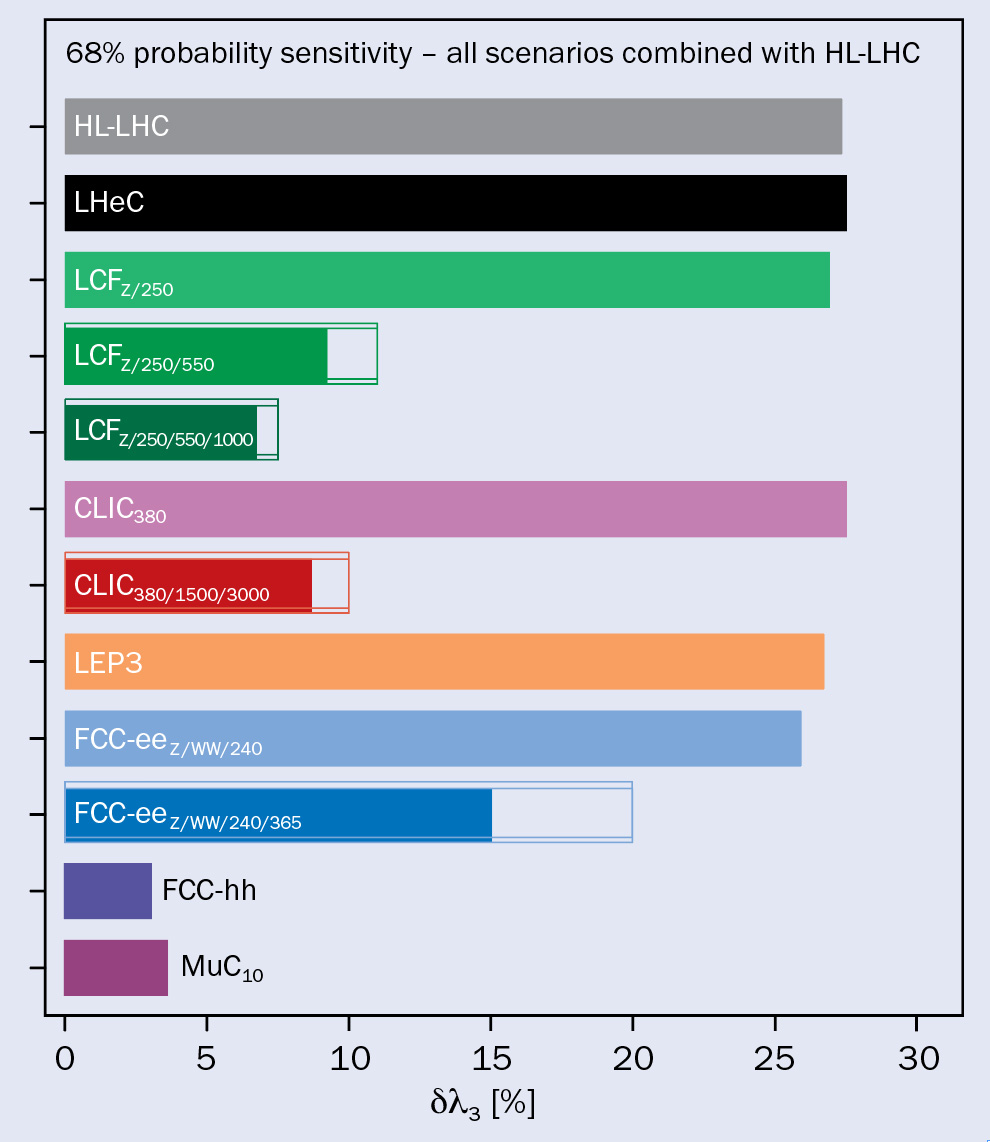
Precise measurements of the Higgs self-coupling and its effects on the Higgs potential will play a key role in testing the validity of the Standard Model (SM). 150 physicists discussed the required experimental and theoretical manoeuvres on the serene island of Elba from 11 to 17 May at the Higgs Pairs 2025 workshop.

The conference mixed updates on theoretical developments in Higgs-boson pair production, searches for new physics in the scalar sector, and the most recent results from Run 2 and Run 3 of the LHC. Among the highlights was the first Run 3 analysis released by ATLAS on the search for di-Higgs production in the bbγγ final state – a particularly sensitive channel for probing the Higgs self-coupling. This result builds on earlier Run 2 analyses and demonstrates significantly improved sensitivity, now comparable to the full Run 2 combination of all channels. These gains were driven by the use of new b-tagging algorithms, improved mass resolution through updated analysis techniques, and the availability of nearly twice the dataset.

Complementing this, CMS presented the first search for ttHH production – a rare process that would provide additional sensitivity to the Higgs self-coupling and Higgs–top interactions. Alongside this, ATLAS presented first experimental searches for triple Higgs boson production (HHH), one of the rarest processes predicted by the SM. Work on more traditional final states such as bbττ and bbbb is ongoing at both experiments, and continues to benefit from improved reconstruction techniques and larger datasets. 

Beyond current data, the workshop featured discussions of the latest combined projection study by ATLAS and CMS, prepared as part of the input to the upcoming European Strategy Update. It extrapolates results of the Run 2 analyses to expected conditions of the High-Luminosity LHC (HL-LHC), estimating future sensitivities to the Higgs self-coupling and di-Higgs cross-section in scenarios with vastly higher luminosity and upgraded detectors. Under these assumptions, the combined sensitivity of ATLAS and CMS to di-Higgs production is projected to reach a significance of 7.6σ, firmly establishing the process. 

These projections provide crucial input for analysis strategy planning and detector design for the next phase of operations at the HL-LHC. Beyond the HL-LHC, efforts are already underway to design experiments at future colliders that will enhance sensitivity to the production of Higgs pairs, and offer new insights into electroweak symmetry breaking.

bright-rec iop pub iop-science physcis connect