Comsol -leaderboard other pages

Topics

Neutrino oscillations constrain leptonic CP violation

Physicists working on the T2K experiment in Japan have reported the strongest hint so far that charge-conjugation × parity (CP) symmetry is violated by the weak interactions of leptons. Based on an analysis of nine years of neutrino-oscillation data, the T2K results indicate discrepancies between the way muon-neutrinos transform into electron-neutrinos and the way muon-antineutrinos transform into electron-antineutrinos, at 3σ confidence. While further data are required to confirm the findings, the result strengthens previous observations and offers hope for a future discovery of leptonic CP violation at T2K or at next-generation long-baseline neutrino-oscillation experiments due to come online this decade.

These exciting results are thanks to the hard work of hundreds of T2K collaborators

Federico Sanchez

“These exciting results are thanks to the hard work of hundreds of T2K collaborators involved in the construction, data collection and data analysis for T2K over the past two decades,” says T2K international co-spokesperson Federico Sanchez of the University of Geneva.

Discovered in 1964, CP violation has so far only been observed in the weak interactions of quarks, mostly recently in the charm system by the LHCb collaboration. Since the size of the effect in quarks is too small to explain the observed matter-antimatter disparity in the universe, finding additional sources of CP violation is one of the outstanding mysteries in particle physics. The quantum mixing of neutrino flavours as neutrinos travel over large distances, the discovery of which was marked by the 2015 Nobel Prize in Physics, provides a way to probe another potential source of CP violation: a complex phase, δCP, in the neutrino mixing matrix. Though models indicate that no value of δCP could explain the cosmological matter-antimatter asymmetry without new physics, the observation of leptonic CP violation would make models such as leptogenesis, which feature heavy Majorana partners for the Standard Model neutrinos, more plausible.

Muon and e-like rings in Super-Kamiokande

Long baseline

The T2K (Tokai-to-Kamioka) experiment uses the Super Kamiokande detector to observe neutrinos and antineutrinos generated by a proton beam at the J-PARC accelerator facility 295 km away. As the beams travel through Earth, a fraction of muon neutrinos and antineutrinos in the beam oscillate into electron neutrinos that are recorded via nuclear-recoil interactions in Super Kamiokande’s 50,000-tonne tank of ultrapure water, where the charged lepton generated by the weak interaction creates a Cherenkov ring which can be distinguished as being created by an electron or muon (see image above). Since the beam-line and detector components are made out of matter and not antimatter, the observation of neutrinos is already enhanced. The T2K analysis therefore includes corrections based on data from magnetised near-detectors (ND280, which uses the magnet originally built for the UA1 detector at CERN’s Spp̄S collider) placed 280m from the target.

T2K 3 sigma bound in Nature

The δCP parameter is a cyclic phase: if δCP=0, neutrinos and antineutrinos will change from muon- to electron-types in the same way during oscillation; any other value would enhance the oscillations of either neutrinos or antineutrinos, violating CP symmetry. Analysing data with 1.49×10²¹ and 1.64×10²¹ protons produced in neutrino- and antineutrino-beam mode respectively, T2K observed 90 electron-neutrino candidates and 15 electron-antineutrino candidates. This may be compared with the 56 and 22 events expected for maximal antineutrino enhancement (δCP=+π/2), and the 82 and 17 events expected for maximal neutrino enhancement (δCP=−π/2). Being most compatible with the latter scenario, the T2K data disfavour almost half of the possible values of δCP at 3σ confidence. For the “normal” neutrino-mass ordering favoured by T2K and other experiments, and averaged over all other oscillation parameters, the measured 3σ confidence-level interval for δCP is [−3.41, −0.03], while for the “inverted” mass ordering (in which the first mass splitting is greater than the second) it is [−2.54, −0.32]. Averaged over all oscillation parameters, δCP=0 is now disfavoured at 3σ confidence, though it is still within the 3σ bound for some allowed values of the mixing angle θ23 (see figure, above).

“Our results show the strongest constraint yet on the parameter governing CP violation in neutrino oscillations, one of the few parameters governing fundamental particle interactions that has not yet been precisely measured,” continues Sanchez. “These results indicate that CP violation in neutrino mixing may be large, and T2K looks forward to continued operation with the prospect of establishing evidence for CP violation in neutrino oscillations.”

Next steps

To further improve the experimental sensitivity to a potential CP-violating effect, the collaboration plans to upgrade the near detector to reduce systematic uncertainties and to accumulate more data, while J-PARC will increase the beam intensity by upgrading its accelerator and beam line.

“This is the first time ever CP-violation is glimpsed in the lepton sector and it has the potential of being a very large effect,” says Albert De Roeck, group leader of the CERN neutrino group, which has participated in the T2K experiment since last year. “Future neutrino CP violation measurements will be further performed by currently running neutrino experiments, and then the torch will be passed to the planned high precision neutrino experiments DUNE and Hyper-Kamiokande that will provide measurements of the exact degree of CP violation in the neutrino system.”

First physics for Belle II

Belle II

The Belle II collaboration at the SuperKEKB collider in Japan has published its first physics analysis: a search for Z′ bosons, which are hypothesised to couple the Standard Model (SM) with the dark sector. The team scoured four months of data from a pilot run in 2018 for evidence of invisibly decaying Z′ bosons in the process e+e→μ+μZ′, and for  lepton-flavour violating Z′ bosons in e+e→e±μZ′, by looking for missing energy recoiling against two clean lepton tracks. “This is the first ever search for the process e+e→μ+μZ′ where the Z′ decays invisibly,” says Belle II spokesperson Toru Iijima of Nagoya University.

The team did not find any excess of events, yielding preliminary sensitivity to the coupling g′ in the so-called Lμ−Lτ extension of the SM, wherein the Z′ couples only to muon and tau-lepton flavoured SM particles and the dark sector. This model also has the potential to explain anomalies in b → sμ+μ decays reported by LHCb and the longstanding muon g-2 anomaly, claims the team.

Belle II Z

The results come a little over a year since the first collisions were recorded in the fully instrumented Belle II detector on 25 March 2019. Following in the footsteps of Belle at the KEKB facility, the new SuperKEKB b-factory plans to achieve a 40-fold increase on the luminosity of its predecessor, which ran from 1999 to 2010. First turns were achieved in February 2016, and first collisions between its asymmetric-energy electron and positron beams were achieved in April 2018. The machine has now reached a luminosity of 1.4 × 1034 cm-2 s-1 and is currently integrating around 0.7 fb-1 each day, exceeding the peak luminosity of the former PEP-II/BaBar facility at SLAC, notes Iijima.

By summer the team aims to exceed the Belle/KEKB record of 2.1 × 1034 cm-2 s-1 by implementing a nonlinear “crab waist” focusing scheme. First used at the electron-positron collider DAΦNE at INFN Frascati, and not to be confused with the crab-crossing technology used to boost the luminosity at KEKB and planned for the high-luminosity LHC, the scheme stabilises e+e beam-beam blowup using carefully tuned sextupole magnets located symmetrically on either side of the interaction point. “The 100 fb-1 sample which we plan to integrate by summer will allow us to provide our first interesting results in B physics,” says Tom Browder of the University of Hawaii, who was Belle II spokesperson until last year.

Flavour debut

Belle II will make its debut in flavour physics at a vibrant moment, complementing  efforts to resolve hints of anomalies seen at the LHC, such as the recent test of lepton-flavour universality in beauty-baryon decays by the LHCb collaboration.

We will then look for the star attraction of the dark sector, the dark photon

Tom Browder

As well as updating searches for  invisible decays of the Z′ with one to two orders of magnitude more data, Belle II will now conduct further dark-sector studies including a search for axion-like particles decaying to two photons, the Z′ decaying to visible final states and dark-Higgstrahlung with a μ+μ pair and missing energy, explains Browder. “We will then look for the star attraction of the dark sector, the dark photon, with the difficult signature of e+e to a photon and nothing else.”

CERN establishes COVID-19 task force

The CERN-against-COVID-19 logo. Credit: CERN.

The CERN management has established a task force to collect and coordinate ideas from the global CERN community to fight the COVID-19 pandemic. Drawing on the scientific and technical expertise of some 18,000 people worldwide who have links with CERN, these initiatives range from the production of sanitiser gel to novel proposals for ventilators to help meet rising clinical demand.

CERN-against-COVID-19 was established on 27 March, followed by the launch of a dedicated website on 4 April. The group aims to draw on CERN’s many competencies and to work closely with experts in healthcare, drug development, epidemiology and emergency response to help ensure effective and well-coordinated action. The CERN management has also written directly to the director general of the World Health Organization, with which CERN has an existing collaboration agreement, to offer CERN’s support.

It’s not about going out there and doing things because we think we know best, but about offering our services and waiting to hear from the experts as to how we may be able to help

Beniamino Di Girolamo

The initiative has already attracted a large number of suggestions at various stages of development. These include three proposals by particle physicists for stripped-down ventilator designs, one of which is led by members of the LHCb collaboration. Other early suggestions range from the use of CERN’s fleet of vehicles to make deliveries in the surrounding region, to offers of computing resources and 3D printing of components for medical equipment. From 3-5 April, CERN supported a 48-hour online hackathon organised by the Swiss government to develop “functional digital or analogue prototypes” to counter the virus. Other ways in which computing resources are being deployed include the deployment of distance-learning tools such as Open Up2U, coordinated by the GÉANT partnership. CERN is also producing sanitiser gel and Perspex shields which will be distributed to gendarmeries in the Pays de Gex region.

Another platform, Science Responds, has been established by “big science” researchers in the US to facilitate interactions between COVID-19 researchers and the broader science community.

“It has been amazing to see so many varied and quality ideas,” says Beniamino Di Girolamo of CERN, who is chair of CERN-against-COVID-19 task force. “It’s not about going out there and doing things because we think we know best, but about offering our services and waiting to hear from the experts as to how we may be able to help. This is also much wider than CERN – these initiatives are coming from everywhere.”

Proposals and ideas can be made by members of the CERN community via an online form, and questions to the task force may be submitted via email.


Particle physicists propose stripped-down ventilator to help combat COVID-19

A preliminary CAD model of the HEV unit. Credit: HEV Collaboration.

As part of the global response to the COVID-19 pandemic, a team led by physicists and engineers from the LHCb collaboration has proposed a design for a novel ventilator. The High Energy Ventilator (HEV) is based on components which are simple and cheap to source, complies with hospital standards, and supports the most requested ventilator-operation modes, writes the newly formed HEV collaboration. Though the system needs to be verified by medical experts before it can enter use, in the interests of rapid development the HEV team has presented the design to generate feedback, corrections and support as the project progresses. The proposal is one of several recent and rapidly developing efforts launched by high-energy physicists to help combat COVID-19.

The majority of people who contract COVID-19 suffer mild symptoms, but in some cases the disease can cause severe breathing difficulties and pneumonia. For such patients, the availability of ventilators that deliver oxygen to the lungs while removing carbon dioxide could be the difference between life and death. Even with existing ventilator suppliers ramping up production, the rapid rise in COVID-19 infections is causing a global shortage of devices. Multiple efforts are therefore being mounted by governments, industry and academia to meet the demand, with firms which normally operate in completely different sectors – such as Dyson and General Motors – diverting resources to the task.

There are many proposals on the market, but we don’t know now which ones will in the end make a difference, so everything which could be viable should be pursued

Paula Collins

HEV was born out of discussions in the LHCb VELO group, when lead-designer Jan Buytaert (CERN) realised that the systems which are routinely used to supply and control gas at desired temperatures and pressures in particle-physics detectors are well matched to the techniques required to build and operate a ventilator. The team started from a set of guidelines recently drawn up by the UK government’s Medicines and Healthcare products Regulatory Agency regarding rapidly manufactured ventilator systems, and was encouraged by a 3D-printed prototype constructed at the University of Liverpool in response to these guidelines. The driving pressure of ventilators — which must be able to handle situations of rapidly changing lung compliance, and potential collapse and consolidation — is a crucial factor for patient outcomes. The HEV team therefore aimed to produce a patient-safety-first design with a gentle and precise pressure control that is responsive to the needs of the patient, and which offers internationally recommended operation modes.

As the HEV team comprises physicists, not medics, explains HEV collaborator Paula Collins of CERN, it was vital to get the relevant input from the very start. “Here we have benefitted enormously from the experience and knowledge of CERN’s HSE [occupational health & safety and environmental protection] group for medical advice, conformity with applicable legislation and health-and-safety requirements, and the working relationship with local hospitals. The team is also greatly supported from other CERN departments, in particular for electronic design and the selection of the best components for gas manipulation. During lockdown, the world is turning to remote connection, and we were very encouraged to find that it was possible in a short space of time to set up an online chat group of experienced anesthesiologists and respiratory experts from Australia, Belgium, Switzerland and Germany, which sped up the design considerably.”

Prototyping the HEV buffer-concept at CERN to demonstrate “breathing” and flow capabilities of the device. The demonstrator is built with in-house parts and looks mechanically very different to the final system. Control is provided via LabView, whereas the final system will use an embedded controller. Credit: HEV Collaboration.
Conceptual design of the HEV ventilator. Credit: HEV Collaboration.

Stripped-down approach
The HEV concept relies on easy-to-source components, which include electro-valves, a two-litre buffer container, a pressure regulator and several pressure sensors. Embedded components — currently Arduino and Rasbperry Pi — are being used to address portability requirements. The unit’s functionality will be comprehensive enough to provide long-term support to patients in the initial or recovery phases, or with more mild symptoms, freeing up high-end machines for the most serious intensive care, explains Collins: “It will incorporate touchscreen control intuitive to use for qualified medical personnel, even if they are not specialists in ventilator use, and it will include extensive monitoring and failsafe mechanisms based on CERN’s long experience in this area, with online training to be developed.”

The first stage of prototyping, which was achieved at CERN on 27 March, was to demonstrate that the HEV working principle is sound and allows the ventilator to operate within the required ranges of pressure and time. The desired physical characteristics of the pressure regulators, valves and pressure sensors are now being refined, and the support of clinicians and international organisations is being harnessed for further prototyping and deployment stages. “This is a device which has patient safety as a major priority,” says HEV collaborator Themis Bowcock of the University of Liverpool. “It is aimed at deployment round the world, also in places that do not necessarily have state-of-the-art facilities.”

Complementary designs
The HEV concept complements another recent ventilator proposal, initiated by physicists in the Global Argon Dark Matter Collaboration. The Mechanical Ventilator Milano (MVM) is optimised to permit large-scale production in a short amount of time and at a limited cost, also relying on off-the-shelf components that are readily available. In contrast to the HEV design, which aims to control pressure by alternately filling and emptying a buffer, the MVM project regulates the flow of the incoming mixture of oxygen and air via electrically controlled valves. The proposal stems from a cooperation of particle- and nuclear-physics laboratories and universities in Canada, Italy and the US, with an initial goal to produce up to 1000 units in each of the three countries while the interim certification process is ongoing. Clinical requirements are being developed with medical experts, and detailed testing and qualification of the first prototype is presently underway with a breathing simulator at Ospedale San Gerardo in Monza, Italy.

Sharing several common ideas with the MVM principle, but with emphasis on further reducing the number and specificity of components to make construction possible during times of logistical disruption, a team led by particle physicists at the Laboratory of Instrumentation and Experimental Particles Physics in Portugal has also posted a proof-of-concept study for a ventilator on arXiv. All ventilator designs are evolving quickly and require further development before they can be deployed in hospitals.

“It is difficult to conceive a project which goes all the way and includes all the bells and whistles needed to get it into the hospital, but this is our firm goal,” says Collins. “After one week we had a functioning demonstrator, after two weeks we aim to test on a medical mechanical lung and to start prototyping in the hospital context. We find ourselves in a unique and urgent situation where there are many proposals on the market, but we don’t know now which ones will in the end make a difference, so everything which could be viable should be pursued.”

The Human Condition: Reality, Science and History

The Human Condition: Reality, Science and History

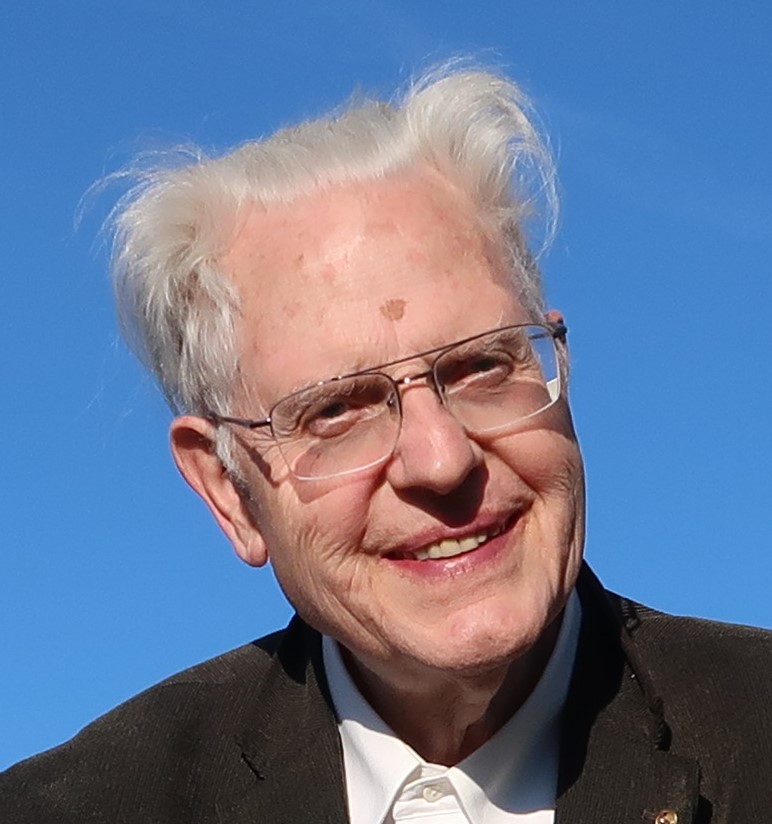
“Homo has much work left to become Sapiens,” is Gregory Loew’s catchphrase in The Human Condition: Reality, Science and History. An accelerator physicist with an illustrious 50-year-long career at the SLAC National Accelerator Laboratory in California, Loew also taught a seminar at Stanford University that ran the gamut from psychology and anthropology to international relations and arms control. His new book combines these passions.

This reviewer must admit to being inspired by the breadth of Loew’s poly­mathic ambition, which he has condensed into 200 colourful pages. The author compares his work to noted Israeli historian Yuval Harari’s hefty tomes Sapiens and Homo Deus, but The Human Condition is more idiosyncratic, and peppered with fascinating titbits. He points out the difficulties in connecting free will with quantum indeterminacy. He asks what came first: the electron or the electric field? Neglecting to mention the disagreement with the long-accepted age of the universe inferred from fits to the cosmic microwave background, he breathlessly slips in a revised-down value of 12.8 billion years, tacitly accepting the 2019 measurement of the Hubble constant based on observations by the Hubble Space Telescope. He even digresses momently to note the almost unique rhythmic awareness of cockatoo parrots.

But this is not a scenic drive through the nature of existence. Loew wants to be complete. He reverses from epistemology to evolution and the nature of perception, before pulling out onto the open road of mathematics and the sciences, both fundamental and social, via epigenetics, Thucydides and the Cuban missile crisis. The final chapter, which looks to the future, is really a thoughtful critique of Harari’s books, which he discovered while writing. It’s heartening to join Loew on an expansive road trip from metaphysics and physics to economic theory and realpolitik.

No scientific knowledge or mathematical training is necessary to enjoy The Human Condition, which will entertain and intrigue physicists and lay audiences alike. While some subjects, such as homosexuality, are treated with inappropriate swiftness, in that case with a rapid and highly questionable hop from Freud to Kinsey to Schopenhauer to Pope Francis, in general Loew writes with a refreshing élan. His final thought is that “if all Homo Sapientes became wiser, they would certainly be happier.” Here, he flirts with contradicting Kant, a philosopher he frequently esteems, who wrote that the cultivation of reason sooner leads to misery than happiness. But perhaps the key word is “all Homo Sapientes”. If every one of us became wiser, perhaps through the utopic initiatives advocated by Loew, we would indeed be happier.

Fiction, in theory

French actor Irène Jacob rose to international acclaim for her role in the 1991 film The Double Life of Véronique. She is the daughter of Maurice Jacob (1933 – 2007), a French theoretical physicist and Head of CERN’s Theory Division from 1982 to 1988. Her new novel, Big Bang, is a fictionalised account of the daughter of a renowned physicist coming to terms with the death of her father and the arrival of her second child. Keen to demonstrate the artistic beauty of science, she is also a Patron of the Physics of the Universe Endowment Fund established in Paris by George Smoot.

When Irène Jacob recites from her book, it is more than a reading, it’s a performance. That much is not surprising: she is after all the much-feted actor in the subtly reflective 1990s films of Krzysztof Kieślowski. What did come as a surprise to this reader is just how beautifully she writes. With an easy grace and fluidity, she weaves together threads of her life, of life in general, and of the vast mysteries of the universe.

The backdrop to the opening scenes is the corridors of the theory division in the 70s and 80s

Billed as a novel, Big Bang comes across more as a memoir, and that’s no accident. The author’s aim was to use her entourage, somewhat disguised, to tell a universal story of the human condition. Names are changed, Irène’s father, the physicist Maurice Jacob, becomes René, for example, his second name. The true chronology of events is not strictly observed, and maybe there’s some invention, but behind the storytelling there is nevertheless a touching portrait of a very real family. The backdrop to the opening scenes is CERN, more specifically the corridors of the theory division in the 70s and 80s, a regular stomping ground for the young Irène. The reader discovers the wonders of physics through the wide-open eyes of a seven-year-old child. Later on, that child-become-adult reflects on other wonders – those related to the circle of life. The book ties all this together, seen from the point in spacetime at which Irène has to reconcile her father’s passing with her own impending motherhood.

For those who remember the CERN of the 80s, the story begins with an opportunity to rediscover old friends and places. For those not familiar with particle physics, it offers a glimpse into the field, to those who devote their lives to it, and to those who share their lives with them. The initial chapters open the door to Irène Jacob’s world, just a crack.

The atmosphere soon changes, though, as she flings the door wide open. More than once I found myself wondering whether I had the right to be there: inside Irène Jacob’s life, dreams and nightmares. It is a remarkably intimate account, looking deep in to what it is to be human. Highs and lows, loves and laughs, kindnesses and hurts, even tragedies: all play a part. Irène Jacob’s fictionalised family suffers much, yet although Irène holds nothing back, Big Bang is essentially an optimistic, life affirming tale.

Science makes repeated cameo appearances. There’s a passage in which René is driving home from hospital after welcoming his first child into the world. Distracted by emotion, he’s struck by a great insight and has to pull over and tell someone. How often does that happen in the creative process? Kary Mullis tells a similar story in his memoirs. In his case, the idea for Polymerase Chain Reaction came to him at the end of hot May day on Highway 128 with his girlfriend asleep next to him in the passenger seat of his little silver Honda. Mullis got the Nobel Prize. Both had a profound impact on their fields.

Bohr can be paraphrased as saying: the opposite of a profound truth is another profound truth

Alice in Wonderland is a charmingly recurrent theme, particularly the Cheshire cat. Very often, a passage ends with nothing left but an enigmatic smile, a metaphor for life in the quantum world, where believing in six impossible things before breakfast is almost a prerequisite.

Big Bang is not a page turner. Instead, each chapter is a beautifully formed vignette of family life. Take, for example, the passage that begins with a quote from Niels Bohr taken René’s manuscript, Des Quarks et des Hommes (published as Au Coeur de la Matière). Bohr can be paraphrased as saying: the opposite of a profound truth is another profound truth. As the passage moves on, it plays with this theme, ending with the conclusion: if my story does not stand up, it’s because reality is very small. And if my story is very small, it is because reality does not stand up.

Whatever the author’s wish, Big Bang comes across as an admirably honest family portrait, at times uncomfortably so. It’s a portrait that goes much deeper than the silver screen or the hallowed halls of academia. The cast of Big Bang is a very human family, and one that this reader came to like very much.

European strategy update postponed

The European strategy for particle physics. Credit: CERN.

During its 197th session, which took place for the first time by videoconference on 19-20 March, the CERN Council addressed the impact of the current COVID-19 situation on the update of the European strategy for particle physics (ESPPU).

The ESPPU got under way in September 2017, when the CERN Council appointed a European Strategy Group (ESG) – headed by Halina Abramowicz of Tel Aviv University and comprising a scientific delegate from each of CERN’s member and associate-member states, plus directors and representatives of major European laboratories and organisations and invitees from outside Europe – to organise the process. Following two years of discussions and consultation with the high-energy physics and related communities, the ESPPU entered its final stages in January with a week-long drafting session in Bad Honnef, Germany. Afterwards, the ESG released a statement reporting convergence on recommendations to guide the future of high-energy physics in Europe. These were due to be submitted for final approval at an extraordinary session of the CERN Council on 25 May in Budapest, Hungary, before being publicly released.

Discussing with various stakeholders in the Member States will take more time

Ursula Bassler

Acknowledging that the COVID-19 outbreak threatens the lives and health of hundreds of thousands of people, and affects the everyday lives of millions, the CERN Council has now agreed that it would not be appropriate to release the ESG update (and an accompanying deliberation document) to a wider audience, nor for the Council to make any further comment on the contents of the documents for the time being. The Budapest event has been cancelled and replaced by a new extraordinary session, to be held by videoconference on the same date, at which the Council will further discuss how to proceed.

“In these exceptional circumstances it is not the right time to release the strategy, and discussing with various stakeholders in the Member States will take more time,” says Ursula Bassler, president of the CERN Council. “Even though this will come as a disappointment to many physicists after all the effort put into the ESPPU, everyone can understand, that in this situation, the process will last longer.”


Yerevan hosts early-career accelerator internship

Joint German-Armenian internship in accelerator physics

The inaugural joint German-Armenian internship in accelerator physics was held at the CANDLE Institute in Yerevan, Armenia, from 29 September to 5 October. In this first round, twelve undergraduates at Universität Hamburg joined eleven students from Yerevan State University to form eight small teams. Each team worked its way through an experiment under the supervision of experts from both nations, interacting with physicists in a laboratory setting for the first time in many cases. The goal of the programme of week-long internships, which was supported by the German Federal Foreign Office, is to integrate accelerator physics and technology into undergraduate courses and provide students with an early experience of international cooperation. It will make use of eight experimental stations recently set up to foster young academics learning accelerator technology in Armenia.

CANDLE is the Armenian synchrotron-radiation storage-ring project. As a first step towards its realisation, AREAL, an ultrafast laser-driven electron accelerator, has been constructed. The next steps are S-band linac acceleration up to 20-50 MeV and the generation of coherent and tunable THz-radiation in an undulator.

Ascent commemorates cosmic-ray pioneers

A hot-air balloon commemorating the discovery of cosmic rays

On 25 January, a muon detector, a particle physicist and a prizewinning pilot ascended 4000 m above the Swiss countryside in a hot-air balloon to commemorate the discovery of cosmic rays. The event was the highlight of the opening ceremony of the 42nd Château-d’Oex International Balloon Festival, attended by an estimated 30,000 people, and attracted significant media coverage.

In the early 1900s, following Becquerel’s discovery of radioactivity, studying radiation was all the rage. Portable electrometers were used to measure the ionisation of air in a variety of terrestrial environments, from fields and lakes to caves and mountains. With the idea that ionisation should decrease with altitude, pioneers adventured in balloon flights as early as 1909 to count the number of ions per cm3 of air as a function of altitude. First results indeed indicated a decrease up to 1300 m, but a subsequent ascent to 4500 m by Albert Gockel, professor of physics at Fribourg, concluded that ionisation does not decrease and possibly increases with altitude. Gockel, however, who later would coin the term “cosmic radiation”, was unable to obtain the hydrogen needed to go to higher altitudes. And so it fell to Austrian physicist Victor Hess to settle the case. Ascending to 5300 m in 1912, Hess clearly identified an increase, and went on to share the 1936 Nobel Prize in Physics for the discovery of cosmic rays. Gockel, who died in 1927, could not be awarded, and for that reason is almost forgotten by history.

ATLAS experimentalist Hans Peter Beck of the University of Bern, and a visiting professor at the University of Fribourg, along with two students from the University of Fribourg, reenacted Gockel’s and Hess’s pioneering flights using 21st-century technology: a muon telescope called the Cosmic Hunter, newly developed by instrumentation firm CAEN. The educational device, which counts coincidences in two scintillating-fibre tiles of 15 × 15 cm2 separated by 15 cm, verified that the flux of cosmic rays increases as a function of altitude. Within two hours of landing, including a one-hour drive back to the starting point, Beck was able to present the data plots during a public talk attended by more than 250 people. A second flight up to 6000 m is planned, with oxygen supplies for passengers, when weather conditions permit.

The view from inside the hot-air balloon

“Relating balloons with particle physics was an easy task, given the role balloons played in the early days for the discovery of cosmic rays,” says Beck. “It is a narrative that works and that touches people enormously, as the many reactions at the festival have shown.”

The event – a collaboration with the universities of Bern and Fribourg, the Swiss Physical Society, and the Jungfraujoch research station – ran in parallel to a special exhibition about cosmic rays at the local balloon museum, organised by Beck and Michael Hoch from CMS, which was the inspiration for festival organisers to make physics a focus of the event, says Beck: “Without this, the festival would never have had the idea to bring ‘adventure, science and freedom’ as this year’s theme. It’s really exceptional.”

AMS detector given a new lease of life

Checking the installation of the Upgraded Tracker Thermal Pump System for AMS

On 25 January, European Space Agency astronaut Luca Parmitano stepped outside a half-million-kilogramme structure travelling at tens of thousands of kilometres per hour, hundreds of kilometres above Earth, and, tethered by a thin cord, ventured into the vacuum of space to check for a leak.

It was the fourth such extravehicular activity (EVA) he’d been on in two months. All things considered, the task ahead was relatively straightforward: to make sure that a newly installed cooling system for the Alpha Magnetic Spectrometer (AMS), the cosmic-ray detector that has been attached to the International Space Station (ISS) since 2011, had been properly plumbed in.

Heart-stopping spacewalks

The first EVA on 15 November saw Parm­itano and fellow astronaut, NASA’s Drew Morgan, remove and jettison the AMS debris shield, which is currently still spiralling its way to Earth, to allow access to the experiment’s cooling system. The CO2 pumps, needed to keep the 200,000-channel tracker electronics at a temperature of 10 ± 3 °C, had started to fail in 2014 – which was no surprise, as AMS was initially only supposed to operate for three years. During the second EVA on 22 November, the astronauts cut through the cooling system’s eight stainless-steel lines to isolate and prepare it for removal, and a critical EVA3 on 2 December saw Morgan and Parmitano successfully connect the new pump system, which had been transported to the ISS by an Antares rocket the previous month. Then came a long wait until January to find out if the repair had been successful.

“EVA4 was the heart-stopping EVA because that’s where we did the leak tests on all those tubes,” says Ken Bollweg, NASA’s AMS project manager. The success of the previous EVAs suggested that the connections were going to be fine. But Parmitano arrived at the first tube, attached one of 29 bespoke tools developed specially for the AMS repair, and saw that the instrument had issued a warning signal. “I see red,” he reported to anxious teams at NASA’s Johnson Space Center’s Mission Control Center and the AMS Payload Operations Control Centre (POCC) at CERN’s Prévessin site, from where spokesperson Sam Ting and his colleagues were monitoring proceedings closely. Though not huge, the leak was serious enough not to guarantee that the system would work, jeopardising four years of preparation involving hundreds of astronauts, engineers and scientists. Following procedures put in place to deal with such a situation, Parmitano tightened the connection and waited for about an hour before checking the tube again. A leak was still present. Then, after re-tightening the troublesome connection again, while the team was preparing a risky “jumper” manoeuvre to bypass the leak and make a new connection, he checked a third time: “No red!” Happy faces lit up the POCC.

NASA has learned a lot of new things from this

Ken Bollweg

AMS was never designed to be service­able, and the repair, unprecedented in complexity for a space intervention, required the avoidance of sharp edges and other hazards in order to bring it back to full operational capacity. The chances of something going wrong were high, says Bollweg. “NASA has learned a lot of new things from this. We really pushed the envelope. It showed that we have the capabilities to do even more than we have done in the past.” EVA4 lasted almost six hours. Five hours and two minutes into it, Parmitano, who returned safely to Earth on 6 February, broke the European record for the most time spent spacewalking (33 hours and nine minutes). It’s not a job for the fainthearted. During a spacewalk in 2013, while wedged into a confined space outside the ISS, a malfunction in Parmitano’s spacesuit caused his helmet to start filling with water and he almost drowned.

“Building and operating AMS in space has been an incredible journey through engineering and physics, but today it is thanks to the NASA group that in AMS we can continue this journey and this is amazing. An enormous thanks to the EVA crew,” said AMS integration engineer Corrado Gargiulo of CERN. The day after EVA4, the POCC team spent about 10 hours refilling the new AMS cooling system with 1.3 kg of CO2 and started to power up the detector. At noon on 27 January, all the detector’s subsystems were sending data back, marking a new chapter for AMS that will see it operate for the lifetime of the ISS.

Into the unknown

The 7.5 tonne AMS apparatus has so far recorded almost 150 billion charged cosmic rays with energies up to the multi-TeV range, and its percent-level results show clear and unexpected behaviour of cosmic-ray events at high energies. A further 10 years of operation will allow AMS to make conclusive statements on the origin of these unexpected observations, says Ting. “NASA is to be congratulated on seeing this difficult project through over a period of many years. AMS has observed unique features in cosmic-ray spectra that defy traditional explanations. We’re entering into a region where nobody has been before.”

AMS has observed unique features in cosmic-ray spectra that defy traditional explanations

Sam Ting

The first major result from AMS came in 2013, when measurements of the cosmic positron fraction (the ratio of the posi­tron flux to the flux of electrons and positrons) up to an energy of 350 GeV showed that the spectrum fits well to dark-matter models. The following year, AMS published the positron and electron fluxes, which showed that neither can be fitted with the single-power-law assumption underpinning the traditional understanding of cosmic rays. The collaboration has continued to find previously unobserved features in the measured fluxes and flux ratio of electrons and positrons, publishing the results in several high-profile papers during the past couple of years.

Figure 1. The positron spectrum measured by AMS (yellow), showing that low-energy positrons mostly come from cosmic ray collisions (shaded area). Unexpectedly, there is a continuous excess starting at 25 GeV. The spectrum reaches a maximum at around 284 GeV followed by a sharp drop-off with a finite energy cutoff established at 99.99% confidence.
Figure 2. Comparison between 0.6 million antiprotons (blue, right axis) with 1.9 million positrons (yellow, left axis) using the latest AMS data.

Last year, AMS reaffirmed the complex energy dependence exhibited by the positron flux: a significant excess starting from 25 GeV, a sharp drop-off above 284 GeV and a finite energy cutoff at 810 GeV (figure 1). “In the entire energy range the positron flux is well described by the sum of a term associated with the positrons produced in the collision of cosmic rays, which dominates at low energies, and a new source term of positrons, which dominates at high energies,” says Ting. “These experimental data on cosmic-ray positrons show that, at high energies, they predominantly originate either from dark-matter annihilation or from other astrophysical sources.” Although dark-matter models predict such a cut off, the AMS data cannot yet rule out astrophysical sources, in particular pulsars. Further intrigue comes from the latest, to-be-published, AMS result on antiprotons, which, although rare at high energies, exhibit similar functional behaviour as the positron spectrum (figure 2). “This indicates that the excess of positrons may not come from pulsars due to the similarity of the two spectra and the high mass of antiprotons,” says Ting.

Thanks to the successful installation of the new AMS cooling system, the expected positron spectrum by 2028, in particular the high-energy data points, should enable an accurate comparison with dark-matter models (figure 3). High-energy (>TeV) events are also expected to provide insights into the origins of cosmic electrons, the latest results on which show that the electron flux exhibits a significant excess starting from 42 GeV.

Figure 3. Comparison between the projected positron spectrum (light blue) and the prediction from a dark-matter model (Phys. Rev. D 88 076013).
Figure 4. The electron spectrum (light blue points) fitted with the sum of two power laws (green curve) in the energy range 0.5–1400 GeV. The two power-law components a and b are represented by the grey and blue areas, respectively. The minute contribution of electrons from cosmic-ray collisions is also shown (green area).

Unlike the positron flux, which has an exponential energy cutoff at 810 GeV, the electron flux does not have a cutoff (at least not below 1.9 TeV). Also: in the entire energy range the electron flux is well described by the sum of two power law components (figure 4), providing “clear evidence”, says Ting, that most high energy electrons originate from different sources than high energy positrons.

Novelties in nuclei

Unexpected results continue to appear in data from cosmic nuclei, which make up the bulk of cosmic rays travelling through space. Helium, carbon and oxygen nuclei are thought to be mainly produced and accelerated in astrophysical sources and are known as primary cosmic rays, while lithium, beryllium and boron nuclei are produced by the collision of heavier nuclei with nuclei of the interstellar matter and are known as secondary cosmic rays.

New properties of primary cosmic rays – helium, carbon and oxygen – have been observed in the rigidity range 2 GV to 3 TV; at high energies these three spectra also have identical rigidity dependence, all deviating from a single power law above 200 GV. Similar oddities have appeared in measurements of secondary cosmic rays – lithium, beryllium and boron – in the range 1.9 GV to 3.3 TV (figure 5). The lithium and boron fluxes have an identical rigidity dependence above 7 GV, all three fluxes have an identical rigidity dependence above 30 GV, and, unexpectedly, above 30 GV the Li/Be flux ratio is approximately equal to two.

Figure 5. The rigidity dependences of the spectra of primary cosmic rays (helium, carbon and oxygen) compared to the spectra of secondary cosmic rays (lithium, beryllium and boron), all scaled to the helium flux at 30 GV.

The ratio of secondary fluxes to primary fluxes is particularly interesting because it directly measures the amount and properties of the interstellar medium. Before AMS, only the B/C ratio was measured and was assumed to be proportional to RΔ with Δ a constant for R > 60 GV. The latest AMS results on secondary (Li, Be, B) to primary (C, O) flux ratios show that Δ is not a constant, but changes by more than 5σ between the two rigidity ranges, 60 < R < 200 GV and 200 < R < 3300 GV. As with electron and positron fluxes, none of the current AMS results can be explained by existing theoretical models. By 2028, says Ting, AMS will extend its measurements of cosmic nuclei up to Z=30 (zinc) with sufficient statistics to get to the bottom of these and other mysteries. “We have measured many particles, electrons, positrons, antiprotons and many nuclei, and they all have distributions and none agree with current theoretical models. So we will begin to create a new field.”

bright-rec iop pub iop-science physcis connect