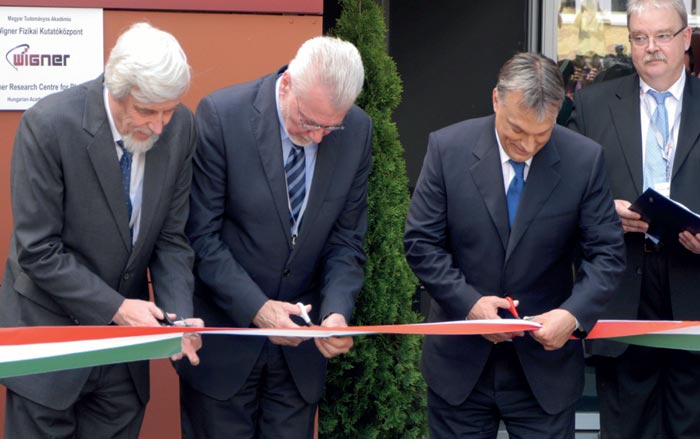
CERN and the Wigner Research Centre for Physics inaugurated the CERN Tier-0 data-centre extension in Budapest on 13 June, marking the completion of the facility. CERN’s director-general, Rolf Heuer, far left, joined József Pálinkás, president of the Hungarian Academy of Sciences, and Viktor Orbán, prime minister of Hungary, in the ceremonial “cutting the ribbon”, in the company of Péter József Lévai, far right, general director of the Wigner Research Centre for Physics (RCP). This extension adds up to 2.5 MW capacity to the 3.5 MW load of the data centre at CERN’s Meyrin site, which has already reached its limit. The dedicated and redundant 100 Gbit/s circuits connecting the two sites have been functional since February and about 20,000 computing cores, 500 servers and 5.5 PB of storage are already operational at the new facility.
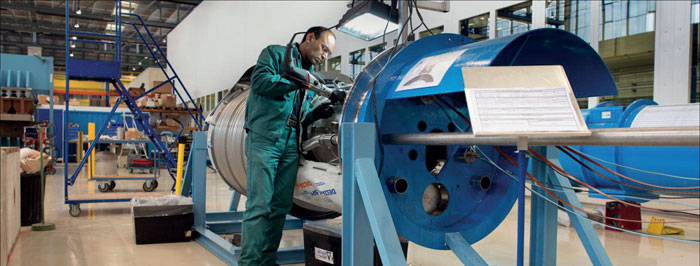
Muon g-2 is a new experiment to measure the anomalous magnetic moment of the muon – in other words, the difference of the value of its magnetic moment g from the simplest expectation of 2. However, before the experiment begins, its centrepiece – a complex electromagnet spanning more than 15 m in diameter – had to embark on a long, careful journey from Brookhaven National Laboratory (BNL) in New York to Fermilab in Illinois.
The magnet ring was built at Brookhaven in the 1990s for the E821 experiment, which ran there from 1997 until 2001. Its measurement of g-2 is still one of the few hints for new physics beyond the Standard Model. Constructed of aluminium and steel with superconducting coils inside, the magnet cannot be taken apart or twisted more than a few millimetres without irreparably damaging the coils. As a result, the Muon g-2 team devised a plan for a five-week journey of 5150 km over land and sea.
The journey began when the ring left Brookhaven on 22 June. It was loaded onto a specially prepared barge to be taken down the East Coast of the US, around the tip of Florida and up a series of rivers to Illinois. The ring was then attached to a truck built specially for the move and driven to Fermilab to arrive there in late July.
The first prototype telescope for the planned Cherenkov Telescope Array (CTA) has been inaugurated in Berlin. The prototype was designed and built at DESY in an international collaboration involving more than 1000 scientists and engineers from 27 countries.
The CTA is an international €200-million project to observe cosmic γ rays (CERN Courier July/August 2012 p28). Designed to achieve a sensitivity that is 10-times better than existing installations, it will combine three types of telescope, each optimized for its own energy range between a few tens of giga-electron-volts and 300 TeV. The prototype is a full-scale version of the medium-sized telescope (MST) with a tessellated 12-m mirror. Forty MSTs will form the central part of the CTA.
Fully functional mechanically, the prototypes will be used to test many aspects including the drive and safety systems, the understanding of vibrations and deformations, the mirror alignment, telescope pointing and the array control. The results will allow the design of the MSTs to be optimized before their production begins.
Construction of the CTA is expected to commence in 2015 at two sites in the southern and northern hemispheres. The larger southern observatory will include 70–100 telescopes that will be spread over 10 km2 and the smaller observatory in the north will have 20–30 telescopes that will be distributed over 1 km2. The sites will be chosen at the end of this year.
Breast cancer is the most frequent type of cancer among women and accounts for up to 23% of all cancer cases in female patients. The chance of a full recovery is high if the cancer is detected while it is still sufficiently small and has not had time to spread to other parts of the body. Routine breast-cancer screening is therefore part of health-care policies in many advanced countries. Conventional imaging techniques, such as X-ray, ultrasound or magnetic resonance imaging (MRI), rely on anatomical differences between healthy and cancerous tissue. For most patients, the information provided by these different modalities is sufficient to establish a clear diagnosis. For some patients, however, the examination will be inconclusive – for example, because their breast tissue is too dense to allow for a clear image – so these people will require further exams. Others may be diagnosed with a suspicious lesion that requires a biopsy for confirmation. Yet, once this biopsy is over, it might turn out to have been a false alarm.
Patients in this latter category can benefit from nuclear medicine. Positron-emission tomography (PET), for example, offers an entirely different approach to medical imaging by focusing on differences in the body’s metabolism. PET uses molecules involved in metabolic processes, which are labelled by a positron-emitting radioisotope. The molecule, once injected, is taken up in different proportions by healthy and cancerous cells. The emitted positrons annihilate with electrons in the surrounding atoms and produce a back-to-back pair of γ rays of 511 keV. The γ radiation is detected to reveal the distribution of the isotope in the patient’s body. However, whole-body PET suffers from a low spatial resolution of 5–10 mm for most machines, which is too coarse to allow for a precise breast examination. Several research groups are therefore aiming to produce dedicated systems, known as positron-emission mammographs (PEM), that have a resolution better than 2 mm.
One of these groups is the Crystal Clear collaboration (CCC), which is developing a system called ClearPEM. Founded in 1990 as project RD-18 within CERN’s Detector Research and Development Committee’s programme, the CCC aimed at R&D on fast, radiation-hard scintillating crystals for calorimetry at the LHC (Lecoq 1991). In this context, the collaboration contributed to the successful development of the lead tungstate (PbWO4) crystals now used in the electromagnetic calorimeters in the CMS and ALICE experiments at the LHC (Breskin and Voss 2009).
The CCC has transferred its knowledge to medical applications
Building on this experience, the CCC has transferred its knowledge to medical applications – initially through the development of a preclinical scanner for small animals, the ClearPET (Auffray et al. 2004. Indeed, the technical requirements for PET are close to those of applications in high-energy physics. Both require fast scintillators with high light-output and good energy resolution. They need compact and efficient photodetectors that are read by highly integrated, low-noise electronics that can treat the signals from thousands of channels. The CCC also has expertise in co-ordinating an international collaboration to develop leading-edge scientific devices.
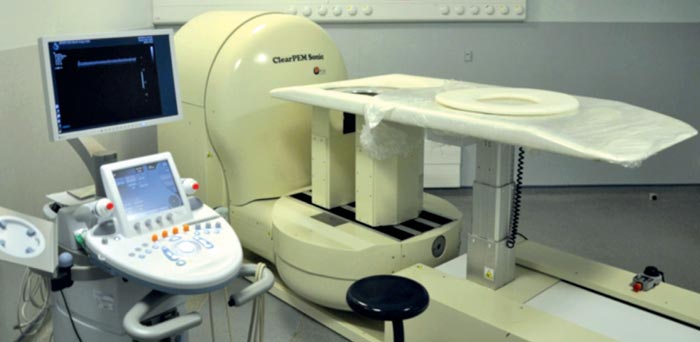
Recently, the collaboration has used the experience gained with ClearPET to develop a dedicated PET system for human medicine – the ClearPEM, shown in figure 1 (Lecoq and Varela 2002). The breast was chosen as a target organ because of the benefits related to precise diagnosis of breast cancer. With the ClearPEM, the patient lies in a prone position on a bed designed such that the breast hangs through a hole. A robot moves the bed into position over two parallel detector-plates that rotate around the breast to acquire a full 3D image. In addition, ClearPEM also performs examinations of the armpit – the axilla – by rotating its detector arm by 90 degrees, thereby shifting the plates to be on each side of it.
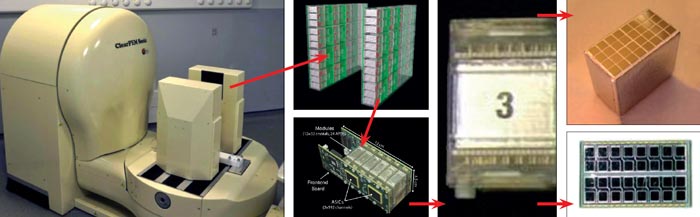
Each detector plate contains 96 detector matrices, where one matrix consists of an 8 × 4 array of cerium-doped lutetium-yttrium silicate (LYSO:Ce) crystals, each 2 × 2 × 20 mm3 in size. As figure 2 shows, each crystal matrix is coupled to two 8 × 4 arrays of Hamamatsu S8550 avalanche photodiode (APD) arrays, such that every 2 × 2 mm2 read-out face is coupled to a dedicated APD. This configuration allows the depth of interaction (DOI) in the crystals to be measured and reduces the parallax error of the lines of response, contributing to better spatial resolution in the reconstructed image. The DOI can be measured with an uncertainty of around 2 mm on the exact position of the γ interaction in the crystal. Each signal channel is coupled to one input of a dedicated 192-channel ASIC, developed by the Portuguese Laboratory for Particle Physics and Instrumentation (LIP). It provides front-end treatment of the signal before handing it over to a 10-bit sampling ADC for digitalization (Varela et al. 2007). The image is reconstructed with a dedicated iterative algorithm.
Two ClearPEM prototypes have been built. The first is currently installed at the Instituto de Ciências Nucleares Aplicadas à Saúde in Coimbra, Portugal. The second, installed at Hôpital Nord in Marseilles, France, is used for ClearPEM-Sonic, a project within the European Centre for Research in Medical Imaging (CERIMED) initiative. While ClearPEM provides high-resolution metabolic information, it lacks anatomical details. ClearPEM-Sonic, however, extends the second prototype with an ultrasound elastography device, which images strain in soft tissue (Frisch 2011). The aim is to provide multimodal information that reveals the exact location of potential lesions in the surrounding anatomy. The availability of elastographic information further improves the specificity of the examination by identifying non-cancerous diseases – such as benign inflammatory diseases of the breast – that exhibit higher uptake of the radioactive tracer, fluorodeoxyglucose (18F), or FDG, used in PET imaging.
The French authority has approved ClearPEM-Sonic for a first clinical trial on 20 patients
Both prototypes have been tested extensively. The electronic noise level is under 2%, with an interchannel noise dispersion of below 8%. The front-end trigger accepts signals at a rate of 2.5 MHz, while the overall acquisition rate reaches 0.8 MHz. The detector has been properly calibrated and gives an energy resolution of 14.6% FWHM for 511 keV photons, which allows for efficient rejection of photons that have lost energy during a scattering process. The coincidence-time resolution of 4.6 ns FWHM reduces the number of random coincidences. The global detection efficiency in the centre of the plates has been determined to be 1.5% at a plate distance of 100 mm. The image resolution measured with a dedicated Jasczcak phantom is 1.3 mm.
The competent French authority has approved ClearPEM-Sonic for a first clinical trial on 20 patients. The goal of this trial is to study the feasibility and safety of PEM examinations. In parallel, the results of ClearPEM are being compared with other modalities, such as classical B-mode ultrasound, X-ray mammography, whole-body combined PET and computerized tomography (PET/CT) imaging and MRI, which all patients participating in this trial will have undergone. The ClearPEM image is acquired immediately after the whole-body PET/CT, which avoids the need for a second injection of FDG for the patient. The histological assessment of the biopsy is used as the gold standard.
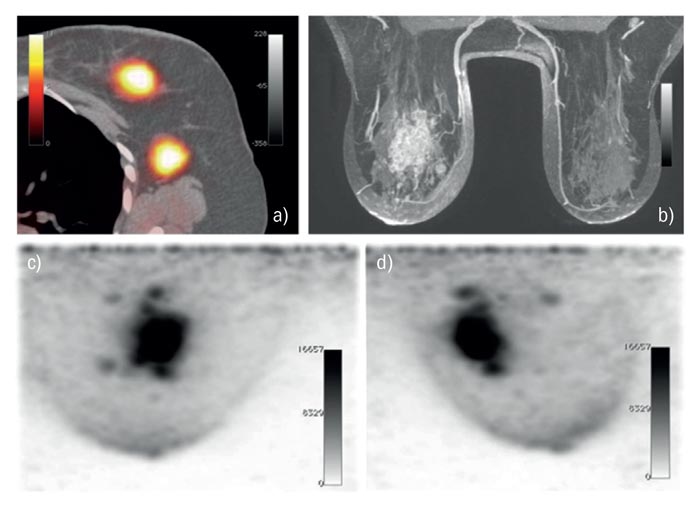
The sample case study shown in figure 3 is a patient who was diagnosed with multifocal breast cancer during the initial examination. The whole-body PET/CT reveals a first lesion in the left breast and a second close to the axilla. Before deciding on the best therapy, it was crucial to find out whether the cancer had spread to the whole breast or was still confined to two individual lesions. An extended examination with MRI shows small lesions around the first one. The whole-body PET/CT image, however, does not show any small lesions. The standard procedure is to obtain biopsy samples of the suspicious tissue. However, the availability of a high-resolution PET can give the same information. Indeed, when the patient was imaged with ClearPEM, the lesions visible with MRI were confirmed to be metabolically hyperactive, i.e. potentially cancerous. The biopsy subsequently conducted confirmed this indication. This clinical case study, together with several others, hints at how ClearPEM could improve the diagnostic process.
This project successfully demonstrates the value of fundamental research in high-energy physics in applications to wider society. The knowledge gained by an international collaboration in the development of particle detectors for the LHC has been put to use in the construction of a new medical device – a dedicated breast PET scanner, ClearPEM. It provides excellent image resolution that allows the detection of small lesions. Its high detection efficiency allows a reduction in the total examination time and in the amount of radioactive tracer that has to be injected. Last, first clinical results hint at the medical value of this device.
• The members of the ClearPEM-Sonic collaboration are: CERN; the University of Aix-Marseille; the Vrije Universiteit Brussels; the Portuguese Laboratory for Particle Physics and Instrumentation, Lisbon; the Laboratoire de Mecanique et Acoustique, Marseille; the University Milano-Biccoca; PETsys, Lisbon; SuperSonic Imagine, Aix-en-Provence; AssistancePublique – Hôpitaux de Marseille; and the Institut Paoli Calmettes, Marseille.
The discovery of a Higgs boson by the ATLAS and CMS collaborations at the LHC has opened new perspectives on accelerator-based particle physics. While much else might well be discovered at the LHC as its energy and luminosity are increased, one item on the agenda of future accelerators is surely a Higgs factory capable of studying this new particle in as much detail as possible. Various options for such a facility are under active consideration and circular electron–positron (e+e–) colliders are now among them.
In a real sense, a Higgs factory already exists in the form of the LHC, which has already produced millions of Higgs bosons and could produce hundreds of millions more with the high-luminosity upgrade planned for the 2020s. However, the experimental conditions at the LHC restrict the range of Higgs decay modes that can be observed directly and measured accurately. For example, decays of the Higgs boson into charm quarks are unlikely to be measurable at the LHC. On the one hand, decays into gluons can be measured only indirectly via the rate of Higgs production by gluon–gluon collisions and it will be difficult to quantify accurately invisible Higgs decays at the LHC. On the other hand, the large statistics at the LHC will enable accurate measurements of distinctive subdominant Higgs decays such as those into photon pairs or ZZ*. The rare decay of the Higgs into muon pairs will also be accessible. The task for a Higgs factory will be to make measurements that complement or are even more precise than those possible with the LHC.
Attractive options
Cleaner experimental conditions are offered by e+e– collisions. Prominent among other contenders for a future Higgs factory are the design studies for a linear e+e– collider: the International Linear Collider (ILC) and the Compact Linear Collider (CLIC). In addition to running at the centre-of-mass energy of 240 GeV that is desirable for Higgs production, these also offer prospects for higher-energy collisions, e.g. at the top–antitop threshold of 350 GeV and at 500 GeV or 1000 GeV in the case of the ILC, or even higher energies at CLIC. These would become particularly attractive options if future, higher-energy LHC running reveals additional new physics within their energy reach. High-energy e+e– collisions would also offer prospects for determining the triple-Higgs coupling, something that could be measured at the LHC only if it is operated at the highest possible luminosity.
There has recently been a resurgence of interest in the capabilities of circular e+e– colliders being used as Higgs factories following a suggestion by Alain Blondel and Frank Zimmermann in December 2011 (Blondel and Zimmermann 2011). It used to be thought that the Large Electron–Positron (LEP) collider would be the largest and highest-energy circular e+e– collider and that linear colliders would be more cost-efficient at higher energies. However, advances in accelerator technology since LEP was designed have challenged this view. In particular, the development of top-up injection at B factories and synchrotron radiation sources, as well as advances in superconducting RF and in beam-focusing techniques at interaction points, raise the possibility of achieving collision rates at each interaction point at a circular Higgs factory that could be more than two orders of magnitude larger than those achieved at LEP. Moreover, it would be possible to operate such a collider with as many as four interaction points simultaneously, as at LEP.
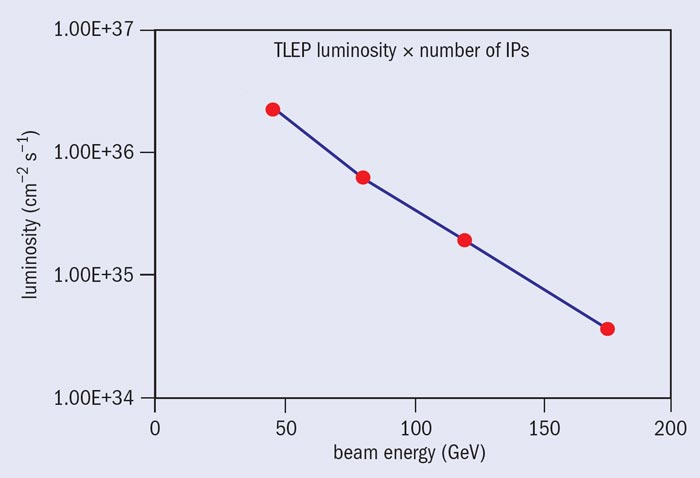
The concept for a circular e+e– collider that has been most studied is TLEP, which would be installed in a tunnel some 80–100 km in circumference. This would be capable of collisions at 350 GeV in the centre of mass, while the specifications call for a luminosity of 1034 cm–2 s–1 at this energy at each of the four interaction points. With conservative technical assumptions, the corresponding luminosity at a centre-of-mass energy of 240 GeV would exceed 4 × 1034 cm–2 s–1 at each interaction point, as figure 1 shows (Koratzinos et al. 2013). It is encouraging that previous circular e+e– colliders – such as LEP and the B factories – have established a track record of exceeding their design luminosities and that there are no obvious show-stoppers to achieving these targets at TLEP.
The design luminosity of TLEP would enable millions of Higgs bosons to be produced under clean experimental conditions
The design luminosity of TLEP would enable millions of Higgs bosons to be produced under clean experimental conditions. The Higgs mass could then be measured with a statistical precision below 10 MeV and the total decay width with an accuracy of better than 1.5%. Many decay modes, such as those into gluon pairs, WW*, ZZ*, and invisible decays could be measured with an accuracy of better than 0.2% and γγ decays to better than 1.5%. This would challenge the predictions of reclusive supersymmetric models, which predict only small deviations of Higgs properties from those expected in the Standard Model, as figure 2 shows.
One essential limitation on the ambition for such a collider is the overall power consumption. The largest, single energy requirement is for the RF acceleration system. Fortunately, because it would operate in continuous rather than pulsed mode, experience with LEP suggests that an overall efficiency above 50% should be attainable. The collision performances quoted here would require an RF power consumption of around 200 MW, to which should be added some 100 MW for cooling, ventilation, other services and the experiments. This is similar to the requirements of other major future accelerators at the energy frontier, such as the ILC and CLIC.
One attractive feature of circular e+e– colliders is that they could offer significantly higher luminosities at lower energies. For example, a total luminosity of 2 × 1036 cm–2 s–1 should be possible with TLEP running at the Z peak, and 5 × 1035 cm–2 s–1 at the W+W– threshold, which would offer prospects of data samples with the order of 1012 Zs and 108 W events. The statistical precision and the sensitivity to rare decays provided by such samples extend far beyond those envisaged in previous studies of Z and W physics, corresponding, e.g. perhaps to δsin2θW ˜ 10–6 and δmW ˜ 1 MeV. It will require both a major experimental effort to understand how to control systematic errors and a major theoretical effort to optimize the interpretation of the information obtainable from such data sets.
Although the baseline for TLEP is a tunnel with a circumference of 80–100 km, it is interesting to consider how the performance of a circular e+e– collider would scale with its circumference. Generally speaking, a smaller ring would be expected to have a lower maximum centre-of-mass energy, as well as lower luminosities at the energies within its reach. The lower limit of the range of ring sizes under consideration is represented by the LHC tunnel, with its circumference of 27 km. An e+e– collider in an LHC-sized tunnel could reach 240 GeV in the centre of mass – for Higgs studies with a luminosity above 1034 cm–2 s–1 at each interaction point – and could produce impressive quantities of Z bosons and WW pairs. It is difficult to imagine installing an e+e– collider in the LHC tunnel before the LHC experimental programme runs its full course but installation in a new tunnel would not be subject to such a restriction and interest in such a project has been expressed in various regions of the world.
One attractive option would be to envisage a future circular e+e– collider as part of a future, very large collider complex. For example, a tunnel with a circumference of 80–100 km could also accommodate a proton–proton collider capable of collisions at 80–100 TeV in the centre of mass, which would also open up the option of very-high-energy electron–proton collisions. This could be an appealing vision for accelerator particle physics at the energy frontier for much of the 21st century. Such a complex would fit naturally into the updated European Strategy for Particle Physics, which has recently been approved.
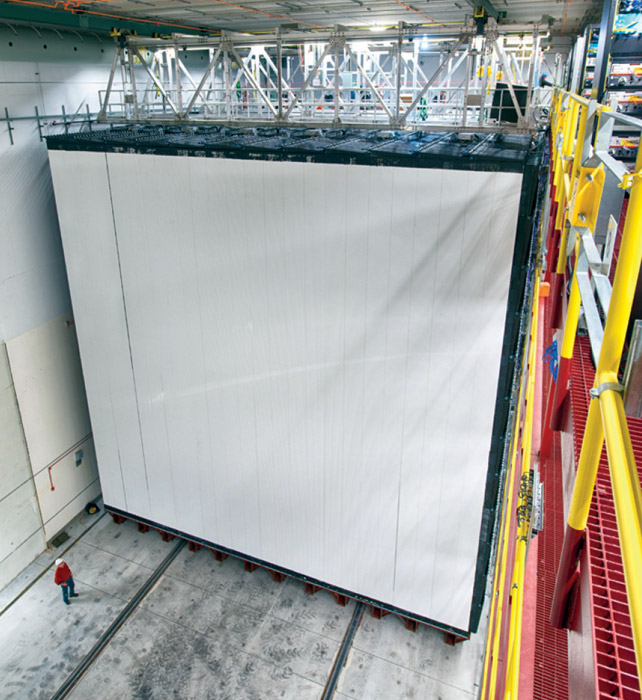
The NOvA neutrino detector that is currently under construction in northern Minnesota has recorded its first 3D images of particle tracks. Researchers started up the electronics for a section of the first block of the NOvA detector in March and the experiment was soon catching more than 1000 cosmic rays a second. Once completed in 2014, the NOvA detector will consist of 28 blocks with a total mass of 14,000 tonnes. The blocks are made of PVC tubes filled with scintillating liquid. It will be the largest free-standing plastic structure in the world.
Fermilab, located 810 km south-east of the NOvA site, will start sending neutrinos to Minnesota in the summer. The laboratory is finalizing the upgrades to its Main Injector accelerator, which will provide the protons that produce the neutrino beam. The upgraded accelerator will produce a pulse of muon neutrinos every 1.3 seconds and the goal is to achieve a proton-beam power of 700 kW. A smaller, 330-tonne version of the far detector for NOvA will be built on the Fermilab site to measure the composition of the neutrino beam before it leaves the laboratory.
The neutrino beam will provide particles for three experiments: MINOS, located 735 km from Fermilab in the Soudan Underground Laboratory, right in the centre of the neutrino beam; NOvA, which is located off axis to probe a specific part of the energy spectrum of the neutrino beam, optimal for studying the oscillation of muon neutrinos into electron neutrinos; and MINERvA, a neutrino experiment located on the Fermilab site.
The NOvA collaboration aims to discover the mass hierarchy of the three known types of neutrino – which type of neutrino is the heaviest and which is the lightest. The answer will shed light on the theoretical framework that has been proposed to describe the behaviour of neutrinos. Their interactions could help to explain the imbalance of matter and antimatter in today’s universe; there is even the possibility that there might be still more types of neutrino.
The NOvA detector will be operated by the University of Minnesota under a co-operative agreement with the Office of Science of the US Department of Energy (DOE). About 180 scientists, technicians and students from 20 universities and laboratories in the US and another 14 institutions around the world are members of the NOvA collaboration. The scientists are funded by the DOE, the US National Science Foundation and funding agencies in the Czech Republic, Greece, India, Russia and the UK.
A new particle accelerator in the UK has achieved a significant electron acceleration milestone. On 5 April, the Versatile Electron Linear Accelerator (VELA) produced its first electron beam, an important step on the way to being ready for commercial and research use this summer.
VELA, which is situated at the Daresbury Laboratory of the Science and Technology Facilities Council, is designed to be one of the most flexible particle accelerators of its type. The medium-term aim is to develop the 6 MeV injector with additional linac sections in order to achieve 250 MeV beams at 400 Hz with bunch charges in the range 50–250 pC. At present, the beam pulses are generated by targeting a copper photo-cathode with a UV laser.
With stable, reliable beams over a broad range of energies, VELA will provide interesting new opportunities for users and collaborators. The facility is exceptional in offering access on “both sides of the wall”, allowing users not only to perform conventional studies on samples but also to access the accelerator itself. This opens up the possibility of testing a variety of accelerator components or items for beam diagnostics.
One of the primary collaborating institutes currently working on VELA is Strathclyde University. The team from Strathclyde has provided a significant level of hardware that will allow a demonstration of the capability of RF injectors for use with laser-driven plasma wakefield accelerators. The researchers plan to install an RF injector for Strathclyde’s project Advanced Laser-plasma High-energy Accelerators towards X-rays (ALPHA-X), but to date they have not been able to demonstrate a suitable performance capability. Working with VELA, however, they have developed a system that is directly suited to their application and its design is being qualified, enabling its use at the university’s facility.
The plan for VELA is to continue collaborations with other leading institutions and with industry. The aim is that the facility will allow the development of technological advances in accelerator design, for use not only in research but also in industry.
The Nuclotron-based Ion Collider fAcility (NICA) is the future flagship project of the Joint Institute for Nuclear Research in Dubna. In addition to the existing Nuclotron, this accelerator-collider complex will include a new heavy-ion linear accelerator, a superconducting 25 Tm booster synchrotron and two rings for a superconducting collider. The new facility will ultimately provide a range of different ion beams for a variety of experiments with both colliding beam and fixed targets (see box).
Construction of the 3 MeV/u heavy-ion linear accelerator is now under way in co-operation with the BEVATECH Company in Germany; its commissioning in Dubna is scheduled for the end of 2013. Serial production of superconducting magnets for the booster is expected to start in early 2014. The Technical Design Report for the collider complex has meanwhile been approved. As the first step in the realization of the NICA heavy-ion programme, Baryonic Matter at Nuclotron (BM@N) – a new fixed-target experiment developed in co-operation with GSI, Darmstadt – has been approved by JINR’s Programme Advisory Committee and Scientific Council and is now under construction.
In the meantime, the modernized Nuclotron, which will be a key element of the future facility, is being used for basic research in accelerator physics and techniques, the development of modern diagnostics and the testing of prototypes for the collider and booster systems. This is in addition to the implementation of the current physics programme at the superconducting 45 Tm synchrotron. Development work for NICA performed during recent Nuclotron runs include the testing of elements and prototypes for the Multipurpose Detector using extracted deuteron beams; the transportation of the extracted beam (C6+ ions at 3.5 GeV/u and deuterons at 4 GeV/u) to the point where the BM@N detector is under construction; tests of the Nuclotron operating with a long flat-top of the high magnetic field (up to 1000 s, 1.5 T) to simulate the operating conditions of the magnetic system for the collider; and operational tests of the automatic control system based on the TANGO platform, which has been chosen for the NICA facility.
A particularly important step concerned the construction, installation and testing at the Nuclotron of the prototype for the collider’s stochastic cooling system
A particularly important step concerned the construction, installation and testing at the Nuclotron of the prototype for the collider’s stochastic cooling system. This is of major importance for NICA’s heavy-ion programme because beam cooling during collisions is essential for providing maximal luminosity across the whole energy range of 1–4.5 GeV/u. Operational experience of stochastic cooling and experimental investigations of the beam-cooling process at the Nuclotron are therefore a necessity.
The design and construction of the stochastic-cooling channel at the Nuclotron began in mid-2010 in close collaboration with the Forschungszentrum Jülich (FZJ). All stages of the work have been strongly supported by the director of the FZJ’s Institute for Nuclear Physics (IKP), Rudolph Mayer. This R&D is also important to IKP FZJ for testing elements of the stochastic-cooling system designed for the High-Energy Storage Ring (HESR), which will form part of the future international Facility for Antiproton and Ion Research in Darmstadt.
The main task of beam cooling at the HESR will be to accumulate a beam with 1010 antiprotons above 3 GeV at a momentum resolution down to 10–5 for the PANDA experiment. To enhance beam-cooling performance, new ring slot couplers have been developed at FZJ for the pick-up and kicker structures. The pick-ups were tested successfully at the Cooler Synchrotron at FZJ in experiments with the internal target of the Wide-Angle Shower Apparatus.
A pick-up and kicker, each assembled from 16 rings designed for a 2.4 GHz bandwidth, were produced at FZJ for testing at JINR, as the institutes joined forces to prepare for an experiment on stochastic cooling at the Nuclotron. The kicker structure was installed in the room-temperature section of the Nuclotron, with the pick-up structure in the cold section on the opposite side of the 251-m circumference ring, operating at 4.5 K. The first experiments aimed at achieving longitudinal cooling using the filter method. The notch filter and tunable system-delay were implemented on optical lines and a maximum power of 20 W was chosen for the final amplifier.
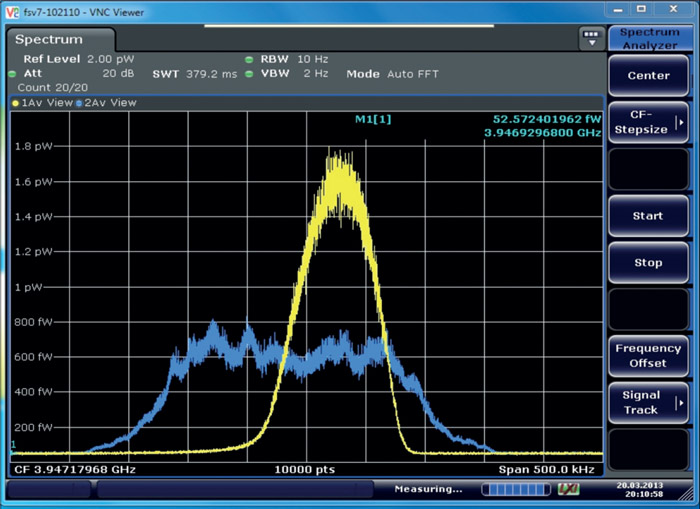
Construction of the system, its assembly and the cryogenic tests were completed in the autumn of 2011. Then, in December 2011, the equipment was tested for the first time in Nuclotron run 44 with C6+ and deuteron beams. The performance of the system was improved following the results of these first tests, and the software required to adjust the system was developed. This enabled the recent successful test during Nuclotron run 47 in February and March this year, when the system was adjusted to cool the coasting 3 GeV/u deuteron beam and on 20 March the decrease in its momentum spread was demonstrated (figure 1).
To make the effect more observable, the initial momentum spread was increased artificially by manipulation of the RF voltage at the final stage of the beam acceleration. The beam-cooling time of about 360 s is in reasonable agreement with the simulations. Details of this experiment are to be presented at the COOL13 conference in June. Another important result from the recent run was the increase of the maximum deuteron beam energy delivered for physics experiments up to 4.8 GeV/u.
The experimental investigation of stochastic cooling was a complex test of machine performance. During the Nuclotron run, the cryogenic and magnetic systems, power supply and quench-protection systems, cycle control and diagnostic equipment were operated stably in a mode in which the circulation time of the accelerated beam at the flat-top of the magnetic field gradually increased from a few tens of seconds up to eight minutes. The safe operation of the magnetic system was guaranteed by a new quench-detection system commissioned during the run. It permits a prompt change in the number of detectors, combining the work on the group and individual detectors. The detectors for this new method and their automatic control systems were developed at the Nuclotron and have been chosen for manufacture and installation on the NICA booster. The system provides monitoring of the statuses of all of its components, as well as signal testing of external systems, and also indicates malfunctions.
These tests were the result of an international team effort: A Sidorin, N Shurkhno, G Trubnikov (JINR, Dubna) and R Stassen (IKP FZJ) supervised all stages of the system design and participated in the Nuclotron shifts dedicated to testing and adjusting the equipment; T Katayama and H Stockhorst (GSI and IKP FZJ) performed simulations of the cooling-process dynamics and experimental measurements; L Thorndahl and F Caspers (CERN) contributed to the design and simulation of RF structures.
NICA's Objectives
The NICA facility will provide experiments with:
• extracted ion beams (from protons up to gold or uranium nuclei) at kinetic energies up to 13.8 GeV (for protons), 6 GeV/u (for deuterons) and 4.5 GeV/u for heavy nuclei. The fixed-target experimental BM@N is under construction by a JINR-GSI collaboration;
• colliding heavy-ion beams with a kinetic energy in the range 1–4.5 GeV/u at a luminosity of 1027 cm–2 s–1;
• colliding heavy and light ions with the same energy range and luminosity;
• colliding polarized beams of light ions in the kinetic energy range 5–12.5 GeV/u for protons and 2 – 5.8 GeV/u for deuterons, at a luminosity level not less than 1031 cm–2 s–1.
NICA’s beams will be available to these experimental areas and facilities:
• 10,000 m2 experimental hall for fixed-target experiments, using slow, extracted beams from the Nuclotron;
• the dedicated experimental hall for applied research on extracted ion beams from the booster;
• the collider of heavy and light polarized ions, equipped with the MultiPurpose Detector and the Spin Physics Detector for fundamental research;
• an internal target station in the Nuclotron cryomagnetic system for research, including relativistic atomic physics and spin physics.
When the LHC and injector beams stopped on 16 February, the following words appeared on LHC Page 1: “No beam for a while. Access required: Time estimate ˜2 years”. This message marked the start of the first long shutdown (LS1). Over the coming years, major maintenance work will be carried out across the whole of CERN’s accelerator chain. Among the many tasks foreseen, more than 10,000 LHC magnet interconnections will be consolidated and the entire ventilation system for the 628-m-circumference Proton Synchrotron will be replaced, as will more than 100 km of cables on the Super Proton Synchrotron. The LHC is scheduled to start up again in 2015, operating at its design energy of 7 TeV per beam, with the rest of the CERN complex restarting in the second half of 2014.
The LHC’s first dedicated proton–lead run came to an end on 10 February, having delivered an integrated luminosity of more than 30 nb–1 to ALICE, ATLAS and CMS and 2.1 nb–1 to LHCb, with the TOTEM, ALFA and LHCf experiments also taking data. This run had ended later than planned because of challenges that had arisen in switching the directions of the two beams; as a result the 2013 operations were extended slightly to allow four days of proton–proton collisions at 1.38 TeV. To save time, these collisions were performed un-squeezed. After set up, four fills with around 1300 bunches and a peak luminosity of 1.5 × 1032 cm–2 s–1 delivered around 5 pb–1 of data to ATLAS and CMS. The requisite luminosity scans were somewhat hampered by technical issues but succeeded in the end, leaving just enough time for a fast turnaround and a short final run at 1.38 TeV for ALFA and TOTEM.
On 14 February, the shift crew dumped the beams from the LHC to bring to an end the machine’s first three-year physics run. Two days of quench tests followed immediately to establish the beam loss required to quench the magnets. Thanks to these tests, it will be possible to set optimum thresholds on the beam-loss monitors when beams circulate again in 2015.
Despite no beam from 16 February onwards, the LHC stayed cold until 4 March so that powering tests could verify the proper functioning of the LHC’s main magnet (dipole and quadrupole) circuits. At the same time, teams in the CERN Control Centre performed extensive tests of all of the other circuits, up to current levels corresponding to operation with 7 TeV beams. By powering the entire machine and then going sector by sector, the operators managed to perform more than a thousand tests on 540 circuits in just 10 days. Small issues were resolved by immediate interventions and the operators identified a number of circuits that need a more detailed analysis and possibly intervention during LS1.
With powering tests complete, the Electrical Quality Assurance team could test the electrical insulation of each magnet, sector by sector, before the helium was removed and stored. Beginning with sector 5–6, the magnets are now being warmed up carefully and the entire machine should be at room temperature by the end of May.
On the same day that the LHC’s first three-year physics run ended, CERN announced that its data centre had recorded more than 100 petabytes (PB) – 100 million gigabytes – of physics data.
Amassed over the past 20 years, the storing of this 100 PB – the equivalent of 700 years of full HD-quality video – has been a challenge. At CERN, the bulk of the data (about 88 PB) is archived on tape using the CERN Advanced Storage (CASTOR) system. The rest (13 PB) is stored on the EOS-disk pool system, which is optimized for fast analysis access by many concurrent users.
For the CASTOR system, eight robotic tape libraries are distributed across two buildings, with each tape library capable of containing up to 14,000 tape cartridges. CERN currently has around 52,000 tape cartridges with a capacity ranging from 1 terabyte (TB) to 5.5 TB each. For the EOS system, the data are stored on more than 17,000 disks attached to 800 disk servers.
Not all of the data are generated by LHC experiments. CERN’s IT Department hosts data from many other high-energy physics experiments at CERN, past and present, and is also a data centre for the Alpha Magnetic Spectrometer.
For both tape and disk, efficient data storage and access must be provided, and this involves identifying performance bottlenecks and understanding how users want to access the data. Tapes are checked regularly to make sure that they stay in good condition and are accessible to users. To optimize storage space, the complete archive is regularly migrated to the newest high-capacity tapes. Disk-based systems are replicated automatically after hard-disk failures and a scalable namespace enables fast concurrent access to millions of individual files.
The data centre will keep busy during the long shutdown of the whole accelerator complex, analysing data taken during the LHC’s first three-year run and preparing for the higher expected data flow when the accelerators and experiments start up again. An extension of the centre and the use of a remote data centre in Hungary will further increase the data centre’s capacity.
To provide the best experiences, we use technologies like cookies to store and/or access device information. Consenting to these technologies will allow us to process data such as browsing behavior or unique IDs on this site. Not consenting or withdrawing consent, may adversely affect certain features and functions.
Functional
Always active
The technical storage or access is strictly necessary for the legitimate purpose of enabling the use of a specific service explicitly requested by the subscriber or user, or for the sole purpose of carrying out the transmission of a communication over an electronic communications network.
Preferences
The technical storage or access is necessary for the legitimate purpose of storing preferences that are not requested by the subscriber or user.
Statistics
The technical storage or access that is used exclusively for statistical purposes.The technical storage or access that is used exclusively for anonymous statistical purposes. Without a subpoena, voluntary compliance on the part of your Internet Service Provider, or additional records from a third party, information stored or retrieved for this purpose alone cannot usually be used to identify you.
Marketing
The technical storage or access is required to create user profiles to send advertising, or to track the user on a website or across several websites for similar marketing purposes.