By Marjorie C Malley Oxford University Press
Hardback: £14.99 $21.95
Between 1899 and 1902, Polish physicist Marie Curie processed 100 kg of radioactive pitchblende ore – in 20 kg batches – by hand, in the courtyard of a leaky shed in Paris. The feat provided her with the atomic weight of radium and earned her a Nobel prize. But the research also left her with lifelong medical complications from exposure to radioactivity.
Marjorie C Malley’s comprehensive history of radioactivity captures the excitement, promise and tragedy of the “mysterious” field from its inception in the late 19th century to the present day. The narrative spans two continents and two world wars, taking in decorative uranium glassware, radium spas and atom bombs along the way. Avoiding technical detail, Malley explores the cultural, technological and scientific forces that shaped research in radioactivity, and relates the important personalities and discoveries that drove the field forward.
Malley’s cast spreads across France, Germany, the UK and Canada. We are introduced to Wilhelm Röntgen, discoverer of X-rays; Henri Becquerel, who noticed that invisible rays from uranium registered on photographic plates, even in the dark; and Marie Curie, who first applied electrical techniques to understanding radioactive substances and who discovered the elements radium and polonium in the process.
In Canada, Ernest Rutherford and Frederick Soddy investigated further the radioactivity of both uranium and thorium and found that in the course of emitting radiation they change into different elements. The shock of atomic transmutation – with its undertones of alchemy – was almost heresy to chemists at the time. When they returned to the UK, Rutherford went on to discover the atomic nucleus, while Soddy was the first to form the concept of isotopes.
Two aspects of Malley’s narrative stand out for me: the “reasonable” hypotheses that scientists put forward for the origins of radioactivity, which seem so outlandish now; and the shocking ignorance of the true medical dangers of radiation that prevailed until relatively late in the 20th century.
In fluorescent paint factories of the 1920s, workers wetted the tips of their brushes with their lips, swallowing radioactive radium in the process. Alpha radiation from the paint often led to the death of jaw tissue and mysterious cancers. Researchers regularly mixed radioactive solutions with their fingers: physicist Stefan Meyer had to give up playing the bass viol because of radiation damage to his fingers.
Malley’s clearly written text captures the intellectual excitement of early research into radioactivity, though I found her section on the cultural forces shaping radioactivity rather weak. Although she notes that individuals, scientific ideals, culture and nationalism (among others) triggered the spurt of research interest in radioactivity, I was unconvinced that research into radioactivity deserves a special place among the countless other scientific advances of the 20th century. Was its development really that unique? I also felt that in a history of radioactivity, the implications of using nuclear power – for good or evil – were rather glossed over in deference to scientific papers and super scientists.
In Radioactivity, Malley weaves disparate historical threads into an accessible and engaging narrative for the nonexpert. I would recommend this book, describing it as a well written and useful overview of the topic for students and teachers. Those seeking in-depth analysis of the implications of the technology – or biographies of the scientists involved – should look elsewhere.
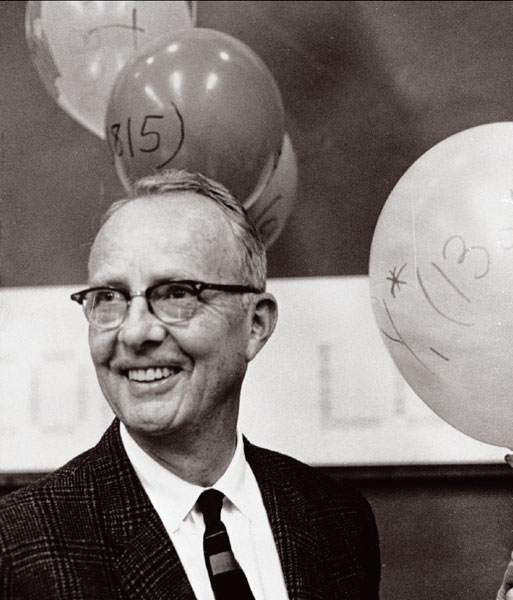
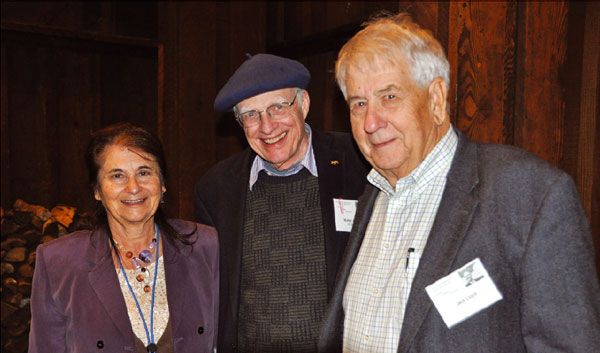
Luis Alvarez – one of the greatest experimental physicists of the 20th century – combined the interests of a scientist, an inventor, a detective and an explorer. He left his mark on areas that ranged from radar through to cosmic rays, nuclear physics, particle accelerators, detectors and large-scale data analysis, as well as particles and astrophysics. On 19 November, some 200 people gathered at Berkeley to commemorate the 100th anniversary of his birth. Alumni of the Alvarez group – among them physicists, engineers, programmers and bubble-chamber film scanners – were joined by his collaborators, family, present-day students and admirers, as well as scientists whose professional lineage traces back to him. Hosted by the Lawrence Berkeley National Laboratory (LBNL) and the University of California at Berkeley, the symposium reviewed his long career and lasting legacy.
A recurring theme of the symposium was, as one speaker put it, a “Shakespeare-type dilemma”: how could one person have accomplished all of that in one lifetime?
Beyond his own initiatives, Alvarez created a culture around him that inspired others to, as George Smoot put it, “think big,” as well as to “think broadly and then deep” and to take risks. Combined with Alvarez’s strong scientific standards and great care in executing them, these principles led directly to the awarding of two Nobel prizes in physics to scientists at Berkeley – George Smoot in 2006 and Saul Perlmutter in 2011 – in addition to Alvarez’s own Nobel prize in 1968.
Invaluable talents
Rich Muller, who was Alvarez’s last graduate student, described some of his mentor’s work during the Second World War. Alvarez’s talents as an inventor made him invaluable to the war effort. Among his contributions was the ground-controlled approach (GCA) that allowed planes to land at night and in poor visibility. For the rest of his life, at least once a year, Alvarez would bump into someone who thanked him for GCA, explaining: “I was a pilot in the Second World War and you saved my life.” In 1948, when the Soviets imposed a blockade of Berlin, GCA allowed the Berlin Airlift to succeed by assuring the cargo planes’ safe landing in difficult circumstances.
In the early post-war period, Alvarez’s inventions included the proton linear accelerator (with Wolfgang Panofsky) and a tandem Van de Graaff accelerator. Over his lifetime he was granted more than 40 US patents. He applied for his first in 1943 and his last in 1988, the year he died. He was one of the first inductees to the Inventor’s Hall of Fame. He loved thinking and, heeding the advice of his physiologist father, frequently made time to sit and think. Muller recalled that Alvarez told him that only one idea in 10 is worth pursuing, and only one in 100 might lead to a discovery. Considering how many of his ideas bore remarkable fruit, Muller concluded that Alvarez must have had thousands of them.
One such idea originated from his interactions in 1953 with Don Glaser, who invented the bubble chamber. Alvarez thought that a large liquid-hydrogen bubble chamber was needed to solve all of the puzzles generated by the many particles that had been recently discovered. He immediately put his two graduate students, Frank Crawford and Lynn Stevenson, and a number of his technicians to work on the project. The first tracks in a hydrogen bubble chamber were seen in the summer of 1954.
A succession of chambers then culminated in the 72-inch bubble chamber, which began operating in 1959. Jack Lloyd, an engineer in the Alvarez group at the time, believes that it was probably one of the largest tanks of liquid hydrogen ever made (400 l), interfaced with the most enormous piece of optical glass ever made. As Lloyd recalled: “It had to work at around 60 or 70 psi and it pulsed every 6 s, with about a 10 psi pulse, which is a frightening thing to an engineer because of potential fatigue problems.”
Observation of the traces left by particles in the bubble chamber needed additional equipment for scanning the photographs and measuring the tracks. In the end, it was necessary to use computers to handle the wealth of information coming from the measurements. The latter task was assigned to Art Rosenfeld, who came to the Alvarez group as a post-doc on the recommendation of Enrico Fermi. Fermi said that, given the politics of the two men, they would be on speaking terms about 80% of the time. “That was right,” Rosenfeld recalled. Keeping the peace was not among Alvarez’s strengths.
By 1967 the Alvarez group was analysing more than a million events a year. An army of scanners examined the films for events of interest and a battalion of computer programmers wrote code to analyse them. The bubble-chamber team was at that time the largest high-energy physics group in the world, totalling several hundred people. The development of the chamber and the analysis systems resulted in an explosion of new particle discoveries that helped to establish the quark model. It was this work that earned Alvarez the Nobel Prize in Physics in 1968.
Among his other attention-grabbing ideas was the use of cosmic rays to search for secret chambers in Chephren’s pyramid in Giza. Jerry Anderson, who collaborated on the project in the late 1960s, told of Alvarez’s work in assembling a team of Egyptian and US scientists to design and carry out the experiment. After pointing detectors in several different directions they found no evidence of any voids in the solid pyramid. Afterwards, if anyone commented that the team had not found any hidden chambers, Alvarez would respond, “We found that there were no hidden chambers” – an important distinction.
Around that same time he became interested in a film taken with a home-movie camera that captured the assassination of President John F Kennedy. Charles Wohl, a student in his group, described Alvarez’s careful analysis of the film and his conclusions, which clarified some of the uncertainties in the official investigation of the assassination.
The Alvarez philosophy
More than one speaker quoted this passage from Alvarez’s autobiography: “I’m convinced that a controlled disrespect for authority is essential to a scientist. All of the good experimental physicists I have known have had an intense curiosity that no ‘Keep Out’ sign could mute.” Yet, Alvarez had a perfect safety record while building and operating the huge bubble chamber. Stanley Wojcicki, who was a graduate student in the group, said that when Alvarez was retiring as the head of the bubble-chamber group and a new head was about to be appointed, someone asked him about the replacement’s responsibilities. “He’s the person who talks to the widows after an accident,” was Alvarez’s response.
Saul Perlmutter, who was Muller’s graduate student, felt Alvarez’s influence keenly when he came to LBNL in 1982. He characterized it as a “can-do, cowboy spirit”. He explained: “As a physicist, you had the hunting licence to look at any problem whatsoever and also you had the arrogance to think you were going to be able to solve that problem – or at least be able to make a measurement that might be relevant to the problem. And if there was equipment around, you would use it; and if there was not equipment around, you would invent it. And you had the wealth of talent around you, of the engineers, mechanical and electrical, who knew how to put these things together and how to make them work.” That was fertile ground for discovery.
Perlmutter also benefited from Alvarez’s philosophy in another way. When he and Carl Pennypacker wanted to start looking for supernovae at greater distances, Muller was sceptical about their prospects for success. However, he had learnt from Alvarez that part of the job of a group leader is to support people in trying things even if you are not sure that they are the right things to do. This is what he did – and Perlmutter’s Nobel prize for that work attests to Muller’s (and Alvarez’s) wisdom.
In the final decade of his life, Alvarez’s “hunting licence” led him into geology and palaeontology. His son, Walter Alvarez, a geologist studying the Cretaceous-Tertiary boundary in an outcropping in Italy, gave his father a rock showing the clay boundary separating a layer of limestone with abundant fossils of diverse species and a layer largely devoid of signs of life. Luis was intrigued and eventually conceived of a way of determining how long it took for this clay layer to accumulate. This would signal whether the mass extinction was sudden or gradual. Neutron activation analysis showed an anomalous abundance of iridium in the clay layer, a result that led eventually to the Alvarez’s theory that an impact from a comet or asteroid caused the dinosaurs and other species to die out. The announcement stirred a controversy that was only recently settled in their favour.
Other speakers during the day attested to Luis Alvarez’s inventive spirit and his fearlessness in asking original and important questions in far-flung fields in which he had no previous experience. He eagerly embraced new ideas and unhesitatingly took on new challenges throughout his career. The lively and enlightening day ended with a reception and dinner, where more family members and colleagues related their recollections of this icon of 20th-century science and technology.
By Paul S Wesson World Scientific
Hardback: £45 $65
E-book: $85
Aimed at a broad audience, Weaving the Universe provides a thorough but short review of the history and current status of ideas in cosmology. The coverage of cosmological ideas focuses on the early 1900s, when Einstein formulated relativity and when Sir Arthur Eddington was creating relativistic models of the universe. It ends with the completion of the LHC in late 2008, after surveying modern ideas of particle physics and astrophysics – weaved together to form a whole account of the universe.
By Stephen Haywood Imperial College Press
Hardback: £36 $58
Paperback: £17 $28
Group theory provides the language for describing how particles (and in particular, their quantum numbers) combine. This provides understanding of hadronic physics as well as physics beyond the Standard Model. The book examines symmetries and conservation laws in quantum mechanics and relates these to groups of transformations. The symmetries of the Standard Model associated with the electroweak and strong (QCD) forces are described by the groups U(1), SU(2) and SU(3). The properties of these groups are examined and the relevance to particle physics is discussed.
By Giovanni Montani, Marco Valerio Battisti, Riccardo Benini and Giovanni Imponente World Scientific
Hardback: £123 $199
E-book: $259
In this book the authors provide a self-consistent and complete treatment of the dynamics of the very early universe, passing through a concise discussion of the Standard Cosmological Model, a precise characterization of the role played by the theory of inflation, up to a detailed analysis of the anisotropic and inhomogeneous cosmological models. They trace clearly the backward temporal evolution of the universe, starting with the Robertson–Walker geometry and ending with the recent results of loop quantum cosmology on the “Big Bounce”.
By Gerald E Brown et al. (eds.) World Scientific
Hardback: £87 $140
E-book: $182
These selected papers provide a comprehensive overview of some key developments in the understanding of the nucleon–nucleon interaction and nuclear many-body theory. With their influential 1967 paper, Brown and Kuo prepared the effective theory that allowed the description of nuclear properties directly from the underlying nucleon–nucleon interaction. Later, the addition of “Brown-Rho scaling” to the one-boson-exchange model deepened the understanding of nuclear matter saturation, carbon-14 dating and the structure of neutron stars.
By S Esposito and O Pisanti (eds.) World Scientific
Hardback: £76 $111
E-book: $144
This unique volume gives an accurate and detailed description of the functioning and operation of basic nuclear reactors, as emerging from previously unpublished papers by Enrico Fermi. The first part contains the entire course of lectures on neutron physics delivered by Fermi at Los Alamos in 1945, as recorded in notes by Anthony P French. Here, the fundamental physical phenomena are described comprehensively, giving the appropriate physics underlying the functioning of nuclear piles. The second part contains the patents issued by Fermi (and co-workers) on the functioning, construction and operation of several different kinds of nuclear reactor.
By Ifan Hughes and Thomas Hase Oxford University Press
Hardback: £39.95 $85
Paperback: £19.95
This hands-on guide is primarily intended to be used in undergraduate laboratories in the physical sciences and engineering. It assumes no prior knowledge of statistics and introduces the necessary concepts where needed. Key points are shown with worked examples and illustrations. In contrast to traditional mathematical treatments, it uses a combination of spreadsheet and calculus-based approaches, suitable as a quick and easy on-the-spot reference.
By Baruch Fischhoff and John Kadvany Oxford University Press
Hardback: £7.99
Amazing. A book that should be read by everyone who is still thinking of investing in hedge funds or believing that the stock market is rational. The subject is well explained, covering risk types that we are all familiar with, as well as some that most of us probably never think of as risk. What I especially like is the large number of recent events that are discussed, deep into the year 2011.
The range of human activity covered is vast, and for many areas it is not so much risk as decision making that is discussed. There are many short sentences that were perfectly clear to me but still unexpected such as “people are [deemed] adequately informed when knowing more would not affect their choices”.
The language is clear and pleasant to read, though here and there I sensed that the authors struggled to remain within the “very short” framework. That also means that you should not expect to pick up the 162-page book after dinner and finish it before going to bed. Much of it invites reflection and slow savouring of the ideas, effects and correlations that make risks and deciding about them so intimately intertwined with our human psyche.
By Luca Amendola and Shinji Tsujikawa Cambridge University Press
Hardback: £45
Introducing the relevant theoretical ideas, observational methods and results, this textbook is ideally suited to graduate courses on dark energy, as well as supplement advanced cosmology courses. It covers the cosmological constant, quintessence, k-essence, perfect fluid models, extra-dimensional models and modified gravity. Observational research is reviewed, from the cosmic microwave background to baryon acoustic oscillations, weak lensing and cluster abundances.
To provide the best experiences, we use technologies like cookies to store and/or access device information. Consenting to these technologies will allow us to process data such as browsing behavior or unique IDs on this site. Not consenting or withdrawing consent, may adversely affect certain features and functions.
Functional
Always active
The technical storage or access is strictly necessary for the legitimate purpose of enabling the use of a specific service explicitly requested by the subscriber or user, or for the sole purpose of carrying out the transmission of a communication over an electronic communications network.
Preferences
The technical storage or access is necessary for the legitimate purpose of storing preferences that are not requested by the subscriber or user.
Statistics
The technical storage or access that is used exclusively for statistical purposes.The technical storage or access that is used exclusively for anonymous statistical purposes. Without a subpoena, voluntary compliance on the part of your Internet Service Provider, or additional records from a third party, information stored or retrieved for this purpose alone cannot usually be used to identify you.
Marketing
The technical storage or access is required to create user profiles to send advertising, or to track the user on a website or across several websites for similar marketing purposes.