Yong Ho Chin, a leading theoretical accelerator physicist at the High Energy Accelerator Research Organization (KEK) in Japan and chair of the beam dynamics panel of the International Committee for Future Accelerators (ICFA) since November 2016, unexpectedly passed away on 8 January.
In 1984, Yong Ho received his PhD in accelerator physics from the University of Tokyo for studies performed at KEK under the supervision of Masatoshi Koshiba, who won the Nobel Prize in Physics jointly with Raymond Davis Jr and Riccardo Giacconi in 2002. Yong Ho participated in the design and commissioning of the TRISTAN accelerator, and later in the designs of the KEKB and J-PARC accelerators, along with major contributions to JLC (the Japan Linear Collider) and ILC (the International Linear Collider). In the 1980s and 1990s he spent several years abroad, at DESY and CERN in Europe, and at LBL (now LBNL) in the US.
In his long and distinguished career, Yong Ho made numerous essential contributions in the fields of beam-coupling impedances, coherent beam instabilities, radio-frequency klystron development, space–charge and beam–beam collective effects. He considered his “renormalisation theory for the beam–beam interaction”, developed during his last six months at DESY in the 1980s, as his greatest achievement. However, in the accelerator community, Yong Ho Chin’s name is linked, in particular, to two computer codes he wrote and maintained, and which have been widely used over the past decades.
The first of these codes, developed by Yong Ho in the 1980s, is MOSES (MOde-coupling Single bunch instabilities in an Electron Storage ring), which computes the complex transverse coherent betatron tune shifts as a function of the beam current for a bunch interacting with a resonator impedance. The second well-known code, written by Yong Ho in the 1990s, is the ABCI (Azimuthal Beam Cavity Interaction) code for impedance and wakefield calculations. This served as a time-domain solver of electromagnetic fields when a bunched beam with arbitrary charge distribution goes through an axisymmetric structure, on or off axis.
In the mid-1990s, Yong Ho’s work expanded to two-stream beam instabilities. He rightly foresaw that such instabilities could potentially limit the performance of KEKB and organised and co-organised several international workshops to address this issue early on. Subsequently, he was put in charge of the development and modelling of the X-band klystron for the JLC. He also greatly contributed to the development of the multi-beam klystron now in use for large superconducting linacs, and to the optimisation of the J-PARC accelerators.
Yong Ho returned to the field of collective effects more than 10 years ago and he remained extremely active there. Over the past few years, together with two other renowned accelerator physicists, Alexander W Chao and Michael Blaskiewicz, he developed a two-particle model to study the effects of space–charge force on transverse coherent beam instabilities. The purpose of this model was to obtain a simple picture of some of the essence of the physics of this intricate subject and at the same time provide a good starting point for newcomers joining the effort to solve this long-lasting issue.
As illustrated by his role as chair of an ICFA panel, and by his co-organisation of a large number of international workshops and conferences (including PAC and LINAC), Yong Ho was devoted to serving the international physics community. He was a productive author, diligent referee and esteemed editor for several journals. In 2015 he was recognised with an Outstanding Referee Award by the American Physical Society, and just a few months ago, in the summer of 2018, Yong Ho was appointed associate editor of Physical Review Accelerators and Beams.
Yong Ho was a very good lecturer, teaching at different accelerator schools, including the CERN Accelerator School. He was also in charge of a collaboration programme in which young accelerator scientists were invited to spend a few weeks at KEK.
Yong Ho was a wonderful person and an outstanding scientist. We are very proud to have had the chance to work and collaborate with him. His passing away is a great loss to the community and he will be sorely missed.
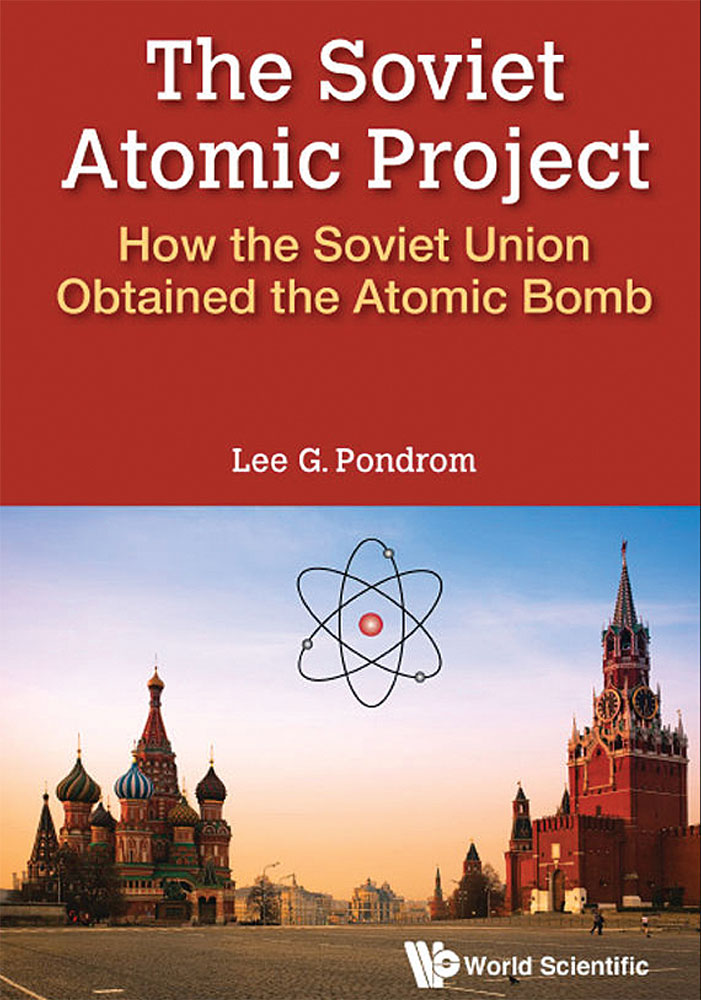
The Soviet Atomic Project: How the Soviet Union Obtained the Atomic Bomb by Lee G Pondrom World Scientific
“Leave them in peace. We can always shoot them later.” Thus spoke Soviet Union leader Josef Stalin, in response to a query by Soviet security and secret police chief Lavrentiy Beria about whether research in quantum mechanics and relativity (considered by Marxists to be incompatible with the principles of dialectical materialism) should be allowed. With these words, a generation of Soviet physical scientists were spared a disaster like the one perpetrated on Soviet agriculture by Trofim Lysenko’s politically correct, pseudoscientific theories of genetics. The reason behind this judgement was the successful development of nuclear weapons by Soviet physical scientists and the recognition by Stalin and Beria of the essential role that these “bourgeois” sciences played in that development.
Political intrigue, the arms race, early developments of nuclear science, espionage and more are all present in this gripping book, which provides a comprehensive account of the intensive programme the Soviets embarked on in 1945, immediately after Hiroshima, to catch up with the US in the area of nuclear weapons. A great deal is known about the Manhattan project, from the key scientists involved, to the many Los Alamos incidents – such as Fermi’s determination of the Alamogordo test-blast energy using scraps of paper and Feynman’s ability to crack his Los Alamos colleagues’ safes – that are intrinsic parts of the US nuclear/particle-physics community’s culture. On the contrary, little is known, at least in the West, about the huge effort made by the war-ravaged Soviet Union in less than five years to reach strategic parity with the US.
Pondrom, a prominent experimental particle physicist with a life-long interest in Russia and its language, provides an intriguing narrative. It is based on a thorough study of available literature plus a number of original documents – many of which he translated himself – that gives a fascinating insight into this history-changing enterprise and into the personalities of the exceptional people behind it.
The success of the Soviet programme was primarily due to Igor Kurchatov, a gifted experimental physicist and outstanding scientific administrator, who was equally at ease with laboratory workers, prominent theoretical physicists and the highest leaders in government, including Beria and Stalin himself. Saddled with developing several huge and remotely located laboratories from scratch, he remained closely involved in many important nitty-gritty scientific and engineering problems. For example, Kurchatov participated hands-on and full-time in the difficult commissioning of Reactor A, the first full-scale reactor for plutonium-239 production at the sprawling Combine #817 laboratory, receiving, along the way, a radiation dose that was 100 times the safe limit that he had established for laboratory staff members.
Beria was the overall project controller and ultimate decision-maker. Although best known for his role as Stalin’s ruthless enforcer – Pondrom describes him as “supreme evil,” Sakharov as a “dangerous man” – he was also an extraordinary organiser and a practical manager. When asked in the 1970s, long after Beria’s demise, how best to develop a Soviet equivalent of Silicon Valley, Soviet Academy of Sciences president A P Alexandrov answered “Dig up Beria.” Beria promised project scientists improved living conditions and freedom from persecution if they performed well (and that they would “be sent far away” if they didn’t). His daily access to Stalin was critical for keeping the project on track. Most of the project’s manual construction work used slave labour from Beria’s gulag.
Both the US and Soviet projects were monumental in scope; Pondrom estimates the Manhattan project’s scale to be about 2% of the US economy. The Soviet’s project scale was similar, but in an economy one-tenth the size. The Soviets had some advantage from the information gathered by espionage (and the simple fact that they knew the Manhattan project succeeded). Also, German scientists interned in Russia for the project played important support roles, especially in the large-scale purification of reactor-grade natural uranium. In addition, there was a nearly unlimited supply of unpaid labourers, as well as German prisoners of war with scientific and engineering backgrounds whose participation in the project was rewarded by better living conditions.
The book is crisply written and well worth the read. The text includes a number of translated segments of official documents plus extracts from memoirs of some of the people involved. So, although Pondrom sprinkles his opinions throughout, there is sufficient material to permit readers to make their own judgements. He doesn’t shirk from explaining some of the complex technical issues, which he (usually) addresses clearly and concisely. The appendices expand on technical issues, some on an elementary level for non-physicists, and others, including isotope extraction techniques, nuclear reaction issues and encryption, in more detail, much of which was new to me.
On the other hand, the confusing assortment of laboratories, their locations, leaders and primary tasks begged for some kind of summary or graphics. The simple chart describing the Soviet’s complex espionage network in the US was useful for keeping track of the roles of the persons involved; a similar chart for the laboratories and their roles would have been equally valuable. The book would also have benefited from a final edit that might have eliminated some of the repetition and caught some obvious errors. But these are minor faults in an engaging, informative book.
Stephen L Olsen, University of Chinese Academy of Sciences.
Advances in Particle Therapy: A multidisciplinary approach by Manjit Dosanjh and Jacques Bernier (eds) CRC Press, Taylor and Francis Group
A new volume in the CRC Press series on Medical Physics and Biomedical Engineering, this interesting book on particle therapy is structured in 19 chapters, each written by one or more co-authors out of a team of 49 experts (including the two editors). Most are medical physicists, radiation oncologists and radiobiologists who are well renowned in the field.
The opening chapter provides a brief and useful summary of the evolution of modern radiation oncology, starting from the discovery of X rays up to the latest generation of proton and carbon-ion accelerators. The second and third chapters are devoted to the radiobiological aspects of particle therapy. After an introductory part where the concepts of relative biological effectiveness (RBE) and oxygen-enhancement ratio are defined, this section of the book goes on to review the most recent knowledge gained in the field, from DNA structure to the production of radiation-induced damage, to secondary cancer risk. The conclusion is that, as biological effects and clinical response are functions of a broad range of parameters, we are still far from a complete understanding of all radiobiological aspects underlying particle therapy, as well as from a universally accepted RBE model providing the optimum RBE value to be used for any given treatment.
Chapter 4 and, later, chapter 18 are dedicated to particle-therapy technologies. The first provides a simple explanation of the operating principles of particle accelerators and then goes into the details of beam delivery systems and dose conformation devices. Chapter 18 recalls the historical development of particle therapy in Europe, first with the European Light Ion Medical Accelerator (EULIMA) study and Proton-Ion Medical Machine Study (PIMMS), and then with the design and construction of the HIT, CNAO and MedAustron clinical facilities (CERN Courier January/February 2018 p25). It then provides an outlook on ongoing and expected future technological developments in accelerator design.
Chapter 5 discusses the general requirements for setting up a particle therapy centre, while the following chapter provides an extensive review of imaging techniques for both patient positioning and treatment verification. These are made necessary by the rapid spread of active beam delivery technologies (scanning) and robotic patient positioning systems, which have strongly improved dose delivery. Chapter 7 reviews therapeutic indications for particle therapy and explains the necessity to integrate it with all other treatment modalities so that oncologists can decide on the best combination of therapies for each individual patient. Chapter 8 reports on the history of the European Network of Light Ion Hadron Therapy (ENLIGHT) and its role in boosting collaborative efforts in particle therapy and in training specialists.
The central part of the book (chapters 9 to 15) reviews worldwide clinical results and indications for particle therapy from different angles, pointing out the inherent difficulties in comparing conventional radiation therapy and particle therapy. It analyses the two perspectives under which the dosimetric properties of particles can translate into clinical benefit: decreasing the dose to normal tissue to reduce complications, or scaling the dose to the tumour to improve tumour control without increasing the dose to normal tissue.
Chapter 16 discusses the economic aspects of particle therapy, such as cost-effectiveness and budget impact, while the following chapter describes the benefits of a “rapid learning health care” system. The last chapter discusses global challenges in radiation therapy, such ashow to bring medical electron linac technology to low- and middle-income countries (CERN Courier March 2017 p31). I found this last chapter slightly confusing as I did not understand what is meant by “radiation rotary” and I could not fully grasp the mixing-up of different topics, such as particle therapy and nuclear detonation-terrorism. This part also seemed too US-focussed when discussing the various initiatives, and I was not in agreement with some of the statements (e.g. that particle therapy has undergone a cost reduction by an order of magnitude or more in the past 10 years).
Overall, this book provides a useful compendium of state-of-the-art particle therapy and each chapter is supported by an extensive bibliography, meeting the expectations of both experts and readers interested in gaining an overview of the field. The essay is well structured, and enables readers to go through only selected chapters and in the order that they prefer. Some knowledge of radiobiology, clinical oncology and accelerator technology is assumed. It is disappointing that clinical dosimetry and treatment planning are not addressed other than in a brief mention in chapter 5, but perhaps this is something to consider for a second edition.
Marco Silari, CERN.
Mad maths Theatre, CERN Globe
24 January 2019
Do you remember your maths high-school teachers? Were they strict? Funny? Extraordinary? Boring? The theatre comedy “Mad maths” presents the two most unusual teachers you can imagine. Armed with chalk and measuring tapes, Mademoiselle X and Mademoiselle Y aim to heal all those with maths phobia, and teach the audience more about their favourite subject.
On 24 January CERN’s fully booked Globe of Science and Innovation turned into a bizarre classroom. Marching along well-defined 90° angles, and meticulously measuring everything around them, the comedians Sophie Leclercq and Garance Legrou play with numbers and fight at the blackboard to make maths entertaining. The dialogues are juiced up with rap and music, spiced by friendly maths jargon, and seasoned with a hint of craziness. Bumping with trigonometry, philosophising about the number zero, and inventing new counting systems with dubious benefits, the rhythm grows exponentially. For example, did you know that some people’s mood goes up and down like a sine function? That you can make music with fractions? And that some bureaucratic steps are noncommutative?
This comedy show originated from an idea by Olivier Faliez and Kevin Lapin from the French theatre company Sous un autre angle. First studying maths at the university, then attending theatre school, Faliez combined his two passions in 2003 to create an entertaining programme based on maths-driven jokes and turns of event.
Perfect for families with children, this French play has already been performed more than 500 times, especially at science festivals and schools. The topics are customised depending on the level of the students. Future showings are scheduled in Castanet (15 March), Les Mureaux (22 March) and in several schools in France and other countries. Teachers and event organisers who are interested in the show are advised to contact Sophie Leclercq.
At times foolish, at times witty, it is worth watching if and only if you want to unwind and rediscover maths from a different perspective.
Letizia Diamante, CERN.
The Life, Science and Times of Lev Vasilevich Shubnikov, Pioneer of Soviet Cryogenics by L J Reinders Springer
This book is a biography of Russian physicist Lev Vasilevich Shubnikov, whose work is scarcely known despite its importance and broad reach. It is also a portrayal of the political and ideological environment existing in the Soviet Union in the late 1930s under Stalin’s repressive regime.
While at Leiden University in the Netherlands, which at the time had the most advanced laboratory for low-temperature physics in the world, Shubnikov co-discovered the Shubnikov–De Haas effect: the first observation of quantum-mechanical oscillations of a physical quantity (in this case the resistance of bismuth) at low temperatures and high magnetic fields.
In 1930 Shubnikov went to Kharkov (as it is called in Russian) in the Ukraine, where he built up the first low-temperature laboratory in the Soviet Union. There he led an impressive scientific programme and, together with his team, he discovered what is now known as type-II superconductivity (or the Shubnikov phase) and nuclear paramagnetism. In addition, independently of and almost simultaneously with Meissner and Ochsenfield, they observed the complete diamagnetism of superconductors (today known as the Meissner effect).
In 1937, aged just 36, Shubnikov was arrested, processed by Stalin’s regime and executed “for no other reason than that he had shown evidence of independent thought”, as the author states.
Based on thorough document research and a collection of memories from people who knew Shubnikov, this book will appeal not only to those curious about this physicist, but also to readers interested in the history of Soviet science, especially the development of Soviet physics in the 1930s and the impact that Stalin’s regime had on it.
Virginia Greco, CERN.
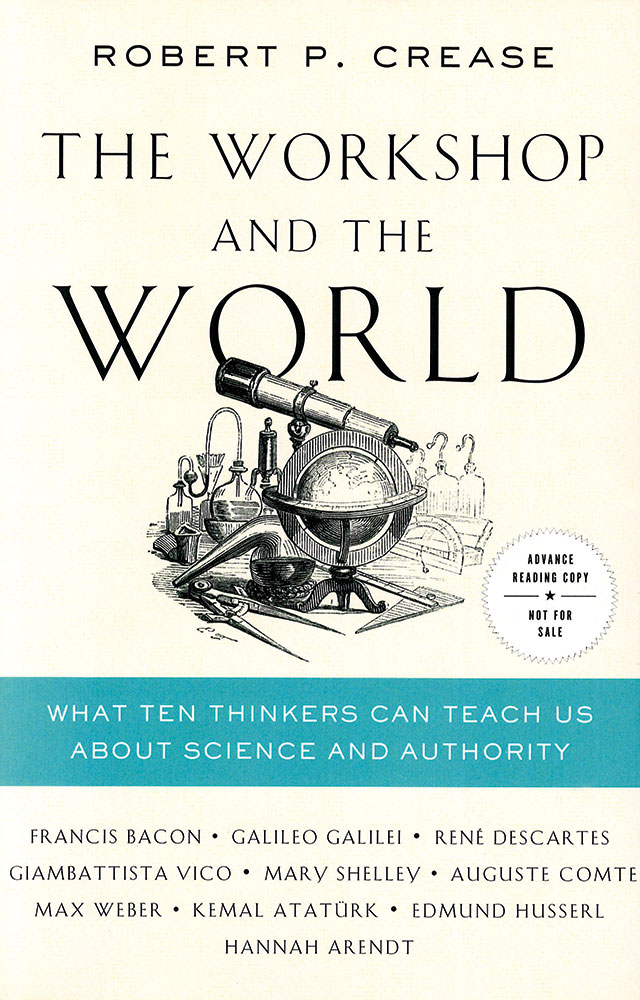
The Workshop and the World, what ten thinkers can teach us about science and authority by Robert P Crease W. W. Norton & Company
In this book, science historian Robert Crease discusses the concept of scientific authority, how it has changed along the centuries, and how society and politicians interact with scientists and the scientific process – which he refers to as the “workshop”.
Crease begins with an introduction about current anti-science rhetoric and science denial – the most evident manifestation of which is probably the claim that “global warming is a hoax perpetrated by scientists with hidden agendas”.
Four sections follow. In part one, the author introduces the first articulation of scientific authority through the stories of three renowned scientists and philosophers: Francis Bacon, Galileo Galilei and René Descartes. Here, some vulnerabilities of the authority of the scientific workshop emerge, but they are discussed further in the second section of the book through the stories of thinkers like Giambattista Vico, Mary Shelley and Auguste Comte.
Part three attempts to understand the deeply complicated relationship between the workshop and the world, described through the stories of Max Weber, Kemal Atatürk and his precursors, and Edmund Husserl. The final section is all about reinventing authority and is discussed through the work of Hannah Arendt, a thinker who barely escaped the Holocaust and who provided a deep analysis of authority as well as provding clues as to how to restore it.
With this brilliantly written essay, Crease aims to explore what practising science for the common good means and to understand what makes a social and political atmosphere in which science denial can flourish. Finally, Crease tries to suggest what can be done to ensure that science and scientists regain the trust of the people.
Strategy is a base that allows resources to be prioritised in the pursuit of important goals. No strategy would be needed if enough resources were available – we would just do what appears to be necessary.
Elementary particle physics generally requires large and expensive facilities, often on an international scale, which take a long time to develop and are heavy consumers of resources during operations. For this reason, in 2005 the CERN Council initiated a European Strategy for Particle Physics (ESPP), resulting in a document being adopted the following year. The strategy was updated in 2013 and the community is now working towards a second ESPP update (CERN Courier April 2018 p7).
The making of the ESPP has three elements: bottom-up activities driven by the scientific community through document submission and an open symposium (the latter to be held in Spain in May 2019); strategy drafting (to take place in Germany in January 2020) by scientists, who are mostly appointed by CERN member states; and the final discussion and approval by the CERN Council. Therefore, the final product should be an amalgamation of the wishes of the community and the political and financial constraints defined by state authorities. Experience of the previous ESPP update suggests that this is entirely achievable, but not without effort and compromise.
Out of four high-priority items in the current ESPP, which concluded in 2013, three of them are well under way: the full exploitation of the LHC via a luminosity upgrade; R&D and design studies for a future energy-frontier machine at CERN; and establishing a platform at CERN for physicists to develop neutrino detectors for experiments around the world. The remaining item, relating to an initiative of the Japanese particle-physics community to host an international linear collider in Japan, has not made much progress.
In physics, discussions about strategy usually start with a principled statement: “Science should drive the strategy”. This is of course correct, but unfortunately not always sufficient in real life, since physics consideration alone does not provide a practical solution most of the time. In this context, it is worth recalling the discussion about long-baseline neutrino experiments that took place during the previous strategy exercises.
Optimal outcome
At the time of the first ESPP almost 15 years ago, so little was known about the neutrino mass-mixing parameters that several ambitious facilities were discussed so as to cover necessary parameter spaces. Some resources were directed into R&D, but most probably they were too little and not well prioritised. In the meantime, it became clear that a state-of-the-art neutrino beam based on conventional technology would be sufficient to make the next necessary step of measuring the neutrino CP-violation parameter and mass hierarchy. What should be done was therefore clear from a scientific point of view, but there simply were not enough resources in Europe to construct a long-baseline neutrino experiment together with a high performance beam line while fully exploiting the LHC at the same time. The optimal outcome was found by considering global opportunities and this was one of the key ingredients that drove the strategy.
The challenge facing the community now in updating the current ESPP is to steer the field into the mid-2020s and beyond. As such, discussions about the various ideas for the next big machine at CERN will be an important focus, but numerous other projects, including proposals for non-collider experiments, will be jostling for attention. Many brilliant people are working in our field with many excellent ideas, with different strengths and weaknesses. The real issue of the strategy update is how we can optimise the resources using time and location, and possibly synergies with other scientific fields.
The intention of the strategy is to achieve a scientific goal. We may already disagree about what this goal is, since it is people with different visions, tastes and habits who conduct research. But let us at least agree this to be “to understand the most fundamental laws of nature” for now. Also, depending on the time scales, the relative importance of elements in the decision-making might change and factors beyond Europe cannot be neglected. Strategy that cannot be implemented is not useful for anyone and the key is to make a judgement on the balance among many elements. Lastly, we should not forget that the most exciting scenario for the ESPP update will be the appearance of an unexpected result –then there would be a real paradigm shift in particle physics.
In Lost in Math, theoretical physicist Sabine Hossenfelder embarks on a soul-searching journey across contemporary theoretical particle physics. She travels to various countries to interview some of the most influential figures of the field (but also some “outcasts”) to challenge them, and be challenged, about the role of beauty in the investigation of nature’s laws.
Colliding head-on with the lore of the field and with practically all popular-science literature, Hossenfelder argues that beauty is overrated. Some leading scientists say that their favourite theories are too beautiful not to be true, or possess such a rich mathematical structure that it would be a pity if nature did not abide by those rules. Hossenfelder retorts that physics is not mathematics, and names examples of extremely beautiful and rich maths that does not describe the world. She reminds us that physics is based on data. So, she wonders, what can be done when an entire field is starved of experimental breakthroughs?
Confirmation bias
Nobel laureate Steven Weinberg, interviewed for this book, argues that experts call “beauty” the experience-based feeling that a theory is on a good track. Hossenfelder is sceptical that this attitude really comes from experience. Maybe most of the people who chose to work in this field were attracted to it, in the first place, because they like mathematics and symmetries, and would not have worked in the field otherwise. We may be victims of confirmation bias: we choose to believe that aesthetic sense leads to correct theories; hence, we easily recall to memory all of the correct theories that possess some quality of beauty, while we do not pay equal attention to the counterexamples. Dirac and Einstein, among many, vocally affirmed beauty as a guiding principle, and achieved striking successes by following its guidance; however, they also had, as Hossenfelder points out, several spectacular failures that are less well known. Moreover, a theoretical sense of beauty is far from universal. Copernicus made a breakthrough because he sought a form of beauty that differed from those of his predecessors, making him think out of the box; and by today’s taste, Kepler’s solar system of platonic solids feels silly and repulsive.
Hossenfelder devotes attention to a concept that is particularly relevant to contemporary particle physics: the “naturalness principle” (see Understanding naturalness). Take the case of the Higgs mass: the textbook argument is that quantum corrections go wild for the Higgs boson, making any mass value between zero and the Planck mass a priori possible; however, its value happens to be closer to zero than to the Planck mass by a factor of 1017. Hence, most particle physicists argue that there must be an almost perfect cancellation of corrections, a problem known as the “hierarchy problem”. Hossenfelder points out that implicit in this simple argument is that all values between zero and the Planck mass should be equally likely. “Why,” she asks, “are we assuming a flat probability, instead of a logarithmic (or whatever other function) one?” In general, we say that a new theory is necessary when a parameter value is unlikely, but she argues that we can estimate the likeliness of that value only when we have a prior likelihood function, for which we would need a new theory.
New angles
Hossenfelder illustrates various popular solutions to this naturalness problem, which in essence all try to make small values of the Higgs mass much more likely than large ones. She also discusses string theory, as well as multiverse hypotheses and anthropic solutions, exposing their shortcomings. Some of her criticisms may recall Lee Smolin’s The Trouble with Physics and Peter Woit’s Not Even Wrong, but Hossenfelder brings new angles to the discussion.
This book comes out at a time when more and more specialists are questioning the validity of naturalness-inspired predictions. Many popular theories inspired by the naturalness problem share an empirical consequence: either they manifest themselves soon in existing experiments, or they definitely fail in solving the problems that they were invented for.
Hossenfelder describes in derogatory terms the typical argumentative structure of contemporary theory papers that predict new particles “just around the corner”, while explaining why we did not observe them yet. She finds the same attitude in what she calls the “di-photon diarrhoea”, i.e., the prolific reaction of the same theoretical community to a statistical fluctuation at a mass of around 750 GeV in the earliest data from the LHC’s Run 2.
The author explains complex matters at the cutting edge of theoretical physics research in a clear way, with original metaphors and appropriate illustrations. With this book, Hossenfelder not only reaches out to the public, but also invites it to join a discourse that she is clearly passionate about. The intended readership ranges from fellow scientists to the layperson, also including university administrators and science policy makers, as is made explicit in an appendix devoted to practical suggestions for various categories of readers.
While this book will mostly attract attention for its pars destruens, it also contains a pars construens. Hossenfelder argues for looking away from the lamppost, both theoretically and experimentally. Having painted naturalness arguments as a red herring that drives attention away from the real issues, and acknowledging throughout the book that when data offer no guidance there is no other choice than following some non-empirical assessment criteria, she advocates other criteria that deserve better prominence, such as the internal consistency of the theoretical foundations of particle physics.
As a non-theorist my opinion carries little weight, but my gut feeling is that this direction of investigation, although undeniably crucial, is not comparably “fertile”. On the other hand, Hossenfelder makes it clear that she sees nothing scientific in this kind of fertility, and even argues that bibliometric obsessions played a big role in creating what she depicts as a gigantic bibliographical bubble. Inspired by that, Hossenfelder also advises learning how to recognise and mitigate biases, and building a culture of criticism both in the scientific arena and in response to policies that create short-term incentives, going against the idea of exploring less conventional ideas. Regardless of what one may think about the merits of naturalness or other non-empirical criteria, I believe that these suggestions are uncontroversially worthy of consideration.
Andrea Giammanco, UCLouvain, Louvain-la-Neuve, Belgium.
Amaldi’s last letter to Fermi: a monologue Theatre, CERN Globe
11 September 2018
On the occasion of the 110th anniversary of the birth of Italian physicist Edoardo Amaldi (1908–1989), CERN hosted a new production titled “Amaldi l’italiano, centodieci e lode!” The title is a play on words concerning the top score at an Italian university (“110 cum laude”) and the production is a well-deserved recognition of a self-confessed “ideas shaker” who was one of the pioneers
in the establishment of CERN, the European Space Agency (ESA) and the Italian National Institute for Nuclear Physics (INFN).
The nostalgic monologue opens with Amaldi, played by Corrado Calda, sitting at his desk and writing a letter to his mentor, Enrico Fermi. Set on the last day of Amaldi’s life, the play retraces some of his scientific, personal and historical memories, which pass by while he writes.
It begins in 1938 when Amaldi is part of an enthusiastic group of young scientists, led by Fermi and nicknamed “Via Panisperna boys” (boys from Panisperna Road, the location of the Physics Institute of the University of Rome). Their discoveries on slow neutrons led to Fermi’s Nobel Prize in Physics that year.
Then, suddenly, World War IIbegins and everything falls apart. Amaldi writes about his frustrations to his teacher, who had passed away but is still close to him. “While physicists were looking for physical laws, Europe sank into racial laws,” he despairs. Indeed, most of his colleagues and friends, including Fermi who had a Jewish wife, moved to the US. Left alone in Italy, Amaldi decided to stop his studies on fission and focus on cosmic rays, a type of research that required less resources and was not related to military applications.
Out of the ruins
After World War II, while in Italy there was barely enough money to buy food, the US was building state-of-the-art particle-physics detectors. Amaldi described his strong temptation to cross the ocean, and re-join with Fermi. However, he decided to stay in war-torn Europe and help European science grow out of the ruins. He worked to achieve his dream of “a laboratory independent from military organisations, where scientists from all over the world could feel at home” – today know as CERN. He was general secretary of CERN between 1952 and 1954, before its official foundation in September 1954.
This beautiful monologue is interspersed by radio messages from the epoch, which announce salient historical facts. These create a factual atmosphere that becomes less and less tense as alerts about the Nazi’s declarations and bombs are replaced by news about the first women’s vote, the landing of the first person on the Moon, and disarmament movements.
Written and directed by Giusy Cafari Panico and Corrado Calda, the play was composed after consulting with Edoardo’s son, Ugo Amaldi, who was present at the inaugural performance. The script is so rich in information that you leave the theatre feeling you now know a lot about scientific endeavours, mindsets and the general zeitgeist of the last century. Moreover, the play touches on some topics that are still very relevant today, including: brain drain, European identity, women in science and the use of science for military purposes.
The event was made possible thanks to the initiative of Ugo Amaldi, CERN’s Lucio Rossi, the Edoardo Amaldi Association (Fondazione Piacenza e Vigevano, Italy), and several sponsors. The presentation was introduced by former CERN Director-General Luciano Maiani, who was Edoardo Amaldi’s student, and current CERN Director-General Fabiola Gianotti, who expressed her gratitude for Amaldi’s contribution in establishing CERN.
Letizia Diamante, CERN.
Topological and Non-Topological Solitons in Scalar Field Theories by Yakov M Shnir Cambridge University Press
In the 19th century, the Scottish engineer John Scott Russell was the first to observe what he called a “wave of transition” while watching a boat drawn along a channel by a pair of horses. This phenomenon is now referred to as a soliton and described mathematically as a stable, non-dissipative wave packet that maintains its shape while propagating at a constant velocity.
Solitons emerge in various nonlinear physical systems, from nonlinear optics and condensed matter to nuclear physics, cosmology and supersymmetric theories.
Structured in three parts, this book provides a comprehensive introduction to the description and construction of solitons in various models. In the first two chapters of part one, the author discusses the properties of topological solitons in the completely integrable Sine-Gordon model and in the non-integrable models with polynomial potentials. Then, in chapter three, he introduces solitary wave solutions of the Korteweg–de Vries equation, which provide an example of non-topological solitons.
Part two deals with higher dimensional nonlinear theories. In particular, the properties of scalar soliton configurations are analysed in two 2+1 dimension systems: the O(3) nonlinear sigma model and the baby Skyrme model. Part three focuses mainly on the solitons in three spatial dimensions. Here, the author covers stationary Q-balls and their properties. Then he discusses soliton configurations in the Skyrme model (called skyrmions) and the knotted solutions of the Faddev–Skyrme model (hopfions). The properties of the related deformed models, such as the Nicole and the Aratyn–Ferreira–Zimerman model, are also summarised.
Based on the author’s lecture notes for a graduate-level course, this book is addressed at graduate students in theoretical physics and mathematics, as well as researchers interested in solitons.
Virginia Greco, CERN.
Universal Themes of Bose–Einstein Condensation by Nick P Proukakis, David W Snoke and Peter B Littlewood Cambridge University Press
The study of Bose–Einstein condensation (BEC) has undergone an incredible expansion during the last 25 years. Back then, the only experimentally realised Bose condensate was liquid helium-4, whereas today the phenomenon has been observed in a number of diverse atomic, optical and condensed-matter systems. The turning point for BEC came in 1995, when three different US groups reported the observation of BEC in trapped, weakly interacting atomic gases of rubidium-87, lithium-7 and sodium-23 within weeks of one another. These studies led to the 2001 Nobel Prize in Physics being jointly awarded to Eric Cornell, Wolfgang Ketterle and Carl Wieman.
This book is a collection of essays written by leading experts on various aspects and in different branches of BEC, which is now a broad and interdisciplinary area of modern physics. Composed of four parts, the volume starts with the history of the rapid development of this field and then takes the reader through the most important results.
The second part provides an extensive overview of various general themes related to universal features of Bose–Einstein condensates, such as the question of whether BEC involves spontaneous symmetry breaking, of how the ideal Bose gas condensation is modified by interactions between the particles, and the concept of universality and scale invariance in cold-atom systems. Part three focuses on active research topics in ultracold environments, including optical lattice experiments, the study of distinct sound velocities in ultracold atomic gases – which has shaped our current understanding of superfluid helium – and quantum turbulence in atomic condensates.
Part four is dedicated to the study of condensed-matter systems that exhibit various features of BEC, while in part five possible applications of the study of condensed matter and BEC to answer questions on astrophysical scales are discussed.
Virginia Greco, CERN.
Zeros of Polynomials and Solvable Nonlinear Evolution Equations by Francesco Calogero Cambridge University Press
This concise book discusses the mathematical tools used to model complex phenomena via systems of nonlinear equations, which can be useful to describe many-body problems.
Starting from a well-established approach to solvable dynamical systems identification, the author proposes a novel algorithm that allows some of the restrictions of this approach to be eliminated and, thus, identifies more solvable/integrable N-body problems. After reporting this new differential algorithm to evaluate all the zeros of a generic polynomial of arbitrary degree, the book presents many examples to show its application and impact. The author first discusses systems of ordinary differential equations (ODEs), including second-order ODEs of Newtonian type, and then moves on to systems of partial differential equations and equations evolving in discrete time-steps.
This book is addressed to both applied mathematicians and theoretical physicists, and can be used as a basic text for a topical course for advanced undergraduates.
Advances in particle physics are driven by well-defined innovations in accelerators, instrumentation, electronics, computing and data-analysis techniques. Yet our ability to innovate depends strongly on the talents of individuals, and on how we continue to attract and foster the best people. It is therefore vital that, within today’s ever-growing collaborations, individual researchers feel that their contributions are recognised adequately within the scientific community at large.
Looking back to the time before large accelerators, individual recognition was not an issue in our field. Take Rutherford’s revolutionary work on the nucleus or, more recently, Cowan and Reines’ discovery of the neutrino – there were perhaps a couple of people working in a lab, at most with a technician, yet acknowledgement was at a global scale. There was no need for project management; individual recognition was spot-on and instinctive.
As high-energy physics progressed, the needs of experiments grew. During the 1980s, experiments such as UA1 and UA2 at the Super Proton Synchrotron (SPS) involved institutions from around five to eight countries, setting in motion a “natural evolution” of individual recognition. From those experiments, in which mentoring in family-sized groups played a big role, emerged spontaneous leaders, some of whom went on to head experimental physics groups, departments and laboratories. Moving into the 1990s, project management and individual recognition became even more pertinent. In the experiments at the Large Electron–Positron collider (LEP), the number of physicists, engineers and technicians working together rose by an order of magnitude compared to the SPS days, with up to 30 participating institutions and 20 countries involved in a given experiment.
Today, with the LHC experiments providing an even bigger jump in scale, we must ask ourselves: are we making our immense scientific progress at the expense of individual recognition?
Group goals
Large collaborations have been very successful, and the discovery of the Higgs boson at the LHC had a big impact in our community. Today there are more than 5000 physicists from institutions in more than 40 countries working on the main LHC experiments, and this mammoth scale demands a change in the way we nurture individual recognition and careers. In scientific collaborations with a collective mission, group goals are placed above personal ambition. For example, many of us spend hundreds of hours in the pit or carry out computing and software tasks to make sure our experiments deliver the best data, even though some of this collective work isn’t always “visible”. However, there are increasing challenges nowadays, particularly for young scientists who need to navigate the difficulties of balancing their aspirations. Larger collaborations mean there are many more PhD students and postdocs, while the number of permanent jobs has not increased equivalently; hence we also need to prepare early-career researchers for a non-academic career.
To fully exploit the potential of large collaborations, we need to bring every single person to maximum effectiveness by motivating and stimulating individual recognition and career choices. With this in mind, in spring 2018 the European Committee for Future Accelerators (ECFA) established a working group to investigate what the community thinks about individual recognition in large collaborations. Following an initial survey addressing leaders of several CERN and CERN-recognised experiments, a community-wide survey closed on 26 October with a total of 1347 responses.
Community survey
Participants expressed opinions on several statements related to how they perceive systems of recognition in their collaboration. More than 80% of the participants are involved in LHC experiments and researchers from most European countries were well represented. Just less than half (44%) were permanent staff members at their institute, with the rest comprising around 300 PhD students and 440 postdocs or junior staff. Participants were asked to indicate their level of agreement with a list of statements related to individual recognition. Each answer was quantified and the score distributions were compared between groups of participants, for instance according to career position, experiment, collaboration size, country, age, gender and discipline. Some initial findings are listed over the page, while the full breakdown of results – comprising hundreds of plots – is available at https://ecfa.web.cern.ch.
Conferences:“The collaboration guidelines for speakers at conferences allow me to be creative and demonstrate my talents.” Overall, participants from the LHCb collaboration agree more with this statement compared to those from CMS and especially ATLAS. For younger participants this sentiment is more pronounced. Respondents affirmed that conference talks are an outstanding opportunity to demonstrate to the broader community their creativity and scientific insight, and are perceived to be one of the most important aspects of verifying the success of a scientist.
Publications:“For me it is important to be included as an author of
all collaboration-wide papers.” Although the effect is less pronounced for participants from very large collaborations, they value being included as authors on collaboration-wide publications. The alphabetic listing of authors is also supported, and at all career stages. Participants had divided opinions when it came to alternatives.
Assigned responsibilities:“I perceive that profiles of positions with responsibility are well known outside the particle-physics community.” The further away from the collaboration, the more challenging it becomes to inform people about the role of a convener, yet the selection as a convenor is perceived to be very important in verifying the success of a scientist in our field. The majority of the participating early-career researchers are neutral or do not agree with the statement that the process of selecting conveners is sufficiently transparent and accessible.
Technical contributions:“I perceive that my technical contributions get adequate recognition in the particle-physics community.”Hardware and software technical work is at the core of particle-physics experiments, yet it remains challenging to recognise these contributions inside, but especially outside, the collaboration.
Scientific notes: “Scientific notes on analysis methods, detector and physics simulations, novel algorithms, software developments, etc, would be valuable for me as a new class of open publications to recognise individual contributions.” Although participants have very diverse opinions when it comes to making the internal collaboration notes public, they would value the opportunity to write down their novel and creative technical ideas in a new class of public notes.
Beyond disseminating the results of the survey, ECFA will reflect on how it can help to strengthen the recognition of individual achievements in large collaborations. The LHC experiments and other large collaborations have expressed openness to enter a dialogue on the topic, and will be invited by ECFA to join a pan-collaboration working group. This will help to relate observations from the survey to current practices in the collaborations, with the aim of keeping particle physics fit and healthy towards the next generation of experiments.
In high-energy physics laboratories, experiments use heavy-ion collisions to investigate the properties of matter at extremely high temperature and density, and to study the quark–gluon plasma. This monograph explains the ideas involved in the theoretical analysis of the data produced in such experiments. It comprises three parts, the first two of which are independent but lay the ground for the topics addressed later.
The book starts with an overview of the (vacuum) theory of hadronic interactions at low energy: vacuum propagators for fields of different spins are introduced and then the phenomenon of spontaneous symmetry breaking leading to Goldstone bosons and chiral perturbation theory are discussed.
The second part covers equilibrium thermal field theory, which is formulated in the real time method. Finally, in the third part, the methods previously developed are applied to the study of different thermal one- and two-point functions in the hadronic phase, using chiral perturbation theory.
The book includes chosen exercises proposed at the end of each chapter and fully worked out. These are used to provide important side results or to develop calculations, without breaking the flow of the main text. Similarly, some of the results mentioned in the text are derived in a few appendices. It is a useful reference for graduate students interested in relativistic thermal field theory.
A century after its formulation by Einstein, the theory of general relativity is at the core of our interpretation of various astrophysical and cosmological observations – from neutron stars and black-hole formation to the accelerated expansion of the universe. This new advanced textbook on relativity aims to present all the different aspects of this brilliant theory and its applications. It brings together, in a coherent way, classical Newtonian physics, special relativity and general relativity, emphasising common underlying principles.
The book is structured in three parts around these topics. First, the authors provide a modern view of Newtonian theory, focusing on the aspects needed for understanding quantum and relativistic contemporary physics. This is followed by a discussion of special relativity, presenting relativistic dynamics in inertial and accelerated frames, and an overview of Maxwell’s theory of electromagnetism.
In the third part the authors delve into general relativity, developing the geometrical framework in which Einstein’s equations are formulated, and present many relevant applications, such as black holes, gravitational radiation and cosmology.
This book is aimed at undergraduate and graduate students, as well as researchers wishing to acquire a deeper understanding of relativity. But it could also appeal to the curious reader with a scientific background who is interested in discovering the profound implications of relativity and its applications.
Scientific essays well suited to the interested layperson are notoriously difficult to write. It is then not surprising that various popular books, articles and internet sites recycle similar analogies – or even entire discussions – to explain scientific concepts with the same standardised, though very polished, language. CERN theorist Alvaro De Rújula recently challenged this unfortunate and relatively recent trend by proposing a truly original and unconventional essay for agile minds. There are no doubts that this book will be appreciated not only by the public but also by undergraduate students, teachers and active scientists.
Enjoy our Universe consists of 37 short chapters accounting for the serendipitous evolution of basic science in the last 150 years, roughly starting with the Faraday–Maxwell unification and concluding with the discovery of the Higgs boson and of gravitational waves. While going through the “fun” of our universe, the author describes the conceptual and empirical triumphs of classical and quantum field theories without indulging in excessive historic or technical details. Those who had the chance to attend lectures or talks given by De Rujula will recognise the “parentheses” (i.e. swift digressions) that he literally opens and closes in his presentations with gigantic brackets on the slides. A rather original glossary is included at the end of the text for the benefit of general readers.
This book is also a collection of opinions, reminiscences and healthy provocations of an active scientist whose contributions undeniably shaped the current paradigm of fundamental interactions. This is a bonus for practitioners of the field (and for curious colleagues), who will often find the essence of long-standing diatribes hidden in a collection of apparently innocent jokes or in the caption of a figure. As the author tries to argue in his introduction, science should always be discussed with that joyful and playful attitude we normally use when talking about sport and other interesting matters not immediately linked to the urgencies of daily life.
One of the most interesting subliminal suggestions of this book is that physics is not a closed logical system. Basic science in general (and physics in particular) can only prosper if the confusion of ideas is tolerated and encouraged, at least within certain reasonable limits.
The text is illustrated with drawings by the author himself and this aspect, among others, brings to mind an imaginative popular essay by George Gamow (Gravity 1962), where the author drew his own illustrations (unfortunately not in colour) with a talent comparable to De Rújula’s. The inspiration in this book is also a reminder of the autobiographical essay of Victor Weisskopf written almost 30 years ago, entitled The Joy of Insight, which echoes the enjoyment of the universe and suggests that the true motivation for basic science is the fun of curiosity: all the rest is irrelevant. So, please, enjoy our universe since you have no other choice!
Enrico Fermi can be considered as one of the greatest physicists of all time due to his genius creativity in both theoretical and experimental physics. This book describes his prodigious story, as a man and a scientist.
Born in Rome in 1901, Fermi spent the first part of his life in Italy, where he made his brilliant debut in theoretical physics in 1926 by applying statistical mechanics to atomic physics in a quantum framework, thus sealing the birth of what is now known as Fermi–Dirac statistics. In 1933 he postulated the original theory of weak interactions to explain the mysterious results on nuclear ß decays. Having soon become a theoretical “superstar”, he then switched to experimental nuclear physics, leading a celebrated team of young physicists at the University of Rome, known as the “boys”. Among them were Edoardo Amaldi, Ettore Majorana, Bruno Pontecorvo, Franco Rasetti and Emilio Segrè. They nicknamed him “the Pope” since he knew and understood everything and was considered to be simply infallible. His discoveries on neutron-induced radioactivity and on the neutron slowing-down effect earned him the Nobel Prize in Physics in 1938.
Those were, however, difficult years for Fermi because of Italy’s inconsistent research strategy and harsh political situation of fascism and antisemitism. Fermi left with his family to go to the US in December 1938, using the Nobel ceremony as a chance to travel abroad. Initially at Columbia University, Fermi then moved to the “Met Lab” of the University of Chicago, which was the seed of the Manhattan Project. There, he created the first self-sustained nuclear reactor in December 1942. The breakthrough ushered in the nuclear age, leaving a lasting impact on physics, engineering, medicine and energy – not to mention the development of nuclear weapons. In 1944 Fermi moved to the Manhattan Project’s secret laboratory in Los Alamos. Within this project, he collaborated with some of the world’s top scientists, including Hans Bethe, Niels Bohr, Richard Feynman, John von Neumann, Isidor Rabi, Leo Szilard and Edward Teller. These were terrible times of war.
When the Second World War concluded, Fermi resumed his research activities with energy and enthusiasm. On the experimental front he focused on nuclear physics, particle accelerators and technology, and early computers. On the theoretical front he concentrated on the origin of extreme high-energy cosmic rays. He also campaigned on the peaceful use of nuclear physics. As in Rome, in Chicago he was also the master of a wonderful school of pupils, among whom were several Nobel laureates. Fermi sadly died prematurely in 1954.
This book is about the epic life of Fermi, mostly known to the general public for the first ever nuclear reactor and the Manhattan Project, but to scientists for his theoretical and experimental discoveries – all diverse and crucial in modern physics – which always resulted in major advances. He remains less known as a personality or a public figure, and his scientific legacy is somehow underestimated. The merit of this book is therefore to bring Fermi’s genius within everyone’s reach.
Many renowned texts have been dedicated to Fermi until now, offering various perspectives on his life and his work. First of all on the personal life of Fermi, there is Atoms in the Family (1954) by his widow, Laura. Exhaustive information about Fermi’s outstanding works in physics can be found in the volume Enrico Fermi, Physicist (1970) by his friend and colleague Emilio Segrè, Nobel laureate and Gino Segrè’s uncle, and in Enrico Fermi: Collected Papers, two volumes published in the 1960s by the University of Chicago. Also worth mentioning are: Fermi Remembered (2004), edited by Nobel laureate James W Cronin; Enrico Fermi: His Work and Legacy (2001, then 2004), edited by C Bernardini and L Bonolis, and The Lost Notebook of Enrico Fermi by F Guerra and N Robotti (2015, then 2017), both published by the Italian Physical Society–Springer. Finally, published almost at the same time as Segrè and Hoerlin’s book, is another biography of Fermi: The Last Man Who Knew Everything by D N Schwartz, the son of Nobel laureate Melvin Schwartz. In their “four-handed” book, Segrè and Hoerlin have highlighted with expertise the scientific biography of Fermi and his extraordinary achievements, and described with emotion the human, social and political aspects of his life.
Readers familiar with Fermi’s story will enjoy this book, which is as scientifically sound as a textbook but at the same time bears the gripping character of a novel.
This book provides a comprehensive overview of high-energy-density physics (HEDP), which concerns the dynamics of matter at extreme temperatures and densities. Such matter is present in stars, active galaxies and planetary interiors, while on Earth it is not found in normal conditions, but only in the explosion of nuclear weapons and in laboratories using high-powered lasers or pulsed-power machines.
After introducing, in the first three chapters, many fundamental physics concepts necessary to the understanding of the rest of the book, the author delves into the subject, covering many key aspects: gas dynamics, ionisation, the equation-of-state description, hydrodynamics, thermal energy transport, radiative transfer and electromagnetic wave–material interactions.
The author is an expert in radiation-hydrodynamics simulations and is known for developing the HYADES code, which is largely used among the HEDP community. This book can be a resource for research scientists and graduate students in physics and astrophysics.
To provide the best experiences, we use technologies like cookies to store and/or access device information. Consenting to these technologies will allow us to process data such as browsing behavior or unique IDs on this site. Not consenting or withdrawing consent, may adversely affect certain features and functions.
Functional
Always active
The technical storage or access is strictly necessary for the legitimate purpose of enabling the use of a specific service explicitly requested by the subscriber or user, or for the sole purpose of carrying out the transmission of a communication over an electronic communications network.
Preferences
The technical storage or access is necessary for the legitimate purpose of storing preferences that are not requested by the subscriber or user.
Statistics
The technical storage or access that is used exclusively for statistical purposes.The technical storage or access that is used exclusively for anonymous statistical purposes. Without a subpoena, voluntary compliance on the part of your Internet Service Provider, or additional records from a third party, information stored or retrieved for this purpose alone cannot usually be used to identify you.
Marketing
The technical storage or access is required to create user profiles to send advertising, or to track the user on a website or across several websites for similar marketing purposes.