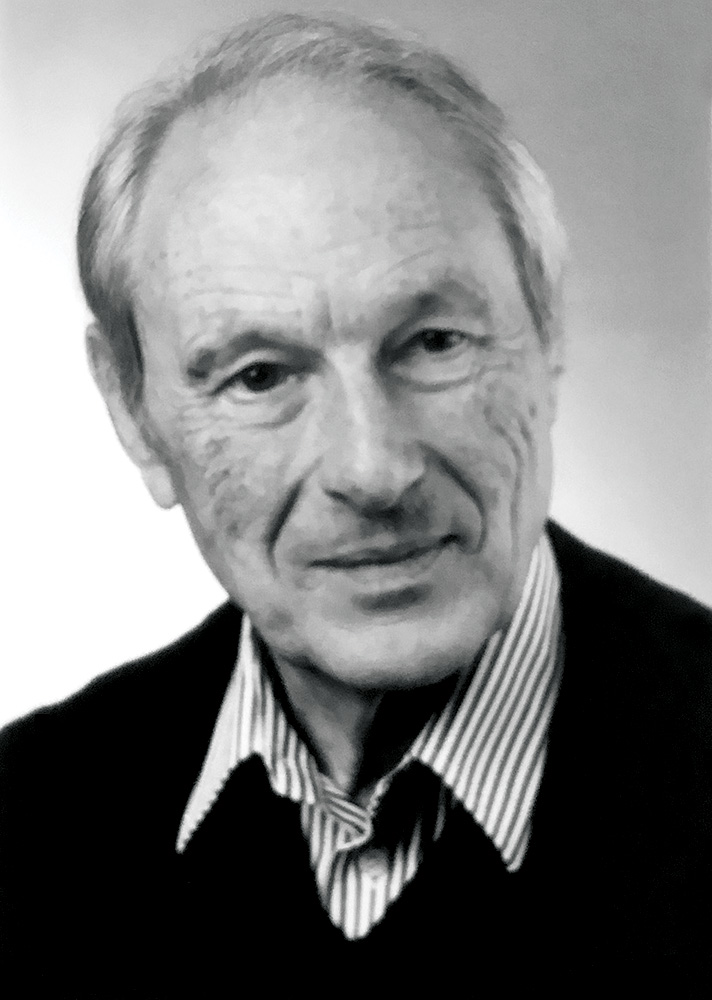
Dieter Renker, who made some key contributions to the design and construction of the CMS experiment at the LHC, passed away on 16 March after a short illness. Dieter was born in Bavaria and studied physics in Munich and Berlin. He obtained his PhD from the Ludwig Maximilian University in Munich, based on experiments performed at SIN, now the Paul Scherrer Institute (PSI), in Villigen, Switzerland. In 1982 he joined SIN as a staff physicist, where he remained until his retirement at the end of 2009.
At SIN/PSI he participated in many experiments, providing excellent technical support, as well as designing new beamlines at the accelerator there. His technical aptitude in due course turned to detector development, which led to his greatest achievement. In the early days of CMS there were various ideas for the design of the electromagnetic calorimeter. Among these was the use of lead tungstate crystals, which although having many suitable properties for operation at the LHC, have a relatively small scintillation-light yield. Dieter contributed the key measurements which showed that avalanche photodiodes (APDs), with their key properties of internal gain and insensitivity to shower leakage, could be used to read out the crystals. This led to lead-tungstate crystals being adopted by CMS for the design of the calorimeter. Not only did they provide superb energy resolution for electrons and photons, enabling key discoveries such as the Higgs boson in 2012, but they also enabled a more compact detector with significantly reduced overall cost.
The development of the final APD was carried out over a period of many years by Hamamatsu Photonics (Japan), but under the close guidance of Dieter. Nearly 100 different APD prototypes were tested before the technology was deemed fit to be used in CMS. The size, capacitance, speed and, above all, radiation tolerance were the key parameters that needed to be improved, and the final choice was made very close to the deadline for commencing construction of the calorimeter. A complex multi- step screening process involving gamma irradiation and annealing also needed to be developed to ensure that the APDs installed met the demanding reliability requirements of CMS. Until now there has been no recorded failure of any of the 122,000 APDs installed in CMS.
Later, Dieter turned his attention to Geiger-mode APDs, which are now widely used in particle and astroparticle physics, as well as in PET scanners. Together with researchers at ETH Zurich, he started the development of the first camera based on these novel photo sensors for Cherenkov telescopes to measure very high-energy gamma rays from astrophysical sources. This camera was installed at the FACT telescope, located in La Palma, Spain, where the HEGRA experiment had also been operated with Dieter’s active participation. The FACT telescope has now been operating successfully for more than seven years, without any sensor-related problems.
After his retirement Dieter returned to his spiritual home, Munich, where he continued his work at the Technical University.
Dieter was a curious physicist with an exceptional talent for novel detector concepts. He pursued new ideas with a strong focus on achieving his goals. He had a very open mind, and was willing to advise and assist colleagues with great patience and good humour. In his free time his interests included classical music and cooking as well as searching the woods for unusual edible mushrooms. Many colleagues and visitors have fond memories of invitations to his home, embellished with fine cooking.
His sudden illness was a shock to many. Dieter leaves behind his partner, Ulrike.
Nikhef particle physicist and prominent member of the ATLAS experiment at CERN, Olga Igonkina, passed away on 19 May in Amsterdam at the age of 45.
Olya, as she was known to most of us, was born in 1973 in Moscow. Her father was an engineer, her mother a biological scientist. At age 14 she went to a special school for children talented in mathematics and in 1991 started her studies in physics at the Moscow Institute for Physics and Technology. Two years later Olya moved to the ITEP institute to specialise in particle physics, working at the ARGUS experiment and later the HERA-B experiment at DESY.
Olya wrote her dissertation about J/ψ production in HERA-B, with Mikhail Danilov as her supervisor. In 2002 she moved to BaBar at SLAC as a postdoc with the University of Oregon in the group of Jim Brau, where she worked on searches for lepton-flavour-violating tau decays and became convener of the BaBar tau working group. In 2006 she moved to CERN to spearhead Oregon’s new ATLAS group. Her work in ATLAS concentrated on the trigger, where she contributed to many activities with great ideas and enthusiasm, in particular as the trigger-menu coordinator during the startup of the LHC, and later on physics with tau leptons. She began her appointment at Nikhef in 2008 and in 2015 became a professor at Radboud University in Nijmegen.
For her efforts on the ATLAS trigger, Olya was given an ATLAS outstanding achievement award in 2018. Physics-wise, her passion was lepton flavour violation, in particular in tau decays. Intrigued by the hints of lepton-flavour violation in B decays reported by the LHCb experiment and B factories, and always on the lookout for a niche in a large collaboration, in 2018 Olya moved some of her efforts from tau to B physics. She took responsibility for the B-hadron triggers with the aim of collecting an even larger sample of B decays in ATLAS for the final year of Run 2. She was working on preparations for an RK measurement until her very last days.
Besides being a talented scientist, Olya was a dedicated teacher. She supervised an impressive number of PhD students and was very successful in obtaining research grants. She was also very active in outreach activities, with masterclasses and open days at Nikhef, and in community building at ATLAS. Recently she organised the 15th International Workshop on Tau Lepton Physics conference in Amsterdam.
Olya was a passionate physicist who was bursting with ideas. Among several tributes from her colleagues, Olya was described as a future experiment leader. She had a memorably strong work ethos, and until the very last moment refused to let her illness affect her work. She was always cheerful and always positive. Her attitude to work and life will remain a source of inspiration to many of us.
Olya leaves behind her husband, Wouter Hulsbergen of Nikhef, and two children.
Swiss physicist Hans-Jürg Gerber passed away on 28 August last year. Born in Langnau/Kanton Bern, he studied and did his PhD from 1949 to 1959 at ETH Zurich on “Scattering and polarization effects of 3.27 MeV neutrons on deuterons”. He then worked at the University of Illinois in the US, before joining CERN from 1962 to 1968. There, he carried out experiments at the 28 GeV Proton Synchrotron (PS). He studied high-energy neutrino interactions using a spark chamber, and performed measurements of lepton universality. He also tested time-reversal invariance in the charged decay mode of the Λ hyperon. He was also PS coordinator from 1965 to 1966.
In 1968, Gerber became head of the research department at the Swiss Institute for Nuclear Physics (SIN). He was elected by the Swiss Federal Council to become associate professor of experimental physics in 1970, and in 1977 promoted to full professor. Gerber initiated basic research at SIN and later at the Paul Scherrer Institute (PSI) with his precision experiments on the decay of charged muons – experiments that continue to this day at PSI (see p45). His flair for the fundamental led to the most general determination of the leptonic four-fermion interaction for the normal and inverse muon decay using experimental data, which brought him international recognition.
In the 1980s and 1990s, Hans-Jürg returned to CERN to help set up and operate experiment PS195 (CPLEAR) for studying CP violation using a tagged neutral-kaon beam. The concept of the experiment, which involved tagging the flavour of the neutral kaon at the point of production, was opposite to already operational kaon experiments based on K-short and K-long beams. As a skilled experimenter, he contributed significantly to the success of CPLEAR with unconventional ideas. For example, during a crisis when the liquid-scintillator started to develop air bubbles due to the heat from nearby electronics, he invented a system to remove the air dissolved in the liquid using ultrasound. CPLEAR’s measurements on the violation of time-reversal invariance (T-invariance) and tests of quantum mechanics were the starting point for significant theoretical work he undertook on T, CP and CPT invariance.
While he retired in the spring of 1997 after a long and extremely successful career, he still continued working on particle physics with various publications on the interpretation of the CPLEAR results regarding testing of quantum mechanics, T- and CPT-violation.He was also a contributor to the review of particle physics in the Particle Data Group.
Experiment, theory and teaching formed a unity for Hans-Jürg. This was particularly evident in his lectures, in which he enthusiastically conveyed the joy of physics to his students. We also remember dinners with Hans-Jürg after long working days setting up experiments, where we talked about all possible physics questions.
He is survived by his wife Hildegard, his three children and grandchildren.
The eminent mathematician Michael Atiyah died in Edinburgh on 11 January, aged 89. He was one of the giants of mathematics whose work influenced an enormous range of subjects, including theoretical high-energy physics.
Atiyah’s most notable achievement, with Isadore Singer, is the “index theorem”, which occupied him for more than 20 years and generated results in topology, geometry and number theory using the analysis of elliptic differential operators. In mid-life, he learned that theoretical physicists also made use of the theorem and this opened the door to an interaction between the two disciplines, which he pursued energetically until the end of his life. It led him not only to mathematical results on Yang–Mills equations, but also to encouraging the importation of concepts from quantum field theory into pure mathematics.
Early years
Born of a Lebanese father and a Scottish mother, his early years were spent in English schools in the Middle East. He then followed the natural course for a budding mathematician in that environment by attending the University of Cambridge, where he ended up writing his thesis under William Hodge and becoming a fellow at Trinity College. As a student he had little interest in physics, but went to hear Dirac lecture largely because of his fame. The opportunity then arose to spend a year at the Institute for Advanced Study in Princeton in the US, where he met his future collaborators and close friends Raoul Bott, Fritz Hirzebruch and Singer.
A visit by Singer to the University of Oxford (where Atiyah had recently moved) in 1962 began the actual work on the index theorem, where the Dirac operator would play a fundamental role. This ultimately led to Atiyah being awarded a Fields Medal in 1966 and, with Singer, the Abel Prize in 2004. Over the years, proofs and refinements of the index theorem evolved. Although topology was at the forefront of the first approaches, in the early 1970s techniques using “heat kernels” became more analytic and closer to the calculations that theoretical physicists were performing, especially in the context of anomalies in quantum field theory. In the 1980s, in a proof by Luis Álvarez-Gaumé (who subsequently became a member of the CERN theoretical physics unit for 30 years), Hirzebruch’s polynomials in the Pontryagin classes – which form the topological expression for the index – emerged as a natural consequence of supersymmetry.
Singer visited Oxford again in 1977, this time bringing mathematical questions concerning Yang-Mills theory. Using quite sophisticated algebraic geometry and the novel work of Roger Penrose, this yielded a precise answer to physicists’ questions about instantons, specifically the so-called ADHM (Atiyah, Drinfeld, Hitchin, Manin) construction. That mathematicians and physicists had common ground in a completely new context made a huge impression on Michael, and he was energetic in facilitating this cooperation thereafter. He frequently engaged in correspondence and discussions with Edward Witten, out of which emerged the current fashion in mathematics of topological quantum field theories – beginning with a formalism that described new invariants of knots. Despite the quantum language of this domain, Michael’s mathematical work with a physical interface was more concerned with classical solutions, and the soliton-like behaviour of monopoles and skyrmions.
Founding father
During his life he took on many administrative tasks, including the presidency of the Royal Society and mastership of Trinity College. He was also the founding director of the Isaac Newton Institute for Mathematical Sciences in Cambridge.
With his naturally effervescent personality he possessed, in Singer’s words, “speed, depth, power and energy”. Collaborations were all-important, bouncing ideas around with both mathematicians and physicists. Beauty in mathematics was also a feature he took seriously, as was a respect for the mathematicians and physicists of the past. He even campaigned successfully for a statue of James Maxwell to be erected in Edinburgh, his home city, in later years.
As for the index theorem itself, it is notable that one of the more subtle versions – the “mod 2 index” – played an important role in Kane and Mele’s theoretical prediction of topological insulators. As they wrote in their 2005 paper: “it distinguishes the quantum spin-Hall phase from the simple insulator.” A fitting tribute to an outstanding pure mathematician, whose intuition and technical power revealed so much in so many domains.
These days, in certain parts of the world at least, “hadron collider” and “Higgs boson” are practically household names. This is a consequence of the LHC, and the global communications that surrounded its construction, switch-on and eventual discovery of the Higgs boson. How should the next major project in particle physics be communicated to ensure its reach and success?
Communication is increasingly seen as integral to the research process, and is one of the strands of the open symposium of the European Strategy for Particle Physics (ESPP) update, which takes place from today in Granada, Spain. The ESPP update takes on board worldwide activities in particle physics and related topics, and is due to conclude early next year. It aims to reach a consensus on the scientific goals of the community and assess the proposed projects and technologies to achieve these goals. Though no decisions will be made now, the process is hoped to bring clarity to the question of which project will succeed the LHC following the end of its high-luminosity operations in the mid-2030s.
The landscape of communications has changed dramatically since the pre-web/mobile days of the nascent LHC. In one of 160 written contributions to the ESPP update, the International Particle Physics Outreach Group (IPPOG) emphasises the strategic relevance of concerted, global outreach activities for future colliders, stating that the success of such endeavours “depends greatly on the establishment of broad public support, as well as the commitment of key stakeholders and policymakers throughout Europe and the world”. IPPOG proposes that particle physics outreach and communication be explicitly recognised as strategic pillars in the final ESPP update document in 2020.
A contribution from the European Particle Physics Communication Network with support from the Interactions Collaboration highlights specific challenges that communicators face. These include the pace of change in social media, the speed of dissemination of good news, bad news and rumours, and the need to maintain trust and transparency in an era where there appears to be a popular backlash against expert opinion. The document notes the complexities of maintaining press interest over long timescales, and in conveying the costs involved: “Proposals for major international particle-physics experiments are infrequent, and when they are proposed, they seem disproportionately expensive when compared to other science disciplines”. A plenary talk on education, communication and outreach will take place on Wednesday at this week’s symposium. The European Strategy Group has also established a working group to recognise and support researchers who devote their time to such activities.
Consensus in the community is a further factor for communications. In the early 1990s, when the LHC was seeking approval, there was broad agreement that a circular hadron collider was the right step for the field. The machine had a new energy territory to explore and a clear physics target (the mechanism of electroweak symmetry breaking), around which narratives could be built. The ability to witness the construction of the LHC and its four detectors itself was a massive draw. On the big-collider menu today, against a backdrop of the LHC’s discovery of a light Higgs boson but no particles beyond the Standard Model, is an International Linear Collider in Japan, a Compact Linear Collider or Future Circular Collider at CERN, and a Circular Electron Positron Collider in China. The projects would span decades and may require international collaboration on an entirely new scale. While not all equally mature, each has its own detailed physics and technology case that will be dissected this week.
Whether straight or circular, European or Asian, the next big collider requires a fresh narrative if it is to inspire the wider world. The rosy picture of eager experimentalists uncovering new elementary particles and wispy-haired theorists travelling to Stockholm to pick up prizes seems antiquated, now that all the particles of the Standard Model have been found. Short of major new theoretical insights, the best signposts in the dark and possibly hidden sectors ahead may come from experimental exploration. As Nima Arkani-Hamed put it recently in an interview with the Courier: “When theorists are more confused, it’s the time for more, not less experiments.”
Interrogating the Higgs boson – a completely new form of scalar matter with connections to the dynamics of the vacuum and other deep puzzles in the Standard Model – is the focus of all future collider proposals. Direct and indirect searches for new physics at much higher energy scales is another. However, as the range of contributions to the ESPP update illustrates, and which is integral to communications efforts, frontier colliders are only one tool to enable progress. Enigmas such as dark matter and energy are being probed from multiple angles both on the ground and in space; gravitational-wave astronomy is revolutionising astroparticle physics. Experiments large and small are closing in on the neutrino’s unique properties; heavy-ion, flavour, antimatter, fixed-target and numerous other programmes are thriving. A CERN initiative to specifically explore experimental programmes beyond high-energy colliders is advancing rapidly.
The LHC has demonstrated that there is a huge public appetite for the abstract, mind-expanding science made possible by awesomely large machines. There is no reason to think that the next leg of the journey in fundamental exploration is any less inspiring, and every reason to shout about its impact. Above and beyond the knowledge it creates and the advanced technologies that it drives, particle physics is one of the subjects that attracts young people into STEM subjects, many going on to pursue more applied research or industry careers. Large research infrastructures also have direct, though little reported, economic and societal benefits. Last but not least, the success of big science sends a positive message about human progress and global collaboration at a time when many nations are looking inwards. Clearly, engaging the public, politicians and fellow scientists in the next high-energy physics adventure presents a golden opportunity for those of us in the comms business.
For now, though, it’s over to the 600 or so physicists here in Granada to carve out the new physics avenues ahead. The Courier will be following discussions throughout the week in an attempt to unravel the big picture.
In the world of communication, everyone has a role to play. During the past two decades, the ability of researchers to communicate their work to funding agencies, policymakers, entrepreneurs and the public at large has become an increasingly important part of their job. Scientists play a fundamental role in society, generally enjoying an authoritative status, and this makes us accountable.
Science communication is not just a way to share knowledge, it is also about educating new generations in the scientific approach and attracting young people to scientific careers. In addition, fundamental research drives the development of technology and innovation, playing an important role in providing solutions in challenging areas such as health care, the provision of food and safety. This obliges researchers to disseminate the results of their work.
Evolving attitudes
Although science communication is becoming increasingly unavoidable, the skills it requires are not yet universal and some scientists are not prepared to do it. Of course there are risks involved. Communication can distract individuals from research and objectives, or, if done badly, can undermine the very messages that the scientist needs to convey. The European Researchers’ Night is a highly successful annual event that was initiated in 2005 as a European Commission Marie Skłodowska-Curie Action, and offers an opportunity for scientists to get more involved in science communication. It falls every final Friday of September, and illustrates how quickly attitudes are evolving.
In 2006, with a small group of researchers from the Italian National Institute for Nuclear Physics (INFN) located close to Frascati, we took part in one of the first Researchers’ Night events. Frascati is surrounded by important scientific institutions and universities, and from the start the Italian National Agency for New Technologies, Energy and Sustainable Economic Development, the European Space Agency and the National Institute for Astrophysics joined the collaboration with INFN, along with the Municipality of Frascati and the Cultural and Research Department of the Lazio region, which co-funded the initiative.
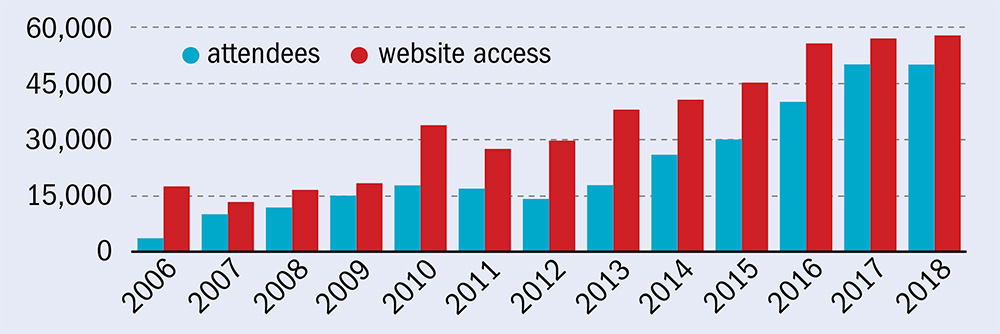
Since then, thousands of researchers, citizens, public and private institutions have worked together to change the public perception of science and of the infrastructure in the Frascati and Lazio regions, supported by the programme. Today, after 13 editions, it involves more than 60 scientific partners spread from the north to the south of Italy in 30 cities, and attracts more than 50,000 attendees, with significant media impact (figure 1). Moreover, it has now evolved to become a week-long event, is linked to many related events throughout the year, and has triggered many institutions to develop their own science-communication projects.
Analysing the successive Frascati Researchers’ Night projects allows a better understanding of the evolution of science-communication methodology. Back in 2006, scientists started to open their laboratories and research infrastructures to present their jobs in the most comprehensible way, with a view to increasing the scientific literacy of the public and to fill their “deficit” of knowledge. They then tried to create a direct dialogue by meeting people in public spaces such as squares and bars, discussing the more practical aspects of science, such as how public money is spent, and how much researchers are responsible for their work. Those were the years in which the socio-economic crisis started to unfold. It was also the beginning of the European Union’s Horizon 2020 programme, when economic growth and terms such as “innovation” started to substitute scientific progress and discovery. It was therefore becoming more important than ever to engage with the public and keep the science flag flying.
In recent years, this approach has changed. Two biannual projects that are also part of a Marie Skłodowska-Curie Action – Made in Science and BEES (BE a citizEn Scientist) underline a different vision of science and of the methodology of communication. Made in Science (which was live between 2016 and 2017) was supposed to represent the “trademark” of research, aiming to communicate to society the importance of the science production chain in terms of quality, identity, creativity, know-how and responsibility. In this chain, which starts from fundamental research and ends with social benefits, no one is excluded and must take part in the decision process and, where possible, in the research itself. Its successor, BEES (2018–2019), on the other hand, aims to bring citizens up close to the discovery process, showing how long it takes and how it can be tough and frustrating. Both projects follow the most recent trends in science communication based on a participative or “public engagement” model, rather than the traditional “deficit” model. Here, researchers are not the main actors but facilitators of the learning process with a specific role: the expert one.
Nerd or not a nerd?
Nevertheless, this evolution of science communication isn’t all positive. There are many examples of problems in science communication: the explosion of concerns about science (vaccines, autism, GMO, homeopathy, etc); the avoidance of science and technology in preference to returning to a more “natural” life; the exploitation of science results (positive or negative) to support conspiracy theories or influence democracies; and overplaying the benefits for knowledge and technology transfer, to list a few examples. Last but not least, some strong bias still remains among both scientists and audiences, limiting the effectiveness of communication.
The first, and probably the hardest, is the stereotype bias: are you a “nerd”, or do you feel like a nerd? Often scientists refer to themselves as a category that can’t be understood by society, consequently limiting their capacity to interact with the public. On the other hand, scientists are sometimes real nerds, and seen by the public as nerds. This is true for all job categories, but in the case of scientists this strongly conditions their ability to communicate.
Age, gender and technological bias also still play a fundamental role, especially in the most developed European countries. Young people may understand science and technology more easily, while women still do not seem to have full access to scientific careers and to the exploitation of technology. Although the transition from a deficit to a participative model is already common in education and democratic societies, it is not yet completed in science, which is likely because of the strong bias that still seems to exist among researchers and audiences. The Marie Skłodowska-Curie European Researchers’ Night is a powerful way in which scientists can address such issues.
Take a leap and enter, past the chalkboard wall filled with mathematical equations written, erased and written again, into the darkened room of projected questions where it all begins. What is reality? How do we describe nature? And for that matter, what is science and what is art?
Quàntica, which opened on 9 April at the Centre de Cultural Contemporània de Barcelona, invites you to explore quantum physics through the lens of both art and science. Curated by Mónica Bello, head of Arts at CERN, and art curator José-Carlos Mariátegui, with particle physicist José Ignacio Latorre serving as its scientific adviser, Quàntica is the second iteration of an exhibition that brings together 10 artworks resulting from Collide International art residences at CERN.
The exhibition illustrates how interdisciplinary intersections can present scientific concepts regarded by the wider public as esoteric, in ways that bridge the gap, engage the senses and create meaning. Punctuating each piece is the idea that the principles of quantum physics, whether we like it or not, are pervasive in our lives today – from technological applications in smart phones and satellites to our philosophies and world views.
Nine key concepts – “scales”, “quantum states”, “overlap”, “intertwining”, “indeterminacy”, “randomness”, “open science”, “everyday quantum” and “change-evolution” – guide visitors through the meandering hallway. Each display point prompts pause to consider a question that underlies the fundamental principles of quantum physics. Juxtaposed in the shared space is an artist-made particle detector and parts of experiments displayed as artistic objects. Video art installations are interspersed with video interviews of CERN physicists, including Helga Timko, who asks: what if we were to teach children quantum physics at a very young age, would they perceive the world as we do? On the ceiling above is a projection of a spiral galaxy, a part of Juan Cortés’ Supralunar. Inspired by Vera Rubin’s work on dark matter and the rotational motion of galaxies, Cortés made a two-part multisensorial installation: a lens through which you see flashing lights and vibrating plates to rest your chin and experience, on some level, the intensity of a galaxy’s formation.
From the very large scale, move to the very small. A recording of Richard Feynman explaining the astonishing double-slit experiment plays next to a standing demonstration allowing you to observe the counterintuitive possibilities that exist at the subatomic level. You can put on goofy glasses for Lea Porsager’s Cosmic Strike, an artwork with a sense of humour, which offers an immersive 3D animation described as “hard science and loopy mysticism”. She engages the audience’s imagination to meditate on being a neutrino as it travels through the neutrino horn, one of the many scientific artefacts from CERN’s archives that pepper the path.
Around the corner is Erwin Schrödinger’s 1935 article where he first used the word “Verschränkung” (or entanglement) and Anton Zeilinger’s notes explaining the protocol for quantum teleportation. Above these is projected a scene from Star Trek, which popularised the idea of teleportation.
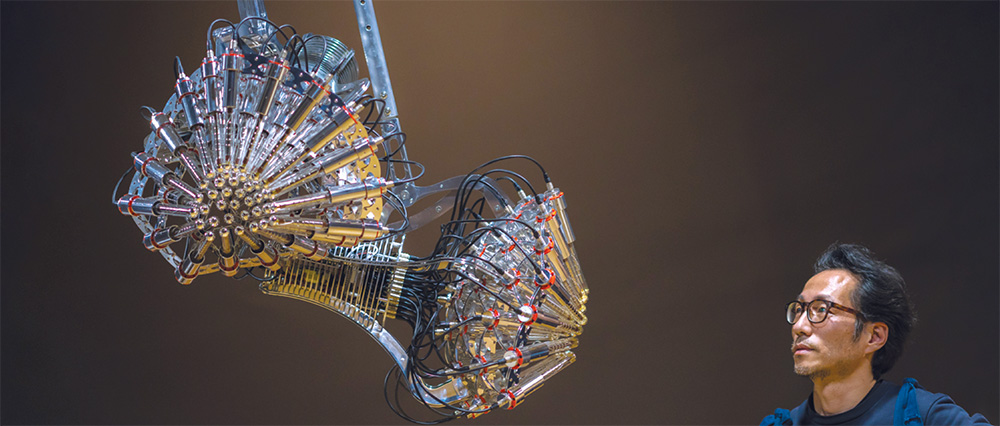
The most visually striking piece in the exhibition is Cascade by Yunchul Kim, made up of three live elements. The first part is Argos (see image), splayed metallic hands that hang like lamps from the ceiling – an operational muon detector made of 41 channels blinking light as it records the particles passing through the gallery. Each signal triggers the second element, Impulse, a chandelier-like fluid-transfer system that sends drops of liquid through microtubes that flow into transparent veins of the final element, Tubular. Kim, who won the 2016 Arts at CERN Collide International Award, is an artist who employs rigorous methods and experiments in his laboratory with liquid and materials. Cascade encapsulates the surprising results knowledge-sharing can yield.
Quàntica is a must-see for anyone who views art and science as opposite ends of the academic spectrum. The first version of the exhibition was held at Liverpool in the UK last year. Co-produced by the ScANNER network (CERN, FACT, CCCB, iMAL and Le Lieu Unique), the exhibition continues until 24 September in Barcelona, before travelling to Brussels.
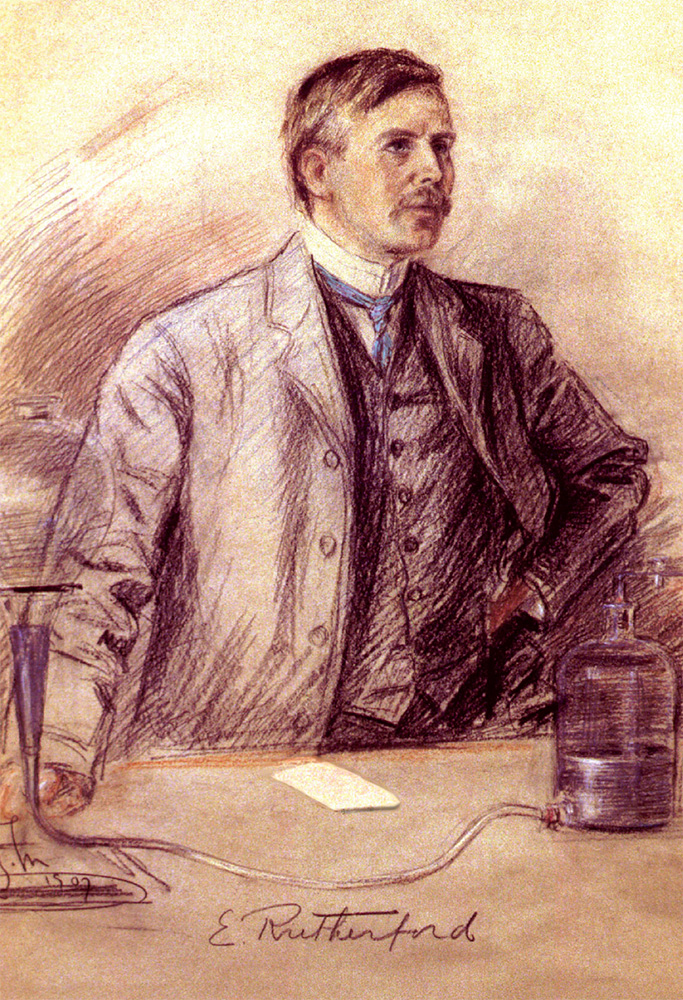
Professor Radium, the Atom Splitter, the Crocodile. Each is a nickname pointing to Ernest Rutherford, who made history by explaining radioactivity, discovering the proton and splitting the atom. All his scientific and personal milestones are described in great detail in the three-part documentary Rutherford, produced by Spacegirls Production Ltd in 2011.
Accompanied by physics historian John Campbell, the viewer learns about this great scientist from his ordinary childhood as a “Kiwi boy” to his untimely death in 1937. Historical reconstructions and trips to the places (New Zealand, the UK and Canada) that characterised his life bring Rutherford back to life.
When it was still heresy to think that there existed objects smaller than an atom, Rutherford was exploring the secrets of the invisible. During his first stay in Cambridge (UK), he discovered that uranium emits two types of radiation, which he named alpha and beta. Then, continuing his research at McGill University (Canada), he discovered that radioactivity has to do with the instability of the atom. He was rewarded with the Nobel Prize in Chemistry in 1908, and called Professor Radium after a comic book character of that name. In those years, people did not know the effects of radiation and “radio-toothpaste” was available to buy.
Then in Manchester (UK), he conducted the first artificial-induced nuclear reaction and described a new model of the atom, where a proton is like a fly in the middle of an empty cathedral. He fired alpha particles at nitrogen gas and obtained oxygen plus hydrogen, thus the epithet of the world’s first “atom splitter”.
In-between these big discoveries, the documentary points out that Rutherford blew tobacco smoke into his ionisation chamber, providing the groundwork for modern smoke detectors, proposed a more accurate dating system for the Earth’s age based on the rate of decay of uranium atoms, and campaigned for women’s opportunities and saving scientists from war.
The name “Crocodile” came later, from soviet physicist Pyotr Kapitza, as it is an animal that never turns back – or perhaps a reference to Rutherford’s loud voice that preceded his visits. The carving of a crocodile on the outer wall of the Mond Laboratory at the Cavendish site, commissioned by Kapitza, still reminds Cambridge students and tourists of this outstanding physicist.
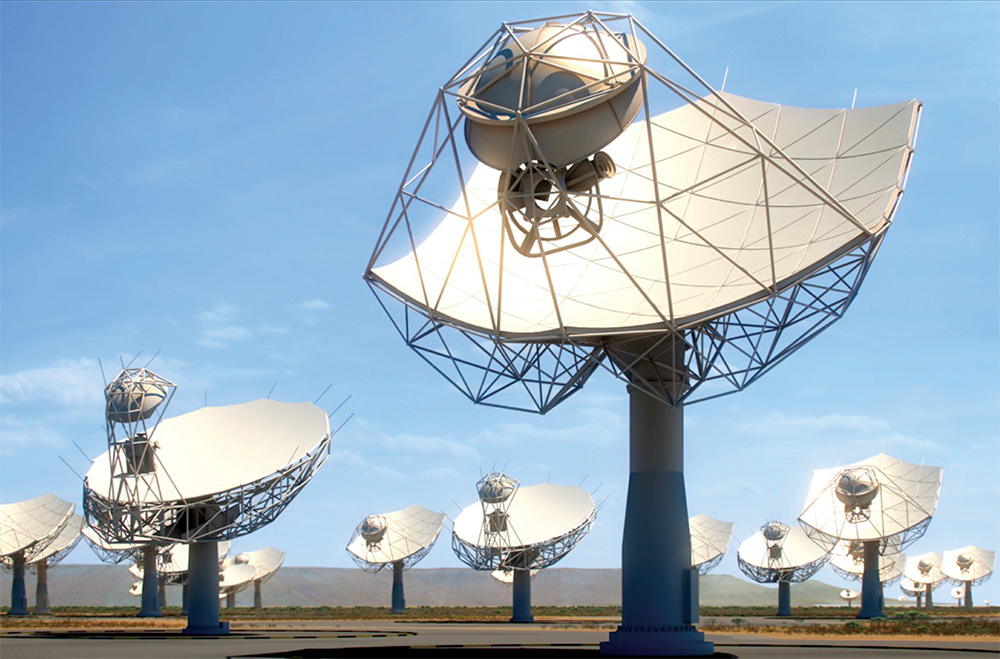
Brest-Litovsk, Utrecht, Westphalia… at first sight, intergovernmental treaties belong more to the world of Bismarck and Napoleon than that of modern science. Yet, in March this year we celebrated the signing of a new treaty establishing the world’s largest radio telescope, the Square Kilometre Array (SKA). Why use a tool of 19th-century great-power politics to organise a 21st century big-science project?
Large-science projects like SKA require multi-billion budgets and decades-long commitment. Their resources must come from many countries, and they need mutual assurance for all contributors that none will renege. The board for SKA, of which I was formerly chair, rapidly concluded that only an intergovernmental organisation could give the necessary stability. It is a very European approach, born of our need to bring together many smaller countries. But it is flexible and resilient.
Of course there are other ways to do this. A European Research Infrastructure Consortium (ERIC) is a lighter weight, faster way to set up an intergovernmental research organisation and is the model that we have used for the European Spallation Source (ESS) in Sweden. The ERIC is part of European Union (EU) legislation and provides many of the benefits in VAT and purchasing rules that an international convention or treaty would, without a convoluted approval process. Once the UK (one of the 13 ESS member nations) withdraws from the EU, it will need legislation to recognise the status of ERICs, just as non-EU Switzerland and Norway have done.
Research facilities can also be run by organisations without any intergovernmental authority: charities, not-for-profit companies or university consortia. This may seem quick and agile, but it is risky. For example, the large US telescope projects TMT and GMT are university-led and have been able to get started, but it seems that US federal involvement will now be essential for their success.
In fact, US participation in international organisations is often an issue because it requires senate approval. The last time this happened for a science project was the ITER fusion experiment, which today is making good progress but had a rocky start. The EU is one of ITER’s seven member entities and its involvement is facilitated via EUROfusion – one of eight European intergovernmental research organisations that are members of EIROforum. Most were established decades ago, and their stable structure has helped them invest in major new facilities such as ESO’s European Extremely Large Telescope.
So international treaty-based science organisations are great for delivering big-science projects, while also promoting understanding between the science communities of different countries. In the aftermath of the Second World War that was really important, and was a founding motivation for CERN. More recently, the SESAME light source in Jordan adopted the CERN model to bring the Middle East’s scientific communities together.
Today the word faces new political challenges, and international treaties don’t do much to address the growing gap between angry, disenfranchised voters and an educated, internationally minded “elite”. We scientists often see nationalism as the problem, but the issue is more one of populism – and by being international we merely seem remote. We are used to speaking about outreach,but we also need to think seriously about “in-reach” within our own countries and regions, to engage better with groups such as Trump voters and Brexit supporters.
There’s also the risk that too much stability can become rigidity. Organisations like SKA or ESS aim to provide room for negotiation and for substantial amounts of contributions to be made in-kind. They are free of commitments such as pension schemes and, in the case of SKA, membership levels are tied to the size of a country’s astronomy community and not to GDP. Were a future, global project like a Future Circular Collider to be hosted at CERN, a purpose-built intergovernmental agreement would surely be the best way to manage it. CERN is the archetype of intergovernmental organisations in science, and offers great stability in the face of political upheavals such as Brexit. Its challenge today is to think outside the box.
The same applies to all big projects in physics today. Our future prosperity and ability to address major challenges depend on investments in large, cutting-edge research infrastructures. Intergovernmental organisations provide the framework for those investments to flourish.
In his early days, Ernest Rutherford was the right man in the right place at the right time. After obtaining three degrees from the University of New Zealand, and with two years’ original research at the forefront of the electrical technology of the day, in 1895 he won an Exhibition of 1851 Science Scholarship, which took him to the Cavendish Laboratory at the University of Cambridge in the UK. Just after his arrival, the discoveries of X-rays and radioactivity were announced and J J Thomson discovered the electron. Rutherford was an immediate believer in objects smaller than the atom. His life’s work changed to understanding radioactivity and he named the alpha and beta rays.
In 1898 Rutherford took a chair in physics at McGill University in Canada, where he achieved several seminal results. He discovered radon, demonstrated that radio-activity was just the natural transmutation of certain elements, showed that alpha particles could be deviated in electric and magnetic fields (and hence were likely to be helium atoms minus two electrons), dated minerals and determined the age of the Earth, among other achievements.
In 1901, the McGill Physical Society called a meeting titled “The existence of bodies smaller than an atom”. Its aim was to demolish the chemists. Rutherford spoke to the motion and was opposed by a young Oxford chemist, Frederick Soddy, who was at McGill by chance. Soddy’s address “Chemical evidence for the indivisibility of the atom” attacked physicists, especially Thomson and Rutherford, who “… have been known to give expression to opinions on chemistry in general and the atomic theory in particular which call for strong protest.” Rutherford invited Soddy, who specialised in gas analysis, to join him. It was a short but fruitful collaboration in which the pair determined the first few steps in the natural transmutation of the heavy elements.
Manchester days
For some years Rutherford had wished to be more in the centre of research, which was Europe, and in 1907 moved to the University of Manchester. Here he began to follow up on experiments at McGill in which he had noted that a beam of alpha particles became fuzzy if passed through air or a thin slice of mica. They were scattered by an angle of about two degrees, indicating the presence of electric fields of 100 MV/cm, prompting his statement that “the atoms of matter must be the seat of very intense electrical forces”.
At Manchester he inherited an assistant, Hans Geiger, who was soon put to work making accurate measurements of the number of alpha particles scattered by a gold foil over these small angles. Geiger, who trained the senior undergraduates in radioactive techniques, told Rutherford in 1909 that one, Ernest Marsden, was ready for a subject of his own. Everyone knew that beta particles could be scattered off a block of metal, but no one thought that alpha particles would be. So Rutherford told Marsden to examine this. Marsden quickly found that alpha particles are indeed scattered – even if the block of metal was replaced by Geiger’s gold foils. This was entirely unexpected. It was, as Rutherford later declared, as if you fired a 15 inch naval shell at a piece of tissue paper and it came back and hit you.
One day, a couple of years later, Rutherford exclaimed to Geiger that he knew what the atom looked like: a nuclear structure with most of the mass and all of one type of charge in a tiny nucleus only a thousandth the size of an atom. This is the work for which he is most famous today, eight decades after his death (CERN Courier May 2011 p20).
Around 1913, Rutherford asked Marsden to “play marbles” with alphas and light atoms, especially hydrogen. Classical calculations showed that an alpha colliding head-on with a hydrogen nucleus would cause the hydrogen to recoil with a speed 1.6 times, and a range four times, that of the alpha particle that struck it. The recoil of the less-massive, less-charged hydrogen could be detected as lighter flashes on the scintillation screen at much greater range than the alphas could travel. Marsden indeed observed such long-range “H” particles, as he named them, produced in hydrogen gas and in thin films of materials rich in hydrogen, such as paraffin wax. He also noticed that the long-ranged H particles were sometimes produced when alpha particles travelled through air, but he did not know where they came from: water vapour in the gas, absorbed water on the apparatus or even emission from the alpha source, were suggested.
Mid-1914 bought an end to the collaboration. Marsden wrote up his work before accepting a job in New Zealand. Meanwhile, Rutherford had sailed to Canada and the US to give lectures, spending just a month back at Manchester before heading to Australia for the annual meeting of the British Association for the Advancement of Science. Three days before his arrival, war was declared in Europe.
Splitting the atom
Rutherford arrived back in Manchester in January 1915, via a U-boat-laced North Atlantic. It was a changed world, with the young men off fighting in the war. On behalf of the Admiralty, Rutherford turned his mind to one of the most pressing problems of the war: how to detect submarines when submerged. His directional hydrophone (patented by Bragg and Rutherford) was to be fitted to fleet ships. It was not until 1917 when Rutherford could return to his scientific research, specifically alpha-particle scattering from light atoms. By December of that year, he reported to Bohr that “I am also trying to break up the atom by this method. – Regard this as private.”
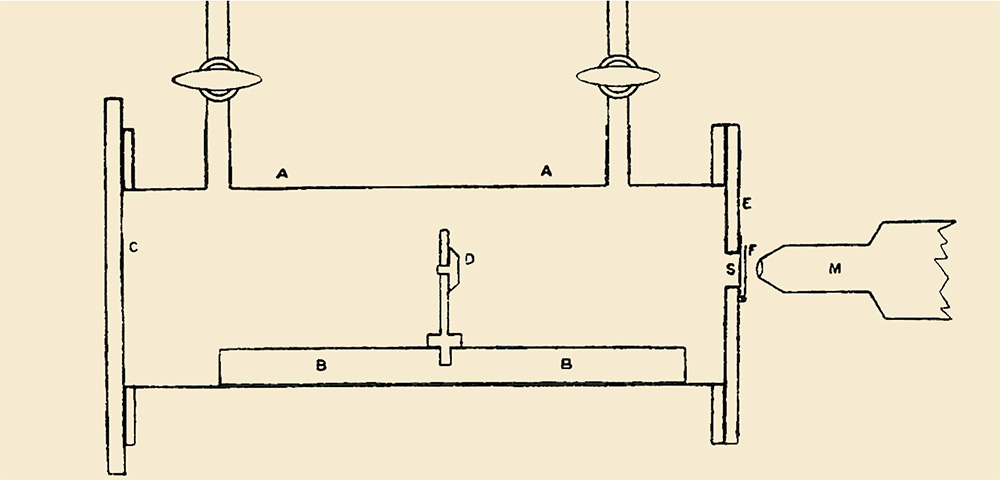
He studied the long-range hydrogen-particle recoils in several media (hydrogen gas, solid materials with a lot of hydrogen present and gases such as CO2 and oxygen), and was surprised to find that the number of these “recoil” particles increased when air or nitrogen was present. He deduced that the alpha particle had entered the nucleus of the nitrogen atom and a hydrogen nucleus was emitted. This marked the discovery that the hydrogen nucleus – or the proton, to give it the name coined by Rutherford in 1920– is a constituent of larger atomic nuclei.
Marsden was again available to help with the experiments for a few months from January 1919, whilst awaiting transport back to New Zealand after the war, and that year Rutherford accepted the position of director of the Cavendish Laboratory. Having delayed publication of the 1917 results until the war ended, Rutherford produced four papers on the light-atom work in 1919. In the fourth, “An anomalous effect in nitrogen.”, he wrote “we must conclude that the nitrogen atom disintegrated … and that the hydrogen atom which is liberated formed a constituent part of the nitrogen nucleus.” He also stated: “Considering the enormous intensity of the forces brought into play, it is not so much a matter of surprise that the nitrogen atom should suffer disintegration as that the α particle itself escapes disruption into its constituents”.
In 1920 Rutherford first proposed building up atoms from stable alphas and H ions. He also proposed that a particle of mass one but zero charge had to exist (neutron) to account for isotopes. With Wilson’s cloud chamber he had observed branched tracks of alpha particles at the end of their range. A Japanese visitor, Takeo Shimizu, built an automated Wilson cloud chamber capable of being expanded several times per second and built two cameras to photograph the tracks at right angles. Patrick Blackett, after graduating in 1921, took over the project when Shimizu returned to Japan. After modifications, by 1924 he had some 23,000 photographs showing some 400,000 tracks. Eight were forked, confirming Rutherford’s discovery. As Blackett later wrote: “The novel result deduced from these photographs was that the α was itself captured by the nitrogen nucleus with the ejection of a hydrogen atom, so producing a new and then unknown isotope of oxygen, 17O.”
As Blackett’s work confirmed, Rutherford had split the atom, and in doing so had become the world’s first successful alchemist, although this was a term that he did not like very much. Indeed, he also preferred to use the word “disintegration” rather than “transmutation”. When Rutherford and Soddy realised that radioactivity caused an element to naturally change into another, Soddy has written that he yelled “Rutherford, this is transmutation: the thorium is disintegrating and transmuting itself into argon (sic) gas.” Rutherford replied, “For Mike’s sake, Soddy, don’t call it transmutation. They’ll have our heads off as alchemists!”
In 1908 Rutherford had been awarded the Nobel Prize in Chemistry “for his investigations into the disintegration of the elements, and the chemistry of radioactive substances”. There was never a second prize for his detection of individual alpha particles, unearthing the nuclear structure of atoms, or the discovery of the proton. But few would doubt the immense contributions of this giant of physics.
To provide the best experiences, we use technologies like cookies to store and/or access device information. Consenting to these technologies will allow us to process data such as browsing behavior or unique IDs on this site. Not consenting or withdrawing consent, may adversely affect certain features and functions.
Functional
Always active
The technical storage or access is strictly necessary for the legitimate purpose of enabling the use of a specific service explicitly requested by the subscriber or user, or for the sole purpose of carrying out the transmission of a communication over an electronic communications network.
Preferences
The technical storage or access is necessary for the legitimate purpose of storing preferences that are not requested by the subscriber or user.
Statistics
The technical storage or access that is used exclusively for statistical purposes.The technical storage or access that is used exclusively for anonymous statistical purposes. Without a subpoena, voluntary compliance on the part of your Internet Service Provider, or additional records from a third party, information stored or retrieved for this purpose alone cannot usually be used to identify you.
Marketing
The technical storage or access is required to create user profiles to send advertising, or to track the user on a website or across several websites for similar marketing purposes.