Comsol -leaderboard other pages

Topics

A recipe for sustainable particle physics

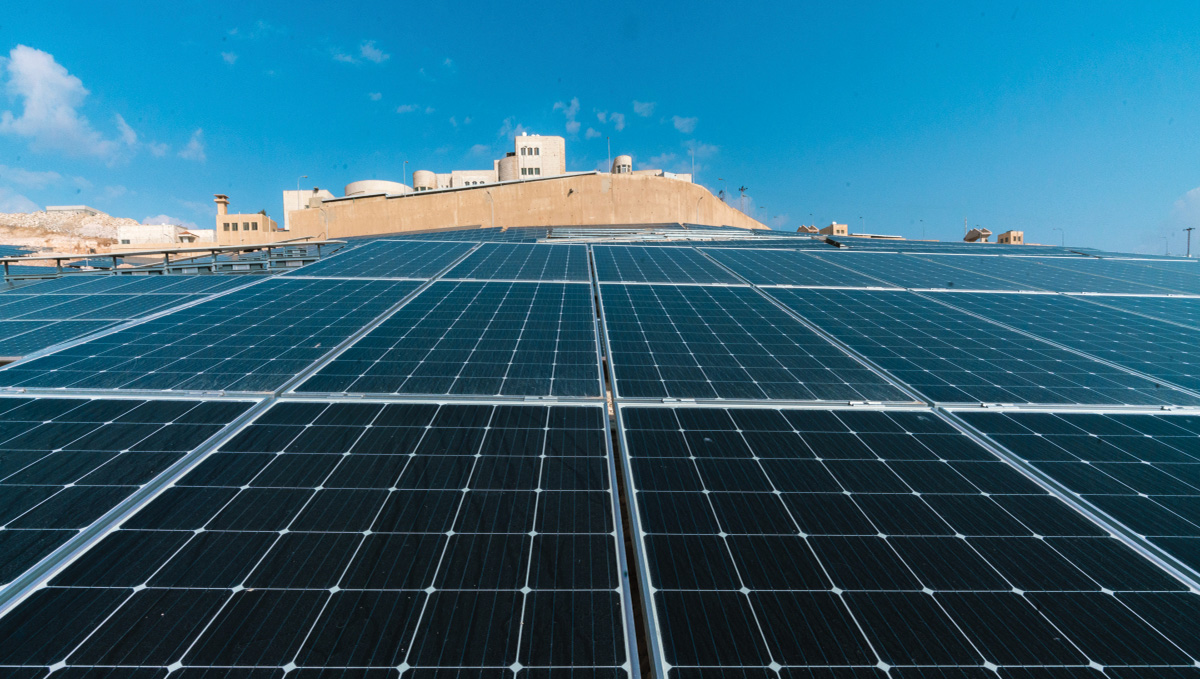
The SESAME light source

There has been a marked increase in awareness about climate change in society. Whether due to the recent school strikes initiated by Greta Thunberg or the destructive bushfires gripping Australia, the climate emergency has now moved up in the public’s list of concerns. Governments around the world have put in place various targets to reduce greenhouse-gas emissions as part of the Intergovernmental Panel on Climate Change (IPCC) 2015 Paris agreement. The scientific community, like others, will increasingly be expected to put in place measures to reduce its greenhouse-gas emissions. It is then timely to create structures that will minimise the carbon footprint of current and future experiments, and their researchers.

The LHC uses 1.25 TWh of electricity annually, the equivalent of powering around 300,000 homes, or roughly 2% of the annual consumption of Switzerland. Fortunately, the electricity supply of the LHC comes from France, where only about 10% of electricity is produced by fossil fuels. CERN is adopting several green initiatives. For example, it recently released plans to use hot water from a cooling plant at Point 8 of the LHC (where the LHCb detector is situated) to heat 8000 homes in the nearby town of Ferney-Voltaire. In 2015, CERN introduced an energy-management panel and the laboratory is about to publish a wide-ranging environmental report. CERN is also involved in the biennial workshop series Energy for Sustainable Science at Research Infrastructures, which started in 2011 and is where useful ideas are shared among research infrastructures. Whether it be related to high-performance computing or the LHC’s cryogenic systems, increased energy efficiency both reduces CERN’s carbon footprint and provides financial savings.

It is a moral imperative for the community to look at ways to reduce its carbon footprint

In addition to colliders, particle physics also involves detectors, some of which need particular gases for their operation or cooling. Unfortunately, some of these gases have very high global-warming potential. For example, sulphur hexa­fluoride, which is commonly used in high-voltage supplies and also in certain detectors such as the resistive plate chambers in the ATLAS muon spectrometer, causes 16,000 times more warming than CO2 over a 20-year period. Though mostly used in closed circuits, some of these gases are occasionally vented to the atmosphere or leak from detectors, and, although the quantities involved are small, it is likely that some of the gases used by current detectors are about to be banned by many countries, making them very hard to procure and their price volatile. A lot is already being done to combat this issue. At CERN, for instance, huge efforts have gone into replacing detector cooling fluids and investigating new gas mixtures.

Strategic approach

The European particle-physics community is currently completing the update of its strategy for the next five years or so, which will guide not only CERN activities but also those in all European countries. It is of the utmost importance that sustainability goals be included in this strategy. To this end, myself and my colleagues Cham Ghag and David Waters (University College London) and Francesco Spano (Royal Holloway) arrived at three main recommendations on sustainability as input into the strategy process.

Véronique Boisvert

First, as part of their grant-giving process, European laboratories and funding agencies should include criteria evaluating the energy efficiency and carbon footprint of particle-physics proposals, and should expect to see evidence that energy consumption has been properly estimated and minimised. Second, any design of a major experiment should consider plans for reduction of energy consumption, increased energy efficiency, energy recovery and carbon-offset mechanisms. (Similarly, any design for new buildings should consider the highest energy-efficiency standards.) Third, European laboratories should invest in next-generation digital meeting spaces including virtual-reality tools to minimise the need for frequent travel. Many environmental groups are calling for a frequent-flyer levy, since roughly 15% of the population take about 70% of all flights. This could potentially have a massive effect on the travel budgets of particle physicists, but it is a moral imperative for the community to look at ways to reduce this carbon footprint. Another area that the IPCC has identified will need to undergo a massive change is food. Particle physicists could send a very powerful message by choosing to have all of its work-related catering be mostly vegetarian.

Particle physics is flush with ideas for future accelerators and technologies to probe deeper into the structure of matter. CERN and particle physicists are important role models for all the world’s scientific community. Channelling some of our scientific creativity into addressing the sustainability of our own field, or even finding solutions for climate change, will produce ripples across all of society.

Japanese scientists identify priorities

Illustration of the proposed International Linear Collider.

The International Linear Collider (ILC), currently being considered to be hosted in the Tohoku region of Japan, has not been selected as a high-priority project in the country’s 2020 “master plan” for large research projects. The master plan, which is compiled every three years, was announced on 30 January by the Science Council of Japan (SJC). Among 31 projects which did make it onto high-priority list were the Super-B factory at KEK, the KAGRA gravitational-wave laboratory and an upgrade of the J-PARC facility.

“Even though the ILC did not go into the final shortlist, it was selected as one of the projects that went to the hearing stage indicating that the scientific merit of the ILC was recognized by the committee,” said ILC director Shin Michizono. “This allows the ILC project to move to the next phase.”

In 2012, physicists in Japan submitted a petition to the Japanese government to host the ILC, an electron–positron collider serving as a Higgs-factory. A technical design report was published the following year and, in 2017, the original ILC design was revised to reduce its centre-of-mass energy by half (to 250 GeV), shortening the machine by around a third. In 2018, the International Committee for Future Accelerators (ICFA) issued a statement of support for the project, but in March last year, Japan’s Ministry of Education, Culture, Sports, Science and Technology (MEXT) announced that it has “not yet reached declaration” for hosting the ILC and that the project “requires further discussion in formal academic decision-making processes such as the SCJ master plan”.

The important thing is that discussions on how to share the burden start soon.

Lyn Evans

At a press conference held on 31 January, state minister for MEXT, Koichi Hagiuda, responded positively to the contents of the SJC document. “This has been put together from the viewpoint of people representing the academic community, and we believe that it will serve as a reference for future discussions within the government. Being an international project, the ILC project requires broad support from both inside and outside the country. In light of the outcome of the Master Plan 2020, and observing the progress of other discussions such as the European Strategy for Particle Physics, we would like to carefully carry forward the discussions.”

Member of the Japanese government’s cabinet office, Naokazu Takemoto, who is minister of state for science and technology policy, said: “To put it simply, the project made it through the first round of evaluations, and there were about 60 such projects. In the second round, 31 projects were selected, and the ILC was not among them. However, this is a viewpoint of the Science Council. When considering the possibilities going forward, MEXT will look at high-priority research topics, and I hear that the ILC will be included in the list of these topics.” Responding to a question about the cost of the ILC, Takemoto continued: “The cost is to be shared among many countries, but some say that Japan needs to shoulder most of it. Even if these are the presumptions, I personally think we should strongly ask for realizing the project. It will effectively contribute to regional revitalisation. It will give back hope to people who have suffered greatly by the [damage caused by a tsunami in 2011]. Furthermore, it will give Japan’s technology an advantage to have an important share in the area of the world’s scientific research.”

MEXT representatives are expected to update the community on 20 February during the 85th meeting of ICFA at SLAC National Laboratory in the US.

“It is no surprise that the ILC is not on the SCJ list,” says Lyn Evans, director of the Linear Collider Collaboration.  “It is of a different order of magnitude to any other project the committee considered. It also requires broad international collaboration. The important thing is that discussions on how to share the burden start soon.”

Bad Honnef strategy session concludes

Following a week of discussions, the European Strategy Group has released a statement reporting convergence on recommendations to guide the future of high-energy physics in Europe. The 60-or-so delegates, among them scientific representatives from each of CERN’s member and associate-member states, directors and representatives of major European laboratories and organisations, and invitees from outside Europe, now return home. Their recommendations will be presented to the CERN Council in March and made public at an event in Budapest, Hungary, on 25 May.

Statement from the European Strategy Group after the Bad Honnef drafting meeting, 25 January

The drafting session of the European Strategy Group preparing the next European Particle Physics Strategy Update took place in Bad Honnef (Germany) between 21-25 January 2020. After a week of fruitful discussions involving senior figures of European and international particle physics, convergence was achieved on recommendations that will guide the future of the field.

The drafting session marks a key stage of the strategy update process. The attendees of the Bad Honnef drafting session successfully carried out their ambitious task of identifying a set of priorities and recommendations. They built on the impressive progress made since the last update of the European Strategy for Particle Physics, in 2013, and the rich input received from the entire particle physics community in the current update process.

The next step in this process will be to submit the document outlining the recommendations to the CERN Council. It will be discussed by the Council in March and submitted for final approval at an extraordinary Council Session on 25 May, in Budapest, Hungary. Once approved, it can be made public.

The European Strategy Group

CLIC most flexible option for Europe, study leaders contend

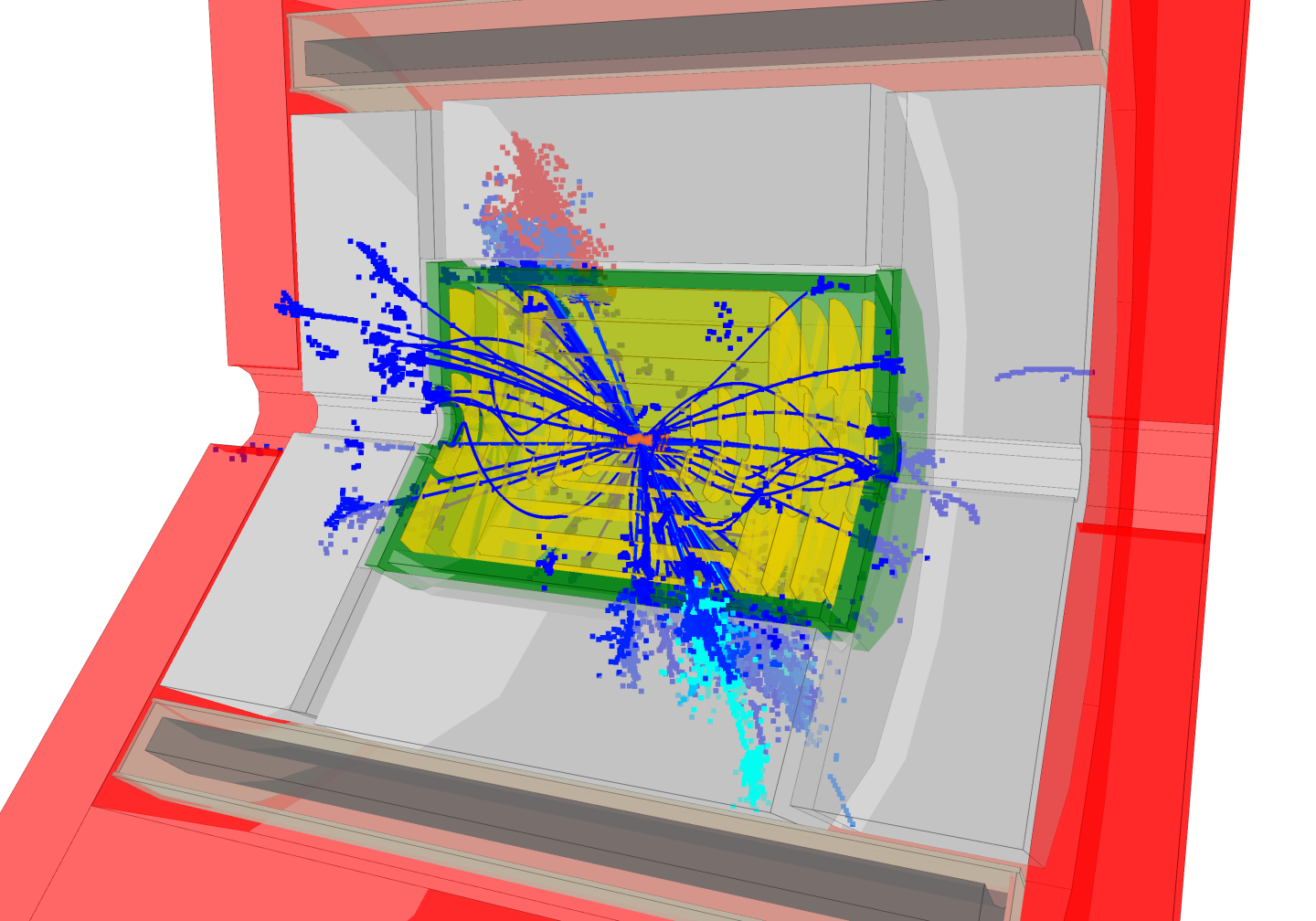
Simulated production of a top-quark pair at a collision energy of 3 TeV at the proposed Compact Linear Collider. Credit: CLIC.

The proposed Compact Linear Collider (CLIC) offers the most flexible option for European particle physics in the post-LHC era, write the leaders of the CLIC study in a preprint posted on arXiv on 15 January. Responding to a preprint by 53 authors in late December which backed a Future Circular Collider (FCC) over CLIC, the CLIC team argues that moving forward quickly with a linear collider “would allow a vibrant high-energy frontier programme to be maintained over the coming decades, while pursuing in parallel the accelerator R&D required to open future options”.

Acknowledging the widespread consensus that the next major collider should be an electron–positron collider to explore the Higgs sector in detail, the authors argue that the discussion of what will be the most appropriate high-energy frontier machine afterwards “must be kept open” such that it can be guided by new physics results and new technology. The three-page long note states that an initial CLIC programme undertaken in parallel with strong accelerator R&D and HL-LHC, followed by the best possible high-energy frontier machine when technologies are mature, “thus provides the most flexible and appealing strategic option” for collider physics in Europe.

Although FCC-ee is unique in offering a very high-statistics Z physics programme, state the CLIC authors, the potential for Higgs-boson studies with a first-stage 380 GeV CLIC or 365 GeV FCC-ee is similar when assuming equivalent running times. They also say that both machines have a similar performance at the top-quark energy and the same accelerator performance risk. “Previous limits of both circular and linear electron–positron colliders have been understood and overcome thanks to vast efforts in hardware developments and large-scale system tests across the planet,” says coauthor Daniel Schulte of CERN. “Both colliders have ambitious parameters, but we are confident that they can be achieved, as confirmed in detailed reviews of both projects.”

Ultimately we all want what is best for our science

Aidan Robson

CLIC studies during the past few years have focused on energy consumption and construction costs, which CLIC project leader Steinar Stapnes of CERN says are now “very favourable” compared with FCC-ee. “Owing to CLIC’s compactness the construction is relatively fast, and we have also deliberately kept the 380 GeV baseline operation time relatively short at eight years,” he says. “We feel strongly that the possibilities for the subsequent step – whether a linear collider energy extension, or a proton or muon collider option – need to be kept on timescales that are not too far away.”

Priorities for European particle physics are under discussion this week at a meeting in Bad Honnef, Germany, as the update of the European strategy for particle physics enters its final stages.

“The European strategy is being developed in a complex environment where particle physics projects continue to become larger and longer-scale,” says Aidan Robson of the University of Glasgow, who is spokesperson of the CLIC detector & physics collaboration. “Ultimately we all want what is best for our science. CLIC at 380 GeV offers a rapid and exciting e+e– programme, and opens doors for R&D for several possible future colliders going much higher in energy. This provides the key elements that offer attractive and challenging opportunities for the young people who will drive the future of our field.”


Strategy drafting under way in Bad Honnef

Today, senior figures in European particle physics have gathered in the small town of Bad Honnef, Germany, for a week of intense discussions that will guide the future of fundamental exploration. The “strategy drafting session” marks the final stage of the update of the European strategy for particle physics. Convened by the European Strategy Group (ESG) — which includes a scientific delegate from each of CERN’s member and associate-member states, directors and representatives of major European laboratories and organisations and invitees from outside Europe – the 60 or so attendees are tasked with identifying a set of priorities and recommendations to the CERN Council.

The ESG, a special body set up by the CERN Council approximately every five years, was invited to formulate an update of the European strategy for particle physics in September 2017. A call for input in 2018 attracted 160 submissions, which were discussed at an open symposium in Granada, Spain, in May 2019. The ESG then published a 200-page briefing book which distilled the input into an objective scientific summary and will form the basis for discussions in Germany this week.

The start of a new project in the early 2040s is crucial to keep the community motivated and engaged

Fabiola Gianotti

The focus of the latest strategy update, the third since 2005, is which major project should follow the LHC once its high-luminosity phase comes to an end in the late 2030s. There is broad support for an electron—positron collider that will explore the Higgs sector in detail, as well as for a high-energy proton–proton collider at CERN. In Europe, the possible options are the Compact Linear Collider and the Future Circular Collider, while an International Linear Collider (ILC) in Japan and a large Circular Electron-Positron Collider in China are also contenders. The strategy update will also consider non-collider experiments, computing, instrumentation and other key aspects of growing importance to the field such as energy efficiency and communication.

The previous strategy update, which concluded in 2013, made several high-priority recommendations: the full exploitation of the LHC, including the high-luminosity upgrade of the machine and detectors; R&D and design studies for a future energy-frontier machine at CERN; establishing a neutrino programme at CERN for physicists to develop detectors for experiments at accelerator-based neutrino facilities around the world; and the welcoming of a proposal from Japan to discuss the possible participation of Europe in the ILC. The first three are well under way, while a decision on the ILC still rests with the Japanese government. Other conclusions of the 2013 update included the need for closer collaboration with the astroparticle and nuclear physics communities, which has been met for example via the recently launched centre for astroparticle physics theory (EuCAPT) and the new Joint ECFA-NuPECC-APPEC Seminar series, JENAS. There was also a call for greater scientific diversity, leading to the CERN-led Physics Beyond Colliders initiative, which will also form a central part of this week’s discussions.

The recommendations from the ESG are due to formally be approved by the CERN Council on 25 May at an event in Budapest, Hungary.

During her annual address to personnel on 14 January, CERN Director-General Fabiola Gianotti acknowledged the enormous efforts that have gone into the strategy update, and said that she hoped that a recommendation on CERN’s next major collider would be among the ESG’s priorities.

“The start of a new project in the early 2040s is crucial to keep the community motivated and engaged,” said Gianotti, noting that CERN and Europe should also be open to participate in projects at the forefront of particle physics elsewhere in the world. “The Higgs boson is a guaranteed deliverable. It is related to the most obscure and problematic sector of the Standard Model and carries special quantum numbers and a new type of interaction. It is therefore a unique door into new physics, and one that can only be studied at colliders.”

Croatia becomes an associate member of CERN

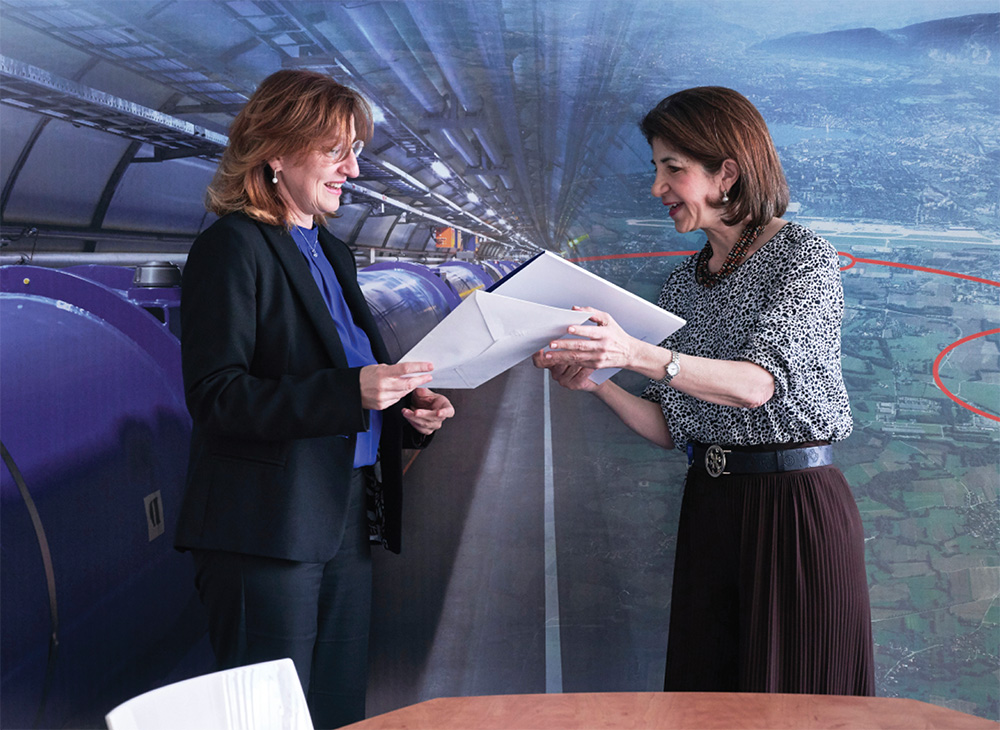
Vesna Batistic Kos and Fabiola Gianotti

On 10 October CERN welcomed the Republic of Croatia as an Associate Member State, following receipt of official notification that Croatia has completed its internal approval procedures in respect of an agreement signed on 28 February.

“It is a great pleasure to welcome Croatia into the CERN family as an associate member. Croatian scientists have made important contributions to a large variety of experiments at CERN for almost four decades, and as an associate member, new opportunities open up for Croatia in scientific collaboration, technological development, education and training,” said CERN Director-General Fabiola Gianotti.

Researchers from Croatia have contributed to many experiments at CERN, and a cooperation agreement concluded in 2001 increased the country’s participation in CERN’s research and educational programmes. As an Associate Member State, Croatia will be represented at the CERN Council and be entitled to attend meetings of the finance committee and the scientific policy committee. Nationals of Croatia will be eligible to apply for limited-duration positions as staff members and fellows, while firms offering goods and services originating from Croatia will be entitled to bid for CERN contracts, creating opportunities for industrial collaboration in advanced technologies.

Croatia joins India, Lithuania, Pakistan, Turkey and Ukraine as Associate Member States, while Cyprus and Slovenia are Associate Member States in the pre-stage to membership.

2019 Nobel Prize in Physics for cosmic perspectives

James Peebles, Michel Mayor and Didier Queloz

The Nobel Prize in Physics for 2019 has recognised two independent bodies of work that have transformed our view of the universe and humanity’s place in it. One half of the SEK 9 million prize, announced on 8 October in Stockholm, was granted to James Peebles of Princeton University for theoretical discoveries in physical cosmology, while the other was shared between Michel Mayor of the University of Geneva and Didier Queloz of the universities of Geneva and Cambridge for the discovery of an exoplanet orbiting a Sun-like star.

Peebles was instrumental in turning cosmology into the precision science it is today, with its ever closer links to collider and particle physics in general. Following the unexpected discovery of the cosmic microwave background (CMB) in 1965, he and others at Princeton used it to support the idea that the universe began in a hot, dense state. While the idea of a “big bang” was already many years old, Peebles paired it with concrete physics processes such as nucleosynthesis and described the role of temperature and density in the formation of structure. With others, he arrived at a model accounting for the density fluctuations in the CMB showing a series of acoustic peaks, which would demonstrate that the universe is geometrically flat and that ordinary matter constitutes just 5% of its total matter and energy content. In the early 1980s, Peebles was the first to consider non-relativistic “cold” dark matter and its effect on structure formation, and he went on to reintroduce Einstein’s forsaken cosmological constant – work that underpins today’s Lambda Cold Dark Matter model of cosmology.

Mayor and Queloz’s discovery of an exoplanet orbiting a solar-type star in the Milky Way opened a new field of study. 51 Pegasi b lies 50 light years from Earth and takes just four days to complete its orbit. It was spotted by tracking how it and its star orbit around their common centre of gravity: a subtle wobbling seen from Earth whose speed can be measured from the starlight via the Doppler effect. The problem is that the radial velocities are extremely low. Mayor mounted his first spectrograph on a telescope at the Haute-Provence Observatory near Marseille in 1977, but it was only sensitive to velocities above 300 ms–1 – too high to see a planet pulling on its star. It took almost two decades of work by him and his group to strike success, with doctoral student Queloz tasked with developing new methods to increase the machine’s light sensitivity. Today, more than 4000 exoplanets with a vast variety of forms, sizes and orbits have been discovered in our galaxy using the radial-velocity method and the newer technique of transit photometry, challenging ideas about planetary formation.

Spiro awarded Lagarrigue Prize

Michel Spiro

The 2018 André Lagarrigue Prize has been awarded to Michel Spiro, research director emeritus at CEA, for the exemplary nature of his career, from both a scientific and managerial point of view. Spiro contributed, among other things, to the discovery of the W and Z bosons with the UA1 experiment, was the initiator and spokesperson of the EROS experiment, and played a major role in the GALLEX experiment. He has held several senior positions at CEA and CNRS and from 2010–2013 was president of the CERN Council.

APS announces 2020 prizes

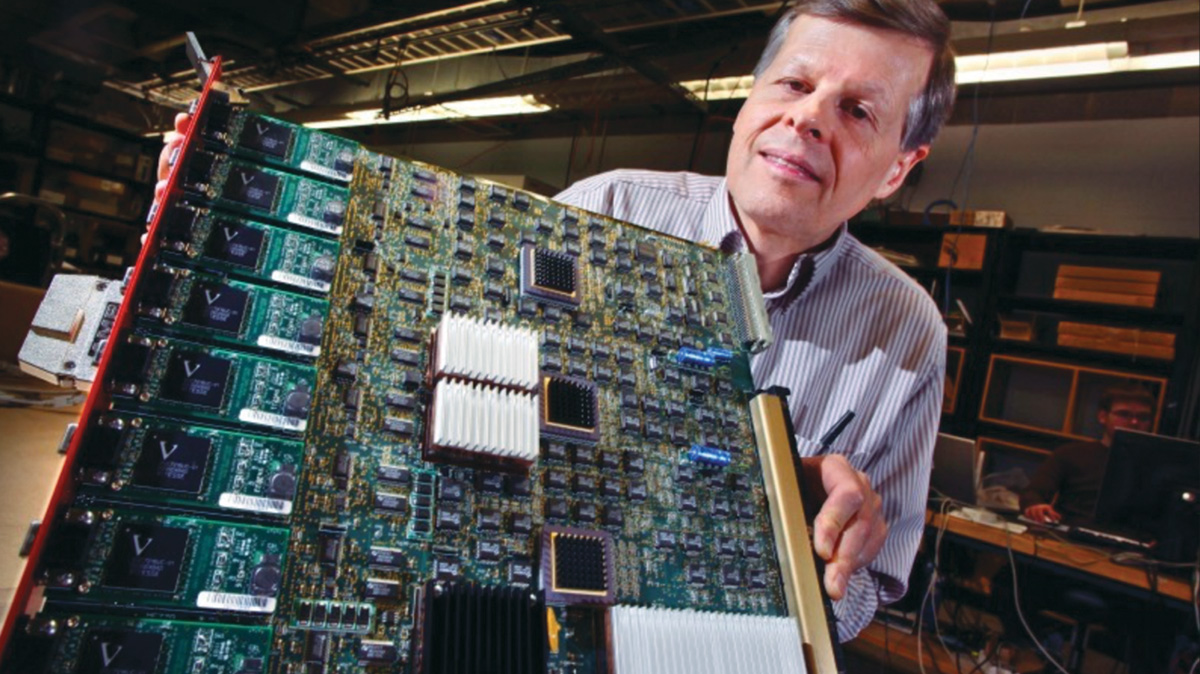
Wesley Smith

Wesley Smith of the University of Wisconsin-Madison, and member of the CMS collaboration, has won the American Physical Society (APS) 2020 W K H Panofsky Prize “for the development of sophisticated trigger systems for particle-physics experiments, which enabled measuring the detailed partonic structure of the proton using the ZEUS experiment at HERA and led to the discovery of the Higgs boson and the completion of the Standard Model with the CMS experiment at the LHC”.

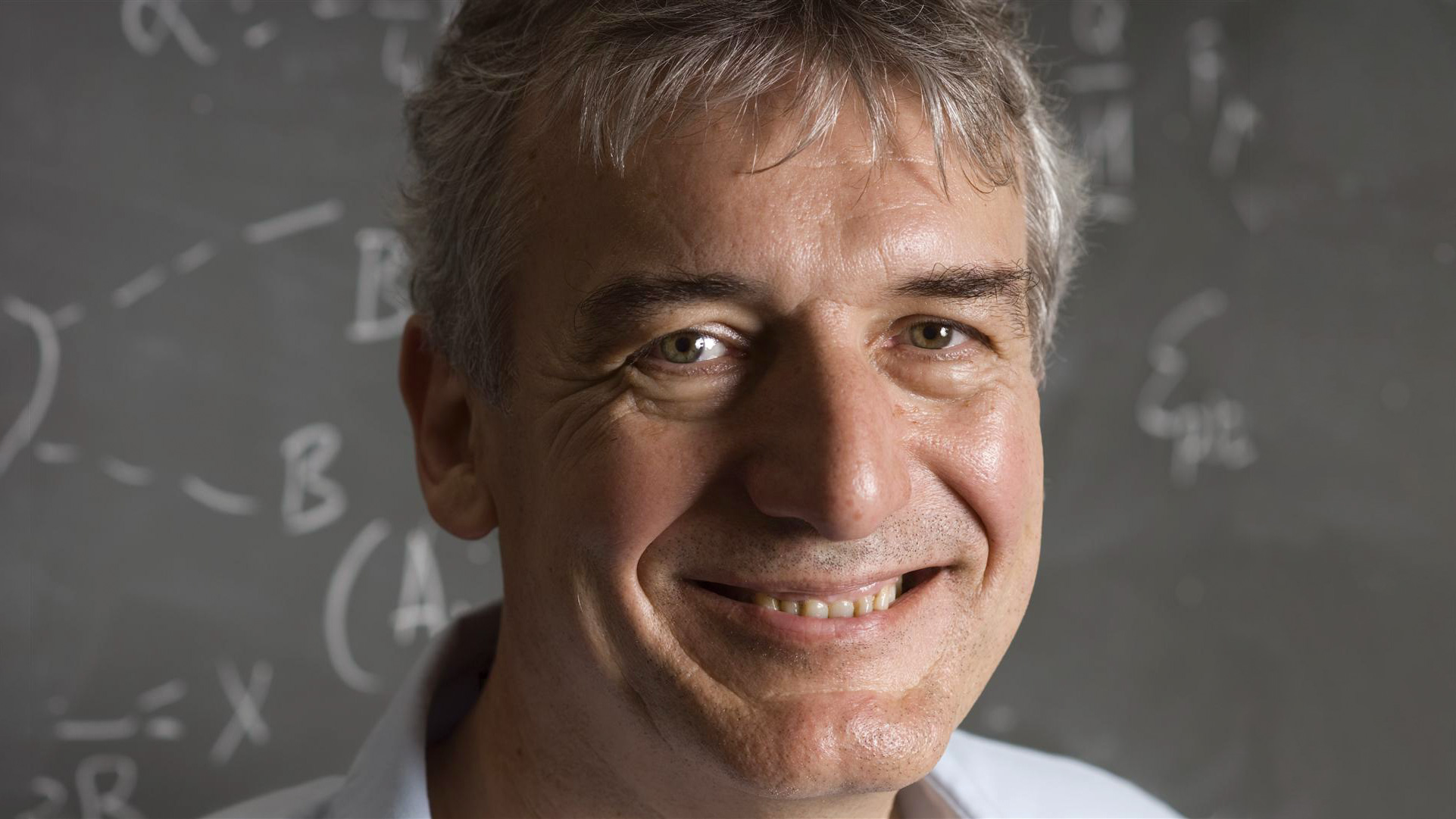
Pierre Sikivie

The 2020 J J Sakurai Prize for theoretical particle physics went to Pierre Sikivie of the University of Florida for seminal work recognising the potential visibility of the invisible axion, devising novel methods to detect it, and for theoretical investigations of its cosmological implications.

Bruce Carlsten

In the accelerator arena, the 2020 Robert R Wilson Prize was awarded to Bruce Carlsten of Los Alamos National Laboratory for the discovery and subsequent implementation of emittance compensation in photo-injectors “that has enabled the development of high-brightness, X-ray free electron lasers such as the Linac Coherent Light Source”.

Matt Pyle

Among several other prizes awarded in the particle, nuclear, astrophysics and related fields, the 2020 Henry Primakoff Award for Early-Career Particle Physics went to Matt Pyle of the University of California at Berkeley for his development of high-resolution ultra-low-threshold cryogenic detectors for dark-matter searches.

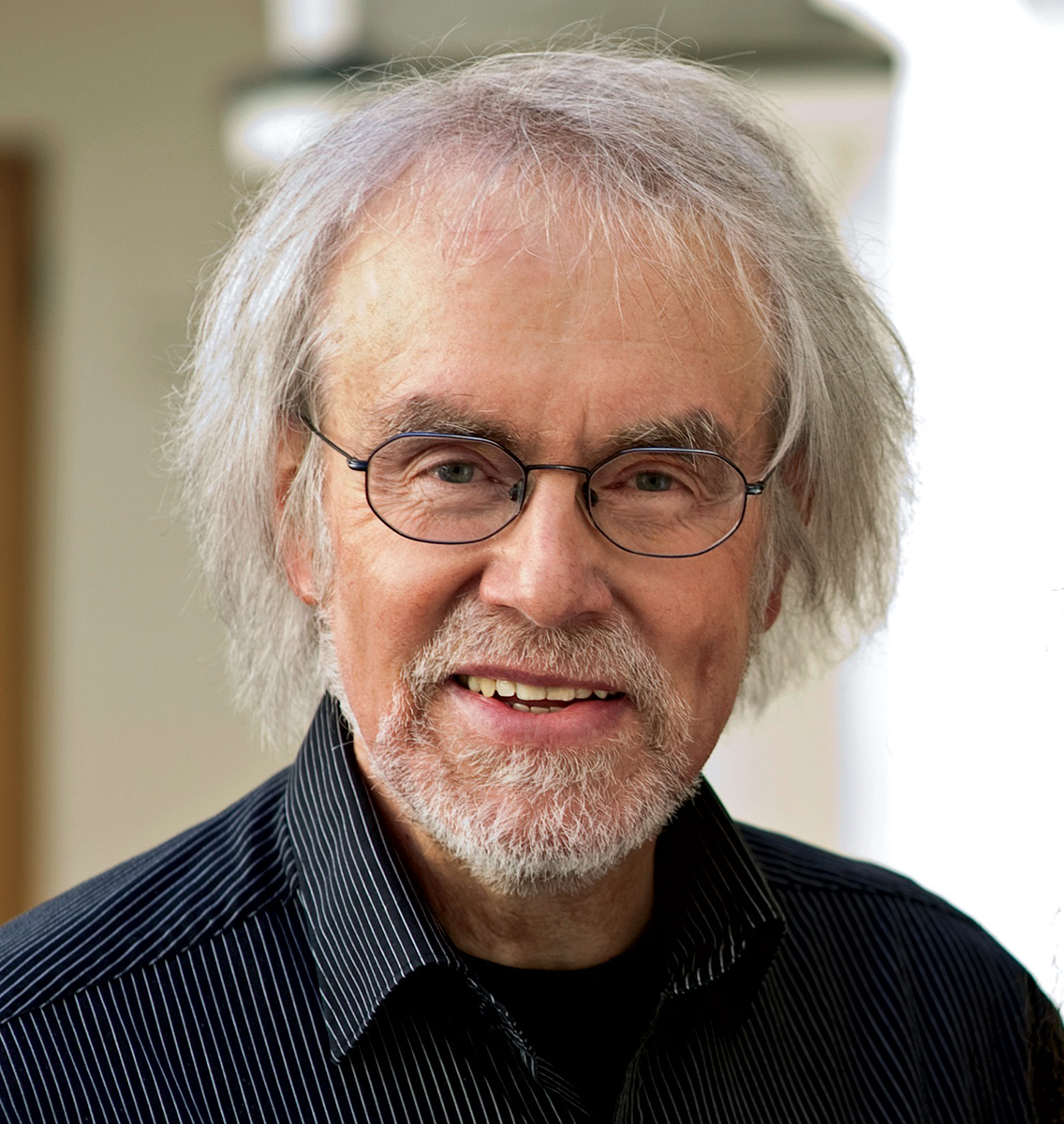
Max Planck Medal for Buras

Andrzej Buras

Andrzej Buras of the Technical University of Munich has been awarded the Max Planck Medal by the German Physical Society for his outstanding contributions to applied quantum field theory, especially in flavour physics and quantum chromodynamics.

bright-rec iop pub iop-science physcis connect