Comsol -leaderboard other pages

Topics

An intuitive approach to teaching

This elementary textbook, suitable for either advanced undergraduate or introductory postgraduate courses, is a gem. Its author, Andrew Larkoski, is a phenomenologist with expertise in QCD, and a visiting professor at Reed College. It is worth mentioning that Reed College is also home to David J. Griffiths, who is the author of several successful textbooks, including his well-known “Introduction to Elementary Particles” (Wiley, 2nd edition, 2008). Larkoski’s book has a similar scope to Griffiths’ and certainly lives up to its legacy.
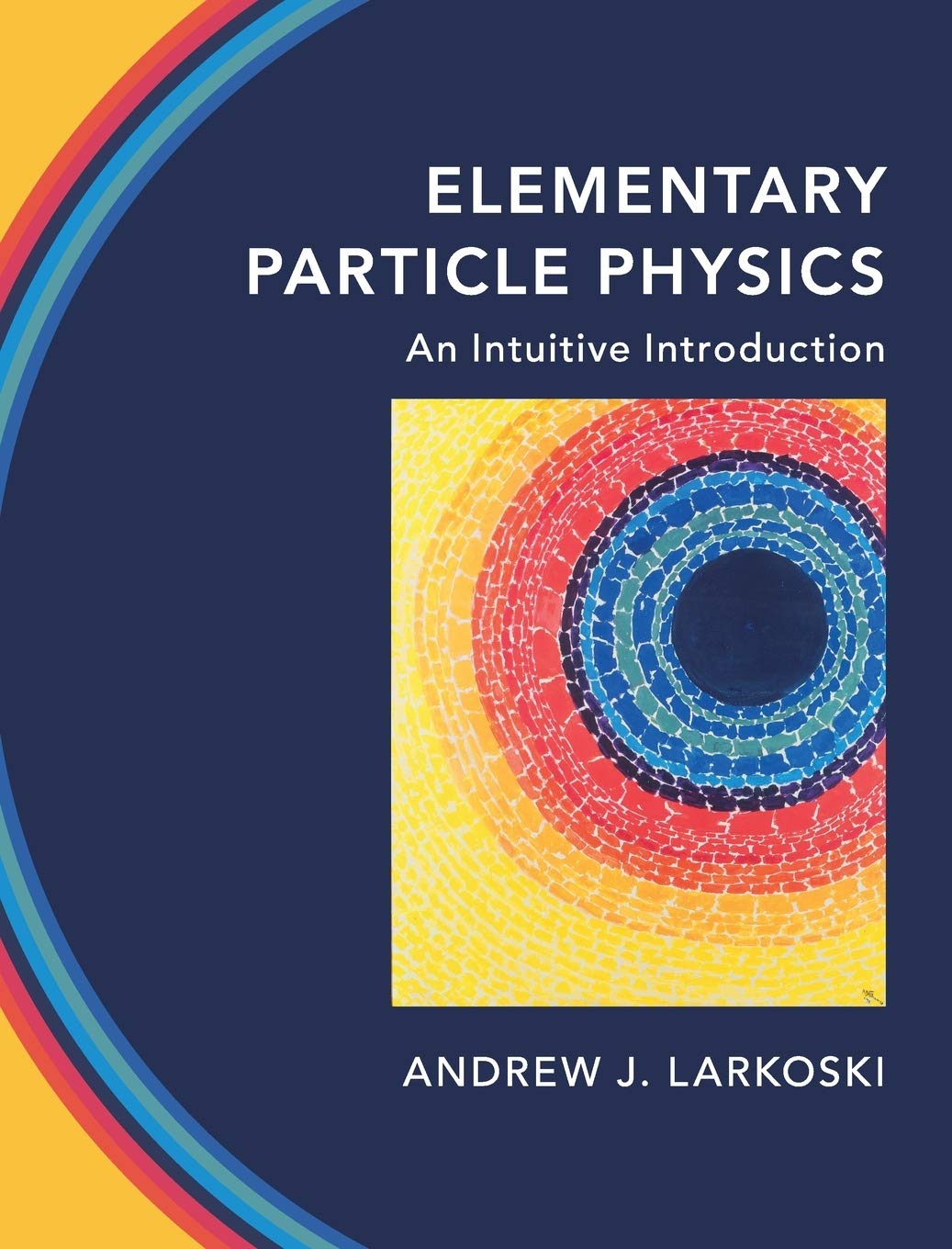
Larkoski begins with an introduction to special relativity and the standard preliminaries to particle physics, such as the Dirac equation, Fermi’s Golden rule and a very accessible introduction to group theory. The book also features a superb 30-page chapter on experimental concepts and statistics — an excellent resource for any student starting a particle-physics project for the first time. The main menu follows: matrix element and cross-sections calculations for QED, QCD and weak interactions. The book includes a nice introduction to electroweak unification, the basics of flavour physics, neutrino oscillations, and an accessible discussion on parton evolution and jets. The latter will be particularly useful for students of LHC physics. The book closes with an insightful chapter on open problems in particle physics.

A very nice collection of unsolved exercises will serve as an invaluable resource for lecturers. Many refer to processes currently being studied at the LHC and other projects. The book’s modernity is also evident through mentions throughout the text on the latest results in dark matter and neutrino physics, and a discussion on how the Higgs boson discovery was made.

Analogies are drawn between Feynman diagrams and electrical circuits

A particularly attractive feature of Larkoski’s writing is his use of intuitive and conceptual discussions: dimensional analysis is used often in calculations to get an idea of what we expect; analogies are drawn between Feynman diagrams and electrical circuits; connections between space curvature and quantum chromodynamics are pointed out, just to mention some of the very many examples you can find in the book.

One point that the lecturers should be aware of is that Larkoski employs the Weyl basis of Dirac γ-matrices, whereas Griffiths, Thomson (Modern Particle Physics, Cambridge, 2013), Halzen & Martin (Quarks and Leptons, Wiley, 1984), and other popular textbooks which currently form the backbone of many university courses, use the Dirac basis. As a result, both equations and Feynman rules look different, and care will be required when multiple textbooks are used in the same course. In general, Larkoski is closer to Thomson and Griffiths, as it does not include the wide range of calculations of Halzen & Martin, which is slightly more advanced.

Larkoski’s new book will certainly find its way among the most popular particle physics textbooks. Its clear and intuitive presentation will doubtlessly deepen the understanding of students who read it, and inspire lecturers to a more conceptual approach to teaching.
Max Zolotorev: 1941-2020

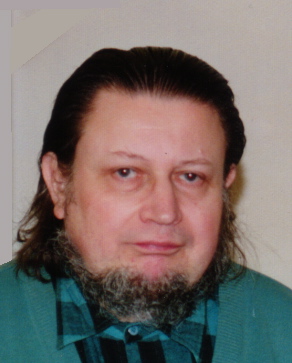
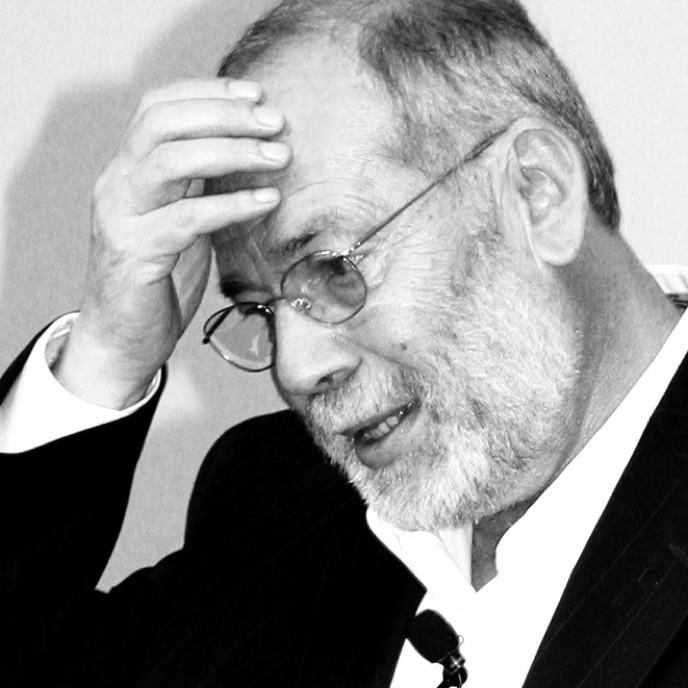
Max Zolotorev

Max Samuilovich Zolotorev, a pioneer of experimental studies of atomic parity violation, passed away on 1 April in his home in Oregon, US.

Max was born in Petrovsk, a small town not far from the Russian city of Saratov, where his mother found herself evacuated from the advancing German army. Upon graduating from secondary school, despite showing unusual talent and ability from an early age, he was not admitted to an institute or even a vocational school because he was Jewish. After eventually securing a position with the Novosibirsk Electro Technical Institute in Siberia, where he demonstrated outstanding academic performance, he was able to transfer to the newly founded Novosibirsk State University. He graduated in 1966, before obtaining his first and second doctoral degrees in 1974 and 1979 at the Institute of Nuclear Physics in Novosibirsk Academgorodok.

Max started out by working on measurements of the hyperon magnetic moments. However, in the early 1970s he was drawn into studying fundamental physics using the methods of atomic, molecular and optical physics. Together with his mentor and colleague Lev Barkov, he was the first to discover parity violation in atoms by observing optical rotation of the plane of polarisation of light propagating through a bismuth vapour.

The 1978 measurement came at a crucial time in the development of the Standard Model. While observations of high-energy neutrino scattering on nuclei at CERN in 1973 provided evidence of neutral weak currents, there was no evidence that the neutral weak current violated parity as predicted by the Glashow–Weinberg–Salam (GWS) model. Furthermore, earlier atomic parity violation experiments had produced null results, in contradiction with theoretical predictions. The observation of parity violation in bismuth, followed later by measurements of parity violating electron scattering at SLAC, was crucial evidence that the GWS model was indeed the correct description of the weak interaction.

Max Zolotorev was an inspiring mentor and teacher who always set the highest expectations for his students

Max and his colleagues also established the foundation for some of today’s most sensitive magnetometers with their measurements in the late 1980s of nonlinear Faraday rotation, clearly identifying the crucial role of quantum coherences. In 1989 Max emigrated to the US and took up a research position at SLAC, later moving to Lawrence Berkeley National Laboratory, where he worked until his retirement in 2018. At SLAC, Max and colleagues proposed using lasers to cool hadrons in colliders as a variation on van der Meer’s stochastic cooling method. The “optical stochastic cooling” concept will soon be tested at Fermilab by a group led by a former student of Max’s. Another of his co-inventions is the so-called “slicing method” to produce ultrashort pulses of X-rays essential for time-resolved studies of the properties of condensed matter.

Max Zolotorev was an inspiring mentor and teacher who always set the highest expectations for his students. His ability to find “weak spots” in one’s scientific logic was legendary. One of Max’s great insights was that, as physicists, we should never design our experiments around what was sitting in our labs or in our heads. Instead, we should choose deep and important problems, think hard about them and develop the cleverest way to approach them that we can, learn new subjects, build new apparatus, and push our boundaries and limits. Max’s work exemplified the curiosity, creativity and rigour of physics at its best.

Ulrich Becker 1938–2020

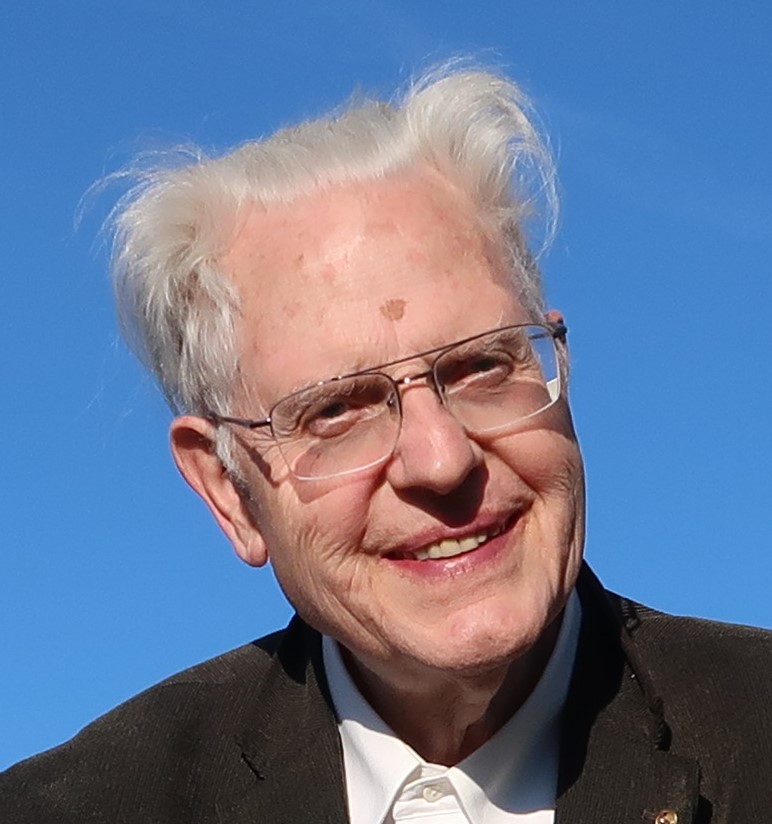
Ulrich Becker. Credit: MIT

Ulrich J Becker, professor emeritus at MIT, passed away on 10 March at the age of 81. He was a major contributor to the L3 experiment, the Alpha Magnetic Spectrometer and the advancement of international collaborations in high-energy physics.

Becker was born in Dortmund, Germany, on 17 December 1938 – the day that nuclear fission was discovered in Berlin. As a young man, he was adept as an electrician, coal miner, and even in steel smelting, but he was more drawn to physics. He studied at the University of Marburg and obtained his PhD in Hamburg, focusing on the photo-production and leptonic decays of vector mesons.

In late 1965 Becker met Sam Ting, who admitted him to his group at DESY using the 6 GeV synchrotron to measure the size of the electron. It was a complementary match: Becker was a dogged researcher with detector and hardware acumen, and Ting was a master in scientific organization and politics. They presented their results at the XIIIth International Conference on High Energy Physics at Berkeley in 1966, showing that electrons have no measurable size, which contradicted earlier results.

In 1970 Becker joined the MIT faculty, where he found mentors including Victor Weisskopf and Martin Deutsch. He was promoted to associate professor in 1973, and the following year he began designing a precision spectrometer for Brookhaven National Laboratory. He joined a group led by Ting which used the spectrometer to search for heavy particles produced when protons were smashed into a fixed target of beryllium. Instead, the team recorded an unexpected bump in the data corresponding to the production of a heavy particle with a lifetime that was about a thousand times longer than predicted.

Meanwhile, MIT alumnus Burton Richter was reviewing data from Stanford Linear Accelerator Laboratory when he too found what looked like a long-lived heavy resonance. Ting flew to Stanford in November and he and Richter quickly organized a lab seminar. They presented their discovery of the J/Ψ particle, a bound state of a charm quark and antiquark, on 11 November 1974, sparking rapid changes in high-energy physics. One of Becker’s favorite stories was when he went to Munich in 1975 to share their finding, and Werner Heisenberg interrupted to comment: “Whenever they don’t know what it is, they invent a new quark.” To which Becker replied: “Look, Professor Heisenberg, I’m not arguing whether this is charm or not charm. I’m telling you it’s a particle which doesn’t go away.” A deadly silence followed before Heisenberg replied: “Accepted”. Ting and Richter shared the 1976 Nobel Prize in Physics for the J/Ψ discovery. If only one of the groups, MIT, had discovered it, it is likely that Becker would also have shared in the prize.

He enjoyed reviving broken and abandoned mechanical items.

Becker, who was made a full professor at MIT in 1977, developed several other major instruments which were the catalyst for discoveries. His large-area drift chamber would provide large acceptance coverage for experiments, and his drift tube enabled physicists to measure particles near the interaction point. Those developments led Becker to design and build the huge muon detectors for the MARK-J experiment at DESY, which resulted in the discovery of the three-jet pattern from gluon production. Becker then led hundreds of colleagues in designing the muon detector for the L3 experiment at LEP. He also made important contributions to advancing international collaboration in high-energy physics, for example involving China.

In 1993, Becker started to work with MIT’s team on building an Alpha Magnetic Spectrometer (AMS) — another Ting project which was born when he and Becker were on a coffee break while working on L3. The first AMS detector flew in the Space Shuttle in June 1998 and gathered about 100 hours of cosmic-ray data. Becker then went on to help design the transition radiation detector for AMS-02, which has so far collected more than 150 billion cosmic-ray events from its position on the International Space Station.

He enjoyed reviving broken and abandoned mechanical items. One of his biggest renovations was MIT’s cyclotron, which he converted into one of the biggest functioning magnets in the country, with a strength of up to 1 T. He used it to develop particle detectors for the International Linear Collider, and to characterise gas mixtures for the design of drift and other gas detectors in different magnetic and electric fields.

Becker was a mentor to many great physicists, and invested much to ensure his students received an excellent education. In 2013 he transitioned to emeritus status, but still he came in every day to mentor students. At the age of 81, he even picked up Python to continue his craft. His friendly approach and deep understanding of physics made him a superb teacher, even if his style was highly individual.

Our community has lost an excellent researcher and teacher, and a wonderful colleague and human being. Ulrich Becker is survived by his wife Gerda, his three children and two grandchildren.

Eugène Cremmer: 1942-2019

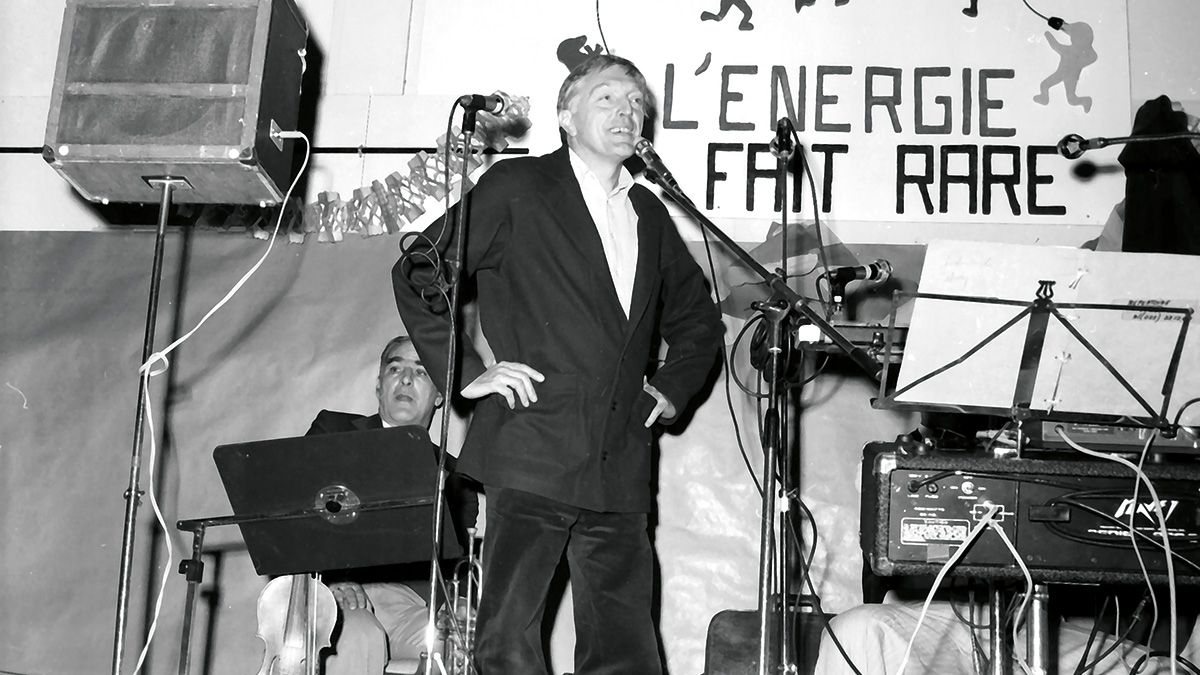
Eugene Cremmer

Theorist Eugène Cremmer, who passed away in October 2019, left his mark in superstring and supergravity theory. He will be remembered across the world as a brilliant colleague, as original as he was likeable.

Born in Paris in 1942, his parents ran a bookstore. The neighbourhood children were firmly oriented towards vocational schools and Eugène was trained in woodworking. He was eventually spotted by a mathematics teacher, obtained a technical Baccalauréat degree and then pursued mathematics at École Normale Supérieure (ENS) in Paris in 1962. In 1968–1969, following a triggering of research into dual models by Daniele Amati and Martinus Veltman, Eugène began to compute higher loop diagrams in a remarkable series of technically impressive papers. The first one was written with André Neveu, and others with Joël Scherk in 1971–1972 while a postdoc at CERN. At that time, CERN was an important cradle of string theory, with groups from different countries forming a critical mass.

In late 1974 Eugène returned to ENS with a small group of pilgrims from the theoretical-physics group at Orsay. He worked with Jean-Loup Gervais on string field theory and later collaborated with Scherk, the author, and several visitors on supersymmetry, supergravity and applications to string theory. His revolutionary 1976 paper with Scherk introduced the linking number of a cyclic dimension by a closed string. This would turn out to be crucial for heterotic string models, T duality and mirror symmetry, for the so-called Scherk– Schwarz compactification, and was soon applied to branes. The 1977 proposal with Scherk of spontaneous compactification of the six extra dimensions of space remains central in modern string theory. In 1978–1979 his pioneering papers on 11D super-gravity and 4D N = 8 supergravity made the 11th dimension unescapable and exhibited exceptional (now widely used) duality symmetries. For these works, Eugène received the CNRS silver medal in 1983. Some 15 years later, duality symmetries were extended to higher degree forms.

The successes of Eugène’s work led to many invitations abroad. Though he chose to remain in France, he maintained collaborations and activities at a high level. He was director of the ENS theoretical-physics laboratory in 2002–2005. Eugène was as regular as clockwork, arriving and leaving the lab at the same time every day – the only exception I witnessed was due to Peter van Nieuwenhuizen’s work addiction, which he enjoyably inflicted upon us for a while. At 12:18 p.m. Eugène would always gather all available colleagues to go to lunch, and this led Guido Altarelli to observe “Were Eugène to disappear the whole lab would starve to death!” Eugène kept his papers in an encrypted pre-computer order, and nobody could understand how he was able to extract any needed reference in no time, always remembering most of the content. He cultivated his inner energy by walking quickly while absorbed in thought. We have lost a role model and a modest, full-time physicist.

A price worth paying

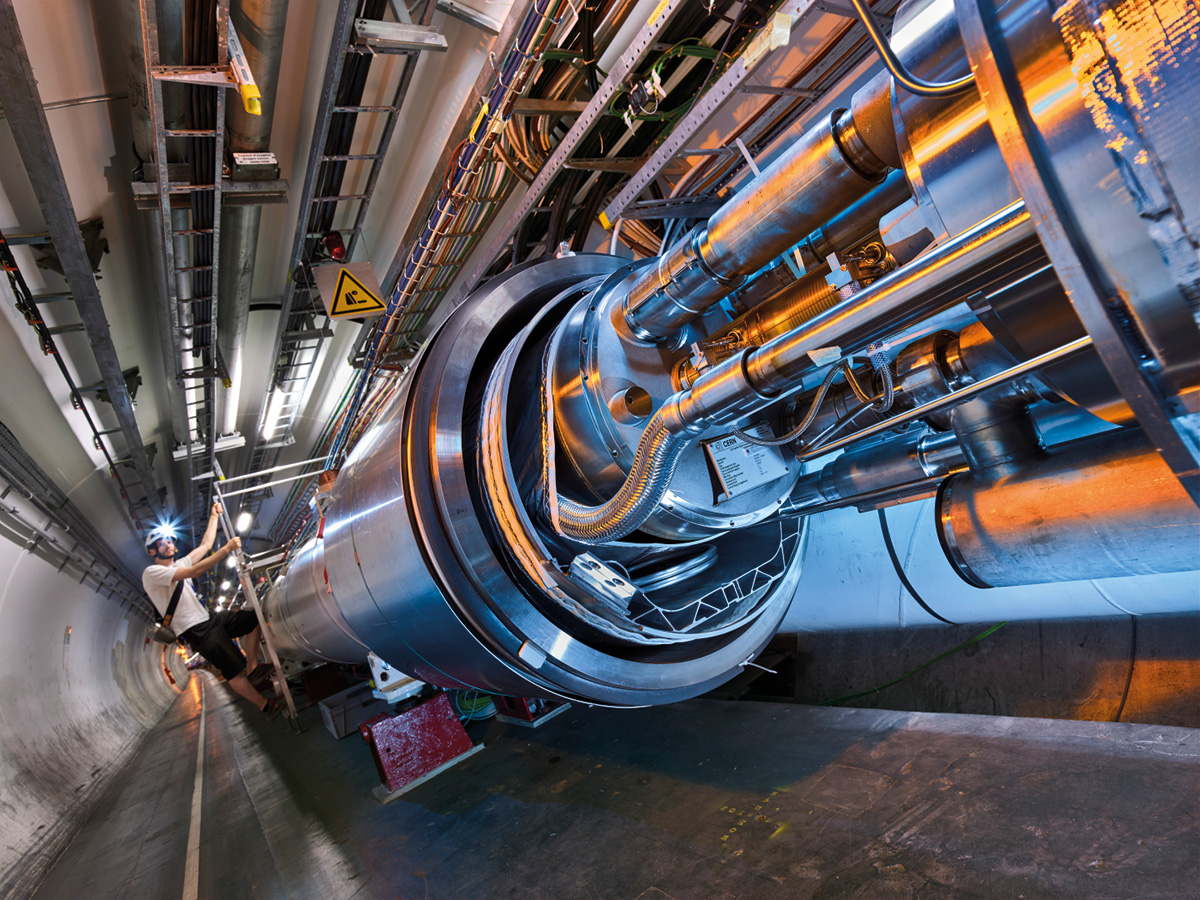
The LHC

Science, from the immutable logic of its mathematical underpinnings to the more fluid realms of the social sciences, has carried us from our humble origins to an understanding of such esoteric notions as gravitation and quantum mechanics. This knowledge has been applied to develop devices such as GPS trackers and smartphones – a story repeated in countless domains for a century or more – and it has delivered new tools for basic research along the way in a virtuous circle.

While it is undeniable that science has led us to a better world than that inhabited by our ancestors, and that it will continue to deliver intellectual, utilitarian and economic progress, advancement is not always linear. Research has led us up blind alleys, and taken wrong turnings, yet its strength is its ability to process data, to self-correct and to form choices based on the best available evidence. The current coronavirus pandemic could prove to be a great educator in the methods of science, demonstrating how the right course of action evolves as the evidence accumulates. We’ve seen all too clearly how badly things can go wrong when individuals and governments fail to grasp the importance of evidence-based decision making.

Fundamental science has to make its case not only on the basis of cultural wealth, but also in terms of socioeconomic benefit. In particle physics, we also have no shortage of examples. These go well beyond the web, although an economic impact assessment of that particular invention is one that I would be very interested in seeing. As of 2014, there were some 42,200 particle accelerators worldwide, 64% of which were used in industry, a third for medical purposes and just 3% in research – not bad for a technology invented for fundamental exploration. It’s a similar story for techniques developed for particle detection, which have found their way into numerous applications, especially in medicine and biology.

The benefits of Big Science for economic prosperity become more pertinent if we consider the cumulative contributions to the 21st-century knowledge economy, which relies heavily on research and innovation. In 2018, more than 40% of the CERN budget was returned to industry in its member-state countries through the procurement of supplies and services, generating corollary benefits such as opening new markets. Increasing efforts, for example by the European Commission, to require research infrastructures to estimate their socioeconomic impact are a welcome opportunity to quantify and demonstrate our impact.

CERN has been subject to economic impact assessments since the 1970s, with one recent cost–benefit analysis of the LHC, conducted by economists at the University of Milan, concluding with 92% probability that benefits exceed costs, even when attaching the very conservative figure of zero to the value of the organisation’s scientific discoveries. More recent  studies (CERN Courier September 2018 p51) by the Milan group, focusing on the High-Luminosity LHC, revealed a quantifiable return to society well in excess of the project’s costs, again, not including its scientific output. Extrapolating these results, the authors show that future colliders at CERN would bring similar societal benefits on an even bigger scale.

Across physics more broadly, a 2019 report commissioned by the European Physical Society found that physics-based industries generate more than 16% of total turnover and 12% of overall employment in Europe – represen­ting a net annual contribution of at least €1.45 trillion, and topping contributions from the financial services and retail sectors (CERN Courier January/February 2020 p9).

Of course, there are some who feel that limited resources for science should be deployed in areas such as addressing climate change, rather than blue-sky research. These views can be persuasive, but are misleading. Fundamental research is every bit as important as directed research, and through the virtuous circle of science, they are mutually dependent. The open questions and mind-bending concepts explored by particle physics and astronomy also serve to draw bright young minds into science, even if individuals go on to work in other areas. Surveys of the career paths taken by PhD students working on CERN experiments fully bear this out (CERN Courier April 2019 p55).

In April 2020, as a curtain-raiser to the update of the European Strategy for Particle Physics, Nature Physics published a series of articles about potential future directions for CERN. An editorial pointed out the strong scientific and utilitarian case for future colliders, concluding that: “Even if the associated price tag may seem high – roughly as high as that of the Tokyo Olympic Games – it is one worth paying.” This is precisely the kind of argument that we as a community should be prepared to make if we are to ensure continuing exploration of fundamental physics in the 21st century and beyond.

Pierre Lazeyras 1931–2020

Pierre Lazeyras

Pierre Lazeyras, who played leading roles in the ALEPH experiment, neutrino beams and silicon detectors during a 35-year-long career at CERN, passed away on 4 April aged 88.

Pierre graduated from the École supérieure de physique et chimie industrielle (ESPCI) in Paris in 1954 and, after working in Anatole Abragam’s group at CEA Saclay, he joined CERN as a staff member in October 1961. He was one of the early collaborators in the Track Chamber (TC) division, which built the two-metre bubble chamber and the Big European Bubble Chamber (BEBC). In parallel, he headed the team that developed one of the first superconducting bending magnets for BEBC’s “beam s3”.

Pierre directed the TC SPS neutrino beam group from 1972, which included the construction of the horns, the 185 m-long iron muon shielding and the beam monitoring, for which silicon-diode particle detectors were employed. After some initial teething troubles, the SPS neutrino beams operated for nearly 20 years without major problems. The silicon monitors were found to be more precise than the early gas-filled ion chambers, and this was the beginning of the era of silicon micro-strip detectors. Pierre encouraged the microelectronics developments for this new technology and its integrated readout circuits. These advances also came just in time for the UA2 experiment at the SPS and for wider applications in the LEP experiments.

Pierre was instrumental in the formation and success of ALEPH. From the conception of the experiment in 1982 right through to the LEP2 phase in 1996, he was ALEPH technical coordinator – a role that was quite new to those of us coming from smaller experiments. Pierre made sure we were realistic in our ambitions and our estimates of the difficulties and planning constraints, and we owe it mainly to him that the various parts of ALEPH were assembled without major problems. He was always available for advice even if, in his careful and reserved style, he did not try to direct or micro-manage everything.

In addition to being responsible for general safety in the experiment (which had no major incidents during its 11 years of operation), Pierre ensured that the construction of ALEPH was completed within budget. He also played an essential role at a crucial moment for the experiment in the early 1990s: the problem with the superconducting magnet cryostat. Under Pierre’s supervision, a vacuum leak was located, close to the edge of the magnet, and the cryostat then underwent “surgery” using a milling machine suspended from a crane. It was a wonderful exercise in imagination and, to the relief of all, a complete success. Pierre had always insisted that such a huge superconducting magnet and cryostat inherently constituted a fragile device, and had objected to the idea of warming up the magnet during annual shutdowns, citing the mechanical stress resulting from this procedure. He was absolutely right.

Pierre was also involved in the design of the large stabilised superconductors for the LHC-experiment magnets and served as a member of the magnet advisory group of the LHC into his retirement, his wisdom being highly appreciated. He was also an active member of the CERN Staff Association. Following his retirement in 1996, he joined the Groupement des Anciens and was a representative on the CERN health insurance supervisory committee, where his advice and opinions were always wise and measured.

Pierre was not only highly talented and used his experience most effectively, he was also a warm person, someone on whom one could always rely. He would always tell you straight how things were and then suggest how any problems could be tackled. A typical remark by Pierre would be: “Ask me to approve or reject your ideas, do not ask me what work I have for you.” We will remember him as a very dear friend and colleague.

Aldo Michelini 1930–2020

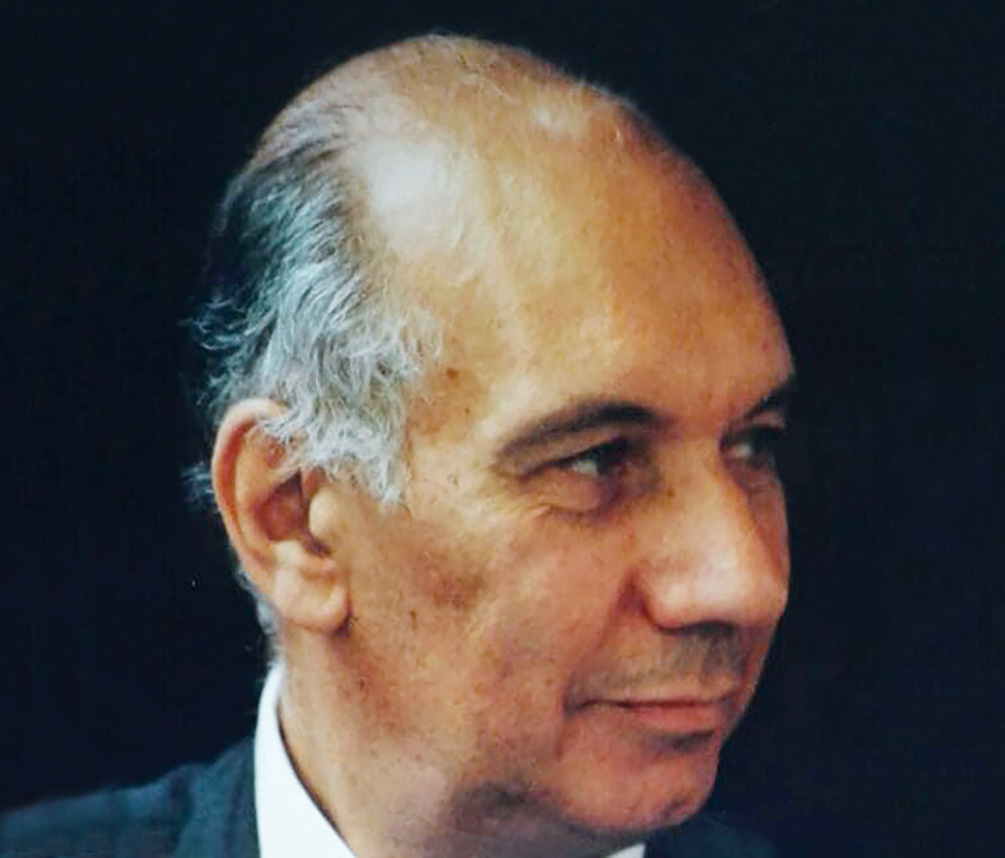
Aldo Michelini

Aldo Michelini, who led OPAL and other important experiments at CERN, passed away at Easter at the age of 89. He was known as much for his kindness and care for his colleagues, particularly those embarking on their careers, as for the physics at which he excelled.

Aldo first came to CERN in 1960, bringing experience from several tracking-chamber experiments, including a stint with Jack Steinberger at Columbia University, and he lost no time in making an impact. One of his earliest contributions was to equip CERN’s Wilson chamber magnet with spark chambers, which he then used as part of a CERN/ETH/Imperial College/Saclay collaboration to measure properties of the K02 meson and pp and K–p charge-exchange interactions using a polarised target.

As the 1960s advanced, Aldo formed a partnership and life-long friendship with his compatriot, Mario Morpurgo, who was an early pioneer of superconducting magnet technology. The two were part of the small team spearheading the development of the Omega spectrometer, a general-purpose device built around a large superconducting magnet that could be arranged and configured according to the physics to be studied. Omega was initially equipped with spark chambers and installed on a PS beamline, receiving its first beam in 1972, and moved to the SPS in 1976 where it became the backbone of the fixed-target programme there for 20 years.

In 1973, Aldo headed a similar project to build a general-purpose spectrometer for the North Area. This became NA3, which was the first experiment to receive beam in the new SPS hadron hall, EHN1, in May 1978. NA3 embarked on a programme of high-mass dimuon production with π+, π–, K+, K–, p and p beams, enabling the first observation of upsilon production by pions. It also probed the structure of the incoming particles via the Drell–Yan process. The spectrometer carried out a string of valuable experiments under Aldo’s guidance until 1981, when he became spokesperson of the OPAL experiment being planned for LEP. Aldo remained at the helm of OPAL right up to his retirement in 1995.

OPAL was built around tried and tested technology, including a paradoxical novelty for Morpurgo: a warm magnet. Huge for its time, with a collaboration of some 300 people, OPAL was nevertheless the smallest of the four LEP experiments. It was a scale that lent itself well to Aldo’s unique style of management – leading through example and consensus. Colleagues remember him smiling and looking very worried, or more often than not, the other way around. This was strangely motivational, with team members striving to make him smile more and worry less. His personality shaped the unique OPAL team spirit. Despite his gentle nature, Aldo was more than capable of making tough choices, and winning over those who might initially have disagreed with him.

When OPAL detected the first Z boson at LEP on 13 August 1989, Aldo was heard to remark that the young people had taken over. The average age of those in the control room that day was well under 30, and that youthfulness was no accident. Aldo actively supported the young members of the collaboration, making sure that they were visible at collaboration meetings and conferences. He also imbued them and the whole collaboration with a culture of never publishing even preliminary results before being absolutely certain of them. As a result, OPAL’s scientists built a strong reputation, with many conference conversations including the words, “let’s wait and see what OPAL has to say”. Aldo’s faith in the younger generation was rewarded by some 300 successful PhD theses from OPAL, while more than 100 CERN fellows passed through the collaboration over its lifetime.

Aldo was a great leader, commanding respect and affection in equal measure. That the collaboration was still able to gather more than 100 members in 2019 to celebrate the 30th anniversary of that first Z decay is testimony to the kind of person Aldo was, and to the spirit that he engendered. Although he was unable to attend that gathering, he sent a message, and was loudly cheered. He will be sorely missed.

Adolf Minten 1931–2020

Adolf Minten

Distinguished CERN physicist Adolf Minten passed away on 21 March at the age of 88.

After graduating from the University of Bonn, where he worked in the team of Wolfgang Paul on the 500 MeV electron synchrotron, Adolf joined the CERN Track Chamber division in 1962. Working under Charles Peyrou, he set up beamlines for the two-metre bubble chamber and actively participated in its broad physics programme. Another important milestone of his career was his time as a visiting scientist at SLAC from 1966 to 1967, where he took part in the early experiments on hadron electro-production and electron scattering at the new two-mile accelerator.

Adolf returned to CERN at a time of decisive developments in accelerator and detector technologies. In parallel to his continued participation in bubble-chamber experiments, he became interested in the physics programme of the Intersecting Storage Rings, the world’s first proton–proton collider, which started operation in 1971. To cope with the high interaction rates expected at this new machine, the development of track detectors focused on the multi-wire proportional chamber (MWPC) developed by Georges Charpak. One of the designs was a large multi-purpose spectrometer called the split-field magnet (SFM). At that time, a large-scale application of the revolutionary MWPC technology, hitherto available only in single-wire devices or small-surface detectors, presented a formidable challenge. In 1969, Adolf became responsible for the construction of the SFM facility, which covered the full solid angle with an unprecedented 300 m2 detector surface, and 70,000 wires and electronics channels. Major detector, electronics and software developments were needed to bring this project into operation in 1974.

In 1975, to prepare for the next generation of experiments at the new SPS machine, the CERN management proposed the creation of a new Experimental Facilities (EF) division. Adolf was elected to lead the new EF division, a position that required a combination of strong scientific and technical authority, and in which he commanded the unreserved respect of his collaborators. Following support provided to the major facilities for the SPS fixed-target programme, such as BEBC, the Omega spectrometer and the neutrino, muon and other experiments, his new division soon became involved in the successful experiments at the SPS proton–antiproton collider.

In 1984 Adolf stepped down from his position as EF division leader and joined the ALEPH experiment at LEP. The LEP experiments were a quantum leap in size and complexity when compared to previous experiments, and demanded new organisational structures. As head of the ALEPH steering committee, Adolf was instrumental in setting up an organisation whose role he compared to an “orchestra, where it is not sufficient that all the instruments be properly tuned, they must also harmonise”. However, his true role of an “elder statesman” went far beyond organisational responsibilities; equally important were his human qualities, which were remarkable indeed and for which he was respected by both young and old.

Adolf maintained a constant interest in DESY, where he was highly appreciated. In 1981 Bjorn Wiik’s study group had finished the HERA design report, and DESY set up an international evaluation committee to analyse it in detail. Adolf was invited to chair this committee. Its positive recommendation was a significant step towards the approval of the HERA project. He chaired the DESY scientific council from 1987 until 1990, during the main construction phase of the storage rings and the H1 and ZEUS multi-purpose detectors.

Adolf retired from CERN in 1996. We remember him as a supremely well-organised scientist of deep and incisive intelligence, unafraid to challenge and question preconceived ideas, and always inspiring others to do the same. At the same time, he was a modest person who cared profoundly for all the people around him, and their families.

Antonino Pullia 1935–2020

Antonino Pullia

Antonino Pullia, who passed away in April aged 84, was a student of Giuseppe Occhialini at the University of Milan and obtained his laurea in 1959. For the next 60 years he devoted himself to teaching, administration and the rich physics research programmes at the INFN and the universities of Milan and Milano-Bicocca, playing a major role in establishing the new physics department at the latter. He had a great passion for teaching undergraduates, continuing well into retirement.

Pullia’s research ranged over many topics including neutrino physics, proton decay, double-beta decay, DELPHI at LEP, CMS at LHC and dark-matter searches. He also played a prominent role in the discovery of neutral currents at CERN using the Gargamelle bubble chamber.

In March 1972 he presented the vertex distribution of possible neutral-current events that had no lepton candidate but one or more pions. The distribution was seen to be uniform, just like the events with muon candidates, leading immediately to the formation of working groups concentrating on neutral-current searches in both hadronic and purely leptonic modes. After a remarkable scanning and measurement effort many candidates for neutral currents had been found, but the burning issue was the size of the background due to neutron interactions. Pullia recognised the importance of a special class of events, namely genuine neutrino events with a detected final-state muon and a neutron emitted at the interaction vertex and detected downstream in the visible part of the bubble chamber. Such events were rare, but very valuable, since in this case the downstream event was surely induced by a neutron. It was clear that the major source of background neutrons was coming from neutrino events in the material surrounding Gargamelle. With this knowledge, it turned out that the predicted background was far too small to explain the observed number of neutral-current candidates and thus, at the end of July 1973, the collaboration was able to announce the great discovery of neutral currents. The Italian Physical Society awarded the 2011 Fermi prize to Pullia in recognition of his important contribution.

At the beginning of the 1980s Tonino, as he was known, joined the DELPHI collaboration at LEP where he worked with his group on the construction of the electromagnetic calorimeter, along with the reconstruction and analysis software. The Milan group, under his constant support, was extremely active in DELPHI, proposing many original analyses, as well as many PhD and master theses, contributing to the exceptionally rich LEP physics results.

In 2012 Tonino became interested in the detection of dark matter, deciding to resurrect a special type of bubble chamber developed 50 years ago – called “the Geyser” – which is remarkable in its simplicity. With no moving parts, and the ability to reset itself a few seconds after a bubble is formed, the device was ideal for underground experiments. He also formed the MOSCAB collaboration, which successfully produced a small detector with the required superheat needed for dark-matter searches.

Each of us who had the privilege to work with, or simply to talk to, Tonino has been enlightened in some way in our efforts to have a deeper understanding of fundamental physics. He was always extremely kind and open to alternative views. We will sadly miss him for his human qualities, and as a physicist.

Teresa Rodrigo Anoro 1956–2020

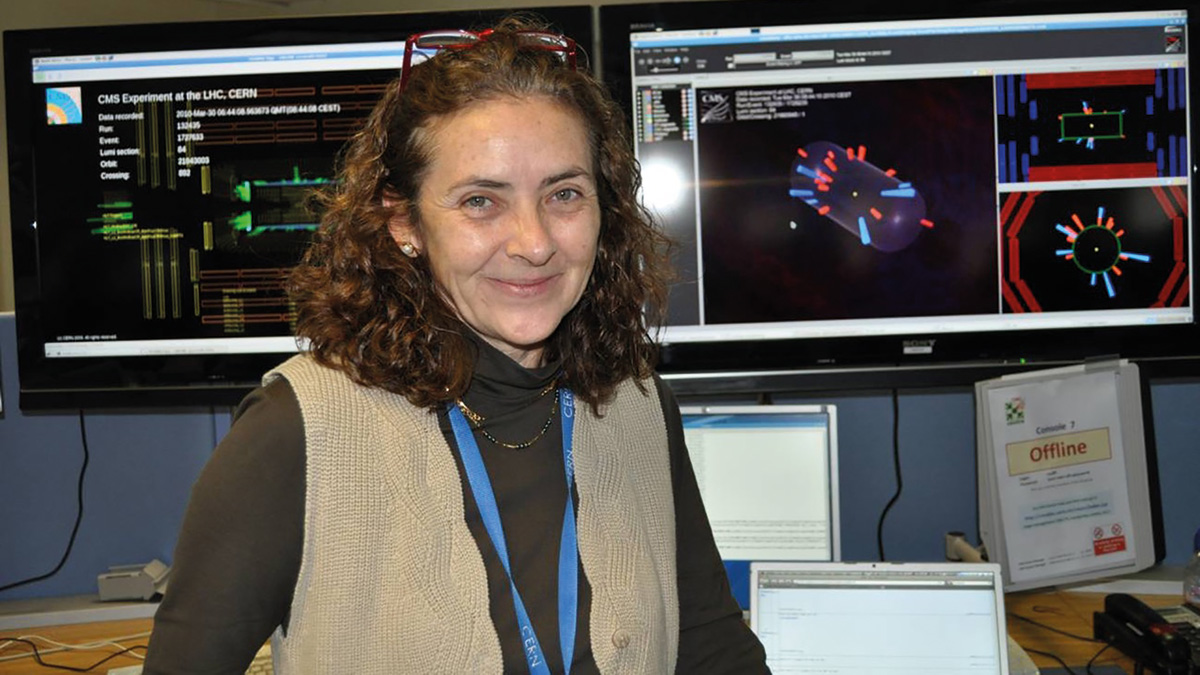
Teresa Anoro

Teresa Rodrigo Anoro, professor of atomic and nuclear physics at the University of Cantabria, passed away at her home on 20 April after a long illness. She was a leading figure within the particle-physics community and played a key role in shaping Spanish particle-physics policy, with an emphasis on promoting the participation of women in science.

After her bachelor’s degree in physics from the University of Zaragoza, Teresa joined the high-energy physics group of La Junta de Energía Nuclear in Madrid (currently
CIEMAT), earning a PhD in 1985 with a thesis on the production of strange particles at the NA23 experiment at CERN. She then moved to CERN to participate in the development of the Uranium–TMP calorimeter for the upgrade of the UA1 experiment, where she started her personal journey towards finding the top quark. This eventually brought her to the CDF experiment at Fermilab, where she carried out the detailed modelling of the W+jet background, a crucial input to the top’s discovery. In 1994 she took up a faculty position at the Instituto de Física de Cantabria (IFCA) in Santander, incorporating the IFCA group into both the CDF experiment and the newly formed CMS collaboration at CERN. Under her direction, the group continued her study of the properties of the top quark and opened up a new line of research towards the discovery of the Higgs boson.

More recently, moving away from hadron beams for the first time, Teresa promoted new approaches to the search for light dark-matter at the DAMIC experiment. She was well aware of the importance of technology development and detector building in high-energy physics and orchestrated her group’s contribution to the construction of the CMS muon spectrometer, in particular its muon alignment system, and to the building of CDF’s time-of-flight detector.

Teresa’s scientific insight and strong commitment to whatever endeavour she was engaged in were recognised by the international community: she was elected chair of the CMS collaboration board (2011–2012) and served as a member of several scientific policy committees, including the European Physical Society HEPP board (2006–2013) and the CERN scientific policy committee (2012–2017). Outside academia, she was a member of several Spanish ministerial scientific panels and of the technical and research panel of the Princesa de Asturias awards. She also held an honorary doctorate from the Menéndez Pelayo International University, received the silver medal of the University of Cantabria and the first Julio Peláez award for female pioneers in science, among other recognitions.

Teresa’s influence on the Santander HEP group and the IFCA institute that she directed until a few months before her death remains very visible. During her tenure, the group grew considerably and greatly expanded its activities. The institute was awarded the greatest distinction of excellence of the Spanish science system, the Maria de Maeztu grant, and the gender-equality prize awarded by the Spanish National Research Council.

Those of us who were fortunate enough to know Teresa and to share some of her scientific passions, are aware of how kind, approachable, righteous and sympathetic
she was, though with a strong character that came from her deep honesty. Teresa’s legacy stands as a testament to her leadership, her vision and her ability to mentor rising colleagues. She will be sorely missed.

bright-rec iop pub iop-science physcis connect