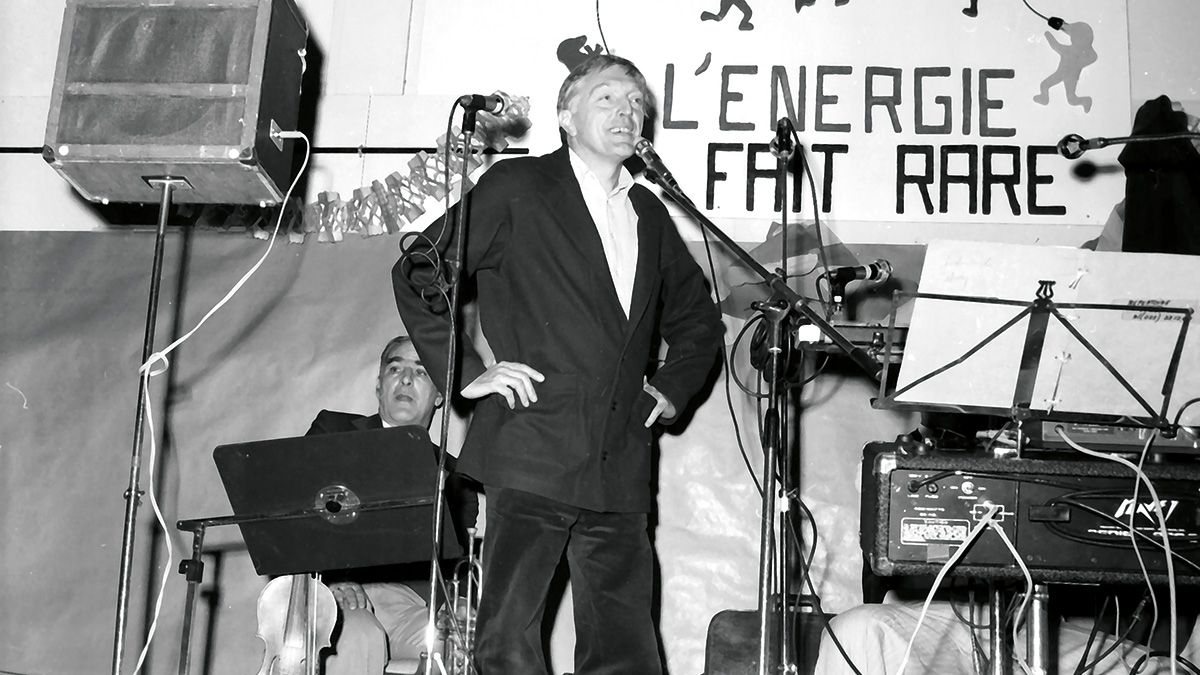
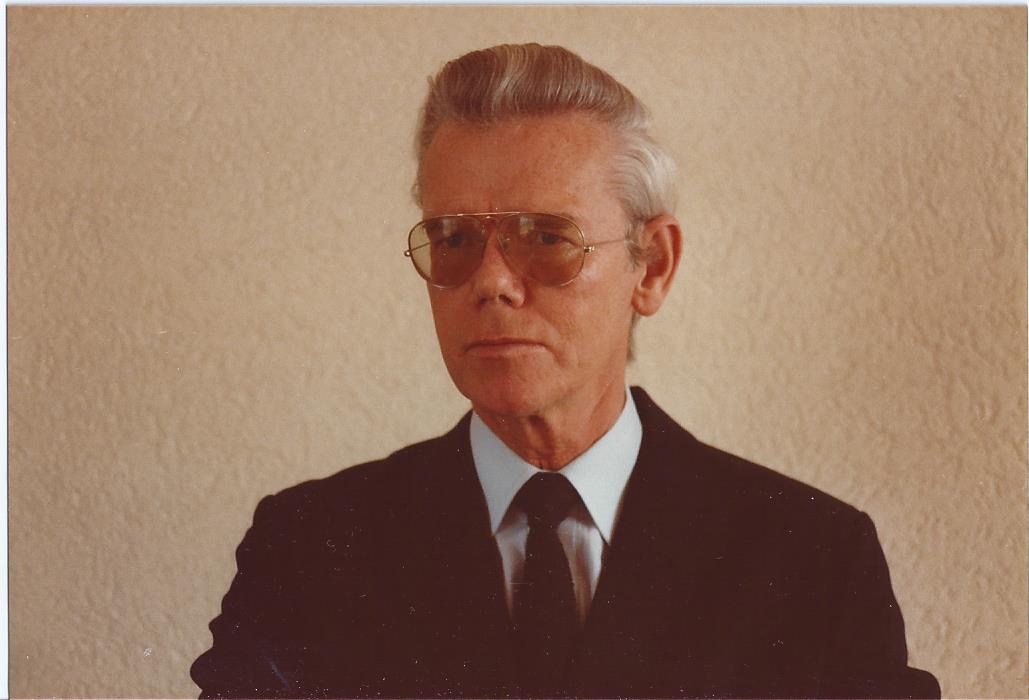
Distinguished CERN physicist Adolf Minten passed away on 21 March at the age of 88.
After graduating from the University of Bonn, where he worked in the team of Wolfgang Paul on the 500 MeV electron synchrotron, Adolf joined the CERN Track Chamber division in 1962. Working under Charles Peyrou, he set up beamlines for the two-metre bubble chamber and actively participated in its broad physics programme. Another important milestone of his career was his time as a visiting scientist at SLAC from 1966 to 1967, where he took part in the early experiments on hadron electro-production and electron scattering at the new two-mile accelerator.
Adolf returned to CERN at a time of decisive developments in accelerator and detector technologies. In parallel to his continued participation in bubble-chamber experiments, he became interested in the physics programme of the Intersecting Storage Rings, the world’s first proton–proton collider, which started operation in 1971. To cope with the high interaction rates expected at this new machine, the development of track detectors focused on the multi-wire proportional chamber (MWPC) developed by Georges Charpak. One of the designs was a large multi-purpose spectrometer called the split-field magnet (SFM). At that time, a large-scale application of the revolutionary MWPC technology, hitherto available only in single-wire devices or small-surface detectors, presented a formidable challenge. In 1969, Adolf became responsible for the construction of the SFM facility, which covered the full solid angle with an unprecedented 300 m2 detector surface, and 70,000 wires and electronics channels. Major detector, electronics and software developments were needed to bring this project into operation in 1974.
In 1975, to prepare for the next generation of experiments at the new SPS machine, the CERN management proposed the creation of a new Experimental Facilities (EF) division. Adolf was elected to lead the new EF division, a position that required a combination of strong scientific and technical authority, and in which he commanded the unreserved respect of his collaborators. Following support provided to the major facilities for the SPS fixed-target programme, such as BEBC, the Omega spectrometer and the neutrino, muon and other experiments, his new division soon became involved in the successful experiments at the SPS proton–antiproton collider.
In 1984 Adolf stepped down from his position as EF division leader and joined the ALEPH experiment at LEP. The LEP experiments were a quantum leap in size and complexity when compared to previous experiments, and demanded new organisational structures. As head of the ALEPH steering committee, Adolf was instrumental in setting up an organisation whose role he compared to an “orchestra, where it is not sufficient that all the instruments be properly tuned, they must also harmonise”. However, his true role of an “elder statesman” went far beyond organisational responsibilities; equally important were his human qualities, which were remarkable indeed and for which he was respected by both young and old.
Adolf maintained a constant interest in DESY, where he was highly appreciated. In 1981 Bjorn Wiik’s study group had finished the HERA design report, and DESY set up an international evaluation committee to analyse it in detail. Adolf was invited to chair this committee. Its positive recommendation was a significant step towards the approval of the HERA project. He chaired the DESY scientific council from 1987 until 1990, during the main construction phase of the storage rings and the H1 and ZEUS multi-purpose detectors.
Adolf retired from CERN in 1996. We remember him as a supremely well-organised scientist of deep and incisive intelligence, unafraid to challenge and question preconceived ideas, and always inspiring others to do the same. At the same time, he was a modest person who cared profoundly for all the people around him, and their families.
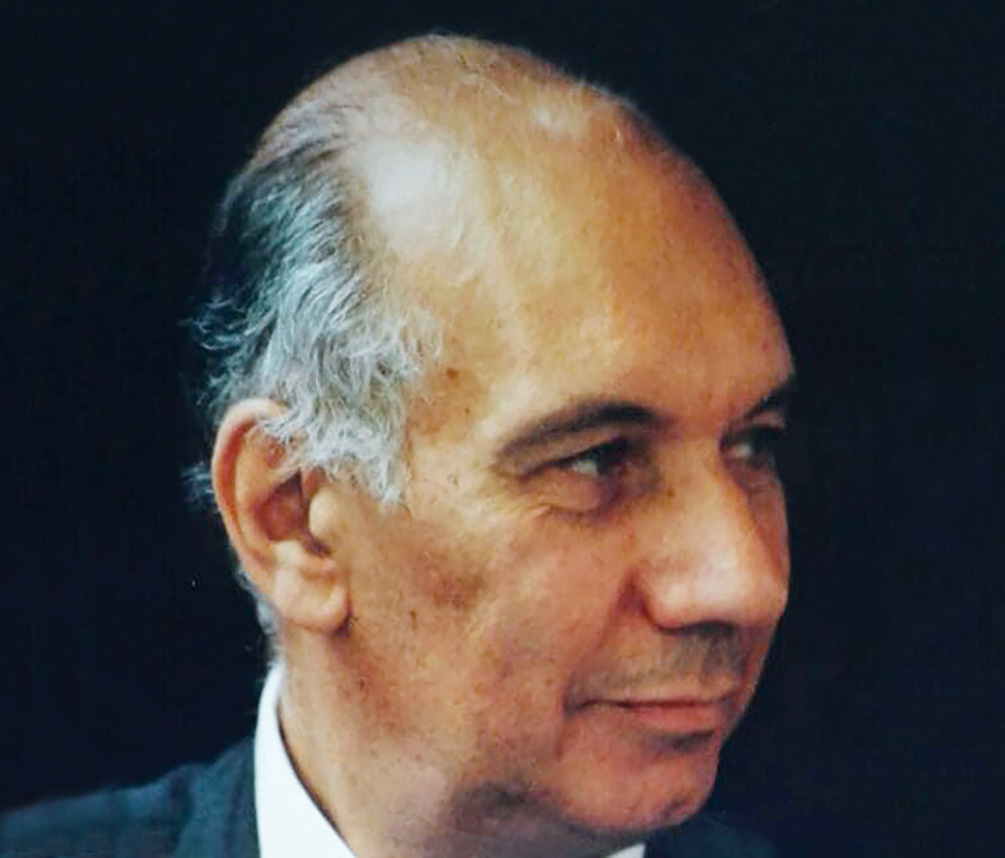
Antonino Pullia, who passed away in April aged 84, was a student of Giuseppe Occhialini at the University of Milan and obtained his laurea in 1959. For the next 60 years he devoted himself to teaching, administration and the rich physics research programmes at the INFN and the universities of Milan and Milano-Bicocca, playing a major role in establishing the new physics department at the latter. He had a great passion for teaching undergraduates, continuing well into retirement.
Pullia’s research ranged over many topics including neutrino physics, proton decay, double-beta decay, DELPHI at LEP, CMS at LHC and dark-matter searches. He also played a prominent role in the discovery of neutral currents at CERN using the Gargamelle bubble chamber.
In March 1972 he presented the vertex distribution of possible neutral-current events that had no lepton candidate but one or more pions. The distribution was seen to be uniform, just like the events with muon candidates, leading immediately to the formation of working groups concentrating on neutral-current searches in both hadronic and purely leptonic modes. After a remarkable scanning and measurement effort many candidates for neutral currents had been found, but the burning issue was the size of the background due to neutron interactions. Pullia recognised the importance of a special class of events, namely genuine neutrino events with a detected final-state muon and a neutron emitted at the interaction vertex and detected downstream in the visible part of the bubble chamber. Such events were rare, but very valuable, since in this case the downstream event was surely induced by a neutron. It was clear that the major source of background neutrons was coming from neutrino events in the material surrounding Gargamelle. With this knowledge, it turned out that the predicted background was far too small to explain the observed number of neutral-current candidates and thus, at the end of July 1973, the collaboration was able to announce the great discovery of neutral currents. The Italian Physical Society awarded the 2011 Fermi prize to Pullia in recognition of his important contribution.
At the beginning of the 1980s Tonino, as he was known, joined the DELPHI collaboration at LEP where he worked with his group on the construction of the electromagnetic calorimeter, along with the reconstruction and analysis software. The Milan group, under his constant support, was extremely active in DELPHI, proposing many original analyses, as well as many PhD and master theses, contributing to the exceptionally rich LEP physics results.
In 2012 Tonino became interested in the detection of dark matter, deciding to resurrect a special type of bubble chamber developed 50 years ago – called “the Geyser” – which is remarkable in its simplicity. With no moving parts, and the ability to reset itself a few seconds after a bubble is formed, the device was ideal for underground experiments. He also formed the MOSCAB collaboration, which successfully produced a small detector with the required superheat needed for dark-matter searches.
Each of us who had the privilege to work with, or simply to talk to, Tonino has been enlightened in some way in our efforts to have a deeper understanding of fundamental physics. He was always extremely kind and open to alternative views. We will sadly miss him for his human qualities, and as a physicist.
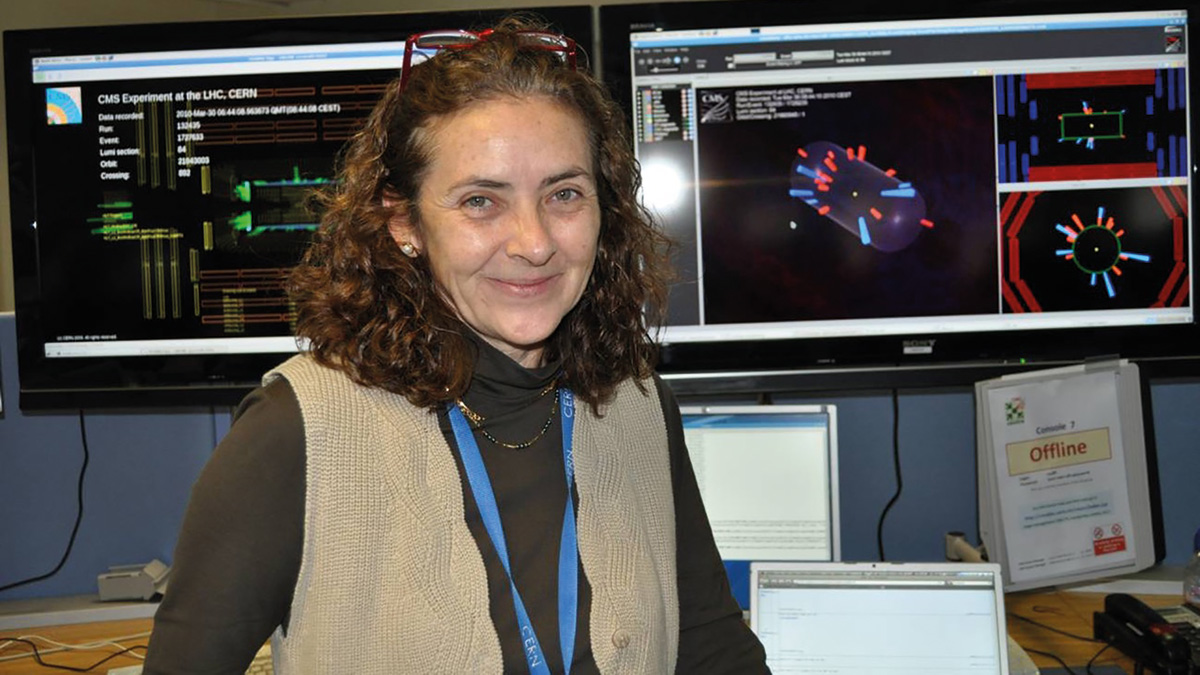
Teresa Rodrigo Anoro, professor of atomic and nuclear physics at the University of Cantabria, passed away at her home on 20 April after a long illness. She was a leading figure within the particle-physics community and played a key role in shaping Spanish particle-physics policy, with an emphasis on promoting the participation of women in science.
After her bachelor’s degree in physics from the University of Zaragoza, Teresa joined the high-energy physics group of La Junta de Energía Nuclear in Madrid (currently
CIEMAT), earning a PhD in 1985 with a thesis on the production of strange particles at the NA23 experiment at CERN. She then moved to CERN to participate in the development of the Uranium–TMP calorimeter for the upgrade of the UA1 experiment, where she started her personal journey towards finding the top quark. This eventually brought her to the CDF experiment at Fermilab, where she carried out the detailed modelling of the W+jet background, a crucial input to the top’s discovery. In 1994 she took up a faculty position at the Instituto de Física de Cantabria (IFCA) in Santander, incorporating the IFCA group into both the CDF experiment and the newly formed CMS collaboration at CERN. Under her direction, the group continued her study of the properties of the top quark and opened up a new line of research towards the discovery of the Higgs boson.
More recently, moving away from hadron beams for the first time, Teresa promoted new approaches to the search for light dark-matter at the DAMIC experiment. She was well aware of the importance of technology development and detector building in high-energy physics and orchestrated her group’s contribution to the construction of the CMS muon spectrometer, in particular its muon alignment system, and to the building of CDF’s time-of-flight detector.
Teresa’s scientific insight and strong commitment to whatever endeavour she was engaged in were recognised by the international community: she was elected chair of the CMS collaboration board (2011–2012) and served as a member of several scientific policy committees, including the European Physical Society HEPP board (2006–2013) and the CERN scientific policy committee (2012–2017). Outside academia, she was a member of several Spanish ministerial scientific panels and of the technical and research panel of the Princesa de Asturias awards. She also held an honorary doctorate from the Menéndez Pelayo International University, received the silver medal of the University of Cantabria and the first Julio Peláez award for female pioneers in science, among other recognitions.
Teresa’s influence on the Santander HEP group and the IFCA institute that she directed until a few months before her death remains very visible. During her tenure, the group grew considerably and greatly expanded its activities. The institute was awarded the greatest distinction of excellence of the Spanish science system, the Maria de Maeztu grant, and the gender-equality prize awarded by the Spanish National Research Council.
Those of us who were fortunate enough to know Teresa and to share some of her scientific passions, are aware of how kind, approachable, righteous and sympathetic
she was, though with a strong character that came from her deep honesty. Teresa’s legacy stands as a testament to her leadership, her vision and her ability to mentor rising colleagues. She will be sorely missed.
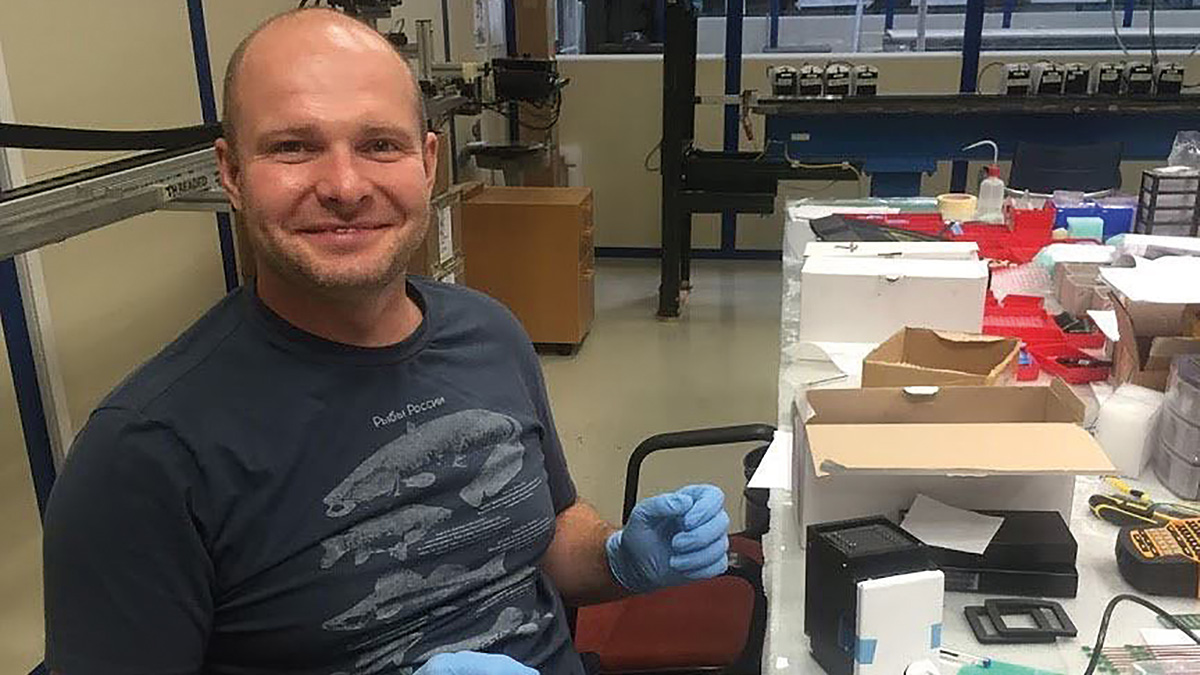
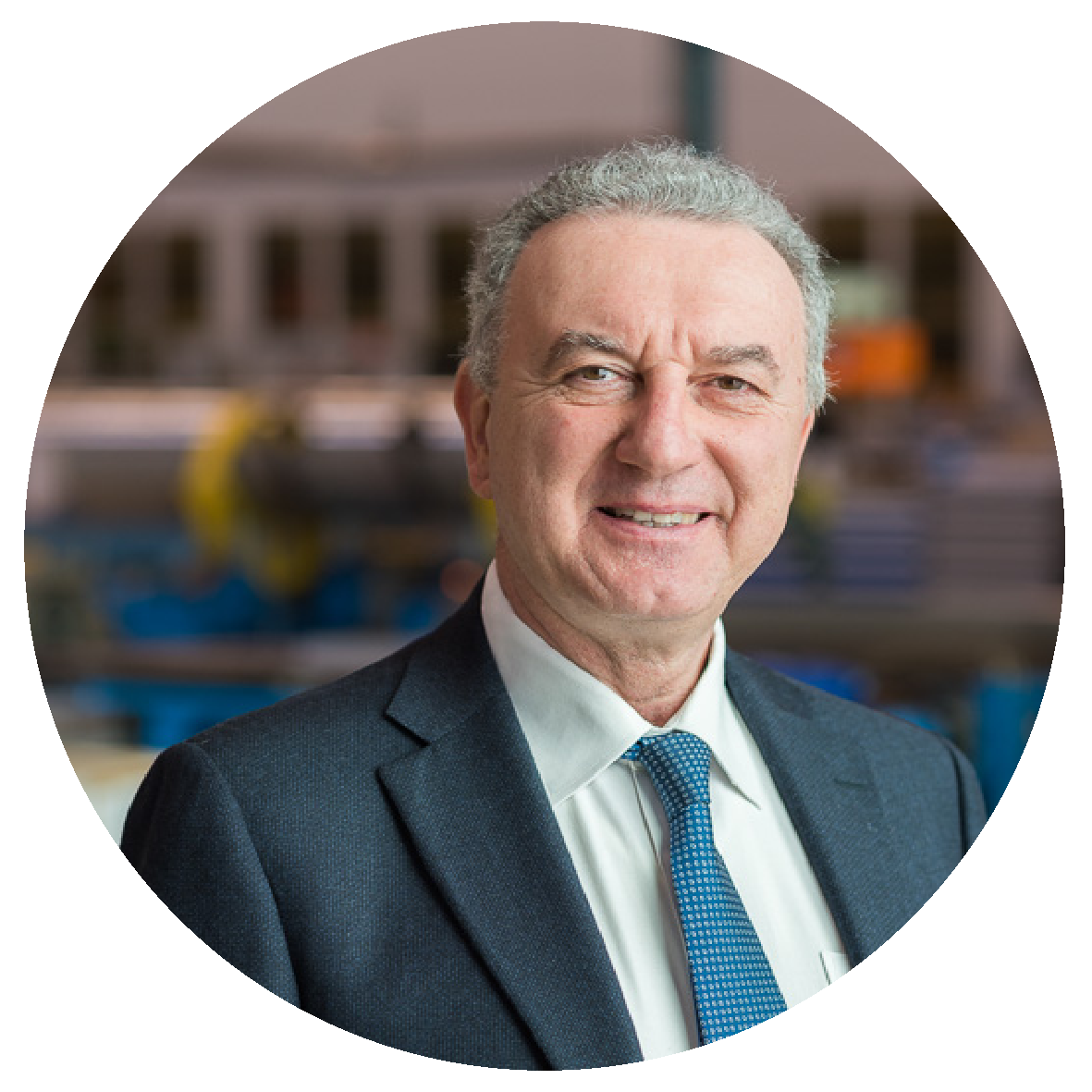
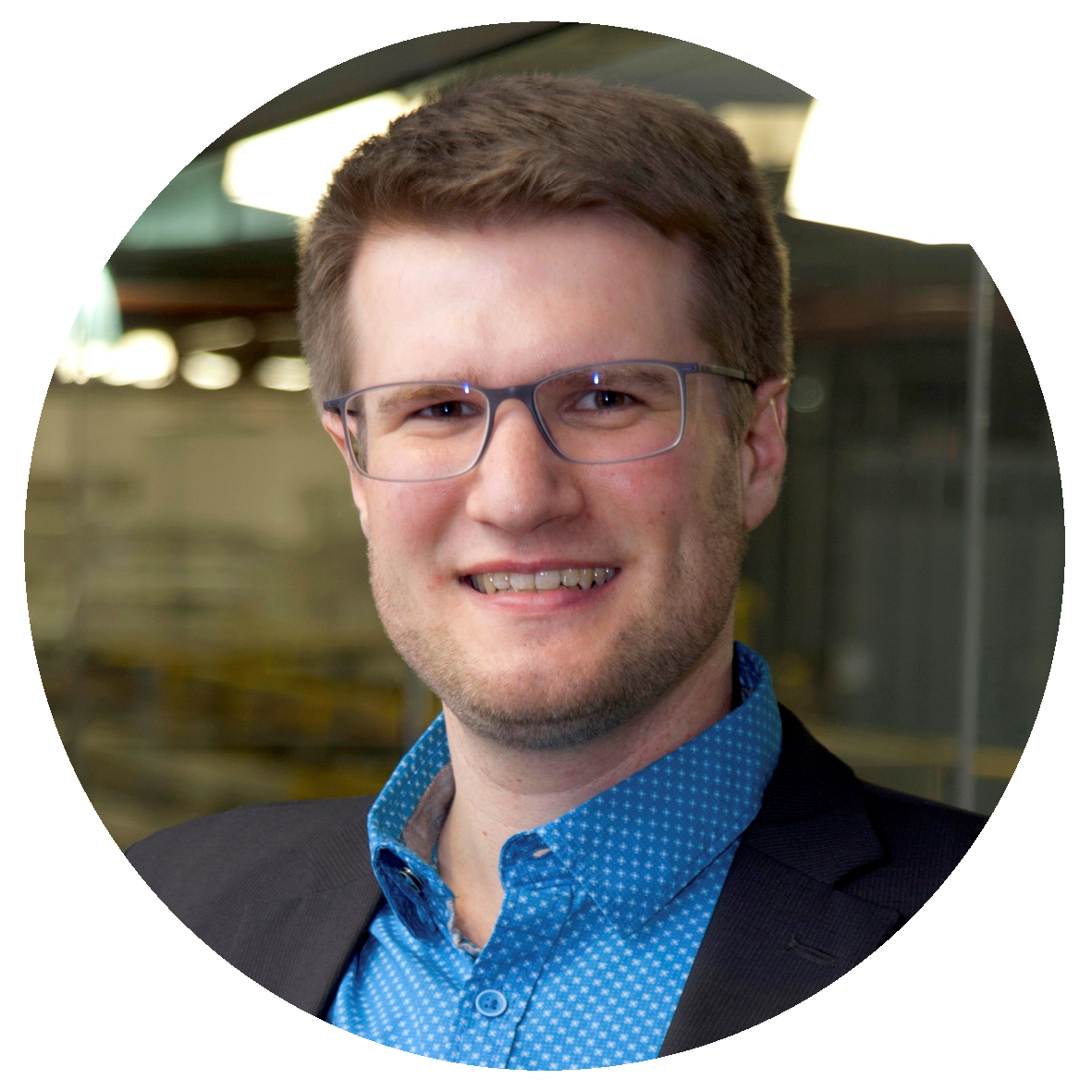
Danila Tlisov, a member of the CMS collaboration at CERN, passed away on 14 April in Russia due to complications associated with COVID-19. He was just 36 years old.
Danila joined the INR Moscow group in 2010 as a young researcher after graduating with honours from Moscow State University and defending his dissertation. Following his contributions to early heavy-neutrino searches, he started to work on the CMS hadron calorimeter (HCAL) subsystem in 2012. Danila served as the hub of the multinational CMS HCAL upgrade effort, leading the CERN-based team that received individual components from India, Russia, Turkey and the US, and assembling them into a working detector. Danila recently brought his unique mix of strengths to the CMS HCAL management team as deputy project manager and a member of the CMS management.
In the physics analysis realm, Danila worked with the University of Rochester group on a measurement of the electroweak mixing angle using the forward–backward asymmetry in Drell–Yan events, where he focused on critical improvements to the calibration of the electron-energy measurements in challenging regions of Drell–Yan kinematic phase space.
CMS friends and colleagues remember fondly the warm smile and incredibly effective leadership of Danila. His practical know-how and excellent judgement were critical as we worked together through the tough challenges of a major detector upgrade.
Danila was an accomplished backcountry touring skier. Because of his great physical strength and focus on climbing, it was often said that he may have been faster going uphill than downhill, and that is saying a lot.
Among his many colleagues, Danila will be remembered for his pleasant, cheerful disposition, even during times of intense pressure. He challenged us with his brilliant ideas, guided students with patience and grace, and inspired us all. He will be sorely missed.
Experimental physicist Ronald Fortune, who joined CERN’s first nuclear research group in January 1956, passed away on 16 June 2019 at the age of 90.
Ron graduated with a degree in physics and mathematics from the University of Aberdeen, UK, before joining electrical engineering firm AEI in Manchester, where he acquired a valuable practical training in several departments and research experience in high-voltage techniques and electron-microscope design. This training was put to immediate use in his first post as scientific officer in the British Royal Naval Scientific Service, where he developed automated instrumentation for the study of atomic-weapon explosions at the Woomera test range in Australia.
Ron’s main career was as a senior scientist at CERN, where he spent 17 years engaged in a wide variety of projects. This included six years in high-energy physics research studying K-mesons, relativistic ionisation effects and hunting for quarks, during which Ron pioneered methods for identifying high-energy particles by measurement of their momentum and ionising power, and developed high-precision optical equipment for the photography of high-energy particles. For his work on relativistic ionisation, he was awarded a doctorate by the University of Geneva. The next eight years were spent in CERN’s applied-physics divisions, where he was a member of the team that developed the world’s first radio-frequency particle separator. Ron also coordinated a large CERN–Berkeley–Rutherford team in the extensive study of accelerator shielding problems. The final phase of his career at CERN was spent in organising the large-scale production of particle detectors (wire chambers) for the nuclear-physics divisions.
In 1973 Ron resigned his staff position at CERN to direct an independent consultancy in physics, engineering-physics and project management. In 1976 the firm signed a contract with the Dutch government, where he was charged with the construction of a five-metre superconducting solenoid for the muon channel of the National Institute for Nuclear Physics Research in Amsterdam, which was successfully brought into operation in 1981.
In later years Ron actively collaborated in neuroscience research carried out at the Geneva University Hospital, co-authoring several peer-reviewed articles in specialised journals.
Ron was a most charming person, always very cheerful and positive with an extraordinary sense of humour.
Accelerator physicist John Flanagan, who made important contributions to beam instrumentation for the KEKB and SuperKEKB projects in Japan, passed away on 13 March.
John Flanagan was born in 1964 and grew up in The Valley of Vermont, attending Philips Academy and graduating from Harvard University in 1987 with a degree in physics, astronomy and astrophysics. After working for a few years at software companies and at the Space Sciences Laboratory at Berkeley, he attended graduate school in physics at the University of Hawai’i at Manoa in 1992. Emeritus professor Steve Olsen recalls: “John was one of our best ever graduate students at the UH. Although he was initially attracted to Hawaii because of his love for scuba diving, his deepest dive as a grad student was to the bottom of the Super-Kamkiokande water tank.”
John joined the Super-Kamkiokande experiment at an early stage. He was a beloved member of the construction team and quite a favourite of the miners at Kamioka, who presented him with the snake’s beating heart at the mine-tunnel dedication. John took the first data-taking shift on the experiment on 1 April 1996 and the following year married Mika Masuzawa, who was at that time a postdoc from Boston University working on the Super-K construction. This was around the time John completed his thesis on the first observation of atmospheric neutrino oscillations at Super-Kamkiokande, supervised by John Learned. After completing his PhD, he moved back to Japan and was a research fellow in the KEK accelerator division. His talent was quickly recognised. He was appointed as an assistant professor in 1999, an associate professor in 2008 and promoted to full professor in 2016.
He was also known for his activities on gender-equality issues
A world-leading accelerator physicist, John was well known for his immense contributions to the KEKB and SuperKEKB projects. His work on the photoelectron instability, monitoring of the beam size via synchrotron radiation light and X-rays, and feedback systems played a key role in KEKB’s achievement of the world highest luminosity at an electron-positron accelerator. Flanagan-san (sometimes nicknamed “furigana-san”) participated in nearly every aspect of the construction, monitoring and operation of KEKB. He is most celebrated for his outstanding work on the synchrotron radiation (SR) light monitor using interferometery, which allows real-time measurement of micron-level beam sizes. For SuperKEKB, he greatly improved the SR monitor by using a diamond mirror; this eliminated the systematics from thermal expansion of the mirror that had plagued the SR monitoring system in KEKB.
John also led work on the remediation of the electron-cloud effect, in particular concerning the onset of the electron-cloud blowup and its relation to the head-tail instability, which has been quite visible in the global accelerator community. In addition to being one of the key accelerator problems for KEKB and SuperKEKB, a solution to the electron-cloud problem is also needed for successful operation of the damping rings for the future International Linear Collider. Finally, he developed an innovative X-ray beam profile monitoring technique by adapting techniques from X-ray astronomy and using innovative high-speed electronics. John carried out early tests of the system in collaboration with colleagues at CESR-TA (Cornell Electron Storage Ring Test Accelerator) in Cornell and at the ATF2 (Accelerator Test Facility) at KEK. He also developed a collaboration with SLAC and the University of Hawai’i within the framework of the US-Japan Cooperation Program in High Energy Physics. In the near future, an upgraded version of this X-ray monitor will be used to realise John’s dream of bunch-by-bunch measurements of small vertical beam sizes.
In addition to his fluent command of the Japanese language and understanding of Japanese manners, John was a modest and kind person who was beloved by his colleagues in the KEK accelerator division and by those on the Belle and Belle II experiments. He was also known for his activities on gender-equality issues including participation in the Japanese Physical Society taskforces and committees as well as serving as an instructor at the Rikejo science camp for high-school girls.
John is survived by his wife, a professor at KEK, and by his daughter Mariko. We will all remember him with the greatest respect as a splendid person, as innovative scientist, and someone who we are very proud to have had the opportunity to work with.
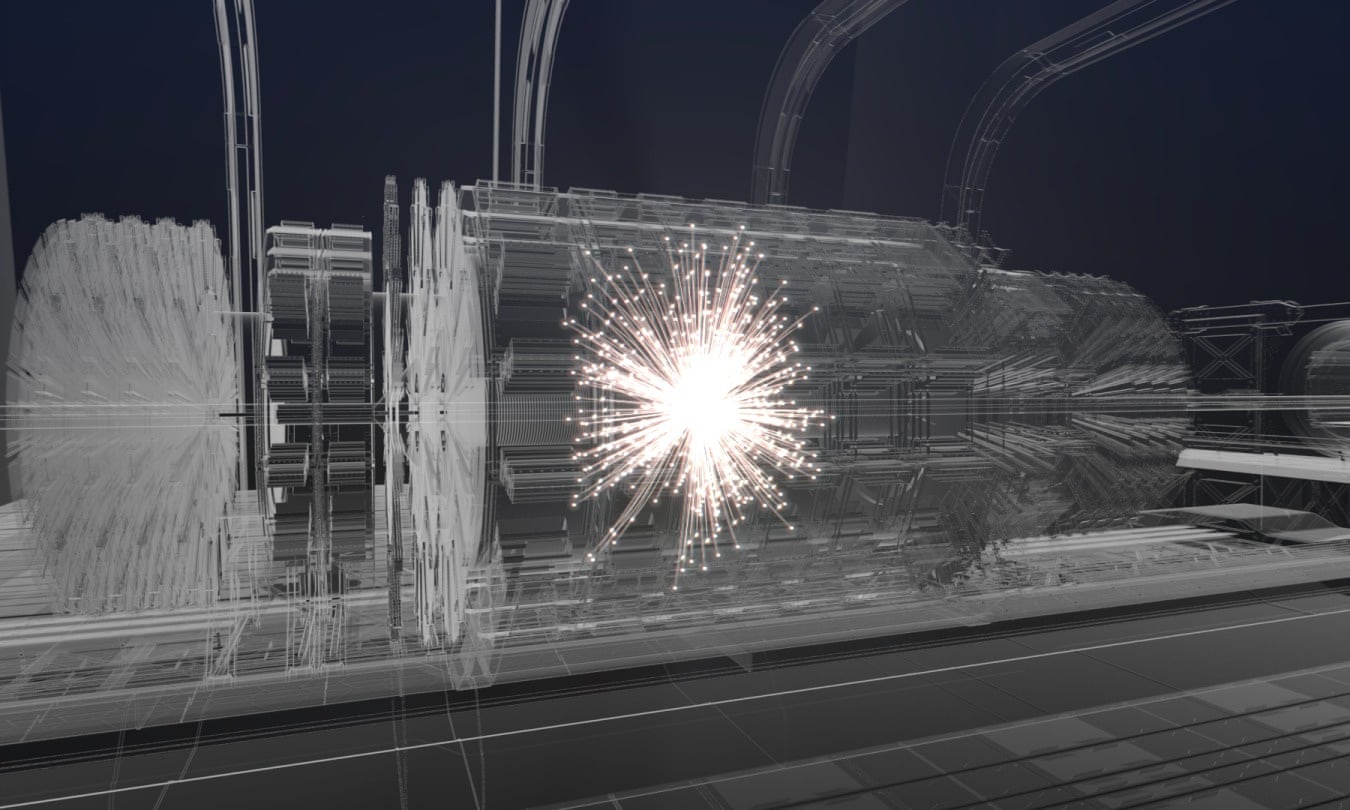
The discovery of the Higgs boson by the ATLAS and CMS collaborations at the LHC in 2012 marked a turning point in particle physics. Not only was it the last of the Standard Model particles to be found, but it is completely different to any particle seen before: a fundamental scalar, with profound connections to the structure of the vacuum. Extensive measurements so far suggest that the particle is the simplest possible version that nature permits. But the study of the Higgs boson is still in its infancy and its properties present enigmas, including why it is so light, which the Standard Model cannot explain. Particle physics is entering a new era of exploration to address these and other outstanding questions, including unknowns in the universe at large, such as the nature of dark matter.
The 2020 update of the European strategy for particle physics (ESPPU), which was released today during the 199th session of the CERN Council, sets out an ambitious programme to carry the field deep into the 21st century. Following two years of discussion and consultation with particle physicists in Europe and beyond, the ESPPU has identified an electron–positron Higgs factory as the highest priority collider after the LHC. The ultraclean collision environment of such a machine (which could start operation at CERN within a timescale of less than 10 years after the full exploitation of the high-luminosity LHC in the late 2030s) will enable dramatic progress in mapping the diverse interactions of the Higgs boson with other particles, and form an essential part of a research programme that includes exploration of the flavour puzzle and the neutrino sector.
We have started to concretely shape CERN’s future after the LHC
Ursula Bassler
To prepare for the longer term, the ESPPU prioritises that Europe, together with its international partners, explore the technical and financial feasibility of a future proton–proton collider at CERN with a centre-of-mass energy of at least 100 TeV. In addition to allowing searches for new phenomena at unprecedented scales, this machine would enable the detailed study of how the Higgs boson interacts with itself – offering a deeper understanding of the electroweak phase transition in the early universe after which the vacuum gained a non-zero expectation value and particles were enabled to acquire mass.
“The strategy is above all driven by science and presents the scientific priorities for the field,” said Ursula Bassler, president of the CERN Council. “We have started to concretely shape CERN’s future after the LHC, which is a difficult task because of the different paths available.”
Setting the stage The strategy update is the second since the process was launched in 2005. It aims to ensure the optimal use of global resources, serving as a guideline to CERN and enabling a coherent science policy in Europe. Building on the previous strategy update, which concluded in 2013, the 2020 update states that the successful completion of the high-luminosity LHC should remain the focal point of European particle physics, together with continued innovation in experimental techniques. Europe, via the CERN neutrino platform, should also continue to support the Long Baseline Neutrino Facility in the US and neutrino projects in Japan. Diverse projects that are complementary to collider projects are an essential pillar of the ESPPU recommendations, which urge European laboratories to support experiments enabling, for example, precise investigations of flavour physics and electric or magnetic dipole moments, and searches for axions, dark-sector candidates and feebly interacting particles.
The continuing ability of CERN, European laboratories and the particle-physics community to realise compelling scientific projects is essential for scientific progress, states the report. Cooperative programmes between CERN and research centres and national institutes in Europe should be strengthened and expanded, in addition to building strong collaborations with the astroparticle and nuclear physics communities.
Exploring the next frontier The 2013 ESPPU recommended that options for CERN’s next machine after the LHC be explored. Today, there are four possible options for a Higgs factory in different regions of the world: an International Linear Collider (ILC) in Japan, a Compact Linear Collider (CLIC) at CERN, a Future Circular Collider (FCC-ee) at CERN, and a Circular Electron Positron Collider (CEPC) in China. As Higgs factories, the ESPPU finds all four to have comparable reach, albeit with different time schedules and with differing potentials for the study of physics topics at other energies. While not specifying which facility should be built, the ESPPU states that the large circular tunnel necessary for a future hadron collider at CERN would also provide the infrastructure needed for FCC-ee as a possible first step. In addition to serving as a Higgs factory, FCC-ee is able to provide huge numbers of weak vector bosons and their decay products that would enable precision tests of electroweak physics and the investigation of the flavour puzzle.
Considering colliders at the energy frontier, a 3 TeV CLIC and a 100 TeV circular hadron collider (FCC-hh) were considered in depth. While the proposed 380 GeV CLIC also offers a Higgs factory as a first stage, the dramatic increase in energy possible with a future hadron collider compared to the 13 TeV of the LHC has led the ESPPU to consider this technology as the most promising for a future energy-frontier facility. Europe together with international partners will therefore begin a feasibility study into building such a machine at CERN with the FCC-ee Higgs and electroweak factory as a possible first stage, to be established as a global endeavour and completed on the timescale of the next strategy update later this decade. It is also expected that Europe invests further in R&D for the high-field superconducting magnets for FCC-hh while retaining a programme in the advanced accelerator technology developed for CLIC, which also has significant potential applications in accelerator-based science beyond high-energy physics.
Europe should keep the door open to participate in other headline projects
Halina Abramowicz
The report also notes that the timely realisation of the ILC in Japan would be compatible with this strategy and, in that case, the European particle physics community would wish to collaborate. “The natural next step is to explore the feasibility of the highest priority recommendations, while continuing to pursue a diverse programme of high-impact projects,” explains Halina Abramowicz, chair of the European Strategy Group, which was charged with organizing the 2020 update. “Europe should keep the door open to participate in other headline projects which will serve the field as a whole.”
Ramping up accelerator R&D To achieve the ambitious ESPPU goals, particle physicists are urged to undertake vigorous R&D on advanced accelerator technologies, in particular concerning high-field superconducting magnets including those based on high-temperature superconductors. Europe should develop a technology roadmap, taking into account synergies with international partners and other communities such as photon and neutron science, fusion energy and industry, urges the ESPPU report, which also stresses the proven ability of innovative accelerator technology to drive many other fields of science, industry and society. In addition to high-field magnets, the roadmap should include R&D for plasma-acceleration schemes, an international design study for a muon collider, and R&D on high-intensity, multi-turn energy-recovery linacs.
It is an historic day for CERN and for particle physics in Europe and beyond
Fabiola Gianotti
The ESPPU recommendations strongly emphasise the need to continue with efforts to minimise the environmental impact of accelerator facilities and maximise the energy efficiency of future projects. Europe should also continue to vigorously support theoretical research covering the full spectrum of particle physics, pursuing new research directions and links with cosmology, astroparticle physics and nuclear physics. The development of software and computing infrastructures that exploit recent advances in information technology and data science are also to be pursued in collaboration with other fields of science and industry, while particle physicists should forge stronger relations with the European Commission and continue their leadership in promoting knowledge-sharing through open science.
“It is an historic day for CERN and for particle physics in Europe and beyond. We are all very excited and we are ready to work on the implementation of this very ambitious but cautious plan,” said CERN Director-General Fabiola Gianotti following the unanimous adoption of the resolution to update the strategy by the CERN Council’s national representatives. “We will continue to invest in strong cooperative programmes between CERN and other research institutes in CERN’s member states and beyond. These collaborations are key to sustained scientific and technological progress and bring many societal benefits.”
This year’s Guido Altarelli awards, which recognise exceptional achievement by young scientists in the field of deep inelastic scattering (DIS), and related topics, have been presented to Pier Francesco Monni of CERN and Philip Ilten of the University of Birmingham. Monni was recognised for his pioneering contributions to the theory and phenomenology of multi-scale QCD resummation, and Ilten, a member of the LHCb collaboration, for his exceptional contributions to bridging the gap between experiment and phenomenology in QCD and proton structure.
The prizes, now in their fifth iteration, and sponsored this year by European Physical Journal C, World Scientific and Centro Fermi, are awarded each year to a theorist and an experimentalist with a maximum of eight years of research experience following their PhD. The ceremony took place last week during the LHCb collaboration meeting, as its traditional venue, the annual DIS conference, had to be cancelled due to the ongoing coronavirus pandemic.
“Guido Altarelli was one of the founders of QCD and one of the fathers of the DIS conferences,” explains chair of the selection committee Elisabetta Gallo. “His legacy and his mentorship of young scientists inspired the leaders of the DIS conference series to honour his legacy through this prize.”
The European Physical Society’s accelerator group (EPS-AG) has announced the winners of its 2020 prizes, which are awarded every three years for outstanding achievements in the accelerator field. The prizes will be presented on 14 May during the International Particle Accelerator Conference (IPAC), which was planned to be held at the GANIL laboratory in Caen, France, and will now take place from 11-14 May in a virtual format due to restrictions resulting from the COVID-19 epidemic.
The EPS-AG Rolf Widerøe Prize for outstanding work in the accelerator field has been given to Lucio Rossi of CERN, who is project leader for the high-luminosity LHC. Rossi, who initially worked in plasma physics before moving into applied superconductivity for particle accelerators, was rewarded “for his pioneering role in the development of superconducting magnet technology for accelerators and experiments, its application to complex projects in high-energy physics including strongly driving industrial capability, and for his tireless effort in promoting the field of accelerator science and technology”.
The Gersch Budker Prize for a recent significant, original contribution to the accelerator field, has been awarded to Hideaki Hotchi of J-PARC in Japan. He receives the prize for his achievements “in the commissioning of the J-PARC Rapid Cycling Synchrotron, with sustained 1 MW operation at unprecedented low levels of beam loss made possible by his exceptional understanding of complex beam dynamics processes, thereby laying the foundations for future high power proton synchrotrons worldwide”.
The Frank Sacherer Prize, for an individual in the early part of his or her career goes, to Johannes Steinmann of Argonne national Laboratory for his “significant contribution to the development and demonstration of ultra-fast accelerator instrumentation using THz technology, having the potential for major impact on the field of electron bunch-by-bunch diagnostics”.
Applicants for the EPS-AG Bruno Touschek prize, which is awarded to a student or trainee accelerator physicist or engineer, will be judged on the quality of the work submitted to the IPAC conference.
The previous (2017) EPS-AG prizewinners were: Lyn Evans of CERN (Rolf Widerøe Prize); Pantaleo Raimondi of the ESRF (Gersh Budker Prize), Anna Grassellino of Fermilab (Frank Sacherer Prize); and Fabrizio Giuseppe Bisesto of INFN-LNF (Bruno Touschek Prize).
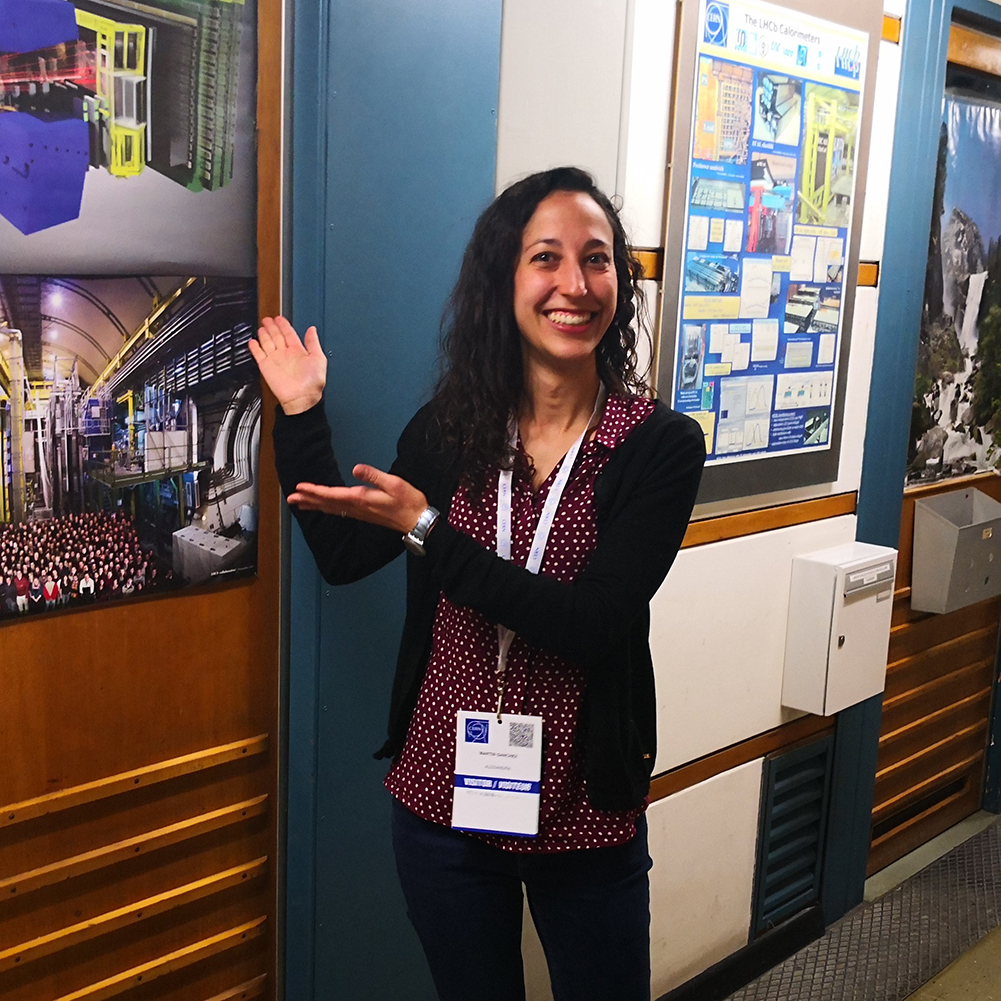
Alexandra Martín Sánchez began her studies in particle physics at the University of Salamanca, Spain, in 2003, during which she had an internship at the University of Paris-Sud at Orsay working in the LHCb collaboration. This prompted her to take a master’s degree in particle physics, followed by a PhD at Laboratoire de l’Accélérateur Linéaire (LAL) in Orsay. She worked on CP violation in B0 → DK*0 decays and hadronic trigger performance with the LHCb detector, and the subject fascinated her. She recalls with emotion witnessing the announcement of the Higgs-boson discovery in July 2012 from Melbourne, Australia, where the ICHEP conference was being held and where she was presenting her work: “Despite the distance, the atmosphere was super-charged with excitement.”
Getting a permanent position is particularly hard nowadays
Alexandra Martín Sánchez
Yet, one year later, Alexandra decided to leave the field. Why? “There were possibilities to do a postdoc in Marseille for LHCb, or elsewhere for other experiments, but I had already changed countries once and had created strong links in Paris,” she explains. “I loved working in research at CERN, and if it had been easier to continue in this way I would have, but getting a permanent position is particularly hard nowadays and you need to do several postdocs, often switching countries.”
After submitting her thesis, she consulted the careers office at Orsay to discuss her options. But it was word-of-mouth and friends who had already made the transition from research to industry that were the biggest help. After attending an IT careers fair in Paris in 2013, she was offered a job with French firm Bertin Technologies, who were looking for skills in scientific computing, in particular to offer consulting services for large groups including French energy giant EDF. Reckoning that this first step into industry could open the door to a large company, she took the plunge.
“Bertin Technologies had recruited me without having a clear idea regarding the profile of a particle-physics researcher, but they were immediately very satisfied with the way I worked. My recruiters were surprised to see me at ease in all aspects of the job, whether it was coding, functioning in teams or collaborating with other services.”
Moving on
After one year with the firm, Alexandra was recruited by EDF R&D, just as she had hoped for. Initially joining as a research engineer, five years later she is now project manager of open-source software called SALOME and leads a team of seven people. SALOME is used for industrial studies that need physical simulations, making it possible to model EDF’s operation of facilities and means of production, such as nuclear power plants or hydroelectric dams. “Computer science is the same as at CERN, even if it is applied to different data. Programming is also done in Python and C++. The code used is also that generated by researchers, that is to say, more or less ‘industrial’ and I easily found my way around, as we share the same development work habits. At CERN we work on software developed by CERN, and at EDF on software developed by EDF. In both cases it is also teamwork. The principles remain the same,” she explains.
“Large groups like EDF are of course fairly hierarchical companies, but CERN is also very large and very hierarchical. One can feel protected by such structures. On the other hand, they have a cumbersome administrative side, which means that things do not necessarily move as quickly as we would like. What I miss, however, is the international aspect of the collaborations. Today I’m thinking of staying at EDF because I’m happy there. The career paths are varied and the company motivates its engineers to change jobs every four or five years, unless they wish to become specialists in their fields.”
The thesis is a real professional experience!
Alexandra Martín Sánchez
The biggest lesson is that the skills she had learned during the process of obtaining a PhD in an environment like CERN are extremely transferable. “During my recruitment interviews, I highlighted my programming experience, my ability to communicate and present my work, and especially my ability to complete a thesis project over several years,” she says. “My advice to alumni looking for a job is to make the most of this PhD experience. Both sides of the job are of interest to recruiters: the technical part but also the communication and collaboration skills with researchers and engineers from all over the world. This makes a real difference from candidates coming from an engineering school: the thesis is a real professional experience!”
To provide the best experiences, we use technologies like cookies to store and/or access device information. Consenting to these technologies will allow us to process data such as browsing behavior or unique IDs on this site. Not consenting or withdrawing consent, may adversely affect certain features and functions.
Functional
Always active
The technical storage or access is strictly necessary for the legitimate purpose of enabling the use of a specific service explicitly requested by the subscriber or user, or for the sole purpose of carrying out the transmission of a communication over an electronic communications network.
Preferences
The technical storage or access is necessary for the legitimate purpose of storing preferences that are not requested by the subscriber or user.
Statistics
The technical storage or access that is used exclusively for statistical purposes.The technical storage or access that is used exclusively for anonymous statistical purposes. Without a subpoena, voluntary compliance on the part of your Internet Service Provider, or additional records from a third party, information stored or retrieved for this purpose alone cannot usually be used to identify you.
Marketing
The technical storage or access is required to create user profiles to send advertising, or to track the user on a website or across several websites for similar marketing purposes.