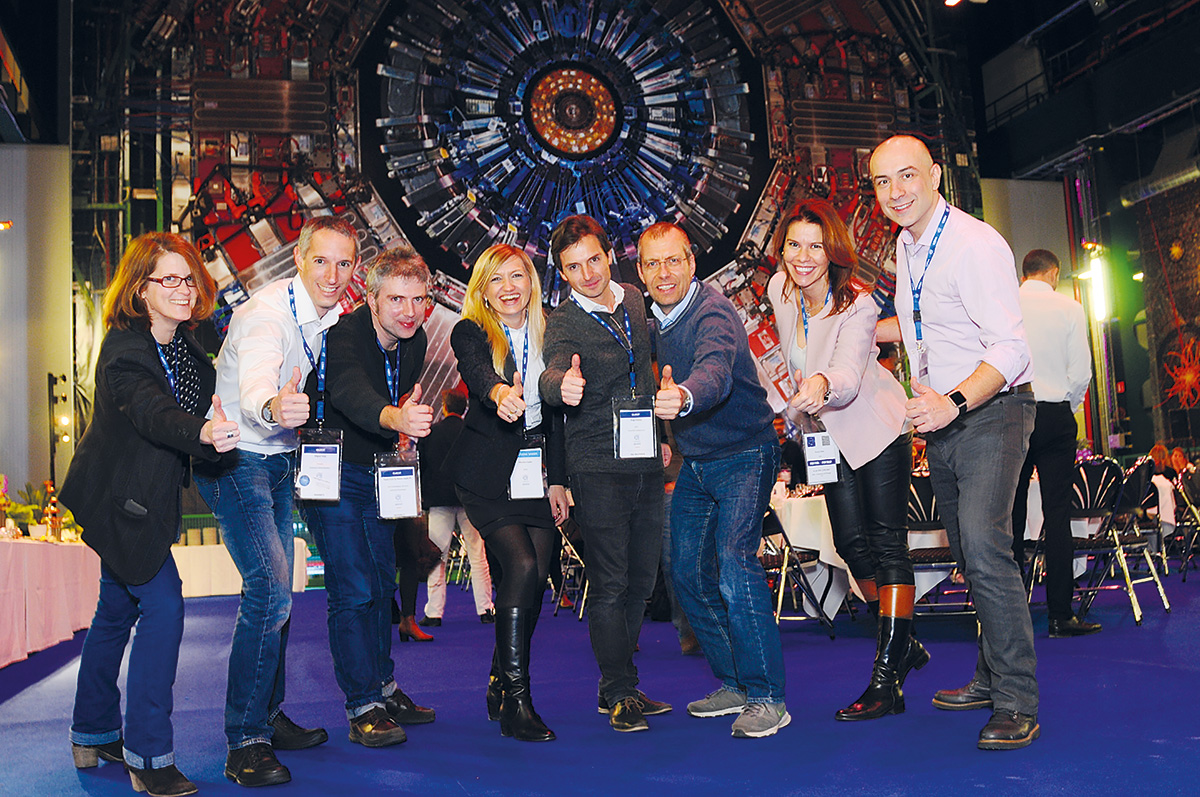
Since its launch in June 2017, the CERN Alumni Network has attracted more than 6300 members located in more than 100 countries. Predominantly a young network, with the majority of its members aged between 25 and 39, CERN alumni range between their early 20s up to those who are over 75. After a professional experience at CERN, be it as a user of the lab, as an associate, a student, a fellow or a staff member, our alumni venture into diverse careers in many different fields, such as computer software, information technology and services, mechanical or industrial engineering, electric/electronic manufacturing, financial services and management consulting.
The network was established to enable our alumni to maintain an institutional link with the organisation, as well as to demonstrate the positive impact of a professional CERN experience on society. Though most CERN alumni remain in high-energy physics research or closely related fields, those who wish to use their skills elsewhere, especially early-career members, will find active support in the Alumni Network.
The alumni.cern platform (also available as an app on Android and iOS) provides members with access to an exclusive and powerful network that can be leveraged as required, whether at the start of a career or later when the desire to give back to CERN is there. The platform facilitates different groups, including regional groups, interest groups (such as entrepreneurship and finance) and groups for managing the alumni of the CERN scientific collaborations. Events and selected news articles are also posted on the alumni.cern platform, and members can also benefit from messaging.
A key appeal of the platform is its jobs board, where both alumni and companies can post job opportunities free of charge. Since its launch more than 500 opportunities have been posted with 260 applications submitted directly via the platform, mostly in fields such as engineering, software engineering and data science. Several CERN alumni have found their next position thanks to the network, either directly via job postings or through networking events.
A notable success has been a series of “Moving out of Academia” networking events that showcase sectors into which CERN alumni migrate. Over the course of one afternoon, around half a dozen alumni are invited to share their experiences in a specific sector. Events devoted to finance, industrial engineering, big data, entrepreneurship and, most recently, medical technologies, have proved a great success. The alumni provide candid and pragmatic advice about working within a specific field, how to market oneself and discuss the additional skills that are advisable to enter a certain sector. These events attract more than 100 in-person participants and many more via webcast.
The Office for Alumni Relations has recently launched its first global CERN alumni survey to understand the community better and identify problems it can help to solve. The survey results will soon be shared with registered members, helping us to continue to build a vibrant and supportive network for the future.
Rachel Bray Office for CERN Alumni Relations.
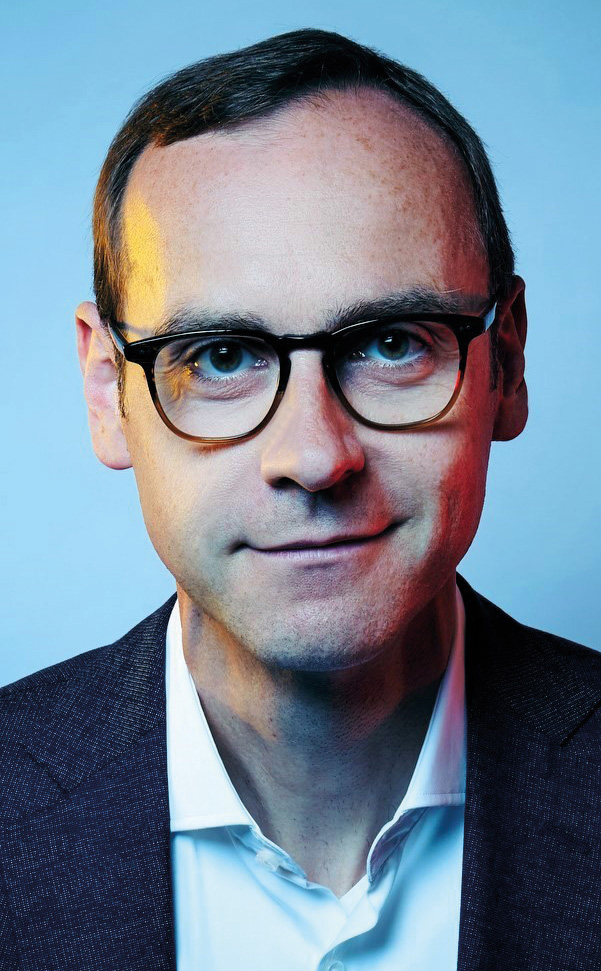
Markus Pflitsch
Founder and CEO of Terra Quantum
Credit: CERN Alumni Network
Markus joined CERN as a summer student in 1996, working on the OPAL experiment at LEP. Eager to tackle other professional challenges, upon graduating he accepted an internship with the Boston Consulting Group. “On my first day I found myself surrounded by Harvard MBAs in sleek suits, wondering what we would have in common,” he says. “I think there are two very clear reasons why companies are so keen to employ people from CERN. Number one, you develop extremely strong and structured analytical skills, and this is coupled with the second reason: a CERN experience provides you with a deep passion to perform.” In 2001 Markus returned to Germany as director of corporate development with Deutsche Bank. He enjoyed a meteoric rise in the world of finance, moving to UniCredit/HypoVereinsbank as managing director in 2005, and then to Landesbank Baden-Württemberg (LBBW), first as head of corporate development and subsequently CEO of LBBW Immobilien GmbH. The global financial crisis in 2009 led him to pursue a more entrepreneurial role, and he moved into marketing, becoming CFO and managing director of Avantgarde. After six successful years he sought some major life changes, taking three months off and discovering a passion for hiking. In 2018 Markus founded Terra Quantum to develop quantum computing. He describes it as his proudest career achievement to date, taking him back to his lifelong interest in quantum physics. “CERN gave me so much!” he says. “Recently I brought 70 entrepreneurs to CERN and they were blown away by their visit. Not only were they impressed that CERN is seeking answers to the most profound and relevant questions, but the sheer scale of project management of such a gigantic endeavour left them in complete awe.”
Maria Carmen Morodo Testa
Launch range programmatic support officer at ESA
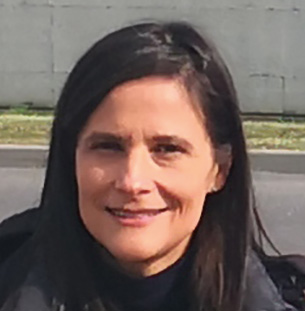
After completing her studies as a telecommunications engineer at the Polytechnic University in Barcelona, Carmen joined a multinational company in the agro-food sector specialising in automation and control systems, whilst studying for an MBA. On the university walls she spotted an advert for a staff position at CERN, which corresponded almost word for word to the position she held at the time, but in a completely different sector: CERN’s cooling and ventilation group. “So, why not?” she thought. “At CERN, I discovered the importance of being open to different paths and different ways of thinking.” In 2004, five years in to her position and with a “reasonable prospect” but no confirmation of a permanent contract, she began to think about the future. “I decided that it would be either CERN or a sister international organisation that would also give me the opportunity to take ownership of my work and shape it.” She sent a single application for an open position in the launcher department of the European Space Agency (ESA), and was successful. “I didn’t know of course if I was making a good choice and I was afraid of closing doors. But, my interest was already piqued by the launchers!” Carmen joined ESA at an exciting time, when Ariane 5 was preparing for flight. She trained on the job, largely thanks to a “work-meeting” technique that allows small teams to be fast and share knowledge and experience effectively on a specific objective, and is currently working on the Ariane 6 design project. “I do not hesitate to change positions at ESA, taking into account my technical interests, without giving too much importance to opportunities for hierarchical promotion.”
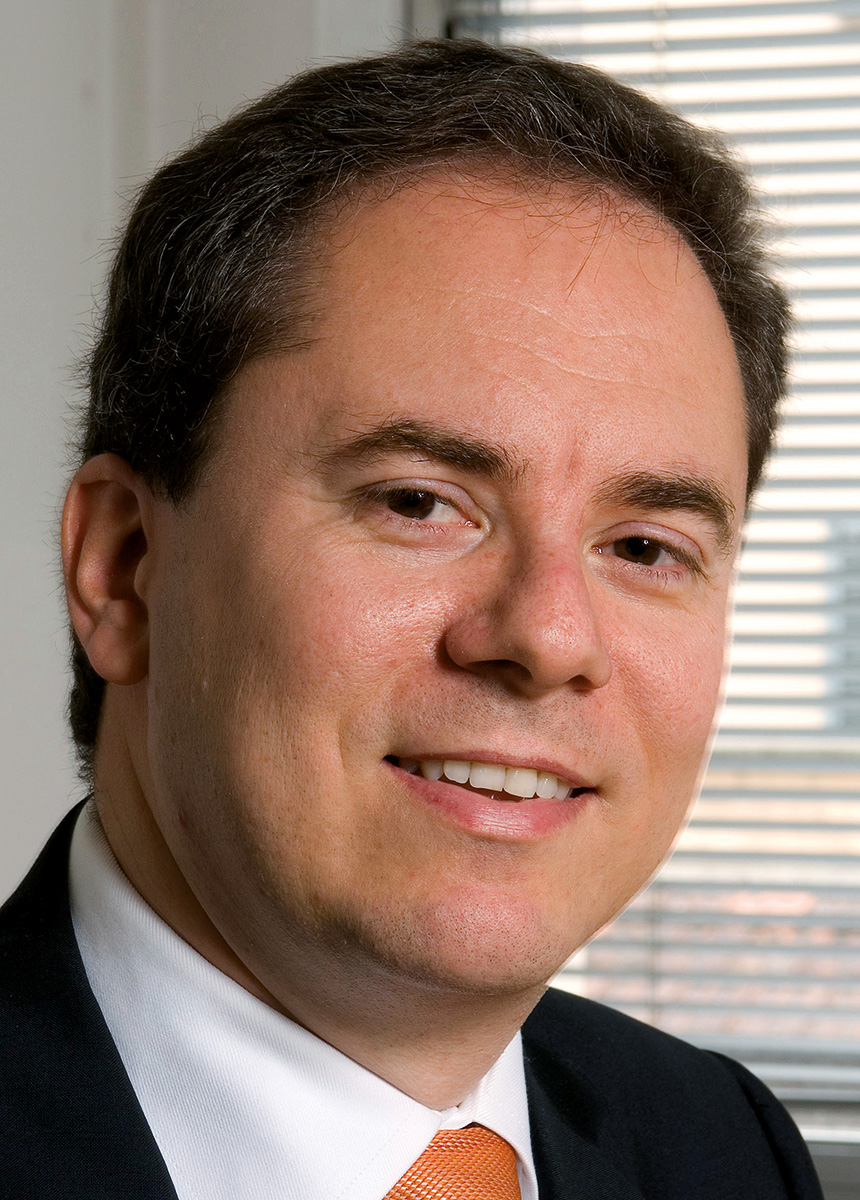
Alessandro Pasta
General manager at Diagramma
Credit: CERN Alumni Network
In 1987, then 18 year-old Alessandro was selected to take part in a physics school hosted by the Weizmann Institute of Science in Israel. His mentor Eilam Gross sparked a passion for particle physics, and Alessandro arrived at CERN in 1991 as a summer student working on micro strip gas avalanche chambers for a detector to be installed in the DELPHI experiment at LEP. His contract was extended to enable him to complete his work, and he returned to CERN in 1992 to work on DELPHI. After three glorious years, his Swiss scholarship was replaced by an Italian one with a much lower salary. A desire to buy a house and start a family forced him to consider other avenues, drawing on his hobby of computer programming. “I had a number of ongoing consultancies with external companies so I switched my hobby for my job and physics became my hobby!” Alessandro returned to Italy in 1995 as a freelance software developer designing antennas. In 1999 he joined Milan software company Diagramma, and transitioned from telecommunications to car insurance – where he was tasked with developing tools to enable customers to enter their data online and obtain the best tariff. “Nowadays, this is quite commonplace, but at the time such software did not exist,” he says. Alessandro is now general manager of Diagramma, which is developing AI algorithms to increase the efficiency of its products. He values his particle-physics experience more than ever: “It wasn’t enough to know the physics and think logically, I also had to think differently, laterally one could say. I learnt how to solve problems using an innovative approach. Having worked at CERN, I know how multi-talented these people are and I am very keen to employ such talent in my company.”
Stephen Turner
Electrical/electronic engineer at STFC
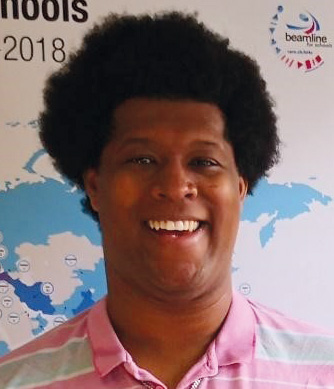
Following a Master’s degree in electrical and electronic engineering at the University of Plymouth in the UK, Stephen started working for the UK Science and Technology Facilities Council (STFC), where he sought a three-month placement as part of their graduate scheme. Having contacted an STFC scientist with CERN links “who knew someone, who also knew someone” at CERN – a scientist supporting the Beamline for Schools competition – Stephen secured his placement in the autumn of 2017. As a member of the support-scientists team, his role was to help characterise the detectors and prepare the experimental area for the students, enabling him to combine his passion for education and outreach with technical experience, where he would gain precious knowledge that could be put to use in his current role at the ISIS neutron and muon source at the Rutherford Appleton Laboratory. “My experience at CERN provided me with the bigger picture of how such user facilities are run,” he says. Whilst at Plymouth, Stephen was also involved in Engineers Without Borders UK, which works with non-governmental organisations in developing countries on projects including water sanitation and hygiene, building techniques and clean energy. Although he now has a full time job, Stephen is still an active volunteer, and his interests in public engagement and international development brought him back to CERN in 2018 to share knowledge on target manufacturing and testing with the CERN mechanical and materials engineering group. “Lots of variety, public engagement and outreach were part of the job’s remit and it has kept its promises, he says. “There are not many companies that can offer this!”
John Murray
Private investor and synthetic-biology consultant
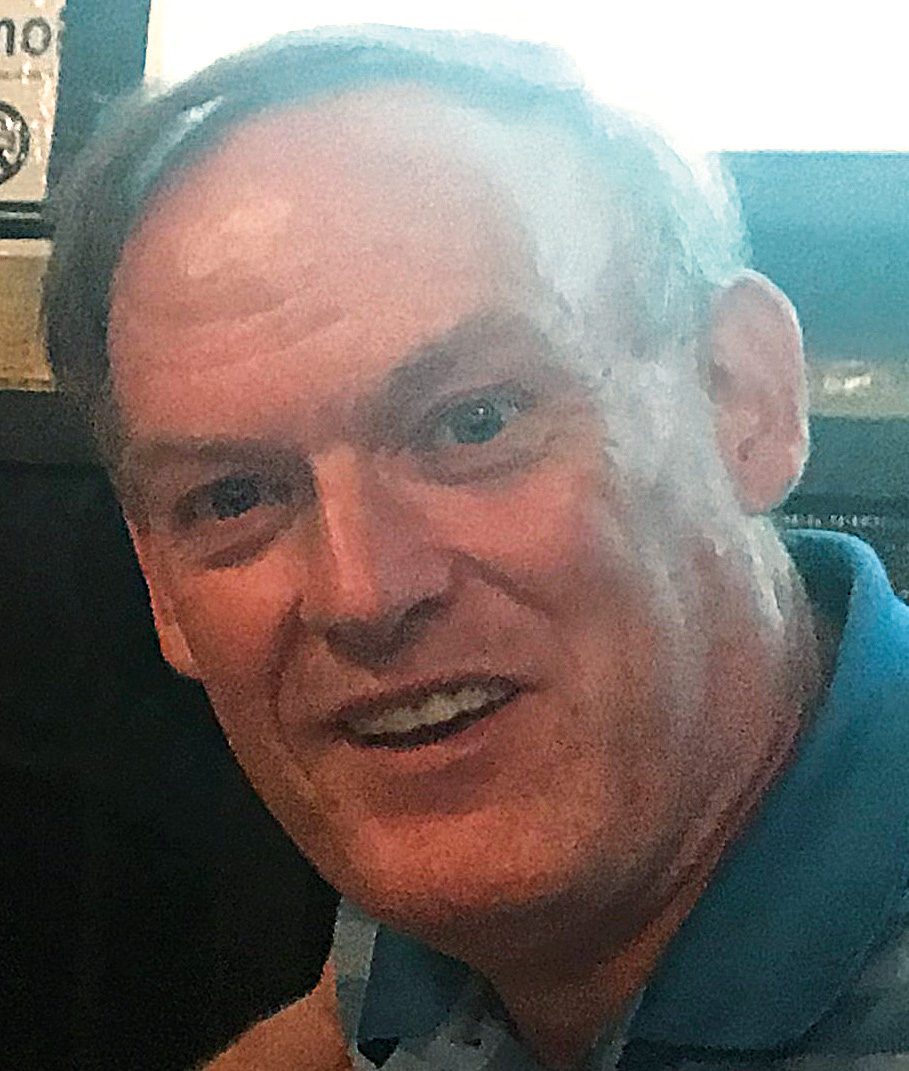
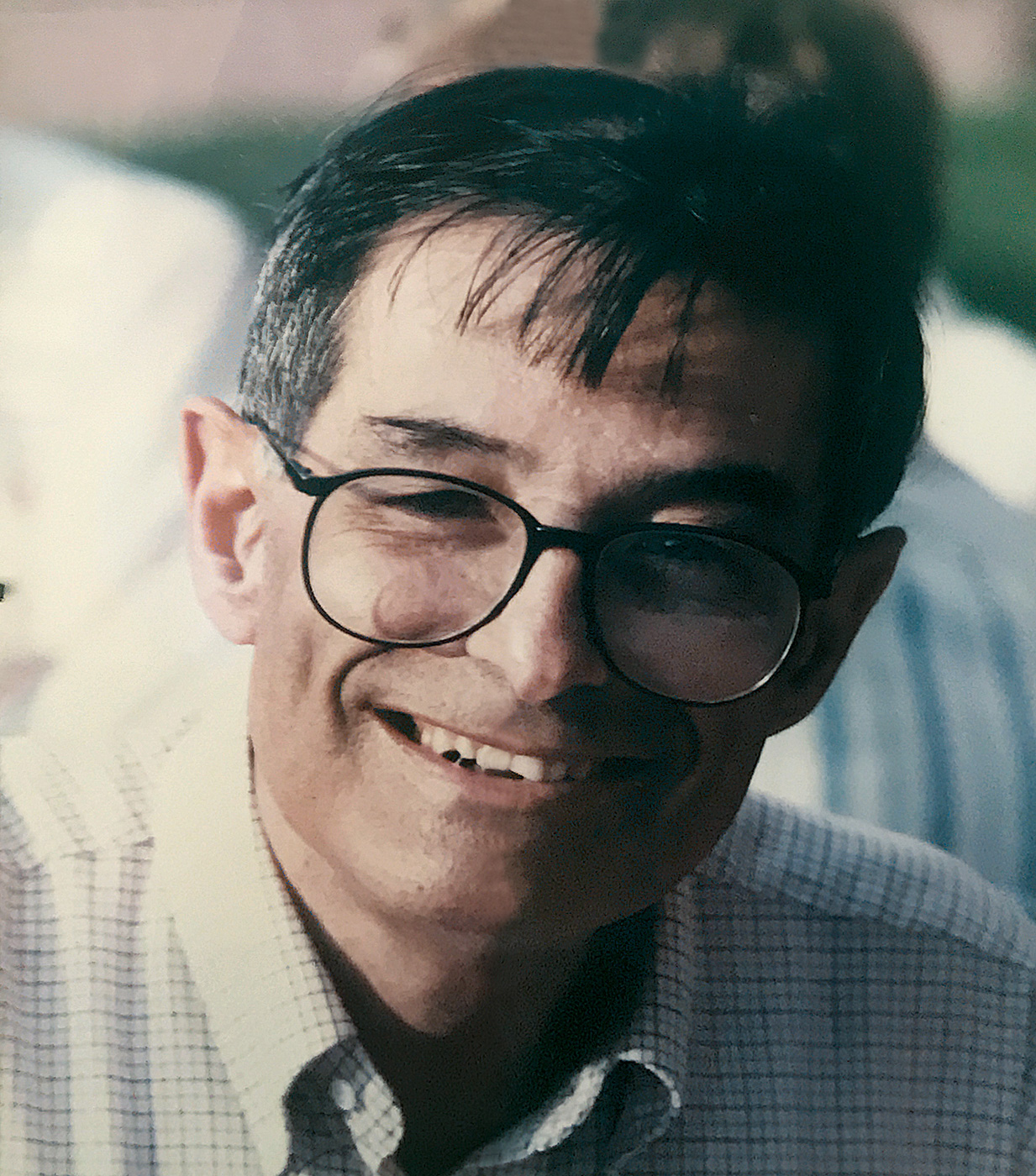
John arrived at CERN in 1985 as a PhD student on the L3 experiment at LEP. Every day was a new experience, he says. “My absolute favourite thing was spending time with the summer students, out on the patio of Restaurant 1 in the evenings, just chatting. Everyone was so curious and knowledgeable.” Despite the fulfilment of his experience, he decided to pursue a career in finance, reckoning it was a game he could “win”. He found his first job on Wall Street thanks to a book he had read about option pricing, realising that the equations were similar to those of quantum field theory, only easier. His employer, First Boston, soon gave him responsibility for investing the firm’s capital, and by the late 1990s he was a hedge-fund manager at Goldman Sachs. Realising that the investment world was about to go digital, he started his own company, building computer models that could predict market inefficiencies and designing trading strategies. “Finance textbooks said these sorts of things were impossible, but they were all written before the markets went digital,” he says. In recent years, John has turned his attention to synthetic biology, where he invests in and advises start-up companies. Biology is following a similar path to finance 30 years ago, he says, and the pace of progress is going to accelerate as the field becomes more quantitative. In 2018 John offered to co-found the New York group of the CERN Alumni Network. “I loved the time I spent at CERN and the energy of its people. In setting up the New York group, I want to recreate that atmosphere. I also hope to help young alumni at the beginning of their careers. I hope we can help our younger members avoid making the same mistakes we did!”
Anne Richards
CEO at a private finance services company
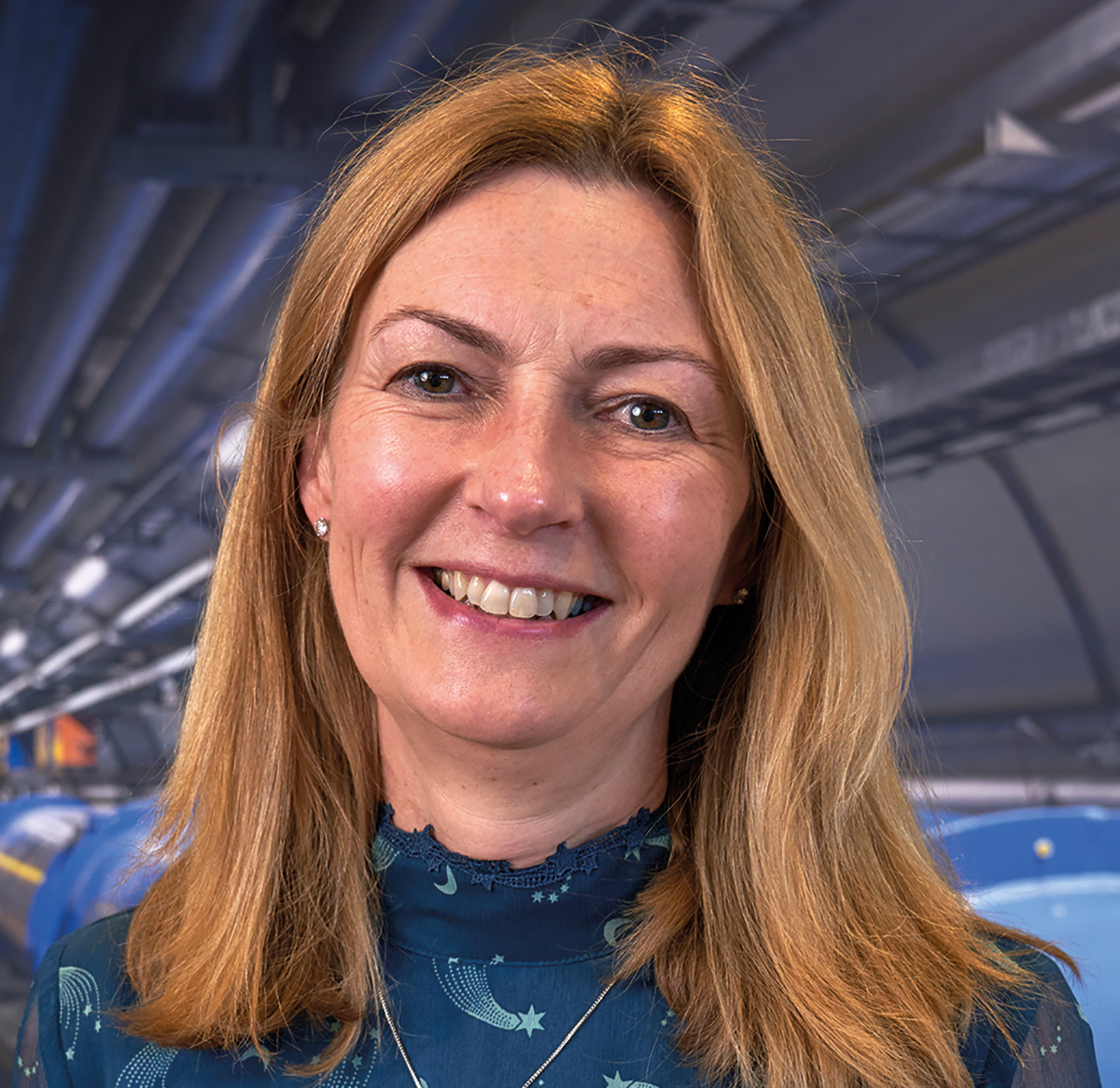
Anne came to CERN as a summer student in 1984 and fell in love with the international environment, leading her to apply for a fellowship where she worked on software and electronics for LEP. At the end of the fellowship, she was faced with a choice. “I was surrounded by these awesomely brilliant, completely focused physicists who were willing to dedicate their lives to fundamental research. And much as I loved to be amongst them and was proud of my equipment being installed in the accelerator, I didn’t feel I had the same passion they did. I was still seeking something else.” She returned to the UK and joined a technology consultancy firm in Cambridge where she had the opportunity to run a variety of different small-scale projects. “I really enjoyed that variety, I think that was what I was seeking,” she says. “Now I know that at CERN there are varied jobs one person can do, but at that time perhaps I wasn’t mature enough to realise that.” Today, she works in investment and finance, and has actively sought out roles that allow her to travel and work with people from different places. But a return visit to CERN in 2011 added another career dimension. “A fantastically positive change had happened in my lifetime: the appreciation of the importance of science by wider society. It was time to think how to capitalise on this and help society become more engaged directly with us.” The answer was the CERN & Society Foundation, of which Anne was appointed chair and that has seen CERN proactively engage with society, leading to the future Science Gateway project dedicated to education and outreach. “When we started the foundation in 2014 we did not know how incredibly successful it was going to be. The major part of this success comes from the interest and engagement we have had from alumni.”
Bartosz Niemczura
Software engineer, Facebook
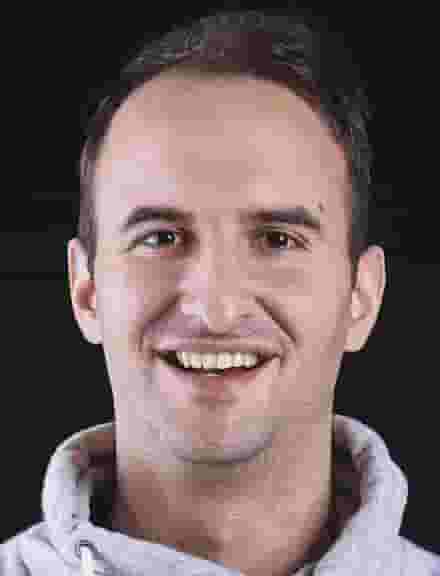
Bartosz graduated with a Master’s degree in computer science from AGH University of Science and Technology in 2012. The following year he became a CERN technical student working on databases in CERN’s IT department. It was his first professional experience, and he was immediately captivated by the field of data security. Deciding to enter into a career in the area, he then applied for positions elsewhere, leading to a six-month research internship at IBM Zurich, participating in the Great Minds Programme. “My project focused on big-data analysis, an activity very closely related to my CERN project. I probably wouldn’t have been selected for the internship if I hadn’t had the CERN experience,” he explains. “It’s not just about the experience, but also the CERN reputation and prestige.” Working in a global environment with more than 20 international students was also extremely valuable. Since 2015 Bartosz has been working as a software engineer for Facebook’s product security team in Silicon Valley. “Despite the culture being slightly different at Facebook compared to CERN, I still apply the same approach I learnt at CERN,” he says. “Having learnt to communicate with people from other countries, this is highly useful for me in my current position as I now find it easier to make connections. It’s important not to close yourself off in your office. Go out and talk to people, those who have lots of experience, or who are working on something different from you, ask questions, make connections!”
Maaike Limper
Data engineering and web portal specialist at Swiss Global Services

Following a PhD on ATLAS, Maaike became a CERN openlab fellow in 2012. There was a lot to learn in moving from physics to IT, she says. “You need to understand how technology actually works: how it stores your data as bytes on the disk or how your computations can optimise the CPU usage.” Until last year, Maaike was head of aviation surface performance at Inmarsat, investigating solutions to allow aircraft passengers to have a reliable internet connection. One of her challenges was to put data from all the systems involved in passenger internet connectivity, such as ground control, satellites and aircraft together and understand where outages were experienced and why.” As a particle physicist, by contrast, Maaike was dealing with “very specific issues and no longer felt challenged”. She also didn’t warm to the ruthless competition she encountered, especially when the first LHC data were being collected and the normal collaborative spirit was slightly set aside. In her new career, which recently saw her join Swiss Global Services as a data-engineering specialist, she feels she is the expert. “I like the fact that I am constantly kept busy, challenged and, sometimes, very much stressed!” However, her particle-physics training had a useful impact on her career. “At CERN, we are very good at developing our own tools and we don’t just expect there to be a ready-made product on the market.” And Maaike is proud that the detector she worked on sits at the centre of the ATLAS experiment. “I was there, checking that each optical cable was producing the right sound once connected and that everything was working as expected. So actually, yes, a little piece of my heart is there, deep inside ATLAS.”
Panayotis Spentzouris
Head of Fermilab’s Quantum Science Program

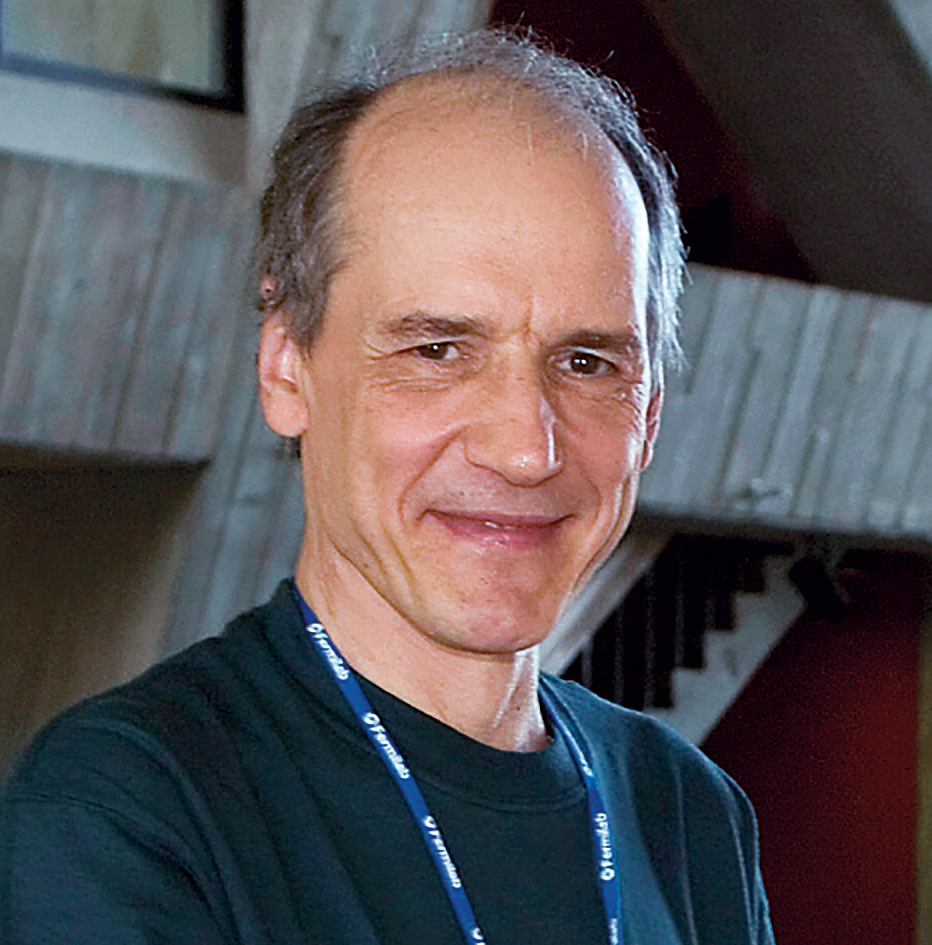
Panayotis’s affiliation with CERN began in 1986 as an associate physicist working on a prototype of a detector for the DELPHI experiment at LEP. He moved to the US in 1990 and started a PhD, continuing his research at Fermilab, first as a Columbia University postdoc and then a junior staff scientist. Of his time at CERN he recalls the challenging experience of working for a multi-institutional, multicultural and multinational collaboration of many people of different cultures. “I remember it being a great experience with exposure to many wonderful things from machine shops to computers and scientific collaborations. It was also whilst at CERN that my first ever paper was published, when DELPHI started taking data, around 1990 I think – I was absolutely thrilled. Even though, somewhere in the middle of my career, I ended up doing a lot of computational physics, CERN is where I began my career as an experimentalist and I am always grateful for that.” He did not want to leave fundamental research, and today Panayotis is a senior scientist at Fermilab. In 2014 he was head of Fermilab’s scientific computing division and since 2018 has led Fermilab’s Quantum Science Program, which includes simulation of quantum field theories, teleportation experiments and applying qubit technologies to quantum sensors in high-energy physics experiments. Shortly afterwards, he presented the Fermilab programme to CERN openlab’s “Quantum computing for high-energy physics” event. “Coming back to CERN was actually strange, because everything had changed so much that I needed to follow signs to find my way to the cafeteria!” He would also like to see Fermilab establish an alumni network of its own. “It is good to have a sense of community, especially during difficult times when you need your community to stand up in support of your organisation.”
Cynthia Keppel
Professor, Hampton University
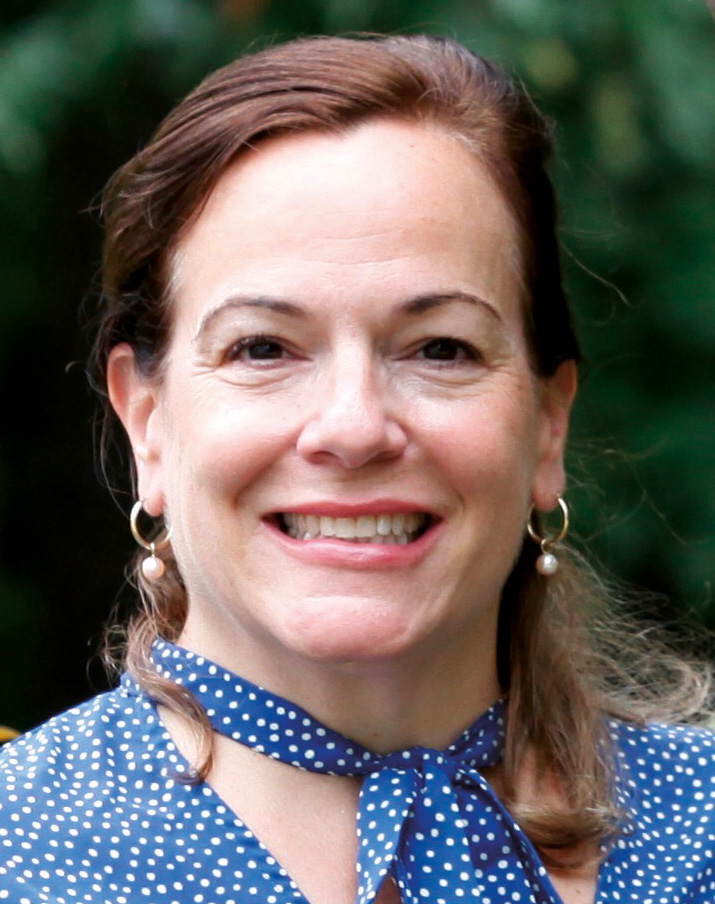
Having attended a small liberal arts college in the US where the focus was on philosophy, Thia found herself a bit frustrated. “We would discuss deep questions at length in class, and I would think:’ Can’t we test something?’ Physics seemed to be a place where people were striving to provide concrete answers to big questions, so I looked for summer internships in physics, and to my surprise I got one.” She wound up working with a group of plasma physicists who wanted an “artsy” person to make a movie visualising the solar magnetic flux cycle. “I liked learning the physics, I liked being sent off on my own, and it turned out I even liked the programming.” She went on to do a PhD in nuclear physics at SLAC and continued her research at JLab where, one night, while working late on a scintillating fibre-type particle detector, she realised that a colleague in the lab across from her was building the same type of detector – but for a project in medical instrumentation. They started to collaborate, and a few years later Thia founded the Center for Advanced Medical Instrumentation at Hampton University. More than a dozen patented technologies later, they were contacted by Hampton University’s president about proton therapy and realised that they had the know-how to build their own proton-therapy centre, which ended up being one of the largest in the world. “Having directed the centre from the start, Thia preferred the period of building, instrumenting and commissioning the facility over that of clinical operations. So she decided to set up a consulting company, which has so far helped to start 16 proton-therapy centres. “I think that my discourse-based philosophy education has been a help in learning to express ideas clearly and succinctly to people,” she says. “If you’re going to irradiate people, you must explain carefully and well why that’s a beneficial thing. Once you’re used to explaining things in plain language to potential patients or the public, you can give the same talk in a boardroom.”
•This final case study is based on an article in APS Careers 2020, produced in conjunction with Physics World. All other articles are drawn from the CERN Alumni Network.