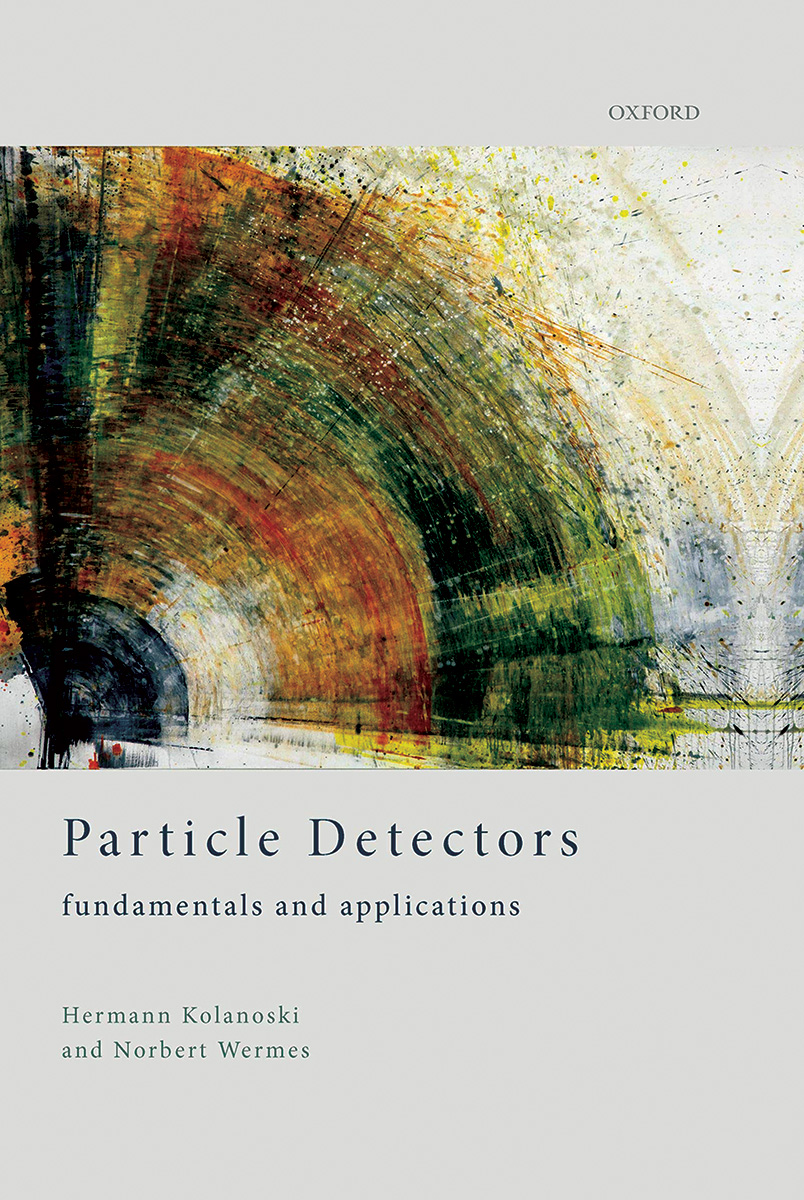
Throughout the history of nuclear, particle and astroparticle physics, novel detector concepts have paved the way to new insights and new particles, and will continue to do so in the future. To help train the next generation of innovators, noted experimental particle physicists Hermann Kolanoski (Humboldt University Berlin and DESY) and Norbert Wermes (University of Bonn) have written a comprehensive textbook on particle detectors. The authors use their broad experience in collider and underground particle-physics experiments, astroparticle physics experiments and medical-imaging applications to confidently cover the spectrum of experimental methods in impressive detail.
Particle Detectors – Fundamentals and Applications combines in a single volume the syllabus also found in two well-known textbooks covering slightly different aspects of detectors: Techniques for Nuclear and Particle Physics Experiments by W R Leo and Detectors for Particle Radiation by Konrad Kleinknecht. Kolanoski and Wermes’ book supersedes them both by being more up-to-date and comprehensive. It is more detailed than Particle Detectors by Claus Grupen and Boris Shwartz – another excellent and recently published textbook with a similar scope – and will probably attract a slightly more advanced population of physics students and researchers. This new text promises to become a particle-physics analogue of the legendary experimental-nuclear-physics textbook Radiation Detection and Measurement by Glenn Knoll.
The book begins with a comprehensive warm-up chapter on the interaction of charged particles and photons with matter, going well beyond a typical textbook level. This is followed by a very interesting discussion of the transport of charge carriers in media in magnetic and electric fields, and – a welcome novelty – signal formation, using the method of “weighting fields”. The main body of the book is devoted first to gaseous, semiconductor, Cherenkov and transition-radiation detectors, and then to detector systems for tracking, particle identification and calorimetry, and the detection of cosmic rays, neutrinos and exotic matter. Final chapters on electronics readout, triggering and data acquisition complete the picture.
Particle Detectors – Fundamentals and Applications is best considered a reference for lectures on experimental methods in particle and nuclear physics for postgraduate-level students. The book is easy to read, and conceptual discussions are well supported by numerous examples, plots and illustrations of excellent quality. Kolanoski and Wermes have undoubtedly written a gem of a book, with value for any experimental particle physicist, be they a master’s student, PhD student or accomplished researcher looking for detector details outside of their expertise.
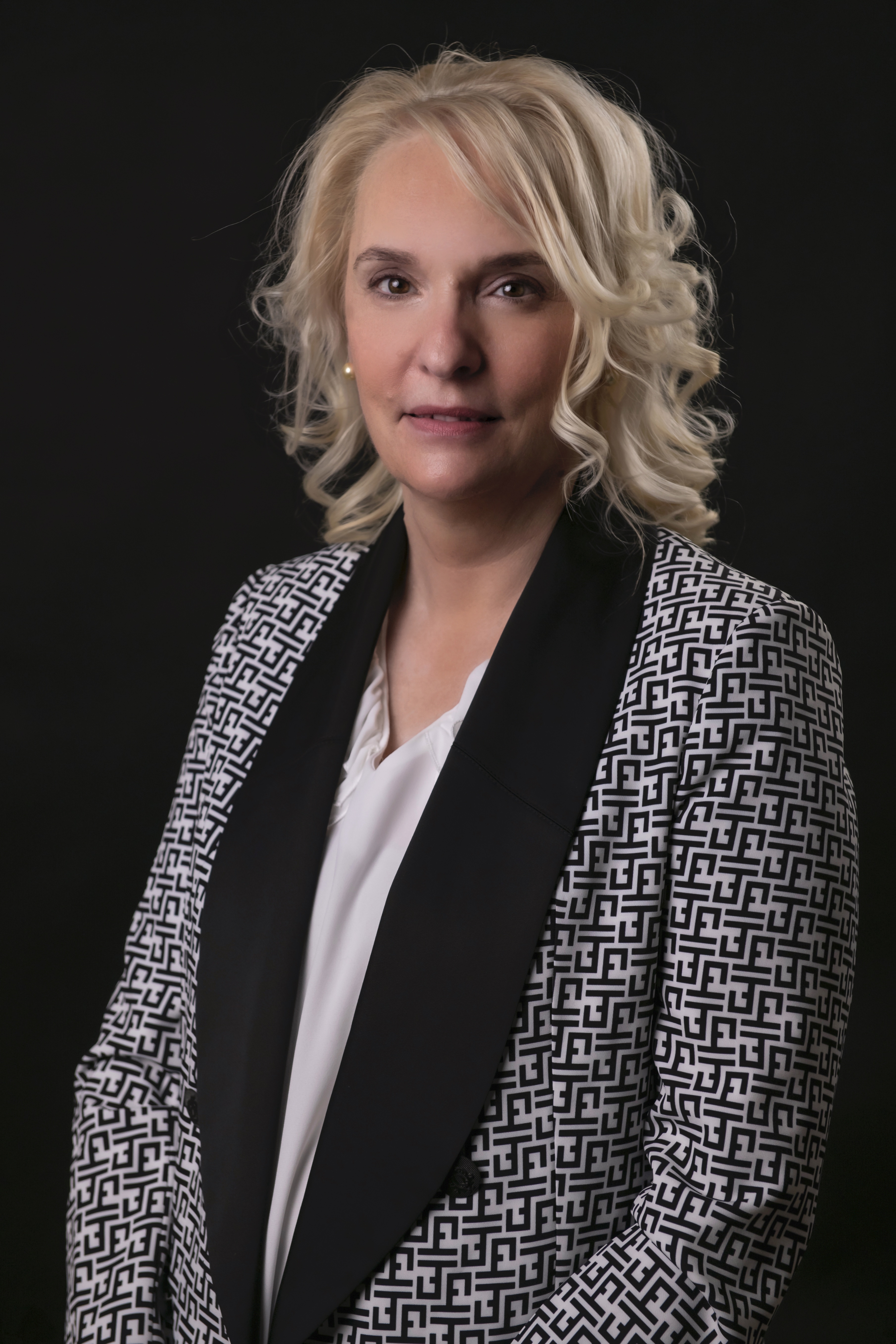
Amalia Ballarino of CERN has received the 2021 James Wong Award from the Institute of Electrical and Electronics Engineers (IEEE) for her significant and continuing contributions in the field of superconducting materials. The IEEE citation recognises her for: “leading successful R&D programs that establish a winning role for high temperature and MgB2 superconductors in accelerator applications; piloting the development of MgB2 wire suitable for cabling and its incorporation into a multi-kA power transmission system operating at 25 K, and directing the project to industrialise eight such systems for which over 1000 km of wire have been produced; promoting fruitful cooperation between research and industry; and launching R&D activity based on the use of superconductors (Nb-Ti, Nb3Sn, MgB2 and high-temperature superconductors) for future particle accelerators.
Ballarino was responsible for the several-thousand current leads that power the superconducting magnets of the LHC, including those based on the high-temperature superconductor BSCCO-2223, which have been the first large-scale commercial application of high-temperature superconductors. She was awarded Superconducting Week’s “Superconductor Industry Person of the Year 2006” for the development. Following work on the commissioning of the LHC, Ballarino proposed cold-powering systems that use high-current MgB2 transfer lines for feeding the new superconducting magnets of the High-Luminosity LHC (HL-LHC). She started a collaboration with industry to develop the conductor in the form of wire suitable for cabling. The wire has been successfully delivered to CERN in large quantities, while the cold-powering systems have been developed and qualified and they are now being industrialised.
CERN is home to more winners than any other institution
Ballarino joined CERN as PhD student. She is section leader in CERN’s magnets, superconductors and cryostats group and, as from January 2021, deputy group leader. The IEEE cited her service to the community as lecturer, member of program committees for international conferences, and technical editor and reviewer of papers for scientific journals. “In my opinion, this recognition has been a long time in coming,” says Bruce Strauss, past president and treasurer of the IEEE council on superconductivity.
The IEEE James Wong Award (formally named “Award for Continuing and Significant Contributions in the Field of Applied Superconductivity” until 2013) comes with a $5000 honorarium and a pure-niobium medal. It has been granted annually by the IEEE council on superconductivity since 2000, and CERN is home to more winners than any other institution, with Daniel Leroy, Lucio Rossi, Herman ten Kate, Robert Aymar, Arnaud Devred and Luca Bottura recognised in previous years.
In the early 1950s, particle accelerators were national-level activities. It soon became obvious that to advance the field further demanded machines beyond the capabilities of single countries. CERN marked a phase transition in this respect, enabling physicists to cooperate around the development of one big facility. Climate science stands to similarly benefit from a change in its topology.
Modern climate models were developed in the 1960s, but there weren’t any clear applications or policy objectives at that time. Today we need hard numbers about how the climate is changing, and an ability to seamlessly link these changes to applications – a planetary information system for assessing hazards, planning food security, aiding global commerce, guiding infrastructural investments, and much more. National centres for climate modelling exist in many countries. But we need a centre “on steroids”: a dedicated exascale computing facility organised on a similar basis to CERN that would allow the necessary leap in realism.
Quantifying climate
To be computationally manageable, existing climate models solve equations for quantities that are first aggregated over large spatial and temporal scales. This blurs their relationship to physical laws, to phenomena we can measure, and to the impacts of a changing climate on infrastructure. Clouds, for example, are creatures of circulation, particularly vertical air currents. Existing models attempt to infer what these air currents would be given information about much larger scale 2D motion fields. There is a necessary degree of abstraction, which leads to less useful results. We don’t know if air is going up or down an individual mountain, for instance, because we don’t have individual mountains in the model, at best mountain ranges.
In addition to more physical models, we also need a much better quantification of model uncertainty. At present this is estimated by comparing solutions across many low-resolution models, or by perturbing parameters of a given low-resolution model. The particle-physics analogy might be that everyone runs their own low-energy accelerators hoping that coordinated experiments will provide high-energy insights. Concentrating efforts on a few high-resolution climate models, where uncertainty is encoded through stochastic mathematics, is a high-energy effort. It would result in better and more useful models, and open the door to cooperative efforts to systematically explore the structural stability of the climate system and its implications for future climate projections.
Working out climate-science’s version of the Standard Model thus provides the intellectual underpinnings for a “CERN for climate change”. One can and should argue about the exact form such a centre should take, whether it be a single facility or a federation of campuses, and on the relative weight it gives to particular questions. What is important is that it creates a framework for European climate, computer and computational scientists to cooperate, also with application communities, in ways that deliver the maximum benefit for society.
Building momentum
A number of us have been arguing for such a facility for more than a decade. The idea seems to be catching on, less for the eloquence of our arguments, more for the promise of exascale computing. A facility to accelerate climate research in developing and developed countries alike has emerged as a core element of one of 12 briefing documents prepared by the Royal Society in advance of the United Nations Climate Change Conference, COP26, in November. This briefing flanks the European Union’s “Destination Earth” project, which is part of its Green Deal programme – a €1 billion effort over 10 years that envisions the development of improved high-resolution models with better quantified uncertainty. If not anchored in a sustainable organisational concept, however, this risks throwing money to the wind.
Giving a concrete form to such a facility still faces internal hurdles, possibly similar to those faced by CERN in its early days. For example, there are concerns that it will take away funding from existing centres. We believe, and CERN’s own experience shows, that the opposite is more likely true. A “CERN for climate change” would advance the frontiers of the science, freeing researchers to turn their attention to new questions, rather than maintaining old models, and provide an engine for European innovation that extends far beyond climate change.
Gerd Beyer, who passed away on 20 January aged 81, played a major role in the development of biomedical research, both at CERN’s ISOLDE facility and at many other laboratories. He will be remembered as a tireless worker in the field of nuclear and applied nuclear physics combined with new radiochemical methods.
Gerd was born in Berlin in 1940 and studied radiochemistry at the Technical University of Dresden (TUD). He then joined the Joint Institute for Nuclear Research (JINR) in Dubna, where he developed advanced production methods of rare short-lived radioisotopes for use in nuclear spectroscopy. At the Central Institute for Nuclear Research in Rossendorf, he became proficient in the use of the U-120 cyclotron and the RFR research reactor to produce medical radioisotopes, and in the development of the associated radiopharmaceuticals. He completed his Dr. habil. at TUD on the production of radionuclides by means of rapid radiochemical methods in combination with mass separation.
In 1971 Gerd was invited to ISOLDE, joining Helge Ravn to prepare extremely pure samples of rare long-lived nuclei for studies of their electron-capture decay, in view of their potential for determining neutrino masses. Back in Rossendorf, he continued to develop radiopharmaceuticals and to introduce them into nuclear medicine in the former East Germany and the Eastern Bloc countries. He developed a number of new methods for labelling and synthesising radiopharmaceuticals, in particular the rather difficult problem of efficiently separating fission-produced 99Mo from large samples of low-enriched uranium. This brought him into many collaborations all over the world, with a view to transferring his know-how to other laboratories. As head of cyclotron radiopharmaceuticals, he took the initiative to introduce a PET scanner programme in the German Democratic Republic (GDR), based on the Rossendorf positron camera, using gas detectors derived from pioneering work at CERN.
During his visits to CERN, Gerd spotted the potential of the ISOLDE mass-separation technique to allow the introduction and use of better-suited but hitherto unavailable nuclides.
In 1985, in close collaboration with ISOLDE, he began to prepare for the future use of large facilities to produce such radionuclides. He reactivated ISOLDE’s contacts with the University Hospital of Geneva (HUG), starting a collaboration on the use of exotic positron-emitting nuclides for PET imaging, which resulted in the development of new radiopharmaceuticals based on radionuclides of the rare earths and actinides.
Shortly after the fall of the GDR, Gerd lost his job at Rossendorf and had to start a new career elsewhere. Via a CERN scientific associateship, he became a guest professor at HUG and, later, head of its radiochemistry group, with responsibility for setting up and operating a new cyclotron. This allowed him to continue his work on developing new approaches to labelling monoclonal antibodies and peptides with exotic lanthanide positron emitters produced at ISOLDE, determining their in vivo stability and demonstrating their promising imaging properties. Gerd was also the first to demonstrate the promising therapeutic properties of the alpha emitter 149Tb.
When he retired from HUG, Gerd co-proposed that CERN build a new radiochemical laboratory in connection with ISOLDE. Here, the large knowledge base on target and mass-separator techniques for the production and handling of radionuclides could be used to make samples of these high-purity nuclides available for use in a broader biomedical research programme. Years later, Gerd’s initial idea was eventually realised with the creation of the CERN-MEDICIS facility.
Gerd was a first-rate experimental scientist, highly skilled in the laboratory, and he stayed professionally active to the very end. As a guest professor, a member of numerous professional societies and a holder of many consultancy positions, he spared no effort in sharing and transferring his know-how, recently to the young generation of scientists at MEDICIS.
During Gerd’s outstanding career, his work on the production of radiopharmaceuticals saved innumerable lives. His R&D towards new radiopharmaceuticals and, in particular, his pioneering work on 149Tb for targeted alpha therapy, is opening up new perspectives for efficient cancer treatment. It is therefore particularly tragic that the development of efficient antiviral drugs came too late to support Gerd in his brave fight against COVID-19.
When CERN was established in the 1950s, with the aim of bringing European countries together to collaborate in scientific research after the Second World War, countries from East and West Europe were invited to join. At the time, the only eastern country to take up the call was Yugoslavia. Poland’s accession to CERN membership in 1991 was therefore a particularly significant moment in the organisation’s history because it was the first country from behind the former Iron Curtain to join CERN. Its example was soon followed by a range of Eastern European countries throughout the 1990s.
At the origin of Polish participation at CERN was a vision of the three world-class physicists: Marian Danysz and Jerzy Pniewski from Warsaw and Marian Mięsowicz from Kraków, who had made first contacts with CERN in the early 1960s. The major domains of Polish expertise around that time encompassed the analysis of bubble-chamber data (especially those related to high-multiplicity interactions), the properties of strange hadrons, charm production, and the construction of gaseous detectors.
In 1963, Poland gained observer status at the CERN Council — the first country from Eastern Europe to do so. During the subsequent 25 years, almost out of nothing, a critical mass of national scientific groups collaborating with CERN on everyday basis was established. By the late 1980s, the CERN community recognised that Poles deserved full access to CERN. With the feedback and support of their numerous brilliant pupils, Danysz, Pniewski and Mięsowicz had accomplished a goal which had seemed impossible. Today, Poland’s red and white flag graces the membership rosters of all four major Large Hadron Collider (LHC) experiments and beyond.
Entering the fray Poland joined CERN two years after the start-up of the Large Electron Positron Collider (LEP), the forerunner to the LHC. Having already made strong contributions to the
construction of LEP’s DELPHI experiment, in particular its silicon vertex detector, electromagnetic calorimeter and RICH detectors, Polish researchers quickly became involved in DELPHI data analyses, including studies of the properties of beauty baryons and searches for supersymmetric particles.
Poland’s accession to CERN membership 30 years ago was the very first case of the return of our nation to European structures
With the advent of the LHC era, Poles became members of all four major LHC-experiment collaborations. In ALICE we are proud of our broad contribution to the study of the quark gluon plasma using HBT-interferometry and electromagnetic probes, and of our participation in the design of and software development for the ALICE time projection chamber. Polish contributions to the ATLAS collaboration encompass not only numerous software and hardware activities (the latter concerning the inner detector and trigger), but also data analyses, notably searching for new physics in the Higgs sector, studies of soft and elastic hadron interactions and a central role in the heavy-ion programme. Involvement in CMS has revolved around the experiment’s muon-detection system, studies of Higgs-boson production and its decays to tau leptons, W+W– interactions and searches for exotic, in particular long-lived, particles. This activity is also complemented by software development and coordination of physics analysis for the TOTEM experiment. Last but not least, Polish groups in LHCb have taken important hardware responsibilities for various subdetectors (including the VELO, RICH and high-level trigger) together with studies of b->s transitions, measurements of the angle γ of the CKM matrix and searches for CPT violation, to name but a few.
Beyond colliders The scope of our research at CERN was never limited to LEP and the LHC. In particular, Polish researchers comprise almost one third of collaborators on the fixed-target experiment NA61/SHINE, where they are involved across the experiment’s strong-interactions programme. Indeed, since the late 1970s, Poles have actively participated in the whole series of deep-inelastic scattering experiments at CERN: EMC, NMC, SMC, COMPASS and recently AMBER. Devoted to studies of different aspects of the partonic structure of the nucleon, these experiments have resulted in spectacular discoveries, including the EMC effect, nuclear shadowing, the proton “spin puzzle”, and 3D imaging of the nucleon.
Polish researchers have also contributed with great success to studies at CERN’s ISOLDE facility. One of the most important achievements was to establish the coexistence of various nuclear shapes, including octupoles, at low excitation energy in radon, radium and mercury nuclei, using the Coulomb-excitation technique. Polish involvement in CERN neutrino experiments started with the BEBC bubble chamber, followed by the CERN Dortmund Heidelberg Saclay Warsaw (CDHSW) experiment and, more recently, participation in the ICARUS experiment and the T2K near-detector as part of the CERN Neutrino Platform. In parallel, we take part in preparations for future CERN projects, including the proposed Future Circular Collider and Compact Linear Collider. In terms of theoretical research, Polish researchers are renowned for the phenomenological description of strong interactions and also play a crucial role in the elaboration of Monte Carlo software packages. In computing generally, Poland was the regional leader in implementing the grid computing platform.
The past three decades have brought a few-fold increase in the population of Polish engineers and technicians involved in accelerator science. Experts contributed significantly to the LHC construction, followed by the services (e.g. electrical quality assurance of the LHC’s superconducting circuits) during consecutive long shutdowns. Detector R&D is also a strong activity of Polish engineers and technicians, for example via membership of CERN’s RD51 collaboration which exists to advance the development and application of micropattern gas detectors. These activities take place in the closest cooperation with national industry, concentrated around cryogenic applications. Growing local expertise in accelerator science also saw the establishment of Poland’s first hadron-therapy centre, located at the Institute of Nuclear Physics PAN in Kraków.
Poland@CERN 2019 saw over 20 companies and institutions represented by around 60 participants take part in more than 120 networking meetings
Collaborations between CERN and Polish industry was initiated by Maciej Chorowski, and there are numerous examples. One is the purchase of vacuum vessels manufactured by CHEMAR in Kielce and RAFAKO in Racibórz, and parts of cryostats from METALCHEM in Kościan. Industrial supplies for CERN were also provided by KrioSystem in Wrocław and Turbotech in Płock, including elements of cryostats for testing prototype superconducting magnets for the LHC. CERN also operates devices manufactured by the ZPAS company in Wolibórz, while Polish company ZEC Service has been awarded CMS Gold awards for the delivery and assembly of cooling installations. Creotech Instruments – a company established by a physicist and two engineers who met at CERN – is a regular manufacturer of electronics for CERN and enjoys a strong collaboration with CERN’s engineering teams. Polish companies also transfer technology from CERN to industry, such as TECHTRA in Wrocław, which obtained a license from CERN for the production and commercialisation of GEM (Gas Electron Multiplier) foil. Deliveries to CERN are also carried out, inter alia, by FORMAT, Softcom or Zakład Produkcji Doświadczalnej CEBEA from Bochnia. At the most recent exhibition of Polish industry at CERN, Poland@CERN 2019, over 20 companies and institutions represented by around 60 participants took part in more than 120 networking meetings.
Societal impact CERN membership has so far enabled around 550 Polish teachers to visit the lab, each returning to their schools with enhanced knowledge and enthusiasm to pass on to younger generations. Poland ranks sixth in Europe in terms of participation in particle-physics masterclasses participants, and at least 10 PhD theses in Poland based on CERN research are defended annually. Over the past 30 years, CERN has also become a second home for some 560 technical, doctoral or administrative students and 180 summer students, while Polish nationals have taken approximately 150 staff positions and 320 fellowships.
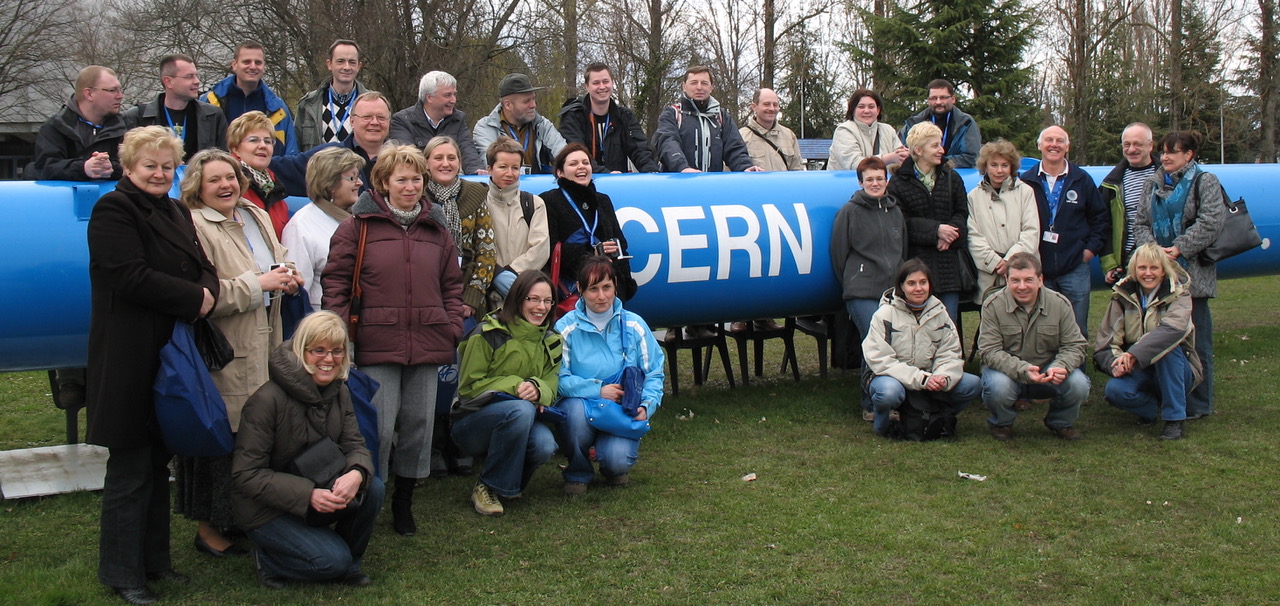
Some have taken important positions at CERN. Agnieszka Zalewska was chair of the CERN Council from 2013 to 2015, Ewa Rondio acted as a member of CERN’s directorate in 2009-2010 and Michał Turała chaired the electronics-and-computing-for-physics division in 1995-1998. Also, several of our colleagues were elected as members of CERN bodies such as the Scientific Policy Committee. Our national community at CERN is well integrated, and likes to pass the time outside working hours in particular during mountain hikes and summer picnics.
Poland’s accession to CERN membership 30 years ago was the very first case of the return of our nation to European structures, preceding the European Union and NATO. Poland joined the European Synchrotron Radiation Facility in 2004, the Institut Laue-Langevin in 2006 and the European Space Agency in 2012. It was also a founding member of the European Spallation Source and the Facility for Antiproton and Ion Research,and is a partner of the European X-ray Free-Electron Laser.
Today, six research institutes and 11 university departments located in eight major Polish cities are focused on high-energy physics. Among domestic projects that have benefitted from CERN technology-transfer is the Jagiellonian PET detector, which is exploring the use of inexpensive plastic scintillators for whole-body PET imaging, and the development of electron linacs for radiotherapy and cargo scanning at the National Centre for Nuclear Research in Świerk, Warsaw.
During the past few years, thanks to closer alignment between participation in CERN experiments and the national roadmap for research infrastructures, the long-term funding scheme for Poland’s CERN membership has been stabilised. This fact, together with the highlights described here, allow us to expect that in the future CERN will be even more “Polish”.
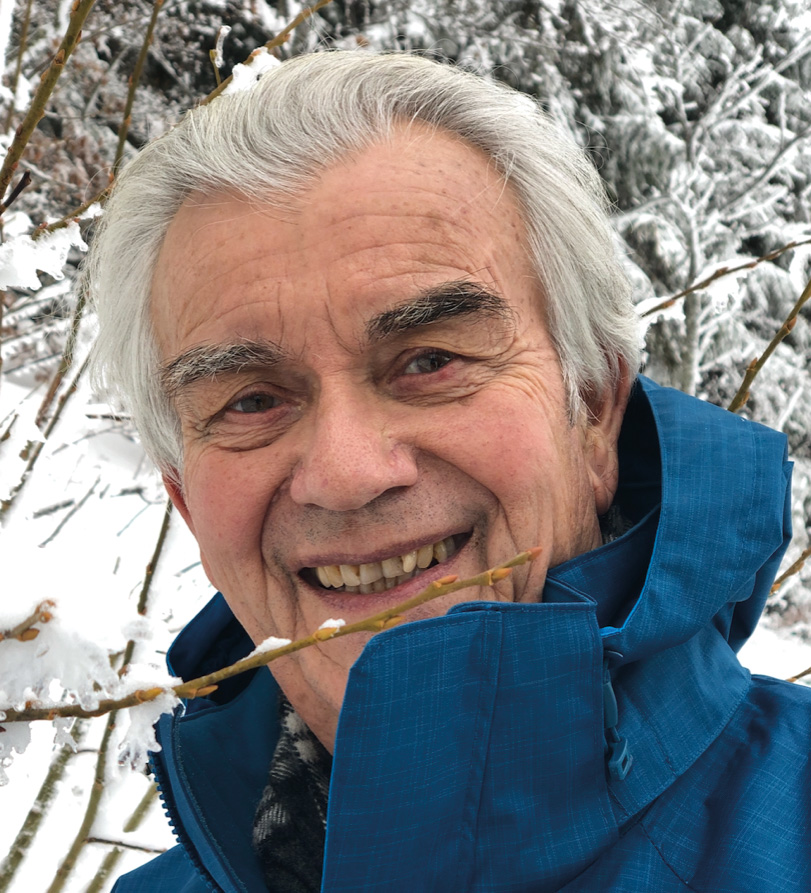
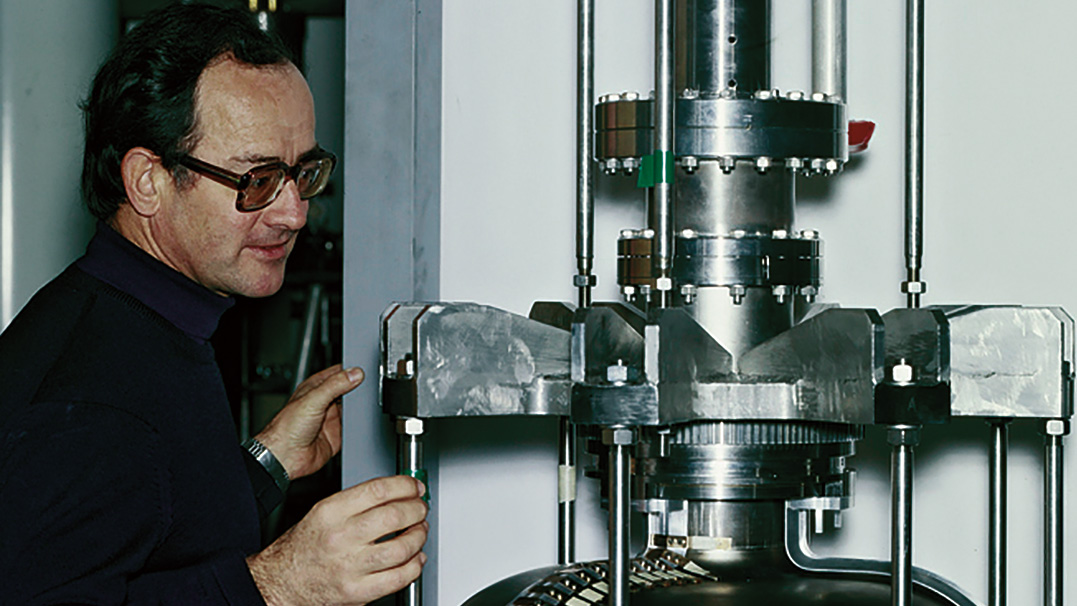
Experimental physicist Herbert Lengeler, who made great contributions to the development of superconducting radiofrequency (SRF) cavities, passed away peacefully on 26 January, just three weeks short of his 90th birthday.
Herbert was born in 1931 in the German- speaking region of Eastern Belgium. He studied mathematics and engineering at the Université Catholique de Louvain in Belgium, and experimental physics at RWTH Aachen University in Germany. He worked there as a scientific assistant and completed his PhD in 1963 on the construction of a propane bubble chamber, going on to perform experiments with this instrument on electron-shower production at the 200 MeV electron synchrotron of the University of Bonn.
In 1964 Herbert was appointed as a CERN staff member in the track chamber and accelerator research divisions. He was involved in the construction, testing and operation of an RF particle separator for a bubble chamber. In 1967 he then joined a collaboration between CERN and IHEP in Serpukhov, in the Soviet Union, within which he led the construction of an RF particle separator for both IHEP and the French bubble-chamber Mirabelle, which was installed in the same institution.
In 1971 the value of SRF separators for improved continuous-wave particle beams was recognised. This necessitated the use of SRF systems with high fields and low RF losses. Since a development programme for SRF had just been initiated at the Karlsruhe Institute of Technology in Germany, Herbert joined the research centre on behalf of CERN. In the following pioneering period up to 1978, he led the development of full-niobium SRF cavities operated at liquid-helium temperatures, with all required auxiliary systems.
The success of the SRF separator led to ambitious plans for upgrading the energy of LEP at CERN, which were initiated in 1981. A first SRF cavity with its auxiliaries (RF couplers, frequency tuner, cryostat) was installed and successfully tested in 1983 in the PETRA collider at DESY in Hamburg. Following this, in 1987, an SRF cavity with all auxiliaries and a new helium refrigerator was installed and tested at CERN’s SPS. In parallel, Herbert orchestrated the development of niobium sputtering on copper cavities as a cheaper alternative to bulk niobium. Gradually, additional SRF cavities were installed in the LEP collider, resulting in a doubling of its beam energy by the end of its running period in 2000.
From 1989 onwards, Herbert gradually retired from the LEP upgrade programme and devoted more time to other activities at CERN, such as consultancy for SRF activities at KEK, DESY and Jefferson Lab. In 1993 he was appointed project leader for the next-generation neutron source for Europe, the European Spallation Source, a position he held until his retirement from the project and CERN in 1996.
Herbert was always interested in communicating his experience to younger people. From 1989 to 2001 he frequently gave lectures on accelerator physics and technology as an honorary professor at the Technical University of Darmstadt in Germany. In 1998 he was awarded an honorary doctorate from the Russian Academy of Sciences for his contribution to the CERN–IHEP collaboration.
Herbert was an enthusiastic musician. He had been married since 1959 to Rosmarie Müllender- Lengeler, and the couple had four children and 10 grandchildren.
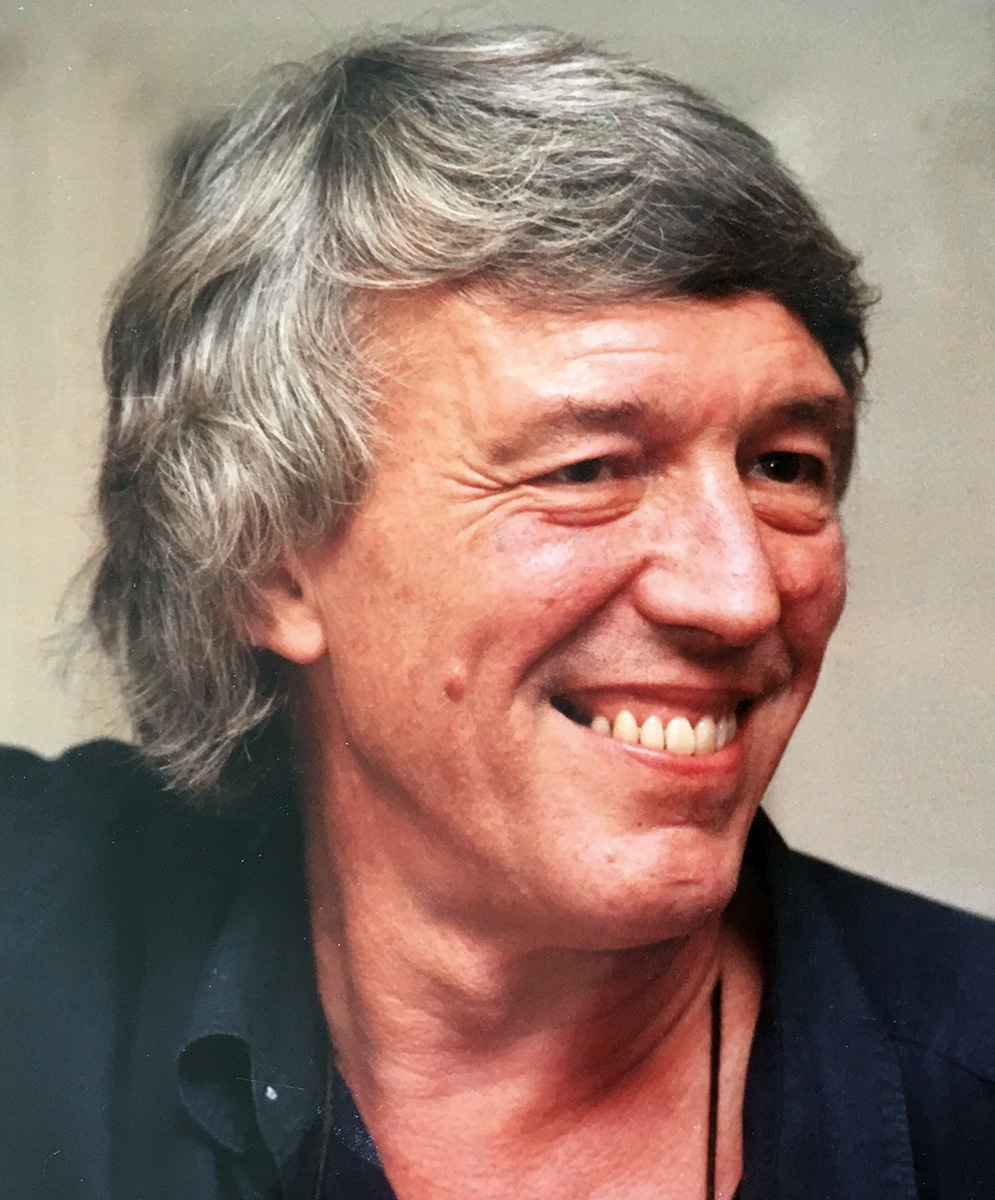
Our colleague and friend Luc Pape passed away on 9 April after a brief illness. Luc’s long and rich career covered all aspects of our field, from the early days of bubble-chamber physics in the 1960s and 1970s, to the analysis of CMS data at the LHC.
In the former, Luc contributed to the development of subtle methods of track reconstruction, measurement and event analysis. He participated in important breakthroughs, such as the first evidence for scaling violation in 1978 in neutrino interactions in BEBC and early studies of the structure of the weak neutral current. Luc developed software to allow the identification of produced muons by linking the extrapolated bubble-chamber tracks to the signals of the external BEBC muon identifier.
Luc’s very strong mathematical background was instrumental in these developments. He acquired a deep expertise in software and stayed at the cutting edge of this field. He also exploited clever techniques and rigorous methods that he adapted in further works. At the end of the bubble-chamber era, Luc was among the experts studying the computing environment of future experiments. He was also one of the people involved in the origin of the PhysicsAnalysis Workstation (PAW) tool.
After this, Luc joined the DELPHI collaboration. Analysing the computing needs of the LEP experiments, he was among the first to realise the necessity of moving from shared central computing to distributed farms for large experiments. He thus conceived, pushed and, with motivated collaborators, built and exploited the DELPHI farm (DELFARM), allowing physicists to rapidly analyse DELPHI data and produce data-summary (DST) files for the whole collaboration. Using his strong expertise in most available software tools, Luc progressively improved track analysis, quality checking and event viewing. DELPHI users will remember TANAGRA (track analysis and graphics package), the backbone of the DELANA (DELPHI analysis) program, and DELGRA for event visualisation.
Luc’s passion for physics never faded. Open minded, but with a predilection for supersymmetry (SUSY), the subtle phenomenology of which he mastered brightly, he became the very active leader of the DELPHI, and then of the full LEP SUSY groups.
After retiring from CERN in 2004, he enjoyed the hospitality of the ETH Zurich group in CMS, to which he brought his expertise on SUSY. Collaborating closely with many young physicists, he introduced into CMS the “stransverse mass” method for SUSY searches, and pioneered several leptonic and hadronic SUSY analyses. He first convened the CMS SUSY/BSM group (2003–2006), then the SUSY physics analysis group (2007–2008), preparing various topological searches to be performed with the first LHC collisions. Responsible for SUSY in the Particle Data Group from 2000–2012, he helped define SUSY benchmark scenarios within reach of hadron colliders, present and future. Comforted by the discovery of a light scalar boson in 2012 (a necessary feature of but not proof of SUSY), he continued exploring novel analysis methods and strategies to interpret any potential evidence for SUSY particles.
We will remember Luc for the exceptional combination of a genuine enthusiasm for physics, an outstanding competence and rigour in analysis, incorporating quite technical matters, and a deep concern about young colleagues with whom he interacted beautifully. Luc had a strong interest in other domains, including cosmology, African ethnicities and arts, and Mesopotamian civilisations. With his wife, he also undertook some quite demanding Himalayan treks.
We have lost a most remarkable and complete physicist, a man of great integrity, devoid of personal ambition, a rich personality, interested by many aspects of life, and a very dear friend.
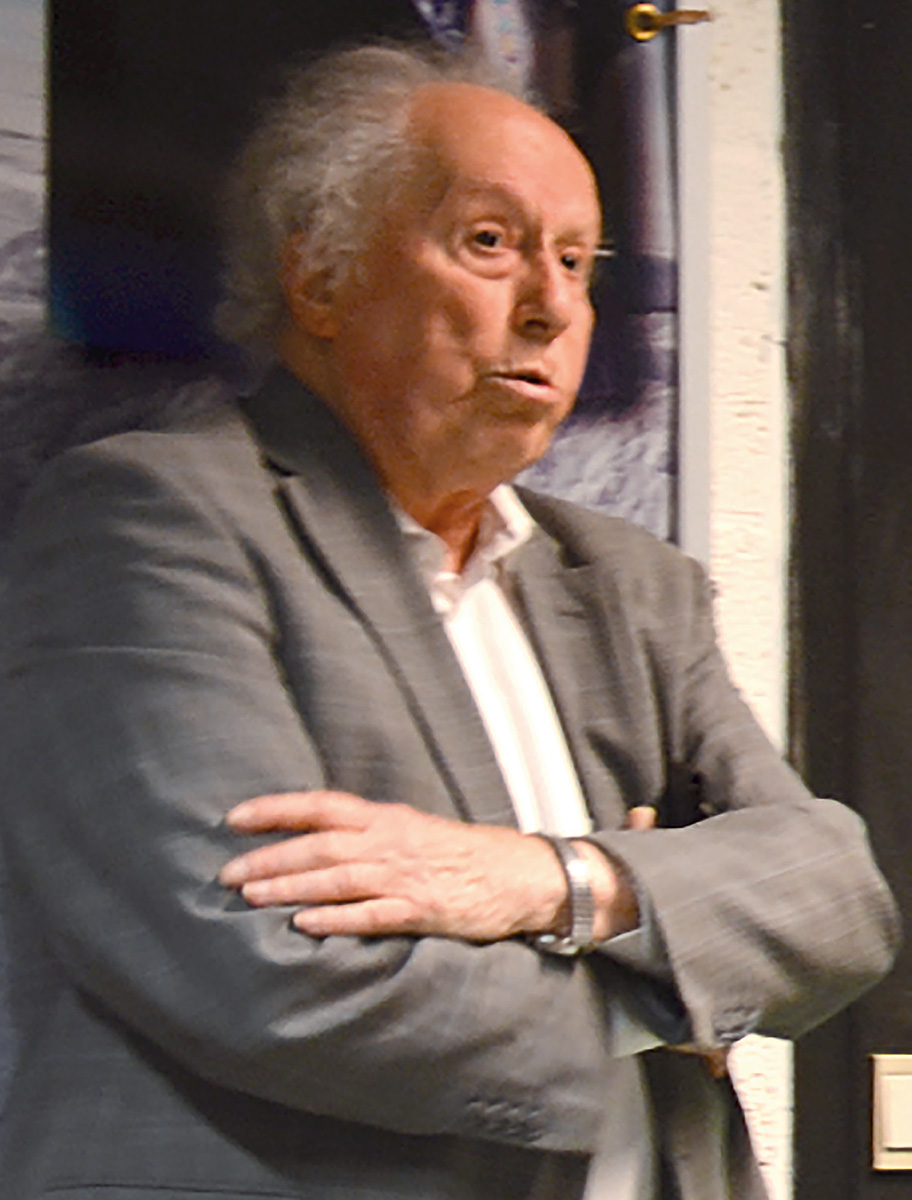
Jean Sacton, who put Belgium at the forefront of major discoveries in fundamental physics and the development of associated technologies, died peacefully in his home in Brussels on 12 February, aged 86. He combined his scientific qualities with great human ones, as a firm boss but always present, attentive, warm and intentioned.
Jean Sacton defended his bachelor’s thesis on mesic atoms in nuclear emulsion at Université Libre de Bruxelles (ULB) in 1956, continuing there for his PhD. From 1960 to 1965, he surrounded himself with young researchers focusing on the properties of hyper-fragments produced by the interactions of K mesons in nuclear emulsions, which required significant human resources to scan the emulsion foils with microscopes. He defended his thesis in 1961 and, three years later as an associate lecturer, became head of the newly created department of elementary particle physics.
At the end of the 1960s, Sacton became professor and a member of various committees, including the management of the Belgian Interuniversity Laboratory for High Energies.
The foundation in 1972 of the Interuniversity Institute for High Energies (IIHE) was largely due to his efforts during the preceding decade. Co-directed for many years by its two founders (Sacton for ULB and Jacques Lemonne for Vrije Universiteit Brussel), IIHE has become the main centre for experimental research in particle physics in Belgium, and promotes close collaboration with other Belgian institutes.
In the 1970s the IIHE strongly contributed to the scanning and analysis of data from the giant bubble chambers GARGAMELLE and BEBC. In 1973 IIHE staff scanned one of the three events that spectacularly confirmed the existence of the weak neutral current, for which Sacton, together with the other members of the Gargamelle collaboration, received the European Physical Society’s High Energy and Particle Physics Prize in 2009. Other firsts that Sacton was involved in during the bubble-chamber era included the first direct observation of charged charmed particles in nuclear emulsions, and the measurement of the violation of scale invariance in deep-inelastic scattering.
Later, the IIHE, in collaboration with the University of Antwerpen and the University of Mons-Hainaut, contributed to the DELPHI experiment at LEP, for which they built the electronics for the muon chambers. The laboratory also engaged in the H1 collaboration at HERA, DESY. The Belgian contribution to H1 included the construction of two cylindrical multi-wire proportional chambers and associated data acquisition all of the detector’s multi-wire proportional chambers, during which Sacton continuously ensured that technical staff were retrained to keep up with the rapid pace of change.
At the same time, he became a member of the European Committee for Future Accelerators (as chair from 1984 to 1987), the CERN Super Proton Synchrotron Committee, the CERN Scientific Policy Committee, and the extended Scientific Council of DESY. While dean of the ULB sciences faculty from 1991–1995, he remained active as director of the laboratory, leaving to his teams the task of analysing DELPHI, H1 and CHORUS data, and preparing the IIHE contribution to the CMS experiment. In 1994 he became president of the particles and fields commission of the International Union for Pure and Applied Physics and a member of the International Committee for Future Accelerators, and from 1991–1994 chaired the High-Energy Physics Computer Coordinating Committee. He formally retired in 1999.
Jean Sacton lived a major scientific adventure starting from the discovery of the first mesons to the completion of the Standard Model. Through his quiet strength, professionalism, foresight and entrepreneurial spirit, he founded, developed and sponsored this field of research at ULB and made it shine far beyond.
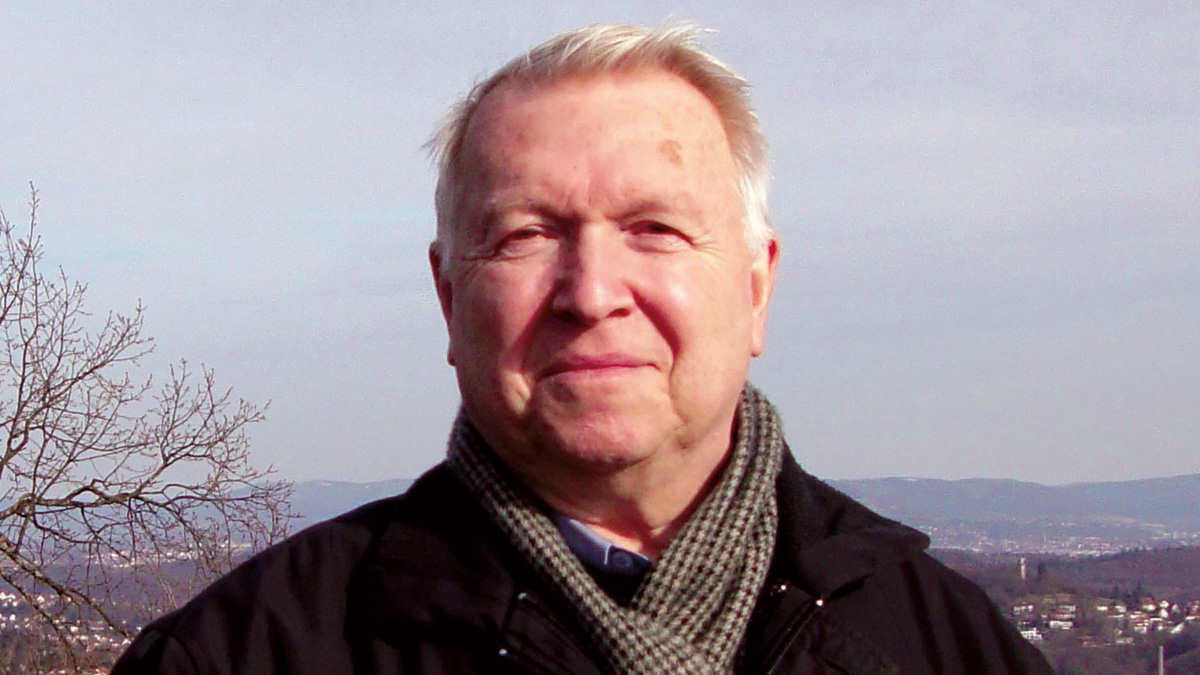
On 22 December we lost our colleague and friend, a brilliant theoretical nuclear physicist, Vladimir Kukulin.
Vladimir Kukulin was born in Moscow in 1939. He graduated with honours from the Moscow Engineering Physics Institute in 1965, where he started his physics studies under the supervision of Arkady Migdal. Vladimir obtained his PhD in 1971 and his DSc in 1991. For more than 55 years, he worked in the Institute of Nuclear Physics at Moscow State University (MSU), becoming professor of theoretical physics in 1997 and head of the laboratory for atomic nucleus theory in 2012.
Vladimir had many close scientific relations, including the supervision of students’ work, at JINR (Dubna), KazNU (Almaty) and other leading physics institutes in Russia, Kazakhstan, Uzbekistan and Ukraine. He worked as a visiting professor and gave lectures at universities in the Czech Republic, Germany, the UK, Italy, Belgium, France, the US, Canada, Mexico, Japan and Australia, and since 1996 had maintained a scientific cooperation between MSU and the University of Tübingen.
Vladimir’s research interests embraced theoretical hadronic, nuclear and atomic physics, few-body physics, nuclear astrophysics, quantum scattering theory, mathematical and computational physics, among others. Many of the approaches he developed, such as the multi-cluster model of light nuclei, the method of orthogonalising pseudopotentials, and the stochastic variational method, opened new directions in nuclear physics and quantum theory of few- and many-body scattering. During the past two decades, Vladimir and his co-workers developed the effective wave-packet continuum discretisation approach for quantum scattering, and proposed a scheme for the ultra-fast quantum scattering calculations on a graphics processing unit.
A deep understanding of nuclear and mathematical physics allowed Vladimir to suggest, in 1998, a new mechanism for the short-range nucleon–nucleon (NN) interaction based on the formation of the intermediate six-quark bag dressed by meson clouds (the dressed dibaryon). He developed, with his colleagues from MSU and the University of Tübingen, the original dibaryon concept for the nuclear force, which received new experimental confirmation with the discovery of hexaquark states at COSY (Jülich) in 2011. More recently, Vladimir and his coauthors demonstrated the decisive role of dibaryon resonances in NN elastic scattering and NN-induced meson production at intermediate energies.
A combination of strong intuition, comprehensive knowledge, and experience in various fields of science and technology, enabled Vladimir to generate new ideas and carry out pioneering interdisciplinary research at the intersection of physics, mathematics, chemistry and engineering. He made an indispensable contribution to solving important applied problems, such as controlled thermonuclear fusion, cleaning of natural gas, fire-fighting and neutron-capture cancer therapy.
Vladimir was distinguished by non-standard thinking, humanity, a sparkling sense of humour and an inexhaustible love of life. His enthusiasm and intellectual freedom inspired several generations of his colleagues and students. We will always remember Vladimir as an outstanding scientist, a wise teacher and a good friend.
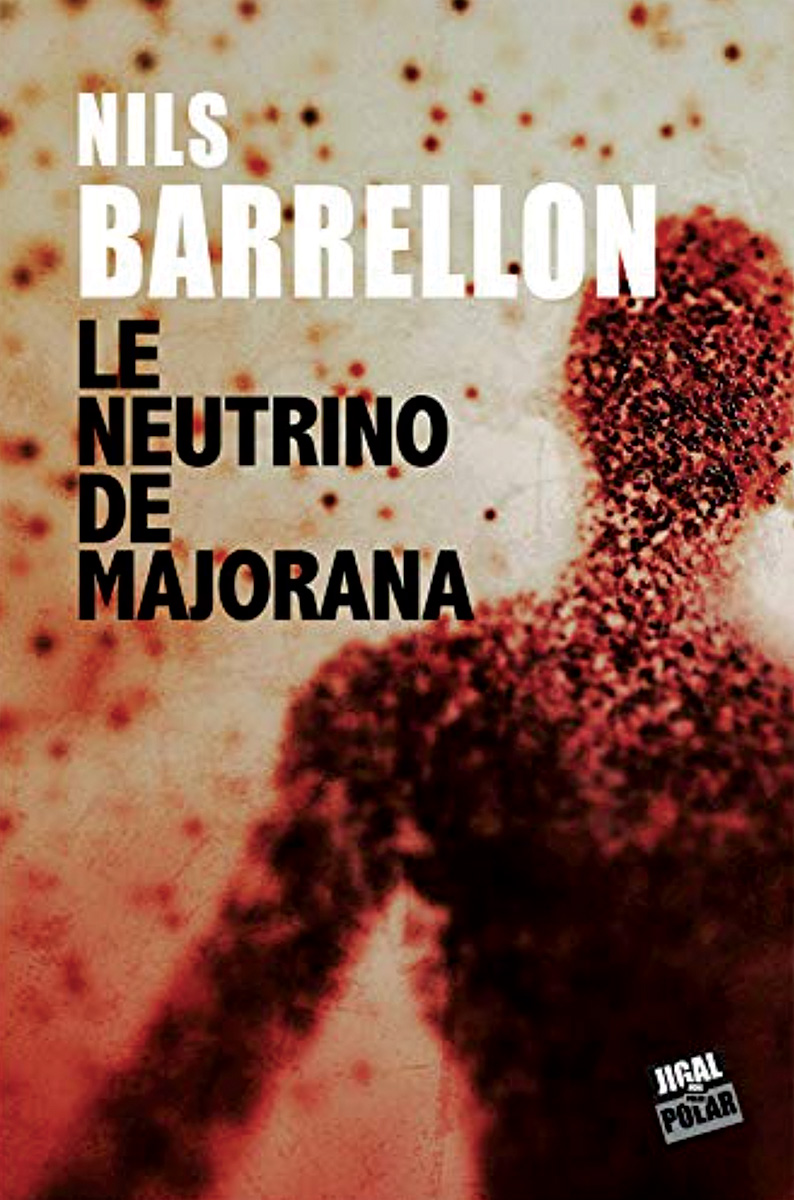
Naples, 1938. Ettore Majorana, one of the physics geniuses of the 20th century, disappears mysteriously and never comes back. A tragedy, and a mystery that has captivated many writers.
The latest oeuvre, Nils Barrellon’s Le Neutrino de Majorana, is a French-language detective novel situated somewhere at the intersection of physics history and science outreach. Beginning with Majorana’s birth in 1906, Barrellon highlights the events that shaped and established quantum mechanics. With factual moments and original letters, he focuses on Majorana’s personal and scholarly life, while putting a spotlight on the ragazzi di via Panisperna and other European physicists who had to face the Second World War. In parallel, a present-day neutrino physicist is found killed right at the border of France and Switzerland. Majorana’s volumetti (his unpublished research notes) become the leitmotif unifying the two stories. Barrellon compares the two eras of research by entangling the storylines to reach a dramatic climax.
Using the crime hook as the predominant storyline, the author keeps the lay reader on the edge of their seat, while comically playing with subtleties most Cernois would recognise, from cultural differences between the two bordering countries to clichés about particle physicists, via passably detailed procedures of access to the experimental facilities – a clear proof of the author (who is also a physics school teacher) having been on-site. The novel feels like a tailor-made detective story for the entertainment of physicists and physics enthusiasts alike.
And, at the end of the day, what explanation for Majorana’s disappearance could be more soothing than a love story?
To provide the best experiences, we use technologies like cookies to store and/or access device information. Consenting to these technologies will allow us to process data such as browsing behavior or unique IDs on this site. Not consenting or withdrawing consent, may adversely affect certain features and functions.
Functional
Always active
The technical storage or access is strictly necessary for the legitimate purpose of enabling the use of a specific service explicitly requested by the subscriber or user, or for the sole purpose of carrying out the transmission of a communication over an electronic communications network.
Preferences
The technical storage or access is necessary for the legitimate purpose of storing preferences that are not requested by the subscriber or user.
Statistics
The technical storage or access that is used exclusively for statistical purposes.The technical storage or access that is used exclusively for anonymous statistical purposes. Without a subpoena, voluntary compliance on the part of your Internet Service Provider, or additional records from a third party, information stored or retrieved for this purpose alone cannot usually be used to identify you.
Marketing
The technical storage or access is required to create user profiles to send advertising, or to track the user on a website or across several websites for similar marketing purposes.