Comsol -leaderboard other pages

Topics

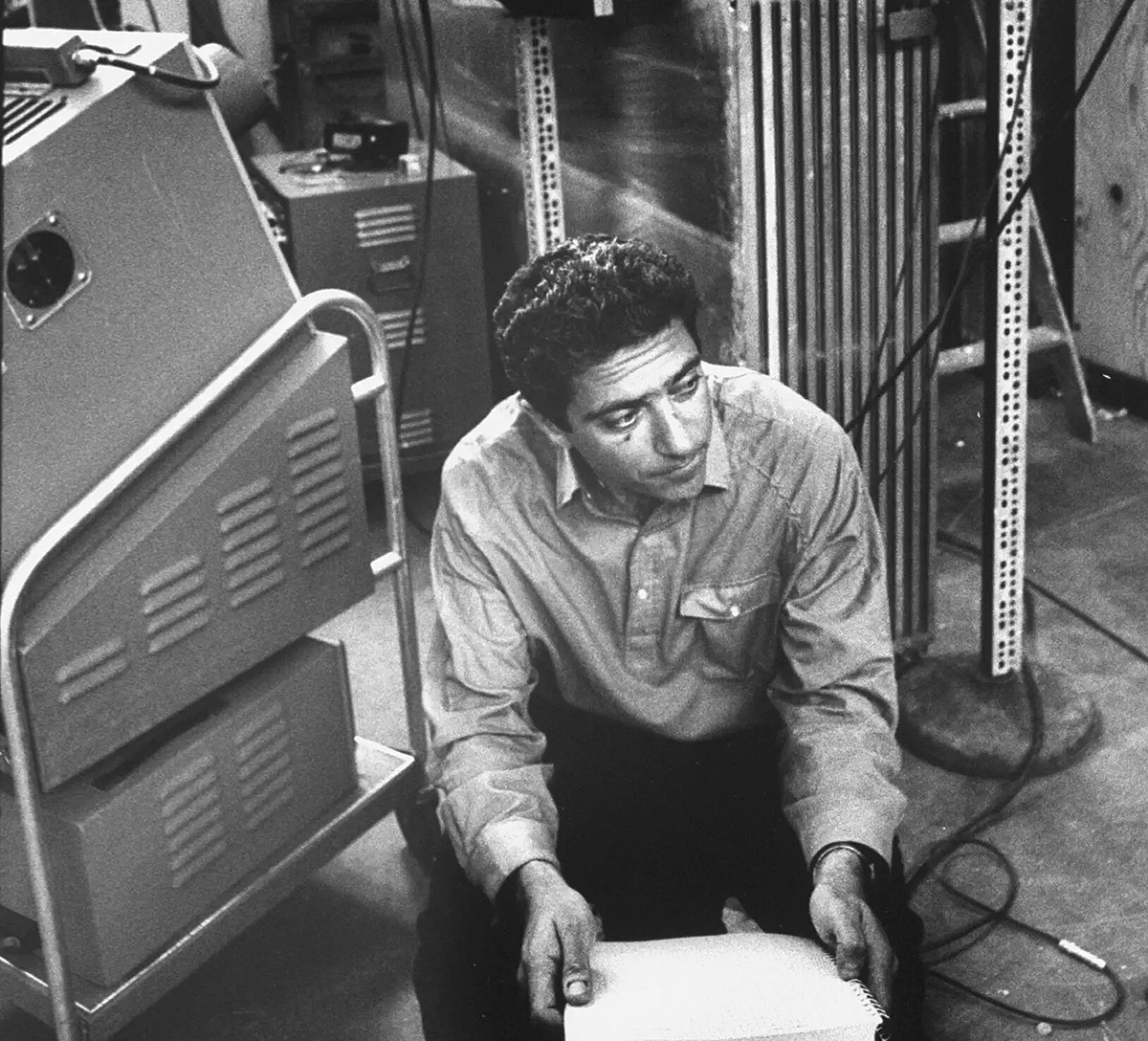
Stanley Wojcicki 1937–2023

Stanley G Wojcicki, a long-time leader in experimental particle physics, died on 31 May at the age of 86. Stan made a number of seminal contributions to the field, beginning with the discovery of many short-lived particles as a graduate student at Berkeley. He quickly rose to prominence, becoming an expert on K-meson physics, where he made a series of investigations and discoveries that played an important role in understanding the structure of the Standard Model.

Stan hardly had a typical childhood. Born in Warsaw, Poland, his youth was dominated by World War II, which caused great hardships, including the separation of his family for several years, followed by a difficult life under the communist regime. Finally, his mother, brother and he managed to escape to Sweden. There, they were refugees for eight months, before they were finally able to move to the US. Stan’s father remained in Poland, where he was jailed for five years, and never received a visa to rejoin his family.

From a very young age, Stan was an exceptional student who loved and excelled at mathematics. He continued to stand out in school in his new country and gained admission to Harvard University as an undergraduate, majoring in physics. He went on to Berkeley as a graduate student in physics, which is where he and I met and became lifelong friends, colleagues and sometimes collaborators.

Upon receiving his PhD in 1962, Stan spent a year at CERN and Collège de France, Paris (1964–1965). He returned frequently to CERN, including for a period supported through a John Simon Guggenheim Fellowship in 1973–1974. During that year, Stan continued his research on the excited states of hadrons made from combinations of quarks. He continued his close association with CERN, once again as a scientific associate in 1980–1981, and for shorter periods throughout his career.

Stan was appointed assistant professor in the physics department at Stanford in 1966, advanced to full professor in 1974, served as chair from 1982–1985 and stayed on the faculty until his retirement in 2015. He characteristically became interested in the newest and most exciting areas in the field, and was quick to join the design effort for the Superconducting Super Collider (SSC). He served as deputy director of the SSC central design group in Berkeley and was deeply involved in proposing and obtaining approval for the construction of the SSC in Texas. He continued to be active in many aspects of the SSC until it was cancelled by Congress in 1993, and wrote an insightful two-volume history of the project.

After the SSC disappointment, Stan characteristically bounced back to take on a new emerging area of particle physics: neutrino masses and oscillations. He proposed and led the MINOS experiment, a key element of a long-baseline neutrino experiment that sent a beam of neutrinos through a near detector at Fermilab and to a second detector, 735 km away, in a deep mine in Minnesota. MINOS was very important in providing evidence confirming the observations of atmospheric neutrino oscillations from Super-Kamiokande in Japan.

Stan received many honours, including the Pontecorvo Prize in 2011 and the APS Panofsky Prize in 2015 for his neutrino work. He met his wife, Esther, while he was a PhD student at Berkeley. They married in 1961 and had three daughters of whom he was very proud, Susan (CEO of YouTube), Janet (professor of paediatrics at UCSF Medical School) and Anne (founder and CEO of 23andMe). He will be very much missed by his many long-time friends and colleagues. 
Milos Lokajicek 1952–2023

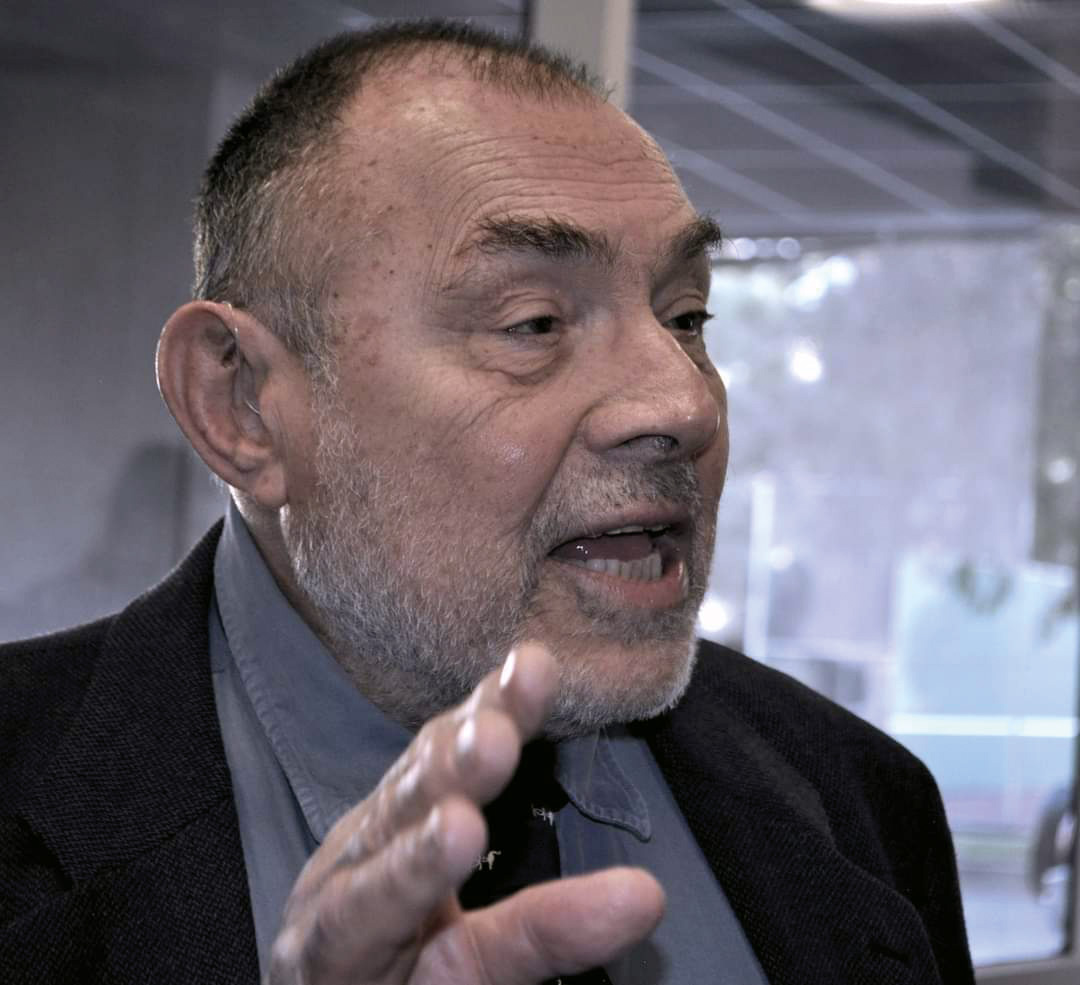
Milos Lokajicek, a long-time employee of the division of elementary particle physics of the Institute of Physics of the Czech Academy of Sciences, passed away in June at the age of 70. Milos was involved in almost all the key experiments in which the Czech particle-physics community participated, especially in the collection and processing of experimental data.

Milos began his career in the 1980s on an experiment at the Serpukhov accelerator in the former USSR, investigating proton–antiproton and later deuteron–antideuteron collisions in the Ludmila hydrogen bubble chamber. After obtaining his PhD in 1984, while still at JINR Dubna, he was also involved in the DELPHI experiment at LEP, which played a key role in the Czech Republic’s entry into CERN in 1993. 

After returning to the Institute of Physics, he was at the origin of the participation of Czech physicists in the ATLAS experiment at the LHC, the construction of which was approved in 1994. Together with other staff of the Institute of Physics and colleagues from Charles University, he initiated the construction of the ATLAS TileCal hadron calorimeter and built a laboratory for the assembly and testing of the calorimeter submodules in the former garage of the Institute of Physics. 

Since his participation in the Ludmila and DELPHI experiments, Milos focused on data processing. Already in the mid-1990s, he had built a computer farm for data processing and modelling at the Institute of Physics, which today serves several large experiments. 

In 1997, together with colleagues from Charles University and the Czech Technical University, he initiated the group’s participation in the D0 experiment at the Tevatron, Fermilab. Participation in this experiment was important for the training of young physicists in ATLAS, the construction of which was beginning at that time. After the Tevatron was decommissioned in 2011, Milos obtained funding for the Fermilab–CZ research infrastructure in 2016 with a gradual transition to the neutrino-physics programme. He worked on the NOvA experiment and also used his experience and contacts at CERN for the future DUNE experiment.

The reach of Milos’s work extends far beyond his home institute. Within the Czech Republic, it was the coordination of the activities of Czech institutions in Fermilab and the development of data processing. He was also a long-standing member of the Committee for Cooperation of the Czech Republic with CERN. His international reputation is documented by numerous memberships in steering committees of experiments and projects, and a number of conferences he co-organised. Among the most important are ACAT 2014, CHEP2009, DØ Week 2008 and ATLAS Week 2003.

Milos’s collegiality and friendship will be missed by all of us.

Honouring young LHC researchers

Every year the ALICE, ATLAS, CMS and LHCb collaborations award outstanding PhD students, who worked on the experiments, with the thesis prizes. Over the past months 15 early-career researchers have been recognised for their contributions during the collaborations’ meeting weeks.

Thesis awards from ALICE

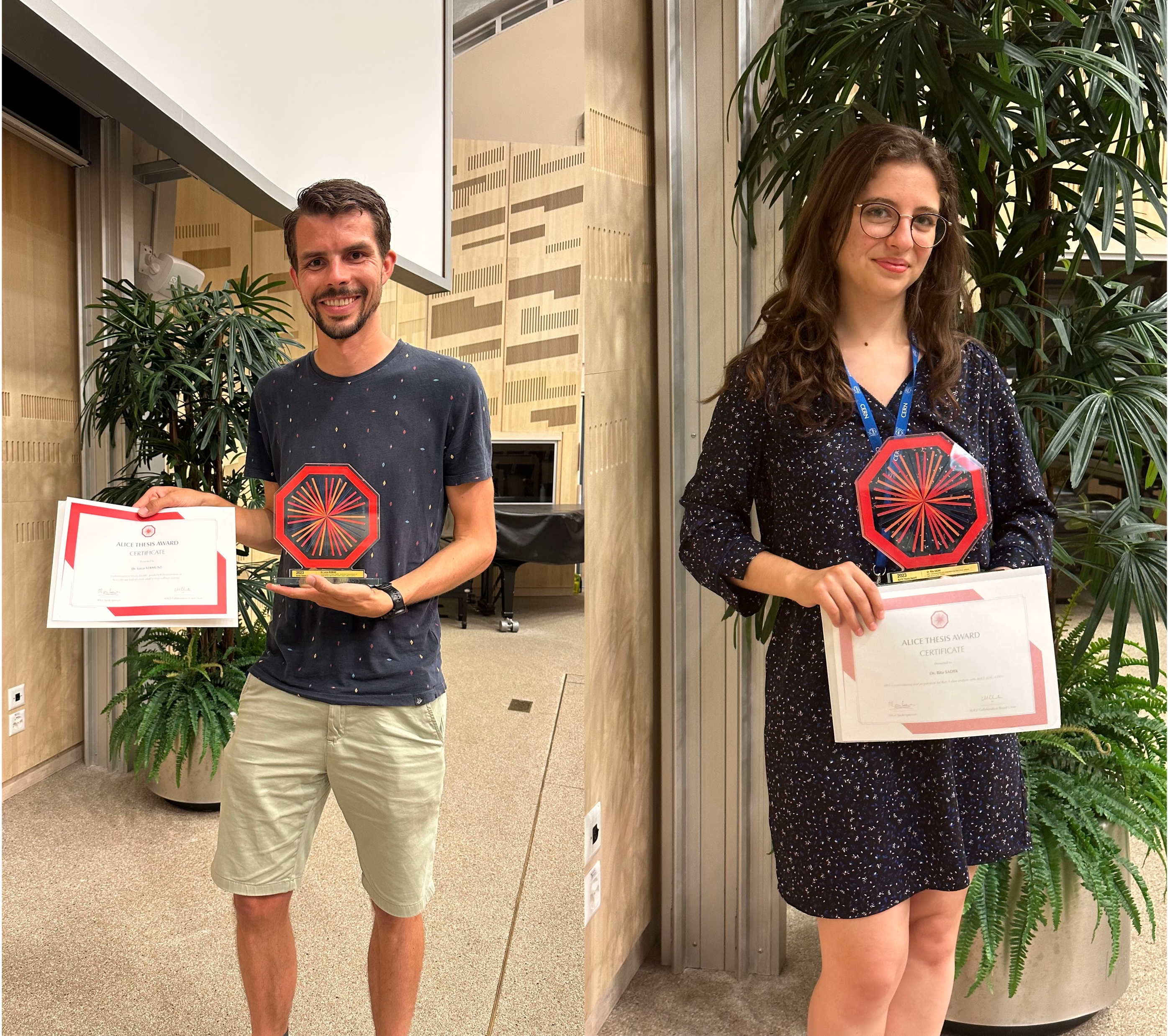
During ALICE Week at CERN from 10-14 July, 2023 the collaboration awarded its annual thesis awards to: Rita Sadek (Subatech/IN2P3; LHCb/LLR Palaiseau) for “MFT (muon forward tracker) commissioning and preparation for Run 3 data analysis with ALICE”; and Luuk Vermunt (Utrecht University; ALICE/GSI) for “Hadronisation of heavy quarks; production measurements of heavy-flavour hadrons from small to large collision systems”. Both defended their theses last year and were picked from 21 other submitted theses.

Success for ATLAS eight

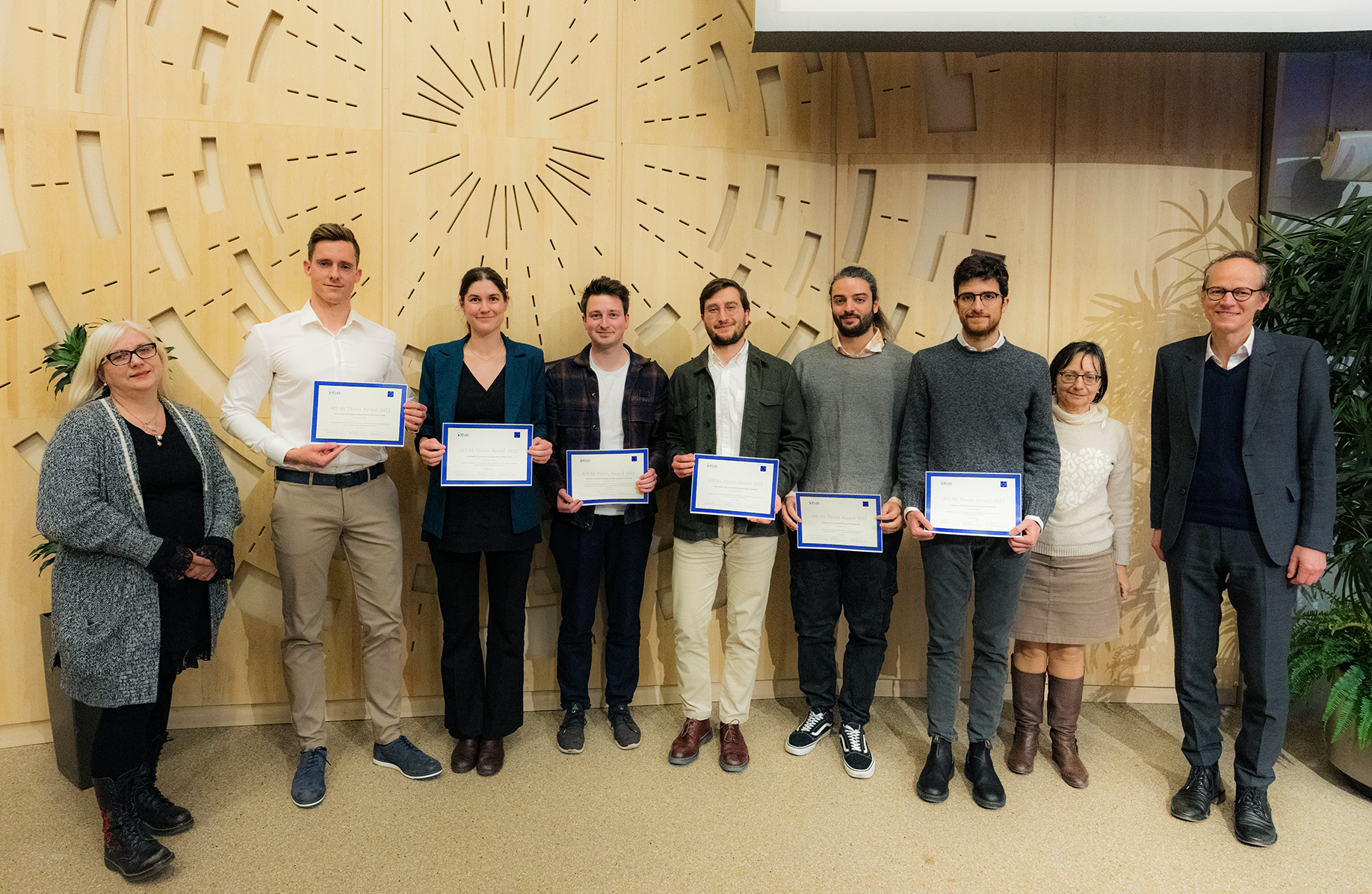
Eight ATLAS PhD students have been announced winners of the collaboration’s 2022 thesis awards: Daniel Camarero Munoz (Universidad Autónoma de Madrid) for “Measurements of the inclusive isolated-photon and photon-plus-jet production in pp collisions at 13 TeV with the ATLAS detector”; Giuseppe Carratta (University of Bologna; INFN) for “Search for Type-III See Saw heavy leptons in leptonic final states using proton-proton collisions at 13 TeV with the ATLAS detector”; Guglielmo Frattari (Sapienza University of Rome; Brandeis University) for “Investigating the nature of dark matter and of the Higgs boson with jets and missing transverse momentum at the LHC”; Maria Mironova (University of Oxford; Berkeley Lab) for “Search for Higgs Boson Decays to Charm Quarks with the ATLAS Experiment and Development of Novel Silicon Pixel Detectors”; Brian Moser (Nikhef; CERN) for “Boson Production at High Energy in Decays to Bottom Quarks and Their Interpretations with the ATLAS Experiment at the LHC”; Giulia Ripellino (KTH Stockholm; Uppsala University) for “Haystacks and Needles – Measuring the number of proton collisions in ATLAS and probing them for the production of new exotic particles”; Bastian Schlag (JGU Mainz; Stanford University) for “Advanced Algorithms and Software for Primary Vertex Reconstruction and Search for Flavor-Violating Supersymmetry with the ATLAS Experiment”; and Emily Anne Thompson (DESY; Berkeley Lab) for “Search for long-lived Supersymmetric particles using displaced vertices with the ATLAS detector at the LHC”.

CMS recognizes theses 

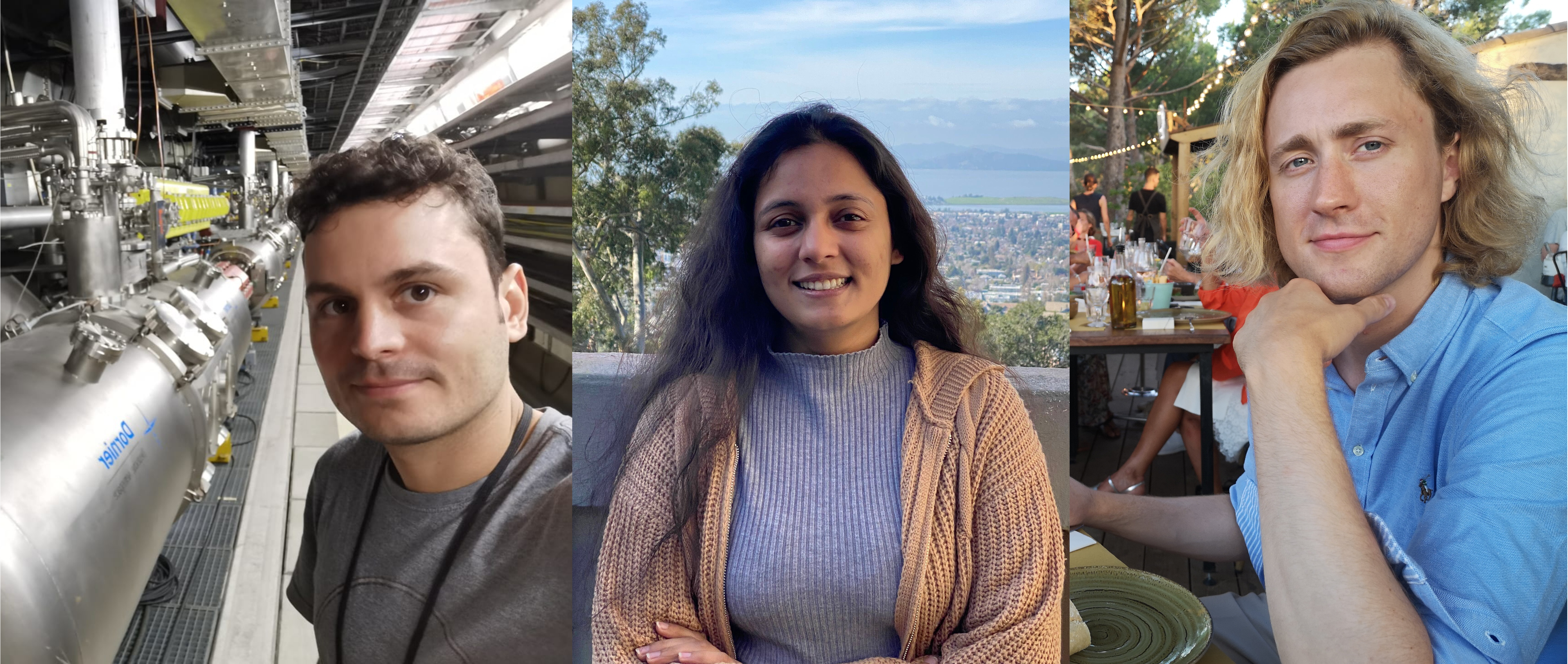
During CMS week (12-16 Jun, 2023) at CERN, the collaboration recognized three PhD students who defended their theses between Nov and Dec 2022 on CMS-related work. Angira Rastogi (IISER Pune; LBNL) did her thesis on “Inclusive nonresonant multilepton probes of new phenomena”, especially focusing on BSM searches and track reconstruction. Writing about “Searches for undiscovered processes using the multi-lepton final state in proton-proton collisions at CMS” Willem Verbeke (Ghent University; Zenseact) looked at unknown processes such as the production of sterile neutrinos, single top-quark production as well as searching for supersymmetry using neural networks. For his PhD David Walter (Hamburg University; CERN) did “First differential measurements of tZq production and luminosity determination using Z boson rates at the LHC”, investigating single top-quark production associated with the Z boson.

LHCb awards for aspiring researchers

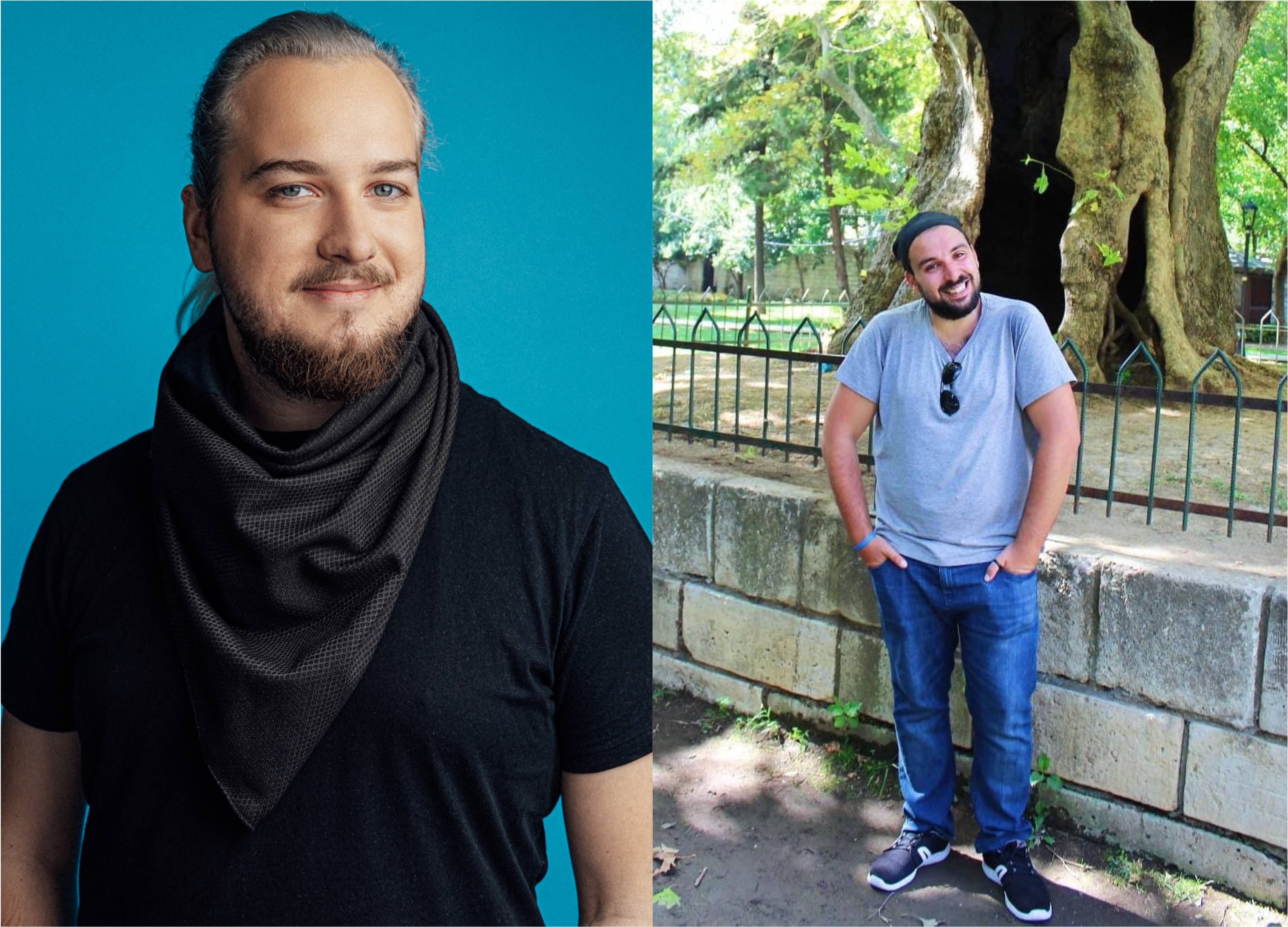
On 7 June, the LHCb collaboration honoured PhD students who made exceptional contributions to the collaboration with their theses. Saverio Mariani (Universita di Firenze; CERN) was awarded for his work on fixed-target physics with the LHCb experiment, using proton-helium collision data to understand antiproton production in cosmic rays. Peter Svihra (University of Manchester; CERN) was recognised for detector R&D towards a silicon-pixel detector for the upgraded LHCb detector.

Collision – Stories from the Science of CERN

Collision – Stories from the Science of CERN is a highly readable anthology built on the idea of teaming up great writers with great scientists. There are 13 stories in all, each accompanied by an afterword from a member of the particle physics community. The authors are a very diverse bunch, so there’s something for everyone – from exploring the nature of symmetry through the mirror of human interaction, to imagined historical encounters and, inevitably, the apocalyptic: we humans have always ventured into the unknown with trepidation.

Being of the same vintage as the BBC’s Dr Who, I was pleased to discover that the first story was penned by one of the programme’s most successful showrunners, Steven Moffat. Although I found myself doubting the direction of travel after the opening paragraphs, I enjoyed the destination. It was a good start, and it established a standard that the book maintains to the very last word.

Collision_book

In Adam Marek’s story, I found myself listening along to protagonist Brody Maitland’s selection of music for his appearance on BBC Radio 4’s Desert Island Disks, something of a national institution in the UK. This story also contains the wonderful line: “we live in a world where it is more impressive to have millions of followers than to lift the stone of the universe and reveal the deep mysteries scurrying beneath it.”  How true that is in a world of diminishing attentions spans.

Broadcaster and journalist Bidisha Mamata provides a welcome commentary on contemporary global politics. An unscrupulous leader manipulates an ambitious individual in a bid to undermine the global order. Sound familiar? In this case, the individual concerned is a CERN scientist, the reputation at stake, CERN’s, and the tool to achieving that goal the creation of a locally apocalyptic event. Politically spot on. Scientifically wide of the mark.

Post-apocalyptic scenarios make other appearances, though in these cases it’s what happens next that’s important. Stephen Baxter’s AI protagonist guides us through millennia of human stupidity, while Lillian Weezer imagines what might happen if people unearthed the LHC in some post-apocalyptic world.

Prometheus and Frankenstein make their appearances in Margaret Drabble’s wonderfully erudite tale set at CERN in the 2050s. Desiree Reynolds imagines a delicious encounter that never happened between CERN’s first Director General, Felix Bloch, and the American writer and civil rights activist James Baldwin. Would they have gelled? I’d like to think so. There’s a cautionary tale from Courttia Newland about AI, which draws the conclusion that whatever form intelligence may take, life, of a kind, will go on and the laws of the universe will remain the same. Ian Watson’s joyous facility with words puts a smile on your face from the first line of his galaxy-skipping parable. You’ll have to read it for yourself to find out whether he leaves you smiling at the end.

A recurring theme is the parallel between life and physics: Poet Lisa luxx, for example, entwines forces at work in nature with those between people, while Lucy Caldwell examines notions of uncertainty in life and physics in a story set in her native city Belfast. Peter Kalu applies a similar principle to computer security, with a cautionary yet warming tale about a side-channel attack of sorts.

Enough of the stories, what about the afterwords? Peter Dong’s comment leaves you wanting to sit in on his physics classes, while Jens Vigen gives a thoughtful account of the origins of CERN. Kirstin Lohwasser does a fine job of bringing Bidisha’s science back to the realms of reality. Tessa Charles is bullish about the FCC, currently at the feasibility stage. Michael Davis gives a glimpse of the vast industry that is modern day computer security.

Anyone that has juggled particle physics and parenting will identify with Luan Goldie’s story, which is accompanied by a heartfelt paean to CERN by one who has done just that. “Life is work and work is life,” says Carole Weydert, concluding with the words: “CERN. Grey. But sparkling.”

Andrea Bersani introduces us to the speculations that distorted spacetime allow, while Andrea Giammanco does a similar job for the dark sector. Daniel Cervenkov discusses CP violation, while Joe Haley ponders the development of ideas over time: Newton subsumed by Einstein, the Standard Model by something yet to be found. Gino Isidori, for his part, takes us on a brief guided tour of a metastable universe. John Ellis’s pairing with Stephen Baxter is particularly successful. The writer’s central story, which spans millennia and civilisations resonates well with the theoretical physicist’s daily work of examining Gauguin’s questions: “D’où venons nous, Que sommes nous, Où allons nous.”

All in all, the book makes for a varied, thought provoking and engaging read. As with the Arts at CERN programme, it demonstrates that creativity is not the preserve of the arts or of science, and that great things can happen when the two collide.

If you enjoy the book, then you might also like to explore some of the history of CERN’s engagement with the arts, from James Lee Byars’s visit to the lab in the 1970s to the Signatures of the Invisible project in 1999, or poetry produced for the European Researchers’ night in 2014.

Accelerator physicists win Enrico Fermi Prize 2023

The 2023 Enrico Fermi Prize of the Italian Physical Society (SIF) has been awarded to Massimo Ferrario, Lucio Rossi and Frank Zimmermann for their outstanding contributions to accelerator technologies, ranging from plasma acceleration to the realisation of ultra-high energy particle colliders. Established by SIF in 2001, the centenary of Fermi’s birth, with an award of €30,000, the prize is awarded annually to one or more members for their significant contributions to physics.

Massimo Ferrario (INFN, Frascati) is cited for his formidable contributions to high-brightness photoinjectors, free-electron-laser photon sources and plasma-acceleration techniques. Following this path, he currently leads the EuPRAXIA project, which aims to develop the first dedicated research infrastructure based on novel plasma-acceleration concepts.

Lucio Rossi (University of Milan) is recognised for his key role in R&D for large superconducting ultra-high-field magnets, in particular those for the LHC. Rossi also proposed, founded and initially directed the High-Luminosity LHC upgrade based on advanced niobium-tin magnet technology, which is due to enter operations in 2029.

Described as one of the most prolific and creative authors in accelerator physics, and author of seminal discoveries that have made it possible to realise the most modern high-luminosity, high-energy colliders, Frank Zimmermann (CERN) is cited for his fundamental and pioneering contributions to the understanding and modelling of various effects related to accelerated electron beams. His current research contributes to the HL-LHC upgrade and future colliders, such as the proposed Future Circular Collider at CERN.

All three will receive the prize during a presentation at the opening session of the 109th National Congress of the SIF in Salerno, Italy on 11 September.

Stavros Katsanevas 1953–2022

Stavros Katsanevas, who shaped the field of astroparticle physics in Europe, died on 27 November 2022. He had just become professor emeritus of Université Paris Cité and was preparing his return to the Astroparticle and Cosmology (APC) laboratory. 

Born in Athens in 1953, Stavros pursued physics at the University of Athens. In 1979 he obtained his speciality doctorate from École polytechnique in Paris. He obtained his PhD at Athens in 1985, and later became an associate professor there (1989–1996). From 1979 to 1982 he spent three years as a postdoc at Fermilab. He also worked at CERN, as a research fellow (1983–1986), research associate (1991–1992) and corresponding fellow (1996). He was then appointed professor at the University Claude Bernard Lyon 1, and in 2004 became a professor at the University Paris VII Denis Diderot (now Université Paris Cité).

From 2002 to 2012 Stavros was deputy scientific director of IN2P3, during which he steered the institute to a leading position in astroparticle physics. He was particularly active in the emerging field of multi-messenger astronomy and in instrumentation. In this context, he played a key role in the creation of the APC laboratory in Paris, of which he was director from 2014 to 2017. Until his death, he led the French–Italian European Gravitational Observatory consortium, coordinating projects related to the detection of gravitational waves with the Virgo observatory.

Stavros’s scientific career was extremely rich, as evidenced by hundreds of publications on topics related to research collaborations, experimental techniques, or the conception and design of new research infrastructures. At CERN, he distinguished himself by developing software for simulating particle interactions, which later became a standard used at LEP. He also played an essential role in federating teams in several large international collaborative projects. One example is his involvement in the OPERA experiment at Gran Sasso laboratory; another is his leading role in the development of underwater neutrino telescopes, starting with the NESTOR project, which led to ANTARES and KM3NeT. 

Over the past 15 years, Stavros played a central role in defining a global strategy in astroparticle physics. With the support of the European Commission, he created ASPERA, followed by the AstroParticle Physics European Consortium, which today gathers about 20 European countries. He was also involved in interdisciplinary research projects, mainly in the field of geosciences. He was co-director of the Laboratory of Excellence UnivEarthS from 2014 to 2018 and at the forefront of a seismometer project to be installed on the Moon.

Stavros was keen to promote science to a wide audience. Since 2015, he was a member of the jury for the Daniel and Nina Carasso Foundation, and in 2019 he organised an exhibition “The Rhythm of Space” at the museo della Grafica in Pisa. He was also coordinator of the European Horizon 2020 project REINFORCE, which intends to support more than 100,000 citizens to increase their awareness of and attitude towards science. 

Stravros was driven by an inexhaustible desire to contribute to the advancement of science by serving, stimulating and animating the community. Steeped in philosophy, literature and poetry, he was also remarkably kind and generous. His thought, his vision, his driving force, will continue to accompany us.

Stanley Deser 1931–2023

Stanley Deser

Theoretical physicist Stanley Deser, a co-inventor of supergravity, passed away in Pasadena, California, on 21 April. 

Stanley was born to middle-class Jewish parents in Rovno, then in Poland. In 1935 the family emigrated first to Palestine and then to France. After the Second World War broke out they fled to the US via Portugal (they were one of the families saved by Aristides de Sousa Mendes), eventually settling in Brooklyn. Stanley graduated Summa Cum Laude from Brooklyn College in 1949, and received his PhD at Harvard in 1953 under the supervision of Julian Schwinger. After postdocs at the Institute for Advanced Study in Princeton, NJ (1953–1955) and the Niels Bohr Institute in Copenhagen (1955–1957), and a lectureship at Harvard University (1957–1958), he joined the faculty of the physics department at Brandeis in 1958, where he remained until he retired in 2005. After moving to Pasadena, he remained an emeritus professor at Brandeis, and continued to publish physics papers until this year (as well as his autobiography, Forks in the Road, in 2021).

Stanley was a towering figure in theoretical high-energy physics, classical gravity and quantum gravity. His work cuts through mathematical complexity with deep physical insight. His first signature work, the Arnowitt–Deser–Misner (ADM) formalism, gave a Hamiltonian initial-value formalism for general relativity. This work is the foundation of precise calculations in inflationary cosmology, needed to match cosmic microwave background observations; and in numerical relativity calculations needed to interpret the results of gravitational-wave experiments. He leaves behind a lifetime of work in theoretical physics that remains foundational, including co-inventing supergravity (contemporaneously with Ferrara, Freedman and van Nieuwenhuizen) and formulating the dynamics of the superstring with Zumino; showing that general theories with massive gravity are inconsistent; and developing topologically massive gauge theories and gravity with Jackiw and Templeton. 

Stanley was an important member of the scientific community. As Rainer Weiss, who shared the 2017 Nobel Prize in Physics for the observation of gravitational waves, related, he played an important role in convincing the National Science Foundation to fund the LIGO gravitational-wave detector. He was a fellow of the National Academy of Sciences (NAS) and the American Academy of Arts and Sciences; a foreign member of the Royal Society and the Torino Academy of Sciences; he was awarded the Dannie Heineman Prize in Mathematical Physics and the Einstein Medal, along with the Guggenheim and Fulbright awards; and held honorary doctorates from Stockholm University and the Chalmers Institute of Technology.

Stanley will be remembered for his wisdom and ready wit; emails and talks in which every sentence had multiple meanings and were packed with allusions and jokes; his delight and skill in acquiring languages; a love of travel; and a deep appreciation for art and literature.

Stanley was preceded in death by his wife, the artist Elsbeth Deser (daughter of Oskar Klein), and his daughter Eva. He leaves behind three daughters – retired linguist Toni Deser; thea­tre director Abigail Deser; and atmospheric scientist (and fellow NAS member) Clara Deser – and four grandchildren, Ursula, Oscar, Louise and Simon.

A carnival of ideas in Kolkata

A one-of-a-kind conference MMAP (Macrocosmos, Microcosmos, Accelerator and Philosophy) 2020 was held in May last year in Kolkata, India, attracting 200 participants in person and remotely. An unusual format for an international conference, it combined the voyage from the microcosmos of elementary particles to the macrocosmos of our universe up to the horizon and beyond with accelerator physics and philosophy through the medium of poetry and songs, as inspired by the Indian poet Rabindranath Tagore and the creative giant Satyajit Ray. 

The first presentation was by Roger Penrose, who talked about black holes, singularities and conformal cyclic cosmology. He discussed the cosmology of dark matter and dark energy, and inspired participants with the fascinating idea of one aeon going over to another aeon endlessly with no beginning or end of time and space.

Larry McLerran’s talk “Quarkyonic matter and neutron stars” provided an intuitive understanding of the origin of the equation of state of neutron stars at very high density, followed by Debadesh Bandyopadhyay’s talk on unlocking the mysteries of neutron stars. Jean-Paul Blaziot talked about the emergence of hydrodynamics in expanding quark–gluon plasma, whereas Edward Shuryak discussed the role of sphaleron explosions and baryogengesis in the cosmological electroweak phase transition. Subir Sarkar’s talk “Testing the cosmological principle” was provocative, as usual, and Sunil Mukhi and Aninda Sinha described the prospects for string theory. Sumit Som, Chandana Bhattacharya, Nabanita Naskar and Arup Bandyopadhyay discussed the low- and medium-energy physics possible using cyclotrons at Kolkata.

Moving to extreme nuclear matter, Barbara Jacak talked about experimental studies of transport in dense gluon matter. Jurgen Schukraft, Federico Antinori, Tapan Nayak, Bedangadas Mohanty and Subhasis Chattopadhyay spoke on signatures for the early-universe quark-gluon plasma and described the experimental programme of the ALICE experiment at the LHC, and Dinesh Srivastava focussed on the electromagnetic signatures of quark-gluon plasma.

A carnival of ideas, a mixture of low- to high-energy physics on the one hand and the cosmology of the creation of the universe on the other

Amanda Cooper-Sarkar emphasised the role of parton distribution functions in searches for new physics at colliders such as the LHC. Shoji Nagamiya presented the physics prospects of the J-PARC facility in Japan, Paolo Giubellino described the evolution of the latest FAIR accelerator at GSI, and Horst Stöcker discussed how to observe strangelets using fluctuation tools. In his presentation on the history of CERN, former Director-General Rolf Heuer talked about the marvels of large-scale collaboration capturing the thrill of a big discovery.

The MMAP 2020 conference witnessed a carnival of ideas, a mixture of low- to high-energy physics on the one hand and the cosmology of the creation of the universe on the other.

Magnificent CEvNS in Munich

Coherent elastic neutrino–nucleus scattering (CEvNS) is a new neutrino-detection channel with the potential to test the Standard Model (SM) at low-momentum transfer and to search for new physics beyond the SM (BSM). It also has applications in nuclear physics, such as measurements of nuclear form factors, and the detection of solar and supernova neutrinos. In the SM, neutrinos interact with the nucleus as a whole, enhancing the cross section by approximately the neutron number squared. However, detection is challenging as the observable is the tiny recoil of the nucleus, which has an energy ranging from sub-keV to a few tens of keV depending on the nucleus and neutrino source. Several decades after its prediction, CEvNS was measured for the first time in 2017 by the COHERENT experiment and the field has grown rapidly since.

The aims of the Magnificent CEvNS workshop, named after the Hollywood Western, are to bring together the broad community of researchers working on CEvNS and promote student engagement and connection among experimentalists, theorists and phenomenologists in this new field. The first workshop was held in 2018 in Chicago, and the most recent in Munich from 22 to 24 March with 96 participants.

Examining CEvNS opens a multitude of promising ways to look for BSM interactions. Improved limits on generalised neutrino interactions, new light mediators and sterile neutrinos derived from the complete COHERENT dataset were presented. These data enable the nuclear radius to be probed in a new way. More physics potential was highlighted in talks showing limits on the Weinberg angle and dark matter (axion-like particles). Notable advances by reactor experiments include new limits on CEvNS on germanium by the CONUS and NuGen experiments, which disagree with the previously published Dresden-II results.

The talks underlined the large experimental effort toward a complete mapping of the neutron and energy dependence of the CEvNS cross section. The observation of CEvNS on CsI and Ar by the COHERENT experiment will be complemented with future measurements on targets ranging from light (sodium) to heavy (tungsten) elements in COHERENT and new facilities such as NUCLEUS and Ricochet. Precision will be achieved by increasing statistics in CEvNS events with larger target masses, lower detection thresholds and increased neutrino flux. Reducing systematic effects by characterising backgrounds and detector responses is also critical. The growing precision will trigger studies on BSM physics in the near future, complementing high-energy experimental efforts.

A half-day satellite workshop “Into the Blue Sky” was dedicated to new ideas related to the CEvNS community. These included measurements of neutrino-induced fission, and detector concepts based on latent damage to the crystalline structure of minerals and superconducting crystals. The workshop was followed by a school organised by the Collaborative Research Center “Neutrinos and Dark Matter in Astro- and Particle Physics” at TU Munich from 27 to 29 March. Six lectures covered the fundamentals of low-energy neutrino physics with a focus on CEvNS, backgrounds, neutrino sources and detectors. The 40 participants then applied this knowledge by creating a fictional micro-CEvNS experiment.

Half a century since it was proposed theoretically, the physics accessible with CEvNS is proving to be extensive. The next Magnificent CEvNS workshop will take place next year at a new location and the participants are looking forward to further exploration of the CEvNS frontier.

A tribute to a great physicist

Jack Steinberger

This book was written on the occasion of the 100th anniversary of the birth of Jack Steinberger. Edited by Jack’s former colleagues Weimin Wu and KK Phua with his daughter Julia Steinberger, it is a tribute to the important role that Jack played in particle physics at CERN and elsewhere, and also highlights many aspects of his life outside physics.

The book begins with a nice introduction by his daughter, herself a well-known scientist. She describes Jack’s family life, his hobbies, interests, passions and engagement, such as with the Pugwash conference series. The introduction is followed by a number of short essays by former friends and colleagues. The first is a transcript of an interview with Jack by Swapan Chattopadhyay in 2017. It contains recollections of Jack’s time at Fermilab, with his PhD supervisor Enrico Fermi, and concludes with his connections with Germany later in life.

Drive and leadership

The next essays highlight the essential impact that Jack had in all the experiments he participated in, mostly as spokesperson, and underline his original ideas, drive and leadership, not just professionally but also in his personal life. Stories include those by Hallstein Høgåsen, a fellow in the CERN theory department, who describes the determination and perseverance he had in mountaineering. S Lokanathan worked with Jack as a graduate student in the early 1950s in Nevis Labs and remained in contact with him, including later on when he became a professor in Jaipur. Jacques Lefrançois covers the ALEPH period, and Vera Luth the earlier kaon experiments at CERN. Italo Mannelli comments on both the early times when Jack visited Bologna to work with Marcello Conversi and Giampietro Puppi, and then turns to his work at the NA31 experiment on direct CP violation in the Ko system.

Gigi Rolandi emphasises the important role that Jack played in the design and construction of the ALEPH time projection chamber. Another good essay is by David N Schwartz, the son of Mel Schwartz who shared the Nobel prize with Jack and Leon Lederman. When David was born, Jack was Mel Schwartz’s thesis supervisor. As Jack was a friend of the Schwartz family, they were in regular contact all along. David describes how his father and Jack worked together and how, together with Leon Lederman, they started the famous muon neutrino experiment in 1959. As David Schwartz later became involved in arms control for the US in Geneva, he kept in contact with Jack, who had always been very passionate about arms control. David also remembers the great respect that Jack had for his thesis supervisor Enrico Fermi. The final essay is by Weimin Wu, one of the first Chinese physicists to join the international high-energy physics research community. Weimin started to work on ALEPH in 1979 and has remained a friend of the family since. He describes not only the important role that Jack played as a professor, mentor and role model, but also for establishing the link between ALEPH and the Chinese high-energy physics community.

Memorial Volume for Jack Steinberger

All these essays describe the enormous qualities of Jack as a physicist and as a leader. But they also highlight his social and human strengths. The reader gets a good feeling of Jack’s interests and hobbies outside of physics, such as music, climbing, skiing and sailing. Many of the essays are also accompanied by photographs, covering all parts of his life, and they are free from formulae or complicated physics explanations.

For those who want to go deeper into the physics that Jack was involved with, the second part of the book consists of a selection of his most important and representative publications, chosen and introduced by Dieter Schlatter. The first two papers from the 1950s deal with neutral meson production by photons and a possible detection of parity non-conservation in hyperon decays. They are followed by the Nobel prize-winning paper “Possible Detection of High-Energy Neutrino Interactions and the Existence of Two Kinds of Neutrinos” from 1962, three papers on CP violation in kaon decays at CERN (including first evidence for direct CP violation by NA31), then five important publications from the CDHS neutrino experiment (officially referred to as WA1) on inclusive neutrino and anti-neutrino interactions, charged-current structure functions, gluon distributions and more. Of course, the list would not be complete without a few papers from his last experiment, ALEPH, including the seminal one on the determination of the number of light neutrino species – a beautiful follow-up of Jack’s earlier discovery that there are at least two types of neutrinos.

This agreeable and interesting book will primarily appeal to those who have met or known Jack. But others, including younger physicists, will read the book with pleasure as it gives a good impression of how physics and physicists functioned over the past 70 years. It is therefore highly recommended.

bright-rec iop pub iop-science physcis connect