Honouring the 100th anniversary of Einstein’s Nobel prize, the Swedish embassy in Bern collaborated with CERN for an event connecting science and music, held at the CERN Globe of Science and Innovation on 19 October. The event was originally planned for 2021 but was postponed due to the pandemic.
Brian Foster (University of Oxford) talked about Einstein’s love for music and playing the violin, which was underlined with many photos showing Einstein with some of the well-known violinists of the time. Around the period Einstein was awarded the Nobel prize, Russian engineer Lev Termen invented the theremin, consisting of two antennae and played without physical contact. This caught Einstein’s attention and it is said that he even played the theremin himself once.
Delving further into the unconventional, LHC physicists performed Domenico Vicinanza’s (GEANT and Anglia Ruskin University) “Sonification of the LHC”, for which the physicist-turned composer mapped data recorded by the LHC experiments between 2010 and 2013 into music. First performed in 2014 on the occasion of CERN’s 60th anniversary, Vicinanza’s piece is intended as a metaphor for scientific cooperation, in which different voices and perspectives can reach the same goal only by playing together.
There followed the debut of an even more unconventional piece of music by The Stone Martens – a Swiss and Swedish “noise collaboration” improvised by Henrik Rylander and Roland Bucher. By sending the output of his theremin through guitar-effects pedals, Rylander created a unique sound. Together with Bucher’s self-made “noise table”, with which he sampled acoustic instruments and everyday objects, the duo created a captivating, otherworldly sound collage that was well received by the 160-strong audience. The event closed with an unconventional Bach concerto for two violins in which these unique sounds were fused with traditional instruments. Anyone interested in experiencing the music for themselves can find a recorded version at https://indico.cern.ch/event/1199556/.
The appearance of the word “for” rather than “in” in the title of this collection raises the bar from an academic description to a primer. It is neither the book’s length (more than 800 pages), nor the fact that the author list resembles a who’s who in artificial intelligence (AI) research carried out in high-energy physics that makes this book live up to its premise; it is the careful crafting of its content and structure.
Artificial intelligence is not new to our field. On the contrary, some of the concepts and algorithms have been pioneered in high-energy physics. Artificial Intelligence for High Energy Physics credits this as well as reaching into very recent AI research. It covers topics ranging from unsupervised machine-learning techniques in clustering to workhorse tools such as boosted decision trees in analyses, and from recent applications of AI in event reconstruction to simulations at the boundary where AI can help us to understand physics.
Each chapter follows a similar structure: after setting the broader context, a short theoretical introduction into the tools (and, where possible, the available software) is given, which is then applied and adapted to a high-energy physics problem. The ratio of in-depth theoretical background to AI concepts and the focus on applications is well balanced, and underlines the work of the editors, who avoided duplication and cross-reference individual chapters and topics. The editors and authors have not only created a selection of high-quality review articles, but a coherent and remarkably good read. Takeaway messages in the chapter for distributed training and optimisation stand out, and one might wish that this concept found more resonance throughout the book.
Sometimes, the book can be used as a glossary, which helps to bridge the gaps that seem to exist simply because high-energy physicists and data scientists use different names for similar or even identical things. While the book can certainly be used as a guide for a physicist in AI, an AI researcher with the necessary physics knowledge may not be served quite so well.
In an ideal world, each chapter would have a reference dataset to allow the reader to follow the stated problems and learn through building and exercising the described pipelines. This, however, would turn the book from a primer into a textbook for AI in high-energy physics. To be fair, wherever possible the authors of the chapters have used and referred to publicly available datasets, and one chapter is devoted to the issue of arranginga community data competition, such as the TrackML challenge in 2018.
As for the most important question – have I learned something new? – the answer is a resounding “yes”. While none of the broad topics and their application to high-energy physics will come as a surprise to those who have been following the field in recent years, there are neat projects and detailed applications showcased in this book. Furthermore, reading about a familiar topic in someone else’s words can be a powerful eye opener.
Experimental particle physicist Meenakshi Narain, an inspirational leader and champion of diversity, died unexpectedly on 1 January 2023 in Providence, RI. Considered by many as a “force of nature”, Meenakshi’s impact on the physics community has left an indelible mark.
Meenakshi grew up in Gorakhpur, India and emigrated to the US in 1984 for graduate school at SUNY Stony Brook. Her PhD thesis, based on data taken by the CUSB-II detector at CESR, utilised inclusive photon spectra from upsilon decays for both spectroscopy measurements and searches for exotic particles, including the Higgs boson. In 1991 Meenakshi joined Fermilab as a postdoc on the DØ experiment, where she was a principal player in the 1995 discovery of the top quark, leading a group searching for top anti–top pair production in the dilepton channel. Over the next decade, as a Fermilab Wilson Fellow and a faculty member at Boston University, she made seminal contributions to measurements of top-quark pair and single-top production, as well as to the top-quark mass, width and couplings.
In 2007, upon joining the faculty at Brown University, Meenakshi joined the CMS experiment at the LHC. In addition to pioneering a number of exotic searches for high-mass resonances, new heavy gauge bosons and top-quark partners, she continued to make innovative contributions to precision top-quark measurements. Her foundational work on b- and c-quark identification also paved the way for Higgs boson searches and measurements. As a leader of the CMS upgrade studies group, Meenakshi coordinated physics studies for several CMS technical design reports for the High-Luminosity LHC upgrade, and an impressive number of results for the CERN yellow reports. She was also a key contributor to the US CMS outer tracker upgrade.
The tutorials and workshops Meenakshi organised as co-coordinator of the LHC Physics Center (LPC) were pivotal in advancing the careers of many young scientists, whom she cared about deeply. As chair of the US CMS collaboration board, she was a passionate advocate for the LHC research programme. She created an inclusive, supportive community that participated in movements such as Black Lives Matter, and tackled numerous challenges imposed by the COVID-19 pandemic.
A strong voice for women and under-represented minorities in physics, Meenakshi was the founding co-chair of the CMS diversity office and the driving force behind the CMS task force on diversity and inclusion and the CMS women’s forum. She mentored a large group of students, post-docs and scientists from diverse backgrounds, and created PURSUE – an internship programme that provides summer research opportunities at CMS to students from minority-serving institutions.
Meenakshi’s illustrious career has been recognised via numerous accolades and positions of responsibility. She is remembered for her recent co-leadership of the Snowmass energy-frontier study, her service on HEPAP and her new appointment to the P5 subpanel, in addition to her new position as the first woman to chair the physics department at Brown. She will be remembered as a brilliant scientist, a beloved mentor and an inspiring leader who made the world a better, more equitable and inclusive place.
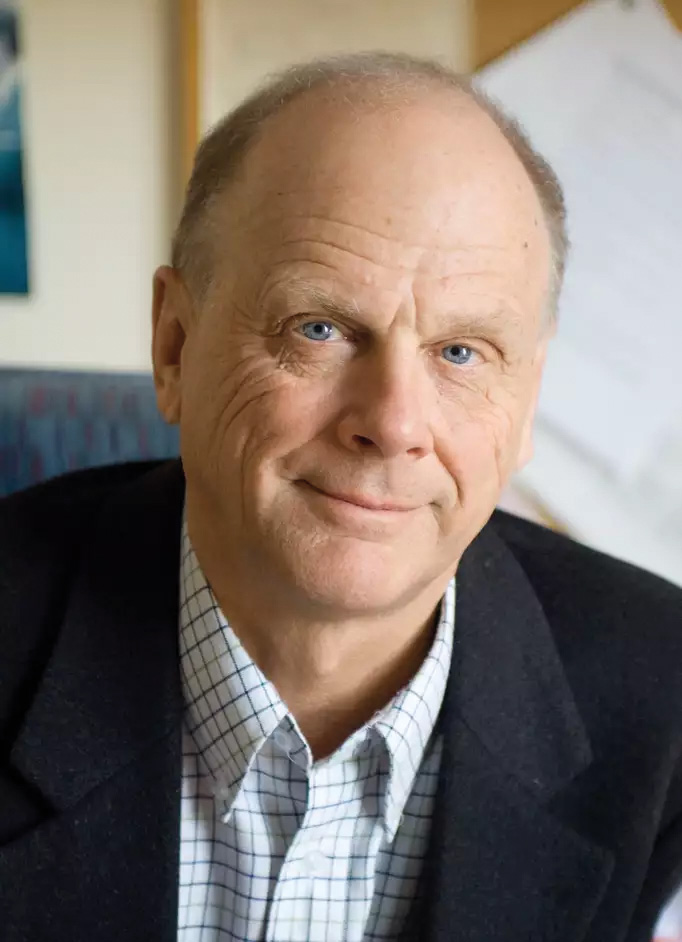
It is with great sadness that we learnt of the passing of Lars Brink on 29 October 2022 at the age of 78. Lars Brink was an emeritus professor at Chalmers University Göteborg, Sweden and a member of the Royal Swedish Academy. He started his career as a fellow in the CERN theory group (1971–1973), which was followed by a stay at Caltech as a scientific associate (1976–1977). In subsequent years he was a frequent visitor at CERN, Caltech and ITP Santa Barbara, before becoming a full professor of theoretical physics at Chalmers in 1986, which under his guidance became an internationally leading centre for string theory and supersymmetric field theories.
Lars held numerous other appointments, in particular as a member and chairperson on the board of NORDITA, the International Center for Fundamental Physics in Moscow, and later as the chairperson of the advisory board of the Solvay Foundation in Brussels. Since 2004 he was an external scientific member of the Max Planck Institute for Gravitational Physics in Golm. During his numerous travels Lars was welcomed by many leading institutions all over the world. He also engaged in many types of community service, such as the coordination of the European Union network “Superstring Theory” since 2000. Most importantly, he served on the Nobel Committee for physics many years, and as its chairperson for the 2013 Nobel Prize in Physics awarded to François Englert and Peter Higgs.
Lars was a world-class theoretical physicist, with many pioneering contributions, especially to the development of supergravity and superstring theory, as well as many other topics. One of his earliest contributions was a beautiful derivation of the critical dimension of the bosonic string (with Holger Bech Nielsen), obtained by evaluating the formally divergent sum over zero-point energies of the infinitely many string oscillators; this derivation is now considered a standard textbook result. In 1976, with Paolo Di Vecchia and Paul Howe, he presented the first construction of the locally supersymmetric world-sheet Lagrangian for superstrings (also derived by Stanley Deser and Bruno Zumino) which now serves as the basis for the quantisation of the superstring and higher loop calculations in the Polyakov approach. His seminal 1977 work with Joel Scherk and John Schwarz on the construction of maximal (N = 4) supersymmetric Yang–Mills theory in four dimensions laid the very foundation for key developments of modern string theory and the AdS/CFT correspondence that came to dominate string-theory research only much later. Independently of Stanley Mandelstam, he proved the UV finiteness of the N = 4 theory in the light-cone gauge in 1983, together with Olof Lindgren and Bengt Nilsson – another groundbreaking result. Equally influential is his work with Michael Green and John Schwarz on deriving supergravity theories as limits of string amplitudes. More recently, he devoted much effort to a reformulation of N = 8 supergravity in light-cone super-space (with Sudarshan Ananth and Pierre Ramond). His last project before his death was a reevaluation and pedagogical presentation of Yoichiro Nambu’s seminal early papers (with Ramond).
Lars received numerous honours during his long career. In spite of these achievements he remained a kind, modest and most approachable person. Among our many fondly remembered encounters we especially recall his visit to Potsdam in August 2013, when he revived an old tradition by inviting the Nobel Committee to a special retreat for its final deliberations. The concluding discussions of the committee thus took place in Einstein’s summer house in Caputh. Of course, we were all curious for any hints from the predictably tight-lipped Swedes in advance of the official Nobel announcement, but in the end the only useful information we got out of Lars was that the committee had crossed the street for lunch to eat mushroom soup in a local restaurant!
He leaves behind his wife Åsa, and their daughters Jenny and Maria with their families, to whom we express our sincere condolences. We will remember Lars Brink as a paragon of scientific humility and honesty, and we miss a great friend and human being.
The sixth annual LHC Career Networking Event, which took place at CERN on 21 November 2022, attracted more than 200 scientists and engineers (half in person) seeking to explore careers beyond CERN. Seven former members of the LHC-experiment collaborations and representatives from CERN’s knowledge transfer group discussed their experiences, good and bad, upon transitioning to the diverse employment world outside particle physics. Lively Q&A sessions and panel discussions enabled the audience to voice their questions and concerns.
While the motivations for leaving academia expressed by the speakers differed according to their personal stories, common themes emerged. The long time-scales of experimental physics coupled with job instability and the glacial pace of funding cycles for new projects, for example, sometimes led to demotivation, whereas the speakers found that industry had exciting shorter-term projects to explore. Several speakers sought a better work–life balance in subjects they could enthuse about, having previously experienced a sense of stagnation. Another factor related to that balance was the better ratio between salary and performance, and hours worked.
Case studies
Caterina Deplano, formerly an ALICE experimentalist, and Giorgia Rauco, ex-CMS, described the personal constraints that led them to search for a job in the local area, and showed that this need not be a limiting factor. Both assessed their skills frankly and opted for further training in their target sectors: education and data science, respectively. Deplano’s path to teaching in Geneva led her to go back and study for four years, improving her French-language skills while obtaining a Swiss teaching qualification. The reward was apparent in the enthusiasm with which she talked about her students and her chosen career. Rauco explained how she came to contemplate life outside academia and talked participants through the application process, emphasising that finding the “right” employment fit had meant many months of work with frequent disappointments, the memory of which was erased by the final acceptance letter. Both speakers gave links to valuable resources for training and further education, and Rauco offered some top-tips for prospective transitioners: be excited for what is coming next, start as soon as possible if you are thinking about changing and don’t feel guilty about your choice.
Maria Elena Stramaglia, formerly ATLAS, described the anguish of deciding whether to stay in academia or go to industry, and her frank assessment of transferable skills weighed up against personal desires and her own work–life balance. Her decision to join Hitachi Energy was based on the right mix of personal and technical motivation, she said. In moving from LHCb to data science and management, Albert Puig Navarro joined a newly established department at Proton (the developers of ProtonMail, which was founded by former ATLAS members; CERN Courier September/October 2019 p53), in which he ended up being responsible for hiring a mix of data scientists, engineers and operations managers, conducting more than 200 interviews in the process. He discussed the pitfalls of over-confidence, the rather different requirements of the industrial sector, and the shift in motivations between pure science and industry. Cécile Deterre, a former ATLAS physicist now working on technology for sustainable fish farming, focussed on CV-writing for industrial job applications, during which she emphasised transferable skills and how to make your technical experience more accessible to future employers.
With one foot still firmly in particle physics, Alex Winkler, formerly CMS, joined a company that makes X-ray detectors for medical, security and industrial applications; in a serendipitous exception among the speakers, he described how he was head-hunted while contemplating life beyond CERN, and mentioned the novel pressures implicit in working in a for-profit environment. Massimo Marino, ex-ATLAS, gave a lively talk about his experiences in a number of diverse environments: Apple, the World Economic Forum and the medical energy industries, to name a few. Diverting along the way to write a series of books, his talk covered the personal challenges and expectations in different roles and environments over a long career.
Throughout the evening, which culminated in a panel session, participants had the opportunity to quiz the speakers about their sectors and the personal decisions and processes that led them there. Head of CERN Alumni Relations Rachel Bray also explained how the Alumni Network can help facilitate contact between current CERN members and their predecessors who have left the field. The interest shown by the audience and the detailed testimonials of the speakers demonstrated that this event remains a vital source of information and encouragement for those considering a career transition.
Last year marked the 10th anniversary of the discovery of the Higgs particle. Ten years is a short lapse of time when we consider the profound implications of this discovery. Breakthroughs in science mark a leap in understanding, and their ripples may extend for decades and even centuries. Take Kirchhoffs’ blackbody proposal more than 150 years ago: a theoretical construction, an academic exercise that opened the path towards a quantum revolution, the implications of which we are still trying to understand today.
Imagine now the vast network of paths opened by ideas, such as emission theory, that led to no fruition despite their originality. Was pursuing these useful, or a waste of resources? Scientists would answer that the spirit of basic research is precisely to follow those paths with unknown destinations; it’s how humanity reached the level of knowledge that sustains modern life. As particle physicists, as long as the aim is to answer nature’s outstanding mysteries, the path is worth following. The Higgs-boson discovery is the latest triumph of this approach and, as for the quantum revolution, we are still working hard to make sense of it.
Particle discoveries are milestones in the history of our field, but they signify something more profound: the realisation of a new principle in nature. Naively, it may seem that the Higgs discovery marked the end of our quest to understand the TeV scale. The opposite is true. The behaviour of the Higgs boson, in the form it was initially proposed, does not make sense at a quantum level. As a fundamental scalar, it experiences quantum effects that grow with their energy, doggedly pushing its mass towards the Planck scale. The Higgs discovery solidified the idea that gauge symmetries could be hidden, spontaneously broken by the vacuum. But it did not provide an explanation of how this mechanism makes sense with a fundamental scalar sensitive to mysterious phenomena such as quantum gravity.
Now comes the hard part. From the plethora of ideas proposed during the past decades to make sense of the Higgs boson – supersymmetry being the most prominent – most physicists predicted that it would have an entourage of companion particles with electroweak or even strong couplings. Arguments of naturalness, that these companions should be close-by to prevent troublesome fine-tunings of nature, led to the expectation that discoveries would follow or even precede that of the Higgs. Ten years on, this wish has not been fulfilled. Instead, we are faced with a cold reality that can lead us to sway between attitudes of nihilism and hubris, especially when it comes to the question of whether particle physics has a future beyond the Higgs. Although these extremes do not apply to everyone, they are understandable reactions to viewing our field next to those with more immediate applications, or to the personal disappointment of a lifelong career devoted to ideas that were not chosen by nature.
Such despondence is not useful. Remember that the no-lose theorem we enjoyed when planning the LHC, i.e. the certainty that we would find something new, Higgs boson or not, at the TeV scale, was an exception to the rules of basic research. Currently, there is no no-lose theorem for the LHC, or for any future collider. But this is precisely the inherent premise of any exploration worth doing. After the incredible success we have had, we need to refocus and unify our discourse. We face the uncertainty of searching in the dark, with the hope that we will initiate the path to a breakthrough, still aware of the small likelihood that this actually happens.
The no-lose theorem we enjoyed when planning the LHC was an exception to the rules of basic research
Those hopes are shared by wider society, which understands the importance of exploring big questions. From searching for exoplanets that may support life to understanding the human mind, few people assume these paths will lead to immediate results. The challenge for our field is to work out a coherent message that can enthuse people. Without straying far from collider physics, we could notice that there is a different type of conversation going on in the search for dark matter. Here, there is no no-lose theorem either, and despite the current exclusion of most vanilla scenarios, there is excitement and cohesion, which are effectively communicated. As for our critics, they should be openly confronted and viewed as an opportunity to build stronger arguments.
We have powerful arguments to keep delving into the smallest scales, with the unknown nature of dark matter, neutrinos and the matter–antimatter asymmetry the most well-known examples. As a field, we need to renew the excitement that led us where we are, from the shock of watching alpha particles bounce back from a thin gold sheet, to building a colossus like the LHC. We should be outspoken about our ambition to know the true face of nature and the profound ideas we explore, and embrace the new path that the Higgs discovery has opened.
Gabriella Pálla, who laid the foundations for the participation of Hungarian groups in CERN experiments, passed away on 11 October 2022 at the age of 88.
Gabriella attended Eötvös Loránd University in 1953, and began her career in nuclear physics in 1958 at the KFKI Research Institute for Particle and Nuclear Physics. Her first position was at the atomic physics department under the supervision of Károly Simonyi (on the topic of fast neutron reactions). In the 1970s she received a Humboldt Research Fellowship and worked at the cyclotron at the University of Hamburg, later at Jülich. She received her PhD in 1972 at Eötvös University and gained a DSc titled “Direct reactions and the collective properties of nuclei” in 1987.
In the 1990s Gabriella’s attention turned towards heavy-ion physics. She helped initiate the Buda-TOF project at NA49 and NA61 and later became the Hungarian ALICE representative in the early years of the experiment. She received the Academy Prize in Physics from the Hungarian Academy of Sciences in 1999 and the Simonyi Károly Award in 2010.
As a subfield of astroparticle physics, gamma-ray astronomy, investigates many questions rooted in particle physics in an astrophysical context. A prominent example is the search for self-annihilating Weakly Interacting Massive Particles (WIMPs) in the Milky Way as a signature of dark matter. Another long-standing problem is finding out where in the universe the cosmic-ray particles detected on Earth are accelerated to PeV energies and beyond.
With the imminent commissioning of the Cherenkov Telescope Array (CTA), which will comprise more than 100 telescopes located in the northern and southern hemispheres, gamma-ray astronomy is about to enter a new era. This was taken as an opportunity to discuss the statistical methods used to analyze data from Cherenkov telescopes at a dedicated PHYSTAT workshop hosted by the university of Berlin. More than 300 participants, including several statisticians, registered for PHYSTAT-Gamma from 28 to 30 September to discuss concrete statistical problems, find synergies between fields, and set the employed methods in a broader context.
Three main topics were addressed at the meeting across 13 talks and multiple discussion sessions: statistical analysis of data from gamma-ray observatories in a multi-wavelength context, connecting statisticians and gamma-ray astronomers, and astrophysical sources across different wavelengths. Many concrete physical questions in gamma-ray astronomy must be answered in an astrophysical context, which becomes visible only by observing the electromagnetic spectrum. A mutual understanding of the statistical methods and systematic errors is therefore needed. Josh Speagle (University of Toronto) proclaimed a potential ‘datapocalypse’ in the heterogeneity and amount of soon-to-be-expected astronomical data. Similarities between analyses in X- and gamma-ray astronomy gave hope for reducing the data heterogeneity. Further cause for optimism arose from new approaches for combining data from different observatories.
The second day of PHYSTAT-Gamma focused on building connections between statisticians and gamma-ray astronomers. Eric Feigelson (Penn State) gave an overview of astrostatistics, followed by deeper discussions of Bayesian methods in astronomy by Tom Loredo (Cornell) and techniques for fitting astrophysical models to data with bootstrap methods by Jogesh Babu (Penn State). The session concluded with an overview of statistical methods for the analysis of astronomical time series by Jeff Scargle (NASA).
The final day centered on the problem of how to match astrophysical sources across different wavelengths. CTA is expected to detect gamma rays from more than 1000 sources. Identifying the correct counterparts at other wavelengths will be essential to study the astrophysical context of the gamma-ray emission. Applying Bayesian methods, Tamas Budavari (Johns Hopkins) discussed the current state of the problem from a statistical point of view, followed by in-depth talks and discussions among experts from X-ray, gamma-ray, and radio astronomy.
Topics across all sessions were the treatment of systematic errors and the formats for exchanging data between experiments. Technical considerations appear to dominate the definition of data formats in astronomy currently. However, for example, as Fisher famously showed with the introduction of sufficiency, statistical aspects can help to find useful representations of data and might also be considered in the definition of future data formats.
PHYSTAT-gamma was only the first attempt to discuss statistical aspects of gamma-ray astronomy. For example, the LHCf experiment at CERN will help to improve the prediction of the gamma-ray flux, which is expected from astrophysical hadron colliders and measured by gamma-ray observatories like CTA. However, modeling uncertainties from particle physics must be treated appropriately to improve the constraints on astrophysical processes. The discussion of this and many further topics is planned for follow-up meetings.
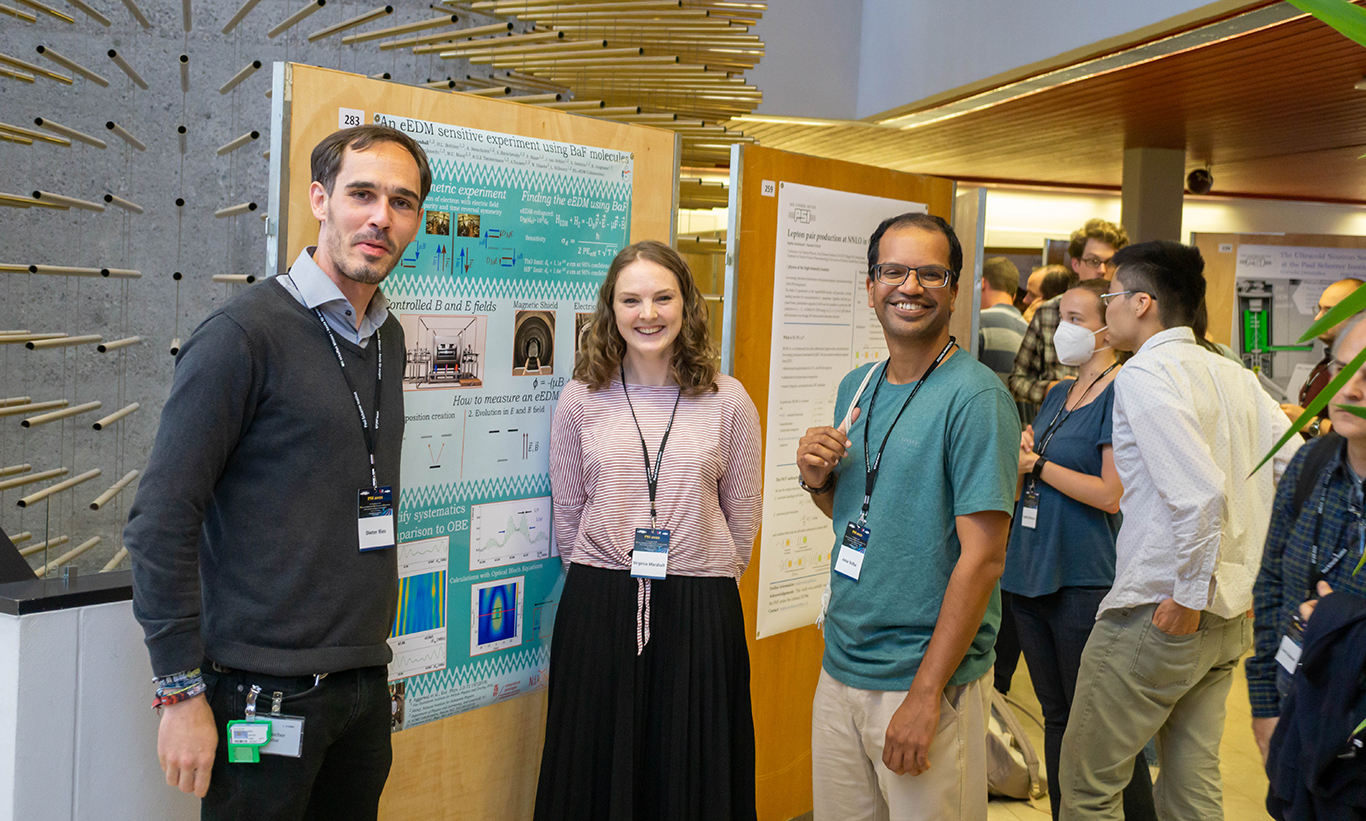
The triennial workshop “Physics of fundamental Symmetries and Interactions – PSI2022” took place for the sixth time at the Paul Scherrer Institut (PSI) in Switzerland from 17 to 22 October, bringing the worldwide fundamental symmetries community together. More than 190 participants including some 70 young scientists welcomed the close communication of an in-person meeting built around 35 invited and 25 contributed talks.
A central goal of the meeting series is to deepen relations between disciplines and scientists. This year, exceptionally, participants connected with the FIPs workshop at CERN on the second day of the conference, due to the common topics discussed.
With PSI’s leading high-intensity muon and pion beams, many topics in muon physics and lepton-flavour violation were highlighted. These covered rare muon decays (μ → e + γ, μ → 3e) and muon conversion (μ → e), muonic atoms and proton structure, and muon capture. Presentations covered complementary experimental efforts at J-PARC, Fermilab and PSI. The status of the muon g-2 measurement was reviewed from an experimental and theoretical perspective, where lattice-QCD calculations from 2021 and 2022 have intensified discussions around the tension with Standard Model expectations.
Fundamental physics using cold and ultracold neutrons was a second cornerstone of the programme. Searches for a neutron electric dipole moment (EDM) were discussed in contributions by collaborations from TRIUMF, LANL, SNS, ILL and PSI, complemented by presentations on searches for EDMs in atomic and molecular systems. Along with new results from neutron-beta-decay measurements, the puzzle of the neutron lifetime keeps the community busy, with improving “bottle” and “beam” measurements presently differing by more than 5 standard deviations. Several talks highlighted possible explanations via neutron oscillations into sterile or mirror states.
The current status of direct neutrino-mass measurements and future outlook down into the meV range was covered together with updates on searches for neutrinoless double-beta decay. An overview of the hunt for the unknown at the dark-matter frontier was presented together with new limits and plans from various searches. Ultraprecise atomic clocks were discussed allowing checks of general relativity and the Standard Model, and for searches beyond established theories. The final session covered the latest results from antiproton and antihydrogen experiments at CERN, demonstrating the outstanding precision achieved in CPT tests with these probes. The workshop was a great success and participants look forward to reconvening at PSI2025.
The 12th Higgs Hunting workshop, which took place in Paris and Orsay from 12 to14 September, presented an overview of recent and new results in Higgs-boson physics. The results painted an increasingly detailed picture of Higgs-boson properties, thanks to the many analyses now reporting results based on the full LHC Run 2 dataset, with an integrated luminosity of about 140 fb-1. Searches for phenomena beyond the Standard Model (BSM) were also presented.
Highlights included new results from CMS on decays of Higgs bosons to b quarks and to invisible final states, and a new limit from ATLAS on lepton-flavour violating decays of the Higgs boson. Events with two Higgs bosons in the final state were used to set limits on interactions involving three Higgs bosons and between two Higgs bosons and two weak vector bosons. All the results remain compatible with Standard Model expectations, except for a small number of intriguing tensions in some BSM searches, such as small excesses in a search for heavier partners of the Higgs boson decaying to W-boson pairs and in a search for resonances produced alongside a Z boson and decaying to a pair of Higgs bosons. These deviations from theory will be followed up by ATLAS and CMS in further analyses using Run 2 and Run 3 data.
This year’s workshop was special as the event marked the tenth anniversary of the Higgs-boson discovery in 2012. Two historical talks given by the former ATLAS and CMS spokespersons Peter Jenni (University of Freiburg & CERN) and Jim Virdee (Imperial College) highlighted the long-term efforts that laid the foundation for the Higgs-boson discovery in 2012.
The workshop also hosted an in-depth discussion on future accelerators and related detector R&D. It focused on future efforts in Europe, the US and Latin America, and featured presentations by Karl Jakobs (University of Freiburg and chair of the European Committee for Future Accelerators), Meenashi Narain (Brwon University and convener of the energy frontier group of the Snowmass process), Maria-Teresa Tova (National University of La Plata) and representative for the Latin American strategy effort) and Emmanuel Perez (CERN), who discussed recent improvements in physics analyses at future colliders.
Recent theory developments were also extensively covered, in particular recent developments in higher-order computations by Michael Spira (PSI), which highlighted the agreement between experimental results and predictions. A review of recent theory progress towards future colliders was also presented by Gauthier Durieux (CERN), while Carlos Wagner (Enrico Fermi Institute, & Kavli Institute for Cosmological Physics) discussed the new-physics that can be explored via precise measurements of Higgs-boson couplings. Finally, a “vision” presentation by Marcela Carena (Fermilab) highlighted new opportunities for the study of electroweak baryogenesis in relation to Higgs-boson measurements.
Many experimental sessions were held regarding recent results on a wide variety of topics, some which will be relevant in upcoming Run 3 measurements. This includes measurements related to potential CP-violating effects in the Higgs sector, as well as effective field theories (EFTs). This latter topic allows a general description of deviations from Standard Model predictions in Higgs-boson measurements and beyond, and much improved measurements in this direction are expected in Run 3. The search for Higgs-boson pair production was also an important focus at the Paris meeting. The latest Run 2 analyses showed greatly improved sensitivity compared to earlier rounds, and further improvements are expected in Run 3. While sensitivity to the Standard Model signal is not expected until the High-Luminosity LHC, these searches should set strong constraints on BSM effects in the Higgs sector.
Concluding talks were given by Fabio Maltoni (Louvain) and Giacinto Piacquadio (Stony Brook), and the next Higgs Hunting workshop will be held in Orsay and Paris from 11 to 13 September 2023.
To provide the best experiences, we use technologies like cookies to store and/or access device information. Consenting to these technologies will allow us to process data such as browsing behavior or unique IDs on this site. Not consenting or withdrawing consent, may adversely affect certain features and functions.
Functional
Always active
The technical storage or access is strictly necessary for the legitimate purpose of enabling the use of a specific service explicitly requested by the subscriber or user, or for the sole purpose of carrying out the transmission of a communication over an electronic communications network.
Preferences
The technical storage or access is necessary for the legitimate purpose of storing preferences that are not requested by the subscriber or user.
Statistics
The technical storage or access that is used exclusively for statistical purposes.The technical storage or access that is used exclusively for anonymous statistical purposes. Without a subpoena, voluntary compliance on the part of your Internet Service Provider, or additional records from a third party, information stored or retrieved for this purpose alone cannot usually be used to identify you.
Marketing
The technical storage or access is required to create user profiles to send advertising, or to track the user on a website or across several websites for similar marketing purposes.