Bluefors – leaderboard other pages

Topics

Introduction to Superstrings and M-Theory (2nd edn)

by Michio Kaku, Springer (Graduate Texts in Contemporary Physics) 038798589 1 (hbk $49.95).

31YZANC1K9L._SX313_BO1,204,203,200_

This edition of Kaku’s book, first published in 1988, ensures the continued availability of a valuable introduction to this field, already heralded in some quarters as the physics of the 21st century. Kaku is professor of theoretical physics at the City College of the City University of New York. A prolific and respected writer of popular science (“Visions: how science will revolutionize the 21st century and beyond”; “Hyperspace: a scientific odyssey through parallel universes, time warps and the tenth dimension”; “Beyond Einstein: the cosmic quest for the theory of the universe” (with Jennifer Trainer)), he is also the author of Quantum Field Theory: a Modern Introduction, and hosts a successful weekly radio science programme.

Accelerator Physics

by S Y Lee (Indiana University), World Scientific 981 02 3710 3 (pbk US$32/£22).

9789810237103-us

This is a general, introductory text to the, by now, rather wide field of accelerator physics. Circular and linear, low- and high-energy machines accelerating electrons, protons and ions are covered. Synchrotron motion, basic collective effects and synchrotron radiation are described as well.

The book can be strongly recommended for students specializing in accelerator physics, in particular those who appreciate a detailed, formal description of beam optics design and who are likely to use tracking or optics design programs. It should also be useful as a source of reference material for the specialist.

Readers interested in self-study and engineers working on aspects connected with accelerators will probably find the book rather formal, specialized and difficult to read.

Progress in accelerators was, and still is, to a large extent stimulated by the needs of nuclear and particle physicists for higher energies, intensities, luminosities, etc. There is relatively little on these subjects. The beam­beam effect is mentioned only briefly and there is no discussion of the definition, knowledge and optimization of beam parameters of interest to users of accelerators.

The 490 pages contain an impressive amount of material and many formulae. Additional details are often given as exercises for the student.

Major agreement made with China

cernnews2_6-99

Underlining the worldwide involvement in the programme at CERN’s LHC collider, a milestone agreement brings funding from Chinese bodies for the LHC CMS experiment.

Chinese physicists have long participated in CERN’s programme, notably in the L3 experiment. The new agreement includes the Chinese National Natural Science Foundation, the Institute of High Energy Physics (IHEP) in Beijing, and the universities of Peking and of Science and Technology in Hefei.

A major CMS contribution from China will be the endcap support “carts” for the magnet yoke, which will be made by Chinese industry. A protocol allowing production to begin was signed last year between CERN, acting on behalf of CMS, and the Chinese National Academy of Sciences.

The Chinese will also contribute detector parts, largely via a collaboration between IHEP and Fermilab. A similar collaboration involves Fermilab and the St Petersburg Nuclear Physics Institute in Russia. They will produce cathode strip chambers (CSCs) for the CMS muon-detection system. Fermilab will equip the other institutes with the raw materials and tooling to produce the 648 CSCs. The detector will cover more than 1300 sq. m.

Also covered by the new Chinese agreement is a project involving Peking University that will make a major contribution to resistive-plate chambers (RPCs) for the CMS muon-detection system in collaboration with other institutions, in particular from Italy. RPCs respond rapidly to passing particles and trigger the data acquisition system to read out the detector when interesting collisions occur.

China is also building electronics for the CMS muon detector through a collaboration between Chinese and Italian institutes.

A tale of three regions

cern1_6-99

When CERN was established in 1954 to provide European nations with forefront facilities for scientific research, its site was Meyin, a burgeoning satellite city near Geneva, and Switzerland was its sole host state.

In the 1960s, construction of the Intersecting Storage Rings (ISR) extended CERN’s site into France, but only in a limited sense. The land for the construction of the ISR was in France but was linked to the existing Swiss site and the boundary fence was simply extended. The only access to the French ISR territory was via the CERN main gate in Switzerland.

CERN extended into France in a major way with the construction of the 7 km SPS synchrotron in the early 1970s. Initially there were two CERNs: the original CERN I (including the ISR) on the Meyrin site and the new CERN II 3 km away in France at Prévessin. France also became a CERN host state.

Subsequent construction work for the underground 27 km LEP electron­positron collider and the LHC collider enlarged the footprint of CERN both in France and in Switzerland.

With staff levels currently just less than 3000, with some 1000 industrial support staff and about 7000 migratory researchers all over the world who visit periodically, CERN makes a big impact on the local region, simply for day-to-day needs like housing, schooling, shopping, transport and leisure.

In addition is the industrial impact ­ supplying the equipment and services that make CERN work. These contracts are now subject to strict rules that aim for a balanced return for all of CERN’s 19 member states,
and local concerns not to enjoy any particular advantage for purchasing requests and calls for tenders.

Impact on Geneva

During the first 15 years of CERN’s existence, Geneva and Switzerland were the laboratory’s front door. Geneva is a major city with its own commerce, banking, industry and university. The home of the international Red Cross since 1863, its importance increased after the First World War with the establishment of the headquarters of the League of Nations, which in 1946 became the European headquarters of the United Nations (UN) and led to the implantation of several major UN agencies in Geneva.

Throughout its history, Geneva has been a natural crossroads, and this is underlined today by a major airport with excellent links to all major European cities. While many airports are now constructed far from the towns they serve, every visitor to CERN is aware that the airport is only a few kilometres away.

In the 1960s, major international electronics and telecommunications specialists set up regional offices in Geneva. Although this was not directly because of CERN, the laboratory soon benefited. In the 1970s, Geneva established the ZIMEYSA (Zone industrielle Meyrin-Satigny) industrial park on CERN’s doorstep. Meyrin, the airport and the availability of land were the main factors behind this move, but the impressive vista of CERN across the valley undoubtedly helped to attract tenants.

The direct impact of CERN on Geneva is difficult to measure, but the spin-off benefits are huge, and the city is undoubtedly proud of its prestigious resident. On arrival in Geneva by road or by air, signs underline CERN’s presence.

cern2_6-99

CERN’s extension into France was in the pays de Gex. Cut off from the rest of France by the river Rhône and the Jura mountains, this area has always naturally looked towards Geneva, even though from 1815 Geneva became part of another country. The pays de Gex (département de l’Ain) remained largely rural until relatively recently, when the arrival of first the SPS and then LEP provided a new focus.

Building on these developments, the local authorities set up a new technology park, this time at CERN’s back door. Although a number of firms that had received CERN contracts came in, the authorities were conscious that CERN’s balanced return policy meant that these suppliers would not automatically benefit from increased business. Proximity to Geneva and its communications were the greater attraction.

Today some 60 companies employing some 1000 people work in this park. Only half of these have any relationship with CERN.

Neighbouring France – south of the Rhône

Looking at the map, the Geneva administrative area (canton) appears almost totally surrounded by France, joined to the rest of Switzerland by a neck of territory only a few kilometres wide. To the north of the Rhône, nearer CERN, the neighbouring French territory belongs to the pays de Gex. To the south, away from CERN, is the département of Haute Savoie. While the pays de Gex remained rural, Haute Savoie had a significant industrial tradition, with major towns and prestigious universities nearby at Chambery, Grenoble and Lyon.

An early development as a result of CERN was LAPP, the particle physics laboratory at Annecy, the administrative capital of Haute Savoie, which was set up to exploit both the proximity of CERN and the significant industrial and academic potential of the region. Annecy became home to university departments of the neighbouring département of Savoie.

Rising costs and a shortage of office space in Geneva led in the 1980s to the establishment of the Archamps Business Park in France, immediately south of the city, but from the start a university-level educational dimension and high technology were major features. However, on the other side of Geneva to CERN, the recent opening of a major Geneva ring road linking Haute Savoie with Geneva’s international airport has been a major improvement.

CERN regularly participates in several Archamps educational programmes. Although the impact of Archamps in Haute Savoie is hard to quantify, its concentration of computer expertise led to local secondary schools being prominent among the first to establish Internet use in France.

From Hiroshima to the Iceman

From Hiroshima to the Iceman: the Development and Applications of Accelerator Mass Spectrometry by Harry E Gove, Institute of Physics Publishing 07503 0557 6 (hbk £50/$99) 07503 05584 (pbk £15/$27).

books1_6-99

Invented some 20 years ago, accelerator mass spectrometry (AMS) is one of the newer success stories in the applications of particle accelerators. It provides a powerful, fast and reliable means of measuring long-lived radio-isotopes using only minute samples.

Radiocarbon-14, which has a half-life of 5730 years, was the first isotope to be measured this way, and AMS radiocarbon dating soon became a powerful tool for determining the age of organic material using small samples. Other isotopes are also suitable for AMS.

Radiocarbon dating was invented by Willard Libby in the 1940s and brought him the 1960 Nobel Prize for Chemistry. In its original form, radiocarbon dating counted the actual decays of residual carbon­14, requiring relatively large samples of material.

Jolted by news of carbon­14 measurements at a Berkeley cyclotron, Gove participated in pioneer AMS measurements at Rochester in 1977, which dramatically showed how the level of carbon­14 in commercial charcoal and fossil graphite is different, using milligram samples. It is usually no problem to take a milligram sample from even the most valuable relic.

Giving a reliable measurement of the age of a specimen can be vital input in archaeology, history and mineralogy, as well as being a focus of public interest. Such measurements can settle disputes and separate fact from myth.

One of the most spectacular AMS applications is the dating of the Turin Shroud, and Gove’s earlier book, Relic or Hoax?: Carbon Dating the Turin Shroud, is a scientific account of this work. Multiple AMS measurements gave the origin of the shroud material, widely believed to be of biblical origin, as AD 1325 ±33 years.

In his latest book, Gove casts the AMS net wider, describing the history and instrumentation of the technique, concentrating on electrostatic tandem accelerators, before turning to its application. The analysis examples, described in graphic detail, include radio-relics from Hiroshima and Nakasaki that provided new insights into the mechanisms of radiation damage; North American archaeological remains; modern radioactive waste; the Turin Shroud revisited; Egyptian mummies; “Oetzi”, the neolithic iceman discovered in 1991 in the Alps on the Austrian-Italian border; and the Dead Sea Scrolls.

For the dating of the Turin Shroud, one theory mentioned is that bacteria on cloth continue to ingest carbon­14 from the air, making the cloth look younger.

This is a fascinating account of a major particle accelerator application success by an enthusiastic scientist who played a major role in its development. Harry Gove contributed an article on AMS to the special July 1995 Applying the Accelerator issue of CERN Courier.

Making Physics: a Biography of Brookhaven National Laboratory

1946­1972 by Robert P Crease, University of Chicago Press 0 226 12017 1 (446pp $38/£30.50).

9780226120195

Crease calls this book a biography because he likens Brookhaven National Laboratory to a community, and a community lends itself to biographical treatment. Crease is a philosopher, but he has absorbed and is faithful to the ethos of the scientific community.

I have been at Brookhaven for 44 years but found much in this book that I did not know about the place. Crease had full access to the laboratory’s archives and had interviews with many of the personnel. I found the book fascinating and a good read. He recounts the history of the founding of Brookhaven; the drive by I I Rabi to obtain large physics instruments for the east of the US after the Second World War; the interactions with the Manhattan District of the US Army, which had built the atomic bombs; and the finally successful negotiations with the Federal Government for the establishment of the laboratory at the US Army’s Camp Upton site.

Brookhaven was the first civilian laboratory to have a reactor. Along with the reactor it was decided that accelerators would also be built there. The first two were a Van de Graaff and a 60 inch cyclotron. Both of these machines were built by commercial companies and neither worked properly until significantly altered by laboratory personnel. Rabi was insistent that a large synchrotron should be built at Brookhaven. In a compromise worked out with the funding agency and Berkeley, it was agreed that Brookhaven would build a 2­3 GeV machine and Berkeley a 8 GeV machine with Brookhaven to get the follow-on machine later.

After the Cosmotron was finished, the Brookhaven accelerator builders were informed that a delegation of accelerator builders from a new laboratory, called CERN (modelled to a considerable extent on Brookhaven), would be visiting with plans to build a machine more ambitious than the Cosmotron. Livingston felt that Brookhaven should do more than just show and tell, and organized a study group to brainstorm for improvements on the Cosmotron’s basic design. Crease narrates how this study group came up with the ideas for alternating gradient synchrotrons. When the CERN group arrived they were caught up in the excitement, changed their plans and resolved to build what became the PS. Brookhaven built the AGS, which came on line shortly after the PS.

Crease goes into considerable detail about the work done in particle physics, in nuclear physics (both at the reactors and the accelerators) and in solidstate physics. Brookhaven is a multidisciplinary laboratory, and while Crease’s emphasis is on physics, there is also information about some of the work in other disciplines, such as medicine, chemistry, instrumentation and biology. He cites the development of Tc99 as used in nuclear medicine. It is the predominantly used radionuclide in the several million nuclear-medicine procedures performed today.

Other fruitful developments include the first treatment for Parkinson’s disease and the effect of salt on hypertension. Ray Davis’s work on the detection of solar neutrinos was done in the chemistry department with help from the instrumentation department.

Science is made by human beings. Crease emphasizes the human side of Brookhaven, with miniportraits of many of the prominent personalities associated with the laboratory. He describes in some detail its administration, the interaction of scientists with the administration and how scientific policy is set. He describes interactions among strong-willed personalities and how some of this impacts the research done. He explains the science well and made remarkably few errors.

The seeds of East-West collaboration

cernnews1_5-99

It is no accident that Russia has become a major partner in the CERN programme. In 1967 a historic agreement between CERN and the Institute for High Energy Physics (IHEP) in Protvino, Russia, was signed, under which CERN equipment and expertise was provided for the 70 GeV IHEP machine that was soon to come on line as the world’s highest-energy synchrotron. This agreement led to continual fruitful collaboration between CERN and IHEP in particular, and it opened the door to wider East­West collaboration in general.

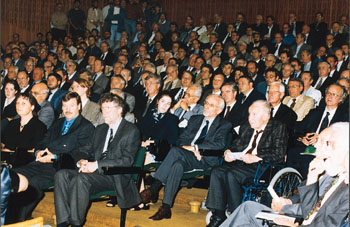
In a short ceremony at CERN on 18 March, IHEP director academician A A Logunov bestowed the title of IHEP professor honoris causa on CERN personalities who played important roles in this initial exchange and in its subsequent consolidation.

A wide span of physics

carlo1_5-99

CERN owes a tremendous debt to Carlo Rubbia. His vision foresaw a gleaming new SPS proton synchrotron transformed into a proton­ antiproton collider, the springboard for discovering the W and Z particles, the carriers of the weak force. With this discovery, CERN moved to the centre of the world physics stage. At a special seminar at CERN on 16 March, director-general Luciano Maiani pointed out that Rubbia’s vision brought the W and Z particles into the reach of physics much earlier than would otherwise have been possible.

The birthday seminar focused on science, but CERN’s debt to Rubbia extends much wider. When he took over from Herwig Schopper as CERN director-general on 1 January 1989, the LEP electron­positron collider had not yet come into operation, research and development work on superconducting magnets for the proposed LHC proton collider was just beginning, and CERN had 14 Member States: Austria, Belgium, Denmark, France, the German Federal Republic, Greece, Italy, the Netherlands, Norway, Portugal, Spain, Sweden, Switzerland and the UK.

The LHC road had already been chosen in 1986 as the main thrust of CERN’s scientific advance by the CERN Long Range Planning Committee, chaired by Rubbia. The route to higher electron­positron collision energies through a purpose-built linear collider (CLIC; CERN Linear Collider) was also acknowledged at that time.

Under Rubbia, the LHC moved from a proposal to a plan, with orchestrated research and development in CERN, other laboratories and industry. In parallel, the LHC’s proposed research programme emerged from a vigorous and carefully managed series of presentations throughout the world.

To safeguard CERN’s future and reflect the growing internationalism of high-energy physics, Rubbia sought to extend CERN’s traditional role as a Western European venture by attracting new member states in Central and Eastern Europe, and by negotiating valuable new working agreements with scientific partners further afield.

Finland, Poland, Hungary, the Czech Republic and Slovakia became CERN member states, while Germany grew to include the former German Democratic Republic, and CERN’s relations with other traditional close collaborating nations, notably Russia and Israel, were put on a new footing.

Rubbia worked tirelessly to ensure that LHC plans moved steadily forward during a global recession, when money was extremely tight and governments were not looking at pure science as an investment for the future.

A life in science

Scientific research has dominated Rubbia’s life, and the seminar emphasized this side of his achievement, which was for a long time concentrated around weak interactions. Rubbia was also a transatlantic physicist, carrying out research at major US research centres as well as at every CERN machine (prior to LEP).

The seminar proceedings were introduced by 1992 Nobel prizewinner Georges Charpak, who pointed to Rubbia’s latest research interests around emerging energy technology as an example of his continual quest for innovation and his flair for new ideas. Innovative instrumentation has been a theme throughout Rubbia’s career.

Val Fitch of Princeton, who shared the 1980 Nobel Prize with Jim Cronin for their discovery of CP violation, described Rubbia’s contributions in this area of physics in the period 1966 to 1973. Fitch displayed a list of 20 physics papers and 4 instrumentation papers with Rubbia as an author, and which had helped to pin down vital parameters in these difficult measurements.

Klaus Winter of CERN looked at the neutrino sector. Rubbia was convinced that neutrino beams were the route to the discovery of the neutral currents ­the key to electroweak unification. In the early 1970s, he and his colleagues convinced the new Fermilab to make a major commitment to this physics. The experiment’s all electronic detectors bore the unmistakable stamp of Rubbia ingenuity.

After a long period away from the neutrino stage, the excitement around neutrino oscillations tempted Rubbia back, this time with the ICARUS neutrino detector at the Italian Gran Sasso underground laboratory. The innovative liquid argon time-projection chamber again bears the trademark of Rubbia innovation.

Continual innovation

Turning away from the experimental side, Gerard ‘t Hooft of Utrecht sketched the development of the theoretical infrastructure that led to electroweak unification and the Standard Model, which Rubbia’s 1983 discovery dramatically confirmed. ‘t Hooft remarked that new theoretical ideas in and around superstrings have predictions that are very difficult to verify by conventional experiments.

Alan Astbury of TRIUMF, Vancouver, a close collaborator of Carlo Rubbia for the UA1 experiment at CERN’s proton­antiproton collider, covered the historic period from the late 1970s that led to the 1983 discovery of the W and the Z particles. This physics was a continual close race between the UA1 and UA2 experiments. Astbury pointed out how UA1 had been galvanized into action in late 1982 by having lost the race to discover the tightly confined “jets” of particles, which signal quark­gluon interactions deep inside the proton­antiproton collisions.

After his mandate as CERN director-general, Rubbia made a dramatic return to the physics stage, this time through his ideas for harnessing accelerators for energy production via nuclear fission with a minimum of nuclear waste and for the destruction of existing waste by transmutation.

Arthur Kerman was billed as covering this phase of Rubbia’s career, but began by pointing out the initial role Rubbia had played in recommending the US Superconducting Supercollider. Kerman described the neutron behaviour that opens up the possibility of controlled fission reactions, whether by orthodox absorbers or via an accelerator in tandem with the reactor. The latter possibility had long been recognized, but only recently has accelerator performance begun to approach the necessary levels.

Carlo Rubbia characteristically used the occasion to look forward rather than back, underlining how little we know about the universe. With much of the world around us composed of invisible but all-pervading “dark matter”, innovative instrumentation is still called for.

Finally director-general Luciano Maiani underlined the breadth of Carlo Rubbia’s contributions, both to CERN and to physics.

Echoes of a report

nuclear1_5-99

The Organization for Economic Cooperation and Development (OECD), through its Megascience Forum, is making its wisdom felt in scientific circles, acting as a valuable catalyst for future developments and as a focus for international collaboration in sectors where this is not yet centrally organized.

Founded in 1960, the OECD is a grouping of nations with advanced economies, its aim being to improve economic and social conditions in its own sector, stimulating relations with developing countries and generally boosting world trade.

Megascience Forum

Its initial concerns were economic and financial, but the roles of science and technology have been identified as being of major importance, hence the creation of the Megascience Forum. Its latest exercise is a report by a special working group that was set up in 1996 under Bernard Frois of Saclay to look into nuclear physics and its worldwide implications.

Nuclear physics is pursued in all OECD member countries (and many others) with a global annual investment of about $1 billion. Nuclear physics has a major impact on technology and society: energy production, biological research, medical imaging, cancer treatment, semiconductor manufacturing, materials science, food processing, environmental monitoring and protection, preservation of art works, archaeology and anthropology.

As scientists probe ever deeper into the structure of nuclear matter, they require larger and increasingly complex facilities and equipment. In most cases these are unique, dedicated facilities, distinct from those of particle physics. The long lead times and considerable resources needed call for strategic decision-making and long-range planning, with a careful consideration of the scientific, technological, economic and social benefits of nuclear research. These requirements are especially critical now, when research budgets are under pressure.

The goals of the Megascience Working Group were to provide an international forum for the exchange of information on priorities, programmes and plans, and to explore opportunities for international collaboration during the next 10 to 20 years.

Particular attention was given to the role of large facilities and programmes that would benefit from international co-operation:

  • to examine the policies and practices that govern access to large facilities,
    and to assess the impact of current and future trends on the users and providers of international facilities;
  • to explore specific opportunities for collaboration in research and development related to nuclear physics facilities,
    detectors and associated technologies.
nuclear2_5-99

Scientific objectives and applications

The fundamental challenges of nuclear physics are not the same as those of particle physics.

What are the constituents of matter, how do they interact and how do they form nuclei?

For nuclear physics, the aim is to understand the properties of nuclear particles from those of quarks and gluons, to solve the nuclear many-body problem and to predict the properties of large nuclei from the known interaction of protons and neutrons. These formidable theoretical problems may become tractable using high -power computers and results from new generations of electron and hadron beam facilities.

What are the limits of nuclear stability?

The early evolution of the universe was determined by the aggregation of quarks and gluons to form hadrons and nuclei, and the synthesis of heavier elements through nuclear reactions. The stability of nuclei arises from a delicate balance between the nuclear, electromagnetic and weak forces in the nuclear medium.

Some very neutron-rich nuclei have recently been found to have extended distributions of dilute, nearly pure neutron matter that are of much theoretical interest and thus a subject of intense investigation. The direct investigation of nuclear structure far from stability will be made possible through the production of intense beams of rare and short-lived isotopes (radioactive beams).

What happens to nuclear matter at extreme pressures and temperatures?

Nuclei can be compared to liquid drops of nuclear matter. In the collision between two nuclei at high energy, the pressure and temperature of nuclear matter are increased. Is there a transition in the nature of nuclear matter? Is there formation of a plasma of elementary constituents in ultrahigh-energy collisions of heavy nuclei? The search for these phase transitions via heavy-ion collision experiments will be a subject of intense experimental and theoretical work during the next decade.

The liquid­gas phase transition is studied at existing energies. The “deconfinement” transition to a quark­gluon plasma will be investigated in new regimes at Brookhaven’s RHIC and CERN’s LHC colliders. The early universe presumably underwent this phase transition within the first few millionths of a second following the Big Bang.

Such phenomena might have a bearing on important aspects of cosmology, such as nucleosynthesis, dark matter and the large-scale structure of the universe. In astrophysics, the dynamics of supernova explosions and the stability of neutron stars depend on the compressibility and thus the equation of state of nuclear matter.

What is the origin of the chemical elements in the cosmos?

Many elements are formed in stellar explosions via very neutron-rich or, under different circumstances, very proton-rich nuclei. The properties of both routes are largely unknown. While element formation inside stars can be sketched by extrapolating model calculations, there is a critical need for experimental data to provide benchmark tests for these predictions or input to numerical simulations.

Nuclear methods are widely used in materials research and manufacturing. Some examples are non-destructive testing via computerized tomography or neutron radiography, the production of densely packed microchips by ion implantation and the sterilization of heat-sensitive materials by ionizing radiation.

Materials analysis using nuclear reactions and Rutherford scattering is a major research tool for surface analysis, catalysis, semiconductor manufacturing, archaeology, etc.

Particle beams from research accelerators are used to analyse the damage to microelectronic circuits that is caused by cosmic radiation or natural radioactivity ­ an issue of increasing importance for the further miniaturization of electronics.

Ultrasensitive accelerator mass spectrometry plays an increasing role in environmental research ­ the study of climatic change, global air and water circulation patterns, stratospheric ozone depletion, and the monitoring of air and water quality. Nuclear technology is indispensable in the monitoring of existing radioactive waste repositories.

For energy production, nuclear fission reactors currently provide about 17% of the world’s electricity. Nuclear techniques have an impact on other forms of energy production, including the exploration and utilization of oil reserves. Neutron techniques are routinely used to monitor the chemical composition of coal, coal preparation plants and the determination of the sulphur, water, ash and energy content of coal. For the long term, thermonuclear fusion still holds the promise of a virtually inexhaustible supply of clean energy and is an area of active research and development.

Nuclear techniques are important in medicine and biology. Radioactive isotopes produced by accelerators and nuclear reactors are widely used for treatment and diagnosis, and also in biomedical research.

In the wide-ranging applications sector, the working group focused on three potentially promising topics: the accelerator-driven transmutation of nuclear wastes, medical imaging and cancer therapy.

Copenhagen interpretation

theatre1_5-99

The play Copenhagen shows that physics, in the hands of talented British playwright and author Michael Frayn, can be entertainment.

However, few theatregoers are pulled to the box office by the promise of an evening about physics: it is Frayn’s name that packs them in. With an International Emmy Award in 1990, several Best Comedy Awards and Play of the Year, audiences know that he delivers the goods.

In the 1998 harvest of theatre awards, Copenhagen was judged Best Play by the London Evening Standard and Best New Play by the Critics’ Circle, and was nominated for a 1999 Olivier Award.

It is stark theatre ­no scenery, three chairs as the only props and a cast of three: Neils Bohr, his wife Margrethe and Werner Heisenberg on stage for the entire performance.

The focus of the “action” is a recreation of what happened in 1941 when Heisenberg went to Copenhagen to meet Bohr. Shortly afterwards, Bohr fled to Sweden and then the UK, eventually turning up in Los Alamos, where he became a father-figure for the Manhattan project.

Heisenberg played an influential role in the much more modest German wartime effort. Did they exchange physics information in Copenhagen? Did they try to influence each other in any other way? Suspecting that Bohr was in contact with the Allies, did Heisenberg try to dupe them by giving Bohr bad information? Did Bohr try to dupe the Germans by fooling Heisenberg? Who knows? Nobody, but Frayn tries to guess.

Rather than a scientific “whodunit?”, the play is more of a “who did what?, with accusations and counter accusations coming from all three sides. As well as the wartime nuclear fission developments, in the second half of the play the “plot” overflows into basic physics for good measure.

Margrethe (admirably depicted by Sara Kestelman) is portrayed as omniscient. Why did Frayn not depict instead Carl von Weizsäcker, who accompanied Heisenberg to Copenhagen and whose pronouncements on physics would have been more authoritative than those of Mrs Bohr? Probably because the idea is to recreate what happened when Heisenberg went to talk with Bohr at his house, not in his physics institute. Whatever else was on his mind in 1941, Heisenberg cared deeply about Bohr.

David Burke’s Bohr is visually evocative. In the Bohr­Heisenberg stage duel, both characters are portrayed as strong and assertive in their dialogue, but in real life their assertiveness and obstinacy lay deeper than their oral skills.

For such a stark presentation, director Michael Blakemore and lighting designer Mark Henderson have pulled out all of the stops.

Frayn says that his interest was whetted by reading Thomas Powers’ book Heisenberg’s War and David Cassidy’s biography of Heisenberg, Uncertainty.

Science communication is still in its infancy, but full marks should be awarded to Frayn for making compelling theatre out of physics. He deserves special recognition for such a heroic undertaking. The result is certainly riveting and accurate, although scientific nit-pickers will occasionally wince. In places the physics is painted too thickly, blinding the audience with science. But that is by the way.

bright-rec iop pub iop-science physcis connect