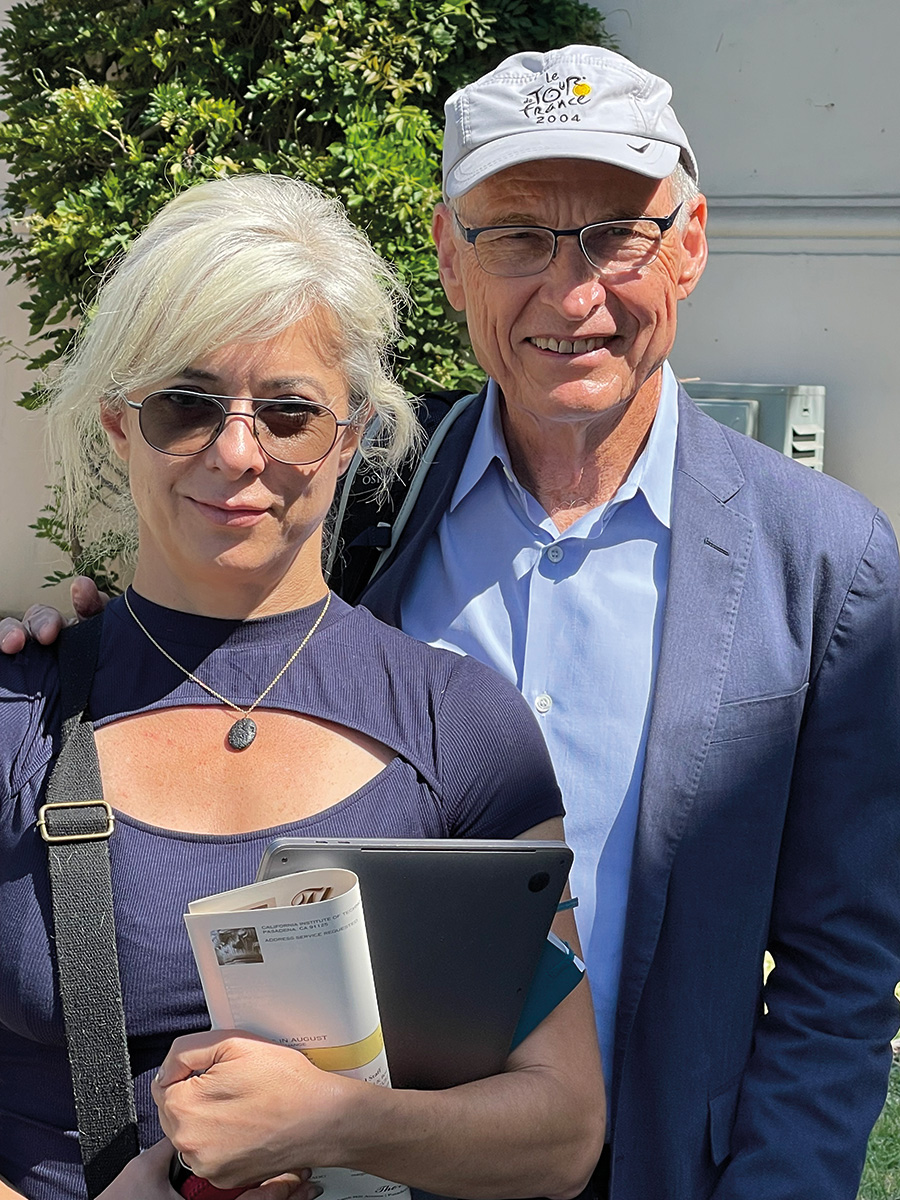
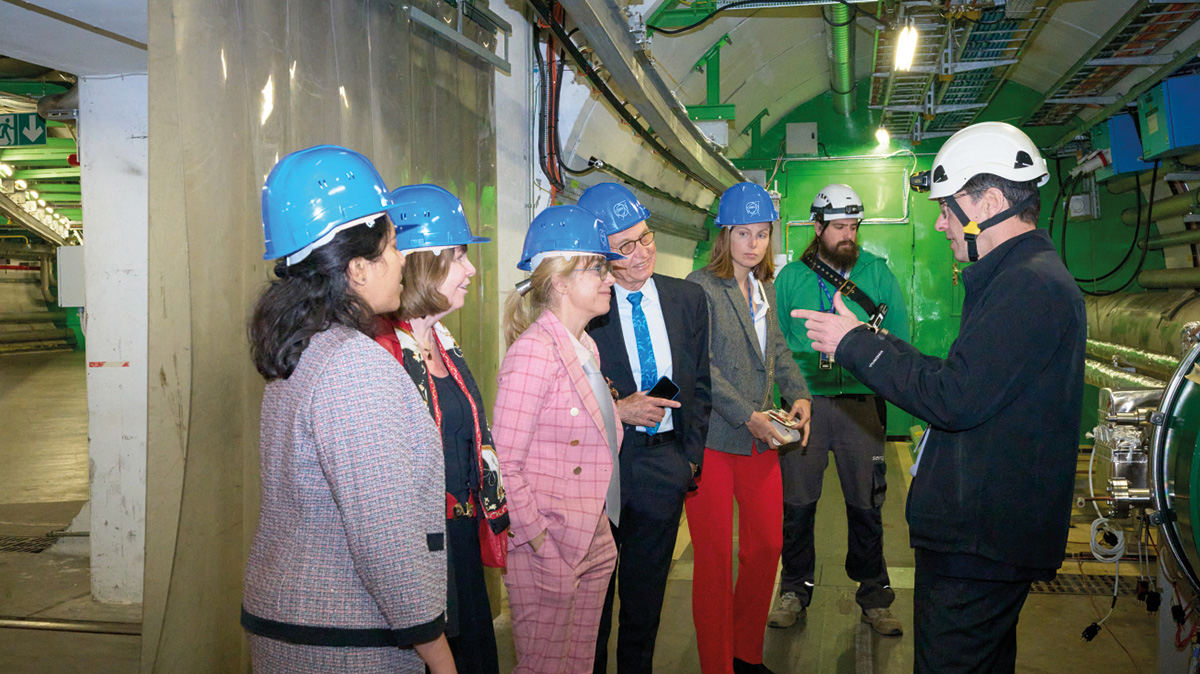
It was with deep sadness we learned that Roger Bailey, who played a key role in the operation of CERN’s accelerators, passed away on 1 June while mountain biking in Valais, Switzerland. He was 69.
Roger began his career with a doctorate in experimental particle physics from the University of Sheffield in 1979, going on to a postdoctoral position at the Rutherford Appleton Laboratory until 1983. Throughout this time, he worked on experiments at CERN’s Super Proton Synchrotron (SPS) and was based at CERN from 1977. In 1983 he joined the SPS operations group, where he was responsible for accelerator operations until 1989. Roger then moved to the Large Electron Positron collider (LEP), coordinating the team’s efforts through the commissioning phase and subsequent operation, and became operations group leader in the late 1990s.
After LEP shut down in 2000, Roger became progressively more involved in the Large Hadron Collider (LHC), planning and building the team for commissioning with beam. He then took a leading role in the LHC’s early operation, helping to push the LHC’s performance to Higgs-discovery levels before becoming director of the CERN Accelerator School, sharing his wealth of experience and inspiring new generations of accelerator physicists.
Those of us who worked with Rog invariably counted him as a friend: it made perfect sense, given his calm confidence, his kindness and his generosity of spirit. He was straightforward but never outspoken and his well-developed common sense and pragmatism were combined with a subtle and wicked deadpan sense of humour. We had a lot of fun over the years in what were amazing times for CERN. Looking back, things he said, and did, can still make us chuckle, even in the sadness of his untimely passing. Rog had a passionate, playful eye for life’s potential and he wasn’t shy. There was an adventurous spirit at work, be it in the mountains or the streets of New York, Berlin or Chicago. His specialities were tracking down music and talking amiably to anyone.
During a service to celebrate Roger’s life on 16 June, a poem of his called It’s a Wrap was read by his daughter Ellie, revealing a physicist’s philosophical view on life and the universe. Two of his favourite quotes were on the order of service: Mae West’s “You only live once, but if you do it right, once is enough” and Einstein’s “Our death is not an end if we can live on in our children and the younger generation. For they are us, our bodies are only wilted leaves on the tree of life.” Another, by Hunter S Thompson, was mentioned in a homage given by his son, Rob: “Life should not be a journey to the grave with the intention of arriving safely in a pretty and well-preserved body, but rather to skid in broadside in a cloud of smoke, thoroughly used up, totally worn out, and loudly proclaiming “Wow! What a Ride!”
Jack Heron always liked the idea of being an inventor. After completing a master’s in electronics engineering at Durham University, he spent a year in Bangalore, India as part of the “Engineers Without Borders” programme, where he designed solar-powered poverty-alleviation solutions in unelectrified slums. This sparked an interest in renewable energy, and he completed a PhD on smart grid techniques in 2020. With a passion for advanced technology and engineering at the peak of performance, he then joined the “digital twin” R&D programme of international defence company Babcock, dedicated to fault-prediction for defence assets in land, sea and air.
“The military is extremely interested in autonomous vehicles,” explains Jack. “But removing the driver from, say, a fleet of tanks, increases the number of breakdowns: many maintenance checks are triggered by the driver noticing, for example, a ‘funny noise on start-up’, or ‘a smell of oil in the cabin’.” Jack worked on trying to replicate this intuition by using very early signs in sensor signals. Such a capability permits high confidence in mission success, he adds. “It also ensures that during a mission, if circumstances change, dynamic asset information is available for reconfiguration.”
Working in defence was “exciting and fast- paced” and enabled Jack to see his research put to practical use – he got to drive a tank and attend firing tests on a naval frigate. “It’s especially interesting because the world of defence is something most people don’t have visibility on. Modern warfare is constantly evolving based on technology, but also politics and current affairs, and being on the cusp of that is really fascinating.” It also left him with a wealth of transferrable skills: “Defence is a high-performance world where product failure is not an option. This is hardcoded into the organisation from the bottom up.”
Back to his roots
Growing up in Geneva, CERN always had a mythical status for Jack as the epitome of science and exploration. In 2022 he applied for a senior fellowship. “Just getting interviewed for this fellowship was a huge moment for me,” he says. “I was lucky enough to get interviewed in person, and when I arrived I got a visitor pass with the CERN-logo lanyards attached. Even if I didn’t get the job I was going to frame it, just to remember being interviewed at CERN!”
I love the idea of working on the frontiers of science and human understanding
Jack now works on the “availability challenge” for the proposed Future Circular Collider FCC-ee. Availability is the percentage of scheduled physics days the machine is able to deliver beam, (i.e. is not down for repair). To meet physics goals, this must be 80%. The LHC – the world’s largest and most complex accelerator, but still a factor three smaller and simpler than the FCC – had an availability of 77% during Run 2. “Modern-day energy-frontier particle colliders aren’t built to the availabilities we would need to succeed with the FCC, and that’s without consideringadditional technical challenges,” notes Jack. His research aims to break down this problem system by system and find solutions, beginning with the radio frequency (RF).
On the back of an envelope, he says, the statistics are a concern: “The LHC has 16 superconducting RF cavities, which trip about once every five days. If we scale this up to FCC-ee numbers (136 cavities for the Z-pole energy mode and 1352 for the tt threshold), this becomes problematic. Orders of magnitude greater reliability is required, and that itself is a defining technical challenge.
Jack’s background in defence prepared him well for this task: “Both are systems that cannot afford to fail, and therefore have extremely tight reliability requirements. One hour of down time in the LHC is extremely costly, and the FCC will be no different.”
Mirroring what he did at Babcock, one solution could be fault prediction. Others are robot maintenance, and various hardware solutions to make the RF circuit more reliable. “Generally speaking, I love the idea of working on the frontiers of science and human understanding. I find this exploration extremely exciting, and I’m delighted to be a part of it.”
BSBF 2024 is a business oriented congress which congregates the main European Research Infrastructures, focused on technology and with the aim to be the main meeting point between Research Infrastructures and industry.
This will be the third edition of the event after the success of the previous editions in Copenhagen and Granada, where more than 1,000 participants from more than 500 organisations and 29 countries gathered together to discuss the future prospects of the Big Science Market.
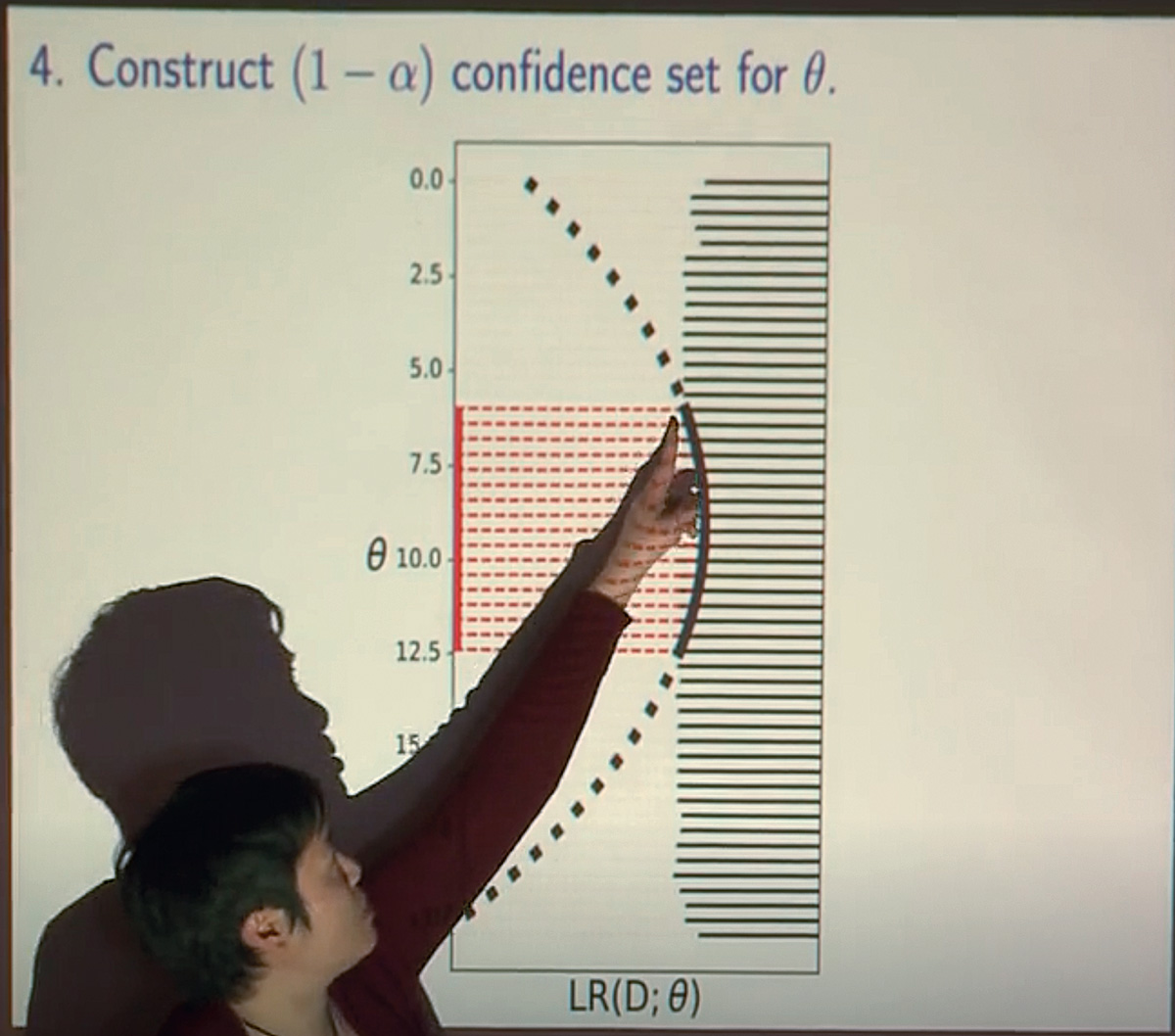
The PHYSTAT series of seminars and workshops provides a unique meeting ground for physicists and statisticians. The latest in-person meeting, after previously being postponed due to COVID, covered the field of systematic errors (sometimes known as nuisance parameters), which are becoming increasingly important in particle physics as larger datasets reduce statistical errors in many analysis channels. Taking place from 23 to 28 April at the Banff International Research Station (BIRS) in the Canadian Rockies, the workshop attracted 42 delegates working not only on the LHC experiments but also on neutrino physics, cosmic-ray detectors and astrophysics.
The organisers had assigned half of the time to discussions, and that time was used. Information flowed in both directions: physicists learned about the Wasserstein distance and statisticians learned about jet energy scales. The dialogue was constructive and positive – we have moved on from the “Frequentist versus Bayesian” days and now everyone is happy to use both – and the discussions continued during coffee, dinner and hikes up the nearby snow-covered mountains.
Our understanding of traditional problems continues to grow. The “signal plus background” problem always has new features to surprise us, unfolding continues to present challenges, and it seems we always have more to learn about simple concepts like errors and significance. There were also ideas that were new to many of us. Optimal transport and the Monge problem provide a range of tools whose use is only beginning to be appreciated, while neural networks and other machine-learning techniques can be used to help find anomalies and understand uncertainties. The similarities and differences between marginalisation and profiling require exploration, and we probably need to go beyond the asymptotic formulae more often than we do in practice.
Another “Banff challenge”, the third in a sequence, was set by Tom Junk of Fermilab. The first two had a big impact on the community and statistical practice. This time Tom provided simulated data for which contestants had to find the signal and background sizes, using samples with several systematic uncertainties – these uncertainties were unspecified, but dark hints were dropped. It’s an open competition and anyone can try for the glory of winning the challenge.
Collaborations were visibly forming during the latest PHYSTAT event, and results will be appearing in the next few months, not only in papers but in practical procedures and software that will be adopted and used in the front line of experimental research.
This and other PHYSTAT activities continue, with frequent seminars and several workshops (zoom, in-person and hybrid) in the planning stage.
About 350 physicists attended the 11th edition of the Large Hadron Collider Physics (LHCP) conference in Belgrade, Serbia from 22 to 26 May. The first-in person edition since 2019, the conference triggered productive discussions between experimentalists and theorists across the full LHC physics programme. It also addressed the latest progress of the High-Luminosity LHC upgrades and future-collider developments, in addition to outreach, diversity and education. The conference took place in parallel with the successful restart of LHC Run 3, and saw about 40 new results released for the first time.
The initial physics results from the Run 3 dataset collected in 2022 by ATLAS and CMS were shown, featuring the first measurement of the Higgs-boson production cross-section by ATLAS at 13.6 TeV. Clearly the Run 2 dataset is still a gold mine for the LHC experiments. The programme of precision measurements of Higgs-boson properties is continuing with improved accuracy from the full Run 2 dataset. In particular, ATLAS and CMS reported a new combined result targeting the rare decay H → Zγ, for which they found evidence at the level of 3.4σ and a measured rate slightly higher but comparable to that predicted by the Standard Model.
Innovative signatures
Searches for physics beyond the Standard Model (SM) remains a very active field of research at the LHC, with many innovative signatures explored, including those of long-lived particles. Some of these searches use new anomaly-detection techniques and explore potential lower-production cross sections. A new search of leptoquarks by CMS exploiting the leptonic tau content of the proton was reported, while ATLAS reported a search for stau production in supersymmetry models with much improved sensitivity. Many other searches were also presented, and while a few low-level excesses exist, more data will be required to check if these are statistical fluctuations or not.
The SM is under intense scrutiny but is still very successful at the high-energy frontier. A recent re-analysis of the W-boson mass by ATLAS with the 7 TeV dataset shows good agreement with SM predictions, unlike the CDF result released in 2022. Validating the model used for the ATLAS W-mass measurement, new precise measurements of the W and Z bosons’ transverse momentum distributions were reported by ATLAS using Run 2 data collected under lower pileup conditions. Vector-boson scattering processes are an important probe of the electroweak symmetry breaking mechanism, and most such processes are now observed at the LHC.
Exploring the top-quark sector, many recent results focused on rare top-production processes. Four-top production was observed recently by ATLAS and CMS. First evidence for the rare tWZ production mode was shown by CMS at LHCP 2023. Some of these rare production modes are seen with rates somewhat higher than predicted, and more data will be required to conclude if the differences are significant. Top production is also used to investigate more exotic scenarios. A new CMS result, measuring the tt– production cross section as a function of sidereal time, was reported. No indication of Lorentz invariance violation is observed.
Presentations covered the broad spectrum of physics at the LHC brilliantly
On the flavour-physics side, LHCb reported a new precise measurement of CP violation in the “golden” B → J/ψ Ks decay, with the most precise extraction of the beta angle of the CKM quark-mixing matrix (see p16). Recent LHCb results on the flavour “anomalies” no longer show an indication for lepton universality violation in B → Ke+e– compared to B → Kμ+μ– decay rates, but some puzzles remain and there is still some tension in the tau-to-muon ratio in the tree-level decays B → B(*)τ(µ)ν. Lepton-flavour violation is investigated in a new CMS result searching for the forbidden τ→ 3µ decays, where an upper limit close to the Belle result was reported.
Characterisation of the quark–gluon plasma is actively studied using PbPb collision data. New results from ALICE regarding investigations of jet-quenching properties as well as charm fragmentation studies were shown at the conference.
Several theory presentations highlighted recent progress in SM predictions for a wide range of processes including the electroweak sector, top-quark and Higgs-boson productions, as well as linking LHC physics to lattice QCD computations – work that is vital to fully exploit the physics potential of the LHC. Open questions in the various sectors were summarised and prospects for new-physics searches in Run 3, including those related to the Higgs-boson sector, were discussed. Links between LHC physics and dark matter were also highlighted, with examples of light dark-matter models and feebly interacting particles. Effective field theories, which are key tools to probe new physics in a generic way, were described with emphasis on the complementarity with searches targeting specific models.
Overall, the presentations covered the broad spectrum of physics at the LHC brilliantly. Future data, including from the High-Luminosity LHC phase, should allow physicists to continue to address many of the field’s open questions. Next year’s LHCP conference will be held at Northeastern University in Boston.
The Forward Physics Facility (FPF) is a proposed new facility to operate concurrently with the High-Luminosity LHC, housing several new experiments on the ATLAS collision axis. The FPF offers a broad, far-reaching physics programme ranging from neutrino, QCD and hadron-structure studies to beyond-the-Standard Model (BSM) searches. The project, which is being studied within the Physics Beyond Colliders initiative, would exploit the pre-existing HL-LHC beams and thus have minimal energy-consumption requirements.
On 8 and 9 June, the 6th workshop on the Forward Physics Facility was held at CERN and online. Attracting about 160 participants, the workshop was organised in sessions focusing on the facility design, the proposed experiments and physics studies, leaving plenty of time for discussion about the next steps.
Groundbreaking
Regarding the facility itself, CERN civil-engineering experts presented its overall design: a 65 m-long, 10 m-high/wide cavern connected to the surface via an 88 m-deep shaft. The facility is located 600 m from the ATLAS collision point, in the SM18 area of CERN. A workshop highlight was the first results from a site investigation study, whereby a 20 cm-diameter core was taken at the proposed location of the FPF shaft to a depth of 100 m. The initial analysis of the core showed that the geological conditions are positive for work in this area. Other encouraging studies towards confirming the FPF feasibility were FLUKA simulations of the expected muon flux in the cavern (the main background for the experiments), the expected radiation level (shown to allow people to enter the cavern during LHC operations with various restrictions), and the possible effect on beam operations of the excavation works. One area where more work is required concerns the possible need to install a sweeper magnet in the LHC tunnel between ATLAS and the FPF to reduce the muon backgrounds.
Currently there are five proposed experiments to be installed in the FPF: FASER2 (to search for decaying long-lived particles); FASERν2 and AdvSND (dedicated neutrino detectors covering complementary rapidity regions); FLArE (a liquid-argon time projection chamber for neutrino physics and light dark-matter searches); and FORMOSA (a scintillator-based detector to search for milli-charged particles). The three neutrino detectors offer complementary designs to exploit the huge number of TeV energy neutrinos of all flavours that would be produced in such a forward-physics configuration. Four of these have smaller pathfinder detectors, FASER(ν), SND@LHC and milliQan that are already operating during LHC Run 3. First results from these pathfinder experiments were presented at the CERN workshop, including the first ever direct observation of collider neutrinos by FASER and SND@LHC, which provide a key proof of principle for the FPF. The latest conceptual design and expected performance of the FPF experiments were presented. Furthermore, first ideas on models to fund these experiments are in place and were discussed at the workshop.
In the past year, much progress has been made in quantifying the physics case of the FPF. It effectively extends the LHC with a “neutrino–ion collider’’ with complementary reach to the Electron–Ion Collider under construction in the US. The large number of high-energy neutrino interactions that will be observed at the FPF allows detailed studies of deep inelastic scattering to constrain proton and nuclear parton distribution functions (PDFs). Dedicated projections of the FPF reveal that uncertainties in light-quark PDFs could be reduced by up to a factor of two or even more compared to current models, leading to improved HL-LHC predictions for key measurements such as the W-boson mass.
In the past year, much progress has been made in quantifying the physics case of the FPF
High-energy electrons and tau neutrinos at the FPF predominantly arise from forward charm production. This is initiated by gluon–gluon scattering involving very low and high momentum fractions, with the former reaching down to Bjorken-x values of 10–7 – beyond the range of any other experiment. The same FPF measurements of forward charm production are relevant for testing different models of QCD at small-x, which would be instrumental for Higgs production at the proposed Future Circular Collider (FCC-hh). This improved modeling of forward charm production is also essential for understanding the backgrounds to diffuse astrophysics neutrinos at telescopes such as IceCube and KM3NeT. In addition, measurements of the ratio of electron-to-muon neutrinos at the FPF probe forward kaon-to-pion production ratios that could explain the so-called muon puzzle (a deficit in muons in simulations compared to measurements), affecting cosmic-ray experiments.
The FPF experiments would also be able to probe a host of BSM scenarios in uncharted regions of parameter space, such as dark-matter portals, dark Higgs bosons and heavy neutral leptons. Furthermore, experiments at the FPF will be sensitive to the scattering of light dark-matter particles produced in LHC collisions, and the large centre-of-mass energy enables probes of models, such as quirks (long-lived particles that are charged under a hidden-sector gauge interaction), and some inelastic dark-matter candidates, which are inaccessible at fixed-target experiments. On top of that, the FPF experiments will significantly improve the sensitivity of the LHC to probe millicharged particles.
The June workshop confirmed both the unique physics motivation for the FPF and the excellent progress in technical and feasibility studies towards realising it. Motivated by these exciting prospects, the FPF community is now working on a Letter of Intent to submit to the LHC experiments committee as the next step.
The 2023 International Workshop on Future Linear Colliders (LCWS2023) took place at SLAC from 15 to 20 May, continuing the series devoted to the study of high-energy linear electron–positron colliders that started in 1992. A linear collider is appealing because it could operate as a Higgs factory during its initial stage, while maintaining a clear path for future energy upgrades. Proposed linear-collider Higgs factories are designed for greater compactness, energy efficiency and sustainability, with lowered construction and operation costs compared to circular machines.
With a wide programme of plenary and parallel sessions, the workshop was a great opportunity for the community to discuss current and future R&D directions, with a focus on sustainability, and was testament to the eagerness of physicists from all over the world to join forces to build the next Higgs factory. More than 200 scientists participated, about 30% of which were early-career researchers and industry partners.
Energy frontiers
As set out by the 2020 update of the European strategy for particle physics and the Energy Frontier report from Snowmass 2021, particle physicists agreed that precision Higgs-boson measurements are the best path toward further progress and to provide insights into potential new-physics interactions. The Higgs boson is central for understanding fundamental particles and interactions beyond the Standard Model. Examples include the nature of dark matter and matter–antimatter asymmetry, which led to the prevalence of matter in our universe.
Ideally, data-taking at a future e+e–Higgs factory should follow the HL-LHC directly, requiring construction to start by 2030, in parallel with HL-LHC data-taking. Any significant delay will put at risk the availability of essential and unique expertise, and human resources, and endanger the future of the field.
Among the e+e– colliders being evaluated by the community, the International Linear Collider (ILC), based on superconducting RF technology, has the most advanced design. It is currently under consideration for construction in Japan. However, for a long time now, Japan has not initiated a process to host this collider. One alternative approach is to construct a large circular collider – a strategy now being pursued by CERN with the FCC-ee, and by China with the CEPC. Both colliders would require tunnels of about 100 km circumference to limit synchrotron radiation. The FCC-ee machine is foreseen to operate in 2048, seven years after the end of the HL-LHC programme, with a substantial cost in time and resources for the large tunnel. An alternative is to construct a compact linear e+e– collider based on high-gradient acceleration. CERN has a longstanding R&D effort along these lines, CLIC, that would operate at a collision energy of 380 GeV.
New technologies proposed for higher-energy stages will require decades of R&D
Given the global uncertainties around each proposal, it is prudent to investigate alternative plans based on technologies that could enable compact designs and possibly provide a roadmap to extend the energy reach of future colliders. As also highlighted in the Snowmass Energy Frontier report, consideration should be given to the timely realisation of a Higgs factory in the US as an international effort. For instance, the Cool Copper Collider (C3) is a new and even more compact proposal for a Higgs-producing linear collider. It was developed during Snowmass 2021 and made its debut at LCWS with more than 15 talks and five posters. This proposal would use normal-conducting RF cavities to achieve a collision energy of 500 GeV with an 8 km-long collider, making it significantly smaller and likely more cost-effective than other proposed Higgs factories.
There are many advantages of the linear approach. Among them, linear colliders are able to access energies of 500 GeV and beyond, while for circular e+e– colliders the expected luminosity drops off above centre-of-mass energies of 350–400 GeV. This would allow precision measurements that are crucial for indirect searches for new physics, including measurements of the top-quark mass and electroweak couplings, the top-Higgs coupling, and the cross section for double-Higgs production.
At LCWS 2023, the community showed progress on R&D for both accelerator and detector technologies and outlined how further advances in ILC technology, as well as alternative technologies such as C3 and CLIC, promise lower costs and/or extended energy reach for later stages of this programme. Discoveries at a Higgs factory may point to specific goals for higher energy machines, with quark and lepton collisions at least 10 times the energies of the LHC. New technologies proposed for such higher-energy stages – using pp, muon and e+e– colliders – will require decades of R&D. Construction and operation of a linear Higgs factory would be a key contribution towards this programme by developing an accelerator workforce and providing challenges to train young scientists.
In this regard, a key outcome of the SLAC workshop was a statement supporting the timely realisation of a Higgs factory based on a linear collider to access energies beyond 500 GeV and enable the measurements vital for new physics to the P5 committee, which is currently evaluating priorities in US high-energy physics for the next two decades.
The European Consortium for Astroparticle Theory (EuCAPT) was founded in 2019 to bring together the European community of theoretical astroparticle physicists and cosmologists. The goals of EuCAPT include the exchange of ideas and knowledge, coordinating scientific and training activities, helping scientists attract adequate resources for their projects, and promoting a stimulating, fair and open environment in which young scientists can thrive. With these main goals in mind, the annual EuCAPT symposium serves to bring the community together and stimulate discussions on recent developments. After three years with largely online events, EuCAPT gathered for the first time in person for its annual symposium at CERN, the hub of the European initiative.
From 31 May to 2 June, 180 participants came together in the CERN main auditorium (with a further 100 online) to exchange on topics including dark matter, particle astrophysics, cosmology of the early and late universe, and gravitational waves. The programme alternated between invited overview talks from leading scientists and lightning talks by early-career researchers. No fewer than 50 posters reflected the rich diversity of EuCAPT science, with prizes for the best poster and best lightning talks awarded at the end of the conference.
A highlight of the symposium was an interactive session with the members of the different EuCAPT task forces, ranging from outreach, training and community building to funding and many more, which allowed participants to learn more about the work done within the consortium and to join these activities. EuCAPT founding director Gianfranco Bertone (University of Amsterdam), who gave a well-attended public evening talk at CERN and who is due to step down in January 2024, said: “Leading EuCAPT has been an incredible experience. In four years we have grown into a vibrant and diverse community of more than 1600 scientists, based at 130 institutions across Europe. With a solid organisational structure in place, and many ongoing scientific activities, we are now ready to take the next steps.”
With further EuCAPT activities, such as the first EuCAPT school in Valencia this autumn, ongoing throughout the year, the EuCAPT community will continue to grow such that at the next EuCAPT symposium there will be ample new scientific developments and progress to discuss.
The Future Circular Collider (FCC) offers a multi-stage facility – beginning with an e+e– Higgs and electroweak factory (FCC-ee), followed by an energy-frontier hadron collider (FCC-hh) in the same 91 km tunnel – that would operate until at least the end of the century. Following the recommendation of the 2020 update of the European strategy for particle physics, CERN together with its international partners have launched a feasibility study that is due to be completed in 2025. FCC Week 2023, which took place in London from 5 to 9 June, and attracted about 500 people, offered an excellent opportunity to strengthen the collaboration, discuss the technological and scientific opportunities, and plan the submission of the mid-term review of the FCC feasibility study to the CERN Council later this year.
The FCC study, along with the support of the European Union FCCIS project, aims to build an ecosystem of science and technology involving fundamental research, computing, engineering and skills for the next generation. It was therefore encouraging that around 40% of FCC Week participants were aged under 40.
Working together
In his welcome speech, Mark Thomson (UK STFC executive chair) stressed the importance of a Higgs factory as the next tool in exploring the universe at a fundamental level. Indeed, one of the no-lose theorems of the FCC programme, pointed out by Gavin Salam (University of Oxford), is that it will shed light on the Higgs’ self-interaction, which governs the shape of the Brout–Englert–Higgs potential. In her plenary address, Fabiola Gianotti (CERN Director-General) confirmed that the current schedule for the completion of the FCC feasibility study is on track, and stressed that the FCC is the only facility commensurate with the present size of CERN’s community, providing up to four experimental points, concluding “we need to work together to make it happen”.
Designing a new accelerator infrastructure poses a number of challenges, from civil engineering and geodesy to the development of accelerator technologies and detector concepts to meet the physics goals. One of the major achievements of the feasibility study so far is the development of a new FCC layout and placement scenario, thanks to close collaboration with CERN’s host states and external consultants. As Johannes Gutleber (CERN) reported, the baseline scenario has been communicated with the affected communes in the surrounding area and work has begun to analyse environmental aspects at the surface-site locations. Synergies with the local communities will be strengthened during the next two years, while an authorisation process has been launched to start geophysical investigations next year.
Essential for constructing the FCC tunnel is a robust 3D geological model, for which further input from subsurface investigations into areas of geological uncertainty is needed. On the civil-engineering side, two further challenges include alignment and geodesy for the new tunnel. Results from these investigations will be collected and fed into the civil-engineering cost and schedule update of the project. Efforts are also focusing on optimising cavern sizes, tunnel widenings and shaft diameters based on more refined requirements from users.
Transfer lines have been optimised such that existing tunnels can be reused as much as possible and to ensure compatibility between the lepton and hadron FCC phases. Taking CERN’s full experimental programme into account, the option of using the SPS as pre-booster for FCC-ee will be consolidated and compared with the cost with a high-energy linac option.
A new generation of young researchers will need to take the reins to ensure FCC gets delivered and exploit the physics opportunities offered by this visionary research infrastructure
At the heart of the FCC study are sustainability and environmental impact. Profiting from an R&D programme on high-efficiency klystrons initially launched for the proposed Compact Linear Collider, the goal is to increase the FCC-ee klystron efficiency from 57% (as demonstrated in the first prototypes) to 80% – resulting in an energy saving of 300 GWh per year without considering the impact that this development could have beyond particle physics. Other accelerator components where work is ongoing to minimise energy consumption include low-loss magnets, SRF cavities and high-efficiency cryogenic compressors.
The FCC collaboration is also exploring ways in which to reuse large volumes of excavated materials, including the potential for carbon capture. This effort, which builds on the results of the EU-funded “Mining the Future” competition launched in 2020, aims to re-use the excavated material locally for agriculture and reforestation while minimising global nuisances such as transport. Other discussions during FCC Week focused on the development of a renewable energy supply for FCC-ee.
If approved, a new generation of young researchers will need to take the reins to ensure FCC gets delivered and exploit the physics opportunities offered by this visionary research infrastructure. A dedicated early-career researcher session at FCC Week gave participants the chance to discuss their hopes, fears and experiences so far with the FCC project. A well-attended public event “Giant Experiments, Cosmic Questions” held at the Royal Society and hosted by the BBC’s Robin Ince also reflected the enthusiasm of non-physicists for fundamental exploration.
The highly positive atmosphere of FCC Week 2023 projected a strong sense of momentum within the community. The coming months will keep the FCC team extremely busy, with several new institutes expected to join the collaboration and with the scheduled submission of the feasibility-study mid-term review advancing fast ahead of its completion in 2025.
Michael Turner (MT): In June 2022, the US Department of Energy (DOE) and National Science Foundation (NSF) asked the US National Academy of Sciences to convene a committee to provide a long-term (30 years or more) vision for elementary particle physics in the US and to deliver its report in mid 2024. EPP-2024 follows three previous National Academy studies, the last one in 2006 being notable for its composition (more than half of the members were “outsiders”) and the fact that it both set a vision and priorities. EPP-2024 is an 18-member committee, co-chaired by Maria and myself, and comprises mostly particle physicists from across the breadth of the field. It includes two Nobel Prize winners, eight National Academy members and CERN Director-General Fabiola Gianotti. It will recommend a long-term vision, but will not set priorities.
How does EPP-2024 relate to the current “P5” prioritisation process in the US?
MT: The field is in the process of the third P5 (Particle Physics Project Prioritization Panel) exercise, following previous cycles in 2008 and 2014. The DOE and the NSF asked the 30-member P5 committee (chaired by Hitoshi Murayama of UC Berkeley) to provide a prioritised, 10-year budget plan in the context of a 20-year globally-aware strategy by October 2023. By way of contrast, EPP-2024 will assess where the field is today, describe its ambitions and the tools and workforce necessary to achieve those ambitions, all without discussing budgets, specific projects or priorities.
Both P5 and EPP-2024 have benefitted from the community-based activity, Snowmass 2021, sponsored by the American Physical Society, which brought together more than 1000 particle physicists to set their priorities and vision for the future in a report published in January 2023. Together, EPP-2024 and P5 will provide both a long-term vision and a shorter-term detailed plan for particle physics in the US that will maintain a vibrant US programme within the larger context of a field that is very international.
What took EPP-2024 to CERN earlier this year?
Maria Spiropulu (MS): CERN, from its inception, has been structured as an international organisation; pan-European surely, but structurally internationally ready. In 2018 I was in the Indian Treaty room of the White House when the then CERN Director-General Rolf Heuer proclaimed CERN as the biggest US laboratory not on US soil. Indeed, in the past decade the ties between US particle physics and CERN have become stronger – in particular via the LHC and HL-LHC and also the neutrino programme – and ever more critical for the future of the field at large, so it was only natural to visit CERN and to discuss with the community in our EPP Town Hall, the early-career contingent and others. It was a very productive visit and we were impressed with what we saw and learned. The early-career scientists were fully engaged and there was a long and lively discussion focused both on the long-term science goals of the field, the planning process in Europe and in the US, the role of the US at CERN and CERN’s role in the US, as well as the involvement of early-career researchers in the process. As the field evolves and innovative approaches from other domains are employed to address persistent science questions and challenges, we see our workforce as a major output of the field both feeding back to our research programme and the society writ large.
The questions we are asking now are big questions that require tenacity, resources, innovation and collaboration. Every technology advance and invention we can use to push the frontiers of knowledge we do. Of course, we need to investigate whether we can break these questions into shorter-timescale undertakings, perhaps less demanding in scale and resources, and with even higher levels of innovation, and then put the pieces together. Ultimately it is the will and determination of those who engage in the field that will draft the path forward.
How would you define particle physics today?
MT: There is broad agreement that the mission of particle physics is the quest for a fundamental understanding of matter, energy, space and time. That ambitious mission not only involves identifying the building blocks of matter and energy, and the interactions between them, but also understanding how space, time and the universe originated. As evidenced by the diversity of participants at Snowmass – astronomers and physicists of all kinds – the enterprise encompasses a broad range of activities. Those being prioritised by P5 range from experiments at particle accelerators and underground laboratories to telescopes of all kinds and a host of table-top experiments.
Long ago when I was an undergraduate at Caltech working with experimentalist Barry Barish (now a gravitational-wave astronomer), particle physics comprised experimenters who worked at accelerators and theorists who sought to explain and understand their results. While these two activities remain the core of the field, there is a “cloud” of activities that are also very important to the mission of particle physics. And for good reason: almost all the evidence for physics beyond the Standard Model involves the universe at large: dark matter, dark energy, baryogenesis and inflation. Neutrino masses were discovered in experiments that involved astrophysical sources (e.g. the Sun and cosmic-ray produced atmospheric neutrinos), and many of the big ideas in theoretical particle physics involve connecting quarks and the cosmos. Although some of the researchers involved in such cloud activities are particle physicists who have moved out of the core, the primary research of most isn’t directly associated with the mission of particle physics.
We stand on the tall shoulders of the Standard Model of particle physics – and general relativity – with a programme in place that includes the LHC, neutrino experiments, dark-matter and dark-energy experiments, CMB-polarisation measurements, precision tests and searches for rare processes and powerful theoretical ideas – not to mention all the ideas for future facilities. I believe that we are on the cusp of a major transformation in our understanding of the fundamentals of the physical world at least as exciting as the November 1974 revolution that brought us the Standard Model.
How can particle physics maintain its societal relevance next to more applied domains?
MS: To be sure, the edifice of science is ever more relevant to human civilisation and most of society’s functions. Particle physics and associated fields capture human imagination and curiosity in terms of questions that they grapple with – questions that no one else would take up, at least not experimentally. All science domains, technology-needs and products are important to our 21st-century workings. Particle physics is not more or less important, in fact it consumes and optimises and adapts the advances of most other domains toward very ambitious objectives of building an understanding of our universe. I would also argue that because we are the melting pot of so much input and tools from other seemingly unrelated science and technology domains, the field offers a very fertile and attractive ground for training a workforce able to tackle intellectually and technologically ambitious puzzles. It can be seen as overly demanding – and this is where mentorship, guidance and clarity of opportunities play a crucial role.
How does EPP-2024 take into account international aspects of the field?
MS: This is exemplified by a committee membership that includes the CERN Director-General, and also by the multiple testimonies and panels focusing on international collaboration, including the framework, the optimisation of science and societal outcomes, and the training of an outstanding workforce. We have collected information from distinguished panels and experts in Europe, Asia and the US that have traditionally led the field, and we study how smaller economies and nations participate and contribute successfully and to the benefit of their nations and the international discovery science goals at large. We also interrogate the role of our science in diplomacy and in scientific exchanges that may overcome geopolitical tensions. International big projects are not a walk in the park; in our field they have proven to be necessary, so we put in deliberate emphasis to make them work towards achieving ambitious goals that are otherwise intractable.
What has the EPP-2024 committee learned so far – any surprises?
MT: For me, a relative outsider to particle physics, several things have stood out. First, the breadth of the enterprise today: cosmology has become fully integrated into particle physics, and new connections have been made to AMO physics (quantum sensors, trapped atoms and molecules, atomic interferometry), gravitational physics (gravitational waves and precision tests of gravity theory), and nuclear physics (neutrino masses and properties). Not only have dark-matter searches for WIMPs and axions become “big science”, but there is exploration of a host of new candidates that has spurred the invention of novel detection schemes.
I believe that we are on the cusp of a major transformation in our understanding at least as exciting as the November 1974 revolution
In the US, particle physics has become a big tent that encompasses tabletop experiments to look for a small electric dipole moment of the electron, large galaxy surveys, cosmic microwave background experiments, long-baseline neutrino experiments, and of course collider experiments to explore the energy frontier. It is difficult to draw a box around a field called elementary particle physics.
On the science side, much has changed since the last National Academy report in 2006, which noted discovering the Higgs boson and exploring the soon-to-be-discovered world of supersymmetry as its big vision. The aspirations of the field are much loftier today, from understanding the emergence of space and time to the deep connections between gravity and quantum mechanics. At the same time, however, the path forward is less clear than it was in 2006.
To provide the best experiences, we use technologies like cookies to store and/or access device information. Consenting to these technologies will allow us to process data such as browsing behavior or unique IDs on this site. Not consenting or withdrawing consent, may adversely affect certain features and functions.
Functional
Always active
The technical storage or access is strictly necessary for the legitimate purpose of enabling the use of a specific service explicitly requested by the subscriber or user, or for the sole purpose of carrying out the transmission of a communication over an electronic communications network.
Preferences
The technical storage or access is necessary for the legitimate purpose of storing preferences that are not requested by the subscriber or user.
Statistics
The technical storage or access that is used exclusively for statistical purposes.The technical storage or access that is used exclusively for anonymous statistical purposes. Without a subpoena, voluntary compliance on the part of your Internet Service Provider, or additional records from a third party, information stored or retrieved for this purpose alone cannot usually be used to identify you.
Marketing
The technical storage or access is required to create user profiles to send advertising, or to track the user on a website or across several websites for similar marketing purposes.