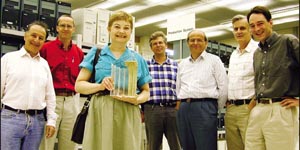
US Particle Accelerator School prizes for Achievement in Accelerator Physics and Technology for this year went to Tor Raubenheimer of SLAC, Stanford and Dieter Moehl of CERN.
Raubenheimer received the award for the development of emittance control techniques for high-performance electron-positron linear collider and storage rings, and for his leadership role in the development of a second generation linear collider.
Moehl was honoured for his outstanding contributions to beam cooling and to counteracting intensity limitations, and for his impact on the conception, design and operation of low-energy storage rings for ions and antiprotons.
The prizes were awarded at the 2001 Particle Accelerator Conference in Chicago.
The Large Hadron Collider, which is now under construction in CERN’s 27 km ring tunnel, attracts significant contributions from several major nations outside the CERN member state community, making it truly a world machine.
In addition to these important contributions from Canada, India, Japan, Russia and the US, CERN host states France and Switzerland also contribute significant additional resources to the Large Hadron Collider (LHC) above and beyond their natural involvement as part of the 20-nation European CERN community.
Canada
The contribution to the LHC from Canada is valued at C$40 million, much of which is used for hardware to help to upgrade the injector chain, particularly the Booster and the PS synchrotron. This involvement goes back to 1995 and is coordinated by the Canadian TRIUMF laboratory.
Equipment includes ferrite rings and the tuning and high-voltage power supplies for four new radiofrequency cavities for the Booster, which was upgraded from 1 to 1.4 GeV specifically for its new role in the LHC injector chain.
Canadian contributions also include most of the magnets and power supplies for the transfer line between the Booster and the PS, major equipment for the Booster main magnet power supply, and a reactive power compensator to reduce Booster-induced transients on CERN’s electrical supply system.
A second wave of Canadian contribution is mainly for the LHC ring, including 52 twin-aperture quadrupole magnets for “beam cleaning” insertions, together with power suplies for kicker magnets, pulse-forming networks and switches.
Canada will also develop beam-position monitor electronics and carry out some beam optics studies.
India
The initial CERN-India co-operation agreement was signed in 1991 and is renewed every five years. The value of equipment covered is $25 million, of which half is transferred by CERN into a special fund to underwrite further joint ventures.
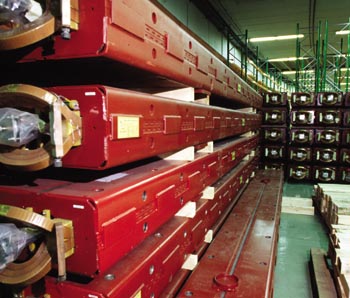
The main Indian hardware contribution is superconducting sextupole and decapole spool pieces amounting to half of the total LHC requirement for such corrector magnet equipment. In addition, India will supply LHC magnet support jacks and quench heater power supplies.
Circuit breakers are being supplied by Russia, but India remains responsible for the necessary electronics. In addition, India is carrying out several programming and documentation projects.
Japan
Japan’s early entry into the LHC arena in 1995 provided a memorable boost for the project. Japanese contributions currently total approximately ¥13,850 million (some SFr 160 million). Of this sum, some SFr 25 million was earmarked for constructing of the solenoid magnet for the ATLAS experiment (May p8).
The KEK national laboratory acts as a major coordinator for all of this work. Japan is the source of much of the basic material (steel and superconducting cable) for the LHC.
A further significant Japanese contribution to the LHC is the 16 quadrupoles used to squeeze the colliding beams and boost the interaction rate. Also on the list of equipment are compressors for cooling superfluid helium.
The contribution of the Russian Federation to the LHC machine is valued at SFr 100 million. One-third is channelled into a special fund for CERN-Russian collaboration.
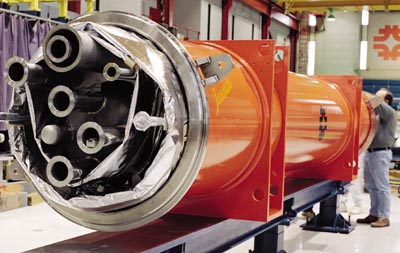
The largest and most visible part of this contribution is the thousands of tonnes of magnets and equipment for the beamlines to link the SPS synchrotron to the LHC. The supply of this equipment from Novosibirsk will soon be complete. Novosibirsk is also supplying insertion magnets for the LHC ring.
The Protvino laboratory is responsible for 18 extraction magnets and the circuit breakers that will receive the electronics from India. The Joint Institute for Nuclear Research, Dubna, is contributing a damping system, and a number of other Russian research centres will furnish a range of items and equipment, including design work, radiation studies, survey targets, ceramic components, busbars and shielding.
USA
Work in the US for the LHC centres on interaction regions 1, 2, 5 and 8, together with some radiofrequency equipment for Point 4. The work is shared between the Brookhaven, Fermilab and Lawrence Berkeley National laboratories.
The impressive list of contributed hardware includes superconducting quadrupoles and their cryostats for beam intersections (Fermilab), superconducting dipoles for beam separation (Brookhaven) and cryogenic feed boxes (Berkeley).
The beam insertion hardware overlaps with that from Japan, and there has been excellent co-operation on LHC contributions between these two industrial giant nations.
France and Switzerland, as CERN host nations, make special contributions to the LHC. For France, this includes 218 person-years of work, spread over four major technical agreements, covering the cold mass for LHC short straight sections (handled by the CEA Atomic Energy Commission), the short straight section cryostats and assembly (by the CNRS national research agency), calibration of 8000 thermometers for the LHC (by the Orsay laboratory), and design and series fabrication work for the superfluid helium refrigeration system (CEA).
In addition to this national involvement, the local Rhone-Alpes regional government and the départements of Ain and Haute-Savoie also contribute.
Under the regional government plan, about 90 person-years of assistance will be supplied by young graduates of technical and engineering universities. Haute-Savoie contributes design work on the integration of microelectronics for the LHC cryogenic system.
In addition, the LAPP laboratory at Annecy is developing ultrasonic equipment to monitor superconducting dipole interconnections, and it is doing design work for the vacuum chambers of the major LHC experiments. Ain has contributed the land to build a major new construction and assembly hall next to the CERN site.
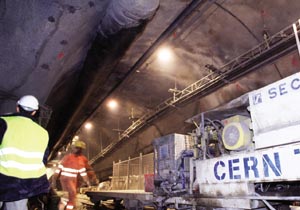
The Swiss contribution comes from the federal government and the canton of Geneva, and it covers the cost of a 2.5 km tunnel through which protons will be fed from the SPS to the LHC in the anticlockwise direction.
For the major physics detectors, scientists are used to seeing major equipment being built piecewise in an international jigsaw puzzle, but the LHC machine, too, is taking on such a character.
A path to international contributions was pioneered by the HERA electron-proton collider at DESY, Hamburg, in the 1980s.
For HERA, Canada, France, Italy and the Netherlands supplied components, Israel and the US contributed technological development, and person power came from China, Poland and the UK.
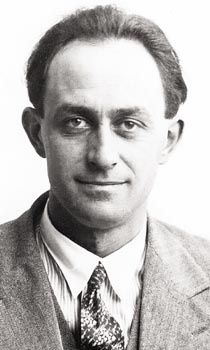
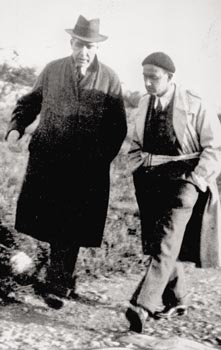
Enrico Fermi was born on 29 September 1901 in Rome to a family with no scientific traditions. His passion for natural sciences, and in particular for physics, was stimulated and guided in his school years by an engineer and family friend, Adolph Amidei, who recognized Fermi’s exceptional intellectual abilities and suggested admission to Pisa’s Scuola Normale Superiore.
After finishing high-school studies in Rome, in 1918 Fermi progressed to the prestigious Pisa Institute, after producing for the admission exam an essay on the characteristics of the propagation of sound, the authenticity of which the commissioners initially refused to believe.
Studies at Pisa did not pose any particular difficulties for the young Fermi, despite his having to be largely self-taught using material in foreign languages because nothing existed at the time in Italian on the new physics emerging around relativity and quantum theory. In those years in Italy, these new theories were absent from university teaching, and only mathematicians like Tullio Levi-Civita had the knowledge and insight to see their implications.
Working alone, between 1919 and 1922, Fermi built up a solid competence in relativity, statistical mechanics and the applications of quantum theory to such a degree that by 1920 the institute director, Luigi Puccianti, invited him to establish a series of seminars on quantum physics.
Even before taking any formal examinations, Fermi published his first important scientific work – a contribution to the theory of general relativity in which he introduced a particular system of coordinates that went on to become standard as Fermi coordinates – the beginning of a long series of scientific contributions and concepts associated with his name.
At Pisa, Fermi strengthened a friendship with Franco Rasetti and maintained scientific contact with his former high-school companion, Enrico Persico. In parallel with his outstanding ability in theoretical physics, Fermi developed a genuine feeling for experimental investigation, acquiring with Rasetti in the institute’s laboratory, which was put at their disposition by Puccianti, an excellent acquaintance with the techniques of X-ray diffraction. It was on this subject that Fermi carried out work for his bachelor dissertation, which he eventually presented in July 1922.
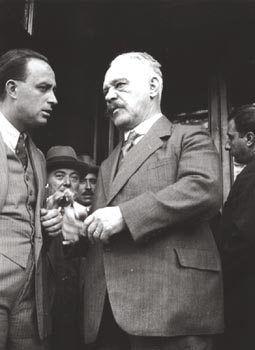
After his bachelor’s work, Fermi returned to Rome where he came in contact with Physics Institute director Orso Mario Corbino. Corbino succeeded in obtaining a scholarship for Fermi, which Fermi then used to finance a six-month stay in 1923 at Max Born’s school in Göttingen. Although this school probably had at the time the most progressive ideas towards the final formulation of quantum mechanics, Fermi did not find his stay particularly comfortable. The school’s excessive formal theoretical hypotheses, devoid of physical meaning, around which Born, Heisenberg, Jordan and Pauli were working, were not to his taste, and he preferred to work alone on some problems of analytical mechanics and statistical mechanics.
More intellectually stimulating, and fertile for scientific results, was Fermi’s second foreign visit one year later, thanks to a Rockefeller Foundation scholarship. From September to December 1924, Fermi worked at Leiden, at the institute directed by Paul Ehrenfest, where he found a much more congenial scientific atmosphere.
Between 1923 and 1925, Fermi published important contributions to quantum theory that culminated at the beginning of 1926 in the formulation of the antisymmetric statistics that are now universally known under the name Fermi-Dirac. In this fundamental work, Fermi took to their conclusion ideas that he had began to develop in Leiden on the statistical mechanics of an identical particle system, introducing the selection rule (Exclusion Principle) introduced by Pauli at the beginning of 1925, so as to construct a satisfactory theory of the behaviour of particles henceforth called fermions.
The far-sighted initiatives of Orso Mario Corbino for developing Italian physics bore their first fruits. In 1926 Corbino established a competitive chair of theoretical physics in Rome (the first of its kind in Italy), as a result of which Fermi gained a professorship at the institute in the via Panisperna at the age of 25.
The following September a major international physics convention took place in Como for a Volta commemoration.
It was during this convention that a demonstration, which was carried out by Sommerfeld and others, of the effectiveness of the new quantum statistics for the understanding of hitherto insoluble problems, ensured Fermi’s international reputation.
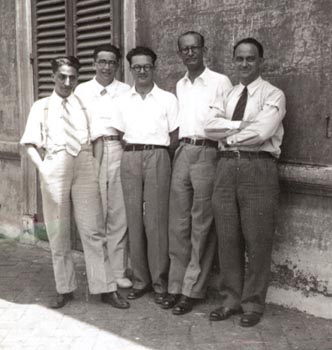
At the institute on the via Panisperna, a new collaboration began to take shape around Fermi and Rasetti at the beginning of 1927, as Corbino selected a group of promising young people. These included Edoardo Amaldi and Emilio Segrè.
By the end of the 1920s the “via Panisperna boys” switched from studying atomic and molecular spectroscopy to investigating the properties of the atomic nucleus – described by Corbino in a celebrated 1929 speech as the new frontier of physics.
This new line of research reflected Fermi’s growing scientific stature. In 1929 he was the only physicist designated to join the new Royal Academy of Italy. With this, and being secretary of the national physics research committee, he was able to steer funding and resources towards the new fields of research.
Nuclear summer
An important turning point was the first International Conference on Nuclear Physics, which was held in Rome in September 1931, and of which Fermi was both major organizer and scientific inspiration. Here, the main ongoing problems of nuclear physics were examined, which soon went on to be solved, notably in the “anno mirabile” of 1932 with the discovery of the neutron.
In the autumn of 1933, Fermi then added what is possibly his biggest contribution to physics – namely his milestone formulation of the theory of beta decay. In this formulation he took over the hypothesis of the neutrino, which had been postulated several years earlier by Pauli to maintain the validity of energy conservation in beta decay, and he used the idea that the proton and neutron are two different states of the same “fundamental object”, adding the radically new hypothesis that the electron does not pre-exist in the expelled nucleus but is liberated, with the neutrino, in the decay process, in an analogous way to the emission of a quantum of light resulting from an atomic quantum jump.
The theory also fitted in with the new formalism developed by Dirac in his quantum theory of radiation. It is interesting to note that Fermi’s work, which was initially sent to the Nature and was turned down because it was “too abstract and far from the physical reality”, was published elsewhere.
In 1934, nuclear physics research at via Panisperna capitalized on Frederic Joliot and Irene Curie’s discovery of artificial radioactivity. Fermi’s group discovered the radioactivity that is induced by neutrons, instead of the alpha particles of the Paris experiments, and soon they revealed the special properties of slow neutrons.
Sudden departure
Meanwhile the political situation in Italy began to give worrying signs of deterioration. While the major foreign laboratories began to invest in the new accelerators – fundamental machines to produce sources of controlled and intense subnuclear “bullets” to bombard the nuclei – Fermi’s attempts to obtain the necessary resources for an appropriately equipped national laboratory were not successful.
For a number of years, Fermi resisted numerous offers of posts in US universities. Then, in 1938, the promulgation of new racial laws threatened the Fermi family directly (Fermi’s wife, Laura Capon, was Jewish), so he took the decision to leave the country.
The opportunity to emigrate came with Fermi being awarded the Nobel Prize for Physics for his work on artificial radioactivity and slow neutrons. In December 1938 he received the prize in Stockholm and from there embarked with his family for the US and Columbia University in New York. Officially, he went to the US to deliver a series of lectures, but his friends knew that he had no intention of returning.
The discovery of nuclear fission and the outbreak of war dramatically highlighted the possible use of nuclear energy for military purposes. With his experience in neutron physics, Fermi was the natural leader for a group to carry out the first phase of a plan that would eventually lead to the atomic bomb – the achievement of a sustained and controlled chain reaction.
The work, which was classified as a military secret, was carried out in the University of Chicago’s Metallurgical Laboratory. In December 1942 the first controlled fission chain reaction was achieved in the reactor constructed under Fermi’s direction. This led in turn to the Manhattan Project, in which Fermi had prominent roles, such as general adviser on theoretical issues, and finally as a member of the small group of scientists (with J Robert Oppenheimer, Ernest Lawrence and Arthur Compton) that was charged with expressing technical opinions on the use of the new nuclear weapon.
In August 1944, Fermi moved to the village-laboratory of Los Alamos for the final development of the bomb, and in July 1945 he was among those who witnessed the first nuclear explosion in the Alamogordo desert.
Return to the laboratory
At the end of the Second World War, Fermi returned to Chicago and resumed his research in fundamental physics, at a time when new subnuclear particles were being discovered and when the new quantum electrodynamics was soon to appear.
In those years he led an influential research group, and a good number of the students associated with the group later went on to win Nobel prizes. The group continues to provide scientific advice for the US government.
Fermi, as a member of the General Advisory Committee, was against development work for a thermonuclear device, but this line met considerable resistance from Edward Teller, who went on, with mathematician Stan Ulam, to carry out much of the necessary theoretical work.
In this new context, Fermi developed an interest in possibilities that were being opened up by electronic computers, and in the early 1950s, in collaboration with Ulam, he carried out fundamental and pioneering work in the computer simulation of nonlinear dynamics.
Fermi returned twice to Italy. In 1949 he participated in a conference on cosmic rays in Como, which was the continuation of a series held earlier in Rome and Milan. Five years later, at the 1954 summer school of the Italian Physical Society in Varenna, he gave a memorable course on pion and nucleon physics.
On return to Chicago from this trip, he underwent surgery for a malignant tumour of the stomach, but he survived only a few weeks, dying on 29 November 1954.
Honouring a name
On 16 November 1954, on hearing that Enrico Fermi’s health had deteriorated, President Eisenhower and the US Atomic Energy Commission gave him a special award for a lifetime of accomplishments in physics and, in particular, for his role in the development of atomic energy. Fermi died soon after, on 29 November.
The Enrico Fermi US Presidential Award was subsequently established in 1956 to perpetuate the memory of Fermi’s brilliance as a scientist and to recognize others of his kind – inspiring others by his example.
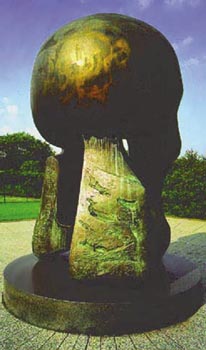
Fermi’s memory is also perpetuated in the US through the Enrico Fermi Institute, as the department of the University of Chicago where he used to work is now known, and the Fermi National Accelerator Laboratory (Fermilab), which was named in his honour in 1974.
* This article was originally published in INFN Notizie, April 2001.
Centenary programme
In Italy the Fermi centenary is being marked by a series of meetings and events:
20 March – 28 April: exhibition on Fermi and Italian physics in Rome at the Ministry for the University and Research
2 July: Fermi, Master and Teacher, organized by the Italian Physical Society, for the opening of the 2001 courses of the Scuola Internazionale di Fisica “Enrico Fermi”, Varenna (Como)
29 September: opening of an exhibition, Enrico Fermi e l‚universo della Fisica, in Rome’s Teatro dei Dioscuri
29 September – 2 October: an international meeting, Enrico Fermi and the Universe of Physics, in Rome
3-6 October: an international meeting, Fermi and Astrophysics, at the International Center for Relativistic Astrophysics (ICRA), Pescara
18-20 October: an international meeting, Enrico Fermi and Modern Physics, organized by the Scuola Normale Superiore, Pisa, and Instituto Nazionale di Fisica Nucleare, Pisa
18-28 October: an exhibition, Enrico Fermi. Immagini e documenti inediti, organized by the Associazione per la diffusione della cultura scientifica “La Limonaia”, Pisa University’s Department of Physics, the town and local authorities, at the Limonaia di Palazzo Ruschi
22-23 October: a meeting, Enrico Fermi e l’energia nucleare, organized by Pisa University
In November: a meeting, Fermi e la meccanica statistica, organized by Pisa University’s Department of Physics.
In the US: 29 September: a Fermi centenary symposium at the University of Chicago.
edited by L Bergström, P Carlson and C Fransson, World Scientific, ISBN 9810244592, 55.
This includes a tribute to David Schramm (who died on 19 December 1997) by Michael Turner, and many contributions, then topical, on cosmology and astrophysics, by distinguished people.
edited by Antonino Zichichi, World Scientific, ISBN 981024536X, 121.
The record of a school held in Erice, Sicily, in August/September 1999. It is prefaced by tributes to Bjorn Wiik, who died on 26 February 1999, by Kjell Johnsen, Horst Wenninger and Günter Wolf, and it goes on to cover basics, theoretical and experimental highlights, and a special session for new talents. Gerard ‘t Hooft gave the opening lecture on the Holographic Principle.
edited by G Kane and M Shifman, World Scientific, ISBN 981024522X.
It is notoriously difficult to write with perspective about the history of science of very recent events. This is particularly true in the case of supersymmetry. Actually, supersymmetry is not at all a recent idea; it is about 30 years old and, when compared with the pace of recent progress in science, it seems to come from another geological era.
Nevertheless, the role of supersymmetry in the description of the physical laws and its destiny in the history of scientific ideas are not yet settled.
Physicists are struck by its mathematical beauty, its trustworthy promises to merge general relativity with the principles of quantum mechanics, and its symmetry properties that allow a coherent description of the vastly hierarchical structure of the relevant size scales of the microworld. Nevertheless, we still lack definite experimental evidence for its existence.
This book does not attempt to present a chronological history of the events that led to the theoretical discovery of supersymmetry and its successive developments. Instead it collects personal reminiscences of the pioneers and founders of supersymmetry. In this way it gives the reader all of the elements necessary to reconstruct his/her own favourite history.
Supersymmetry is by now a familiar concept among both theoretical and experimental particle physicists. Entering an auditorium during a conference or a seminar on high-energy physics and listening to a speaker expounding on the production rates of gluinos and squarks, you certainly get the impression that these particles are real entities with well measured properties. In fact they are just a theoretical conjecture, the confirmation or disproof of which is waiting for the Large Hadron Collider to operate at CERN. But how many people in that auditorium know why supersymmetry was first introduced in particle physics, or how superstrings were invented (by Ramond, Neveu and Schwarz) before supersymmetry was even known, or, in a more anectodal vein, how the name developed from the super-gauge symmetry’ of Wess and Zumino to super-symmetry’ (with the hyphen) of Salam and Strathdee? This book is excellent reading for all of those (in that auditorium or not) who do not know the answers or just want to know more.
In the beginning, supersymmetry was a solution in search of a problem. The first proponents did not have in mind the hierarchy puzzle or quantum gravity, which are the main arguments used now to motivate supersymmetry and which did not appear in scientific literature until the early 1980s. Golfand and Likhtman invented supersymmetry when trying to understand parity-violation in weak interactions (before the Standard Model of electroweak interactions emerged). Volkov and Akulov introduced non linear supersymmetric transformations to explain massless neutrinos (interpreted as Goldstone fermions). Then Wess and Zumino rediscovered supersymmetry on the other side of the Iron Curtain and, with formidable theoretical developments, opened the gate to the superworld.
There is a lot to be learned from the early developments of supersymmetry and this book provides the necessary material in an unusual form – through personal recollections. It has to be said that many of the contributions contain technical discussions of the theoretical progress that require a good scientific knowledge on the part of the reader. However, these are mixed with reminiscences, personal remarks and anecdotes that make the reading more suggestive and captivating.
The book also contains an essay by R Di Stefano that attempts a systematic study of the historical developments of supersymmetry. I found this essay, written in 1988, too dated to have sufficient vision of the field. On the other hand, most contributions from the original founders of supersymmetry are full of interesting remarks, both from scientific and historical points of view. Particularly vivid is the chapter written by Yuri Golfand’s wife, with an intense and passionate portrait of her husband and of the sufferings, injustices and intellectual humiliations borne by the Jews in the Soviet Union.
by H V Klapdor-Kleingrothaus, World Scientific, ISBN 9810237790, 147.
A useful review (62 pages) and bibliography (33 pages), with 1200 pages of reprinted papers, including pioneer neutrino papers (at the front) and extracts from CERN Courier (at the back).
On 4 June in Washington’s National Building Museum, Les Robertson, deputy leader of CERN ‘s information technology division, accepted a 21st-century Achievement award from the Computerworld Honors Program, on behalf of the laboratory.
This prestigious award was made to CERN for its innovative application of information technology to the benefit of society, and it followed the laboratory’s nomination by Lawrence Ellison, chairman and CEO of the Oracle Corporation. Ellison nominated CERN in the science category in recognition of “pioneering work in developing a large-scale data warehouse” – an innovative computing architecture that responds precisely to the global particle physics community’s needs.
The kind of computing needed to analyse particle physics data is known as high-throughput computing – a field in which CERN has played a pioneering role for over a decade. In the early 1990s a collaboration of computer scientists from the laboratory, led by Les Robertson, and physicists from many of CERN’s member states developed a computing architecture called SHIFT, which allowed multiple tape, disc and CPU servers to interact over high-performance network protocols. SHIFT’s modular design simultaneously allowed scalability and easy adoption of new technologies.
Over the years, CERN has proved these features by evolving SHIFT from the systems of the 1990s, based on RISC (reduced instruction set computer) workstations and specialized networks, to today’s massive systems. These include thousands of Linux PC nodes linked by gigabit Ethernet to hundreds of Terabytes of automated tape storage cached by dozens of Terabytes of caches based on commodity disk components.
CERN has since worked on evolving SHIFT in collaboration with physicists and engineers from universities and laboratories around the world. Several collaborations with industrial partners have been formed as successive technologies were integrated into the system. Today, SHIFT is in daily use by the many physics experiments that use CERN’s facilities, providing a computing service for more than 7000 researchers worldwide.
For the future, CERN and other particle physics institutes are working on scaling up this innovative architecture to handle tens of thousands of nodes, and incorporating computational grid technology to link the CERN environment with other computing facilities, easing access to the colossal quantities of data that will be produced by experiments at the laboratory’s forthcoming particle accelerator, the Large Hadron Collider, which will switch on in 2006.
Welcoming the award, CERN director-general, Luciano Maiani said: “This is an important recognition of CERN’s excellence in information technology. In particular, it is a reward for the teams of physicists on CERN’s LEP experiments who contributed to the development and implementation of this new architecture. The prize is also an encouragement for the physicists working on the complex challenges of LHC computing.”
Hans Hoffmann, CERN’s director of scientific computing, commented: “In addition to its major contribution to physics, CERN has been a consistent innovator in information technology, from the Web to its current work on grid computing. We are delighted with this prize; particularly as it demonstrates recognition for CERN’s computing initiatives, not from the academic world but from industry’s leading computing experts.”
Also among the winners this year was Tim Berners-Lee, who received the Cap Gemini Ernst & Young Leadership award for Global Integration in recognition of his pioneering work on the World Wide Web – work carried out while he was at CERN in the early 1990s.
* More information on the Computerworld Honors Programme is available at “http://www.cwheroes.org”.
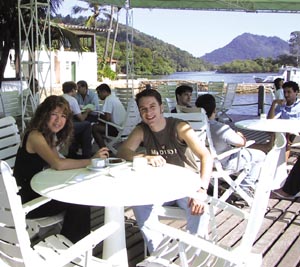
The first school of high-energy physics organized jointly by CERN and CLAF (Centro latinoamericano de física), Rio de Janeiro was held in Itacuruçá, Brazil on 6-19 May and it hopefully marked the opening of a close collaboration between CERN and physicists in Latin America.
This new series of biennial schools is modelled on the school of physics organized by CERN and the Joint Institute for Nuclear Research in Dubna near Moscow, which was, and continues to be, instrumental in fostering relations between CERN and former socialist countries.
Some 71 students attended the inaugural CERN-CLAF school, 56 of them coming from eight Latin-American countries (17 from Mexico, 16 from Brazil, 11 from Argentina and 12 from other countries), 13 from Europe and two from the US.
The Latin-American students were centrally funded for all of their travel, board and lodging, while other students were funded by their home institutes. Financial support came from CERN, Spain, France, Portugal and Italy, in addition to Brazil, Mexico and CLAF.
The students were accommodated in twin and triple rooms with students from different countries and regions sharing the same room. This was an important factor contributing to the success of the school.
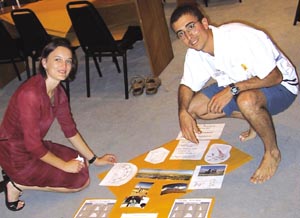
The 11 lecturers came from Europe, Latin America and the US. The lectures, which were in English, were complemented by daily discussion sessions led by seven physicists from Latin America. The students presented their work in an enthusiastic poster session.
A survey carried out at the end of the school revealed that:
* the school was an undisputed success;
* the level of the students was high, and all profited from the lectures, in spite of minor language problems;
* the mixing of nationalities was important, and students were convinced that contact with other students and with lecturers of international reputation would be significant for their future careers as well as in building up an inter-regional network of young physicists;
* the contacts made at the school were also believed to be important in strengthening the collaboration between individuals and institutions inside Latin America;
* there was a unanimous wish for the school to be continued, and the Mexican physics community and authorities expressed their willingness to host the next event in 2003.
At the conclusion of the school, a meeting with representatives from CERN, several Latin-American countries (Argentina, Brazil and Mexico) and funding agencies discussed strategies for continued and possibly permanent support for the CERN-CLAF School and for strengthening the collaboration between Latin-American countries and CERN. The following actions, mainly in the context of CERN’s LHC project, were agreed:
* to continue the biennial CERN-CLAF School;
* to promote the existing and potential collaborations by developing ad hoc protocols between Latin-American funding agencies and CERN, to ensure a stable financial framework for the long timespans of current high-energy physics activities;
* CERN could grant Latin-American groups access to facilities and other services, and give them priority for recuperating surplus equipment;
* CERN will continue to investigate additional funding from the European Union, UNESCO and CERN member states with the aim of increasing the exchange of scientists and to enlarge the duration and number of positions for Latin-American scientists, engineers and trainees at CERN;
* CERN can help by investigating possibilities of scientific, technical, industrial and public education co-operation with Latin America;
* opportunities and conditions under which some Latin-American countries could become CERN observer states would be investigated.
A joint CERN Latin-American steering committee would be set up with the goal of preparing a plan of action. The draft plan will be submitted, for approval, to the authorities of CERN, CLAF and the Latin-American funding agencies. It will also be submitted by CERN’s director general to those CERN European member states willing to co-operate, as well as to the European Union and UNESCO. Spain and Portugal have expressed an intention of submitting the plan to the next Ibero-American meeting of presidents and prime ministers which is planned for 2002.
As one of the students at the first school of high-energy physics organized jointly by CERN and CLAF, here are my personal impressions of the school, which I believe represent the feelings of the other students.
The school’s structure was basically the same as the traditional European school of high-energy physics: two weeks of excellent courses, discussion sessions and free time for amusement, in physics or other leisure activities.
The European school is designed mainly to teach theoretical physics to experimental physicists. The CERN-CLAF School was wisely adapted to the Latin-American reality – young theorists were also accepted and lectures on experimental physics were added. In addition, students from the US and Europe participated.
The lectures motivated our curiosity and provided material for discussion during the free time and the sessions.
The poster session was a very good occasion to show our work and to learn what others are doing. We had about three hours of stimulating exchange of information and many of us came back during
the free time to continue the discussions.
The mixture of young theorists and experimentalists was also very fruitful. The students had different physics backgrounds, so the discussions were enriched by different viewpoints.
The students from Europe and the US, with their different culture and experience in high-energy physics, were well integrated. Their participation was also important to encourage discussion in English.
For all of these reasons, the CERN-CLAF school of high-energy physics seems to be mandatory. It will certainly become instrumental in introducing the Latin-American community to the experimental particle physics world.
To provide the best experiences, we use technologies like cookies to store and/or access device information. Consenting to these technologies will allow us to process data such as browsing behavior or unique IDs on this site. Not consenting or withdrawing consent, may adversely affect certain features and functions.
Functional
Always active
The technical storage or access is strictly necessary for the legitimate purpose of enabling the use of a specific service explicitly requested by the subscriber or user, or for the sole purpose of carrying out the transmission of a communication over an electronic communications network.
Preferences
The technical storage or access is necessary for the legitimate purpose of storing preferences that are not requested by the subscriber or user.
Statistics
The technical storage or access that is used exclusively for statistical purposes.The technical storage or access that is used exclusively for anonymous statistical purposes. Without a subpoena, voluntary compliance on the part of your Internet Service Provider, or additional records from a third party, information stored or retrieved for this purpose alone cannot usually be used to identify you.
Marketing
The technical storage or access is required to create user profiles to send advertising, or to track the user on a website or across several websites for similar marketing purposes.