selected and edited by StanleyJeffers, Bo Lehnert, Nils Abramson and Lev Chebotarev, Apeiron, ISBN 0 9683689 5 6.
This is a festschrift for the 80th birthday of a physicist whose non-conformist political and scientific views have made his long life a continual uphill struggle. Vigier’s close collaborators have included Louis de Broglie and David Bohm. The book is a collection of Vigier’s papers with a short biographical introduction by Jeffers and a scientific overview by Chebotarev.
(mainly in Russian) edited by G Merzon, Moscow, 335pp, pbk.
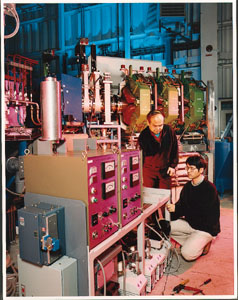
This book surveys the career of Armenian physicist academician Artem Alikhanian (1908-1978), including his initial work at the Leningrad Physical and Technical Institute; the first expedition to Mount Aragats in Armenia to establish a centre for cosmic-ray studies; the foundation of the Yerevan Physics Institute and the years of his directorship (1943-1973); the construction of one of the world’s largest electron ring accelerators at the time, the 6 GeV Yerevan machine; his pioneering use of X-ray transition radiation as an important tool in particle detection; and the application of crystals for the formation of polarized beams of electrons and photons. Despite this illustrious history, the institute is unfortunately suffering serious difficulties owing to inadequate funding and the uncertainty of its civic status.
Contributors to the book are close friends, colleagues and former colleagues of Alikhanian, including A Amatuni, L Artsimovich, T Asatiani, M Daion, B Dolgoshein, V Dzhelepov, V Goldansky, A Migdal, L Okun, W Panofsky and R Wilson.
Alikhanian’s notable scientific achievements, his versatile intellect and wide culture brought him recognition among the international physics community. In their reminiscences, Panofsky and Wilson wrote: “We wish he was still with us during this time when Armenians, Russians, Americans and other people of the world are collaborating in many activities in high energy physics.”
The publication was supported in part by the Lebedev Institute of Physics, Moscow, Russia; the Open Society Institute Assistance Foundation, Armenia; and the Yerevan Physics Institute.
An 18 minute video entitled The ATLAS Experiment has been declared overall winner of the 2000 MIF-Sciences Scientific Film Box Office contest.
The award-winning film explains how more than 1800 physicists from 35 countries are working on the ATLAS detector for CERN’s Large Hadron Collider. It gives a glimpse behind the scenes of building a technological edifice that measures 45 m long and 22 m high, and is made up of millions of components with a precision of one-hundredth of a millimetre.
Will all of the physicists who teamed up to construct this apparatus eventually be able to answer such fundamental questions as: Where does mass come from? Why does the universe have so little antimatter? Is there an underlying theory?
Members of the ATLAS experiment’s Education/Outreach Committee developed the concept of a film for both the general public and students that would describe the physics motivations, the process by which 1800 people from all over the world go about building such a complex detector, and the accelerator that would both deliver and collide beams of protons.
Committee members prepared a detailed outline for the film and hired a professional director from the Netherlands. At various stages the participating members and ATLAS management evaluated progress and provided input. Funding came from nine countries: the Czech Republic, France, Germany, Italy, the Netherlands, Spain, Sweden, the UK and the US.
The film, which combines live footage and animation, was designed to be translated into many languages, so there are two sound tracks – one with ambient sounds and the other for the narration (provided by each country). The various language versions will be linked from the ATLAS site in the near future and eventually collected onto a DVD. The film is currently available as a videotape, as a CD-ROM and on the Web.
The 10 year collaboration between RIKEN, the Japanese Institute of Physical and Chemical Research, and the UK Rutherford Appleton Laboratory (RAL) to create an intense muon source has been renewed for another 10 years. There are also plans to continue development and expansion of the joint facility.
The first large-scale scientific partnership between the UK and Japan, it develops and exploits a world-class muon facility at the RAL Isis pulsed neutron and muon source.
Isis is the world’s most intense source of pulsed muons. Muons can be used to explore matter at the microscopic scale, acting as implanted “spies” to help to understand better the internal workings of materials. Such information can help to develop new materials for specific applications. Muons are also used for fundamental physics studies and possible energy production via muon catalysed fusion.
A further £2 million investment will see expansion of the muon source for the development of new methods to increase the effectiveness of muons for analysing matter.
The Journal of High Energy Physics is a scientific journal that is written, run and distributed electronically. First published in July 1997, it is now established as one of the leading journals in the field.
On-line publication is made possible through the complete automation of editorial work by means of a software robot, thereby reducing costs and speeding up the procedure. The Journal of High Energy Physics is available via eight nodes that are updated in real time using innovative software. Special multimedia facilities have been added to enhance the Web possibilities.
An electronic journal
With the extensive use of the World Wide Web by the international community of physicists, the Journal of High Energy Physics (JHEP) aims to exploit the new media and take advantage of their innovative qualities – rapid communication, broad diffusion and low cost.
The journal’s initial focus was on theoretical high-energy physics and has now been extended to encompass experimental high-energy physics as well. However, the same model (and the same software robot) will be used to create similar journals in the same field, such as a review journal, as well as in other fields.
As far as research and development are concerned, a new project, begun in February 2000, is now devoted to the development of new-generation software that will be applied to new journals and services. It is directed by Loriano Bonora and Marco Fabbrichesi, JHEP’s creator, and it is financed by the European Union.
The journal has grown enormously, now publishing 12 000 pages a year and still growing. As a consequence of the complexity of operating JHEP and other publications, it is now time to give JHEP a more professional structure. To do so, Hector Rubinstein joins Loriano Bonora and Daniele Amati in the JHEP directorate, thus adding his wide professional experience in academic publishing and emphasizing the international character of the enterprise already witnessed in the editorial and advisory boards.
Moreover, it seems necessary to spread the costs to all users. A typical week sees the journal consulted by 10 000 users from all over the world. At present the costs are paid by the International School for Advanced Studies (SISSA) in Trieste and the INFN, and sponsorship is being requested from major research centres. CERN has already accepted the financial and moral commitment.
In parallel with the directorate, JHEP’s distinguished advisory board lays down the scientific policy of the journal. An editorial board of leading scientists in a large number of fields acts as mediator between authors and referees. Selected by an electronic robot, they either referee or assign referees. Unless unforeseen problems develop, they are the final arbiters. If problems arise, they consult the higher boards via the Executive Office.
The running of the journal is assigned to the executive office at SISSA, which is in charge of supervising the functioning of the journal in collaboration with the editorial board. The executive office monitors the journal daily and intervenes in the event of any problems that may arise. Local system support is provided at each one of the journal nodes.
The JHEP software performs all of the steps in the editorial procedure: submission of papers; assignment to appropriate editors; review by referees; management of the contacts between editors, referees and the executive office; revision, proofreading and publication of papers; and administration of the journal.
Accepted papers are made available on the JHEP Web sites to all interested readers. Editors, referees and authors have their personal Web pages, where they run the editorial procedure or check the status of the papers. The software comprises three major families of scripts. All interfaces with the robot are via e-mail or accessible from a browser (optimized for Netscape Navigator 3.0 or later).
The first family of scripts allows the interaction between JHEP and the scientific community and deals with the publication of papers. The submission procedure is also part of this family of programs. The second script family runs the interface among editors, between editors and referees, and between editors and authors. The third family is in charge of the administration of the journal.
In addition to these scripts, there is a program called Harold that is dedicated to updating in real time the journal’s network of nodes throughout the world (see below). The robot carries out many of the menial tasks that make the running of a scientific journal expensive and slow. This program has been implemented in successive steps and is now fully working. Further upgrades will follow as new possibilities are explored and realized.
Multimedia facilities have been added to enhance the possibilities offered by the Web: powerful search engines replace the table of contents and indexes used by paper journals; and papers, published in three different formats (PDF, PS, DVI), are in hypertext, with links within the articles themselves and to the papers quoted in the references.
To ensure reliability and fast connections, JHEP exists as a network of nodes throughout the world.
All nodes are equivalent. The program Harold has been developed to keep them synchronized. All events taking place at any of the nodes are notified to the other nodes within a matter of minutes. On notification, the nodes execute the corresponding action and are updated accordingly. All transactions are encrypted in order to protect the data.
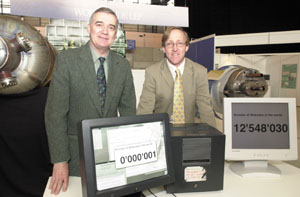
The World Wide Web was conceived at CERN to allow particle physicists easy access to information, wherever it was and they happened to be. It was a great success, so great that it went on to take the whole world by storm – a veritable communications revolution.
CERN Courier News Editor James Gillies teamed up with CERN World Wide Web pioneer Robert Cailliau to write a detailed history of modern telecommunications, particularly as seen through CERN eyes. As the book points out, the fact that the Web was invented at CERN “is no accident”.
How the Web was Born by James Gillies and Robert Cailliau, Oxford University Press, ISBN 0192862073, pbk.
This book is a surprising, ambitious, interesting and courageous account of a series of developments culminating in the invention at CERN of the World Wide Web. It is not only a history of the Web – it covers in considerable detail the necessary evolution of networks, personal computers and software technology which enabled Tim Berners-Lee’s brilliant creation of the Web in 1989.
I say “surprising” because it had seemed to me that enough good Internet histories had already been written (Salus 1995; Hafner and Lyon 1996; Randall 1997). Furthermore, Berners-Lee’s own account Weaving the Web was published only last year (Berners-Lee 1999). However, there is much new material in this book. I call it “ambitious” and “interesting” because it covers all the surrounding areas in depth and is not afraid to follow sidetracks, personalities and anecdotes, which are always the key to attracting and holding a reader’s attention.
The book reveals the quirky human attitudes and the bureaucratic and business struggles which make this a real human story rather than just a dateline of cold technological developments. Finally, it is “courageous” because, although written by two CERN authors, it is truthful even about those parts of the story which are not too flattering to CERN.
There is not much to criticize. The first 10 pages on telephones and LANs contribute little, are messy and may deter some readers from reaching the true start of the story. My attention was first aroused on p11 by the phrase: “The Birth of the Internet: On 31 January 1958, the United States launched Explorer I, its first satellite, though few now remember that.”
There are some minor slips of detail: for example, STELLA was a CERN satellite project, not an Italian one (p81), and began in 1978, not in 1981 (p317). The proofreading of the book was also not up to my expectations of Oxford University Press.
Essentially, however, this book makes a major contribution. I believe the authors have succeeded with their aim “to tell a story of human endeavour, and to provide a good read in the process”. They stress the multiplicity of contributions of many individuals over half a century, including the essential ones and without forgetting the elements of accident and personality which often proved crucial.
Humour abounds: Senator Edward Kennedy, in congratulating the Boston team that had won a contract for an ARPANET Interface Message Processor (IMP), refers to it as an “interfaith” processor. When the first IMP was delivered to UCLA and found in horror to be upside down in its crate, a team member declared this only “meant that it had been turned over an odd number of times”. This was after finding that the IMP had survived.
There is also much wisdom, such as that of Frank Heart, manager of the small Bolt, Beranek and Newman team developing the IMP, which he described as follows: “All the software people knew something about hardware, and all the hardware people programmed. It was a set of people who all knew a lot about the whole project. I consider that pretty important in anything very big.”Thirty years later, nothing much has changed.
The battles of culture and practice between proprietary, ISO and TCP/IP networking, fought to the death between the late 1960s and the early 1990s, are handled with insight and accuracy. This is required reading for today’s younger generation, many of whom surprise me by their casual ignorance of what was for some of us a struggle over many years, dividing colleagues, damaging careers and delaying progress towards the now realized dream of a networked world.
Culture and practice continue to collide in the later chapters, where we approach the fateful few years where all the strands will meet. Berners-Lee’s personal trajectory is followed, showing how his curiosity and taste for research was nurtured and amplified by contact with like minds, first by his parents, teachers and other early influential figures, and later by collaboration and discourse with CERN colleagues and the blossoming Internet community. With the Web idea launched outside CERN, the germination and maturation of the software worldwide is then traced in detail, including the NCSA/Mosaic/Netscape saga and the demise of competing products like Gopher and Archie.
The book captures the rare combination of Berners-Lee’s talents: steady vision, broad interests and detailed attention. It shows the triumph of a mind that could arrive at something simple, starting from a situation where things were deeply complicated beforehand. The idea that order could be created in the chaotically non-standard environments of document exchange and networking as they stood in the late 1980s was simply unbelievable for practically everyone at that time.
Berners-Lee’s success serves as a living example of the power and the necessity of the KISS principle – “Keep It Simple, Stupid” – which tells us to be humble in the face of the world’s ever growing complexity. There is also a quality in him of those inexperienced youngsters, recruited by Data General during a classic underground project to develop the world’s fastest minicomputer, specifically because they were too naive to know that certain things “can’t be done” (Kidder 1981).
Why, if it was all so simple, did the Web take so long to arrive – 20 years after the start of the Internet? And why at CERN? This latter question is carefully examined by the authors, who say “it is no accident that it happened at CERN” and cite several supporting reasons. For me, the most convincing reason was Berners-Lee’s own statement that it was “…a question of being in the right place at the right time…in the right environment”, and: “…with great bosses in Peggie Rimmer and Mike Sendall, and a lot of stimulating colleagues, all prepared to think outside the box”.
The other burning question addressed by the book is: why did CERN “give away” the Web and lose its creator to MIT? It is a complex matter, taking up the entire last chapter of the book. Starting with Berners-Lee’s chance meeting with Michael Dertouzos of MIT/LCS, a complex web of interests and rivalries is traced between US and European players: CERN, INRIA, NCSA, MIT, Mosaic Communications and the European Commission. Bluff, counterbluff and misunderstandings succeeded each other. But the bottom line appears to be that CERN, fighting a life-or-death battle for approval of the LHC project, lacked basic commitment to a non-physics activity, even one of such huge potential.
The book is dedicated to the memory of two people: first to Donald Davies, pioneer of packet switching, the most essential of all Internet components; and second to Mike Sendall, who in 1989 “did not say no to Tim Berners-Lee and consequently the Web got off the ground”. Let me wholeheartedly applaud that conclusion: not saying no to the young and starry-eyed is one way the world can advance from chaos to order, from the impossible to the imaginable.
Ben Segal is currently leader of CERN’s Technology for Experiments Section, responsible for development in areas including High Performance and Storage Area Networks and CERN’s online Central Data Recording service, and is responsible for Data Management within the new European “Data Grid” Project. From 1985 until 1988, he served as CERN’s first TCP/IP coordinator, responsible for the introduction of the Internet protocols within CERN. In 1995, he was a co-founder of the Internet Society (ISOC) Geneva Chapter.
On 15 September, the Centre for High-Energy Physics (CHEP) in Korea was formally inaugurated at Kyungpook National University, Taegu. Last June the CHEP, in which most Korean high-energy physicists participate, was finally approved as one of the designated Excellent Research Centers supported by the Korean Ministry of Science and Technology through its Korea Science and Engineering Foundation. It was a significant occasion, since Korean high-energy physicists have waited a long time for such a centre to focus and coordinate their research.
To mark the ceremony, Samuel C C Ting, 1976 Nobel Laureate in Physics, delivered a special lecture on “Research directions of high-energy physics in the 21st century”. The ceremony also included congratulatory addresses from Han Jung-Kil, vice-minister of Science and Technology, and Rhee Shang-Hi, chairperson of the Science, Technology, Information and Telecommunication Committee of the National Assembly. Representatives of the CMS (CERN) and CDF (Fermilab) collaborations also attended the ceremony.
The CHEP, under director Dongchul Son, consists of 22 faculties, 28 physicists and about 120 graduate students from 12 institutions in Korea, and will be supported at least for the next nine years. The centre will initially focus activities on several experiments, including AMS, CMS, CDF and BELLE, in which the Koreans are currently participating. In coming years it will concentrate on fewer experiments while exploiting domestic ones, and aims to play a more visible role in the world high-energy physics community.
The European Committee for Future Accelerators (ECFA) continued its continual tour of CERN Member States when it met in Berlin in September for an update on the status of particle physics in Germany. (The mission explicitly left out activities directly related to the major DESY laboratory in Hamburg. DESY, a key player on the national and international scene, gets a special treatment – it is visited every second year by ECFA, while each CERN Member State is normally visited only every six years.)
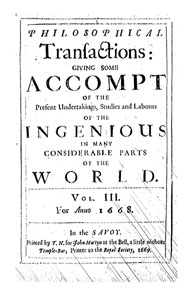
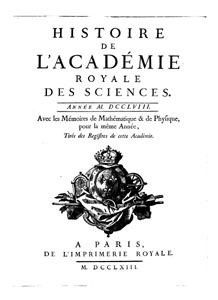
The ECFA meeting took place at the historic Magnus-Haus in the cultural heart of Berlin, across the road from the Pergamon Museum. The building was donated to the Physical Society of the former DDR in 1958 to commemorate the centenary of the birth of Max Planck (1858-1947). It has a distinguished scientific history – among its famous 18th century inhabitants was Joseph Lagrange, one of the founders of analytic mechanics.
Physics history
Berlin is filled with echoes of physics from the past. It was here, 100 years ago, that the concept of the quantum of action was conceived by Planck, initiating the quantum paradigm, one of the greatest scientific revolutions of the 20th century.
Albert Einstein, the torch bearer of a second revolution, relativity, spent a considerable part of his life in Berlin. He was the first director of the Kaiser Wilhelm Institute there, and it was in Berlin that he presented his theory of general relativity.
As the 100th anniversary of quantum theory, the year 2000 was declared in Germany to be the “Year of Physics” (see http://www.physik-2000.de for further information). The Federal Ministry of Education and Research initiated and supported more than 200 physics “events” throughout the country.
Hermann Schunck, representing the Ministry, told ECFA that the “Year of Physics” has been a great success. The grand finale takes place in Berlin in December, with a week of symposia and other events around 14 December, the date when Planck presented his work for the first time.
The Ministry believes in the importance of basic science, Schunck stressed. The Ministry is following closely what happens in particle physics in order to be able to plan for the future. Schunck gave a survey of questions in particle physics to be addressed over the next 20 years – questions related to the Higgs particle, properties of neutrinos and CP violation, among others. He concluded that at the present time, a linear collider, to be commissioned about five years after CERN’s LHC circular machine, looks to be the most obvious major project for the future.
German organization
The funding of basic science in Germany is more complicated than in most other European countries, due to the country’s decentralized federalstructure. These intricacies were described by several speakers, including Schunck, Rolf Heuer of DESY and Konrad Kleinknecht of Mainz.
Germany’s16 states (Länder) have considerable autonomy, with each state (Land) having its own local government. In addition, there is of course the Federal Government. Education is the business of the local governments. As in most European countries, in Germany a great deal of basic research is carried out at universities. However, these are governed by local State rules. The researchers at the universities often carry a rather heavy load of other duties such as teaching and administration.
The local funding is in general far from adequate to allow university researchers to take part in research elsewhere. Speaking for the university environment, Kleinknecht noted that for research in particle physics, the federal funding is absolutely necessary.
Science knows no geographic frontiers and a great deal of coordination of research activities at the various universities and research centres is required. In this respect, the role of the Federal Government, especially its Ministry of Education and Research, is vital. The Ministry’s annual funding for basic physics is about DM 1.5 billion. This Ministry funds major national research centres and is an indispensable link between Germany and the various international research centres such as CERN. Two of its programmes for funding research by university groups at large research centres are “Structure and Interactions of Fundamental Particles”, which has a budget of DM 75 million for a three year period and “Hadron and Nuclear Physics”, the budget of which is DM 66 million, again for three years.
Another important organization is the German Science Council (Deutsche Forschungs Gemeinschaft; DFG), a federal research council financed 60% by federal funds and 40% by the Länder. This organization does not directly support projects in particle physics. However, it provides annual funding for particle physics at the level of DM 14 million, supporting PhD students, who for example can work at CERN, and prestigious fellowships.
One very special feature of Germany isthat it has scientific “Societies” which have a large number of institutes devoted to research in various areas.
The society which is most relevant to particle physics is the prestigious Max Planck Society. This is funded 50% by the Federal Government and 50% by the Länder. It has some 80 institutes and centres devoted to basic research, and employs about 12 000 people. The Society can restructure itself as it sees fit, for example by creating, merging or dismantling its own institutes. This allows for much more flexibility than would be possible at universities.
The Max Planck Institutes in Heidelberg and Munich focus on particle physics. The major duty of a researcher at a Max Planck Institute is indeed research, so there is a considerable disparity between the responsibilities of these researchers and those at the universities.
Some facts and figures
Physics is taught at about 60 universities. Enrolment was increasing until the late 1980s. At about that time approximately 1500 PhDs in physics were being awarded per year. Since then there has been a dramatic drop in the enrolment rate due to several reasons, one of which has been purely demographic.
Nowadays, job opportunities for physicists are good – perhaps too good. There is a great temptation not to continue for a PhD but to work in industry for a much higher salary. Age is also an issue. Germans go to school for 13 years before entering university. Afterwards, in physics, the student does “diploma” work which usually takes five years. Add to that military service or equivalent community service, and four to five additional years for getting the PhD, and the result is that the average age for obtaining a physics PhD is 29 years.
The number of annual diploma exams has fallen from a maximum of 3500 to 2000, and is set to fall further. Since industry needs about 3500 new diploma or PhD physicists per year, and since PhD exams will stay for a few years at 1400, and then decline, there is a shortage of physicists in the university/research sector.
Currently, research in experimental particle physics is carried out at 16 universities, and for theory, 23. There are about 210 staff and 50 PhD students in experimental particle physics at the universities. The corresponding numbers at the Max Planck Society are 90 and 60, respectively. However, these latter numbers include both theorists and experimentalists as well as those working in astroparticle physics.
In addition to those who work at the Max Planck Society, there are about 240 particle theorists at the universities and other research centres, not counting PhD students.
Projects
German scientists have traditionally made significant contributions to experimental particle physics. For example, the very first neutrino neutral current event from the Gargamelle bubble chamber at CERN was found at Aachen in 1973. Later, German teams played a major role in several neutrino experiments at CERN. The German neutrino tradition is currently being continued by participation in OPERA for the CERN/Gran Sasso project.
The first observation of direct CP violation at CERN is another example of how German researchers have made an essential contribution. Germany is omnipresent in all sectors of physics at CERN, in all four LEP experiments and all four of the large future LHC experiments, as well as in fixed-target experiments such as NA48 and COMPASS. Making antiatoms from antiprotons is another German speciality at CERN.
Outside Europe, other major projects in which German particle physicists participate include the BaBar experiment at SLAC, Stanford, and CDF and D0 at Fermilab as well as heavy-ion experiments at RHIC, Brookhaven. There is also a broad spectrum of non-accelerator particle physics activities such as the historic Gallex solar neutrino experiment, the neutrino mass experiment at Mainz, and double beta-decay studies. Another closely related domain is astroparticle physics, where German physicists are participating in major projects such as AMS, AMANDA and Auger.
As described byThomas Mannel from Karlsruhe, almost all current topics in theoretical particle physics are being investigated in Germany. Phenomenology, lattice gauge theories and string theory are notable examples.
National laboratories and R&D
Germany is very special in Europe in that is has several large research centres for particle and nuclear physics – DESY in Hamburg, DESY-Zeuthen (Berlin), GSI (heavy ions) in Darmstadt, KFA in Jülich and FZ in Karlsruhe.
Such a strong home base gives German scientists several advantages. As well as having their own research programmes, these centres also engage in R&D activities. For example, as pointed out by Norbert Wermes of Bonn, a great deal of work is being carried out on detector R&D for high-energy physics, not only at DESY but also at GSI Darmstadt, FZ Karlsruhe and the Max Planck Institutes in Munich and Heidelberg, as well as at 17 universities.
These efforts are funded primarily by the Ministry of Education and Research, and to a lesser extent by the German Research Council, the European Union and the Länder.
There have been interesting spinoffs from these developments. For example, a scintillator/optical fibre development has been shown to be useful for measuring dose distribution in medicine. Another example given by Wermes was a prototype chip which was developed for the ATLAS detector at LHC, but which can also be used for X-ray imaging.
The huge upheavals which occurred due to the German national reunification affected the country’s science budget. However, there is now optimism in the air, at least for science. In the latest budget, two domains do rather well – education and traffic infrastructure, Schunck pointed out.
A German PhD student speaks up
During the ECFA meeting in Berlin, Claus Beier, a graduate student in experimental particle physics from Heidelberg, gave a very personal account of his professional life. He felt that his undergraduate studies had given him a “solid training in a wide variety of physical sciences”.
His reasons for going into particle physics were: “it’s fun or fascinating”; “the atmosphere is international”; “it gives useful experiences in computing or hardware”; and “it gives good job opportunities”. “Research is like a roller-coaster ride,” he said.
However, other duties such as teaching, travelling and giving talks can be onerous. The solution is usually long working hours for a modest annual income (DM 25 000-35 000).
Working in a big collaboration (400 scientists), Beier had found the biggest problem to be insufficient flow of information, due to such “trivial things” as lack of documentation. The graduate student inherits vital but incomprehensible “computer code”. What a waste of time to have to re-do the job!
What he valued most was academic freedom, the international atmosphere. and the fact that he is constantly learning something new. Beier concluded that the research in particle physics has given him invaluable experiences for “the life after”, as he put it. Permanent jobs in research are scarce, so a life in industry is more appealing “because it offers higher income, more free time and permanent employment”, he said.
The Olympic Games are held up as the most international of all events. It is accepted that the athletes “compete for their nation” and make up “national teams”. These are (unofficially) ranked according to how many medals they win, and the “most successful nations” show up. This success is taken as a benchmark of the effectiveness of training, the mood of a nation, and so on. One is tempted to compare this to the situation in science. Here the credo is: science is international. But is this really true?
There is of course a compelling reason why science has to be international. The goal of science is to find a complete and provable description of our world. This implies that the description has to be independent of the views of individuals. It must not depend on the national, ethnic, cultural or family background of a scientist or consider any other subjective aspect – science has to be, among other things, international. Only in this way can it develop a universal idea of the world.
Nevertheless, national feelings are real for a large majority, as the Olympic Games show. Does this mean that scientists have reached a higher state of collaboration and culture?
The answer is a clear yes. Excellent proof of this is CERN. Anyone who has worked there will confirm that one loses one’s nationality. In his book The Joy of Insight (Basic Books 1991), Victor Weisskopf, who served as CERN’s director-general from 1961 until 1965, wrote: “I insisted that anyone who entered CERN be regarded as a European and no longer a citizen of some nation.”
Very little attention is paid to physicists’ nationality – only the quality of their scientific work counts. This is unavoidable because the ever-increasing complexity and size of physics projects surpasses individual abilities. The collaboration, imposed initially by the requirements of the project, becomes a habit and finally a conviction. This mechanism works equally well in all parts of the world.
However, we also know that this conviction is challenged. Nations try to gauge the performance of science as they do with other activities – sport, art, the economy, and so on.
This leads to a dilemma. On the one hand, Nobel prizes are counted, evaluations by national agencies carried out, publications counted and their impact assessed. Are national science administrators swimming against the tide of international science?
Here a particular role is played by scientific journals. The visibility and quality of national journals have been and are still taken as a measure of national scientific excellence. Such ambitions lead, however, to deplorable situations, such as favouring the work of one nation to the detriment of others.
The only solution to this problem is that publishing culture has to follow that of science itself and abandon nationalism. Several competing international journals should be maintained in the interest of science. However, since national feelings are so strong and not all scientists can work at CERN, it may be necessary to install an international “ombudsboard” to referee what goes on and pass judgement as necessary.
A frequently formulated hope is that national cultures too could embrace scientific internationalism. This feeling has developed as contacts between scientists improve due to cheaper travel and improved communications.
Knowing other people helps to overcome the feelings of insecurity and personal insufficiency for which ardent nationalism naturally compensates. The need for exchange is the key – it is no accident that the World Wide Web was invented at CERN and not by Microsoft.
edited by K Huitu, H Kurki-Suonio and J Maalampi, University of Helsinki, Finland. Institute of Physics Publishing, ISBN 0750306610, 1000 pp, illus. hbk £220/$359.
This volume contains the 18 invited plenary presentations and 250 contributions to parallel sessions presented at the conference.
To provide the best experiences, we use technologies like cookies to store and/or access device information. Consenting to these technologies will allow us to process data such as browsing behavior or unique IDs on this site. Not consenting or withdrawing consent, may adversely affect certain features and functions.
Functional
Always active
The technical storage or access is strictly necessary for the legitimate purpose of enabling the use of a specific service explicitly requested by the subscriber or user, or for the sole purpose of carrying out the transmission of a communication over an electronic communications network.
Preferences
The technical storage or access is necessary for the legitimate purpose of storing preferences that are not requested by the subscriber or user.
Statistics
The technical storage or access that is used exclusively for statistical purposes.The technical storage or access that is used exclusively for anonymous statistical purposes. Without a subpoena, voluntary compliance on the part of your Internet Service Provider, or additional records from a third party, information stored or retrieved for this purpose alone cannot usually be used to identify you.
Marketing
The technical storage or access is required to create user profiles to send advertising, or to track the user on a website or across several websites for similar marketing purposes.