Comsol -leaderboard other pages

Topics

The coolest job in physics

Surviving long polar nights

IceCube’s 5160 optical sensors positioned deep within the Antarctic ice detect around 100,000 neutrinos per year, some of which are the most energetic events ever recorded. To make sure that the detector is operational throughout the year, people are required to spend extended periods at the South Pole, where temperatures are on average around –60°C during the winter.

Marc Jacquart was one of two “winterovers” for IceCube during the season November 2022 to November 2023. Having completed his master’s degree, during which he analysed IceCube data, he saw an internal email about the position and applied: “It was a long-time dream-come-true. I had wanted to go to the South Pole since I heard about IceCube six years earlier.” First he had to pass medical tests, a routine requirement for winterovers because it is difficult to evacuate people during the winter. His next stop was the University of Wisconsin–Madison, the lead institution for the IceCube collaboration, where he and his colleague Hrvoje Dujmović received three months’ training on how to operate, troubleshoot, calibrate and repair IceCube’s hardware and software components using a small replica of the data centre. “Our job is to ensure the highest detector uptime, so we need to know how to fix a problem immediately if something breaks.”

The pair made their way to McMurdo Station on the shores of Antarctica closest to New Zealand in early November 2022. From there, a plane took them 1350 km to the Amundsen–Scott station, located 2835 m above sea level and only 150 m from the geographic South Pole. During the summer, up to 150 people stay at the station to make major repairs and upgrades to the research facilities, which also include the South Pole Telescope, BICEP and an atmospheric research observatory. By mid-February, most people leave. “We were only 43 winterovers left, and that’s when you can help each other and busy yourself with all kinds of things,” says Marc.

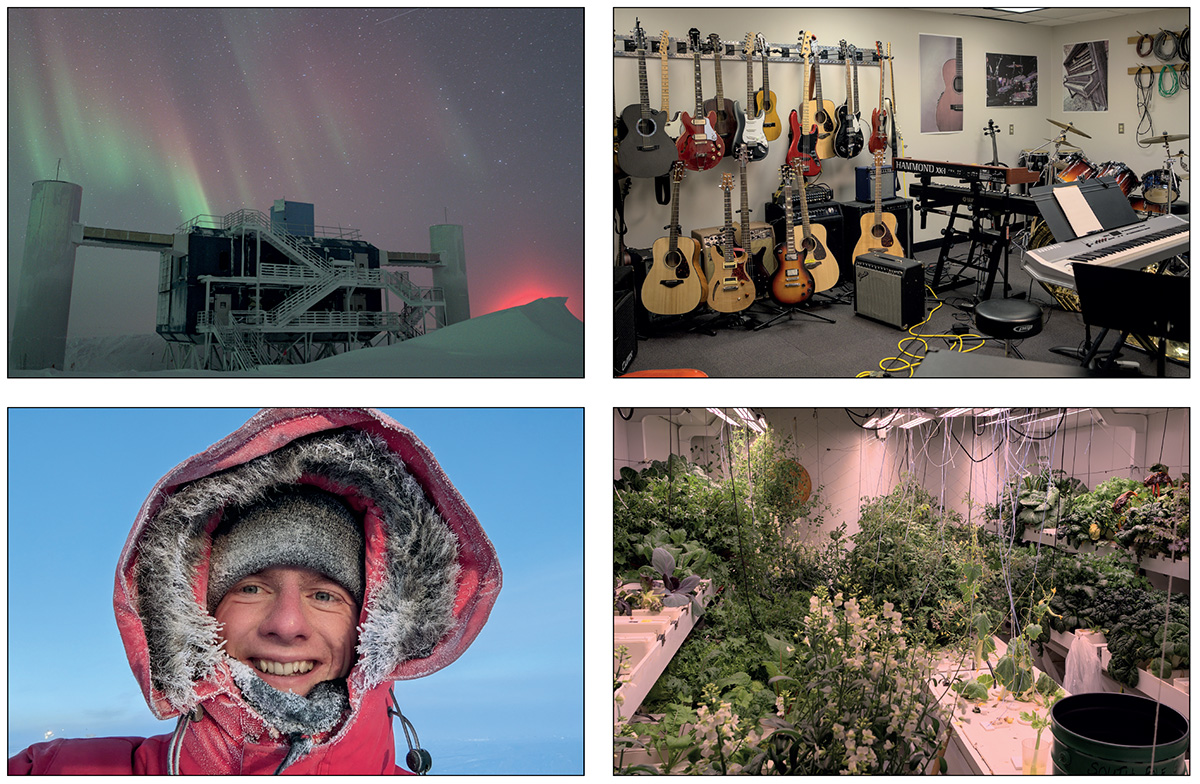
Part of station life is volunteering for teams, which in Marc’s case included the fire fighters, amongst others. To bide their time during a nearly six-month-long night, the inhabitants can go to the library, music room or grow vegetables in a repurposed biology experiment to freshen up the preserved foods. While winter in the Antarctic Circle is harsh outside, says Marc, it has one major highlight: the southern lights. “I remember one time, they were just dancing, moving and very bright. We stayed outside for a full hour packed in layers and layers of clothes!”

The only real downtime for the detector is when operators perform a full restart every 32 hours

As a winterover, Marc ensured that the IceCube detector worked 24/7 and recorded every incoming neutrino. “Usually, we have 99.9% uptime. If there is something wrong, we have a pager that pings us, even in the middle of the night.” To ensure that the rarest high-energy neutrinos are recorded, the only real downtime for the detector, he says, is when operators perform a full restart every 32 hours. For such events, which could point to high-energy phenomena in the universe, IceCube sends a real-time alert to other experiments. About 200 machines are located in the data centre and collect 1 TB of data per day, only 10% of which are sent north to a data centre in the US due to satellite-bandwidth limitations. The remaining data gets stored on hard drives, which must be swapped manually by the winterovers every two weeks. During the summer, when aircraft can reach the South Pole on a regular basis, boxes stashed with hard drives are taken back for thorough data analysis and archiving.

Since returning home to Switzerland, Marc is considering his next steps. “I have the opportunity to work on a radio observatory in the US next year. After a year operating the IceCube detector, I’m interested to work with hardware more. And I am definitely considering a PhD with IceCube afterwards, as there is a lot coming up.” Currently, the IceCube collaboration is working towards IceCube-Gen2, with the first step being to add seven strings with improved optical modules to the existing underground complex. In a second step, 120 further cables with refined light sensors will optimise the detector, and two radio detectors as well as an extended array will be placed on the surface. The upgrades will enlarge IceCube’s coverage from one to eight cubic kilometres, offering more than enough tasks for future winterovers during the decade . “Maybe in a few years I would be keen to return to the South Pole. It’s a very special place.”
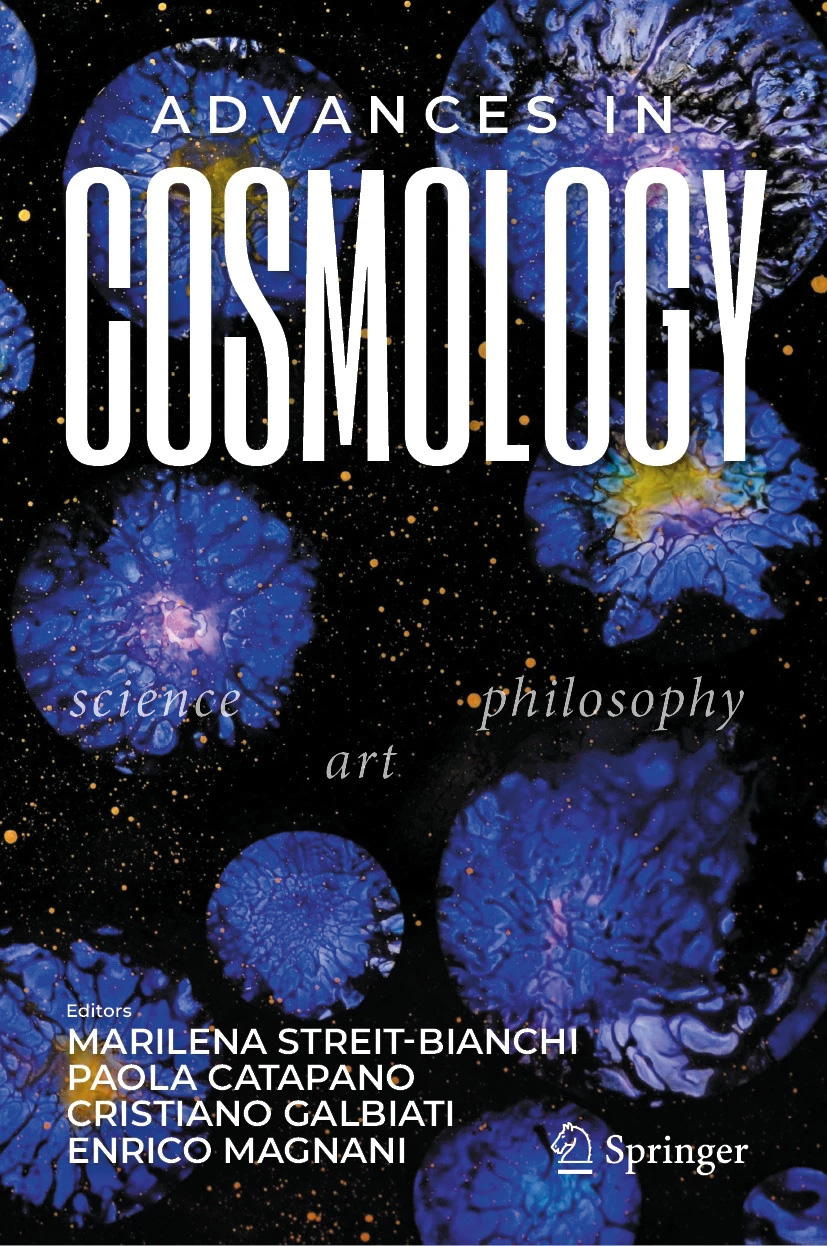

Advances in cosmology

Advances in cosmology

On the 30th anniversary of the discovery of weak neutral currents, the architects of the Standard Model of strong and electroweak interactions met in the CERN main auditorium on 16 September 2003 to debate the future of high-energy physics. During the panel discussion, Steven Weinberg repeatedly propounded the idea that cosmology is part of the future of high-energy physics, since cosmology “is now a science” as opposed to a mere theoretical framework characterised by diverging schools of thought. Twenty years later, this viewpoint may serve as a summary of the collection of articles in Advances in Cosmology.

The papers assembled in this volume encompass the themes that are today associated with the broad domain of cosmology. After a swift theoretical section, the contributions range from dark-matter searches (both at the LHC and in space) to gravitational waves and optical astronomy. The last two sections even explore the boundaries between cosmology, philosophy and artistic intuition. Indeed, as former CERN Director-General Rolf Heuer correctly puts it in his thoughtful foreword, the birth of quantum mechanics was also a philosophical enterprise: both Wolfgang Pauli and Werner Heisenberg never denied their Platonic inspiration and reading Timaeus (the famous Plato dialogue dealing with the origin and purpose of the universe) was essential for physicists of that generation to develop their notion of symmetry (see, for instance, Heisenberg’s 1969 book Physics and Beyond).

In around 370 pages, the editors of Advances in Cosmology manage to squeeze in more than two millennia of developments ranging from Pythagoras to the LHC, and for this reason the various contributions clearly follow different registers. Interested readers will not only find specific technical accounts but also the wisdom of science communicators and even artists. This is why the complementary parts of the monograph share the same common goals, even if they are not part of the same logical line of thinking.

Advances in Cosmology appeals to those who cherish an inclusive and eclectic approach to cosmology and, more generally, to modern science. While in the mid 1930s Edwin Hubble qualified the frontier of astronomy as the “realm of the nebulae”, modern cosmology combines the microscopic phenomena of quantum mechanics with the macroscopic effects of general relativity. As this monograph concretely demonstrates, the boundaries between particle phenomenology and the universe’s sciences are progressively fading away. Will the next 20 years witness only major theoretical and experimental breakthroughs, or more radical changes of paradigm? From the diverse contributions collected in this book, we could say, a posteriori, that scientific revolutions are never isolated as they need environmental selection rules that come from cultural, technological and even religious boundary conditions that cannot be artificially manufactured. This is why paradigm shifts are often difficult to predict and only recognised well after their appearance.

Giuseppe Fidecaro 1926–2024

Experimental physicist Giuseppe Fidecaro, who joined CERN in 1956 and continued there long into his retirement, passed away on 28 March.

Born in Messina, Italy in 1926, Giuseppe studied physics at the University of Rome, graduating in 1947 under the supervision of Edoardo Amaldi. Amaldi had become interested in cosmic rays and asked young “Pippo” to help him build a large detector to study the scattering of mesons on an iron target to explore the nuclear force. Between 1952 and 1954, Giuseppe continued to work on cosmic rays at the Tête Grise laboratory, 3500 m above Cervinia, where Maria Cervasi, whom he had met during his studies at Rome, also worked.

In 1953 Amaldi, who had become secretary general of the provisional CERN, suggested that Giuseppe spend time at the University of Liverpool to learn from the new synchrocyclotron being built there. He went to CERN with Maria, by then his wife, in 1956 and began preparing experiments for the 600 MeV Synchrocyclotron (SC), which came into operation in August 1957.

In January 1958, during a conference in New York, Giuseppe attended a presentation by Feynman describing the universal “V–A” theory of weak interactions. He heard that the theory lacked a key experimental ingredient: the decay of a pion into an electron and neutrino, predicted to occur 10 000 times less frequently than to a muon and a neutrino, which had not been observed in two experiments performed by well-known physicists. Upon his return to CERN, Pippo decided with the other members of the SC group that this would be the target of the next experiment. A device was immediately designed and built, and 40 events in perfect agreement with the V–A prediction were presented by Pippo in September 1958. The news put the newly born CERN on the map of the world of particle physics and laid the groundwork for the future discoveries of neutral currents, the W and Z bosons, and the Higgs field.

In 1960, with the start-up of the PS, Giuseppe led his group to measure – using a system of precision scintillators – the antiproton–proton cross section. The following year, he became professor at the University of Trieste and established a group that carried out a series of important scattering measurements at the PS and the SPS, in particular using polarised targets, during the 1970s. Following the proposal and execution of an experiment at the ILL in Grenoble searching for possible neutron–antineutron oscillations, in 1990 he presented an article “Fixed target B-physics at the Large Hadron Collider” at the LHC workshop in Aachen, which proposed, among other things, the use of a very intense proton beam extracted from the accelerator with a crystal, similar to what had been envisaged for the Superconducting Super Collider. This, and discussions with Giovanni Carboni and Walter Scandale, were at the origin of the RD22 collaboration, which for the first time proved the possibility of high-efficiency proton extraction from an accelerator using a bent crystal – a technique that is now used in LHC beam collimation.

Outside physics, Giuseppe made numerous contributions to CERN. In the early 1960s he was a member of the founding committee of the International Center for Theoretical Physics. In 1975 he was appointed as co-chair of a joint scientific committee set up under a collaboration agreement between CERN and the former USSR concerning the use of atomic energy, a responsibility he held until 1986. He was also tasked with coordinating cooperation with JINR in Dubna.

Giuseppe officially retired in 1991 but, together with Maria, continued his work at CERN as an honorary member of the personnel until as recently as 2020, during which time he devoted himself to research in the history of physics. He produced reports of rare beauty and precision, notably three well-documented articles on the contributions of Bruno Pontecorvo, whose friend he became in Dubna in 1989. Giuseppe was also known to CERN visitors, featuring prominently in the film shown in the Synchrocyclotron exhibition. Maria Fidecaro, with whom his rich human and scientific journey was deeply entwined, passed away in September 2023.

Education and outreach in particle physics

The imposing structure of CERN Science Gateway has been likened to a space station. In fact, it was CERN’s technical buildings and underground tunnels that were the inspiration for chief architect Renzo Piano. Its three pavilions and two tubes house exhibitions, hands-on laboratories, artworks, a 900-seat auditorium, a shop and a restaurant – all connected by a 220 m-long bridge and nestled amongst 400 trees and 13,000 shrubs. It has a net-zero carbon footprint, with 2000 m2 of solar panels on the pavilion roofs providing all the energy needed, while feeding 40% back into the CERN grid. The Gateway is free to enter and open all year, every day except Mondays, offering the capacity to welcome up to 500,000 visitors of all ages per year.

We look at the importance of reaching out as far and wide as possible

The following articles of expert exposition and opinion lift the lid on CERN Science Gateway. In addition to hearing from the teams behind its content, we explore the broader issues surrounding the theory and practice of education, communication and outreach in particle physics – beginning with what these three terms mean today (From the cosmos to the classroom). Exploring the Gateway’s exhibition spaces, authors reflect on four stunning art installations (Beautiful minds collide), the secrets of success for an interactive exhibit (Interactive exhibits: theory and practice) and the simple power of objects (The power of objects). Following a deep-dive into the new educational labs (Hands on, minds on, goggles on!), learn about CERN’s physics-education research (Why research education?), the impact of its hugely popular teacher programmes (Inspiring the inspirers), and how particle physics is or is not integrated in school curricula (Particle physics in school curricula). From empowering children to aspire to science (Empowering children to aspire to science) to taking physics to festivals (Going where the crowd is), and transcending physical and neurological boundaries (Expanding the senses), three articles emphasise the importance of reaching out as far and wide as possible. Last but certainly not least, we consider the invaluable role played by physicists (Physicists go direct and Time for an upgrade) and weave the rich experiences of CERN guides throughout these articles. Feel inspired? Your nifty red Science Gateway vest awaits!

A global forum for high-energy physics

The International Committee for Future Accelerators (ICFA) was formally founded in 1977 as a working group in IUPAP’s commission 11 (C11, Particles and Fields). Today it remains the place for discussions on all aspects of particle physics, in particular on the large accelerators that are at the heart of the field, and on the strategic deliberations in the various regions of the world. Although ICFA has no means of ensuring that any of its resolutions are carried out, it can act as the “conscience” of the field, and its recommendations can also influence national or regional activities. Among the currently 16 members, which include directors of CERN, Fermilab, IHEP, KEK and DESY, three are from Europe, three from the US, two from Russia, two from Japan, and one each from China and Canada. Three further members collectively represent smaller countries and regions, and the functions of chair and secretary rotate through the Americas, Europe and Asia, usually every three years.

A significant fraction of ICFA’s work is carried out within a set of seven panels, which meet regularly and assemble expertise on more technical or detailed aspects of particular importance to the field. One is devoted to the International Linear Collider (ILC). For more than two decades, ICFA has promoted the realisation of the ILC, for which a global design effort was put in place in 2005. In parallel, an international collaboration under CERN’s leadership had been working on the Compact Linear Collider (CLIC). Recognising the synergies between the two concepts, ICFA established a single coordinating structure, the Linear Collider Collaboration (LCC), in 2012. Also that year, the Japanese high-energy physics community proposed to host the ILC in Japan as a global project.

The LCC mandate came to an end in 2020, when ICFA put in place the ILC International Development Team (IDT) and its working groups. In June 2021 the IDT developed a proposal for the “preparatory laboratory” as a first step towards the realisation of the ILC in Japan.

Evolving landscape

While the IDT is continuing its work, the global Higgs-factory landscape has evolved since the early days of the ILC: more – linear and circular – studies and proposals are on the table, not least as demonstrated by the P5 report in the US. ICFA will soon discuss in what way its discussions and structures need to be adapted to better reflect this evolving landscape.

In November 2023 ICFA established a new panel devoted to the “data lifecycle”, which involves everything from data acquisition, processing, distribution, storage, access, analysis, simulation and preservation, to management, software, workflows, computing and networking. The panel, which replaces two previous ones on related topics, was created in response to the growing importance of data management and open science in recent years. Its membership is currently being put together with the aim to develop ideas and strategies for workforce development and professional recognition mechanisms.

For more than two decades, ICFA has promoted the realisation of the ILC

ICFA’s farthest-reaching and most visible activity is the ICFA Seminar. The 13th ICFA seminar on “Future Perspectives in High-Energy Physics” took place at DESY from 28 November to 1 December 2023. For the first time in six years (the prior ICFA seminar had taken place in 2017 in Ottawa, Canada), this select crowd of scientists, lab directors and funding agency representatives could come together in person for updates and discussions. One highlight was the panel discussion between the directors of KEK, CERN, Fermilab and IHEP, in which views on a future global strategy were discussed. The seminar concluded on a festive note with the formal passing of the ICFA chair baton from Stuart Henderson (JLAB) to Pierluigi Campana (INFN), who will lead ICFA for the next three years.

ICFA is the only global representation of the particle-physics community, and the ideal discussion forum for global strategic developments, especially large international collider projects. In view of the current situation with numerous opportunities for future facilities – not least a future Higgs factory, but also smaller and more diverse projects – the committee and its panels look forward to serving the field of particle physics through continued advocacy, exploration, discussion and facilitation.    

Physics community pays tribute to Peter Higgs

Peter Higgs has passed away at the age of 94. An iconic figure in modern science, Higgs in 1964 postulated the existence of the eponymous Higgs boson. Its discovery at CERN in 2012 was the crowning achievement of the Standard Model (SM) of particle physics – a remarkable theory that explains the visible universe at the most fundamental level.

Alongside Robert Brout and François Englert, and building on the work of a generation of physicists, Higgs postulated the existence of the Brout–Englert–Higgs (BEH) field. Alone among known fundamental fields, the BEH field is “turned on” throughout the universe, rather than flickering in and out of existence and remaining localized. Its existence allowed matter to form in the early universe some 10–11 s after the Big Bang, thanks to the interactions between elementary particles (such as electrons and quarks) and the ever-present BEH field. Higgs and Englert were awarded the Nobel Prize for Physics in 2013 in recognition of these achievements.

An immensely inspiring figure for physicists around the world

Fabiola Gianotti

“Besides his outstanding contributions to particle physics, Peter was a very special person, an immensely inspiring figure for physicists around the world, a man of rare modesty, a great teacher and someone who explained physics in a very simple yet profound way,” said CERN’s Director-General Fabiola Gianotti, expressing the emotion felt by the physics community upon his loss. “An important piece of CERN’s history and accomplishments is linked to him. I am very saddened, and I will miss him sorely.”

Peter Higgs’ scientific legacy will extend far beyond the scope of current discoveries. The Higgs boson – the observable “excitation” of the BEH field which he was the first to identify – is linked to some of most intriguing and crucial outstanding questions in fundamental physics. This still quite mysterious particle therefore represents a uniquely promising portal to physics beyond the SM. Since discovering it in 2012, the ATLAS and CMS collaborations have already made impressive progress in constraining its properties – a painstaking scientific study that will form a central plank of research at the LHC, high-luminosity LHC and future colliders for decades to come, promising insights into the many unanswered questions in fundamental science.

Dieter Proch 1943–2024

Dieter Proch, who made significant contributions to accelerator science, passed away unexpectedly on 27 February 2024 at the age of 80.

Dieter studied physics at the University of Bonn, where he joined the group of Helmut Piel, which had just started working on superconducting accelerator resonators. He then followed Piel, who had accepted an appointment as professor at the newly founded University of Wuppertal, and completed his doctorate on measurements of superconducting accelerator resonators. Soon after, he analysed the serious problem of so-called one-point multipacting in superconducting resonators prevalent at the time. Together with Wuppertal colleagues, he proposed changing the shape of resonators to have a spherical profile, which solved the multipacting problem. Subsequently, Dieter completed research stays at Cornell and CERN, where in 1981 he contributed to the development of spherical superconducting resonators for LEP II to double the energy of LEP. He then took up a permanent position at DESY, where he remained for almost 27 years until June 2009.

During his first years at DESY, Dieter’s focus was on the development of superconducting accelerator structures for the HERA accelerator that was being planned. He was head of the “Superconducting acceleration sections” experimental programme, where he demonstrated organisational talent as well as scientific and technical skills. Within a few years he pushed superconducting resonators from theoretical considerations to preliminary technological studies, and the operation of experimental resonators in the PETRA accelerator.

In the mid-1980s, Dieter took over a group focusing on superconducting accelerator technology. The group was responsible for the design, manufacturing, testing, installation and operation of the superconducting resonators in HERA.

In addition, Dieter was one of the founders of the international TESLA collaboration. Under his leadership, a groundbreaking infrastructure for the treatment, assembly and testing of superconducting accelerator resonators was built at DESY. This development work made it possible to increase the originally targeted field gradients from 25 to 35 MV/m. He organised close collaborations with many laboratories in Germany, Europe, Asia and the US. Particularly noteworthy here are Peking University and Tsinghua University, both of which appointed Dieter as a visiting professor.

As a globally recognised expert and deputy chair of the TESLA technology collaboration, Dieter served on important committees for many years, such as the advisory board for SNS at Oak Ridge. At DESY, the FLASH and European XFEL user systems are based on his fundamental work. The SRF Workshop, which later became a recognised international conference, was always particularly close to his heart. The scientific reputation that DESY enjoys worldwide was significantly influenced by Dieter. He also collaborated on several articles for the Handbook of Accelerator Physics and Engineering.

Dieter’s contributions continue to shape our understanding and advancement of accelerator technology. We thank him very much and will always remember him fondly.

The people factor

Participants of the 7th FCC physics workshop

Since its inception a decade ago, the Future Circular Collider (FCC) collaboration has evolved in scope and scale – especially since the completion of the conceptual design report in 2018, when directed efforts were made to broaden the project’s reach and attract new partners. Such endeavours are crucial considering the ambitious nature of the FCC project and the immense global collaboration required to bring it to fruition.

Today, the collaboration brings together more than 130 institutes from 31 countries. Contributions from members span a broad spectrum encompassing theoretical and experimental particle physics, applied science, engineering, computing and technology. Ongoing collaborations with research centres internationally are pushing the performance of key technologies such as superconducting radio-frequency cavities and klystrons, as well as magnets based on novel high-temperature superconductors (see “Advancing hardware“). Increased global collaboration is a prerequisite for success, and links with high-tech industry will be essential to further advance the implementation of the FCC.

The proposed four-interaction point layout for the FCC is not only designed to offer the broadest physics coverage, but makes it a future collider commensurate with the size and aspirations of the current high-energy physics community. The attractiveness of the FCC is also reflected in the composition of participants at annual conferences, which shows a good balance between early-career and more senior researchers, geographical diversity, and gender. The latter currently stands at a 70:30 male-to-female ratio, which has been increasing during the course of the feasibility study.

Global working group

The FCC feasibility study has established a global working group with a mandate to engage countries with mature communities, a long-standing participation in CERN’s programmes, and the potential to contribute substantially to the project’s long-term scientific objectives. In addition, an informal forum of national contacts allows exchanges between physicists from different countries and the development of collaborations inside FCC. Each interested country has one or two national contacts who have the opportunity to report regularly on the development of their FCC activities.

The 10th FCC conference poster

Drawing parallels with the LHC and HL-LHC successes, CERN’s unique experience with large-scale scientific collaborations has been invaluable in shaping the cohesive and productive environment of the FCC collaboration. It is imperative to recognise the dedication of existing members while addressing the need for new contributors to bolster the collaboration. As the FCC considers the next stage of its scientific journey, potential partners are invited to bring their unique skills and perspectives.

First discussions on the governance and financial considerations for the FCC project are taking place in the CERN Council. The models aim to provide a structure for both the construction and operation phases, and assume compatibility with the CERN Convention, while also taking into account the United Nations’ sustainable development goals. In parallel, the organisational structure of the FCC experiment collaborations is being discussed. Given the inherently cooperative and distributed nature of these collaborations, a relatively lightweight structure will be put forth, based on openness, equality at the level of participating institutes and a wide consultation within the collaboration for key decisions.

Since 2021, the FCC has implemented a robust organisational structure, acting under the authority of the CERN Council, that facilitates efficient communication and coordination among its members. Looking ahead, the path to the governance model required for the FCC project and operation phases is both exciting and challenging. Importantly, it requires the long-term engagement and support of participants from CERN’s member and associate member states, and from the non-member states, whose community at CERN has been growing with the LHC, particularly from institutes located in North America and the Asia-Pacific regions. As the project evolves further, it is crucial to refine and adapt the collaboration model to ensure the efficient allocation of resources and sustained momentum.

The FCC offers a multitude of R&D opportunities, and the collaborative spirit that defines it promises to shape the future of particle physics. As we go forward, the FCC collaboration beckons individuals and institutions to contribute to the next chapter in our exploration of the fundamental laws and building blocks of the universe.

Machine matters

It’s exactly 10 years since 350 physicists and engineers met at the University of Geneva to kick-off the Future Circular Collider (FCC) study. A response to the 2013 European strategy for particle physics, the study initially examined options for an energy-frontier collider in a new 80–100 km-circumference tunnel. By late 2018 a conceptual design report (CDR) integrating the physics, detector, accelerator and infrastructure of a staged lepton (FCC-ee) and hadron (FCC-hh) collider was published. Two years of lengthy deliberations later, the 2020 European strategy recommended that the community investigate the technical and financial feasibility of a future hadron collider at CERN with a centre-of-mass energy of at least 100 TeV and with an e+e– Higgs and electroweak factory as a possible first stage.

Studies show that the FCC would deliver benefits that outweigh its costs

After three years of work, mobilising the expertise of physicists and engineers from around the world, a mid-term report of the FCC feasibility study was completed in December 2023. Numerous technical documents and a 700-page overview of the results demonstrate significant progress across all project deliverables, including physics opportunities, the placement and implementation of the ring, civil engineering, technical infrastructure, accelerators, detectors and cost. No technical showstoppers have been identified, and the results were received positively by the CERN Council during a special session on 2 February. Here and in the some related articles, the Courier gathers the key take-aways.

A collider for the times

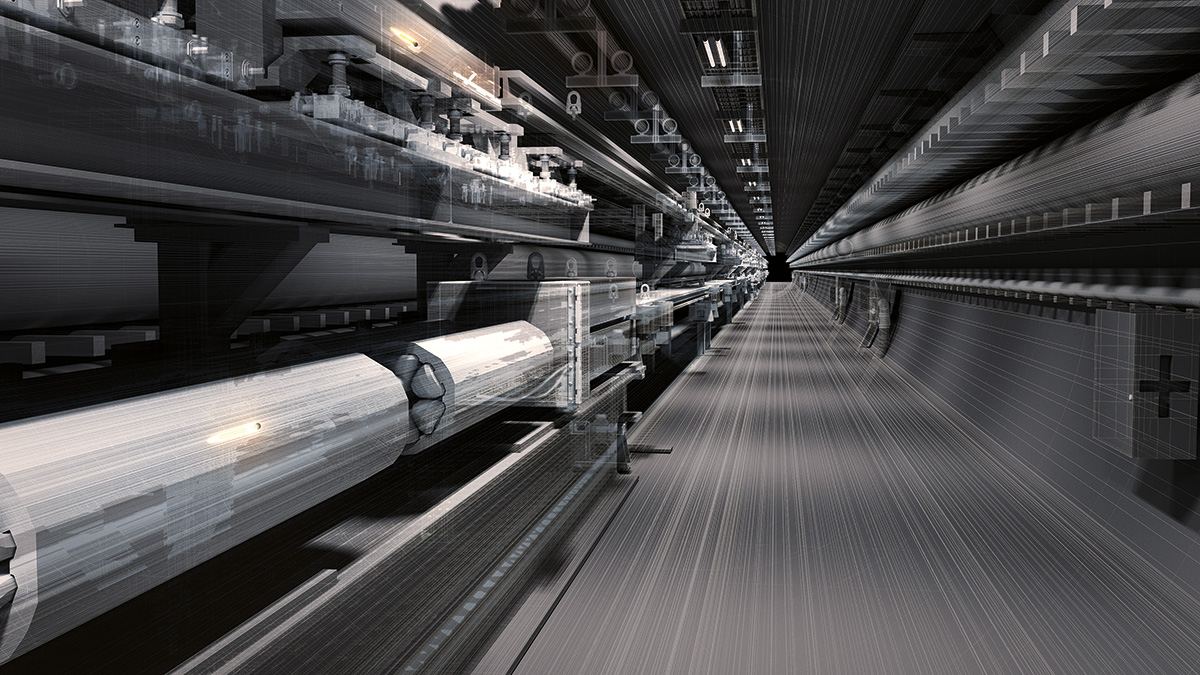
The scientific backdrop to the FCC is the existence of a 125 GeV Higgs boson together with no sign yet of new elementary particles at the TeV scale – transformational discoveries by the LHC that call for a broad and versatile exploration tool with unprecedented precision, sensitivity and energy reach (see “FCC: the physics case“). An unfathomable amount of work has led to an optimal placement of the FCC ring, surface sites and project implementation with CERN’s host states (see “Where and how“). The 90.7 km FCC tunnel, constituting a major global civil-engineering project in its own right, is well understood (see “Tunnelling to the future“). Assuming a decision to advance to the next stage is taken by the CERN Council after the next European strategy process, a preparatory phase (involving project authorisation, preparation of civil-engineering works, technical design for the collider, injectors and the detectors, further consolidation of physics cases and detector development) would take place from 2026 to 2032. Construction could then take place in 2033–2040, with the installation phase and transition to operation between 2038 and the mid-2040s.

The multi-energy lepton collider FCC-ee, which would produce huge quantities of Z, W and Higgs bosons, and ultimately top-quark pairs, over a period of about 15 years, builds on the remarkable success of LEP, which was instrumental in confirming the Standard Model and in guiding physicists to the discoveries of the top quark and the Higgs boson. Once thought to be the final word on circular e+e– colliders, advances in accelerator technology since LEP (such as top-up injection at B factories and synchrotron-radiation light sources, developments in superconducting RF, and novel beam-focusing techniques) offer collision rates more than two orders of magnitude larger. Boosting the FCC-ee luminosity further, a key outcome of the mid-term report is a new ring-layout that enables four interaction points.

Ideal springboard

The mid-term report confirms that FCC-ee is both a mature design for a Higgs, electroweak and top factory, and an ideal springboard for an energy-frontier collider, FCC-hh, for which it would provide a significant part of the infrastructure. Since the revised FCC-ee placement studies, the overall layout of FCC-hh has changed radically compared to the initial concept phase, with three key benefits: an optimal size of the experiment caverns, with the option of sharing detector components between the lepton and the hadron machines; a reduction in the number of surface sites; and a shorter tunnel for the transfer lines from the injector to the collider ring. The new layout is compatible with an injection scheme that delivers beams to the FCC-hh ring from the LHC or from an upgrade of the SPS.

The mid-term report addresses the challenging R&D for the high-field FCC-hh magnets. A key deliverable of the feasibility study is a summary of R&D plans based on Nb3Sn, high-temperature superconductors (HTS) and hybrid technologies. While Nb3Sn magnets are considered relatively low-risk, HTS technology would enable the most aspirational goals to be reached. Due to the sizable gap in technology readiness between the two options, however, the study team advises against an early decision. Instead, an adapted “phase-gate” process is proposed with regular review, steering and decision points every five years, and coordinated with the CERN high-field magnet programme. Taking into account the time needed to construct and operate FCC-ee and, in parallel, to develop the high-field dipole magnet technology, it is estimated that FCC-hh could begin physics operations in the early 2070s.

The FCC-ee accelerator

The cost of an FCC-ee with four interaction points is estimated to be CHF 15 billion, around a third of which is taken up by the tunnel. The reliability of the FCC-ee cost estimate will be improved following further development of the various accelerator systems and equipment required, along with the subsurface investigations starting in 2024. The final feasibility-study report will also address risk-management and the personnel resources required from project development to construction.

Power consumption is another topic of interest. The FCC-ee will be the largest particle accelerator ever built, with its RF, magnet and cryogenic systems drawing the main loads. The total CERN energy consumption throughout the FCC-ee scientific programme is estimated to vary between 2.0 and 2.8 TWh/year depending on the energy mode, to be compared with about 1.6 TWh/year during the High-Luminosity LHC era. The figures are hoped to be lowered as R&D (for example, to improve the performance of superconducting cavities and the efficiency of power sources) advances. The FCC study team is also working with regional authorities to identify ways in which part of this energy may be re-used for heating in local industries and public infrastructures.

Electrical power would be provided from the French electricity grid, and the system is designed such that no new sub-stations will need to be constructed between the different FCC-ee energy stages. Studies carried out in conjunction with McKinsey and Accenture indicate that by the time the FCC comes into operation, a low carbon footprint can be achieved with an energy mix that contains a large fraction of energy from renewable sources.

Return on investment

Beyond the creation of new knowledge, studies undertaken within the European Union co-funded FCC Innovation Study show that the FCC would deliver benefits that outweigh its cost. Impacts on industry from high-tech developments, the sustained training of early-stage researchers and engineers, the development of open and free software, the creation of spin-off companies, cultural goods and other factors lead to an estimated benefit/cost ratio of 1.66. The FCC project is linked to the creation of around 800,000 person-years of jobs, states the mid-term report, and the FCC-ee scientific programme is estimated to generate an overall local economic impact of more than €4 billion.

The digested mid-term report in summary: the FCC integrated programme is an ideal match for the uncharted physics territory ahead; its placement at CERN is geologically and territorially feasible; no technical showstoppers have been identified; the FCC would return more to society than it costs. Accelerator, detector, engineering and physics studies by the global FCC collaboration are continuing across more than 150 institutes in more than 30 countries, while new partners are sought to work on various R&D (see “The people factor” ). The final report of the FCC feasibility study is due in early 2025.

Where and how?

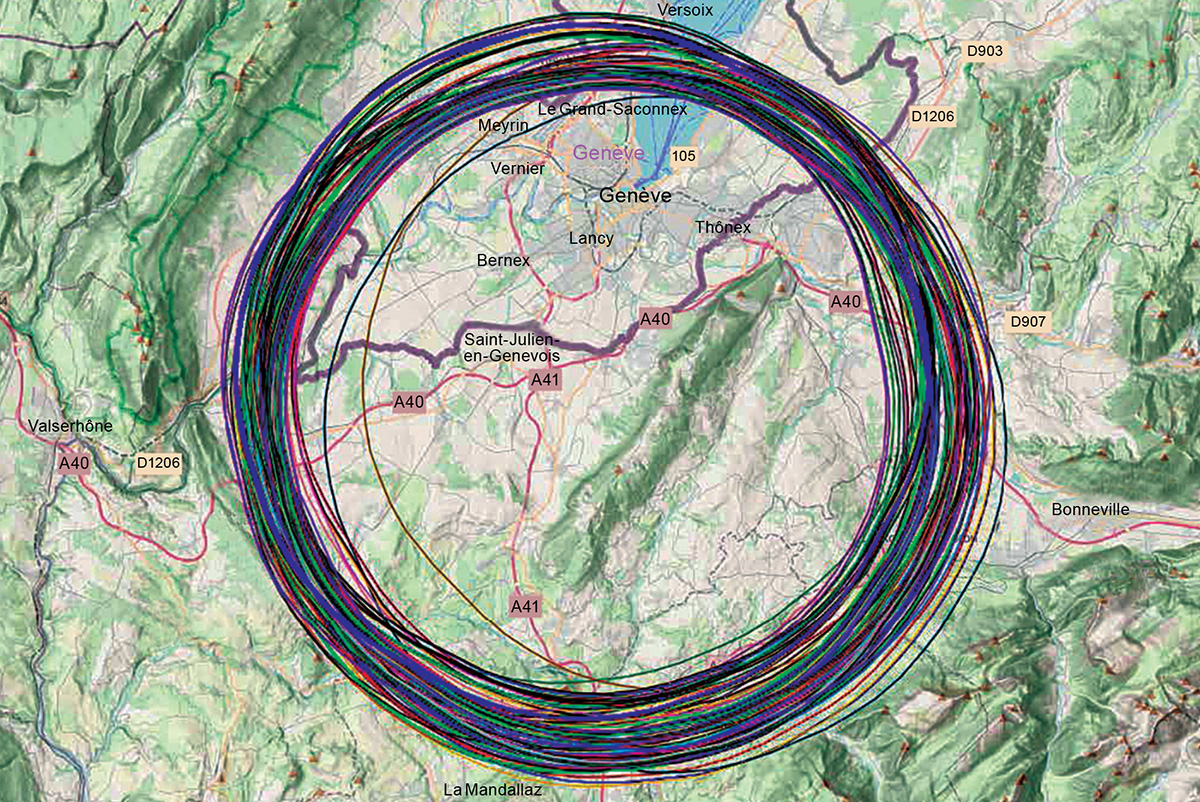
FCC placement scenarios

Designing a next-generation collider with a performance that meets the scientific demands of the particle-physics community is one thing. Ensuring its territorial compatibility, technical feasibility and cost control is quite another. A core element of the FCC feasibility study is therefore the placement of the ring and the necessary surface sites, for which an iterative approach in collaboration with CERN’s host states, France and Switzerland, has been adopted from the outset.

Territorial compatibility requires numerous natural, technical, urban and cultural constraints to be identified and considered. The goal is to limit the consumption of land, keep the quantity of excavated materials to a minimum and re-use as much as possible, minimise the consumption of resources such as electricity and water, avoid visibility, noise and dust nuisances, and create synergies with future neighbours where possible. Following eight years of intense study, one configuration was identified out of some 100 variants as being particularly suitable. This scenario has a circumference of about 90.7 km, eight surface sites and permits the installation of up to four experiments.

During 2023 this reference scenario was reviewed with different regional stakeholders and now serves as the baseline for further design and optimisation activities. These include geophysical and geotechnical investigations to set the optimum depth of the tunnel, links to high voltage grids, access to water for cooling purposes, connections to major rail and road infrastructures, landscape integration and the development of sustainable mitigation measures.

Drill down

Working out how to place a 90.7 km-circumference research infrastructure in a densely populated region requires several dozens of criteria to be met. While initial investigations concerned observations at the square-kilometre level, the focus gradually moved to thousands of square metres and individual land-plot levels. Initial cartographic and database research has progressively been replaced with analysis in the field, working meetings with public administration services and eventually individuals with expert local knowledge. In addition to the scientific and technical requirements, the FCC implementation scenario takes into account  the project-implementation risks, cost impacts, access to resources (electricity, water, land), transport requirements, and estimates of the urban and demographic evolution. The study also analyses socio-economic benefits for the region.

The reference layout with only eight surface sites requires less than 50 ha of land use on the surface and constitutes a significant reduction in footprint with respect to the initial scenario drawn up in 2014. All sites are situated close to road infrastructure, with less than 5 km of new roads required, and several of the eight sites are located in the vicinity of 400 kV grid lines. The layout of the FCC is integrated geographically with the existing CERN accelerator complex, with beam transfer possible from either the LHC or via the SPS tunnel.

Throughout all studies, CERN has been accompanied by the services of the Swiss and French authorities at different levels

The feasibility study, carried out with relevant consultancy companies, confirms the technical feasibility of all eight surface sites and the underground works. Working meetings with all the municipalities affected in France and Switzerland have not revealed any showstoppers so far, even if decisions by municipalities and the host states are yet to be taken. Next steps include the detailed integration of the surface sites in the environment.

Timescales are critical to be able to continue with such studies. By the end of the feasibility study in 2025, all land plots that are required by the project need to be communicated to the host states. In addition, a formal environmental evaluation phase in both France and Switzerland is necessary for the authorisation procedures. These activities rely on an agreement between CERN and the host states on the steps to be made by each stakeholder, including the associated legal and regulatory conditions.

Throughout all studies, CERN has been accompanied by the services of the Swiss and French authorities at different levels. This dialogue concerns the more detailed expression of the needs and constraints of the local actors and the identification of potential co-development topics and compensatory measures. The findings are gradually being integrated into a process of project optimisation of the reference scenario to further improve its added value for the territory while keeping the science value high and the project implementation risks low.

bright-rec iop pub iop-science physcis connect