Last year, at the first ever joint symposium organized by ESO, CERN and ESA, in Garching, Germany, David Southwood, science director at ESA, quoted a statement from the EU Commission saying that: “Europe should become the most competitive and dynamic knowledge-based economy in the world.” The EU statement is full of sense and summarizes a legitimate ambition. The question is how to achieve such a goal and how physics can help in achieving it.
The structure and pace of change of modern economies is such that wealth and power are no longer found in the abundance of available minerals, fossil fuels and raw materials, but lie instead with the ability and know-how to process these commodities into high-technology products that bring a high added value. A competitive economy thrives on innovations, displacing older products with better and more efficient new ones. It is clear that important innovations no longer come from well-targeted inventions, but result from new knowledge and know-how. For example, while it was possible for the invention of the incandescent lamp to result from ingenious trials based on known facts and existing technology, the invention of the transistor would not have been possible without the new ways of thinking brought by quantum mechanics, and therefore without a long, open development of basic research – research that was curiosity-driven and essentially conducted for its academic interest. This change of style in the process of innovation is here to stay and is an important element in developing a knowledge-based economy.
The succession of discovery and innovation phases seen over the past two centuries in the world economy is a well-documented fact. Nevertheless, if one is to base future success on innovations to come, it is worth preparing for them through a healthy research effort in which physics should provide its share of acquired new knowledge. However, one cannot use knowledge as a mere commodity, called upon when needed. We should instead consider it as a constantly developing entity, bringing new insight, new facts and, sometimes, providing new ways of thinking, as nature is much richer than our imagination. One may safely assume that in future the most innovative pieces of new knowledge will come from open research driven basically by human curiosity and yielding unexpected results.
A few years ago, when young French hospital doctors were on strike, they marched with the slogan “At Christmas no scanner, at Easter the churchyard” (which rhymes in French). The scanner had quickly become a key instrument for them, but would there be any scanners without basic research in physics a few decades ago? The answer is no! There are many similar examples. Today many topical questions are associated with the genome, which will play a key role in understanding the mechanisms of life and pave the way to new biotechnologies. Here we see many physicists taking an important role in genome analysis. It is not surprising that Paolo Zanella, who first directed the European Bioinformatics Unit (the EMBL’s outstation in Cambridge that manages databases related to research on the genome), was a former head of CERN’s computer division. Genome research depends on methods and computational means recently developed in particle physics, and for which the physicist’s culture – that is the physicist’s ways of thinking and acting – is instrumental.
What relative priority should we then attach to domains like particle physics, whose research objectives seem to be very remote from standard human conditions? It is tempting to say that further knowledge about quark dynamics or CP violation is unlikely to bring any useful application, and the same can also be said of many astrophysics questions associated with the structure and evolution of the universe. Yet this research, because it takes us far away from the natural conditions met in everyday life, has acquired a special style of its own, which turns out to be highly conducive to new conceptual and technical developments. Even though its objectives may look very academic, such research should be considered as an asset in the building of a sustainable knowledge-based economy. As Victor Weisskopf said: “The problems at the frontier of science are exactly those that cannot be solved with established methods.” This is where the new methods originate.
Consider information technology, a clear priority for a knowledge-based economy. Key developments, such as the Web in the recent past and the Grid today, originated from particle physics and again rely heavily on the physicist’s culture. Further progress in many sciences, in particular life sciences and environmental sciences, will depend on efficient handling of very large amounts of information. The large LHC collaborations have become efficient think-tanks for that purpose. The fact that each LHC detector will have to deal with petabytes (1015) of information per year – a million times that contained in the human genome – is a strong selling point when trying to convince hard-nosed people that the LHC is worth the effort and money put into it, notwithstanding its great physics potential.
Physics research is already worth supporting as part of human culture: man does not live by bread alone. A successful economy should allow us to put questions about the deep nature of the world around us, but even on very practical grounds, supporting physics research is also a key element when searching for a dynamic knowledge-based economy.
• Extracted from the closing talk at a special workshop of Marie Curie Fellows on Research and Training in Physics and Technology, held at CERN in 2002.
The year 2002 saw the passing away of two great former CERN director-generals, Willibald Jentschke on 11 March and Viki Weisskopf on 21 April. On 31 October, the laboratory hosted a symposium to remember Willi, a man of great charm and an intelligent leader.
In organizing this symposium, we felt it appropriate to focus the discussions on the discovery of neutral currents, which was probably the highlight of Willi’s mandate. At the time, this was seen as a major step forward, and it was indeed a very great discovery. Yet for a number of reasons it somehow escaped celebration. It seems strange today that such an important event should have been left unattended, and it is interesting to consider why that might have been. Perhaps it is because many of the experimental physicists involved died prematurely. That is one possibility; others may offer different explanations.
To discuss neutral currents, and perhaps throw some light on why their discovery remained relatively obscure, we invited a distinguished theorist in the person of Tini Veltman and a distinguished experimentalist in the person of Don Perkins to talk at the symposium. Talks from Herwig Schopper and Klaus Winter were devoted to Willi’s life and personality.
Another major development that took place at CERN just as Willi’s mandate began is the start of the Intersecting Storage Rings (ISR), the world’s first hadron collider. Kjell Johnsen’s talk covers that important episode in the history of our field.
The years of Willibald Jentschke’s mandate between 1971 and 1975 were, in my view, the years when CERN emerged as a leading laboratory and I am sure that this is due to the insight and vision of this great director-general. However, there is another laboratory on which he left an even greater mark, and that of course is DESY, the laboratory that he founded in Hamburg. For that reason, we invited Erich Lohrmann, one of DESY’s first physicists, to tell us the extraordinary story of how DESY came to be.
I would like to thank Cecilia Jarlskog and Daniel Treille, who both put so much effort into organizing the two symposia hosted at CERN in 2002 in honour of Viki Weisskopf and Willibald Jentschke, two men who played such important roles in the history of CERN.
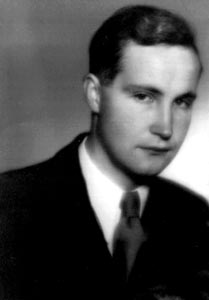
Born in Vienna in 1911, Willibald Jentschke received his PhD in 1935 after studying nuclear physics under Georg Stetter. He then continued to work on nuclear physics at the University of Vienna. In 1939, he published a very important and topical paper with the title “Ueber die Uranbruchstuecke durch Bestrahlung von Uran mit Neutronen” (“On the fragments of uranium from irradiating uranium with neutrons”).
After the war he was invited to the US, where he became professor at the University of Illinois in Urbana and, in 1951, director of the Cyclotron Laboratory. After 1955, research in nuclear physics – which included high-energy physics – was again allowed in the Federal Republic of Germany. Accordingly, attempts were made to bring research on these subjects in Germany back up to international standards. In the search for personalities who could help to make a new start, Jentschke was an obvious choice, since he had already made a reputation for himself in Vienna and later in the US.
When the University of Hamburg offered him a chair of physics in 1955, he found a positive climate for supporting research in general, and a positive reception to his proposal to build a new institute of physics around a modern particle accelerator. However, the scope of his vision far exceeded what Hamburg officials were accustomed to. He demanded DM 7.5 million, a fantastic sum at that time, and quite outside the normal possibilities of the “Freie and Hansestadt Hamburg”. It is a great tribute to Jentschke’s scientific vision, his competence, his enthusiasm and his ability to communicate these qualities that he succeeded after long and patient negotiations in having this sum granted to him. It turned out to be the seminal funds for the construction of DESY, the German electron synchrotron.
A great help in deciding the all-important question of which accelerator to build was provided by an international accelerator conference at CERN in 1956. There, Jentschke met with German colleagues who were already active in accelerator building at CERN and at German universities. There was agreement that there should be a concentrated German effort at one site, resulting in a laboratory able to compete internationally, and which would be complementary to the programme at CERN. These requirements led to a plan to build a large electron accelerator, and Hamburg was an obvious choice for the site.
Such a machine could obviously not be built with the funds of the state of Hamburg alone. After long negotiations with the federal government and the German states (Länder), a financial agreement was finally reached and signed on 18 December 1959 – the date that DESY was officially founded. Jentschke became the first director of DESY, a position he held until he became director-general of CERN in 1971.
The role of Jentschke in these decisive years cannot be underestimated. His enthusiasm, his optimism, his tenacity in following his vision and his skill in negotiating with the authorities and in finding allies must have been very impressive. Even before the official founding date he started with the design of the laboratory, making it his own personal project, and working with a small group of devoted people. This early initiative was very important because, among other things, it gained time in building the laboratory.
Planning and policy
When the financial and administrative difficulties came close to a solution, Jentschke turned to the equally important questions of physics and research policy. Firstly, the decision was taken to build an electron synchrotron and not a linear accelerator. This allowed DESY to hold its own against the competition of the Stanford Linear Accelerator, which was built somewhat later and had a superior beam energy. Secondly, Jentschke supported with great determination a policy that opened DESY, with favourable conditions, to outside users from the German universities and from the Max Planck Society. The German universities were actually included in the process of long-range scientific planning. This policy, which emphasized the service function of DESY, proved to be a decisive advantage for the future because it attracted talent from all over Germany and, later on, internationally. In fact, long before international co-operation became a catchword, Jentschke supported the participation of scientists from outside Germany. This was the beginning of a gradual opening of DESY to international use – a feature that was to become so important for the laboratory’s future.
Building the 7.5 GeV electron synchrotron was a very difficult task because there was very little experience available in Germany. Jentschke succeeded in enlisting a team of young and enthusiastic physicists and engineers who took up the challenge. A key ingredient of their success was the spirit of teamwork that Jentschke created and the great human qualities he displayed in his leadership. Unselfish help was given by M Stanley Livingston, who at the same time was constructing the Cambridge Electron Accelerator at Harvard University in competition with DESY. Help also came from CERN, from where Hans Otto Wüster brought back advice on the optics of the machine. And so the DESY synchrotron delivered its first beam on 26 February 1964.
Establishing an experimental programme for the electron synchrotron was another critical task that rested on Jentschke’s shoulders. Again, this was a field in which very little experience existed in Germany at the time. Jentschke succeeded in recruiting a first-rate team of young experimental physicists from inside and outside Germany – his charm and enthusiasm went far in persuading people to come to the new laboratory, whose accelerator was still being built. He approached the German universities to send teams to Hamburg, and he encouraged international collaboration right from the beginning.
Under the leadership of Peter Stähelin and Martin Teucher, DESY’s experimental programme got off to a successful start. S C C Ting’s work on testing QED gave DESY early recognition. Naturally, electron-proton scattering was one of the key research activities. Teams led by Friedhelm Brasse, Herwig Schopper and Gustav Weber were soon presenting data that were second to none.
Photoproduction was the other large part of the programme. There, results achieved with a polarized photon beam from a diamond target won the prestigious Physikpreis of the German Physical Society for a team of young physicists in 1970. A hydrogen bubble chamber, built at Saclay, covered the subject of more complex photoproduction reactions. A comprehensive programme on photoproduction was carried out with this chamber. The collaboration also included a team from East Germany, not a trivial thing in those times.
Synchrotron success
In addition to high-energy physics, Willibald Jentschke recognized the potential of research with synchrotron radiation from the beginning and supported it strongly. This initiative was another of his visions, which was to become very important for the future. Stähelin, who as director of research was the driving force for establishing a successful research programme in synchrotron radiation, shared his vision. This early initiative led eventually to Hasylab, the large synchrotron radiation laboratory at the DORIS storage ring. The key people in this development played a role in the development of synchrotron radiation activities from the original “Hänselbunker” at the synchrotron to the big expansion coming with the DORIS storage ring. They brought in important outside users such as IBM, the Max Planck Society and the European Molecular Biology Laboratory, and finally led to the foundation of Hasylab.
Jentschke was well ahead of his time in many important respects. Decades before the word “outreach” was coined, he saw to it that the work of DESY was communicated to the public: there were open days at DESY for the laboratory’s neighbours, articles in popular magazines and the beginning of a public relations group. There were many beneficial effects from this; for example, the resulting good relations with the neighbours proved very important when DESY had to expand beyond its original site to build HERA.
A few years after the successful start of DESY the question of the next project posed itself. The choice was an electron-positron storage ring or a bigger electron synchrotron. This was not an easy decision at that time. These were pre-quark times, and many people thought that the main research activity of storage rings would be measurement of the proton form factor in the time-like region and testing QED, and that beyond a few giga-electron-volts no interesting physics could be done. On the other hand, physics with the electron synchrotron had been successful and many people wanted to have more of the same. On this vital question Jentschke carried out the widest possible consultations, but did not receive an unambiguous picture. In the end, he decided to make something new, and put his weight behind the storage-ring project. In retrospect, this decision is a great tribute to his vision in physics and to his wisdom.
During the construction phase of the DORIS storage ring, Jentschke made a seemingly minor decision by choosing the magnets somewhat larger than absolutely necessary for physics as it was then understood. This enabled the storage ring to go to higher energies than originally foreseen, and proved to be the entrance ticket for a very successful programme of b-physics. But this was to come much later.
In the autumn of 1974 the storage ring started work. The timing coincided with the discovery of the J/Ψ particle, and allowed DESY to participate in the very front line of research. The storage-ring decision also improved the research potential in the field of synchrotron radiation dramatically, which again would have very important consequences for the future. Jentschke could not witness this golden period of great successes at DESY personally, because he had accepted the post of director-general of CERN in 1971.
Needless to say, without Jentschke DESY would not exist. His singular devotion to the cause of physics, his vision and wisdom in taking key decisions and the trust and appreciation he enjoyed with the authorities – all these qualities enabled him to create DESY and to shape the future of the laboratory in the best possible way. But still, this is not the complete story. Equally important was his great personality. It encompassed knowledge, competence, vision, Viennese charm and courage. He had the talent to recognize and attract excellent people and to encourage fruitful and engaged teamwork. With his example and his authority he created what could be called the spirit of DESY, emphasizing teamwork and the appreciation of the work of others, fairness and putting the good of science and of the laboratory above personal ambition. This spirit is still there, and in this sense Willibald Jentschke is still with us – to the good of the laboratory.
A few months after celebrating his 90th birthday, Willibald Jentschke passed away on 11 March 2002. With him we lost a charming person who has left remarkable footprints in European and international science. Without him, DESY in Hamburg would not exist and as director-general of CERN he guided the laboratory through difficult waters.
I consider it a privilege to have been asked to remember him at this sad occasion since I owe him much gratitude. When, during my early career, I wanted to change from nuclear to particle physics he arranged for me a one-year stay at Cornell University with Robert R Wilson. Destiny decreed that later I followed him in various functions – as director of DESY, as director-general of CERN and others.
First scientific successes (Vienna 1935-1946)
Willibald Jentschke (known as Willi by his friends) was born in Vienna on 6 December 1911. He studied at the University of his hometown where he received a PhD in 1935 and, working in the II. Physikalische Institute, he became docent in 1942. He published several papers with his teacher Georg Stetter on alpha radioactivity and on a precise determination of the neutron mass using the photoeffect on heavy water.
In 1939, Jentschke got into the epicentre of the discovery of nuclear fission whose story is largely known. But let me report a less well known detail, which illustrates the importance of Jentschke’s work. In my story a man called Paul Rosbaud played an essential role. He was scientific adviser to Springer Verlag and quite influential. Indeed, Otto Hahn and Rosbaud had conspired to save Lise Meitner from arrest by the Gestapo. In the autumn of 1938, Otto Hahn and Fritz Strassmann discovered barium nuclei after the bombardment of uranium by neutrons. On the night of 22 December 1938 Hahn phoned Rosbaud with the news that he had just finished writing a paper describing the experiments that they had performed. That evening Rosbaud arranged for one of the articles in the Naturwissenschaften, which had already been typeset for the next issue, to be pulled out in order to make room for the Hahn and Strassmann paper. Rosbaud probably had, earlier than any scientist, imagined the destructive potential of uranium fission and wanted to alert the world community of physicists as soon as possible.
How does Jentschke come in? At the moment when fission was discovered, Britain’s Secret Intelligence Service was not the least bit interested in such esoteric subjects as atomic energy, in spite of the imminent war. But a number of British scientists were, among them John Cockcroft who had built the first atom-smashing machine with Ernest Walton in 1931. Consequently, Cockcroft had a proprietary interest in the new work on smashing the heaviest element known – uranium. He obtained from Lise Meitner a detailed account of her interpretation, but Cockcroft wanted to know more, especially about what was happening experimentally in Germany. A few months before the war, Rosbaud was a willing courier.
Cockcroft and Rosbaud met for lunch on 10 March 1939. Rosbaud’s summary of the experimental results on nuclear fission in Germany (including annexed Austria) impressed Cockcroft, particularly Rosbaud’s accounts of the experiments of Willibald Jentschke and Friedrich Prankl. Jentschke’s experiments were not only among the first to corroborate the results of Hahn and Strassmann but they were beginning to demonstrate how the energy of nuclear fission might be harnessed by investigating details that were published in several papers during 1939. In an interview which Jentschke gave in 1997, he was asked what his most important work had been and his answer was “the detection of uranium fragments after the irradiation of uranium by neutrons”.
During the war Jentschke continued to work at the University of Vienna with Georg Stetter, Josef Schintlmeister and Friedrich Prankl. Using a Cockcroft-Walton accelerator with an energy of 1 MeV they produced neutrons, determined the cross-sections for neutron resonance absorption and continued their investigations of nuclear fission.
The American years (1946-1956)
Like many other German and Austrian scientists, Willi Jentschke went to the USA in 1946, landing at the University of Illinois at Urbana where eventually he climbed the academic ladder by becoming consecutively research assistant, associate professor and full professor. His activities at Urbana fall into four groups.
He performed considerable work on the response of scintillation counters, both on sodium iodide and anthracene crystals. Secondly, he returned to nuclear physics using a low-energy cyclotron to investigate nuclear reactions, mainly few-nucleon reactions. In 1951 he was appointed director of the cyclotron laboratory and the cyclotron was transformed under his guidance into a strong focusing “spiral ridge” variable-energy accelerator. Thirdly, with his friend Hans Frauenfelder, he measured angular correlations of gamma rays to determine magnetic and electric moments of excited nuclear states. Quite important also were the results he obtained with D R Maxson and J S Allen in 1955 on electron-neutrino angular correlation in the beta decay of neon-19, which helped to clarify the V-A nature of the weak interaction.
Jentschke’s ten years in the US can certainly be considered as a most fruitful scientific period, earning him a reputation as an excellent physicist worldwide.
The founding of DESY
It was not a big surprise that in 1956 Jentschke was offered the vacant chair of physics at the University of Hamburg. At the Physikalische Staatsinstitut, as it was called, nuclear research had started thanks to the efforts of Rudolf Fleischmann, Hugo Neuert and Erich Bagge, but the activities were restricted because of the meagre financial situation and until 1955 nuclear research was forbidden in Germany by the Allied authorities. On one hand Jentschke considered it a challenge to change this situation, but on the other he was really not very keen to leave Urbana. Therefore he made somewhat unusual financial requests during the negotiations at Hamburg, which he continuously increased every time they were granted. In the end, he asked for DM 7.5 million – an incredibly large sum in those days – for the construction of a proton synchrotron with an energy of 2 GeV. To Jentschke’s surprise Hamburg approved this request and hence, as he himself said later, he was trapped and had no choice but to accept. His Austrian charm was certainly not a negligible factor during these negotiations and one of the senators of Hamburg said to Jentschke: “Your dialect alone is worth DM 2 million.”
This success triggered intensive discussions among German physicists, including Gentner, Paul, Schmelzer, Walcher and Brix, and the question was raised as to whether this money should not be used for a larger national facility. This was the beginning of DESY with an electron synchrotron of 7.5 GeV, which was complementary to the facilities at CERN. In the end it cost about DM 100 million, mainly financed by the Federal Government – a good bargain for Hamburg.
The synchrotron, similar to the one at Cambridge in the US, was built in a record time thanks to the help of American colleagues, in particular Stanley Livingston, who had become a friend of Willi Jentschke. DESY’s first steps were also strongly influenced by several German physicists who had spent some time in the US and who Jentschke had brought back with him. These included Erich Lohrmann, Peter Stähelin and Martin Teucher – who also played an important role in the realization of BEBC, the big bubble chamber at CERN.
A first beam in DESY was obtained in 1964 after two years of construction. When necessary, Jentschke could be very courageous. During a ceremony celebrating the start up of DESY attended by ministers, senators and other VIPs, a FAX several metres long was handed to Jentschke in which the Federal Audit Office complained that many rules and regulations had been disregarded in establishing DESY. Jentschke remained cool and employing his charm was able to straighten out the problems. Thanks to Jentschke, DESY became one of the most vigorously exploited electron accelerators in Europe, used by scientists from all over the world.
However, Jentschke did not spend much time basking in this success, he was thinking about the future. Soon discussions started about the next step and two alternatives were considered: a larger electron synchrotron or an electron-positron storage ring. With today’s knowledge the decision in favour of a storage ring seems obvious. However, in 1966/7 quarks were still considered as figments of mathematical imagination, and just to test QED and study the hadron form factors in the time-like region did not look like a challenging programme for the future. The choice of energy was another difficult problem. Indeed, most of the criticism came from the theorists. They had good arguments that an energy above 2 GeV would be unjustified. The reasons were that the quantum-mechanical point cross-section drops with the square of the energy and all form factors also fall with energy. With the luminosities expected, the number of events would be so small that no relevant results would be obtained.
How could Jentschke decide? Of course, there was the official channel of the Scientific Council and the scientists of DESY could also express their opinion. Jentschke also consulted the international community of high-energy physics, in particular Pief Panofsky at SLAC. In the end, however, opinions were balanced between the two options. At that moment Jentschke took the decision to go for a storage ring, a decision that later turned out to be crucial for the future development of DESY.
Planning started in 1968 and the DORIS storage ring was approved in 1970. Fortunately Jentschke did not listen to the theorists but insisted that the energy should be as high as 3 GeV and he even made sure that the magnetic rings would go to 5 GeV. This decision seemed minor at the time but had very beneficial consequences. Experiments at DORIS started in November 1974. The same month marked the November revolution in particle physics with the discovery of the J/Ψ particle. Hence DORIS was just in time to make important contributions to the rich exploration of the world of the charm quark. DORIS missed the discovery of the upsilon particle found at Fermilab. But thanks to the far-sighted earlier decision of Jentschke, the ring was pushed to 5 GeV and immediately demonstrated that this resonance really consisted of two well separated states. This opened the way to a decade of a most successful programme of b-quark physics, carried out above all by the ARGUS collaboration.
Willi Jentschke, however, did not stay to see the completion of DORIS and the beautiful physics results. Instead, he moved to CERN.
Director-general of CERN
As successor to Bernard Gregory, Jentschke was appointed director-general of CERN for the period of 1971-75 in somewhat strange circumstances. CERN’s Council had decided to split CERN into two laboratories, CERN I (Meyrin) with Jentschke as its director-general and CERN II (Prévessin) under John Adams. Having two director-generals in adjacent laboratories was an unusual situation. The reason was that John Adams had been appointed as director-general for the construction of the Super Proton Synchrotron before its site had been decided and when in the end CERN was chosen, his appointment could not be reversed. Jentschke and Adams handled the delicate situation very well and Jentschke’s charm helped without doubt to overcome any differences.
One of the reasons for the success of CERN is the fact that the transitions from one director-general to the next are achieved in a smooth overlap, so that each can build on the achievements of his predecessors and also lay the ground for his successors. Thus during Jentschke’s mandate the Intersecting Storage Rings (ISR), which had been started under Viki Weisskopf, were inaugurated in October 1971 and became a fertile and unique research instrument. Before becoming director-general, Jentschke had served from 1969 to 1970 as chairman of the ISR Experiments Committee where he played a key role in the selection of the first experiments.
Among the most important results obtained with the ISR was the rising total cross-section for proton-proton collisions; the diffraction measurements showing that the proton was apparently increasing in size when observed at higher energies; and above all the unexpected production of pions and kaons with high transverse momenta providing a first indication of the existence of quarks inside the proton. On the other hand, at that time the importance of detectors covering the full solid angle around the interaction point was not yet appreciated, so the ISR missed the discovery of the J/Ψ particle, leading to some criticism of Jentschke.
The other physics highlight during Jentschke’s mandate was the discovery of the neutral currents of the weak interaction in 1973 by the Gargamelle heavy-liquid bubble chamber. This was the first great discovery at CERN and was worthy of the Nobel Prize. Jack Steinberger once said: “In order to get this prize you must have done something, but you must also live long enough.” Unfortunately André Lagarrigue, leader of the Gargamelle collaboration, did not fulfil the second criterion.
The publication of the Gargamelle results had an epilogue that required Jentschke’s intervention. CERN had to stand its ground against a group at Fermilab with their conflicting, and ironically named, “alternating currents”. It was typical for Jentschke that he went to the Gargamelle group, discussed with the people who had done the work, formed his own opinion and defended the results as correct.
Although the total CERN budget reached its all-time peak during this extremely fertile period for CERN, mainly due to additional funds for the SPS, the first signs of financial limitations imposed by the member states appeared on the horizon indicating the end of the laboratory’s honeymoon period. Jentschke, responsible for Lab. I, had to cope with a more or less constant budget – a new situation at CERN. Nevertheless, he managed to sustain an excellent programme and good relations with the member states.
In his final report to CERN Council at the end of 1975, Jentschke said: “I also believe that we must follow the lesson from CERN’s success and base our future plans on international collaboration, certainly within Europe or, perhaps, if conditions eventually permit, within a wider framework.” Fortunately this advice was followed by all his successors and is one of the main reasons for CERN’s prominence today. Indeed, throughout his whole career Jentschke had always been an advocate of international collaboration. Although DESY had been founded as a national laboratory, Jentschke made sure that it was open to scientists from the whole world right from the beginning. At CERN he intensified collaboration with the US and he put the still-young co-operation with the Soviet Union on firmer ground. A radio-frequency particle beam separator and a fast ejection scheme that had been built by CERN were delivered and inaugurated at the Institute of High-Energy Physics at Protvino on 2 June 1972 in his presence, and several extensions of the agreement between CERN and the Soviet Union were signed. He also established contacts with China when he visited with a delegation in 1975. Over the years a strong Chinese participation in the CERN programme resulted from these first contacts, above all in the LEP experiments.
The CERN I and CERN II laboratories were unified formally on 1 January 1976 when Jentschke left, but they continued to exist covertly under two director-generals (John Adams and Leon van Hove) until the end of 1980 when I was appointed as sole director-general, and thus the real grand-unification was established for the construction of LEP.
After CERN
After his return to Hamburg in 1976, Jentschke went back to physics. Taking a sabbatical year he went to SLAC and joined an experiment investigating the deep inelastic scattering of polarized electrons from deuterium. This experiment became one of the cornerstones of the Standard Model and established the most accurate value of the Weinberg mixing angle for some time. Jentschke was an essential member of the collaboration since he was the only one who could read the classical publications in the German journals of the 19th century, for example on the Pockel cells that were essential for producing a circularly polarized laser beam.
After his sabbatical year he returned to Hamburg, participating in the life of DESY by giving advice whenever required and enjoyed scientific successes or special events such as anniversaries and birthdays.
The person
We all remember Willibald Jentschke as a warm-hearted person, full of charm and a fatherly personality open to problems of all kinds concerning his collaborators. He never behaved as a big boss but had a special way of involving collaborators in discussions in order to guide them in the proper direction by asking pointed questions. He walked at all hours of day and night through the experimental halls, control rooms or the canteen always looking for opportunities to talk to people. He particularly cared about young scientists and their many worries.
His deep engagement for human problems and sufferings became perhaps most obvious when two theorists had an accident in the mountains in January 1973 and disappeared. Although very busy with CERN affairs, Jentschke immediately left for the French Alps and surveyed for several days at the location of the search operations carried out by professionals and other CERN staff. Unfortunately neither theorist survived.
Those who knew Willi Jentschke only superficially might have got the impression that he had a rather soft character yielding easily to pressure. This gave rise to the humorous saying, accepted by him with a laugh, “Willy the driver and Willy the driven”, which referred to the driver Willy Aigner. However, knowing Jentschke closely it was obvious that underneath that kid glove there was, if necessary, an iron fist. He was able to take difficult far-reaching decisions with great determination and he could display a tenacious attitude in negotiations.
We physicists are lucky because for most of us our profession is also our hobby. This was certainly true for Jentschke. But he loved his family and was always available when his children needed him.
Suffering for many years from an illness that severely restricted his mobility, he nevertheless followed developments at DESY and CERN for as long as possible. He attended the “old boys” meetings of the SPC and he enjoyed the colloquium that CERN organized at the occasion of his 80th birthday. His 90th birthday last December was celebrated at DESY, still in his presence. A few months later he passed away.
Jentschke received a number of distinctions, for example the Österreichische Ehrenzeichen für Wissenschaft und Kunst in 1983 and in 1996 the John Tate Award of the American Institute of Physics, which is awarded only every few years to foreign nationals “for distinguished service to the profession of physics”. But he always was and remained a modest person. Indeed he did not like so much celebrations in his honour and he was always a little embarrassed at such occasions. However, I believe that if he can look down today on our assembly from a white cloud up there he would enjoy it.
I have been asked to speak here not so much because of my personal recollections of Willibald Jentschke, but to speak on physics at CERN during his regime. There are two subjects that come to mind here: the J/Ψ and neutral currents.
I have tried to find out why the J/Ψ was not discovered at the ISR. This turns out to be impossible. Whenever you ask questions about this the answer is different depending on the person asked. That horror story is therefore not easily unravelled, and I will not try that here.
So let me turn to neutral currents as seen from my own perspective. I would like to start in 1968, when I drifted in that direction. First let me sketch the state of affairs at that time. Particle theory was utterly dominated by Gell-Mann. To paraphrase what a CERN theorist once told me: “If Gell-Mann tells us to start standing on our heads on our chairs, we will do so.”
Theorists were busy with the latest invention of Gell-Mann, the algebra of currents. What was this thing, now largely forgotten? Essentially, it amounted to the following. Assume the existence of vector bosons of the weak interactions, and assume they are coupled according to some Yang-Mills theory. That implies some properties for the currents to which these bosons are coupled, and in fact this implies an algebra for these currents, among other certain commutation rules. Now forget about the vector bosons, and assume this algebra of currents to be correct. This was not precisely the way Gell-Mann formulated things, but it makes it easier to understand. He did not talk about vector bosons.
Of course, everyone started doing algebra of currents. The breakthrough came with the derivation of the Adler-Weissberger (AW) sum rule, an experimentally verifiable rule, which indeed checked out. At that point I became interested in this matter, and as I am never very clear on the physical meaning of commutators I tried to derive the AW rule in another way. This led to what I called divergence conditions, a set of equations for the currents. It was John Bell who closed the circle by pointing out that my equations would follow if one assumes a Yang-Mills structure for the weak interactions. I then deviated quite quickly from the Gell-Mann doctrine by assuming that these currents were coupled to real vector bosons. That is why I started investigating Yang-Mills field theory (or gauge theory) in 1968. More particularly, I focused on the problem of renormalizability. In that I was virtually alone.
Physics of weak interactions at that time was largely phenomenology. There was the (non-renormalizable) Fermi theory of weak interactions and the V-A theory of Feynman and Gell-Mann. The Cabibbo theory was generally accepted, and indeed may be seen as the great breakthrough in the early 1960s. In addition there was a set of isospin selection rules, of which I will give an example, namely the ΔI = 1/2 rule for non-leptonic weak decays.
Consider the decay of a K-meson into two pions. Two pions in a state of zero angular momentum can only be in a symmetric state, which then excludes the isospin state 1. Since the K-meson has isospin 1/2 the ΔI = 1/2 isospin selection rule forbids the decay to the isospin 2 state. But an isospin 0 state of two pions is necessarily a neutral state, and therefore the decay of the K+ into two pions with total isospin 0 is forbidden by this ΔI = 1/2 rule. And indeed, the amplitude for K+ decay into two pions is only 5% of the corresponding K° amplitude; stretching the imagination you could attribute this 5% rate to electromagnetic interactions, breaking isospin. Personally, I believed the ΔI = 1/2 rule, and started doubting it only when the weak decays of the Ω– became known. There this selection rule does not work very well.
Now back to field theory. When you start with Yang-Mills theories, you immediately wind up with charged and neutral vector bosons. There is absolutely no way to avoid that. The question is how the neutral vector boson is coupled to the fermions – the hadrons and leptons. In addition, there is the point that in Yang-Mills theories the vector bosons are massless, so you have to do something to give them mass. Whatever you do, this generally implies an arbitrariness in the masses of the charged and neutral vector bosons. In particular, the neutral vector boson mass simply becomes a free parameter, next to the charged vector boson mass.
Sheldon Glashow, doing Yang-Mills phenomenology in the early 1960s, gave the vector bosons a mass by hand. A difficulty was the absence, experimentally, of neutral currents in strangeness changing decays. Why was there no decay of the type K → π + ν + νbar involving (in present-day notation) a Z° decaying into two neutrinos? Had that decay existed we might have known about three neutrinos a long time ago. But it does not exist. Why not? Glashow proposed that the Z° was very, very heavy. That was his way out.
When I started on Yang-Mills theories I of course met these problems. Making the Z° heavy was an inelegant option. Of course, it was also totally unclear how the vector bosons coupled to the hadrons. There is another really big difficulty. There is essentially no way that you can generate the above-mentioned isospin selection rules using any set of vector bosons with or without neutral ones. Smart schemes were proposed, and I may mention the Schizon theory of Lee and Yang in which the vector bosons sometimes behaved as isospin triplets and sometimes as isospin doublets. When you believe in a Yang-Mills structure, that is not really a viable scheme. You cannot change symmetry from one configuration to the next.
In 1968 I took a memorable sabbatical to the University at Orsay outside Paris, joining the group of Claude Bouchiat and Philippe Meyer (and later Jean Iliopoulos). They were the remnants of particle theory in France. Bouchiat was a student of Louis Michel, and allow me to tell you an anecdote related to me by Michel, to depict the state of affairs in France at that time.
Michel became a theorist at the Ecole Polytechnique (EP) as the leadership of that institution felt that they needed a theorist – as decoration if nothing else. So Michel sat in an office and was generally left alone. However, from time to time Louis Leprince-Ringuet, the director of the EP, would open the door and show Michel to some visitors, saying: “Voilà notre théoricien.” After that he would slam the door closed again. The atmosphere at the time was not very conducive to particle theory. Somewhat complicated issues such as vector bosons, charged and neutral, with their isospin properties did not excite anybody. Anyway, I was invited to give a seminar at the EP and I decided to talk on the above-mentioned issues. The title was “For a few dollars more”. The response of the audience was nil, zero.
You may understand my lack of success at the seminar. Trying to explain the problems of such things as isospin selection rules and neutral vector bosons to that audience was simply a waste of time. Note that today we believe that the isospin selection rules are accidents, caused by other mechanisms. The question is not really completely understood.
There is another story I would like to relate. Once Jacques Prentki and I were chatting on the stairs of the College de France and by chance a photographer from the magazine L’Express chose that moment to take a picture of the institution. In due course, Prentki and I appeared on the cover of the magazine. What did not appear was the subject I was arguing about with Prentki, namely the wisdom of building bubble chambers at that point in time. I more or less said the following: “You know Jacques, any Frenchman of any self-esteem in the business of particle experiment wants to make a bubble chamber. From the success of the first bubble chamber at the EP they conclude that this is the way to greatness. So there is Lagarrigue’s Gargamelle, Berthelot’s Mirabelle, Peyrou’s BEBC and Badier’s rapid cycling bubble chamber. While the whole world is going over to spark chambers, they are still hanging onto this obsolete type of instrument.” All but Badier’s chamber were built.
I argued the same thing to André Lagarrigue, at a lunch in Orsay. Understandably he was not happy, and he made that clear in no uncertain terms. In retrospect, I was too harsh and in fact wrong. No experimenter is free to change direction in the middle of an experiment. Lagarrigue had started Gargamelle quite some time before, and I do not think that stopping was an option. Furthermore I must say that BEBC and Gargamelle have given us good physics, and that in the end is what is important. For this reason I dedicated a 1976 article in La Recherche to Lagarrigue. Here is the (original) English dedication: “This article is dedicated to the memory of Prof. A Lagarrigue, who was the driving force behind the Gargamelle bubble chamber group. It was this group that discovered first the neutral current events and charm-type events that are so crucial for the theories described in this article.”
The article appeared in French in La Recherche7 p617 (issue 69, July-August 1976). I still think it is a proper and just dedication.
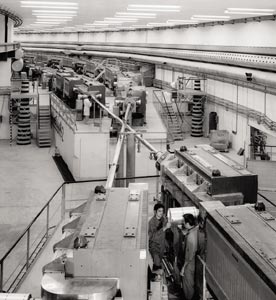
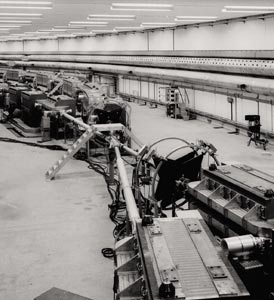
The beginning of Willibald Jentschke’s mandate at CERN coincided with the start-up of the world’s first hadron collider, the Intersecting Storage Rings (ISR). Moreover, Jentschke had already been involved with the ISR before as chairman of the ISR Committee, so it is appropriate to look back at the ISR during his mandate.
Let us first take a look at the working principle of the ISR. The idea was to build two rings slightly distorted so that they could intersect in eight different places. You would take the beams out of the Proton Synchrotron (PS), bring them to one of these rings and accumulate them into the vacuum chambers.
The tunnel in which these two magnet rings were built is about 15 m wide and it has 150 m radius on average compared with 100 m for the PS, despite the fact that the energy of the two machines was more or less the same. The main challenge for the ISR was to accumulate high-enough currents and maintain small-enough beam dimensions to achieve a luminosity that would be interesting for physics. This could be realized only after the invention of various ways of accumulating beams. We built on the idea developed by the MURA group of accelerator physicists from the US Midwestern Universities Research Association to accumulate a high current beam from hundreds of injected pulses by using an RF stacking process. In our initial design, this would lead to ISR beams 60 mm wide and about 10 mm high.
High currents, and therefore high instantaneous luminosity, are important. An equally important design goal, however, was long beam lifetimes so that the average luminosity would also be high. That required a very good vacuum compared with what was normal in those days. The planned vacuum for the ISR was 10-9 to 10-10 Torr. As we will see, we went far beyond that. Good vacuum, of course, was also important for the experiments to have manageable backgrounds.
Authorization for the ISR project was given at the end of Viki Weisskopf’s mandate and construction took place during Bernard Gregory’s time as director-general, starting in 1966 and finishing early in 1971. When Jentschke arrived, both rings had been installed and one of the rings – ring one – had been tested at the end of October 1970. We had been able to accumulate several amps of protons and we had found very promising lifetimes. But we had also met the first beam instabilities that limited the beam currents to around 3 A.
In January 1971 simple detectors had been installed to observe the first collisions. We tested ring two so that both rings had been tested independently, and on 27 January 1971 we operated the two rings together and observed the first collisions. This was a great event for many of us. We had achieved proton-proton collisions in colliding beams for the first time ever.
Jentschke was present for the test. He brought champagne with him, and I recall that someone was not too happy that this was served rather late in the night. Some of us felt that it was more important to watch the lifetimes of the two beams before popping the corks. When we were satisfied that the lifetime was good we opened the bottles. The champagne may have been late, but it was well deserved! Physics started about one month later, and Jentschke hosted the official inauguration in October 1971.
The ISR in action
So much for the early history of the ISR. Let us turn to the characteristics of the machine and how the performance developed during the first few years of operation. Luminosity rapidly climbed, reaching the design goal of 4 x 1030 cm-2s-1 in early 1973. During Jentschke’s mandate, it increased by a factor of 10, and ultimately went on to reach 1.4 x 1032 cm-2s-1, some thirty times the design goal, before the ISR was closed in 1984.
I’d like to explain a little how the luminosity developed. I’ve already mentioned that we encountered instability in the beams very early. That was both expected and unexpected. We knew we were aiming for very intense beams and so it would not be strange to have instabilities. But the first instability that we met was one that we thought we had taken care of. The current came up to about 3 A, when suddenly we lost part of the beam. Then it started building up again until we again lost part of it and so on. This turned out to come from instability arising from the interaction between the beam and the vacuum walls – the resistive wall instability as it was called, although it was not due only to resistance.
Coping with instability
This effect turned out to require extremely careful beam handling to remove. We found, for example, that it didn’t take current away from the whole beam uniformly, instead it more or less punched holes in the beam. In other words, the instability was much more local than the beam itself and this meant that we had to have the right field shape not only globally for the beam, but also locally. So we had to fine-tune the field shape in the apertures with the help of the pole-face windings. This allowed us to improve the situation and build up higher currents.
We applied the cure step by step, but as we went up in current we suddenly found that we were again losing part of the beam, but this time the time-scale for the loss was much longer. Not only that, after careful investigation, we saw a pressure bump building up. In other words, we had moved into a completely different kind of instability – not a beam instability but an instability due to pressure in the vacuum chamber caused by beam protons hitting the residual gas. Resulting secondary particles striking the vacuum-chamber wall released more particles, and this had a run-away effect that led to a pressure bump.
This effect required completely different cures – in particular, a tremendously increased pumping capacity and exceedingly clean walls. Again, we took it step by step. Where we found pressure build-up, we improved pumping in that area during the next available scheduled shutdown. We also improved the cleaning of the vacuum walls by using higher temperatures for the bake-out, and also by employing techniques such as gas discharge cleaning. Progress came in a series of jumps. We got a few more amps after we cured the first problem, then came the second and we cured that. Then we went back to the first, but at a higher current, and so on. In the end we had rather sophisticated beam tuning and vacuum treatment, and by solving these two problems we’d found the way to high luminosity.
We also manipulated the geometry of the beam cross-section. The height of the beam had a direct impact on luminosity, so we tried to reduce the height as much as possible, reaching about half what we had originally foreseen. We also put in a squeezing system – a low-beta section as it was called – to further reduce the beam height considerably in the interaction regions. This required a lot of inter-laboratory collaboration. We did not have the quadrupoles that were needed, so we got them from DESY, from the Rutherford Laboratory and from the PS Division at CERN.
The improvements in the vacuum had the added benefit that they led to great improvements in beam lifetimes, which were typically 50-60 hours. We had very small beam losses, which meant that we had very low background in the interaction regions except for when halo built up. Backgrounds were so low that at one point when the experiments were asking for further improvements we had to point out that what they were seeing was coming from proton-proton interactions and not from collisions with residual gas in the rings!
The invention of stochastic cooling
These were the main features of the ISR during Jentschke’s time, but we also had some special things happening, and there’s one that I can’t resist mentioning: stochastic cooling. To me, the stochastic cooling story happened in the following way. Simon van der Meer had a fit of pessimism about the planned performance of the ISR. He was afraid that the machine wouldn’t work as promised, and he put all his mental energy into finding a way of saving it if this came to pass. Happily, he turned out to be wrong about the ISR, but he nevertheless invented stochastic cooling.
When he had worked out the theory, he concluded that it would not help the ISR and he put the idea to one side. Fortunately, he told his colleagues about the idea first. Later on, as the ISR got going, people realised that although stochastic cooling wouldn’t help the ISR much, it was a wonderful invention and we’d better take a look at it. So we managed to build in stochastic cooling to the ISR. When we switched it on we saw a reduction in beam height, so we had a clear demonstration that stochastic cooling worked.
An ideal application for stochastic cooling would be in a machine where beam currents are not as high as in the ISR, and such an application was not long in coming. Stochastic cooling came into its own, as you all know, in the proton-antiproton project that ultimately led to the Nobel prize for Van der Meer and Carlo Rubbia. It was mainly applied in the antiproton accumulator, where stacking and cooling was the mechanism whereby the antiproton currents were accumulated.
Comments on the exploitation
Not everything always went well at the ISR. For example, on more than one occasion part of the beam went astray and punched holes all the way along a bellows structure, which made a mess not only of the bellows but also of the vacuum. On another occasion a spectrometer arm went out of control and broke the beam pipe, leading to a similar effect.
But these were isolated incidents, and didn’t harm the excellent physics programme at the ISR. One result that caused a stir was the observed increase in proton-proton total cross-section. I remember that shortly after this had been announced, I was sitting at the dinner table with a theorist who pointed at me and said “I will eat my hat if you machine people don’t find that you are making a mistake with your measurement of the effective height”. We didn’t find a mistake in our measurement, but since I did not meet the lady again I don’t know what became of her hat.
One of the ISR’s important contributions to particle physics was that it provided a place where experimentalists learned how to do physics with colliding beam machines, which are so different from fixed-target machines. This was extremely useful for the proton-antiproton programme some years later. During a very productive life, the ISR reached an energy of 63 GeV in the centre of mass, or in other words the equivalent of 2 TeV for a fixed-target machine. The average vacuum reached an impressive 3 x 10-12 Torr, and for one fill with antiprotons, using stochastic cooling, a beam lifetime of 345 hours was achieved.
Concluding remarks
To conclude, it must have been very satisfying for Jentschke to be in charge of CERN during these pioneering years of hadron colliders. It must also have been satisfying later for him to follow the development not only of the ISR but the whole approach to particle physics with its shift from fixed target to almost entirely colliders. He was fortunate to be present at the beginning and then to follow it for a long time. His life as a scientist was rich and varied, and the ISR was an important part of it.
As we stand in the CERN Council chamber with your friends, your presence is so alive and strong. I would like to talk to you, Willi, not about you. I have many personal memories about how you helped in many ways. I choose to speak about your physics research interests.
The secret of your success was your personality – a unique blend of knowledge, competence, vision, ideas, Viennese charm, courage and the talent to recognize and attract excellent people.
Among these were Hans Frauenfelder, a friend from the Urbana time who joined you in Hamburg creating a group looking for parity violation, the theoretician Harry Lehmann, your friend Peter Stählin, first research director at DESY, and J S Allen, who had developed an ion detector enabling the study of electron-neutrino correlation. You became interested in establishing the famous V-A interaction.
Among your early collaborators I would like to mention Paul Söding, who was your first student in Hamburg, and Samuel C C Ting, who made DESY famous through his experiments on vector particles. At CERN, you very much enjoyed the challenge of commissioning the ISR, a unique research tool, in collaboration with Kjell Johnsen and Bernard Gregory who preceded you as director-general and took over from you the chair of the ISR. You were also proud of the discovery of neutral currents at CERN during your term of office. You were deeply convinced that the future plans of CERN must be based on international collaboration – a vision that has led CERN into the 21st century.
It was early 1978 and the group was very busy. In those days, it seems we were always very busy, but the winter of 1978 was especially so. A new polarized electron source had been installed on the linac, and we were commissioning it, testing a new spectrometer in the end station, and also learning how to use new beam-monitoring and beam-steering apparatus. We were preparing to look for parity violation in deeply inelastic electron scattering, an effect that was predicted by the Weinberg-Salam Model.
Willi had just finished his term as CERN director-general and came to SLAC for a sabbatical visit. We welcomed our distinguished visitor and invited him to join in the experimental activity, something that suited us and seemed to suit him as well. Willi’s first action was to purchase his first pair of blue jeans. After all, this was a necessary part of one’s wardrobe if one’s preparing to work on shift. Willi never pretended he would contribute anything technical to the experiment, and we didn’t really expect that or ask. We were happy to have someone around with his experience and perspective on the field. We did tease him, however, as being our oldest graduate student.
Willi became particularly interested in one aspect of the experiment. The spin-polarized electrons had to have their spins rapidly flipped in order to measure the small parity violating asymmetries that arise from the weak electromagnetic interference. This was done by rapidly reversing the circular polarization of the laser beam that drove the photoemission source and polarized the electrons. The heart of the experiment was a device, a Pockels cell, a commonly used optical component that, when biased by a voltage, provides a quarter wave retardation of the laser beam. Willi was fascinated by the Pockels cell, invented by Friedrich Pockels in 1893. Willi descended on our library staff for help in locating the original turn-of-the-century scientific papers (in German, of course) so he could learn about these devices. We assume he found the papers. He was always delighted to lecture anyone who would listen about the physics and history of Pockels cells.
Willi participated in the shifts through the spring 1978 runs, culminating in the observation of a parity violating signal in the electron-scattering process. He didn’t take evening or owl shifts, but was usually around during the days, particularly in the afternoons around 4 p.m. at shift change. That was the busiest time. The collaboration was small enough to meet in the counting house, and at shift change at four we would meet informally to discuss progress and plans for the next day or so. Willi enjoyed those somewhat disorganized meetings and discussions.
We released our first results in the early summer of 1978, and Willi was present for that event. Happily we were allowed to include his name on the publication. We believe he returned home later, satisfied with his experimental sojourn and his visit to SLAC. A gentleman, a great physicist, and a great friend, we will miss him.
In March 1963, I had just obtained my PhD from the University of Michigan and came to CERN where I had the good fortune to start working with Giuseppe Cocconi, Klaus Winter, Gustav Weber and Marcel Vivargent. After returning to the US, I worked with Leon Lederman at Columbia University and also wrote a paper in quantum electrodynamics with Stanley J Brodsky on higher-order Bethe-Heitler pairs.
At that time, a very important experimental result was announced at the Cambridge Electron Accelerator (CEA), which showed a large violation of first-order quantum electrodynamics (QED). In this experiment, the yield of wide-angle electron-positron pairs produced in the reaction γ + carbon → e+ + e– + carbon was measured in order to test the validity of QED at small distances. This experiment generated a great deal of interest and was at the centre of discussions in the community of high-energy physicists. My previous work with Stan Brodsky spurred my interest in this result and compelled me into redoing this experiment. Klaus Winter introduced me to Prof. Jentschke, director-general of the Deutsches Elektronen-Synchrotron (DESY) in Hamburg, and this proved to be a major event in my career as an experimental physicist.
As a young physicist, I had never proposed nor led an experiment. My previous work at CERN and my PhD thesis (under the directions of Lawrence W Jones and Martin Perl) were on high-rate πp and pp interactions. I had no experience in the difficulty of measuring rare e+e– with intense (≅1011 equivalent quanta per second) photons on nuclear targets, which always produced large amounts of π pairs. However, together with Arthur J S Smith, Ulrich J Becker and the late Peter Joos, we designed a detector that was quite different from the CEA design. After a long conversation in which he asked me many questions on backgrounds, acceptance, electronics, trigger and experimental redundancies, Jentschke decided to support our carrying out this experiment at DESY. Thus began my career on the study of lepton pairs, including tests of electrodynamics, photoproduction and leptonic decays of vector mesons at DESY, which ultimately led to the discovery of the “J” particle at Brookhaven.
A friend and mentor
Jentschke showed an abiding interest in our work and often visited us on weekends or late at night to discuss our results. He also introduced me to many leading German physicists – Wolfgang Paul, Herwig Schopper, Max Born and others. He often invited my family and me to his home when we were not taking data. From discussions with him, I learned of the tremendous efforts he had made in founding DESY and his desire to make it a world-class laboratory. His wisdom and inspiration were of great help to me, such as when he advised me to accept an offer from MIT where I have worked ever since. At that time, I had received many attractive offers. MIT’s was the only one that was not tenured, but Willi’s advice turned out to be correct in the long run.
I remember Willi Jentschke as a person of insight and dedication to physics and I will always be grateful for his support and encouragement.
The Asian Committee for Future Accelerators (ACFA), together with the Japan Association of High Energy Physics (JAHEP) and the High Energy Accelerator Research Organization (KEK), have published a “roadmap report” for their linear collider project. The report was made public at the ACFA Linear Collider Symposium, held on 12 February at the international congress centre of Tsukuba in Japan. Nearly 400 people attended, not only from laboratories and universities around the world, but also from industry.
The linear collider project is an important one for ACFA. In statements in 1997 and 2001 ACFA strongly recommended that a linear collider should be constructed in the Asia-Pacific region with Japan as host for the worldwide international project, which should be operated concurrently with the Large Hadron Collider at CERN. The objective of the symposium was to explore the scope of the ACFA Linear Collider Project, including the overall design, cost, site and organizational aspects. The programme also included presentations on the viewpoints from the US, Europe and various ACFA countries, as well as from industry.
The initial goal of the ACFA linear collider is to perform experiments at a centre-of-mass energy (Ecm) of up to 500 GeV, with a luminosity of more than 1034 cm-2s-1. The design, as presented by Kaoru Yokoya of KEK, is based on a pair of linear accelerators installed in a straight tunnel about 30 km long. The main linacs will use X-band (11.424 GHz) RF technology, which has been developed in close collaboration with the NLC group in the US. This allows the electrons and positrons to be accelerated at 50 MeV/m or faster.
An important feature of the project is its energy-upgradability. The tunnel will be long enough for a machine eventually to reach Ecm = 1 TeV, but initially it would be only half-filled with RF accelerating structures. The energy could also reach beyond 1 TeV using the same technology – for instance, 1.25 TeV with one-third of the full luminosity.
Another option would use C-band (5.712 GHz) RF technology from about 400 GeV, with X-band accelerating structures filling the remaining space in the tunnel at a future upgrade.
A working group formed in 2001 listed eight candidate sites in Japan with the appropriate geology; an additional four sites are of interest because they are already national bases of scientific R&D. Atsushi Enomoto presented these options together with a description of the facility, including the underground tunnel structure, civil engineering processes, and systems for electric power and cooling. To maintain the accelerator complex continuously, the design foresees a double-tunnel structure – one for klystrons etc and the other running in parallel for accelerating structure.
Hirotaka Sugawara, KEK’s director-general until the end of March, revealed that the total construction cost of the linear collider is estimated to be ¥495.1 billion (€3.86 billion) for the baseline case, in which the main linacs to support operation at Ecm = 500 GeV are built within tunnels that can eventually support operation at Ecm = 1 TeV. The cost also includes payment of all human resources other than accelerator scientists.
ACFA recommended in their statements that the linear collider should be built as an international facility open to all interested parties. Based on this recommendation, a committee formed in July 2001 has recently issued a report describing how the linear collider might be organized as a truly global project. As Sakue Yamada of KEK explained, the proposal is for a new international laboratory, the Global Linear Collider Centre (GLCC), to be created in Japan to facilitate the long-term commitment of participating partners, as well as open and transparent management. All partners would be on an equal footing although the contributions in financial and/or human resources may vary widely. In order to realize the GLCC quickly, the formation of a Pre-GLCC was proposed. A worldwide team would work together, irrespective of their preferences concerning the host, site or accelerator technology.
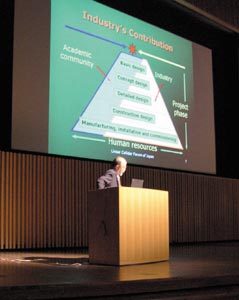
N Ozaki, the secretary-general of the Linear Collider Forum of Japan – a collaboration between the academic side and industrial companies formed in 2002 – discussed the linear collider from the industry point of view. Industry has a strong interest in the linear collider because its research may lead to business innovation.
Ozaki clearly described the importance of co-operation between researchers and industry from the beginning of the project. He emphasized that industry wants an early start for the linear collider project, and stressed that Japanese industry hopes to have industrial partners in other countries. The forum has plans to visit them in order to build up international collaboration.
In concluding remarks, Sachio Komamiya from the University of Tokyo and the chairman of JAHEP spelt out the steps needed to realize the project. He emphasized that the final engineering design should be carried out by a global team under the Pre-GLCC, and should be completed by 2007. The construction of the machine is expected to take five years, including the excavation of tunnels and the installation of the accelerator, so commissioning could start in 2012.
To provide the best experiences, we use technologies like cookies to store and/or access device information. Consenting to these technologies will allow us to process data such as browsing behavior or unique IDs on this site. Not consenting or withdrawing consent, may adversely affect certain features and functions.
Functional
Always active
The technical storage or access is strictly necessary for the legitimate purpose of enabling the use of a specific service explicitly requested by the subscriber or user, or for the sole purpose of carrying out the transmission of a communication over an electronic communications network.
Preferences
The technical storage or access is necessary for the legitimate purpose of storing preferences that are not requested by the subscriber or user.
Statistics
The technical storage or access that is used exclusively for statistical purposes.The technical storage or access that is used exclusively for anonymous statistical purposes. Without a subpoena, voluntary compliance on the part of your Internet Service Provider, or additional records from a third party, information stored or retrieved for this purpose alone cannot usually be used to identify you.
Marketing
The technical storage or access is required to create user profiles to send advertising, or to track the user on a website or across several websites for similar marketing purposes.