by Jack T Tanabe, World Scientific. Hardback ISBN 981256327X, £29 ($48). Paperback ISBN 9812563814, £17 ($28).
Written by one of the foremost specialists, this book is devoted to the design of low and medium field electromagnets, the field level and quality (uniformity) of which are dominated by the pole-shape and saturation characteristics of the iron yoke. Iron Dominated Electromagnets covers a wide scope of material ranging from the physical requirements for typical high-performance accelerators, through the mathematical relationships that describe the shape of two-dimensional magnetic fields, to the mechanical fabrication, assembly, installation and alignment of magnets in a typical accelerator lattice. Derived from lecture notes used in a course at Lawrence Livermore National Laboratory, it is a useful resource for students planning to enter high-energy physics, as well as those already working with particle accelerators.
by Mark Ronan, Oxford University Press. Hardback ISBN 0192807226, £14.99 ($27).
Simple symmetry groups are groups of geometric operations (rotations, reflections, etc) that cannot be decomposed into simpler groups. Symmetry and the Monster is about identifying and classifying the finite simple symmetry groups and discovering exceptions that do not fit into the overall pattern. The largest exception is the Monster. This book is the first telling of a mathematical odyssey spanning two centuries and the biographical accounts linking the technical sections are lively and informative, although they become more reticent as we reach modern times with living protagonists.
Ronan insists on calling simple groups the “atoms of symmetry” (atoms are not simple) and classifying them in “periodic tables”. However, even Ronan’s first table is mysterious, with Lie groups classified in “families”, labelled A through G (rows), operating in dimensions 1 through 9 (columns). Ronan does not tell the reader what the family members have in common, but says that some groups don’t appear because they are not “simple” or are the same as others. For example, D3 is apparantly the same as A3. And it doesn’t get any easier.
Oxford University Press considers this book “a must-read for all fans of popular science”. In his blog, Lieven le Bruyn, professor of algebra and geometry at the University of Antwerp, suggests that “Mark Ronan has written a beautiful book intended for the general public”. However, he goes on to say: “this year I’ve tried to explain […] to an exceptionally good second year of undergraduates, but failed miserably […] Perhaps I’ll give it another (downkeyed) try using Symmetry and the Monster as reading material”.
As an erstwhile mathematician, I found the book more suited to exceptional maths undergraduates than to the general public and would strongly encourage authors and/or publishers to pass such works before a few fans of popular science before going to press.
by Manuel Drees, Rohini M Godbole and Probir Roy, World Scientific. Hardback ISBN 9810237391, £62 ($108). Paperback ISBN 9812565310, £37 ($64).
A theoretical and phenomenological account of sparticles, this book provides a comprehensive, pedagogical and user-friendly treatment of the subject of four-dimensional N = 1 supersymmetry, as well as its observational aspects in high-energy physics and cosmology. Search strategies for sparticles, supersymmetric Higgs bosons, nonminimal scenarios and cosmological implications are some of the many topics that are covered. Additional features include self-contained presentations of collider signals of sparticles plus supersymmetric Higgs bosons and of supersymmetric cosmology.
by Philip D Mannheim, World Scientific. Hardback ISBN 9812565612, £33 ($58).
In this book the author provides a detailed introduction to the brane-localized gravity of Randall and Sundrum, in which gravitational signals can localize around our four-dimensional world in the event that it is a brane embedded in an infinitely sized, higher dimensional anti-de Sitter bulk space. Mannheim pays particular attention to issues that are not ordinarily covered in brane-world literature, such as the completeness of tensor gravitational fluctuation modes, and the causality of brane-world propagators. This self-contained development of the material that is needed for brane-world studies also contains a significant amount of previously unpublished material.
A total of 57 companies and 14 institutions from 13 countries demonstrated their interest in the European X-ray free-electron laser (XFEL) project at an industry workshop held at DESY on 9-10 May. Organized by the European Industry Forum for Accelerators with Superconducting RF Technology (EIFast), the event was intended to inform potential suppliers from European industry about the current design status of this new large European machine, for which construction should start at the beginning of 2007.
Companies attending were asked to comment and give their opinion on the technical layout of the XFEL facility, the purchasing strategy and other relevant issues.
The decision to hold the workshop before an agreement has been reached at the political level to create and finance the European XFEL Facility GmbH was considered to be a wise move, as it demonstrated to companies that the preparation of the project has come to maturity. More than 170 participants attended, representing the whole spectrum of services required for the construction of the XFEL, from the building of the surface halls and underground facilities to the development and supply of components and measurement devices. Attendees unanimously agreed that the workshop had been highly beneficial, and praised the detailed presentation of the XFEL project and the timely involvement of industry, which allows potential suppliers to plan the required capacities and make the necessary technical preparations on time.
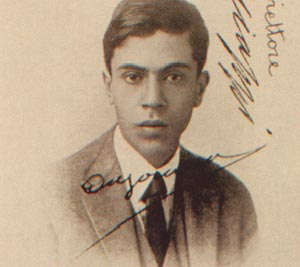
Ettore Majorana was born in Sicily in 1906. An extremely gifted physicist, he was a member of Enrico Fermi’s famous group in Rome in the 1930s, before mysteriously disappearing in March 1938.
The great Sicilian writer, Leonardo Sciascia, was convinced that Majorana decided to disappear because he foresaw that nuclear forces would lead to nuclear explosives a million times more powerful than conventional bombs, like those that would destroy Hiroshima and Nagasaki. Sciascia came to visit me at Erice where we discussed this topic for several days. I tried to change his mind, but there was no hope. He was too absorbed by an idea that, for a writer, was simply too appealing. In retrospect, after years of reflection on our meetings, I believe that one of my assertions about Majorana’s genius actually corroborated Sciascia’s idea. At one point in our conversations I assured Sciascia that it would have been nearly impossible – given the state of physics in those days – for a physicist to foresee that a heavy nucleus could be broken to trigger the chain reaction of nuclear fission. Impossible for what Enrico Fermi called first-rank physicists, those who were making important inventions and discoveries, I suggested, but not for geniuses such as Majorana. Maybe this information convinced Sciascia that his idea about Majorana was not just probable, but actually true – a truth that his disappearance further corroborated.
There are also those who think Majorana’s disappearance was related to spiritual faith and that he retreated to a monastery. This perspective on Majorana as a believer comes from his confessor, Monsignor Riccieri, who I met when he came from Catania to Trapani as Bishop. Remarking on his disappearance, Riccieri told me that Majorana had experienced “mystical crises” and that, in his opinion, suicide in the sea was to be excluded. Bound by the sanctity of confessional, he could tell me no more. After the establishment of the Erice Centre, which bears Majorana’s name, I had the privilege of meeting Majorana’s entire family. No one ever believed it was suicide. Majorana was an enthusiastic and devout Catholic and, moreover, he withdrew his savings from the bank a week before his disappearance. The hypothesis shared by his family and others who had the privilege of knowing him (Fermi’s wife Laura was one of the few) is that he withdrew to a monastery.
Laura Fermi recalls that when Majorana disappeared, Enrico Fermi said to his wife, “Ettore was too intelligent. If he has decided to disappear, no-one will be able to find him. Nevertheless, we have to consider all possibilities.” In fact, Fermi even tried to get Benito Mussolini himself to support the search. On that occasion (in Rome in 1938), Fermi said: “There are several categories of scientists in the world; those of second or third rank do their best but never get very far. Then there is the first rank, those who make important discoveries, fundamental to scientific progress. But then there are the geniuses, like Galilei and Newton. Majorana was one of these.”
A genius, however, who looked on his own work as completely banal: once a problem was solved, Majorana did his best to leave no trace of his own brilliance. This can be witnessed in the stories of the neutron discovery and the hypothesis of the neutrinos that bear his name, as recalled below by Emilio Segré and Giancarlo Wick (on the neutron) and by Bruno Pontecorvo (on neutrinos). Majorana’s comprehension of the physics of his time had a completeness that few others in the world could match.
Oppenheimer’s recollections
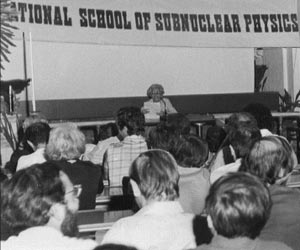
Memories of Majorana had nearly faded when, in 1962, the International School of Physics was established in Geneva, with a branch in Erice. It was the first of the 150 schools that now form the Centre for Scientific Culture, which today bears Majorana’s name. It is in this context that an important physicist of the 20th century, Robert Oppenheimer, told me of his knowledge of Majorana.
After having suffered heavy repercussions for his opposition to the development of weapons even stronger than those that destroyed Hiroshima and Nagasaki, Oppenheimer had decided to get back to physics while visiting the biggest laboratories at the frontiers of scientific knowledge. This is how he came to be at CERN, the largest European laboratory for subnuclear physics.
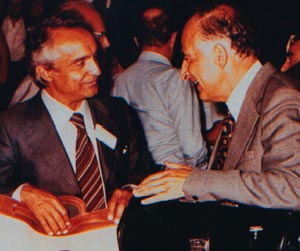
At this time, many illustrious physicists participated in a ceremony that dedicated the Erice School to Majorana. I myself – at the time very young – was entrusted with the task of speaking about the Majorana neutrinos. Oppenheimer wanted to voice his appreciation for how the Erice School and the Centre for Scientific Culture had been named. He knew of Majorana’s exceptional contributions to physics from the papers he had read, as any physicist could do at any time. What would have remained unknown was the episode he told me as a testimony to Fermi’s exceptional opinion of Majorana. Oppenheimer recounted the following episode from the time of the Manhattan Project, which in the course of only four years transformed the scientific discovery of nuclear fission into a weapon of war.
There were three critical turning points during the project, and during the executive meeting to address the first of these crises, Fermi turned to Eugene Wigner and said: “If only Ettore were here.” The project seemed to have reached a dead-end in the second crisis, during which Fermi exclaimed once more: “This calls for Ettore!” Other than the project director himself (Oppenheimer), three people were in attendance at these meetings: two scientists (Fermi and Wigner) and a military general. After the “top secret” meeting, the general asked Wigner, who this “Ettore” was, and he replied: “Majorana”. The general asked where Majorana was so that he could try to bring him to America. Wigner replied: “Unfortunately, he disappeared many years ago.”
By the end of the 1920s, physics had identified three fundamental particles: the photon (the quantum of light), the electron (needed to make atoms) and the proton (an essential component of the atomic nucleus). These three particles alone, however, left the atomic nucleus shrouded in mystery: no-one could understand how multiple protons could stick together in a single atomic nucleus. Every proton has an electric charge, and like charges repel each other. A fourth particle was needed, heavy like the proton but without electric charge. This was the neutron, but no-one knew it at the time.
Then Frédérick Joliot and Irène Curie discovered a neutral particle that can enter matter and expel a proton. Their conclusion was that it must be a photon, because at the time it was the only known particle with no charge. Majorana had a different explanation, as Emilio Segré and Giancarlo Wick recounted on different occasions, including during visits to Erice. (Both Segré and Wick were enthusiasts for what the school and the centre had become in only a few years, all under the name of the young physicist that Fermi considered a genius alongside Galilei and Newton). Majorana had explained to Fermi why the particle discovered by Joliot and Curie had to be as heavy as a proton, even while being electrically neutral. To move a proton requires something as heavy as the proton, thus a fourth particle must exist, a proton with no charge. And so was born the correct interpretation of what Joliot and Curie discovered in France: the existence of a particle that is as heavy as a proton but without electrical charge. This particle is the indispensable neutron. Without neutrons, atomic nuclei could not exist.
Fermi told Majorana to publish his interpretation of the French discovery right away. Majorana, true to his belief that everything that can be understood is banal, did not bother to do so. The discovery of the neutron is in fact justly attributed to James Chadwick for his experiments with beryllium in 1932.
Majorana’s neutrinos
Today, Majorana is particularly well known for his ideas about neutrinos. Bruno Pontecorvo, the “father” of neutrino oscillations, recalls the origin of Majorana neutrinos in the following way: Dirac discovers his famous equation describing the evolution of the electron; Majorana goes to Fermi to point out a fundamental detail: ” I have found a representation where all Dirac γ matrices are real. In this representation it is possible to have a real spinor that describes a particle identical to its antiparticle.”
The Dirac equation needs four components to describe the evolution in space and time of the simplest of particles, the electron; it is like saying that it takes four wheels (like a car) to move through space and time. Majorana jotted down a new equation: for a chargeless particle like the neutrino, which is similar to the electron except for its lack of charge, only two components are needed to describe its movement in space-time – as if it uses two wheels (like a motorcycle). “Brilliant,” said Fermi, “Write it up and publish it.” Remembering what happened with the neutron discovery, Fermi wrote the article himself and submitted the work under Majorana’s name to the prestigious scientific journal Il Nuovo Cimento (Majorana 1937). Without Fermi’s initiative, we would know nothing about the Majorana spinors and Majorana neutrinos.
One of the dreams of today’s physicists is to prove the existence of Majorana’s hypothetical neutral particles.
The great theorist John Bell conducted a rigorous comparison of Dirac’s and Majorana’s “neutrinos” in the first year of the Erice Subnuclear Physics School. The detailed version can be found in the chapter that opens the 12 volumes published to celebrate Majorana’s centenary. These volumes describe the highlights leading up to the greatest synthesis of scientific thought of all time, which we physicists call the Standard Model. This model has already pushed the frontiers of physics well beyond what the Standard Model itself first promised, so now the goal is the Standard Model and beyond.
Today we know that three types of neutrinos exist. The first controls the combustion of the Sun’s nuclear engine and keeps it from overheating. One of the dreams of today’s physicists is to prove the existence of Majorana’s hypothetical neutral particles, which are needed in grand unification theory. This is something that no-one could have imagined in the 1930s. And no-one could have imagined the three conceptual bases needed for the Standard Model and beyond.
Particles with arbitrary spin
In 1932 the study of particles with arbitrary spin was considered at the level of a pure mathematical curiosity, and Majorana’s paper on the subject remained quasi-unknown despite being full of remarkable new ideas (Majorana 1932). Today, three-quarters of a century later, this mathematical curiosity of 1932 still represents a powerful source of new ideas. In fact in this paper there are the first hints for supersymmetry, spin-mass correlation and spontaneous symmetry breaking (SSB) – three fundamental concepts underpinning the Standard Model and beyond. This means that our current conceptual understanding of the fundamental laws of nature was already in Majorana’s attempts to describe particles with arbitrary spins in a relativistically invariant way.
Majorana starts with the simplest representation of the Lorentz group, which is infinite-dimensional. In this representation the states with integer (bosons) and semi-integer (fermions) spins are treated equally. In other words, the relativistic description of particle states allows bosons and fermions to exist on equal footing. These two fundamental sets of states are the first hint of supersymmetry.
Another remarkable novelty is the correlation between spin and mass. The eigenvalues of the masses are given by a relation of the type m = m0/(J+1/2), where m0 is a given constant and J is the spin. The mass decreases with the increasing value of the spin, the opposite of what would come, many decades later, in the study of the strong interactions between baryons and mesons (now known as Regge trajectories). As a consequence of the description of particle states with arbitrary spins, this remarkable paper also contains the existence of imaginary mass eigenvalues. We know today that the only way to introduce real masses without destroying the theoretical description of nature is through the mechanism of SSB, but this could not exist without imaginary masses.
In addition to these three important ideas, the paper also contributed to a further development: the formidable relation between spin and statistics, which would have led to the discovery of another invariance law valid for all quantized relativistic field theories, the celebrated PCT theorem.
Majorana’s paper shows first of all that the relativistic description of a particle state allows the existence of integer and semi-integer spin values. However, it was already known that the electron must obey the Pauli exclusion principle and that it has semi-integer spin. Thus the problem arose of understanding whether the Pauli principle is valid for all semi-integer spins. If this were the case it would be necessary to find out the properties that characterize the two classes of particles, now known as fermions (semi-integer spin) and bosons (integer spin). The first of these properties are of statistical nature, governing groups of identical fermions and groups of bosons. We now know that a fundamental distinction exists and that the anticommutation relations for fermions and the commutation relations for bosons are the basis for the statistical laws governing fermions and bosons.
The spin-statistics theorem has an interesting and long history, the main players of which are some of the most distinguished theorists of the 20th century. The first contribution to the study of the correlation between spin and statistics comes from Markus Fierz with a paper where the case of general spin for free fields is investigated (Fierz 1939). A year later Wolfgang Pauli comes in with his paper also “On the Connection Between Spin and Statistics” (Pauli 1940). The first proofs, obtained using only the general properties of relativistic quantum field theory and which include microscopic causality (also known as local commutativity), are due to Gerhart Lüders and Bruno Zumino, and to N Burgoyne (Lüders and Zumino 1958; Burgoyne 1958). Another important contribution, which clarifies the connection between spin and statistics, came three years later with the work of G F Dell’Antonio (Dell’Antonio 1961).
It cannot be accidental that the first suggestion of the existence of the PCT invariance law came from the same people engaged in the study of the spin-statistics theorem, Lüders and Zumino. These two outstanding theoretical physicists suggested that if a relativistic quantum field theory obeys the space-inversion invariance law, called parity (P), it must also be invariant for the product of charge conjugation (particle-antiparticle) and time inversion, CT. It is in this form that it was proved by Lüders in 1954 (Lüders 1954). A year later Pauli proved that PCT invariance is a universal law, valid for all relativistic quantum field theories (Pauli 1955).
This paper closes a cycle started by Pauli in 1940 with his work on spin and statistics where he proved already what is now considered the classical PCT invariance, as it was derived using free non-interacting fields. The validity of PCT invariance for quantum field theories was obtained in 1951 by Julian Schwinger, a great admirer of Majorana (Schwinger 1951). It is interesting to read what Arthur Wightman, another of Majorana’s enthusiastic supporters, wrote about this paper by Schwinger: “Readers of this paper did not generally recognize that it stated or proved the PCT theorem” (Wightman 1964). It is similar for those who, reading Majorana’s paper on arbitrary spins, have not found the imprinting of the original ideas discussed in this short review of the genius of Majorana.
by Leonard Susskind, Little Brown and Company. Hardback ISBN 0316155799, $24.95.
In some theoretical physics institutes, uttering the words “cosmic landscape” may give you the feeling of walking into a lion’s den. Leonard Susskind courageously takes upon himself the task of educating the general public on a very controversial subject – the scientific view on the notion of intelligent design. The ancestral questions of “Why are we here?”, “Why is the universe hospitable to life as we know it?” and “What is the meaning of the universe?”, are earnestly addressed from an original point of view.
Darwin taught us that, according to the theory of evolution, our existence in itself has no special meaning; we are the consequence of random mutation and selection, or survival of the fittest. This is a baffling turn of the Copernican screw, which puts us even farther away from the centre of the universe. We live in the age of bacteria and we are nothing but part of the tail in the distribution of possible living organisms here on Earth.
A possible counter to this reasoning is the notion of a benevolent intelligence that designed the laws of nature so that our existence would be possible. According to Susskind, this is a mirage. Using current versions of string theory and cosmology he provides yet another turn of the Copernican screw. A good aphorism for this book can be found on p347 – the basic organizing principle of biology and cosmology is “a landscape of possibilities populated by a megaverse of actualities”. This may sound arcane, but the book gives a consistent picture based on recent scientific results that support this view. This is no paradigm shift, but an intellectual earthquake.
The author masterfully avoids the temptation to give a detailed account of our understanding of particle physics and cosmology. Instead, he provides an impressionistic, but more than adequate, description of the theories that have inspired us over the past 30 years, some verified experimentally (such as the Standard Model) and some more speculative (such as string theory). A more accurate description may have kept many readers away from the book, yet enough information is given to grasp the gist of the argument.
The main theme is the understanding of the cosmological constant – Albert Einstein’s brainchild, which later he called the biggest blunder of his life – the numerical value of which has been measured by recent astronomical observations. The numerical value of the universal repulsion force represented by this constant simply boggles the imagination. In natural units (Planckian units, as explained in the book) it is a zero, followed by 119 zeroes after the decimal point and then a one. Fine-tuning at this level cannot be explained by any symmetry or any other known argument. It is 120 orders of magnitude, something to make strong men quail.
We can appeal to the anthropic principle, but this is often taken as synonymous with the theory of intelligent design. Susskind avoids this temptation by turning to our best bet yet to unify, or rather make compatible, quantum mechanics and general relativity – string theory. Work from Bousso Polchinski and others implies that string theory contains a bewildering variety of possible ground states for the universe. In recent counts, the number is a one followed by 500 zeroes – a nearly unimaginably big number – and most of these universes are not hospitable to bacteria or us. However, the number is so big that it could perfectly accommodate some pockets where life as we know it is possible. No need then to fine-tune; the range of possibilities is so large that all we need is a procedure efficient enough to turn possibilities into actualities.
This is the megaverse provided by eternal inflation. The laws of physics allow for a universe far bigger than we have imagined so far and as it evolves it creates different branches, which among other properties contain different laws of physics, sometimes those that allow our existence.
This is radical, hard to swallow, and against all the myths that the properties of our observed and observable universe can be calculated by an ultimate theory from very few inputs – but it is remarkably consistent.
The topics analysed in this book are deep – it deals with many of the questions that humans have posed for millennia. It is refreshing to find a hard-nosed scientist coming out to address such controversial questions in the public glare, without fearing the religious or philosophical groups (or even worse, his colleagues), who for quite some time have monopolized the discussion.
Despite the difficult questions raised, when unfamiliar concepts are introduced, one finds a humorous punctuation based on the author’s personal experience, which lets you recover your breath. Some will find the arguments convincing, some will find them irritating, but few will remain indifferent.
By Ian Stewart, Basic Books. Hardback ISBN 0465082319 £13.99 ($22.95).
“Our society consumes an awful lot of mathematics, but it all happens behind the scenes […] You want your car navigation system to give you directions without your having to do the math yourself. You want your phone to work without your having to understand signal processing and error-connecting codes.”
Letters to a Young Mathematician is a collection of letters addressed to “Meg”, an imaginary young girl who already shows interest in mathematics at high school. The author follows Meg until university, gives her advice, talks to her about mathematics and its relation to society, family, work and careers. In this way, the reader learns more about the raison d’être of mathematics, its applications in our everyday life, its past, present and future.
I particularly liked the first half of the book in which the author talks about himself, his personal experience and his motivations for becoming a mathematician. In these first letters, the reader can really feel the author’s enthusiasm and share with him the wonder of discovering mathematics everywhere, for example in the way roads are designed, in the sea’s waves or in the colours that we see.
The narration then becomes more abstract and therefore less close to the reader. Here references to mathematicians of the past replace too often the personal experience of the author and this makes the reading slower.
However, it never goes too far and links with real life can be found throughout the book. Often this is done by demonstrating how apparently abstract mathematical formulae are used in physics and hence in technology or computing.
The book is inspiring and full of interesting information without being boring. I wish a similar collection of letters could be written to a young physicist!
by Seth Lloyd, Alfred A Knopf. Hardback ISBN 1400040922, $25.95.
I borrowed this book from my local library a couple of months ago and found it so irritating that I gave up after the first few chapters. When I agreed to review it I decided that I’d better read it a little more thoroughly – amazingly, this time I really enjoyed it.
Some of the anecdotes and name-dropping are rather annoying and I’m not sure that I can embrace the central thesis – that our universe is a giant quantum computer (QC) computing itself. (I would have thought that the inherent randomness of things argues against the universe as computer.) However, the book does contain an unusually informative and quirky account of the theory of our surroundings, from small to large, and it is very entertaining and easy to read.
As a sort of theoretical theory book, it is not real science that we are looking at here. It takes the current theories of particle physics and cosmology, assumes that they are all correct and then constructs a new all-embracing theory. Somewhere in the book a claim is made that there are predictions, but I didn’t see any sign of them (theories that make no predictions are unfortunately getting more and more common these days).
Perhaps the book is way ahead of its time. The most important force in the universe is surely gravity, so when some future theorist has finally developed a quantum theory of gravity, then we might be ready for it.
I have heard that the intelligent-design people are unhappy with this book, but they shouldn’t be. Lloyd has presented them with a great opportunity: surely the hypothetical intelligent designer and the hypothetical programmer of the big hypothetical QC within which we live might be one and the same.
As alert readers of CERN Courier will already know, a recently published experimental result (O Hosten et al. 2006 Nature439 949) has confirmed theoretical speculation and demonstrated that QCs compute the same whether they are on or off. So here’s an interesting thought: amazing as our universe is, if Lloyd is right it might not even have been turned on yet.
Indeed, it all reminds me a bit too much of Deep Thought and a misspent youth, but it’s a fun book. I guess it takes a quantum-mechanical engineer to view things in such an odd manner. I do recommend this book, but urge that you don’t take it too seriously. Also make sure that you read it twice and remember that the answer might well be 42.
Edited, with commentary, by Stephen Hawking, Running Press. Hardback ISBN 0762419229, £19.99 ($29.95).
“God created the integers, all the rest is the work of Man,” are the words of 18th-century mathematician Leopold Kronecker, whose thought-provoking statement makes a fitting title to this collection. Following on the path of his previous collection Standing on the Shoulders of Giants, Hawking has brought together representative works of the most influential mathematicians of the past 2500 years, from Euclid to Alan Turing. (Incidentally, Kronecker did not make the cut to be included, but his best friend Karl Weierstrass did.)
The collection outlines the life of each mathematician before reproducing a selection of original work. The sections are self-contained so the book can be read over time or out of sequence. Reading it in one go has its advantages, however: the beautifully terse ancient Greek text contrasts well with the flowery style of George Boole, for instance. Also, there are recurrent themes, such as the problem of the continuity of a function, or David Hilbert’s challenges, which are tackled by several mathematicians in this volume.
Each section starts with an introduction where Hawking’s delightful pen takes us through the mathematician’s biography and then patiently through the most important points of his works. Hawking’s introductions are informative, understandable and in places amusing – for instance, the hilarious story of when Kurt Goedel is taken by his friend, Albert Einstein, for his US nationality hearings.
There is a wealth of information in the original works reproduced and I mention here a few points that I found interesting.
Euclid’s The Elements concerns geometry, and number theory – geometry is the means of visualizing important proofs, such as the infinitude of prime numbers. Archimedes, although better known for his engineering skills, was one of the best mathematicians of antiquity. One of the works reproduced is The Sand Reckoner, Archimedes’ ambitious attempt to measure the mass of the visible universe using the measured size of the Earth and the Sun to arrive at his answer: 1063 grains of sand. What is interesting is his treatment of errors – although he knows the size of the Earth, he conservatively assumes a figure 10 times as big.
The collection covers another Greek, Diophantus, although he is perhaps best known from a footnote that the mathematician Pierre de Fermat (not covered) wrote in the margin next to one of his theorems, which became known as Fermat’s last theorem. It puzzled mathematicians for many years until finally proved in 1992.
Isaac Newton has probably the shortest space allocated in the book, but quantity is not proportional to importance. Newton was not only a great physicist, but also a brilliant mathematician: he invented calculus. In another link between mathematics and physics, Joseph Fourier derived his trigonometric series while trying to solve a physics problem on heat transfer.
Carl Friedrich Gauss, a mathematical prodigy, is considered by many as the greatest mathematician of all time. Less well known is the fact that he worked for a period as a surveyor and that he achieved international fame when he calculated the position of asteroid Ceres in 1801.
Bernhard Riemann generalized geometry in a way that proved essential to Albert Einstein more than 60 years later. Ironically, Riemann was worrying about deviations from the Euclidian model for the infinitesimally small.
While Hilbert does not feature in this volume, his statement of the three most important challenges of mathematics inspired mathematicians who do appear. Goedel would prove the incompleteness and inconsistency of mathematics, whereas Turing would disprove the decidability of mathematics some years later.
When reading about the lives of the great men featured a few worrying recurrent themes appear, some in line with caricatures of mathematicians. Mental problems and an unfulfilled private life occur with alarming frequency. Less expected, perhaps, is the struggle for professional recognition.
Unfortunately, the book is not perfect and I do have a few gripes. The Greek text is deeply flawed and quite unacceptable for such a publication; the typesetting is appalling and proofreading evidently was non-existent. Running Press would do well to rectify this on future editions. Throughout the book, the hallmarks of a rushed job are everywhere. There are far too many typing errors, which is especially bad when formulae are concerned; it is not always clear if a footnote was from the original author, or inserted by the editor; and finally, some figures (the ones appearing in Henri Lebesgue’s section) were of surprisingly low quality.
Even so, this is an impressive collection of works that are part of our intellectual heritage. It is an important addition to every library, but bedside (or poolside) reading it is not.
To provide the best experiences, we use technologies like cookies to store and/or access device information. Consenting to these technologies will allow us to process data such as browsing behavior or unique IDs on this site. Not consenting or withdrawing consent, may adversely affect certain features and functions.
Functional
Always active
The technical storage or access is strictly necessary for the legitimate purpose of enabling the use of a specific service explicitly requested by the subscriber or user, or for the sole purpose of carrying out the transmission of a communication over an electronic communications network.
Preferences
The technical storage or access is necessary for the legitimate purpose of storing preferences that are not requested by the subscriber or user.
Statistics
The technical storage or access that is used exclusively for statistical purposes.The technical storage or access that is used exclusively for anonymous statistical purposes. Without a subpoena, voluntary compliance on the part of your Internet Service Provider, or additional records from a third party, information stored or retrieved for this purpose alone cannot usually be used to identify you.
Marketing
The technical storage or access is required to create user profiles to send advertising, or to track the user on a website or across several websites for similar marketing purposes.