by Thanu Padmanabhan, World Scientific. Hardback ISBN 9812566384, £38 ($66). Paperback ISBN 9812566872, £21 ($36).
This book describes several aspects of astrophysics and cosmology in a way that a physicist or beginner in astrophysics can understand. It emphasizes current research and exciting new frontiers, and introduces complex results with simple, novel derivations, which strengthen the conceptual understanding of the subject. The book has more than 100 exercises, which will benefit students. Undergraduate and graduate physics and astrophysics students, as well as physicists who are interested in quickly grasping astrophysical concepts, will find this book useful.
by Antonio Fasano and Stefano Marmi, Oxford University Press. Hardback ISBN 9780198508021, £49.50 ($89.50).
Analytical mechanics is the investigation of motion with the rigorous tools of mathematics – a classical subject with fascinating developments and still rich with open problems. This book is intended to fill a gap between elementary expositions and more advanced material, explaining ideas and showing applications using plain language and “simple” mathematics. Basic calculus is enough for the reader to understand this volume; any further mathematical concepts are fully introduced in simple language.
by Ikaros I Bigi and Martin Faessler (eds), World Scientific. Hardback ISBN 9812566341, £56 ($98).
Time and matter are the most fundamental concepts in physics and in any science-based description of the world around us. Quantum theory has, however, revealed many novel insights into these concepts in non-relativistic, relativistic and cosmological contexts. The implications of these novel perspectives have been realized and, in particular, probed experimentally only recently. The papers in this publication discuss these issues in an interdisciplinary fashion from philosophical and historical perspectives. The leading contributors, including Nobel laureates T W Hänsch and G ‘t Hooft, address both experimental and theoretical issues. Physicists, philosophers, historians of science, and graduate physics students will find this an interesting read.
by Takashi Nakamura and Lawrence Heilbronn, World Scientific. Hardback ISBN 9812565582, £33 ($58).
This handbook is a timely resource for the rapidly growing field of heavy-ion transport-model theory and its applications in accelerator development, heavy-ion radiotherapy and shielding of accelerators, as well as in space. Data from more than 20 years of experiments in the production of secondary neutrons and spallation products are contained in the handbook and on the accompanying CD. Transport modellers and experimentalists will find the detailed descriptions of the experiments and subsequent analyses valuable in utilizing the data for their applications.
by Stephen L Adler, World Scientific. Hardback ISBN 9812563709 £62, ($108). Paperback ISBN 9812565221 £33, ($58).
From 1964–1972, Stephen L Adler wrote seminal papers on high-energy neutrino processes, current algebra, soft pion theorems, sum rules and perturbation-theory anomalies, which helped lay the foundations for the current Standard Model of elementary-particle physics. These papers are reprinted here with detailed historical commentaries describing how they evolved, their relation to other work in the field and their connection to recent literature. The commentaries and reprints also cover later important work by Adler on a range of topics in fundamental theory, phenomenology and numerical methods. This book is a valuable resource for graduate students and researchers, and for historians of physics in the final third of the 20th century.
by Keisuke Fujii, David J Miller and Amarjit Soni (eds), World Scientific. Hardback ISBN 9812389083, £60 ($98).
The high-energy electron–positron linear collider is expected to provide crucial clues to many of the fundamental questions of our time. What is the nature of electroweak symmetry breaking? Does a Standard Model Higgs boson exist or does nature take the route of supersymmetry, technicolour, extra dimensions or none of the these? This book contains articles by experts on many of the most important topics on which the linear collider will focus. It is aimed primarily at graduate students but will be useful to any researcher interested in the physics of the next-generation linear collider.
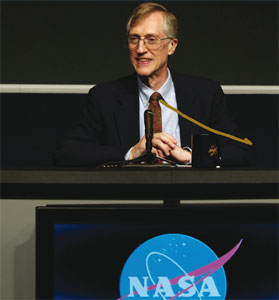
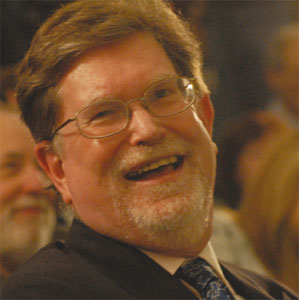
The Nobel Prize in Physics 2006 recognizes research that studies the young universe, before the first stars were born and before galaxies began to form. John Mather of the NASA Goddard Space Flight Center (GSFC) and George Smoot of the Lawrence Berkeley National Laboratory share the prize “for their discovery of the blackbody form and anisotropy of the cosmic microwave background (CMB) radiation”. Both physicists’ work involved the Cosmic Background Explorer (COBE) satellite, which in the early 1990s provided an exciting new view of CMB radiation. This carries the imprint of the universe as it was some 300,000 years after the Big Bang, when radiation and matter decoupled and atoms began to form. COBE’s findings strongly supported the Big Bang and began to turn cosmology into a precise observational science.
Mather and Smoot share a long-standing interest in cosmology. For Smoot this followed a PhD in 1970 in particle physics, and he soon concentrated on producing experimental data about the early universe – in particular to study the CMB, the discovery of which by Arno Penzias and Robert Wilson in 1964 had, in Steven Weinberg’s words, shown that there was such a thing as an early universe to study. (Penzias and Wilson went on to share the Nobel prize in 1978.) By 1974, Smoot had submitted a proposal to NASA to measure and map the CMB in search of imprints of what had happened at earlier epochs.
At the same time, Mather, with an interest in infrared astronomy, led efforts for the first proposal for COBE. After moving to the GSFC, he became study scientist (1976) and then project scientist (1988) for COBE, as well as principal investigator for the Far Infrared Absolute Spectrophotometer (FIRAS) on board COBE. Smoot, meanwhile, became principal investigator of COBE’s Differential Microwave Radiometer (DMR).
The original plan was for a space shuttle to launch COBE, but shuttle operations came to a standstill in 1986 after Challenger‘s horrific accident. However, Mather and his collaborators negotiated the use of a rocket and launched the satellite in November 1989. The FIRAS, designed to measure the CMB radiation spectrum with unprecedented precision, soon revealed a blackbody spectrum perfect to within 50 ppm, corresponding to 2.725±0.002 K, formidable evidence for the Big Bang.
More slowly, Smoot and his colleagues analysed the DMR measurements to create maps of the sky that revealed tiny temperature variations (about 10 ppm) in the generally uniform radiation. These indicated density variations in the primordial universe, which would eventually lead to regions of galaxies and clusters of galaxies separated by empty space. The data proved invaluable in constraining models of the early universe.
A thousand physicists, engineers and others involved in the project both before and after the satellite’s launch contributed to COBE’s success. The satellite took data until the end of 1993, and in 2003 its successor, the Wilkinson Microwave Anisotropy Probe, provided an even more detailed look, measuring temperature fluctuations to millionths of a degree.
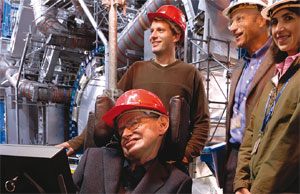
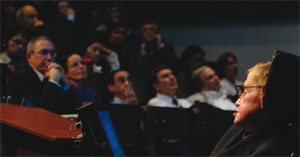
Stephen Hawking is the best known physicist alive. His book A Brief History of Time was a bestseller around the world, but sometimes his star status obscures his continued activity at the frontiers of theoretical physics. For some 40 years his research has centred on theoretical cosmology and black holes. When he started work as a theoretical physicist in the 1960s, particle physics and cosmology seemed to be separate worlds, but now these topics are increasingly intertwined. So it was not surprising that Hawking should want to visit the Theory Unit at CERN, to meet fellow theorists and give a seminar on his current work.
In the 1960s, Hawking and Roger Penrose developed the famous singularity theorems in general relativity, which provided a precise set of general conditions under which the existence of gravitational collapse is inevitable, leading to black holes. In particular Hawking provided a fairly complete theory of black holes and their classical properties, which led to intriguing analogies with the laws of thermodynamics. An important application of this work led to the theory that our universe began with a Big Bang, with an initial singularity.
Perhaps more famously, however, in the early 1970s Hawking shocked the world by showing that if one considered quantum mechanics (quantum field theory) in the presence of black holes, these are not black after all, but rather they emit radiation with a thermal spectrum and a temperature that depends only on the basic characteristics of the black-hole state: namely, its mass, angular momentum and charge. In the simplest case, the temperature is inversely proportional to the mass. This phenomenon is known as black-hole evaporation.
Hawking went even further, however, and made the provocative proposal that the laws of quantum mechanics must be changed in the presence of black holes. Specifically, quantum information and quantum coherence are irreversibly lost in the formation and evaporation of black holes. This proposal has generated much work in the past 30 years, and we are only now beginning to understand that quantum mechanics does not after all need to be modified. However, many aspects of the theory of quantum gravity need to be understood in detail before we can claim that the paradox has been resolved.
The Hawking evaporation phenomenon also has basic observational consequences. If a black hole has a small mass, then it will radiate more copiously, so we can put an observational limit on the size of remnant black holes from the origin of the universe. Furthermore, if CERN’s Large Hadron Collider (LHC) produces mini black holes we know that they will evaporate with a nearly thermal spectrum, an important characteristic in identifying them.
Currently Hawking is working on quantum cosmology. He is studying a top-down approach to cosmology that combines the string landscape with the scenario of no-boundary initial conditions. The theory seminar that he presented at CERN was based on this work in collaboration with Thomas Hertog, who is currently a fellow with the Theory Unit.
In his general colloquium, which attracted an audience of 850, Hawking discussed one of his favourite topics – the origin of the universe. He argued that thanks to what we have learned over the past 100 years we may finally have a scientific way to address this subject. General relativity predicts that the universe, and time itself, would have begun in a Big Bang. It also predicts that time ends in black holes. The discoveries of the cosmic microwave background radiation and of black holes support these conclusions; adding in quantum mechanics begins to yield the rudiments of a theory of structure in the observed universe. However, much still remains to be understood on this subject, although as Hawking argued in his seminar, a scientific cosmogony is both possible and within reach of theoretical and experimental work.
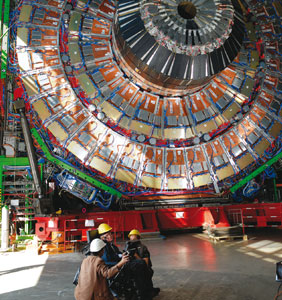
During his stay at CERN, Hawking also visited the ATLAS and CMS experiments, as well as the tunnel of the LHC, where installation work proceeds rapidly. He was interested in the details of the experiments, and in the possible discovery of mini black holes. He also met with the director-general, Robert Aymar, and their discussion covered topics ranging from open-access publishing to the start-up of the LHC. Congratulating Aymar and the CERN community on their scientific work, he commented “You have an exciting two years ahead of you.”
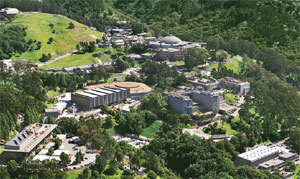
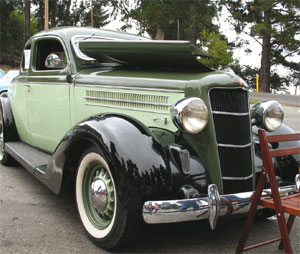
Festivity met science when the Lawrence Berkeley National Laboratory (LBNL) celebrated its 75th anniversary with a Founders Day party on 26 August. The day capped a summer of celebratory events, including historical lectures, speeches, music, fire-spinning, Scottish dance, films, science demonstrations, tours, birthday cake for 600 and a time capsule to be opened in 2031. There was even a display of vintage cars, including one driven by the lab’s founder and inventor of the cyclotron, Ernest Orlando Lawrence.
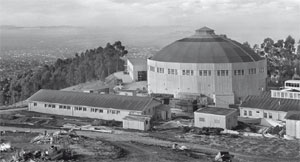
Originally known as the Rad Lab, LBNL was founded in 1931 to house the latest of Lawrence’s increasingly large cyclotrons. His first cyclotrons were small, and could easily be accommodated in his laboratory in the physics department at the University of California Berkeley. However, by 1931 he was working on a monster 27 inch cyclotron with an 80 ton magnet. This required a separate building with reinforced flooring, and on 26 August 1931 Lawrence was given use of the former Civil Engineering Testing Laboratory. Lawrence renamed it the Radiation Laboratory, and so the Rad Lab was born.
The 27 inch cyclotron accelerated protons to 3.6 MeV. Lawrence’s next machine boasted a 37 inch diameter, and accelerated deuterons to 8 MeV and alpha particles to 16 MeV. One of its major accomplishments was the production of the first artificial element, technetium. The next iteration had a 220 ton magnet around a 60 inch cyclotron. This machine required a new, dedicated building: the Crocker Radiation Laboratory. In 1939, Louis Alvarez and Robert Cornog used the 60 inch machine to discover helium-3, and Martin Kamen found radioactive carbon-14. Carbon-14’s potential as a radioactive tag for biology studies was quickly recognized. This machine also saw the beginning of the lab’s diversification, as Lawrence’s brother, John, used it to study nuclear medicine.
The steady growth in accelerator size and energy produced a steady increase in cost. Part of Lawrence’s genius was his ability to manage physics on an industrial scale; another part was his ability to persuade both government agencies and private philanthropists to fund his work. The fundraising was especially impressive in the midst of the Great Depression. Although these challenges are well recognized today, 75 years ago large accelerator laboratories were unknown, and many of the organizational techniques that he brought to particle physics have become ubiquitous.
During the Second World War, the Rad Lab shifted focus, playing a key role in early studies of magnetic separation of uranium isotopes. However, by 1944 magnetic separation had largely moved to Oak Ridge, and the Rad Lab returned to basic physics, with the construction of a mammoth 184 inch cyclotron. By 1950, this was in use for studies of physics, nuclear chemistry and nuclear medicine. The war also produced a large turnover in personnel, as many pre-war leaders left to work on atomic weapons, radar and other military technology.
The lab’s next machine was a big step up in energy and complexity: a 6.5 GeV synchrotron, the Bevatron. Its energy could reach the threshold for antiproton production; by 1955 the accelerator was complete and antiprotons were indeed observed. Later, it supported a long series of experiments that used progressively larger bubble chambers. Throughout the late 1950s and early 1960s, researchers used these chambers to discover a large number of meson and baryon resonances. Still later, the Bevatron was converted to accelerate heavy ions, ushering in the new field of relativistic heavy-ion collisions.
In 1959, with the death of Ernest Lawrence, Ed McMillan became the lab’s second director. The 1960s saw a period of expansion, with many new buildings and facilities, including the 88 inch cyclotron, still used for nuclear structure studies. The Heavy Ion Linear Accelerator (HILAC), and later Super-HILAC, continued the laboratory’s studies of heavy elements, producing atoms of elements 102 and 103. The lab took its first steps beyond the world of particle and nuclear physics, with initiatives in materials science (initially to study the effects of radiation on different materials), and later, chemical lasers.
Of course, the laboratory was part of the Berkeley community. By the late 1960s, the US was involved in the Vietnam War, and Berkeley was the scene of massive antiwar protests. Lab scientists were themselves divided, but most had great sympathy for the antiwar movement, and many actively demonstrated against the war. The 1960s also led to new concerns for human rights, and LBNL scientists were active in supporting oppressed scientists in the former Soviet Union.
Besides the antiwar movement, the 1960s and 1970s brought tremendous political and intellectual ferment. Energy became scarce and environmentalism appeared. In 1971, US president Richard Nixon declared war on cancer. Basic research lost some of its lustre. Under the leadership of its third director, Andrew Sessler, the lab responded to these pressures by diversifying into a variety of fields: biology, earth science and materials science.
Today, this diversity is a hallmark of LBNL. The lab has major programmes in many fields, including synchrotron radiation (the 1.5 GeV advanced light-source accelerator and a strong accelerator development programme), computing (the National Energy Research Supercomputing Center), genome sequencing and cancer biology, as well as continuing programmes in electron microscopy, energy efficiency in buildings, and nanotechnology. The lab has also developed strong electrical and mechanical engineering and computer-science groups; their contributions are apparent in the complicated instrumentation built at LBNL. Recent examples include the vertex detectors for the BaBar experiment at SLAC and CDF at Fermilab, and contributions to ATLAS at CERN; the time projection chamber for the STAR detector at Brookhaven’s Relativistic Heavy Ion Collider (RHIC); the support structure for the Sudbury Neutrino Observatory; and the Gammasphere germanium detector.
Although birthdays are good opportunities to reminisce, the lab also used Founders Day to look forward to the next 75 years. The foreseeable future looks bright. In particle physics, a strong programme in the ATLAS experiment is accompanied by a cosmology programme, which is exploring the nature of dark energy, most notably by studying distant supernovae. SNAP, an orbiting telescope with a billion-pixel camera, should launch early in the next decade. In nuclear physics, the STAR time-projection chamber continues to study heavy-ion collisions at RHIC, and LBNL is contributing to the effort to build an electromagnetic calorimeter for ALICE at CERN. Future nuclear structure studies will be built around GRETINA, a precision germanium tracking calorimeter currently under construction. Efforts in neutrino oscillation, θ13, double beta decay and neutrino astronomy with IceCube complement these large programmes. Accelerator design has always been a hallmark of the lab; future designs include a low-energy, high-current light-ion accelerator for astrophysical studies and work on linear colliders. Other accelerator efforts are focused on producing ultra-short pulses of X-rays, and studies using lasers to accelerate particles. Over the next few decades, these efforts are likely to lead to radically new types of accelerators.
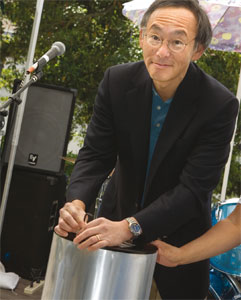
A key focus of current lab director Steve Chu is helping to solve the world energy crisis, through studies including hydrogen storage, carbon sequestration, solar energy (perhaps involving photosynthesis), biomass-to-fuel conversion and improved nuclear power systems. This effort will involve many of the lab’s divisions.
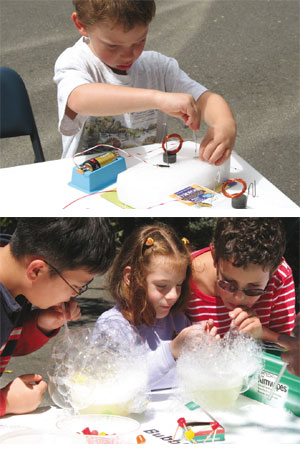
Founders Day included activities and exhibits looking back at many of these periods. Memorabilia from Lawrence’s research, including an early cyclotron were on display, as well as clothing worn by some of the lab’s 10 Nobel prize winners. An exhibition of vintage cars included a 1935 Dodge Brothers Coupé, said to have been driven by Lawrence and Robert Oppenheimer on clandestine late-night beer runs. A cinema showed classic science-fiction greats, from Flash Gordon to Frankenstein, and modern documentaries. Dance performances included traditional Scottish dance and modern fire-spinning. For children, there were hands-on scientific activities ranging from bubble-blowing to build-your-own electric motors and extracting genes from strawberries, as well as two bouncy inflatables where they could expend their energy. Who knows where the next Lawrence will come from?
These are exciting times for particle physics, and the world’s press are taking notice. As the Large Hadron Collider prepares to begin operations, as the International Linear Collider becomes an ever more clearly defined project, as programmes for neutrino physics and astrophysics flourish, and most of all as long-awaited discoveries reveal the secrets of the universe, our friends in the media will share the adventure. Their stories and articles, TV programmes, blogs and podcasts will inform and inspire others with the spirit of excitement that particle physicists are feeling at the start of the 21st century.
The journalists who tell our story will have wildly varying backgrounds, skills and points of view. Their pieces will cover the spectrum of science journalism. They will define and describe; compare and contrast; make judgements and express opinions; and praise and criticize. Writing in language that is accessible to their readers, they will at times seem wanting in their grasp of scientific subtleties. Sometimes they will appear to lack appreciation for something that we care deeply about; occasionally they may even give more credit than we deserve.
It is accepted wisdom that the press almost always get it wrong. Actually, in our experience, ultimately they get it just about right. In the months and years ahead, the majority of journalists who tell the story of 21st-century particle physics will do an excellent job. From time to time, inevitably, they will get it wrong – at least as we see it. A true test of our character as a field is how we react to this level of media coverage.
At a time of extraordinary scientific opportunity in particle physics, we must keep our eyes on the science and enjoy the privilege of taking part in discovering how the universe works. We should equally enjoy the opportunity afforded by the media’s interest.
In the past, there have been occasions when our field has devolved into warring camps, reading each new press article with suspicion, quick to take offence at every real or imagined slight or bias. It’s time to change this model. Do we want to be seen as a fractious, contentious community beset by invidiousness, or as a unified community of committed scientists confronting a golden age of discovery? We have the choice. We can set a tone of respect and admiration for all projects and experiments that lead to discovery – or one that begrudges every word of praise for others’ work. Without fail, the media will pick up on our tone. So will our colleagues, our students, scientists in other disciplines and we ourselves. It will be part of what defines the kind of field that we are.
Competition will always exist, and this is a good thing. People care passionately about their work. Of course they want to see it recognized, and defend it if it is unfairly criticized. But we have everything to gain by maintaining perspective. There will be hundreds of stories during the years ahead. Today’s lukewarm review will be tomorrow’s encomium – and vice versa. We should take them all in our stride, because we are in this together for the long haul. We all want to discover how the universe works. It’s a big universe with room, and credit, enough for everyone.
• This article is being published simultaneously in the October issues of CERN Courier and symmetry (see
www.symmetrymag.org). Members of InterAction, a collaboration of particle-physics communicators from laboratories around the world (www.interactions.org): Roberta Antolini, INFN Gran Sasso; Peter Barratt, PPARC; Natalie Bealing, CCLRC/RAL; Stefano Bianco, INFN Frascati; Karsten Buesser, DESY; Neil Calder, SLAC; Elizabeth Clements, ILC; Reid Edwards, Lawrence Berkeley National Laboratory; Suraiya Farukhi, Argonne National Laboratory; James Gillies, CERN; Judith Jackson, Fermilab; Marge Lynch, Brookhaven National Laboratory; Youhei Morita, KEK, ILC; Christian Mrotzek, DESY; Perrine Royole-Degieux, IN2P3, ILC; Yves Sacquin, DAPNIA CEA; Ahren Sadoff, Cornell University LEPP; Maury Tigner, Cornell University LEPP; and Barbara Warmbein, ILC.
To provide the best experiences, we use technologies like cookies to store and/or access device information. Consenting to these technologies will allow us to process data such as browsing behavior or unique IDs on this site. Not consenting or withdrawing consent, may adversely affect certain features and functions.
Functional
Always active
The technical storage or access is strictly necessary for the legitimate purpose of enabling the use of a specific service explicitly requested by the subscriber or user, or for the sole purpose of carrying out the transmission of a communication over an electronic communications network.
Preferences
The technical storage or access is necessary for the legitimate purpose of storing preferences that are not requested by the subscriber or user.
Statistics
The technical storage or access that is used exclusively for statistical purposes.The technical storage or access that is used exclusively for anonymous statistical purposes. Without a subpoena, voluntary compliance on the part of your Internet Service Provider, or additional records from a third party, information stored or retrieved for this purpose alone cannot usually be used to identify you.
Marketing
The technical storage or access is required to create user profiles to send advertising, or to track the user on a website or across several websites for similar marketing purposes.