Comsol -leaderboard other pages

Topics

Nobel expectations for new physics at the LHC

The opportunity for young scientists to meet with Nobel laureates makes the Lindau meeting a very special occasion. This year it was even more special for CERN, with four young participants from the laboratory and a press event where several of the laureates spoke of their expectations for the LHC. The following extracts give some flavour of their opinions.

David Gross: “a super world”

CClin1_09_08

Gross shared the 2004 Nobel Prize in Physics with David Politzer and Franck Wilczek “for the discovery of asymptotic freedom in the theory of the strong interaction”. He is currently director of the Kavli Institute of Theoretical Physics at the University of California, Santa Barbara.

I expect new discoveries that will give us clues about the unification of the forces, and maybe solve some of the many mysteries that the Standard Model (SM) leaves open. I personally expect supersymmetry to be discovered at the LHC; and that enormous discovery, if it happens, will open up a new world – a super world. It will give the LHC enough to do for 20 years and will help us to understand some of the deepest problems in the structure of matter and elementary particles physics and beyond. Supersymmetry is not just a beautiful speculative idea, it has three incredibly strong vantage points in the LHC energy range: the unification of forces, the mass hierarchy and the existence of dark matter, where its abundance is observed. These three indirect hints from experimental observations all point to a TeV regime that can be naturally accommodated in extentions of the SM that were invented long before these indications appeared.

Gerardus ’t Hooft: “a Higgs, or more”

CClin2_09_08

’t Hooft shared the 1999 Nobel Prize in Physics with Martinus Veltman “for elucidating the quantum structure of electroweak interactions in physics”. He is currently professor of theoretical physics at the Spinoza Institute of Utrecht University.

The first thing we expect – we hope to see – is the Higgs. I am practically certain that the Higgs exists. My friends here say it is almost certain that if it exists, the LHC will find it. So we’re all prepared and we’re very curious because there’s little known about the Higgs except some interaction signs. There could be more than one Higgs, several Higgs, and there could be a composite Higgs, but most of us think it should be an elementary particle… My real dream is that the Higgs comes up with a set of particles that nobody has yet predicted and doesn’t look in any way like the particles that all of us expect today. That would be the nicest of all possibilities. We would then really have work to do to figure out how to interpret those results.

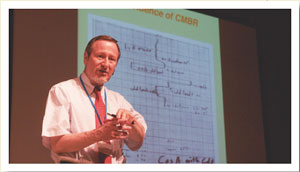
Douglas Osheroff: “lots of new particles”
CClin3_09_08

Osheroff shared the 1996 Nobel Prize in Physics with David Lee and Robert Richardson for “their discovery of superfluidity in helium-3”. He is currently professor of physics and applied physics at Stanford University.

The LHC is an incredible piece of engineering, there is no doubt about that; 27 kilometres of superfluid helium is a mind-boggling thing. However, if you look at any little piece of that, it is a simple technology, carried to the absolute limit of what we could imagine that man would ever do. But of course the most fascinating part of CERN isn’t the cryogenics, it’s the particles that we hope the LHC will produce… If we don’t get the Higgs, that would in fact be a bit more interesting, but I am hoping that there will be lots of new particles and resonances that no one ever expected. That will be really exciting.

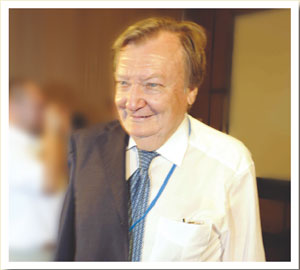
Carlo Rubbia: “Nature will tell”
CClin4_09_08

Rubbia shared the 1984 Nobel Prize in Physics with Simon van der Meer for their work that led to the discovery of the W and Z bosons at CERN. Rubbia was director-general of CERN from 1989 to 1993 and is still based mainly at CERN, pursuing a variety of research projects in the fields of neutrino physics, dark matter and new forms of renewable energy.

I think Nature is smarter than physicists. We should have the courage to say: “Let Nature tell us what is going on.” Our experience of the past has demonstrated that in the world of the infinitely small, it is extremely silly to make predictions as to where the next physics discovery will come from and what it will be. In a variety of ways, this world will always surprise us all. The next breakthrough might come from beta decay, or from underground experiments, or from accelerators. We have to leave all this spectrum of possibilities open and just enjoy this extremely fascinating science.

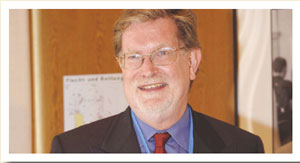
George Smoot: “the nature of dark matter”
CClin5_09_08

Smoot shared the 2006 Nobel Prize in Physics with John Mather “for their discovery of the blackbody form and anisotropy of the cosmic microwave background radiation”. He currently works in the field of cosmology at the Lawrence Berkeley National Laboratory and is a collaborator on the Planck project.

For a cosmologist, one of the great things is that cosmology and high-energy physics are merging – they begin to overlap and are necessary for each other. For the LHC, I am very excited because it turns out that one of the missions I am doing, the Planck mission, has had the same schedule as the LHC for 14 years. We’ll probably launch a little later… I am looking forward to hearing about the Higgs, because I’d like to see the Standard Model completed and understood. I’m also hoping that the LHC will begin to unveil extra dimensions, and that will have huge applications across the board. But what I am really looking forward to is supersymmetry or something that shows what dark matter is made of, so I have really high hopes, perhaps too high hopes.

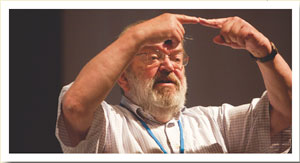
Martinus Veltman: “the unexpected”
CClin6_09_08

Veltman shared the 1999 Nobel Prize in Physics with his student Gerardus ’t Hooft “for elucidating the quantum structure of electroweak interactions in physics”. He is professor emeritus at the University of Michigan, Ann Arbor.

What I expect from the LHC? That’s a big problem. What I would like to see is the unexpected. If it gives me what the Standard Model predicted flat out – the Higgs with a low mass – that would be dull. I would like something more exciting than that. I sincerely hope that we do not find something strictly according to the Standard Model because that will make it a closed thing of which we see no door out, though it is still full of questions. Anything except the two-photon decay of the Higgs… But there is also the possibility that other products might come up because the machine, after all, enters a new domain of energy and will perhaps show us things we didn’t know existed. It’s a very exciting thing for me and my guts can’t wait…

The first presence at Lindau

CClin7_09_08

CERN was first officially present at Lindau in 1971, when I was sent there to talk to Werner Heisenberg about the latter’s future attitude towards CERN. My boss Edwin Shaw, head of the Public Information Office, picked me because I spoke German. This was no easy mission. I was very fearful of speaking to Heisenberg because, in 1969, the Nobel laureate had advised the German government not to finance “Supercern” – a more powerful accelerator at a new site in Europe. For Heisenberg, the era of ever-larger machines continuing to yield important discoveries was ending. A universal formula would answer all outstanding questions in particle physics. His peers strongly disagreed with him and he was persuaded to back the lower-cost 300 GeV project at the existing CERN site.

Simon Newman, CERN (1968–1985).

First impressions

For a second year, CERN was offered the opportunity to send young scientists to Lindau. The four selected candidates represented the diverse range of the laboratory’s research. Here are some of their impressions of the event:
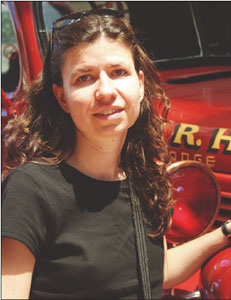
CClin8_09_08

“It’s just my second day here in Lindau… We already heard four Nobel lectures and all of them were different and extremely interesting. Some of them were more quiet, some more ready to give advice and even joked during their talks. But even meeting so many students from so many countries is incredibly interesting, to exchange ideas and experiences. I am sure that I am going to learn a lot and remember Lindau for a long time.”

– Magda Kowalska, ISOLDE.
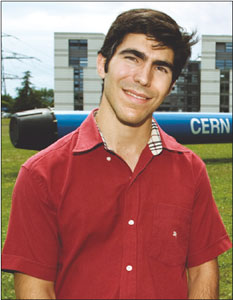
 

CClin9_09_08

“Lindau is a very nice experience. There are many students from all over the world and many Nobel Laureates from different fields in physics. It is a unique opportunity to meet them and talk in an informal way about many subjects. It is very encouraging for us students to have such role models for our future.”


– Rafael Ballabriga, Medipix/PH Department.
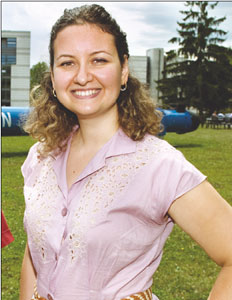
 

CClin10_09_08

“I’ve had very little time so far to talk to the Nobel laureates, but it’s been really great to talk to other students and learn about what they’re doing and how they work on their research. Generally, when I go to conferences in particle physics, I only talk with particle physicists. Here I get exposed to a lot of other different fields like superconductors and plasma physics. I just had a discussion at lunch about it and that was really fun.”


– Bilge Demirkoz, ATLAS.
 

CClin11_09_08

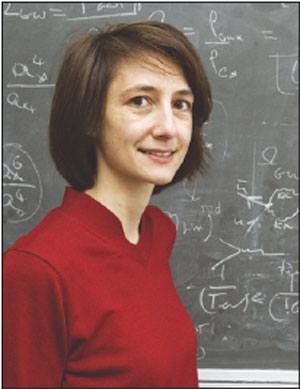
“In Lindau, what I find interesting is to learn physics that is actually outside my field of research and to be aware of what other fields of research do in other areas. Yesterday, for instance, we learnt about quantum optics and today, biophysics. It is very interesting to be exposed to all these new ideas – in case we don’t find anything at the LHC and I’ll have to change field!”


– Geraldine Servant, Theory Unit.
Nobel dreams at Lindau

Every summer since 1951 a large number of Nobel laureates gather in Lindau, Germany, at Lake Constance (the Bodensee) and meet with talented young scientists from around the world. These annual meetings, today a permanent institution supported by a foundation, were initiated by the late Count Lennart Bernadotte, a member of the Swedish royal family who had settled on the nearby Island of Mainau in Lake Constance. Count Bernadotte, an outstanding personality with philanthropic, ecological, cultural and scientific interests, established these meetings of Nobel laureates with young scientists with the intention of fostering scientific excellence as well as international cooperation in the spirit of pacifism. Today the foundation is headed by Countess Sonja Bernadotte, assisted by Wolfgang Schürer, visiting professor for public affairs at St Gallen University.

Initially only young scientists from Germany were invited, but over the years the meetings were expanded to participants from Europe and then the world. Some 550 students, postgraduates and fellows currently take part each year, selected by the scientific board of the Foundation Lindau Nobel Prizewinners Meetings. The delegates come from more than 60 countries, of which about 40% are from outside Europe. The proportion of young female scientists has been constantly increasing, reaching 50% last year.

The Lindau meetings usually focus on one of the Nobel prize fields in the natural sciences – physics, chemistry, and physiology or medicine – and rotates between them; a separate meeting on economic sciences with winners of the Bank of Sweden Prize in Economic Sciences in Memory of Alfred Nobel is held every two years. The one-week programme of the meeting of Nobel laureates consists of lectures by the laureates, scientific discussions between them and the young scientists, a round table and social events. The informal contacts are of course a crucial element.

CCnob1_09_08

This year the Meeting of Nobel Laureates – the 58th in the series – was on physics, with 24 participating laureates, including several particle physicists with close links to CERN, namely David Gross, Gerardus ’t Hooft, Carlo Rubbia, Jack Steinberger, and Martinus Veltman. The lectures included talks by Veltman on “The development of particle physics”, Gross on “The Large Hadron Collider and the Super World”, Steinberger on “What future for energy and climate?” and ’t Hooft on “Humanity in the cosmos”. Also from the field of particle physics, Donald Glaser, who received the Nobel prize for the invention of the bubble chamber, talked about the role of cortical noise in vision, and cosmologist George Smoot described the beginning and development of the universe. The round table centred on energy and climate, following on from talks by three chemistry laureates, and featured contributions from both Rubbia and Steinberger.

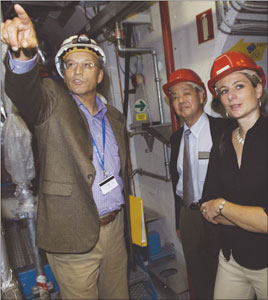
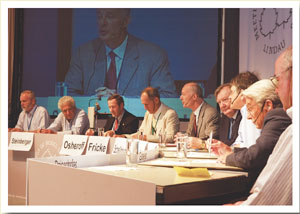
Beyond these eminent names, CERN participated this year with a highly visible press event in which Jos Engelen and Lyn Evans talked about the LHC start up and where several laureates discussed questions on the expected results of the LHC. During the event a video link was established to the CERN control centre so that the audience could observe the ramp up of sector 7/8 of the LHC to 8500 A (5 TeV) as it happened.

CERN was also represented among the young scientists attending the meeting. In 2007, I had established contacts with the Lindau Foundation, and as a result, CERN was invited to nominate a candidate with a link to medicine, the field of last year’s meeting. Benjamin Frisch, a student on the Austrian doctoral student programme, working at CERN on the medical applications of microelectronics, was selected. This year CERN was again invited to nominate young scientists. The four candidates selected were a good representation of the range of science and technology at CERN, as well as the laboratory’s international nature.

The annual Nobel meeting in Lindau was once again an outstanding event, full of enthusiasm and brilliant ideas. For the young scientists it was a unique opportunity to exchange ideas and network beyond and outside their scientific subject, making it a veritable feast of science. The international context and the commitment to scientific excellence are basic elements that are common to both the Nobel foundation and to CERN – a good reason to maintain and intensify the links between both organizations.

Subatomic Physics (third edition)

by Ernest M Henley & Alejandro Garcia, World Scientific. Hardback ISBN 9789812700568 £56 ($98). Paperback ISBN 9789812700575 £33 ($58).

71PB6x6c1PL

This is the third and fully updated edition of a classic textbook, which provides an up-to-date and lucid introduction to both particle and nuclear physics. Topics are introduced with key experiments and their background, encouraging students to think and allow them to do back-of-the-envelope calculations in a diversity of situations. Suitable for experimental and theoretical physics students at the senior undergraduate and beginning graduate levels, the book covers earlier important experiments and concepts as well as topics of current interest, with extensive use of photographs and figures to convey concepts and experimental data.

Lisa Randall: dreams of warped space-time

Lisa Randall is the first female tenured theoretical physicist at Harvard University. This alone would probably be enough to raise the interest of most science journalists who are all too often confronted with the endless search for a female face who would look good in their newspapers, and make science somehow more human to non-scientific readers. Search her name in Google and read articles about her, then read her most recent book, and you realize that she is also one of the small band of physicists who can write popular science books. Then meet her, as I did at CERN, and you discover a no-nonsense person who finds it “normal” to deal with extra-dimensions and parallel universes, as well as hidden gravitons and quantum gravity.

Randall has visited CERN many times, staying for several months in 1992 to 1993, when she worked on B physics and also on ideas in supersymmetry and supersymmetry breaking. These ideas have since evolved, and she is now one of the world’s experts in the theory of extra dimensions, one of the solutions proposed for the puzzling question of quantum gravity. According to these theories, our universe could have extra dimensions beyond the four that we experience – three of space and one of time.

CCElis1_07-08

The idea of an extra dimension is simple to state, but how can we picture extra dimensions in our three-dimensional minds? As Randall concedes, explaining the extra dimensions is possible primarily through analogies, such as, Edwin Abbot’s analogy of Flatland. If you lived on a two-dimensional surface and could see only two dimensions, what would a three-dimensional object become for you? “In order to answer, you would have to explore your object in your two-dimensional view,” she explains. “The slice would be two dimensional but the object would still be three dimensional.” This is to say that, although extra dimensions are difficult to imagine in our limited three-dimensional world, we can nevertheless explore them.

Warping in a universe with extra dimensions would be an amazing discovery, but does Randall expect to find any evidence? The LHC, she explains, could hold the key. “The LHC will allow us to explore an energy scale never reached before – the TeV scale. We know there are questions about this particular scale. We know the simple Higgs theory is incomplete, so there should be something else around. That’s why people think it should be supersymmetry or extra dimensions, something just explaining why the Higgs boson is as light as it is,” she explains. Randall works in particular on the idea of warped geometry. If this is true, experiments at the LHC should see particles that travel in extra dimensions, the mass of which is around the tera-electron-volt scale that the LHC is studying.

One fascinating area of modern physics linked to extra dimensions is that of quantum gravity. Gravity is the best known among the forces that we experience every day, yet there is no theory that can describe it at the quantum level. Gravity also still holds secrets experimentally, because its force-carrying particle, the graviton, remains hidden from view, but Randall’s theories of extra dimensions could shed light here, too.

Could the graviton be found in the additional dimensions, and therefore in the proton–proton collisions at the LHC? “We don’t know for sure,” says Randall, “but the Kaluza–Klein partner of the graviton – the partner of the graviton that travels in extra dimensions – might be accessible.” It seems that even for the theorists leading the field, the theory is a little tricky to understand. “You have one graviton that doesn’t have any mass,” she explains, “and it acts just as a graviton is supposed to act in four dimensions. And you have another graviton that has momentum in the extra dimensions: it will look like a massive graviton according to four-dimensional physics. The particle will have momentum in the fifth dimension and this is the part that we will be able to see.”

CCElis2_07-08

The quantum effects of gravity have also led theorists to talk of the possibility that black holes could be formed at the LHC, but Randall remains sceptical. “I don’t really think we will find black holes at the LHC,” she says. “I think you’d have to get to even higher energy.” It is more likely in her opinion that experiments will see signs of quantum gravity emerging from a low-energy quantum gravity scale in higher dimensions. However, she admits: “If we really were able to have enough energy to see a black hole, it would be exciting. A black hole that you could study would be very interesting.”

Interesting, indeed, but also scary, because black holes have always been described as “matter-eaters”. However, there is nothing to fear. Massive black holes can only be created in the universe by the collapse of massive stars. These contain enormous amounts of gravitational energy, which pull in surrounding matter. Given the collision energy at the LHC, only microscopic and rapidly evaporating black holes can be produced in the collisions. Even if this does occur, the black holes will not be harmful: cosmic rays with energies much higher than at the LHC would already have produced many more black holes in their collisions with Earth and other astrophysical objects. The state of our universe is therefore the most powerful proof that there will be no danger from these high-energy collisions, which occur continuously on Earth.

So much for black holes, but I am still full of curiosity about Randall. What, for example, originally sparked her interest in physics? “I actually liked math first more than physics,” she says, “because when I was younger that is what you got introduced to first. I loved applying math a little bit more to the real world – at least what I hope is the real world.” Now, as a leading woman in a male-dominated research field, and as the author of a popular book, Warped Passages, she is the focus of media attention. She finds some of this surprising but notes that it’s not just attention to her but to the field in general. One of the motivations she had for writing her book, was that people are excited about the LHC. She saw the chance to give them the opportunity to find out more about what it will do. “These are difficult concepts to express. You could give an easy explanation or you could try to do it more carefully in a book. One of the very rewarding things is that a lot of people who have read my book have said they can’t wait for the LHC; they can’t wait to see what they are going to find. So it is exciting when you give a lecture and thousands of people are there – it’s exciting because you know that so many people are interested.” On the other hand, she finds some of the specific types of reporting disturbing, because it shows how far society still has to go: “We haven’t reached the point where it’s usual for women to be in the field.”

In addition to her work on black holes, gravity and so on, Randall is currently working on ideas of how to look for different models at the LHC, and how to look for heavier objects, such as the graviton, that might decay into energetic top quarks. She is also trying to explore alternative theories. “I’m not sure how far we’ll go in things like supersymmetry,” she says, “I’m playing around with models and ways to search for it at the LHC.”

Yes, physics is about playing around with ideas – ideas that nobody has ever had before but that have to be tested experimentally. The LHC will shed light on some of the current mysteries, and Randall, who like many others has played around with ideas for years, can’t wait for this machine to produce the experimental answers.

• For Lisa Randall’s lectures at CERN in March 2008 on “Warped Extra-Dimensional Opportunities and Signatures”, see http://indico.cern.ch/conferenceDisplay.py?confId=28978, http://indico.cern.ch/conferenceDisplay.py?confId=28979 and http://indico.cern.ch/conferenceDisplay.py?confId=28980.

Frank Krienen: a talent for ingenious invention

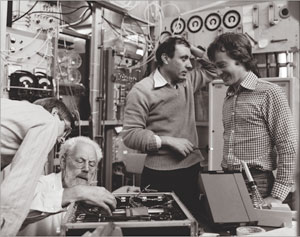
Krienen, who died on 20 March, began his long association with particle physics in 1952, before the European Organization for Nuclear Research officially came into being, in the days of the provisional council that gave CERN its name. He had spent the first few years of his professional life in the research laboratories of Philips at Hilversum. Combined with his academic background as an engineer-physicist at the University of Delft, this gave him the thorough training in the basics of materials and electromagnetism (radar) that was to manifest itself so clearly when he joined CERN.

Already an assistant to Cornelis Bakker at the Zeeman Laboratory at Amsterdam University, Krienen was perfectly suited to be one of the first recruits to the accelerator programme for the new European laboratory. The first project was the 600 MeV proton Synchrocyclotron (SC), with Bakker in charge. This was to be one of the highest-energy accelerators in the world, with the aim of providing a source of particles to initiate an experimental programme in pion and muon physics. The speed of construction was an important element, because CERN needed to become a focus for attracting many of the physicists who had migrated away from Europe. In the meantime, the planning and construction of the much more ambitious proton synchrotron (which became the 25 GeV PS) had also begun, although this was a longer enterprise by necessity.

CCEfra1_07-08

A small team of young, enthusiastic people was established for the SC, led and advised by experts with more experience. Initially (1952 to 1954) they were scattered in small groups at European universities and laboratories that already had activities in particle physics research (Liverpool, Paris, Uppsala, Stockholm). They all moved to Geneva when the final choice of the CERN site was made.

Krienen had essentially two responsibilities: a specific one for the accelerating RF component of the machine and a more general one for keeping overall control and ensuring the necessary connections between the various groups. His competence made him the undisputed guide and mentor: critical at times, but always enthusiastic and forward-looking. His leadership in dealing at the highest level with industrial firms – some of them the largest in Europe – was an important contribution. Very soon the younger members of the SC team, some only 25 years old, learned enough to feel confident and carry on alone.

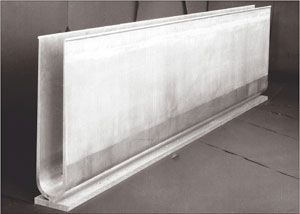
For the RF, most other high-energy synchrocyclotrons had adopted mechanical, rotating capacitors (reminiscent of the tuning capacitors of old-fashioned radio receivers). This allowed for the frequency modulation needed to accompany the relativistic energy increase that occurs in all circular accelerators with energies higher than a few tens of millions of electron-volts. To avoid the recurrent difficulties encountered with rotating capacitors (arising from operation in high vacuum, overheating, bearings, sparking, etc), Krienen adopted a bold, elegant solution: a vibrating, light alloy capacitor in the form of a tuning fork. The self-oscillating operation (at 50 Hz) was driven from the base of the fork, via an electromagnet. Special feedback circuits assured the control of the amplitude. Krienen studied the possible problems, such as parasitic vibration modes, metallurgy and fatigue, and came up with brilliant solutions. A spare, twin tuning fork was provided for the SC, but in many years of operation it was never needed.

CCEfra2_07-08

For the firm in charge of the construction of the SC, Philips, this was both a new adventure and a successful collaboration with the world of particle-physics research. Thanks to the dedication and efforts of all, and of Krienen in particular, the machine was built in less than three years and first operated in August 1957. It subsequently proved to be a reliable workhorse and after many additions and improvements, it completed its career in 1990, following 33 years of very successful experiments in particle and nuclear physics.

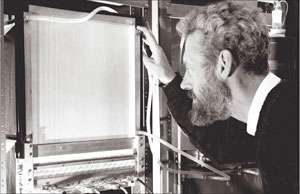
Krienen also turned his talents to the benefit of particle-tracking detectors. In the early 1960s many experiments used spark chambers for this purpose. The sparks formed between metal planes in a gas when a high voltage was applied after the passage of a particle. The tracks that the chambers revealed in this way were recorded optically, initially on photographic films that were scanned offline to digitize the track co-ordinates. Later, TV cameras were used, allowing digital information about the co-ordinates of the tracks to be written onto magnetic tape. Acoustical methods, where transducers measured the arrival time of the sound wave of a spark, were also used successfully to measure the co-ordinates online.

In 1961, participants at a symposium on spark chambers at Argonne National Laboratory heard of some ideas for improving spark chambers by replacing the metal plates with wire planes. However, it was at the 1962 Conference on Instrumentation for High Energy Physics at CERN that Krienen presented the first extensive work on chambers with wire planes. He proposed the digital wire spark chamber, employing a novel method to read out wire planes with ferrite-ring core memories, as used in computers in those days. Each wire in a detector plane passed through a ferrite-ring core to ground or even to high voltage. The current through the wires touched by a spark, which was controlled and relatively low, set the magnetic cores, thus directly storing the track co-ordinate. This could be read out conveniently at high speed using the same procedures as used in computers.

CCEfra3_07-08

The device marked a real breakthrough in the field of detectors. In the subsequent years, a large number were constructed and used in experiments at CERN, DESY, Brookhaven National Laboratory (BNL), Saclay and many other laboratories worldwide. However, a drawback of magnetic core read-out was that it could not be used in magnetic fields. This is one reason why spark chambers gradually became less popular. They were replaced by further developments of the wire chamber, such as multiwire proportional chambers, drift chambers, time-projection chambers, microstrip gas chambers, and finally by silicon trackers.

Krienen in the meantime continued to apply his inventiveness in the field of accelerators at CERN. In 1972 he made a major contribution to the 14 m diameter muon storage ring designed to measure the anomalous moment of the muon, g-2, to a few parts per million. This required a uniform magnetic field of 1.5 T with the vertical focusing provided by electric quadrupoles almost all of the way round the ring, operating at about 25 kV. Krienen, assisted by Wilfried Flegel, designed the quadrupole system and soon discovered that high-voltage quadrupoles in a magnetic field regularly spark over, even in the best vacuum. Studying the phenomenon, he realized that electrons were trapped in the combined fields (which resemble a Penning gauge) and that the breakdown occurred when the trapped charge had built up to a threshold value, which took a few milliseconds. However, the muon lifetime in the ring (lengthened by relativistic time dilation) was to be only 64 μs, and all would be gone in 800 μs, after which the quadrupoles could be switched off. So Krienen provided pulsed modulators to drive the electric plates and there was no significant breakdown.

CCEfra4_07-08

The muons were injected by pion decay in flight inside the ring and filled all of the available phase space. Some passed close to the limiting apertures, so inevitably a small fraction (<1%) were lost per muon lifetime. This had a small effect on the g-2 measurement and limited the measurement of the time-dilated muon lifetime. Krienen then invented “electric scraping” to remove the muons at the edge of the population, which were the ones most likely to be lost. This was accomplished in a simple way by pulsing the quadrupoles asymmetrically at the beginning of the fill and then slowly bringing them up to the fiducial value. The loss was reduced to 0.1% per lifetime, and could be measured and a correction applied. Finally time dilation in a circular orbit was verified to 1 part in 1000 at a γ of 29.6. This remains one of the most precise tests of Einstein’s special theory of relativity.

In 1977 Krienen took charge of the design and development of the electron-cooling apparatus for CERN’s Initial Cooling Experiment (ICE) ring. Electron cooling, suggested by Gersh Itskovich Budker in 1966 and experimentally demonstrated in his laboratory in Novosibirsk in 1974 to 1976, consists of reducing the phase spread of ion beams circulating in a storage ring through Coulomb interactions with cooler electrons. Ions and electrons are mixed together along a straight section of the ring where they travel at the same average speed, the electrons being constantly renewed. At the limit, neglecting noises and instability, the temperature of the ions should be equal to that of the electrons, that is: Ti  Te → θi θe √(Me/Mi), where θi and θe are the angular divergences of the ion and electron beams respectively. The very small mass ratio Me/Mi makes this method extraordinarily favourable.

ICE was an alternating gradient storage ring and was constructed at CERN in less than a year, metamorphosing the existing g-2 zero-gradient ring, which had just finished its task. The idea was to demonstrate the feasibility of intense antiproton beams with the aim of using them in the Super Proton Synchrotron (SPS), operating as a proton–antiproton collider. Carlo Rubbia was the initiator and strenuous supporter of the whole project, which was to produce and thereby discover the intermediate bosons W± and Z0 predicted by the Standard Model.

The decision was taken that the ICE ring should also incorporate the appropriate equipment for the stochastic cooling system that Simon van der Meer had invented at CERN in 1974, which had already been successfully partially tested at the Intersecting Storage Rings. Between late 1977 and spring 1978, the potential of stochastic cooling became so evident that this system was adopted alone in the proton–antiproton complex, ultimately with great success.

Krienen, however, was pursuing the hard work of completing the electron-cooling system. He could not go fast because he had to design every part of the apparatus from scratch, and then construct and adjust it, as well as develop the detailed theory. In 1979, about two years after the start of ICE, his apparatus worked properly, achieving a factor of 107 in the six-dimensional phase space density of the circulating protons. It was too late for the proton–antiproton project at the SPS, but new aims appeared. Krienen’s device was moved, with minor modifications, to the Low Energy Antiproton Ring. After a few years and more substantial improvements, it was moved again to the Antiproton Decelerator.

After his retirement from CERN, Krienen moved to the US, where he often returned to this cooling method, suggesting improvements and new applications in several papers. In 1986 he joined Boston University as professor of engineering and applied physics, and set to work on the new muon g-2 experiment at BNL. This was broadly similar to the CERN machine but had many improvements: the magnet aperture and yoke were wider, and particles were to be injected many times for each cycle of the Alternating Gradient Synchrotron. Krienen realized that a pulsed inflector, as had been used at CERN, would need to be longer, therefore requiring more energy, and that it would be impossible to recharge the capacitors in time for them to be triggered many times per second. So he devised instead a superconducting inflector that would cancel the main field along the desired track, but have no leakage field outside, using no iron or ferrite, which would have perturbed the main field.

To achieve this with a steady current was a tour de force. Krienen used two cosθ windings of different diameters, one inside the other, carrying equal and opposite currents. Outside the device the magnetic field was strictly zero, but inside the inner winding the field was uniform and the return flux was confined to the space between the windings. Working with his PhD student Wuhzeng Meng, Krienen proved the concept with model windings and the final superconducting version was made by Akira Yamamoto at KEK in Japan. This invention was crucial to the success of the g-2 experiment at BNL.

Krienen was an inventive and original thinker with the ability to make his ideas work in detail. His work ranged from accelerator and beam optics through superconducting injection devices and slow extraction methods, to ion sources, RF and klystron technology, and many kinds of particle detector. His motivation was always the advancement of physics. He impressed his colleagues and friends with his vast knowledge of theory and practice, and with his enthusiasm and creativity, which he maintained until the end of his long life. He was a good team player with strong loyalty to colleagues. We will remember him with warm affection.

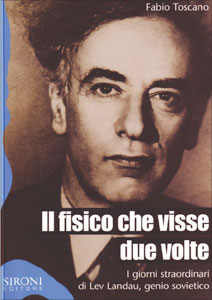
Il fisico che visse due volte

By Fabio Toscano, Sironi Editore. Paperback ISBN 9788851800963, €18.

Il fisico che visse due volte – the physicist who lived twice – is Lev Davidovich Landau, the iconoclastic physicist and 1962 Nobel Laureate. One of the greatest theorists of the Soviet Union, he made significant contributions to almost all fields in physics, from superfluidity to the properties of ferromagnetic bodies, from the absorption of sound in solids to the theory of phase transitions. This biography by Fabio Toscano, an Italian theorist with a broad experience in communicating science, nicely guides the reader through all aspects of this rich scientific production, never neglecting to present it primarily as a human adventure.

CCEboo2_07-08

The main focus, as I expected, is on Landau’s attitude to physicists and people in general, and thanks to this book I discovered his rather peculiar personality. Unpleasant to most of the people with whom he interacted, he was loved by some of his colleagues and friends who had a great admiration for his broad knowledge and his courage always to say what he thought, regardless of constraints from politics, society or academic authority. His straight-talking attitude caused serious problems to both his career and his private life (he spent one year in prison) at a time when the Soviet Union was under Stalin’s dictatorship.

In addition to his written contributions and original articles, one of Landau’s main legacies for Russian science is the “Landau school”. To be admitted to the school, students had to pass a comprehensive exam, the “Theoretical Minimum”, designed personally by Landau. As Toscano explains, Landau kept personal contact with all his students until he died in 1968, six years after a car accident that brought him close to death. In the accident “not even the eggs Vera [the driver’s wife] had in her hands broke”, but Landau’s brain suffered from serious injuries that left him in a coma for three months. He never fully recovered, and was afterwards much less creative.

This book certainly shows Landau with all his humanity, even emphasizing some of the scientific traps into which he fell. However, the details about Russia’s history and social situation that the author likes so much sometimes make the reading hard and the focus too distant. When “stuck” in such pages, I was eager to come back to Landau’s real life in Moscow or Baku or Karkhov and follow him, for example in meeting Bohr and quantum mechanics. Having studied some of the volumes of the Course of Theoretical Physics that Landau wrote with Evgeny Lifshitz and other colleagues, I appreciated this biography. Toscano’s account is very accurate – even scientific – and describes well Landau’s personality, the raison-d’être of the book.

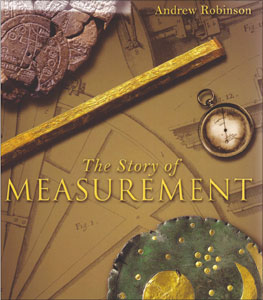
The story of measurement

by Andrew Robinson, Thames & Hudson. Hardback ISBN 9780500513675, £13.97 ($25.51).

Try to imagine civilization without measurement. In addition to length, weight, height, or any of the other obvious scalar quantities that we use in our daily lives, time and language also require standards to make sense. Current quantification includes concepts inconceivable to the earliest humans – gigabytes, body-mass index, radioactivity, and even beam intensity … Without accurate measurements our society would become chaos. On the other hand, some measurements are far from accurate, but still give a very clear idea of the described quantity: “a scourge of mosquitoes”, “a run of salmon,” or “a handful of children” are all something we can easily visualize.

CCEboo1_07-08

The story of measurement by Andrew Robinson, former literary editor of The Times Higher Education Supplement and the author of the bestselling The Story of Writing, consists of a series of chapters that can be read independently; it can also be read from cover to cover. However, by simply leaving the book on your coffee table you can enjoy it in silent moments in small doses every evening – and, I’m willing to wager, most of your guests will do the same, as they wait while coffee is being brewed.

Most people, perhaps with the exception of particle physicists who are used to aiming for “5σ detection” while doing their measurements, do not necessarily think about how measurements are going to be interpreted. Or maybe more subtle: who else is clear as to what accuracy means versus precision and error versus uncertainty? One chapter has been devoted to this interesting issue, and having originally trained as a survey engineer, this discussion brings back a lot of good memories for me.

The book has received mixed reviews, but it is not obvious which scale has been used for measuring the quality – after all it remains a coffee-table book and should be judged as such. I found it entertaining. Its potential popularity is also well reflected in that it exists in several language editions. Das Abenteuer der Vermessung and La storia della misurazione are already available in the bookshops. Read it yourself and make your own judgement, while, of course, applying all the rules that have to be taken into account for making a good measurement.

High-energy physics labs become INSPIREd

CERN, DESY, Fermilab and SLAC have announced that they will join forces to build INSPIRE, the next-generation, high-energy physics (HEP) information system. The announcement came at the second annual Summit of Information Specialists in Particle Physics and Astrophysics, which was held at DESY on 20–21 May. Representatives from the four laboratories attended the event, together with leading publishers and information providers, including Cornell’s http://arXiv.org and the SAO/NASA Astrophysics Data System.

The libraries of CERN, DESY, Fermilab and SLAC recently analysed the status of HEP information systems. A subsequent poll revealed that community-based services are overwhelmingly dominant in the research workflow of HEP scholars, whose needs are not met by existing commercial services. The poll found that HEP researchers attach paramount importance to three axes of excellence: access to full-text, depth of coverage and quality of content, possibly extended to connecting fields outside HEP.

Based on these results, the management of the laboratories seized the opportunity to build INSPIRE, a community-based and user-driven, next-generation information system, fully exploiting a new technological environment. It is being built by combining the successful SPIRES database, curated at DESY, Fermilab and SLAC, with the Invenio digital library technology developed at CERN. INSPIRE will offer the functionalities and quality of service that the HEP user community has grown to expect from SPIRES, an indispensable tool in their daily research workflow. It will develop long-awaited features, providing access to the entire body of HEP literature with full-text, Google-like search capabilities and enabling innovative text- and data-mining applications.

CERN Council looks forward to imminent start-up of the LHC

At its 147th meeting on 20 June, CERN Council heard news on progress towards start-up of the LHC later this summer. In addition, the latest in a series of audits covering all aspects of safety and environmental was presented to Council at the meeting. It addressed the question of whether there is any danger related to the production of new particles at the LHC.

Commissioning of the 27 km LHC started in 2007 with the first cool down of one of the machine’s eight sectors. Once successfully cooled, each sector has to pass through hardware commissioning, which involves intensive electrical tests, before being handed over to the operations team. By the time of the Council meeting, five of the eight sectors were at or close to the operating temperature of 1.9 K and the remaining three were at various stages of being cooled down. Moreover, sector 5-6 had passed through all steps of the hardware commissioning and was in the hands of the operations team.

When the LHC starts up this summer, its proton beams will collide at higher energies than have ever been produced in a particle accelerator, although nature routinely produces higher energies in cosmic-ray collisions. Nevertheless, concerns about the safety of whatever might be created in such high-energy particle collisions have been addressed for many years.

The latest review of the safety of the LHC’s collisions was prepared by the LHC Safety Assessment Group (LSAG), which comprises scientists at CERN, the University of California, Santa Barbara, and the Institute for Nuclear Research of the Russian Academy of Sciences. The LSAG report updates a 2003 paper by the LHC Safety Study Group and incorporates recent experimental and observational data. It confirms and strengthens the conclusion of the 2003 report that there is no cause for concern. Whatever the LHC will do, nature has already done many times over during the lifetime of the Earth and other astronomical bodies.

The new report has been reviewed by the Scientific Policy Committee (SPC), which advises Council on scientific matters. A panel of five independent scientists, including one Nobel Laureate, reviewed and endorsed the authors’ approach of basing their arguments on irrefutable observational evidence to conclude that new particles produced at the LHC will pose no danger. The panel presented its conclusions to a meeting of the full 20 members of the SPC, who unanimously approved this conclusion, prior to the Council meeting.

• The LSAG report is accompanied by a summary in non-technical language. It is available together with other documents relating to the safety and environmental impact of the LHC at http://public.web.cern.ch/public/en/LHC/Safety-en.html.

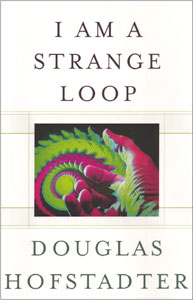
I Am a Strange Loop

By Douglas Hofstadter, Basic Books. Hardback ISBN 9780465030781, £15.99 ($26.95).

Douglas Hofstadter is a truly exceptional person. His remarkable academic life followed a path that reflected his evolving interests in mathematics (graduation in 1965), physics (PhD in 1975), and cognitive sciences (his main field of research ever since). He is also captivated by literature, music, philosophy and other forms of high-level human creativity – probably because they are particularly beautiful expressions of consciousness, a more elusive activity that somehow emerges from within our “thinking machine”, the brain.

CCboo1_06_08

Hofstadter is best known for having written Gödel, Escher, Bach: an Eternal Golden Braid (GEB), undoubtedly an inspired masterwork that was immediately recognized as a breakthrough in scientific literature. Despite being a brilliant and original work, most readers of GEB might feel uneasy when asked to summarize in a few sentences the main message of this unusual “metaphorical fugue on minds and machines in the spirit of Lewis Carroll”, which lasts for 777 (plus 22) pages. This is not a criticism. Many works of art can be appreciated, enjoyed and admired, even if we fail to grasp the main idea inspiring the artist. Maybe revolutionary breakthroughs – in art and certain areas of science – are naturally difficult to master at first and remain somewhat foggy in the minds of the “amateur”. In any case, GEB is certainly at the top of the list of books that I would take with me to a desert island. It has enough content and structure – not to mention depth and broadness – to provide thought-provoking reading for a very long time, and being alone on a desert island is an ideal setting for asking what we mean when we say “I”. Frankly, I’ve never read GEB in its full extent, from cover to cover. I prefer to see it as a collection of great wonders that visitors can enjoy in several possible sequences, even skipping a few of them. It’s impossible to visit all “great wonders of the world” in a single lifetime.

This browsing attitude (jumping back and forth between chapters and sections) or even opening the book at a random page and enjoying a few pages, is probably a good indication that I am one of the many readers who Hofstadter had in mind when he grumbled that GEB has been misperceived as “a hodgepodge of neat things with no central theme”. Apparently, this was one of the factors that triggered him to embark on the braiding of I Am a Strange Loop – 432 pages devoted to the “I” theme, 28 years after the eternal golden braid of GEB. I presume he would have finished much earlier had he not become a victim of his own (recursive) Hofstadter’s Law: It always takes longer than you expect, even when you take into account Hofstadter’s Law. I would also have written this review long ago, if I were not an enthusiast of this law…

In this more recent work, Hofstadter revisits several of GEB’s topics, such as Gö:del’s inspiring work on self-referential systems and “self-engulfing TV screens”, now magnificently represented in colour and with higher resolution than before, which provide a striking illustration of a self-referential loop (despite the absence of the “black hole” seen in the original screenings). However, the new book focuses on the scientific, philosophic and spiritual issues related to the ever-elusive nature of mind and consciousness. The author recognizes this as a daunting task: “our very nature is such as to prevent us from fully understanding its very nature.”

GEB’s emblematic actors (Achilles, Tortoise and other mythical characters who had metaphorical dialogues interspacing the main chapters) are absent in I Am a Strange Loop, giving it a seemingly more relaxed fluidity and somewhat reducing the “hodgepodge” feeling. The feeling is not entirely gone, however, and we can use another of Hofstadter’s pictorial expressions to qualify it as “a random-looking swirl of pockmarked, bluish-white globs that reminded me a bit of some kind of exotic cheese…”.

Like the topic it addresses, I Am a Strange Loop has elusive parts and hard-to-follow concepts, but it retains a surely poetic (even beautiful) literary exquisiteness, providing delightful reading that I do not remember experiencing with any other scientific book. I wholeheartedly recommend it to anyone interested in “the mind’s I” and to those looking for a scientific book written at the highest literary level. A warning, though: you may want to have a good English dictionary within arm’s reach. I should also recommend reading The Mind’s I by Hofstadter and Daniel Dennett, another delightful selection of “fantasies and reflections on self and soul”, which will trigger your mind into wondering “what is the mind, who am I, can machines think?”, through extraordinary stories and disturbing commentaries.

bright-rec iop pub iop-science physcis connect