by Shing-Tung Yau and Steve Nadis, Basic Books. Hardback ISBN 9780465020232, $30.
Geometry is the architecture of space, explains Shing-Tung Yau at the start of this book. For most of history, this architecture used the rigid straight lines inherited from Pythagoras, Euclid and other Ancient Greeks. Then, René Descartes, Carl Friedrich Gauss and Bernhard Riemann in turn showed how it could become more flexible.
Whichever way it was constructed, geometry remained largely abstract until almost 100 years ago, when Albert Einstein’s theory of general relativity showed how matter influences the space around it. Ever since this pioneer synthesis, mathematicians have been exploring the possibilities of geometry for physics, and vice versa. One early milestone was the attempt by Theodor Kaluza and Oskar Klein to extend space from four to five dimensions. Although their attempt to extract new physics failed, it has never stopped physicists and mathematicians from exploring the potential of multidimensional spaces.
In the same way that Einstein’s work revolutionized the theory of gravity, so in the closing years of the 20th century string theory emerged as a new way of viewing elementary particles and their various interactions. Unlike Brian Greene’s The Elegant Universe, this book is not an introduction to the physics fundamentals of string theory. Instead, it is more concerned with the mathematics that string theory uses.
In 1950, a geometer named Eugenio Calabi launched a bold new conjecture. More than a quarter of a century later, this conjecture was proved by Shing-Tung Yau, and the geometry has since been known as Calabi-Yau manifolds. The two names have become so closely associated that Yau wryly points out how many people assume that his first name is Calabi!
Following a description of such arcane mathematics is difficult, the proof even more so. However, it is dutifully done, in a way redolent of Simon Singh’s Fermat’s Last Theorem, which commendably made mathematics understandable without using equations. Some of Yau’s explanations are difficult to follow but a glossary of mathematical terms at the end of the book is a great help. The remainder of the book explains the potential of Calabi-Yau geometry as a framework for string theories – a subject that seems to have taken a place alongside rocket science as a perceived pinnacle of intellectual ingenuity.
While books with two co-authors are not unusual, this one is: one author writes a narrative in the first person, the other uses the third person. Nevertheless it works. For anyone interested in string theory it is a good book for understanding what has been achieved so far, and by whom (however, some notable contributions are missing). It is also a timely reminder of the latent power and elegance of mathematics. Calabi-Yau manifolds could help revolutionize our understanding of the world around us in the same way that Riemannian geometry did. However, while many great minds have chipped away at the problem, the ultimate latter-day Einstein has yet to emerge.
The first Global Particle Physics Photowalk brought more than 200 photographers together at five particle physics laboratories: CERN in Switzerland; DESY in Germany; Fermilab in the US; KEK in Japan; and TRIUMF in Canada. They glimpsed the state of the art in particle and nuclear physics via visits to accelerators, detectors, computing centres and isotope facilities; witnessed scientists at work in control rooms; and saw test facilities for future projects.
Following the event on 7 August, which was organized by the InterAction collaboration of particle-physics laboratories, participants submitted thousands of photographs for local and global competitions. Each laboratory selected the top photographs by jury or by staff vote; the local winners will be exhibited at the laboratories in 2011. The photographs shown here were the finalists for two global competitions: a “people’s choice” online vote and a selection chosen by international jury.
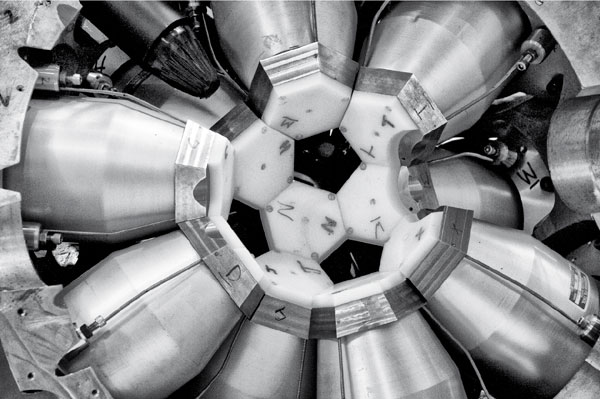
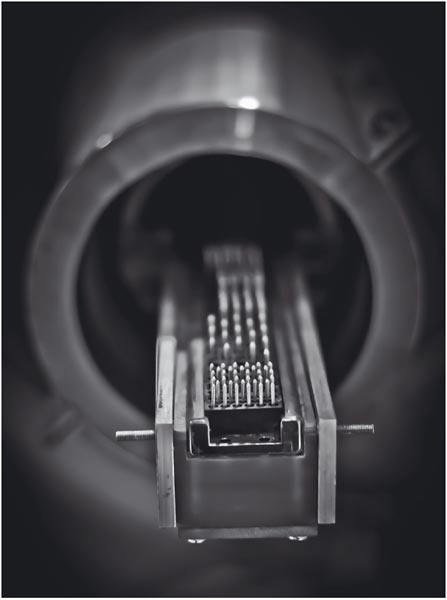
8Pi experiment Photographer: Mikey Enriquez. Laboratory: TRIUMF. This image of the 8Pi nuclear-physics experiment won third place in TRIUMF’s local competition. The muted black and white image of the 8Pi experiment’s inner detectors captures the beauty and symmetry of physics.
☆ 1st International jury.
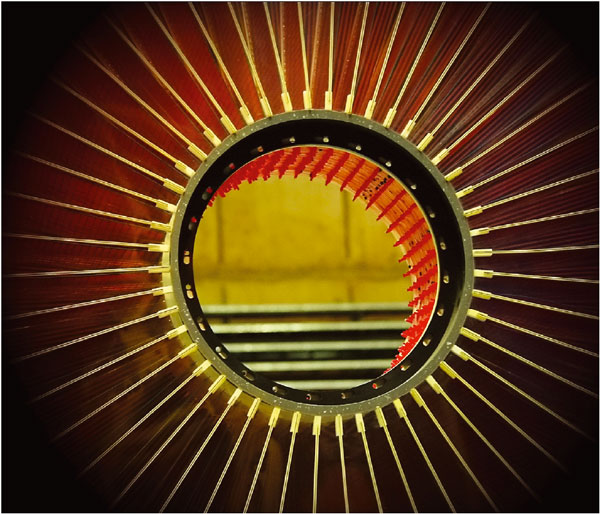
DESY wire chamber Photographer: Hans-Peter Hildebrandt. Laboratory: DESY. This portrait of a wire chamber won first place in DESY’s local competition. This highly symmetrical image of a particle detector fascinated every member of the local DESY jury immediately. The rays leading from the centre, ending in a dark rim, separating the chamber’s sectors, and large hole in the middle that allows a blurry view of the things behind, evoke the image of a large eye. The local jury called it “technically flawless and simply fascinating”.
☆ 1st People’s choice, ☆ 2nd International jury.
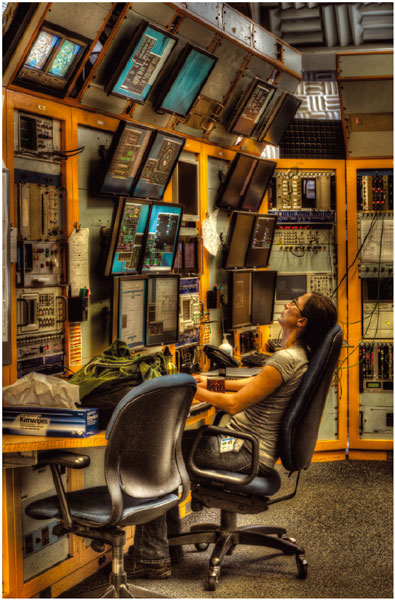
The accelerator operator Photographer: Tony Reynes. Laboratory: Fermilab. This image of an accelerator operator on shift in Fermilab’s Main Control Room captured third place in Fermilab’s local competition. The Main Control Room is a mission control centre where scientists monitor the laboratory’s accelerator complex 24 hours a day, seven days a week.
☆ 2nd People’s choice
Quadrupole magnets Photographer: Heiko Roemisch. Laboratory: DESY. This image of two quadrupole magnets won second place in DESY’s local competition. The global jury noted the photo’s sense of humour and the DESY jury’s association with this image was “monstrous force”.
☆ 3rd International jury.
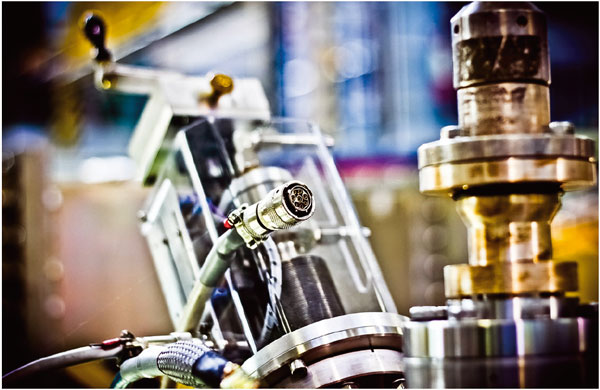
Electric cable at CERN Photographer: Christian Stephani. Laboratory: CERN. This image, placed third in CERN’s local competition, shows an electric cable connected to a valve that is designed to avoid pressure damage in a magnet.
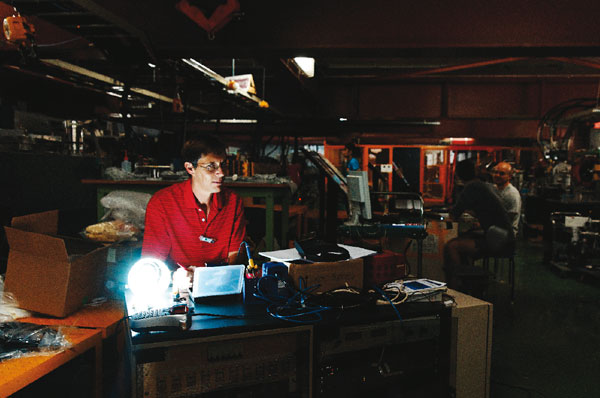
KEK’s Accelerator Test Facility Photographer: Yuki Hayashi. Laboratory: KEK. This photograph of researchers working through the weekend in the Accelerator Test Facility won first place in KEK’s local jury and web competition.
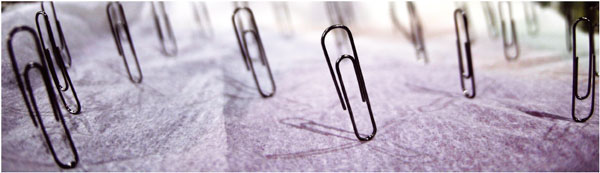
Paperclips atop the world’s largest cyclotron Photographer: Ali Lambert. Laboratory: TRIUMF. This image won first place in TRIUMF’s local competition. Above the world’s largest cyclotron at TRIUMF, paperclips experience some fringe magnetic field and stand upright, appearing to dance on the table’s surface. High-school student Ali Lambert artfully captured this iconic experience of all visitors to TRIUMF.
Broken Symmetry Photographer: Ken Duszynski. Laboratory: Fermilab. This photograph of the Broken Symmetry sculpture at Fermilab’s main entrance won first place in the laboratory’s local competition. The arch straddles the road and appears perfectly symmetric when viewed directly from below, but has carefully calculated asymmetry from its other views.
Test beamline for CERN’s Linac4 project Photographer: Diego Giol. Laboratory: CERN. This won first place in CERN’s local competition. Linac4, when completed, will be CERN’s newest linear accelerator and the first link in the proton acceleration chain for the LHC.
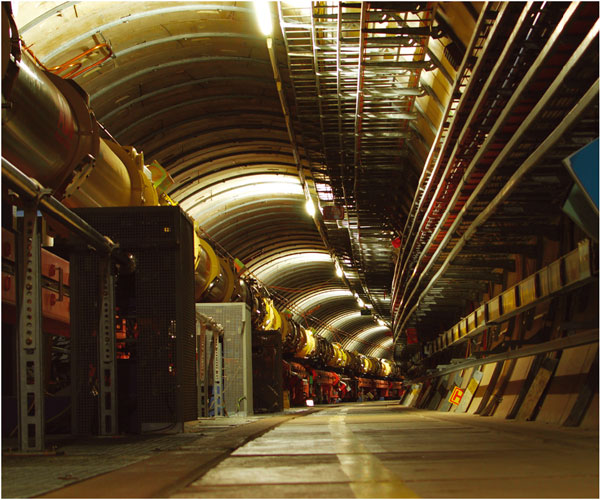
HERA accelerator tunnel Photographer: Matthias Teschke. Laboratory: DESY. This classic image of HERA’s accelerator tunnel captured third place in DESY’s local competition. The photographer manages to guide the view around the corner and make the viewer curious about what’s behind the bend. The image plays with light and shadow, conveys a sense of space, almost infinity, while at the same time incorporating technicality.
☆ 3rd People’s choice.
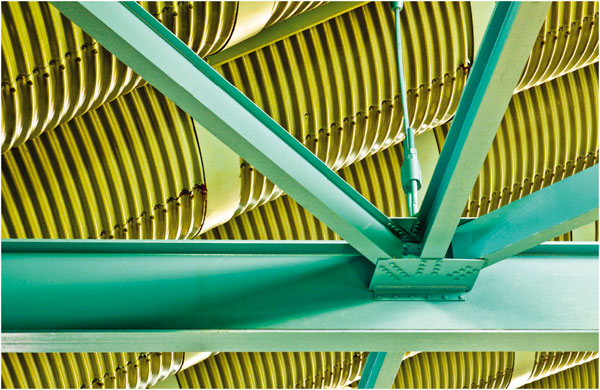
Roof of the Meson Laboratory Photographer: Charles Peterson. Laboratory: Fermilab. This view of the roof inside the Meson Laboratory, one of the buildings in Fermilab’s fixed target experimental area, won second place in Fermilab’s local competition. Each scalloped section of the roof was intentionally built to be approximately the same size as the tunnel inside the Tevatron.
TRIUMF’s material-science facility Photographer: Mikey Enriquez. Laboratory: TRIUMF. This photograph of TRIUMF’s material-science facility won second place in TRIUMF’s local competition. The seemingly industrial and technical landscape of the facility is softened here by a digitally applied texturing technique.
Connection pipe for LHC magnet Photographer: Diego Giol. Laboratory: CERN. This photograph of a connection pipe from a spare quadrupole magnet for the LHC at CERN won second place in the laboratory’s local competition.
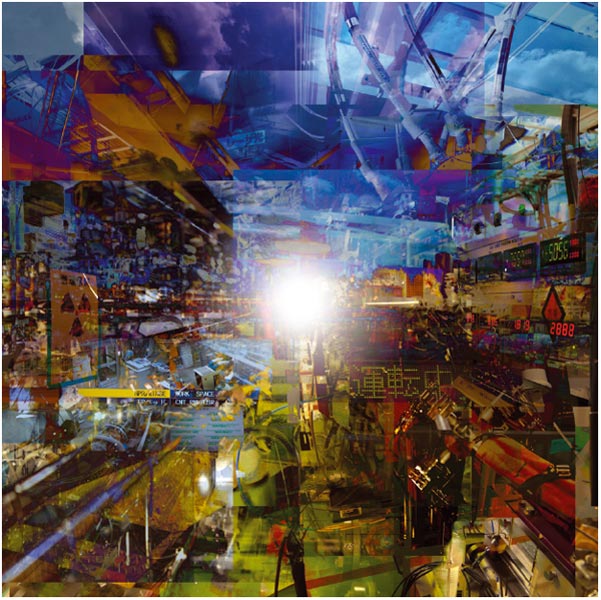
KEK collage Photographer: Akira Ominato. Laboratory: KEK. This collage of the KEK particle physics laboratory in Tsukuba, Japan, won second place in KEK’s local competition.
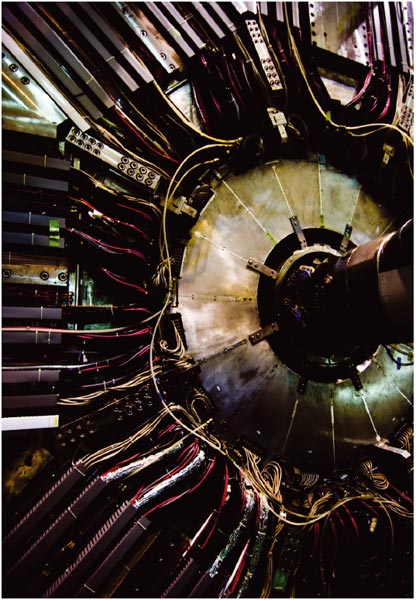
Belle Detector Photographer: Keisuke Mori. Laboratory: KEK. This photograph of the Belle Detector won second place in KEK’s local jury and web competition.
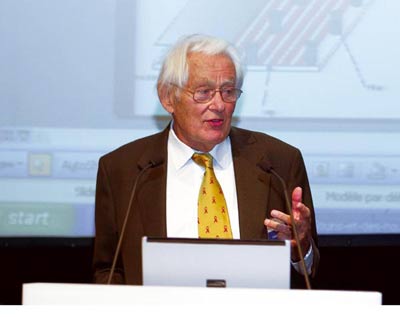
Georges Charpak, who died on 29 September, worked at CERN for most of his scientific career (CERN Courier November 2010 p6). It was there that he invented and developed the multiwire proportional chamber (MWPC), which led not only to a host of related detector techniques and applications, but also to the ultimate recognition of his contributions – the award of the Nobel Prize in Physics in 1992.
Born in eastern Poland, Georges moved to Paris with his family in 1932 when he was seven. As a teenager he became active in the French resistance to fight against Nazi occupiers and was imprisoned by the French government in 1943, before being transferred to the Nazi concentration camp at Dachau in 1944. He survived because the guards did not realize that their political prisoner was Jewish. After the war he became a French citizen and in 1954 he received his doctorate in nuclear physics from the Collège de France in Paris, where he studied in the laboratory of Nobel laureate Frédéric Joliot-Curie. He devoted his early career to nuclear physics before making the transition to high-energy particle physics.
Pioneering times
Georges arrived at CERN in 1959, his first contributions being to the team that in 1961 precisely measured the anomalous magnetic-moment of the muon, predicted by QED (CERN Courier December 2005 p12). Testing this prediction to high accuracy is of paramount importance in particle physics because a small deviation from the theoretical value would imply new physics beyond the Standard Model. The pioneering experiment at CERN inspired many physicists in a line of research that continues to this day.
Only a few years later, in 1967–1968, he developed the MWPC, a gas-filled box with a large number of parallel detector wires, each connected to individual amplifiers. Unlike earlier detectors – such as the bubble chamber, which records a few photographs per second – the multiwire chamber could record up to a million tracks a second when linked to a computer. This new technology came at just the right moment as the computer era began to blossom and proper data-acquisition electronics were under intensive development.
With the new detector, particle physics entered a new era. The speed and precision of the multiwire chamber and its offspring – the drift chamber and the time-projection chamber – revolutionized the field. Particle physicists must often sort through many millions of tracks to find one or two examples of the particles they seek, so they need fast detectors. The invention of the MWPC opened the way to operate experiments at much higher particle-collision rates and to test theories predicting the production of rare events and new massive particles. The discoveries of the W and Z bosons at CERN, the charm quark at SLAC and Brookhaven and the top quark at Fermilab would not have been possible without this type of detector, and current research in high-energy physics continues to depend on these devices.
It was an experimental technique that many others had attempted without much success, but the previous experience Georges had with similar detectors was a key to his achievement. Working with a cylindrical counter in the Collège de France in 1948, he had realized that signals were produced not by the drifting electrons released by the passage of an ionizing particle but rather by the movement of positive ions, which induce pulses of opposite polarity on the anode-sense wire. The MWPC amplifies the few ionization electrons through electron multiplication near the anode wires. The resulting avalanche produces a signal that can be timed, leading to a variety of high-precision spatial measurement systems. As Georges and his collaborators discovered, the pulses induced in orthogonal cathode strips in a MWPC permit a bi-dimensional read-out. Moreover, determination of the charge centroid provides a better accuracy along the cathode wires (better than 100 μm) than in the other direction, where the accuracy is limited by the spacing of the anode wires. This type of read-out has been used by many experiments and is still in use today at the LHC.
The pitch of the wires limits spatial resolution in the MWPC and the coverage of large areas requires many wires and, therefore, many channels of amplification and read-out. However, Georges and his co-workers found that delayed signals were seen in the MWPC and that the measurement of the time of these signals – the drift time – could provide high-accuracy spatial information. This forms the basis of the operation of the drift chamber, where the wires are much more widely spaced. Drift chambers have been developed by groups worldwide and are used in many experiments because of their economical read-out, high accuracy and the possibility to build detectors with large areas.
The combination of drift-time information with charge-centroid read-out offered the possibility of 3D read-out from a single chamber and in 1974 David Nygren at Berkeley proposed a new evolution of the drift chamber, the time-projection chamber (CERN Courier January/February 2004 p40). This has since been widely used by many experiments, in particular ALEPH and DELPHI at CERN’s Large Electron–Positron collider and now ALICE at the LHC.
In 1970 Fabio Sauli joined the group at CERN and played an important role in the subsequent developments of the multiwire chamber and the drift chamber. Among these was another promising concept, the multistep avalanche chamber. This was developed in the period 1979–1989 with the aim of reaching even higher counting rates. The basic idea was to split the amplification into two stages and overcome space-charge effects that otherwise counteracted the gain. Here, other distinguished physicists participated in the experimental effort, including Amos Breskin, Stan Majewski, Wotjek Dominic and Vladimir Peskov.
These detectors were subsequently developed further and adapted for detecting UV light to tackle new applications, ranging from fundamental research to medicine, biology and industry. One approach is to use a multistep parallel-plate avalanche chamber coupled to an image intensifier and a CCD to read the UV light emitted during the avalanche. In comparison with photographic emulsions, there is a significant gain in time for data acquisition, with the added advantages of linearity, wider dynamic range in the intensity measurement and a greatly improved signal-to-noise ratio. In collaboration with Tom Ypsilantis and his group, a particular effort was devoted to improving the ring-imaging Cherenkov (RICH) counter, which is used to identify elementary particles. From these investigations, new solid and gas UV photocathodes have been invented and developed.
Georges spent time and effort to push the application of these detectors in medical radiology, where the trend is for digital read-out to replace photographic film so as to improve sensitivity and spatial resolution. The multistep avalanche chambers found important applications in β-radiography, which is employed in medical and biological investigations to form “images” of human or animal tissues labelled with β-emitting radionuclides. In 1989 Georges founded a new company, Biospace Instruments, aimed at using this technology for biomedical applications as well as a high-pressure xenon multiwire chamber for low-dose radiography.
In the 1980s Georges and I began a close collaboration at CERN, developing new detector concepts adapted to solve specific problems in particle physics, including a high-energy gamma telescope with good energy resolution. In 1990 we began working with Leon Lederman on a new device – the “optical trigger” – which was to select particles containing the b quark in real time in high-intensity proton collisions. These particles fly a short distance before decaying and this serves to differentiate the decay products from other particles produced in the target. In a suitably positioned, thin crystal cell, internal reflection enhances the Cherenkov light produced by the decay products – while that from other relativistic particles passes straight through. This provides a way to tag the b-quark particles and enrich the collected sample with good events.
In 1991 we proposed the Hadron Blind Detector, which was then developed by an international collaboration. In this concept, most of the particles produced in proton collisions, which are hadrons, are not seen by the detector, while electrons and high-momentum muons are reconstructed efficiently. This selection criterion filters out unwanted events. The concept was demonstrated in October 1992 at CERN, just before the announcement of the Nobel prize, at a time when Georges and other team members were conducting experiments at night. In these investigations we used a gaseous parallel-plate detector and while optimizing it we demonstrated experimentally the advantage of a narrow amplification gap. This triggered the idea of building a device with an even narrower amplification gap and from that a new detector concept was born: the Micro-Mesh gaseous structure or MicroMegas, which our group at Saclay has developed since 1995. Georges used to say that this detector and some other new concepts belonging to the family of micropattern gaseous detectors (MPGDs) will revolutionize nuclear and particle physics just as his detector did.
Georges spent many weekends and summer holidays at his house in Cargèse, a village established by Greeks at the end of the 18th century in Corsica. His house was located two steps from the Institut d’Etudes Scientifiques de Cargèse. Developed by the physicist Maurice Lévy in the 1960s, the institute became an important summer school for theoretical physics, gathering together some distinguished physicists and many of those involved in the Standard Model, which was under intense development at that time. Georges used to join these lectures during summer and always welcomed the participants at his house nearby for a sip of wine. He invited many physicists to his house to discuss new ideas in physics as well as many other subjects. Among these visitors was Alvaro De Rújula, who with Georges, Sheldon Glashow and Robert Wilson proposed the use of neutrinos produced by a multi-tera-electron-volt proton synchrotron as a tool for geological research: at these energies, the neutrinos are suitable for “tomography” of the Earth because they have a range comparable to its diameter.
Given his experiences during the Second World War as a political prisoner it is perhaps not surprising that later in life Georges became a highly motivated humanitarian campaigner. In particular, he was a founder member of the Yuri Orlov committee, the human-rights group that was set up by a group of accelerator and particle physicists at CERN in 1980. Orlov, a Soviet physicist who had been imprisoned for his support of human rights, soon became a cause célèbre in the western scientific world. Shortly afterwards the committee broadened its scope to support Anatoly Shcharansky and Andrei Sakharov – also in the Soviet Union – and many individuals elsewhere from the worlds of science, mathematics and technology who, for political or ideological reasons, were being persecuted or imprisoned by authoritarian régimes of differing political colours. One of Georges’ many public actions in this context was at the press conference organized by the Yuri Orlov committee at the United Nations in Geneva in October 1980. Already an eminent figure in science at that time, and well respected for his complete freedom from ideological bias, he was able to contribute much to the influence of this and similar events. The combined efforts of such groups and individual activists eventually bore fruit in the form of favourable outcomes in these three particular cases as well as in others worldwide.
In the mid-1990s Georges returned to Paris and a new life with highly diversified activities began for him. Keen to popularize science, he became widely known to the general public through several books that made physics accessible to as wide an audience as possible. Together with Richard Garwin he wrote Megawatts and Megatons: A Turning Point in the Nuclear Age in which they evaluate the benefits of nuclear energy and show how it can provide an assured, economically feasible and environmentally responsible supply of energy that avoids the hazards of weapon proliferation. They make a strong statement in favour of arms control and outline specific strategies for achieving this goal worldwide. In 2004, with Henri Broch, he wrote Devenez Sorciers, Devenez Savants, later translated into English, which derided pseudoscience, astrology and other misconceptions (CERN Courier March 2005 p48).
Education was also of great importance to Georges. He created La Main à la P√¢te, an association to introduce hands-on science education in primary schools in France, an idea that had been first initiated in Chicago by his friend Leon Lederman. From 1996, with the support of the French Academy of Sciences and some of his colleagues, Georges propagated the new idea of teaching science in primary schools. The prestigious Ecole Nationale Superieur des Mines (ENSM) at Saint Etienne created a laboratory in his honour and established the “puRkwa Prize” to reward pedagogical initiatives that help children to acquire the scientific spirit.
Since returning to Paris, part of his scientific activity was connected to the work in my laboratory at Saclay, which he used to visit several times a year. We kept an old oscilloscope especially for him, as he disliked the new digital devices. He co-signed many publications related to our research. One example in 1996 was the new development by CERN and Saclay of a promising way of fabricating the MicroMegas detector, referred to as “bulk” technology, which is now widely used by many experiments and allows the fabrication of large and cost-effective detectors (CERN Courier December 2009 p23). Every two years, since 2002, we have organized a conference in Paris on Large TPCs for Low-Energy Detection. The purpose of the meeting is an extensive discussion of present and future projects using a large time-projection chamber (TPC) for low-energy and low-background detection of rare events (low-energy neutrinos, double beta decay, dark matter, solar axions etc.). Georges actively participated in the conference, giving introductory talks that pointed out links between science, education and technology.
Georges was active until the end. He recently published, together with François Vannucci, a new book, which can be considered as his testament, celebrating the physics that he loved. I met him at his home a day before his death and was impressed by the clarity of his mind. He was excited to hear of the new progress in physics and in detector developments conducted by my group. He was himself thinking about a novel radon detector, believing that its industrial success would allow him “to buy new shoes”, a phrase he used the day of the award of the Nobel prize 18 years ago.
Georges liked music and especially classic songs. He often invited musicians to his home in Paris and enjoyed the company of artists from the opera and friends at a typical Parisian bistro where they would sing around a piano player. For his last resting place, as he had wished, several musicians played classical music during the ceremony. I will keep in my memory a kind man, a humanist, who was enthusiastic, optimistic and always open to new ideas. I have the feeling, as many other colleagues do, that our second “father” has passed away.
I would like to thank Fabio Sauli, John Eades and Peter Schmid for their help in the preparation of this tribute.
During an intense series of meetings, which concluded on 17 September, the CERN Council overwhelmingly approved the laboratory’s revised Medium Term Plan for the period 2011 to 2015. The plan was originally presented to Council at its June session, at which Council asked CERN management to introduce cost-saving measures. In the revised plan, contributions from the member states will be reduced by a total SFr135 m over the five-year period; measures to consolidate CERN’s social security systems will bring the total reduction to the programme to SFr343 m.
The plan protects the LHC programme, achieving cost savings by slowing down the pace of other programmes. CERN management considers this a good result for the laboratory given the current financial environment. “The plan we presented to Council is firmly science-driven,” explained CERN’s director-general, Rolf Heuer. “It reduces spending on research and consolidation through careful and responsible adjustment of the pace originally foreseen in a way that does not compromise the future research programme unduly. The reductions will be painful, but in the current financial environment, they are fair.”
Among the programmes to be affected is the upgrade to the LHC’s beam intensity. This will now proceed later than originally planned, with the new linear accelerator expected to be connected in 2016 instead of 2015. In addition, there will be no running of CERN’s accelerators in 2012. The decision not to run the LHC in 2012 had already been taken in February for purely technical reasons; now the complete CERN accelerator complex will join the LHC in a year-long shutdown.
Looking further ahead, the plan allows for continuing R&D on the Compact Linear Collider (CLIC) study and on high-intensity proton sources, but at a slower pace than originally foreseen. Work on CLIC may provide technology for the development of a new machine to study in depth the discoveries made by the LHC, while high-intensity proton sources will allow CERN to play its part in global developments for neutrino physics.
“Council’s decision is an important one for European science,” said Council president Michel Spiro. “Although Council acknowledges that the cuts will be painful, we recognize the excellent performance of the LHC and its detectors, and consequently took decisions that minimize the disruption to CERN and its global user community. Council’s decision underlines Europe’s commitment to basic research, and is testimony to the robustness of the CERN model of international collaboration in science. Council is grateful for the pragmatism, and the realism of the CERN management in proposing real cost savings in time of crisis.”
Many people around the world, not only particle physicists, were deeply saddened to learn that Georges Charpak passed away on 29 September.
A student of Frédéric Joliot-Curie at the Collège de France, Charpak joined CERN in 1959, just five years after the organization’s foundation. From the start, he applied himself to the development of new particle-detector techniques. His outstanding and pioneering efforts – particularly the invention of the multiwire proportional chamber in 1968 – revolutionized particle physics, taking the field into the electronic age. The techniques he pioneered are reflected in many experiments today, not only in particle physics but in many other areas of research.
The significance of his work did not go unnoticed and was crowned with the award of the Nobel Prize in Physics in 1992. In making this award, the Swedish Academy recognized not only Charpak’s contribution to science but also to society. Detectors evolved from his pioneering work have found applications in many walks of life ranging from medicine to security.
A full tribute and obituary will appear in the next issue of CERN Courier.
The Nobel Prize in Physics for 2010 has been awarded to Andre Geim and Konstantin Novoselov, both of the University of Manchester, for their “groundbreaking experiments regarding the two-dimensional material graphene”. Graphene – which consists of a layer of carbon just one atom thick – has exceptional properties that have made it a micro-laboratory for quantum physics (for example, see. At a time when many researchers believed it was impossible for such thin crystalline materials to be stable, Geim and Novoselov extracted the graphene from a piece of graphite using only normal adhesive tape to obtain monatomic layers of carbon and transfer them to a silicon substrate. They used an optical method to identify the monolayers.
Not only is graphene the thinnest material ever made, it is also the strongest; it is also an excellent conductor and is almost completely transparent. These properties suggest applications that include very fast transistors and transparent touch screens. When mixed into plastics, graphene can make new very strong materials, which are nevertheless thin, elastic and lightweight.
Novoselov, 36, first worked with Andre Geim, 51, as a PhD student in the Netherlands. He subsequently followed Geim to the UK. Both studied and began their careers in Russia and are now professors at Manchester.
The Facility for Antiproton and Ion Research (FAIR) was officially launched on 4 October in Wiesbaden. Nine countries signed the convention for the construction of the new facility: Germany, Finland, France, India, Poland, Romania, Russia, Slovenia and Sweden. This international agreement forms the framework for FAIR.
Immediately after the signing, FAIR GmbH was established as a company. The first shareholders are Germany, Russia, India, Romania and the Swedish–Finnish consortium. In its first session, the council of the company appointed Boris Sharkov as scientific managing director and Simone Richter as administrative managing director. Beatrix Vierkorn-Rudolph was appointed as the first chair of the FAIR council.
The countries that could not yet join because of their internal ratification procedures (France, Poland and Slovenia) are expected to do so within the next year. China, Saudi Arabia, Spain and the UK are also planning to contribute to FAIR.
FAIR is one of the largest projects for basic research in physics worldwide. Its accelerators will generate antiproton and ion beams of a previously unparalleled intensity and quality. When completed, the facility will comprise two linear accelerators and as many as eight circular accelerators – the two biggest being 1100 m in circumference. Altogether it will contain around 3.5 km of beam pipe. It is to be built in Darmstadt, where existing accelerators at the GSI will serve as injectors for the new facility.
Scientists from around the world will use FAIR to gain new insights into the structure of matter and the evolution of the universe since the Big Bang, complementing the research of CERN. Some 3000 scientists from more than 40 countries are already working on the planning of the experiment and accelerator facilities.
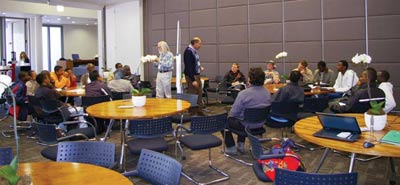
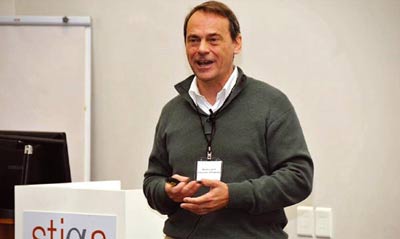
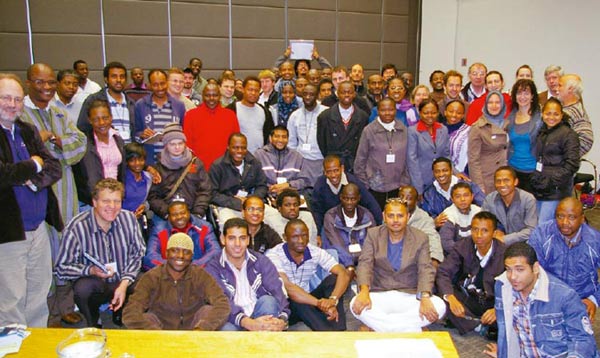
On 1 August, 65 students arrived at the National Institute for Theoretical Physics (NITheP) in Stellenbosch, South Africa. They were there to participate in the first African School on Fundamental Physics and its Applications (ASP2010). More than 50 participants had travelled from 17 African countries, fully supported financially to attend the intensive, three-week school. Others, from Canada, Germany, India, Switzerland and the US, helped to create a scientific melting pot of cultural diversity that fused harmoniously throughout the duration of the school.
ASP2010 was planned as the first in a series of schools to be held every two years in a different African country. It was sponsored by an unprecedentedly large number of international physics institutes and organizations, indicating the widespread interest that exists in making high-energy physics and its benefits the basis of a truly global partnership by reaching out to a continent where increased participation needs to be developed. The school covered a range of topics: particle physics, particle detectors, cosmology and accelerator technologies, as well as some of the applications, such as computing, medical physics, light sources and magnetic confinement fusion.
The courses were taught by physicists from around the globe, but included a significant number from South Africa, which has relatively well established research and training programmes in these areas of physics. The picture throughout the rest of Africa, in particular the sub-Saharan region, is rather different. As an example, consider the facts about African researchers at CERN. Currently, only 51 researchers of the 10,000 researchers registered at CERN have African nationalities, and only 18 of them currently work for African institutes. As CERN’s director-general, Rolf Heuer, points out: “When I show people the map of where CERN’s users come from, it’s gratifying to see it spanning the world, and in particular to see southern-hemisphere countries starting to join the global particle-physics family. Africa, however, remains notable more for the number of countries that are not involved than for those that are.” John Ellis, CERN’s adviser for relations with non-member states and one of the school’s founders, confirms that “sub-Saharan African countries are under-represented in CERN’s collaborations”.
“This new series of schools will strengthen existing collaborations and develop current and new networks involving African physicists,” explains Fernando Quevedo, director of the Abdus Salam International Centre for Theoretical Physics (ICTP) in Trieste, one of the sponsors of the school. He said: “This activity was a big success in all respects: lecturers of the highest scientific level, a perfect example of close collaboration among several international institutions towards a single goal and, most importantly, bringing the excitement and importance of the study of basic sciences to a community with great potential. The standard set for future activities is very high.” ICTP, with its 46 years of experience in training, working and collaborating with scientists in developing nations, is committed to the ASP2010 wholeheartedly. The aims and mission of the school fit perfectly with ICTP’s mission to foster science in Africa. The knowledge, relationships and collaborations that will result from it will enhance ICTP’s existing programmes in Africa.
“An extraordinary opportunity”
A strikingly new aspect of the school was that a large number of national and international organizations and institutes collaborated to make it happen, thereby demonstrating a common belief in its importance and worth. These included Spain (Ministry of Foreign Affairs), France (Centre National de la Recherche Scientifique/IN2P3, Institut des Grilles, Commissariat à l’énergie atomique), Switzerland (École polytechnique fédérale de Lausanne, Paul Scherrer Institute), South Africa (NITheP, National Research Foundation), and the US (Fermilab, Department of Energy, Brookhaven, Jefferson Lab, National Science Foundation), as well as the international institutions CERN and ICTP. On top of this, the International Union of Pure and Applied Physics offered travel grants to five female students. The number of involved organizations is set to increase in future editions of the school. Steve Muanza, a French experimental physicist of Congolese origin and also a founder of the school, says that in particular, “early support from IN2P3 was crucial for involving the other organizations in this new type of school in Africa”.
The 65 students were selected from more than 150 applicants. Among them were some of the brightest aspiring physicists in the continent, who represent the future of fundamental physics and its applications in Africa. Chilufya Mwewa, a participant from Zambia, summarizes what the school meant for her: “Attending ASP2010 was such an extraordinary opportunity that it had a huge positive impact on my life. The school indeed enhanced my future career in physics. Thanks to you and other organizers for opening us up to other physics platforms that we never had a chance to know about in our own countries.” Ermias Abebe Kassaye, a student from Ethiopia, underlines these aspects: “I have got a lot of knowledge and experience from the school. The school guides me to my future career. I obtained the necessary input to disseminate the field to my country and encourage others to do research in this field. I am working strongly to achieve my desire and to shine like a star, and your co-operation and help is essential to our success.”
Apart from highlighting established research in fundamental physics in South African universities and research institutes, ASP2010 also emphasized the role of high-energy physics in the innovation of medicine, computing and other areas of technology through the “applications” aspect of the programme. The iThemba Laboratory for Accelerator Based Sciences (iThemba LABS), situated between Cape Town and Stellenbosch, is a significant player in this area. “As well as being an important producer of radioisotopes, it is the only laboratory in the southern hemisphere where hadron therapy is performed with neutron and proton beams, which have to date treated more than 1400 and 500 patients, respectively,” explains Zeblon Vilakazi, director of the iThemba LABS.
Participating students had the opportunity to perform two practical courses in which they became acquainted with the use of scintillation detectors and performed measurements of environmental radioactivity. Laser practicals and a computing tutorial for simulations using the GEANT4 toolkit were also available at the University of Stellenbosch. The breaks between lectures provided the opportunity for many informal discussions to continue. “In these discussions, practical information was given to the students about opportunities for fellowships for further education, research positions and other schemes, such as Fermilab International fellowships, the CERN summer student programme and the ICTP Diploma Programme,” explains Ketevi Assamagan, a Brookhaven physicist of Togolese origin and a member of the ASP2010 organizing committee.
A number of additional demonstrations and talks were also incorporated into the programme. A video conference with Young-Kee Kim, Fermilab’s deputy-director, provided a vision of science on a planetary scale; a webcast that connected the students to the CERN Control Centre enabled them to experience a live demonstration of proton acceleration; and special talks by John Ellis, Albert De Roeck and Philippe Lebrun of CERN, and Jim Gates, of the University of Maryland (and a scientific adviser to President Obama), also made big impressions on the students. In parallel, several of the school’s lecturers gave public lectures in Cape Town. Anne Dabrowski, a former South African physics student, provided a role model to support the dream of African participation in high-energy physics. Now an applied physicist in the Beams Department at CERN, she was a member of the local organizing committee.
South Africa has recently formed a programme for collaboration with CERN and has become the second African country to join the ATLAS collaboration. “We are ready to do our best to assist any deserving student or postdoc to become involved via one of our member universities or national facilities that are participating in activities at CERN,” says Jean Cleymans, the director of the SA-CERN Programme. “Students are welcome to visit our SA-CERN website or the ASP2010 website for further information and to get in contact with us.” From discussions with the students, it was clear that several were keen to take advantage of these opportunities.
Several high-profile South African scientists and government officials participated in the last day of the school. This outreach and forum day reviewed the practical aspects of fundamental physics, which could be used as a gateway to innovation and to enhance future collaborations. The inspirational enthusiasm of the students at ASP2010 indicates that overall the future of fundamental science and technology on the African continent is in very good hands.
by Peter Schmüser, Martin Dohlus and Jörg Rossbach, Springer. Hardback ISBN 9783540795711, £126 (€139.95, $189).
Even at first glance my impression of this book was positive. Many coloured illustrations with detailed comments attracted my attention, so initially I began to read around them. A further study did not alter this first impression.
The field of free-electron laser (FEL) technology has reached a high state of the art in recent years, with operation demonstrated at high power (14 kW at Jefferson Lab), for soft X-rays (FLASH at DESY) and hard X-rays (the Linac Coherent Light Source at SLAC). The authors are well known experts in the field. Jörg Rossbach, for example, led the successful development of FELs at DESY for many years. Therefore, their book is interesting not only as a primer on FEL physics for students, but also as a reflection of the “view from inside”, expressing the personal opinions of people who made a real FEL with unique radiation parameters.
“We must study a lot to learn something.” This three-century-old aphorism of the Baron de Montesquieu is fully true for modern technology, and in particular for FEL technology. One really needs to know much to understand how an FEL works, and much more to design and build an FEL facility. The book therefore covers both the theoretical description of FEL physics and the experimental methods used to build an FEL and to control the radiation parameters.
The first half provides an introduction to the theory of the FEL. It gives the reader a clear picture of electron motion in an FEL, with the 1-D FEL equations used to demonstrate principles of FEL operation. Analytical and numerical solutions of these equations, combined with a discussion of limitations of the 1-D theory, give the full and explicit picture of FEL physics. Despite the use of simplified mathematical models, the authors succeed in presenting a physically transparent description of issues as advanced as self-amplified spontaneous emission (SASE), the FEL radiation spectrum, radiation-energy fluctuations etc. Parametrizations of numerical results allow the reader to make fast but reasonable estimates of the influence of the electron-beam parameters on the length and output power of a SASE FEL. Some theoretical issues, which are frequently not included in courses on general physics, but are useful for deeper understanding, are briefly described with references to more detailed textbooks and are given in several appendices.
The second part of the book contains a description of experimental results and the FEL installation at the FLASH facility, which provides an excellent example for the explanation of technical details. It is recent enough to use relatively new techniques and approaches, but has operated long enough as a user facility for the experimental techniques to be well developed and tested, as well as for the real parameters of the electron and radiation beams and the corresponding limitations to be explored. The authors compare measurements with theoretical predictions for the dependence of the radiation power and the degree of bunching on the co-ordinate along the undulator, for example. This confirms that the numerous formulae of the first part are really useful.
The main part of the description of FLASH is devoted to the accelerator and electron-beam parameters. This is natural, because the cost of the accelerator and the efforts for its operation are the dominant parts of the cost and effort of the whole FEL installation. The undulator line, which is another important part of the FEL, is described only briefly, probably indicating that the FLASH undulator is so good and reliable that people almost forget about it. A brief discussion of the challenges and prospects for X-ray FELs concludes the book.
Because the book focuses on X-ray FELs, it cannot touch all aspects of FEL physics and technology, so some important FEL-related issues must be studied through other books and papers. For undulators the authors refer to the corresponding book by J A Clarke, The Science and Technology of Undulators and Wigglers (OUP 2004). A better understanding of high-gain FEL physics can be achieved by reading old books on microwave travelling-wave tubes, which contain almost all the equations and results of 1-D FEL theory. Indeed, the first high-gain FEL – the travelling-wave tube with undulator called the “ubitron” (150 kW peak power at 5 mm wavelength) – was built by Robert M Phillips in 1957. Further study may be continued through the annual FEL conference proceedings and references to papers they contain.
Thus, this book is very useful for students who are beginning to study FEL physics. It is also valuable for experts, who may look at their research from a different point of view and compare the authors’ way of presenting material with their own way of explaining FEL physics.
Presenting Science: A Practical Guide to Giving a Good Talk by Çiğdem IŞsever and Ken Peach, OUP. Hardback ISBN 9780199549085, £39.95 ($75). Paperback ISBN 9780199549092, £19.95 ($35).
The Craft of Scientific Communication by Joseph E Harmon and Alan G Gross, Chicago University Press. Hardback ISBN 9780226316611, $55. Paperback ISBN 9780226316628, $20. E-book ISBN 9780226316635, $7–$20.
Communication takes many forms, each with its own “how to” manual. Peer-to-peer, communication with the media, reaching exhibition visitors and the public in general: all now have their guides. Each audience deserves particular attention, but the ground rules are always the same: define your objectives, work out a strategy for achieving those objectives and then plan your tactics. This approach comes across loud and clear in these two very different books.
Physicists Çiğdem IŞsever and Ken Peach give a practical guide to preparing a talk, while science communicators Joseph Harmon and Alan Gross take a rather more academic look, focusing on the craft of writing a scientific paper.
IŞsever and Peach deserve high praise not only for producing this book, but also for recognizing that communication skills are important enough to be taught to science students: their book is based on a course they deliver at the University of Oxford. Their key message is to be prepared: know who your audience is, why you are talking to them and what messages you want them to carry away. “The aim,” they write, in bold text, “is to get your message across to your audience clearly and effectively.”
The book walks its readers through the steps towards achieving that goal, urging would-be speakers to research the event that they’ll be talking at and the audience they’ll be talking to, before giving advice on how to prepare the ubiquitous PowerPoint presentation. “The purpose of the slides,” reads chapter two, “is to help the audience understand the subject. Once you start to relax on this and make the slides serve some other purpose (like being intelligible to those who were not there) you risk confusing the audience.” In other words, choose your message, package it for your audience and stick to it. It’s good advice.
Later chapters develop key themes. Chapter three talks about structure: tell people what you’re going to say, say it and then remind them of what you’ve said. Chapter four develops the theme of understanding the audience’s needs, while chapter five addresses style: if you’re talking to an audience of particle physicists, for example, you’ll adopt a different style from what you would choose for school pupils.
IŞsever and Peach are somewhat disparaging about the use of corporate image, arguing that it takes up too much space and leaves little for content. In corporate communication, this is often the case, but it doesn’t have to be that way. Whether we like it or not, the word “branding” has entered the lexicon of communication in particle physics: we’re all jostling for a place in the public’s consciousness, and brand identity helps. Establishing the brand has been a key ingredient of CERN’s communication, for example, throughout the start-up phase of the LHC. Partly as a result, CERN and the LHC are fast becoming household names, providing a strong platform on which to build scientific and societal messages.
The book winds up where it began: reminding readers that the key to success is thorough preparation. Like much of the book’s advice, this applies equally well to any form of communication, be it with lab visitors, journalists or even your neighbours.
Harmon and Gross take an altogether more academic approach, analysing and dissecting the scientific paper through the ages to identify and codify what works and what doesn’t. It is the classic textbook to IsŞsever and Peach’s field guide, each chapter ending with exercises for the student.
It’s a bold thing to attempt to improve on some of the most successful papers of the 20th century, but on page 22 Harmon and Gross do just that, while being careful to point out that their book was not subject to the same length constraints that a journal imposes. The point they make is that each part of a paper has a specific role to play, and by respecting that rule you’ll craft a better paper. A typical abstract, they argue, tells the reader what was done, how it was done and what was discovered. On page 22, they add a fourth element: why it matters. In doing so, the abstract becomes not only informative but also persuasive.
Harmon and Gross go on to apply the same rigorous approach to communications, ranging from grant proposals to writing for the general public, inevitably arriving at the subject of PowerPoint. In a chapter that resonates strongly with IŞsever and Peach, they point out a common failing of PowerPoint presentations: their creators often forget that audiences have only a minute or two to view each slide. Their key message? A PowerPoint slide is not a page from a scientific paper.
The book concludes with a final thought that, while most of us will never scale the intellectual heights of the great names of science, we can all aspire to approach them in terms of the clarity of our communication. These are two very different books on science communication, but their authors share a common belief that good science communication is a craft that can be learnt. Either one is a good place to start.
To provide the best experiences, we use technologies like cookies to store and/or access device information. Consenting to these technologies will allow us to process data such as browsing behavior or unique IDs on this site. Not consenting or withdrawing consent, may adversely affect certain features and functions.
Functional
Always active
The technical storage or access is strictly necessary for the legitimate purpose of enabling the use of a specific service explicitly requested by the subscriber or user, or for the sole purpose of carrying out the transmission of a communication over an electronic communications network.
Preferences
The technical storage or access is necessary for the legitimate purpose of storing preferences that are not requested by the subscriber or user.
Statistics
The technical storage or access that is used exclusively for statistical purposes.The technical storage or access that is used exclusively for anonymous statistical purposes. Without a subpoena, voluntary compliance on the part of your Internet Service Provider, or additional records from a third party, information stored or retrieved for this purpose alone cannot usually be used to identify you.
Marketing
The technical storage or access is required to create user profiles to send advertising, or to track the user on a website or across several websites for similar marketing purposes.