In the first half of the 20th century, many of the most important discoveries of new particles were made by cosmic-ray experiments. Examples include antimatter, the muon, pion, kaon and other hadrons, which opened up the field of high-energy physics and set in motion our modern understanding of elementary particles. This came about because cosmic-ray interactions with nuclei in the upper atmosphere are among the highest-energy events known, surpassing anything that could be produced in laboratories at the time – and even in collisions at the LHC today.
However, around the middle of the century the balance of power in particle physics shifted to accelerator experiments. By generating high-energy interactions in the laboratory under controlled conditions, accelerators offered new possibilities for precise measurements and thus for the study of rare particles and phenomena. These experiments helped to flush out the quark model and also the fundamental force-carrying bosons, leading to the establishment of the Standard Model (SM) – whose success was crowned by the discovery of the Higgs boson at the LHC in 2012.
Today, thanks to its unique position on the International Space Station, the AMS experiment combines the best of both worlds as a highly sensitive particle detector that is free from the complicated environment of the atmosphere (see “Cosmic rays continue to confound“). Collecting data since 2011, AMS has initiated a new epoch of precision cosmic-ray experiments that help to address basic puzzles in particle physics such as the nature of dark matter. The experiment’s latest round of data continues to throw up surprises. Arriving at the correct interpretation of events due to particles produced far away in the universe, however, still presents challenges for physicists trying to understand dark matter and the cosmological asymmetry between matter and antimatter.
Best of both worlds
The emphasis in particle physics now is on the search for physics beyond the SM, for which many motivations come from astrophysics and cosmology. Examples include dark matter, which contributes many times more to the overall density of matter in the universe than does the conventional matter described by the SM, and the origin of matter itself. Many physicists think that dark matter may be composed of particles that could be detected at the LHC, or might reveal themselves in astrophysical experiments such as AMS. As for the origin of matter, the big question has been whether it is due to an intrinsic difference between the properties of matter and antimatter particles, or whether the dominance of matter over antimatter in the universe around us is merely a local phenomenon. Although it is unlikely that there exist other regions of the observable universe where antimatter dominates, there is limited direct experimental evidence against it.
The AMS approach to cosmic-ray physics is based on decades of experience in high-statistics, high-precision accelerator experiments. It has a strong focus on measurements of antiparticle spectra that allows it to search indirectly for possible dark-matter particles, which would produce antiparticles if they annihilated with each other, as well as for possible harbingers of astrophysical concentrations of antimatter. In parallel, AMS is able to make measurements of the energy spectra of many different nuclear species, posing challenges for models of the origin of cosmic rays – a mystery that has stood ever since their discovery in 1912.
Unconventional physics?
The latest AMS results on the cosmic-ray electron and positron fluxes provide very accurate measurements of the very different spectra of these particles. Numerous previous experiments had discovered an increase in the positron-to-electron ratio at increasing energies, although with considerable scatter. AMS has now confirmed this trend with greater precision, but it also indicates that the positron-to-electron ratio may decrease again at energies above about 300 GeV. The differences between the electron and positron fluxes mean that different mechanisms must be dominating their production. The natural question is whether some exotic mechanism is contributing to positron production.
One possibility is the annihilation of dark-matter particles, but a more conventional possibility is production by electromagnetic processes around one or more nearby pulsars. In both cases, one might expect the positron spectrum to turn down at higher energies, being constrained by either the mass of the dark-matter particle or by the strength of the acceleration mechanism around the pulsar(s). In the latter case, one would also expect the positron flux to be non-isotropic, but no significant effect has been seen so far. It will be interesting to see whether the high-energy decrease in the positron-to-electron ratio is confirmed by future AMS data, and whether this can be used to discriminate between exotic and conventional models for positron production.
A more sensitive probe of unconventional physics could be provided by the AMS measurement of the spectrum of antiprotons. These cannot be produced in the electromagnetic processes around pulsars, but would be produced as “secondaries” in the collisions between primary-matter cosmic rays and ordinary-matter particles. It is striking, for instance, that the antiproton-to-proton ratio measured by AMS is almost constant at energies of about 10 GeV. The ratio is significantly higher than some earlier calculations of secondary antiproton production, although recent calculations (which account more completely for the theoretical uncertainties) indicate that the antiproton-to-proton ratio may be somewhat higher – possibly even consistent with the AMS measurements. As with the case for positron production, extending the measurements to higher energies will be crucial for distinguishing between exotic and conventional mechanisms for antiproton production.
AMS has also released interesting data concerning the fluxes of protons, helium and lithium nuclei. Intriguingly, all three spectra show strong indications of breaks in the spectra at rigidities of around 200 GV. The higher-energy portions of the spectra lie significantly above simple power-law extrapolations of the lower-energy data. It seems that some additional acceleration mechanism might be playing a role at higher energies, providing food-for-thought for astrophysical models of cosmic-ray acceleration. In particular, the unexpected shape of the spectrum of primary protons in the cosmic rays may also need to be taken into account when calculating the secondary antiproton spectrum.
The AMS data on the boron-to-carbon ratio also provide interesting information for models of the propagation of cosmic rays. In the most general picture, cosmic rays can be considered as a relativistic gas diffusing through a magnetised plasma. This leads to a boron-to-carbon ratio that decreases as a power, Δ, of the rigidity, with different models yielding values of Δ between –1/2 and –1/3. The latest AMS data constrain this power law with very high precision: Δ = –0.333±0.015, in excellent agreement with the simplest Kolmogorov model of diffusion.
The AMS collaboration has already collected data on the production of many heavier nuclei, and it would be interesting if the team could extract information about unstable nuclear isotopes that might have been produced by a recent nearby supernova explosion. Such events might already have had an effect on Earth: analyses of deep-ocean sediments have recently confirmed previous reports of a layer of iron-60 that was presumably deposited by a supernova explosion within about 100 parsecs about 2.5 million years ago, and there is evidence of iron-60 also in lunar rock samples and cosmic rays. Other unstable isotopes of potential interest include beryllium-10, aluminium-26, chlorine-39, manganese-53 and nickel-59.
Promising prospects
What else may we expect from AMS in the future? The prospective gains from measuring the spectra of positrons and antiprotons to higher energies have already been mentioned. Since these antiparticles can also be produced by other processes, such as pulsars and primary-matter cosmic rays, they may not provide smoking guns for antimatter production via dark-matter annihilation, or for concentrations of antimatter in the universe. However, searches for antinuclei in cosmic rays present interesting prospects in either or both of these directions. The production of antideuterons in dark-matter annihilations may be visible above the background of secondary production by primary-matter cosmic rays, for example. On the other hand, the production of heavier antinuclei in both dark-matter annihilations and cosmic-ray collisions is expected to be very small. The search for such antinuclei has always been one of the main scientific objectives of AMS, and the community looks forward to hearing whatever data they may acquire on their possible (non-)appearance.
As this brief survey has indicated, AMS has already provided much information of great interest for particle physicists studying scenarios for dark matter, for astrophysicists and for the cosmic-ray community. Moreover, there are good prospects for further qualitative advances in future years of data-taking. The success of AMS is another example of the fruitful marriage of particle physics and astrophysics, in this case via the deployment in space of a state-of-the-art particle spectrometer. We look forward to seeing the future progeny of this happy marriage.
The Higgs boson has been observed via its decays to photons, tau leptons, and Z and W bosons, which has allowed ATLAS to glean much information about the particle’s properties. So far, these properties agree with the predictions of the Standard Model (SM). However, there are several aspects of the Higgs boson that are still largely unexplored, most notably the coupling of the Higgs boson to quarks. The two heaviest quarks, the bottom and top, are particularly interesting because they have the largest couplings to the Higgs boson. If these couplings differ from the SM predictions, it could provide a first hint of new physics.
Observing the coupling of the Higgs boson to these two quark flavours is challenging, however. Despite the Higgs decaying to a pair of bottom quarks around 58% of the time, this decay has not yet been observed because such decays manifest themselves as jets in the detector and this signature is overwhelmed by the SM production of multi-jets. As a result, physicists search for this decay by looking for the production of the Higgs in association with a vector boson (W or Z) or a top-quark pair. The additional particles have a more distinctive decay signature, but this comes at the price of a much lower signal-production rate.
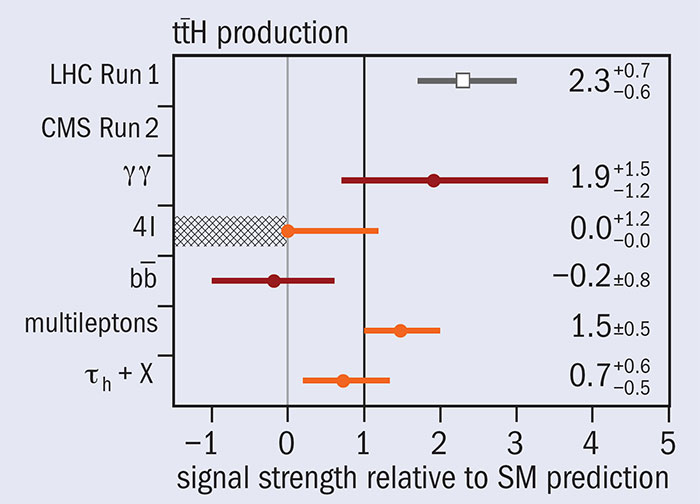
Regarding the top quark, the only way to directly measure the coupling of the Higgs to the top quark at the LHC is to study events where a Higgs is produced in association with a top-quark pair. Like the situation with bottom quarks, this process has not yet been observed. Indeed, even with the more distinct decays, the background processes that mimic these signals are large, complex and difficult to model. In both the top and bottom production channels, the backgrounds are controlled by using advanced machine-learning techniques to separate signal events from background (see figure).
We should finally observe both of these processes at a high statistical significance later during Run 2,
Both searches have now been carried out by ATLAS with data from LHC Run 2, revealing a sensitivity to the Higgs boson couplings to top and bottom quarks that is competitive with searches at Run 1. However, they are still not precise enough to identify if there are any deviations from SM behaviour. With further improvements to the analyses, better understanding of the backgrounds and the unprecedented performance of the LHC, we should finally observe both of these processes at a high statistical significance later during Run 2. This will tell us if the Higgs boson is indeed responsible for the masses of the quarks as predicted in the SM, or if there is new physics beyond it.
Twenty years after its discovery at the Tevatron collider at Fermilab, interest in studying the top quark at the LHC is higher than ever. This was illustrated by the plethora of new results presented by the CMS collaboration at the ICHEP conference in August and at TOP 2016, which took place in the Czech Republic from 19 to 23 September.
The top quark is the only fermion heavier than the W boson and which has weak decays that do not involve a virtual particle. This leads to an unusually short lifetime (5 × 10–24 s) for a weak-mediated process, and provides a unique opportunity to probe the properties and couplings of a bare quark. In particular, the width of the top quark (which, like for all quantum resonances, is inversely proportional to its lifetime) may be easily affected by new-physics processes.
In a series of recent publications, the CMS collaboration has explored the width of the top quark in a model-independent way and searched for contributions from extremely rare processes mediated by so-called flavour-changing neutral currents (FCNCs).
The top-quark width is too narrow compared with the experimental resolution of the CMS detector to allow a precision measurement directly from the shape of the top’s invariant-mass distribution. CMS therefore considers alternative observables that provide complementary information on the top’s mass and width.
One of those observables is the invariant-mass distribution of lepton and b-jet systems produced after top-quark pair decays, which has allowed the collaboration to place new bounds on a Standard Model-like top-quark width of 0.6 ≤ Γt ≤ 2.4 GeV, based on the first 13 fb–1 of data collected in 2016 at a collision energy of 13 TeV. In parallel, based on the LHC Run 1 data set recorded at lower energies, a set of dedicated searches for FCNC processes involving top quarks has been carried out. This analysis focuses on the couplings of the top-quark to other up-type quarks (up, charm) and different neutral bosons: the gluon, the photon, the Z boson and the Higgs boson.
CMS collaboration is fast approaching sensitivity to the FCNC signals expected by some models with just Run 1 data.
Another approach adopted by CMS was to search for the rare production of a single top quark in association with a photon and a Z boson with the 8 TeV data set. These channels exploit the large up-quark density in the proton, and to a lesser extent the charm-quark density, therefore compensating for the smallness of the FCNC couplings. Finally, events with the conventional signature of t-channel production (resulting in a single top-quark decay and a light-quark jet) were used to set constraints on FCNC and other anomalous couplings by simultaneously considering their effects on the production and the decay of the top quark with both the 7 and 8 TeV data sets.
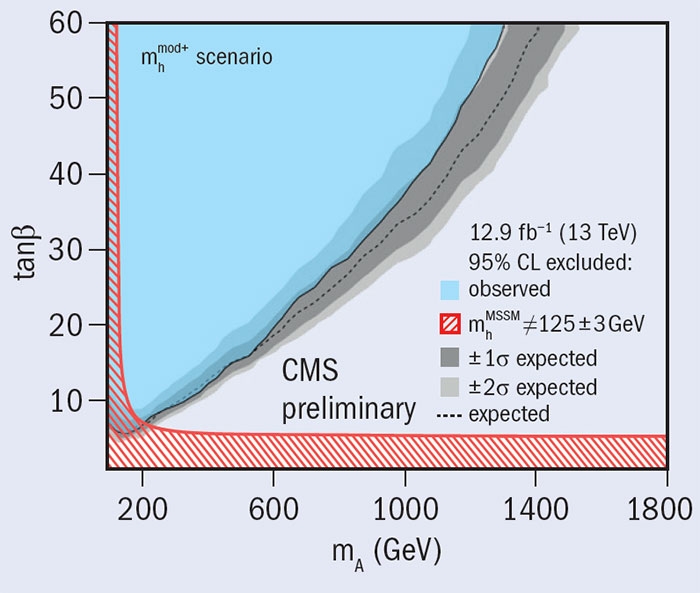
Although no deviation from the background-only expectations has been observed in any of the analyses so far, the CMS collaboration is fast approaching sensitivity to the FCNC signals expected by some models with just Run 1 data (see figure). All the analyses are limited in statistics and therefore will only benefit from more data to start effectively probing beyond-the-Standard-Model effects in the top quark sector.
The largest all-sky survey of celestial objects has been compiled by ESA’s Gaia mission. On 13 September, 1000 days after the satellite’s launch, the Gaia team published a preliminary catalogue of more than a billion stars, far exceeding the reach of ESA’s Hipparcos mission completed two decades ago.
Astrometry – the science of charting the sky – has undergone tremendous progress over the centuries, from naked-eye observations in antiquity to Gaia’s sophisticated space instrumentation today. The oldest known comprehensive catalogue of stellar positions was compiled by Hipparchus of Nicaea in the 2nd century BC. His work, which was based on even earlier observations by Assyro-Babylonian astronomers, was handed down 300 years later by Ptolemy in his 2nd century treatise known as the Almagest. Although it listed the positions of 850 stars with a precision of less than one degree, which is about twice the diameter of the Moon, this work was significantly surpassed only in 1627 with the publication of a catalogue of about 1000 stars by the Danish astronomer Tycho Brahe, who achieved a precision of about 1 arcminute by using large quadrants and sextants.
Gaia has an astrometric accuracy about 100 times better than Hipparcos.
The first stellar catalogue compiled with the aid of a telescope was published in 1725 by English astronomer John Flamsteed, listing the positions of almost 3000 stars with a precision of 10–20 arcseconds. The precision increased significantly during the following centuries, with the use of photographic plates by the YaleTrigonometric Parallax Catalogue reaching 0.01 arcsecond in 1995. ESA’s Hipparcos mission, which operated from 1989 to 1993, was the first space telescope devoted to measuring stellar positions. The Hipparcos catalogue, released in 1997, provides the position, parallax and proper motion of 117,955 stars with a precision of 0.001 arcsecond. The “parallax” is a small displacement of the star’s position after a six-month interval, offering a different viewpoint from Earth’s annual orbit around the Sun and allowing the star’s distance to be derived.
While Hipparcos could probe the stars to distances of about 300 light-years, Gaia’s objective is to extend this to a significant fraction of the size of our Galaxy, which spans about 100,000 light-years. To achieve this, Gaia has an astrometric accuracy about 100 times better than Hipparcos. As a comparison, if Hipparcos could measure the angle that corresponds to the height of an astronaut standing on the Moon, Gaia would be able to measure the astronaut’s thumbnail.
Gaia was launched on 19 December 2013 towards the Lagrangian point L2, which is a prime location to look at the sky away from disturbances from the Sun, Earth and Moon. Although the first data release already comprises about a billion stars observed during the first 14 months of the mission, there was not enough time to disentangle the proper motion from the parallax. This could only be computed with higher precision for about two million stars previously observed by Hipparcos.
The new catalogue gives an impression of the great capabilities of Gaia. More observations are needed to make a dynamic 3D map of the Milky Way and to find and characterise possible brightness variations of all these stars. Gaia will then be able to provide the parallax distance of many periodic stars such as Cepheids, which are crucial in the accurate determination of the cosmic-distance ladder.
Researchers working on the AMS (Alpha Magnetic Spectrometer) experiment, which is attached to the International Space Station, have reported precision measurements of antiprotons in primary cosmic rays at energies never before attained. Based on 3.49 × 10⁵ antiproton events and 2.42 × 10⁹ proton events, the AMS data represent new and unexpected observations of the properties of elementary particles in the cosmos.
Assembled at CERN and launched in May 2011, AMS is a 7.5 tonne detector module that measures the type, energy and direction of particles. The goals of AMS are to use its unique position in space to search for dark matter and antimatter, and to study the origin and propagation of charged cosmic rays: electrons, positrons, protons, antiprotons and nuclei. So far, the collaboration has published several key measurements of energetic cosmic-ray electrons, positrons, protons and helium, for example finding an excess in the positron flux (CERN Courier November 2014 p6). This latter measurement placed constraints on existing models and gave rise to new ones, including collisions of dark-matter particles, astrophysical sources and collisions of cosmic rays – some of which make specific predictions about the antiproton flux and the antiproton-to-proton flux ratio in cosmic rays.
With its latest antiproton results, AMS has now simultaneously measured all of the charged-elementary-particle cosmic-ray fluxes and flux ratios. Due to the scarcity of antiprotons in space (being outnumbered by protons by a factor 10,000), experimental data on antiprotons are limited. Using the first four years of data, AMS has now measured the antiproton flux and the antiproton-to-proton flux ratio in primary cosmic rays with unprecedented precision. The measurements, which demanded AMS provide a separation power of approximately 106, provide precise experimental information over an extended energy range in the study of elementary particles travelling through space.
The antiproton (p), proton (p), and positron (e+) fluxes are found to have nearly identical rigidity dependence
In the absolute-rigidity (the absolute value of the momentum/charge) range 60–500 GV, the antiproton (p), proton (p), and positron (e+) fluxes are found to have nearly identical rigidity dependence, while the electron (e–) flux exhibits a markedly different rigidity dependence. In the absolute-rigidity range below 60 GV, the p/p, p/e+ and p/e+ flux ratios each reach a maximum, while in the range 60–500 GV these ratios unexpectedly show no rigidity dependence.
“These are precise and completely unexpected results. It is difficult to imagine why the flux of positrons, protons and antiprotons have exactly the same rigidity dependence and the electron flux is so different,” says AMS-spokesperson Samuel Ting. “AMS will be on the Space Station for its lifetime. With more statistics at higher energies, we will probe further into these mysteries.”
The ATLAS collaboration is exploiting the window of opportunity opened by the LHC’s 13 TeV run to search directly for unknown particles. Complementary to this approach, the collaboration is also looking for deviations in the cross-sections and kinematic distributions of Standard Model processes, which could be caused by energy-dependent couplings that become accessible at the higher collision energy.
Using data recorded in 2015 corresponding to an integrated luminosity of 3.2 fb–1, ATLAS has recently measured the total cross-sections of single top-quark and top-antiquark production via the t-channel exchange of virtual W bosons. This channel has exciting kinematic features such as polarised top-quarks and forward spectator jets. Compared to the dominant top-quark−top-antiquark (tt) pair-production process, however, the single-production process is experimentally more challenging due to a higher background level. Because the two major background processes are W+jets and tt pair production, the selection of candidate events requires one charged lepton, missing transverse momentum and two hadronic jets to be present (exactly one of which has to be identified to contain b hadrons).
To measure the cross-section of top-quark and top-antiquark production separately, the events are separated into two channels according to the sign of the lepton charge. ATLAS uses neural networks to exploit the kinematic differences between the signal and background processes as much as possible, thereby optimising the statistical power of the data set. Ten different kinematic variables were combined into a discriminant, which is assumed to be close to zero for background-like events and unity for signal-like events (see figure).
The cross-sections were measured to be 156±28 pb for top-quark production and 91±19 pb for top-antiquark production. These are slightly higher than expected (+15% and +12%, respectively), but still in good agreement with the predictions. The largest uncertainties are related to the Monte Carlo generators used to model the t-channel single top-quark process and the tt pair-production process, the b-jet identification efficiency and the jet energy scale. In future measurements of the single top-quark process, the focus will be on reducing the uncertainties, exploiting improved calibrations and extending studies of the Monte Carlo generators.
Astronomers have found clear evidence of a planet orbiting the closest star to Earth, Proxima Centauri. The extrasolar planet is only slightly more massive than the Earth and orbits its star within the habitable zone, where the temperature would allow liquid water on its surface. The discovery represents a new milestone in the search for exoplanets that possibly harbour life.
Since the discovery of the first exoplanet in 1995, more than 3000 have been found. Most were detected either via radial velocity or transit techniques. The former relies on spectroscopic measurements of the weak back-and-forth wobbling of the star induced by the gravitational pull of the orbiting planet, while the latter method measures the slight drop in the star’s brightness due to the occultation of part of its surface when the planet passes in front of it.
Exoplanets discovered so far exhibit a diverse range of properties, with masses ranging from Earth-like values to several times the mass of Jupiter. Massive planets close to their parent star are the easiest to find: the first known exoplanet, called 51 Peg b, was a gaseous Jupiter-sized planet (a “hot Jupiter”) with a temperature of the order of 1000 °C due to its proximity to the star. The ultimate goal of exoplanet hunters is to find an Earth twin or at least an Earth-sized planet at the right distance from its parent star to have liquid water on its surface. This condition defines the habitable zone, which is the range of distance around the star that would be suitable for life.
Proxima Centauri b orbits the star (Proxima Centauri) in only 11.2 days and has a minimum mass of 1.27 Earth masses.
Proxima Centauri b matches this condition and is also a special planet for us because it orbits our nearest star, located just 4.2 light-years away. Near does not necessarily mean bright, however. Proxima Centauri is actually a cool red star that is much too dim to be seen with the naked eye and, with a mass about eight times smaller than the Sun, it is also around 600 times less luminous. The habitable zone around this red-dwarf star is therefore at much shorter distances than the corresponding distances in our solar system – equivalent to a small fraction of the orbit of Mercury. Proxima Centauri b orbits the star in only 11.2 days and has a minimum mass of 1.27 Earth masses. The exact value of the mass cannot be determined by the radial-velocity method because it depends on the unknown inclination of the orbit with respect to the line of sight.
During the first half of 2016, Proxima Centauri was regularly observed with the HARPS spectrograph on the ESO 3.6 m telescope at La Silla in Chile, and simultaneously monitored by other telescopes around the world. This campaign, which was led by Guillem Anglada-Escudé of Queen Mary University of London and shared publicly online as it happened, was called the Pale Red Dot.
The final results have now been published, concluding with a discussion on the habitability of the planet. Whether there is an atmosphere and liquid water on the surface is the subject of intense debate because red-dwarf stars can display quite violent behaviour. The main threats identified in the paper are tidal locking (for example, does the planetalways present the same face to the star, as does our Moon?), strong stellar magnetic fields and strong flares with high ultraviolet and X-ray fluxes. Whereas robotic exploration is some time away, the future European Extremely Large Telescope (E-ELT) should be able to see the planet and probe its atmosphere spectroscopically.
The LHCb collaboration has reported the observation of three new exotic hadrons and confirmed the existence of a fourth by analysing the full data sample from LHC Run 1. Although the theoretical interpretation of the new states is still under study, the particles each appear to be formed by two quarks and two antiquarks. They also do not seem to contain the lightest up and down quarks, which means they could be more tightly bound than other exotic particles discovered so far.
Until recently, all observed hadrons were formed either by a quark–antiquark pair (mesons) or by three quarks only (baryons). The underlying reason has remained a mystery, but during the last decade several experiments have found evidence for particles formed by more than three quarks. For example, in 2009 the CDF collaboration at Fermilab in the US observed evidence for a tetraquark candidate dubbed X(4140), which was later confirmed by the CMS and D0 collaborations (the latest LHCb analysis yields a clear observation of this state, although finds a slightly larger width than the other experiments). Then, in July 2015, LHCb announced the first observation of two pentaquark particles, which are hadrons composed of five quarks.
Each of the four states observed by LHCb – dubbed X(4274), X(4500) and X(4700), in addition to the X(4140) – has a statistical significance above five standard deviations. Sophisticated analysis of the angular distribution of B+ meson decays into J/ψ, φ and K+ mesons also allowed the collaboration to determine the quantum numbers of the exotic states with high precision. Alas, the data could not be described by a model that contains only ordinary mesons and baryons.
The binding mechanism of the new states could involve tightly bound tetraquarks or strange charmed meson pairs bouncing off each other and rearranging their quark content to emerge as a J/ψφ system. The high statistics of the LHCb data set and the sophisticated techniques exploited in the analysis will help to shed further light on the production mechanisms of these particles.
LHCb has made several other important contributions to the investigation of exotic particles. In February 2013, the quantum numbers of the X(3872) particle discovered in 2003 by the Belle experiment in Japan were determined, and in April 2014 the collaboration showed that the Z(4430) particle (also discovered at Belle) is composed of four quarks: ccdu. The latest exotic results from LHCb, which were first presented in June at the Meson 2016 workshop in Cracow, Poland, have been submitted for publication.
The largest 3D map of distant galaxies ever made has allowed one of the most precise measurements yet of dark energy, which is currently driving the accelerating expansion of the universe. The new measurements, which were carried out by the Baryon Oscillation Spectroscopic Survey (BOSS) programme of the Sloan Digital Sky Survey-III, took five years to make and include 1.2 million galaxies over one quarter of the sky – equating to a volume of 650 cubic billion light-years.
BOSS measures the expansion rate by determining the size of baryonic acoustic oscillations, which are remnants of primordial acoustic waves. “We see a dramatic connection between the sound-wave imprints seen in the cosmic microwave background to the clustering of galaxies 7–12 billion years later,” says co-leader of the BOSS galaxy-clustering working group Rita Tojeiro. “The ability to observe a single well-modelled physical effect from recombination until today is a great boon for cosmology.”
The map shows galaxies being pulled towards each other by dark matter, while on much larger scales it reveals the effect of dark energy ripping the universe apart. It also reveals the coherent movement of galaxies toward regions of the universe with more matter, with the observed amount of in-fall explained well by general relativity. The results have been submitted to the Monthly Notices of the Royal Astronomical Society.
Since CERN’s LHC switched on in the autumn of 2008, no new particle colliders have been built. SuperKEKB, under construction at the KEK laboratory in Tsukuba, Japan, is soon to change that. In contrast to the LHC, which is a proton–proton collider focused on producing the highest energies possible, SuperKEKB is an electron–positron collider that will operate at the intensity frontier to produce enormous quantities of B mesons.
At the intensity frontier, physicists search for signatures of new particles or processes by measuring rare or forbidden reactions, or finding deviations from Standard Model (SM) predictions. The “mass reach” for new-particle searches can be as high as 100 TeV/c2, provided the couplings of the particles are large, which is well beyond the reach of direct searches at current colliders. The flavour sector provides a particularly powerful way to address the many deficiencies of the SM: at the cosmological scale, the puzzle of the baryon–antibaryon asymmetry remains unexplained by known sources of CP violation; the SM does not explain why there should be only three generations of elementary fermions or why there is an observed hierarchy in the fermion masses; the theory falls short on accounting for the small neutrino mass, and it is also not clear whether there is only a single Higgs boson.
SuperKEKB follows in the footsteps of its predecessor KEKB, which recorded more than 1000 fb–1 (one inverse attobarn, ab–1) of data and achieved a world record for instantaneous luminosity of 2.1 × 1034 cm–2 s–1. The goals for SuperKEKB are even more ambitious. Its design luminosity is 8 × 1035 cm–2 s–1, 40 times that of previous B-factory experiments, and the machine will operate in “factory” mode with the aim of recording an unprecedented data sample of 50 ab–1.
The trillions of electron–positron collisions provided by SuperKEKB will be recorded by an upgraded detector called Belle II, which must be able to cope with the much larger beam-related backgrounds resulting from the high-luminosity environment. Belle II, which is the first “super-B factory” experiment, is designed to provide better or comparable performance to that of the previous Belle experiment at KEKB or BaBar at SLAC in Stanford, California. With the SM of weak interactions now well established, Belle II will focus on the search for new physics beyond the SM.
SuperKEKB was formally approved in October 2010, began construction in November 2011 and achieved its “first turns” in February this year (CERN Courier April 2016 p11). By the time ofcompletion of the initial accelerator commissioning before Belle-II roll-in (so-called “Phase 1”), the machine was storing a current of 1000 mA in its low-energy positron ring (LER) and 870 mA in the high-energy electron ring (HER). As currently scheduled, SuperKEKB will produce its first collisions in late 2017 (Phase 2), and the first physics run with the full detector in place will take place in late 2018 (Phase 3). The experiment will operate until the late 2020s.
B-physics background
The Belle experiment took data at the KEKB accelerator between 1999 and 2010. At roughly the same time, the BaBar experiment operated at SLAC’s PEP-II accelerator. In 2001, these two “B factories” established the first signals of CP violation, therefore revealing matter–antimatter asymmetries, in the B-meson sector. They also provided the experimental foundation for the 2008 Nobel Prize in Physics, which was awarded to theorists Makoto Kobayashi and Toshihide Maskawa for their explanation through complex phases in weak interactions.
In addition to the observation of large CP violation in the low-background “golden” B → J/ψ KS-type decay modes, these B-factory experiments allowed many important measurements of weak interactions involving bottom and charm quarks as well as τ leptons. The B factories also discovered an unexpected crop of new strongly interacting particles known as the X, Y and Z states. Since 2008, a third major B factory, LHCb, entered the game. One of the four main LHC detectors, LHCb has made a large number of new measurements of B and Bs mesons and B baryons produced in proton–proton collisions. The experiment has tightly constrained new physics phases in the mixing-induced weak decays of Bs mesons, confirmed Belle’s discovery of the four-quark state Z(4430), and discovered the first two clear pentaquark states. Together with LHCb, Belle II is expected to be equally prolific and may discover signals of new physics in the coming decade.
Asymmetric collisions
The accelerator technology underpinning B factories is quite different from that of high-energy hadron colliders. For the coherent production of quantum-mechanically entangled pairs of B and B mesons, measurements of time-dependent CP asymmetries require that we know the difference in the decay times between the two B mesons. With equal energy beams, the B mesons travel only tens of microns from their production point and cannot experimentally be distinguished in silicon vertex detectors. To allow the B factory experiments to observe the time difference or spatial separation of the B vertices, the beams have asymmetric energies, and the centre of mass system is therefore boosted along the axis of the detector. For example, at PEP-II, 9 GeV electron and 3.1 GeV positron beams were used, while at KEKB the beam energies were 8 GeV and 3.5 GeV.
Charged particles within a beam undergo thermal motion just like gas molecules: they scatter to generate off-momentum particles at a rate given by the density and the temperature of the beam. Such off-momentum particles reduce the beam lifetime, increase beam sizes and generate detector background. To maximise the beam lifetime and reduce intra-beam scattering, SuperKEKB will collide 7 and 4 GeV electron and positron beams, respectively.
Two strategies were employed at the B factories to separate the incoming and outgoing beams: PEP-II used magnetic separation in a strong dipole magnet near the interaction point, while KEKB used a crossing angle of 22 mrad. SuperKEKB will extend the approach of KEKB with a crossing angle of 83 mrad, with separate beamlines for the two rings and no shared magnets between them. While the beam currents will be somewhat higher at SuperKEKB than they were at KEKB, the most dramatic improvement in luminosity is the result of very flat low-emittance “cool beams” and much stronger focusing at the interaction point. Specifically, SuperKEKB uses the nano-beam scheme inspired by the design of Italian accelerator physicist Pantaleo Raimondi, which promises to reduce the vertical beam size at the interaction point to around 50 nm – 20 times smaller than at KEKB.
Although the former TRISTAN (and KEKB) tunnels were reused for the SuperKEKB facility, many of the other accelerator components are new or upgraded from KEKB. For example, the 3 km-circumference vacuum chamber of the LER is new and is equipped with an antechamber and titanium-nitride coating to fight against the problem of photoelectrons. This process, in which low-energy electrons generated as photoelectrons or by ionisation of the residual gas in the beam pipe are attracted by the positively charged beam to form a cloud around the beam, was a scourge for the B factories and is also a major problem for the LHC. Many of the LER magnets are new, while a significant number of the HER magnets were rearranged to achieve a lower emittance, powered by newly designed high-precision power supplies at the ppm level. The RF system has been rearranged to double the beam current with a new digital-control system, and many beam diagnostics and control systems were rebuilt from scratch.
During Phase 1 commissioning, after many iterations the LER optics were corrected to achieve design emittance. To achieve low-emittance positron beams, a new damping ring has been constructed that will be brought into operation in 2017. To meet the charge and emittance requirements of SuperKEKB, the linac injector complex has been upgraded and includes a new low-emittance electron gun. Key components of the accelerator – including the beam pipe, superconducting magnets, beam feedback and diagnostics – were developed in collaboration with international partners in Italy (INFN Frascati), the US (BNL), and Russia (BINP), and further joint work, which will also involve CERN, is expected.
During Phase 1, intensive efforts were made to tune the machine to minimise the vertical emittances in both rings. This was done via measurements and corrections using orbit-response matrices. The estimated vertical emittances were below 10 pm in both rings, which is close to the design values. There were discrepancies, however, with the beam sizes measured by X-ray size monitors, especially in the HER, which is under investigation.
The early days of Belle and BaBar were plagued by problems, with beam-related backgrounds resulting from the then unprecedented beam currents and strong beam focusing. In the case of Belle, the first silicon vertex detector was destroyed by an unexpected synchrotron radiation “fan” produced by an electron beam passing through a steering magnet. Fortunately, the Belle team was able to build a new replacement detector quickly and move on to compete in the race with BaBar to measure CP asymmetries in the B sector. As a result of these past experiences, we have adopted a rather conservative commissioning strategy for the SuperKEKB/Belle-II facility. This year, during the earliest Phase 1 of operation, a special-purpose device called BEAST II consisting of seven types of background measurement devices was installed at the interaction point to characterise the expected Belle-II background.
At the beginning of next year, the Belle-II outer detector will be “rolled in” to the beamline and all components except the vertex detectors will be installed. The complex quadrupole superconducting final-focusing magnets are among the most challenging parts of the accelerator. In autumn 2017, the final-focusing magnets will be integrated with Belle II and the first runs of Phase 2 will commence. A new suite of background detectors will be installed, including a cartridge containing samples of the Belle-II vertex detectors. The first goal of the Phase-2 run is to achieve a luminosity above 1034 cm–2 s–1 and to verify that the backgrounds are low enough for the vertex detector to be installed.
Belle reborn
With Belle II expected to face beam-related backgrounds 20 times higher than at Belle, the detector has been reborn to achieve the experiment’s main physics goals – namely, to measure rare or forbidden decays of B and D mesons and the τ lepton with better accuracy and sensitivity than before. While Belle II reuses Belle’s spectrometer magnet, many state-of-the-art technologies have been included in the detector upgrade. A new vertex-detector system comprising a two-layer pixel detector (PXD) based on “DEPFET” technology and a four-layer double-sided silicon-strip detector (SVD) will be installed. With the beam-pipe radius of SuperKEKB having been reduced to 10 mm, the first PXD layer can be placed just 14 mm from the interaction point to improve the vertex resolution significantly. The outermost SVD layer is located at a larger radius than the equivalent system at Belle, resulting in higher reconstruction efficiency for Ks mesons, which is important for many CP-violation measurements.
A new central drift chamber (CDC) has been built with smaller cell sizes to be more robust against the higher level of beam background hits. The new CDC has a larger outer radius (1111.4 mm as opposed to 863 mm in Belle) and 56 compared to 50 measurement layers, resulting in improved momentum resolution. Combined with the vertex detectors, Belle II has improved D* meson reconstruction and hence better full-reconstruction efficiency for B mesons, which often include D*s among their weak-interaction decay products.
Because good particle identification is vital for successfully identifying rare processes in the presence of very large background (for example, the measurement of B → Xdγ must contend with B → Xsγ background processes that are an order-of-magnitude larger), two newly developed ring-imaging Cherenkov detectors have been introduced at Belle II. The first, the time-of-propagation (TOP) counter, is installed in the barrel region and consists of a finely polished and optically flat quartz radiator and an array of pixelated micro-channel-plate photomultiplier tubes that can measure the propagation time of internally reflected Cherenkov photons with a resolution of around 50 ps. The second, the aerogel ring-imaging Cherenkov counter (A-RICH), is located in Belle II’s forward endcap region and will detect Cherenkov photons produced in an aerogel radiator with hybrid avalanche photodiode sensors.
The electromagnetic calorimeter (ECL) reuses Belle’s thallium-doped cesium-iodide crystals. New waveform-sampling read-out electronics have been implemented to resolve overlapping signals such that π0 and γ reconstruction is not degraded, even in the high-background environment. The flux return of the Belle-II solenoid magnet, which surrounds the ECL, is instrumented to detect KL mesons and muons (KLM). All of the endcap KLM layers and the innermost two layers of the barrel KLM were replaced with new scintillator-based detectors read out by solid-state photomultipliers. Signals from all of the Belle-II sub-detector components are read out through a common optical-data-transfer system and backend modules. GRID computing distributed over KEK-Asia-Australia-Europe-North America will be used to process the large data volumes produced at Belle II by high-luminosity collisions, which, like LHCb, are expected to be in the region of 1.8 GB/s.
Construction of the Belle-II experiment is in full swing, with fabrication and installation of sub-detectors progressing from the outer to the inner regions. A recent milestone was the completion of the TOP installation in June, while installation of the CDC, A-RICH and endcap ECL will follow soon. The Belle-II detector will be rolled into the SuperKEKB beamline in early 2017 and beam collisions will start later in the year, marking Phase 2. After verifying the background conditions in beam collisions, Phase 3 will see the installation of the vertex-detector system, after which the first physics run can begin towards the end of 2018.
Unique data set
As a next-generation B factory, Belle II will serve as our most powerful probe yet of new physics in the flavour sector, and may discover new strongly interacting particles such as tetraquarks, molecules or perhaps even hybrid mesons. Collisions at SuperKEKB will be tuned to centre-of-mass energies corresponding to the masses of the ϒ resonances, with most data to be collected at the Υ(4S) resonance. This is just above the threshold for producing quantum-correlated B-meson pairs with no fragmentation particles, which are optimal for measuring weak-interaction decays of B mesons.
SuperKEKB is both a super-B factory and a τ-charm factory: it will produce a total of 50 billion b b, c c and τ+τ– pairs over a period of eight years, and a team of more than 650 collaborators from 23 countries is already preparing to analyse this unique data set. The key open questions to be addressed include the search for new CP-violating phases in the quark sector, lepton-flavour violation and left–right asymmetries (see panel opposite).
Rare charged B decays to leptonic final states are the flagship measurements of the Belle-II research programme. The leptonic decay B →τν occurs in the SM via a W-annihilation diagram with an expected branching fraction of 0.82+0.05–0.03 × 10⁻⁴, which would be modified if a non-standard particle such as a charged Higgs interferes with the W. Since the final state contains multiple neutrinos, it is measurable only in an electron–positron collider experiment where the centre-of-mass energy is precisely known. Belle II should reach a precision of 3% on this measurement, and observe the channel B →μν for tests of lepton-flavour universality.
Perhaps the most interesting search at Belle II will be the analogous semi-leptonic decays, B → D*τν and B → Dτν, which are similarly sensitive to charged Higgs bosons. Recently, the combined measurements of these processes from Babar, Belle and LHCb have pointed to a curious 4σ deviation of the decay rates compared to the SM prediction (see figure X). Since no such deviation is seen in B →τν, making it difficult to resolve the nature of the potential underlying new physics, the Belle-II data set will be required to settle the issue.
Another 4σ anomaly persists in B → K* l+l– flavour-changing neutral-current loop processes observed by LHCb, which may be explained by the actions of new gauge bosons. By allowing the study of closely related processes, Belle II will be able to confirm if this really is a sign of new physics and not an artifact of theoretical predictions. More precisely calculable inclusive transitions b → sγ and b → s l+l– will be compared to the exclusive ones measured by LHCb. The ultimate data set will also give access to B → K*νν and Kνν, which are experimentally challenging channels but also the most precise theoretically.
Beyond the Standard Model
There are many reasons to choose Belle II to address these and other puzzles with the SM, and in general the experiment will complement the physics reach of LHCb. The lower-background environment at Belle compared to LHCb allows researchers to reconstruct final states containing neutral particles, for instance, and to design efficient triggers for the analysis of τ particles. With asymmetric beam energies, the Lorentz boost of the electron–positron system is ideal for measurements of lifetimes, mixing parameters and CP violation.
The B factories established the existence of matter–antimatter asymmetries in the b-quark sector, in addition to the CP violation that was discovered 52 years earlier in the s-quark sector. The B factories established that a single irreducible complex phase in the weak interaction is sufficient to explain all CP-violating effects observed to date. This completed the SM description of the weak-interaction couplings of quarks.To move beyond this picture, two super-B factories were initially proposed: one at Tor Vegata near Frascati in Italy, and one at KEK in Japan. Although the former facility was not funded, there was a synergy and competition in the two designs. The super-B factory at KEK follows the legacy of the B factories, with Belle II and LHCb both vying to establish the first solid existence of new physics beyond the SM.
Key physics questions to be addressed by SuperKEKB and Belle II
• Are there new CP-violating phases in the quark sector?
The amount of CP violation (CPV) in the SM quark sector is orders-of-magnitude too small to explain the baryon–antibaryon asymmetry. New insights will come from examining the difference between B0 and B0 decay rates, namely via measurements of time-dependent CPV in penguin transitions (second-order W interactions) of b → s and b → d quarks. CPV in charm mixing, which is negligible in the SM, will also provide information on the up-type quark sector. Another key area will be to understand the mechanisms that produced large amounts of CPV in the time-integrated rates of hadronic B decays, such as B → Kπ and B → Kππ, observed by the B factories and LHCb.
• Does nature have multiple Higgs bosons? Many extensions to the SM predict charged Higgs bosons in addition to the observed neutral SM-like Higgs. Extended Higgs sectors can also introduce extra sources of CP violation. The charged Higgs will be searched for in flavour transitions to τ leptons, including B → τν, as well as B → Dτν and B → D*τν, where 4σ anomalies have already been observed.
• Does nature have a left–right symmetry, and are there flavour-changing neutral currents beyond the SM? The LHCb experiment finds 4σ evidence for new physics in the decay B → K*μ+μ–, which is sensitive to all heavy particles in the SM. Left–right symmetry models provide interesting candidates for this anomaly. Such extensions to the SM introduce new heavy bosons that predominantly couple to right-handed fermions that allow a new pattern of flavour-changing currents, and can be used to explain neutrino mass generation. To further characterise potential new physics, here we need to examine processes with reduced theoretical uncertainty, such as inclusive b → s l+l–, b → sνν transitions and time-dependent CPV in radiative B meson decays. Complementary constraints coming from electroweak precision observables and from direct searches at the LHC have pushed the mass limit for left–right models to several TeV.
• Are there sources of lepton-flavour violation (LFV) beyond the SM?
LFV is a key prediction in many neutrino mass-generation mechanisms, and may lead to τ→μγ enhancement at the level of 10−8. Belle II will analyse τ lepton decays for a number of searches, which include LFV, CP violation and measurements of the electric dipole moment and (g−2) of the τ. The expected sensitivities to τ decays at Belle II will be unrivalled due to correlated production with minimal collision background. The detector will provide sensitivities seven times better than Belle for background-limited modes such as τ→μγ (to about 5 × 10⁻⁹) and up to 50 times better for the cleanest searches, such as τ→ eee (at the level of 5 × 10⁻¹⁰).
• Is there a dark sector of particle physics at the same mass scale as ordinary matter?
Belle II has unique sensitivity to dark matter via missing energy decays. While most searches for new physics at Belle II are indirect, there are models that predict new particles at the MeV to GeV scale – including weakly and non-weakly interacting massive particles that couple to the SM via new gauge symmetries. These models often predict a rich sector of hidden particles that include dark-matter candidates and gauge bosons. Belle II is implementing a new trigger system to capture these elusive events.
• What is the nature of the strong force in binding hadrons?
With B factories and hadron colliders having discovered a large number of states that were not predicted by the conventional meson interpretation, changing our understanding of QCD in the low-energy regime, quarkonium is high on the agenda at Belle II. A clean way of studying new particles is to produce them near resonance, achievable by adjusting the machine energy, while Belle II has good detection capabilities for all neutral and charged particles.
To provide the best experiences, we use technologies like cookies to store and/or access device information. Consenting to these technologies will allow us to process data such as browsing behavior or unique IDs on this site. Not consenting or withdrawing consent, may adversely affect certain features and functions.
Functional
Always active
The technical storage or access is strictly necessary for the legitimate purpose of enabling the use of a specific service explicitly requested by the subscriber or user, or for the sole purpose of carrying out the transmission of a communication over an electronic communications network.
Preferences
The technical storage or access is necessary for the legitimate purpose of storing preferences that are not requested by the subscriber or user.
Statistics
The technical storage or access that is used exclusively for statistical purposes.The technical storage or access that is used exclusively for anonymous statistical purposes. Without a subpoena, voluntary compliance on the part of your Internet Service Provider, or additional records from a third party, information stored or retrieved for this purpose alone cannot usually be used to identify you.
Marketing
The technical storage or access is required to create user profiles to send advertising, or to track the user on a website or across several websites for similar marketing purposes.