Comsol -leaderboard other pages

Topics

The antiproton: a subatomic actor with many roles

cernleap1_7-03

LEAP’03, the latest in the series of biennial low-energy antiproton-physics conferences, could not fail to be topical this year. Running from 3-7 March, it began with the latest news on the production of antihydrogen atoms at energies low enough to permit them to be studied by laser spectroscopy, and ended with progress reports on two new antiproton facilities (support for one of which had been announced by the German government just days before).

This somewhat unusual time of the year for LEAP – previous conferences in the series have always taken place in the Autumn of even years – is attributable to the frenzied activity at CERN’s Antiproton Decelerator (AD), which now keeps many likely experimental participants busy between May and October. This year the meeting moved to Yokahama, where its packed programme more than compensated for the uncharacteristically wet and windy March weather. Some 60 talks reflected the recent surge of activity in what has become an exceedingly dynamic field.

An accelerator-produced antiproton normally spends only a brief instant in the world of matter. However, in this short time it can play many parts, from probing fundamental symmetry principles, to the study of atomic collisions, atomic bound states and nuclear physics. The initial session on discrete symmetries and antihydrogen was devoted to the current status of CPT invariance, the testing of which is perhaps the most powerful driving force behind current experimental activity in this field. Many particle physicists accept CPT invariance almost as an article of faith. They forget that, like Euclidean geometry, it is indeed a theorem, based on cherished but not entirely indispensable axioms such as Lorentz invariance (LIV), a feature the gravitational field only possesses locally. In his theoretical review, Nick Mavromatos of King’s College, London, concentrated on the fact that gravitation has shown itself to be particularly resistant to quantization under the terms of the CPT theorem. Pointing out that it is not difficult to construct models containing parameters that violate LIV and other CPT axioms, he neatly connected ultra-high, Planck-mass scale energies with ultra-low ones, by suggesting that experiments on neutral mesons, slow neutrons and in particular antihydrogen atoms, can place bounds on these parameters. In a backward look at data from the KTeV, NA48 and CPLEAR collaborations, Yoshiro Takeuchi of Nihon University, Tokyo, analysed these in terms of CP- and T-violation parameters and limits on CPT violation, concluding that relative to the level of K0-K0bar mixing, CPT violation is currently constrained in the meson sector to a few parts in 105 at best.

A starring role

cernleap2_7-03

The spotlight then turned on the experimentalists and the antiproton’s most recent starring role in the synthesis of large numbers of antihydrogen atoms. Nathaniel Bowden and Joseph Tan of Harvard brought participants up to date on the latest developments in antihydrogen synthesis from the ATRAP experiment. They reported on ATRAP’s use of positrons in a nested Penning trap to cool antiprotons to the cryogenic energies necessary for the recombination reaction between the different particles to take place, and on the field ionization method used for detection. The latter makes it possible to observe antihydrogen atoms under background-free conditions and to measure, for the first time, the distribution of principal quantum numbers for the synthesized atomic states. Makoto Fujiwara of Tokyo and Germano Bonomi of CERN described the production, detection and temperature dependence of antihydrogen atoms in the ATHENA experiment, which uses a similar Penning trap but with a distinctive open and modular design. This allows, among other things, a buffer gas to be introduced on the positron side, in which continuously introduced positrons from 22Na dissipate enough energy to prevent them re-emerging from the trap. Differential pumping then maintains a good-enough vacuum to ensure the survival of antiprotons for many hours on their side of the trap. ATHENA identifies antihydrogen events without ambiguity by detecting the simultaneous annihilation of their component positrons and antiprotons. New techniques for probing the positron plasma that rule out alternative but unlikely interpretations of the data have recently been introduced.

Window on the world

Antiproton beams have long provided a window on the shadowy world of glueballs, hybrids and quarkonia. In his review of this rich source of information on hadron physics, Ted Barnes from Oak Ridge looked both backward to LEAR and forward to future antiproton machines. Surviving glueball candidates from the era of LEAR, which ended in 1996, include the f0(1500) and, with less confidence, the f0(1710), while exotics include the π1(1400) and π1(1600). The advent of new antiproton sources at GSI and the Japan Proton Accelerator Research Complex (J-PARC; previously the Japan Hadron facility) now promises to open this window once again. Several more specific talks reviewed topics such as charmonium states from proton-antiproton annihilations in the Fermilab experiment E835, and the future Proton Antiproton Detector Array (PANDA) at GSI.

Low-energy antiproton beams can readily be stopped in matter targets. Before fully coming to rest, the antiprotons eject electrons from nearby target atoms and remain bound in their place. Once installed in this antiprotonic atom, they undergo complex cascades through electromagnetism-dominated states before coming within the range of strong interactions. However, it is only in antiprotonic helium that this cascade is known to last more than a few picoseconds. In this case, the microsecond-scale annihilation lifetimes of some atomic states fortuitously makes them accessible to laser spectroscopy, thus ensuring that antiprotonic helium can, in some respects, rival antihydrogen as a benchmark for studies of CPT invariance.
cernleap3_7-03

Attention on the second day, therefore, turned once again to the AD, with a session on the experimental and theoretical studies of antiprotonic helium. Masaki Hori of CERN reported on the limit on the antiproton charge and mass that can now be deduced from measurements of transition frequencies in the antiprotonic atom to a few parts in 107. The new limit results in part from the recent addition of a decelerating radio-frequency quadrupole (RFQD) to the ASACUSA beamline. This reduces the beam’s kinetic energy from the MeV to the keV scale, and so allows the antiprotons to be stopped in very-low-density helium, with concomitantly smaller systematic corrections to the measured frequencies. Further impetus, expected from two-photon laser techniques and more advanced laser systems, may soon improve the precision of the frequency measurement to several parts in 109, and so also permit spectroscopy of the two-body antiprotonic helium ion (pbar He++). Jun Sakaguchi of Tokyo described the ASACUSA microwave-spectroscopy experiment on antiprotonic helium, which has allowed the antiproton orbital magnetic moment to be determined from the hyperfine splitting of atomic levels to a few parts in 105. The QED calculations that make all the above interpretations possible, were described by Vladimir Korobov of JINR Dubna, and further talks dealt with the physical chemistry of the antiprotonic helium atom.

Antihydrogen experiments dominated again in the following session on the future programme for the AD. Cody Storry of Harvard introduced a novel antihydrogen production mechanism that is being considered by ATRAP. A beam of caesium atoms previously excited into Rydberg states by a laser beam passes through the positron cloud confined in a Penning trap, where they produce positronium atoms that are also in Rydberg states. These have a much higher recombination cross-section with trapped antiprotons than is the case for ground-state positronium. The next major goal for both ATHENA and ATRAP is to begin laser spectroscopy of cold antihydrogen atoms, and several different schemes, including laser-stimulated recombination and ionization, are being investigated. From ASACUSA, Yasunori Yamazaki of RIKEN and Tokyo presented the idea that positrons and antiprotons may be confined in the same region of a trap incorporating a magnetic field “cusp”, while Eberhard Widmann, also from Tokyo, showed that a precision measurement of the ground-state hyperfine splitting in antihydrogen must now be seriously considered to fall within the AD’s “line of sight”. Throughout the history of modern physics, experiments with atomic beams have proved extremely fruitful in studying the hydrogen atom with high precision, and these latter two topics opened up the idea that the same can be true for antihydrogen.
cernleap4_7-03

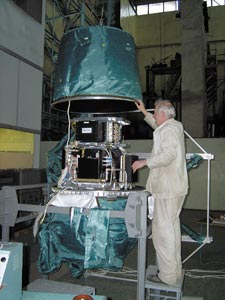
The research arena then moved from earthbound laboratories to the atmosphere and space, where the search for cosmic antimatter has been under way for many years. Catherine Leluc of Geneva reviewed the status of the ALPHA Magnetic Spectrometer (AMS02). This is due for launch to the International Space Station in October 2005, but a pilot version (AMS01) has already been flown on the shuttle mission STS-91 in 1998. The AMS02 detector now incorporates improved acceptance and redundancy into its search for antimatter and dark matter in cosmic rays. The third-generation high-altitude balloon experiment BESS-Polar was discussed by Mitsuaki Nozaki of Kobe. This will be used to study low-energy cosmic-ray antiprotons in detail in a superconducting magnetic spectrometer, and is expected to have a 10-20 day flight through the top of the polar atmosphere in 2004. Finally, Piero Spillantini of Firenze described PAMELA, a successor to several balloon-borne experiments, which will be launched later this year into quasi-polar orbit on the Russian Resurs-DK1 satellite from the Baikonur Cosmodrome.

Before they can be captured into atomic states, antiprotons produced at accelerators must lose some nine orders of magnitude of kinetic energy, and as is the case for other particles, their interaction with matter over this range is of crucial importance. The fact that antiproton projectiles are both heavy and negatively charged has far-reaching consequences for their behaviour when passing through matter. Capture/loss processes and the excitation of target electrons drastically modify the Bethe-Bloch formula at the velocity scale of the electron orbitals in the target material. The RFQD installed in ASACUSA’s beamline has shed new light on this experimentally dark area, and Ulrik Uggerhoj from Aarhus was able to report on the latest results on stopping-power measurements made with antiproton beams from 1 to 100 keV in C, Al, Ni, Au and LiF foils. The results of theoretical approaches to the understanding of collisions of antiprotons with hydrogen and helium atoms, ions and molecules, and to the explanation of ionization phenomena in the low-velocity domain, were presented by John Reading of Texas A&M and several other speakers.
cernleap5_7-03

The final curtain

The life of an antiproton ends when it comes within range of the strong interaction, either after an atomic cascade or (occasionally) by a direct in-flight hit on the nucleus. It is then that it plays its final research role, as a nuclear probe. The AD as presently constituted is not easily adaptable for such studies, but with GSI and J-PARC now on the horizon, Josef Pochodzalla of Mainz was able to look forward to using antiprotons from these machines for the large-scale production of single and double Λ-hypernuclei. The weak decays and gamma-ray spectra of these hypernuclei can elucidate hyperon-hyperon and hyperon-nucleon interactions, measure fundamental properties of the hyperons themselves, and produce genuine hypernuclear states with symmetry properties unavailable to ordinary nuclei. These antiprotons that have suffered atomic capture can eventually de-excite to atomic ground states that “graze” the nucleus, so their annihilation constitutes an effective probe of the nuclear surface. This aspect occasioned both backward and forward glances in reports on new analyses of data from the PS209 experiment at LEAR and the possibility of similar studies at ASACUSA.

The final day of the LEAP’03 conference was appropriately devoted to the current and future antiproton facilities. The morning session opened with a review by Tommy Eriksson from CERN of the present status of and future prospects for the AD machine, where the name of the game is “ever lower energies”. The AD is now operating close to its design specifications, with pulses containing 107 antiprotons being reliably delivered at an energy of 5.3 MeV every 100 seconds. Research at even lower (keV) beam energies has now been strongly boosted by the RFQD, which has permitted several million antiprotons to be captured in the Tokyo Penning trap and cooled to cryogenic energies. Naofumi Kuroda of Tokyo discussed their extraction in the form of a beam of antiprotons with kinetic energies on the eV scale. A new feature of the AD programme, which was described by Carl Maggiore of Pbar Medical, is an investigation with a 300 MeV/c (25 MeV) beam of a possible therapeutic role for antiprotons. This beam, astronomically high in energy for most other physicists, will soon be used to investigate the relative biological effect of antiprotons on biological cell samples.

In the final session on the topic of future antiproton facilities, Walter Henning, GSI’s director, described the laboratory’s new project and its potential for antiproton physics. The large-scale expansion of the GSI-Darmstadt laboratory, the funding of which has only very recently been agreed by the German federal government, will be carried out in two stages, with a 25% external contribution. One of its key elements will be the provision of antiproton beams below 15 GeV. Shoji Nagamiya, director of the J-PARC project, outlined progress on this new Japanese accelerator complex, centred on a 50 GeV proton synchrotron at Tokai, 150 km north-east of Tokyo. Planning has been under way since 2001 and is now rapidly gathering momentum. With financing amounting to some ¥134 billion (€980 million), Phase 1 is expected to produce its first beams in 2008. An opening ceremony was held in October 2002, and 30 letters of intent had been received by the end of December 2002, one-third each from Japan, Europe and North America. Both GSI and J-PARC now actively encourage the voice of antiproton users to be heard in the planning of their experimental programmes.

The best yet

The smooth organization of LEAP’03 largely resulted from the efforts of Eberhard Widmann and Ryugo Hayano of Tokyo University, with financial assistance being provided by RIKEN, KEK and the Antimatter Science Project at the University of Tokyo. Viewing the busy and spectacular Yokohama bay through the Sangyo Boeki Centre’s windows during the coffee breaks, the 100 participants could all agree that the form and content of the conference programme was the best yet.
Gamma-ray bursts made by supernovae

On 8 April, astronomers using the 6.5 m Multiple Mirror and Magellan telescopes discovered supernova SN2003dh, at the location of the gamma-ray burst GRB030329 (P Garnavich et al. 2003). The GRB had been spotted 10 days earlier by NASA’s High-Energy Transient Explorer satellite, on 29 March – the estimated time at which the supernova exploded. The association between these two phenomena may now have brought to a close the quest for what it is that generates gamma-ray bursts.

cernnews1_6-03

Gamma-ray bursts (GRBs) are flashes of gamma rays that reach us about once a day from deep space. They were serendipitously discovered in 1967 by US military satellites that were intended to monitor nuclear tests occurring above ground, in violation of the nuclear-test-ban treaty. For decades the origin of the GRBs was a complete mystery.

The first indication that GRBs are of cosmological origin was obtained in 1991 by NASA’s Compton Gamma Ray Observatory, which determined that their sources are isotropically distributed in the sky. It was also found that there are two GRB populations: “long-duration” GRBs lasting for more than 2 seconds, and “short” ones lasting less than this. The cosmological origin of GRBs, if the emission is isotropic, implied such a fast and huge energy release that it was even speculated that GRB explosions may involve new physics.

The cosmological origin of long-duration GRBs was first confirmed on 28 February 1997. The BeppoSAX satellite provided the approximate sky position of the long GRB970228 and discovered that it was followed by an “afterglow” – a continuous emission of radiation at longer wavelengths that lasted for a much longer time. This and following observations of the afterglow of long GRBs allowed their precise localization. They occur in distant galaxies in star-formation regions, which hints at their association with the explosive death of massive stars.

On 28 April 1998, ESO’s New Technology Telescope discovered the supernova SN1998bw close to the spiral arm of the nearby galaxy ESO 184-G82. The supernova was within the error box of GRB980425, spotted 2.4 days earlier with the wide-field camera of BeppoSAX. The temporal and directional coincidence of the two objects suggested that they may be physically associated. The distance to SN1998bw is a mere 39 megaparsecs (redshift z = 0.0085), a trifle compared with the gigaparsec distances to other GRBs located at much larger redshifts. Yet the gamma-ray flux from GRB980425 was comparable to that of others and not orders of magnitude larger, as would be expected from a spherical emission from the nearby location of SN1998bw. This led the GRB community to conclude that either GRB980425 and SN1998bw were not physically associated, or if they were, the pair belonged to a rare class of GRBs produced by a new type of gigantic “hypernova”.

cernnews2_6-03

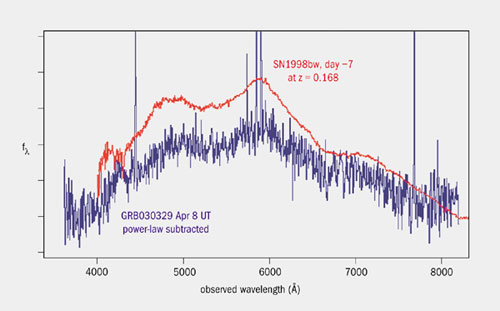
The measured spectra of the recent supernova, SN2003dh, looks amazingly similar to that of SN1998bw, as the figure shows. This may be a problem for the generally accepted “fireball” model of GRBs, in which the emission is spherical or due to a “firecone” directed towards the observer, but GRB980425 (coincident with SN1998bw) is a “one of its kind”, extremely underluminous exception, while GRB030329 (coincident with SN2003dh) is a very bright conventional GRB at a relatively small but nonetheless “cosmological” redshift, z = 0.1685. So why should their associated supernovae look so similar?

A group from the Technion Institute in Israel and CERN has long advocated a “cannonball” model of GRBs, totally different from the accepted fireball models. In this model the long-duration GRBs and their afterglows are the radiation from relativistic “cannonballs” emitted by supernovae as their cores collapse. The cannonballs are similar to the ejecta of quasars and microquasars; their observed properties also depend on the angle between the observer and the cannonballs’ velocity vector. Hence, GRB980425 was not exceptional, it was simply viewed at an uncommonly large angle. More distant GRBs can only be seen if their cannonballs point towards the observer better, for the same reason that an accelerator-made beam of neutrinos is most intense close to its source and to its axis.

The advocates of the cannonball model have sufficient confidence in their understanding of GRBs to have correctly predicted, on three prior occasions, when the declining GRB afterglows become dim enough for the associated supernovae – whose light curves first rise with time and then fall again – to be observable. In the case of GRB030329, the team posted a paper on 6 April in the Web “Archives” (S Dado et al. 2003), correctly predicting that “10 days after burst, the AG of GRB030329 should begin to reveal the light curve, spectrum and polarization of an underlying supernova, akin to SN1998bw.”

Whether this model will survive tests of the rest of its very specific predictions remains to be seen. But the discovery of SN2003dh may dispel the doubts that long-duration GRBs are produced by highly collimated radiation from core-collapse supernovae. If so, GRBs are not the long advocated “biggest explosions after the big-bang”, but simply supernovae “playing high-energy accelerator physics”, that is, spending a modest fraction of their energy budget in the acceleration of matter to relativistic speeds. Precisely how they do it, particle physicists and astrophysicists alike would very much like to know.

JLab results put new spin on the vacuum

cernnews4_6-03

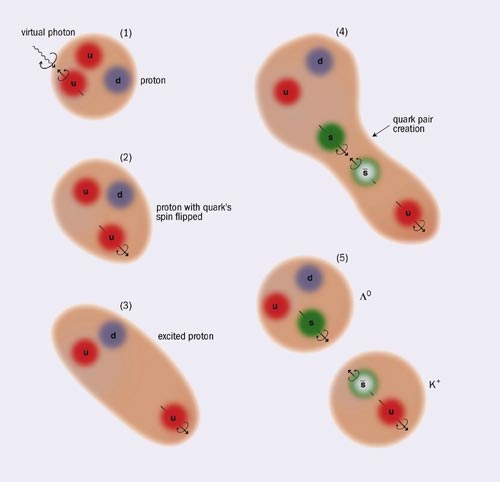
New measurements from the US Department of Energy’s Jefferson Lab (JLab) in Virginia are challenging existing ideas on how quark-antiquark pairs are produced from “nothing” – that is, the vacuum. Members of the CEBAF Large Acceptance Spectrometer (CLAS) collaboration have studied the spin transfer from a polarized electron beam to a produced lambda particle, with surprising results.

The experiment recorded collisions between a 2.567 GeV longitudinally polarized electron beam and a proton target in which the electron emerges together with a polarized lambda (Λ0) and a kaon (K+). The large acceptance of CLAS enabled the team to detect the outgoing electron and the kaon, as well as the proton from the decay of the lambda, over a wide range of scattering angles – in effect, a wide range of momentum transfer from the electron to the quark system. The team was thus able to measure the angular dependence of the lambda polarization.

At the quark level, the reaction studied corresponds to the creation, from the available kinetic energy, of a strange quark-antiquark pair, in addition to the original quarks in the proton. In a simple model of the reaction dynamics, a circularly polarized virtual photon (emitted by the polarized electron) strikes an oppositely polarized up quark inside the proton. The spin of the struck quark flips in direction and the quark recoils from its neighbours, stretching a flux-tube of gluonic matter between them. When the stored energy in the flux-tube is sufficient, the tube is “broken” by the production of a strange quark-antiquark pair.

Using this simple picture, the CLAS team found that they could explain the measured angular dependence of the lambda polarization if the quark pair is produced with the spins in opposite directions, or anti-aligned. This is unexpected because according to the popular triplet-P-zero (3P0) model, a quark-antiquark pair is produced with vacuum quantum numbers, and that means their spins should be aligned. The new results imply that the 3P0 model may not be as widely applicable as was previously thought.

Winston Roberts, a theorist at JLab and Old Dominion University, finds the CLAS measurement very interesting. “If they are right, it means we have to rethink what we thought we understood about our models for baryon decays,” he said. “The CLAS results may also be saying something about what we understand of baryons themselves – our knowledge of how to describe scattering processes such as the one they measure, or even that there may be oddities or peculiarities, dare I say ‘strangeness’, in the way strange quark-antiquark pairs are produced.”

The CLAS team itself expects further reaction from theorists. “Polarized lambda production is obviously sensitive to the spin dynamics of quark-pair creation,” said Mac Mestayer of JLab. “We eagerly await confirmation, or refutation, of the conclusions of our simple model by realistic theoretical calculations.” Meanwhile, the collaboration is planning further experiments, as Daniel Carman of Ohio University and lead author of the recent paper explains. “Our group is continuing this exciting research by extending our arguments to test our picture of the dynamics in different reactions.”

The results certainly show that we still do not fully understand the basic structure of the vacuum. Twentieth-century quantum field theories filled the once-empty space with virtual particles. Now JLab physicists are working to measure the spin of those particles, helping us to understand the vacuum better as well as the matter that populates it.

TRIUMF and IUCF provide new results on CSB

Two separate experiments in North America – at TRIUMF in Vancouver and at the Indiana University Cyclotron Facility (IUCF) in Bloomington – have made new observations of charge symmetry breaking (CSB). The results have brought fresh input to theoretical attempts to determine the different contributions to the phenomenon, including effects due to the mass difference between quarks.

If charge symmetry were an exact symmetry, neutrons and protons would be indistinguishable except for their electromagnetic interactions. CSB, which can be attributed to a difference in the masses of u and d quarks and their electromagnetic interactions within the nucleon, is seen in small effects such as the neutron-proton mass difference ΔN. The two new measurements have extended the observation of CSB to pion-production reactions in systems of few nucleons that consist of equal numbers of neutrons and protons.

cernnews5_6-03

The group working at TRIUMF, an Alberta-Ohio-TRIUMF-UNBC collaboration led by Allena Opper of Ohio University, measured the angular distribution of deuterons from a reaction in which a neutron and a proton combine to produce a deuteron and a neutral pion (np→dπ0). CSB was expected to appear as a small difference in the numbers of deuterons emitted in the forward and backward hemispheres of the centre-of-mass system. At a neutron beam energy of 279.5 MeV (~ 0.8 MeV FWHM), just 4 MeV above threshold, the deuterons emerged within 30 mrad (lab angle) of the beam direction. This made it possible to detect the complete centre-of-mass angular distribution with one field setting of the SASP magnetic spectrometer. The experiment accumulated more than 6 million good events during 10 cycles of production and calibration runs. The observed events were compared with simulated events to account for energy loss and multiple scattering of deuterons in the liquid-hydrogen target, and the spectrometer’s acceptance.

The results can be expressed in terms of the difference in the numbers of deuterons in the forward and backward hemispheres divided by their sum: Afb = 17±8(stat)±5.5(sys) x 10-4. For comparison, a theoretical calculation of Afb identified contributions from the n-p mass difference, from η-π mixing, and from π0 rescattering effects, which are due to the d-u quark mass difference and electromagnetic interactions between the quarks (J A Niskanen 1999, U van Kolck et al. 2000). The solid blue line of figure 1 indicates the shift in the calculated value of Afb when a “large but still reasonable” value for π0 rescattering is included. To reconcile this prediction with the data for Afb and the neutron-proton mass difference would require a quark mass difference within the chiral effective field theory that is less than 2 MeV. Large uncertainties remain, however, because neither the strength of η-π0 mixing nor the η-N coupling is well known.

cernnews6_6-03

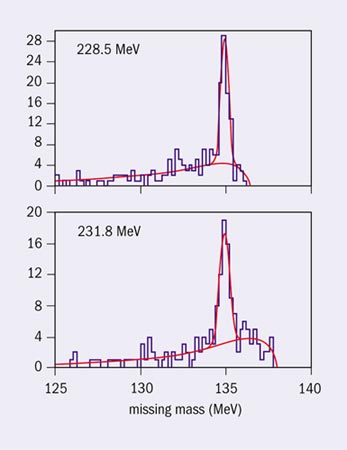
The IUCF-Argonne-Hillsdale-Minnesota State-Western Michigan collaboration, led by Edward Stephenson, sought evidence for the reaction in which two deuterons combine to form an alpha particle and a neutral pion (dd→απ0). This reaction is forbidden by charge symmetry, so a non-zero cross section would indicate CSB. The group’s method was to make deuterons circulating in the IUCF Cooler Ring collide with deuterons in a gas jet target, and then detect the resulting alpha particles in coincidence with the two gamma rays from the decay of the neutral pion. The challenge was to see a clean signal for the reaction – estimated to be as small as a few picobarns in cross section – in the presence of various backgrounds. The most troublesome background was expected to come from a reaction producing an alpha particle and two gamma rays, but without the formation of a pion – a reaction that is not forbidden by charge symmetry. The IUCF group was able to display the αγγ events in terms of the missing mass, showing a clear peak at the mass of the pion on top of the double radiative capture continuum (figure 2). The cross section measured was 12.7±2.2 picobarns at a beam energy of 228.5 MeV and 15.1±3.1 pb at 231.8 MeV.

This non-zero result has provided fresh stimulus to a team of theorists whose goal is to relate the dd→απ0 cross section, thought to be dominated by η-π mixing, to quark mass differences. The hope is that this cross section, when combined with the n-p mass difference and Afb in np→dπ0, will help unravel the quark mass difference, electromagnetic and meson-mixing contributions to nuclear CSB.

These results and the related theoretical work were the focus of a special session of the April 2003 meeting of the American Physical Society in Philadelphia.

Boulby extends the search for dark matter

cernnews7_6-03

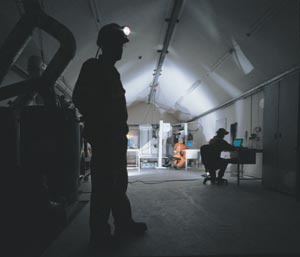
On 28 April, the UK minister for science and innovation, Lord Sainsbury, opened a new research cavern at the Boulby Underground Laboratory for Dark Matter Research, at Boulby in North Yorkshire, UK. The Boulby lab is situated in a working salt and potash mine and houses experiments to detect weakly interacting massive particles (WIMPs), a prime candidate for dark matter in the universe. The laboratory has recently benefited from a £3.1 million Joint Infrastructure Award (JIF) from the UK Particle Physics and Astronomy Research Council, which has provided new enhanced underground laboratories and complementary surface facilities.

cernnews8_6-03

Situated more than 1 km beneath the Earth’s surface within a salt and potash mine, the laboratory is isolated from interference from cosmic rays and benefits from an environment with low natural radioactivity. The laboratory operates on behalf of the UK Dark Matter Consortium – the University of Sheffield, the Rutherford Appleton Laboratory, the Imperial College of Science, Technology and Medicine, and the University of Edinburgh.

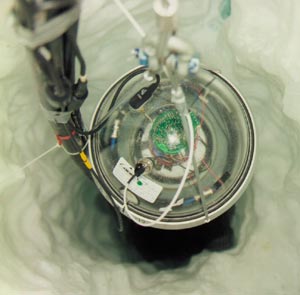
The Boulby lab currently houses three experiments to detect dark matter – NAIAD (NaI Advanced Array Detector), ZEPLIN I (from ZonEd Proportional scintillation in LIquid Noble gases, now operating with liquid xenon), and DRIFT (Directional Recoil Identification From Tracks). DRIFT is the first experiment to be installed in the new area of the laboratory and is unique because its aim is not only to detect WIMPS, but also to determine which direction they come from.

The race to observe gamma-ray bursts

cernastro1_6-03

More and more astronomers are joining the race for the first optical images from gamma-ray bursts. After the precise localization of a new gamma-ray burst, several institutes try to obtain an image of its optical counterpart as quickly as possible. What makes this “sport” so exciting is that nobody knows when or where the next gamma-ray burst will occur. Luck plays an important role in the quest. Among the telescopes around the world that are ready to respond immediately to an alert, only a few are able to take advantage as the bursts occur during the night, well above the horizon and during good weather conditions.

The story of one of the most exciting of these races has recently been published in Nature (Fox et al. 2003). The starter’s shot was the detection by NASA’s High Energy Transient Explorer (HETE) satellite of a gamma-ray burst, named GRB021004, on 4 October 2002 at 12:06:14 UT. Just 193 seconds later, the Japanese Automated Response Telescope at the Institute for Physical and Chemical Research (RIKEN) pointed on the location sent out by HETE to make the first image of the burst. Sharper images were performed a few minutes later by the Near Earth Asteroid Tracking (NEAT) camera mounted on one of the Mount Palomar telescopes near San Diego, California. The fading afterglow of this burst was then followed, for several weeks, by some 40 optical telescopes around the world, as well as by six radio telescopes.

GRB021004 is the second gamma-ray burst, after GRB990123 in January 1999, to be observed in the optical less than 15 minutes after the burst. Although detected slightly later in the optical than GRB990123, it was the best-observed gamma-ray burst at that time. Now, however, all the attention is focused on GRB030329, which is on the way to take the lead over GRB021004. Detected by HETE on 29 March 2003, GRB030329 is one of the brightest and closest gamma-ray bursts on record. With a cosmological redshift of z = 0.17, it is approximately two billion light-years away, as opposed to other bursts such as GRB021004 (z = 2.32) that are located at more than 10 billion light-years away.

The unprecedented number of observations of these two recent gamma-ray bursts has tended to confirm their association with supernovae. The violent flash of gamma rays is thought to arise from ultra-relativistic particles thrown out by a cataclysmic event such as the collapse of a massive star – for example in the “cannonball” model. Such models apply to gamma-ray bursts lasting several seconds; bursts shorter than about 2 seconds are thought to be due to the coalescence of two neutron stars to form a black hole.

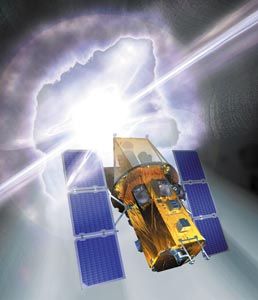
Currently, two satellites are able to provide and distribute accurate burst locations within seconds – HETE and INTEGRAL. In December 2003, NASA will launch the Swift spacecraft, which will have an even greater capability to detect and locate bursts, as well as on-board optical, ultraviolet and X-ray telescopes.

Neutrinos: universal messengers at all scales

The 10th International Workshop on Neutrino Telescopes, held in Venice on 11-14 March, brought together particle physicists, astrophysicists and cosmologists, all captivated by the fascinating properties of neutrinos. A total of 142 participants attended the meeting, which was organized by Milla Baldo Ceolin of Padova University and co-sponsored by the Istituto Nazionale di Fisica Nucleare (INFN) and the Istituto Veneto delle Scienze, Lettere ed Arti. In her opening address, Baldo Ceolin recalled the recent death of George Marx, a leading figure in Hungarian astroparticle physics. Further reminiscences followed, with warm and affectionate recollections of Bruno Pontecorvo by Luigi Radicati di Brozolo from Pisa, who talked about Pontecorvo’s deep human qualities and his invaluable scientific legacy, in particular regarding neutrinos.

cernneu1_6-03

The first two days of the workshop were devoted to neutrino oscillations, neutrino masses and mixing angles. John Bahcall of the Institute of Advanced Study, Princeton, began by reminding us of the tremendous challenge that the detection of solar neutrinos represented when it was first proposed. Like the Sun, which shone in Venice during most of the conference and dissolved the last of the winter fog, the joint effort of all experiments on solar neutrinos and solar physics has finally cast light on the long-standing solar neutrino problem. However, warned Bahcall, now that the solar standard model seems to work perfectly well, we should not stop testing it.

The elegance and completeness of the experiments at the Sudbury Neutrino Observatory (SNO) – with its outstanding feature of being sensitive to both charged and neutral current interactions on deuterium – emerged clearly from the talks by SNO project director Art McDonald of Queen’s University, Ontario, and by Richard Hahn from the Brookhaven National Laboratory. The experiment now has evidence at the 5.3σ level for neutrino flavour oscillation to active neutrinos. Yoichiro Suzuki of Tokyo described the contribution that Kamiokande and Super-Kamiokande have made in this field, including the first directional observation of solar neutrinos, the first measurement of the 8B neutrinos from the Sun, and the most precise detection of high-energy solar neutrinos through neutrino-electron scattering, as well as the detection of neutrinos emitted by the explosion of the supernova SN1987A. Kamiokande and Super-Kamiokande also produced the first clear evidence of neutrino oscillations through the distortion of the zenith distribution of atmospheric muon neutrinos. Support for this result came from the MACRO detector at the Gran Sasso Laboratory and Soudan2 in the US. Takaaki Kajita of Tokyo presented an exciting series of measurements in this field, together with the first confirmation of muon neutrino oscillations with a long baseline neutrino beam, which has been made by the K2K experiment. This experimental programme will continue with the long baseline experiment at the Japan Proton Accelerator Research Complex (J-PARC, formerly the Japan Hadron Facility).

Moving to the low-energy region, Vladimir Gavrin of the Institute for Nuclear Research (INR) of the Russian Academy of Sciences (RAS) reminded us of the contributions made by the Baksan Neutrino Observatory. Its most outstanding result was provided by SAGE, the radio-chemical experiment with metallic gallium that has been taking data for 13 years. Thanks to the low threshold of the neutrino capture reaction in the metal, gallium experiments are the only ones that are sensitive to all the components of the solar neutrino flux, in particular the pp neutrinos. On the same topic, Till Kirsten of the Max Planck Institute, Heidelberg, described the evolution over the years of the Gran Sasso Laboratory’s activities on solar neutrinos. The GALLEX experiment announced the first observation of solar pp neutrinos 10 years ago, and also made the first neutrino source calibration of any solar neutrino detector. Today, Gran Sasso’s involvement in solar neutrino physics continues with the Gallium Neutrino Observatory, which began running in 1998; the BOREXINO real-time, low-threshold solar neutrino detector, which is almost ready; and the LUNA experiment that aims to measure the cross section of the fusion reactions at the energy of the solar Gamow peak (that is, the optimum energy for the reactions).

cernneu2_6-03

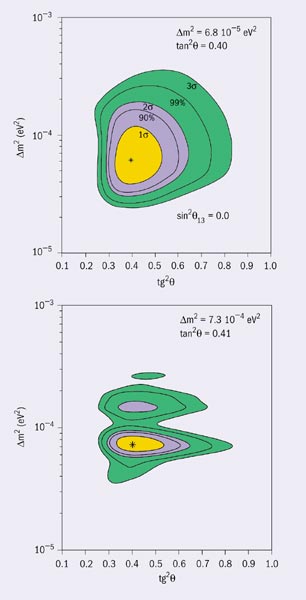
The final brush-stroke to this picture of solar neutrino oscillations – after a quest that has lasted for 50 years – has come from the KamLAND experiment, which has shown the first strong evidence for the disappearance of reactor antineutrinos. As Atsuto Suzuki from Tohoku pointed out, the present KamLAND result is completely consistent with large mixing angle (LMA) solar neutrino oscillations. In addition, the experiment has such a low background that it can observe the antineutrinos from the decay of uranium and thorium in the Earth, and could in the near future provide a measurement of the beryllium-generated solar neutrinos. In this context, Gianno Fiorentini of Ferrara stressed that it is now time to use such geo-neutrinos to determine the radiogenic contribution to the energetics of the Earth. More generally, Gianluigi Fogli of Bari pointed out that we are entering the era of precision tests for several neutrino parameters. In the solar sector, the large angle solution at present includes two close, but separate regions in parameter space (see plots figure). Fogli showed that there is now statistical evidence for matter effects in the Sun, which were also nicely reviewed by Alexei Smirnov of INR/RAS and ICTP, one of the founding fathers of this field.

Artificial neutrino beams will continue to play a fundamental role in the precise determination of neutrino oscillation parameters. Bill Louis from Los Alamos presented the evidence for neutrino oscillation from the LSND experiment, through the appearance of electron antineutrinos in a muon antineutrino beam. He also described the status of MiniBooNe at Fermilab, which should unambiguously confirm or refute the LSND result, and which is now taking data with the results expected in early 2005. The final and complete mapping of the neutrino oscillation parameters will, however, require new facilities and new detectors. Deborah Harris from Fermilab presented future long baseline neutrino experiments, introducing new concepts in neutrino beams such as off-axis neutrino beams, “super beams” and “beta beams”. Ken Peach from the Rutherford Appleton Laboratory illustrated the road towards what appears to be a final neutrino beam facility – the Neutrino Factory – where neutrino beams of unprecedented intensity and purity will be produced by the decays of muons in flight.

cernneu3_6-03

The general implications of the recent neutrino results on physics beyond the Standard Model were discussed by Guido Altarelli from CERN. He remarked that the neutrino properties fit nicely, and actually support the framework of grand unification in its supersymmetric version, where dark matter and baryogenesis can be included naturally. In such a context, the dominant source of neutrino masses could be the “see-saw” mechanism, which was reviewed by Steve King of Southampton, Rabindra Mohapatra of Maryland and Ferruccio Feruglio of Padova. Neutrino masses are also considered in models with extra dimensions, as summarized by Qaisar Shafi from the Bartol Research Institute. The challenging and fundamental direct determination of neutrino mass, both with integral spectrometers and cryogenic detectors, was discussed by Christian Weinheimer of Bonn and Angelo Nucciotti of Milano-Bicocca. The relevance of a positive signal in neutrinoless double beta decay for understanding the neutrino spectrum was emphasized by Serguey Petcov of SISSA/INFN and INRNE, Sofia, while Alessandro Strumia of Pisa reminded us about the existing unconfirmed neutrino “anomalies”.

On the third day of the workshop, the discussion moved to neutrino astrophysics. Petr Vogel of Caltech explained that supernova neutrinos are essential for improving our knowledge about the emission models in gravitational collapses. Neutrinos with energies in the MeV range could also shed light on other types of gravitational collapse, such as the one leading to a strange-quark star starting from a neutron star, as described by Arnon Dar of Technion and CERN.

The detection of high-energy cosmic neutrinos represents one of the most exciting future prospects in astrophysics – indeed, in 1988 the first Neutrino Telescope Workshop held in Venice promoted the birth of this new field. Dar, Daniele Fargion of Rome and Francis Halzen of Wisconsin reviewed the theoretical motivations for studying high-energy cosmic neutrinos. Such studies are expected to play an important role in unravelling the mysteries associated with major cosmic accelerators, such as active galactic nuclei and gamma-ray bursters. There are several existing models, and competition between them is fierce, as noted by Alvaro de Rujula of CERN, so observations will be crucial. Sandip Pakvasa of Hawaii pointed out that neutrino decay might affect the flavour composition of astrophysical neutrinos.

Impressive progress has been made in the construction of neutrino telescopes since the first workshop in 1988. As Stephan Hundertmark of Stockholm reported, AMANDA, the muon and neutrino detector array at the South Pole, is now a successfully operating telescope. It currently has the best limit on a neutrino source above the TeV region, with a sensitivity of about 0.1 event per km2 per year. The future of AMANDA will be IceCube, a kilometre-scale neutrino observatory designed to detect neutrinos of all flavours at energies from 107 eV to 1020 eV. The first of its 80 strings will be deployed in 2004, and the detector will be completed in 2009. Closer to Europe, Jürgen Brunner of Marseille reported on ANTARES, the neutrino telescope under construction off the Toulon coast, which will be ready to take data in less than three years. A strong programme has also already begun on the Neutrino Mediterranean Observatory (NEMO), a km3 deep-sea neutrino telescope. The wish of all the participants is that the first “light” through this new window on the universe might be announced in Venice at a future Neutrino Telescope Workshop.

cernneu4_6-03

Neutrinos in cosmology were the subject of the fourth and last day of the workshop. Few things in recent years have had the same impact on our view of particle interactions as the recent impressive experimental achievements in cosmology. The data from WMAP, for example, confirm that we are now performing precision tests of cosmological models. Evidence for dark matter was reviewed in great detail by Marco Roncadelli of INFN Pavia, while Rita Bernabei of Rome reported the status of LIBRA. This is the upgraded version of DAMA, the experiment at Gran Sasso that is reporting a signal from dark-matter particles. We know that neutrinos can be, at most, a sub-dominant component of dark matter, and as Sergio Pastor of Valencia recalled, we can infer from the power spectrum of density fluctuations, an upper bound on the sum of neutrino masses of about 1 eV. The canonical dark-matter candidate remains the lightest particle – possibly a neutralino – in a supersymmetric extension of our world. Neutrinos could, however, provide an efficient way of revealing neutralinos captured by the Sun, after annihilation, as suggested by Antonio Masiero of Padova. On a related topic, the observed baryon density could have been produced by leptogenesis, through the CP-violating, non-equilibrium decay of a right-handed neutrino. Franco Buccella of Napoli showed how leptogenesis can be elegantly incorporated into grand unified theories such as SO(10). It is remarkable that the range of neutrino masses required for successful leptogenesis is essentially the same as the one obtained from neutrino oscillations, as was discussed by Wilfried Buchmüller of DESY.

Dark energy is currently one of the most intriguing mysteries of our universe, and was described for the conference by Masiero and Sabino Matarrese of Padova. Dark matter and dark energy are also expected to affect the time variation of fundamental constants in specific frameworks such as string theory, as Thibault Damour of IHES, Bures-sur-Yvette, explained. Neutrinos are apparently not involved here – unless, as Guido Altarelli observed, the equality between the dark-energy scale and the scale of neutrino masses is not a numerical coincidence but is instead an indication of some deep and yet unidentified relationship.

Scrutinized at any length scale, from the microscopic to the cosmological, our world is fascinating. This workshop illustrated that neutrinos are capable of carrying information about our universe from the smallest scales to the largest distances, and this, in the words of Sheldon Glashow of Boston who closed the meeting, is the kind of unification that we should really be looking for.

Neutral currents

cernjeperk1_6-03

Leon Lederman, former director of Fermilab, once described the development of particle physics as frequently a story of false trails, crossed wires, sloppy techniques, misconceptions and misunderstandings, occasionally compensated for by strokes of incredible luck. Certainly, this subject is quite often a tale of the unexpected. Nowhere is this more true than for the subject of neutrino physics, and the elucidation of neutral weak currents.

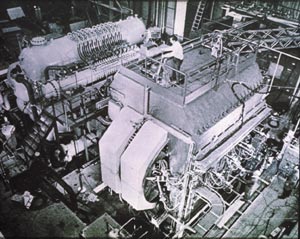
Neutral currents were discovered in 1973 by a collaboration operating with the large heavy-liquid bubble chamber Gargamelle at the CERN proton synchrotron (PS). It was built by a team of physicists and engineers at Saclay, led by André Lagarrigue. Lagarrigue’s plans for Gargamelle were laid following the Siena Conference in 1963, where results were reported from the first PS neutrino experiments with the CERN 1.2 m heavy-liquid chamber, built by a team led by Colin Ramm.

cernjeperk2_6-03

The results that were obtained from this small CERN chamber (Block et al. 1964) included a limit on the ratio of “elastic” neutral-current (NC) events to charged-current (CC) events: σ(νμ + p → νμ + p)/σ(νμ + n → μ + p) < = 0.03 for events with proton momentum above 250 MeV/c. The accepted ratio is about 0.12. The CERN result was just wrong, following a book-keeping error (the actual 90% confidence limit was < 0.09). As is often the case in physics, the error was uncovered by a graduate student, Michel Paty from Strasbourg, who found a limit < = 0.20 and put this number in his thesis (Paty, 1965). The CERN group intended to publish an erratum, but (since there seemed to be little interest in our limit) we decided to wait for the results from a forthcoming propane run, since that would measure scattering from free as well as bound protons, and we could exploit the better kinematic constraints. However, the propane run was delayed by more than two years and the corrected limit for the ratio of < 0.12 ± 0.06 was not published until 1970 (Cundy et al. 1970).

Model behaviour

cernjeperk3_6-03

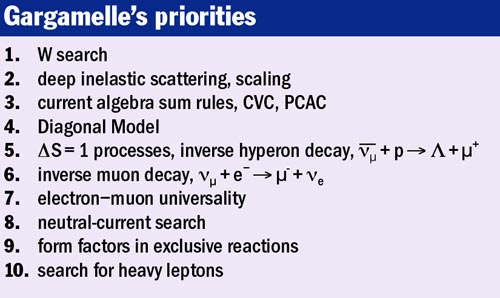
The Gargamelle collaboration on neutrino physics (Aachen, Brussels, CERN, Ecole Polytechnique, Milan, Orsay and UCL) had formed by 1968, and met in Milan to list the priorities in the forthcoming neutrino experiments (see “Gargamelle’s priorities”). The search for neutral currents was way down at number eight. And it has to be explained here that at that time there were several different models for beating the divergence problems of the Fermi theory, and neutral currents as postulated by the electroweak model of Glashow (1961), Salam (1968) and Weinberg (1967) was just one option. Other models included the “diagonal” model of Gell-Mann, Goldberger, Kroll and Low (1969). In this model, the divergence in non-diagonal processes involving unlike currents, such as in muon decay, were cancelled out, whereas for like currents such as in νe + e → νe + e, the expected cross-sections could be arbitrarily large. We knew that there was support for this model from a reactor experiment by Reines and Gurr (1970), who initially found a cross-section for this process of more than 100 times the V-A value (which turned out to be yet one more of the many wrong numbers floating around in the neutrino field, although we did not know that at the time). In the 1970 paper of Cundy et al. giving the revised value for the NC:CC ratio, the limit on diagonal coupling was in fact given pride of place above that for neutral currents.

cernjeperk4_6-03

The situation changed dramatically in 1971, following the work on renormalization by Veltman and ‘t Hooft, showing that for the electroweak model, the cross-sections were finite and clearly specified in terms of just one unknown parameter, sin2θw. But it is necessary to emphasize here that the ‘t Hooft paper was – like the other papers on the electroweak model – about the interactions between leptons. It was not clear then how hadrons might be incorporated into the model, and there could be unknown suppression effects, as in the Cabibbo theory. So, many people in the Gargamelle group felt that emphasis should be first of all on a search for the very rare leptonic processes νμbar + e → νμbar + e and νμ + e → νμ + e where a single electron is projected at a small forward angle (about 2 degrees) to the beam at giga-electron-volt energies. The antineutrino process was preferred since the principal background from νe + n → e + p was expected to be less than 1%. In a 1.4 million picture antineutrino run, between 5 and 30 antineutrino events were expected, depending on the weak mixing angle. In fact, it turned out that the actual value of sin2θw = 0.23 meant that the number of events was near the minimum: after a cut of E > 0.3 GeV on electron recoil energy and the effect of finite scanning efficiency, only three events were found. But they were gold-plated, unmistakable events, of which the first was found at Aachen in December 1972.

cernjeperk5_6-03

A stroke of luck

Here we had some real luck. This first event (Hasert et al. 1973) was initially recorded by a scanner, who put it down as a “muon plus gamma ray”. But a sharp-eyed graduate student, Franz-Josef Hasert, realized that it must be something else, and showed it to Prof. Helmut Faissner, who recognized it immediately for what it was. Faissner showed me this event at New Year 1973, and since at that time the expected background in the 100,000 pictures scanned to date was < 0.01 events, I was convinced that this was a real signal and that neutral currents really existed. I would have been less sanguine had I known that, in scanning 14 times as much film over the next year – and accumulating 14 times as much background – only two further events were to be found. Of course, three events could hardly establish a new physical process, but the important thing was that this first observation of a leptonic neutral-current event gave great encouragement to the collaboration to push ahead further with the search for hadronic neutral currents.

cernjeperk6_6-03

The establishment of a neutral-current signal for events containing only hadron secondaries and no muon was a more complex story. Since the neutrino cross-sections on nucleons were more than two orders of magnitude bigger than those on electrons, a clear understanding of the background, rather than of statistics, was the main problem. The first step for the Gargamelle collaboration was to resolve to look for inclusive events of the type ν + N → ν + hadrons, rather than exclusive processes, which would be more difficult to identify, and to select only the highest-energy events, with total hadronic energy E > 1 GeV.

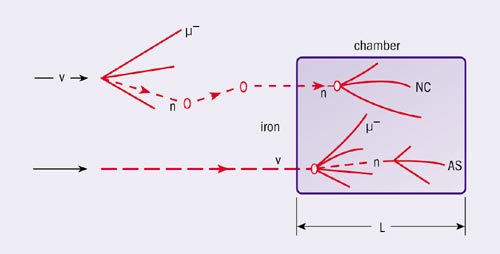
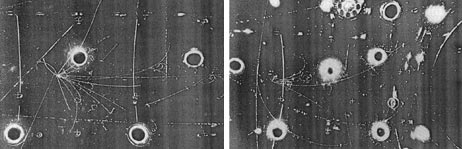
Events with identified hadrons only were called “NC”, for neutral-current candidates, as compared with charged-current (“CC”) events containing a charged lepton (muon). “AS” events were those in which a CC event had an associated “star” due to a secondary neutron in the same picture (figure 1). Suppose that a number B of the NC events are due to neutrons, then if we take a simple one-dimensional model with all particles travelling along the beam and chamber axis, the expected value of B can be easily calculated from the number of AS events in “equation 1”, where L = 600 g cm-2 is the fiducial length of the chamber, λ = 135 g cm-2 is the neutron interaction length in the liquid and λatt ~ 300 g cm-2 is the attenuation length of neutrons in the shield – that is, the distance over which the number of neutrons of a particular energy is reduced by a factor e. This attenuation length was calculated from the shape of the neutron energy spectrum measured in AS events and reasonable assumptions on the elasticity ε of neutron interactions. In fact for a power-law neutron spectrum of the form dN/dE ~ E-n, the attenuation length is simply λatt =λ/[1-<εsup>n-1>] (and typically n ~ 2 and ε ~ 1/2).

Clearly the B:AS ratio simply states that for L » λ, the neutrons entering the front of the chamber are generated by neutrino interactions from an upstream region in the shield of thickness λatt, while inside the chamber the AS neutron stars can be generated by neutrino interactions anywhere inside a distance L, less an amount λ for neutron detection. By using this equation, one calculated B/AS = 0.7, compared with the observed ratio of NC/AS ~ 6.0. This implied that only about 10% of the NC events were due to neutrons. A full Monte-Carlo simulation by Fry and Haidt (Fry and Haidt 1975) using detailed data on the neutrino beam divergence, the angular and energy distribution of secondary neutrons and the elasticity distribution in the propagation of the neutron cascade in the shield gave essentially the same numbers. It happens that the simple one-dimensional approximation works because of the relatively high energy of the hadronic events, so that most of the neutrons do enter the front face of the chamber.

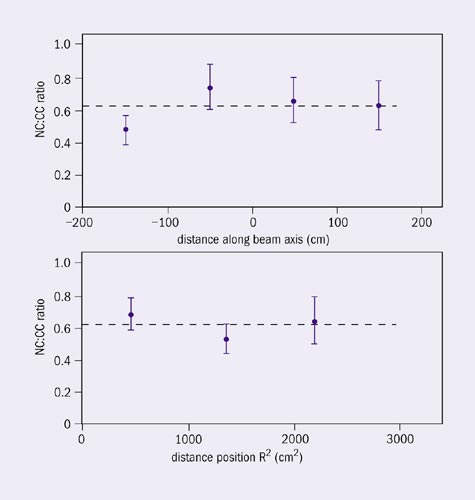
Confirmation that the NC events were produced by neutrinos came from measurement of the longitudinal and radial dependence of the NC:CC event ratio in the chamber (figure 2), which was found to be constant within the statistical errors, whereas a predominantly neutron origin would have shown strong dependence on longitudinal and/or radial distance.

cernjeperk7_6-03

A counter-experiment at Fermilab by the HPWF (Harvard, Pennsylvania, Wisconsin, Fermilab) group was contemporaneous with the Gargamelle experiment, and used a 300 GeV proton beam, compared with the 26 GeV beam from the CERN PS. The results from both Gargamelle (Hasert et al. 1973a, 1974) and HPWF were presented by Myatt at the Bonn Conference in August 1973, as positive evidence for neutral currents. Shortly afterwards, the HPWF result was withdrawn, following modifications to the experiment. Figure 3 shows a diagram of the HPWF set-up. It consisted of a liquid scintillator plus spark chamber detector acting as a target and as a hadron calorimeter, followed by a muon spectrometer containing magnetized iron toroids instrumented with spark chambers. A CC event would register as a hadron shower in the scintillator section, plus a muon penetrating through to the spectrometer, while a NC event would consist of a hadron shower only. From the angular distribution of the muons in the observed CC events, one could calculate the true muon angular distribution at production and hence the proportion of CC events appearing as NC “background” events because the muon missed the spectrometer. After making this correction, the ratio of rates as given at Bonn was found to be: HPWF (mixed ν/νbar beam) NC:CC = 0.29 ± 0.09…which was compatible with the Gargamelle results, as follows: Gargamelle ν beam NC:CC = 0.21 ± 0.03; Gargamelle νbar beam NC:CC = 0.45 ± 0.09.

Following the Bonn Conference, HPWF undertook a major re-configuration of the experiment to enhance the NC signal by reducing the correction for “lost” muons emitted at wide angles in CC events. The areas of the spark chambers in the muon spectrometer were increased, and a large spark chamber, SC4, originally part of the hadron calorimeter, was made part of the muon-detection system by placing a 30 cm thick steel plate in front of it. Previously the first muon chamber had been behind 1.25 m of steel. The reduced steel thickness in front of SC4 unfortunately led to a quite catastrophic increase in punch-through of energetic hadrons, and because of this genuine NC events would be wrongly classified as CC events. By November 1973 the modified HPWF ratio was quoted as NC:CC = 0.05 ± 0.05 – consistent with no neutral-current events at all. This incorrect result was primarily because the hadronic punch-through probability – and hence the proportion of genuine NC events misclassified as CC events – had been underestimated by more than a factor of two. The considerable uncertainties and errors in this experiment were eventually resolved and new values, with a horn-focused beam, were given in April 1974 as NC:CC (ν) = 0.11 ± 0.05: NC:CC (νbar) = 0.32 ± 0.09 (Benvenuti et al. 1974).

cernjeperk8_6-03

Impeded progress

However, the damage had been done, and after this debacle many physicists were quite unconvinced of the reality of neutral currents. It was to take another year from the time of the original Gargamelle claim before independent confirmation of their existence came from a bubble-chamber experiment at Argonne, counter-experiments at Brookhaven and a Caltech group in a narrowband beam at Fermilab, all reported at the London Conference in 1974.

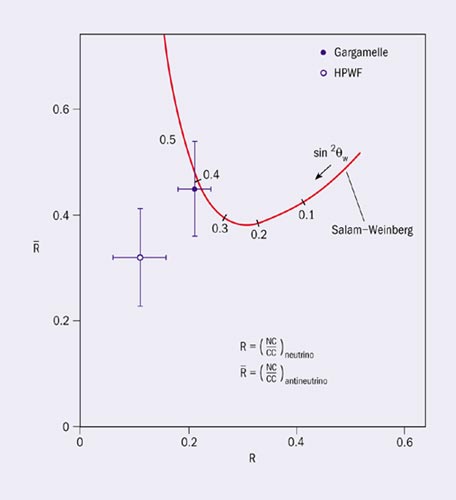
In figure 4, the value of the ratio NC:CC for neutrinos is plotted against the value for antineutrinos for the Gargamelle and HPWF experiments, together with the (valence quark model) prediction from the electroweak theory as a function of the mixing parameter sin2θw. The Gargamelle value of 0.38 ± 0.09 was a long way from the accepted figure of 0.23. Probably the discrepancy was due to the strong minimum hadron energy cut of 1 GeV, and the inadequacy of the simple quark model at these relatively low neutrino energies for assessing such effects. It will also be seen that the HPWF result is inconsistent with the electroweak theory for any value of sin2θw. However, the main point is that both experiments had now found a clear neutral-current signal, regardless of whether it agreed with a particular model.

cernjeperk9_6-03

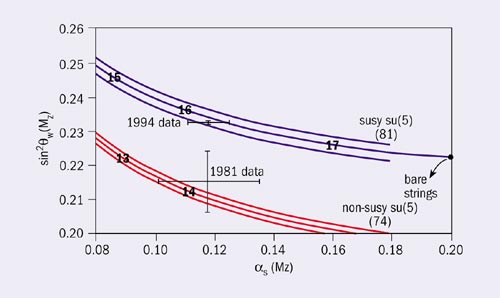
It is perhaps not generally realized today that the measurement at CERN of sin2θw in neutrino experiments has an interesting, and one might even say noble, history. Some of the main evidence at present for physics beyond the Standard Model comes from the detection of neutrino masses and neutrino oscillations, deduced from analysis of atmospheric neutrino interactions over the last few years. Yet a handful of atmospheric neutrino interactions were first recorded more than 40 years ago in deep mine experiments, and were at that time considered to be of little interest. The detection today of large numbers of such interactions in underground multi-kiloton detectors such as SuperKamiokande was originally quite unintentional. They occurred as an unwanted background to the main goal of finding proton decay. In turn, the proton-decay search had been triggered by the initial success of the minimal SU(5) version of GUTs, which arose largely because of wrong CERN results. The experiments in question were in the BEBC chamber with neon or hydrogen fillings in an SPS wideband neutrino beam. They found some anomalously low values for sin2θw and brought the world average down to 0.21, in keeping with the prediction of non-supersymmetric SU(5) (figure 5). This led to the consequent underground searches in three continents for proton decay as a unique test of grand unification. So even wrong experimental results can sometimes have unexpected but very significant and positive consequences.

cernjeperk10_6-03

Finally let me say a few words about the role of Willi Jentschke in the neutral-current story. When the claim to have found neutral currents in Gargamelle was followed by the report from Fermilab that the NC:CC ratio they found was consistent with zero, many physicists in CERN and Europe – but not in the US – believed that the Gargamelle result must be wrong. Indeed, one senior CERN physicist bet so heavily against Gargamelle that he lost half his wine cellar. But Jentschke himself was always very supportive of the experiment. I myself never discussed it formally with him but I did meet him on one occasion in the CERN lift. He told me he was worried about the Gargamelle result, because some people had told him that it could be wrong. I replied that, of course, any experiment could be wrong. For example, looking back over the last 25 years, I had found that 85% of my previous experiments had been wrong.

cernjeperk11_6-03

This seemed to shake him, and he told me that, if the Gargamelle result was wrong, it would be very bad for CERN. My response was that, coming after the “split A2” affair, it would be an absolute disaster. However, I knew the group had gone through the event analysis many times and for almost a year we had searched intensively for some other explanation for the effects observed, without success. So I thought the result was absolutely solid, and he should just ignore rumours from across the Atlantic. I don’t know if my words reassured him, but he got out of the lift with a smile on his face.

Neutrinos limit role of CNO cycle

The Sun burns through various nuclear reactions with the same net effect – the fusion of four protons to form a nucleus of helium, with the release of energy. The two main sets of reactions are the p-p chain, which involves the lightest nuclei, and the CNO cycle, in which the heavier nuclei of carbon, nitrogen and oxygen play a role. Calculations based on the standard solar model suggest that most of the Sun’s energy comes from the p-p chain, with only 1.5% from the CNO cycle. This prediction is widely assumed to be correct, but can it be tested experimentally?

cernnews6_5-03

This was indeed an early goal of solar neutrino experiments. However, the solar neutrinos that proved the least difficult to detect have been the high-energy neutrinos from the 8B decays in a variant of the p-p chain. The low-energy neutrinos from 13N and 15O decays in the CNO cycle are much more problematic. Moreover, electron-neutrinos emitted by the Sun are now known to escape detection in many experiments through oscillation to another variety. Indeed, before the data from the Sudbury Neutrino Observatory (SNO) and SuperKamiokande became available, calculations in which the CNO cycle contributed as much as 99.95% of the solar energy would fit the data.

Now John Bahcall and Carlos Peña-Garay of the Institute of Advanced Study, Princeton, and M C Gonzalez-Garcia of CERN, SUNY and IFIC Valencia, have revisited the problem using all existing solar neutrino data, including that from SNO and SuperKamiokande, as well as the recent reactor data from KamLAND. Their extensive analysis involves 10 free parameters, which include neutrino oscillation parameters as well as various solar neutrino fluxes – including 13N and 15O decays. Their best fit indicates that the energy from the CNO cycle must be less than 7.3% at the 3ρ level. To improve the limits to the 1.5% level of the solar model predictions will be very challenging, but would, say Bahcall and colleagues, provide a stringent test of the theory of stellar evolution.

MACRO delivers its final word on monopoles

MACRO, the Monopole, Astrophysics and Cosmic Ray Observatory detector, ceased operation two years ago. As its name makes clear, one of MACRO’s main aims was to search for magnetic monopoles, and recently the MACRO collaboration published the final results of their direct monopole search. It found none, but set the most stringent upper limits on their existence so far, and at the same time set upper limits on nuclearites.

cernmono1_5-03

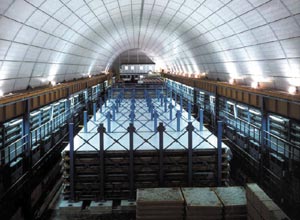
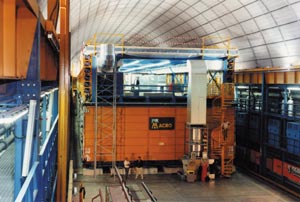
MACRO was located in Hall B of the Gran Sasso Underground Laboratory, under about 1400 m of rock, which reduced the cosmic ray flux to about 1 muon per square metre per hour, or about one million times less than the flux at the Earth’s surface. The detector had a modular structure, with a total volume of 76.5 x 12 x 9.3 m3 and a total acceptance of about 10,000 m2 sr. It used three types of subdetectors – liquid scintillation counters, limited streamer tubes and nuclear track detectors – and was operational from 1989 until the end of 2000.

The magnetic monopole is a hypothetical particle with a single magnetic charge. Classically, such particles are expected in analogy with electrically charged particles, and in order to symmetrize Maxwell’s equations. However, experiments indicate that in nature magnetic effects are due only to magnetic dipoles, which are created by moving electric charges.

Nevertheless, in 1931, while attempting to find a theoretical motivation for the quantization of electric charge, Paul Dirac found a relationship that quantizes the product of a basic electric charge e, times a basic magnetic charge g – namely, eg/c = nh/4π, with n = 1, 2, 3,…. In this case, the quantization of electric charge follows from the existence of a magnetic charge. Moreover, if the basic electric charge is that of the electron, in the symmetric cgs system of units, then the basic magnetic charge is g = 68.5e. This is a large value, and it introduces a numerical asymmetry between electric and magnetic phenomena; it also leads to a large magnetic coupling constant. Such “classical Dirac magnetic monopoles” have been searched for at every new higher energy accelerator, but without success.

cernmono2_5-03

During the 1970s, monopoles appeared on the scene again, when theorists found that electric charge is naturally quantized in gauge theories that unify the strong and the electroweak interactions (GUTs). These theories require magnetic monopoles of very large mass, ~1017 GeV. Such a mass cannot be produced at any of our accelerators, existing or planned, but the heavy monopoles could have been produced in the early universe, and could still exist as relic particles in the penetrating cosmic radiation.

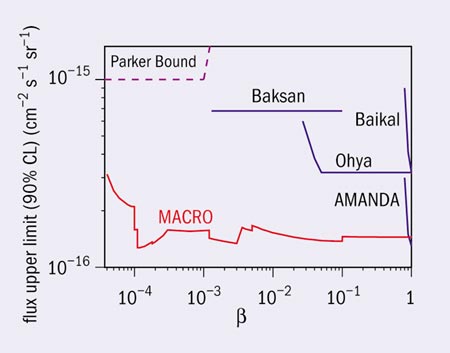
MACRO searched for superheavy magnetic monopoles using its three types of subdetectors, either on a stand-alone basis or in combination. It also used different and redundant electronics, which allowed searches in different velocity ranges, cross checks and background studies. No candidate monopole was found, with an upper limit at the 90% confidence level of a flux level of 1.4 x 10⁻¹⁶ cm-2 s-1 sr-1 for monopoles with velocity between 4 x 10⁻⁵ c to c and magnetic charge with n >= 1 (Ambrosio et al. 2002a). Some indirect searches may yield stronger limits, but only after making several hypotheses that can’t be checked.

cernmono3_5-03

The GUT monopole is a complicated object with a very small core and different surrounding regions. If a proton were to hit a monopole core it would catalyse the decay of the proton (MpMe+π0). Because of the smallness of the monopole’s core this should be a very rare phenomenon, but if there are baryon number violating terms in the four-fermion virtual condensate around a GUT monopole of up to 1 fm radius, the cross-section could be large and the phenomenon could be observed. MACRO made a dedicated search for this using the streamer tube system and looking for a fast track originating from a slow (10-4 < ß 10sup>-3) incoming particle – the possible monopole. The search excluded large cross-sections and again obtained the best existing limits (Ambrosio et al. 2002b).

As a by-product of these searches for magnetic monopoles, MACRO has also set stringent limits for other exotica, in particular nuclearites. Nuclearites (strangelets or strange quark matter) should consist of aggregates of u, d and s quarks. They would be colour singlets and could be the ground state of QCD. The overall electrical neutrality of strange quark matter would be insured by an electron cloud. Nuclearites could have been produced shortly after the Big Bang, at around the hadronization time, and may have survived as remnants to form part of the cold dark matter. When hitting the Earth with typical galactic velocities (ß ~10-3) they would not ionize, but excite atoms and molecules along their trajectories and should be easily detected in scintillators and nuclear track detectors. MACRO established upper limits at the level of 1.4 x 10⁻¹⁶ cm-2 s-1 sr-1. Nuclearites, like magnetic monopoles, could exist at lower levels than we can at present detect, if indeed they exist at all.

bright-rec iop pub iop-science physcis connect