Ole Hansen, a leading Danish nuclear-reaction physicist, passed away on 11 May 2025, three days short of his 91st birthday. His studies of nucleon transfer between a projectile nucleus and a target nucleus made it possible to determine the bound states in either or both nuclei and confront it with the framework for which the Danish Nobel Prize winners Aage Bohr and Ben Mottelson had developed a unified theory. He conducted experiments at Los Alamos in the US and Aldermaston in the UK, among others, and developed a deep intuitive relationship with Clebsch–Gordan coefficients.
Together with Ove Nathan, Ole oversaw a proposal to build a large tandem accelerator at the Niels Bohr Institute department located at Risø, near Roskilde. The government and research authorities had supported the costly project, but it was scrapped on an afternoon in August 1978 as a last-minute saving to help establish a coalition between the two parties across the centre of Danish politics. Ole’s disappointment was enormous: he decided to take up an offer at Brookhaven National Laboratory (BNL) to continue his nuclear work there, while Nathan threw himself into university politics and later became rector of the University of Copenhagen.
Deep exploration
Ole sent his resignation as a professor at the University of Copenhagen to the Queen – a civil servant had to do so at the time – but was almost immediately confronted with demands for cutbacks at BNL, which would stop the research programme with the tandem accelerator there. Ole did not withdraw his resignation, but together with US colleagues proposed a research programme at very high energies by injecting ions from the tandem into the existing particle accelerator, AGS, thereby achieving energies in the nucleon–nucleon centre-of-mass system of up to 5 GeV. This was the start of the exploration of the deeper structure of nuclear matter, which is revealed as a system consisting of quarks and gluons at temperatures of billions of degrees. This later led to the construction of the first atomic nucleus collision machine, the Relativistic Heavy Ion Collider (RHIC) in the US. Ole himself participated in the E802 and E866 experiments at BNL/AGS, and in the BRAHMS experiment at RHIC.
Ole will be remembered as the first director of the unified Niels Bohr Institute and for establishing the Danish National Research Foundation
Ole will also be remembered as the first director, called back from the US, of the unified Niels Bohr Institute, which was established in 1993 as a fusion of the physics, astronomy and geophysics departments surrounding the Fælledparken commons in Copenhagen after an international panel chaired by him had recommended a merger. Ole realised the necessity of merging the departments in order to create the financial room for manoeuvre needed to be able to hire new and younger researchers again. He left his mark on the construction, which initially had to deal with the very different cultures of the Blegdamsvej, Ørsted and Geophysics institutes. He approached the task efficiently but with a good understanding and respect for the scientific perspectives and the individual researchers.
Back in Denmark, Ole played a significant role in the establishment of the competitive research system we know today, including the establishment of the Danish National Research Foundation (DNRF), of which he was vice-chair in the first years, and with the streamlining of the institute’s research and the establishment of several new areas.
Strong interests
Despite the scale of all his administrative tasks, Ole maintained a lively interest in research and actively supported the establishment of the Centre for CERN Research (now the NICE National Instrument Center) together with the author of this obituary. He was also a member of the CERN Council during the exciting period when the LHC took shape.
Ole will be remembered as an open-minded, energetic and visionary man with an irreverent sense of humour that some feared but others greatly appreciated. Despite his modest manner, he influenced his colleagues with his strong interest in new physics and his sharp scepticism. If consulted, he would probably turn his nose up at the word “loyal”, but he was ever a good and loyal friend. He is survived by his wife, Ruth, and four children.
Michele Arneodo, professor of physics at the University of Piemonte Orientale and chairperson elect of the CMS Collaboration Board, passed away on 12 August 2025. He was 65.
Born in Turin in 1959, Michele graduated in physics from the University of Torino in 1982. He was awarded a Fulbright Fellowship to pursue graduate studies at Princeton University, where he received his MA in 1985 and his PhD in 1992. He began his career as a staff researcher at INFN Torino, before moving to academia as an associate professor at the University of Calabria and then, from 1995, at the University of Piemonte Orientale in Novara, where he became full professor in 2002.
Michele’s research career began with the European Muon Collaboration (NA2 and NA9) and the New Muon Collaboration (NA37) at CERN, investigating the structure of nucleons through the deep inelastic scattering of muons. He went on to play a leading role in the ZEUS experiment at DESY’s HERA collider, focusing on the diffractive physics programme, coordinating groups in Torino and Novara, and overseeing the operation of the Leading Proton Spectrometer. Awarded an Alexander von Humboldt fellowship, he worked at DESY between 1996 and 1999.
With the start of the LHC era, Michele devoted his efforts to CMS, becoming a central figure in diffractive physics and the relentless force behind the construction of the CMS Precision Proton Spectrometer (PPS) and the subsequent merging of the TOTEM and CMS collaborations. He was convener of the diffractive physics group, served on the CMS Publication and Style committees, and from 2014 chaired the Institution Board of the CMS PPS, where he was also resource manager and INFN national coordinator. He had been appointed as chairperson of the CMS Collaboration Board, a role that he was due to begin this year.
A central figure in diffractive physics and the relentless force behind the construction of the Precision Proton Spectrometer
Teaching was central to Michele’s vocation. At the University of Piemonte Orientale, he developed courses on radiation physics for medical students and radiology specialists, building bridges between particle physics and medical applications. He was also widely recognised as a dedicated mentor, always attentive to the careers of younger collaborators.
We will remember Michele as a very talented physicist and a genuinely kind person, who had the style and generosity of a bygone era. Always approachable, he could be found with a smile, a sincere interest in others’ well-being, and a delicate sense of humour that brought lightness to professional exchanges. His students and collaborators valued his constant encouragement and his passion for transmitting enthusiasm for physics and science.
While leaving a lasting mark on physics and on the institutions he served, Michele also cultivated enduring friendships and dedicated himself fully to his family, to whom the thoughts of the CMS and wider CERN communities go at this difficult time.
Miro Andrea Preger, a distinguished accelerator physicist in the Accelerator Division of the Frascati National Laboratories (LNF), passed away on 1 September 2025.
Originally an employee of the Italian National Committee for Nuclear Energy (CNEN), Miro had a long career as a key figure in the INFN institutions.
He made his mark at the pioneering ADONE collider in the 1970s, optimising its performance, developing an innovative luminosity monitor, and improving the machine optics and injection system. Later he served as the director of ADONE, participating in all second-generation experiments, colliding beams for particle physics and producing synchrotron radiation and gamma rays for nuclear physics.
Beyond LNF, Miro played an important role in the design of the Italian synchrotron radiation source ELETTRA in Trieste, and the ESRF in Grenoble; he also collaborated on many other accelerator projects, including CTF3 and CLIC at CERN.
Miro made outstanding contributions to the DAΦNE collider project, leading the realisation of the electron–positron injection system
Miro held many institutional roles, and as head of the Accelerator Physics Service, he taught the art and science of accelerators to many young scientists, with clarity, patience and dedication. As a mentor, he leaves a legacy of accelerator experts who have ensured the success of many LNF initiatives.
Miro made outstanding contributions to the DAφNE collider project from the beginning, leading the design and realisation of the entire electron–positron injection system. He was deeply involved in the very challenging commissioning and achieving the high luminosity that was required by the experiments.
Besides his characteristic dynamism, one of Miro’s distinctive traits was his ability to foster harmonious collaboration among technicians, technologists and researchers.
Away from physics, Miro was an excellent tennis player and skier, along with being a skilled sailor, activities that he often shared with colleagues.
In October, the Circular Electron–Positron Collider (CEPC) study group completed its full suite of technical design reports, marking a key step for China’s Higgs-factory proposal. However, CEPC will not be considered for inclusion in China’s next five-year plan (2026–2030).
“Although our proposal that CEPC be included in the next five-year plan was not successful, IHEP will continue this effort, which an international collaboration has developed for the past 10 years,” says study leader Wang Yifang, of the Institute of High Energy Physics (IHEP) in Beijing. “We plan to submit CEPC for consideration again in 2030, unless FCC is officially approved before then, in which case we will seek to join FCC, and give up CEPC.”
Electroweak precision
CEPC has been under development at IHEP since shortly after the discovery of the Higgs boson at CERN in 2012. To enable precision studies of the new particle, Chinese physicists formally proposed a dedicated electron–positron collider in September 2012. Sharing a concept similar to the Future Circular Collider (FCC) proposed in parallel at CERN, CEPC’s high-luminosity collisions would greatly improve precision in measuring Higgs and electroweak processes.
“CEPC is designed as a multi-purpose particle factory,” explains Wang. “It would not only serve as an efficient Higgs factory but would also precisely study other fundamental particles, and its tunnel can be re-used for a future upgrade to a more powerful super proton–proton collider.”
Following completion of the Conceptual Design Report in 2018, which defined the physics case and baseline layout, the CEPC collaboration entered a detailed technical phase to validate key technologies and complete subsystem designs. The accelerator Technical Design Report (TDR) was released in 2023, followed in October 2025 by the reference detector TDR, providing a mature blueprint for both components.
Although our proposal that CEPC be included in the next five-year plan was not successful, IHEP will continue this effort
Wang Yifang
Compared to the 2018 detector concept, the new technical report proposes several innovations. An electromagnetic calorimeter based on orthogonally oriented crystal bars and a hadronic calorimeter based on high-granularity scintillating glass have been optimised for advanced particle-flow algorithms, improving their energy resolution by a factor of 10 and a factor of two, respectively. A tracking detector employing AC-coupled low-gain avalanche-diode technology will enable simultaneous 10 µm position and 50 ps time measurements, enhancing vertex and flavour tagging. Meanwhile, a readout chip developed in 55 nm technology will achieve state-of-the-art performance at 65% power consumption, enabling better resolution, large-scale integration and reduced cooling-pipe materials. Among other advances, a new type of high-density, high-yield scintillating glass forms the possibility for a full absorption hadronic calorimeter.
To ensure the scientific soundness and feasibility of the design, the CEPC Study Group established an International Detector Review Committee in 2024, chaired by Daniela Bortoletto of the University of Oxford.
Design consolidation
“After three rounds of in-depth review, the committee concluded in September 2025 that the Reference Detector TDR defines a coherent detector concept with a clearly articulated physics reach,” says Bortoletto. “The collaboration’s ambitious R&D programme and sustained technical excellence have been key to consolidating the major design choices and positioning the project to advance from conceptual design into integrated prototyping and system validation.”
CEPC’s technical advance comes amid intense international interest in participating in a Higgs factory. Alongside the circular FCC concept at CERN, Higgs factories with linear concepts have been proposed in Europe and Japan, and both Europe and the US have named constructing or participating in a Higgs factory as a strategic priority. Following China’s decision to defer CEPC, attention now turns to Europe, where the ongoing update of the European Strategy for Particle Physics will prioritise recommendations for the laboratory’s flagship collider beyond the HL-LHC. Domestically, China will consider other large science projects for the 2026 to 2030 period, including a proposed Super Tau–Charm Facility to succeed the Beijing Electron–Positron Collider II.
With completion of its core technical designs, CEPC now turns to engineering design.
“The newly released detector report is the first dedicated to a circular electron–positron Higgs factory,” says Wang. “It showcases the R&D capabilities of Chinese scientists and lays the foundation for turning this concept into reality.”
CERN Council president Costas Fountas sums up the vision of CERN’s Member States.
In March 2024, the CERN Council called on the particle-physics community to develop a visionary and concrete plan that greatly advances human knowledge in fundamental physics through the realisation of the next flagship project at CERN. This community-driven strategy will be submitted to the CERN Council in March 2026, leading to discussions among CERN Member States. The CERN Council will update the European strategy for particle physics (ESPP) based on these deliberations, with a view to approving CERN’s next flagship collider in 2028.
This third update to the ESPP builds on a process initiated by the CERN Council in 2006 and updated in 2013 and 2020. It is designed to convey to the CERN Council the views of the community on strategic questions that are key to the future of high-energy physics (HEP). The process involves all CERN Member States and Associate Member States, with the goal of developing a roadmap for the field for many years to come. The CERN Council asked that the newly updated ESPP should take into account the status of implementation of the 2020 ESPP, recent accomplishments at the LHC and elsewhere, progress in the construction of the High-Luminosity LHC (HL-LHC), the outcome of the Future Circular Collider (FCC) Feasibility Study, recent technological developments in accelerator, detector and computing technology, and the international landscape of the field. Scientific inputs were requested from across the community.
On behalf of the CERN Council, I would like to thank the high-energy community for understanding that this is a critical time for our field and participating very actively. Throughout this time, the various national groups have held a large number of meetings to debate which would be the best accelerator to be hosted at CERN after the HL-LHC. They also discussed and proposed alternative options as requested by the CERN Council, which followed the process closely.
By June 2025 we were delighted to hear from the ESPP secretariat that the participation of the community had been overwhelming and that a very large number of proposals had been submitted (CERN Courier May/June 2025 p8). These submissions show a broad consensus that CERN should be maintained as the global centre for collider physics through the realisation of a new flagship project. Europe’s strategy should be ambitious, innovative and forward looking. An overwhelming majority of the communities from CERN Member States express their strong support for the FCC programme, starting with an electron–positron collider (FCC-ee) as a first stage. Their strong support is largely based on its superb physics potential and its long-term prospects, given the potential to explore the energy frontier with a hadron collider (FCC-hh) following a precision era at FCC-ee.
CERN’s future flagship collider – Member State preferences
Based on an unofficial analysis by CERN Courier of national submissions to the 2026 update to the European strategy for particle physics. Each national submission is accorded equal weight, with that weight divided equally when multiple options are specified. With the deadline for national submissions passing before Slovenia acceded as CERN’s 25th Member State, 24 national submissions are included. These data are not endorsed by the authors, the CERN Council, the strategy secretariat or CERN management.
This strategy coherently develops the vision of ESPP 2020, which recommended to the CERN Council that an electron–positron Higgs factory be the highest-priority next collider. The 2020 ESPP update further recommended that Europe, together with its international partners, should investigate the technical and financial feasibility of a future hadron collider at CERN with a centre-of-mass energy of at least 100 TeV and with an electron–positron Higgs and electroweak factory as a possible first stage. Such a feasibility study of the colliders and related infrastructure should be established as a global endeavour and be completed on the timescale of the next strategy update.
Based on ESPP 2020, the CERN Council mandated the CERN management to undertake a feasibility study for the FCC and approved an initial budget of CHF 100 million over a five-year period. Throughout the past five years, the FCC feasibility study was undertaken by CERN management under the oversight of the CERN Council. Council heard presentations on its progress at every session and carefully scrutinised a very successful mid-term review (CERN Courier March/April 2024 p25). The FCC collaboration completed the FCC feasibility study ahead of schedule and summarised the results of the study in a three-volume report that was released in March 2025 (CERN Courier May/June 2025 p8). The results are currently under review by panels which will scrutinise both the scientific aspects of the project as well as its budget estimates. The project will be presented to the Scientific Policy and Finance committees in September 2025 and to the CERN Council in November 2025.
It is rewarding to see that the scientific opinion of the community is in sync with ESPP 2020, the decision of the CERN Council to initiate the FCC feasibility study, and the efforts of CERN management to steer and complete it. This is a sign of the strength of the HEP community. While respecting a healthy diversity of opinion, a clear consensus has emerged across the community that the FCC is the highest priority project.
Crucially, however, the CERN Council requested that the community provide not only the scientifically most attractive option, but also hierarchically ordered alternative options. Specifically, the Council requested that the strategy update should include the preferred option for the next collider at CERN and prioritised alternative options to be pursued if the chosen preferred plan turns out not to be feasible or competitive. No consensus has yet been reached here, however two projects have the required readiness to be candidates for alternative programmes: the Linear Collider Facility (LCF, 250 GeV) and the Compact Linear Collider (CLIC, 380 GeV), with additional R&D required in the latter case. A third proposal, LEP3, also requires further study, but could be a promising candidate for a Higgs factory in the existing LEP/LHC tunnel, albeit at a significantly reduced luminosity relative to FCC-ee.
On behalf of the CERN Council, I would like to thank the high-energy community for understanding that this is a critical time for our field and participating very actively
The R&D for several of these projects has been supported by CERN for a long time. Research on linear colliders has been an active programme for the past 30 years and has received significant support, not only ensuring their readiness for consideration as future HEP facilities, but also sparking an exceptional R&D programme in the applications of fundamental research, for example in accelerators for cancer treatment (CERN Courier July/August 2024 p46). Over the past five years, CERN has also invested in muon colliders and hosts the International Muon Collider Collaboration. CERN also leads research into the application of plasma-wakefield acceleration for fundamental physics, having supported the AWAKE experiment for 10 years now (CERN Courier May/June 2024 p25).
The next milestone for updating the ESPP is 14 November: the deadline for submission of the final national inputs. The final drafting session of the strategy update will then take place from 1 to 5 December 2025 at Monte Verità Ascona, where the community recommendations will be finalised. These will be presented to the CERN Council in March 2026 and discussed at a dedicated meeting of the CERN Council in May 2026 in Budapest.
Meanwhile, a key milestone for community deliberations recently passed. The full spectrum of community inputs was presented and debated at an Open Symposium held in Venice in June. As strategy secretary Karl Jakobs reports on the following pages, the symposium was a smashing success with lively discussions and broad participation from our community. On behalf of Council, I would like to convey my sincere thanks to the Italian delegation for the superb organisation of the symposium.
Costas Fountashas served as president of the CERN Council since his appointment in January this year, and as the Greek scientific delegate to the Council since 2016. A professor of physics at the University of Ioannina and longstanding member of the CMS collaboration, he previously served as vice-president of the Council from 2022 to 2024. (Image credit: M Brice, CERN)
Venice symposium debates decades of collider strategy
Strategy secretary Karl Jakobs reports from a vibrant Open Symposium in Venice.
The Open Symposium of the European Strategy for Particle Physics (ESPP) brought together more than 600 physicists from almost 40 countries in Venice, Italy, from 23 to 27 June, to debate the future of European particle physics. In the focus was the discussion on the next large-scale accelerator project at CERN to follow the HL-LHC, which is scheduled to operate until the end of 2041. The strategy update should – according to the remit defined by the CERN Council – define a preferred option for the next collider and prioritised alternative options to be pursued if the preferred plan turns out not to be feasible or competitive. In addition, the strategy update should indicate areas of priority for exploration complementary to colliders and other experiments to be considered at CERN and at other European laboratories, as well as for participation in projects outside Europe.
The Open Symposium is an important step in the strategy process. The aim is to involve the full community in discussions of the 266 scientific contributions that had been submitted by the community to the ESPP process before the symposium (CERN Courier May/June 2025 p8).
In the opening session of the symposium CERN Director-General Fabiola Gianotti summarised the impressive achievements of the CERN community in the implementation of the recommendations from the 2020 update to the ESPP. Eric Laenen (Nikhef) stressed that the outstanding questions in particle physics require a broad and diverse experimental programme, including the HL-LHC, a new flagship collider, and a wide variety of other experiments including those in neighbouring fields. A broad consensus emerged that a future collider programme should be realised that can fully leverage both precision and energy, covering the widest range of observables at different energy scales. To match experimental precision, significant progress on the theoretical side is also required, in particular regarding higher-order calculations.
An important part of the symposium was devoted to presentations of possible future large-scale accelerator projects. Detailed presentations were given on the FCC-ee and FCC-hh colliders, either in the integrated FCC programme or proceeding directly to FCC-hh as a standalone realisation at an earlier time. Linear colliders were presented as alternative options, with a Linear Collider Facility (LCF) based on the design of the International Linear Collider (ILC) and CLIC both considered. In addition, smaller collider options were presented, based on re-using the LHC/LEP tunnel. A first proposal, LEP3, suggests accelerating electrons and positrons up to energies of 230 GeV, while a second proposal, LHeC, proposes the realisation of electron–proton collisions in one interaction point of the LHC. LHeC would require the construction of an additional new energy-recovery linac for the acceleration of electrons.
Moving focus from the precision frontier to the energy frontier, several ways to reach the 10 TeV “parton scale” were presented. (Comparisons between the energy reach of hadron and lepton colliders must discuss parton–parton centre-of-mass energies, where partons refer to the pointlike constituents of hadrons, as only a fraction of the energy of collisions between composite particles can be used to probe the existence of new particles and fields.) If FCC-ee is realised, a natural path is to proceed with proton-proton collisions with proton–proton centre-of-mass energies in the range of 85 to 120 TeV, depending on the available high-field magnet technology. As an alternative, a muon collider could provide a path towards high-energy lepton collisions, however, demonstrations of how to address the significant technological challenges, such as six-dimensional cooling in transverse and longitudinal phase space, and other items associated with the various acceleration steps, need to be achieved. Likewise, plasma-based acceleration techniques for electrons and positrons capable of exceeding the 1 TeV energy scale are yet to be demonstrated.
A broad consensus emerged that a future collider programme should be realised that can fully leverage both precision and energy
The symposium was organised to foster strong engagement by the community in discussion sessions. Six physics topics – covering electroweak physics, strong interactions, flavour physics, physics beyond the Standard Model, neutrino physics and cosmic messengers, and dark matter and the dark sector, as well as the three technology areas on accelerators, detectors and computing, were summarised in rapporteur talks, followed by 45-minute discussions, where the people present in Venice strongly engaged.
For the study of precision Higgs measurements, the performance of all the considered electron–positron (e+e–) colliders is comparable. While a sub-percent precision can be reached in several measurements of Higgs couplings to fermions and bosons, HL-LHC measurements would prevail for rare processes. On the determination of the important Higgs-boson (H) self-coupling, the precision obtained at the HL-LHC will prevail until either e+e– linear colliders can improve it in direct HH production measurements at collision energies above 500 GeV, or before precisions at the level of a few percent can be reached at FCC-hh or a muon collider. It was further stressed that precision measurements in the Higgs, electroweak (Z, W, top) and flavour physics constitute three facets for indirect discoveries and that their synergy is essential to maximise the discovery potential of future colliders. Due to its high luminosity at low energies and its four experiments, the FCC-ee shows a superior physics performance in the electroweak programme.
In flavour physics, a lot of progress will be achieved in the coming decade by the LHCb and Belle-II experiments. While the tera-Z production at a future FCC-ee would provide a major step forward, the giga-Z data samples available at linear colliders do not seem to be a good option for flavour physics. The FCC-ee and LHeC would also achieve high precision on QCD measurements, leading, for example, to a per-mille level determination of the strong coupling constant αs. The important investigations of the quark–gluon plasma at the HL-LHC could be continued in parallel to an e+e– collider operation at CERN at the SPS fixed target programme, before FCC-hh would eventually allow for novel studies in the high-temperature QCD domain.
Keeping diversity in the particle-physics programme was also felt to be essential: the next collider project should not come at the expense of a diverse scientific programme in Europe. Given that we do not know where new physics will show up, ensuring a diverse and comprehensive physics programme is vital, including fixed-target, neutrino, flavour, astroparticle and nuclear-physics experiments. Experiments in these areas have the potential for groundbreaking discoveries.
The discussions in Venice revealed a community united in its desire for a future flagship collider at CERN
At the technology frontier, essential work on accelerator R&D, such as on high-field and high-temperature superconducting magnets and RF systems, remain a high priority and appropriate investments must be made. R&D on advanced acceleration concepts should continue with adequate effort to prepare future projects. In the detector area, the establishment of the Detector Research & Development (DRD) collaborations as a result of the implementation of the recommendations of the 2020 ESPP update were considered to provide a solid basis to tackle the challenges related to the developments for high-performing detectors for future colliders and beyond. It is also expected that the required software and computing challenges for future colliders can be mastered, provided that adequate person power and funding are available and adaptations to new technologies, in particular GPUs, AI and – on a longer timescale – quantum computing, can be made.
The discussions in Venice revealed a community united in its desire for a future flagship collider at CERN. Over the past years, very significant progress has been made in this direction, and the discussions on the prioritisation of collider options will continue over the next months. In addition to the FCC-ee, linear colliders (LCF, CLIC) present mature options for a Higgs factory at CERN. LEP3 and LHeC could alternatively be considered as intermediate collider projects, followed by a larger accelerator capable of exploring the 10 TeV parton scale.
The differences in the physics potential between the various collider options will be documented in the Physics Briefing Book that will be released by the Physics Preparatory Group by the end of September. In parallel, the technical readiness, risks, timescales and costs will be reviewed by the European Strategy Group (ESG). Alongside the final national inputs, these assessments will provide the foundation for the final recommendations to be drafted by the ESG in early December 2025.
Karl Jakobs is the secretary of the 2026 update to the European strategy for particle physics. A professor at the University of Freiburg, Jakobs served as spokesperson of the ATLAS collaboration from 2017 to 2021 and as chairman of the European Committee for Future Accelerators from 2021 to 2023. (Image credit: K Jakobs)
The world of particle physics was revolutionised in November 1974 by the discovery of the J/ψ particle. At the time, most of the elements of the Standard Model of particle physics had already been formulated, but only a limited set of fundamental fermions were confidently believed to exist: the electron and muon, their associated neutrinos, and the up, down and strange quarks that were thought to make up the strongly interacting particles known at that time. The J/ψ proved to be a charm–anticharm bound state, vindicating the existence of a quark flavour first hypothesised by Sheldon Glashow and James Bjorken in 1964 (CERN Courier January/February 2025 p35). Its discovery eliminated any lingering doubts regarding the quark model of 1964 (see “Nineteen sixty-four“) and sparked the development of the Standard Model into its modern form.
This new “charmonium” state was the first example of quarkonium: a heavy quark bound to an antiquark of the same flavour. It was named by analogy to positronium, a bound state of an electron and a positron, which decays by mutual annihilation into two or three photons. Composed of unstable quarks, bound by gluons rather than photons, and decaying mainly via the annihilation of their constituent quarks, quarkonia have fascinated particle physicists ever since.
The charmonium interpretation of the J/ψ was cemented by the subsequent discovery of a spectrum of related cc–states, and ultimately by the observation of charmed particles in 1976. The discovery of charmonium was followed in 1977 by the identification of bottomonium mesons and particles containing bottom quarks. While toponium – a bound state of a top quark and antiquark – was predicted in principle, most physicists thought that its observation would have to wait for the innate precision of a next-generation e+e– collider following the LHC, in view of the top quark’s large mass and exceptionally rapid decay, more than 1012 times quicker than the bottom quark. The complex environment at a hadron collider, where the composite nature of protons precludes knowledge of the initial collision energy of pairs of colliding partons within them, would make toponium particularly difficult to identify at the LHC.
However, in the second half of 2024, the CMS collaboration reported an enhancement near the threshold for tt production at the LHC, which is now most plausibly interpreted as the lowest-lying toponium state. The existence of this enhancement has recently been corroborated by the ATLAS collaboration (see”ATLAS confirms top–antitop excess“).
Here are the personal memories of an eyewitness who followed these 50 years of quarkonium discoveries firsthand.
Strangeonium?
In hindsight, the quarkonium story can be thought to have begun in 1963 with the discovery of the φ meson. The φ was an unexpectedly stable and narrow resonance, decaying mainly into kaons rather than the relatively light pions, despite lying only just above the KK threshold. Heavier quarkonia cannot decay into a pair of mesons containing single heavy quarks, as their masses lie below the energy threshold for such “open flavour” decays.
The preference of the φ to decay into kaons was soon interpreted by Susumu Okubo as a consequence of approximate SU(3) flavour symmetry, developing mathematical ideas based on unitary 3 × 3 matrices with a determinant one. At the beginning of 1964, quarks were proposed and George Zweig suggested that the φ was a bound state of a strange quark and a strange anti-quark (or aces as he termed them). After 1974, the portmanteau word “strangeonium” was retrospectively applied to the φ and similar heavier ss bound states, but the name has never really caught on.
In the year or so prior to the discovery of the J/ψ in November 1974, there was much speculation about data from the Cambridge Electron Accelerator (CEA) at Harvard and the Stanford Positron–Electron Asymmetric Ring (SPEAR) at SLAC. Data from these e+e– colliders indicated a rise in the ratio, R, of cross-sections for hadron and μ+μ– production (see “Why is R rising?” figure). Was this a failure of the parton model that had only recently found acceptance as a model for the apparently scale-invariant internal structure of hadrons observed in deep-inelastic scattering experiments? Did partons indeed have internal structure? Or were there “new” partons that had not been seen previously, such as charm or coloured quarks? I was asked on several occasions to review the dozens of theoretical suggestions on the market, including at the ICHEP conference in the summer of 1974. In preparation, I toted a large Migros shopping bag filled with dozens of theoretical papers around Europe. Playing the part of an objective reviewer, I did not come out strongly in favour of any specific interpretation, however, during talks that autumn in Copenhagen and Dublin, I finally spoke out in favour of charm as the best-motivated explanation of the increase in R.
November revolution
Then, on 11 November 1974, the news broke that two experimental groups, one working at BNL under the leadership of Sam Ting and the other at SLAC led by Burt Richter, had discovered, in parallel, the narrow vector boson that bears the composite name J/ψ (see “Charmonium” figure). The worldwide particle-physics community went into convulsions (CERN Courier November/December 2024 p41) – and the CERN Theory Division was no exception. We held informal midnight discussion sessions around an open-mic phone with Fred Gilman in the SLAC theory group, who generously shared with us the latest J/ψ news. Away from the phone, like many groups around the world, we debated the merits and demerits of many different theoretical ideas. Rather than write a plethora of rival papers about these ideas, we decided to bundle our thoughts into a collective preprint. Instead of taking individual responsibility for our trivial thoughts, the preprint was anonymous, the place of the authors’ names being taken by a mysterious “CERN Theory Boson Workshop”. Eagle eyes will spot that the equations were handwritten by Mary K Gaillard (CERN Courier July/August 2025 p47). Informally, we called ourselves Co-Co, for communication collective. With “no pretentions to originality or priority,” we explored five hypotheses: a hidden charm vector meson, a coloured vector meson, an intermediate vector boson, a Higgs meson and narrow resonances in strong interactions.
My immediate instinct was to advocate the charmonium interpretation of the J/ψ, and this was the first interpretation to be described in our paper. This was on the basis of the Glashow–Iliopoulos–Maiani (GIM) mechanism, which accounted for the observed suppression of flavour-changing neutral currents by postulating the existence a charm quark with a mass around 2 GeV (see CERN Courier July/August 2024 p30), and the Zweig rule, which suggested phenomenologically that quarkonia do not easily decay by quark–antiquark annihilation via gluons into other flavours of quarks. So I was somewhat surprised when one of the authors of the GIM paper wrote a paper proposing that it might be an intermediate electroweak vector boson. A few days after the J/ψ discovery came the news of the (almost equally narrow) ψ′ discovery, which I was told as I was walking along the theory corridor to my office one morning. My informant was a senior theorist who was convinced that this discovery would kill the charmonium interpretation of the J/ψ. However, before I reached my office I realised that an extension of the Zweig rule would also suppress ψ′→J/ψ + light meson decays, so the ψ′ could also be narrow.
Keen competition
The charmonium interpretation of the J/ψ and ψ′ states predicted that there should be intermediate P-wave states (with one unit of orbital angular momentum) that could be detected in radiative decays of the ψ′. In the first half of 1975 there was keen competition between teams at SLAC and DESY to discover these states. That summer I was visiting SLAC, where I discovered one day under the cover of a copying machine, before their discovery was announced, a sheet of paper with plots showing clear evidence for the P-wave states. I made a copy, went to Burt Richter’s office and handed him the sheet of paper. I also asked whether he wanted my copy. He graciously allowed me to keep it, as long as I kept quiet about it, which I did until the discovery was officially announced a few weeks later.
The story of quarkonium can be thought to have begun in 1963 with the discovery of the φ meson
Discussion about the interpretation of the new particles, in particular between advocates of charm and Han–Nambu coloured quarks – a different way to explain the new particles’ astounding stability by giving them a new quantum number – rumbled on for a couple of years until the discovery of charmed particles in 1976. During this period we conducted some debates in the main CERN auditorium moderated by John Bell. I remember one such debate in particular, during which a distinguished senior British theorist spoke for coloured quarks and I spoke for charm. I was somewhat taken aback when he described me as representing the “establishment”, as I was under 30 at the time.
Over the following year, my attention wandered to grand unified theories, and my first paper on the subject was with Michael Chanowitz and Mary K Gaillard, which we completed in May 1977. We realised while writing this paper that simple grand unified theories – which unify the electroweak and strong interactions – would relate the mass of the τ heavy lepton that had been discovered in 1975 to the mass of the bottom quark, which was confidently expected but whose mass was unknown. Our prediction was mb/mτ = 2 to 5, but we did not include it in the abstract. Shortly afterwards, while our paper was in proof, the discovery of the ϒ state (or states) by a group at Fermilab led by Leon Lederman (see “Bottomonium” figure) became known, implying that mb ~ 4.5 GeV. I added our successful mass prediction by hand in the margin of the corrected proof. Unfortunately, the journal misunderstood my handwriting and printed our prediction as mb/mτ = 2605, a spectacularly inaccurate postdiction! It remains to be seen whether the idea of a grand unified theory is correct: it also predicted successfully the electroweak mixing angle θW and suggested that neutrinos might have mass, but direct evidence, such as the decay of the proton, has yet to be found.
Peak performance
Meanwhile, buoyed by the success of our prediction for mb, Mary K Gaillard, Dimitri Nanopoulos, Serge Rudaz and I set to work on a paper about the phenomenology of the top and bottom quarks. One of our predictions was that the first two excited states of the ϒ, the ϒ′ and ϒ′′, should be detectable by the Lederman experiment because the Zweig rule would suppress their cascade decays to lighter bottomonia via light-meson emission. Indeed, the Lederman experiment found that the ϒ bump was broader than the experimental resolution, and the bump was eventually resolved into three bottomonium peaks.
It was in the same paper that we introduced the terminology of “penguin diagrams”, wherein a quark bound in a hadron changes flavour not at tree level via W-boson exchange but via a loop containing heavy particles (like W bosons or top quarks), emitting a gluon, photon or Z boson. Similar diagrams had been discussed by the ITEP theoretical school in Moscow, in connection with K decays, and we realised that they would be important in B-hadron decays. I took an evening off to go to a bar in the Old Town of Geneva, where I got involved in a game of darts with the experimental physicist Melissa Franklin. She bet me that if I lost the game I had to include the word “penguin” in my next paper. Melissa abandoned the darts game before the end, and was replaced by Serge Rudaz, who beat me. I still felt obligated to carry out the conditions of the bet, but for some time it was not clear to me how to get the word into the b-quark paper that we were writing at the time. Then, another evening, after working at CERN, I stopped to visit some friends on my way back to my apartment, where I inhaled some (at that time) illegal substance. Later, when I got home and continued working on our paper, I had a sudden inspiration that the famous Russian diagrams look like penguins. So we put the word into our paper, and it has now appeared in almost 10,000 papers.
What of toponium, the last remaining frontier in the world of quarkonia? In the early 1980s there were no experimental indications as to how heavy the top quark might be, and there were hopes that it might be within the range of existing or planned e+e– colliders such as PETRA, TRISTAN and LEP. When the LEP experimental programme was being devised, I was involved in setting “examination questions” for candidate experimental designs that included asking how well they could measure the properties of toponium. In parallel, the first theoretical papers on the formalism for toponium production in e+e– and hadron–hadron collisions appeared.
Toponium will be a very interesting target for future e+e– colliders
But the top quark did not appear until the mid-1990s at the Tevatron proton–antiproton collider at Fermilab, with a mass around 175 GeV, implying that toponium measurements would require an e+e– collider with an energy much greater than LEP, around 350 GeV. Many theoretical studies were made of the cross section in the neighbourhood of the e+e–→ tt threshold, and how precisely the top quark mass, electroweak and Higgs couplings could be measured.
Meanwhile, a smaller number of theorists were calculating the possible toponium signal at the LHC, and the LHC experiments ATLAS and CMS started measuring tt production with high statistics. CMS and ATLAS embarked on programmes to search for quantum-mechanical correlations in the final-state decay products of the top quarks and antiquarks, as should occur if the tt state were to be produced in a specific spin-parity state. They both found decay correlations characteristic of tt production in a pseudoscalar state: it was the first time such a quantum correlation had been observed at such high energies.
The CMS collaboration used these studies to improve the sensitivities of dedicated searches they were making for possible heavy Higgs bosons decaying into ttfinal states, as would be expected in many extensions of the Standard Model. Intriguingly, hints of a possible excess of events around the ttthreshold with the type of correlation expected from a pseudoscalar ttstate began to emerge in the CMS data, but initially not with high significance.
Pseudoscalar states
I first heard about this excess at an Asia–CERN physics school in Thailand, and started wondering whether it could be due to the lowest-lying toponium state, which would decay predominantly into unstable top quarks and antiquarks rather than via their annihilation, or to a heavy pseudoscalar Higgs boson, and how one might distinguish between these hypotheses. A few years previously, Abdelhak Djouadi, Andrei Popov, Jérémie Quevillon and I had studied in detail the possible signatures of heavy Higgs bosons in tt final states at the LHC, and shown that they would have significant interference effects that would generate dips in the cross-section as well as bumps.
The significance of the CMS signal subsequently increased to over 5σ, showing up in a tailored search for new pseudoscalar states decaying into tt pairs with specific spin correlations, and recently this CMS discovery has been confirmed by the ATLAS Collaboration, with a significance over 7σ. Unfortunately, the experimental resolution in the tt invariant mass is not precise enough to see any dip due to pseudoscalar Higgs production, and Djouadi, Quevillon and I have concluded that it is not yet possible to discriminate between the toponium and Higgs hypotheses on purely experimental grounds.
However, despite being a fan of extra Higgs bosons, I have to concede that toponium is the more plausible interpretation of the CMS threshold excess. The mass is consistent with that expected for toponium, the signal strength is consistent with theoretical calculations in QCD, and the tt spin correlations are just what one expects for the lowest-lying pseudoscalar toponium state that would be produced in gluon–gluon collisions.
Caution is still in order. The pseudoscalar Higgs hypothesis cannot (yet) be excluded. Nevertheless, it would be a wonderful golden anniversary present for quarkonium if, some 50 years after the discovery of the J/ψ, the appearance of its last, most massive sibling were to be confirmed.
Toponium will be a very interesting target for future e+e– colliders, which will be able to determine its properties with much greater accuracy than a hadron collider could achieve, making precise measurements of the mass of the top quark and its electroweak couplings possible. The quarkonium saga is far from over.
In 2009, the JADE experiment had been inoperational for 23 years. The PETRA electron–positron collider that served it had already completed a second life as a pre-accelerator for the HERA electron–proton collider and was preparing for a third life as an X-ray source. JADE and the other PETRA experiments were a piece of physics history, well known for seminal measurements of three-jet quark–quark-gluon events, and early studies of quark fragmentation and jet hadronisation. But two decades after being decommissioned, the JADE collaboration was yet to publish one of its signature measurements.
At high energies and short distances, the strong force becomes weaker. Quarks behave almost like free particles. This “asymptotic freedom” is a unique hallmark of QCD. In 2009, as now, JADE’s electron–positron data was unique in the low-energy range, with other data sets lost to history. When reprocessed with modern next-to-next-to-leading-order QCD and improved simulation tools, the DESY experiment was able to rival experiments at CERN’s higher-energy Large Electron–Positron (LEP) collider for precision on the strong coupling constant, contributing to a stunning proof of QCD’s most fundamental behaviour. The key was a farsighted and original initiative by Siggi Bethke to preserve JADE’s data and analysis software.
New perspectives
This data resurrection from JADE demonstrated how data can be reinterpreted to give new perspectives decades after an experiment ends. It was a timely demonstration. In 2009, HERA and SLAC’s PEP-II electron–positron collider had been recently decommissioned, and Fermilab’s Tevatron proton–antiproton collider was approaching the end of its operations. Each facility nevertheless had a strong analysis programme ahead, and CERN’s Large Hadron Collider (LHC) was preparing for its first collisions. How could all this data be preserved?
The uniqueness of these programmes, for which no upgrade or followup was planned for the coming decades, invited the consideration of data usability at horizons well beyond a few years. A few host labs risked a small investment, with dedicated data-preservation projects beginning, for example, at SLAC, DESY, Fermlilab, IHEP and CERN (see “Data preservation” dashboard). To exchange data-preservation concepts, methodologies and policies, and to ensure the long-term preservation of HEP data, the Data Preservation in High Energy Physics (DPHEP) group was created in 2014. DPHEP is a global initiative under the supervision of the International Committee for Future Accelerators (ICFA), with strong support from CERN from the beginning. It actively welcomes new collaborators and new partner experiments, to ensure a vibrant and long-term future for the precious data sets being collected at present and future colliders.
At the beginning of our efforts, DPHEP designed a four-level classification of data abstraction. Level 1 corresponds to the information typically found in a scientific publication or its associated HEPData entry (a public repository for high-energy physics data tables). Level 4 includes all inputs necessary to fully reprocess the original data and simulate the experiment from scratch.
The concept of data preservation had to be extended too. Simply storing data and freezing software is bound to fail as operating systems evolve and analysis knowledge disappears. A sensible preservation process must begin early on, while the experiments are still active, and take into account the research goals and available resources. Long-term collaboration organisation plays a crucial role, as data cannot be preserved without stable resources. Software must adapt to rapidly changing computing infrastructure to ensure that the data remains accessible in the long term.
Return on investment
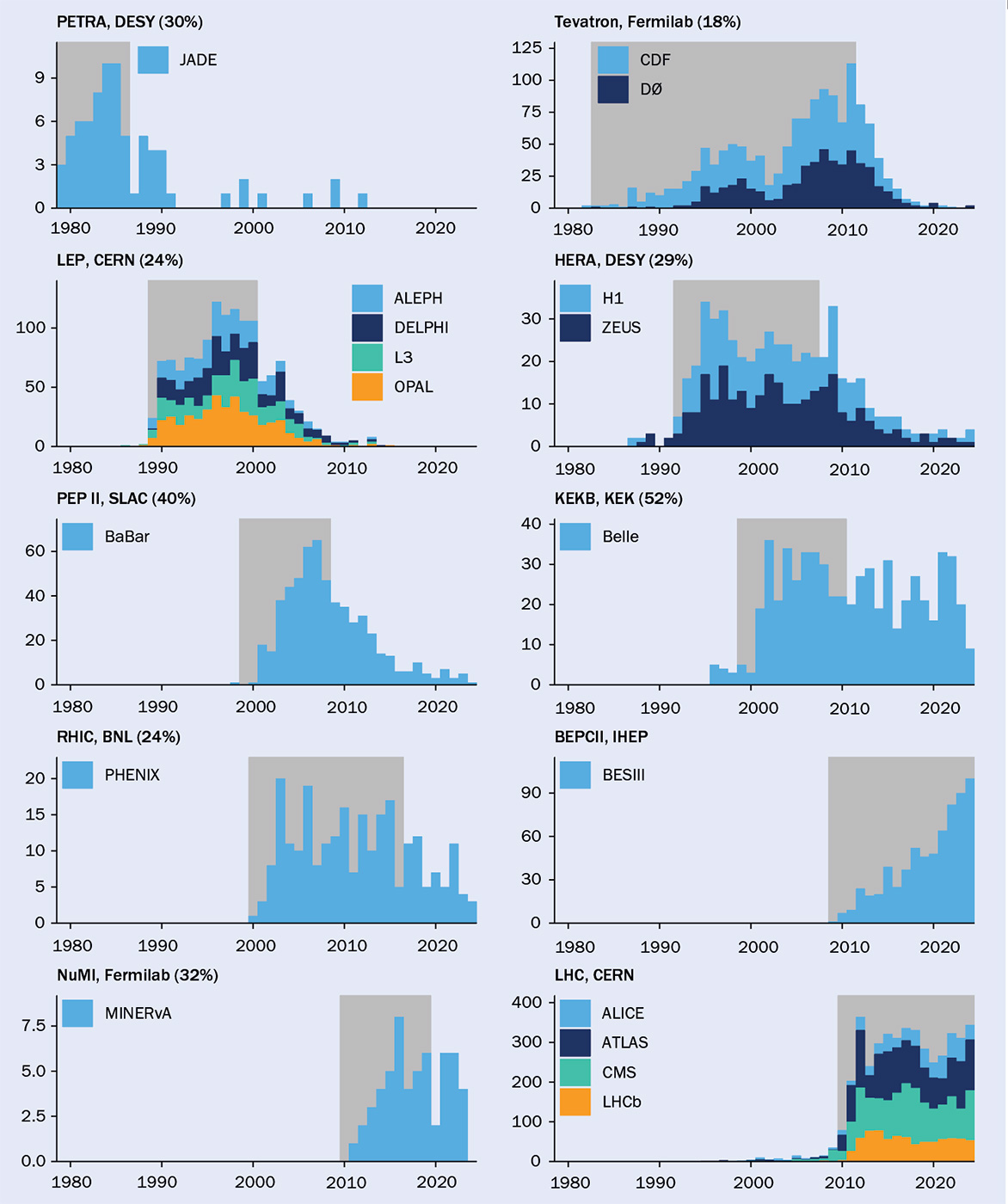
But how much research gain could be expected for a reasonable investment in data preservation? We conservatively estimate that for dedicated investments below 1% of the cost of the construction of a facility, the scientific output increases by 10% or more. Publication records confirm that scientific outputs at major experimental facilities continue long after the end of operations (see “Publications per year, during and after data taking” panel). Publication rates remain substantial well beyond the “canonical” five years after the end of the data taking, particularly for experiments that pursued dedicated data-preservation programmes. For some experiments, the lifetime of the preservation system is by now comparable with the data-taking period, illustrating the need to carefully define collaborations for the long term.
Publication records confirm that scientific outputs at major experimental facilities continue long after the end of operations
The most striking example is BaBar, an electron–positron-collider experiment at SLAC that was designed to investigate the violation of charge-parity symmetry in the decays of B mesons, and which continues to publish using a preservation system now hosted outside the original experiment site. Aging infrastructure is now presenting challenges, raising questions about the very-long-term hosting of historical experiments – “preservation 2.0” – or the definitive end of the programme. The other historical b-factory, Belle, benefits from a follow-up experiment on site.
Publications per year, during and after data taking
The publication record at experiments associated with the DPHEP initiative. Data-taking periods of the relevant facilities are shaded, and the fraction of peer-reviewed articles published afterwards is indicated as a percentage for facilities that are not still operational. The data, which exclude conference proceedings, were extracted from Inspire-HEP on 31 July 2025.
HERA, an electron– and positron–proton collider that was designed to study deep inelastic scattering (DIS) and the structure of the proton, continues to publish and even to attract new collaborators as the community prepares for the Electron Ion Collider (EIC) at BNL, nicely demonstrating the relevance of data preservation for future programmes. The EIC will continue studies of DIS in the regime of gluon saturation (CERN Courier January/February 2025 p31), with polarised beams exploring nucleon spin and a range of nuclear targets. The use of new machine-learning algorithms on the preserved HERA data has even allowed aspects of the EIC physics case to be explored: an example of those “treasures” not foreseen at the end of collisions.
IHEP in China conducts a vigorous data-preservation programme around BESIII data from electron–positron collisions in the BEPCII charm factory. The collaboration is considering using artificial intelligence to rank data priorities and user support for data reuse.
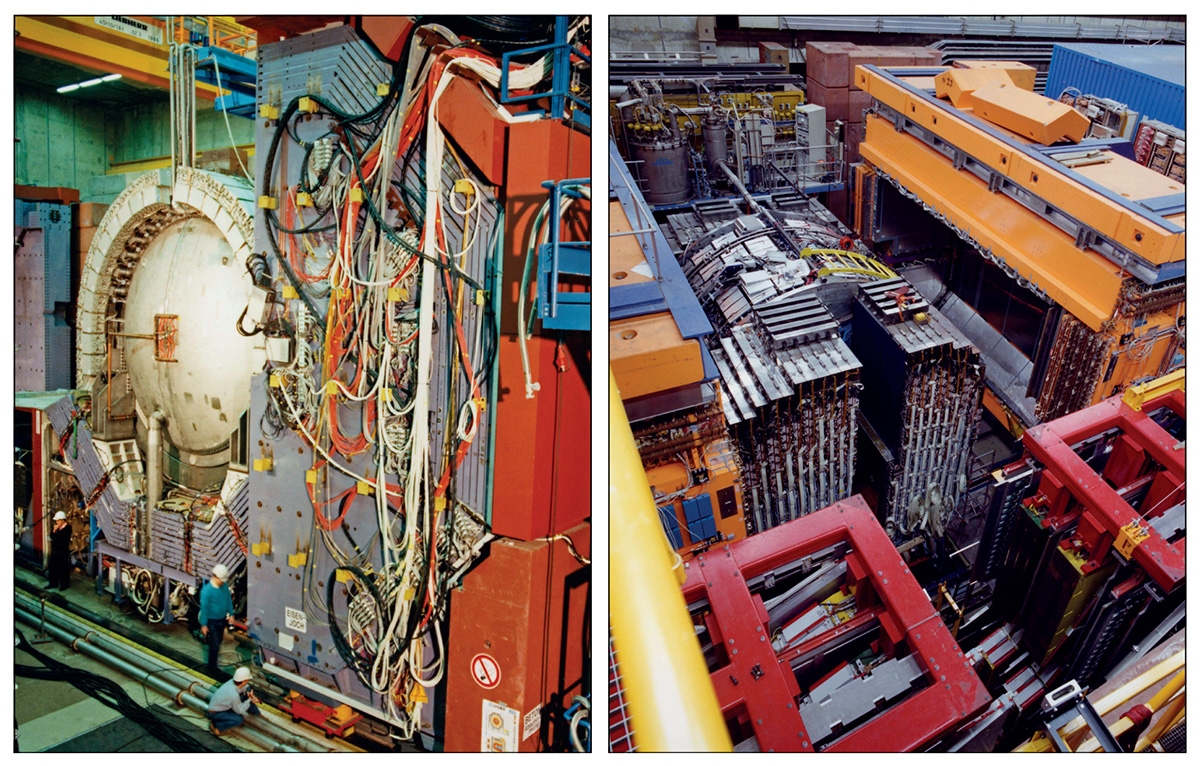
Remarkably, LEP experiments are still publishing physics analyses with archived ALEPH data almost 25 years after the completion of the LEP programme on 4 November 2000. The revival of the CERNLIB collection of FORTRAN data-analysis software libraries has also enabled the resurrection of the legacy software stacks of both DELPHI and OPAL, including the spectacular revival of their event displays (see “Data resurrection” figure). The DELPHI collaboration revised their fairly restrictive data-access policy in early 2024, opening and publishing their data via CERN’s Open Data Portal.
Some LEP data is currently being migrated into the standardised EDM4hep (event data model) format that has been developed for future colliders. As well as testing the format with real data, this will ensure data preservation and support software development, analysis training and detector design for the electron–positron collider phase of the proposed Future Circular Collider using real events.
The future is open
In the past 10 years, data preservation has grown in prominence in parallel with open science, which promotes free public access to publications, data and software in community-driven repositories, and according to the FAIR principles of findability, accessibility, interoperability and reusability. Together, data preservation and open science help maximise the benefits of fundamental research. Collaborations can fully exploit their data and share its unique benefits with the international community.
The two concepts are distinct but tightly linked. Data preservation focuses on maintaining data integrity and usability over time, whereas open data emphasises accessibility and sharing. They have in common the need for careful and resource-loaded planning, with a crucial role played by the host laboratory.
Data preservation and open science both require clear policies and a proactive approach. Beginning at the very start of an experiment is essential. Clear guidelines on copyright, resource allocation for long-term storage, access strategies and maintenance must be established to address the challenges of data longevity. Last but not least, it is crucially important to design collaborations to ensure smooth international cooperation long after data taking has finished. By addressing these aspects, collaborations can create robust frameworks for preserving, managing and sharing scientific data effectively over the long term.
Today, most collaborations target the highest standards of data preservation (level 4). Open-source software should be prioritised, because the uncontrolled obsolescence of commercial software endangers the entire data-preservation model. It is crucial to maintain all of the data and the software stack, which requires continuous effort to adapt older versions to evolving computing environments. This applies to both software and hardware infrastructures. Synergies between old and new experiments can provide valuable solutions, as demonstrated by HERA and EIC, Belle and Belle II, and the Antares and KM3NeT neutrino telescopes.
From afterthought to forethought
In the past decade, data preservation has evolved from simply an afterthought as experiments wrapped up operations into a necessary specification for HEP experiments. Data preservation is now recognised as a source of cost-effective research. Progress has been rapid, but its implementation remains fragile and needs to be protected and planned.
In the past 10 years, data preservation has grown in prominence in parallel with open science
The benefits will be significant. Signals not imagined during the experiments’ lifetime can be searched for. Data can be reanalysed in light of advances in theory and observations from other realms of fundamental science. Education, training and outreach can be brought to life by demonstrating classic measurements with real data. And scientific integrity is fully realised when results are fully reproducible.
The LHC, having surpassed an exabyte of data, now holds the largest scientific data set ever accumulated. The High-Luminosity LHC will increase this by an order of magnitude. When the programme comes to an end, it will likely be the last data at the energy frontier for decades. History suggests that 10% of the LHC’s scientific programme will not yet have been published when collisions end, and a further 10% not even imagined. While the community discusses its strategy for future colliders, it must therefore also bear in mind data preservation. It is the key to unearthing hidden treasures in the data of the past, present and future.
In the history of elementary particle physics, 1964 was truly an annus mirabilis. Not only did the quark hypothesis emerge – independently from two theorists half a world apart – but a multiplicity of theorists came up with the idea of spontaneous symmetry breaking as an attractive method to generate elementary particle masses. And two pivotal experiments that year began to alter the way astronomers, cosmologists and physicists think about the universe.
Shown on the left is a timeline of the key 1964 milestones; discoveries that laid the groundwork for the Standard Model of particle physics and continue to be actively studied and refined today (images: N Eskandari, A Epshtein).
Some of the insights published in 1964 were first conceived in 1963. Caltech theorist Murray Gell-Mann had been ruminating about quarks ever since a March 1963 luncheon discussion with Robert Serber at Columbia University. Serber was exploring the possibility of a triplet of fundamental particles that in various combinations could account for mesons and baryons in Gell-Mann’s SU(3) symmetry scheme, dubbed “the Eightfold Way”. But Gell-Mann summarily dismissed his suggestion, showing him on a napkin how any such fundaments would have to have fractional charges of –2/3 or 1/3 the charge on an electron, which seemed absurd.
From the ridiculous to the sublime
Still, he realised, such ridiculous entities might be allowable if they somehow never materialised outside of the hadrons. For much of the year, Gell-Mann toyed with the idea in his musings, calling such hypothetical entities by the nonsense word “quorks”, until he encountered the famous line in Finnegans Wake by James Joyce, “Three quarks for Muster Mark.” He even discussed it with his old MIT thesis adviser, then CERN Director-General Victor Weisskopf, who chided him not to waste their time talking about such nonsense on an international phone call.
In late 1963, Gell-Mann finally wrote the quark idea up for publication and sent his paper to the newer European journal Physics Letters rather than the (then) more prestigious Physical Review Letters, in part because he thought it would be rejected there. “A schematic model of baryons and mesons”, published on 1 February 1964, is brief and to the point. After a few preliminary remarks, he noted that “a simpler, more elegant scheme can be constructed if we allow non-integral values for the charges … We then refer to the members u(2/3), d(–1/3) and s(–1/3) of the triplet as ‘quarks’.” But toward the end, he hedged his bets, warning readers not to take the existence of these quarks too seriously: “A search for stable quarks of charge +2/3 or –1/3 … at the highest-energy accelerators would help to reassure us of the non-existence of real quarks.”
As often happens in the history of science, the idea of quarks had another, independent genesis – at CERN in 1964. George Zweig, a CERN postdoc who had recently been a Caltech graduate student with Richard Feynman and Gell-Mann, was wondering why the φ meson lived so long before decaying into a pair of K mesons. A subtle conservation law must be at work, he figured, which led him to consider a constituent model of the hadrons. If the φ were somehow composed of two more fundamental entities, one with strangeness +1 and the other with –1, then its great preference for kaon decays over other, energetically more favourable possibilities, could be explained. These two strange constituents would find it difficult to “eat one another,” as he later put it, so two individual, strange kaons would be required to carry each of them away.
Late in the fall of 1963, Zweig discovered that he could reproduce the meson and baryon octets of the Eightfold Way from such constituents if they carried fractional charges of 2/3 and –1/3. Although he at first thought this possibility artificial, it solved a lot of other problems, and he began working feverishly on the idea, day and night. He wrote up his theory for publication, calling his fractionally charged particles “aces” – in part because he figured there would be four of them. Mesons, built from pairs of these aces, formed the “deuces” and baryons the “treys” in his deck of cards. His theory first appeared as a long CERN report in mid-January 1964, just as Gell-Mann’s quark paper was awaiting publication at Physics Letters.
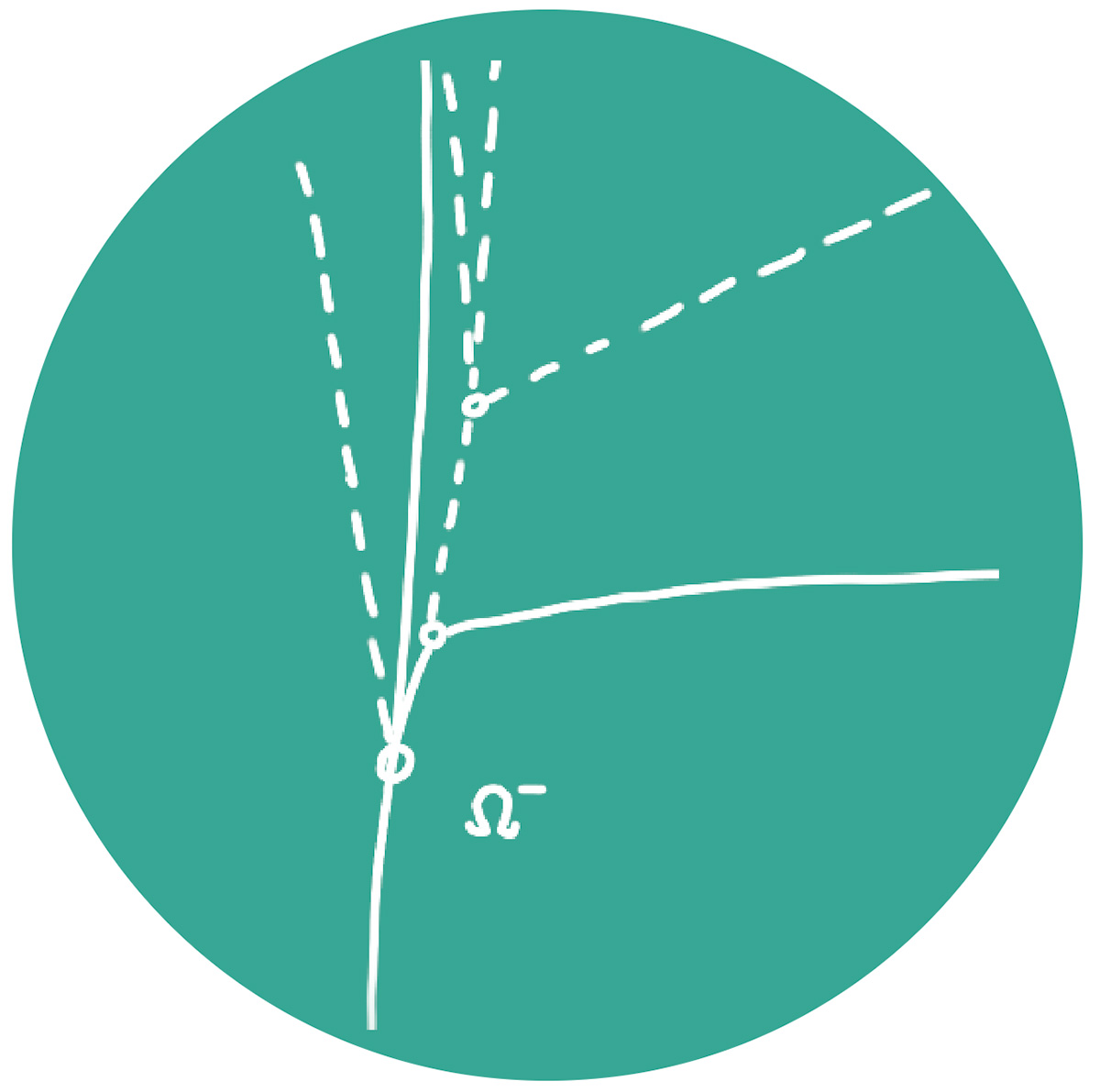
As chance would have it, there was an intensive activity going on in parallel that January – an experimental search for the Ω– baryon that Gell-Mann had predicted just six months earlier at a Geneva particle-physics conference. With negative charge and a mass almost twice that of the proton, it had to have strangeness –3 and would sit atop a 10-fold decuplet of heavy baryons predicted in his Eightfold Way. Brookhaven experimenter Nick Samios was eagerly seeking evidence of this very strange particle in the initial run of the 80 inch bubble chamber that he and colleagues had spent years planning and building. On 31 January 1964, he finally found a bubble-chamber photograph with just the right signatures. It might be the “gold-plated event” that could prove the existence of the Ω– baryon.
After more detailed tests to make sure of this conclusion, the Brookhaven team delivered a paper with the unassuming title “Observation of a hyperon with strangeness minus three” to Physical Review Letters. With 33 authors, it reported only one event. But with that singular event, any remaining doubt about SU(3) symmetry and Gell-Mann’s Eightfold Way evaporated.
A fourth quark for Muster Mark?
Later in spring 1964, James Bjorken and Sheldon Glashow crossed paths in Copenhagen, on leave from Harvard and Stanford, working at Niels Bohr’s Institute for Theoretical Physics. Seeking to establish lepton–hadron symmetry, they needed a fourth quark because a fourth lepton – the muon neutrino – had been discovered in 1962 at Brookhaven. Bjorken and Glashow were early adherents of the idea that hadrons were made of quarks, but based their arguments on SU(4) symmetry rather than SU(3). “We called the new quark flavour ‘charm,’ completing two weak doublets of quarks to match two weak doublets of leptons, and establishing lepton–quark symmetry, which holds to this day,” recalled Glashow (CERN Courier January/February 2025 p35). Their Physics Letters article appeared that summer, but it took another decade before solid evidence for charm turned up in the famous J/ψ discovery at Brookhaven and SLAC. The charm quark they had predicted in 1964 was the central player in the so-called November Revolution a decade later that led to widespread acceptance of the Standard Model of particle physics.
In the same year, Oscar Greenberg at the University of Maryland was wrestling with the difficult problem of how to confine three supposedly identical quarks within a volume hardly larger than a proton. According to the sacrosanct Pauli exclusion principle, identical spin–1/2 fermions could never occupy the exact same quantum state. So how, for example, could one ever cram three strange quarks inside an Ω– baryon?
One possible solution, Greenberg realised, was that quarks carry a new physical property that distinguished them from one another so they were not in fact identical. Instead of a single quark triplet, that is, there could be three distinct triplets of what he dubbed “paraquarks”, publishing his ideas in November 1964, and capping an extraordinary year of insights into hadrons. We now recognise his insight as anticipating the existence of “coloured” quarks, where colour is the source of the relentless QCD force binding them within mesons and baryons.
The origin of mass
Although it took more than a decade for experiments to verify them, these insights unravelled the nature of hadrons, revealing a new family of fermions and hinting at the nature of the strong force. Yet they were not necessarily the most important ideas developed in particle physics in 1964. During that summer, three theorists – Robert Brout, François Englert and Peter Higgs – formulated an innovative technique to generate particle masses using spontaneous symmetry breaking of non-Abelian Yang–Mills gauge theories – a class of field theories that would later describe the electroweak and strong forces in the Standard Model.
Inspired by successful theories of superconductivity, symmetry-breaking ideas had been percolating among those few still working on quantum field theory, then in deep decline in particle physics, but they foundered whenever masses were introduced “by hand” into the theories. Or, as Yoichiro Nambu and Peter Goldstone realised in the early 1960s, massless bosons appeared in the theories that did not correspond to anything observed in experiments.
If they existed, the W (and later, Z) bosons carrying the short-range weak force had to be extremely massive (as is now well known). Brout and Englert – and independently Higgs – found they could generate the masses of such vector bosons if the gauge symmetry governing their behaviour was instead spontaneously broken, preserving the underlying symmetry while allowing for distinctive, asymmetric particle states. In solid-state physics, for example, magnetic domains will spontaneously align along a single direction, breaking the underlying symmetry of the electromagnetic field. Brout and Englert published their solution in June 1964, while Higgs followed suit a month later (after his paper was rejected by Physics Letters). Higgs subsequently showed that this symmetry breaking required a scalar boson to exist that was soon named after him. Dubbed the “Higgs mechanism,” this mass-generating process became a crucial feature of the unification of the weak and electromagnetic forces a few years later by Steven Weinberg and Abdus Salam. And after their electroweak theory was shown in 1971 to be renormalisable, and hence calculable, the theoretical floodgates opened wide, leading to today’s dominant Standard Model paradigm.
Surprise, surprise!
Besides the quark model and the Higgs mechanism, 1964 witnessed two surprising discoveries that would light up almost any other year in the history of science. That summer saw the publication of an epochal experiment leading to the discovery of CP violation in the decays of long-lived neutral mesons. Led by Princeton physicists Jim Cronin and Val Fitch, their Brookhaven experiment had discerned a small but non-negligible fraction – 0.2% – of two-body decays into a pair of pions, instead of into the dominant CP-conserving three-body decays. For months, the group wrestled with trying to understand this surprising result before publishing it that July in Physical Review Letters.
It took almost another decade before Japanese theorists Makoto Kobayashi and Toshihide Maskawa proved that such a small amount of CP violation was the natural result of the Standard Model if there were three quark-lepton families instead of the two then known to exist. Whether this phenomenon has any causal relation to the dominance of matter in the universe is still up for grabs decades later. “Indeed, it is almost certain that the CP violation observed in the K-meson system is not directly responsible for the matter dominance of the universe,” wrote Cronin in the early 1990s, “but one would wish that it is related to whatever the mechanism was that created [this] matter dominance.”
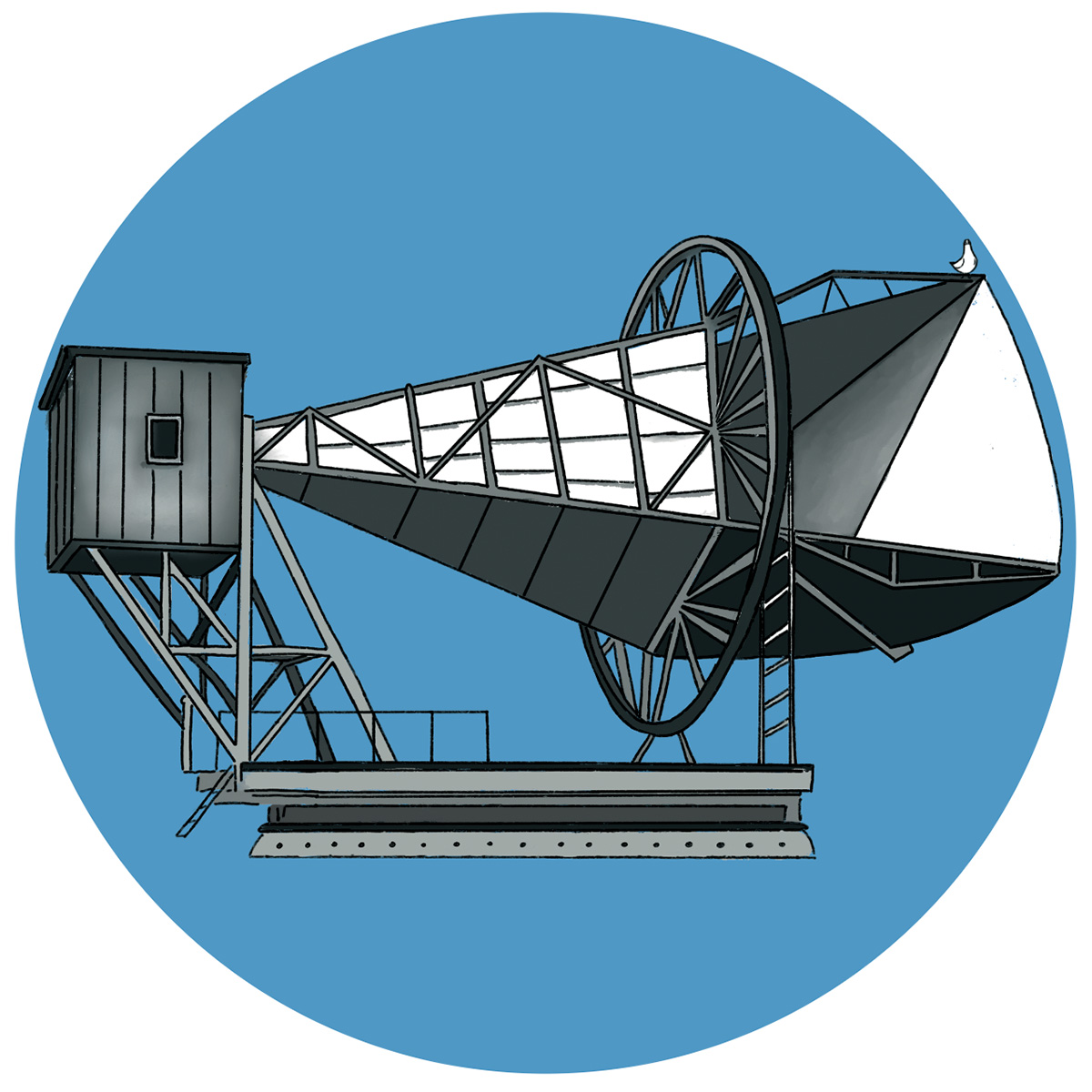
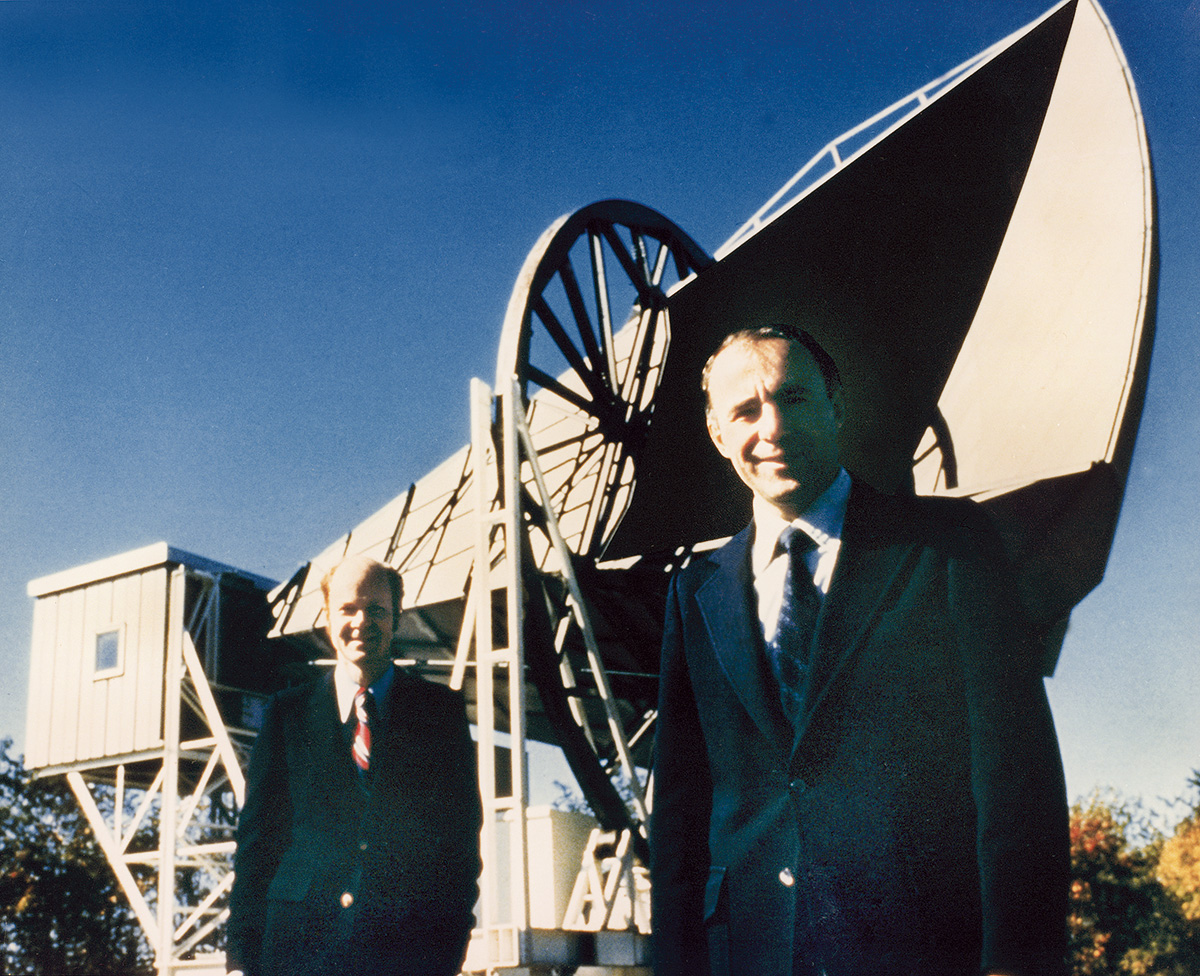
Another epochal 1964 observation was not published until 1965, but it deserves mention here because of its tremendous significance for the subsequent marriage of particle physics and cosmology. That summer, Arno Penzias and Robert W Wilson of Bell Telephone Labs were in the process of converting a large microwave antenna in Holmdel, NJ, for use in radio astronomy. Shaped like a giant alpenhorn lying on its side, the device had been developed for early satellite communications. But the microwave signals that it was receiving included a faint, persistent “hiss” no matter the direction in which the horn was pointed; they at first interpreted the hiss as background noise – possibly due to some smelly pigeon droppings that had accumulated inside, which they removed. Still it persisted. Penzias and Wilson were at a complete loss to explain it.
Cosmological consequences
It so happened that a Princeton group led by Robert Dicke and James Peebles was just then building a radiometer to search for the uniform microwave radiation that should suffuse the universe had it begun in a colossal fireball, as a few cosmologists had been arguing for decades. In the spring of 1965, Penzias read a preprint of a paper by Peebles on the subject and called Dicke to suggest he come to Holmdel to view their results. After arriving and realising they had been scooped, the Princeton physicists soon confirmed the Bell Labs results using their own rooftop radiometer.
Besides the quark model and the Higgs mechanism, 1964 witnessed two surprising discoveries that would light up almost any other year in the history
of science
The results were published as back-to-back letters in the Astrophysical Journal on 7 May 1965. The Princeton group wrote extensively about the cosmological consequences of the discovery, while Penzias and Wilson submitted just a brief, dry description of their work, “A measurement of excess antenna temperature at 4080 Mc/s” – ruling out other possible interpretations of the uniform signal corresponding to the radiation expected from a 3.5 K blackbody.
Subsequent measurements at many other frequencies have established that this is indeed the cosmic background radiation expected from the Big Bang birth of the universe, confirming that it had in fact occurred. That was an incredibly brief, hot, dense phase of its existence, which has prodded many particle physicists to take up the study of its evolution and remnants. This discovery of the cosmic background radiation therefore serves as a fitting capstone on what was truly a pivotal year for particle physics.
Almost a decade after ATOMKI researchers reported an unexpected peak in electron–positron pairs from beryllium nuclear transitions, the case for a new “X17” particle remains open. Proposed as a light boson with a mass of about 17 MeV and very weak couplings, it would belong to the sometimes-overlooked low-energy frontier of physics beyond the Standard Model. Two recent results now pull in opposite directions: the MEG II experiment at the Paul Scherrer Institute found no signal in the same transition, while the PADME experiment at INFN Frascati reports a modest excess in electron–positron scattering at the corresponding mass.
The story of the elusive X17 particle began at the Institute for Nuclear Research (ATOMKI) in Debrecen, Hungary, where nuclear physicist Attila János Krasznahorkay and colleagues set out to study the de-excitation of a beryllium-8 state. Their target was the dark photon – a particle hypothesised to mediate interactions between ordinary and dark matter. In their setup, a beam of protons strikes a lithium-7 target, producing an excited beryllium nucleus that releases a proton or de-excites to the beryllium-8 ground state by emitting an 18.1 MeV gamma ray – or, very rarely, an electron–positron pair.
Controversial anomaly
In 2015, ATOMKI claimed to have observed an excess of electron–positron pairs with a statistical significance of 6.8σ. Follow-up measurements with different nuclei were also reported to yield statistically significant excess at the same mass. The team claimed the excess was consistent with the creation of a short-lived neutral boson with a mass of about 17 MeV. Given that it would be produced in nuclear transitions and decay into electron–positron pairs, the X17 should couple to nucleons, electrons and positrons. But many relevant constraints squeeze the parameter space for new physics at low energies, and independent tests are essential to resolve an unexpected and controversial anomaly that is now a decade old.
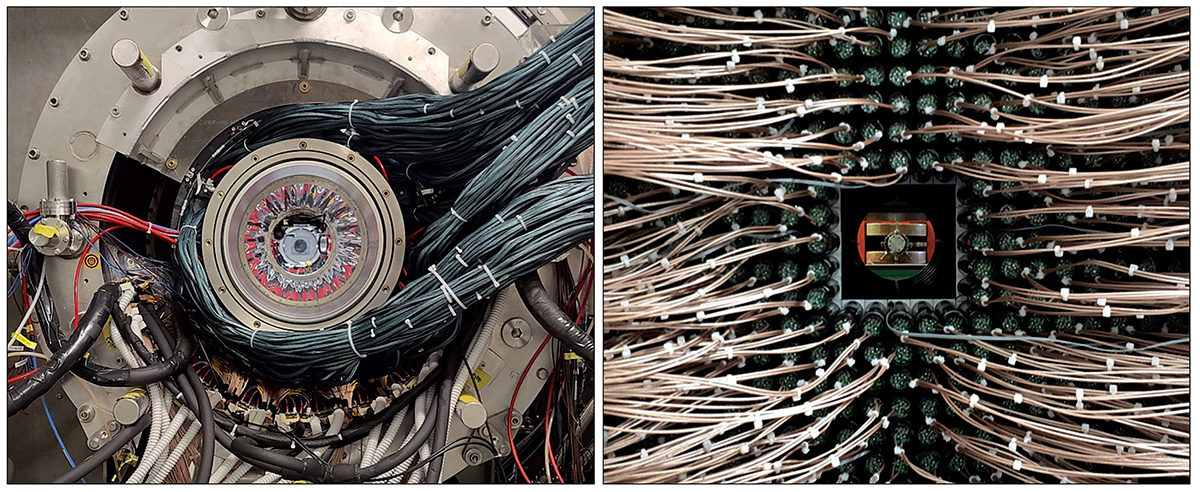
In November 2024, MEG II announced a direct cross-check of the anomaly, publishing their results in July 2025. Designed for high-precision tracking and calorimetry, the experiment combines dedicated background monitors with a spectrometer based on a lightweight, single-volume drift chamber that records the ionisation trails of charged particles. The detector is designed to search for evidence of the rare lepton-flavour-violating decay μ+ → e+γ, with the collaboration recently reporting world-leading limits at EPS-HEP (see “High-energy physics meets in Marseille”). It is also well suited to probing electron–positron final states, and has the mass resolution required to test the narrow-resonance interpretation of the ATOMKI anomaly.
Motivated by interest in X17, the collaboration directed a proton beam with energy up to 1.1 MeV onto a lithium-7 target, to study the same nuclear process as ATOMKI. Their data disfavours the ATOMKI hypothesis and imposes an upper limit on the branching ratio of 1.2 × 10⁻⁵ at 90% confidence.
“While the result does not close the case,” notes Angela Papa of INFN, the University of Pisa and the Paul Scherrer Institute, “it weakens the simplest interpretations of the anomaly.”
But MEG II is not the only cross check in progress. In May, the PADME collaboration reported an independent test that doesn’t repeat the ATOMKI experiment, but seeks to disentangle the X17 question from the complexities of nuclear physics.
For theorists, X17 is an awkward fit
Initially designed to search for evidence of states that decay invisibly, like dark photons or axion-like particles, PADME collides a positron beam with energies reaching 550 MeV with a 100 µm-thick active diamond target. Annihilations of positrons with electrons bound in the target material are reconstructed by detecting the resulting photons, with any peak in the missing-mass spectrum signalling an unseen product. The photon energy and impact position is measured by a finely segmented electromagnetic calorimeter with crystals refurbished from the L3 experiment at LEP.
“The PADME approach relies only on the suggested interaction of X17 with electrons and positrons,” remarks spokesperson Venelin Kozhuharov of Sofia University and INFN Frascati. “Since the ATOMKI excess was observed in electron–positron final states, this is the minimal possible assumption that can be made for X17.”
Instead of searching for evidence of unseen particles, PADME varied the beam energy to look for an electron-positron resonance in the expected X17 mass range. The collaboration claims that the combined dataset displays an excess near 16.90 MeV with a local significance of 2.5σ.
For theorists, X17 is an awkward fit. Most consider dark photons and axions to be the best motivated candidates for low mass, weakly coupled new physics states, says Claudio Toni of LAPTh. Another possibility, he says, is a bound state of known particles, though QCD states such as pions are about eight times heavier, and pure QED effects usually occur at much lower scales than 17 MeV.
“We should be cautious,” says Toni. “Since X17 is expected to couple to both protons and electrons, the absence of signals elsewhere forces any theoretical proposal to respect stringent constraints. We should focus on its phenomenology.”
At the LHC, almost all top–antitop pairs are produced in a smooth invariant-mass spectrum described by perturbative QCD. In March, the CMS collaboration announced the discovery of an additional 1% localised near the energy threshold to produce a top quark and its antiquark (CERN Courier May/June 2025 p7). The ATLAS collaboration has now confirmed this observation.
“The measurement was challenging due to the small cross section and the limited mass resolution of about 20%,” says Tomas Dado of the ATLAS collaboration and CERN. “Sensitivity was achieved by exploiting high statistics, lepton angular variables sensitive to spin correlations, and by carefully constraining modelling uncertainties.”
Toponium
The simplest explanation for the excess appears to be a spectrum of “quasi-bound” states of a top quark and its antiquark that are often collectively referred to as toponium, by reference to the charmonium and bottomonium states discovered in the November Revolution of 1974 (see “Memories of quarkonia“). But there the similarities end. Thanks to the unique properties of the most massive fundamental particle yet discovered, toponium is expected to be exceptionally broad rather than exceptionally narrow in energy spectra, and to disintegrate via the weak decay of its constituent quarks rather than via their mutual annihilation.
“Historically, it was assumed that the LHC would never reach the sensitivity required to probe such effects, but ATLAS and CMS have shown that this expectation was too pessimistic,” says Benjamin Fuks of the Sorbonne. “This regime corresponds to the production of a slowly moving top–antitop pair that has time to exchange multiple gluons before one of the top quarks decays. The invariant mass of the system lies slightly below the open top–antitop threshold, which implies that at least one of the top quarks is off-shell. This contrasts with conventional top–antitop production, where the tops are typically produced far above threshold, move relativistically and do not experience significant non-relativistic gluon dynamics.”
While CMS fitted a pseudo-scalar resonance that couples to gluons and top quarks – the essential features of the ground state of toponium – the new ATLAS analysis employs a model recently published by Fuks and his collaborators that additionally includes all S-wave excitations. ATLAS reports a cross-section for such quasi-bound excitations of 9.0 ± 1.3 pb, consistent with CMS’s measurement of 8.8 ± 1.3 pb. ATLAS’s measurement rises to 13.9 ± 1.9 pb when applying the same signal model as CMS.
Future measurements of top quark–antiquark pairs will compare the threshold excess to the expectations of non-relativistic QCD, search for the possible presence of new fields beyond the Standard Model, and study the quantum entanglement of the top and antitop quarks.
“At the High-Luminosity LHC, the main objective is to exploit the much larger dataset to go beyond a single-bin description of the sub-threshold top–antitop invariant mass distribution,” says Fuks. “At a future electron–positron collider, the top–antitop threshold scan has long been recognised as a cornerstone measurement, with toponium contributions playing an essential role.”
For Dado, this story reflects a satisfying interplay between theorists and the LHC experiments.
“Theorists proposed entanglement studies, ATLAS demonstrated entangled top–antitop pairs and CMS applied spin-sensitive observables to reveal the quasi-bound-state effect,” he says. “The next step is for theory to deliver a complete description of the top–antitop threshold.”
To provide the best experiences, we use technologies like cookies to store and/or access device information. Consenting to these technologies will allow us to process data such as browsing behavior or unique IDs on this site. Not consenting or withdrawing consent, may adversely affect certain features and functions.
Functional
Always active
The technical storage or access is strictly necessary for the legitimate purpose of enabling the use of a specific service explicitly requested by the subscriber or user, or for the sole purpose of carrying out the transmission of a communication over an electronic communications network.
Preferences
The technical storage or access is necessary for the legitimate purpose of storing preferences that are not requested by the subscriber or user.
Statistics
The technical storage or access that is used exclusively for statistical purposes.The technical storage or access that is used exclusively for anonymous statistical purposes. Without a subpoena, voluntary compliance on the part of your Internet Service Provider, or additional records from a third party, information stored or retrieved for this purpose alone cannot usually be used to identify you.
Marketing
The technical storage or access is required to create user profiles to send advertising, or to track the user on a website or across several websites for similar marketing purposes.


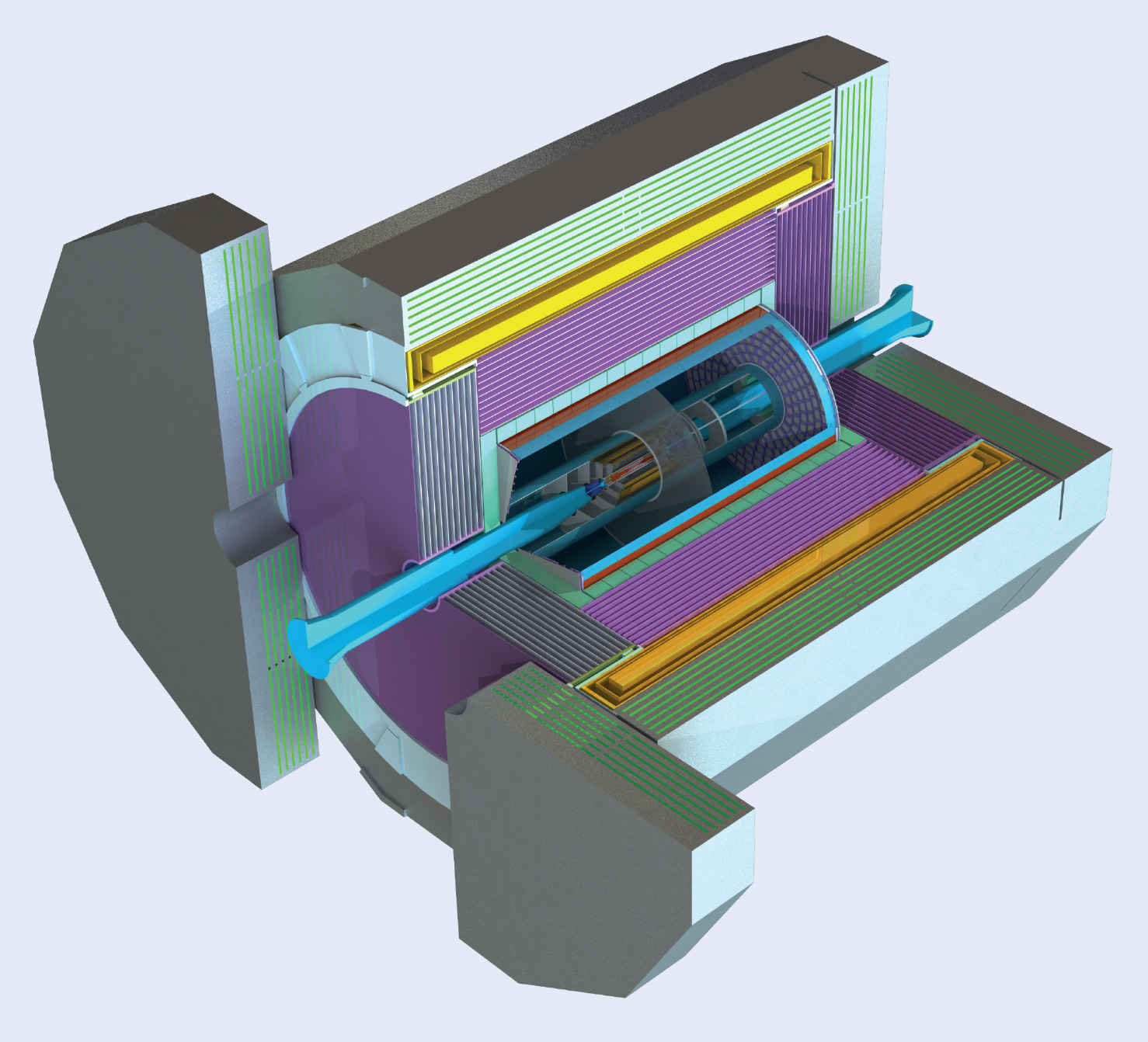

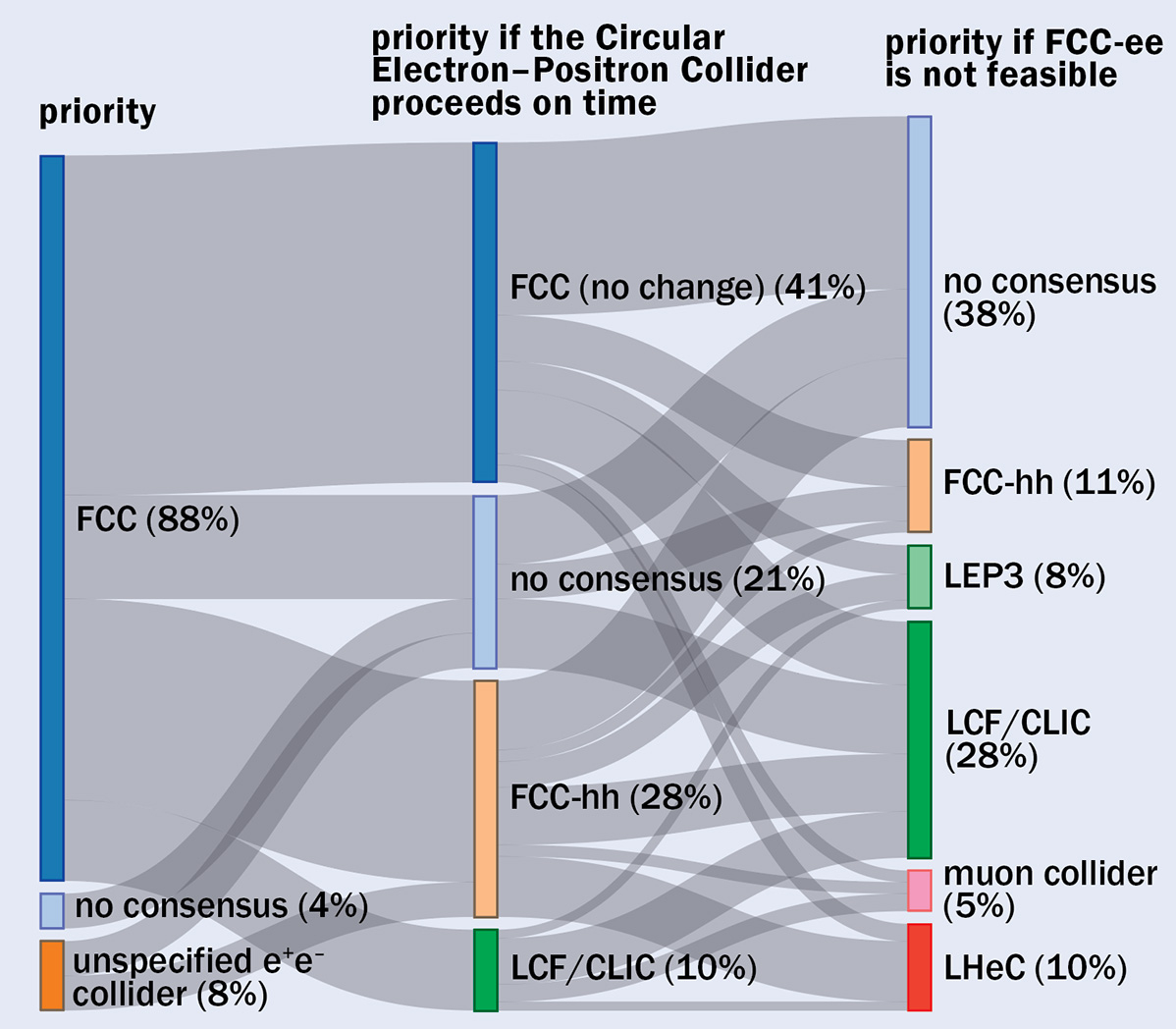

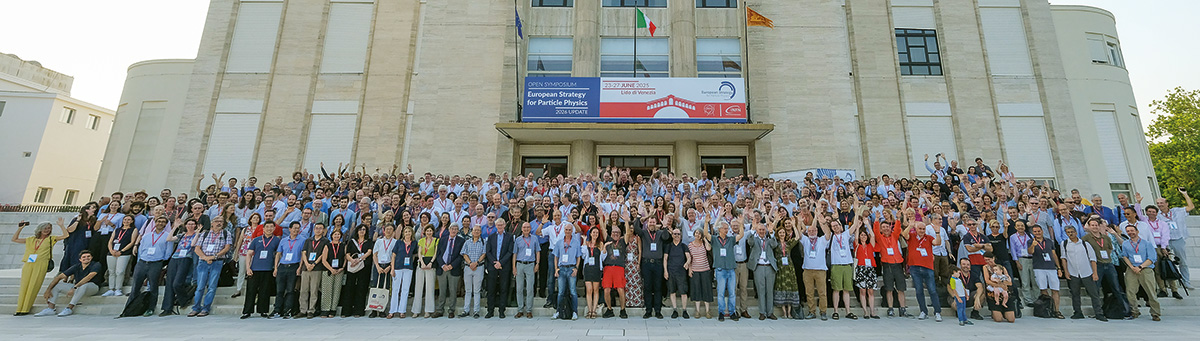
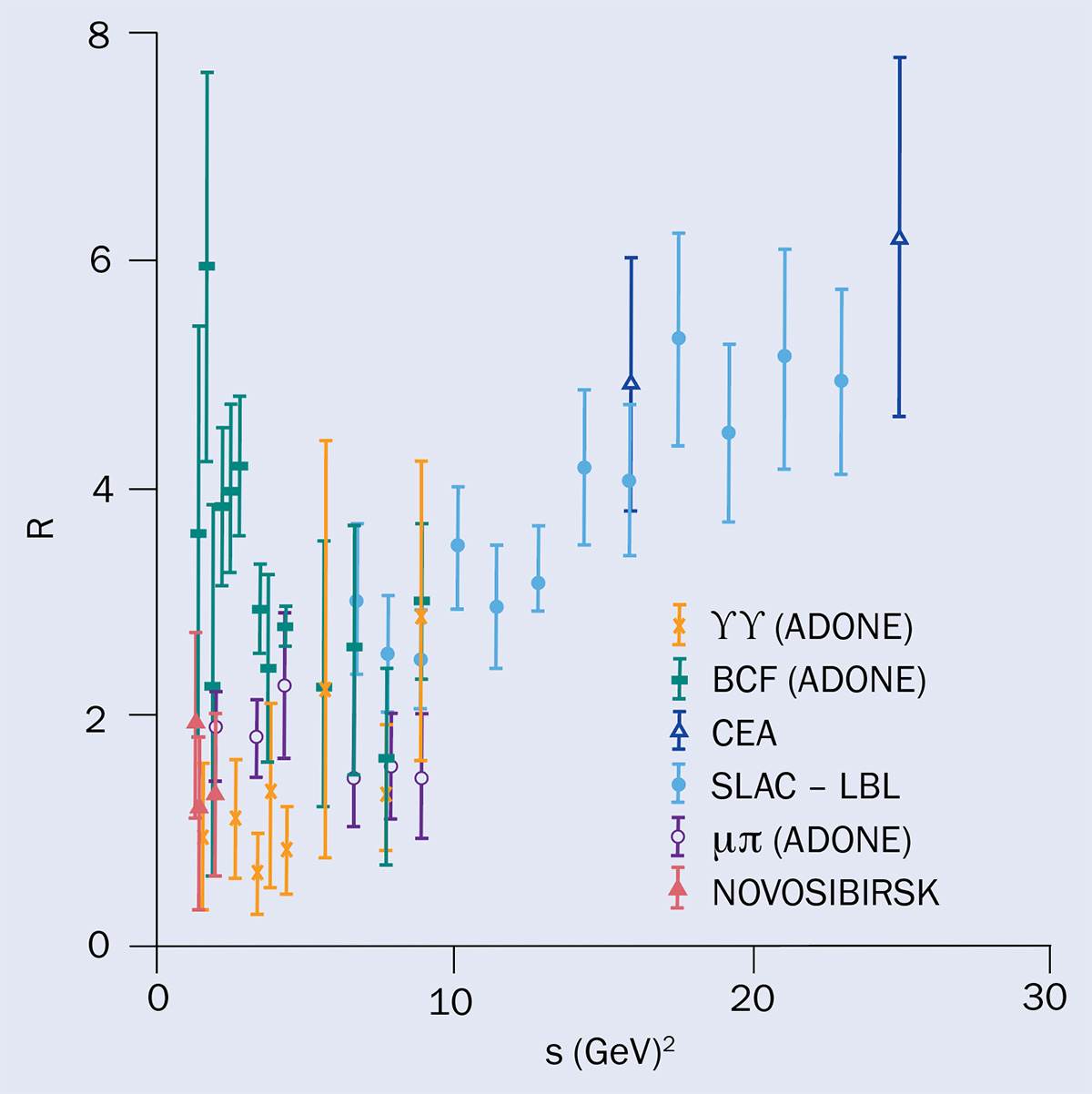
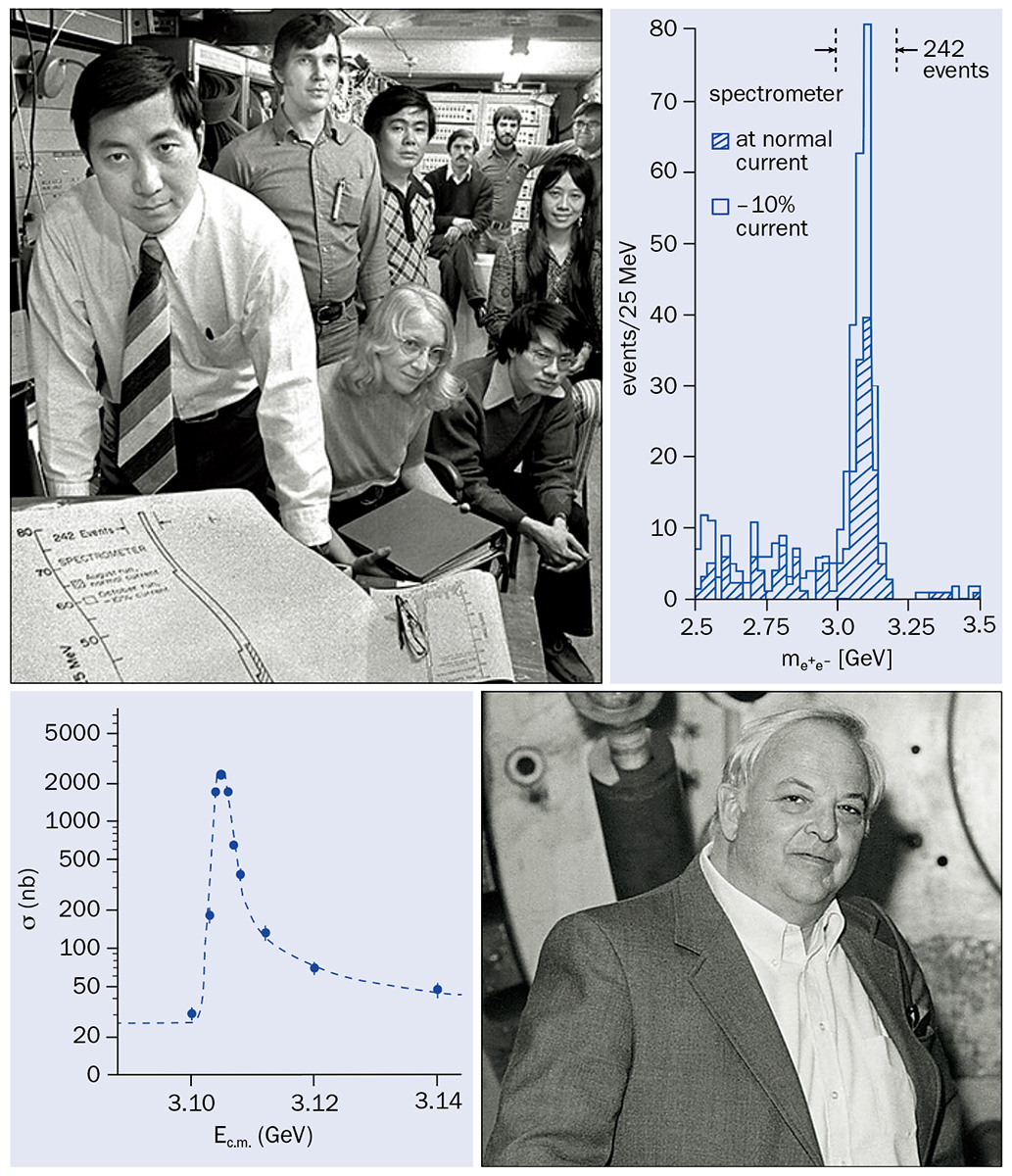
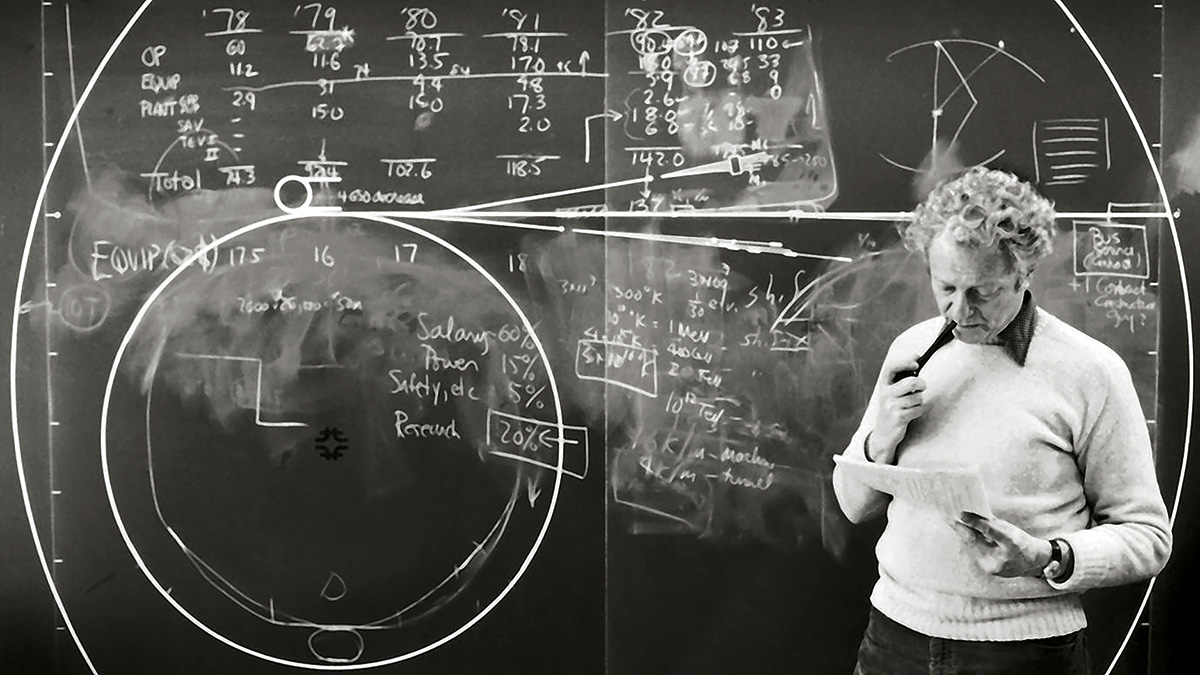
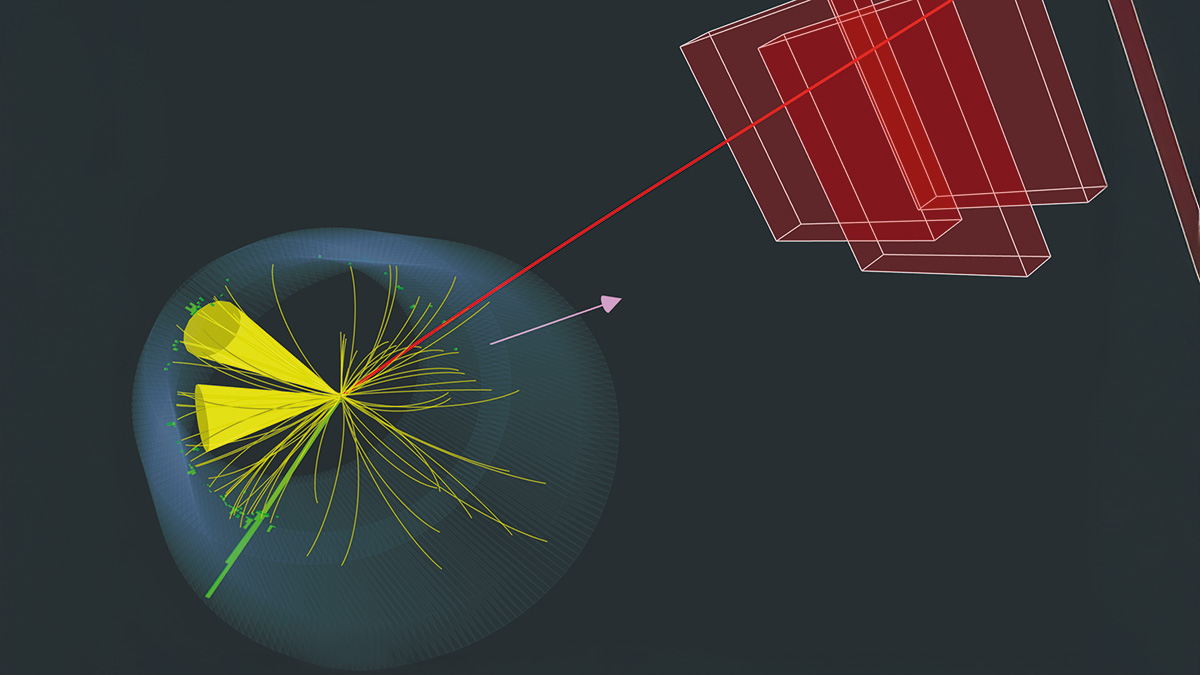
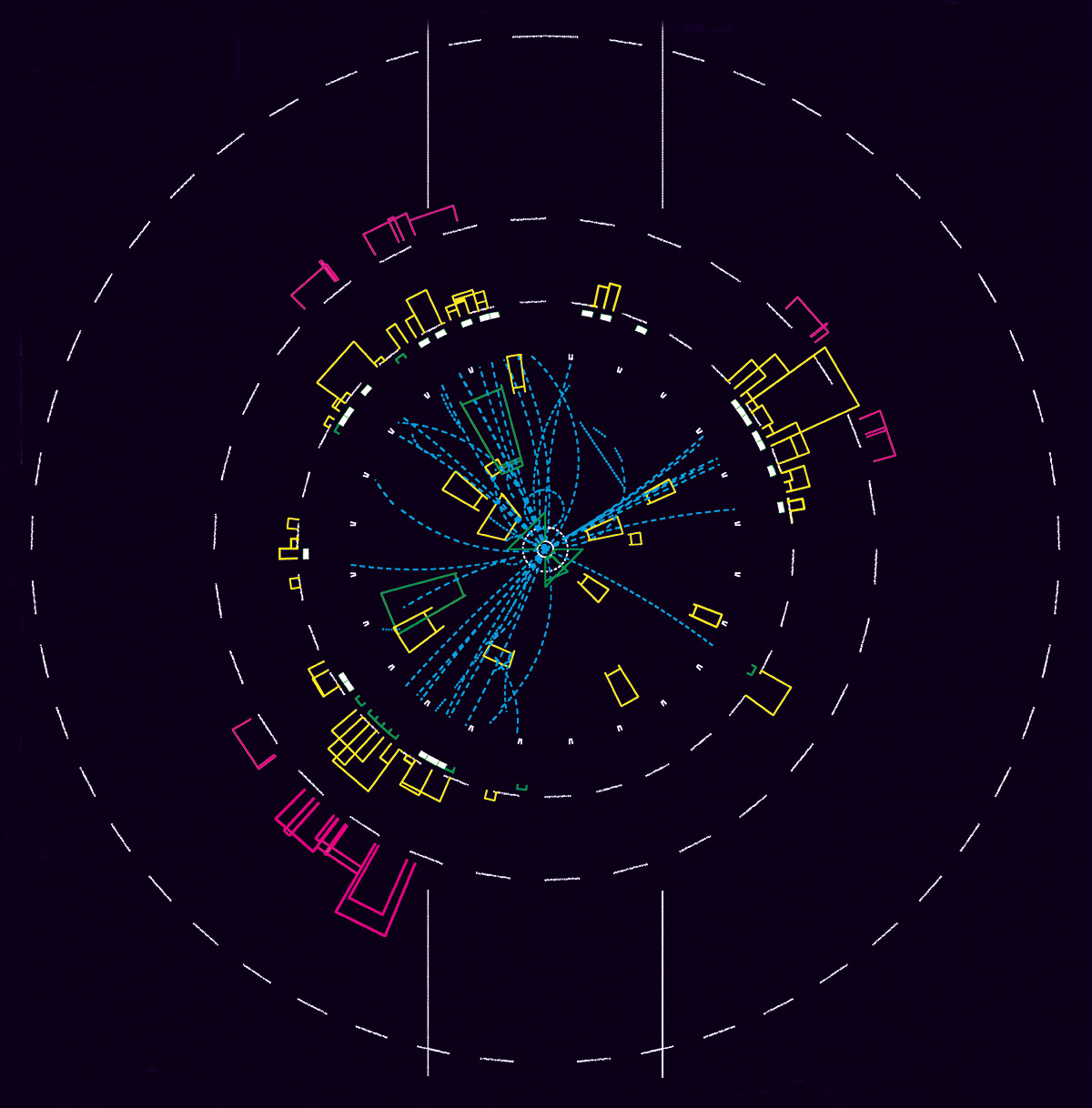
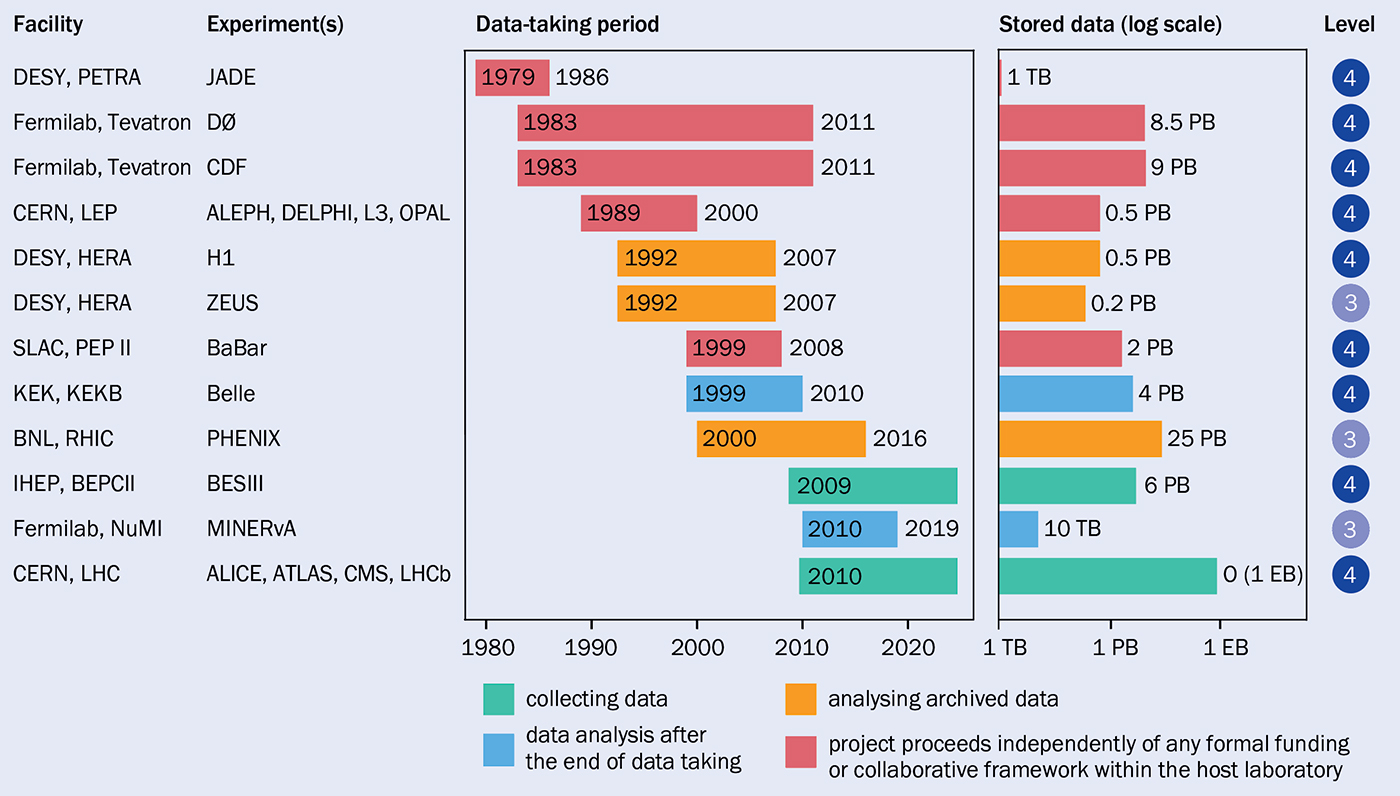 At the beginning of our efforts, DPHEP designed a four-level classification of data abstraction. Level 1 corresponds to the information typically found in a scientific publication or its associated HEPData entry (a public repository for high-energy physics data tables). Level 4 includes all inputs necessary to fully reprocess the original data and simulate the experiment from scratch.