Comsol -leaderboard other pages

Topics

Hunting anomalies with an AI trigger

In the 1970s, the robust mathematical framework of the Standard Model (SM) replaced data observation as the dominant starting point for scientific inquiry in particle physics. Decades-long physics programmes were put together based on its predictions. Physicists built complex and highly successful experiments at particle colliders, culminating in the discovery of the Higgs boson at the LHC in 2012.

Along this journey, particle physicists adapted their methods to deal with ever growing data volumes and rates. To handle the large amount of data generated in collisions, they had to optimise real-time selection algorithms, or triggers. The field became an early adopter of artificial intelligence (AI) techniques, especially those falling under the umbrella of “supervised” machine learning. Verifying the SM’s predictions or exposing its shortcomings became the main goal of particle physics. But with the SM now apparently complete, and supervised studies incrementally excluding favoured models of new physics, “unsupervised” learning has the potential to lead the field into the uncharted waters beyond the SM.

Blind faith

To maximise discovery potential while minimising the risk of false discovery claims, physicists design rigorous data-analysis protocols to minimise the risk of human bias. Data analysis at the LHC is blind: physicists prevent themselves from combing through data in search of surprises. Simulations and “control regions” adjacent to the data of interest are instead used to design a measurement. When the solidity of the procedure is demonstrated, an internal review process gives the analysts the green light to look at the result on the real data and produce the experimental result. 

A blind analysis is by necessity a supervised approach. The hypothesis being tested is specified upfront and tested against the null hypothesis – for example, the existence of the Higgs boson in a particular mass range versus its absence. Once spelled out, the hypothesis determines other aspects of the experimental process: how to select the data, how to separate signals from background and how to interpret the result. The analysis is supervised in the sense that humans identify what the possible signals and backgrounds are, and label examples of both for the algorithm.
rtist’s impression of an FPGA

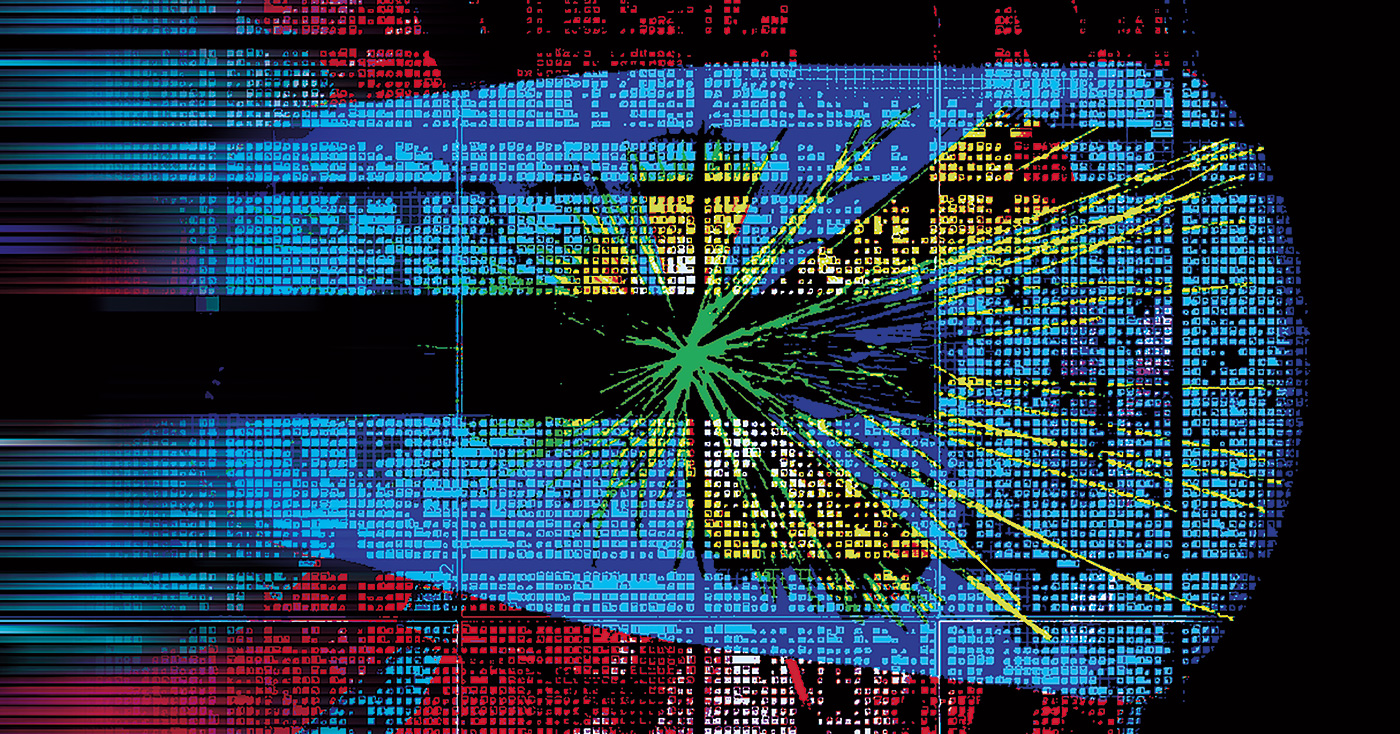
The data flow at the LHC makes the need to specify a signal hypothesis upfront even more compelling. The LHC produces 40 million collision events every second. Each overlaps with 34 others from the same bunch crossing, on average, like many pictures superimposed on top of each other. However, the computing infrastructure of a typical experiment is designed to sustain a data flow of just 1000 events per second. To avoid being overwhelmed by the data pressure, it’s necessary to select these 1000 out of every 40 million events in a short time. But how do you decide what’s interesting? 

This is where the supervised nature of data analysis at the LHC comes into play. A set of selection rules – the trigger algorithms – are designed so that the kind of collisions predicted by the signal hypotheses being studied are present among the 1000 (see “Big data” figure). As long as you know what to look for, this strategy optimises your resources. The discovery in 2012 of the Higgs boson demonstrates this: a mission considered impossible in the 1980s was accomplished with less data and less time than anticipated by the most optimistic guesses when the LHC was being designed. Machine learning played a crucial role in this.

Machine learning

Machine learning (ML) is a branch of computer science that deals with algorithms capable of accomplishing a task without being explicitly programmed to do so. Unlike traditional algorithms, which are sets of pre-determined operations, an ML algorithm is not programmed. It is trained on data, so that it can adjust itself to maximise its chances of success, as defined by a quantitative figure of merit. 

To explain further, let’s use the example of a dataset of images of cats and dogs. We’ll label the cats as “0” and the dogs as “1”, and represent the images as a two-dimensional array of coloured pixels, each with a fraction of red, green and blue. Each dog or cat is now a stack of three two-dimensional arrays of numbers between 0 and 1 – essentially just the animal pictured in red, green and blue light. We would like to have a mathematical function converting this stack of arrays into a score ranging from 0 to 1. The larger the score, the higher the probability that the image is a dog. The smaller the score, the higher the probability that the image is a cat. An ML algorithm is a function of this kind, whose parameters are fixed by looking at a given dataset for which the correct labels are known. Through a training process, the algorithm is tuned to minimise the number of wrong answers by comparing its prediction to the labels.

Data flow from the ATLAS and CMS experiments

Now replace the dogs with photons from the decay of a Higgs boson, and the cats with detector noise that is mistaken to be photons. Repeat the procedure, and you will obtain a photon-identification algorithm that you can use on LHC data to improve the search for Higgs bosons. This is what happened in the CMS experiment back in 2012. Thanks to the use of a special kind of ML algorithm called boosted decision trees, it was possible to maximise the accuracy of the Higgs-boson search, exploiting the rich information provided by the experiment’s electromagnetic calorimeter. The ATLAS collaboration developed a similar procedure to identify Higgs bosons decaying into a pair of tau leptons.

Photon and tau-lepton classifiers are both examples of supervised learning, and the success of the discovery of the Higgs boson was also a success story for applied ML. So far so good. But what about searching for new physics?

Typical examples of new physics such as supersymmetry, extra dimensions and the underlying structure for the Higgs boson have been extensively investigated at the LHC, with no evidence for them found in data. This has told us a great deal about what the particles predicted by these scenarios cannot look like, but what if the signal hypotheses are simply wrong, and we’re not looking for the right thing? This situation calls for “unsupervised” learning, where humans are not required to label data. As with supervised learning, this idea doesn’t originate in physics. Marketing teams use clustering algorithms based on it to identify customer segments. Banks use it to detect credit-card fraud by looking for anomalous access patterns in customers’ accounts. Similar anomaly detection techniques could be used at the LHC to single out rare events, possibly originating from new, previously undreamt of, mechanisms.

Unsupervised learning

Anomaly detection is a possible strategy for keeping watch for new physics without having to specify an exact signal. A kind of unsupervised ML, it involves ranking an unlabelled dataset from the most typical to the most atypical, using a ranking metric learned during training. One of the advantages of this approach is that the algorithm can be trained on data recorded by the experiment rather than simulations. This could, for example, be a control sample that we know to be dominated by SM processes: the algorithm will learn how to reconstruct these events “exactly” – and conversely how to rank unknown processes as atypical. As a proof of principle, this strategy has already been applied to re-discover the top quark using the first open-data release by the CMS collaboration.

This approach could be used in the online data processing at the LHC and applied to the full 40 million collision events produced every second. Clustering techniques commonly used in observational astronomy could be used to highlight the recurrence of special kinds of events.
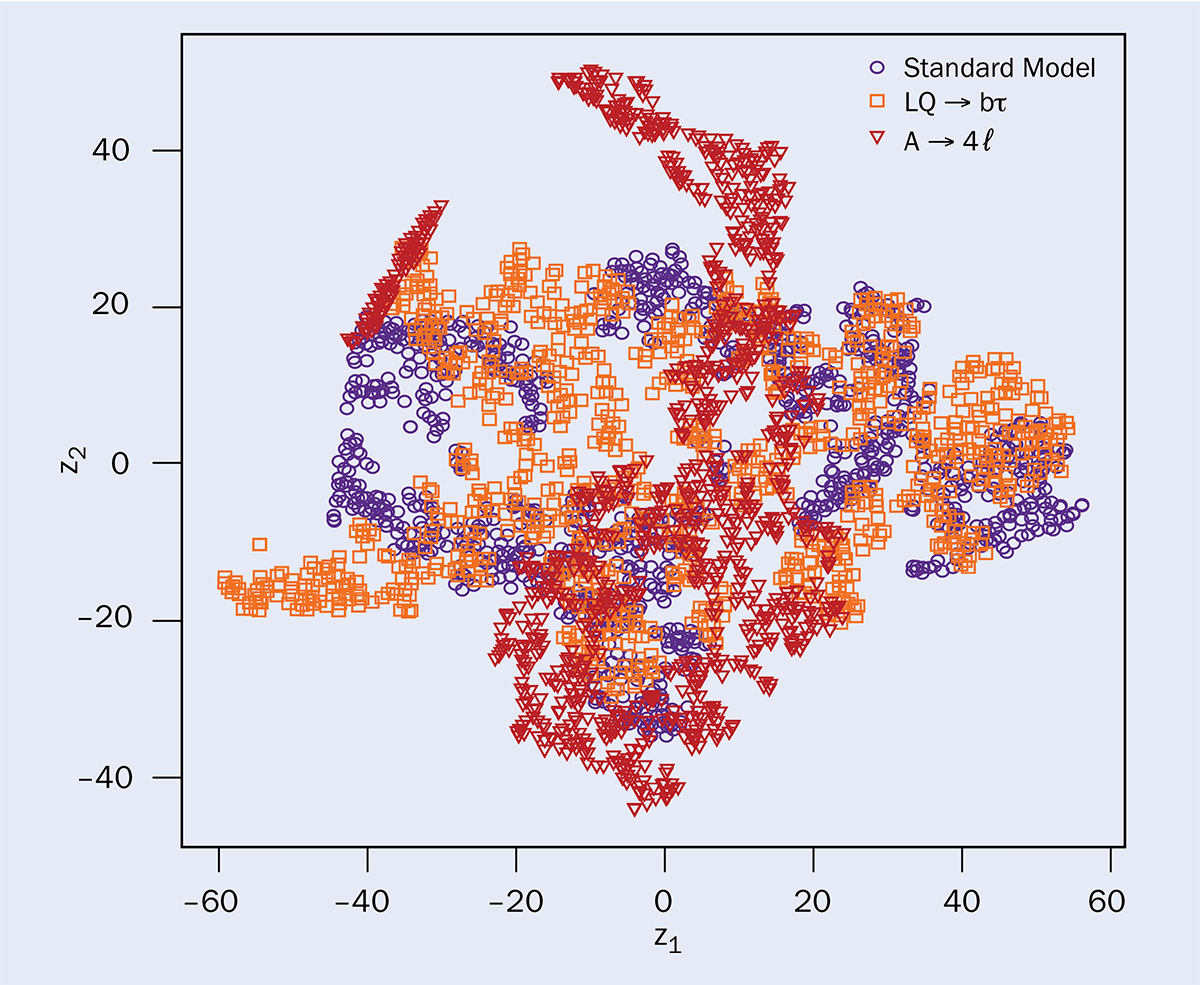
Unsupervised detection of leptoquark and neutral-scalar-boson decays

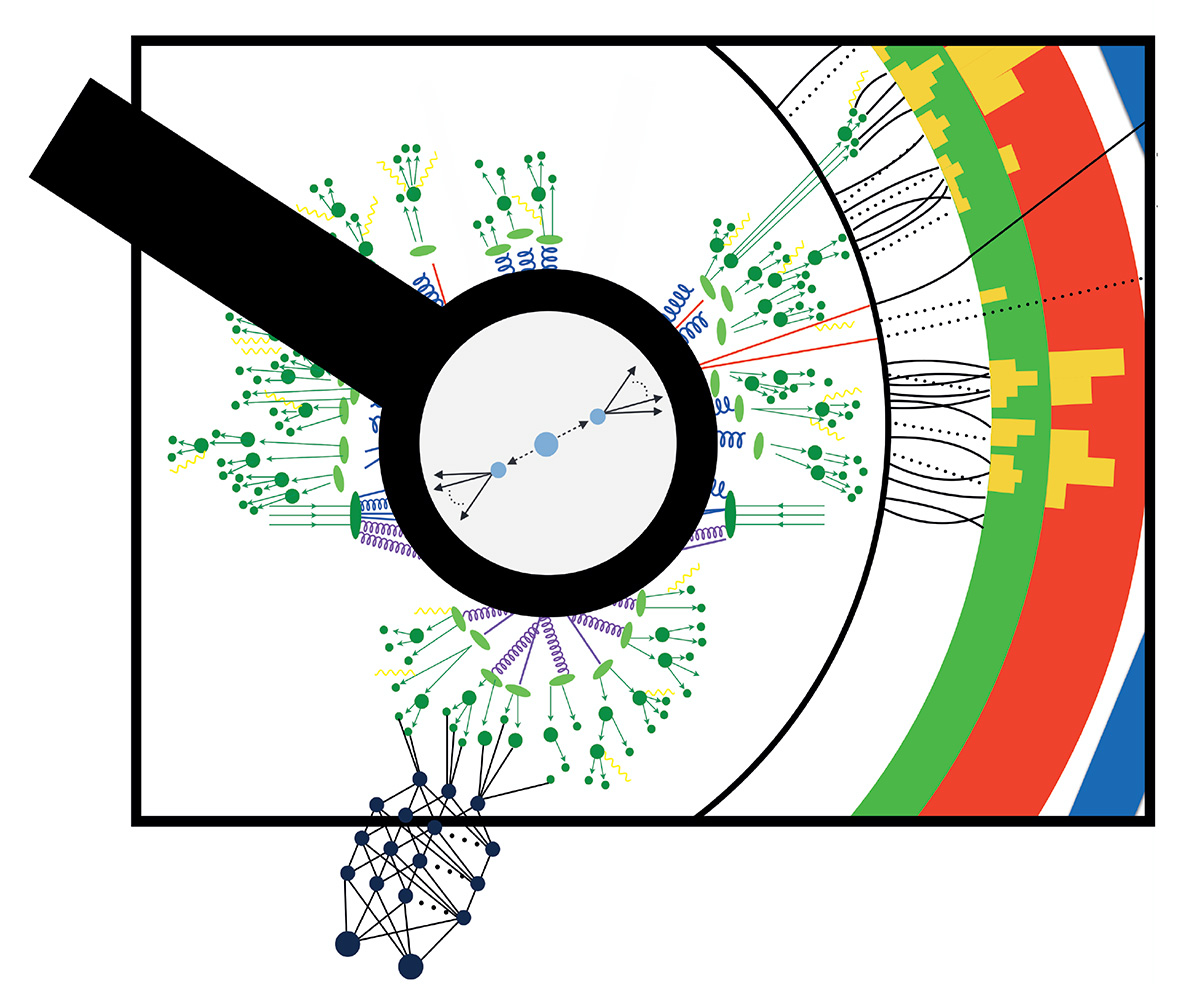
In case a new kind of process happens in an LHC collision, but is discarded by the trigger algorithms serving the traditional physics programme, an anomaly-detection algorithm could save the relevant events, storing them in a special stream of anomalous events (see “Anomaly hunting” figure). The ultimate goal of this approach would be the creation of an “anomaly catalogue” of event topologies for further studies, which could inspire novel ideas for new-physics scenarios to test using more traditional techniques. With an anomaly catalogue, we could return to the first stage of the scientific method, and recover a data-driven alternative approach to the theory-driven investigation that we have come to rely on. 

This idea comes with severe technological challenges. To apply this technique to all collision events, we would need to integrate the algorithm, typically a special kind of neural network called an autoencoder, into the very first stage of the online data selection, the level-one (L1) trigger. The L1 trigger consists of logic algorithms integrated onto custom electronic boards based on field programmable gate arrays (FPGAs) – a highly parallelisable chip that serves as a programmable emulator of electronic circuits. Any L1 trigger algorithm has to run within the order of one microsecond, and take only a fraction of the available computing resources. To run in the L1 trigger system, an anomaly detection network needs to be converted into an electronic circuit that would fulfill these constraints. This goal can be met using the “hls4ml” (high-level synthesis for ML) library – a tool designed by an international collaboration of LHC physicists that exploits automatic workflows. 

Computer-science collaboration

Recently, we collaborated with a team of researchers from Google to integrate the hls4ml library into Google’s “QKeras” – a tool for developing accurate ML models on FPGAs with a limited computing footprint. Thanks to this partnership, we developed a workflow that can design a ML model in concert with its final implementation on the experimental hardware. The resulting QKeras+hls4ml bundle is designed to allow LHC physicists to deploy anomaly-detection algorithms in the L1 trigger system. This approach could practically be deployed in L1 trigger systems before the end of LHC Run 3 – a powerful complement to the anomaly-detection techniques that are already being considered for “offline” data analysis on the traditionally triggered samples.

AI techniques could help the field break beyond the limits of human creativity in theory building

If this strategy is endorsed by the experimental collaborations, it could create a public dataset of anomalous data that could be investigated during the third LHC long shutdown, from 2025 to 2027. By studying those events, phenomenologists and theoretical physicists could formulate creative hypotheses about new-physics scenarios to test, potentially opening up new search directions for the High-Luminosity LHC.

Blind analyses minimise human bias if you know what to look for, but risk yielding diminishing returns when the theoretical picture is uncertain, as is the case in particle physics after the first 10 years of LHC physics. Unsupervised AI techniques such as anomaly detection could help the field break beyond the limits of human creativity in theory building. In the big-data environment of the LHC, they offer a powerful means to move the field back to data-driven discovery, after 50 years of theory-driven progress. To maximise their impact, they should be applied to every collision produced at the LHC. For that reason, we argue that anomaly-detection algorithms should be deployed in the L1 triggers of the LHC experiments, despite the technological challenges that must be overcome to make that happen.
What’s in the box?

A neural network probing a black box of complex final states

The need for innovation in machine learning (ML) transcends any single experimental collaboration, and requires more in-depth work than can take place at a workshop. Data challenges, wherein simulated “black box” datasets are made public, and contestants design algorithms to analyse them, have become essential tools to spark interdisciplinary collaboration and innovation. Two have recently concluded. In both cases, contestants were challenged to use ML to figure out “what’s in the box?”

LHC Olympics

The LHC Olympics (LHCO) data challenge was launched in autumn 2019, and the results were presented at the ML4Jets and Anomaly Detection workshops in spring and summer 2020. A final report summarising the challenge was posted to arXiv earlier this year, written by around 50 authors from a variety of backgrounds in theory, the ATLAS and CMS experiments, and beyond. The name of this community effort was inspired by the first LHC Olympics that took place more than a decade ago, before the start of the LHC. In those olympics, researchers were worried about being able to categorise all of the new particles that would be discovered when the machine turned on. Since then, we have learned a great deal about nature at TeV energy scales, with no evidence yet for new particles or forces of nature. The latest LHC Olympics focused on a different challenge – being able to find new physics in the first place. We now know that new physics must be rare and not exactly like what we expected.

In order to prepare for rare and unexpected new physics, organisers Gregor Kasieczka (University of Hamburg), Benjamin Nachman (Lawrence Berkeley National Laboratory) and David Shih (Rutgers University) provided a set of black-box datasets composed mostly of Standard Model (SM) background events. Contestants were charged with identifying any anomalous events that would be a sign of new physics. These datasets focused on resonant anomaly detection, whereby the anomaly is assumed to be localised – a “bump hunt”, in effect. This is a generic feature of new physics produced from massive new particles: the reconstructed parent mass is the resonant feature. By assuming that the signal is localised, one can use regions away from the signal to estimate the background. The LHCO provided one R&D dataset with labels and three black boxes to play with: one with an anomaly decaying into two two-pronged resonances, one without an anomaly, and one with an anomaly featuring two different decay modes (a dijet decay X → qq and a trijet decay X → gY, Y → qq).  There are currently no dedicated searches for these signals in LHC data.

No labels

About 20 algorithms were deployed on the LHCO datasets, including supervised learning, unsupervised learning, weakly supervised learning and semi-supervised learning. Supervised learning is the most widely used method across science and industry, whereby each training example has a label: “background” or “signal”. For this challenge, the data do not have labels as we do not know exactly what we are looking for, and so strategies trained with labels from a different dataset often did not work well. By contrast, unsupervised learning generally tries to identify events that are rarely or never produced by the background; weakly supervised methods use some context from data to provide noisy labels; and semi-supervised methods use some simulation information in order to have a partial set of labels. Each method has its strengths and weaknesses, and multiple approaches are usually needed to achieve a broad coverage of possible signals.

The Dark Machines data challenge focused on developing algorithms broadly sensitive to non-resonant anomalies

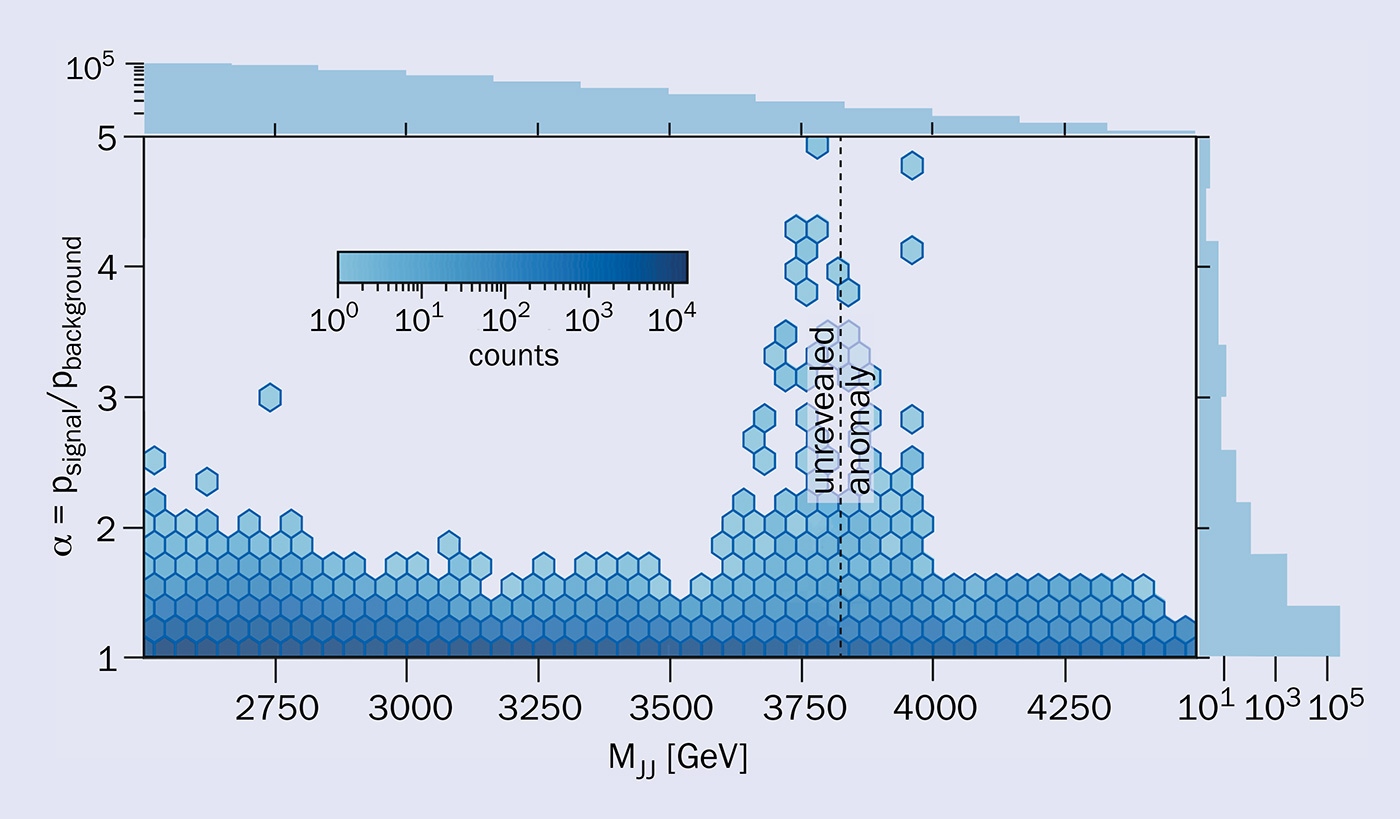
The best performance on the first black box in the LHCO challenge, as measured by finding and correctly characterising the anomalous signals, was by a team of cosmologists at Berkeley (George Stein, Uros Seljak and Biwei Dai) who compared the phase-space density between a sliding signal region and sidebands (see “Olympian algorithm” figure). Overall, the algorithms did well on the R&D dataset, and some also did well on the first black box, with methods that made use of likelihood ratios proving particularly effective. But no method was able to detect the anomalies in the third black box, and many teams reported a false signal for the second black box. This “placebo effect’’ illustrates the need for ML approaches to have an accurate estimation of the background and not just a procedure for identifying signals. The challenge for the third black box, however, required algorithms to identify multiple clusters of anomalous events rather than a single cluster. Future innovation is needed in this department.

Dark Machines

A second data challenge was launched in June 2020 within the Dark Machines initiative. Dark Machines is a research collective of physicists and data scientists who apply ML techniques to understand the nature of dark matter – as we don’t know the nature of dark matter, it is critical to search broadly for its anomalous signatures. The challenge was organised by Sascha Caron (Radboud University), Caterina Doglioni (University of Lund) and Maurizio Pierini (CERN), with notable contributions from Bryan Ostidiek (Harvard University) in the development of a common software infrastructure, and Melissa van Beekveld (University of Oxford) for dataset generation. In total, 39 participants arranged in 13 teams explored various unsupervised techniques, with each team submitting multiple algorithms.

The anomaly score

By contrast with LHCO, the Dark Machines data challenge focused on developing algorithms broadly sensitive to non-resonant anomalies. Good examples of non-resonant new physics include many supersymmetric models and models of dark matter – anything where “invisible” particles don’t interact with the detector. In such a situation, resonant peaks become excesses in the tails of the missing-transverse-energy distribution. Two datasets were provided: R&D datasets including a concoction of SM processes and many signal samples for contestants to develop their approaches on; and a black-box dataset mixing SM events with events from unspecified signal processes. The challenge has now formally concluded, and its outcome was posted on arXiv in May, but the black-box has not been opened to allow the community to continue to test ideas on it.

A wide variety of unsupervised methods have been deployed so far. The algorithms use diverse representations of the collider events (for example, lists of particle four-momenta, or physics quantities computed from them), and both implicit and explicit approaches for estimating the probability density of the background (for example, autoencoders and “normalising flows”). While no single method universally achieved the highest sensitivity to new-physics events, methods that mapped the background to a fixed point and looked for events that were not described well by this mapping generally did better than techniques that had a so-called dynamic embedding. A key question exposed by this challenge that will inspire future innovation is how best to tune and combine unsupervised machine-learning algorithms in a way that is model independent with respect to the new physics describing the signal.

The enthusiastic response to the LHCO and Dark Machines data challenges highlights the important future role of unsupervised ML at the LHC and elsewhere in fundamental physics. So far, just one analysis has been published – a dijet-resonance search by the ATLAS collaboration using weakly-supervised ML – but many more are underway, and these techniques are even being considered for use in the level-one triggers of LHC experiments (see Hunting anomalies with an AI trigger). And as the detection of outliers also has a large number of real-world applications, from fraud detection to industrial maintenance, fruitful cross-talk between fundamental research and industry is possible. 

The LHCO and Dark Machines data challenges are a stepping stone to an exciting experimental programme that is just beginning. 

Stealing theorists’ lunch

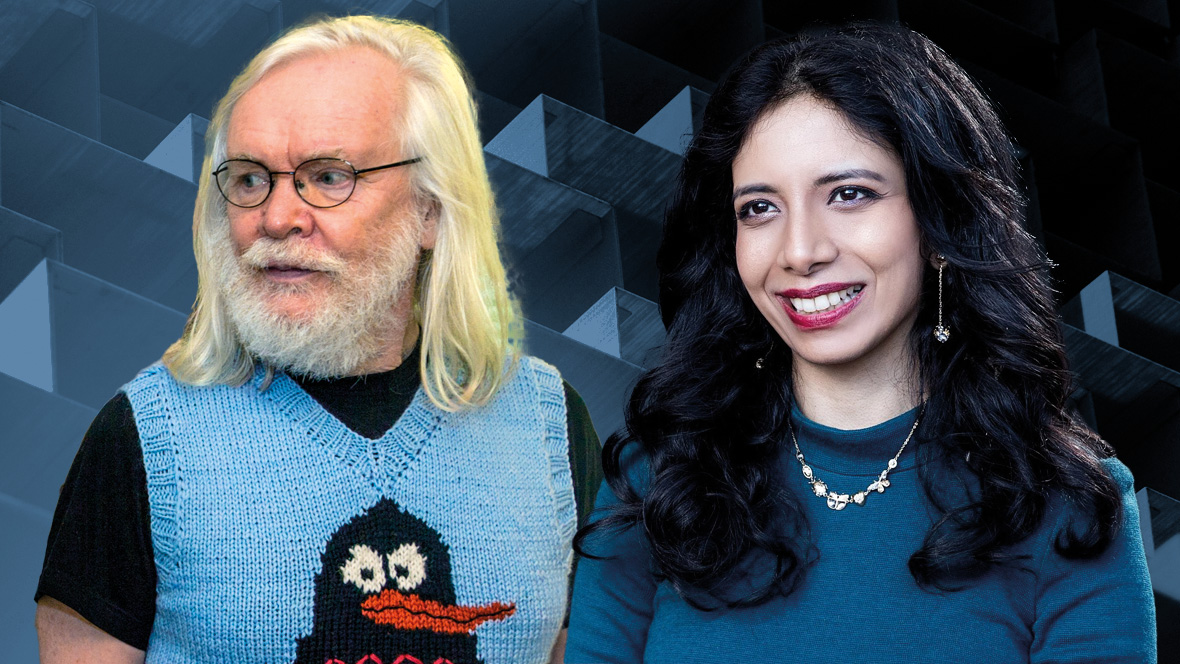
John Ellis and Anima Anandkumar

How might artificial intelligence make an impact on theoretical physics?

John Ellis (JE): To phrase it simply: where do we go next? We have the Standard Model, which describes all the visible matter in the universe successfully, but we know dark matter must be out there. There are also puzzles, such as what is the origin of the matter in the universe? During my lifetime we’ve been playing around with a bunch of ideas for tackling those problems, but haven’t come up with solutions. We have been able to solve some but not others. Could artificial intelligence (AI) help us find new paths towards attacking these questions? This would be truly stealing theoretical physicists’ lunch.

 Anima Anandkumar (AA): I think the first steps are whether you can understand more basic physics and be able to come up with predictions as well. For example, could AI rediscover the Standard Model? One day we can hope to look at what the discrepancies are for the current model, and hopefully come up with better suggestions.

 JE: An interesting exercise might be to take some of the puzzles we have at the moment and somehow equip an AI system with a theoretical framework that we physicists are trying to work with, let the AI loose and see whether it comes up with anything. Even over the last few weeks, a couple of experimental puzzles have been reinforced by new results on B-meson decays and the anomalous magnetic moment of the muon. There are many theoretical ideas for solving these puzzles but none of them strike me as being particularly satisfactory in the sense of indicating a clear path towards the next synthesis beyond the Standard Model. Is it imaginable that one could devise an AI system that, if you gave it a set of concepts that we have, and the experimental anomalies that we have, then the AI could point the way?

 AA: The devil is in the details. How do we give the right kind of data and knowledge about physics? How do we express those anomalies while at the same time making sure that we don’t bias the model? There are anomalies suggesting that the current model is not complete – if you are giving that prior knowledge then you could be biasing the models away from discovering new aspects. So, I think that delicate balance is the main challenge.

 JE: I think that theoretical physicists could propose a framework with boundaries that AI could explore. We could tell you what sort of particles are allowed, what sort of interactions those could have and what would still be a well-behaved theory from the point of view of relativity and quantum mechanics. Then, let’s just release the AI to see whether it can come up with a combination of particles and interactions that could solve our problems. I think that in this sort of problem space, the creativity would come in the testing of the theory. The AI might find a particle and a set of interactions that would deal with the anomalies that I was talking about, but how do we know what’s the right theory? We have to propose some other experiments that might test it – and that’s one place where the creativity of theoretical physicists will come into play.

 AA: Absolutely. And many theories are not directly testable. That’s where the deeper knowledge and intuition that theoretical physicists have is so critical.

Is human creativity driven by our consciousness, or can contemporary AI be creative? 

AA: Humans are creative in so many ways. We can dream, we can hallucinate, we can create – so how do we build those capabilities into AI? Richard Feynman famously said “What I cannot create, I do not understand.” It appears that our creativity gives us the ability to understand the complex inner workings of the universe. With the current AI paradigm this is very difficult. Current AI is geared towards scenarios where the training and testing distributions are similar, however, creativity requires extrapolation – being able to imagine entirely new scenarios. So extrapolation is an essential aspect. Can you go from what you have learned and extrapolate new scenarios? For that we need some form of invariance or understanding of the underlying laws. That’s where physics is front and centre. Humans have intuitive notions of physics from early childhood. We slowly pick them up from physical interactions with the world. That understanding is at the heart of getting AI to be creative.

 JE: It is often said that a child learns more laws of physics than an adult ever will! As a human being, I think that I think. I think that I understand. How can we introduce those things into AI?

Could AI rediscover the Standard Model?

 AA: We need to get AI to create images, and other kinds of data it experiences, and then reason about the likelihood of the samples. Is this data point unlikely versus another one? Similarly to what we see in the brain, we recently built feedback mechanisms into AI systems. When you are watching me, it’s not just a free-flowing system going from the retina into the brain; there’s also a feedback system going from the inferior temporal cortex back into the visual cortex. This kind of feedback is fundamental to us being conscious. Building these kinds of mechanisms into AI is the first step to creating conscious AI.

 JE: A lot of the things that you just mentioned sound like they’re going to be incredibly useful going forward in our systems for analysing data. But how is AI going to devise an experiment that we should do? Or how is AI going to devise a theory that we should test?

 AA: Those are the challenging aspects for an AI. A data-driven method using a standard neural network would perform really poorly. It will only think of the data that it can see and not about data that it hasn’t seen – what we call “zero-short generalisation”. To me, the past decade’s impressive progress is due to a trinity of data, neural networks and computing infrastructure, mainly powered by GPUs [graphics processing units], coming together: the next step for AI is a wider generalisation to the ability to extrapolate and predict hitherto unseen scenarios.

Across the many tens of orders of magnitude described by modern physics, new laws and behaviours “emerge” non-trivially in complexity (see Emergence). Could intelligence also be an emergent phenomenon?

JE: As a theoretical physicist, my main field of interest is the fundamental building blocks of matter, and the roles that they play very early in the history of the universe. Emergence is the word that we use when we try to capture what happens when you put many of these fundamental constituents together, and they behave in a way that you could often not anticipate if you just looked at the fundamental laws of physics. One of the interesting developments in physics over the past generation is to recognise that there are some universal patterns that emerge. I’m thinking, for example, of phase transitions that look universal, even though the underlying systems are extremely different. So, I wonder, is there something similar in the field of intelligence? For example, the brain structure of the octopus is very different from that of a human, so to what extent does the octopus think in the same way that we do?

 AA: There’s a lot of interest now in studying the octopus. From what I learned, its intelligence is spread out so that it’s not just in its brain but also in its tentacles. Consequently, you have this distributed notion of intelligence that still works very well. It can be extremely camouflaged – imagine being in a wild ocean without a shell to protect yourself. That pressure created the need for intelligence such that it can be extremely aware of its surroundings and able to quickly camouflage itself or manipulate different tools.

 JE: If intelligence is the way that a living thing deals with threats and feeds itself, should we apply the same evolutionary pressure to AI systems? We threaten them and only the fittest will survive. We tell them they have to go and find their own electricity or silicon or something like that – I understand that there are some first steps in this direction, computer programs competing with each other at chess, for example, or robots that have to find wall sockets and plug themselves in. Is this something that one could generalise? And then intelligence could emerge in a way that we hadn’t imagined?

Similarly to what we see in the brain, we recently built feedback mechanisms into AI systems

 AA: That’s an excellent point. Because what you mentioned broadly is competition – different kinds of pressures that drive towards good, robust objectives. An example is generative adversarial models, which can generate very realistic looking images. Here you have a discriminator that challenges the generator to generate images that look real. These kinds of competitions or games are getting a lot of traction and we have now passed the Turing test when it comes to generating human faces – you can no longer tell very easily whether it is generated by AI or if it is a real person. So, I think those kinds of mechanisms that have competition built into the objective they optimise are fundamental to creating more robust and more intelligent systems.

 JE: All this is very impressive – but there are still some elements that I am missing, which seem very important to theoretical physics. Take chess: a very big system but finite nevertheless. In some sense, what I try to do as a theoretical physicist has no boundaries. In some sense, it is infinite. So, is there any hope that AI would eventually be able to deal with problems that have no boundaries?

 AA: That’s the difficulty. These are infinite-dimensional spaces… so how do we decide how to move around there? What distinguishes an expert like you from an average human is that you build your knowledge and develop intuition – you can quickly make judgments and find which narrow part of the space you want to work on compared to all the possibilities. That’s the aspect that is so difficult for AI to figure out. The space is enormous. On the other hand, AI does have a lot more memory, a lot more computational capacity. So can we create a hybrid system, with physicists and machine learning in tandem, to help us harness the capabilities of both AI and humans together? We’re currently exploring theorem provers: can we use the theorems that humans have proven, and then add reinforcement learning on top to create very fast theorem solvers? If we can create such fast theorem provers in pure mathematics, I can see them being very useful for understanding the Standard Model and the gaps and discrepancies in it. It is much harder than chess, for example, but there are exciting programming frameworks and data sets available, with efforts to bring together different branches of mathematics. But I don’t think humans will be out of the loop, at least for now.

Quantum gravity in the Vatican

Gabriele Gionti with Pope Francis

“Our job is to be part of the scientific community and show that there can be religious people and priests who are scientists,” says Gabriele Gionti, a Roman Catholic priest and theoretical physicist specialising in quantum gravity who is resident at the Vatican Observatory.

“Our mission is to do good science,” agrees Guy Consolmagno, a noted planetary scientist, Jesuit brother and the observatory’s director. “I like to say we are missionaries of science to the believers.”

Not only missionaries of faith, then, but also of science. And there are advantages.

“At the Vatican Observatory, we don’t have to write proposals, we don’t have to worry about tenure and we don’t have to have results in three years to get our money renewed,” says Consolmagno, who is directly appointed by the Pope. “It changes the nature of the research that is available to us.”

“Here I have had time to just study,” says Gionti, who explains that he was able to extend his research to string theory as a result of this extra freedom. “If you are a postdoc or under tenure, you don’t have this opportunity.”

“I remember telling a friend of mine that I don’t have to write grant proposals, and he said, ‘how do I get in on this?’” jokes Consolmagno, a native of Detroit. “I said that he needed to take a vow of celibacy. He replied, ‘it’s worth it!’.”

Cannonball moment

Clad in T-shirts, Gionti and Consolmagno don’t resemble the priests and monks seen in movies. They are connected to monastic tradition, but do not withdraw from the world. As well as being full-time physicists, both are members of the Society of Jesus – a religious order that traces its origin to 1521, when Saint Ignatius of Loyola was struck in the leg by a cannonball at the Battle of Pamplona. Today they help staff at an institution that was founded in 1891, though its origins arguably date back to attempts to fix the date for Easter in 1582.

“It was at the end of the 19th century that the myth began that the church was anti-science, and they would use Galileo as the excuse,” says Consolmagno, explaining that the Pope at the time, Pope Leo XIII, wanted to demonstrate that faith and science were fully compatible. “The first thing that the Vatican Observatory did was to take part in the Carte du Ciel programme,” he says, hinting at a secondary motivation. “Every national observatory was given a region of the sky. Italy was given one region and the Vatican was given another. So, de facto, the Vatican became seen as an independent nation state.”

Guy Consolmagno poses with a summer student

The observatory quickly established itself as a respected scientific organisation. Though it is staffed by priests and brothers, there is an absolute rule that science comes first, says Consolmagno, and the stereotypical work of a priest or monk is actually a temptation to be resisted. “Day-to-day life as a scientist can be tedious, and it can be a long time until you see a reward, but pastoral life can be rewarding immediately,” he explains.

Consolmagno was a planetary scientist for 20 years before becoming a Jesuit. By contrast, Gionti, who hails from Capua in Italy, joined after his first postdoc at UC Irvine in California. Neither reports encountering professional prejudice as a result of their vocation. “I think that’s a generational thing,” says Consolmagno. “Scientists working in the 1970s and 1980s were more likely to be anti-religious, but nowadays it’s not the case. You are looked on as part of the multicultural nature of the field.”

And besides, antagonism between science and religion is largely based on a false dichotomy, says Consolmagno. “The God that many atheists don’t believe in is a God that we also don’t believe in.”

The observatory’s director pushes back hard on the idea that faith is incompatible with physics. “It doesn’t tell me what science to do. It doesn’t tell me what the questions and answers are going to be. It gives me faith that I can understand the universe using reason and logic.” 

Surprised by CERN

Due to light pollution in Castel Gandolfo, a new outpost of the Vatican Observatory was established in Tucson, Arizona, in 1980. A little later in the day, when the Sun was rising there, I spoke to Paul Gabor – an astrophysicist, Jesuit priest and deputy director for the Tucson observatory. Born in Košice, Slovakia, Gabor was a summer student at CERN in 1992, working on the development of the electromagnetic calorimeter of the ATLAS experiment, a project he later continued in Grenoble, thanks to winning a scholarship at the university. “We were making prototypes and models and software. We tested the actual physical models in a couple of test-beam runs – that was fun,” he recalls.

Gabor was surprised at how he found the laboratory. “It was an important part of my journey, because I was quite surprised that I found CERN to be full of extremely nice people. I was expecting everyone to be driven, ambitious, competitive and not necessarily collaborative, but people were very open,” he says. “It was a really good human experience for me.”

“When I finally caved in and joined the Jesuit order in 1995, I always thought, well, these scientists definitely are a group that I got to know and love, and I would like to, in one way or another, be a minister to them and be involved with them in some way.”

“Something that I came to realise, in a beginning, burgeoning kind of way at CERN, is the idea of science being a spiritual journey. It forms your personality and your soul in a way that any sustained effort does.”

Scientific athletes

“Experimental science can be a journey to wisdom,” says Gabor. “We are subject to constant frustration, failure and errors. We are confronted with our limitations. This is something that scientists have in common with athletes, for example. These long labours tend to make us grow as human beings. I think this point is quite important. In a way it explains my experience at CERN as a place full of nice, generous people.”

Surprisingly, however, despite being happy with life as a scientific religious and religious scientist, Gabor is not recruiting.

“There is a certain tendency to abandon science to join the priesthood or religious life,” he says. “This is not necessarily the best thing to do, so I urge a little bit of restraint. Religious zeal is a great thing, but if you are in the third year of a doctorate, don’t just pack up your bags and join a seminary. That is not a very prudent thing to do. That is to nobody’s benefit. This is a scenario that is all too common unfortunately.”

Consolmagno also offers words of caution. “50% of Jesuits leave the order,” he notes. “But this is a sign of success. You need to be where you belong.”

But Gionti, Consolmagno and Gabor all agree that, if properly discerned, the life of a scientific religious is a rewarding one in a community like the Vatican Observatory. They describe a close-knit group with a common purpose and little superficiality.

“Faith gives us the belief that the universe is good and worth studying,” says Consolmagno. “If you believe that the universe is good, then you are justified in spending your life studying things like quarks, even if it is not useful. Believing in God gives you a reason to study science for the sake of science.”

BASE demonstrates two-trap cooling

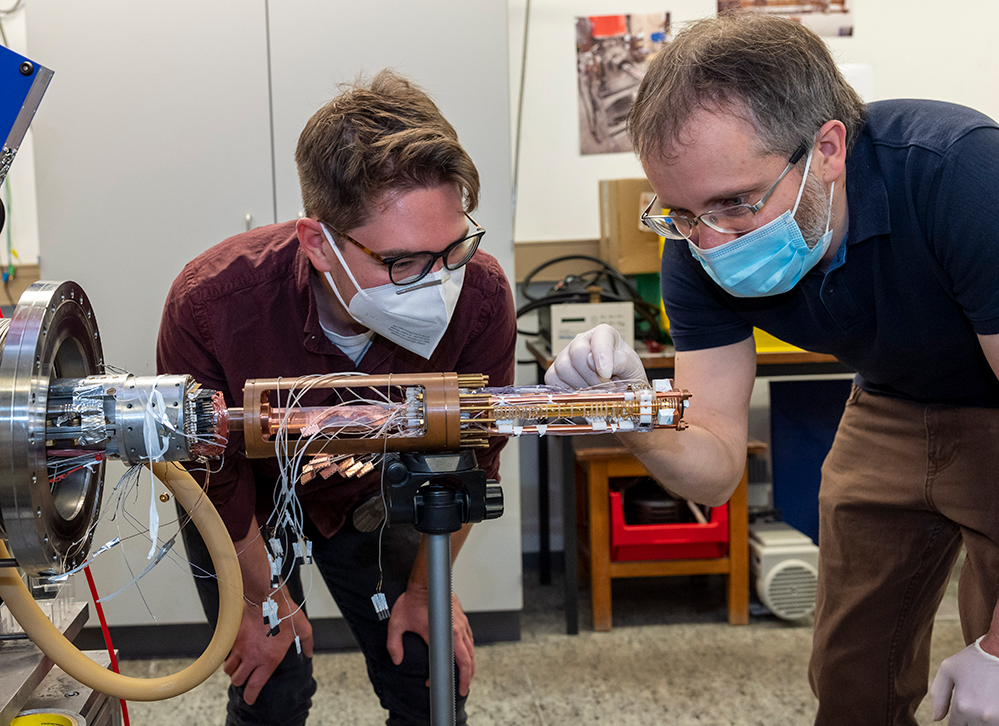
In a significant technological advance for antimatter research, the BASE (Baryon Antibaryon Symmetry Experiment) collaboration has used laser-cooled ions to cool a proton more quickly and to lower temperatures than is possible using existing methods. The new technique, which introduces a separate Penning trap, promises to reduce the time needed to cool protons and antiprotons to sub-Kelvin temperatures from hours to seconds, potentially increasing the sample sizes available for precision matter-antimatter comparisons by orders of magnitude. As reported today in Nature, the collaboration’s test setup at the University of Mainz also reached temperatures approximately 10 times lower than the limit of the established resistive-cooling technique.

“The factor 10 reduction in temperature which has been achieved in our paper is just a first step,” says BASE deputy spokesperson Christian Smorra of the University of Mainz and RIKEN. “With optimised procedures we should be able to reach particle temperatures of order 20 mK to 50 mK, ideally in cooling times of order 10 seconds. Previous methods allowed us to reach 100 mK in 10 hours.”

The new setup consists of two Penning traps separated by 9 cm. One trap contains a single proton. The other contains a cloud of beryllium ions that are laser-cooled using conventional techniques. The proton is cooled as its kinetic energy is transferred through a superconducting resonant electric circuit into the cooler beryllium trap.

Two-trap sympathetic cooling

The proton and the beryllium ions can be thought of as mechanical oscillators within the magnetic and electric fields of the Penning traps, explains lead author Matthew Bohman of the Max Planck Institute for Nuclear Physics in Heidelberg and RIKEN. “The resonant electric circuit acts like a spring, coupling the oscillations — the oscillation of the proton is damped by its coupling to the conventionally cooled cloud of beryllium ions.”

The collaboration’s unique two-trap sympathetic-cooling technique was first proposed in 1990 by Daniel Heinzen and David Wineland. Wineland went on to share the 2012 Nobel prize in physics for related work in manipulating individual particles while preserving quantum information. The use of a resonant electric circuit to couple the two Penning traps is an innovation by the BASE collaboration which speeds up the rate of energy exchange relative to Heinzen and Wineland’s proposal from minutes to seconds. The technique is useful for protons, but game-changing for antiprotons.

Antiproton prospects

A two-trap setup is attractive for antimatter because a single Penning trap cannot easily accommodate particles with opposite charges, and laser-cooled ions are nearly always positively charged, with electrons stripped away. BASE previously cooled antiprotons by coupling them to a superconducting resonator at around 4 K, and painstakingly selecting the lowest energy antiprotons in the ensemble over many hours. 

Our technique shows that you can apply the laser-physics toolkit to exotic particles

Matthew Bohman

“With two-trap sympathetic cooling by laser-cooled beryllium ions, the limiting temperature rapidly approaches that of the ions, in the milli-Kelvin range,” explains Bohman. “Our technique shows that you can apply the laser-physics toolkit to exotic particles like antiprotons: a good antiproton trap looks pretty different from a good laser-cooled ion trap, but if you’re able to connect them by a wire or a coil you can get the best of both worlds.”

The BASE collaboration has already measured the magnetic moment of the antiproton with a record fractional precision of 1.5 parts per billion at CERN’s antimatter factory. When deployed there, two-trap sympathetic cooling has the potential to improve the precision of the measurement by at least a factor of 20. Any statistically significant difference relative to the magnetic moment of the proton would violate CPT symmetry and signal a dramatic break with the Standard Model.

“Our vision is to continuously improve the precision of our matter-antimatter comparisons to develop a better understanding of the cosmological matter-antimatter asymmetry,” says BASE spokesperson Stefan Ulmer of RIKEN. “The newly developed technique will become a key method in these experiments, which aim at measurements of fundamental antimatter constants at the sub-parts-per-trillion level. Further developments in progress at the BASE-logic experiment in Hanover will even allow the implementation of quantum-logic metrology methods to read-out the antiproton’s spin state.”

COMPASS points to triangle singularity

COMPASS

The COMPASS experiment at CERN has reported the first direct evidence for a long-hypothesised interplay between hadron decays which can masquerade as a resonance. The analysis, which was published last week in Physical Review Letters, suggests that the “a1(1420)” signal observed by the collaboration in 2015 is not a new exotic hadron after all, but the first sighting of a so-called triangle singularity.

“Triangle singularities are a mechanism for generating a bump in the decay spectrum that does not correspond to a resonance,” explains analyst Mikhail Mikhasenko of the ORIGINS Cluster in Munich. “One gets a peak that has all features of a new hadron, but whose true nature is a virtual loop with known particles.” 

“This is a prime example of an aphorism which is commonly attributed to Dick Dalitz,” agrees fellow analyst Bernhard Ketzer, of the University of Bonn: “Not every bump is a resonance, and not every resonance is a bump!”

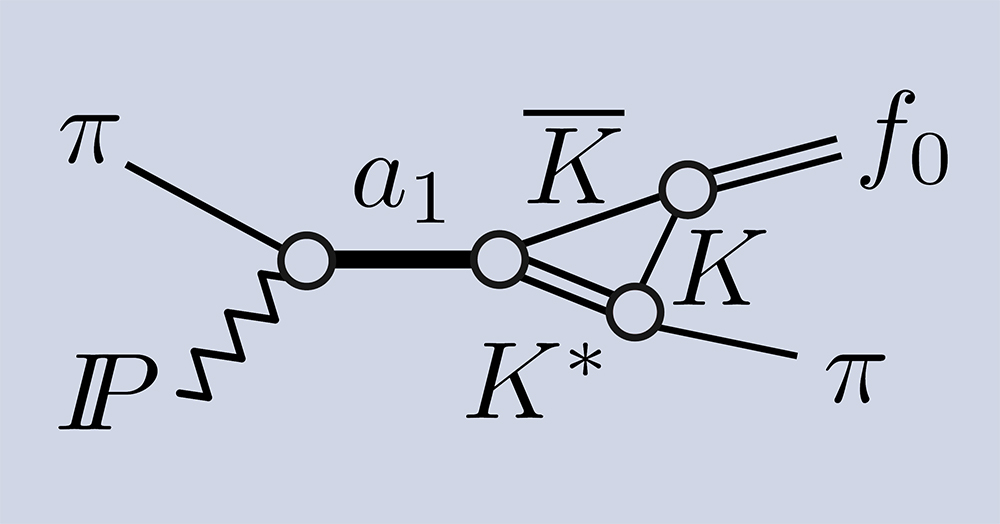
Triangle singularities take their name from the triangle in a Feynman diagram when a secondary decay product fuses with a primary decay product. If the particle masses line up such that the process can proceed as a cascade of on-mass-shell hadron decays, the matrix element is enhanced by a so-called logarithmic singularity which can easily be mistaken for a resonance. But the effect is usually rather small, requiring a record 50 million πp→ππ+πp events, and painstaking work by the COMPASS collaboration to make certain that the a1(1420) signal, which makes up less than 1% of the three-pion sample, wasn’t an artefact of the analysis procedure.

Hadron experiments are reaching the precision needed to see one of the most peculiar multi-body features of QCD

Mikhail Mikhasenko

“The correspondence of this small signal with a triangle singularity is noteworthy because it shows that hadron experiments are finally reaching the precision and statistics needed to see one of the most peculiar features of the multi-body non-perturbative regime of quantum chromodynamics,” says Mikhasenko.

Triangle singularities were dreamt up independently by Lev Landau and Richard Cutkosky in 1959. After five decades of calculations and speculations, physicists at the Institute for High-Energy Physics in Beijing in 2012 used a triangle singularity to explain why intermediate f0(980) mesons in J/ψ meson decays at the BESIII experiment at the Beijing Electron–Positron Collider II were unusually long-lived. In 2019, the LHCb collaboration ruled out triangle singularities as the origin of the pentaquark states they discovered that year. The new COMPASS analysis is the first time that a “bump” in a decay spectrum has been convincingly explained as more likely due to a triangle singularity than a resonance.

Triangle singularity

COMPASS collides a secondary beam of charged pions from CERN’s Super Proton Synchrotron with a hydrogen target in the laboratory’s North Area. In this analysis, gluons emitted by protons in the target excite the incident pions, producing the final state of three charged pions which is observed by the COMPASS spectrometer. Intermediate resonances display a variety of angular momentum, spin and parity configurations. In 2015, the collaboration observed a small but unmistakable “P-wave” (L=1) component of the f0(980)π system with a peak at 1420 MeV and JPC=1++. Dubbed a1(1420), the apparent resonance was suspected to be exotic, as it was narrower, and hence more stable, than the ground-state meson with the same quantum numbers, a1(1260). It was also surprisingly light, with a mass just above the K*K threshold of 1.39 GeV. A tempting interpretation was that a1(1420) might be a dsūs̄ tetraquark, and thus the first exotic hadronic state with no charm quarks, and a charged cousin of the famous exotic X(3872) at the D*D threshold to boot, explains Mikhasenko.

According to the new COMPASS analysis, however, the bump at 1420 MeV can more simply be explained by a triangle singularity, whereby an a1(1260) decays to a K*K pair, and the kaon from the resulting K*→Kπ decay annihilates with the initial anti-kaon to create a light unflavoured f0(980) meson which decays to a pair of charged pions. Crucially, the mass of f0(980) is just above the KK threshold, and the roughly 300 MeV width of the conventional a1(1260) meson is wide enough for the particle to be said to decay to K*K on-mass-shell.

A new resonance is not required. That is phenomenologically significant.

Ian Aitchison

“The COMPASS collaboration have obviously done a very thorough job, being in possession of a complete partial-wave analysis,” says Ian Aitchison, emeritus professor at the University of Oxford, who in 1964 was among the first to propose that triangle graphs with an unstable internal line (in this case the K*) could lead to observable effects. This enables the whole process to occur nearly on-shell for all particles, which in turn means that the singularities of the amplitude will be near the physical region, and hence observable, explains Aitchison. “This is not unambiguous evidence for the observation of a triangle singularity, but the paper shows pretty convincingly that it is sufficient to explain the data, and that a new resonance is not required. That is phenomenologically significant.”

The collaboration now plans further studies of this new phenomenon, including its interference with the direct decay of the a1(1260). Meanwhile, observation by Belle II of the a1(1420) phenomenon in decays of the tau meson to three pions should confirm our understanding and provide an even cleaner signal, says Mikhasenko.

SuperKEKB raises the bar

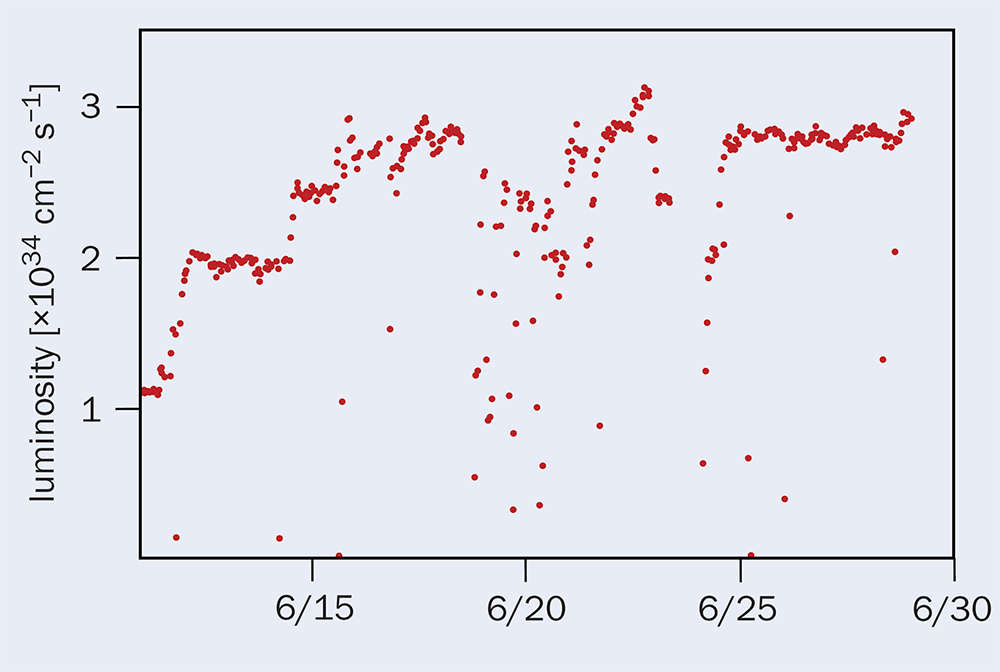
On 22 June, the SuperKEKB accelerator at the KEK laboratory in Tsukuba, Japan set a new world record for peak luminosity, reaching 3.1 × 1034 cm–2 s–1 in the Belle II detector. Until last year, the luminosity record stood at 2.1 × 1034 cm–2 s–1, shared by the former KEKB accelerator and the LHC. In the summer of 2020, however, SuperKEKB/Belle II surpassed this value with a peak luminosity of 2.4 × 1034 cm–2 s–1.

Instantaneous luminosities recorded in Belle II

In physics operation since 2019, SuperKEKB is an innovative nanobeam, asymmetric-energy accelerator complex that collides 7 GeV electrons with 4 GeV positrons, sitting mostly on or near the ϒ(4S) resonance. It uses a large crossing angle and strong focusing at the interaction point (β*y = 1 mm), and has implemented a crab-waist scheme to stabilise beam–beam blowup using carefully tuned sextupole magnets on either side of the interaction point. These innovations have enabled the SuperKEKB team to attain record luminosities with rather modest beam currents: 0.8 A in the low-energy positron ring and 0.7 A in the high-energy electron ring – a product of beam currents 3.5 times smaller than were used at KEKB when its record luminosity was achieved.

SuperKEKB/Belle II is also reaching super-B-factory-level performance in integrated luminosity, achieving the highest values collected in a day (1.96 fb–1), in a week (12 fb–1) and in a month (40 fb–1). These are about 40% higher than the old records of KEKB/ Belle and about twice the level of SLAC’s PEP-II/BaBar, which completed operations more than a decade ago.

SuperKEKB team is making impressive progress towards an eventual target luminosity of 6.5 × 1035 cm–2 s–1

Tom Browder

“Despite the challenges brought by the COVID-19 pandemic and necessary social-distancing protocols, the SuperKEKB team is making impressive progress towards an eventual target luminosity of 6.5 × 1035 cm–2 s–1,” says Belle II physicist Tom Browder of the University of Hawai’i. “The improving performance of SuperKEKB should enable Belle II to collect a large data sample to clarify the intriguing and potentially ground-breaking anomalies in the flavour sector, constrain the dark sector, and search for new physics.”

Jürgen Hans Garlef Körner 1939–2021

Jürgen Körner

Jürgen G Körner, a well-known German theor­etical physicist at the Johannes Gutenberg University in Mainz, passed away after a brief illness on 16 July 2021 at the age of 82. 

Jürgen was born in Hong Kong in 1939, as the fourth child of a Hamburg merchant’s family. After the family returned to Germany in 1949, he attended the secondary school in Blankenese and studied physics at the Technical University of Berlin and the University of Hamburg. He received his PhD from Northwestern University, Illinois, in 1966 under Richard Capps. He then held research positions at Imperial College London, Columbia University, the University of Heidelberg and DESY. He completed his habilitation at the University of Hamburg in 1976. 

In 1982 Jürgen became a professor of theoretical particle physics at Johannes Gutenberg University, where he remained for the rest of his career. His research interests included the phenomenology of elementary particles, heavy-quark physics, spin physics, radiative corrections and exclusive decay processes. He made pioneering contributions to the heavy-quark effective theory with applications to exclusive hadron decays. He also studied mass and spin effects in inclusive and exclusive processes in the Standard Model, and developed the helicity formalism describing angular distributions in exclusive hadron decays. Jürgen’s other notable contributions include the Körner–Pati–Woo theorem providing selection rules for baryon transitions and a relativistic formalism for electromagnetic excitations of nucleon resonances.

Jürgen collaborated with theoretical physicists worldwide and published about 250 papers in leading physics journals, including several influential reviews on the physics of baryons. He also contributed to the development of strong relations between German and Russian particle physicists. Together with colleagues from the Joint Institute for Nuclear Research, Dubna, and leading German and Russian universities he initiated a series of international workshops on problems in heavy-quark physics (Dubna: 1993–2019, Bad Honnef: 1994 and Rostock: 1997). 

Jürgen was a cheerful person, attentive to the needs of his colleagues and friends, and always ready to help. He liked to travel and was actively involved in sports, especially football and cycling. Despite various commitments, he always found time for discussions. He cherished good conversations about physics and made a lasting impact on our lives. We will always remember him. 

Loop Summit convenes in Como

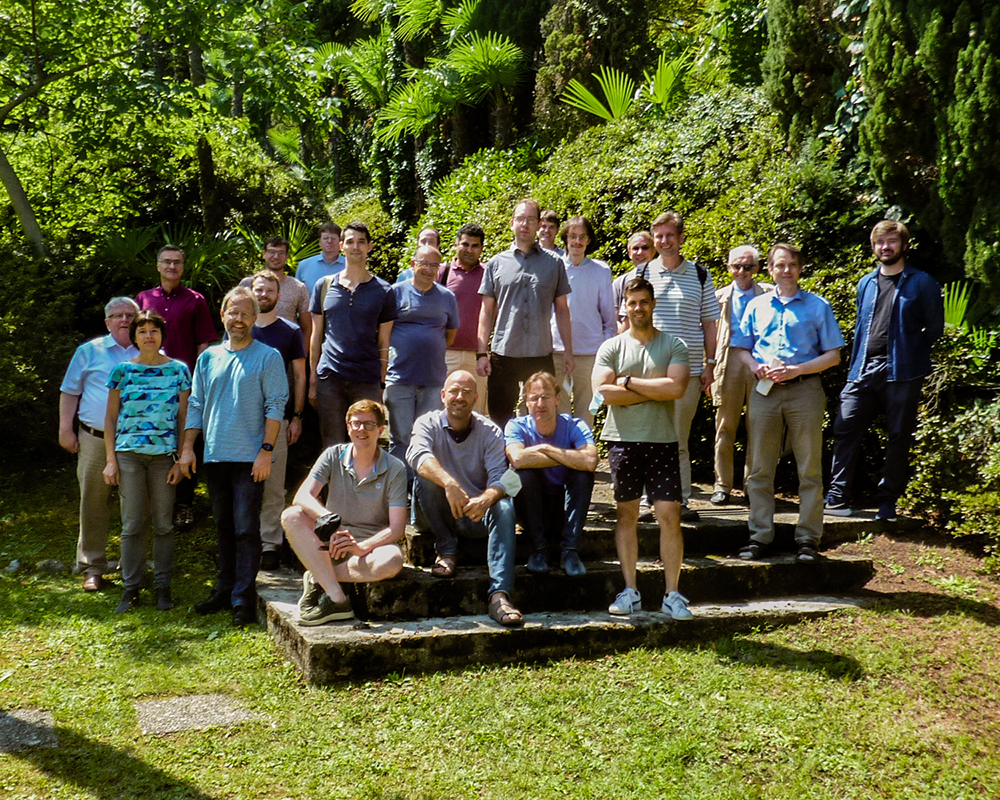
Precision calculations in the Standard Model and beyond are very important for the experimental programme of the LHC, planned high-energy colliders and gravitational-wave detectors of the future. Following two years of pandemic-imposed virtual discussions, 25 invited experts gathered from 26 to 30 July at Cadenabbia on Lake Como, Italy, to present new results and discuss paths into the computational landscape of this year’s “Loop Summit”.

Loop Summit 2021

The conference surveyed topics relating to multi-loop and multi-leg calculations in quantum chromodynamics (QCD) and electroweak processes. In scattering processes, loops are closed particle lines and legs represent external particles. Both present computational challenges. Recent progress on many inclusive processes has been reported at three- or four-loop order, including for deep-inelastic scattering, jets at colliders, the Drell–Yan process, top-quark and Higgs-boson production, and aspects of bottom-quark physics. Much improved descriptions of scaling violations of parton densities, heavy-quark effects at colliders, power corrections, mixed QCD and electroweak corrections, and high-order QED corrections for e+e colliders have also recently been obtained. These will be important for many processes at the LHC, and pave the way to physics at facilities such as the proposed Future Circular Collider (FCC).

Quantum field theory provides a very elegant way to solve Einsteinian gravity

Weighty considerations

Although merging black holes can have millions of solar masses, the physics describing them remains classical, and quantum gravity happened, if at all, shortly after the Big Bang. Nevertheless, quantum field theory provides an elegant way to solve Einsteinian gravity. At this year’s Loop Summit, perturbative approaches to gravity were discussed that use field-theoretic methods at the level of the 5th and 6th post-Newtonian approximations, where the nth post-Newtonian order corresponds to a classical n-loop calculation between black-hole world lines. These calculations allow predictions of the binding energy and periastron advance of spiralling-in pairs of black holes, and relate them to gravitational-wave effects. In these calculations, the classical loops all link to world lines in classical graviton networks within the framework of an effective-field-theory representation of Einsteinian gravity.

Other talks discussed important progress on advanced analytic computation technologies and new mathematical methods such as computational improvements in massive Dirac-algebra, new ways to calculate loop integrals analytically, new ways to deal consistently with polarised processes, the efficient reduction of highly connected systems of integrals, the solution of gigantic systems of differential equations, and numerical methods based on loop-tree duality. All these methods will decrease the theory errors for many processes due to be measured in the high-luminosity phase of the LHC, and beyond.

Half of the meeting was devoted to developing new ideas in subgroups. In-person discussions are invaluable for highly technical discussions such as these — there is still no substitute for gathering around the blackboard informally and jotting down equations and diagrams. The next Loop Summit in this triennial series will take place in summer 2024.

CERN to provide two DUNE cryostats

DUNE

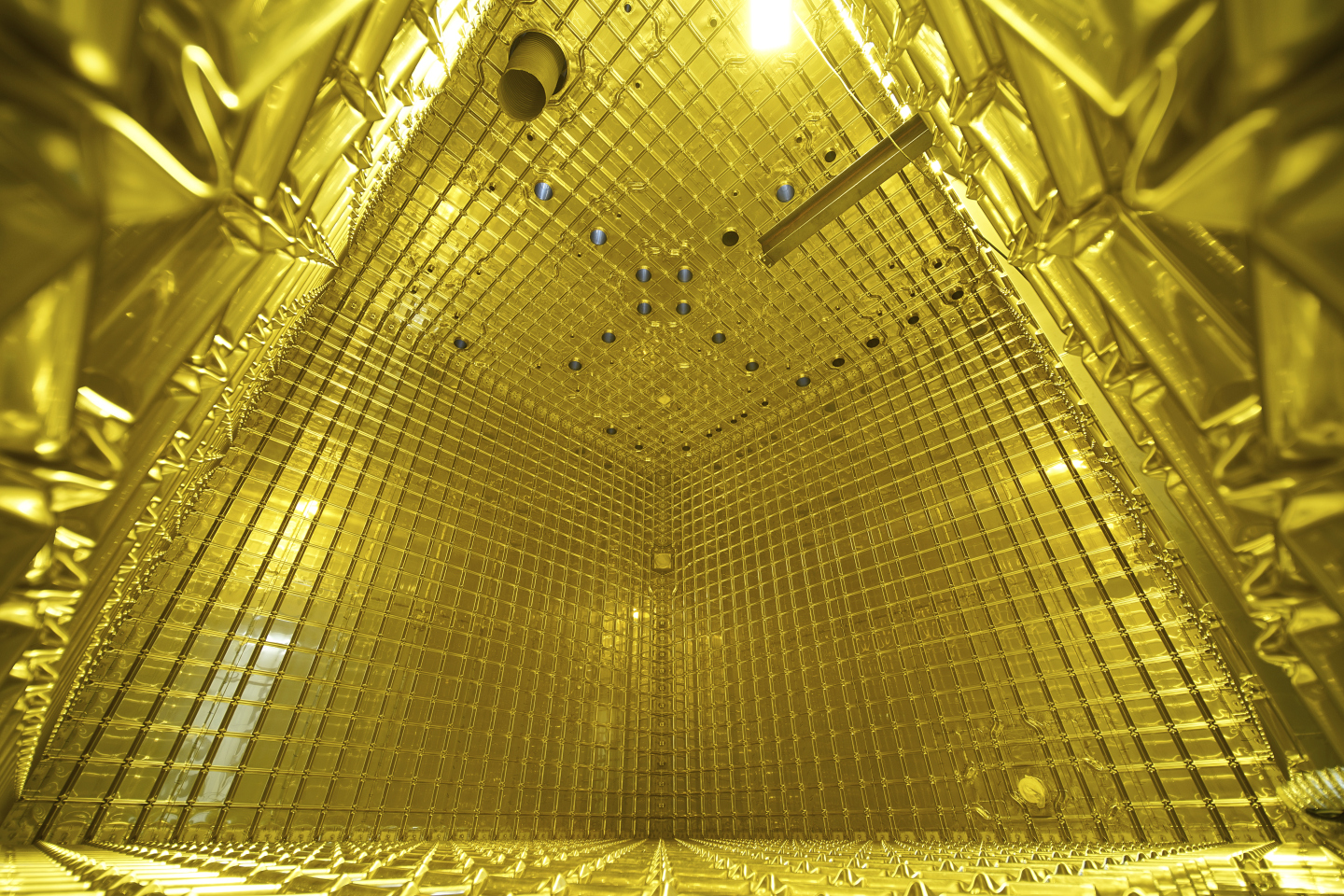
The Deep Underground Neutrino Experiment (DUNE) in the US is set to replicate that marvel of model-making, the ship-in-a-bottle, on an impressive scale. More than 3000 tonnes of steel and other components for DUNE’s four giant detector modules, or cryostats, must be lowered 1.5 km through narrow shafts beneath the Sanford Lab in South Dakota, before being assembled into four 66 × 19 × 18 m3 containers. And the maritime theme is more than a metaphor: to realise DUNE’s massive cryostats, each of which will keep 17.5 kt of liquid argon (LAr) at a temperature of –200°, CERN is working closely with the liquefied natural gas (LNG) shipping industry.

Since it was established in 2013, CERN’s Neutrino Platform has enabled significant European participation in long-baseline neutrino experiments in the US and Japan. For DUNE, which will beam neutrinos 1300 km through the Earth’s crust from Fermilab to Sanford, CERN has built and operated two large-scale prototypes for DUNE’s LAr time-projection chambers (TPCs). All aspects of the detectors have been validated. The “ProtoDUNE” detectors’ cryostats will now pave the way for the Neutrino Platform team to design and engineer cryostats that are 20 times bigger. CERN had already committed to build the first of these giant modules. In June, following approval from the CERN Council, the organisation also agreed to provide a second.

Scaling up

Weighing more than 70,000 tonnes, DUNE will be the largest ever deployment of LAr technology, which serves as both target and tracker for neutrino interactions, and was proposed by Carlo Rubbia in 1977. The first large-scale LAr TPC – ICARUS, which was refurbished at CERN and shipped to Fermilab’s short-baseline neutrino facility in 2017 – is a mere twentieth of the size of a single DUNE module.

Scaling LAr technology to industrial levels presents several challenges, explains Marzio Nessi, who leads CERN’s Neutrino Platform. Typical cryostats are carved from big chunks of welded steel, which does not lend itself to a modular design. Insulation is another challenge. In smaller setups, a vacuum installation comprising two stiff walls would be used. But at the scale of DUNE, the cryostats will deform by tens of cm when cooled from room temperature, potentially imperilling the integrity of instrumentation, and leading CERN to use an active foam with an ingenious membrane design.

The nice idea from the liquefied-natural-gas industry is to have an internal membrane which can deform like a spring

Marzio Nessi

“The nice idea from the LNG industry is that they have found a way to have an internal membrane, which can deform like a spring, as a function of the thermal conditions. It’s a really beautiful thing,” says Nessi. “We are collaborating with French LNG firm GTT because there is a reciprocal interest for them to optimise the process. They never went to LAr temperatures like these, so we are both learning from each other and have built a fruitful ongoing collaboration.”

Having passed all internal reviews at CERN and in the US, the first cryostat is now ready for procurement. Several different industries across CERN’s member states and beyond are involved, with delivery and installation at Sanford Lab expected to start in 2024. The cryostat is only one aspect of the ProtoDUNE project: instrumentation, readout, high-voltage supply and many other aspects of detector design have been optimised through more than five years of R&D. Two technologies were trialled at the Neutrino Platform: single- and dual-phase LAr TPCs. The single-phase design has been selected as the design for the first full-size DUNE module. The Neutrino Platform team is now qualifying a hybrid single/dual-phase version based on a vertical drift, which may prove to be simpler, more cost effective and easier-to-install.

Step change

In parallel with efforts towards the US neutrino programme, CERN has developed the BabyMIND magnetic spectrometer, which sandwiches magnetised iron and scintillator to detect relatively low-energy muon neutrinos, and participates in the T2K experiment, which sends neutrinos 295 km from Japan’s J-PARC accelerator facility to the Super-Kamiokande detector. CERN will contribute to the upgrade of T2K’s near detector, and a proposal has been made for a new water Cherenkov test-beam experiment at CERN, to later be placed about 1 km from the neutrino beam source of the Hyper Kamiokande experiment . Excavation of underground caverns for Hyper Kamiokande and DUNE has already begun.

DUNE and Hyper-Kamiokande, along with short-baseline experiments and major non-accelerator detectors such as JUNO in China, will enable high-precision neutrino-oscillation measurements to tackle questions such as leptonic CP violation, the neutrino mass hierarchy, and hints of additional “sterile” neutrinos, as well as a slew of questions in multi-messenger astronomy. Entering operation towards the end of the decade, Hyper-Kamiokande and DUNE will mark a step-change in the scale of neutrino experiments, demanding a global approach.

“The Neutrino Platform has become one of the key projects at CERN after the LHC,” says Nessi. “The whole thing is a wonderful example – even a prototype – for the global participation and international collaboration that will be essential as the field strives to build ever more ambitious projects like a future collider.”

bright-rec iop pub iop-science physcis connect