High-energy physics labs like CERN rely on the products and services of countless hi-tech companies, many of whom were represented at this year’s Big Science Business Forum, held in Granada, Spain, from 4–7 October 2022.
In this video, you can hear from Kacper Matuszyński, sales manager for Teledyne SP Devices, which makes high-performance digitisers for data acquisition. Based in Sweden, the company has been part of the multi-billion-dollar Teledyne Technologies since 2017.
“We specialise in high-speed systems, focusing on niches such as mass spectrometry, lidar or medical imaging,” says Matuszyński, speaking at the meeting in Granada. “We are a highly R&D-focused company, developing new products and offering our customised services.”
At a ceremony in the CERN Globe on 27 September, the winners of “Mining the Future” – a competition co-organised by CERN and the University of Leoben to identify the best way to handle excavated materials from the proposed Future Circular Collider (FCC) project – were announced. Launched in June 2021 in the frame of the European Union co-funded FCC Innovation Study, Mining the Future invited experts beyond the physics community to seek sustainable ways of reusing the heterogeneous sedimentary rock that would need to be excavated for the FCC infrastructure, which is centered on a 91 km-circumference tunnel in the Geneva basin. Twelve proposals, submitted by consortia of universities, major companies and start-ups, were reviewed based on their technological readiness, innovative potential and socioeconomic impact.
Following final pitches in the Globe by the four shortlisted entrants, a consortium led by Swiss firm BG Ingenieurs Conseils was awarded first prize – including support to the value of €40,000 to bring the technology to maturity – for their proposal “Molasse is the New Ore”. Using a near real-time flow analysis that has been demonstrated in cement plants, the proposal would see excavated materials immediately identified and separated for further processing on-site, treating them not as waste that needs to be managed and thereby serving environmental objectives and efficiency targets.
The runners-up were proposals led by: Amberg (to sort, characterise and redistribute the molasse into fractions of known compositions and recycle each material on a large scale locally); Briques Technique Concept (to produce bricks from the excavated material for the construction of nearby buildings); and Edaphos (to process the molasses into topsoil-like material in a process known as soil conditioning). Although only one winner was chosen, it emerged during the ceremony that an integrated approach of all four shortlisted scenarios would be a valid scenario for managing the estimated 7–8 million m3 of molasse materials required for the FCC construction project.
“This is a key ingredient for the FCC feasibility study while also creating business opportunities for applying these technologies in different markets,” said competition creator Johannes Gutleber of CERN. “The proposals submitted in the course of the contest show that designing a new research infrastructure acts as an amplifier of ideas for society at large.”
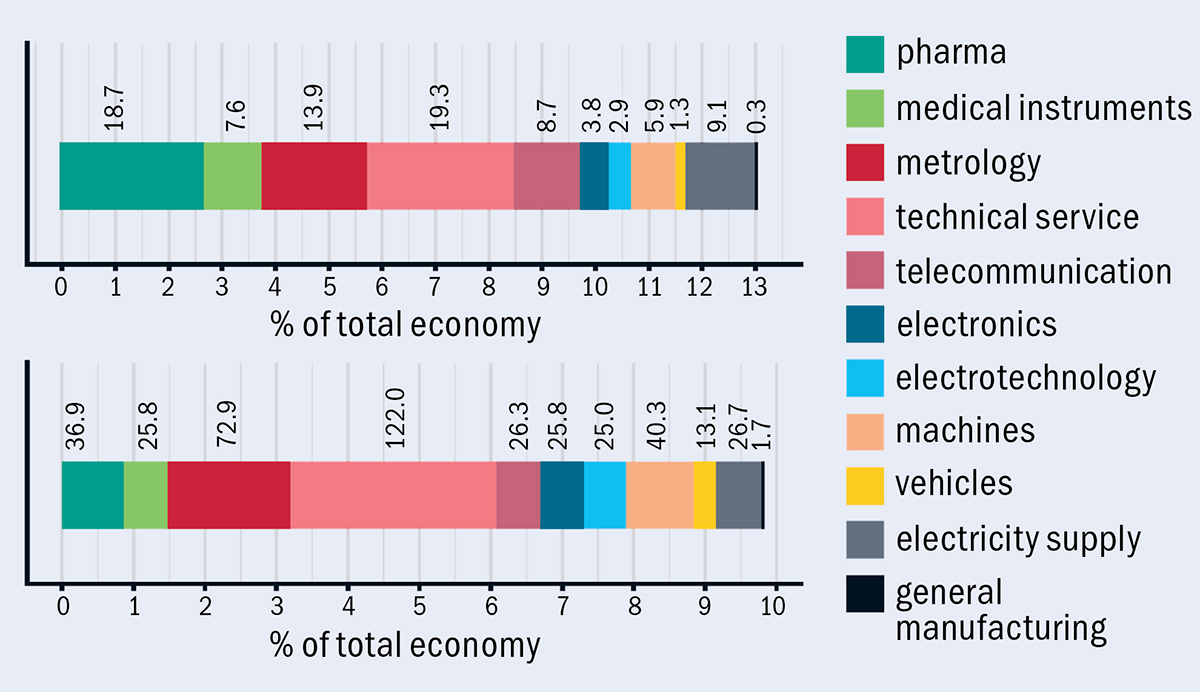
Physics-based industries are as important to the Swiss economy as production or trade, concludes a new report by the Swiss Physical Society (SPS). Seeking to determine the impact of physics on Swiss society, and motivated by a similar Europe-wide study completed in 2019 by the European Physical Society, the SPS team, with support from the Swiss Academy of Natural Sciences and Swiss service-provider IMSD, carried out a statistical analysis revealing key indicators of the national value of physics.
Currently, states the report, the turnover of physics-based industries (PBI) in Switzerland is estimated to exceed CHF 274 billion in revenue, and is expected to grow further. PBI, defined as those industries that are strongly reliant on modern technologies developed by physicists, were divided into 11 categories ranging from pharmaceuticals and medical instruments to electricity supply and general manufacturing. The share of PBI in Switzerland’s gross value added (GVA) was found to be CHF 91.5 billion, or 13% of the total for 2019, while the number of full-time equivalent jobs was 417,000 (9.8%). Furthermore, the specific GVA for PBI increased by 6.3% from 2015 to 2019 – almost three times higher than the average increase among all economic-activity sectors during the same period.
Innovative ideas that come out of fundamental, curiosity-driven research are at the source of what leads to success in society
Hans Peter Beck
Not included in these figures are the contributions of physicists who are employed in other industries, nor additional economic impact due to downstream effects such as household spending associated with economic activity in PBI. Estimating the GVA multiplier associated with the impact of PBI to be between 2.31 and 2.49, the report concludes that every CHF 1.00 of direct physics-related output contributes CHF 2.31 to 2.49 to the economy-wide output. Beyond economic impact, the report also evaluated the contribution of education and innovation to Swiss society, and highlighted ways in which to address the shortage of skilled workers and the gender gap.
“The impact physics has on society has been studied multiple times in a variety of countries and all arrive at the same conclusion: economic success in a modern, technology-driven society is the fruit of long-term support for physics in education and research,” says former SPS president Hans Peter Beck. “Innovative ideas that come out of fundamental, curiosity-driven research are at the source of what leads to success in society.”
In September, CERN approved a new policy for open science, with immediate effect. Developed by the Open Science Strategy Working Group (OSWG), which includes members from CERN departments and experiments, the policy aims to make all CERN research fully accessible, reproducible, inclusive, democratic and transparent for both researchers and wider society.
Open science has always been one of CERN’s key values, dating back to the signing of the CERN Convention at UNESCO in 1952. The new policy follows the 2020 update of the European Strategy for Particle Physics, which highlighted the importance of open science, and UNESCO’s Recommendation on Open Science, published in 2021. It encompasses the existing policies for open access and open data, which make all research papers and experimental data publicly available. It also brings together other existing elements of open science – open-source software and hardware, research integrity, open infrastructure and research assessment (which make research reliable and reproducible) and training, outreach and citizen science, which aim to educate and create dialogue with the next generation of researchers and the public.
“The publication of the Open Science Policy gives a solid framework in which the popular suite of open-source tools and services provided by CERN, including Zenodo, Invenio and REANA, can continue to grow and support the adoption of open-science practices, not only within physics but also across the globe’s research communities,” said Enrica Porcari, head of CERN’s IT department.
The OSWG will continue to assess how open science evolves at CERN, developing the policy in accordance with new best practices. Alongside this, a new open-science report will be published each year, showing CERN’s continued commitment to the initiative.
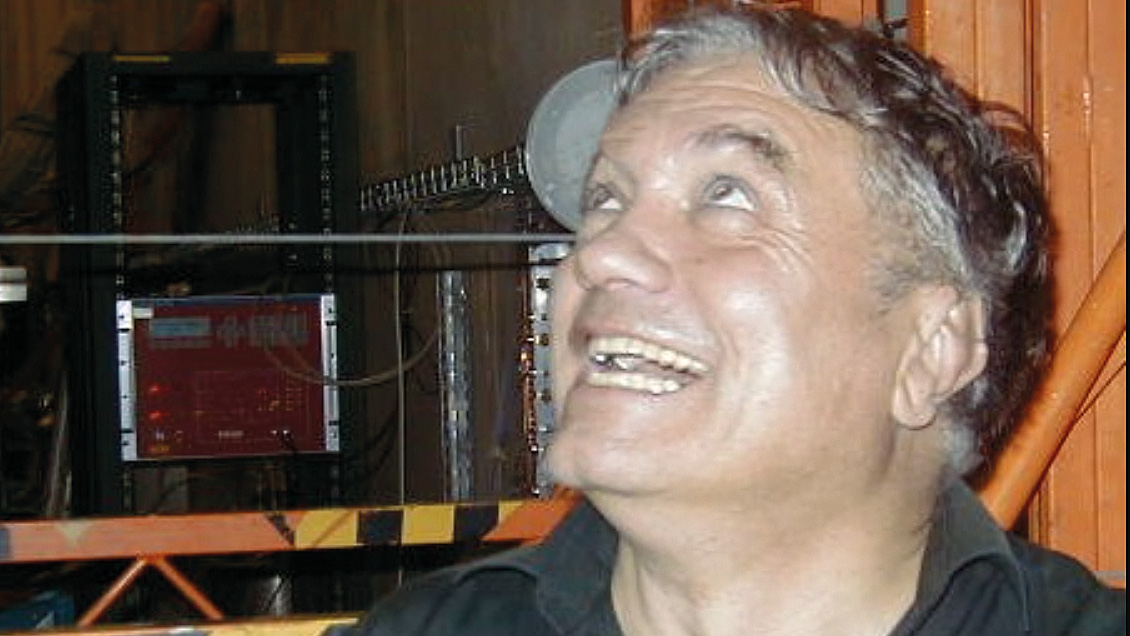
Alain Magnon, a well-known French nuclear physicist and long-serving spokesperson of the COMPASS collaboration at CERN (2003–2010), passed away on 18 March 2022. Retired from IRFU CEA Saclay for more than 10 years, he remained an enthusiastic COMPASS member, valuably participating in the activities of the Illinois and Matrivani groups. In recent years he was an active contributor to the Physics Beyond Colliders working group and to the MUonE project at CERN.
After graduating as an engineer from the École centrale des arts et manufactures in Paris in the late 1960s, Alain joined the nuclear physics division at Saclay where he worked on the first prototypes of multi-wire proportional chambers. Interested in continuing his career as a nuclear physicist, he later moved to the University of Chicago to carry out his PhD thesis work on the hyperfine structure of muonium, under the supervision of Val Telegdi.
Returning to Saclay, Alain played a leading role in measurements of the muon lifetime and capture rates, resulting in one of the most precise determinations of the Fermi weak-coupling constant. These measurements were later extended to both positive and negatively charged muons using an ultra-pure liquid hydrogen target. Mastering advanced cryogenic and vacuum technologies, Alain worked hard to reduce the impurity level of the target to negligible values. He also participated in one of the earliest measurements of the pion electromagnetic radius in coincidence (e, e′π) experiments. Later, Alain contributed to one of the first experiments on parity-violation at the MIT–Bates accelerator under the direction of Vernon Hughes. As a member of the (e, e′p) group at Saclay, he devoted great efforts to measuring the proton form factor within the 40Ca nucleus, providing evidence that the bound nucleon form factor has the same Q2 dependence as that of the free nucleon.
At the beginning of the 1990s, Alain switched to high-energy muon scattering. He made important contributions to the SMC polarised target and served as the contact for the collaboration. Later, he became one of the founding members of the COMPASS experiment. As head of the Saclay group, he proposed and led the project for the construction of large-sized drift chambers. He also coordinated the crucial Saclay–CERN work to repair and test the COMPASS large-acceptance superconducting magnet. Project and group leader, accomplished detector expert and tenacious spokesperson, Alain Magnon played an essential role in the success of COMPASS as a unique experiment and as a renowned international collaboration.
All of his colleagues and friends will miss Alain and his rigorous and resolute approach to instrumentation and scientific research.
Active galactic nuclei (AGN) are one of the most studied astrophysical objects. Known to be the brightest persistent sources of photons in the radio to gamma- ray spectrum, they are also thought to be responsible for high-energy cosmic rays and neutrinos. As such, they play an important role in the universe and its evolution.
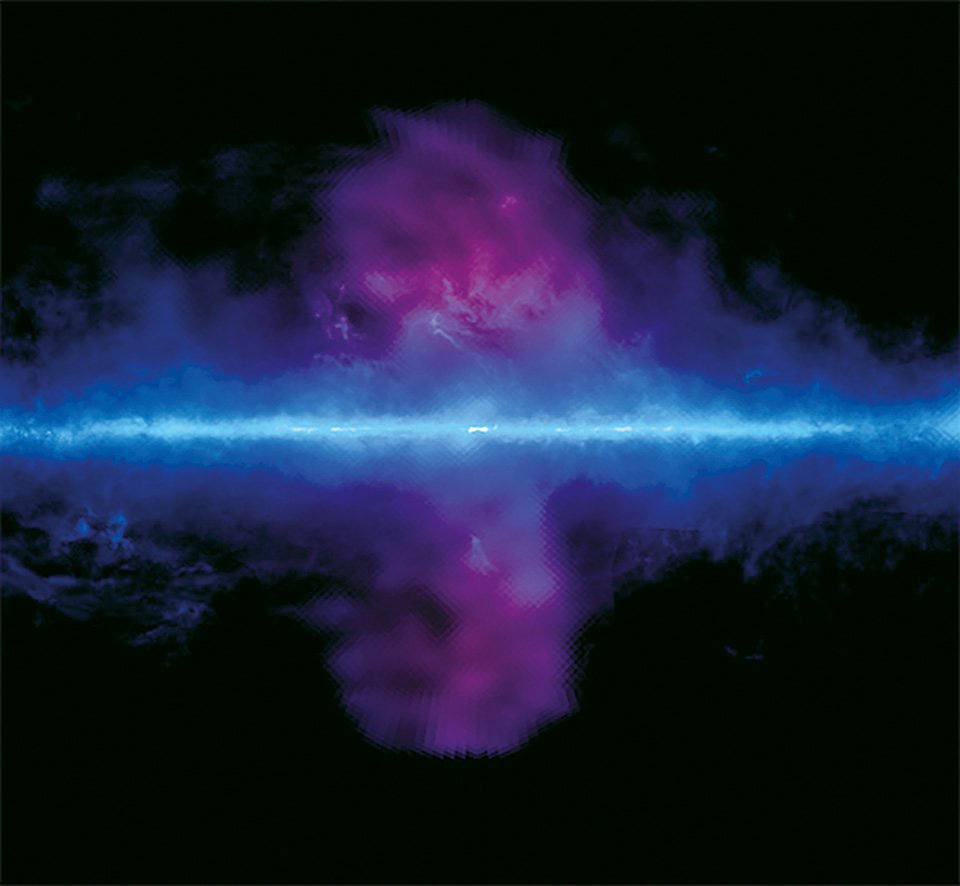
AGNs are galaxies in which the supermassive black hole at their centre is accreting matter, thereby producing violent jets responsible for the observed emissions. While our galaxy has a supermassive black hole at its centre, it is currently not accreting matter and therefore the nucleus of the Milky Way is not active. Strong hints of past activity were, however, discovered using the Fermi–LAT satellite in 2010. In particular, the data showed two giant gamma-ray emitting bubbles – now known as the Fermi bubbles – extending from the galactic centre and covering almost-half of the sky (see image). The exact origin of the giant plasma lobes remains to be understood. However, their position and bipolar nature point towards an origin in the Milky Way’s centre several million years ago, likely during a period of high activity in the galactic nucleus.
A new study led by Trisha Ashley from the Space Telescope Science Institute, Baltimore, brings a fresh perspective on the origin of these structures. Her team focused on the chemical composition of gas clouds inside the bubbles using UV absorption data collected by the Hubble Space Telescope and Green Bank Telescope. Based on their location and movement, these high-velocity clouds had been assumed to originate in the disk of the Milky Way before being swept up as the bubbles were emitted from the galactic centre. However, measurements of the clouds’ elemental makeup cast doubt on this assumption.
UV surprise
Gas clouds from the galactic disk should have a similar chemical composition (referred to as metallicity by astronomers) to those that once collapsed into stars like the Sun. In the galactic disk, the abundance of elements heavier than hydrogen (high metallicity) is expected to be higher thanks to several generations of stars responsible for the production of such elements, whereas in the galactic halo the metallicity is expected to be lower due to a lack of stellar evolution. To measure the chemical composition of the gas clouds, Ashley and her team looked at the UV spectra from sources behind them to see the induced absorption lines. To their surprise, they found not only clouds with high metallicity but also those with a lower metallicity, matching that of galactic halo gas, thereby implying a different origin for these clouds. Suggestions that the second class of clouds is a result of heavy clouds accumulating low-metallicity gases are unlikely to hold, as the time it would take to absorb these gases is significantly longer than the age of the Fermi bubbles. Instead, it appears that while the bubbles did drag along gas clouds from the galactic plane, they also swept up existing halo gas clouds as they expanded outwards.
These results imply that events such as those which produced the Fermi bubbles play an important role in gas accumulation in a galactic plane. They remove gas from the galactic disk, while in parallel, push back gas flowing into the galactic disk from the halo. As less gas reaches the disk, star formation gets suppressed, and as such, these events play an important role in galaxy evolution. Since studying small-scale details such as gas clouds in other galaxies is impossible, these results provide a unique insight into our own galaxy as well as into galaxy evolution in general.
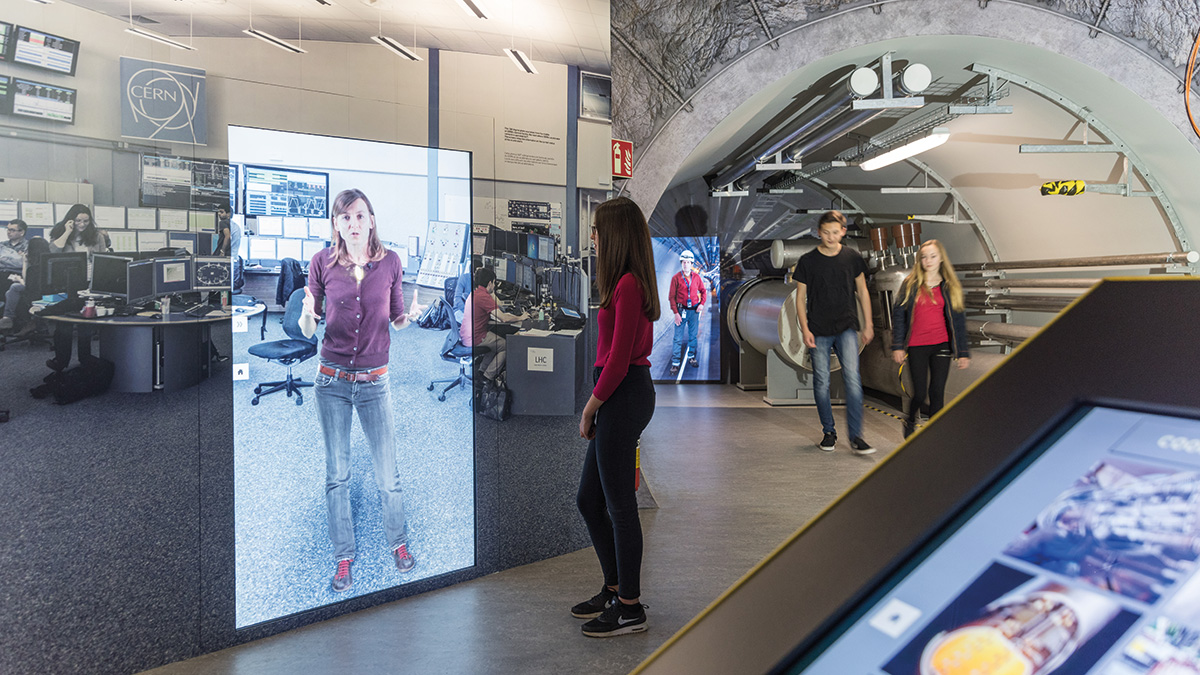
Having engaged innumerable visitors in the world of particle physics for the past 32 years, the CERN Microcosm closed its doors for the last time on 18 September in preparation for CERN’s new flagship Science Gateway project, opening in 2023. The well-loved exhibition space opened to the public in 1990 to help CERN share its research openly, offering a glimpse behind the scenes to both tourists and schools alike.
Over the years, the exhibitions have evolved considerably. The first version of Microcosm included an exhibition by the European Space Agency, highlighting the strong ties between CERN and other European research organisations, which continue today through the EIROforum network. In 1997 CERN Director-General Chris Llewellyn Smith inaugurated a revamped exhibition with content in four languages and stories of new projects such as the LHC. Two years later, a new exhibition was added to Microcosm’s portfolio, telling the story of research on the weak force, with large pieces of the Antiproton Accumulator and the UA1 and UA2 detectors. The 2000s brought hands-on experimentation for the first time and a demo area for science shows. In 2014 S’Cool LAB arrived, home to the expanding programme of experimentation for high-school students and teachers. And in 2015 the latest version of Microcosm opened, with new exhibitions offering a behind-the-scenes tour of the lab, together with realistic audiovisual content of scientists and engineers.
In recent years, Microcosm has also made great strides towards improving accessibility, with wheelchair-accessible design, signing and subtitling for the deaf and hard of hearing, and tactile content for the visually impaired – an effort that will be continued and strengthened at Science Gateway. “Microcosm has been strongly supported by many at CERN over the years,” says Emma Sanders, head of exhibitions at CERN. “I suspect I won’t be the only one to feel a little emotional on its closure, but we all look forward to the next step, with the opening of Science Gateway next June.”
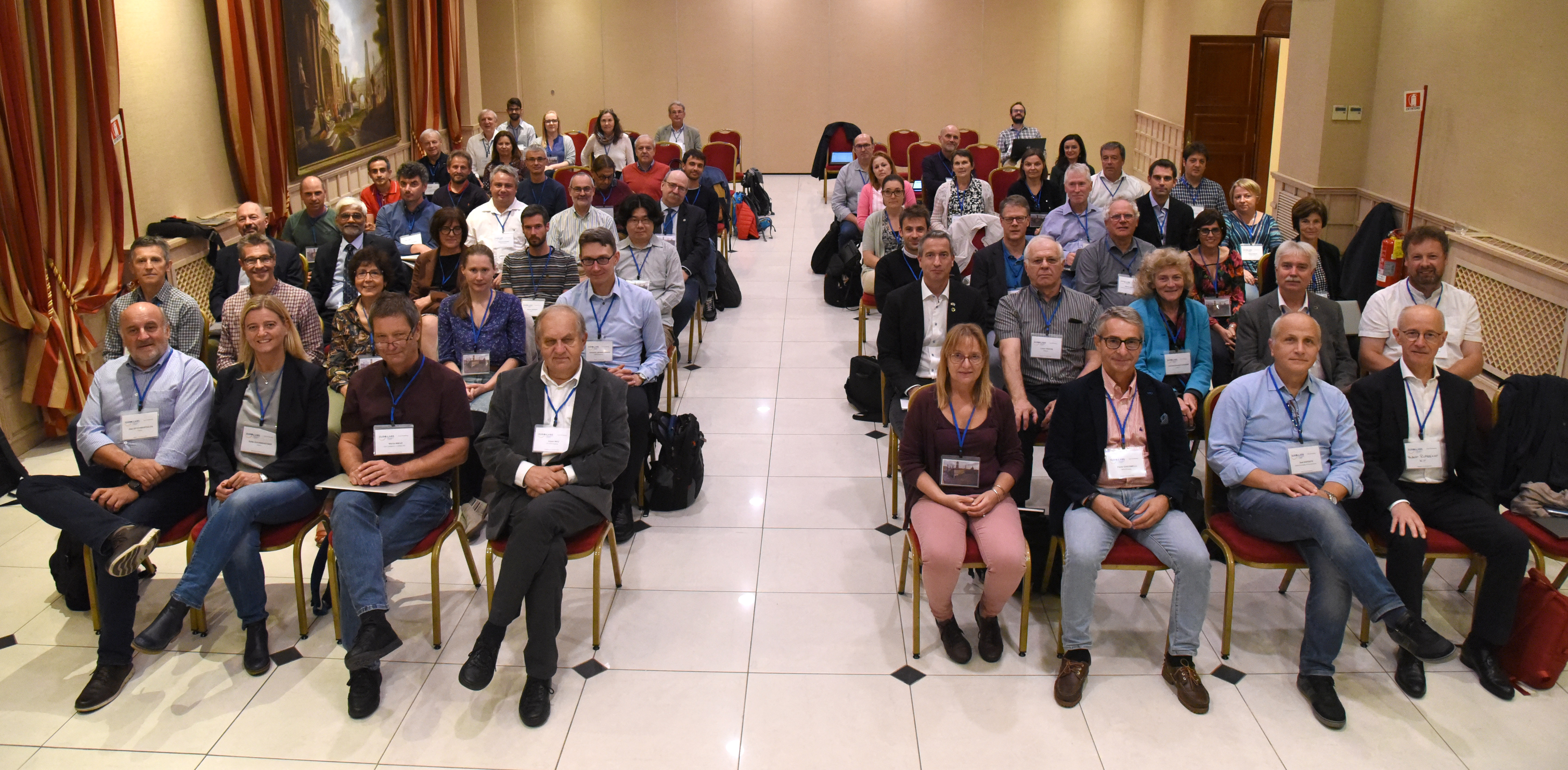
European Laboratories for Accelerator Based Sciences (EURO-LABS) aims to provide unified transnational access to leading research infrastructures across Europe. Taking over from previously running independent programmes, it brings together the nuclear physics, the high-energy accelerator, and the high-energy detector R&D communities. With 33 partners from European countries, EURO-LABS forms a large network of laboratories and institutes ranging from modest sized test infrastructures to large-scale ESFRI facilities such as SPIRAL2. Its goal is to enable research at the technological frontiers in accelerator and detector development and to open wider avenues in both basic and applied research in diverse topics, from optimal running of reactors to mimicking reactions in the stars. Within this large network, EURO-LABS will ensure diversity and actively support researchers from different nationalities, gender, age, grade, and variety of professional expertise.
Sharing information to support users at test facilities is pivotal. Targeted improvements such as new isotope-enriched targets for high-quality standard medical radioisotope production, improved beam- profile monitors, or magnetic-field measurement instruments in cryogenic conditions will further enhance the capabilities of facilities to address the challenges of the coming decades. Through an active and open data management plan following the FAIR principle, EURO-LABS will act as a gateway for information to facilitate research across disciplines and provide training for young researchers.
Funded by the European Commission, EURO-LABS started on 1 September and will run until August 2026. At the kick off meeting, held in Bologna from 3 to 5 October, presentations offered a detailed overview of the research infrastructures and facilities providing particle and ion beams at energies from meV to GeV. Exchanges during the meeting gave participants a view of the strengths and synergies on offer, planting the seeds for fruitful collaborations.
Prospects for testing and developing techniques for present and future accelerators were among the highlights of the meeting. In the high-energy accelerator sector, this requires state of the art test benches for cryogenic equipment such as magnets, superconducting cavities and associated novel materials, electron and plasma beams, as well as specialised test-beam facilities. Facilities at CERN, DESY and PSI, for example, allow the study of performances and radiation effects on detectors for the HL-LHC and beyond while also enabling nuclei to be explored under extreme conditions. Benefiting from past experiences, a streamlined procedure for handling transnational-access applications to all research infrastructures across the different fields of EURO-LABS was defined.
On the last day of the meeting, the consortium’s governing board, chaired by Edda Gschwendtner (CERN), met for the first time. The governing board further appointed Navin Alahari (GANIL, France) as EURO-LABS scienfitic coordinator, Paolo Giacomelli (INFN-BO, Italy) as project corodinator, Maria Colonna (INFN-LNS, Italy), Ilias Efhymiopoulos (CERN) and Marko Mikuz (Univ.Lubljana, Slovenia) as deputy scientific coordinator and work-package and Maria J G Borge (CSIC, Spain) and Adam Maj (IFJ, Poland) as work-package leaders.
With all facilities declaring their readiness to receive the first transnational users, the next annual meeting will be hosted by IFJ-PAN in Krakow, Poland.
After five years of arduous and continuous activity, the main civil-engineering works for the High-Luminosity LHC project (HL–LHC) are on track to be completed by the end of the year. Approved in June 2016 and due to enter operation in 2029, the HL-LHC is a major upgrade that will extend the LHC’s discovery potential significantly. It relies on several innovative and challenging technologies, including new superconducting quadrupole magnets, compact crab cavities to rotate the beams at the collision points, and 80 m-long high-power superconducting links, among many others.
These new LHC accelerator components will be mostly integrated at Point 1 and Point 5 of the ring, where the two general-purpose detectors ATLAS and CMS are located, respectively. As such, the HL-LHC requires new, large civil-engineering structures at each site to house the services, technical infrastructure and accelerator equipment required to power, control and cool the machine’s new long-straight sections.
Connections
At each Point, the underground structures consist of a vertical shaft (80 m deep and 10 m in diameter) leading to a service cavern (16 m in diameter and 46 m long). A power-converter gallery (5.6 m in diameter and 300 m long), two service galleries (3.1 m in diameter and 54 m long), two radio-frequency galleries (5.8 m in diameter and 68 m long), as well as two short safety galleries, complete the underground layout. The connection to the LHC tunnel will be made via 12 vertical cores (1 m in diameter and 7 m deep), which will be drilled later and completed during long-shutdown 3 after the removal of the existing LHC long-straight sections.
The two sites generated 120 jobs on average from 2018 to 2021, solely for companies in charge of civil-engineering construction
Luz Anastasia Lopez-Hernandez
The surface structures consist of five buildings. Three are constructed from reinforced concrete to house noisy equipment such as helium compressors, cooling towers, water pumps, chillers and ventilation units. The other two buildings have steel-frame structures to house electrical distribution cabinets, a helium refrigerator cold-box and the shaft access system. The buildings are interconnected via buried technical galleries.
The HL-LHC civil-engineering project is based on four main contracts. Two consultancy service contracts are dedicated to the design and construction administration: Setectpi-CSD-Rocksoil (ORIGIN) at Point 1 and Lombardi-Artelia-Pini (LAP) at Point 5. Two supply contracts are dedicated to the construction of both the underground and surface structures: Marti Tunnelbau – Marti Österreich – Marti Deutschland (JVMM) at Point 1 and Implenia Schweiz – Baresel – Implenia Construction (CIB) at Point 5.
In total, 92,000 m3 of spoil has been excavated from the underground structures, while 30,000 m3 of concrete and 5000 tonnes of reinforcement-steel were used to construct the underground structures. At Point 5, based on the experience of civil engineering for the CMS shaft, groundwater infiltration was envisaged to make HL-LHC shaft excavation difficult. A different execution methodology and a dry summer in 2018 made the task easier, although the discovery of unexpected hydrocarbon layers (not seen during the CMS works) added some additional difficulties in the management of the polluted spoil. At Point 1, the expected quantity of spoil polluted by hydrocarbon was managed accordingly. The construction of the surface structures, meanwhile, required 6 km of anchor piles, 15,000 m3 of concrete, 1400 tonnes of reinforcement-steel and 700 tonnes of steel frames.
Opportunities
“The two sites generated 120 jobs on average from 2018 to 2021, solely for companies in charge of civil-engineering construction,” says Luz Anastasia Lopez-Hernandez, head of the project-portfolio management group of the site and civil-engineering department.
Special care was taken to limit worksite nuisance with respect to CERN’s neighbours. Truck wheels were systematically washed before leaving the worksites, and temporary buildings were erected on top of the shaft heads to limit the noise impact of the excavation work. The only complaint received during the construction period was related to light pollution at Point 5, after which it was decided to limit worksite lighting during nightfall to the minimum compatible with worker safety. As the excavation of the two shafts started in 2018 in parallel with LHC operation, special care was taken to limit the vibration level by using electrically driven road-header excavators.
The COVID-19 pandemic, which, among other things, required the two worksites to be closed for several weeks in 2020, caused a delay of one-to-two months with respect to the initial construction schedule. The Russian Federation’s invasion of Ukraine also impacted activities this year by delaying some deliveries.
“The next step is to equip these new structures with their technical infrastructures before the next long shutdown, which will be dedicated to the installation of the accelerator equipment,” says Laurent Tavian, work-package leader of the HL–LHC infrastructure, logistics and civil engineering.
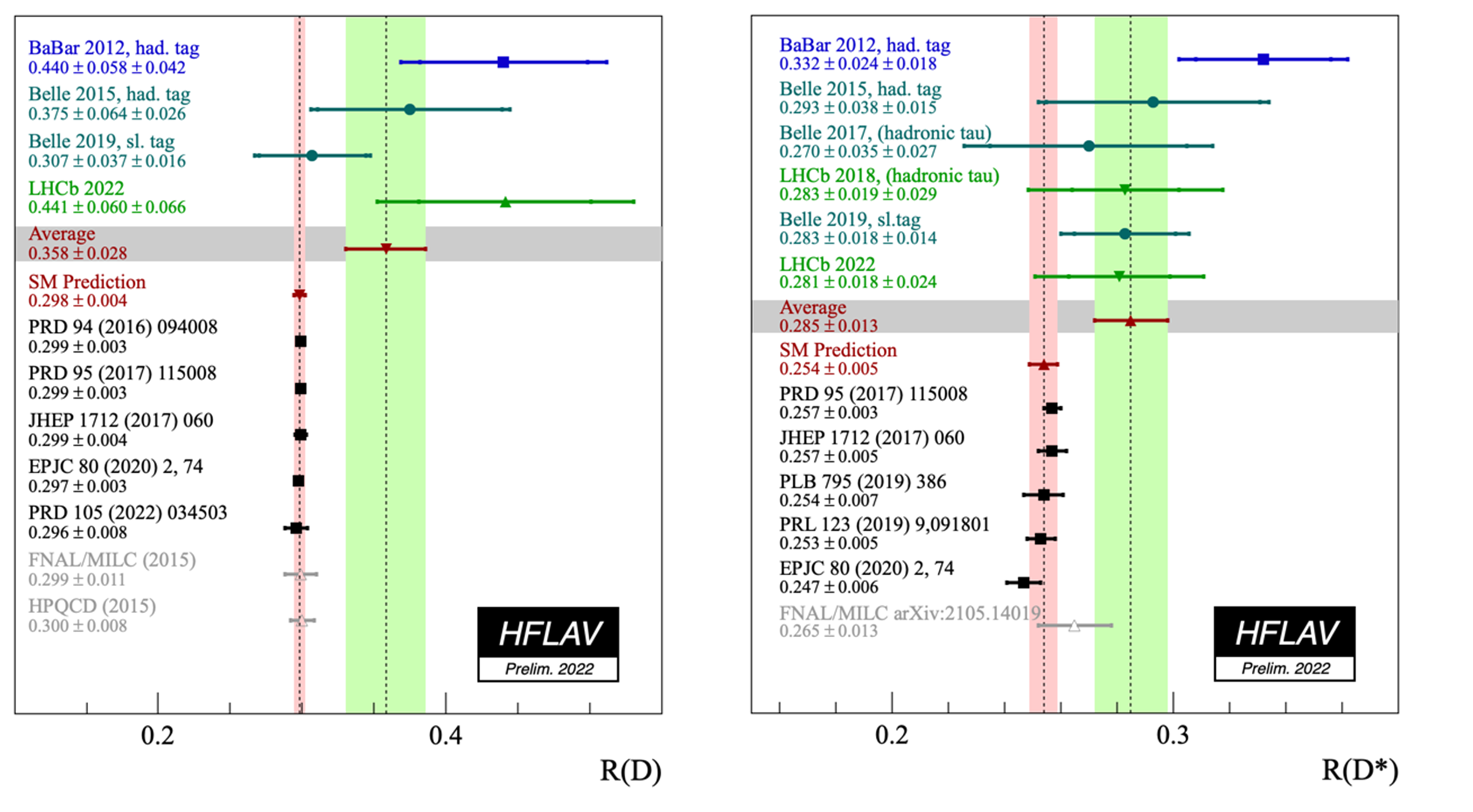
Complementing previous results by Belle, BaBar and LHCb, the LHCb collaboration has reported a new test of lepton flavour universality in b → cℓ νℓ decays. At a seminar at CERN on Tuesday 18 October, the collaboration announced the first simultaneous measurements of the ratio of the branching fraction of B-meson decays to D mesons: R(D*)= BR(B→D*τ–ντ)/BR(B→D*μ–νμ) and R(D)= BR(B–→D0τ–ντ)/BR(B–→D0μ–νμ) at a hadron collider. Based on Run 1 data recorded at a centre-of-mass energy of 7 and 8 TeV, they found R(D*) = 0.281 ± 0.018 (stat.) ± 0.024 (syst.) and R(D) = 0.441 ± 0.060 (stat.) ±0.066 (syst.). The values, which are consistent with the Standard Model (SM) expectation within 1.9 σ, bring further information to the pattern of “flavour anomalies” reported in recent years.
Lepton-flavour universality holds that aside from mass differences, all interactions must couple identically to different leptons. As such, the rate of B-meson decays to different leptons is expected to be the same, apart from known differences due to their different masses. Global fits of R(D(*)) measurements, which probe b → c quark transitions, show that the ratio of B-meson to D-meson decays tends to be larger (by about 3.2 σ) than the SM prediction. The ratios of electronic to muonic B-meson decays, R(K), which probe b → s quark transitions, are also under scrutiny to test this basic principle of the SM.
To reconstruct b → cτ–ντ decays, LHCb used the leptonic τ–→μ–νν decay to identify the visible decay products D(*) and µ–. “We use the measurement of the B flight direction to constrain the kinematics of the unreconstructed particles, and with an approximation reconstruct the rest frame kinematic quantities,” says LHCb’s Greg Ciezarek, who presented the results. “The challenge is then to understand the modelling of the various background processes which also produce the same visible decay products but have additional missing particles different distributions in the rest frame quantities. We use control samples selected based on these missing particles to constrain the modelling of background processes and justify our level of understanding.”
The respective SM predictions for the ratios R(D) and R(D*) are very clean because they are independent of uncertainties induced by the CKM-matrix element Vcb and hadronic matrix elements. The new values of R(D) and R(D*) are compatible both with the current world average compiled by the HFLAV collaboration, and with the SM prediction (at 2.2σ and 2.3σ). The combined LHCb result provides improved sensitivity to a possible lepton-universality breaking process.
“Rare B-meson decays and ratios such as R(K) and R(D(*)) are powerful probes to search for beyond the Standard Model particles, which are not directly detectable at the LHC,” says Ben Allanach, theorist at the University of Cambridge.
To provide the best experiences, we use technologies like cookies to store and/or access device information. Consenting to these technologies will allow us to process data such as browsing behavior or unique IDs on this site. Not consenting or withdrawing consent, may adversely affect certain features and functions.
Functional
Always active
The technical storage or access is strictly necessary for the legitimate purpose of enabling the use of a specific service explicitly requested by the subscriber or user, or for the sole purpose of carrying out the transmission of a communication over an electronic communications network.
Preferences
The technical storage or access is necessary for the legitimate purpose of storing preferences that are not requested by the subscriber or user.
Statistics
The technical storage or access that is used exclusively for statistical purposes.The technical storage or access that is used exclusively for anonymous statistical purposes. Without a subpoena, voluntary compliance on the part of your Internet Service Provider, or additional records from a third party, information stored or retrieved for this purpose alone cannot usually be used to identify you.
Marketing
The technical storage or access is required to create user profiles to send advertising, or to track the user on a website or across several websites for similar marketing purposes.