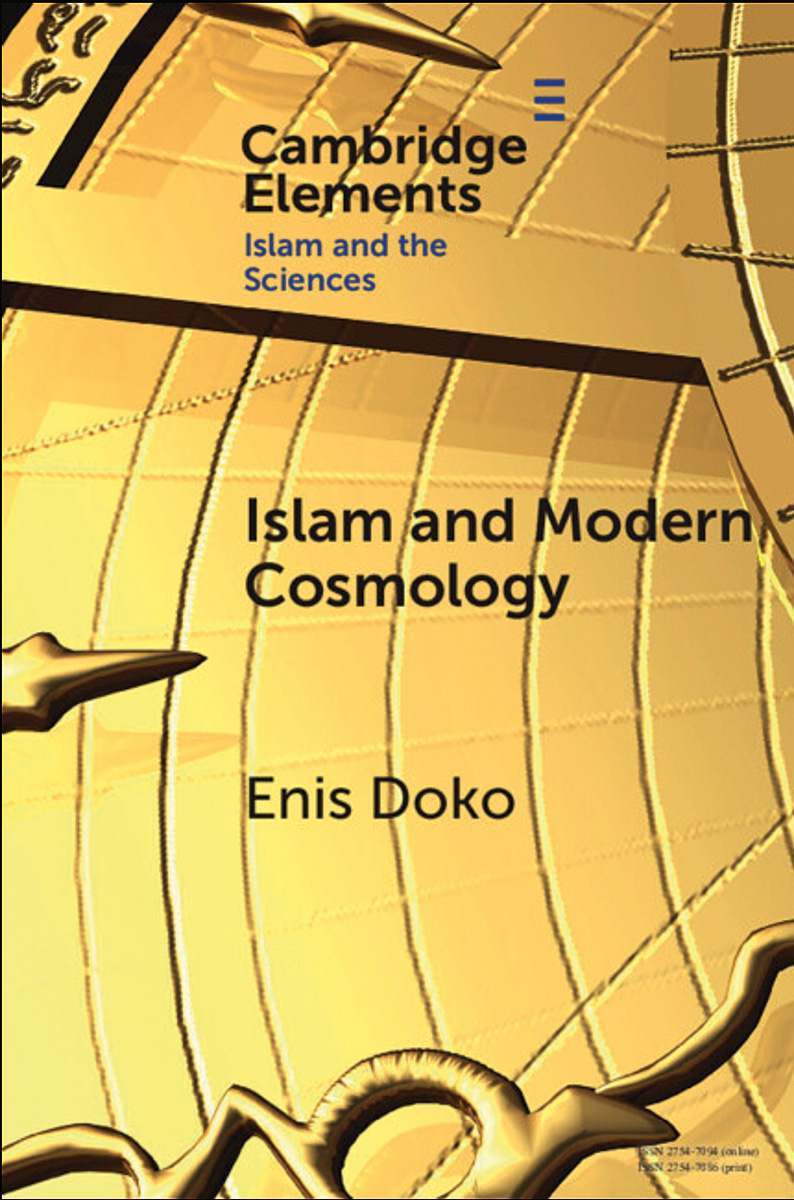
Enis Doko’s Islam and Modern Cosmology is an ambitious and intellectually serious contribution to a genre too often dominated by superficial concordism. Doko explores whether modern cosmology and Islamic intellectual traditions can enter into meaningful philosophical dialogue. In an age when “science and religion” literature often oscillates between naive scientism and mystical vagueness, this alone is noteworthy.
The work’s strongest feature is methodological. In its early chapters, Doko repeatedly emphasises that the Qur’an is not a scientific textbook and that cosmological theories remain provisional. This is a refreshing departure from the “scientific miracle” literature that continues to dominate much popular Islamic discourse. Doko is familiar with both contemporary cosmology and analytic philosophy of religion, and he treats scientific theories with seriousness and nuance. Discussions of singularities, inflation, fine-tuning, quantum cosmology and multiverse scenarios are generally informed and competently presented.
Yet the project’s very ambition also reveals some delicate tensions. The central epistemic issue, which Doko himself recognises in the earlier chapters, is that modern cosmology and “Qur’anic cosmology” do not operate within the same conceptual framework. Scientific cosmology is empirical, mathematical and inherently revisable, whereas Qur’anic cosmology is symbolic, existential and theological in orientation. The former seeks predictive explanatory models constrained by observation, while the latter addresses meaning, creation, transcendence and humanity’s place in the cosmos.
Doko is aware of this distinction, and this awareness gives the early sections of the book much of their intellectual strength. As the argument develops, however, symbolic “resonance” occasionally edges toward implied cosmological correspondence. At times, modern cosmological ideas seem to be read back into Islamic theological frameworks in ways that some readers may find historically ambitious or philosophically debatable.
This tendency becomes particularly visible in the treatment of inflationary cosmology and multiverse theories. The book often presents inflation as the dominant explanatory paradigm for the early universe – a position that reflected the optimism surrounding inflationary cosmology and landscape multiverses during the late 1990s and early 2000s. Since then, however, the intellectual landscape has become more nuanced and contested, and alternatives have shown up, even if not necessarily more credible.
Inflation was introduced to address important puzzles in Big Bang cosmology, including the horizon and flatness problems. It achieved considerable phenomenological success and remains influential, but several conceptual difficulties remain unresolved. The inflaton field itself is still hypothetical, and some critics argue that inflation shifts fine-tuning questions rather than resolving them entirely. The proliferation of inflationary models has also led some cosmologists to question how predictive the framework ultimately remains. Doko acknowledges some of these debates, though he occasionally presents inflation as closer to a stable consensus than many cosmologists today might consider warranted.
A related issue arises with string theory and landscape cosmology. Much of the speculative architecture of the later chapters draws upon ideas such as extra dimensions, branes and multiverse landscapes. Yet string theory remains experimentally unconfirmed despite decades of theoretical development, and some of the motivations that once strongly supported supersymmetric extensions of the Standard Model have weakened. This does not delegitimise such theories, but it does suggest that the broader theoretical context remains less settled than it once appeared.
In this changing scientific context, attempts to draw theological significance from speculative cosmological frameworks inevitably become more delicate. Doko sometimes moves rather quickly from mathematical possibility to metaphysical interpretation, particularly when discussing the multiverse as a possible expression of divine creativity or cosmological plurality within Islamic thought.
This does not make the project illegitimate, but it does make it historically and philosophically fragile. The effort to connect modern cosmology with the four major classical Islamic creation frameworks – emanation, temporal origination, manifestation and perpetual creation – is imaginative and stimulating, yet it also raises difficult historical questions. These classical doctrines emerged within intellectual worlds very different from those of inflationary cosmology or string landscapes, and the bridge between them is necessarily interpretive rather than direct.
One of the most thoughtful and sophisticated attempts to place Islamic thought into dialogue with contemporary cosmology
Attempting to put the Sufi doctrine, with its spectrum of rather vague and ethereal views, in resonance with some cosmological concepts – the multiverse in particular – may provide existential depth and protect cosmology from reductive scientism by allowing it to become spiritually meaningful rather than merely mechanistic.
However, a symbolic framework capable of accommodating Aristotelian cosmology, Newtonian mechanics, relativistic spacetime, inflationary multiverses and string landscapes with equal ease risks losing any explanatory claim. The issue is not that Sufi metaphysics is “wrong”, but that its interpretive openness can make it difficult to distinguish enduring metaphysical insight from retrospective symbolic accommodation.
In this respect, the later chapters increasingly read less as a study of historical Islamic cosmology and more as a contemporary philosophical synthesis shaped by Doko’s intellectual and spiritual vision. This is not necessarily a flaw, as many important philosophical works are constructive rather than purely historical, but some readers might benefit from a clearer distinction between inherited doctrine and modern reinterpretation.
Despite these reservations, Islam and Modern Cosmology remains one of the most thoughtful and sophisticated attempts in recent years to place Islamic thought into dialogue with contemporary cosmology. It is serious, learned and often genuinely illuminating. It is also a good introduction to Islamic philosophy during the formative centuries, as well as an elaborate review of modern cosmology written with as much depth and accuracy as a short monograph permits. If the book occasionally stretches the connection between speculative cosmology and theology further than some readers may find fully persuasive, this reflects less a lack of rigour than the immense difficulty of the enterprise itself. The result is a stimulating and intellectually ambitious synthesis. Its long-term significance may depend as much on where cosmology itself evolves scientifically as on how successfully the author’s work and others of the same strand engages with the theological questions it raises.
Established around the turn of the century, neutrino-flavour oscillation is among the clearest signs of physics beyond the Standard Model (BSM), as it requires neutrinos to be massive. Over the past decades, neutrino-oscillation experiments have grown in physical size, collaborative scale and scientific success.
The missing solar neutrinos identified by the Davis chlorine experiment in the 1960s brought the first hints of oscillation, while atmospheric-neutrino oscillation was established by the Super-Kamiokande experiment in 1998. This was followed by the Sudbury Neutrino Observatory’s confirmation that solar neutrinos do indeed change flavour. Since then, measurements of neutrinos from long-baseline beams and nuclear reactors have confirmed the oscillations seen in natural sources and refined the parameters of the three-flavour neutrino picture.
The current-generation long-baseline experiments are now approaching the limits of their reach, and the community are awaiting results from the next-generation large-scale experiments – the Jiangmen Underground Neutrino Observatory in China, Hyper-Kamiokande in Japan and the Deep Underground Neutrino Experiment in the US. These, along with many smaller neutrino experiments employing various technologies, are chasing down the remaining known parameters of the three-flavour paradigm, testing with precision measurements and pursuing broad searches for BSM physics.
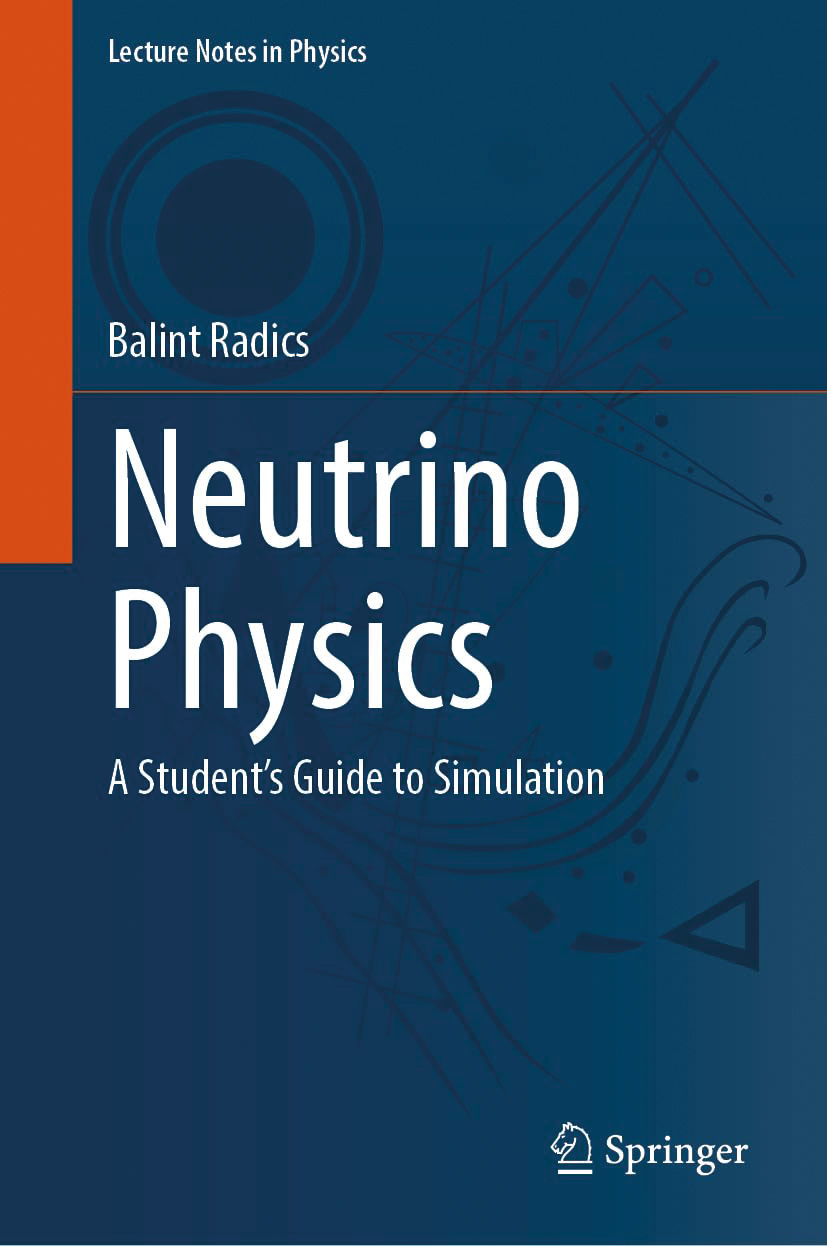
While the primary title of this book, Neutrino Physics, suggests a broad subject matter, the subtitle A Student’s Guide to Simulation immediately indicates the much more constrained scope. The material presented strongly emphasises simulation techniques of interest for neutrino-oscillation data analysis, and is of most direct relevance to long-baseline-beam oscillation experiments. Furthermore, the treatment is confined to simulating the production, oscillation and interaction of neutrinos. It stops before addressing the simulation of neutrino interactions’ final-state products in detectors. While typical expertise sought by students in the field includes detector simulation, event reconstruction from low-level data and parameter inference, these topics are mostly absent, as are many non-oscillation-related neutrino topics. Nevertheless, the topics covered are essential for any student of neutrino physics, and the material provides a clear, concise, step-by-step tutorial that develops both physical insight and practical skills. A student working through this book will gain a substantial understanding of the concepts behind neutrino-event generation and the computation of flavour-transformation effects.
An effective manual to simulate the lives of neutrinos from their birth until they touch a detector
The book is aimed at graduate students who already possess some knowledge of particle physics and basic familiarity with special relativity. For this audience, the level is exactly right. The reader is gently introduced to standard terminology as well as common tools and computational techniques. A review of relativistic kinematics follows, and then a deeper dive into applications to the specific cases most likely to arise in experimental neutrino-oscillation physics. Weak decays and neutrino scattering in the GeV regime are also covered in some detail. The text concludes with a discussion of the computation of flavour transformation in vacuum and matter.
The numerous and well-chosen code examples are a strength of this book. Some might complain that the provided examples make exclusive use of the ROOT software framework. While ROOT remains widely used in high-energy physics and is available in Python via PyROOT, many students now prefer more modern, Python-native tools. Also missing is a discussion of modern AI tools, which have by now become integrated into many code-development workflows.
Nevertheless, the core content of the examples can be easily converted to any software environment. Although it delivers a rather narrower scope than suggested by its primary title, this book is an effective manual for anyone who wishes to simulate the lives of neutrinos from their birth until they touch a detector. It will be of value to all students embarking on research in neutrino-oscillation experiments, and it contains clear pedagogical examples that are likely to be of use to others as well. I will recommend this book to my students and keep a copy on my own virtual shelf.
Some 30 kilometres from CERN, on the northern shore of Lac Léman, sits the home of European football. The Union of European Football Associations (UEFA) brings together 55 national associations from across the continent and organises its most prestigious tournaments, including the European Championship and the Champions League. It sets the rules for those competitions and allocates most of the revenue they generate back into the game.
“When I saw the job description, I remember thinking: oh my God, they are looking for a physicist,” recalls Barbara Storaci. “It didn’t make any sense, but the profile they wanted was exactly mine.”
Although the role did not explicitly mention physics, it demanded someone who could coordinate, code, analyse large volumes of information and thrive in an international environment. “Who in the world has all this in one person?” she asked. “Well, physicists do.”
From physics to football
Today, nine years on, Storaci is a senior project manager, responsible for the more than 50 draws UEFA conducts each year, as well as for coordinating projects across the organisation. Football, though, was not the original plan.
Storaci wanted to be a particle physicist from the age of 12. “I planned my studies to reach this goal. I started to collaborate with the LHCb experiment from my bachelor’s and master’s studies at the University of Milano-Bicocca, coming to CERN for the summer before my last year, and never going back.” Based at CERN throughout, she completed a PhD with Nikhef and a postdoc at the University of Zurich. Storaci spent 12 years at LHCb, rotating through nearly every role, from data analysis to data-acquisition coordination.
But the suspense of discovery came with the anxiety of instability. “At a certain point, I didn’t have fun anymore because it was more a matter of always looking for the next contract instead of actually doing research,” she says. “When I reached an age where I wanted more stability for family life, the short-term contracts made things extremely difficult.”
Getting a permanent academic position felt like a lottery. Storaci often found herself up against competent colleagues who made for tough competition, and the constant race for short-term contracts made her question whether it was wise – or healthy – to continue. She grappled with many doubts, and was hesitant to seek roles outside of academia. “For many years I wondered: am I giving up on my dream?” she recalls. “Is it a failure? Should I try a little longer?”
Curiosity is the key. If I had to select just one trait, that’s the one I’d choose
Her curiosity, and her willingness to take risks, led her to leave the lab. “All my life I have been outside my comfort zone,” she reflects. “That’s what I love about my present job: I know what I’m doing today, but I have no clue what I will be doing in two years. And that fits me extremely well.”
One of the biggest adjustments was learning to present herself as a strong candidate to people outside academia. “Physicists often believe we can do any job, but when you actually look for a job, you start wondering: is that really true?” Her advice to other researchers is to translate their skills into a language recruiters understand.
“Nobody outside of particle physics will care about your decay channel,” she says bluntly. “Forget about the jargon. What matters is what you developed to make that research happen: coding, managing projects, analysing huge datasets, coordinating teams. That’s what you have to explain.”
Practical preparation helped. Before her first UEFA interview, a friend outside academia offered to role-play as a recruiter. Storaci was sceptical. She had done plenty of academic interviews, and surely this would be no different. But when they met for coffee, some of her friend’s questions left her stumped.
“She asked me questions I had never thought about, like who my worst boss was,” she recalls. “How could anyone expect that question? It turns out I wasn’t ready at all! But it helped me approach the real interview much more calmly.”
Every job application is apt preparation for the next, she argues, even if it results in a rejection or seems out of your depth. What sets a candidate apart is the ability to demonstrate transferable skills, sustained work on long-term projects, time management and teamwork.
Same skills, new context
Storaci now applies the analytical mindset she honed at CERN to a very different environment. She insists the transition was less about leaving physics behind, and more about carrying those skills into new contexts. “It’s normal to be scared, but you have so many skills you don’t even realise you’ve developed. Once you learn how to show them, you’ll see you can succeed in very different worlds,” she says. “The ability to absorb and connect information, to see inconsistencies, to debug problems, these are skills physicists have, and they’re incredibly valuable outside academia too.”
Above all, she believes success comes down to two things: curiosity and courage. “Curiosity is the key. If I had to select just one trait, that’s the one I’d choose,” says Storaci. “If you’re curious, everything else will come. And you must be willing to step out of your comfort zone. It’s scary, of course, but that’s where growth happens.”
Bernard French, a CERN physicist who worked on and led numerous experiments, especially at the OMEGA spectrometer, died on 5 November 2025 at the age of 94. Bernard was born in Watford in the UK on 23 April 1931 and gained his PhD at Imperial College London in 1958, staying there as a research fellow before joining CERN as an associate on 1 October 1961. After becoming a staff member on 1 May 1962, he remained at CERN until his retirement in 1996.
Bernard first worked on the analysis of bubble-chamber data, focusing on the search and study of meson resonances. Then, in 1967, he joined a group proposing the OMEGA spectrometer. Conceived as an electronic bubble chamber, OMEGA offered a large magnetic volume, initially filled with spark chambers and later with wire chambers, operating with a variety of triggers and incident beams in the West Area experimental hall. The group included physicists Aldo Michelini, Emanuele Quercigh and Werner Beusch, with technical coordinator Otto Gildemeister and Mario Morpurgo – who designed the superconducting magnet. OMEGA recorded its first collisions in 1972 and ran until the end of 1996. Bernard contributed to many of the experiments performed at the spectrometer, first using beams from the PS and later from the SPS.
Bernard was known by his colleagues for his ability to do back-of-the-envelope calculations that were often better than the final calculations, as well as his remarkable pattern-recognition ability – he always claimed that if he couldn’t resolve the tracks by eye, no computer was ever going to do it! He was also known for his large collection of old cars and his lovely house on the lake, complete with a small jetty. Bernard would often be seen in the CERN canteen, even in his 90s, and his insatiable enthusiasm for physics continued until the end.
We were sad to hear of the passing of Marvin Marshak, who died on 2 April at the age of 80. Marshak was born in Buffalo, New York, on 11 March 1946. He attended Cornell University as an undergraduate and the University of Michigan for his PhD in physics, completing it in 1970. He then started a long and illustrious career at the University of Minnesota, where he served as chair of the physics department for a decade and as provost and vice-president of the university for a year.
Motivated by grand unified theories, which predicted that protons could decay with measurable rates, Marshak led one of several projects that took particle physicists away from accelerator laboratories to underground facilities – where rare processes could be studied with substantially lower cosmic-ray backgrounds. He negotiated the use of the Soudan mine in Northern Minnesota, which was being operated as a tourist attraction. Some 600 m underground, it became, from 1981, the site of the Soudan 1 and 2 experiments and later the MINOS long-baseline neutrino experiment, using the NuMI beam from Fermilab. Finally, the NOvA experiment, using the same beam, was located nearby on the surface.
Marshak’s research at the Soudan mine began by putting together a collaboration of US and UK scientists, motivated by the search for nucleon decay and the opportunity to build unique detectors in the search for new physics. While the search for nucleon decay proved unavailing, the atmospheric neutrino background serendipitously became a treasure trove of evidence for neutrino oscillations, using the differing path lengths of neutrinos from opposite sides of the Earth, created when cosmic rays strike the atmosphere. It was Soudan 2 that first confirmed the discovery of neutrino oscillations by Super-Kamiokande in 1998. The mine then became the ideal location for far detectors in the long-baseline neutrino oscillation experiments MINOS and NOvA, to which Marshak made key contributions. He also played a leading role in using underground detectors in novel ways to search for the astrophysical sources of cosmic rays. Recently, he played an important role in helping to organise the international DUNE collaboration by serving several years as the chair of the institutional board for the precursor Long-Baseline Neutrino Experiment.
Marshak had an amazingly varied skill set that helped particle physics overcome increasingly complex challenges. He had a keen intuition for worthwhile problems and for which issues to tackle. He became an expert in the challenges of underground construction engineering. He could deal with administrators and politicians at the state and federal level, successfully obtaining money for ambitious projects, and he managed the installation of the 14,000 tonne NOvA Far Detector.
However, he will be remembered best for his one-on-one interactions with students and colleagues. When he gave a seminar, his enthusiasm was infectious. He knew when to provide direction for his graduate students and when to stand back and let them struggle to find their own limitations. He could motivate undergraduates in a classroom and then find them a role in an exciting experiment. He would always take his share of the unsensational work that is required on any project, such as scanning the not-too-frequent neutrino interactions and categorising them. But what is remembered most of all by his friends and colleagues is his indomitable energy, his charm and the perpetual smile on his face.
Mannque Rho, a world-renowned theoretical nuclear physicist from the Republic of Korea and distinguished member of the Institut de Physique Théorique (IPhT) at CEA Saclay, passed away in Paris on 19 March 2026, at the age of 89.
Born on 14 December 1936 in Hamyang, Gyeongnam Province, Rho was the eldest of eight children. He initially studied political science at Seoul National University and later moved to the US, completing his undergraduate education at Clark University with a Bachelor of Arts in chemistry in 1960. He obtained his PhD from the University of California, Berkeley, on 21 October 1963.
At Berkeley, Rho met Vincent Gillet, who invited him to take up a postdoctoral position at the Service de Physique Théorique (SPhT), the predecessor of IPhT at CEA Saclay. He moved to France in 1964 on a Joliot-Curie fellowship, to work at the Laboratoire Joliot-Curie in Orsay and at the SPhT. There, he joined the theoretical nuclear-physics team led by Claude Bloch, becoming a permanent member on 1 June 1965. This institute remained his intellectual home throughout his career.
Rho’s work spanned chiral symmetry in nuclear media, effective field theories and topological approaches to strongly interacting matter. In the early 1970s, he initiated a long-lasting collaboration with Gerald E Brown at Stony Brook University. Together, in 1979, they developed the “little bag” model, providing a conceptual bridge between quark degrees of freedom and the pion cloud surrounding nucleons.
He is best-known for the Brown–Rho scaling (1991), which describes the in-medium modification of hadron masses in hot and/or dense matter. This influential result has shaped modern approaches to dense nuclear matter, with important implications for heavy-ion collisions and neutron-star physics. Rho also made major contributions to the construction of effective field theories rooted in quantum chromodynamics, and conducted pioneering work on skyrmion matter and hidden local symmetries.
Over his career, Rho published more than 200 scientific articles, which have received over 11,000 citations. He authored the Chiral Nuclear Dynamics trilogy (with Maciej A Nowak, Ismail Zahed and Yong-Liang Ma) and edited several volumes of collected works.
Rho held visiting positions at leading institutions worldwide, including CERN, Stony Brook University, Seoul National University and the University of Tokyo – as a JSPS professor. He served as professor at the Korea Institute for Advanced Study and chair professor at Hanyang University.
His scientific achievements were recognised through numerous honours: the Paul Langevin Prize (1985), the Gay-Lussac–Humboldt Prize (1995), the Korean National Academy of Sciences Award (1999) and the Ho-Am Prize (2002). He received the Order of Civil Merit in 1997, an honorary Doctor of Science degree from Clark University in 2003 and the KBS Overseas Korean Award in 2004. He was a member of the Korean Academy of Science and Technology.
Remarkably, Rho remained scientifically active into his final years, working on superdense baryonic matter as recently as November 2025. The IPhT deeply regrets his loss, but his legacy will endure in theoretical nuclear physics. We extend sincere condolences to his family, colleagues and students.
It was with profound sadness that we learned about the passing of Mick Storr on 7 June 2026, in Geneva. A deeply respected member of the CERN family and an extraordinary educator, he touched the lives of generations of teachers worldwide.
Mick was born in Farsley, a village in the Leeds district of West Yorkshire, England, on 11 February 1949. After completing his PhD at the University of Birmingham in 1975, Mick immediately came to CERN as a user affiliated with Lancaster University, working in the Photon Beam Collaboration at the OMEGA Spectrometer. He stayed on as a fellow and then a staff member in the Data Handling Division, joining the emulator effort in its early days. There, he developed key translator, trigger, testing and interface software, work that fed the 168E emulators used in UA1 during the years of the discovery of the W and Z bosons, and later the CERN–SLAC collaboration on the 3081E emulators.
From 1989 he joined the Electronics and Computing for Physics Division, where he pioneered the use of object-oriented programming in high-energy physics and supported the World Wide Web development team. As divisional training officer, he began the move to the second part of his CERN career.
For nearly a decade from 1997, Mick oversaw the technical training programme, keeping it up to date with courses that met the evolving needs of the CERN community. With Michelangelo Mangano, he co-founded and ran the CERN High School Teachers (HST) programme. Mick had a unique gift for helping teachers overcome any sense of intimidation and recognise their essential role in CERN’s mission, reminding them that they lay the foundations for the scientists and engineers of tomorrow. Through his vision and dedication, the CERN teacher programmes grew into a worldwide community built on curiosity, friendship and international collaboration.
His retirement from CERN in 2013 opened only a new chapter. Returning to his alma mater as an honorary senior research fellow, he continued to contribute to science education as an active CERN user.
Many learned a great deal from Mick – a mentor, guide and constant source of encouragement. Much of what makes CERN’s teacher programmes so special today reflects the principles he championed, his values and his unwavering belief in the importance of teachers and education. Many will remember his lectures and storytelling, his songs and barbecues, the countless moments in which he made every participant feel welcomed and valued. Mick had a remarkable ability to connect with people from every country and background, and always with an unmistakable smile.
One of his best-known sayings was: “At CERN, we never say goodbye, we only say au revoir.” Those words are hard to hear today, yet they capture the extraordinary legacy he leaves through the many teachers whose lives he touched, inspired, encouraged and welcomed at CERN over so many years.
Beyond his professional achievements, Mick had a wide range of interests. A squash player invited to the Swiss national team, a lifelong footballer and later a coach, he was also active in the Geneva Amateur Operatic Society, rising from the back row of the chorus to leading roles. In winter, he skied most weekends with the CERN ski club, and even took up snowboarding in his fifties. He is survived by his daughters Sophie and Scarlett and his grandchildren Isabelle and Max, who were a source of great pride and joy to him.
Merci et au revoir, Mick, and thank you for 51 remarkable years at CERN.
Cosmological filaments form the backbone of the cosmic web, the vast, interconnected network that defines the universe on the largest scales. Stretching across tens to hundreds of millions of light-years, they link galaxies and galaxy clusters along the pathways where matter assembles under gravity. They may also hold the key to one of the deepest questions in modern physics: the nature of dark matter.
For astrophysicists, filaments first drew attention as a potential reservoir of missing baryons. Big Bang nucleosynthesis and precision measurements of the cosmic microwave background agree on how much ordinary matter the universe should hold, but the census of stars, galaxies and hot gas comes up short. The leading explanation is a warm, diffuse gas permeating cosmic filaments, too faint to detect in any single observation but increasingly accessible through statistical techniques at X-ray and radio wavelengths.
More recently, dark-matter hunters have begun to recognise the potential of filaments as probes of new physics. Filaments are not only vast but overwhelmingly dark-matter-dominated, with lower astrophysical backgrounds than traditional search targets such as the galactic centre. New simulations are pinning down their dark-matter density profiles with enough precision to make quantitative predictions, and recent theoretical work has opened detection channels that could turn these structures into laboratories for physics beyond the Standard Model.
Dark matter and the cosmic web
Our scientific understanding of stars and the structures they inhabit has grown remarkably over the past century. We now know that galaxies are vast collections of stars, and clusters are collections of galaxies. These immense systems do not float randomly; they are woven into an intricate “cosmic web” resembling that of a spider. Gravity shapes this web and governs the motion of the celestial bodies within it. Yet many observations defy expectations. Galaxies rotate too quickly, clusters bend light too strongly, and the cosmic web holds together with more gravitational pull than visible matter would allow. Something unseen must be at work. A new, invisible “dark matter” component must dominate the mass of the universe.
Dark-matter candidates in the spotlight
Dark matter accounts for roughly 85% of the matter in the cosmos, and about 27% of its content once dark energy is included, yet its nature remains unknown. Several well-motivated candidates have emerged, each predicting distinct signatures that indirect searches, including those targeting cosmic filaments, could probe. Weakly interacting massive particles, sterile neutrinos, primordial black holes and axions are among the most prominent.
Weakly interacting massive particles These hypothetical particles naturally arise in several extensions of the Standard Model and possess two defining features: they are massive, and they interact only through gravity and the weak force.
Sterile neutrinos Unlike the three known active neutrino species, they do not interact through the weak force. Their existence is motivated by extensions of the Standard Model that aim to explain both neutrino masses and the matter–antimatter asymmetry of the universe.
Primordial black holes Unlike stellar black holes, which form from collapsing stars, primordial black holes are hypothetical relics of the early universe, born from the collapse of exceptionally dense regions of matter moments after the Big Bang.
Axions Originally proposed to solve the strong CP problem, axions are hypothetical particles whose production mechanism can account for the observed dark-matter abundance, elegantly linking two of modern physics’ greatest mysteries.
Dark matter accounts for roughly 85% of the matter in the cosmos and dictates how cosmic structures form and evolve. Yet, despite decades of international effort and extraordinary experimental ingenuity, its nature remains a puzzle. The Standard Model of particle physics, describing all known fundamental particles, can’t account for the observational effects of dark matter. In response, theorists have proposed a wide range of models that include dark-matter candidates (see “Dark-matter candidates in the spotlight” panel). A well-motivated dark-matter theory, one that truly excites theorists, typically meets three criteria. First, it accounts for the observed cosmic abundance of dark matter. Second, it yields clear, testable predictions. And third, it resolves multiple open questions in fundamental physics.
Rich landscape
While the theoretical landscape is rich, testing it requires identifying cosmic environments where dark matter’s signatures might be detectable. One of the most powerful strategies is indirect detection – the search for faint cosmic messengers produced when dark matter annihilates, decays or interacts with ordinary matter. These signatures may appear as electromagnetic waves, neutrinos or charged cosmic rays. Observing these messengers requires high sensitivity and careful modelling of both the dark-matter signal and the astrophysical backgrounds. Progress, therefore, depends on close collaboration between particle physicists, astrophysicists and cosmologists, integrating theoretical predictions with multi-messenger observations.
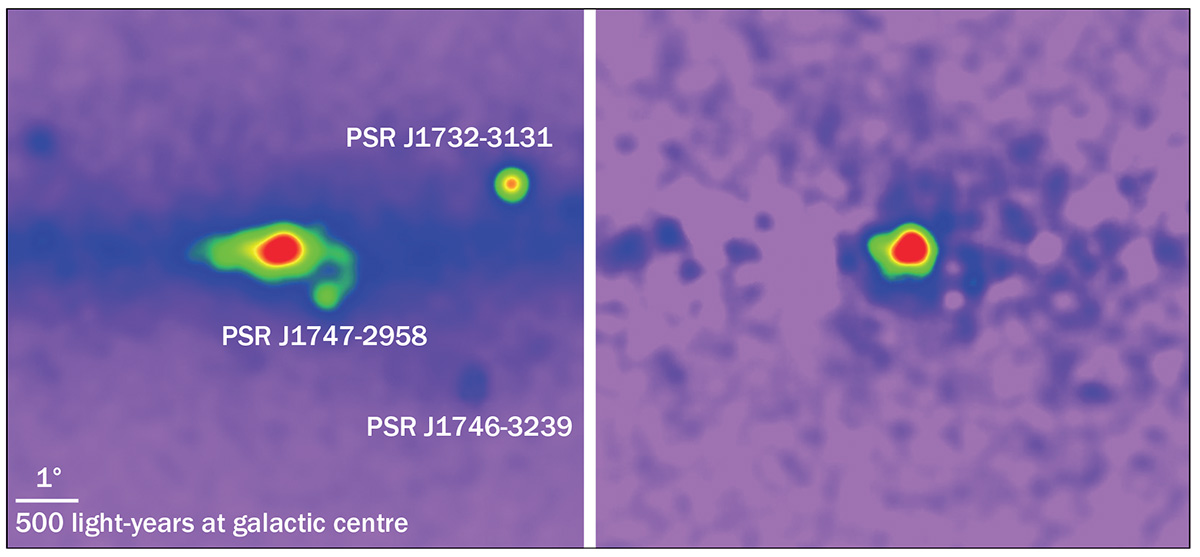
Choosing optimal targets is crucial for indirect dark-matter searches. Traditional efforts have focused on the galactic centre and on dwarf satellite galaxies of the Milky Way. The galactic centre is expected to host the highest dark-matter density, but it also contains intense and complex astrophysical backgrounds, which is why the origin of a long-debated gamma-ray excess observed by Fermi-LAT remains uncertain (see “Gamma-ray excess” figure). Dwarf galaxies, by contrast, are dark-matter-dominated and relatively free of astrophysical emission. However, their stellar populations are orders of magnitude smaller than that of the Milky Way. This limits the available kinematic tracers – observables whose spatial distribution correlates with the underlying matter density field – and leads to sizable uncertainties in the predicted signals.
Unconventional environments
Recently, unconventional but promising probes have gained attention, such as cosmological filaments. Filaments are a natural outcome of anisotropic gravitational collapse in an expanding universe. Matter can collapse under gravity in some directions while still expanding in others, producing elongated structures that are bound across their width but continue to grow along their length. Not all cosmic filaments are alike. Some lie within galaxy clusters, linking individual galaxies over relatively short distances. Others extend far beyond cluster boundaries, forming vast inter-cluster bridges that connect galaxy clusters and even superclusters across tens and hundreds of megaparsecs. The longer the filament, the thinner and more diffuse it tends to be. This reflects the way gravity draws matter out of underdense regions and funnels it into elongated bridges between massive nodes.
Together, galaxy clusters and the diffuse filaments that connect them form the cosmic web and make up most of the baryonic matter. Yet the very properties that make filaments so fundamental to cosmic structure also make them extraordinarily difficult to observe. Their emission is faint, diffuse and easily overwhelmed by brighter astrophysical sources, posing a major challenge for direct detection across the electromagnetic spectrum.
To overcome this limitation, astronomers have turned to a statistical technique known as “image stacking”. In stacking analyses, many observations of similar systems are superimposed. Any emission associated with filaments then adds coherently, while random noise and unrelated astrophysical signals average away. The result is a significant enhancement in sensitivity, allowing extremely weak, extended emission to emerge that otherwise would remain invisible.
A potent technique
The power of this approach relies on numbers: the larger the sample that can be stacked, the stronger and more reliable the resulting signal. Image stacking is therefore a potent but data-hungry technique, one that becomes increasingly effective as modern surveys deliver ever-larger datasets. This requirement poses a particular challenge for filaments, whose precise locations are generally unknown. Since cosmological filaments connect massive structures, a natural strategy is to use galaxy clusters as signposts: by stacking observations of regions between pairs of clusters, the faint emission from the filamentary bridges that link them can be statistically enhanced.
Cluster catalogues have expanded dramatically over the past decade. Today, surveys based on optical imaging, weak gravitational lensing and the Sunyaev–Zel’dovich effect, in which scattering with high-energy electrons distorts the cosmic microwave background, collectively identify tens of thousands of clusters across the sky. While progress is remarkable, it may still fall short of what is needed to robustly detect the extremely faint emission expected from typical filaments. This limitation motivates the search for alternative tracers. A reliable proxy for galaxy clusters available in far greater numbers, potentially in the millions, would enormously increase the statistical power of stacking analyses.
Particularly effective proxies for galaxy clusters are luminous red galaxies (LRGs). These massive, early-type galaxies have been observed and catalogued for decades and are known to be excellent tracers of the large-scale structure of the universe. LRGs typically reside in, or near, the centres of galaxy clusters, making them reliable signposts of the densest regions of the cosmic web. Pairs of LRGs that are close to one another in the sky and in physical distance can therefore be used as proxies for nearby cluster pairs. Statistically, such pairs are likely to be connected by inter-cluster bridges or filaments, even if the filaments themselves cannot be directly identified in individual observations.
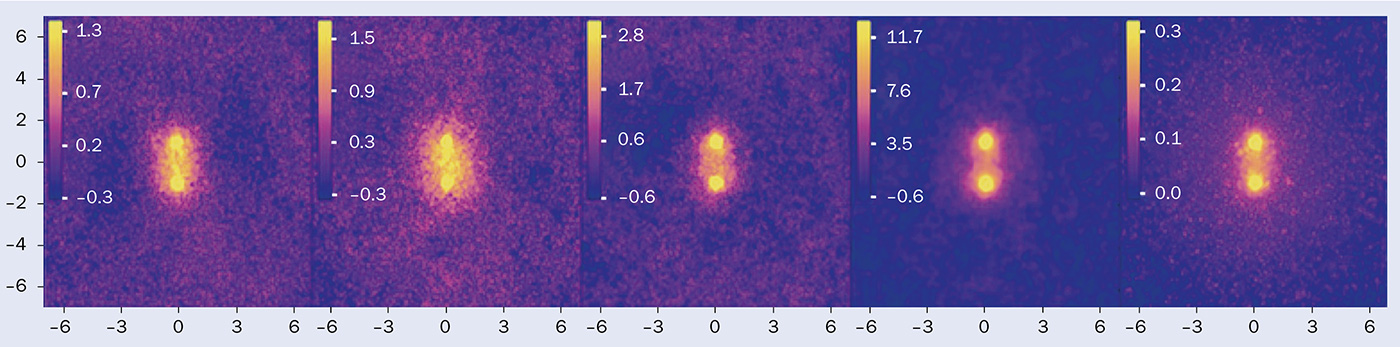
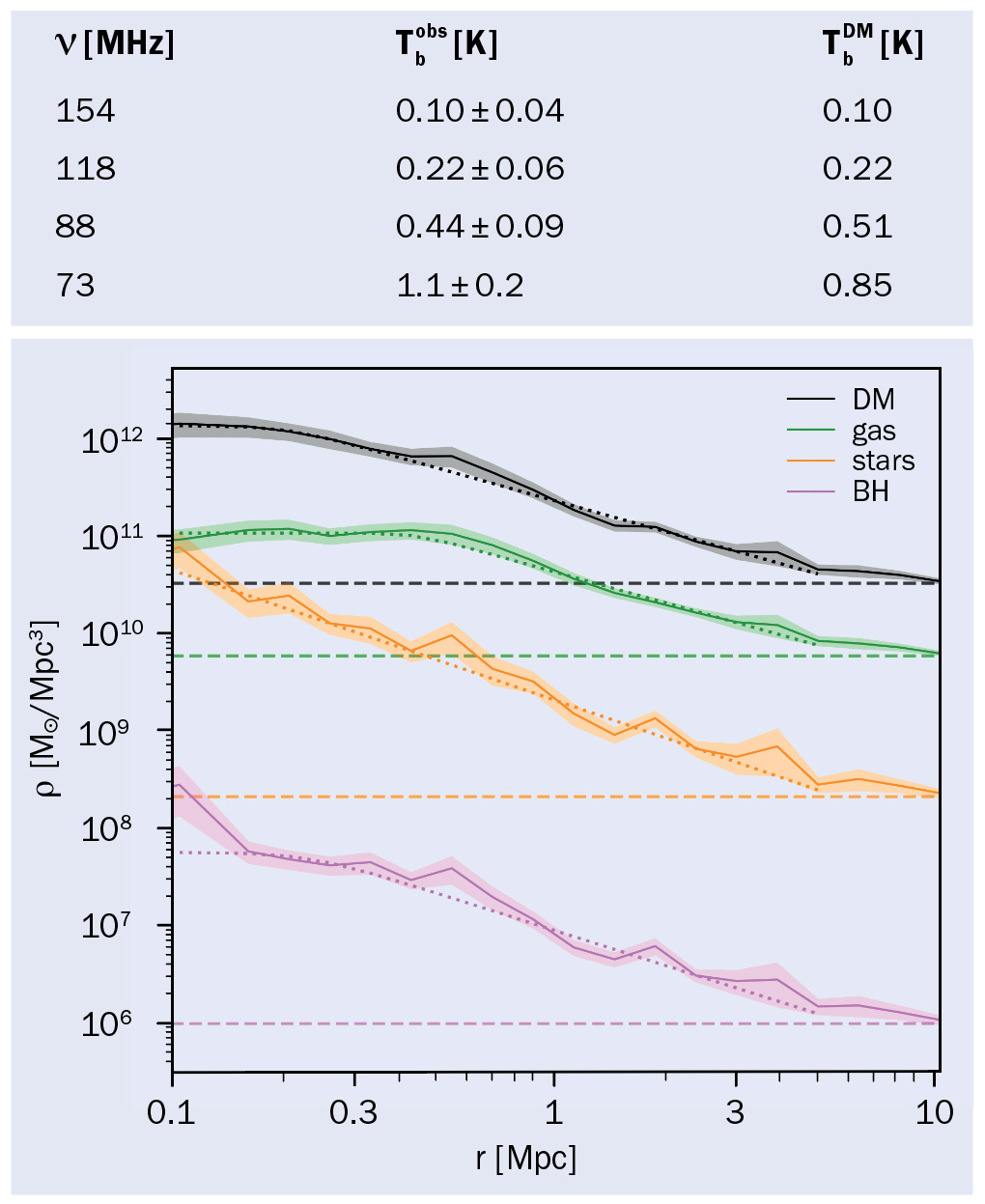
By applying this stacking technique to pairs of LRGs drawn from the Sloan Digital Sky Survey, whose catalogues contain millions of such galaxies, together with radio maps from the GLEAM and OVRO-LWA surveys, researchers have identified an intriguing anomaly. The radio emission associated with stacked filaments (see “Stacked maps” figure) exceeds theoretical predictions for diffuse filamentary gas by more than an order of magnitude.
One possible interpretation is that this excess arises from secondary radiation produced by dark matter (see “Simulations, observations and theory” figure). In this scenario, weakly interacting massive particles with masses of a few GeV decay into electrons, which then spiral through filament magnetic fields and emit synchrotron radiation at radio wavelengths. For the magnetic field strengths inferred in the stacking analysis, the amplitude of the observed signal is consistent with that expected from a dark-matter flux of this kind.
As with other anomalies, this interpretation remains debated. A more conventional explanation attributes the emission to astrophysical particle acceleration in strong accretion shocks, generated as matter falls into filaments and galaxy clusters. While shocks can in principle produce radio synchrotron emission, reproducing the observed excess appears to require acceleration efficiencies higher than those typically assumed in simulations. Significant uncertainties persist in filament properties, such as their magnetic field strengths and shock characteristics, which complicate the modelling of expected signals and remain an active area of research.
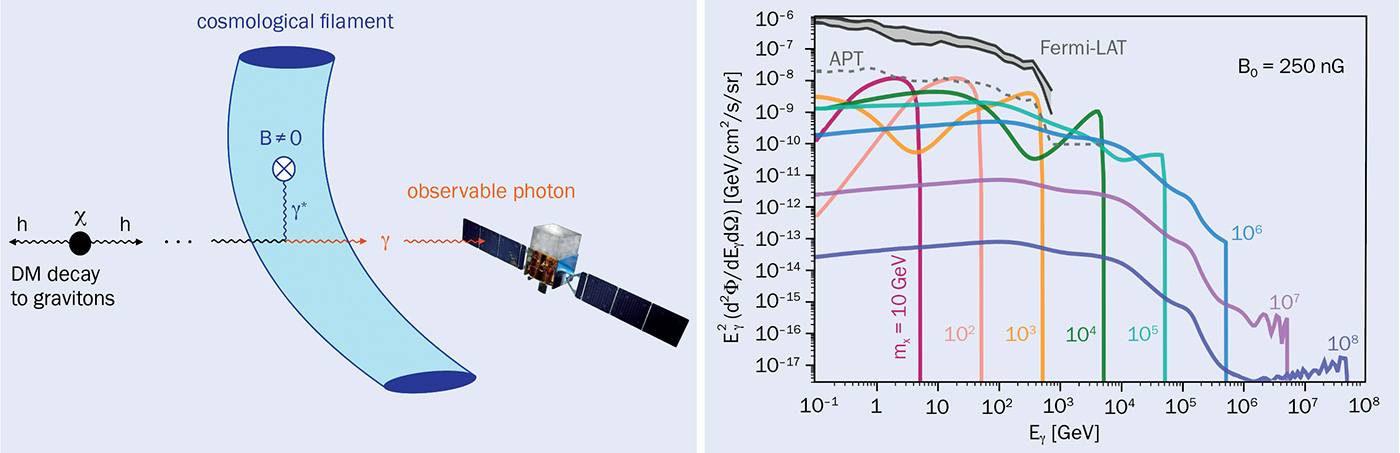
Cosmic filaments may also open a window onto more exotic dark-matter scenarios. Recent work has shown that if heavy dark matter decays into gravitons – the hypothetical quantum carriers of the gravitational interaction – these can convert into photons via the Gertsenshtein effect (see “Graviton-to-photon” figure), closely analogous to the Primakoff conversion of axions, as they propagate through the large-scale magnetic fields threading filaments. This process generates an irreducible extragalactic gamma-ray background, allowing such scenarios to be constrained with Fermi-LAT data and offering promising sensitivity for future gamma-ray observatories.
A bright future for the dark universe
For millennia, humanity has been inspired by the starry sky. Philosophers, poets and scientists alike have gazed upward, their minds filled with questions, joy and awe. Dante, one of Italy’s greatest poets, expressed this enduring fascination in the closing line of Inferno in The Divine Comedy:
Centuries after Dante, the sky continues to guard many of its secrets. However, we are now entering a golden era for indirect dark-matter searches. Future facilities, most notably the Square Kilometre Array (SKA), currently under construction in South Africa and Australia, will deliver unprecedented sensitivity to the diffuse structures of the cosmic web, and may soon be capable of directly imaging large filaments, characterising their properties and turning these vast structures into powerful probes of physics beyond the Standard Model.
These observational advances are being matched by progress on the theoretical front. Cosmological simulations are reaching new levels of realism, while the growing use of machine-learning and artificial-intelligence techniques is beginning to transform how filamentary structures are identified, modelled and interpreted. These developments promise a far more precise characterisation of filament properties, sharpening their role as laboratories for fundamental physics. The cosmic web may not keep its secrets much longer.
While radioactivity and radionuclides have been used in medicine for decades, radiopharmaceutical drugs have only recently reached the rank of a pharma blockbuster, with more than one billion US dollars in annual sales. The clearest example is lutetium-177-based therapy, which has moved into routine use for prostate and neuroendocrine cancers, is being investigated as a first-line treatment and generates revenues previously unseen in nuclear medicine (see “How radiopharmaceuticals work” panel).
On the production side, accelerators are a key source of innovation beyond the long-established nuclear reactors. Scaling up these technologies, however, remains challenging. No single laboratory can combine megawatt beams, advanced target engineering and full radiological infrastructure, and the products literally decay on the shelf.
How radiopharmaceuticals work
Modern radiopharmaceuticals combine a radioactive isotope with a biologically active molecule that targets specific cells in the body. The compound is typically injected into the bloodstream, where the biological component guides it to a tumour by binding to a particular protein expressed on cancer cells. Once attached, the radioactive isotope delivers a highly localised dose of radiation that damages or destroys the targeted cells while largely sparing surrounding tissue.
The type of radiation emitted determines how the compound is used. Gamma rays and photons from positron annihilation can escape the body and be detected externally for diagnostic imaging, while Auger electrons, beta particles or alpha particles deposit their energy over very short distances, making them effective for therapy. Increasingly, the same isotope–molecule combination can be used both to image disease and to treat it – an approach known as theranostics.
Many of the technologies now limiting medical radionuclide supply – high-power targets, isotope separation, beam reliability – were originally developed for nuclear and high-energy physics (HEP). These fields will remain essential not because they created today’s tools, but because future medical radionuclide production pushes those tools into regimes that only nuclear physics and HEP routinely explore.
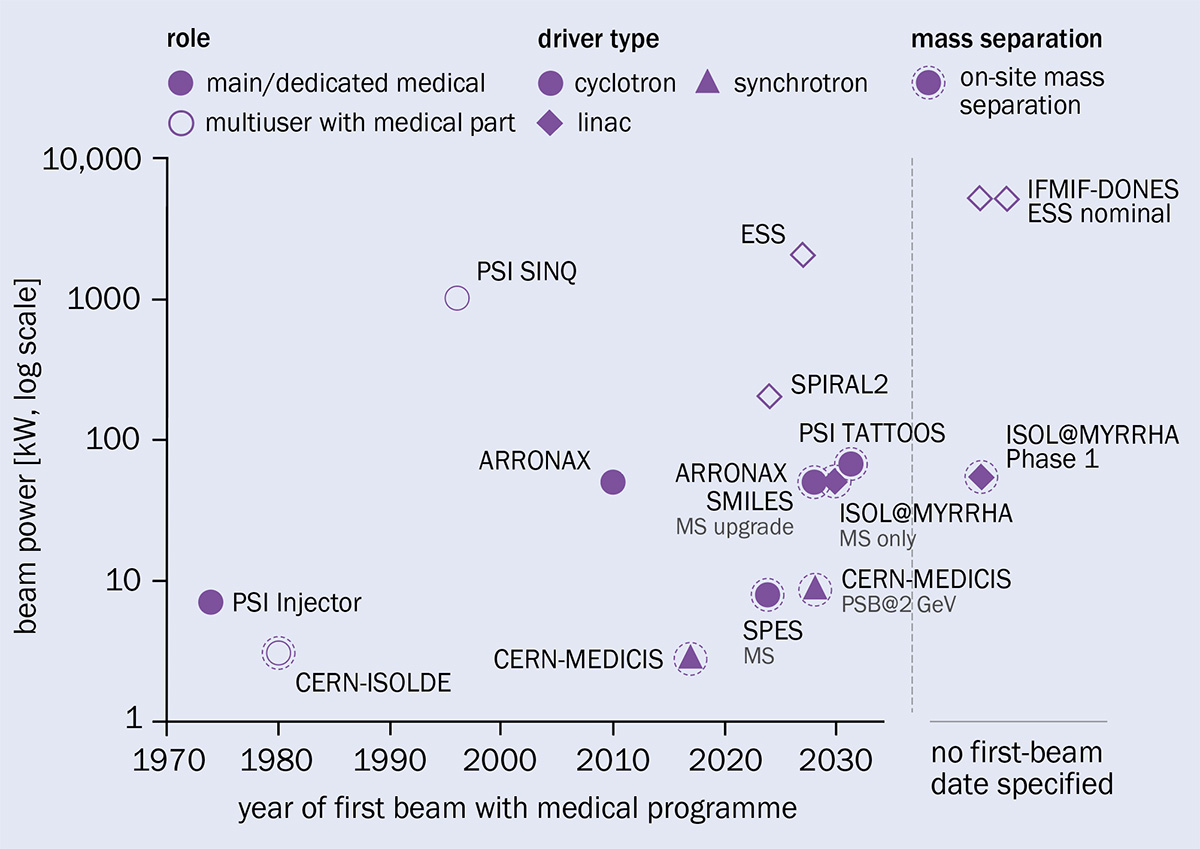
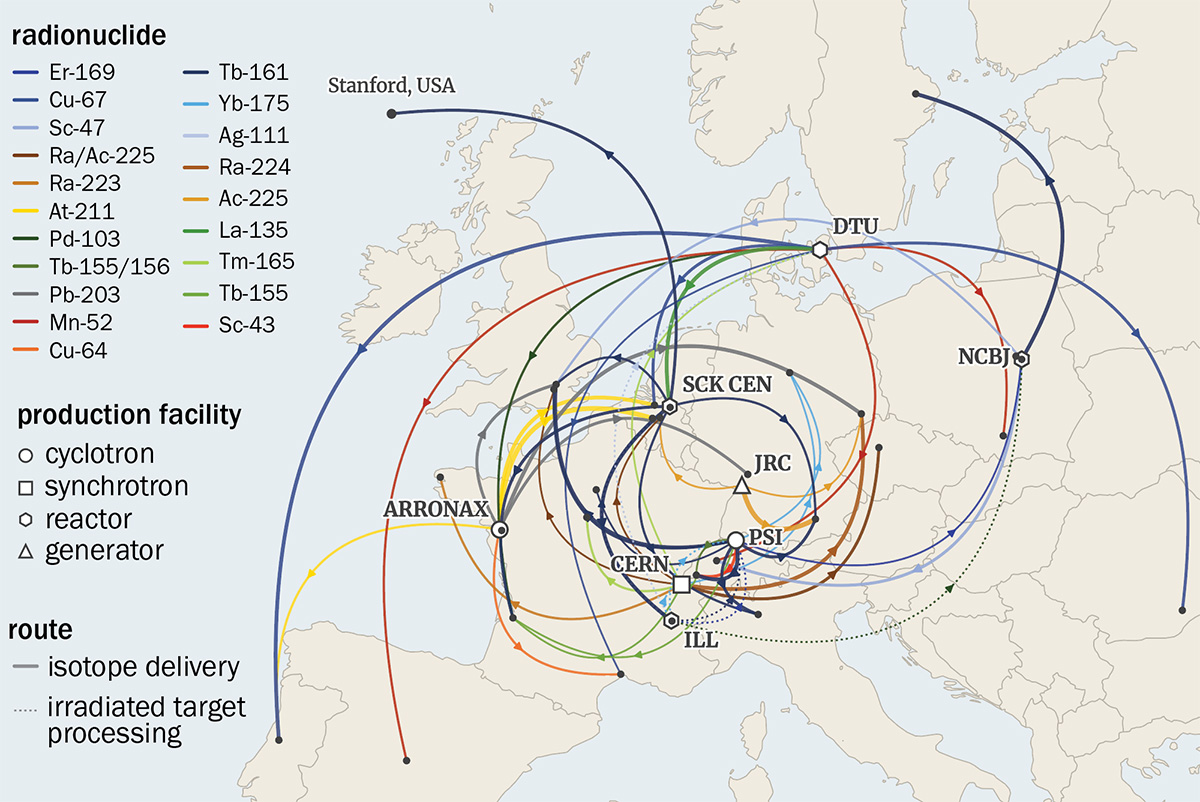
Physicists must address four bottlenecks to meet the growing demand for radiopharmaceuticals, each of which cuts differently across the European accelerator landscape (see “The European landscape” figure). Overcoming these bottlenecks would stabilise the supply of existing treatments and open the door to R&D for entirely new diagnostic and therapeutic isotopes. In that sense, the infrastructure choices made today will shape what kinds of cancer treatments are possible a decade from now.
1. Targets that cannot survive megawatt beams
Large-scale accelerator facilities push beams to extreme power densities in order to generate secondary particles or rare isotopes, placing materials under intense thermal and radiation stress. This regime is familiar from spallation neutron sources, neutrino-production targets and radioactive-ion beam facilities, where target integrity and remote handling are central design challenges rather than secondary considerations. As medical radionuclide production scales up, it increasingly operates in this same regime, where target survivability under sustained continuous-wave irradiation becomes the primary limiting factor. Beyond a certain point, targets degrade, deform or fail faster than they can be replaced, turning material endurance, target design and monitoring – rather than accelerator capability – into the dominant constraint on production.
In practice, this challenge unfolds in two forms, depending on whether a single- or a two-stage target is used. In the two-stage configuration, an intense primary beam is first converted into neutrons or photons, and those secondary particles then irradiate production targets from which the desired radionuclides are generated.
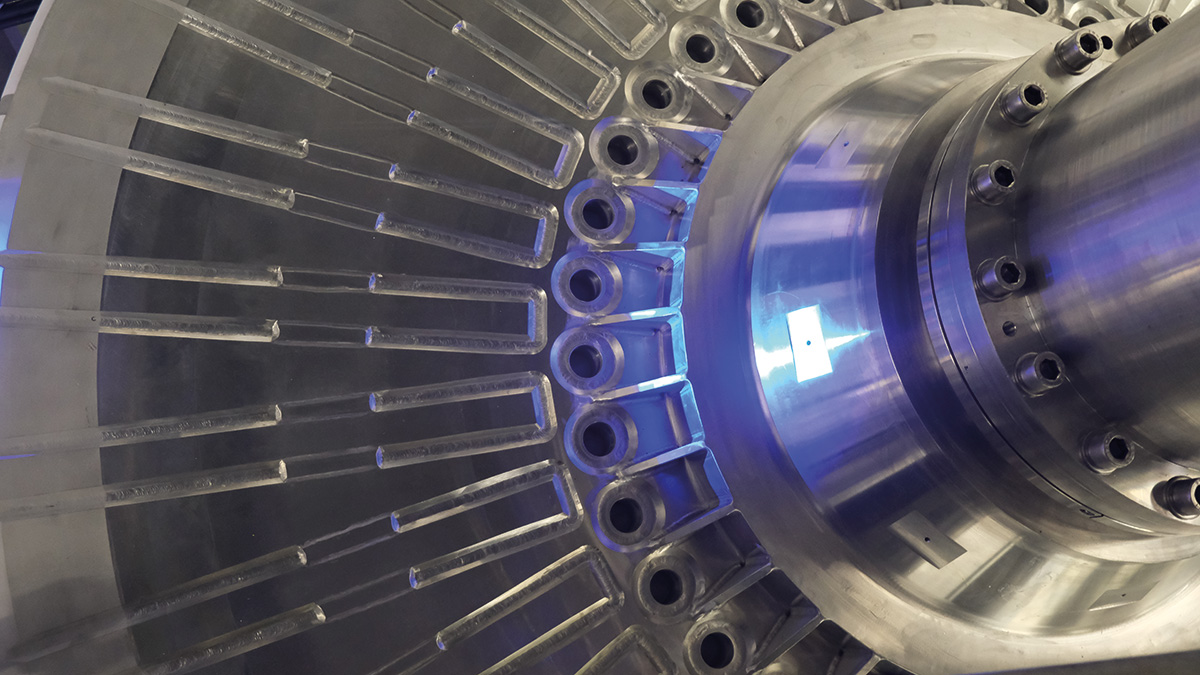
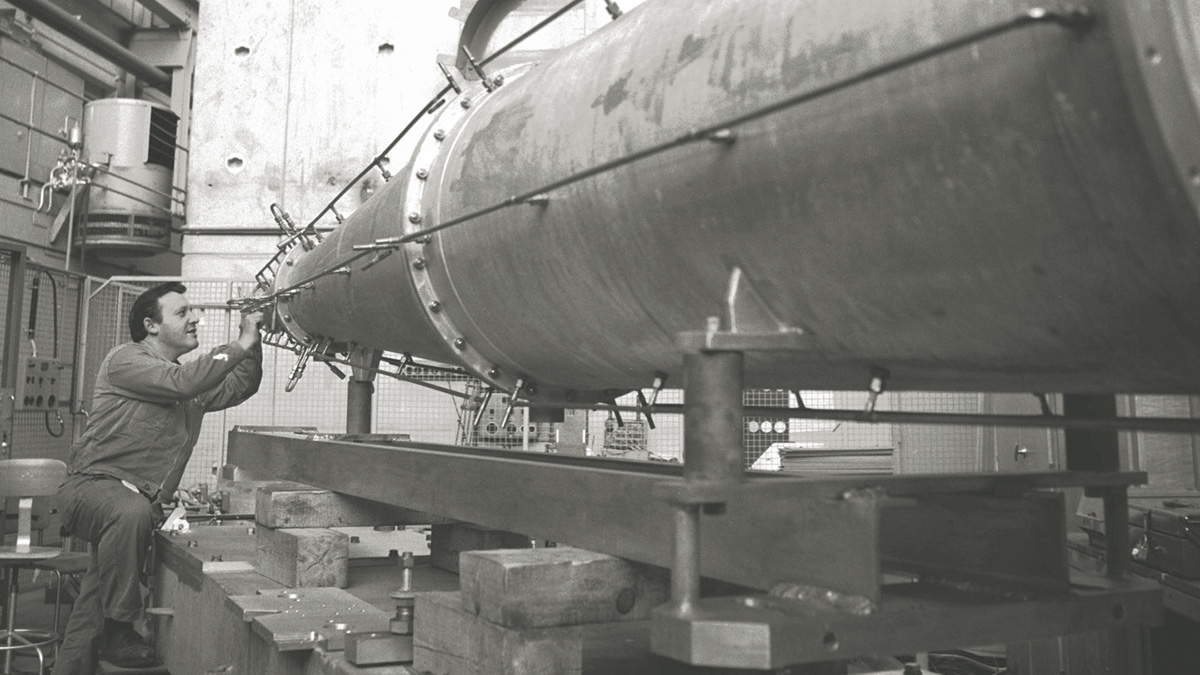
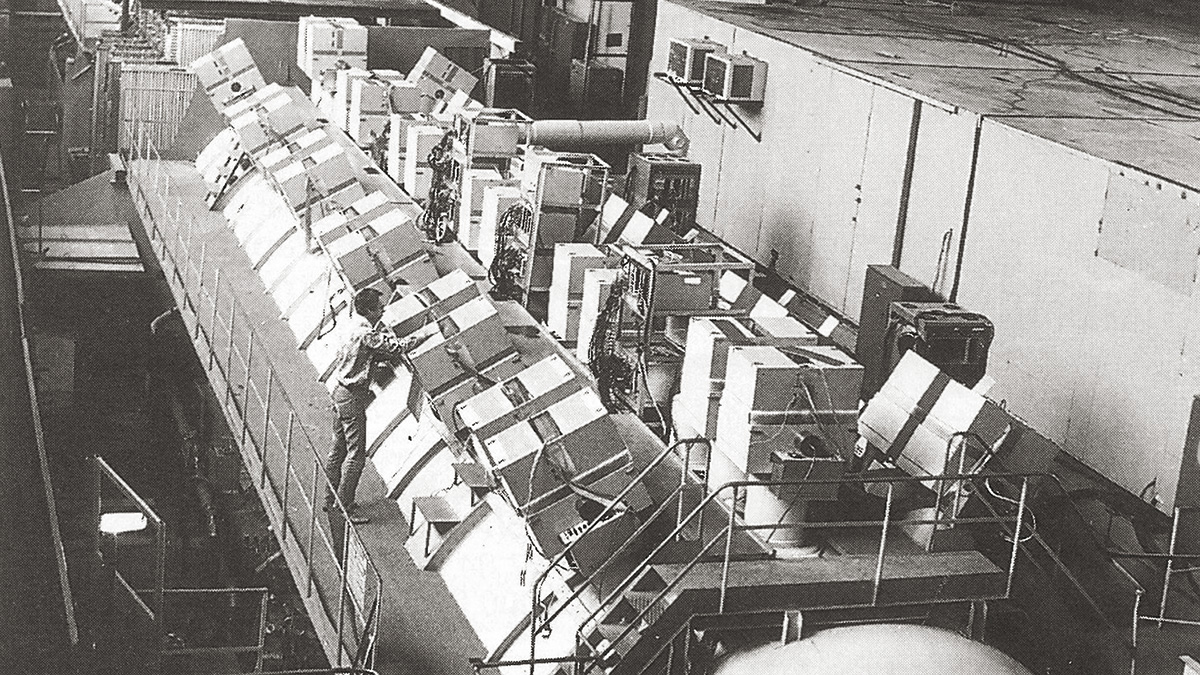
At the very front end of the supply chain, these spallation targets and beam converters – which transform protons into neutrons or electrons into photons – are among the most demanding components in the entire supply chain, because their performance and lifetime cannot be decoupled from beam power. A prominent example is the European Spallation Source (ESS) in Lund, Sweden, which will soon operate the world’s most intense long-pulse neutron beams, where a rotating, helium-cooled tungsten target enables sustained high-power operation (see “Under the beam” image). The pulsed regime introduces additional challenges from shock waves and material fatigue, which must be addressed to ensure safe operations. Likewise, the IFMIF-DONES facility in Granada will combine a 5 MW deuteron beam with a fast-flowing liquid lithium target to generate intense fast-neutron fluxes. While their primary missions lie in fundamental, material and multidisciplinary research, the extreme beam powers and neutron fluxes of these facilities also make them potentially capable of supporting radionuclide production as a secondary, but societally important, application.
Similarly, single-stage targets used for radionuclide production must withstand extreme heat loads and power densities, with geometries that depend on the type and energy of the incident particles. Active cooling, using either gases or liquids, is essential to remove heat, and careful optimisation of both beam delivery and target design can translate directly into higher radionuclide production yields.
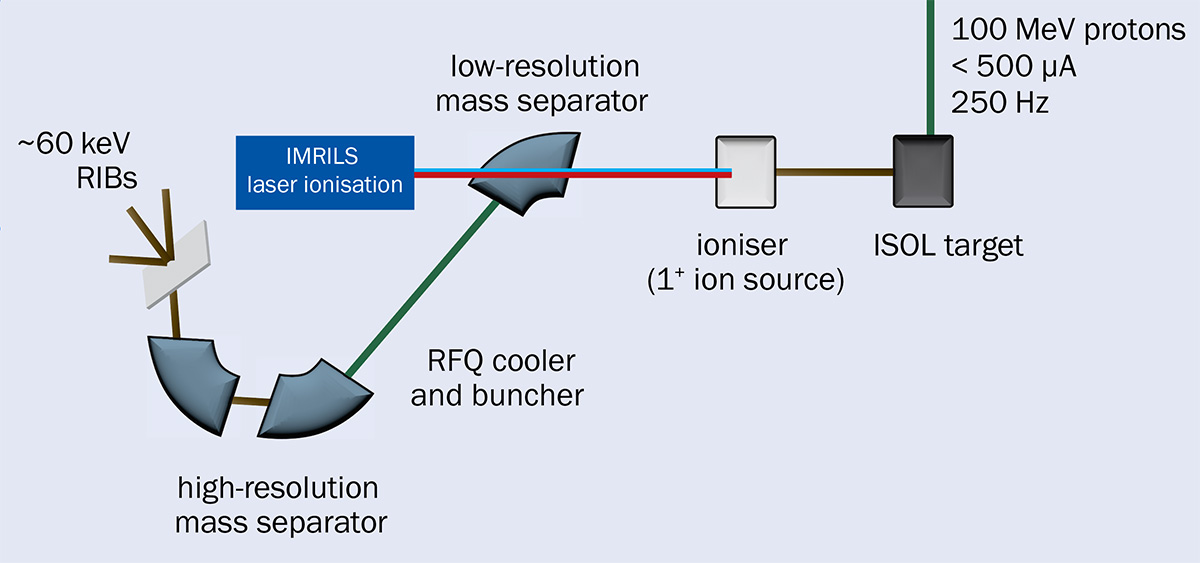
A good example is the development of high-power bismuth targets, in either liquid or solid form, such as those proposed at RIKEN in Japan, which can handle alpha beams of around 10 kW and enable the production of At-211 in batches approaching 100 GBq – far beyond the gigabecquerel-scale batches typical of present-day facilities. RIKEN is Japan’s largest comprehensive research institute, operating major accelerator and nuclear-physics facilities with a long-standing programme in medical radionuclide production. In Europe, comparable facilities are under construction, such as SPIRAL2 in Caen, France, or at SCK CEN in Mol, Belgium, where ISOL@MYRRHA will deliver a 100 MeV proton beam of up to 500 µA onto a target dedicated to the production of medical and research radionuclides (see “Sorting the haul” figure).
Additional challenges arise for highly radioactive targets such as Ra-226, a long-lived precursor used in the production of the alpha-emitting medical isotopes Ac-225 or Ra-224, or for targets designed for high-power operation and mass separation, which must remain structurally and chemically stable at temperatures approaching 2500 °C.
Even when targets survive extreme beam power, increased production immediately creates a second constraint: the radionuclides they produce are only useful if they can be isolated in the required purity – a challenge that defines the next bottleneck.
2. Radionuclides that cannot be separated
When radioactive products are chemically indistinguishable from unwanted isotopes, separation must rely on their mass rather than on their chemical properties. Without such separation, many promising medical radionuclides cannot be used at all, regardless of how efficiently they are produced, because they remain too dilute or come with long-lived impurities. This challenge is familiar from isotope production for nuclear and particle physics, where ion sources, mass separators and laser techniques are used to extract rare species from intense backgrounds.
A dedicated collaborative infrastructure was established at CERN with the creation of CERN-MEDICIS, which received support from the CERN & Society Foundation and pioneers isotope mass separation for medical applications. Commissioned in 2017, MEDICIS brings together expertise in target production, purification, radiopharmaceutical development and clinical use, linking large-scale physics infrastructure directly to biomedical research.
Building on techniques originally developed at ISOLDE, the MEDICIS programme has adapted isotope mass separation specifically for medical needs. This has enabled access to radionuclides that are otherwise unavailable, or available only at insufficient purity, achieving high molar activities essential for theranostic and therapeutic applications.
In contrast to radiochemical separation, which typically achieves efficiencies above 95%, mass-separation efficiencies vary widely, ranging from a few percent to around 70%, depending on the isotope and production route. As a result, scaling up production by mass separation is not a matter of incremental optimisation: gains in yield must be traded against beam power, target lifetime and radiation handling, placing practical limits on what facilities can deliver for many isotopes.
Significant progress has nevertheless been achieved through advances in target design, compact ion sources and resonant laser ionisation, with efficiencies above 50% now considered high performance for these physics-driven separation processes. Operating at higher beam intensities further opens the possibility of separating radionuclides directly from reactor or cyclotron targets, but doing so requires accelerator conditions and radiation handling capabilities that are only available at large-scale research infrastructures. Because mass separation is both technically demanding and intrinsically inefficient, access to purified radionuclides cannot be scaled locally, making coordination across large research infrastructures unavoidable.
In Europe, this need for coordination has been addressed through a networked approach rather than a single flagship facility. The PRISMAP programme (H2020 grant #101008571), and its follow-up PRISMAP+, bring together accelerators, reactors, isotope separation facilities and biomedical hubs across national borders, allowing researchers to access purified radionuclides that no single site could reliably supply on its own (see “Special delivery” figure). By pooling infrastructure, expertise and scheduling through competitive calls, PRISMAP has lowered the barrier for biomedical researchers to work with non-conventional radionuclides, while preserving the efficiency and safety constraints imposed by large-scale physics infrastructure. It is becoming the European medical radionuclides programme that biomedical research lacked.
The same mismatch between research-scale tools and medical-scale demand reappears in accelerator design itself – the focus of the next bottleneck.
3. Machines optimised for experiments, not production
Accelerators developed for fundamental research are typically optimised for peak performance, flexibility and discovery-driven operation. Medical radionuclide production, by contrast, demands continuous, predictable delivery, exposing a growing mismatch between machines designed for experiments and those required for routine isotope production. In practice, the requirements of medical radionuclide production change dramatically between exploratory research and routine clinical supply, shifting the emphasis from flexibility and peak performance towards reliability, uptime and predictable delivery.
Scaling requires not only new radionuclides, but integrated infrastructures
Improving multi-user operation and reducing maintenance downtime can already deliver substantial gains in effective output, even without higher beam power. Intense beams of light ions and electrons are available today using cyclotrons and linear accelerators, while new concepts are being developed to better match medical needs, including synchrotrons for alpha particles and high-power electron sources for photon-based production routes.
Even when suitable accelerators exist, however, delivering medically usable radionuclides depends on meeting regulatory, dosimetric and logistical constraints that lie beyond the machine itself.
4. Production without regulatory viability
Unlike research isotopes, radiopharmaceuticals must meet strict regulatory, dosimetric and logistical requirements. Even small uncertainties in nuclear data, impurity levels or processing routes can prevent a radionuclide from reaching patients, regardless of its therapeutic promise. At this stage, scale is limited not by beam power or yield, but by whether a radionuclide can be licensed, transported and used safely in the clinic.
The case of lutetium-177 (Lu-177) illustrates both the challenge and the opportunity. Its success has been central to the emergence of modern radiotherapeutic drugs, with compounds targeting prostate and neuroendocrine cancers now used routinely in clinical practice. This success rests not only on biological targeting, but on a carefully controlled production chain that meets pharmaceutical standards.
The mode of production of Lu-177 – either by direct neutron capture on Lu-176 or via an indirect route through Yb-176 – highlights the complexity of aligning nuclear physics, infrastructure and regulation. Choices made upstream determine radionuclidic purity, waste streams and processing requirements downstream, all of which feed directly into licensing and clinical acceptance. Lu-177’s physical and radiological properties, including its suitability for both imaging and therapy, and a half-life of about 6.64 days that is compatible with existing medical logistics, have helped it integrate into an established supply-chain organisation. This combination has enabled treatments to reach large patient populations and commercial scale.
Meeting these requirements demands substantial investment beyond irradiation itself. Facilities must support radiochemical processing, quality control, dosimetry and specialised logistics, often in shielded hot-cell environments. Recent upgrades to such infrastructure have shown that production capacity can increase significantly once these downstream constraints are addressed. At the same time, improved nuclear and biological data have revealed that even modest discrepancies in decay properties or radiation dose can have major consequences for treatment planning, licensing and waste management.
Programmes such as PRISMAP+ have begun to address this bottleneck by providing access to novel treatment radionuclides, including beta emitters that extend established therapies such as Lu-177. By generating data on production quality and radiochemical behaviour early in development, these programmes help determine which radionuclides can realistically progress from research to routine clinical use. Crucially, regulatory constraints feed back into accelerator choice, target design and separation strategy: decisions taken at the level of beam energy, target material and purification method determine whether a radionuclide can ever meet clinical purity, waste and licensing requirements.
Taken together, these constraints show why regulatory viability is itself a bottleneck. Scaling radiopharmaceuticals requires not only new radionuclides, but integrated infrastructures in which production, processing, regulation and clinical deployment are addressed together. As radiopharmaceuticals move further into mainstream oncology, success will depend on sustained collaboration between large-scale research infrastructures, regulators, clinicians and industrial partners – none of which can solve the problem alone.
• The author dedicates this article to the memory of Mark Rayner, who shaped its structure and much of its prose.
Born of one kind, a neutrino can die another. Its three flavours, electron, muon and tau, do not correspond to states of definite mass, but to quantum superpositions of three distinct masses. As neutrinos propagate, the mixture reshuffles and the flavour at arrival can differ from the one at production. None of this is predicted by the Standard Model, making the observation of neutrino oscillations one of the clearest signals of physics beyond it.
Neutrino oscillations provide a unique probe of new physics, acting as an interferometer that is sensitive to neutrino mass differences down to the sub-eV level. Precise measurements at the next-generation accelerator-based oscillation experiments, Hyper-Kamiokande in Japan and DUNE in the US, are poised to answer several critical questions. What is the ordering of the three neutrino masses, given their two measured mass-squared differences? Do neutrinos and antineutrinos oscillate differently? Are there additional, as yet undetected, neutrino states? These long-baseline neutrino facilities, in which a beam of neutrinos is sent to a detector hundreds of kilometres away, will produce much larger datasets than current-generation experiments. However, they suffer from a fundamental limitation: we do not know the precise energy or intensity of the neutrino beams when they set out. Reaching ultimate precision on neutrino-oscillation parameters is therefore no longer a matter of statistics, but one of messy nuclear-physics questions related to the details of weak-interaction cross sections and proton-induced hadron production.
Modern neutrino beams use the famous “magnetic horn” design, developed by Simon van der Meer at CERN in 1961 (see “In focus” image). Protons strike a target to produce pions, which the horn focuses into a volume for them to decay to neutrinos and leptons. The trouble is, the resulting neutrino beam covers a wide range of energies (about 0.5 GeV and 2.5 GeV for Hyper-K and DUNE, respectively), with a shape and intensity that depend on the details of tough-to-model proton–nucleus collisions. To make matters worse, the broadband neutrino flux forces the neutrino energy to be estimated from the products of neutrino–nucleus interactions, which are notoriously difficult to model accurately. Together, these challenges form a barrier to ultimate precision in neutrino-oscillation measurements.
There is, in principle, a way around both problems: neutrino tagging. Proposed by Bruno Pontecorvo in 1979, this technique associates a measurement of the four momenta of the pion and muon in a π+→ μ+νμ decay with a measurement of a neutrino in a downstream detector. Four-momentum conservation then fixes the neutrino kinematics event-by-event. As a result, the neutrino energy is known for each interaction and the flux is perfectly constrained, nullifying the key challenges for neutrino-oscillation experiments and producing well-controlled muon, pion and kaon beams as byproducts. The idea was first attempted in the 1990s at the dedicated Tagged Neutrino Facility (TNF) at the Serpukhov accelerator in Protvino (see “Dream, deferred” image). TNF recorded two candidate events in its brief pilot run, before the dissolution of the Soviet Union brought the work to a halt.
The downside with neutrino tagging is one of scale: for every neutrino seen in a massive, 100-tonne detector close to the beam, there are about 1013 pion decays. To collect a reasonable 105 neutrino interactions per year, one would therefore need to identify at least 1011 individual muons per second and successfully identify the minute fraction of them that are associated with observed neutrinos. Such a measurement demands beamline detectors with timing resolutions of 10 to 100 ps and a neutrino detector with sub-ns timing resolution, with the beamline detectors operating in a high-radiation environment.
Promising performance
These challenges proved too much for the 1990s, and the idea lay dormant for three decades after the closure of TNF. However, a revolution in detector and electronics technology has since changed what is possible (see “The fast-timing revolution” panel) – beginning with the NA62 experiment at CERN.
The fast-timing revolution
R&D for the high-luminosity phase of the LHC are expected to push fast-timing sensors beyond the performance of NA62’s GigaTracker. With bunches crossing every 25 ns and up to 200 proton collisions in each, the ATLAS and CMS upgrades require timing resolutions below 50 ps to disentangle overlapping vertices. In a silicon detector, incoming particles release small electric charges, with internal electric fields then steering them toward electrodes to be collected and measured. Faster timing demands more charge, a shorter drift for the signal to form quickly and smaller collection electrodes for sharper and stronger pulses. In conventional planar sensors, these requirements are often in conflict with one another. Since the collected charge is proportional to the sensor thickness, which also sets the drift distance, thinner sensors give faster signals but fewer carriers. Potential solutions span a wide range of architectures. Low-gain avalanche detectors (LGADs), for instance, combine thin, 50 μm sensors with a gain layer to amplify charge, compensating for the lower number of carriers produced in a thin substrate while preserving a short drift. They achieve resolutions of 20 to 50 ps and will equip the new ATLAS and CMS timing layers.
Many roads to fast timing
For the upgrade of the LHCb vertex locator, which must resist radiation levels of 1016 to 1017 1 MeV neutron equivalents per cm2 (neq/cm2), a gain layer would erode too quickly. Three-dimensional sensors sidestep the problem geometrically. Their electrodes run along the sides of each pixel rather than on the top and bottom surfaces, so charges move sideways over distances below 50 μm while the sensor remains thick enough to generate large signals. Initially developed for radiation-hard pixel detectors for ATLAS and CMS, these sensors were later redesigned for timing and have reached resolutions as good as 10 ps. The remaining challenge lies in the electronics. Readout chips must match the sensors’ speed and radiation tolerance, and recent prototypes in 28 nm CMOS have achieved 30 ps resolution over areas of a few mm2. Large-area designs are currently underway.
Depleted monolithic active pixel sensors integrate the sensor and readout electronics on the same chip. With resolutions of 10 to 200 ps and pixels smaller than 100 × 100 μm2, they are much cheaper than three-dimensional sensors and LGADs, and therefore better suited to instrumenting large surfaces and achieving a lower material budget. Some R&D initiatives are also exploring the use of Cherenkov radiation to detect charged particles, a process much faster than ionisation in silicon. In these detectors, the prompt Cherenkov light is converted into photoelectrons and amplified in a thin gaseous detector, producing signals with time resolutions of a few tens of picoseconds. While highly promising, extending this approach to finely segmented detectors operating at very high rates remains an open problem. All these new tracking technologies offer promising perspectives beyond high-energy physics, for example in real-time monitoring of the proton and ion beams used in cancer therapy.
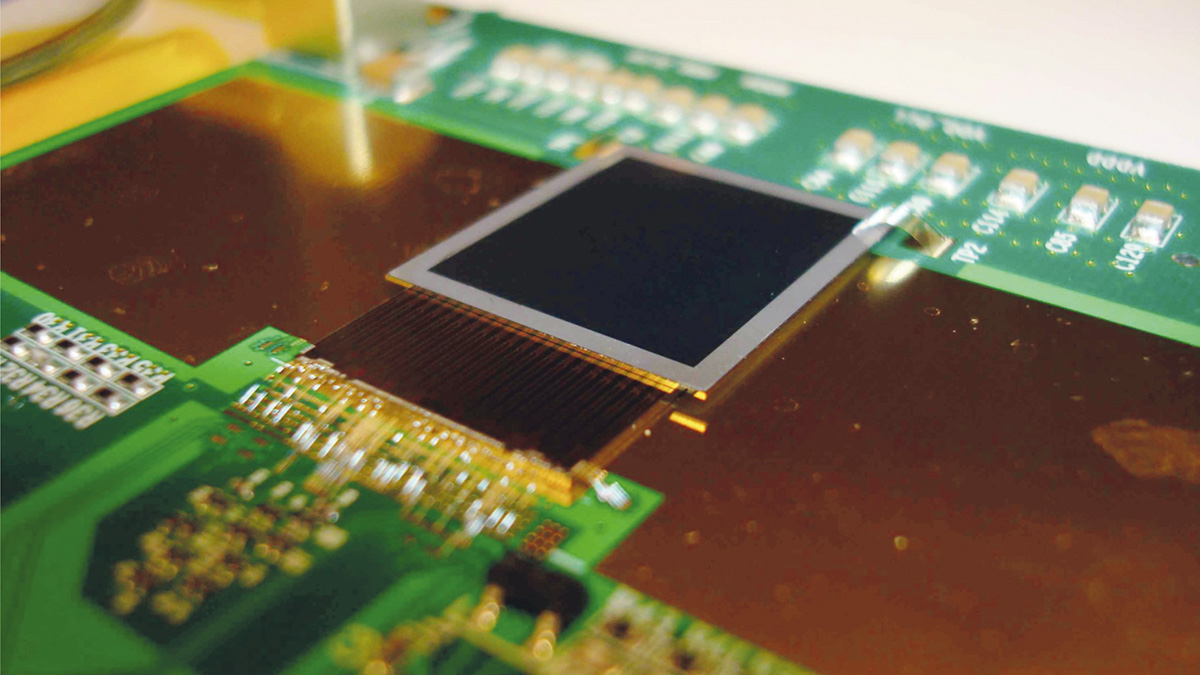
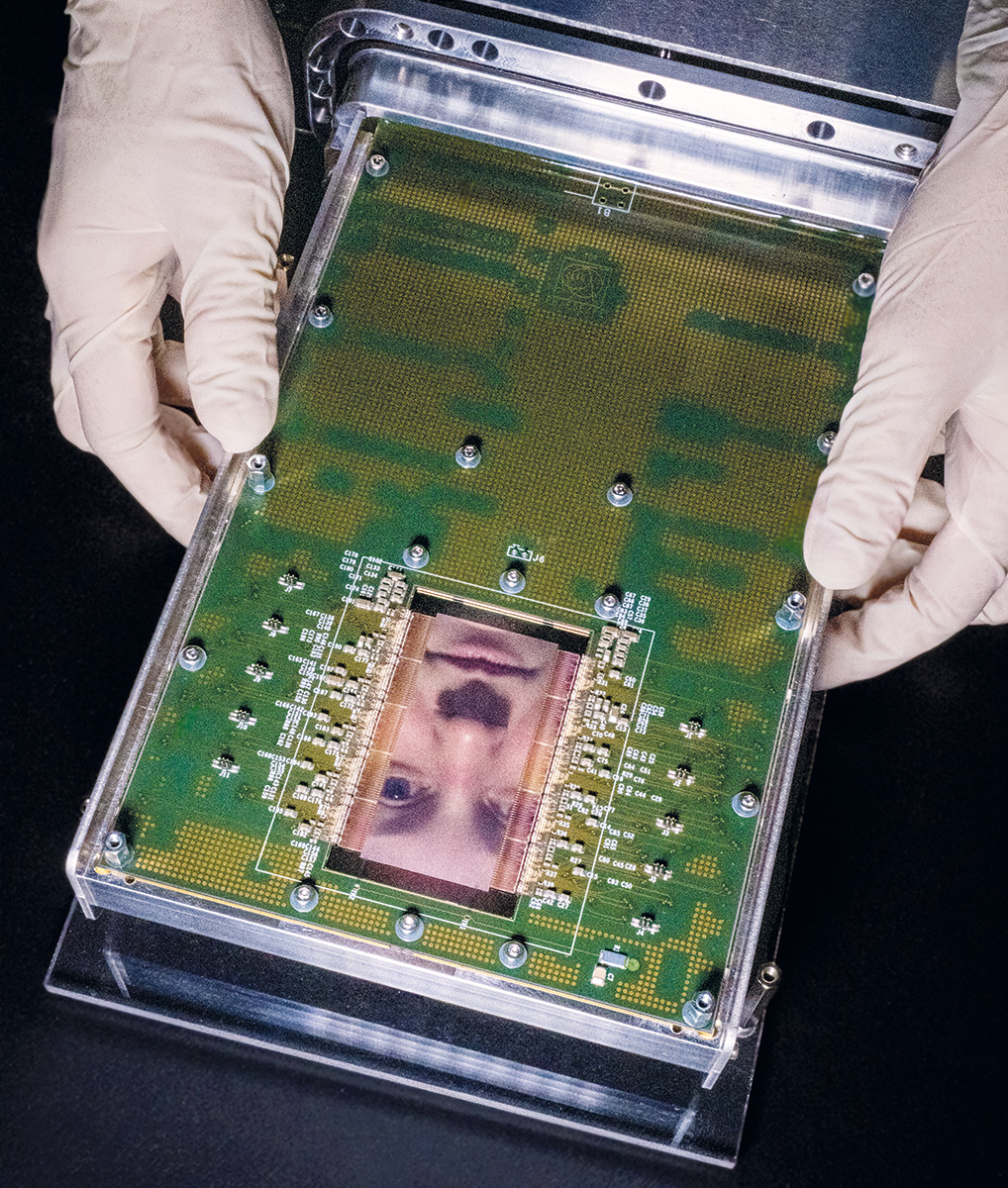
In order to study the very rare kaon decay K+→ π+νν, the NA62 collaboration faced a similar timing challenge in the late 2010s. At the time, pixel detectors, mainly developed for experiments at the LHC, were only recording the position of particles, their time being given by the proton bunch crossing (50–25 ns). New R&D was started to face the challenge of integrating timing capabilities into every pixel (of which there are more than one thousand per cm2). Within a few years, the “TDCPix” chip was designed (see “Pixel timekeeper” image), achieving a hit time resolution of 130 ps and starting a new field of 4D tracking (measuring particle trajectories in space and time). The price to pay for this performance was a significant increase in the power density absorbed by the pixel, exceeding 2W/cm2. Absorbing this power required developing an innovative cooling technology: a 200 μm-thin silicon plate integrating a dense microfluidic cooling circuit. These two innovations led to the GigaTracker beam spectrometer (see “Fourth dimension” figure) – the first 4D tracking detector in high-energy physics, which has been in operation since 2015.
With the GigaTracker in hand, the NA62 collaboration achieved the main goal of measuring the K → πνν decay, and was able to put neutrino tagging to the test. The facility’s high-intensity kaon beam also serves as a neutrino source, since the kaons predominantly decay as K+→ μ+ν. Due to the intensity of the neutrino beam and its mean energy of 40 GeV, a non-negligible number of neutrinos interact in the experiment’s electromagnetic calorimeter, a 20-tonne volume of liquid krypton. The analysis of data collected in 2022 revealed one neutrino interaction candidate that could be matched to a detected parent decay. The neutrino’s energy was estimated to be 52 GeV, with a record relative precision of 0.3%. For reference, with a few exceptions (such as pion and kaon decays at rest), neutrino energies from conventional neutrino beams are known with an uncertainty of at least 10%, and not event-by-event.
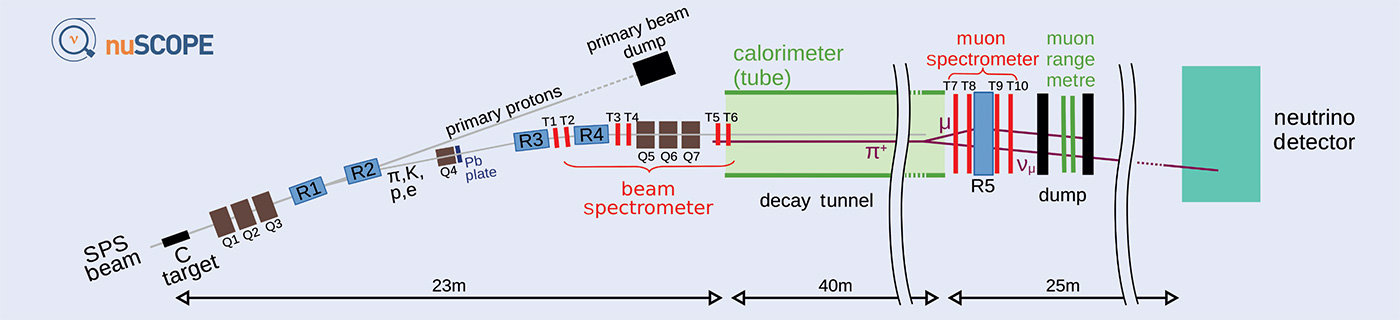
NA62’s proof-of-concept for neutrino tagging, combined with the broader advance of fast-timing detectors, have together made it possible to revisit the original TNF idea. Developed in parallel with the first tagged-neutrino analysis by NA62, the NuTag collaboration investigated the conditions under which a tagged beam would enable measurements inaccessible with conventional neutrino beams. These efforts have led to the proposed nuSCOPE facility at CERN, which emerged within CERN’s Physics Beyond Colliders study group by combining the tagged-beam concept from NuTag with the slow-extraction-driven monitored neutrino beam pioneered by the ENUBET collaboration. Rather than using a pulsed magnetic horn, the ENUBET setup relies on slow extraction from the SPS and lines the decay tunnel with particle detectors that identify the charged leptons produced with neutrinos, constraining the flux at the percent level.
Legacy measurements
The idea of nuSCOPE echoes that of TNF (see “Beam to neutrino” figure). The first step is to direct a slow-extracted proton beam from the SPS onto a target to produce secondary pions and kaons that are then momentum-selected, using a series of dipoles and quadrupoles, to form an 8.5 GeV meson beam with a narrow momentum range. The mesons then traverse a set of ultra-fast detectors before decaying to predominantly muons and neutrinos. The muons reach a second set of fast detectors, whilst a few neutrinos interact in a dedicated detector 25 metres downstream. With sufficient timing and spatial resolution, each neutrino interaction can be associated with a measured individual meson decay. For the first time, the energy of the incoming neutrino would be known at the sub-percent level on an event-by-event basis. Measurements of neutrino cross sections, currently the dominant source of systematic uncertainty projected for DUNE and Hyper-Kamiokande, may then reach an accuracy of about 1%. Such datasets could serve as reference, “legacy” measurements for neutrino physics for decades to come.
The implications extend well beyond standard oscillation physics. Short-baseline oscillations induced by sterile neutrinos, for instance, could produce rapid patterns that would get washed out by energy smearing in conventional beams. The facility would also deliver intense, well-characterised muon and pion beams, opening additional avenues for rare process searches and precision measurements. Looking further ahead, one can even imagine how such techniques might reshape future long-baseline experiments. Depending on what DUNE, Hyper-Kamiokande and the reactor-based JUNO experiment in China will discover, the next leap in precision may not come just from higher intensities, but from beams whose properties are known with exquisite accuracy.
To provide the best experiences, we use technologies like cookies to store and/or access device information. Consenting to these technologies will allow us to process data such as browsing behavior or unique IDs on this site. Not consenting or withdrawing consent, may adversely affect certain features and functions.
Functional
Always active
The technical storage or access is strictly necessary for the legitimate purpose of enabling the use of a specific service explicitly requested by the subscriber or user, or for the sole purpose of carrying out the transmission of a communication over an electronic communications network.
Preferences
The technical storage or access is necessary for the legitimate purpose of storing preferences that are not requested by the subscriber or user.
Statistics
The technical storage or access that is used exclusively for statistical purposes.The technical storage or access that is used exclusively for anonymous statistical purposes. Without a subpoena, voluntary compliance on the part of your Internet Service Provider, or additional records from a third party, information stored or retrieved for this purpose alone cannot usually be used to identify you.
Marketing
The technical storage or access is required to create user profiles to send advertising, or to track the user on a website or across several websites for similar marketing purposes.