Exactly three decades ago, the first conference in the Les Rencontres du Vietnam series was held in Hanoi, initiated by Jean Trân Thanh Vân, who is also the architect of the Rencontres de Moriond series held each March in La Thuile, Italy. 2023 also marks the 10th anniversary of the International Centre for Interdisciplinary Science and Education (ICISE) in Quy Nhon, host of the Vietnam event.
An official partner of UNESCO, Rencontres du Vietnam’s scientific conferences and schools promote collaboration between Vietnamese or Asia-Pacific scientists and colleagues from other parts of the world. ICISE’s ambitious goal is to focus on the development of science and education, helping young Asian students and scientists to grow their knowledge by attending lectures and exchanging ideas with high-level overseas counterparts.
The 2023 event, entitled “Windows on the Universe”, took place from 6 to 12 August and consisted of two joint conferences, one reporting on the progress and developments in particle physics and the other discussing recent developments in astrophysics. The conference featured joint sessions between both communities, as well as separate plenary and parallel sessions for each discipline. The event attracted some 150 participants, including theorist and 1999 Nobel Laureate Gerard ’t Hooft.
In the tradition of ICISE-based conferences, a significant proportion of participants came from Asia, in particular from Vietnam, where the fundamental-research community has grown considerably since the start of ICISE activities. For example, Vietnam is now a member of the T2K experiment. Son Cao (IFIRSE) gave the plenary review on the results from this and other long-baseline neutrino experiments. Many others, including young scientists, presented their latest work during the parallel sessions.
During an extended opening session, some of the very first “Rencontres” participants shared entertaining memories of how it all began. The scientific part of the meeting followed, with keynote talks from a select group of excellent speakers covering most of the activities in particle physics and astrophysics. A highlight was the final day, when different views on future directions in particle physics were discussed, and the latest Fermilab muon g−2 measurement experiment – released just hours beforehand (see Muon g-2 update sets up showdown with theory) – was presented.
Throughout the week, ICISE confirmed its reputation as an excellent venue for conferences in Southeast Asia. At the end of the meeting, a group of some 40 scientists accepted an invitation to spend a day in Hanoi for an audience with Vietnam’s president, Võ Văn Thưởng, who, together with his staff, discussed science and education in the country. This was the final highlight of a very successful celebratory edition of the Rencontres du Vietnam in 2023.
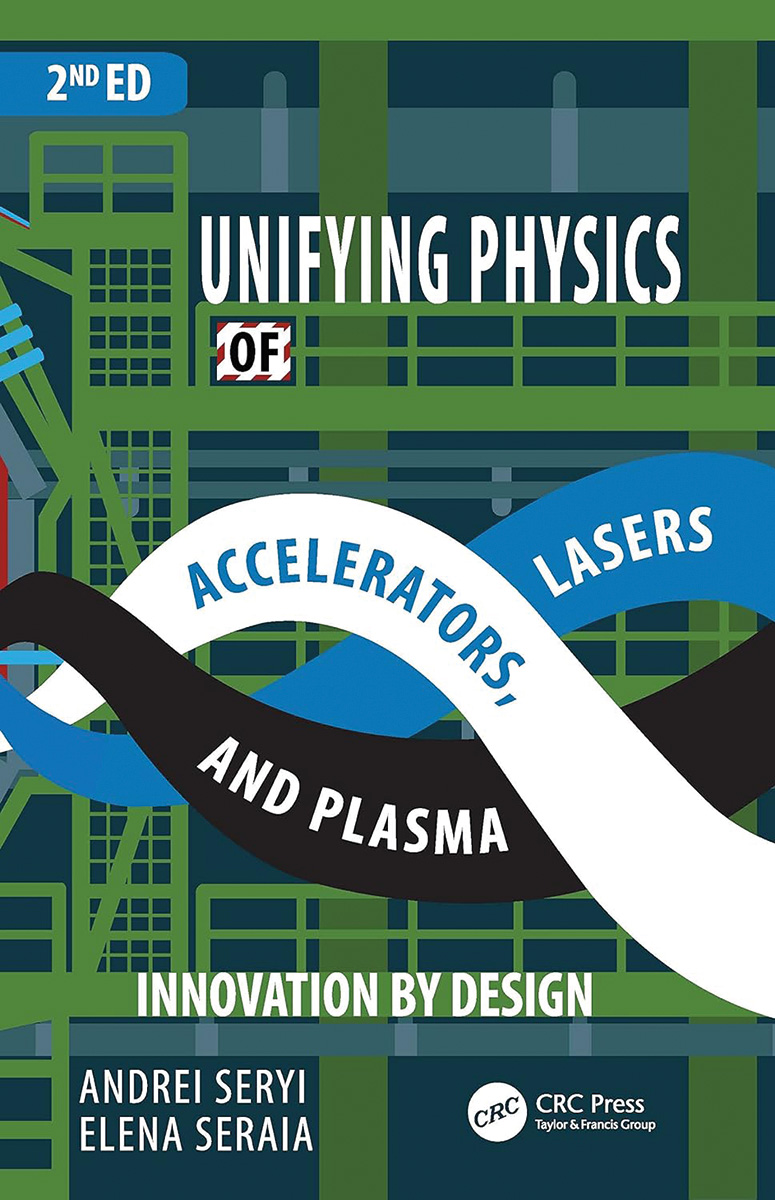
The book Unifying Physics of Accelerators, Lasers and Plasma, by Andrei Seryi and Elena Seraia, provides a comprehensive overview of the fundamental principles and physics of three distinct areas: accelerators, lasers and plasma, bridging them via inventive principles that offer readers a unified perspective. The strength of the book lies in its accessibility and clarity.
Originally published in 2016, the first edition was picked up by CERN’s “eBooks for all!” programme to be converted to open access. The second edition, released in April 2023, has been updated throughout to cover new and essential areas in accelerator science. The material for the book originated from lectures and courses with the aim to teach undergraduate and graduate students several physics disciplines in a coherent way, while at the same time ensuring that this training would develop and stimulate innovativeness. It is written with a fine balance between technical rigour and a conversational tone, avoiding heavy mathematics and using back-of-the-envelope-type derivations and estimations wherever possible. This makes the book inspiring for both experts seeking in-depth knowledge and curious minds looking for an introduction to the field.
With the authors’ systematic approach, readers can easily follow the logical progression of ideas, facilitating comprehension and aiding future reference. They introduce the reader to the basics of accelerators and the art of inventiveness, and provide a solid foundation for understanding the key concepts of accelerators, lasers and plasma, and how they can be integrated and used together to advance scientific research.
The book includes a wide range of relevant topics such as beam dynamics, cavities, synchrotron radiation, laser and plasma physics and their role in accelerators. It then delves into advanced accelerator concepts such as radiation generation, wakefield acceleration and laser-plasma accelerators, free-electron lasers and plasma-based light sources. The authors also weave in the historical development of accelerator, laser and plasma technologies, highlighting milestones that have shaped the scientific landscape. They also extensively explore the next generation of accelerators, cutting-edge technologies and state-of-the-art facilities employed in these fields. New chapters added to the second edition, which are crucial in the accelerator area and relevant for future projects, include topics such as superconducting technology, beam cooling, final focusing, polarisation, beam stability, energy recovery, advanced technologies and no fewer than 40 inventive principles.
Also remarkable are the more than 380 illustrative diagrams that allow the reader to visualise the content for a better understanding. In the eBook most of the pictures have been changed to even more attractive colour versions.
The authors commit to scientific integrity, reinforcing their authority in the field. In addition, their pedagogical strength and clear aim to help the reader develop a deeper understanding of the material is emphasised with numerous end-of-chapter exercises. In the second edition, the guide to the solutions has been added directly into the book.
This book is the first of its kind where the three disciplines of accelerators, lasers and plasmas are connected towards building more compact accelerators. One of the highlights is the authors’ emphasis on the potential synergistic effects that can arise from integrating these three areas. With its accessible explanations, cutting-edge research coverage, and compelling arguments for interdisciplinary collaboration, this is an indispensable resource for physicists, researchers and students alike.
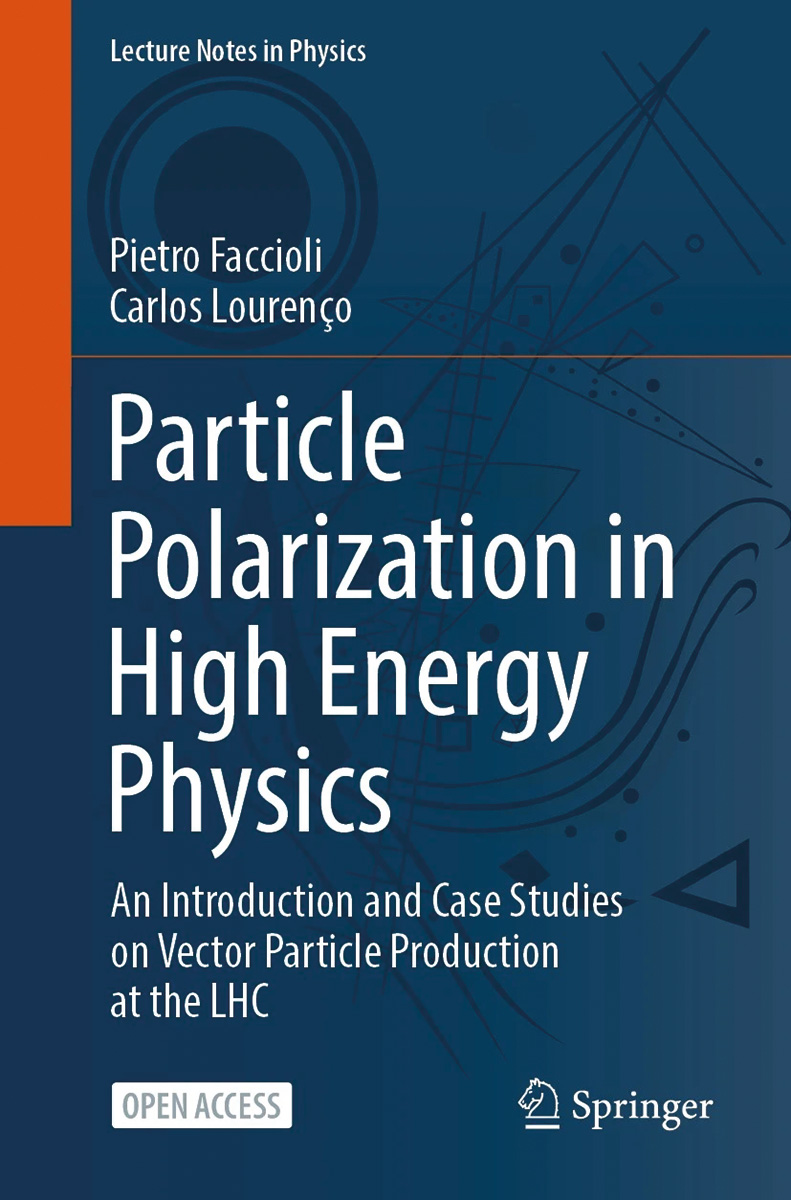
At the end of two pedagogical seminars that Pietro Faccioli gave in April 2013 at CERN and HEPHY, Vienna, on the topic “Angular momentum and decay distributions in high energy physics: an introduction and use cases for the LHC”, several people, including myself, encouraged him to turn his slides into a textbook on particle polarisation. Ten years later I received a copy of Particle Polarization in High Energy Physics: An Introduction and Case Studies on Vector Particle Production at the LHC from Carlos Lourenço, co-author and Pietro’s long-term colleague. During this decade, much has been learned about particle polarisation and related topics, in particular thanks to measurements made at the LHC. As someone who had a front-row seat to observe this progress in the context of polarisation measurements in the CMS experiment, I can attest to the importance and timeliness of this book.
Throughout the first four chapters, the authors guide the reader through a mosaic of relatively easy paths that introduce important concepts, including among others: helicity conservation, parity properties, polarisation frames and their transformations, frame-independent polarisation, and the Lam–Tung relation. Throughout the narrative, they often present real or simulated examples of caveats that can induce irreversible distortions in the measured distributions, potentially biasing the experimental results or their interpretation. The second half of the book (running to another 150 pages) targets a more expert audience, interested, for example, in acquiring the background knowledge needed to study cascade decays to vector particles or smearing effects of higher-order QCD (“non-planar”) processes. Appendix B, in particular, with page-long equations and no figures, must have been prepared “on demand” for people studying rare Z and W radiative decays with LHC data.
The pedagogical style of the text and the quality of the figures have clearly benefitted from the multiple interactions that the authors had with many people through physics schools, university seminars and workshops. The reader can also easily appreciate that the authors contributed to the field of particle polarisation with several original ideas, both regarding the development of robust data-analysis methods and their phenomenological interpretations. It is particularly eye-opening to see how easy it is to obtain biased experimental results if the analysis methods follow simplified approaches, ignoring the intrinsic multidimensionality of polarisation measurements. While thetext is very well written, the aspect that most distinguishes this book from others on similar topics is the presence of several beautiful figures, providing a welcome visual presentation of non-trivial concepts.
The authors contributed to the field of particle polarisation with several original ideas
Thanks to the CERN-supported open-access publication, the book can be directly downloaded by anyone who is interested. Although many readers will prefer a paper copy, the PDF file has the advantage that the reader can very easily navigate within the book by clicking on the many links connecting the text to figures, equations, cited references, and even to words in the very useful index. It is particularly practical to be one click away from an equation shown, sometimes, a hundred pages earlier.
Given the steady increase in the size of data samples being collected by the LHC experiments and the role that the polarisation aspects play in precision measurements of Standard Model processes, as well as in improving the efficiency of searches for new particles, the authors may soon be tempted to write a sequel. In such a future edition, it would be good to include a list of exercises for the interested reader, based on the authors’ behind-the-scenes knowledge and including realistic “traps” that readers should avoid. This would strengthen even further the role of the book as a guide for students and researchers involved in analysis of experimental data or in the interpretation of results.
Although science education, communication and public outreach are distinct fields of research and practice, they often overlap and intertwine. Common to the three fields is their shared goal of increasing scientific literacy, improving attitudes to STEM (science, technology, engineering and mathematics) and empowering society to engage with and apply scientific knowledge in decision-making processes. In light of challenges such as climate change and rapid advances in artificial intelligence, achieving these goals has become more relevant than ever.
Science education, communication and outreach have developed from different origins, at different times, and in response to diverse public needs. The formation of science education as a proper discipline, for example, dates back to educational reform movements in the late 19th century. Science communication, on the other hand, is a relatively young field that only took a clear form in the second half of the 20th century in response to a growing awareness of the role and impact of scientific progress.
While it is true that practitioners often cross the disciplinary boundaries of these fields, education, communication and outreach today represent distinct professions, each with its own identity, methods and target groups. Whereas science educators tend to focus on individual learners, often in school settings, public-outreach professionals aim to inspire interest in and engagement with science among the general public in out-of-school settings. Besides, the differences go beyond variations in target groups and domains. After all, the distinction between education and communication is substantial: many science journalists resist the suggestion that they serve a role in education, arguing that their primary goal is to provide information.
Questions then arise: how do these disciplines overlap, diverge and interact, and how have their practices evolved over time? And how do these evolutions affect our understanding of science and its place in society? As two academics whose career trajectories have spanned science, education and communication, we have experienced intersections and interactions between these fields up close and see exciting opportunities for the future of science engagement.
Magdalena: farewell to the deficit model
What stands out to me is the parallel development that science education and communication have undergone over the past decades. Despite their different origins, traditions, ideas, models and theories, all have seen a move away from simple one-way knowledge transmission to genuine and meaningful engagement with their respective target groups, whether that’s in a classroom, a public lecture or at a science festival.
In classrooms, there has been a noticeable shift from teacher-centred to student-centred instructional practices. In the past, science teachers used to be active (talking and explaining), while students were passive (listening). Today, the focus is the students and how to engage them actively in the learning process. A popular approach to engaging students is enquiry-based science education, where students take the lead (asking questions, formulating hypotheses, running experiments and drawing conclusions) and teachers act as facilitators.
Collaboration between science education researchers and practitioners is critical to improving science education
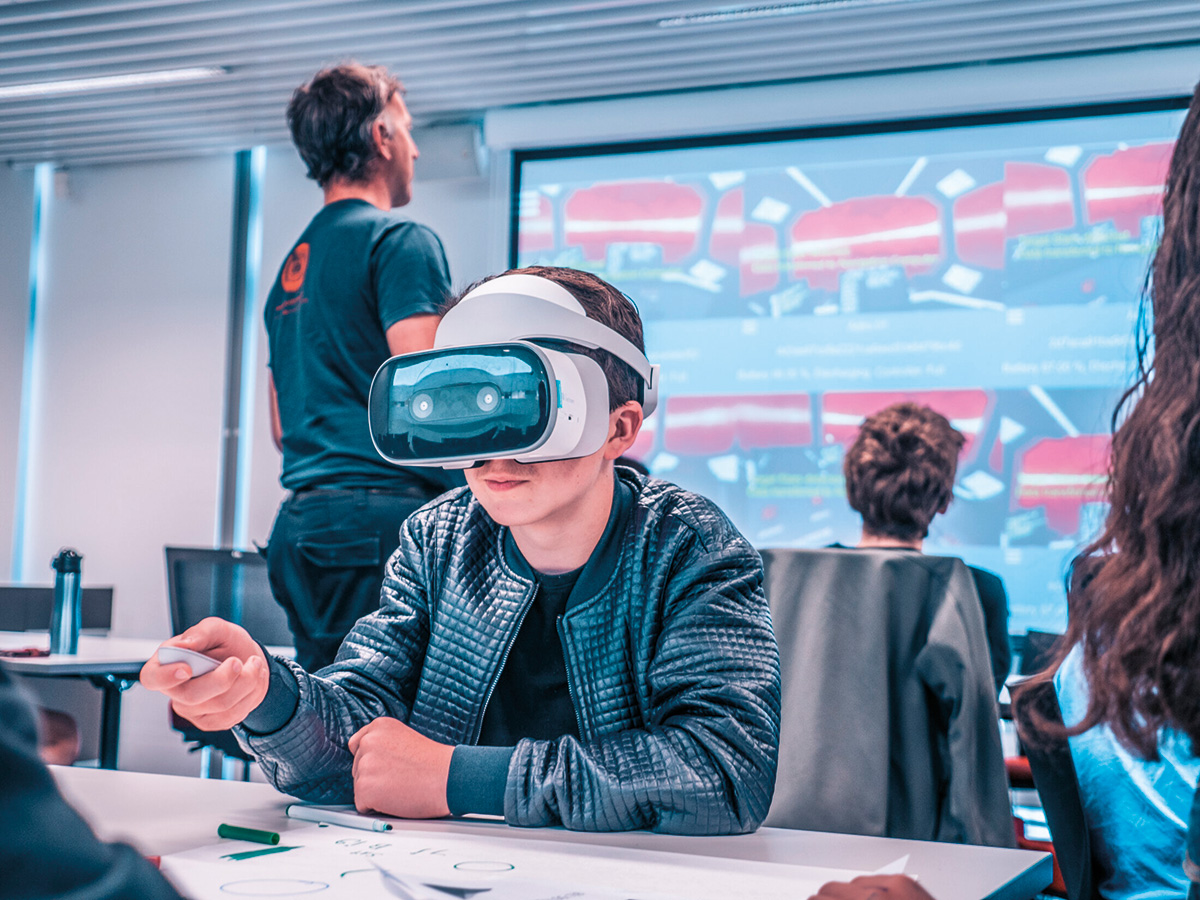
One excellent example of such an enquiry-based approach is Mission Gravity, an immersive virtual-reality (VR) programme for lower- and upper-secondary students (see “Mission gravity” image). Developed by the education and public outreach team at OzGrav, the Australian Research Council Centre of Excellence for Gravitational Wave Discovery, the programme aims to teach stellar evolution and scientific modelling by inviting students on a virtual field trip to nearby stars. The VR environment enables students to interact with stars, make measurements and investigate stellar remnants. By collecting data, forming hypotheses and trying to figure out how stars change over time, the students discover the laws of physics instead of merely hearing about them.
The shift towards student-centric education has been accompanied by an evolution in our understanding of student learning. Early-learning theories used to lean heavily on ideas of conditioning, treating learning as a predictable process that teachers could control through repetition and reinforcement. Contemporary models consider cognitive functions, including perception, problem-solving and imagination, and recognise the crucial role of social and cultural contexts in learning science. Nowadays, we acknowledge that education is most meaningful when students take responsibility for their learning and connect the subject matter to their own lives.
For instance, my PhD project on general-relativity education leveraged sociocultural learning theory to design an interactive learning environment, incorporating collaborative activities that encourage students to articulate and discuss physics concepts. This “talking physics” approach is great for fostering conceptual understanding in modern physics, and we refined the approach further through iterative trials with physics teachers to ensure an authentic learning experience. Again, collaboration between science education researchers and practitioners (in this case, physics teachers) is critical to improving science education.
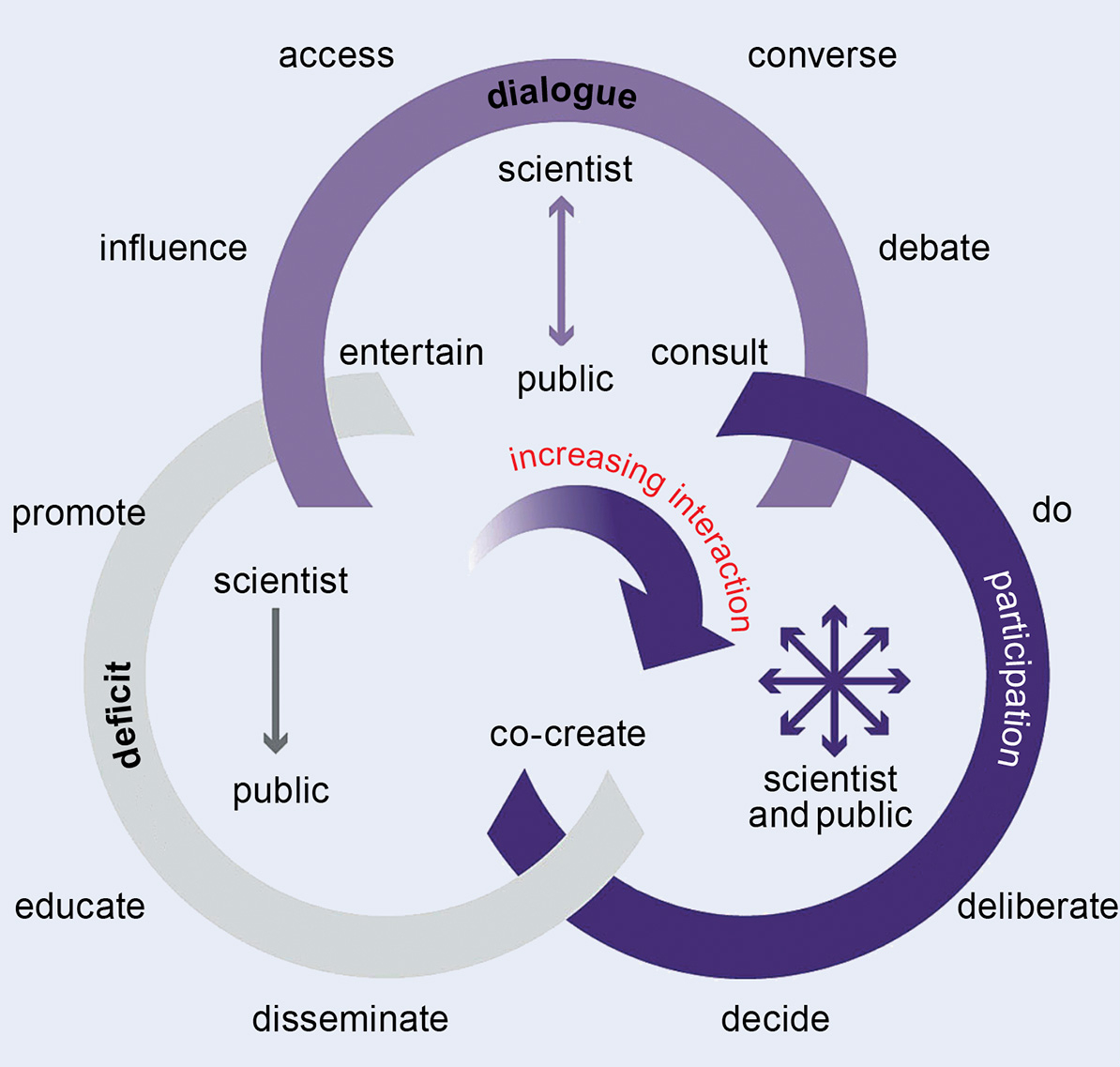
Similarly, science communication has transitioned from deficit models to more dialogic and participatory ones. The earlier deficit models perceived society as lacking scientific understanding and envisaged a one-way flow of information from expert scientists to a passive audience – quite similar to the behaviourist approach prevalent in the early days of science education. Modern science communication practices foster a dialogue where scientists and the public engage in meaningful discussions. In particular, the participatory model positions scientists and the public as equal participants in an open conversation about science. Here, the interaction is as critical as the outcomes of the discussions. This places emphasis on the quality of communication and meaning-making, similar to what many consider the goals of good science education (see “Increasing interaction” figure).
To illustrate a participatory approach to science communication, consider the City-Lab: Galileo initiative in Zurich. This initiative integrates theatre, podcasts and direct interactions between scientists, actors and citizens to foster dynamic conversations about the role of science in society. A range of media and formats were employed to engage the public beyond traditional forms, ranging from audio-visual exhibits to experiences where the public could attend a play and then engage in a post-show discussion with scientists. By directly involving scientists and the public in such exchanges, City-Lab: Galileo invites everyone to shape a dialogue about science and society, underlining the shifting paradigms in science communication.
Urban: the power of semiotics
For me, a ground-breaking moment in how we communicate disciplinary knowledge came when I saw two astronomers in a coffee room discussing the evolution of a stellar cluster. They were using their hands to sign the so-called turn-off point in a Hertzsprung–Russell diagram in mid-air, indicating their individual perspective on the age of the cluster. These hand-wavings would most likely not mean anything to anyone outside the discipline and I was intrigued by how powerful communication using such semiotic resources can be. The conclusion is that communicating science does not just involve speech or text.
Particularly intriguing are the challenges students and others have with visualising the world in 3D and 4D from 2D input, for example in astronomical images, which I started to notice while teaching astronomy. How hard can it be to “see”, in one’s head, the 3D structure of a nebula (see “Nebulous” image) a galaxy or even the Sun–Earth–Moon system when looking at a 2D representation of it? It turns out to be very hard for most people. This led to an investigation of the ability of people to extrapolate 3D in their mind, which immediately raised another question: what do people actually “see” or discern when engaged in disciplinary communication, or when looking at the stunning images from the Hubble or Webb space telescopes? Nowadays this is referred to as disciplinary discernment in the literature.
Researching such questions relies on methods that are quite different from those used in the natural sciences. Often data exists in the form of transcripts of interviews, which are then read, coded and characterised for categories of discernment. In the case of spatial perception, this inductive process led to an anatomy of multidimensional discernment describing the different ways that the participants experience three-dimensionality in particular and disciplinary discernment in general. It also identified a deeper underlying challenge that all science learning depends upon: large and small spacetime scales. Spatial and temporal scales, in particular large and small, are identified as threshold concepts in science. As a result, the success of any teaching activity in schools, science centres and other outreach activities depends on how well students come to understand these scales. With very little currently known, there is much to explore.
As an educational researcher in physics, one has to be humbled by the great diversity of ideas about what it means and entails to teach and learn physics. However, I’ve come to appreciate a particular theoretical framework based on studies of the disciplinary communication in a special group in society: physicists. This, and indeed any group with the same interests, develops and shares a special way of communicating knowledge. In addition to highly specialised language, they use a whole setup of representations, tools and activities. These are often referred to as semiotic resources and are studied in a theoretical framework called social semiotics.
Social semiotics turns out to be a powerful way to study and analyse the disciplinary communication in physics and astronomy departments. I usually describe the framework as a jigsaw puzzle that we are still building. We have identified, and described in detail, certain pieces in this theory but there are more to explore. One such piece is embodiment and what the use of gestures means for communicating disciplinary knowledge, such as the hand-waving astronomers in the coffee room. It is similar to the theory-building processes in physics, where through empirical investigations physicists try to construct a solid theory for how nature works.
Joint conclusion
Understanding how we think about and communicate physics is as interesting and challenging as physics itself. We believe that they are inseparable, and as we explore the landscape of physics to understand the universe we are also exploring the human mind and how we can understand the universe. Physicists too have to be able to communicate with and engage other physicists. The scientific process of publishing research is an excellent example of how challenging this can be: researchers must convince their colleagues around the world that what they have found is correct, or else they fail. The history of science is full of such examples. For example, in the 1920s Swedish astronomer Knut Lundmark made observations of stars in distant galaxies and found that these galaxies seem to move away from us – in essence he had discovered the expansion of the universe. However, he was unable to convince (read: communicate this to) his colleagues, and a few years later Edwin Hubble did the same thing and made a more convincing case.
Finally, this article tries to shed light on the challenges in communicating physics to not just physicists but also students, and the public. The challenges are similar but at different levels, depending on the persons involved and engaged in this interchange of knowledge. What the physicist tries to communicate and what the audience discerns and ultimately learns about the universe are often two different things.
What’s not to like about particle physics? Exploring the fundamental workings of the universe at international laboratories such as CERN is an inspiration to all, and regularly attracts media attention. However, despite the abundance of wonderful outreach activities by physicists and professional communicators, and science centres such as CERN’s new Science Gateway, it is important that we also take a critical look at our attitude towards science communication (and colleagues who engage in it) to see where we can improve.
Like many of my colleagues, I have always devoted a significant fraction of my time to share my passion for the field with diverse audiences. Society funds our research, so we have a fundamental duty to report back about our discoveries, act as an advocate for science in general, and educate and inspire the next generation. Doing outreach is not only enjoyable but also a valuable exercise that forces you to look at your own work from an outside perspective and to adapt your story for different audiences. Given the collective responsibility of particle physicists for garnering societal support for fundamental science, one might expect the entire field to support individuals involved in outreach activities. Regrettably, this is not always the case.
A new programme at the Leiden Institute of Physics, in collaboration with colleagues from the science communication research group, is investigating how we approach physics communication. When studying our attitudes, certain “points of attention” become rapidly apparent.
Critical points
One concerns cultural appreciation and the role of the scientist. Outreach is often still perceived as something someone does in their spare time and not a valuable activity for “serious” scientists. Many young researchers are all too aware of this attitude, and given the limited number of permanent positions and the emphasis on leadership roles and scientific output for career advancement, outreach often gets reduced priority. This means we’re missing out on an enormous potential of energy and ideas to connect with society. It is important that scientists realise that good communication skills are indispensable for an academic career, which, after all, includes teaching and grant writing. While professional communicators do great work, it’s crucial that more physicists are directly involved as they inherently radiate their passion and drive.
A second point is public relations versus the role of science in society. While every country can simultaneously benefit from new discoveries, communication departments within universities and research institutes – including CERN – often struggle to move beyond the frame of public relations and the latest scientific breakthroughs. In doing so, there is an increasing tendency to project a polished image and to be too self-focused while neglecting opportunities to provide insights into laboratory life – including failure, which is an inevitable aspect of the scientific process – and the stories behind the publications.
Impact assessment is a third factor where we could do better. Despite the increasing encouragement from funding agencies to make societal engagement an integral component of research proposals, we frequently fall short when it comes to conducting impact assessments. While researchers invest years in writing academic papers and scrutinise collaborators for failing to cite the most recent articles, we seem perfectly happy to ignore the literature on science-communication research and input from experts when developing outreach initiatives. Moreover, owing to our lack of collective memory, we do not have a systematic way to learn from good and bad practices.
Last but not least, developing effective communication skills is also critical in peer-to-peer interactions. We don’t often talk about it openly, but it is remarkable how physicists perpetuate the poor quality of presentations and seemingly endless meetings, and how increasingly challenging it is to understand developments in other sub-fields. With proper attention given to our internal communication, we would all stand to benefit significantly.
A change in culture does not happen overnight. Nevertheless, given the ongoing discussions about the future of the field, for example about a future collider at CERN, it is vital that we develop a stronger, broader and especially more open science communication strategy. It should be centred around curiosity and the amazing people in our field, as that is how we can connect with society to start a dialogue, while at the same time finding ways to support and acknowledge the work of colleagues who engage in outreach activities. Particle physics is a wonderful adventure. Let’s make sure the world knows about it.
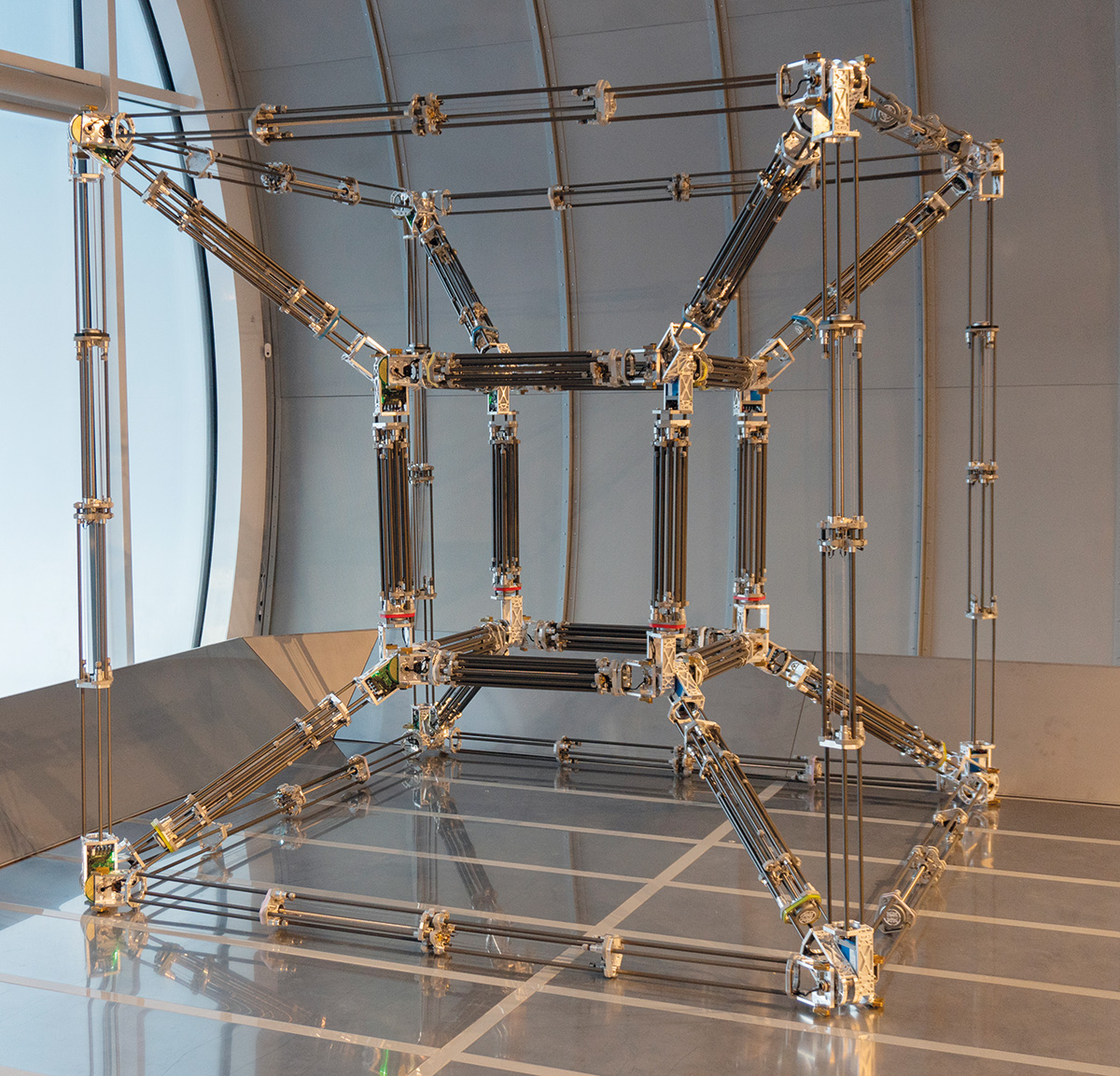
Within the naturally lit expanse of the Exploring the Unknown exhibition at CERN Science Gateway, an artwork both intrigues and challenges: Julius von Bismarck’s Round About Four Dimensions, commonly referred to as the “tesseract”. As light interacts with its surfaces, the tesseract – a 3D representation of a 4D cube – unfolds and refolds, turning inside out in a hypnotic sequence that draws viewers into its rhythm (see “Round About Four Dimensions” image). This kinetic piece not only captivates with movement but also signifies the deep-rooted relationship between art and science.
Organised around themes of space and time, dark matter, and the quantum vacuum, the Exploring the Unknown exhibition becomes a meeting point, inviting spectators to dive into the collective curiosity of both artists and scientists. In particular it channels the imaginative spirit of CERN’s theoretical physicists, including Joachim Kopp, who remarked during an encounter with a visiting artist: “I try to visualise the maths. So, whenever I work on something, I need to have some pictures in my head, even when it’s mathematical concepts.” This sentiment illuminates the profound visual connection artists and scientists alike experience when confronted with complex ideas.
Rich dialogue
Born from the collaborative efforts between the Arts at CERN programme and the CERN exhibitions section, this display vividly encapsulates the synergy between art and science. By championing artist residencies, commissioning distinct art pieces and curating exhibitions, a rich dialogue is fostered between two seemingly distinct worlds. For the first time, Science Gateway will spotlight works born from residencies and commissions, proudly featuring creations from celebrated resident artists including Yunchul Kim, Chloé Delarue, Ryoji Ikeda and Julius von Bismarck.
Within CERN’s corridors, serendipitous dialogues emerge. An artist might gain fresh inspiration from a casual chat about the universe, looking at their work through a new lens. On the other hand, physicists can discover a fresh perspective on their familiar theories through the artist’s interpretation. As former CERN theorist Tevong You insightfully shared during one such discussion, “In the quantum world of particles and waves, there’s a beauty that artists instinctively grasp. They bring to life the equations we scribble on paper.”
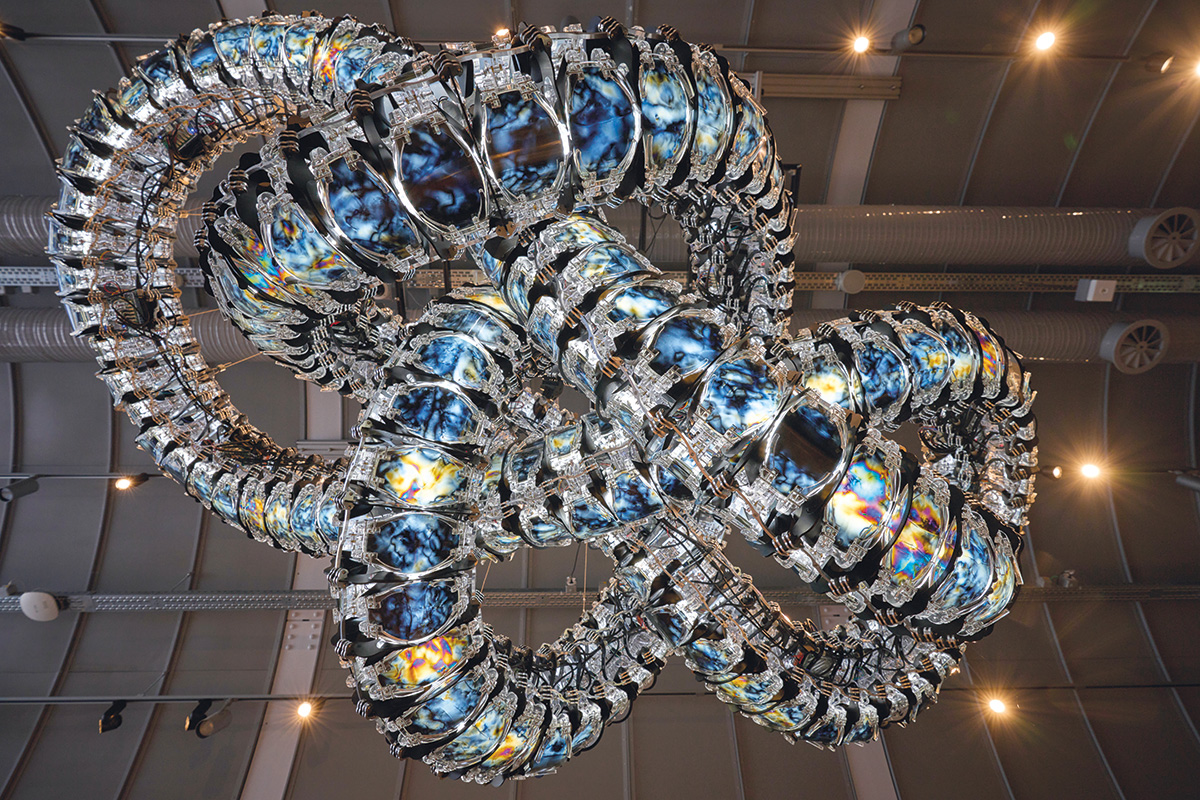
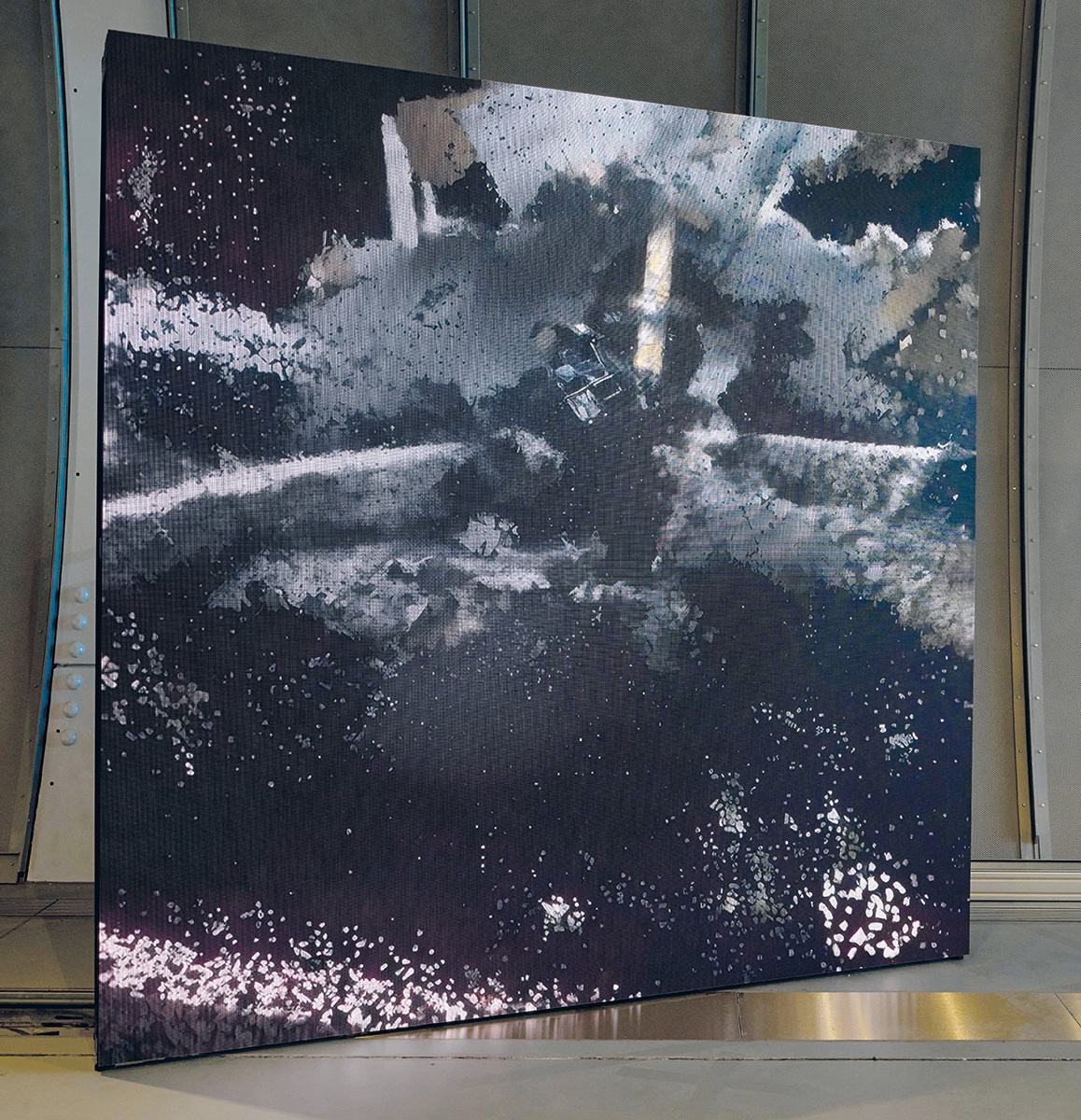
The dialogue between diverse minds takes centre-stage at Science Gateway. Yunchul Kim harnesses the intricacies of fluid dynamics (see “Chroma VII” image), capturing space and time and the elusive nature of dark matter in his sculptures. Chloé Delarue crafts tangible experiences around the mystery and the uncertainty of the unknown (see “TAFAA” image), while the avant-garde audiovisual installations of Ryoji Ikeda breathe life into the elusive quantum vacuum (see “data.gram [n°4]” image). As artists immerse in these scientific domains, they unearth fresh inspiration and, in return, challenge scientists to see their own work through a different prism. This unconventional collaboration amplifies both fields: artists distill vast, abstract concepts into evocative forms, and scientists, inspired by this artistic partnership, discover enriched avenues through which to communicate their research.
Navigating the confluence of art and science is no straightforward journey. For every moment of synergy, there are hurdles to clear – terminology gaps, differing methodologies and the occasional skepticism from both sides. However, through the many interactions we’ve experienced between scientists and artists, it’s clear that these challenges can be overcome. Artists, through their residencies at CERN, have cultivated an understanding of complex scientific narratives. Conversely, CERN scientists have come to appreciate the evocative power of art, expanding beyond their traditional vocabulary. This endeavour is about building bridges, recognising the need for compromise, and ultimately celebrating the beauty that emerges when diverse worlds collide.
Finding equilibrium between artistic liberty and scientific truthfulness is also a delicate dance. In the vast realm of creativity, an artist might sometimes venture far from the core scientific concepts in their pursuit of artistic expression. In Exploring the Unknown, such balances are impressively maintained by von Bismarck’s tesseract and Ikeda’s audiovisual installation data.gram [n°4]. The exhibition shows that neither art’s freedom nor science’s precision need to be sacrificed; when approached with mutual respect, they can coexist, each enhancing the other’s message.
The 2020 update of the European strategy for particle physics couldn’t have put it better: “The particle-physics community should work with educators and relevant authorities to explore the adoption of basic knowledge of elementary particles and their interactions in the regular school curriculum”. The past decades have witnessed a heightened interest in introducing particle physics to high-school students. On top of the growing number of educational activities proposed in physics-education research literature, more and more high-school curricula explicitly include particle-physics topics. Yet, a big question lingers: what is the true extent of particle-physics representation in current high-school curricula?
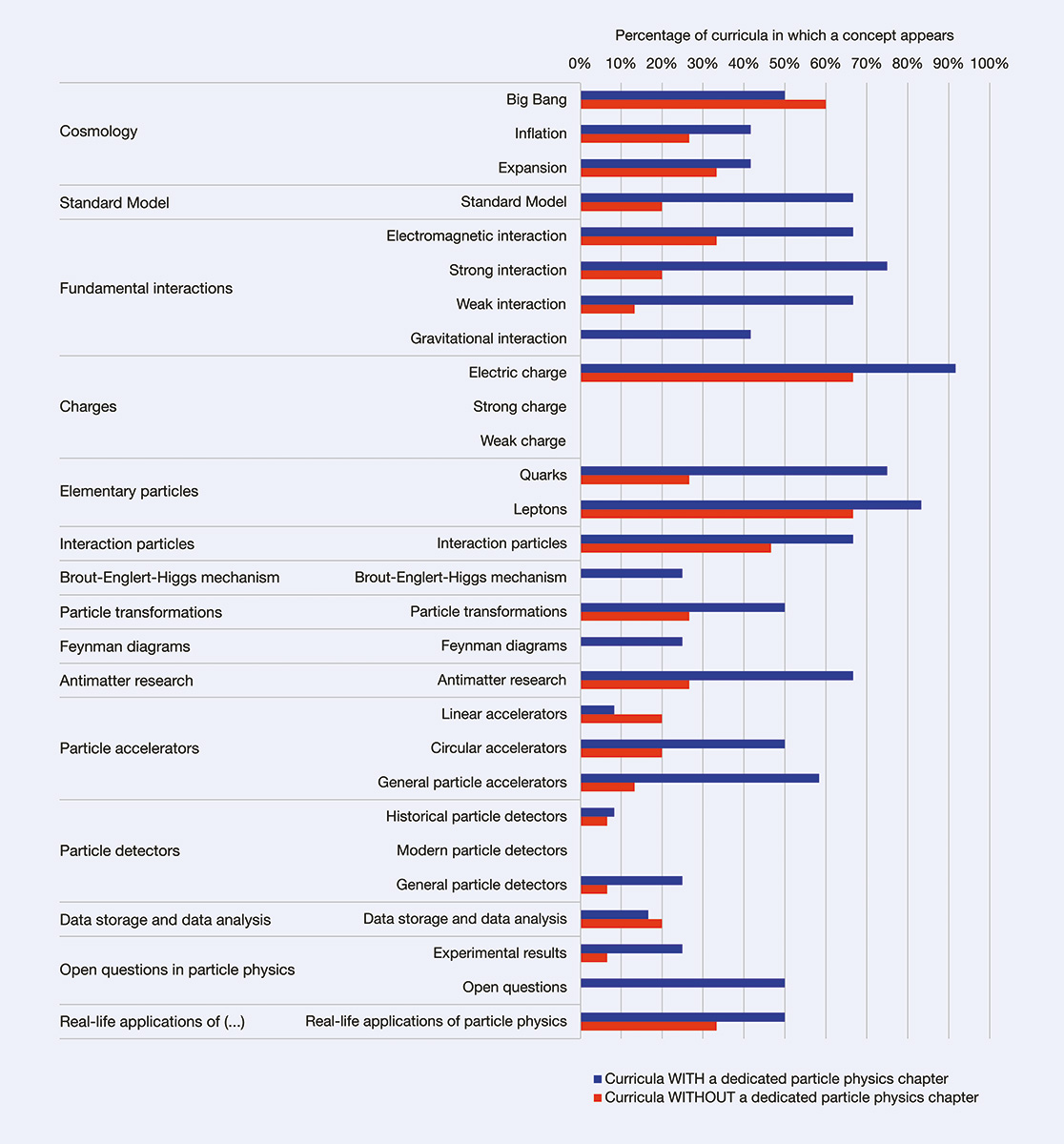
In 2021, CERN physics-education researchers undertook a review encompassing 27 high-school physics curricula, spanning both CERN member and non-member states, to address this question. Each curriculum was analysed by at least two teachers from the CERN teacher programmes alumni network who are well acquainted with their respective curricula and the 28 particle-physics concepts on which the review was based (see “Standard Model” image). The review sought to identify existing trends and chart a roadmap for future curricular developments while also providing a benchmark for CERN’s outreach and educational initiatives.
Two types
The curricula included in the review can be split into two types depending on whether they contain any chapters that explicitly focus on particle-physics content. For the curricula with an explicit emphasis on particle physics (International Baccalaureate, Austria, Australia [Queensland], Croatia, Germany [Brandenburg], Israel, Russia, Switzerland [Nidwalden], Serbia, South Africa, Spain and the UK), the results show that more than half contain the following 10 particle-physics concepts (out of 28 included in the review): the Standard Model, electromagnetic interaction, strong interaction, weak interaction, quarks, leptons, interaction particles, antimatter research, general particle accelerators and open questions in particle physics.
For the curricula without any focus on particle physics (Brazil [São Paolo], Canada [Manitoba], Germany [Baden-Württemberg; Saxony], France, Ghana, Greece, Italy, Lebanon, the Netherlands, Poland, Slovakia, Slovenia, Sweden and the US), only four particle-physics concepts (out of 28 included in the review) were found in more than half of them: the Big Bang, electromagnetic interaction, electric charge and leptons.
The great majority of the concepts that appeared in more than half of the reviewed curricula were classified as theoretical particle-physics concepts. On the other hand, experimental concepts were generally lacking. Indeed, only particle accelerators appeared in a notable number of curricula with a dedicated particle-physics chapter. Even then, particle accelerators mostly appeared as context within electromagnetism without being explicitly connected to particle physics. Particle detectors appeared even less often in the curricula. Some historical particle detectors, such as the Geiger–Müller counter, were occasionally featured within the context of radiation. However, state-of-the-art detectors such as the LHC experiments were conspicuously absent from all reviewed curricula.
Emphasising real-world experimental contexts, such as modern particle detectors and their applications across domains such as medicine and art, could enrich student learning and interest
This lack of the experimental aspects of physics in high-school physics curricula is not limited to particle physics. Excplicit examples of the importance and value of experiments in science is often absent in high-school curricula, showing physics as a set of solidified facts. Ultimately, this can lead to gaps in students’ understanding of the role of experiments in science. Indeed, the contemporary relevance and the blend of theory and experiments within particle physics can offer students a unique opportunity to learn about how real modern science is done and what is the nature of science. Furthermore, emphasising real-world experimental contexts, such as modern particle detectors and their applications across domains such as medicine and art, could enrich student learning and interest.
The connection between particle interactions and the charges that govern them represents another noticeable gap. While the idea of an electric charge is relatively common within discussions on electromagnetism, concepts such as strong and weak charge are conspicuously absent. This is intriguing, especially since the strong and weak interactions are mentioned in several curricula either within the particle-physics or the nuclear-physics chapters. Moreover, electric charge remains referred to merely as charge, which can lead to difficulties in understanding different types of charge down the line. Hence, introducing strong and weak charge can provide a more rounded understanding, even without delving into unnecessary mathematical interpretations. Such introductions could form foundational pillars for students aiming to move further into particle physics and its related domains.
What next?
Particle physics has unequivocally made its mark in high-school education. The consistent presence of certain foundational concepts – electromagnetic interaction, leptons and electric charge – across curricula signals a universal baseline. However, the road to a meaningful introduction of particle-physics concepts in high-school classrooms is still long.
The glaring gap in experimental particle physics underscores that there is an immediate area of focus for our outreach efforts. Bridging this gap will ensure that students gain a more well-rounded understanding, synergising theoretical knowledge with cutting-edge experimental practices.
In addition, a review of particle-physics vocabulary, both in the context of charges and beyond, could improve students’ overall understanding of particle physics. By using clear and consistent language, communicators and educators can help reduce possible misunderstandings in the future.
Finally, the narrative around particle physics can serve as more than just a lesson on subatomic particles. It can be a lens, magnifying the very process of science: its challenges, its dynamism and its unparalleled ability to shape and reshape our understanding of the universe. As curricula designers ponder the next iteration, one hopes that particle physics finds a more holistic representation. The next generation of physicists, scientists and curious minds deserve nothing less
Alongside a hands-on education laboratory and large auditorium, Science Gateway houses three permanent exhibitions: Discover CERN, Our Universe and Quantum World. As they come through the doors, visitors discover a rich mixture of exhibition elements: authentic objects, contemporary artworks, audiovisual content, immersive spaces – and, of course, an abundance of interactive exhibits. The latter go through many carefully considered steps to present a spot-on experience to visitors, and must meet a number of criteria (see “Criteria that a good interactive exhibit should meet” panel).
Irrespective of the topic, there is a basic recipe for making an interactive exhibit. Once the clear message the exhibit aims to convey has been identified, developers write a draft that sets up a scenario of visitor interaction and sketches how the exhibit may look. What will visitors see when they approach the exhibit? What can they do? Are there several ways in which it is possible to interact with the exhibit?
Model making
The next step is to make a prototype. Depending on the nature of the exhibit, it may be a “quick and dirty” mockup, a simple 3D model, a paper prototype, or even just a verbal description. Then, the prototype is tested with at least several members of the target audience. What do they conclude from their interaction with the exhibit and why? How enjoyable and interesting do they find it? How well does the exhibit convey its key message? Afterwards comes the design and building of the exhibit. This stage often involves a lot of technical testing – for example, when choosing the materials or trying to keep within the available budget. In addition, texts that accompany the exhibit need to be written and translated. When the (nearly) final version of the exhibit is ready, it is evaluated again with the target audience. How clear are the instructions and the gameplay? What needs to be changed in the exhibit and how exactly? The final step, if necessary, is to reiterate.
Visitors discover the phenomenon by going through the stages of the scientific method
In reality, however, the development process rarely turns out to be simply moving from one step to the next. Sometimes, the results of testing a prototype with the public show that the scenario needs to be rewritten completely, bringing developers back to where they started. In other cases, time or budgetary constraints force the team to merge some steps or even skip them entirely. Two Science Gateway exhibits illustrate the twists and turns of developing a state-of-the-art science exhibit.
Criteria that a good interactive exhibit should (or at least should try to) meet
• Focus The exhibit should aim to convey only one, clearly defined message. For example: “In the LHC, particles are accelerated with the help of an electric field.”
• Edutainment Visitors can/should have fun when interacting with the exhibit and at the same time learn something new.
• Responsiveness Visitors should immediately receive a reaction from the exhibit when they do something. Simple encouragement like “Good job!” or “Keep going!” is helpful.
• Multi-sensory experience Interaction with the exhibit should involve as many senses as possible.
• Self-sufficiency People should understand how to use the exhibit, as well as the key ideas of the exhibit, without the help of a guide.
• Zero position After visitors leave the exhibit, it should self-restore to the state where it is ready to be used by the next person.
• Safety The exhibit should be safe for everyone to use, including children.
• Maintenance The technical team needs to have easy access to the exhibit and be able to use standard components to fix it if necessary.
• Physical accessibility The exhibit must be usable by – and feel welcoming for – diverse groups of visitors, for example, wheelchair users.
• Content accessibility Target audiences need to understand the language, key messages, ideas.
3 Social interactions Co-operation between visitors should be encouraged, for example through gameplay.
The starting point for the antimatter-trap exhibit (see “Trial and error” image) was a real antimatter trap – an eye-catching piece of scientific equipment that is well suited to an interactive exhibit. Following several brainstorms with antimatter scientists, a PhD student who specialised in the design of interactive science-communication experiences, and who developed the exhibit scenario further, made a paper prototype. In this version of the exhibit, visitors first had to slow an antiproton down in a decelerator, and only after that shoot the antiproton into the trap. The trap had several parameters (for example, a magnetic field that could be switched on and off) that visitors could play with before injecting the antiproton into the decelerator. Depending on how the parameters had been set, the antiproton would fly through the trap, annihilate or become captured.
We then tested this prototype with six small groups of visitors at the CERN Microcosm exhibition and six groups of CERN members of personnel who did not have a background in science or technology. Results from the testing led to many changes. For example, we learnt that many people were confused about deceleration. We therefore removed this stage from the gameplay but kept the speed of the antiproton coming into the trap as one of the parameters. A bigger problem was the fact that visitors, most of whom had heard nothing about antimatter prior to their interaction with the exhibit, still did not understand anything about it after successfully trapping the antiproton. We were faced with a dilemma: should the main message of the exhibit be about the antimatter itself, or should the exhibit still focus on how the antimatter trap works? After a difficult consideration, we decided to stick to the latter, whilst ensuring the former is included elsewhere in the exhibition.
An updated version of the exhibit scenario was handed over to the multimedia company that had been contracted to develop the exhibit, and further tests were conducted with two classes of Italian middle-school students. Apart from some minor usability issues, the exhibit proved to be challenging yet engaging: students yelled proudly and happily high-fived their team members after managing to trap the antiproton. The exhibit was then improved further, eventually taking its current shape in Science Gateway’s “Back to the Big Bang” exhibition. This was also the moment to come back to the antimatter scientists who helped ensure that all the texts and drawings in the exhibit were correct.
Keep the heat out
The goal here was to come up with a hands-on exhibit that would allow Science Gateway visitors to discover what keeps the LHC superconducting magnets cold. Similar to the experience with the antimatter exhibit, we again worked side-by-side with a CERN scientist. The original plan was to recreate a real situation: place a cold source at the centre and cover it with layers of different insulation materials. Visitors would be able to open and close these layers, as well as create a vacuum. They would observe that when the cold source was shielded from the environment, it required less power consumption to stay cool. This idea looked very promising on paper, especially given that the exhibit would be integrated into a full-scale mockup of the LHC.
However, calculations showed that the effect would only become visible after approximately half an hour. While this may not seem like a deal-breaker, in this context it certainly is: visitors at science exhibitions expect immediate feedback and typically do not spend more than just a few minutes at each exhibit. Moreover, having a surface that is sufficiently colder that the environment leads to condensation, which would create difficulties for the technical maintenance of the exhibit.
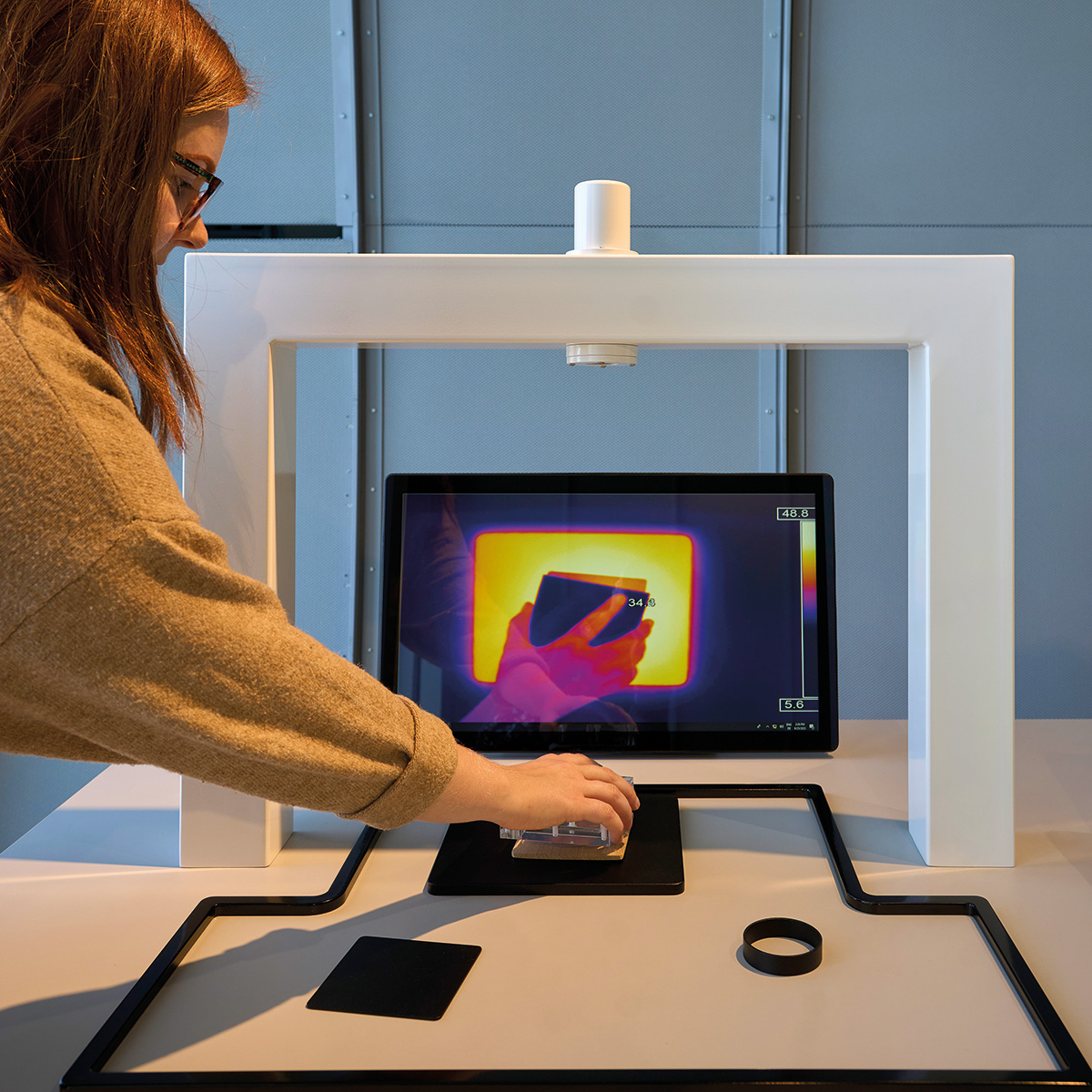
Alternative ideas were needed. To avoid reinventing the wheel, we explored which exhibits on the topic already existed in other science centres and museums. Eventually we decided to focus on a very basic idea: certain materials block heat, other materials conduct it. Communicating this message required a plate heated to 45 °C (not so hot that visitors risk burning themselves, but still warm enough to see the effect), a bunch of conducting and insulating materials that come in different shapes and thicknesses, and an infrared camera. Lots of technical prototyping and testing allowed us to determine how thick the materials should be to ensure that the effect was both visible and revealed itself quickly enough for the exhibit to be interesting. As the reflective metallic surfaces produce incorrect readings on the infrared camera, all metal materials were painted black. Finally, to keep the link between the exhibit and the actual LHC insulation, key elements such as mylar, vacuum and minimal surface contact were incorporated.
In its final form, the exhibit enables open-ended exploration, such that visitors discover the phenomenon by going through the stages of the scientific method. First, visitors face a challenge: in the instructions accompanying the exhibit, they are invited to try shielding the heated plate from the infrared camera. Then, by picking a certain type of material, visitors form a hypothesis – “maybe this piece made of copper will do the job?” – and test it by placing the material on the plate. As the copper piece quickly reaches the same temperature as the heated plate, visitors observe it with the help of the infrared camera and conclude that copper is not a good choice. This leads to a new hypothesis, another material… and so on. Visitors are free to explore the exhibit as long as they want, and we hope that for many Science Gateway visitors this open exploration will culminate in the magical “aha!” moment – the reason why we developed all these interactive exhibits in the first place.
When CERN was founded in 1954, four missions were given to the new organisation: performing fundamental research at the frontier of knowledge; development of innovative technologies to pursue fundamental research; international collaboration for the good of humanity; and education and inspiration for future generations of scientists, engineers and the public at large. The latter mission has been given a powerful new platform in the form of the CERN Science Gateway.
CERN is well known for outreach, most recently via the switch-on of the LHC and the search for and discovery of the Higgs boson. It also trains thousands of people through a variety of student and graduate programmes, ranging from internships, studentships and fellowships to professional training, such as at the CERN Accelerator School, the CERN School of Computing, and several physics and instrumentation Schools. Less well known, perhaps, is CERN’s influential work in science education.
Growth initiatives
CERN offers many professional-development programmes for teachers (see Inspiring the inspirers), as well as dedicated experiment sessions at the former “S’Cool LAB” (reincarnated in the Science Gateway educational labs, see Hands on, minds on, goggles on!) and the highly popular Beamline for Schools competition. These efforts are also underpinned by an education-research programme that has seen seven PhD theses produced during the past five years as well as 82 published articles since the programme began in 2009. This is made possible by the significant contributions of doctoral students, who make up much of the team, and cooperation with their almae matres in CERN’s member states. In addition, CERN is the publisher of the multilingual international journal Progress in Science Education.
The question “what is science education?” probably has more answers than the number of science educators in Europe. Nevertheless, the nature of science – the scientific method itself, without which we could not formulate science correctly, reproducibly and understandably – is a basic principle. Teaching the nature of science as the basis and conveying scientific results as examples is widely regarded as the best way to inspire learners young and old, although methods vary. A frequently asked question in this respect is: what to educate?
The traditional answer, which will be familiar to people who went to school in the 1970s or earlier, is “pure knowledge”. Later, it was realised that “skills” were important, too. While both remain core to science curricula, “competencies” are now seen as an effective way to advance society. In terms of physics, key topics in this regard are education for sustainable development, quantum physics and its applications, radiation and artificial intelligence.
Fulfilling its mission, CERN strives to reach everyone with its education programmes. The CERN Science Gateway offers exhibitions, large education labs, as well as educational science shows for audiences aged five and above. Education is key to sustainability, and thus to society, so let’s all work together. The CERN team is open to your proposals!
“The reason I want to talk to you today is that I myself had a very good physics teacher, which is why I’m now here at CERN. So, thank you for the important work you are all doing. You really make a difference!” This heartfelt sentiment, echoing the gratitude often expressed by CERN scientists when addressing visiting high-school teachers, encapsulates the essence of CERN’s teacher programmes.
Over the past quarter-century, CERN’s teacher programmes have played a vital role in bridging the gap between particle physics and educators from across the globe. What started originally in 1998, when the first International High School Teacher Programme took place with a small group of teachers, has grown into one of CERN’s many success stories. Today, CERN’s teacher programmes run on an almost weekly basis, welcoming about 1000 teachers from more than 60 countries every year, which makes them one of the largest and most successful professional development offers for in-service high-school science teachers worldwide.
The vast bulk are week-long programmes for teachers from one country or from one language group, predominantly targeting teachers from CERN’s member states, associate member states and the occasional non-member state. In addition, two international teacher programmes take place every year in the summer, significantly broadening the reach. Each international teacher programme lasts two weeks and hosts up to 48 teachers from around the world. So far, about 14,500 teachers from 106 countries have participated in CERN’s national and international teacher programmes, and every year another 1000 teachers travel to CERN to attend lectures, on-site visits, hands-on workshops, discussions and Q&A sessions.
Multifaceted
Teacher programmes at CERN serve multiple purposes. First and foremost, they are professional development programmes that enable high-school teachers to keep up to date with the latest developments in particle physics and related areas, and to experience a dynamic, international research environment. As such, they answer the call to bring more modern science into the classroom, which goes hand in hand with a slow yet steadily increasing change in curriculum development (see Particle physics in school curricula). Second, teacher programmes are an acknowledgement of the critical role that teachers play in preparing the future of humanity. They inspire and empower teachers and, through them, their students. Last but not least, teacher programmes showcase the importance of science diplomacy – colloquially referred to as a soft power in the world of international relations. For instance, before joining CERN as associate member states, several countries already brought high-school teachers to CERN for dedicated national teacher programmes; these, in turn served as door-openers in the respective ministries and supported the country’s application to join CERN. The same is true for distant countries, with which CERN has no other connections than teachers who took part in one of the international teacher programmes.
High impact
But what about the impact of CERN’s teacher programmes? Is it possible to measure the effectiveness of such a variety of programmes and perform an evaluation that goes beyond documenting teachers’ feedback? Combined with anecdotal data from alumni teachers, who frequently return to CERN with their students or take part in other education activities such as the Beamline for Schools (BL4S) competition, and the fact that CERN’s teacher programmes are heavily overbooked, the overall picture is clear: teachers’ satisfaction with CERN’s teacher programmes is extremely high.
The overall picture is clear: teachers’ satisfaction with CERN’s teacher programmes is extremely high
To deepen the level of evaluation of CERN’s teacher programmes and to allow for further development in the future, in 2021 a multi-stakeholder study was performed to document and illustrate the goals of professional development programmes at particle-physics laboratories. This study led to a hierarchical list of the 10 most important learning goals, such as enhancing teachers’ knowledge of scientific concepts and models, and enhancing their knowledge of curricula, which now represent the baseline for future evaluations of teachers’ learning. Here, a large-scale study is currently ongoing to assess their knowledge in a pre-post setting by using concept maps. The aim of this approach is not only to study the learning progression throughout a teacher programme but also to support teachers in constructing meaningful mental models and knowledge structures, which are key indicators of successful educators. Indeed, CERN’s teacher programmes continue to serve as a prime testbed for the Organization’s physics-education research efforts, with one doctoral research project already successfully completed and a second on its way. Future research projects will aim to evaluate teachers’ use of their new knowledge and skills after their participation in CERN’s teacher programmes and consequently their students’ learning outcomes.
The most important dimension of CERN’s teacher programmes, however, is the social one. Over the past 25 years, teachers from different parts of the world have met at CERN, became friends and remained in touch with one another. This has led to several cross-border Erasmus projects, combined school events and even tri-national proposals for the BL4S competition.
Today, CERN’s teacher programmes are more popular than ever, with teachers from all around the world being more than eager to apply for one of the limited spots. One participant of this year’s International High School Teacher Programme even had to move his wedding date, which originally coincided with the programme dates. Luckily, his fiancée was understanding and not only agreed to the postponed date but also smiled when he put on his CERN helmet for the wedding picture.
To provide the best experiences, we use technologies like cookies to store and/or access device information. Consenting to these technologies will allow us to process data such as browsing behavior or unique IDs on this site. Not consenting or withdrawing consent, may adversely affect certain features and functions.
Functional
Always active
The technical storage or access is strictly necessary for the legitimate purpose of enabling the use of a specific service explicitly requested by the subscriber or user, or for the sole purpose of carrying out the transmission of a communication over an electronic communications network.
Preferences
The technical storage or access is necessary for the legitimate purpose of storing preferences that are not requested by the subscriber or user.
Statistics
The technical storage or access that is used exclusively for statistical purposes.The technical storage or access that is used exclusively for anonymous statistical purposes. Without a subpoena, voluntary compliance on the part of your Internet Service Provider, or additional records from a third party, information stored or retrieved for this purpose alone cannot usually be used to identify you.
Marketing
The technical storage or access is required to create user profiles to send advertising, or to track the user on a website or across several websites for similar marketing purposes.


![data.gram [n°4]](https://cerncourier.com/wp-content/uploads/2023/10/CCNovDec23_BEAUTIFUL_datagram2.jpg)