Comsol -leaderboard other pages

Topics

Spin time in Italy

Spin is a key element in particle and nuclear physics, and has always played a paramount role in the study of fundamental symmetries, static-particle properties and the structure of fundamental interactions. Moreover, during the past 15 years, spin physics has enjoyed a true renaissance, with many enthusiastic young people – both theoreticians and experimentalists – entering the field, attracted by new ideas and experimental opportunities.
CCEspi1_03-05

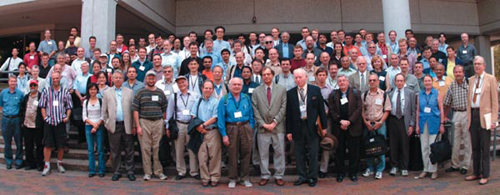
Last year, around 300 physicists attended the 16th International Spin Physics Symposium, SPIN 2004, which was held on 10-16 October in Trieste, Italy. The event was organized by the Trieste section of the Istituto Nazionale di Fisica Nucleare (INFN) and was hosted by the Abdus Salam International Centre for Theoretical Physics (ICTP) on the beautiful Miramare campus. The symposium also benefited from the support and infrastructure of the nearby International School for Advanced Studies (SISSA).

Participation at SPIN 2004 was highly diverse, with 29 different countries represented. A unique feature was the large contingent from developing countries, made possible thanks to logistic support from the ICTP and sponsorship from the International Union of Pure and Applied Physics. Additional support from the Central European Initiative allowed significant participation from the initiative’s 17 member countries. The symposium was also sponsored by the International Spin Physics Committee, the town of Trieste, the Friuli-Venezia Giulia region and a few other local institutions.

SPIN 2004 was structured with plenary and parallel sessions, but no poster session. Instead, more than 160 presentations were accommodated in short communications in the parallel sessions, allowing everybody, in particular the young participants, the opportunity to stand up and present their work. The 20 plenary talks, half of which were given by excellent young physicists, were followed by interesting discussions. In addition, four rapporteurs were asked to give plenary talks to summarize the contributions of corresponding parallel sessions. The plenary sessions included short reports on the specialized workshops supported by the International Committee that had taken place during the previous two years: “SPIN 2003” in Dubna, “Polarized Sources and Targets” in Novosibirsk, “Symmetries and Spin” in Prague, “Polarized Solid Target Materials and Targets” in Bad Honnef, and “Polarized Electron Sources and Polarimeters (PESP 2004)” in Mainz. Following tradition, this last workshop took place the week before SPIN 2004.

It is impossible to summarize in a few pages the large amount of information presented in Trieste. In the following, we give some highlights that are bound to reflect our personal bias. However, all the talks have immediately been put on the web and are accessible to everybody until the time when proceedings become available.

CCEspi2_03-05

Two of the parallel sessions were dedicated to technical developments in the fields of polarized sources, polarized targets, polarized beams and polarimetry – the essential tools of spin physics. In the session on “Polarized Sources, Targets, and Polarimetry”, summarized in the last plenary session by Thomas Wise from Wisconsin, contributions described all of the ongoing activities in the field: polarized electron sources; various aspects of thermal velocity atomic H and D sources, used either as jets or to feed storage cells; new ion sources; polarimetry for a 3He gas target; and solid targets.

Further impressive work was presented in the session on “Acceleration, Storage and Polarimetry of Polarized Beams”. In this plenary talk, William McKay from Brookhaven illustrated the enormous progress made there with the Relativistic Heavy-Ion Collider (RHIC). Thanks to the insertion of a partial Siberian snake in the Alternating Gradient Synchrotron, polarization at extraction is now 50% and can be preserved during acceleration in RHIC at 40% (compared with 27% last year). After changing the betatron-tune working point, average luminosity is now 4 x 1030 cm-2 s-1 at &radics; = 200 GeV. The presentations in this parallel session spelled out the activity at various existing accelerators (AGS, RHIC, COSY, Nuclotron and BATES), as well as the plans for future facilities (JPARC, FAIR, eRHIC), all of which were skilfully summarized by Andreas Lehrach of Jülich. Importantly, a polarized-hydrogen jet target has been installed at Brookhaven and, during the course of 2004, was successfully used to calibrate the polarization of the RHIC proton beam.
CCEspi3_03-05

Spin physics began in 1921 with the pioneering work of Otto Stern, who discovered the spin of the electron and showed that it has a gyromagnetic ratio, ge, of about 2. Since then, the study of dipole moments of elementary particles has provided a wealth of information about subatomic physics, and the measurement of the electron and muon anomaly a = (g-2)/2 has reached impressive sensitivities. Lee Roberts of Boston described Brookhaven’s g-2 experiment, which yields a final result of aμ = 11 659 208(6) x 10-10(&plusmn0.5 ppm). This is 2.7 standard deviations from the Standard Model value and is a possible indication for new physics.

In an equally impressive talk, Klaus Jungmann of KVI Goningen reviewed current searches for permanent electric dipole moments, which could also provide an excellent sign of new physics. In this context, Emlyn Hughes of Caltech reported on the past, present and future measurements of parity violation in electron scattering as a means of making precision measurements of the weak mixing angle, θW, far from the Z mass, and possibly detecting signals of new physics. Preliminary results from the full data sample of the E158 experiment at SLAC were given out to attendees for the first time as sin2θW = 0.2330 ±0.0011 (stat) ±0.0010 (syst), a result that pushes any new four-fermion interaction to a scale of ΛLL~10 TeV (95% confidence level). In addition to these three plenary talks, contributions were presented in the parallel sessions on “Spin and Fundamental Symmetries” and “Spin Beyond the Standard Model”. These spanned topics from “Graviton Exchange Effects at High-Energy Colliders” to “New Approaches to Unify Spin and Charge”, which were well summarized by Oleg Teryaev from Dubna at the end of the symposium.

The quantum chromodynamics (QCD) spin structure of the nucleon was a central issue at the symposium. Plenary talks and parallel sessions covered the present understanding, experimental status, recent developments and future perspectives of the field. In the opening talk of the symposium, Andreas Metz of Bochum gave a comprehensive review of the present knowledge of quark and gluon helicity distributions, generalized parton distributions (GPDs), single-spin asymmetries and transverse-spin effects. In his plenary talk, Vincenzo Barone of Piemonte Orientale discussed transversity and stressed the differences between transversity and helicity distributions, the difficulties related to the measurement of transversity and the importance of intrinsic quark momentum-dependent distributions.

There was a wealth of new results from the major experiments presented in the plenary talks of Delia Hasch from Frascati (talking on HERMES at DESY), Andrea Bressan from Trieste (COMPASS at CERN), Naohito Saito from Kyoto (experiments at RHIC) and Michel Garcon from SPhN-Saclay (experiments at the Jefferson Laboratory), and also in many other parallel sessions, of which we cite only a few.

There is now high-precision data on the structure function g1 at small x for the deuteron (from COMPASS) and at large x for the proton and neutron (from CLAS at the Jefferson Laboratory). The first measurements of the Sivers and Collins asymmetries have been made on transversely polarized protons, by HERMES, and on deuterons, by COMPASS. Both HERMES and experiments at the Jefferson Laboratory have results (and projections) for deeply virtual Compton-scattering measurements. There are measurements of the gluon polarization ΔG/G from high pT hadron pairs(COMPASS) and ALL for π0 production (the PHOENIX experiment at RHIC). Experiments at RHIC have also made measurements of the cross-section for prompt photon and π0 production, as well as precision measurements of AN for proton-proton and proton-carbon elastic-scattering in the Coulomb-nuclear interference region. In a nutshell, the latest results indicate that ΔG/G seems to be small, hinting at a larger angular momentum contribution to the nucleon helicity; transversity signals definitely seem to be there. Needless to say, it was not an easy job for Gerhard Mallot of CERN to summarize in his rapporteur talk 16 hours of parallel sessions with highly compressed contributions.

The bridge to hadronic physics was represented by the session on “Soft Spin Physics with Photons and Leptons”. Plenary talks here were dedicated to the Gerasimov-Drell-Hearn (GDH) sum rule, to nucleon form factors and to other activity at Jefferson Laboratory in “soft physics”. As Hans Arends of Mainz explained, with the recent data from the MAMI machine at Mainz and ELSA in Bonn, the GDH sum-rule is now verified at the 10% level for the proton, while the situation for the neutron is not clear and more theoretical work is needed.

The hot issue of the discrepancy between results of GEp/GMp with the Rosenbluth techniques and with polarization transfer was discussed by Kees de Jager of Jefferson Laboratory. This now seems to be understood, thanks to recent advances in the calculations of the two-photon exchange contributions. The subjects of the third plenary talk of this session, by Raffaella de Vita of Genoa, were the high-precision measurements of g1 and g2 at low Q2, and the study of polarization observables in exclusive and semi-inclusive meson production.

The SPIN 2004 symposium also covered most recent developments in spin physics at intermediate energies and in nuclear physics. Jean-Marc Richard of ISN Grenoble gave a particularly lively talk in which he revisited hadron spectroscopy, summarizing and discussing the dramatic revival of the field that has occurred over the past few months. Barbara von Przewoski of Indiana reviewed the nucleon-nucleon scattering experiments in hadron storage rings with a polarized beam and a polarized internal target at the Indiana Cooler and at COSY in Jülich, and described their impact on phase-shift analysis, meson-exchange models, chiral-perturbation theory and the role of the three-nucleon forces (3NF).

Many other data from ITEP, Protvino and other laboratories were discussed in the parallel session on “Spin in Soft Hadronic Reactions”. Kichiji Hatanaka of Osaka reported on the high-precision systematic work that is ongoing at lower energies to establish the theory of the modification of the NN interaction in a medium and, in general, to find evidence for the 3NF in nuclear matter. He also reviewed the contributions presented in the parallel session dedicated to “Spin Physics in Nuclear Interactions”.

The symposium could not end without looking to the future. In the last plenary session, Abhay Deshpande of Stony Brook illustrated the physics potential and the machine concept of the eRHIC project at Brookhaven – an electron-proton/nuclei collider that could be operational 10 years from now – as well as the alternative ELIC project at Jefferson Laboratory. Frank Rathmann of Jülich described the polarized antiproton facility at GSI, focusing particularly on the new ideas of measuring transversity in polarized antiproton-proton Drell-Yan processes. With a completely different scenario, and on a much longer timescale, Stefano Forte of Milan communicated to the audience his enthusiasm for the huge physics potential of a future neutrino factory.

During the symposium, tributes were paid to two distinguished members of the International Committee who have passed away since SPIN 2002: Vernon Hughes and Lev Soloviev. Both Myriam Hughes and Tatiana Solovieva attended the symposium and accepted the friendship and gratitude of many of their husbands’ colleagues.

• The 17th International Spin Physics Symposium will be held in Kyoto in September 2006.

News from the frontline in the hunt for exotic nuclei

Nuclei, from the lightest to the super-heavyweights, were the subject of EXON 2004, the International Symposium on Exotic Nuclei held on 5-12 July 2004 in Peterhof, the former royal estate outside St Petersburg, Russia. The participants’ main goals were to discuss the latest results and to develop the programme for further joint research in this area of nuclear physics.

CCEexo1_03-05

Co-organized by the four scientific centres where exotic nuclei are studied – the Flerov Laboratory of Nuclear Reactions (FLNR) at the Joint Institute for Nuclear Research (Russia), RIKEN (Japan), GANIL (France) and GSI (Germany) – the symposium attracted 220 scientists from 23 countries. Eighty-six talks and more than 40 posters covered topics divided as follows: the synthesis of neutron-rich nuclei of light elements and the study of their properties; the synthesis of superheavy elements and the study of their properties; rare processes and decays; beams of radioactive nuclei (production and research programme); and experimental set-ups and future projects.

The first session covered the current experimental and theoretical situation in the investigation of the properties of neutron-rich nuclei. Here talks discussed the problems connected with precision measurements of nuclear masses in the vicinity of the neutron drip-line. The advent of relatively intense beams of exotic nuclei is now allowing the study of their interactions with other nuclei, and the first results of such investigations were presented in several talks. In the course of these studies of exotic nuclei new effects have been discovered, namely the appearance of new magic numbers (N = 16, N = 26), the co-existence in the same nucleus of two types of deformation, and an unusual order in nucleon shell filling. These effects were also the subject of a number of theoretical talks.

The latest achievements in the synthesis of superheavy elements were presented by various speakers, and other talks provided theoretical interpretations of the results obtained. Further scientific centres have now joined Dubna in implementing a programme for the production of superheavy elements, in particular at GANIL in France. Investigations of the structure of transfermium elements (Z > 100) have also become an active area. This field of research involves such high-efficiency equipment as the gamma detectors EXOGAM, EUROBALL, AGATA and others. There were several reports on the results of such investigations, as well as a presentation on the possibility of investigating the characteristics of transuranium nuclei using laser spectroscopy.

The search for exotic states of nuclear matter – multi-neutron systems – has had some interesting results. Talks covered experimental attempts to observe such states, as well as peculiarities in the structure of light exotic nuclei.

One day of the symposium was devoted to large active accelerator complexes and new projects. The results and achievements were highlighted in a number of talks, covering for example the ALTO project at IPN Orsay, the KEK-JAERI joint radioactive nuclear-beam project (RNB), the Radioisotope Beam Factory at RIKEN (RIBF), the K = 130 cyclotron in Jyväskylä, TITAN at TRIUMF, and the first radioactive beams in Brazil. The new projects for accelerator complexes were presented on the last day of the symposium, covering NUSTAR at GSI, SPIRAL-2 at GANIL, radioisotope-beam-based research at RIKEN, and the FLNR cyclotrons at JINR.

Some interesting effects have been recently noticed in the characteristics of nuclear-reaction products and the decays of exotic nuclei while investigating fine structure. Multi-cluster decay has been discovered in the ternary fission of nuclei, and while some talks focused on that problem, others were devoted to the peculiarities of fine-structure effects in the decay of exotic nuclei.

The study of chemical properties of superheavy elements was the subject of a special session. Radiochemical groups from Germany, France and JINR have carried out a number of experiments using fast, selective methods. These include joint experiments on the chemical identification of superheavy elements and the study of their chemical properties, and several talks reported on the results.

One of the themes that aroused a great deal of interest among the participants was public relations. The talks “Russian-German Co-operation at GSI, an Example of Success and Friendship”, “Public Awareness of Nuclear Science in Europe” and “JINR: International Scientific Centre Bringing Nations Together” focused on this topic.

A round-table discussion summed up the work of the symposium. Participants agreed that wider collaboration should be established to open up new avenues of enquiry in the synthesis of superheavy elements and the study of their properties, and in investigations with beams of radioactive nuclei, and to develop new projects. They also want theoretical support for the investigations to be increased and for more young scientists to be attracted into the work.

EXON 2004 also offered an interesting cultural programme. There was the opportunity to see the cultural and historic attractions of St Petersburg and its vicinity, cruising on board a ship across Lake Ladoga to stop and admire the Island of Valaam. The next symposium will be held in Russia in two years’ time.

Protons on the doorstep of the LHC

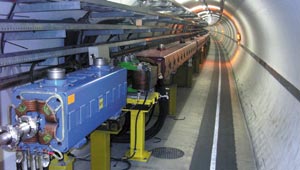
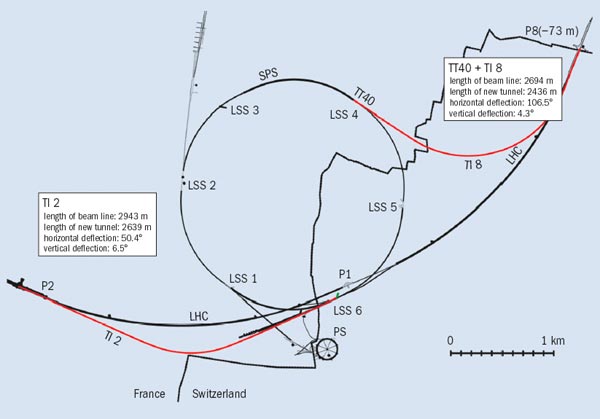
When the Large Hadron Collider (LHC) begins operation, two new beam transfer lines, with a combined length of 5.6 km, will bring 450 GeV proton beams or ions from the Super Proton Synchrotron (SPS) to the new machine. Line TI 2 leads from the extraction in long straight section LSS6 in the SPS to the injection point into the clockwise ring of the LHC near interaction point 2. The other line, TI 8, leads from the extraction in LSS4 to the injection point of the anti-clockwise ring near interaction point 8. The first 100 m of this transfer line, called TT40, are shared with the primary proton line to the CNGS facility  and were commissioned together with the new extraction system in LSS4 in 2003. In October 2004 the complete TI 8 line became operational, with protons travelling the 2.5 km to the LHC tunnel.

CCEpro1_03-05

Studies on how to transport beam from the SPS to the LHC began in the early 1990s. Various configurations were investigated, one of them even implying a polarity reversal of the SPS. The use of cryogenic magnets was also considered. Eventually a system using room-temperature magnets was chosen because it was more economical overall, since the transfer lines will operate only during the short periods of LHC filling.

Between them the two transfer lines required the excavation of more than 5 km of new tunnels and enlargements. Excavation for TI 8 began in autumn 1998 with a civil-engineering shaft near the SPS, some 50 m deep and 8 m in diameter. The first enlarged part of the tunnel, TT40, and some adjacent underground works were excavated using machines known as “road headers”. However, for drilling the 2.3 km towards the LHC a tunnel-boring machine was used. This had to work its way down to the tunnel that housed the still operational Large Electron Positron (LEP) collider, through a height difference of some 70 m, although this is not usually the preferred way of working. Excavation finished in June 2000 and was followed by lining with concrete, leaving a finished tunnel 3 m in diameter.

By contrast, TI 2 was entirely excavated by road headers. Although the inclination of the LHC tunnel means that the SPS extraction and LHC injection sections are nearly at the same height above sea-level, this tunnel needed a Z-shape vertical profile because of geological constraints (an underground river bed!). Additional magnet groups were required for the vertical bending. The construction of TI 2 and TI 8 involved the excavation of 60,000 m3 of material and the use of 21,000 m3 of concrete.

CCEpro2_03-05

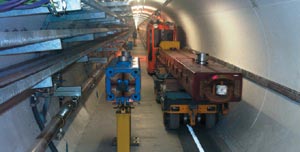
Geodetic referencing work on TI 8 started in autumn 2002, followed by the installation of general services, such as electricity and water cooling, and pulling the power and controls cables. Installation of the magnet system began in December 2003 and finished in May 2004. The relatively restricted space of the transfer tunnels required the development of a new system to transport and install the magnets. This is based on a modular system of “buggies” in the form of very compact tractors with a payload of 9 t each, which are fitted with air cushions and in-wheel motors. The wheels can turn on the spot under the load and allow the magnets to be displaced laterally towards their installation position. An automatic guidance system enables the travelling convoy to reach a typical driving speed of around 3.5 km/h. Using this system together with various girders and adapters, more than 400 magnets have been placed in TT40/TI 8, from 300 kg correctors to 13.5 t bending magnets recovered from earlier installations, as well as the 22 t beam dumps. In addition to work on TI 8 and TI 2, the system will be used to install magnets in the main LHC tunnel as well as for the CNGS project, thanks to its versatility.

All 348 main dipole magnets, 179 main quadrupoles and 93 corrector magnets for TI 2 and TI 8, as well as the bulk of the vacuum system, have been built by the Budker Institute for Nuclear Physics (BINP) in Novosibirsk, as part of the contribution of the Russian Federation to the LHC project. These have been transported to CERN by lorry over the 6000 km between the two laboratories. In addition, 73 dipoles and quadrupoles have been reused from the decommissioned PS-to-SPS electron transfer line and the SPS-to-LEP transfer lines. Because of the small emittance of the beam, the apertures of the lines could be relatively small – sometimes no bigger than a postage stamp.

CCEpro3_03-05

The next stage was to install the beam instrumentation devices, set up the vacuum system and make the necessary electrical and water connections. TI 8 then entered 11 weeks of hardware commissioning to check all the systems individually, such as the magnet powering and polarities, the magnet temperature interlock system, and the read-out of the beam instrumentation devices. Special measures were taken to ensure a sufficient air flow from the ventilation system, and a final verification of the alignment of the beam-line elements took place. The last two weeks before the first beam test in October were used to operate all the systems together from the control room, and a series of “dry runs” allowed the many new components of the control system to be deployed and tested in advance.

For the actual beam tests, the beam dump at the end of the line was supplemented temporarily by additional iron and concrete shielding blocks. This was to minimize the radiological impact on the LHC tunnel and the cavern for the LHCb experiment, where installation is still in full swing. The entire LHC point 8 and several hundred metres in the adjacent LHC arcs were closed. Also the beam tests, spread over two weekends, were scheduled to minimize the impact on the ongoing installation work.

CCEpro4_03-05

A single-bunch beam with 5 x 109 protons was prepared for the first beam tests. The line was set to 449.2 GeV, the SPS energy measured during the 2003 lead-ion run, and the LSS4 extraction system was set up and re-steered. As soon as the beam dumps at the beginning of the line were retracted, the first bunch of particles travelled through to the end of the installed part of the line, without the need for any “threading” (all corrector elements were set to zero current). In the following hours the necessary calibrations of the beam instrumentation were made and many measurements were carried out, such as energy acceptance, aperture scans, dispersion and optical matching, in part also using higher single-bunch intensities of 3-4 x 1010 protons. On the second test weekend, at the beginning of November, some commissioning was also done with multiple bunches per extraction, accumulating a total intensity at the end of the line of 8.6 x 1013 protons over the two weekends.

Although the data are still being analysed, the basic theoretical model of the lines seems to be well confirmed. The trajectory stability was found to be very good and the layout of the beam diagnostics, which performed well, was shown to be appropriate. The new control system, with its extensive array of applications, performed excellently, greatly facilitating the smooth progress of the tests.

CCEpro5_03-05

The last part of the TI 8 line, in the LHC tunnel itself, and the injection system will be set up soon. The upstream part of the other transfer line, TI 2, is being installed. Since the main LHC magnets will be brought down through a shaft in TI 2 nearly halfway to the LHC, the downstream part of this transfer tunnel must remain empty of line elements to facilitate the transport of the LHC elements into the ring. It will be completed and commissioned once the installation of the main LHC magnets is over.

The commissioning of TI 8 was quickly and successfully achieved thanks to the dedication of the many people who have worked over the years on the two transfer lines. Following on from the commissioning of the LSS4 extraction and TT40 a year ago, this has served as a large-scale test-bed for components and concepts that will be used in the LHC. It also provided an early understanding of the behaviour of the transfer line, which should help to focus attention during the LHC sector test, planned for 2006, on the injection system and the main ring.

Particles meet cosmology and strings in Boston

PASCOS 2004 is the latest in the symposium series that brings together disciplines from the frontier areas of modern physics.

The Tenth International Symposium on Particles, Strings and Cosmology took place at Northeastern University, Boston, on 16-22 August 2004. Two days of the symposium, 18-19 August, were devoted to the Pran Nath Fest in celebration of the 65th birthday of Matthews University Distinguished Professor Pran Nath. The PASCOS symposium is the largest interdisciplinary gathering on the interface of the three disciplines of cosmology, particle physics and string theory, which have become increasingly entwined in recent years.

CCEpar1_03-05

Topics at PASCOS 2004 included the large-scale structure of the universe, cosmic strings, inflationary models, unification scenarios based on supersymmetry and extra dimensions, M-theory and brane models, and string cosmology. Experimental talks discussed data from the Wilkinson Microwave Anisotropy Probe (WMAP), neutrino physics, the direct and the indirect detection of dark matter, B-physics and data from the CDF and D0 detectors at Fermilab’s Tevatron.

Cosmology and quantum gravity

The issue of dark matter in the universe and prospects for the future were reviewed by Joseph Silk of Oxford and Margaret Geller of the Harvard-Smithsonian Center for Astrophysics. Geller observed that, while the cosmic microwave background combined with large redshift surveys suggests that the critical matter density of the universe is Ωm ~ 0.3, direct dynamical measurements combined with the estimates of the luminosity density indicate Ωm = 0.1-0.2. She suggested that the apparent discrepancy may result from variations in the dark-matter fraction with mass and scale. She also suggested that gravitational lensing maps combined with large redshift surveys promise to measure the dark-matter distribution in the universe. The microwave background can also provide clues to inflation in the early universe. Eva Silverstein from SLAC discussed a new mechanism for inflation that results from a strong back-reaction on rolling scalar-field dynamics near regions with extra-light states. She claimed that this leads to a distinctive non-Gaussian signature in the cosmic microwave background, which can distinguish this mechanism from traditional slow-roll inflation.

CCEpar2_03-05

Cosmology and particle physics connected again in a talk at the Nath Fest by Steven Weinberg of the University of Texas, Austin. He spoke on the analogy between perturbations to the Friedmann-Robertson-Walker cosmology and the Goldstone bosons of particle physics in his talk “Goldstone Bosons Through the Ages”. Ali Chamseddine of the Center for Advanced Mathematical Sciences, American University of Beirut, showed that consistency problems on the action for massive coloured gravitons can be resolved by employing spontaneous symmetry-breaking to give masses to gravitons.

In his talk on quantum gravity, Lee Smolin of Perimeter Institute described rigorous results and the possibility of testing them experimentally. He discussed possible violations of the Greisen-Kuzmin-
Zatsepin bound on the upper energies of cosmic rays, which may be observed by the Pierre Auger Observatory, and possible variations of the speed of light with energy, which would be observable by the GLAST gamma-ray observatory. Dark energy in the universe formed part of the talk by Gregory Tarlé of Michigan reviewing the SNAP (Supernova Acceleration Probe) satellite observatory.

Supersymmetry and strings

Strings featured at the symposium on both the cosmic and the fundamental particle scales. In a talk on cosmic strings, Alexander Vilenkin of Tufts presented their current status in view of recent developments in string cosmology. At the opposite end of the scale, other speakers discussed string- and brane-based models in particle physics. Mary K Gaillard of the University of California, Berkeley, presented results from studies of effective Lagrangian theories that arise from compactification of the weakly coupled heterotic string. Models based on D-branes and their implications were discussed by Mirjam Cvetic of Pennsylvania, while Richard Arnowitt from Texas A&M examined the gravitational forces felt by point particles on two 3-branes (the Planck brane and the tera-electron-volt brane) bounding a 5D anti de Sitter (AdS) space with S1/Z2 symmetry.

CCEpar3_03-05

Nima Arkani-Hamed of Harvard and Michael Dine of the University of California, Santa Cruz, discussed string-based landscape scenarios from two different perspectives: whether the landscape does or does not predict low-energy supersymmetry. Arkani-Hamed argued for a high scale for supersymmetry or split supersymmetry while Dine said that, under rather mild assumptions, the landscape seems to favour a low and possibly even a very low scale for supersymmetry breaking. In considering the possibility for inflation in string theory, Boris Kors from MIT discussed a Stückelberg extension of both the Standard Model and the Minimal Supersymmetric Standard Model, recently introduced in collaboration with Pran Nath. In this extension, the vector bosons become massive without spontaneous symmetry-breaking, via condensation of Higgs scalar fields. Furthermore, such an extension implies the existence of a sharp Z boson and may lead to a new lightest supersymmetric particle composed mainly of Stückelberg fermions. In this case, the signals of supersymmetry will change in a significant way and the Stückelberg fermion may become the new candidate for dark matter.

Experiment and phenomenology

A number of talks dealt with supersymmetry phenomenology, specifically with regard to searches for supersymmetry at particle colliders and in dark matter. Howard Baer of Florida State described the possibilities for direct and indirect detection of supersymmetric dark matter, as well as searches at colliders, within the minimal supergravity grand unification (mSUGRA) paradigm. Searches at colliders were also discussed by Xerxes Tata of Hawaii, this time in the light of data from WMAP and other experimental constraints on weakly interacting massive particles (WIMPs). On the experimental side, Rupak Mahapatra of the University of California, Santa Barbara, reported on the world’s lowest exclusion limits on the coherent WIMP-nucleon scalar cross-section for WIMP masses above 13 GeV/c2 based on data from the Cryogenic Dark-Matter Search experiment at the Soudan Underground Laboratory. These results rule out a significant part of the parameter space of supersymmetric models.

David Cline of UCLA presented the current ZEPLIN II programme for the direct detection of dark matter as a prototype of large liquid- xenon detectors. He then described ZEPLIN IV and other 1 t liquid xenon detectors, and discussed the limiting backgrounds for such detectors in exploring the full range of the SUSY parameter space. Stefano Lacaprara of INFN, Padua, looked at the prospects for dark-matter searches at the Large Hadron Collider, and Rita Bernabei from INFN Rome reviewed the observation of dark-matter signals using the low-background NaI(Tl) detector of the DAMA dark-matter project in the Gran Sasso Laboratory.

Neutrinos and other particles

Several speakers at the symposium emphasized the promising future for neutrino physics and astrophysics. Vernon Barger from Wisconsin gave an in-depth presentation about the status and future prospects of precision neutrino physics. Haim Goldberg of Northeastern discussed galactic and extra-galactic neutrino sources, and Sandip Pakvasa from Hawaii showed how high-energy astrophysical neutrinos can provide information about neutrino lifetimes and mass hierarchies. Tom Weiler of Vanderbilt reviewed the particle physics and astrophysics information encoded in the energy spectrum, arrival directions and the flavour content of such cosmic neutrinos.

The detection of high-energy neutrinos was discussed by Stefan Schlenstedt of DESY-Zeuthen, who gave an update on the AMANDA experiment at the South Pole and the construction of the IceCube experiment for the observation of high-energy neutrinos. Luis Anchordoqui of Northeastern University gave an overview of the current status of the Pierre Auger Observatory being built to detect the highest-energy cosmic rays.

At lower energies, there are new measurements of the solar neutrino spectrum at the Sudbury Neutrino Observatory, using salt to enhance the detection of neutral currents. These were presented by José Maneira of Queen’s University, who also described the prospects for using strings of 3He proportional counters to increase the sensitivity by a factor of two. Nikolai Tolich from Stanford presented the improved measurement from KamLAND of Δm2 versus sin22θ for neutrino oscillations, while Ion Stancu of Alabama covered the status of the MiniBooNE neutrino oscillation experiment. Hans Volker Klapdor-Kleingrothaus of MPI-Heidelberg discussed the evidence for neutrinoless double-beta-decay using data from the Heidelberg-Moscow experiment, which shows a signal at the 4.2 σ level, and discussed its consequences for particle physics.

Other aspects of particle physics were not neglected. Shiro Suzuki from Saga University presented new results from the Belle experiment at KEK on the measurement of time-dependent charge-parity (CP) violation in b→s penguin processes. These yield in an average value 2.4 σ away from the Standard Model value.

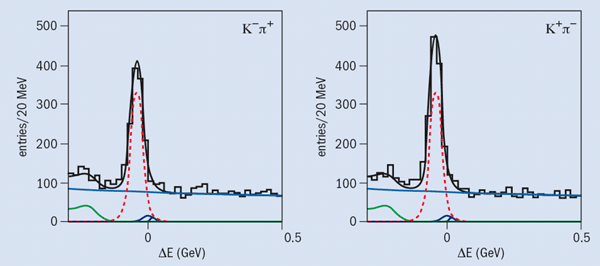
Continuing with B-physics, Stefano Passaggio of INFN Genova reported the direct observation of CP violation at BaBar in B→K+π at a confidence level of 4.2 σ. Results from DESY’s HERA collider and prospects for HERA II were reviewed by Chiara Genta of INFN Florence, while electroweak results from LEP2, the upgraded Large Electron Positron collider at CERN, were summarized by Roberto Chierici of CERN. Markus Schumacher from Bonn presented results of searches for new physics by the LEP experiments. Recent results from the D0 experiment at Fermilab were presented by Pushpalatha Bhat from Fermilab and Nick Hadley of Maryland. Those from CDF were presented by Un-ki Yang of Chicago and Dmitri Tsybychev from SUNY, Stonybrook. Ernst Sichtermann of Lawrence Berkeley National Laboratory gave the latest status of the muon g-2 experiment at Brookhaven, and William Marciano of Brookhaven reviewed the theoretical implications of the g-2 results.

Other talks dealt with a range of interdisciplinary topics. In his status report on using lattice quantum chromodynamics (QCD) in the calculation of light quark masses and the CP-violation parameter BK, Rajan Gupta of Los Alamos was able to weave in some early history of the lattice gauge calculations from his time at Northeastern University in the early 1980s. Roman Jackiw of MIT discussed the consequences of a vanishing Cotton tensor, which ensures that the 3D gravitational Chern-Simons term is stationary. He showed that this condition leads to kink solutions and that the effective theory is a new type of dilaton gravity.

• PASCOS 2005 will be held in the 1600-year-old ancient Korean town of Gyeong-Ju.

A fundamental base for the future

CCEwop1_03-05

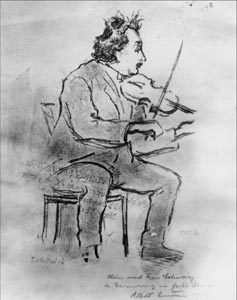
In 1905 a young man working in the Bern patent office produced three publications on light quanta, special relativity, and the sizes and movements of molecules. The young man was, of course, Albert Einstein and 1905 was later called his annus mirabilis. The resulting theories provided insight into the cosmos, elementary particles and states of matter, and paved the way to our current understanding of matter and the universe. However, these papers also helped to lay the foundations for the economy of today, and it is for this reason that we should consider the International Year of Physics of 2005 more about looking forward than looking back.

In his work 100 years ago, Einstein was driven by his innate desire to understand the universe about him. Such curiosity-driven research creates new “breaking” knowledge – discoveries with the potential to have new, revolutionary effects in all domains of human interest. From televisions and electron microscopes to global-positioning systems (GPS) and mobile phones, there are numerous examples of breakthroughs that might not have been achieved through applied research and technology alone.

Nowadays many of the fundamental questions in physics continue to concern the structure of the universe. We can describe many of the features of the matter we know in the universe to considerable precision, but we also know that this “visible” matter constitutes only about 5% of the total energy of the universe. We know almost nothing about the remaining 95% – dark matter and dark energy. Extending our knowledge of this unknown 95% is by itself a good reason for pursuing fundamental research in this direction; and CERN, with the Large Hadron Collider project, is leading one of the efforts to further this understanding. More important, however, is the potential for this fundamental research of today to lead to the technological innovations of tomorrow, possibly as unsuspected as GPS and the World Wide Web were in 1905.

The Year of Physics also offers an important opportunity to emphasize why continued basic research, particularly in the field of physics, is essential for the 21st century in solving key problems – such as sustainable energy and protecting the environment – and in contributing to health and education, not only in the developed nations, but throughout the world. The late Abdus Salam, a physics Nobel laureate, believed that the gap between rich and poor nations was one of science and technology. In 1988, he wrote that “in the final analysis, creation, mastery and utilization of modern science and technology is basically what distinguishes the South from the North. On science and technology depend the standards of living of a nation”.

The European Union has acknowledged this view of the importance of science and technology, since it wants to become the most advanced knowledge-based economy on the planet before the end of the decade. The US believes itself to be in that position anyway for the foreseeable future. But what of the developing world? With the support of most nations, the UN has declared eight “Millennium Development Goals”, which are aimed at cutting world poverty by half in the coming decade and saving tens of millions of lives in the process. However, as Calestous Juma, the coordinator of the Task Force on Science, Technology, and Innovation for the UN Millennium Project 2005, has stated, “It is inconceivable that the eight Millennium Development Goals can be achieved by 2015 without a focused science, technology and innovation policy.”

Such a focused effort requires the will of many nations to work together. Fifty years ago, CERN came into being in the wake of the Second World War. A handful of scientists and politicians, in Europe and America, had the vision and energy to launch a unique undertaking: the establishment of a centre of excellence for Europe. Today CERN is known to be open to the world. Forgetting their differences of nationality, religion or culture, scientists from around the globe converge at CERN to work together, all sharing a common goal. This melting pot is one of the keys to the laboratory’s success. Based in their own countries, members of collaborations not only provide most of the ambitious experimental apparatus, but they also contribute to a novel, global, powerful information and communication infrastructure using their own countries’ industries and talents in a fair and constructive partnership. And the motivation for all this: cutting-edge physics.

Such collaborative efforts can be obviously applied to the current goals of the developed world. Similar collaborative and global scientific efforts also need to be applied to the goals of the countries on the less fortunate side of the digital and other divides. But underlying all must be the will to continue with curiosity-driven research, which will surely bring unknown benefits. We must allow scientists to keep on asking questions and searching for the answers. To quote Einstein: “We shall require a substantially new manner of thinking if mankind is to survive.”

The shock of the known

Naturally, researchers take for granted that which is known, and instead focus on the unknown. Indeed, when I was at CERN working on the UA2 experiment, everyone was obsessed wih those areas of physics that were not yet understood. The public is also interested in those scientific subjects that still remain a mystery – where is the Higgs boson? Is string theory correct? What is dark matter? So when I left particle physics and became a science journalist, I continued to concentrate on unexplored territory. It was those research topics at the frontiers of knowledge and at the centre of controversy that inevitably resulted in the best stories.

CCEvie1_01-05

However, when I sat down to write Big Bang, I decided to adopt a different approach – I wanted to celebrate how much we do know, and glory in the fact that we belong to the first generation of humans that have access to a coherent, consistent, compelling and verifiable model of the universe. The public is told so much about contentious issues, such as arguments over the existence, type and quantity of dark matter, that they probably have the impression that cosmologists know very little about the universe. In fact, I think the public would be staggered if they realized how much we do know.

The fact that the universe is expanding might seem dull to those of us within science, but to outsiders it probably sounds incredible. I suspect that the majority of the public perceive the expansion of the universe as a weird new hypothesis that will be overturned in a few years. If only they realized that the expansion of the universe was detected more than 75 years ago and has since been measured in detail and verified in a multitude of ways, then they might begin to engage with the staggering and profound implications of an expanding cosmos.

As well as spreading the gospel of our understanding of the universe, including the Big Bang model, I also wanted to show how superior models emerge in science and how they are eventually accepted, regardless of how controversial they are initially and no matter how powerful their detractors might be. Although we should be celebrating Albert Einstein in the centenary of his annus mirabilis, it is still worth noting that he vehemently opposed the Big Bang model when it was explained to him by the Belgian cosmologist (and priest) Georges Lemaître. Einstein told him, “Your calculations are correct, but your physics is abominable.” But a few years later, the observations showed that Lemaître was right, and Einstein had to concede defeat in the light of reality. The Big Bang model turned out to be basically correct and remains the best game in town.

Despite all the successes of modern cosmology and the Big Bang model, my book does feature an epilogue that explains the ways in which the model is incomplete. There are, of course, still aspects of our universe that cause bewilderment and arguments among cosmologists. For example, was there an inflationary period in the early universe, what is dark matter, what is dark energy and what is the fate of the universe? Such questions currently belong to the realm of speculation, and answering them sometimes seems impossible.

However, perhaps my book offers a note of optimism for cosmologists, because they can take heart by looking back through the history of their subject. After all, what now seems completely obvious was itself mysterious to scientists of the past. There was a time when nobody had any idea of how to measure the distances to the nebulae, but in 1923 Edwin Hubble solved the puzzle and showed that many of them were remote galaxies. He relied on the periodic variation in brightness of a type of star, known as a Cepheid variable, which he spotted in the Andromeda Nebula. The time between peaks in brightness betrays the absolute brightness of a Cepheid star and this could be compared to its apparent brightness in order to deduce its distance – and the distance to the Andromeda Nebula that it inhabited. Today, measuring the distances to galaxies is still not routine, but it is clearly no longer impossible.

Perhaps the best example of a once impossible problem that soon became trivial was discussed in 1835 by the French philosopher Auguste Comte. He had tried to identify areas of knowledge that would forever remain beyond the wit of scientific endeavour. In particular, he thought that some qualities of the stars could never be ascertained. “We see how we may determine their forms, their distances, their bulk, and their motions, but we can never know anything of their chemical or mineralogical structure.” In fact, Comte would be proved wrong within a few years of his death, as scientists began to discover which types of atom exist in the Sun.

HESS provides new view of gamma-ray sky

CCEhes1_01-05

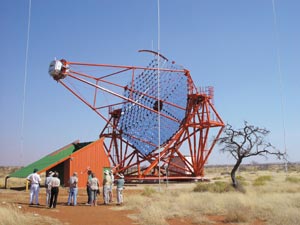
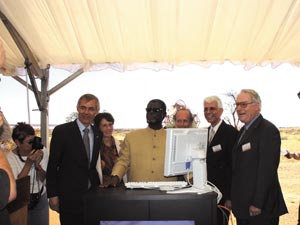
On 28 September 2004 the four telescopes representing the first phase of the High Energy Stereoscopic System (HESS) were inaugurated by the Namibian Prime Minister Theo-Ben Gurirab. The event represented the culmination of a five-year construction and commissioning effort, carried out by physicists and technicians from 19 institutes in Germany, France, the UK, Ireland, the Czech Republic, Armenia, South Africa and Namibia.

The HESS telescopes measure cosmic gamma rays in the energy range above 100 GeV with unprecedented sensitivity and resolution. They achieve this by detecting the Cherenkov light that is emitted when a high-energy gamma ray is absorbed in our atmosphere, resulting in a cascade of electrons and positrons rushing through the air at speeds close to that of light. Viewed in its Cherenkov light, the cascade resembles the trail of a shooting star, pointing back to the origin of the primary gamma ray (figure 1a). However, the light is very faint – about 10 photons per square metre at a gamma-ray energy of 100 GeV – and the duration of the light flash is only a few nanoseconds. Large mirrors, fast photon detectors and short signal-integration times are required to collect enough light from the shower, with minimal contamination from night-sky background light.

The telescopes in the HESS array provide up to four different views of the same shower, which enable the direction of the gamma ray to be reconstructed to better than 0.1°, and its impact point can be located with a precision of 10-20 m. Knowing the distance from the telescope to the shower axis, the intensity of the Cherenkov image is converted into an energy estimate for the gamma ray, with a precision of about 15%. The requirement that multiple telescopes register a shower in coincidence virtually eliminates one major source of background – penetrating muons that hit the ground close to a telescope, resulting in Cherenkov rings like those seen in ring-imaging Cherenkov counters in particle-physics experiments (figure 1b).

The HESS telescopes are located in the scenic Khomas highland region of Namibia, within 20 km of the tropic of Capricorn, in an area cherished by professional and amateur astronomers for its clear and dark skies. Equally important, the southern location provides optimum views towards the central part of our galaxy, a region that hosts a variety of objects suspected to serve as cosmic particle accelerators. These include supernova remnants, pulsars, star associations with strong stellar winds, and of course the supermassive black hole at the very centre of our galaxy.

Indeed, one of the main goals of the HESS experiment is to identify positively sources of cosmic rays in the galaxy, ending a search that has been going on for almost 100 years, since the discovery in 1912 of cosmic rays by Victor Hess. Locating the origin of the abundant cosmic rays is so difficult because they are deflected in the interstellar magnetic fields; their arrival directions are uniformly distributed and give no clues concerning their origin. Real images of cosmic accelerators can be taken using very-high-energy (VHE) gamma rays, which are produced when the accelerated protons or electrons interact in or near their source with ambient material or – in the case of electrons – scatter off starlight or the cosmic microwave background radiation.

CCEhes2_01-05

Just as the HESS collaboration encompasses particle physicists and astrophysicists, the HESS Cherenkov telescopes combine technologies from different fields. The design of the telescope structures and of the telescope mirrors – each segmented into 382 mirror facets with a combined area of 107 m2 – builds upon the experience collected in the design of low-cost solar concentrators. The mirrors are aluminized ground glass, manufactured like mirrors of astronomical telescopes, but with reduced requirements for optical quality. The focal-plane instrumentation – the “camera”, supported at 15 m focal length by a quadrupod attached to the telescope dish – contains 960 Photonis photomultiplier tubes (PMTs). PMT signals are sampled at a rate of 1 GHz by the analogue memory of the ASIC (application-specific integrated circuit) originally developed for the ANTARES neutrino detector. When an air shower is detected by several telescopes in coincidence, the signals are digitized, preprocessed and transmitted to a central computer cluster for recording. A novel feature of the HESS cameras is that the entire electronics is contained in the 1.5 x 1.5 x 1.5 m3 camera body, connected only by a few optical fibres.

While the last of the four HESS telescopes was completed in December 2003, data collection began in summer 2002 with the first telescope alone, and later with two and three telescopes. Even with a single telescope, HESS was the most sensitive instrument in the southern hemisphere. With four telescopes, gamma-ray sources with a flux below 1% of the flux from the Crab Nebula – which is often used as a standard candle of VHE gamma-ray astronomy – are routinely detected. For comparison, when the Whipple instrument discovered the Crab Nebula as the first tera-electron-volt gamma-ray source in 1989, a significant detection required about 50 hours of observation time; the HESS telescopes will detect such a source within 30 s!

It was no surprise therefore that the first HESS data taken during the construction and commissioning phase have already provided exciting results, many of which were presented at the International Symposium on High Energy Gamma-Ray Astronomy in Heidelberg, in July 2004. The active galaxy PKS 2155-304, detected previously only by the Durham Cherenkov telescope with a significance of about 6.8σ, exhibits a signal with more than 100σ, allowing for the first time an in-depth study of the emission and propagation of tera-electron-volt gamma rays for such a distant active galactic nucleus, at a redshift of z ≈ 0.12.

CCEhes3_01-05

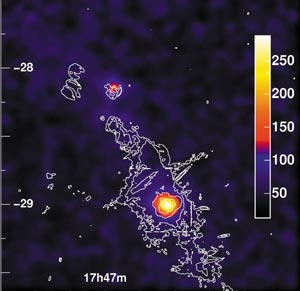
In HESS data taken towards the centre of our galaxy, a strong gamma-ray source stands out, coincident with Sagittarius A*, the supermassive black hole at the galactic core (Aharonian et al. 2004b). HESS can locate the source of the VHE radiation to within 30 arcseconds from the Galactic Centre, an order-of-magnitude improvement in precision compared with other instruments. The Galactic Centre has long been predicted as a source of VHE gamma rays generated in the accumulation and annihilation of dark-matter particles, for example the lightest stable supersymmetric particles. The characteristics of the gamma-ray signal detected by HESS are indeed consistent with the expected features for dark-matter annihilation, but would require very heavy (> 10 TeV) dark-matter particles and a large annihilation rate or enhanced density of the dark matter at the Galactic Centre. More conventional explanations include particle acceleration in the 10,000-year-old supernova remnant Sagittarius A East, which is still consistent with the HESS error circle for the source location. Future data should pin down the source location even better. Another key question is whether the gamma-ray flux is constant, or whether it varies, pointing to an origin near the Schwarzschild radius of the central black hole.

CCEhes4_01-05

For the first time, a tera-electron-volt instrument is sensitive enough that several sources appear in the field of view. The field of the Galactic Centre shows, in addition to the strong source close to Sagittarius A*, a second source, which appears to be associated with the pulsar nebula inside the supernova remnant G0.9+0.1. Similarly, observations targeted at the pulsar PSR B1259-63 have revealed – besides a gamma-ray signal from the pulsar – evidence of a second source about 0.6° north of the pulsar. This source HESS J1303-631 could not so far be associated with a counterpart in other wavelength regimes and may represent a type of cosmic accelerator hitherto unknown.

CCEhes5_01-05

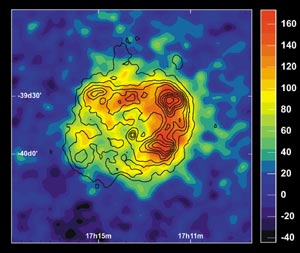
The most exciting of the first results from HESS is the image of the supernova RX J1713.7-3946, which shows a ring of twice the size of the Moon glowing in tera-electron-volt gamma rays (figure 3). Gamma-ray emission from this remnant was detected before with the CANGAROO instrument, but only HESS, with its high sensitivity and angular resolution, could actually resolve the supernova shell as the source of the radiation. This image provides the unequivocal proof that supernova shocks can accelerate particles to multi-tera-electron-volt energies. The measured energy spectrum of gamma rays extends to beyond 10 TeV and exhibits a power-law energy dependence with a spectral index of 2.2±0.2, consistent with predictions of theories for the shock acceleration of cosmic rays (Aharonian et al. 2004b).

To demonstrate fully that the gamma rays result from interactions of accelerated cosmic-ray protons – as opposed to processes involving high-energy electrons (of which the signature is evident in the strong synchrotron X-ray emission of the supernova shell) – will require more detailed studies of the morphology and wide-band spectra of the remnant.

These first results from HESS illustrate the power of the new generation of Cherenkov instruments, which include CANGAROO III, MAGIC and VERITAS. Tera-electron-volt gamma-ray astronomy has finally entered a stage where sources are no longer featureless points in the sky. Instruments have achieved the sensitivity to reach beyond the few exceptionally strong sources, and provide images of a new tera-electron-volt sky.

• For more information see www.mpi-hd.mpg.de/HESS.

Further reading

F Aharonian et al. 2004a Astron. Astrophys. 425 L13.
F A Aharonian et al. 2004b Nature 432 75.
T N LaRosa et al. 2000 AJ 119 207.

Author:
Werner Hofmann, MPI für Kernphysik, Heidelberg.

Neutrino physics gains new levels of popularity

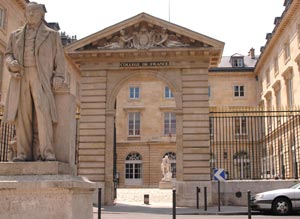
The 21st International Conference on Neutrino Physics and Astrophysics was held on 14-19 June in the splendid Marguerite de Navarre auditorium at the Collège de France, in the heart of Paris. Organized by the CEA, the CNRS, the Collège de France and the University of Paris7-Denis Diderot, its aim was to review the latest developments in this rapidly evolving branch of physics. It attracted 520 participants – a record turnout for this series of meetings, and a clear sign of the renewed interest in neutrinos within the particle-physics community. All the advances made in neutrino physics were reviewed over the course of six days, and the most significant new results are summarized here.

CCEneu1_01-05

Solar neutrinos formed the topic of the first session, beginning with a presentation of the latest measurements from the Sudbury Neutrino Observatory in Canada. This was followed by a report from Giorgio Gratta of Stanford on the results from the KamLAND experiment in Japan, which has provided new and definitive proof of neutrino oscillation in the energy range of a few million electron-volts.

Here, the neutrinos are not of extraterrestrial origin – instead they come from an artificial source, namely nuclear reactors. The detector, which has been built on the site of the old Kamiokande experiment, uses 1 kt of liquid scintillator as the target and seeks to observe the neutrino interactions of nearby reactors – mainly those at installations in Japan, but also some in South Korea. The average distance between the sources and the detector is 180 km, which has proven sufficient to confirm the deficit observed by the experiments designed to measure solar neutrinos.

After two years of taking data, KamLAND has reported 258 events, compared with an expected 365. Furthermore, the study of the energy distribution of these events indicates a spectral distortion in the low-energy range. This is a crucial result, because in addition to confirming oscillation, it allows a much more precise measurement than that made possible by solar neutrinos of the essential oscillation parameter Δm2, the difference in the mass-squared of the two oscillating neutrinos. The result can be expressed as Δm2 = 8.2 + 0.6 – 0.5 10-5 eV2. In a simple mass-hierarchy scenario, this determines the mass of the second neutrino νμ at 9 meV, which is about 100,000 million times lighter than the proton.

CCEneu2_01-05

The results from KamLAND also open up a new line of research, namely the study of geoneutrinos, which was presented by Gianni Fiorentini of Ferrara and INFN. The Earth emits a tiny heat flux, and what scientists want to know is whether it comes exclusively from radioactivity. The uranium, thorium and potassium content could be determined by studying the neutrinos emitted, but the energy of these neutrinos is even lower than that of neutrinos from nuclear power plants, and KamLAND is close to the observation limits.

With neutrinos it is also possible to spy on what is going on inside nuclear reactors, and on the various fission products that produce neutrinos with different spectra, as John Learned from Hawaii described. The International Atomic Energy Agency, the watchdog organization for the non-proliferation of nuclear weapons, is beginning to be interested in this means of control.

Oscillation experiments

Following the presentations on low-energy neutrinos, it was the turn of atmospheric neutrinos and the results obtained with the new Super-Kamiokande detector. Edward Kearns from Boston presented the expected distribution of νμ interactions as a function of the L/E parameter, the ratio between the length of flight and the energy of the neutrinos detected, which agrees very well with the oscillation hypothesis. These results have been supported by those from the K2K experiment, in which neutrinos produced at the KEK laboratory are observed in the Super-Kamiokande detector 250 km away.

CCEneu3_01-05

Overall, analyses from all the oscillation experiments are placing increasingly severe constraints on Δm2 and on the mixing angles of the leptonic, or MNSP (Maki-Nakagawa-Sakata-Pontecorvo), mixing matrix. Srubabati Goswami of Allahabad summarized the state of progress. The third angle θ13 is the least well known; we have only one limit, from the experiment at the Chooz reactor in France. The determination of this angle, together with CP violation in the field of neutrinos, is crucial, and various projects at different reactors were discussed. Intense activity surrounds the preparation of the longer-term future; pending the construction of neutrino factories, super beams and radioactive beams are under consideration, particularly at CERN.

Direct measurements of neutrino masses, limits on the magnetic moment, and searches for double beta-decay (with or without neutrinos) were also presented, in particular the first results from the Neutrino Ettore Majorana Observatory (NEMO3) experiment in Fréjus Underground Laboratory, France, and the Cuoricino project in the Gran Sasso Laboratory, Italy. The presentations on this subject covered evidence, indications and enigma. The latter category includes a signal for neutrinoless double-beta decay that comes from an analysis of the Heidelberg-Moscow germanium experiment, which will probably be the subject of discussion for several years to come. The field of unresolved enigma also includes the result from the Liquid Scintillator Neutrino Detector (LSND) at Los Alamos, which should soon be clarified by the MiniBoone experiment at Fermilab.

The last part of the conference covered neutrino astrophysics. The neutrino sky map is still very incomplete; only the Sun and the brief signal from supernova SN1987A in February 1987 have been observed. Other sources are at work in the vast expanse of the sky, but their detection requires instruments 10,000 times larger than those that exist at present. Current projects, which tend towards a detector of 1 km3, were reviewed. In parallel with neutrinos, attention at the conference focused on research into astroparticles – high-energy photons, charged cosmic rays and gravitational waves. Michel Davier of Orsay demonstrated the potential richness of the “multi-messenger” approach for the future.

There is a fine line between astrophysics and cosmology, especially since constraints on neutrino mass are starting to emerge from experiments on the study of cosmic background radiation and
in-depth explorations of the universe. The constantly evolving results of this discipline were presented, and research into dark matter – both direct (new results from the Cryogenic Dark Matter Search, CDMS) and indirect – was discussed, along with dark energy.

Theory was not forgotten, and there was discussion of recent progress on neutrino mass models, tests of the various CP, T and CPT symmetries, flavour violations, and the implications of neutrinoless double-beta decay. The previous week, a two-day satellite conference involving almost 100 physicists had been held to commemorate the 25th anniversary of the discovery of the “seesaw mechanism”, currently the most promising explanation for the smallness of neutrino masses.

Remote visitors

Thanks to a successful webcast, some 800 Web users interested in neutrinos were able to follow the conference remotely, and anyone wishing to hear the presentations again will be able to do so during the next few months by logging onto the conference website at http://neutrino2004.in2p3.fr, where copies of the speakers’ transparencies are also available. The event was also a media success, thanks to a press conference organized the previous week involving around 15 journalists representing the main French newspapers and radio stations.

Neutrino physics has undergone dynamic changes in recent years. New ideas have been put forward in both the theoretical and the experimental fields, which should help this branch of physics to continue making major advances for many more years to come. The next step will be discussed during June 2006 in Santa Fe, at the next conference to be held in this series.

ICHEP lays on a Chinese banquet of physics

In 2004, the biennial International Conference on High-Energy Physics (ICHEP) took place for the first time in China, in the capital Beijing, where it was hosted by the Institute of High Energy Physics (IHEP). IHEP was founded in 1950, around the same time that the first conference in this series took place in Rochester, New York. As has become traditional, the conference began with parallel sessions where participants could learn first-hand about the latest results across a broad range of high-energy particle physics. Then, reminiscent of a Chinese banquet of many courses, the plenary sessions presented a succession of offerings reviewing recent progress in the field. A recurring theme was that of precision in areas in which it had once seemed impossible, as in charge-parity (CP) violation and neutrino physics. While studies at the high-energy frontier continue, in general, to bolster the Standard Model, lower energies provided several hot topics, such as the new particle states seen over the past year or so.

Quarks of all flavours

The physics of quarks provided many dishes at this year’s feast of physics, from weak decays through tests of quantum chromodynamics (QCD), the theory of quarks and gluons, to the complex behaviour of quark matter in heavy-ion collisions. In the plenary sessions the menu began with the physics of flavour, where the strange, charm and bottom quarks are all providing a quantitative testing ground for flavour-mixing through the Cabibbo-Kobayashi-Maskawa (CKM) matrix as well as for CP violation. In his talk on the strange quark sector, Vincenzo Patera, from LNF/INFN and Rome, was keen to show that kaons can still make significant contributions. In particular, studies of rare kaon decays, though difficult, are becoming increasingly important: the branching ratios provide the opportunity for direct measurements of the unitarity triangle for CKM flavour-mixing. Also, as recently as 2002, the first row of the CKM matrix (Vud, Vus, Vub) disagreed with unitarity at the level of 2.4σ. Now, new determinations from experiments on the decays K→πeν (Ke3) and K→πμν (Kμ3) at several laboratories – E865 at Brookhaven, KLOE at the Dafne facility, KTeV at Fermilab and NA48 at CERN – provide better agreement with unitarity, and the crisis here seems to be over.

CCEich1_01-05

Moving on to the heavier flavour of charm, Ian Shipsey of Purdue spoke of a forthcoming era of precision in absolute charm branching ratios, with data coming from the experiments BESII at IHEP, CLEO-c at Cornell and, later, BESIII. In particular, it will be possible to make precision tests of lattice QCD calculations, which will feed back into determinations of the CKM matrix elements in experiments at the B-factories and elsewhere. Shoji Hashimoto of KEK presented recent results from so-called staggered unquenched lattice QCD simulations, which include the fermion determinant, and yield some interesting results. In particular, in calculations of the CKM matrix elements lattice, QCD can put constraints on the Standard Model and hence provide a guide to new physics.

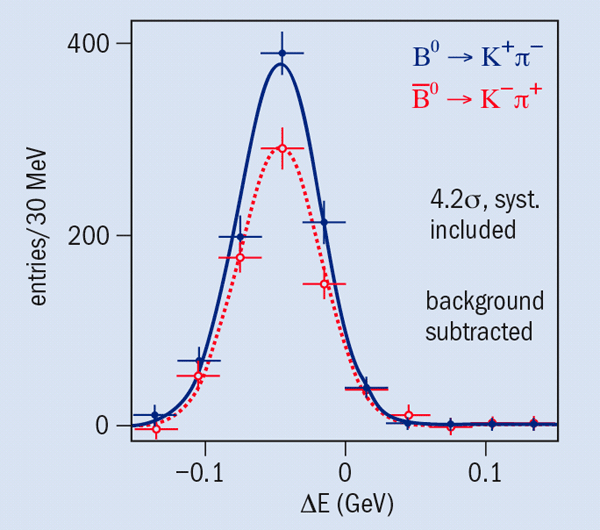
In the still-heavier bottom-quark sector, the Belle experiment at KEK and BaBar at SLAC are making measurements allowing precision tests of the CKM matrix on many fronts. Now running with continuous injection, the KEKB facility is providing 1 fb-1 a day – or 1 million BBbar-pairs – as reported by Yoshihide Sakai from KEK. PEP-II at SLAC has also been performing well and, in his presentation on results from BaBar, Marcello Giorgi of INFN/Pisa pointed out that, between them, BaBar and Belle have accumulated an integrated luminosity of 0.53 attobarn-1. Perhaps the hottest “dish” served up by the two experiments, however, concerned the first observation of direct CP violation in B-physics. The two experiments measure the difference between the decay B0→K+π and the decay of the antiparticle, Bbar0→Kπ+. Both observe an excess of B-decays, with an average asymmetry of ACP = -0.114 ± 0.020. A similar asymmetry in the decay of the charged B→Kπ0 is not seen, with ACP = -0.04 ± 0.05 ± 0.02, leaving open a door, perhaps, to new physics. The CDF experiment at Fermilab also finds a value for ACP(B0→K+π) compatible with BaBar and Belle.

CCEich2_01-05

Measurements of other decay modes allow different parts of the unitarity triangle to be pinned down. The decay B0→π0π0 has been observed for the first time by BaBar and Belle. This is useful in the determination of the angle α, although the decay to ρρ is better, and the combined result of α=100 + 12 – 10° provides good agreement with a global fit to the CKM matrix. The first measurements of the angle γ are also emerging from other decay modes and are beginning to put constraints on new physics. As Zoltan Ligeti from Lawrence Berkeley Laboratory noted, these first precise tests of the CKM picture are leading to a paradigm change; the aim now is to look for corrections to the picture, rather than alternatives to it. Ahmed Ali of DESY provided a theorist’s overview of heavy quark physics, looking systematically at the parameters of the CKM matrix and the unitarity triangle. Now the precision on Vcb is fast approaching Vus, while more data from the B-factories are needed to pin down Vub. Rare B-decays can also allow the determination of Vts and Vtd.

Top, the heaviest of the quarks, is so much heavier that its study lies in the domain of the highest energies, currently at the Tevatron at Fermilab. Dmitri Denisov of Fermilab showed that Run II at the Tevatron is proceeding well, with a peak luminosity above 1 x 1032 cm-2s-1 and a total integrated luminosity so far of 0.7 fb-1. A new combined result from the CDF and D0 experiments from Run I data is now available, putting the top mass at 178.0 ± 4.3 GeV.

CCEich3_01-05

Back in the realm of relatively low-energy quark physics, the story of the pentaquarks presents a picture of “now you see them, now you don’t”, leading many participants at IHEP’04 to question whether pentaquarks exist. The ϑ+(1540) state is seen in as many as 14 different experiments, but it is not seen in nine others. Both experimentalist Shan Jin of IHEP and theorist Frank Close of Oxford emphasized the need to confirm the existence of pentaquarks, as these particles may lead beyond the naive quark model. In his plenary talk, Close took a vote from the audience and found that sceptics outnumbered believers. Other possible multiquark states that have been observed include the X(3872), seen in Belle at KEK and in both CDF and D0 at Fermilab, and the DsJ(2632) seen at Fermilab in the SELEX experiment. Close argued the case that the former is a D-D* molecular state, while the latter may be an artefact – both assertions to be disproved.

Precision and the Standard Model

QCD, the theory of quarks and the strong force, is now becoming more quantitative, with precision measurements at the Tevatron, as presented by Donatella Lucchesi of INFN/Padova, and at HERA, as described by Max Klein of DESY. New results from HERA include the first measurement of the bottom structure function, using b-lifetime tagging and the data from the upgrade, HERA II, where there has been efficient data-taking since October 2003. The HERMES experiment has made the first measurement of the transverse spin structure of the proton, using a target polarized transversely to the direction of the positron beam

The Tevatron, meanwhile, is producing data that allow “precision phenomenology” as highlighted by James Stirling of IPP Durham, with excellent fits to next-to-leading order and next-to-next-to-leading order QCD

Stirling commented that QCD is now established – we are no longer testing it, but are instead using it as part of the toolkit for studying physics at the Large Hadron Collider (LHC). For hard processes, it is a precision tool operating at the per-cent level. He also presented a new scalar graphical approach to QCD calculations by Freddy Cachazo, Peter Svrcek and Edward Witten. This alternative to using Feynman graphs leads to a dramatic simplification and could herald an important breakthrough.

CCEich4_01-05

An extreme testing ground for theories of quarks and gluons lies in the physics of heavy-ion collisions where the key question continues to be: has the quark-gluon plasma been seen? In the past couple of years, attention has turned to the experiments at the Relativistic Heavy Ion Collider (RHIC) at Brookhaven, which is producing results in high-energy gold-gold collisions. James Dunlop of Brookhaven National Laboratory described the state of heavy-ion theory as a patchwork; the picture emerging from RHIC is of five observations of bulk, dense, highly interacting matter, which invoke different models. For a compelling argument for quark-gluon plasma, quantitative estimates of theoretical uncertainties are still needed.

The electroweak sector of the Standard Model (SM) has, for some time, been dominated by precision measurements, which are now described at the level of 0.1%. As Frederic Teubert of CERN remarked, this precision is at the level of pure electroweak radiative corrections that are sensitive to heavy particles. This leads to a fitted value for the mass of the Higgs particle, mH = 114 + 69 – 45 GeV, or mH < 260 GeV at a 95% confidence level (CL). The biggest discrepancy in electroweak results is in the interpretation of the ratio of neutral to charged currents as measured in Fermilab’s NuTeV experiment in evaluating the effective weak mixing angle, sin2ϑeff. The biggest challenge, however, is the deviation from the SM of measurements of the anomalous magnetic moment of the muon, which at (aμ – 11659000) x 10-10 = 208 ± 6 now yields a 2.7σ difference from SM theory.

Beyond the Standard Model

Physics beyond the SM provided the dessert course of the plenary session’s “banquet”. Despite, or perhaps because of, their rare interactions with matter through the weak force only, neutrinos are giving a first taste of new physics.

CCEich5_01-05

Clark McGrew of Stony Brook and Yifang Wang of IHEP reviewed the current state of accelerator and non-accelerator neutrino experiments respectively, where neutrino oscillations are now clearly established with both man-made and naturally produced neutrinos. The KamLAND reactor-based experiment and the K2K accelerator-based experiment are both revealing a picture consistent with that from Super-Kamiokande (atmospheric neutrinos) and the Sudbury Neutrino Observatory (solar neutrinos). Solar neutrinos yield Δm212 = (8.2 + 0.6 – 0.5) x 10-5 eV2, and a large, but not maximal, mixing angle of tan2 ϑ12 = 0.4 + 0.09 – 0.07; atmospheric neutrinos give Δm223 = (2.4 ± 0.4) x 10-3 eV2 and a maximal mixing angle of sin223> 0.92 at a 90% CL. The third angle, ϑ13, is least well known, but from a global fit sin213 can be put at < 0.09, 90% CL. Pinning down this angle, which provides a key to CP violation in neutrinos, is one of the big challenges for this field.

New neutrino experiments are coming online. MiniBooNE at Fermilab is going well despite a set-back with a broken neutrino horn (after 108 pulses) and should have sufficient data to release an electron-neutrino appearance result in 2005. The MINOS project, detecting neutrinos from Fermilab in the Soudan Mine 730 km away, should begin its first runs to test beam physics early in 2005. On the theoretical side, Paul Langacker from Pennsylvania noted that the neutrino mixing matrix is very different from the CKM matrix for mixing quark flavours. He pointed to the many possibilities for interpreting this first break with the SM when it comes down to specific models for mixing.

Looking elsewhere in current experiments for new physics beyond the SM, the collaborations working at the recently upgraded Tevatron and HERA machines have reported new limits. As Beate Heinemann from Liverpool summarized, the two machines are now running well and are already providing the world’s best constraints on a great deal of new physics (although nothing novel has yet been found). Uncovering the mechanism of electroweak symmetry-breaking is probably the most important immediate challenge for particle physics. For example, why is the photon massless but the Z not so? Riccardo Barbieri of INFN/Pisa examined the two physical principles behind the calculable models for this symmetry breaking: supersymmetry and the Higgs boson as a pseudo-Goldstone boson. The LHC should make the first real test of these ideas.

For theoretical developments beyond the SM, in particular regarding a quantum theory of gravity, string theory has been offering promise for two decades. Hong Liu of the Massachusetts Institute of Technology reviewed the situation using string theories to address the problems of space-time singularities, in particular the Big Bang and black holes. There is hope for understanding these cosmological singularities and going beyond the SM, with string unification the dream.

Particle physics beyond the Earth was reviewed by Pierre Binetruy of LPTHE Orsay. High-energy gamma rays are providing a wealth of information about the heavens, with the HESS facility in Namibia now bringing in new data. Ultra-high-energy cosmic rays continue to tantalize regarding the existence of the Greisen-Zatsepin-Kuzmin cut-off at 5 x 1019 eV, above which protons from distant sources are “lost” as they interact with the photons of the cosmic microwave background. The AGASA array in Japan has found events at energies above the cut-off, but now the HiRes experiment, based on two nitrogen fluorescence detectors 13 km apart in Utah, has data that confirm the presence of the cut-off.

Beyond the present

The final dishes of the physics feast looked beyond the present to future accelerators and detectors, and were dominated by considerations of a future International Linear Collider (ILC). Two days previously, Jonathan Dorfan, chairman of the International Committee for Future Accelerators, had announced at the conference that the committee had approved the recommendation of the International Technology Recommendation Panel that “cold” technology should be adopted for the future ILC. In discussing R&D for future detectors, Jim Brau of Oregon concentrated on detectors for such a machine. He pointed out that, with the technology selection made, detector efforts could now concentrate on one set of parameters – for example, bunch spacing and the number of bunches per train. The challenges and opportunities differ in many respects from those of detectors for the LHC – events will be simpler, making reconstruction of particle tracks more feasible, while the resolution requirements for the masses of the heavy bosons will set goals for energy measurements.

David Miller of University College, London, presented the case for building a tera-electron-volt ILC as soon as possible (to exploit the findings of the LHC) and argued that a further multi-tera-electron-volt linear collider, and perhaps a larger hadron collider, would also be necessary. Kaoru Yokoya of KEK presented a personal view of the future for accelerators in which he argued that the technology for a Compact Linear Collider (CLIC), although less advanced than the ILC, is much more advanced than for a muon collider. Hence, as a CLIC machine could reach around 3 TeV, the target energy for a muon collider should be greater than 10 TeV.

In a conference demonstrating so much the strength and value of international collaboration, Vera Lüth of SLAC brought the 737 attendees from all over the world up to date on the ongoing problems with US visa approval. In her report on the activities of the International Union of Pure and Applied Physics (IUPAP), she said there is growing recognition that the impact is severe and damage might be irreparable. Despite recent streamlining, the overall process remains “inefficient, unnecessarily lengthy and opaque”. IUPAP has advised it cannot feel confident to sponsor conferences in the US until scientists are guaranteed free access.

The ICHEP conference in China, however, proved very successful. Customs formalities were mercifully brief, and traditional Chinese hospitality was evident in the meals provided and in the tours organized, both for attendees and their guests. These included a trip to IHEP arranged by conference chairman and IHEP director Chen Hesheng, as well as visits to the famous Great Wall and Forbidden City. In his conference summary – the post-banquet drink – John Ellis from CERN was upbeat about the current state of particle physics. QCD works, the CKM matrix is looking better and better, the LHC (with all its promise) is on its way and there are good ideas for the future. Now, as the memories of China begin to fade, there is the next conference in the series to look forward to: ICHEP ’06 in Moscow.

• This report is largely based on the presentations of the plenary speakers. These can be found, together with those from the parallel sessions, at http://ichep04.ihep.ac.cn/.

CERN, the violin and the music of the spheres

Music has always seemed to attract physicists, perhaps because its clear and complex mathematical structure is somehow familiar, perhaps because creativity in music is refreshingly different from that in science. This link can be traced back to the ancient Greek philosophers, such as Heraclitus and Pythagoras, who discovered the mathematical basis of harmony and applied it to the movements of the planets.

CCEmus1_01-05

In modern times at CERN, Vicky Weisskopf (director-general 1961-1964) was a gifted pianist and famously said, “When things get tough, there are two things that make life worth living: Mozart, and quantum mechanics.” One of his successors, Herwig Schopper (director-general 1980-1988), is also a keen pianist. It was music that brought together Jack Steinberger and Konrad Kleinknecht to work on CP violation in the K meson system. Steinberger played the flute and Kleinknecht the violin in the CERN chamber orchestra; over a beer after a rehearsal in 1965 the two agreed to collaborate. The collaboration extended to many memorable chamber-music sessions at Steinberger’s house, involving Heinrich Wahl, Jürgen May, Günther Lütjens, Yves Goldschmidt-Clermont and others.

Kleinknecht also forms a link to another great physicist-musician prominent in the pioneering days of CERN, Werner Heisenberg, a very fine pianist; Kleinknecht was part of a small orchestra brought together to celebrate Heisenberg’s 60th birthday by accompanying him in a performance of Mozart’s Piano Concerto, K488.

Turning specifically to the violin, many physicists, including the author of this article, have been fascinated by it, and found relaxation and fulfilment in playing. Of these, the most famous is Einstein. His violin rarely left his side and he played it often, at an accomplished level, throughout his life, saying that “life without playing music is inconceivable to me”. Max Planck was also a highly gifted pianist, composer and singer. Lise Meitner once remembered a musical evening at the Plancks’ house in Berlin, in which Planck, Einstein and a professional cellist played Beethoven’s Piano Trio in B-flat major. “Listening to this was marvellously enjoyable, despite a couple of unimportant slips from Einstein… Einstein was visibly filled with the joy of the music and smiled in a light-hearted way that he was ashamed of his dreadful technique. Planck stood quietly by with a blissfully happy face and, hand on heart, said ‘That wonderful second movement!’ ”

CCEmus2_01-05

Einstein was an inveterate concert-goer. He attended the famous debut of Yehudi Menuhin with the Berlin Philharmonic under Bruno Walter, in which the 13-year-old Menuhin was soloist in a programme of the Bach, Beethoven and Brahms concertos that would be nowadays inconceivable. Einstein was so moved by Menuhin’s playing that he rushed into the boy’s room after the performance and took him in his arms, exclaiming “Now I know that there is a God in heaven!” He once said that had he not been a physicist, he would have been a musician: “I often think about music. I daydream about music. I see my life in the form of music.”

The other side of the coin is violinists who have been interested in physics. In the modern age, the well known American violinist, Joshua Bell, has a great interest in physics and has collaborated with physicists and engineers at the Massachusetts Institute of Technology in a project to enhance and expand the violin electronically. There is indeed a curious though tenuous link between Bell and Einstein. The great virtuoso Bronislav Huberman was a friend of Einstein, and visited him at his home in Princeton, no doubt together with his great Stradivarius violin, known as the “Gibson” Strad, made in 1713 during the “golden period” of his work. One day, the Strad was stolen from Huberman’s dressing room at Carnegie Hall in New York. It disappeared and was lost for more than 50 years, during which time the thief played it around the backstreet bars of New York City until he died. In 2001, Bell acquired the “Gibson” for almost $4 million and now uses it as his sole concert instrument.

Given their friendship and mutual interest, it seems likely that Huberman would have allowed Einstein to play this marvellous instrument, providing a link between Bell and Einstein through this great masterpiece of the violin-maker’s art.

CCEmus3_01-05

Another violinist who is keenly interested in the work of CERN is Jack Liebeck, one of Britain’s outstanding young violinists. Liebeck, who was born in 1980, has been playing the violin since he was eight. He made his first public appearance playing the young Mozart on BBC television at the age of 10. Liebeck plays one of the finest instruments by another great maestro of Italian violin-making, Giovanni Battista Guadagnini. The violin dates from 1785 and is known as the “ex-Wilhemj”.

On 11 October 2004 Liebeck played with Russian pianist Katya Apekisheva in the CERN Auditorium. The occasion was a special gala concert sponsored by the UK Particle Physics and Astronomy Research Council as a tribute to the CERN staff on the organization’s 50th anniversary. In the morning, Liebeck toured CERN and visited the locations where the ATLAS and CMS detectors are being installed for the Large Hadron Collider. The concert that evening featured an electrifying performance of the Prokofiev Sonata No. 1, as well as very fine readings of the Debussy Sonata and Beethoven’s “Kreutzer” Sonata. After a brief tuning-up variation on “Happy birthday to you”, the pair played a beautiful encore: “Vocalise” by Rachmaninov. A further concert in honour of CERN’s 50th anniversary, sponsored by the UK’s Central Laboratory of the Research Councils, was held at the Rutherford Appleton Laboratory in Oxfordshire on 9 December, when Liebeck was accompanied by the British pianist Charles Owen.

Hardly was CERN’s birthday over when an even bigger cause for celebration arrived at the start of 2005 with the World Year of Physics, designated by the Institute of Physics as Einstein Year in the UK. Liebeck is embarking on a world tour giving concerts to celebrate this, and is also accompanying the author on a world lecture tour in which descriptions of Einstein’s universe and modern ideas in particle physics, including superstrings, will be illustrated with demonstrations on Liebeck’s Guadagnini and specially commissioned music from two young British composers, Emily Hall and Anna Meredith. Thus the long tradition of cross-fertilization between physics and music continues.

Einstein’s own words form a fitting conclusion: “I am happy because I want nothing from anyone. I do not care for money. Decorations, titles, or distinctions mean nothing to me. I do not crave praise. The only thing that gives me pleasure, apart from my work, my violin, and my sailboat, is the appreciation of my fellow workers.”

bright-rec iop pub iop-science physcis connect