Scintillation counters, with their simplicity and fast response, have been the quintessential tool for triggering in particle physics since they were first coupled with photomultiplier tubes (PMTs) some 60 years ago. However, the bulky, fragile, high-voltage-driven PMT looks set to be replaced by a much simpler and smaller silicon device. Thanks to the rapid development of semiconductor technologies during the past decade, the detection of light produced by ionizing particles in scintillating plastic can now be performed efficiently by inexpensive miniature photodiodes.
Taking advantage of this technique, physicists from the Institute for Theoretical and Experimental Physics (ITEP) in Moscow, who are part of the ALICE collaboration at CERN, have developed a scintillation counter in which the light is read out by high-gain avalanche photodiodes, embedded directly inside the scintillating plastic. The metal/resistive-layer/silicon (MRS) avalanche photodiodes (APDs) have a sensitive surface of 1 mm2, and when operated in the so-called “Geiger” mode provide a million-fold amplification of initial photo-ionization. This makes them sensitive even to single photons in the green region of the visible light spectrum. In contrast with standard PMTs, MRS APDs are biased at a low voltage of 30-50 V, consume little power and are not influenced by magnetic fields. Moreover, their current price is significantly lower than that of PMTs.
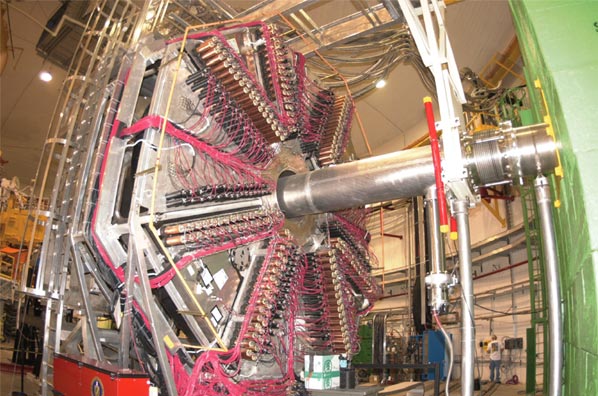
The team has developed a detector they call START, for Scintillation Tile with MRS APD Light Readout, which consists of a scintillating plastic plate, a piece of wavelength-shifting optical fibre installed in a circular groove inside the plate, two MRS APDs working in coincidence, an opaque wrapper and a front-end card mounted directly on the detector. Various versions of START have been thoroughly tested using cosmic rays and have shown operational consistency, excellent detection efficiency and good homogeneity.
An area of almost 4 m2 comprising 170 START tiles, each 15 × 15 ×1 cm3, has been assembled as part of the Time-of-Flight (TOF) project for the ALICE detector, which is under construction for the Large Hadron Collider. They will be used as cosmic-ray triggers in a larger system of STARTs for regularly testing the ALICE TOF system components.
With the push of a button, on 3 August German Federal Chancellor Gerhard Schröder handed DESY’s new vacuum-ultraviolet free-electron laser, VUV-FEL, over to the scientists. The VUV-FEL is the world’s first free-electron laser for generating the short-wavelength range of ultraviolet radiation, and will open up new insights into fields such as cluster physics, solid-state physics, surface physics, plasma research and molecular biology.
The VUV-FEL makes use of new technology developed at DESY from 1992 to 2004 by the international TESLA Collaboration. In a first step, electrons are brought to high energies by a superconducting linear accelerator. They then race through an undulator, a periodic arrangement of magnets that forces them to follow a slalom course and radiate. Thanks to the novel principle of self-amplified spontaneous emission (SASE), this radiation finally emerges in the form of short-wavelength, intense flashes of laser light.
The VUV-FEL produces coherent radiation with a wavelength tunable in the range 6-30 nm and a peak brilliance that surpasses that of modern synchrotron radiation sources by a factor of 10 million. Its very intense radiation pulses last only 10-50 fs, allowing researchers to observe directly the formation of chemical bonds, for example, or the processes that occur during magnetic data storage. In addition, operation of the VUV-FEL will provide important insights for the 3.4 km-long European X-ray laser (XFEL) that is being planned in Hamburg. The XFEL will generate even shorter wavelengths down to 0.085 nm and should begin operation in 2012.
As a user facility, the VUV-FEL will offer five experimental stations at which different instruments can be operated alternately. At present, 29 research projects are planned at the VUV-FEL. These will be carried out by around 200 scientists from 60 institutes in 11 countries. The project’s total cost is 7117 million, financed 90% by Germany and 10% by international partners.
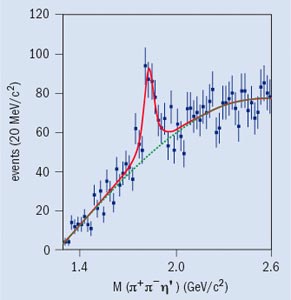
In a sample of 58 million J/ψ events, the BES collaboration at the Beijing Electron Positron Collider (BEPC) has found a clear signal (7.7σ statistical significance) for a new resonance, the X(1835). The signal appears in the π +π –η‘ mass distribution of the process J/ψ → ψγπ+π–η‘, where the η‘ meson is detected in two decay modes, η‘ → π+π–η (η→ γγ) and η‘ →γρ (ρ → π+π–). The results were reported at the Lepton-Photon 2005 conference held in Uppsala.
The peak in the π+π–η‘ mass spectrum is well described by a Breit-Wigner resonance function, with a mass of 1834 MeV/c2 and a width of 68 MeV/c2 (BES Collaboration 2005). This mass and width are not compatible with any known meson resonance. However, the properties are consistent with its being the state responsible for the strong threshold enhancement in the pp- mass that BESII observed in J/ψ → γppbar two years ago. One possible interpretation of the enhancement is that it is the tail of a “deuteron-like” spin-0 proton-antiproton bound state (baryonium) and its properties match well predictions for a state with a mass around 1.85 GeV/c2 (Ding and Yan 2005). However, until the spin of the X(1835) is determined and other expected decay modes measured, alternative interpretations cannot be excluded.
The ability of NASA’s Swift satellite to point its X-ray telescope rapidly towards gamma-ray bursts is, for the first time, allowing the study of the afterglow phase a minute or so after the actual burst. The results reveal surprising features not expected from current models of burst mechanisms.
Based on the link between supernovae and gamma-ray bursts (see CERN Courier September 2003 p15), it is now well established that the long gamma-ray bursts, with durations from about 2 s to a few minutes, result from the formation of a black hole in the core collapse of a dying star. Conservation of angular momentum implies that the rotating stellar matter falling onto the newborn black hole will form a very rapidly rotating disc of plasma and generate strong magnetic fields. These are the typical conditions thought to produce relativistic jets perpendicular to the disc, and a gamma-ray burst will be observed if the jet is pointing towards us.
According to this model, spikes in the light curve of the gamma-ray burst correspond to a series of internal shock waves in the jet. Another, single shock wave is expected when the jet interacts with the outer shells of the dying star. This external shock is then responsible for the gradually fading afterglow that lasts for several hours or days after the prompt gamma-ray burst, and is observed at X-ray energies and sometimes down to the lower energies of the optical or even the radio-wave bands.
This simple scenario was sufficient to explain the afterglows observed in X-rays 6-8 h after bursts by missions such as BeppoSAX or XMM-Newton. Now, however, NASA’s Swift spacecraft, launched in November 2004, can slew its X-ray telescope towards a burst within only about a minute of being given its position by the wide-field gamma-ray-burst detector.
The first results published in Nature by G Tagliaferri and collaborators show in most cases a surprisingly rapid initial fading of the X-ray afterglow for several minutes, followed by the usual slower decline lasting several hours. A deeper analysis of two events shows that the X-ray counterpart observed about a minute after the burst is brighter than the extrapolated decline of the prompt emission and has a different spectral shape. It therefore seems that the early X-ray emission is related to the afterglow rather than to the gamma-ray burst itself. Current models are, however, not able to explain easily such a rapid fall-off of the afterglow emission.
This picture is further complicated by the recent detection of X-ray flares in the afterglow of two other gamma-ray bursts observed by Swift (Burrows et al. 2005). An X-ray flare releasing roughly as much energy as the burst itself occurred about 12 min after the gamma-ray burst of 2 May 2005, GRB050502B. Its sharp peak makes it unlikely to be due to an external shock related to the afterglow. It is more likely to be an internal shock resulting from ongoing accretion onto the newborn black hole in the messy environment expected at the heart of a collapsing-exploding dying star.
The Relativistic Heavy Ion Collider (RHIC) at Brookhaven National Laboratory is unique. In addition to accelerating heavy ions, it also accelerates spin-polarized protons to high energies and enables the study of collisions between polarized protons with centre-of-mass energies up to 500 GeV.
Collisions between high-energy polarized protons are a powerful way of finding out what is spinning inside, technically known as the “spin structure functions” of the proton. The long-held assumption that the proton’s spin is simply the sum of the spins of the three quarks inside the proton has been laid to rest by experiments at SLAC, CERN and DESY. These have shown that less than 30% of the proton’s spin is accounted for by the spin of the quarks. Besides quarks, the proton (and neutron) contains gluons – the particles that explain the strong force that binds protons and neutrons in the atomic nucleus. Finding out what contribution gluons make to the spin of the proton and neutron is central to our understanding of nuclear matter.
Several large efforts are under way to study this question. The Common Muon and Proton Apparatus for Structure and Spectroscopy (COMPASS) collaboration at CERN and the HERMES collaboration at DESY bombard polarized protons (protons with their spin axes aligned in the same direction) with energetic muons or electrons. However, these experiments use electromagnetic probes, so the gluons are seen only indirectly.
Collisions between polarized energetic protons at RHIC should offer a more direct view of the gluon spin contribution. For this purpose, bunches of polarized protons are loaded into the RHIC accelerator, with the “blue” beam orbiting clockwise and the “yellow” beam orbiting counter-clockwise. (The beams are named after the coloured stripes on the collider’s two rings of magnets.) The two beams meet head-on at several different collision regions of the ring and the resulting secondary particles are observed by four detectors: BRAHMS, PHENIX, PHOBOS and STAR. The polarized protons originate from a special ion source that produces polarized negative hydrogen ions. These then pass in turn through a series of accelerators before being injected into RHIC.
This process is more difficult than it sounds. The polarized protons have a magnetic moment associated with their spin (they act like small compass needles). This raises the likelihood that the spin direction may be lost during the millions of times the protons orbit the ring, on each turn passing through the hundreds of magnets that are needed to deflect and focus the proton beam. Accelerator physicists avoid this depolarization by using spin precessors known as Siberian Snakes, but the question remains: how do we know the exact degree of polarization (the fraction of particles with spin up versus spin down) after the beam has been accelerated to full energy?
Measuring polarization
The polarization of a beam of protons is measured by inserting a thin target (an analyser) into the beam and observing the number of scattered particles at equal angles to the left and the right of the beam. The left:right intensity ratio depends on how much the beam is polarized (the beam polarization, P) and on how sensitive the scattering process is to the spin direction of the beam particles (the analysing power, A). The problem is that at very high energies there are no scattering processes for which the analysing power is known with sufficient accuracy. At lower energies than those achieved at RHIC, for example at the Proton Synchrotron at CERN and the Alternating Gradient Synchrotron at Brookhaven, moderate-angle elastic proton-proton scattering has been used, based on measurements of the analysing power using polarized hydrogen targets. The analysing power was observed to fall with energy, and the effectiveness of this method is exhausted by around 30 GeV.
However, for small scattering angles, the interference of the electromagnetic and strong interactions is expected to provide a significant analysing power for elastic proton-proton (and proton-nucleus) scattering. This analysing power, which is the basis of the RHIC high-energy polarimeters, derives from the same electromagnetic amplitude that generates the proton’s anomalous magnetic moment. Experiment E704 at Fermilab used 200 GeV/c polarized protons from hyperon decay to detect the asymmetry in scattering from a hydrogen target (Akchurin 1993). The largest analysing power, AN, was about 0.04 but the statistical errors were large. A calculation of the analysing power agreed with these measurements, but they are subject to uncertainties in the strong interaction amplitudes. Hence, an accurate calibration of the reaction is required.
The idea for the beam-polarization calibration at RHIC is simple in principle. Let the high-energy beam cross a jet of polarized hydrogen atoms of known nuclear polarization, and measure the left:right ratio in the number of scattered particles; then reverse the sign of the target polarization periodically to cancel asymmetries caused by differences in detector geometry or efficiency in the left and right directions. This gives the target asymmetry εtgt = PtgtAN. Now measure the corresponding asymmetry but with the polarization of the beam particles reversed, to give εbeam = PbeamAN. Since in proton-proton elastic scattering the analysing power AN, which is a measure of the polarization-sensitivity of the scattering process, is the same no matter which proton is polarized, the ratio of beam asymmetry to target asymmetry, εbeam⁄εtgt, multiplied by the known target polarization, Ptgt, gives an absolute measurement of the beam polarization, Pbeam.
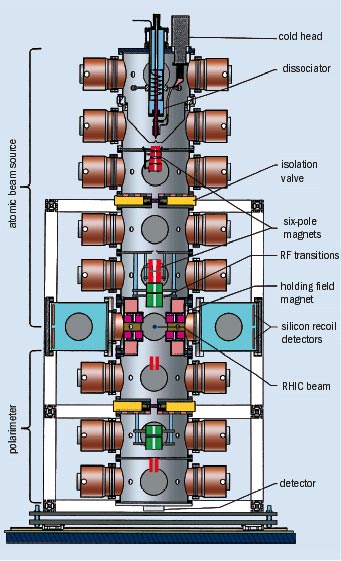
The trick is to make a jet of known polarization and of sufficient density to achieve reasonable count rates. The Brookhaven polarized-hydrogen jet is produced by an atomic beam source (ABS) in which molecular hydrogen is dissociated by a radio-frequency (RF) discharge, and the resulting atomic hydrogen beam is spin-separated and focused according to electron spin by sets of six-pole magnets (figure 1). The spin of the resulting particles is manipulated by RF transitions, which flip the spin to produce either up or down proton polarization. The principle is not new. Equipment of this type was originally developed for ion sources that produced polarized protons. Work on an ABS for use as an internal target of polarized hydrogen in the Super Proton Synchrotron at CERN was carried out some 30 years ago (Dick et al. 1981 and 1986), but was eventually abandoned because the target density (a few times 1011 H/cm3) was insufficient. To get around the low jet density, most recent experiments with polarized hydrogen gas targets use long “storage cells” into which hydrogen atoms from an ABS are injected (Steffens and Haeberli 2004). These storage cells increase the target thickness by a factor of about 100, but at RHIC the need to know the scattering angle of the very-low-energy recoil protons precludes the use of an extended target.
The polarized atomic hydrogen jet constructed for RHIC has achieved a beam intensity of 1.2 × 10¹⁷ H/s, which is the highest intensity recorded to date. At the point of interaction with the RHIC beams, the hydrogen beam profile is nearly gaussian and has a full width at half-maximum of 6.5 mm. The areal density of the hydrogen target is (1.3 ± 0.2) × 1012 H/cm2.
Hydrogen atoms formed by dissociating molecular hydrogen in an RF discharge emerge through a 2 mm-diameter cooled nozzle (optimum temperature 65 K) and enter a set of tapered six-pole magnets that are made of high-flux rare-earth permanent magnets (these have a pole-tip field of 1.5 T and a maximum gradient of 2.5 T/cm). The magnets are divided into sections to improve pumping. They were designed by elaborate optimization using empirical data on dissociator output versus gas flow and temperature, as well as attenuation by gas scattering in the beam-forming region and in the six-pole magnets. The atomic beam diverges in the first set of magnets, passes a long drift space, and converges in the second set of magnets towards the target region.
Near the point where the RHIC beam intersects the atomic hydrogen beam, a “holding field” provides a very uniform vertical magnetic field. The strength of the field (0.12 T) was chosen to avoid depolarization of the atoms by the periodic electromagnetic field that is produced by the beam bunches. Stringent conditions had to be met by the fringe fields of the guide field magnet to assure a slow adiabatic field change between the six-pole field, the RF transitions and the guide field.
The target polarization is reversed periodically by turning on one or other of two RF coils, which induces spin-flips in the hydrogen atoms. A second set of six-pole magnets and RF coils placed after the interaction point serve to measure the proton polarization at the target. The efficiency of the spin-flip transitions is found to be above 99%. In the finite holding field there is a residual coupling of the proton spin to the electron spin, which results in a net proton polarization of 0.96. The largest uncertainty in the target polarization arises from the uncertainty in the measured contamination of the atomic hydrogen beam by molecular hydrogen, which is unpolarized. Taking into account this dilution, the target polarization is Ptgt = 0.924 ± 0.018.
Results at RHIC
With a target of pure hydrogen atoms, proton-proton scattering with low momentum transfer can be uniquely identified by detecting the recoil proton near 90° with respect to the high-energy beam. The Fermilab experiment E704 showed significant spin-dependence in proton-proton scattering for momentum transfer in the range |t| = 0.001-0.03 (GeV/c)2. This corresponds to recoil protons of a few hundred kilo-electron-volts to several mega-electron-volts.
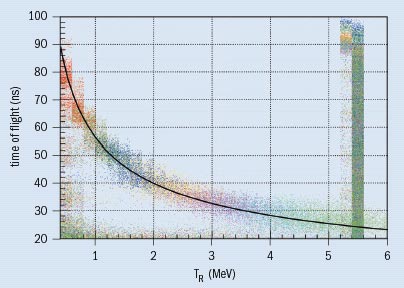
Recoils are detected in silicon-strip detectors placed 80 cm from the hydrogen jet (figure 2). Recoil protons from proton-proton elastic scattering are identified by their time-of-flight and energy-angle correlation (figure 3). The figure illustrates the clear identification of protons, with the solid curve showing the predicted relationship between proton energy and time of flight. Events from different detector strips are distinguished by colour, and it is this correlation between scattering angle and energy that demonstrates that the scattering is elastic.
The average of Ptgt(εbeam/εtgt), taken over all energy bins of the recoil detector, determines the beam polarization Pbeam. In fact, etgt and ebeam are measured at the same time by loading into the ring bunches of opposite polarization and reversing the target polarization every few minutes. The results of measurements on the blue beam during early 2004 show (εbeam/εtgt) = 0.43 ± 0.02, where the error is purely statistical. Assuming a target polarization of 0.924 ± 0.018, the RHIC beam polarization was 0.392 ± 0.026. For the measurements in 2005, the detectors were displaced along the RHIC beam direction to allow detection of recoils from both blue and yellow beams. Preliminary results indicate that, compared with 2004, the beam polarization has improved by about 15%, which is an important accomplishment. These results can be used to determine the t-dependence of the analysing power AN = Ptgt/εtgt for proton-proton elastic scattering at 100 GeV. The results, which are shown in figure 4, agree closely with calculations based on Coulomb nuclear interference without any hadronic spin-flip.
The polarized hydrogen jet makes it possible to determine the polarization of high-energy protons to an accuracy of a few per cent, without using a model. Theory predicts that the method will be successful over the entire energy range that is accessible by RHIC.
The polarized hydrogen jet does not interfere with the operation of the ring. Despite the small target density and without the use of coincidence detection, it has proved possible to cleanly identify proton-proton elastic events with minimal background.
The major drawback of the polarized hydrogen jet is that the low count rate precludes rapid monitoring of the beam polarization – for example, during beam tuning. For this reason, a proton-carbon (pC) polarimeter is used. This permits relative beam polarization to be measured in less than a minute. The polarized hydrogen jet enables the pC polarimeters to be calibrated to an accuracy better than 6%. Thus the polarized-hydrogen target and the carbon target serve complementary roles.
• The development and operation of the polarized hydrogen jet target was a collaboration between BNL (C-AD, Instrumentation and Physics), ITEP (Moscow), IUCF, Kyoto University, Riken BNL Research Center, University of Wisconsin-Madison and Yale University.
DIS 2005 was the 13th in the series of annual workshops on deep inelastic scattering (DIS) and quantum chromodynamics (QCD). Hosted by the Physics Department of the University of Wisconsin-Madison, the workshop was held on 27 April – 1 May at the Monona Terrace Community and Convention Center in Madison.
The workshop, which brought together 280 experimentalists and theorists, began with plenary sessions that featured review talks. Parallel working group sessions followed, and the workshop ended with plenary sessions that included reports from the working groups and a conference summary. The topics of the working groups were: structure functions and low-x, diffraction and vector mesons, electroweak physics and beyond the Standard Model, hadronic final states, heavy flavours, spin physics, and the future of DIS. There were 240 talks in total, replete with many exciting new results.
The working group on structure functions focused on the future. Final measurements from the first period of data-taking at the Hadron Electron Ring Accelerator (HERA) at DESY were shown, alongside the first electroweak measurements from the new HERA data. Attention was paid to new extraction techniques for determining the parton distribution functions (PDFs) and to improving the standard methods. The goal is to improve PDF uncertainties, which play a crucial role for measurements not only at the Large Hadron Collider (LHC) at CERN, but also at Fermilab’s Tevatron and in neutrino-oscillation experiments.
New results from the Relativistic Heavy Ion Collider (RHIC) at Brookhaven sparked much discussion of parton evolution and saturation at very low proton momentum fraction x. Strong particle suppression in forward rapidities in deuteron-gold collisions, reported by the BRAHMS, PHENIX and STAR collaborations, hint at the possible mechanism behind parton saturation. At the other end of the x spectrum, new results in the high-x resonance region from Jefferson Lab suggest that future data from there will significantly improve our understanding of proton structure.
The working group on diffraction surveyed the abundance of data over an extended kinematic range from the HERA experiments, which has enabled precise measurements of the diffractive structure functions and extraction of the diffractive parton distribution functions (DPDFs). Several new, independent next-to-leading-order (NLO) QCD fits suggest that the DPDFs are gluon-dominated. Recent results on deeply virtual Compton scattering and exclusive meson production from HERA experiments, and from the Common Muon and Proton Apparatus for Structure and Spectroscopy (COMPASS) experiment at CERN and the CEBAF Large Acceptance Spectrometer (CLAS) at Jefferson Lab, are sensitive to the generalized parton distribution functions (GPDFs). These provide information on correlations between partons, their transverse momentum, and the contribution of the quark angular momentum to the proton spin. A new window on diffractive processes will open at the LHC with the TOTEM detector, integrated with CMS. The FP420 proposal to equip a region 420 m from the ATLAS and/or the CMS interaction point would add to this.
Preparations for searches and precise electroweak measurements at the LHC highlight the machine’s vast discovery potential
The working group on electroweak physics examined the first measurements from HERA of the cross-sections for charged and neutral-current DIS with polarized leptons, confirming the V-A structure of the electroweak interaction. Participants discussed the impact on the Standard Model Higgs mass of the latest high-precision top-quark mass measurement from the Tevatron. High-precision measurements of the W mass and the top mass need a good understanding of the structure of the proton, in particular nonperturbative effects, from HERA data. The discovery of single-top events is expected with the increasing integrated luminosity of Run II at the Tevatron, and measurements of the production cross-section could constrain new physics models that modify the coupling of the top quark to gauge bosons. The excess of events with high-pT isolated leptons reported by the H1 collaboration at HERA could be attributed to the anomalous coupling of top quarks to up quarks. Many recent searches at HERA and the Tevatron have produced inconclusive evidence of new physics, but the substantial increases in luminosity at both colliders make a discovery more likely. Preparations for searches and precise electroweak measurements at the LHC highlight the machine’s vast discovery potential.
The working group on hadronic final states studied the perturbative QCD calculations of jet cross-sections that have been understood with unprecedented accuracy at HERA.
These determine the strong coupling constant with a precision that is comparable to the most accurate value obtained in e+e– interactions. These achievements pave the way for an understanding of jet production at the LHC. Large theoretical uncertainties (of order 100%) remain for the production of hadrons at small (forward) angles to the incoming proton’s momentum, which pro collisions with small momentum fractions x and momentum transfers Q. This is where new dynamical mechanisms associated with scattering at asymptotically high collision energies may turn on.
Recent results from HERA suggest that further theoretical improvements are needed to describe small-x scattering. These may come from developments in higher-order computations, resummation and parton shower models. The latest cross-sections for jet production in Run II at the Tevatron help to constrain the gluon density in the proton, while a comparison of the rates for pion and photon production at RHIC independently confirms the formation of an extended dense quark-gluon medium in the aftermath of gold-gold collisions.
The experimental status of pentaquarks remains ambiguous, but new high-statistics measurements from Jefferson Lab should soon provide a more definite answer. The ZEUS and HERMES experiments at HERA reported observations of a Θ+ state at around 1520 MeV, whereas H1 at HERA and BaBar at SLAC see nothing. On the other hand, H1 remains unique in reporting the observation of a charmed pentaquark. The CLAS experiment at Jefferson Lab has now accumulated a large sample of photoproduction events from dedicated runs, and with only 1% of the data analysed there is no sign of a Θ+.
The heavy-flavour working group heard that the new heavy-quark PDFs from Martin-Roberts-Stirling-Thorne (MRST) and the Coordinated Theoretical-Experimental Project on QCD (CTEQ) now describe the HERA data on charm structure functions quite well. Recent progress on soft resummation for heavy quarks in DIS should allow its inclusion in PDFs and the extraction of resummed parton densities. New calculations describing the production of D-mesons at the Tevatron can be further extended to DIS processes. A new model for heavy quarkonium production agrees with data from RHIC and the Tevatron, in particular with the J/ψ polarization measurements from the Collider Detector at Fermilab (CDF) at the Tevatron, and PHENIX at RHIC. NLO corrections were shown to improve the description of charmonium production in two-photon collisions. New measurements of the charm and beauty contribution to the proton structure function show good agreement with the predictions based on NLO QCD and gluon densities obtained from global PDF analyses.
New heavy-flavour results are moving beyond the production of single heavy mesons to measure fragmentation parameters, heavy-quark correlations, heavy-quark-jet characteristics and unexplored kinematic regions. While NLO QCD describes charm well, the situation for beauty is less clear. Precise measurements of b-quark production at high pT or large Q2 agree with theory, but measurements over the full pT and Q2 range are a factor of two higher. In another puzzle, the final measurement of charm production in neutrino-nucleon scattering by the Neutrinos at the Tevatron (NuTeV) experiment excludes a strange sea asymmetry large enough to explain their anomaly on sin2θW.
The spin physics working group basked in a wealth of new high-precision data from the HERMES, COMPASS and Jefferson Lab experiments on the spin structure functions, which extend the coverage at both low- and high-x and into the transition from the partonic to the hadronic regime. Since the contribution to the proton spin from the longitudinal spin of the quarks is now well established and small, recent measurements and global analyses focused on understanding other spin contributions. New data on transversity distributions were presented by the above-mentioned experiments, and from BELLE at KEK, and STAR and PHENIX at RHIC.
DIS 2005 featured a plenary session devoted to the future of DIS studies. Although HERA is expected to close in two years’ time, much of its integrated luminosity is still in the future. This is particularly true for the measurement of the helicity dependence of the charged-current cross-section. There is interest in running HERA for a while at lower energy to extract the longitudinal structure function FL. There was discussion of the physics potential of continuing HERA beyond 2007 with new injectors, or combining the LHC with a future linear electron collider to produce DIS collisions at the tera-electon-volt scale.
Another proposal, eRHIC, combines an electron accelerator with RHIC to produce an electron-proton and electron-nucleus collider with polarized beams at a centre-of-mass energy in the range 30-100
GeV. There is also a proposal to upgrade the DIS programme at Jefferson Lab from 6 GeV to 12 GeV, featuring DIS at large x and the use of what is effectively a target of free neutrons. Ideas also exist for DIS experiments at fixed targets, particularly at CERN; for neutrino experiments with Minerva at Fermilab; and future neutrino projects based on the Fermilab Proton Driver. These proposals often look at the GPDFs that can be accessed using deeply virtual Compton scattering and that illuminate the structure of hadrons in transverse space.
The workshop attendees emerged with a renewed sense of the importance of DIS and QCD measurements and theory to the future of particle and nuclear physics. They also gained an enhanced appreciation for the range of exciting developments in the field, and a determination to pursue experimental and theoretical opportunities.
• The workshop was sponsored by Argonne, the US Department of Energy, DESY, the US National Science Foundation and the University of Wisconsin-Madison.
In the early 1980s, CERN initiated the pbar p Collider Workshop series with the aim of communicating and synthesizing the latest results from hadron collider experiments – most recently the Collider Detector at Fermilab (CDF), and the D0 experiment at the Tevatron at Fermilab. This year, with the projected commissioning of CERN’s Large Hadron Collider (LHC) in 2007 and the subsequent transfer of physics activities, the series was merged with the LHC Symposium that is devoted to preparing LHC experiments, and renamed the Hadron Collider Physics (HCP) Symposium. HCP2005 was organized by CERN and the Swiss Institute for Particle Physics (CHIPP), and was held in Les Diablerets, Switzerland, on 4-9 July. About 150 participants attended from the Tevatron and LHC experiments.
Ralph Eichler, the director of the Paul Scherrer Institute, gave a welcoming address. This was followed by Georg Weiglein from the Institute for Particle Physics Phenomenology, Durham, who presented an introductory theoretical overview of the role of hadron colliders in studying the Higgs sector of the Standard Model. The first major session was then devoted to machine and experimental studies at the Tevatron and LHC. David McGinnis of Fermilab described current and prospective operations at the Tevatron, where the CDF and D0 experiments are operating well and an integrated luminosity exceeding 1 fb-1 has already been delivered to each experiment. CERN’s Lyn Evans outlined the progress made in building the LHC, and representatives from each of the LHC experiments described the advanced construction status of the detectors, as well as the new phase of detector integration and commissioning.
Directions for physics
With the goal of maximizing the shared experience of the Tevatron and LHC communities, the symposium was then organized around the key physics directions of hadron-collider research. Each of the physics sessions was introduced by a theorist, who gave an overview of the subject, followed by speakers from the Tevatron and LHC experiments. Sessions were also held on experimental issues such as particle identification, or tracking and b-tagging, in which experts from both communities could present their solutions and exchange ideas.
The first physics session was on the subject of quantum chromodynamics (QCD). It opened with a talk by Keith Ellis from Fermilab on the status and limitations of next-to-leading-order (NLO) and next-to-next-to-leading-order (NNLO) theoretical calculations, together with calculations planned to match experimental “wish lists”. The experimental talks described the wealth of data that is becoming available from CDF and D0. There were also several talks about identifying and calibrating jets at the Tevatron and in future at the LHC.
A complementary session dealt with electroweak physics, a field in which some surprises may emerge. Ulrich Baur of the State University of New York presented the status of Standard Model fits and available calculations. This was followed by talks on production measurements of single-vector bosons and vector boson pairs.
The LHC is expected to open new frontiers beyond the Standard Model, so a major session was devoted to existing and future direct searches for new physics. This could be supersymmetry or something more exotic, and might even appear in small deviations in rare B-meson decays measured at the LHCb experiment. No hints of new physics have been found at the Tevatron. However, Anna Goussiou from the University of Notre Dame showed that even with reduced luminosity expectations for the final Run II data sample, the CDF and D0 experiments maintain a non-negligible potential for finding “evidence” of a Higgs boson in the low-mass range, where identification is most difficult for the LHC experiments.
Not so long ago, precision b-quark physics was considered to be almost impossible at hadron colliders. However, thanks to dedicated triggers and excellent tracking capabilities, the Tevatron experiments have world-class results that are in many cases comparable to those from the b-factories. Furthermore, CDF and D0 have a monopoly in studies of the BS sector. An important request from the theoretical community, which was emphasized in the talk by Luca Silvestrini from INFN/Roma, is for measurements of BS mixing, in particular the parameters ΓS and ΔmS. Guillelmo Gomez-Ceballos of the Instituto de Fisica de Cantabria presented results from the CDF effort on that topic. There is no quantitative measurement so far, but, with all of the analysis machinery in place, the whole region of ΔmS that is predicted by the mixing triangle can be covered as soon as sufficient data are available. If surprises arise and the value is larger than expected, the LHCb experiment will discover and/or measure with extreme precision this missing piece of the Cabibbo-Kobayashi-Maskawa puzzle.
The results from the Relativistic Heavy Ion Collider (RHIC) at Brookhaven and expectations from the ALICE experiment at the LHC dominated the session on heavy-ion physics. However, talks about CMS and ATLAS, the two general-purpose detectors at the LHC, showed that they will have a vital role in many aspects of heavy-ion physics; for example, in measuring high-pT jet production.
Top quark results
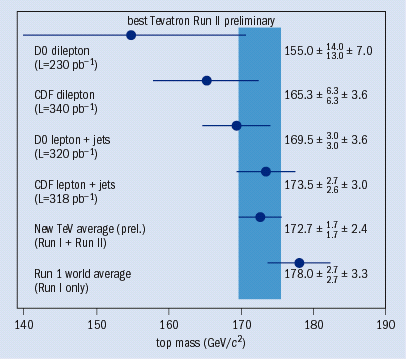
The last major physics session was dedicated to the top quark. CERN’s Fabio Maltoni highlighted the improved experimental conditions that are available at the LHC compared with the Tevatron, and stressed the importance of measuring the properties of the top quark to try to explain its large mass. Tomonobu Tomura of Tsukuba presented the latest mass measurements from CDF and D0 (figure 1), including CDF’s new measurement of 174.5+2.7-2.6 (stat.) ± 3.0 (sys.) GeV, based on a two-dimensional template method. While the preliminary Tevatron average for the top mass is 174.3 ± 2.0 (stat.) ± 2.8 (sys.) GeV, by the end of Run II the Tevatron experiments are expected to measure the mass with a precision better than ±2 GeV. The search for single-top production, as well as preliminary measurements of the ttbar production cross-section, were also described. Arnulf Quadt of Bonn presented the measurements of some t-quark decay properties (for example, the W-helicity) and searches for rare t-quark decay modes. Presentations by the CMS and ATLAS collaborations underlined the rich experimental programme that is expected in the future.
The physics sessions were interrupted by two sessions about preparations for the LHC. A key issue will be lepton identification. One session was devoted to the results and pitfalls from the Tevatron experience, and ended with status talks on the hardware and reconstruction aspects of the LHC experiments. The results seem encouraging, even if experience shows that the real answer only comes under running conditions. A natural follow-up to the b-physics session was a discussion on tracking and b-tagging. The lesson from the Tevatron has been positive and the LHC collaborations seem to be aware of that. The overall computing strategy and preparations for analysing the LHC experiments were widely presented and discussed at the end of the session.
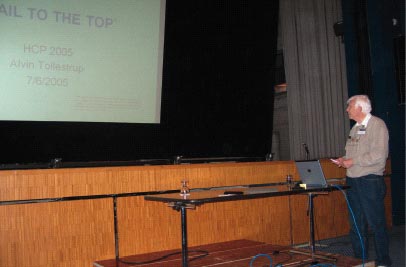
A special guest at the symposium was Fermilab’s Alvin Tollestrup. Tollestrup played a crucial role in the machine, detector and analysis activities that led to the discovery 10 years ago of the top quark by the CDF and D0 experiments. In an inspiring presentation, he talked about “the trail to the top”, leading to the discovery of the top quark and the ideas that were behind it. Many saw this talk as Tollestrup’s way of passing the baton to a younger generation. He also reminisced about a time when particle physics was on a smaller scale, and he stressed the evolution of experimental techniques in particle physics and their consequences.
The theoretical and experimental summaries of the symposium were given by Pierre Binétruy of the Laboratoire d’Astroparticule et Cosmologie (APC) in Paris, and John Womersley of Fermilab and the US Department of Energy. Binétruy stressed the important role of the LHC programme during the coming years. Womersley placed the results presented at the conference in the context of the rapidly evolving jigsaw puzzle of the Standard Model of electroweak and strong interactions, with its extensions and future possible surprises.
Holding the conference in a remote alpine location was a challenge. However, the organizing committee from CERN and CHIPP, the secretaries from CMS and ATLAS (Nadejda Bogolioubova and
Jodie Hallman) and the hotel staff made it a success. The only unpredictable factor, the weather, played foul. Although luck held during the welcome drink and an Alpine horn concert, it was mostly raining, and a dinner at 3000 m altitude in the glacier restaurant was immersed in cloud. Only those participants who remained an extra day discovered the beauty of Les Diablerets in brilliant sunshine.
The next meeting of the series will be hosted by Duke University in May 2006, and in summer 2007 the meeting will be hosted by INFN Pisa in or near the town of Pisa.
Particle-physics masterclasses began in the UK in 1997, the centenary of J J Thomson’s discovery of the electron. It was then that Ken Long of Imperial College and Roger Barlow of Manchester devised a series of one-day events for 16- to 19-year-old pupils and their teachers. Run by particle physicists at various institutes all over the UK and coordinated by the High Energy Particle Physics Group of the Institute of Physics, each year the programme offers a very popular combination of exciting talks and hands-on experience of the interactive graphical display programs that particle physicists use at CERN. More recently, the concept of the particle-physics masterclasses has been successfully adopted by several institutes in Belgium, Germany and Poland on a regular basis.
The World Year of Physics 2005, commemorating Einstein’s annus mirabilis, was the inspiration for the particle-physics masterclasses to spread even further. It was just enough to mention the idea of a Europe-wide version of this programme for all the members of the European Particle Physics Outreach Group (EPOG) to come on board and try to get institutes in their countries involved. EPOG promotes the outreach activities of particle-physics institutes and laboratories in CERN’s member states and acts as a forum for the exchange of ideas and experiences related to particle-physics outreach. Fifty-eight institutes in 18 countries across Europe, from Athens to Bergen and from Lisbon to Helsinki, participated in the masterclass event, which was centrally coordinated at Bonn University.
The basic idea of the pan-European event was to let the students work as much as possible like real scientists
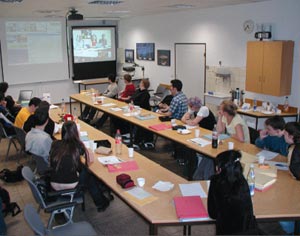
As with the original masterclasses, the basic idea of the pan-European event was to let the students work as much as possible like real scientists in an authentic environment at a particle-physics institute, not only to feel the excitement of dealing with real data, but also to experience the difficulties of validating the scientific results. After lectures from practising scientists they performed measurements on real data from particle-physics experiments, and at the end of each day, like in an international collaboration, they joined in a videoconference for discussion and combination of the results.
The measurement of the branching ratios of Z boson decays at CERN’s Large Electron-Positron Collider (LEP) was chosen as the main common task at all sites. For this the students had to identify the final states of quark-jets, electron pairs, muon pairs and the notoriously difficult tau pairs from the tracks and signals in various components of LEP detectors. Interactive computer material for this task was available using data from OPAL in the Identifying Particles package from Terry Wyatt at Manchester, or alternatively using DELPHI data in A Keyhole to the Birth of Time by James Gillies and Richard Jacobsson at CERN or in the well known Hands-on-CERN package developed by Erik Johansson of Stockholm.
To simplify students’ access to the unfamiliar world of particle physics, EPOG and the national institutes undertook the immense effort of translating the material into various languages. By the beginning of March, each package was available in at least one of 16 languages, with Hands-on-CERN now covering 14 languages, from Catalan to Slovak. This material, including real data for performing the measurements and several extra teaching and learning packages, lays the basis for regularly performing masterclasses at a European level, and is also of valuable use outside the masterclasses. It is available on the Internet and on a CD that was given to each masterclass participant.
The skills required to become a “particle detective” were taught in the morning lectures at each institute. Since in most countries particle physics is not normally taught at school, the talks had to go all the way from basic explanations to the world of quarks and leptons. “Easy-to-follow explanations of scientific research” was the immediate reaction of one of the students at Berlin. After some brief training by young researchers from the institute, the students made the fascinating discovery that they were indeed able to identify the elementary particles on the event displays themselves, at least in most cases; it was even more fascinating for them to learn that professional scientists cannot be completely sure either on an event-by-event basis that their identification is right. The exercise was in fact usually performed quite quickly: “What next?” was a frequent demand once the Z-decays were measured.
Another innovative idea of the EPOG European Masterclasses was to hold an international videoconference at the end of each day using the same Virtual Room Videoconferencing System (VRVS) technology as practising scientists. CERN’s IT Department and the Slovak group of the Caltech VRVS team provided valuable technical help for the many institutes that had never used this tool before. The link-up was centrally moderated by two inspiring young researchers at CERN: Silvia Schuh from ATLAS, and Dave Barney from CMS (who recently received the 2005 Outreach Prize of the High Energy and Particle Physics Division of the European Physical Society). Using English as a common language, the students discussed why, for instance, classes in Helsinki and Vienna found significantly more taus than those in Innsbruck, Heidelberg, Bonn or Bergen. They then assigned systematic errors derived from the differences and ended up with combined measurements, confirming (happily!) the results from LEP. In addition invited scientists at CERN were ready to answer further questions on topics ranging from antimatter and Big Bang cosmology to the daily life of a CERN researcher.
The videoconferences made the students aware that the masterclasses were taking place in other countries, and created the feeling of an international collaboration of researchers. It was “interesting to learn how scientific information is exchanged around the globe”, according to one of the comments on the feedback questionnaires, which are currently being evaluated by the Leibniz Institute for Science Education (IPN) at the University of Kiel.
How was it for you?
The first results from the evaluation show that, independent of country and gender, some 70% of about 400 female and 900 male students felt strongly or very strongly that they had learned at the masterclasses how scientific research is organized and carried out. More than 81% liked the masterclasses “much” or “very much”, again independent of gender. Moreover, there was significantly higher enthusiasm in Finland, Portugal and the Czech Republic with 96% choosing “much” or “very much”, which can mostly be attributed to particularly interesting lectures and a bigger increase in knowledge of particle physics.
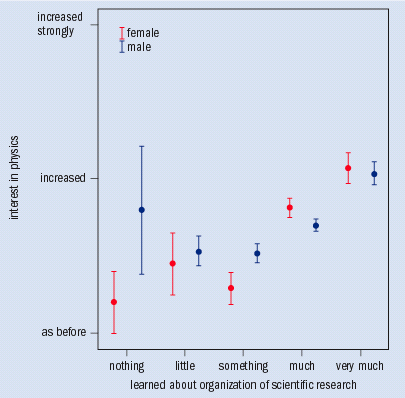
The impact on the student’s interest showed greater spread between the countries. On average 58% of both male and female students felt that they were generally more interested in physics after the masterclasses, and only 6% were less interested. Again, the masterclasses had a significantly stronger impact in Portugal and Finland, with 86% and 95% of students respectively reporting increased interest. In two countries the female participants benefited especially. While the male participants showed no significant deviation from the average, 78% of the Italian girls and all seven female students in Sweden reported an increased interest in physics. The Swedish girls unanimously marked the highest possible increase in their knowledge of particle physics, and felt more strongly than average that they had learned about the organization of scientific research. For all students both factors correlated very strongly with positive answers to the question on increased general interest in physics (see figure 1). Apart from this, the reactions of the female and male students to the masterclass programme were nearly identical, although in all countries the girls said they thought they knew significantly less about physics than the boys and were significantly less familiar with computers.
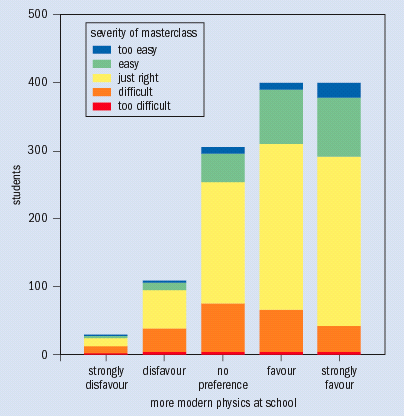
Finally, regardless of whether they like their current physics lessons at school, 65% of the students thought that modern physics, like particle physics, should play a bigger part in their science lessons (see figure 2). This question showed the largest variation between the countries. The majority was significantly higher, for example, in Germany, with 75% of the students responding positively, and Portugal with 91%. In Switzerland and Norway, by contrast, not even 30% of the students clearly supported this statement. In the latter two countries more than half of the students found the level of the masterclasses rather difficult, while on average only 19% shared this opinion.
“I got the feeling that I did something which physicists do every day in their experiments, and I felt involved.” This statement from a 17-year-old girl shows that the authentic surroundings and the measurements with real data were indeed able to bring modern physics close to the hearts of young people.
• For more details about the event and materials see http://wyp.teilchenphysik.org. The European Masterclasses were sponsored by the High Energy Physics Board of the European Physical Society and the Bundesministerium für Bildung und Forschung (BMBF), and received organizational help from the German Science-on-Stage Executive Office. The EU has acknowledged the success of the first European Masterclasses by nominating the project leader, Michael Kobel, for a Descartes Prize for Excellence in Science Communication for 2005. The project is now competing with 22 other nominees for up to five Descartes Communication Prizes, to be awarded in December in London.
After I became director-general of CERN in 1999, I had the chance to meet Juan Antonio Rubio, a well known experimental physicist and former collaborator of Carlo Rubbia and Samuel Ting, who is now the director-general of CIEMAT, Spain. In addition to his other good qualities, Rubio has a deep knowledge of Latin America – her people, schools and traditions. We understood that the Large Hadron Collider (LHC) being built at CERN offered a great opportunity to renew old ties with Latin America and to attract to Europe and CERN a new generation of experimental physicists.
In the past, ties between European and Latin American particle physics had been very strong, involving well known physicists such as Cesar Lattes, José Leite Lopez, Roberto Salmeron and many others. Lately, however, Latin American experimental physicists had turned to the US, and Fermilab in particular, as their main point of contact in particle physics. The US had opened up to them and to their students under the enlightened action of Nobel prize-winners such as Richard Feynman, whose stay in Brazil had an enormous influence on the development of fundamental physics there, and Leon Lederman. On the other hand, theoretical physicists in Latin America had always considered CERN as one of their main poles of interest (together with the International Centre for Theoretical Physics, Trieste) with physicists of the calibre of John Ellis, Alvaro de Rújula and Luis Alvarez Gaumé being particularly friendly to Latin Americans.
The first step towards rebuilding the relationship with Latin America was launching a biannual CERN-Latin American school of physics. I discussed the matter with Egil Lillestol at the 1999 European School of High-Energy Physics in Bratislava, and we concluded that the conditions were right to go ahead. The first Latin American school, modelled on CERN’s long-standing European School of High Energy Physics, was held two years later in Itacuruça, Brazil. It was a clear success, demonstrating the interest of the younger Latin American generation in European physics, CERN and the LHC.
At the same school, I also saw first-hand a strong interest going in the other direction, with European physicists curious about the Pierre Auger Observatory, the ultra-high-energy cosmic-ray detector being built in Argentina. Indeed, as I learned at Itacuruça, the sum of contributions to the project from CERN member states was already larger than the contribution made by the US via the Department of Energy, a nation historically considered the main partner of Latin American countries.
The first Latin American School of High Energy Physics marked the beginning of a new collaboration, but during the following years the problem was how to keep the collaboration going, in view of the difficulties that were arising from financing the LHC. In late summer 2003, Philippe Busquin, the EU commissioner for research whom I had asked for support, pointed out that a programme from the EU Commission, América Latina – Formación Académica (ALFA), was the natural framework for stabilizing relations between CERN and Latin America, by taking advantage of the potential for training young physicists that the LHC offered.
Rubio and I quickly got the message and started to prepare an application to ALFA. Fortunately, another lucky circumstance made the enterprise possible. Verónica Riquer, a former student of Marcos Moshinsky (a well known nuclear theorist from Universidad Nacional Autónoma de México, UNAM), was a postdoctoral fellow in CERN’s theory division. A good friend of Rubio, Riquer somehow knows everybody doing physics anywhere in Latin America, and even has a clear idea of what they are actually doing.
Riquer enthusiastically adopted the project that was going to have a big impact on her for the next few years (“HELEN nos va matar” she warned me in the difficult periods – “HELEN is going to kill us!”). Indeed, she proved the crucial person to connect with high-energy physics groups in Latin America, to get them involved in the hard work of preparing a valid application to the (notoriously difficult) EU Commission and, finally, to convince so many people on a different continent to persuade 22 rectors to sign an agreement with the EU at very short notice. Eventually, the full application was finished during the night of 29 April 2004, and taken by hand to Brussels the following morning, complying exactly with the deadline of 30 April 2004. Riquer left CERN to see her family in Mexico, and Rubio and I could relax. The High Energy Physics Latin-American-European Network (HELEN) now existed.
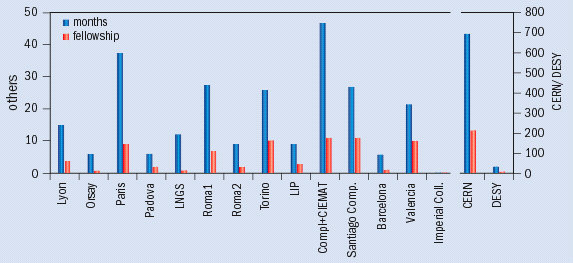
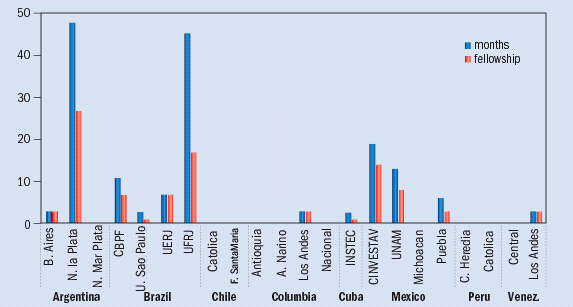
HELEN is a big project. Over three years, it will involve stays in Europe totalling 1002 months (70% at CERN) for students and young researchers from 22 institutions across eight countries in Latin America, and stays in Latin America totalling 164 months for physicists from seven European countries (about 50% at the Pierre Auger Observatory). In addition, some 15% of the budget is dedicated to visits from professors in the network, to give seminars, oversee students and start new collaborations. Each institution has one reference person (the “interlocutor”), among them Arnulfo Zepeda in Mexico, Alberto Santoro in Brazil and Teresa Dova in Argentina. All in all, we expect a whole new generation of Latin American physicists to be trained in particle physics at the most advanced facilities in the world, and to establish new ties with their European peers.
On a happy day last February, we received the news that HELEN had been approved and that we could start discussing the practical implementation of the contract. In fact, at the time I was in Mexico, spending two months at the Centro de Investigación y Estudios Avanzados del Instituto Politécnico Nacional (CINVESTAV). There, I could see first-hand the enthusiasm that HELEN was raising in Latin America. In the few months since HELEN’s approval, we have had to refine the project and make it suitable for a contract between the EU and the Università di Roma “La Sapienza”, the coordinating institution of HELEN. However, at last, the contract was signed on 28 July and the project officially started on 1 August.
A simple understanding of the proton is that it is an object composed of three quarks. However, the rich structure predicted by the theory of quantum chromodynamics (QCD) indicates that this picture is incomplete. A sea of gluons and virtual quark/anti-quark pairs is also present, and this plays an important role, for instance, in accounting for the proton’s total spin contributes to other properties of the nucleon. Their specific goal is to determine the exact contributions of the sea’s strange quarks to the proton’s charge distribution and magnetization. Four major experimental collaborations have weighed in, and their results are beginning to paint a cohesive picture of strange quarks in the proton.
The contribution of the strange quark to these properties is the easiest to pinpoint, because the strange quark is the most accessible of all the sea’s constituents. Up and down quarks are the most likely quarks to be present in the sea, because they are the lightest. However, they have the same quantum numbers as the valence quarks, so it is nearly impossible to disentangle their contributions. Strange quarks are the second lightest, so are likely to be the second most significant part of the quark-gluon sea.
Parity-violating electron scattering offers a promising method of accessing the strange quarks. These experiments study collisions between a beam of polarized electrons and target particles. Specifically, they measure the interference of the electromagnetic interaction, in which a photon is exchanged, and the neutral weak interaction, which involves the exchange of a Z0 boson. The electrons are polarized, meaning that they are spinning either along their direction of travel (right-handed) or opposite to it (left-handed). This allows the class of electroweak
interactions to be separated into the electromagnetic and weak components.
The electromagnetic force is parity-conserving, or mirror-symmetric, so the electron’s handedness does not affect scattering rates. The weak force, however, is not mirror-symmetric: it is parity-violating. Therefore, owing to the neutral weak force, a different number of scattering events will be observed when the beam of electrons is right-handed compared with left-handed. A comparison of the weak and electromagnetic pieces allows the experimenters to disentangle the contribution of the up, down and strange quarks.
Meeting the challenge
The experimental challenge arises because the electromagnetic force is much stronger than the weak force, so many scattering events must be recorded to measure the tiny difference, or asymmetry, in scattering rates. In addition, careful attention has to be paid to the possibility of false asymmetries masquerading as the true asymmetry due to the weak force. These can arise, for example, if the beam position or angle on the target changes when the polarized beam is changed from right- to left-handed and vice versa. Typical requirements for these experiments are that these changes must be less than a few nanometres and nanoradians, respectively. Ensuring this stability demands close collaboration between the experimenters and the accelerator physicists and operators, and precise monitoring of the electron-beam characteristics from the source, through the accelerator, and to the experimental hall.
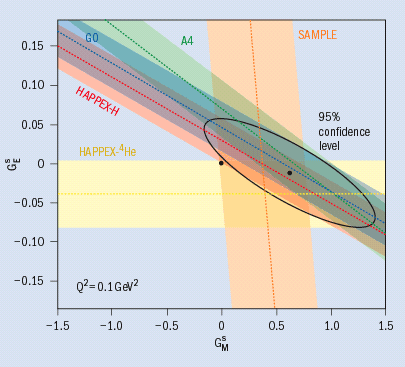
Four research programmes have adopted parity-violating electron scattering to search for the contributions of strange quarks to proton structure. They are the SAMPLE experiment at the MIT-Bates Linear Accelerator Center, the A4 experiment at the Mainz Microtron, and the G0 (G-zero) experiment and Hall A Proton Parity Experiment (HAPPEX) at the US Department of Energy’s Jefferson Lab. The various experiments are sensitive to different combinations of strange-quark contributions to the charge distribution and magnetization. These are represented by GsE and GsM, the strange electric and magnetic form factors, respectively. Experiments using a hydrogen target and a forward scattering angle, including G0, A4 and HAPPEX-H (HAPPEX on hydrogen), all measure a linear combination of GsE and GsE and GsM (the exact combinations differ for each experiment). Disentangling the two form factors requires measurements at both forward and backward angles or with a different target (e.g. helium).
The SAMPLE experiment at MIT-Bates, which is now complete, measured backward-angle electron scattering from hydrogen and deuterium targets at 200 MeV. Cherenkov light produced by electrons scattered with a momentum transfer, Q2, near 0.1 GeV2 was focused by an array of mirrors onto a set of 8 inch photomultiplier tubes. The researchers concentrated in particular on obtaining GsM, the strange quark’s contribution to the proton’s magnetic moment (Ito et al. 2004 and Spayde et al. 2004).
Researchers with the A4 experiment at Mainz use a new type of total absorption calorimeter, making use of 1022 very fast individual crystals of lead fluoride to detect scattered electrons, plus sophisticated read-out electronics. They have measured forward-angle (35°) electron scattering from hydrogen at two values of Q2, 0.23 and 0.11 GeV2 (Maas et al. 2004 and 2005).
The G0 and HAPPEX experiments at Jefferson Lab took advantage of the high-quality polarized electron beam from the Continuous Electron Beam Accelerator Facility (CEBAF). They have taken data with a 3 GeV beam with up to 86% polarization.
G0 required a unique beam pulse structure and a custom-built spectrometer package capable of measuring over large solid angles. The G0 spectrometer, based on a toroidal superconducting magnet, measures elastically scattered recoil protons over a wide range of forward-scattering angles (and thus a large range of Q2) simultaneously (Armstrong et al. 2005). A time-of-flight technique for identifying the scattered protons required the use of a pulsed beam, with electron bunches arriving every 32 ns. With this pulse structure, the 40 μA electron beam had a large instantaneous current equivalent to 640 μA, providing challenges for the accelerator.
HAPPEX used a pair of high-resolution, small-acceptance spectrometers to measure precisely forward-angle scattering at a single momentum transfer at a time. Initial measurements were made at Q2 = 0.48 GeV2 with a hydrogen target, and recently data were taken at Q2 = 0.1 GeV2 using both hydrogen and 4He targets (Aniol et al. 2004 and 2005). The hydrogen target allowed the HAPPEX researchers to measure the strange quark’s contribution to a combination of the charge and magnetization distributions in the proton. 4He is a nucleus with no net spin, so the helium target allowed them to isolate the strange electric form factor of the proton.
The results from all of these experiments present a cohesive picture of the strange quark’s contribution to the charge distribution and magnetization. All are consistent with this contribution being non-zero in the proton.
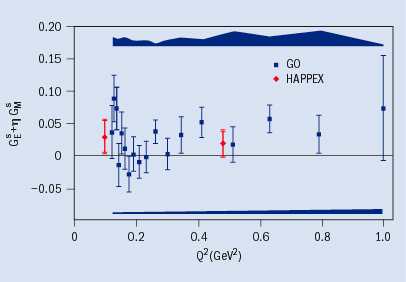
Figure 1 on p30 shows the G0 and HAPPEX results from hydrogen target data as a function of Q2. The measured combination of the strange form factors GsE and η GsM (η is a kinematic factor) appears to be non-zero, and an intriguing and unexpected dependence on momentum transfer is suggested by the data. At the lowest Q2 measured so far (0.1 GeV2), all four experiments provide information about different combinations of GsE and GsM, as depicted in figure 2. The results favour a positive value for GsM, suggesting that the strange quarks reduce the proton’s magnetic moment. A negative value for GsE, while only hinted at by the data, would imply that the strange quarks prefer to be on the outside of the proton, while the anti-strange quarks favour the interior. However, current experiments are not precise enough for us to state definitively that the strange quark contributions are non-zero.
Within QCD-inspired models, predictions of the strangeness form factors vary tremendously. Of course, the models are of less interest than the predictions of nonperturbative QCD itself, for which our most reliable tool is lattice QCD. In this direction, there has been remarkable progress with a very precise recent determination of the strangeness magnetic moment (GsM = −0.046 ± 0.019 μN), yielding an answer with an uncertainty of better than 1% of the proton’s magnetic moment (Leinweber et. al. 2005). Testing this prediction will push the upcoming measurements to the limits of their precision.
Meanwhile, the experiments continue. HAPPEX is taking data this autumn, and the collaboration expects to reduce the error bars by a factor of three for both targets. Both the G0 and A4 collaborations have turned their detectors around by 180° and will soon measure backward-scattered electrons at various values of Q2, which will be primarily sensitive to GsM. Combining forward- and backward-scattering results will allow both GsM and GsE to be individually determined. These additional measurements will allow experimenters to obtain GsE and GsM over a range of momentum transfers and thus pin down the importance of the contributions of the strange sea to the structure of the proton.
To provide the best experiences, we use technologies like cookies to store and/or access device information. Consenting to these technologies will allow us to process data such as browsing behavior or unique IDs on this site. Not consenting or withdrawing consent, may adversely affect certain features and functions.
Functional
Always active
The technical storage or access is strictly necessary for the legitimate purpose of enabling the use of a specific service explicitly requested by the subscriber or user, or for the sole purpose of carrying out the transmission of a communication over an electronic communications network.
Preferences
The technical storage or access is necessary for the legitimate purpose of storing preferences that are not requested by the subscriber or user.
Statistics
The technical storage or access that is used exclusively for statistical purposes.The technical storage or access that is used exclusively for anonymous statistical purposes. Without a subpoena, voluntary compliance on the part of your Internet Service Provider, or additional records from a third party, information stored or retrieved for this purpose alone cannot usually be used to identify you.
Marketing
The technical storage or access is required to create user profiles to send advertising, or to track the user on a website or across several websites for similar marketing purposes.