Comsol -leaderboard other pages

Topics

The LOFAR radio telescope detects its first pulsar

Using its first station of distributed radio antennas, the Low Frequency Array (LOFAR) radio telescope has successfully detected the pulsar PSR B0329+54. The measurement took 15 minutes on 14 June and used only six of the prototype high-band antennas recently installed in the eastern part of the Netherlands. The results demonstrate the technical performance of the antennas.

LOFAR will be the largest radio telescope ever built, using a new concept based on a vast array of simple omni-directional antennas. The idea is to digitize the signals before sending them to a central digital processor where software will combine them to create the effect of a large conventional antenna. When finished, it will consist of 15,000 small antennas, distributed to more than 77 stations in the north east of the Netherlands and nearby parts of Germany. The array will operate at the lowest frequencies that can be observed from Earth, at 10–240 MHz. Plans exist for the extension of the array beyond its initial 100 km scale, by building stations further into Germany and also in the UK, France, Sweden, Poland and Italy.

One important area of research, in addition to more conventional astronomy, will be the detection of extensive air showers originating from high-energy cosmic rays, and perhaps even neutrinos. Researchers have known since the 1960s that these showers produce radio signals that are detectable for cosmic-ray energies above 1017 eV. The radio emission comes from charged particles in the shower, mainly electrons and positrons, which are deflected in the Earth’s magnetic field and produce coherent synchrotron radiation. Electronic devices in the 1960s were not sensitive enough for reliable measurements of the radio emission. However, researchers have now developed new observational techniques and radio receiver systems – such as those that LOFAR employs. Through its observations, LOFAR should be able to study the longitudinal development of air showers and reconstruct the original directions of the incident cosmic rays.

Two other European experiments – CODALEMA in France, and LOPES in Germany – have already confirmed that radio detection techniques can be used to observe extensive air showers induced by cosmic rays. In addition, the Auger collaboration in Argentina is testing the same technique, with plans to implement a large array of antennas in conjunction with the existing air-Cherenkov detectors.

Advanced Quantum Theory (3rd edition) 

By Michael D Scadron, World Scientific Publishing. Hardback ISBN 9789812700506 £51 ($88).

41qyw-qbf+L._SX336_BO1,204,203,200_

This book looks at the techniques that are used in theoretical elementary-particle physics that are extended to other branches of modern physics. The initial application is to non-relativistic scattering graphs encountered in atomic, solid-state and nuclear physics. Then, focusing on relativistic Feynman diagrams and their construction in lowest order, the book also covers relativistic quantum theory based on group theoretical language, scattering theory and finite parts of higher order graphs. Aimed at students and professors of physics, it should also aid the non-specialist in mastering the principles and calculation tools that probe the quantum nature of the fundamental forces.

Fundamental Physics for Probing and Imaging

By Wade Allison, Oxford University Press. Hardback ISBN 9780199203888, £49.95 ($98.50). Paperback ISBN 9780199203895 £24.95 ($49.50).

51Z70k7UjjL._SX382_BO1,204,203,200_

This book is for every physicist who has ever needed to answer the question: what is physics for? Physics has reduced fear and increased safety for society, largely by extending the power to see. The methods used are magnetic resonance, ionizing radiation and sound, with their extensions. The author follows how they are applied by modern technology to “seeing” in clinical medicine, including therapy, and in other spheres of human activity such as archaeology, geophysics, security and navigation. By taking a broad view of the entire field, the book encourages comparisons and underlines the importance of public education. Physics undergraduates and graduates, as well as professional physicists, will find this book of interest.

Conceptions of Cosmos. From Myths to the Accelerating Universe: A History of Cosmology

By Helge S Kragh, Oxford University Press. Hardback ISBN 9780199209163 £35 ($100).

51Phah2sQiL

This is a historical account of how natural philosophers and scientists have endeavoured to understand the universe at large, first in a mythical and later in a scientific context. Starting with the creation stories of ancient Egypt and Mesopotamia, the book covers all of the major events in theoretical and observational cosmology, from Aristotle’s cosmos through the Copernican revolution to the discovery of the accelerating universe in the late 1990s. It presents cosmology as a subject including scientific as well as non-scientific dimensions, and tells the story of how it developed into a true science of the heavens. It also offers an integrated account with emphasis on the modern Einsteinian and post-Einsteinian period. This book is suitable for students and professionals in astronomy, physics and history of science.

An Introduction to the Standard Model of Particle Physics (2nd edition)

By W N Cottingham and D A Greenwood, Cambridge University Press. Hardback ISBN 9780521852494 £30 ($65).

9780521852494

The new edition of this introductory graduate textbook provides a concise but accessible introduction to the Standard Model. It has been updated to account for the successes of the theory of strong interactions and the observations on matter–antimatter asymmetry, and includes a coherent presentation of the phenomena of neutrinos with mass and the theory that describes them. The book clearly develops theoretical concepts, from the electromagnetic and weak interactions of leptons and quarks to the strong interactions of quarks. The mathematical treatments are suitable for graduates in physics, and the text and appendices develop more sophisticated mathematical ideas.

Major milestone for ‘mighty magnet’ as it goes the distance

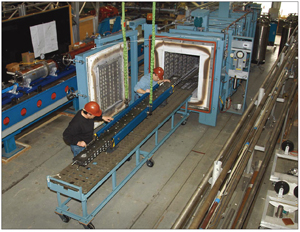
The LHC is not yet up and running, but already physicists and engineers in Europe, Japan and the US are working towards upgrades for the machine. In the US, the LHC Accelerator Research Programme (LARP) reached a major milestone in July when Brookhaven National Laboratory (BNL) successfully tested the first long racetrack shell (LRS) magnet, named because of its shape. The LRS magnet is a precursor of an upgraded superconducting quadrupole planned for the LHC.

CCmag01_08_07

The US group is working on strategies to upgrade the inner triplet quadrupole magnets that perform the final focusing of the particle beams prior to collision. These magnets are close to the interaction points, so they must be built to withstand high doses of radiation. An upgraded, higher-luminosity LHC will mean a hotter environment for these magnets.

Because upgraded inner triplets will need to operate at both a higher temperature and magnetic field, the US team, from BNL, Fermilab and Lawrence Berkeley National Laboratory, is evaluating niobium-tin (Nb3Sn) technology for the magnet coils, rather than the well-established niobium-titanium that is used in the current LHC magnets. However, the material is difficult to work with. The Next European Dipole research activity is also investigating Nb3Sn conductors for use in upgraded LHC magnets as part of the Coordinated Accelerator Research in Europe programme.

CCmag02_08_07

The LRS magnet is the first accelerator-style Nb3Sn magnet to be fabricated significantly longer than 1 m. At 3.6 m long, it approaches the length that will be needed for the LHC. BNL fabricated the coils for the LRS, and LBNL designed and fabricated the support structure. Fermilab contributed project management, conductor characterization, insulation development and insulated cable for a practice coil.

The first of these magnets, LRS01, was tested in July at BNL. “Training” the magnet (or subjecting it to repeated quenches) started above 80% of what is estimated to be the magnet’s maximum current density of 10.6 kA. After five quenches, the current reached 91% of the estimated maximum, corresponding to a coil peak field of 11 T.

The LRS01 magnet provides key information on the fabrication of long Nb3Sn and the optimization of shell-based support structures. The next step for LARP will be to build the Long Quadrupole. This will be the first-ever 4 m-long Nb3Sn accelerator-type magnet of its kind.

RHIC glimpses process that could limit LHC

Measurements at RHIC at Brookhaven National Laboratory (BNL) have provided the first observations at a particle collider of a long-anticipated physical process that may eventually limit the performance of the LHC at CERN. Known as bound-free pair production, the process leads to the formation of one-electron ions that stray out of the beam and might deposit enough energy to quench the LHC’s superconducting magnets. It is thus vitally important to estimate the effect at the LHC.

RHIC typically collides gold nuclei at an energy of 19.7 TeV (100 GeV/nucleon) and, in its heavy-ion programme, the LHC will collide lead nuclei at 574 TeV (2759 GeV/nucleon). The main aim in these heavy-ion collisions is to “melt” the constituent protons and neutrons of the nuclei into a plasma of strongly interacting quarks and gluons. However, heavy-ion collisions also provide access to electromagnetic forces of phenomenal intensity, as relativistic length contraction dramatically squashes the electric field lines emerging from each highly charged nucleus into a flat pancake shape. When these “pancakes” interact, large numbers of electron–positron pairs are ripped out of the vacuum. In some cases, the electron of the pair is attached to one or other nucleus, converting a small fraction of the beam to one-electron ions. These soon stray from the path of the main beam and are lost in a well-defined patch of the beam-pipe surface.

The beam loss initiates a shower of particles (hadrons) that cause localized heating. At RHIC, the rate and energy of the collisions and the field in the magnets are all low enough that there is no danger of the magnets quenching. At the LHC, however, the heating will be several thousand times greater (up to 25 W) and researchers predict that the process will be a direct limit on the luminosity of lead-ion collisions. The LHC calculations depend not only on the theoretical cross-section but also tracking of ions to their impact points, the development of the hadronic showers, the propensity of the magnets to quench and the response of beam-loss monitors outside of the cryostats.

A team from CERN, BNL and Lawrence Berkeley National Laboratory has now measured this process for the first time, using beams of 6.3 TeV copper nuclei at RHIC and an array of photodiodes to detect the showers (Bruce et al. 2007). The team mounted the diodes on the outside of the magnet cryostat downstream from the interaction region for one of the experiments (PHENIX).

The data correlated well in time with the measured luminosity in RHIC, and were localized in position, close to the predicted impact point. The count rates in the photodiodes varied from 1 to 20 Hz, depending on their position and luminosity, with the maximum at 140.5 m from the interaction point. The results agree reasonably well with predictions, validating the LHC methodology and confirming the order of magnitude of the theoretical cross-section.

IHEP and CERN collaborate well on beam-loss monitors

Beam-loss monitoring ionization chambers

The circulating beams will store an unprecedented amount of energy when the LHC is in operation. If even a small fraction of this beam deviates from the correct orbit, it may induce a quench in the superconducting magnets or even cause physical damage to system components. The LHC beam-loss monitoring (BLM) system is the key to protecting the machine against dangerous beam “losses” of this kind.

The BLM system generates a beam abort trigger when the measured rate of lost beam exceeds pre-determined safety thresholds. The lost beam particles initiate hadronic showers through the magnets, which are measured by monitors installed outside of the cryostat around each quadrupole magnet. About 4000 BLMs – mainly ionization chambers – will be installed around the LHC ring. They are the result of a successful collaboration between CERN and the Institute for High Energy Physics (IHEP) in Protvino, Russia. CERN developed the monitors and IHEP manufactured them during the past year, using industry-produced components.

Signal speed and robustness against aging were the main design criteria. The monitors are about 60 cm long with a diameter of 9 cm and a sensitive volume of 1.5 l. Each one contains 61 parallel aluminium electrode plates separated by 0.5 cm and is filled with nitrogen at 100 mbar overpressure and permanently sealed inside a stainless-steel cylinder. They operate at 1.5 kV and are equipped with a low-pass filter at the high-voltage input. The collection time of the electrons and ions is 300 ns and 80 μs, respectively.

The radiation dose on the detectors over 20 years of LHC operation is estimated at 2 × 108 Gy in the collimation sections and 2 × 104 Gy at the other locations. To avoid radiation aging, production of the chamber components included a strict ultra-high vacuum (UHV) cleaning procedure. As a result, impurity levels from thermal and radiation-induced desorption should remain in the range of parts per million. Standardized test samples analysed at CERN periodically helped to check the cleaning performance.

The team at IHEP designed and built a special UHV stand to ensure suitable conditions for building the monitors. They performed checks throughout the production phase and documented the results. The quality of the welding is a critical aspect, so the team tested all of the welds for leak tightness at several stages. They also monitored constantly the vacuum and the purity of the filling gas. It was necessary to test the components before welding, and the assembled monitors during and after production, to ensure that the leakage current of the monitors stayed below 1 pA. Overall, IHEP achieved a consistently high quality for the monitors during the whole production period and kept to the tight production schedule. Tests at CERN’s Gamma Irradiation Facility of all 4250 monitors found fewer than 1% to be outside of the strict tolerance levels.

First phase of BEPCII complete

The first phase of commissioning BEPCII, the major upgrade of the Beijing Electron–Positron Collider (BEPC) came to a successful conclusion on 3 August, when the beam current reached 500 mA at 1.89 GeV. On the same day the researchers also completed mapping the combined magnetic field of the superconducting insertion magnets (SCQs) and the superconducting solenoid of the detector BESIII. This followed a series of studies that included the first collisions between beams in the electron and positron rings. The successful commissioning of the superconducting magnets and the cryogenics demonstrated that both systems were stable and up to design performance.

CCbep03_08_07

BEPCII consists of two storage rings, with a new ring built inside the original BEPC ring at the Institute of High Energy Physics, Beijing. The installation of all of the storage ring components, except for the SCQs, finished in early November 2006. Phase I commissioning, based on the conventional magnets in the interaction region, started on 13 November and the first electron beam was stored in the outer ring on 18 November. The ring provided beams to the users of the Beijing synchrotron radiation facility for more than a month, from 25 December.

CCbep01_08_07

Commissioning both the electron and positron rings began in February 2007, and the first beam–beam collision occurred on 25 March. Optimization of the beam parameters followed, and on 14 May collisions occurred between beams of 100 mA each and 20 bunches per beam. The luminosity estimated from the measured beam–beam parameters reached a level comparable to that of the original BEPC, i.e. 1031 cm–2s–1 at the beam energy of 1.89 GeV. A second round of synchrotron radiation (SR) operation followed from 15 June to 31 July, with a beam current of about 200 mA and a lifetime of 6–7 hours. A slow orbit correction led to orbit ripples of less than 10 μm (figure 1).

CCbep02_08_07

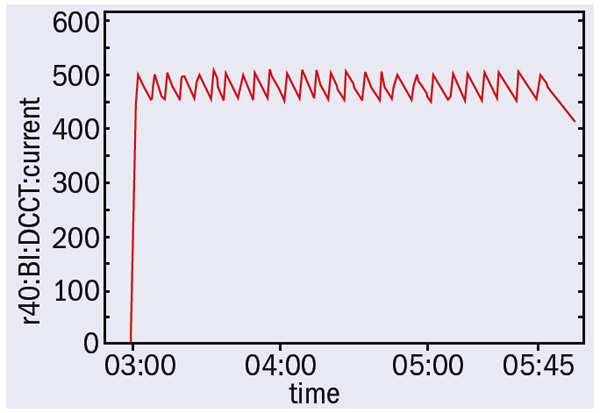
Machine studies immediately followed the SR operation. With a bias-voltage applied to the radio-frequency coupler, the power provided by the superconducting cavity exceeded 100 kW and the beam current reached the design value of 250 mA at 2.5 GeV in SR mode. At the same time the beam current reached a stable 500 mA at 1.89 GeV without feedback (figure 2). The smooth commissioning demonstrated the good performance of the BEPCII hardware.

The construction of the BESIII detector has been smoothly progressing simultaneously. The assembly and testing of most of the sub-detectors, including the electromagnetic calorimeter barrel (CsI crystals) and the drift chamber, are now finished and ready for integration in BESIII.

After the Phase I commissioning, BEPCII shut down until the end of September for maintenance and the installation of the new interaction region components. Commissioning will resume in early October with the SCQs – and BESIII should be ready to be transported into the interaction region in the spring next year.

Engines of Discovery: A Century of Particle Accelerators by Andrew Sessler and Edmund Wilson, World Scientific. Paperback

ISBN 978-9812700711. £17.

CCboo1_07_07

It is said that Galileo always kept 10% of his purse in reserve for his lens grinder so that he could look forward to peering further into the heavens through the next telescope in line. He also actively collaborated with the telescope builder and shared his joy of discovering each new star. Instrument builders and their users have often been the same community and sharing the enterprise together was the norm. Such was also the case with early sub-atomic physicists and chemists in the late 19th and early 20th century, with Ernest Rutherford, John Cockcroft, Ernest Walton, James Chadwick, and so on. The “chasm” began to open in the mid- to late 20th century with the emergence of the culture of large-scale experimental science via teams of specialists in accelerators, detectors, data processors, theoreticians, etc. Today, however, the demands of the next frontier in particle physics are sufficiently daunting that the gap is forced to close again. Witness the emergence of self-organized communities around the world that are working together in moving the field forward.

Engines of Discovery is written by two well-respected practitioners of accelerator science, recognized for their contributions to the field. Andrew Sessler and Edmund Wilson both began their careers at a time when the “chasm” had started to take root and continue in their trade today when it is beginning to heal again – a golden era in the history of development dominated by the use of large particle accelerators.

Sessler received a classical and advanced education from Harvard College and Columbia University in the middle of the last century at a time when the US was a scientific hot-bed, with great pre- and post-war scientists from around the world. Exposed to the greatest minds of the times, Sessler contributed to the very beginnings of the field via his contributions at MURA, the Wisconsin-based Midwestern Universities Research Association. This group pioneered the concept of the fixed field alternating gradient (FFAG) synchrotron – a concept that has been resurrected with a prototype for electrons now being built at the Cockcroft Institute and Daresbury Laboratory in the UK. Sessler then continued to lead the great laboratory in California created by one of the early pioneers, Ernest Lawrence. Sessler brings a substantive and unique perspective that is hard to match through his eminent stature in the community of scientists and humanitarians. He is known for his many contributions to theoretical accelerator physics, including collective beam instabilities, non-linear dynamics, muon colliders and free-electron lasers. Joining him is Edmund Wilson, a veteran from the world-renowned accelerator-based CERN laboratory. Educated at Oxford and having the rare experience of tutelage from and working with John Adams, the architect of many of CERN’s accelerators, Wilson brings his decades of research experience in operating accelerators and his formidable skills of inherited pedagogy, composition, literacy and the overall art of story-telling to complete this fascinating saga.

It is indeed a masterly tale of the emergence and growth of a field, told from a unique personal perspective, by two working scientists in the field. Understandably, the book is rich, dense and selective as it starts with the heritage of atomic, nuclear and particle physics and continues through to the end of the 20th century. The field eventually diversified into other basic sciences such as those driven by synchrotron radiation sources, free-electron lasers, laser-plasma interaction, high-field physics, etc – which have spawned much of the innovation and creativity of the latter years. The field has also become immensely global during the past few decades.

The book may appear relatively lean in promoting such diversity of sciences and characters in these recently emerging fields. Such incommensurate expression can be understood in the context of the historical footprint of the authors themselves and is only to be expected for a book of this scope. I would be remiss if I did not point out the brilliance, genius and creativity of the generation of bright emerging international scientists and technologists from Europe, the Americas, Asia and Africa who are transforming the field today. The authors only hint at it in the book via colleagues such as Katsunobu Oide and Chan Joshi, but today one will find many others at institutions around the world.

This is not a book to look at through the lens of a precise historian – or with the obsession of a perfectionist – demanding a complete lexicon, chronology, historical credit, etc. It is above all a book of inspiration. Nevertheless, the book does achieve a natural sense of historical progress and is made even more exciting by the anecdotal and factual bits and pieces put together about some of the players – more so in their order of appearance on the scene, than in any other sense. For every player that is mentioned and adds flair to the book, there are many who are not, including the authors themselves, whose contributions have been substantive.

Above all, this book uplifts one’s spirit; one reads it with zest, admiration and awe. The power of sheer dedication, brilliance, creativity, humility and humanity of the whole enterprise expressed in the pages of the book is sure to inspire and motivate generations to come.

Speaking as an individual in the wake of a personal transition from the US to the UK, and taking stock of shifting priorities in the field, I must thank the authors for providing a contextual basis for carrying our work forward with the noble mission of the ultimate quest for the ways of nature and life.

bright-rec iop pub iop-science physcis connect