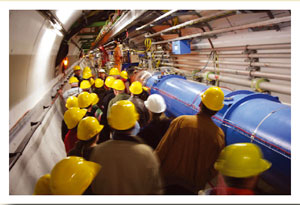
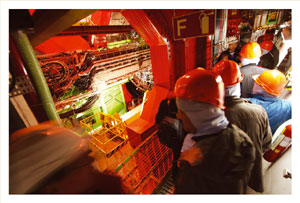
CERN would like to thank the following for their invaluable support:
Main Sponsors: Air Liquide, Alstom Power, ASG Superconductors SpA, Babcock Noell GmbH, Ineo, Intel, Linde Kryotechnik AG, LUVATA, ORACLE, UBS.
Sponsors: CECOM, Force10 Networks, La Mobilière, Peugeot Gerbier, Sun Microsystems (Suisse) SA, TRANSTEC Computer AG, Western Digital.
Associate Sponsors: ACCEL, ArcelorMittal, BRUUN & SORENSEN, Carlson Wagonlit, Cegelec, Dell SA, E4 computer engineering S.p.A., EOS, Ernesto Malvestiti SPA, IBM, IEEE, Infortrend Europe Ltd., INIZIATIVE INDUSTRIALI SRL, Italkrane, Kaneka, La Tour Reseau de Soins, Migros, National Instruments, ProCurve Networking by HP, SERCO, Société Générale, Sunrise Communications AG, Super Micro Computer Inc., Xerox.
Supporters: A+Z Bürosysteme GMBH, Carbagas, CES, ECHO Magazine, ETM, GATE Informatic SA, Plansee Metall GmbH, SIG, Thales.
Institutional Sponsors: Camera di Commercio Italiana in Svizzera, Communauté de
Communes du Pays de Gex, Commune de Meyrin.
Media Sponsors: Le Temps, Radio Lac, Worldradio.ch.
Open Days Friends: C’est pas sorcier, Crédit Agricole Centre-est, Collège du Léman, CNAO Foundation, European Scientific Institute, European Physical Society, European Synchrotron Radiation Facility, ETH Zurich, Fédération d’Improvisation Genevoise (FIG), Kodak, Materials with Novel Electronic Properties, Terapia con Radiazion Adroniche (TERA) Foundation, Université de Genève.
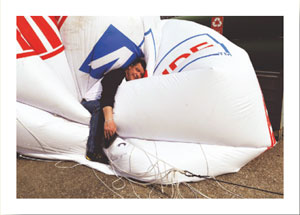
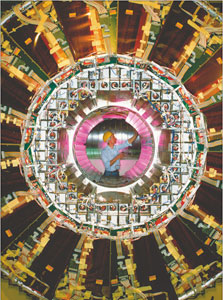
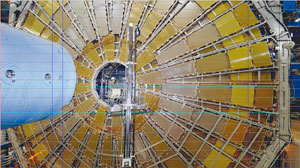
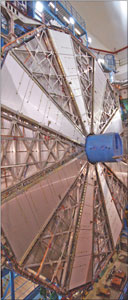
During the 1990s, visitors to the experiments at LEP were usually impressed by their size and complexity and, in particular, how different subsystems constructed in a variety of different countries could fit together. The LHC has now usurped LEP, and this impression has also been replaced by either a scream or complete silence, as visitors to the experiments are overwhelmed by the size and complexity. These differences can be clearly seen by comparing the same type of detector – thin gap chambers (TGCs) – as used for calorimetry and electron identification in the OPAL experiment at LEP (figure 1) with those used for the muon trigger in the ATLAS endcaps, in part of the system known as the ATLAS Big Wheels (figure 2).
The reason for this big change is that, while for the LEP experiments every collision was of interest, at the LHC only one collision in 10 million will be kept for further analysis. In particular, high-momentum muons constitute an important element in defining which events should be kept. For this reason the ATLAS Collaboration decided to construct a large muon spectrometer, based on superconducting air toroids, which allows the precise measurement of muon momenta down to small angles with respect to the proton beam direction.
The ATLAS muon wheels are a system of 10 movable and two fixed “wheels” of muon detectors grouped at three stations in each of the two endcaps of the ATLAS detector. The fixed wheels are outermost at each end, while the intermediate stations of big wheels are located just outside the endcap toroid magnet and the edges of the coils of the barrel toroid, and the inner stations of two small wheels lie between the endcap toroids and the calorimeter (figure 3).
Each intermediate station consists of four big wheels with a diameter of 25 m, which are formed from a number of sectors built using different types of muon chamber. The wheels can be moved longitudinally along the direction of the beamline in order to gain access to the central part of ATLAS for the purposes of installation and maintenance. At each end of the barrel, three wheels are used to trigger on high-momentum muons, while one wheel provides a measurement of their trajectories in the bending plane with a precision of a fraction of the width of a human hair. The construction of such large devices was too ambitious a project for a single institution or country, so international collaborations were formed within ATLAS that ran across countries, cultures and religions, and where motivation played a cohesive role.
There are almost 1500 trigger modules on the six trigger big wheels and these were built by a collaboration between China, Israel and Japan. They are formed from TGCs, which are read out in two dimensions through wires and strips. These detectors, based on the technology used in the OPAL experiment, are constructed from lightweight composite materials combined with four million gold-plated tungsten wires. Three custom-built laboratories were made available for their construction at Shandong University, KEK and the Weizmann Institute.
The TGCs are fast and accurate enough to provide a selective trigger, which combined with the trigger electronics designed and constructed in Japan, is capable of identifying muons with large transverse momentum and to associate them with a specific bunch crossing of the LHC, occurring at a frequency of 40 MHz. The measurement of muon tracks in the non-bending plane (along an approximately azimuthal direction) is necessary for the ultimate determination of muon momenta by the chambers in the precision wheel that accompanies each set of trigger wheels.
The TGC units underwent a long series of quality-control tests. In particular, every detector was scanned with cosmic muons in one of three different laboratories (Kobe, Technion and Tel Aviv) to ensure a high uniformity of response. The majority of the detectors were also exposed to a 3 kCi 60Co source for half an hour, and finally, after transportation to CERN, they were operated for three weeks, to avoid early breakdown. This series of tests resulted in a failure rate of 1 in 1000 after the detectors were mounted on the frames. The two failed chambers were then replaced by spares.
The two precision big wheels are equipped with monitored drift tubes (MDTs), which are also present in all other stations in the endcap and in the barrel regions of the spectrometer. These detectors, developed and constructed for the ATLAS muon spectrometer by a collaboration of many institutes from Europe, Russia, the US and China, are based on drift tubes with a diameter of 3 cm and various lengths. The MDTs are arranged in two multilayers and operated at a pressure of 3 bar. They measure muon tracks with a precision of some 40 μm.
The accuracy of the spectrometer is fully exploited with a complex alignment system jointly designed and implemented by groups from France, Germany, Holland and the US. Optical devices mounted on all detectors and on reference components installed on each station of the spectrometer are capable of establishing the relative alignment of towers of detectors with a precision of about 40 μm. The system is used to correct for offsets from the nominal positions, and also for mechanical deformations induced in detectors and support structures by gravity, magnetic fields and temperature variations. These effects are small compared with the dimensions of the structures, but they may be significant on the scale of the precision of the detectors.
The 160 MDT chambers in the two precision big wheels were constructed in three production centres in the US. They are formed from a total of nearly 61,000 drift tubes, with lengths ranging from 0.8 m near the centre to 5.7 m near the outer boundary, where the largest chambers measure 1.9 × 6.0 m2. The alignment system in the precision big wheels was constructed by a collaboration of US and German institutes, and it exploits eight calibrated bars installed on each wheel and equipped with optical devices.
All of the MDT chambers were the subject of an extensive series of tests before and after shipment to CERN, including checks of gas tightness, dark current and noise, followed by a full chamber scan using cosmic muons. The geometrical accuracy in the construction of the detectors was tested at the production sites by various methods, and by a direct measurement performed on a sample of chambers in a dedicated X-ray tomograph facility at CERN.
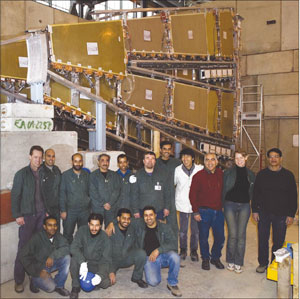
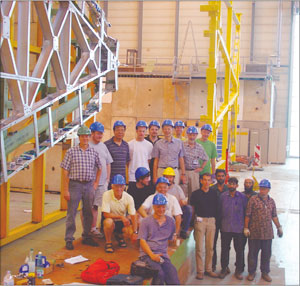
The assembly and commissioning of the 104 sectors forming the eight big wheels was a complex and intensive activity. This took place on the Meyrin site at CERN from spring 2005 to July 2007. The relatively light support structures were designed at CERN, following an initial study carried out in Russia, and they were manufactured in Israel and Russia. The assembly was performed in four working areas, and several teams contributed to the different tasks of mechanical assembly (teams from Pakistan, using assembly jigs that had been manufactured in Pakistan, together with a team from Israel), installation of services and detectors (teams from China/Israel and the US), tests of detectors and trigger electronics (Japan/Israel and the US), and engineering, survey, handling and general coordination (CERN, with the contribution of a team from JINR-Dubna). The tests performed covered all aspects of the detectors and their read-out and control systems, and they included the use of radioactive sources and cosmic rays. Out of a total of 430,000 TGC and MDT read-out channels, the number of non-operational channels was found to be at the level of a few in 10,000.
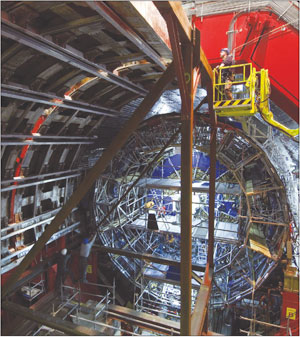
From July 2006 to September 2007, one by one the sectors were transported to Point 1 for installation in the ATLAS cavern. Sectors were then mounted against the end walls of the hall and connected to each other to form the wheels (figure 6). The mechanical accuracy of about 1 mm achieved in the construction of the sectors was essential for the smooth and fast assembly of the wheels, which was coordinated by engineers from CERN and performed by teams of the ATLAS Technical Coordination. Absolute positions of the various detectors were measured by the CERN surveying team, using photogrammetry, making it the first time that such methods had been used for such large surfaces. Alignment systems were available to confirm the assembly accuracy and the stability of the wheels when supported on two points and moved on rails. Moving the wheels was itself an exciting operation, dealing with flexible disks of about 30 tonnes in weight, 25 m diameter and as thin as 30 cm.
Following installation the full commissioning of the big wheels has progressed well, with the connection of services and integration in the read-out and in the trigger systems being completed in spring 2008. Data from both trigger and precision chambers in the muon endcaps have been available in the combined cosmic runs of the muon spectrometer and ATLAS since summer 2007. Figure 7 shows an example of a cosmic muon track recorded in the big wheels during one of the cosmic runs.
The endcap region of the ATLAS muon spectrometer has also been completed recently with the inner stations of small wheels. For the fixed wheels in the outer station, which consist of precision chambers, most of the detectors were present by December 2007. Final installation should soon be completed together with the beam-pipe and the shielding of the endcap region, as the ATLAS collaboration prepares for the first beams of the LHC.
The best-known goal of the LHC is the exploration of the “energy frontier”, using proton collisions at unprecedented beam energy and luminosity. Equally ground-breaking, the LHC will also explore the “energy density frontier” via the collision of lead nuclei at 5.5 TeV per nucleon pair. This is 30 times the collision energy of the Relativistic Heavy Ion Collider (RHIC) at Brookhaven, which is currently the world’s highest-energy nuclear accelerator. The LHC will thus extend the study of the quark–gluon plasma (QGP) and phase transitions of the strong interaction into a qualitatively new regime of temperature and density.
One of the most striking results to emerge from RHIC is the discovery of “jet quenching”. Jets are the remnants of hard scattered quarks and gluons from the collision. They are collimated sprays of stable particles (pions, kaons and the like) that occur in all types of high-energy collisions. Jets are fundamental to QCD, the underlying theory of the strong interaction, and were clearly identified for the first time by the UA1 and UA2 experiments at the SppS collider at CERN in the early 1980s. Heavy-ion collisions bring a new aspect to jet studies, because the hard scattering occurs in the midst of the hot QGP fireball. Consequently, the jet must plough through the plasma, interacting with it and losing energy, before emerging into vacuum and “fragmenting” into the stable particles seen in the detector. The process of energy loss in the plasma, known as jet quenching, modifies strongly the jet structure that is seen in proton–proton collisions. Such modifications can be calculated theoretically using perturbative QCD (pQCD), and a comparison of these calculations and jet measurements in nuclear collisions has provided an invaluable tool for looking into the early moments in the life of the QGP.
Soon after teams at the RHIC announced the initial results on jet quenching, researchers in Europe and the US began to explore ways to make similar measurements at ALICE, the only LHC detector expressly designed for high performance in the fearsome environment of high-energy nuclear collisions, where a single lead–lead collision can generate some 50,000 individual particles. The ALICE detector will measure a range of signals from the QGP, but its baseline design did not include a large-area calorimeter, which is essential for the study of jet quenching. However, the designers of ALICE had the foresight to reserve space for a calorimeter to be added as an important complement.
Detector requirements for jet quenching differ from those for more familiar measurements in high-energy physics, where hermetic calorimetric coverage is needed. The jet quenching signal lies in the modification of the distribution of particles within each jet, and this requires the sophisticated charged-particle tracking and particle identification capabilities that are specialities of ALICE. A large electromagnetic calorimeter (EMCal) would provide ALICE with a fast trigger for high-energy jets, together with a measurement of neutral particles in the jets (primarily neutral pions), which are not seen by ALICE’s charged-particle tracking system.
In 2005, US researchers interested in participating in the ALICE experiment requested funding from the US Department of Energy. They were then joined by groups from France and Italy, and in 2006 the international ALICE EMCal proposal was endorsed by the LHC committee. Funding is now in place on both sides of the Atlantic to complete the EMCal in time for the major lead–lead runs.
The ALICE EMCal is a lead-scintillator sampling calorimeter comprising almost 13,000 individual towers that are grouped into 11 “super modules” (SMs) for ease of handling and installation. The towers are read by wavelength-shifting optical fibres in a “shashlik” geometry, coupled to the same type of avalanche photodiode sensor that is used in the electromagnetic calorimeter in the CMS experiment at the LHC. The EMCal contains 100,000 individual scintillator tiles and 185 km of optical fibre, and it weighs about 100 tonnes. Three SMs will be constructed in Europe, with the remainder built in the US. As the SMs are completed they will be slipped into the EMCal support structure like cassettes. The support structure is a complex object: it weighs 20 tonnes and must support five times its own weight, with a maximum deflection of only a couple of centimetres.
The EMCal covers the full length of the ALICE time projection chamber and central detector and a third of its azimuth, and it is situated back-to-back with the smaller, highly granular lead tungstate calorimeter of the ALICE Photon Spectrometer. With the fast trigger provided by the EMCal, ALICE will measure jets in lead–lead and proton–proton collisions to energies well beyond 200 GeV, enabling a comprehensive set of measurements of jet quenching using ALICE’s unique capabilities.
Synchronization of this early upgrade with the ALICE construction and LHC operations schedule has been challenging. Much of the early work of the EMCal group focused on designing and building the mechanical support structure that had to be installed during the initial ALICE assembly. In addition, beam tests of mature prototypes at Fermilab, and at the SPS and PS at CERN, have verified the module performance. Attention is now turning to construction of the SMs, with the first modules available for installation in early 2009. The collaboration aims to complete the full detector in time for the LHC run in 2011 or if all goes smoothly, the run in 2010.
Nuclear science is undergoing a renaissance driven, not by the printing press or a breakthrough in visual art, but by an increasingly powerful set of beams of rare isotopes. Several nations around the world are competing to obtain the most exotic isotopes, the most intense beams and the most versatile detectors in pursuit of this exciting science. TRIUMF, Canada’s National Laboratory for Particle and Nuclear Physics, has occupied a leading position in this race and has just taken a stride forward with the successful commissioning of its ISAC-II facility.
New patterns in the organization within the nucleus, such as neutron halos, neutron skins and new magic numbers that appear only off the line of stability, are prompting new questions and bringing scientists closer to a systematic understanding of nuclear structure. In addition, the new experimental field of nuclear astrophysics has brought new emphasis to the importance of understanding the sophisticated reactions that potentially gave rise to all of the elements in our universe beyond iron. As a visitor to TRIUMF recently noted, “Nuclear astrophysics is invaluable because it helps us understand why gold is so rare!”
To explore this rich world of nuclei, TRIUMF has designed, built and commissioned the second phase of its Isotope Separator and Accelerator (ISAC) facility, ISAC-II, with support from the Government of Canada and the Province of British Columbia. The new facility includes a superconducting linear accelerator to boost the energies of the exotic, heavy isotopes over the Coulomb barrier. This is the energy threshold at which the nuclei have sufficient energy to come close enough to others in targets for the short-range strong interactions to take effect.
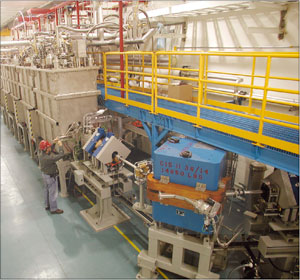
TRIUMF began developing superconducting acceleration technology in 2001 and is now a leader in the field, with a demonstrated accelerating gradient significantly above that of other operating facilities. The new superconducting beamline of ISAC-II adds 20 MV of accelerating voltage to the existing ISAC accelerator chain (figure 1). Robert Laxdal and his team at TRIUMF have developed the high-quality, low-emittance beams with high reliability that are strong features of the new facility.
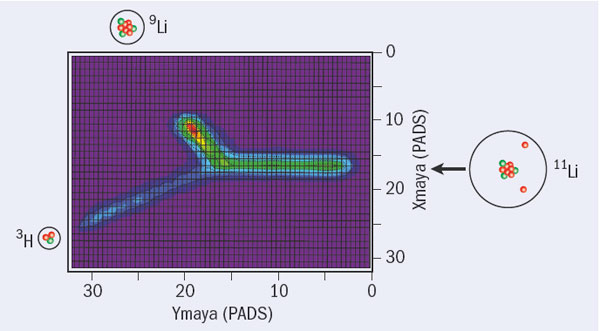
Researchers have already begun to queue up to take advantage of the new beams. First in line was an experiment led by Hervé Savajols of the Grand Accelerateur National d’Ions Lourds (GANIL) in France and Tanihata from TRIUMF and Japan. They used the MAYA detector from GANIL to study the unusual structure of 11Li, which has as many as eight neutrons together with the three protons. When the first beams arrived on 5 January 2007 the experiment was ready within two hours and was taking data. For this experiment, only 11 of the 20 available superconducting niobium RF cavities were needed to accelerate the beam to the energy of 39.6 MeV required for the experiment.
11Li is an extreme example of a halo nucleus, where two of the neutrons couple together to form an extended outer “halo”, and the aim of this MAYA ISAC-II experiment was to study the pairing correlation between the two neutrons. Many of the two-neutron halo nuclei have an unusual structure and the correlation between two neutrons plays an important role in both the nuclear binding and structure. Although there have been several experiments to study the break up of the nucleus, the correlation between the two halo neutrons is still not well understood.
At ISAC-II, MAYA studied the two-neutron transfer reaction 11Li +p → 9Li +3H at a beam energy of 3.6A MeV (figure 2). This kind of reaction is believed to be the best tool for studying two-nucleon correlation in nuclei. ISAC-II delivered a stable 11Li beam with an intensity of about 2000 ions/s to MAYA’s active-target detector, in which isobutane gas of 150 mbar acts as both the proton target and tracking gas. A silicon-detector array and a caesium-iodide array within MAYA detected forward-going, high-energy particles that left the gas detection area. The active target provides almost 4π detection of the reaction, the thickest usable target, and an efficient detection of low-energy recoil particles. The experiment was performed by a collaboration between GANIL, the Argonne National Laboratory and TRIUMF.
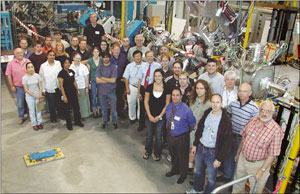
Later in 2007, the TRIUMF-ISAC Gamma-Ray Escape Suppressed Spectrometer (TIGRESS) augmented by the auxiliary charged-particle detector BAMBINO was used at ISAC-II to measure the electromagnetic properties of low-lying states in the neutron-rich unstable nucleus 29Na using the Coulomb-excitation technique. TIGRESS is a next generation array of high-energy-resolution, position-sensitive gamma-ray spectrometers (figure 3). BAMBINO is a segmented-silicon detector array, built by Lawrence Livermore National Laboratory (LLNL) and the University of Rochester. A team of scientists from TRIUMF, LLNL, the University of Guelph and 12 other institutions in Canada, the UK, and the US, collaborated on this measurement and were led by Ching-Yen Wu of LLNL.
For this experiment, minimizing the isobar contamination in the main exotic beam is a major challenge for the beam-delivery group. At the full capacity, up to 600 29Na ions per second were delivered at 70 MeV on a 110Pd target. The magnitude of the electromagnetic transition rate for the first excited state in 29Na, determined from this measurement, sheds light on the quenching of magic numbers in nuclei, which is crucial to our understanding of the effective nucleon–nucleon interaction in nuclear medium with extreme isospin. The final results will complement ongoing studies of similarly exotic systems such as 11Li and provide insight into the production of heavy elements in exploding stars. Project leader Carl Svensson of the University of Guelph was recently awarded the prestigious EWR Steacie Memorial Fellowship of the Natural Sciences and Engineering Research Council of Canada for his work on TIGRESS.
After the first season of success, TRIUMF is eager to press further forward. It plans to add a complementary electron driver to the ISAC programme as well as a new beamline for protons on an actinide target, which is currently being developed. The nuclear-physics renaissance is in full swing.
The Sun, a typical middle-aged star, is the most important astronomical body for life on Earth, and since ancient times its phenomena have had a key role in revealing new physics. Answering the question of why the Sun moves across the sky led to the heliocentric planetary model, replacing the ancient geocentric system and foreshadowing the laws of gravity. In 1783 a sun-like star led the Revd John Mitchell to the idea of the black hole, and in 1919 the bending of starlight by the Sun was a triumphant demonstration of general relativity. The Sun even provides a laboratory for subatomic physics. The understanding that it shines by nuclear fusion grew out of the nuclear physics of the 1930s; more recently the solution to the solar neutrino “deficit” problem has implied new physics.
This progress in science, triggered by the seemingly pedestrian Sun, seems set to continue, as a variety of solar phenomena still defy theoretical understanding. It may be that one answer lies in astroparticle physics and the curious hypothetical particle known as the axion. Neutral, light, and very weakly interacting, this particle was proposed more than 25 years ago to explain the absence of charge-parity (CP) symmetry violation in the strong interaction.
So what are the problems with the Sun? These lie, perhaps surprisingly, with the more visible, outermost layers, which have been observed for hundreds, if not thousands, of years.
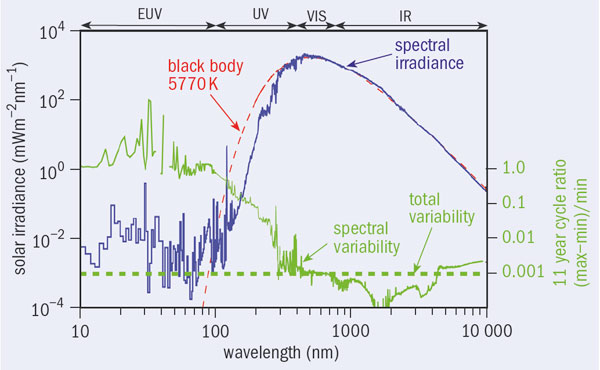
First, why is the corona – the Sun’s atmosphere with a density of only a few nanograms per cubic metre – so hot, with a temperature of millions of degrees? This question has challenged astronomers since Walter Grotrian, of the Astrophysikalisches Observatorium in Potsdam, discovered the corona in the 1930s. Within a few hundred kilometres, the temperature rises to be about 500 times that of the underlying chromosphere, instead of continuing to fall to the temperature of empty space (2.7 K). While the flux of extreme ultraviolet photons and X-rays from the higher layers is some five orders of magnitude less than the flux from the photosphere (the visible surface), it is nevertheless surprisingly high and inconsistent with the spectrum from a black body with the temperature of the photosphere (figure 1). Thus, some unconventional physics must be at work, since heat cannot run spontaneously from cooler to hotter places. In short, everything above the photosphere should not be there at all.
Another question is how does the corona continuously accelerate the solar wind of some thousand million tonnes of gas per second at speeds as high as 800 km/s? The same puzzle holds for the transient but dramatic coronal mass ejections (CMEs). How and where is the required energy stored, and how are the ejections triggered? This question is probably related to the mystery of coronal heating. And what is it that triggers solar flares, which heat the solar atmosphere locally up to about 10 to 30 million degrees, similar to the high temperature of the core, some 700,000 km beneath? These unpredictable events appear to be like violent “explosions” occurring near sunspots in the lower corona. This suggests magnetic energy as their main energy source, but how is the energy stored and how is it released so rapidly and efficiently within seconds? Even though many details are known, new observations call into question the 40-year-old standard model for solar flares, which 150 years after their discovery still remain a major enigma.
On the Sun’s surface, what is it that causes the 11-year solar cycle of sunspots and solar activity? This seems to be the biggest of all solar mysteries, since it involves the oscillation of the huge “magnets” of a few kilogauss on the face of the Sun, ranging from 300 to 100,000 km in size. The origin of sunspots has been one of the great puzzles of astrophysics since Galileo Galilei first observed them in the early 1600s. Their rhythmic comings and goings, first measured by the apothecary Samuel Heinrich Schwabe in 1826, could be the key to understanding the unpredictable Sun, since everything in the solar atmosphere varies in step with this magnetic cycle.
Beneath the Sun’s surface, the contradiction between solar spectroscopy and the refined solar interior models provided by helioseismology has revived the question about the heavy-element composition of the Sun, with new abundances some 25 to 35% lower than before. Abundances vary from place to place and from time to time in the Sun, and are enhanced near flares, showing an intriguing dependence on the square of the magnetic intensity in these regions. The so-called “solar oxygen crisis” or “solar model problem” is thus pointing at some non-standard physical process or processes that occur only in the solar atmosphere, and with some built-in magnetic sensor.
These are just some of the most striking solar mysteries, each crying out for an explanation. So can astroparticle physics help? The answer could be “yes”, using a scenario in which axions, or particles like axions, are created and converted to photons in regions of high magnetic fields or by their spontaneous decay.
The expectation from particle physics is that axions should couple to electromagnetic fields, just as neutral pions do in the Primakoff effect known since 1951, which regards the production of pions by high-energy photons as the reverse of the decay into two photons. Interestingly, axions could even couple coherently to macroscopic magnetic fields, giving rise to axion–photon oscillation, as the axions produce photons and vice versa. The process is further enhanced in a suitably dense plasma, which can increase the coherence length. This means that the huge solar magnetic fields could provide regions for efficient axion–photon mutation, leading to the sudden appearance of photons from axions streaming out from the Sun’s interior. The photosphere and solar atmosphere near sunspots are the most likely magnetic regions for this process to become “visible”, as the material above is transparent to emerging photons.
According to this scenario, the Sun should be emitting axions, or axion-like particles, with energies reflecting the temperature of the source. Thus one or more extended sources of new low-energy particles (below around 1 keV), and the ubiquitous solar magnetic fields of strengths varying from around 0.5 T, as measured at the surface, up to 100 T or much more in the interior, might together give rise to the apparently enigmatic behaviour of a star like the Sun.
Conventional solar axion models, inspired by QCD, have one small source of particles in the solar core, with an energy spectrum that peaks at 4 to 5 keV. They therefore exclude the low energies where the solar mysteries predominantly occur. This immediately suggests an extended axion “horizon”. Experiments to detect solar axions – axion helioscopes such as the CERN Solar Axion Telescope (CAST) – should widen their dynamic range towards lower energies, in order to enter this new territory.
The revised solar axion scenario must also accommodate two components of photon emission, namely, a continuous inward emission together, occasionally, with an outward radiation pressure. Massive and light axion-like particles, both of which have been proposed, can provide these thermodynamically unexpected inward and outward photons respectively. They offer an exotic but still simple solution, given the Sun’s complexity.
The emerging picture is that the transition region (TR) between the chromosphere and the corona (which is only about 100 km thick and only some 2000 km above the solar surface) is the manifestation of a space and time dependent balance between the two photon emissions. However, the almost equally probable disappearance of photons into axion-like particles in a magnetic environment must also be taken into account in understanding the solar puzzles. The TR could be the most spectacular place in the Sun, since it is where the mysterious temperature inversion appears, while flares, CMEs and other violent phenomena originate near the TR.
Astrophysicists generally consider the ubiquitous solar magnetism to be the key to understanding the Sun. The magnetic field appears to play a crucial role in heating up the corona, but the process by which it is converted into heat and other forms of energy remains an unsolved problem. In the new scenario, the generally accepted properties of the radiative decay of particles like axions and their coupling to magnetic fields are the device to resolve the problem – in effect, a real “απó μηχανηζ θεóζ” (the deus ex machina of Greek tragedy). The magnetic field is no longer the energy source, but is just the catalyst for the axions to become photons, and vice versa.
The precise mechanism for enhancing axion–photon mutation in the Sun that this picture requires remains elusive and challenging. One aim is to reproduce it in axion experiments. CAST, for example, seeks to detect photons created by the conversion of solar axions in the 9 T field of a prototype superconducting LHC dipole. However, the process depends on the unknown mass of the axion. Every day the CAST experiment changes the density of the gas inside the two tubes in the magnet in an attempt to match the velocity of the solar axion with that of the emerging photon propagating in the refractive gas.
It is reasonable to assume that fine tuning of this kind in relation to the axion mass might also occur in the restless magnetic Sun. If the energy corresponding to the plasma frequency equals the axion rest mass, the axion-to-photon coherent interaction will increase steeply with the product of the square of the coherence length and the transverse magnetic field strength. Since solar plasma densities and/or magnetic fields change continuously, such a “resonance crossing” could result in an otherwise unexpected photon excess or deficit, manifesting itself in a variety of ways, for example, locally as a hot or cold plasma. Only a quantum electrodynamics that incorporates an axion-like field can accommodate such transient brightening as well as dimming (among many other unexpected observations).
These ideas also have implications for the better tuning not only of CAST, but also of orbiting telescopes such as the Japanese satellite Hinode (formerly Solar B), NASA’s Reuven Ramaty High Energy Solar Spectroscopic Imager and the NASA–ESA Solar and Heliospheric Observatory, which have been transformed recently to promising axion helioscopes, following suggestions by CERN’s Luigi di Lella among others. The joint Japan–US–UK mission Yohkoh has also joined the axion hunt, even though it ceased operation in 2001, by making its data freely available.
The revised axion scenario therefore seems to fit as an explanation for most (if not all) solar mysteries. Such effects can provide signatures for new physics as direct and as significant as those from laboratory experiments, even though they are generally considered as indirect; the history of solar neutrinos is the best example of this kind.
Following these ideas and others on millicharged particles, paraphotons or any other weakly interacting sub-electron-volt particles, axion-like exotica will mean that the Sun’s visible surface – and probably not its core – holds the key to its secrets. As in neutrino physics, the multifaceted Sun, from its deep interior to the outer corona and the solar wind, could be the best laboratory for axion physics and the like. The Sun, the most powerful accelerator in the solar system, whose working principle is not yet understood, has not been as active as it is now for some 11,000 years. Is this an opportunity not to be missed?
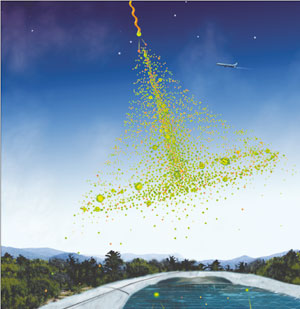
Milagro – Spanish for miracle – was the first of a new generation of extensive air shower (EAS) detectors. Traditionally, EAS arrays have been composed of a discrete set of small detectors, spread over large areas. Typically active over approximately 1% of the enclosed area only, they were sensitive to cosmic gamma rays with energies of around 100 TeV and above. The combination of steeply falling source spectra and the absorption in flight of these high-energy gamma rays via interactions with the cosmic microwave background radiation meant that this first generation of instruments did not succeed in detecting any astrophysical sources. In contrast, imaging atmospheric Cherenkov telescopes (IACT), pioneered by Trevor Weekes at Mount Hopkins, led to the discovery of several tera-electron-volt gamma-ray sources, the first of which was the Crab Nebula, the remnant of a supernova that occurred in 1054 (Weekes et al. 1989). More recently an array of such detectors, the HESS telescopes in Namibia, have demonstrated the richness of the tera-electron-volt sky.
Despite these difficulties, the advantages of EAS arrays, with their large instantaneous field of view (around 2 sr) and continuous operation, provided strong motivation to improve the technique. The key to success was to lower the energy threshold and simultaneously improve the ability to reject the abundant cosmic-ray background. Water Cherenkov technology, developed for underground proton-decay physics experiments such as the Irvine Michigan Brookhaven and Kamiokande detectors, led the way to this success.
When employed above ground as an EAS array, water Cherenkov technology enables the construction of an array that is sensitive over its entire area. The Cherenkov angle in water is 41° so an array of photomultiplier tubes (PMTs) placed at a depth comparable to their spacing can detect the Cherenkov light emitted from any electromagnetic particle entering the water volume. Moreover, the composition of an EAS at ground level is predominantly photons (which are around six times as numerous as electrons and positrons), and, as the depth of water above the PMTs is sufficient to convert these gamma rays to charged particles, these photons can also be detected by the PMTs.
The Milagro detector is located in the Jemez Mountains of northern New Mexico. It is operated by the Los Alamos National Laboratory in partnership with the National Science Foundation and the US Department of Energy Office of Science. Milagro uses a covered water reservoir that contains 2.5 × 10⁷ litres of water and measures 80 m × 60 m, with a depth of 8 m. The reservoir is instrumented with 750 PMTs deployed in two layers. The top layer of 450 PMTs is beneath 1.5 m of water with a spacing of 2.8 m. This layer is used to reconstruct the direction of the primary gamma ray or cosmic ray by measuring the relative arrival time of the shower front to around 0.5 ns. The second layer of PMTs, beneath 6 m of water, is used to detect the penetrating component of any EAS initiated by hadronic cosmic rays. An array of 175 water tanks surrounds the central water reservoir. Each is 1 m high and 3 m in diameter and is lined with reflective Tyvek. A single 8 inch PMT mounted at the top of each tank looks down into the water volume.
After seven years of operation, four of which included the array of outrigger water tanks, Milagro ceased operation in April this year. Its results have been impressive and ushered in a new era for ground-based gamma-ray astrophysics at tera-electron-volt energies, where the role of the EAS arrays is now clearly established.
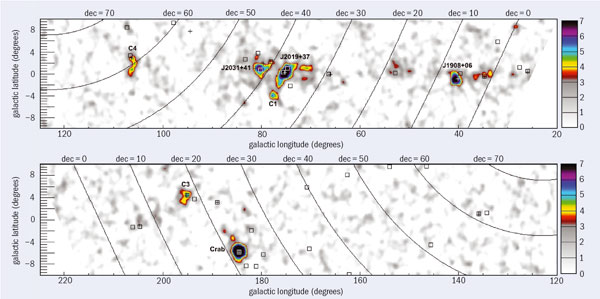
The figure above shows a region around the galactic plane as observed by Milagro, where the median energy of the detected gamma rays is 20 TeV (Abdo et al. 2007b). It contains several noteworthy features. The sources marked JXXXX+YY, where XXXX and YY are the right ascension and declination, respectively, are three new sources that Milagro discovered. MGRO J2031+41 and MGRO J2019+37 lie within the Cygnus region of the galaxy. This direction points into our spiral arm and is rich with possible cosmic-ray acceleration sites, such as Wolf–Rayet stars, OB associations (a sign of star formation) and supernova remnants. The locations of these two sources are coincident with sources of giga-electron-volt gamma rays discovered by the Energetic Gamma Ray Emission Telescope (EGRET) on NASA’s Compton Gamma Ray Observatory (the squares mark the locations of gamma-ray sources of more than 100 MeV reported in the 3rd EGRET catalogue). However, the true nature of the sources is still to be determined.
The third new source shown in the figure above is MGRO J1908+06. This was subsequently observed by HESS, which measured a “hard” energy spectrum, falling more or less with the square of the energy. Preliminary analysis of Milagro data indicates that this source may be emitting gamma rays with energies in excess of 100 TeV, which would make it the highest-energy gamma-ray source detected to date and a likely site of cosmic-ray acceleration.
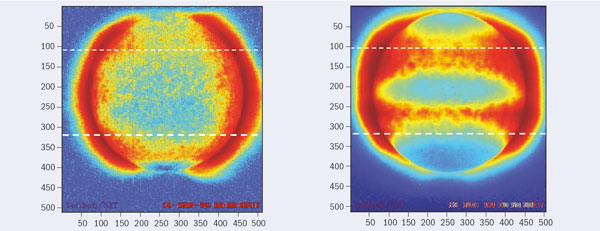
In addition to these three sources, there are four other regions in Milagro’s view of the galaxy that are likely to be sources of tera-electron-volt gamma rays. The image above shows three of these regions: C1, C3 and C4. C2, which is not indicated, lies just above C1.
The source candidate C4 is coincident with the Boomerang pulsar wind nebula, and the shape seen in tera-electron-volt gamma rays is similar to that observed at 100 MeV. C3 is coincident with the Geminga pulsar (although no pulsed emission is observed at tera-electron-volt energies), which, at a distance of 180 pc, is the closest pulsar to the Earth and the brightest source of giga-electron-volt gamma rays visible in the northern sky. Finally, C1 has no giga-electron-volt source in the vicinity and its nature is at present completely unknown. The air shower array operating at Yangbajing cosmic-ray observatory in Tibet has confirmed this source, in addition to the two others that lie in the Cygnus region. One interesting feature of these is that they appear to be extended, with diameters ranging from 0.25° to more than 1°. Large sources are difficult for IACTs to detect, possibly explaining why they have eluded detection until now, despite the fact that these regions had been examined by past IACT arrays, such as the Whipple Observatory and the High Energy Gamma Ray Astronomy experiment.
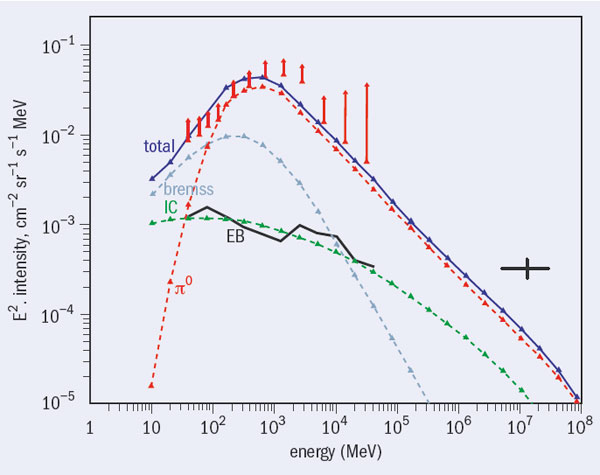
The second image also shows a diffuse glow visible around the galactic plane, especially in the Cygnus region and at lower galactic longitude. This arises from the interaction of hadronic cosmic rays and high-energy cosmic-ray electrons with matter and radiation in the galaxy. The interaction of cosmic-ray protons with matter leads to the production of neutral pions that subsequently decay into gamma rays. The high-energy electrons interact with low-energy (optical, infrared and cosmic microwave background) photons through Compton scattering to produce high-energy gamma rays. Prior to Milagro’s measurements, EGRET observed this galactic diffuse radiation up to about 30 GeV and discovered an excess of diffuse emission over predictions based on the known matter density in the galaxy and the cosmic-ray rate and spectrum measured at the Earth. The explanation for this excess is still a matter of debate, with possible solutions including the annihilation of dark matter. A much greater intensity of high-energy electrons throughout the galaxy than is measured at the Earth, and a miscalibration of the EGRET response at high energies, are also possible explanations.
The third image shows Milagro’s measurement of the diffuse emission at 12 TeV in the Cygnus region (Abdo et al. 2007a). This measurement indicates that at tera-electron-volt energies the excess over expectations is even larger than it is at giga-electron-volt energies. While the cause of this excess is a matter of debate, possible explanations include cosmic-ray acceleration sites in the region, unresolved sources of tera-electron-volt gamma rays in the region, and the presence of very-high-energy electrons in the region. The resolution of this puzzle will require more detailed observations. Whatever the final explanation, it is clear that gamma-ray astronomy is an important tool in answering the nearly century-old problem of the origin of cosmic radiation.
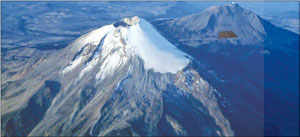
While observations with Milagro have drawn to a close, plans for a new instrument are proceeding. A joint US–Mexico collaboration has proposed the High Altitude Water Cherenkov (HAWC) telescope to be located at Volcà n Sierra Negra (Tliltepetl) near the site of the Large Millimeter Telescope in Mexico. At 4100 m above sea level (compared with 2600 m above sea level for Milagro) and with a dense sampling detector that encloses around 22,000 m2, HAWC is expected to be about 15 times as sensitive as Milagro and have an energy threshold of less than 1 TeV. Unlike Milagro, it will comprise 900 individual water tanks. Each tank will be 5 m in diameter and 4.6 m tall – much larger than those used by Milagro or the Pierre Auger Observatory in Argentina – and would have a PMT at the bottom looking up into the water volume. If built, the complete array will have an unprecedented level of sensitivity to the highest-energy particle accelerators in our galaxy, as well as the sensitivity needed to detect short flares from active galaxies and the ability to make a detailed map of the diffuse gamma-ray emission in our galaxy.
GRB 080319B is the plain name for an extraordinary gamma-ray burst (GRB) that was so bright that it could be seen with the unaided eye for 30 s. The detailed observation of the prompt optical emission and the follow-up monitoring of the afterglow place strong constraints on theoretical models.
For GRB hunters 19 March 2008 was a red-letter day. NASA’s Swift spacecraft, which has been providing GRB highlights since its launch in November 2004 (CERN Courier December 2005 p20), detected a record of four bursts on a single day, the second of which, GRB 080319B, was the brightest ever observed. Luckily, after a journey of 7000 million years (redshift z = 0.937), the GRB photons reached Chile at nighttime, where two wide-field optical cameras were patiently gazing at the sky. The strategy to observe the same region as Swift is monitoring allowed the TORTOREM and the Pi of the Sky collaborations to follow the evolution of the optical flash during the GRB. The brightness of GRB 080319B measured by the TORTORA camera mounted on the 60 cm robotic Rapid Eye Mount telescope at La Silla and by the Pi of the Sky apparatus at Las Campanas Observatory exceeded sixth magnitude, making this GRB the first cosmological object visible to the naked eye.
This observational breakthrough together with the usual multiwavelength afterglow observations of this extremely bright GRB provide an excellent opportunity for testing theoretical models. Based on their link to supernova explosions (CERN Courier September 2003 p15), it is widely agreed that long GRBs result from the core collapse of a dying star and are emitted by highly relativistic ejecta moving in a direction close to the line of sight. There is, however, an ongoing debate about the physical processes at the origin of the GRB and its long-lasting afterglow emission. In the standard "fireball" model, both the prompt GRB and its afterglow are synchrotron emission by electrons accelerated by shock waves in a relativistic jet. The prompt emission arises from internal shocks, while the afterglow is produced when the jet plunges into gas surrounding the dying star.
J S Bloom of the University of California and colleagues have difficulties in reconciling this standard scenario with the observed spectral and temporal variations of GRB 080319B. The simultaneous optical and gamma-ray fluctuations led P Kumar of the University of Texas and A Panaitescu of the Los Alamos National Laboratory to propose the same emission site for the optical photons and the gamma rays. However, as a single spectral component does not match the observed optical and gamma-ray radiation, they suggest that relativistic electrons produce optical synchrotron photons that they up-scatter to gamma-ray energies via inverse-Compton interactions. S Dado, from the Technion institute in Haifa and colleagues from CERN share the opinion that the gamma-ray emission is not of synchrotron origin but, in their "cannonball" model, the seed photons for Compton up-scattering are light from the supernova reflected towards a plasmoid that is ejected from the centre of the dying star by a newborn black hole.
Even though GRB 080319B does not decide on the issue of which of these three models is right, it provides stringent observational constraints that have to be accounted for by future GRB theories.
Nine years ago the DAMA collaboration announced intriguing evidence for an annual modulation in the signals in its detectors, which could be evidence of dark-matter particles in the galactic halo. Now, with results presented first at a conference in Venice in April, the team claims the observation of a similar signal with a larger detector, measuring more flashes in June than in December.
Such a modulation would be the consequence of the Earth’s rotation around the Sun. There would be different detection rates for dark-matter particles when the Earth goes in the same direction as the flux from the galactic halo compared with when it goes against the flux, six months later.
The current experiment, DAMA/LIBRA, has been taking data at the Gran Sasso National Laboratory in Italy since March 2003. Located at almost 1 km deep, so as to be shielded against the cosmic-ray background, the experiment uses 25 crystals of sodium iodide, each with a mass of 9.7 kg and extremely high radiopurity. If a dark-matter particle collides in one of these, it should produce a faint flash of light, which is measured.
Taking the new data together with those from the previous results gives a total exposure of 0.82 tonne-years, and a result that suggests the presence of dark-matter particles in the galactic halo at a confidence level of 8.2 σ (Bernabei et al. 2008). The effect observed is independent of the various theoretical models of dark matter, such as weakly interacting massive particles or axions. Currently, it remains that no other dark-matter experiment has detected the modulation, and so the hunt continues.
Enabling Grids for E-sciencE (EGEE) is the largest multidisciplinary Grid infrastructure in the world, covering research fields from particle physics to biomedicine. Now the project has begun its third phase, EGEE III.
This phase aims to expand and optimize the Grid infrastructure, which is currently used more than 150,000 times per day by scientific users. Co-funded by the European Commission, EGEE III brings together more than 120 organizations to produce a reliable and scalable computing resource available to the European and global research community. At present it consists of 250 sites in 48 countries and more than 60,000 CPUs with more than 20 petabytes of storage, available to some 8000 users 24 hours a day, seven days a week.
These figures considerably exceed the goals planned for the end of the first four years of the EGEE programme, demonstrating the enthusiasm in the scientific community for EGEE and Grid solutions. Ultimately EGEE would like to see a unified, interoperable Grid infrastructure, and with this goal in mind it is working closely with other European and worldwide Grid projects to help to define the standards necessary to make this happen.
The tools and techniques used in one discipline can often be recycled and used elsewhere, by other scientists, or even in the world of business and finance, where EGEE is employed to find new oil reserves, simulate market behaviour and map taxation policy.
EGEE will hold its next conference, EGEE ’08, in Istanbul on 22–26 September 2008. The conference will provide an opportunity for business and academic sectors to network with the EGEE communities, collaborating projects, developers and decision makers, to realize the vision of a sustainable, interoperable European Grid.
TRIUMF, Canada’s National Laboratory for Particle and Nuclear Physics, is one of 11 institutions to receive a C$14.95 million award from the Canadian government after competing with 110 proposals in the Centres of Excellence for Commercialization and Research (CECR) competition, within the Networks of Centres of Excellence (NCE) programme. Advanced Applied Physics Solutions Inc (AAPS), a not-for-profit affiliate of TRIUMF, will initially commercialize technological innovation from TRIUMF, such as the laser-production of diamond-like carbon foils, and bring it to the marketplace. AAPS has been incorporated and is putting together a formalized business plan to pursue R&D projects with business venture partners in Canada, China, France and the US.
The award will provide seed funding to accelerate the testing of ideas and innovations developed in the course of TRIUMF’s work as a laboratory for basic research. The mission of AAPS is to improve the quality of life of people worldwide by developing technologies emerging from worldwide subatomic physics research. AAPS will collaborate with academic, government, and industry stakeholders to research and develop promising technologies, bringing them to a commercially viable stage. These include developing a new underground imaging system to improve productivity in the natural resources sector, and other technologies with a range of applications, including medical-isotope production and pollution mitigation.
The NCE is an agency of the Canadian government that supports partnerships between universities, industry, government and not-for-profit organizations with a view to connecting leading-edge research with industrial expertise and strategic investments, in order to boost Canada’s leadership in Science and Technology (S&T). Its goal is to create internationally recognized centres of commercialization and research expertise to deliver economic, health, social, and environmental benefits to Canadians, as well as to encourage entrepreneurial and advantages for people, and greater S&T investments from the private sector.
To provide the best experiences, we use technologies like cookies to store and/or access device information. Consenting to these technologies will allow us to process data such as browsing behavior or unique IDs on this site. Not consenting or withdrawing consent, may adversely affect certain features and functions.
Functional
Always active
The technical storage or access is strictly necessary for the legitimate purpose of enabling the use of a specific service explicitly requested by the subscriber or user, or for the sole purpose of carrying out the transmission of a communication over an electronic communications network.
Preferences
The technical storage or access is necessary for the legitimate purpose of storing preferences that are not requested by the subscriber or user.
Statistics
The technical storage or access that is used exclusively for statistical purposes.The technical storage or access that is used exclusively for anonymous statistical purposes. Without a subpoena, voluntary compliance on the part of your Internet Service Provider, or additional records from a third party, information stored or retrieved for this purpose alone cannot usually be used to identify you.
Marketing
The technical storage or access is required to create user profiles to send advertising, or to track the user on a website or across several websites for similar marketing purposes.