Comsol -leaderboard other pages

Topics

RICH pickings in Cassis

CCric1_08_10

The ring imaging Cherenkov (RICH) technique is used extensively in nuclear, high-energy and astroparticle physics experiments to identify charged particles via the measurement of their Cherenkov emission angles, over momenta ranging from a few hundred MeV/c to several hundred GeV/c. The technological feats of the single-photon RICH detection technique – manifested in the most extreme case via the 3D imaging of single photoelectrons that have been created by Cherenkov photons and then been allowed to drift a metre or so through gas at atmospheric pressure – remain unmatched in any other detection technology.

In 1993, Eugenio Nappi of INFN Bari and Tom Ypsilantis of Collège de France launched a series of international workshops as a forum for reviewing new developments and perspectives in this powerful technique. RICH2010, the latest in the series, took place on 3–7 May in the French Mediterranean port of Cassis. A broad programme of invited and contributed talks, as well as poster presentations, attracted 115 participants from 25 countries, reflecting the expanding application of Cherenkov imaging in accelerator-based particle and nuclear physics, astroparticle physics and neutrino astronomy. In addition to 10 invited talks, the programme included 42 contributed talks, which were selected from some 80 submissions to allow time for extensive discussions; the other 34 contributions were presented in poster sessions.

From the LHC to Lake Baikal

The workshop began appropriately with a comprehensive review of the fundamentals of Cherenkov-light imaging and recent developments by Jurgen Engelfried of the University of San Luis Potosi. The opening session on operating RICH detectors in nuclear- and particle-physics experiments then provided an opportunity to see the first calibration measurements with real LHC data from the ALICE and LHCb experiments.

The High Momentum Particle Identification Detector (HMPID) in ALICE employs a perfluoro-n-hexane (C6F14) liquid radiator with photon imaging via a reflective caesium iodide (CsI) photocathode operating in a multiwire proportional chamber (MWPC) filled with methane (CH4) at atmospheric pressure. The detector has already demonstrated the expected π/K separation up to 3 GeV/c and proton identification up to 5 GeV/c; a future upgrade should extend the momentum range beyond this. LHCb has two RICH systems: RICH1, operating with aerogel and perfluoro-n-butane (C4F10) radiators; and RICH2, with a carbon tetrafluoride (CF4) radiator, to provide a combined particle-identification range over 2–100 GeV/c. The data already taken clearly demonstrate the identification of hyperons and strange mesons.

Also at CERN, the COMPASS experiment has a RICH detector that has been operating since 2002 in beam rates as high as 108 Hz with a C4F10 gas radiator for hadron identification over 3–60 GeV/c. The detector was subsequently upgraded with multianode photomultiplier tubes (MAPMTs) replacing the four central CsI MWPCs with pad read-out. This should allow an improvement from the present operation at 40 MHz to deadtimeless operation at 100 MHz in the central region. The NA62 experiment will use a RICH detector with a 17 m neon radiator and a focal plane of 2000 PMTs. Designed for electron–muon separation between 15 and 35 GeV/c, it should begin data-taking in 2012.

At Brookhaven, the hadron-blind RICH in the PHENIX experiment has demonstrated extremely high efficiency for photon detection in windowless operation, with CF4 serving as radiator and for photoelectron detection in a gas-electron multiplier (GEM) device with a CsI photocathode. Ionization from passing hadrons is trapped on electrodes in the GEM, allowing for clean electron identification in gold–gold collisions at the Relativistic Heavy Ion Collider.

Following the success of the BaBar experiment at SLAC, techniques for the detection of internally reflected Cherenkov (DIRC) light produced in quartz bars continue to evolve. The barrel focusing-DIRC for the proposed Super-B facility would be more compact than its BaBar ancestor. It would also have quartz blocks instead of water in the focusing zone and MAPMTs with sub-200 ps time resolution or multianode microchannel plate PMTs to replace conventional tubes and provide time-of-propagation (TOP) measurements that could resolve the colour of individual Cherenkov photons. The more compact forward region would use an aerogel radiator.

CCric2_08_10

SuperKEKB, the upgraded B facility planned at KEK, will operate at beam luminosities of more than 80 times the current value of 1034 cm–2s–1. The Belle II experiment will employ a challenging TOP detector that relies on new multichannel hybrid devices based on avalanche photodiodes (APDs) that are under development at Hamamatsu Photonics. The PANDA experiment at the Facility for Antiproton and Ion Research (FAIR), Darmstadt, will include a barrel DIRC that follows similar principles to barrel designs for Super-B and Belle II, while for the forward directions a DIRC detector with innovative disc geometry is under study.

The expansion in the use of imaging Cherenkov detectors in astroparticle physics, witnessed in earlier RICH workshops, continues to accelerate. Imaging air Cherenkov telescope (IACT) arrays use the Earth’s atmosphere as radiator. The High Energy Stereoscopic System (HESS) array in Namibia has discovered numerous high-energy gamma-ray sources and a legacy survey of the galactic plane is almost complete. Sensitivity will be further increased in HESS-II with a fifth and larger (600 m2) dish added at the centre of the array. The future Cherenkov Telescope Array (CTA), with around 80 dishes of three diameters, is expected to be approved in 2013. The CTA will greatly increase sensitivity to astrophysical gamma-ray sources through the exploitation of ongoing advances in mirror coatings, photon-camera technology and control systems for telescope positioning. Some of these advances are already becoming apparent in the innovative photon cameras of the MAGIC-II IACT and in the First Avalanche-photodiode Camera Test (FACT) project for a novel camera using Geiger-mode APDs (G-APDs), both on La Palma.

The ANTARES neutrino telescope, by contrast, looks downwards, using seawater as the radiator and the Earth to filter out up-going charged cosmic rays. At a depth of 2500 m in the Mediterranean Sea, the telescope was completed in 2008 and results based on an analysis of around 1000 detected neutrinos were presented. The constructional and operational experience gained in ANTARES represents a major step towards the KM3NeT multi-cubic-kilometre neutrino telescope for the deep Mediterranean, which is being pursued by a consortium that includes members of the ANTARES, NEMO and NESTOR neutrino-detector projects.

The Lake Baikal neutrino telescope has been running while increasing in size since 1993. With the deployment of additional optical detectors it will soon reach a target mass of a gigatonne of water. Nearby, the complementary 1 km2 TUNKA-133 extensive air-shower array is coming into operation. This will be sensitive to primary cosmic rays in the energy range of 1015–1018 eV.

Glimpses of the future

The first permanent RICH installation outside the Earth’s atmosphere will soon be achieved with the launch of the Alpha Magnetic Spectrometer (AMS-02) in the final NASA space shuttle mission (STS-134) to the International Space Station in February 2011. The RICH subdetector consists of sodium fluoride and aerogel radiators, with a conical mirror and MAPMT photon detection. Tests at CERN last year using cosmic rays and a test beam confirmed the expected performance of the RICH subdetector.

Rapid, ongoing developments in solid-state, vacuum-based and gaseous photon detectors were reviewed in invited talks by Samo Korpar of Maribor, Toru Iijima of Nagoya and Silvia Dalla Torre of INFN Trieste, respectively. Leszek Ropelewski of CERN completed the picture with a fascinating evening seminar on developments in micropattern gas detectors (MPGDs) within the RD51 collaboration.

Solid-state, single-photon detectors continue to mature. Progress on the design of G-APDs has led to commercialized silicon photomultipliers, offering single-photon sensitivity with high detection efficiency, high gain for bias voltages less than 100 V, excellent (tens of picoseconds) timing resolution and operation in high magnetic fields. Current disadvantages include a high (temperature-sensitive) dark count rate, which increases with radiation exposure. Nonetheless, G-APDs have already demonstrated their adaptability in various detectors. They are combined with light-collecting Winston cones in successful prototype IACT cameras in MAGIC and FACT. More than 60,000 G-APD modules are currently installed in the near detector of the Tokai-to-Kamioka long-baseline neutrino experiment; G-APDs have also been successfully tested with an aerogel radiator in studies for the RICH detector for Belle II.

Vacuum-based photon detectors continue to diverge from classical PMT forms to include: new multianode types; versions with photoelectron gain achieved in the pores of a microchannel plate (MCP), affording the time resolution required for future DIRC devices; and hybrid devices that combine a pixellated silicon pin-diode sensor or APD with a photocathode and photoelectron acceleration potential of several kilovolts. LHCb’s RICH detectors represent the first implementation of such semiconductor hybrid devices in an operating experiment, while 144-channel hybrid APDs are foreseen as the baseline for Belle II. Quantum efficiencies continue to rise from typical values of 23% for bialkali (BA) photocathodes operating in the visible range to routinely produced “super” and “ultra” BAs, which approach 35% and 45% respectively. Such improvements are important for future water-based neutrino detectors, including MEMPHYS, because they allow for a bigger detector spacing and target volume.

While gaseous photon detectors – today with solid reflecting photocathodes rather than photosensitive vapours – remain the only approach to affordable large surfaces, great efforts have been made to inhibit the positive-ion feedback that limits photocathode lifetime and reduces operating speed. MPGDs based on stacked, perforated electrostatic layers in the GEM configuration have been implemented in several tracking detectors, including the hadron-blind RICH detector in PHENIX. Gaseous photon detectors for visible wavelengths so far remain elusive but many applications await, if they can be made cheaply enough.

Making the most of RICH detectors requires exceptional performance in many challenging technical areas, as highlighted in the invited talk by Clara Matteuzzi of INFN Milano. These include the purity of the solid, liquid or gas media – which the Cherenkov radiator transparency depends upon – as well as the transparency of radiator windows and reflectivity of focusing mirrors, which often operate at ultraviolet wavelengths. Groups in Novosibirsk and Japan have attained new levels of performance from aerogel radiators, in particular in terms of improved transparency and the production of tiles with customized refractive index.

In the tradition of the previous workshops, a session was also devoted to talks on pattern recognition and data analysis, where sophisticated methods and algorithms were presented. Last, in the conference summary, Blair Ratcliff of SLAC selected highlights from the many contributions at RICH2010 and revealed a picture of high “V2” (variety and vitality) in Cherenkov-light imaging.

The first half of the conference suffered appalling and uncharacteristic weather, but nevertheless the participants enjoyed a social programme that included a (rescheduled) boat visit to the Calanques of Cassis and a banquet in the barrel hall of the Domaine Bunan vineyard, near Bandol. The accompanying concert featured keyboard improvisations by Jacques Diennet of Ubris Studio, Marseille, accompanied by passing cosmic rays, made audible in the “Cosmophone”, which was introduced by its inventor, Claude Vallée of the Centre de Physique des Particules de Marseille. The concert continued with contemporary pieces played on vintage Provençial instruments by Jean-Marc Montera (lute and guitar) and the Meditrio ensemble. Fortunately, the weather smiled on the final days of the conference and on the closing ceremony, where the RICH2010 conference flag was presented to Takayuki Sumiyoshi of Tokyo Metropolitan University, in anticipation of RICH2013, which will take place in Japan.

• RICH2010 was sponsored by French and European private companies and institutions including CERN, IN2P3, Commissariat à l’énergie Atomique, Université de la Méditerranée Aix-Marseille II, Conseil General des Bouches du Rhône, Conseil General de la Région Provence – Alpes – Cote d’Azur and the town of Cassis.

An international future for nuclear-physics research

CCiup1_08_10

The International Union of Pure and Applied Physics (IUPAP) was established nearly 90 years ago to foster international co-operation in physics. It does this in part through the activities of a number of commissions for different areas of research, including the Commission on Nuclear Physics (C12), set up in 1960. In the mid-1990s, under Erich Vogt as chair, C12 identified the need for a coherent effort to stimulate international co-operation in nuclear physics. While it took some time for this new thrust to gain momentum, by 2003, under Shoji Nagamiya as chair, C12 established a subcommittee on International Co-operation in Nuclear Physics. This body, chaired by Anthony Thomas, then became IUPAP’s ninth official working group, WG.9, at the IUPAP General Assembly in Cape Town in October 2005. As many will be aware the first working group, IUPAP WG.1, is the International Committee of Future Accelerators (ICFA), which was formed more than 40 years ago and plays such an important role in particle physics.

The membership of IUPAP WG.9 was chosen to constitute a broad representation of geographical regions and nations, as one would expect for a working group of IUPAP. Its members consist of the working group’s chair, past-chair and secretary; the chairs and past-chairs of the Nuclear Physics European Collaboration Committee (NuPECC ), the Nuclear Science Advisory Committee (NSAC), the Asia Nuclear Physics Association (ANPhA) and the Latin-American Association for Nuclear Physics (ALAFNA); the chair of IUPAP C12; the directors of the large nuclear-physics facilities (up to four each from Asia, Europe and North America); and one further representative from Latin America. The working group meets every year at the same location as, and on the day prior to, the AGM of IUPAP C12 – whose members are encouraged to attend all meetings of IUPAP WG.9 as observers. Other meetings, such as the two-day Symposium on Nuclear Physics and Nuclear Physics Facilities, are held as required.

The first task of IUPAP WG.9 was to answer three specific questions:

• What constitutes nuclear physics from an international perspective?

• Which are the facilities that are used to investigate nuclear physics phenomena?

• Which are the scientific questions that these facilities are addressing?

The answers to these questions are given in IUPAP Report 41, which was published in 2007 and is posted on the IUPAP WG.9 website (IUPAP 2007). It contains entries for all nuclear-physics user facilities that agreed to submit data. The 90 entries range from smaller facilities with more restricted regional users to large nuclear-physics accelerator laboratories with a global user group. The report also has a brief review, prepared by the IUPAP WG.9 members, of the major scientific questions facing nuclear physics today, together with a summary of how these questions are being addressed by the current facilities or how they will be addressed by future and planned facilities. There is also a short account of the benefits that society has received, or is receiving, as a result of the discoveries made in nuclear physics.

In late 2005 the Office of Nuclear Physics in the US Department of Energy’s Office of Science requested the OECD Global Science Forum (GSF) that it establish a GSF Working Group on Nuclear Physics. The purpose of this working group was to prepare an international “landscape” for nuclear physics for the next 10 to 15 years. In particular, it was clear that for policy makers in many countries it is essential to understand how proposals for future facilities fit within an international context. IUPAP WG.9 agreed to provide expert advice to the GSF Working Group, and the chair and secretary of WG.9 as well as the chair of IUPAP C12 served as members of the GSF Working Group.

CCiup2_08_10

The work of the GSF Working Group was completed in March 2008, with the final version of the report being accepted by the OECD GSF. IUPAP Report 41 provided a great deal of valuable input, with the data and analysis contained within it helping to guide the deliberations of the GSF Working Group. Copies of the final OECD GSF report, which provides a global roadmap for nuclear physics for the next decade, in a format suitable for science administrators, are available from the OECD Secretariat; it also downloadable from the GSF website (OECD GSF 2008).

Central themes

In response to the mandate given to IUPAP WG.9 by the OECD GSF in a missive from its chair, Hermann-Friedrich Wagner, a two-day Symposium on Nuclear Physics and Nuclear Physics Facilities took place at TRIUMF on 2–3 July. The purpose of the symposium was to provide a forum where the international proponents of nuclear science could be appraised of, and discuss, the present and future plans for nuclear physics research, as well as the upgraded and new research facilities that will be required to realize these plans. This symposium was the first time that proponents of nuclear science, laboratory directors of the large nuclear physics facilities and governmental science administrators have met in an international context. The symposium is expected to be held every three years.

At the 2009 AGM of IUPAP WG.9, which was held at the Forschungszentrum Jülich in August 2009, the decision was taken to update the 90 descriptions of the nuclear-physics facilities and institutions. Following the requests for updated information, 35 replies with updated descriptions were received. These were entered into the online version of IUPAP Report 41 in January 2010. Following the International Symposium on Nuclear Physics and Nuclear Physics Facilities it became apparent that the introduction to the IUPAP Report 41 also needed updating. IUPAP WG.9 is currently reformulating the six main themes of nuclear physics today:

• Can the structure and interactions of hadrons be understood in terms of QCD?

• What is the structure of nuclear matter?

• What are the phases of nuclear matter?

• What is the role of nuclei in shaping the evolution of the universe, with the known forms of matter comprising only a meagre 5%?

• What physics is there beyond the Standard Model?

• What are the chief nuclear-physics applications serving society worldwide?

It is anticipated that these new descriptions for the roadmap for nuclear science will be entered in the online version of IUPAP Report 41 in January 2011.

” Le CERN est un fleuron de la construction européenne “

Summary

CERN, one of the proudest flagships of European co-operation

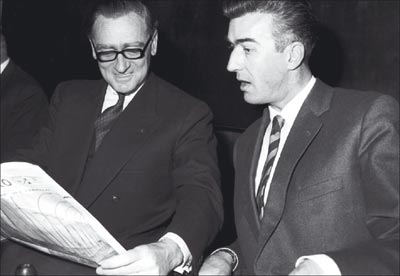
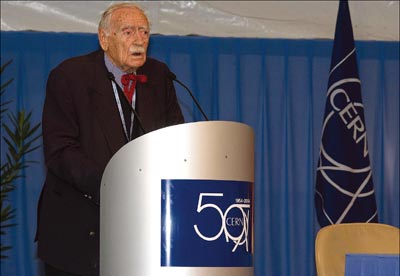
French diplomat François de Rose was one of CERN’s founding fathers, a member of the group, mainly of renowned physicists, who advocated to governments the creation of the first fundamental research centre on a truly European scale. Their mission was successful. CERN was founded in 1954 and de Rose was later president of Council (1958–60) and a French delegate to Council for many years. Now in his 100th year, in this interview he shares his impressions of the organization that has grown to host the world’s largest laboratory for particle physics. For an abridged version in English, see the CERN Bulletin http://cdsweb.cern.ch/record/1281661?ln=en.

CCint1_08_10

En mission diplomatique aux Etats-Unis, au lendemain de la Seconde guerre mondiale, François de Rose y rencontra de grands noms de la physique qui siégeaient, comme lui, à la Commission pour le contrôle international de l’énergie atomique de la toute jeune Organisation des Nations Unies. Il se lia d’amitié avec Robert Oppenheimer, rencontra Isidor Rabi et les Français Lew Kowarski, Pierre Auger et Francis Perrin, des physiciens convaincus que la reconstruction de l’Europe passait aussi par le développement de ses moyens de recherche. Les Etats-Unis s’étaient dotés de puissants accélérateurs de particules, et l’Union Soviétique suivait. Ces outils de plus en plus sophistiqués et imposants étaient trop onéreux pour un seul Etat européen. C’est ainsi que François de Rose et des scientifiques allèrent plaider auprès des gouvernements européens la création du premier centre de recherche fondamentale à l’échelle du Vieux Continent. On connaît la suite. Le CERN fut fondé en 1954 et François de Rose en fut le Président du Conseil de 1958 à 1960. Durant son mandat, il obtint notamment l’extension du CERN sur le territoire français. Il fut également délégué Français au Conseil du CERN pendant plusieurs années. Près de 60 ans plus tard, le CERN s’est hissé au premier rang mondial de la physique fondamentale, ce qui réjouit François de Rose, son seul fondateur encore en vie.

Au début des années 50, la physique fondamentale était dominée par les Etats-Unis et l’URSS. Aujourd’hui, le CERN est le plus grand Laboratoire de physique des particules du monde. Que vous inspire cette évolution?

Un de mes premiers souvenirs est celui du sentiment de fierté et d’enthousiasme qui a animé les premiers collaborateurs du CERN. Tout le monde avait le sentiment d’être embarqué dans une aventure sans pareille, depuis un géant de la science tel que Niels Bohr jusqu’au plus humble collaborateur théoricien ou expérimentateur. Je crois que c’est une expérience unique d’une entreprise scientifique qui a suscité des vocations aussi engagées et passionnées.

Quelles étaient les convictions qui animaient les grands scientifiques qui ont participé à cette aventure ?

L’idée essentielle était celle que m’avait exposée Robert Oppenheimer quand il aborda la suggestion qui devait aboutir à la création du CERN, et ce dès 1946 ou 1947 : ” Une grande partie des connaissances que nous avons, nous les avons acquises en Europe ” disait-il. Les moyens nécessaires à la recherche en physique fondamentale allaient devenir si importants qu’ils dépasseraient les ressources humaines et économiques des états européens pris individuellement ; ces pays devraient donc grouper leurs forces pour rester au niveau des Etats-Unis et de l’Union Soviétique. Cette coopération a nécessité une ferme conviction de la part des scientifiques qui prirent part à la création du CERN et des gouvernements qui acceptèrent d’en payer la réalisation. Tous les fondateurs seraient heureux de voir que leur espoir a été plus que comblé, le CERN abritant, aujourd’hui, le plus puissant instrument de recherche au monde.

Y avait-il des résistances face à ce projet, par exemple des résistances politiques puisqu’il impliquait la collaboration de pays qui venaient de se combattre ?

Je ne me souviens d’aucune difficulté particulière concernant les rapports entre les anciens belligérants. Nous étions sur le plan scientifique et les considérations politiques n’intervinrent jamais. Cela était d’autant plus facile qu’on avait décidé que le CERN ferait uniquement de la recherche fondamentale, qu’aucune application militaire n’y serait étudiée, et qu’aucun secret ne couvrirait ses travaux. Par ailleurs, l’idée de l’Europe était en marche. Il était de l’intérêt européen de mettre sur pied ce centre de recherches.

Les résistances émanaient de scientifiques qui, à la tête de leur propre laboratoire, craignaient que l’attribution de crédits importants au CERN ne tarisse les ressources sur lesquelles ils comptaient. En fait, ce fut le contraire qui se produisit, le CERN jouant le rôle d’une puissante locomotive qui entraînait l’ensemble de la recherche européenne.

Comment les scientifiques vous percevaient-ils alors que vous étiez le seul diplomate ?

Mon enthousiasme pour l’idée de fonder le CERN parla en ma faveur. J’en fus un avocat déterminé auprès des hommes politiques comme des autorités financières. J’aurais mauvaise grâce à donner l’impression que j’étais le seul à nourrir ces sentiments. Les scientifiques Francis Perrin et Pierre Auger en France, John Cockcroft en Angleterre, Eduardo Amaldi en Italie et plusieurs autres dans les pays nordiques ainsi qu’aux Pays-Bas s’en firent aussi les ” champions “. Il faut aussi souligner les encouragements de la communauté scientifique américaine.

CCint2_08_10

Ma formation de diplomate m’a servi mais dans des conditions particulières à l’égard du gouvernement français. Il fut clair dès le début que le CERN serait vite à l’étroit sur le site mis à sa disposition par les autorités genevoises. La seule solution était de s’étendre en territoire français. Je constituais donc le dossier d’extension avec les arguments politiques et financiers appuyant les arguments scientifiques. C’est sur ce dossier que le gouvernement français décida de mettre à la disposition du CERN la parcelle qui abrite aujourd’hui, entre autres, les installations du LHC.

Continuez-vous à suivre les actualités liées au CERN?

Je m’intéresse aux recherches du CERN lorsqu’elles ne sont pas trop complexes à comprendre. J’étais heureux et fier de la mise en marche du LHC. Je suis particulièrement intéressé par les recherches qui portent sur l’évolution de l’Univers et son origine. Il y a là une fenêtre qui s’ouvre sur un monde jusqu’à présent clos : les découvertes ne résoudront certainement pas toutes les énigmes mais nous permettront peut être de réaliser quelques pas dans cet inconnu.

Pourquoi êtes vous attaché au CERN?

Je suis attaché au CERN parce que c’est une aventure extraordinaire, qui m’a mis en contact avec des gens très intelligents et qui m’a ouvert des perspectives qui font rêver. C’est aussi parce que le CERN est à la fois l’un des plus beaux fleurons de la construction européenne, un foyer d’où rayonne la culture européenne dans ce qu’elle a de plus universel, un centre de paix qui accueille les chercheurs du monde entier. En ma qualité d’ancien diplomate, je me félicite du succès de cette entreprise de coopération internationale.

Justement, en tant que diplomate, quelle est votre opinion sur les liens entre la science fondamentale et l’entente entre les nations?

On peut penser que tout ce qui est du domaine des connaissances partagées est un élément de rapprochement. La science, qui a souvent été l’auxiliaire des œuvres de guerre, est devenue un instrument de rapprochement entre les nations. Archimède et Léonard de Vinci, et tant d’autres, ont travaillé à des œuvres de guerre. Mais, dit on, les Chinois n’avaient trouvé que les feux d’artifice comme application de la poudre. Ma fréquentation régulière des hommes de science m’a permis de constater que ceux-ci sont profondément attachés au développement pacifique de leurs activités.

Quelle est selon vous l’utilité de la science fondamentale dans un monde plutôt porté vers la rentabilité économique à court terme?

La spéculation intellectuelle la plus désintéressée est la plus haute. La science fondamentale n’obéit pas dans son principe à la notion d’utilité. Pourtant, très nombreuses sont les retombées qui ne répondent pas à l’objectif primaire du chercheur, mais en sont les conséquences directes ou indirectes. C’est ainsi que le Web, qui est utilisé dans le monde entier, a son origine dans les travaux du CERN.

Si vous souhaitiez transmettre un message aux scientifiques qui viennent mener leurs recherches au CERN, quel serait-il?

Plusieurs générations de scientifiques et administrateurs ont œuvré au CERN depuis plus d’un demi siècle. Ils ont tous été conquis par l’importance à la fois scientifique et internationale du travail auquel ils étaient associés. Je souhaite que ce double idéal anime toujours les hommes et les femmes qui ont le privilège de travailler au CERN. Je suis d’ailleurs sûr qu’il en sera ainsi.

• Cet article a été en partie publié dans le Bulletin du CERN (http://cdsweb.cern.ch/record/1281661?ln=fr).

Lorentz invariance goes under the spotlight

CCcpt1_08_10

Experimental tests of relativity and theoretical developments in relativity violation have flourished over the past few years. This interest has been strengthened by recent results in particle physics that appear to deviate from the predictions of the Standard Model. Two examples are the evidence for anomalous CP violation in the Bs system and the indications that antineutrinos might not have the same properties as neutrinos. These and many other frontier topics were discussed at CPT ’10, the fifth Meeting on CPT and Lorentz Symmetry, which was held in Bloomington, Indiana, on 28 June – 2 July. Speakers from four continents presented dozens of new limits on coefficients for Lorentz violation in the Standard-Model Extension (SME). In the opening scientific talk, James Bjorken of SLAC not only delivered an analysis of vacuum structures associated with emergent QED and torsion but also took the opportunity to put the meeting in perspective by looking back at the development of the SME over the past 15 years, as well as referring to the opening presentation at the CPT ’01 meeting by Nobel Laureate Yoichiro Nambu.

From antimatter to Antarctica

The CERN antimatter collaborations ALPHA, ATRAP, ASACUSA and AEgIS all provided updates on recent progress. Makoto Fujiwara of TRIUMF described how the ALPHA group developed a technique for evaporative cooling of trapped antiprotons down to temperatures of 9 K. The group is designing the apparatus to enable future hyperfine spectroscopy in antihydrogen. The ATRAP collaboration has made a number of advances using trapping techniques. Spokesperson Gerald Gabrielse of Harvard discussed results gained from ATRAP and other projects with single, trapped particles, including an improved measurement of the electron’s magnetic moment and a method for cooling single, trapped protons. Masaki Hori of the Max Planck Institute of Quantum Optics discussed techniques developed for performing spectroscopy on a beam of antiprotonic helium by the ASACUSA collaboration. The group has developed a titanium sapphire laser that should reduce spectral-line widths in future experiments.

Antihydrogen will provide new opportunities to study the interaction of neutral antimatter with the gravitational field. Marco Giammarchi of INFN/Milan described how the AEgIS collaboration aims to measure the local gravitational acceleration of antihydrogen to about 1% by detecting the fall of an antihydrogen beam travelling at some 500 m/s over a distance of about 1 m. Alan Kostelecký of Indiana and Jay Tasson of Whitman College have recently completed a study of Lorentz violation involving gravitational couplings to matter and antimatter. They use toy models to demonstrate that Lorentz-violating effects could appear in antihydrogen spectroscopy without observable effects in hydrogen and could cause gravimetric properties of antihydrogen and hydrogen to differ. Gravitational experiments can also place limits on the a-type coefficients in the SME. These are unmeasurable with a single particle species in the Minkowski space–time context and in principle could be large without having been detected to date. Experiments with the potential for interesting results include ones involving free-fall gravimeters, as well as weak equivalence principle tests with free fall and with satellites. In this context, Paul Worden of Stanford described the latest developments from the Gravity Probe B and STEP satellite programmes.

Atom interferometers have the potential to explore untested regions in the matter-gravity sector of the SME coefficient space. The caesium interferometer built by Holger Müller’s group at the University of California, Berkeley, is currently the highest-resolution atomic gravimeter. It has generated improved limits on half a dozen pure-gravity SME coefficients during 2009, which Müller described in an overview of the current results and interests within his group.

Atom-based co-magnetometers built by groups at Princeton University, the Harvard-Smithsonian Center for Astrophysics and the University of Mainz have contributed a number of sharp bounds on SME coefficients in the fermion sector. The three groups presented the status of their programmes at CPT ’10. Mike Romalis’ group at Princeton has commissioned a new apparatus, CPT-II, which is mounted on a turntable and is more compact than the one presented at the last meeting in the series, CPT ’07. At this year’s meeting, Romalis presented results from the device, a K-He co-magnetometer, which was run for 143 days between July 2009 and April 2010, allowing sidereal signals to be separated from diurnal ones. These new data represent the highest energy-resolution to date of any spin-anisotropy experiment. A future improvement of two orders of magnitude is feasible by using neon in the magnetometer, and systematic effects due to the Earth’s rotation could be evaded by running the experiment at the Amundsen-Scott South Pole Station in Antarctica.

Mesons, neutrinos and gamma rays

Rick Van Kooten of Indiana gave an overview of the recent evidence from the DØ collaboration at Fermilab for anomalous B-system CP violation differing at the level of 3.2 σ from the prediction of the Standard Model (CERN Courier July/August 2010 p6). He and Kostelecký have recently demonstrated that this result also yields the first sensitivity to CPT violation in the Bs system. The analysis interprets the anomaly in terms of CPT violation, placing a first limit on a CPT-breaking SME-coefficient combination at the level of 10–12, a result that could be improved in the LHCb experiment at the LHC at CERN. Top-quark experiments at Fermilab have reached sufficient statistical power to produce first-time bounds on SME coefficients for the third generation of matter, while improved sensitivities may be possible with LHC statistics, as Fermilab’s Gaston Gutierrez described in his discussion of prospects for future results.

In Europe, new accelerator-based results have come from the GRAAL beamline at the European Synchrotron Radiation Facility (ESRF). Dominique Rebreyend of the Laboratory for Subatomic Physics and Cosmology, Grenoble, presented recent results published in Physical Review Letters, which improve the limits on parity-violating SME coefficients in the photon sector by an order of magnitude. Ralf Lehnert of the National University in Mexico City presented the theoretical underpinnings of this work.

CCcpt2_08_10

Conventional theory attributes neutrino oscillations to mass and predicts that oscillations are controlled by the baseline-to-beam-energy ratio, L/E. A variety of other dependences arising from Lorentz and CPT violation occur in the SME framework, and these have the potential to model some of the anomalous behaviour seen in recent oscillation experiments. The MINOS collaboration at Fermilab has recently published the results of their search for sidereal variations in neutrino oscillation probabilities using the MINOS near detector. Brian Rebel of Fermilab presented this and the latest related work, in which the collaboration also searched for effects at the far detector located about 700 km away in northern Minnesota. Teppei Katori of Massachusetts Institute of Technology gave an account of preliminary results from an analysis using the SME coefficients for Lorentz violation to reconcile the data from the LSND experiment at Los Alamos and MiniBooNE at Fermilab. Jorge Diaz of Indiana provided a complementary theoretical overview of SME neutrino physics.

Gamma-ray bursts (GRBs) are particularly suited to providing limits on some of the nonminimal SME coefficients in the photon sector, owing to their high energies, long baselines and high variability. Vlasios Vasileiou of the NASA Goddard Space Flight Center presented the first bounds from GRB 090510 on certain SME coefficients of mass dimensions 6 and 8. These results are from data taken with the Large-Area Telescope and the Gamma-Burst Monitor on the Fermi Gamma-Ray Space Telescope. High sensitivity to Lorentz violation in the photon sector has also been achieved in laboratory experiments with resonators. The cavity-oscillator groups of Achim Peters at Humboldt University and Mike Tobar of Western Australia have plans to start a new international collaboration based in Germany. Recent years have seen the development of a full theory of higher-order SME operators for Lorentz violation in the photon sector. This work, by Kostelecký and Matt Mewes of Swarthmore College, systematically enumerates and classifies Lorentz-violating operators of arbitrary dimension in electrodynamics. More formal developments were described by Luis Urrutia of the National Autonomous University of Mexico, who discussed spontaneous Lorentz breaking in models of nonlinear electrodynamics that maintain gauge invariance.

Experimental advances in the neutron sector, reports on the steady progress of antihydrogen technology, intriguing developments in the meson and neutrino sectors, experimental results in the nonminimal photon sector and new work in the theory of Lorentz-breaking matter-gravity couplings are some of the highlights from this meeting. While there is still no compelling sign of Lorentz violation, hints of effects have appeared in several sectors. The lively exchange of ideas and information at CPT ’10 shows that the resolve of physicists in this field to dig more deeply into fundamental symmetries is stronger than ever.

Relatività Generale e Teoria della Gravitazione

by Maurizio Gasperini, Springer. Paperback ISBN 9788847014206, €25.72 (£19.99).

CCboo2_08_10

Maurizio Gasperini’s book is a textbook on the theory of general relativity (GR), but it does not present Einstein’s theory as the final goal of a course. Rather, GR is seen here as an intermediate step towards more complex theories, as already becomes clear from the table of contents. In addition to the standard material on Riemannian geometry, which always accompanies the development of the physical content of GR, and on the solutions of the Einstein equations for the case of a weak field (including a treatment of gravitational waves) and for the case of a homogeneous and isotropic system (including black holes), there are also chapters on gauge symmetries (local and global), supersymmetry and supergravity.

Given the purpose of the book, it is not surprising to find the treatment of the formalism of tetrads (vierbein), forms and duality relations, which constitute the bridge between the Riemannian manifold describing space–time and gravity and the flat tangent space with Minkowski metric. For the same reason, the author considers the general case in which the torsion of the curved space–time is not null (as in Einstein’s GR) in order to address the general case of a curved manifold, which is needed for the theory of the gravitino (i.e. of a local supersymmetry between fermions and bosons).

Other nice aspects of the book are the analogy between the Maxwell equations in a curved Riemannian manifold and in an optical medium, the computation of the precession of Mercury in the context of both the special and general theories of relativity, as well as several exercises whose solutions are a valuable ingredient of the book. Given the relatively small number of pages (fewer than 300), I can understand why a few stimulating aspects have been omitted (“gravitomagnetism” or Lense–Thirring precession, Hawking radiation and a discussion of the topological aspects left free by GR), but I sincerely hope that they could be included in a future edition.

Special mention should be made of the last four chapters, which deal with the Kasner solution of the Einstein equations in a homogenous but anisotropic medium, with the bridge between the curved Riemannian manifold and the flat tangent space, with quantum theory in a curved space–time and with supersymmetry and supergravity. These make the book different from most texts of its kind. In conclusion, I warmly recommend reading this book and hope that an English translation can help it reach a wider audience.

Quantum Chromodynamics: Perturbative and Nonperturbative Aspects

by Boris L Ioffe, Victor S Fadin and Lev N Lipatov, Cambridge University Press. Hardback ISBN 9780521631488, £110.00 ($180). E-book ISBN 9780511717444 $144.

CCboo1_08_10

The latest addition to the large library of books devoted to the strong interaction, Quantum Chromodynamics: Perturbative and Nonperturbative Aspects, is a long awaited gem. For a long time I witnessed the efforts of one of the editors, Peter Landshoff, waiting for the manuscript finally to come to life. The authors, Boris Ioffe, Victor Fadin and Lev Lipatov, are outstanding theoretical physicists and true masters in the field. They have made crucial contributions to a theory that, despite Titanic efforts, has kept its most intimate mysteries as secret as in its childhood days.

Before highlighting its content, it is fair to say that this is not an easy book to read; it is more of a wise companion to work with. There is a clear intention to present the results from first principles, departing from other more “user friendly” textbooks. There are numerous references to research papers to help the reader reach a deep understanding of the discussions presented in the text. The underlying spirit is that learning must follow from full control of the technical details, leaving analogies and “pretty pictures” for “amateurs”.

In almost 600 pages, the authors have been able to cover only selected topics in line with their research interests. The final result, a collage of perturbative and nonperturbative aspects of the theory, is nevertheless attractive. In many newspapers there are weekly columns dedicated to reviews of the best moves of famous chess games: the final results are known but we are still delighted with the details of certain moves. Let us follow this philosophy and comment on the most remarkable “games” in this book.

It begins by introducing quantization, with a lucid discussion of the Gribov ambiguity and renormalization schemes. It continues with the spontaneous violation of chiral symmetry and introduces chiral-effective theories at low energies. The axial and scale anomalies are then presented with care. The nontrivial structure of the QCD vacuum is also explored, first introducing tunnelling in quantum mechanics, followed by a superb description of instantons and topological currents. To illustrate the divergent nature of quantum field theory, the authors provide many examples on how to estimate higher-order corrections ranging from renormalons to functional approaches – this is highly recommendable. QCD sum rules are then explained in detail, together with a nice discussion on the determination of the running of the strong coupling and condensates from low-energy data. Different meson and baryon properties are derived in depth.

When the perturbative window is opened, the evolution equations in the parton model take central stage. The presentation here is very original, full of useful intermediate steps and dealing with less well known subjects such as parton-number correlators. Parton distributions for unpolarized and polarized nucleon targets, quasipartonic operators and infrared evolution equations at small Bjorken x are included in the menu. Jet production, starting with e+e annihilation into hadrons, also appears. I recommend that the reader pay special attention to the sections devoted to colour coherence.

The last two chapters are closest to my heart: the Balitsky-Fadin-Kuraev-Lipatov (BFKL) approach and high-energy QCD. This subject attracted a great deal of attention in physics at the HERA collider at DESY, and is returning in a rather unexpected way: the anti de Sitter/conformal-field theory (AdS/CFT) correspondence. The original derivation of the BFKL equation, including the next-to-leading-order kernel, is presented. Special emphasis is put on using the dominant degrees of freedom at high energies, the reggeized gluons and the solid bootstrap conditions that they fulfil. The book closes with a presentation of an effective action to describe reggeized gluon interaction, the appearance of integrability, the current view of the hard pomeron in supersymmetric theories and its connection to graviton exchange in dual theories. This line of research has a bright future, but this will be the subject for other books. For the time being, remember to keep this one, not at your bedside, but on your work table.

Extensive Air Showers: High-Energy Phenomena and Astrophysical Aspects – A Tutorial, Reference Manual and Data Book

by Peter K F Grieder, Springer. Hardback ISBN 9783540769415, £314 (€368.20, $469).

CCboo1_07_10

Peter Grieder has compiled an exceptional collection of information and data on a major area of cosmic-ray physics: the air showers that are the observable results of energetic cosmic rays incident on the Earth’s atmosphere. The subtitle correctly identifies this two-volume (1000 pages) book as a very complete and valuable resource for physicists working in this domain of cosmic-ray physics. It is also a most relevant and appropriate follow-on to Grieder’s 2001 book, Cosmic Rays at Earth.

The flux of cosmic rays falls approximately as the cube of the energy (at energies above a few giga-electron-volts), so the flux above about 1014 eV is too low to study by direct (balloon or satellite) observation. Hence our knowledge of this astroparticle physics domain at higher energies is totally dependent on observations from the Earth, which in turn relate to the interactions of the primary cosmic rays in the Earth’s atmosphere and the subsequent cascades – the air showers. For example, at energies above about 1019 eV, the flux of primary cosmic rays is only about one per square kilometre per year per steradian. The nuclear composition, energy spectrum, and astronomical sources of these unusually energetic particles are of great interest, but the means of studying them are totally dependent on understanding their interactions in the atmosphere and the resulting air showers.

These two volumes provide an excellent resource for understanding all of the relevant consequences and observables of these air showers: the hadron, muon, electron-photon, and even neutrino fluxes, their spatial and angular distributions, and their energy spectra. Grieder also discusses the various detection technologies: surface arrays of scintillation or water Cherenkov counters, muon counters, atmospheric fluorescence and air Cherenkov radiation detectors. Even novel technologies, such as the radio detection and study of air showers, are presented and discussed. The first volume, Part I, deals mainly with the basic theoretical framework of the processes that determine an air shower, while the second volume, Part II, consists primarily of a compilation of experimental data and related discussions, as well as predictions and discussions of individual air-shower constituents.

The collection of data and graphs from a great multitude of experimental observations is overwhelming, and most interesting. The strong-interaction physics that governs the behaviour of the interactions and the consequent reaction product numbers, energies, and angular distributions are also discussed, together with various Monte Carlo models that form the basis for the calculations of the observables. As the primary interactions of the higher-energy cosmic rays are at energies above those for which detailed inclusive distributions have been studied with particle accelerators, there remain uncertainties in the Monte Carlos and the consequent interpretation of these air-shower observables. Hence, while the energies of the primary cosmic rays can be reasonably well determined (from the total energy of the electromagnetic cascade plus observed muons and hadrons), some uncertainty in the atomic masses of the observed highest energy incident cosmic rays remains.

Although the most energetic cosmic rays are nuclei, astronomical gamma rays also initiate air showers, and it is relevant to discriminate between these and hadron-initiated showers. As with nuclear cosmic rays, direct satellite observation of the gamma radiation is being actively pursued. However at higher energies (above about 1 TeV), surface installations that observe the gamma-initiated air showers, often with air Cherenkov detectors, are important. The characteristics of gamma-ray initiated showers and the relevant detector technologies are also discussed.

An extensive appendix in Part II identifies 65 air-shower observation installations, past and present, around the world, and notes their relevant properties such as altitude (many at elevations above 3000 m) and atmospheric depth, the energy thresholds of their muon detectors, and other characteristics. Sketches of the detector configurations of about half of them are also included. In addition, more than 30 underground (and underwater/under-ice) muon and neutrino detectors – past and present – are described.

This two-volume book certainly merits acquisition by groups working actively on air showers, the installations, data analysis, and physics interpretation. I am sure that it will prove to be an invaluable resource in this lively area of astroparticle physics.

Exact solutions to Einstein Field Equations (2nd edition)

by Hans Stephani, Dietrich Kramer, Malcolm MacCallum, Cornelius Hoenselaers and Eduard Herlt, Cambridge University Press. Hardback ISBN 9780521461368, £107 ($208). Paperback ISBN 9780521467025 £50 ($94.99). E-book ISBN 9780511059179 $140.

CCboo2_07_10

Soon after Einstein formulated his relativistic theory of gravitation – general relativity – two of the most celebrated solutions where found: the Schwarschild solution, describing the gravitational field outside a spherically symmetric, static body, in 1915 about a month after the publication of Einstein’s work; and the Friedmann solutions in 1922 and 1924, which provide the basics of modern cosmology. Since then, in the nearly 100 years that have elapsed, thousands of solutions have been found.

Trying to enter, unguided, into the world of exact solutions is a formidable task. It is great news that this classic monograph has been re-edited in expanded form (the first edition dates from 1980). The authors have gone through the herculean job of looking at 4000 new papers since the first edition with a cut off at the end of 1999. Five new chapters have been added, and many of the previous ones have been substantially rewritten.

The book provides an excellent introduction to the mathematical structure of general relativity, and it is a useful companion to any regular course in the subject. The authors have concentrated on solutions to vacuum space–times, Einstein-Maxwell and perfect fluids. They describe in great detail the known solutions, possible equivalences, algebraic classifications, solution-generating methods etc. The exposition is always clear and elegant. It contains a thorough presentation of space–times with different groups of motion. We should be thankful to the authors for having undertaken this project. The second edition, like the first one, is a real masterpiece.

LHC results top the bill in Paris

CCnew1_07_10

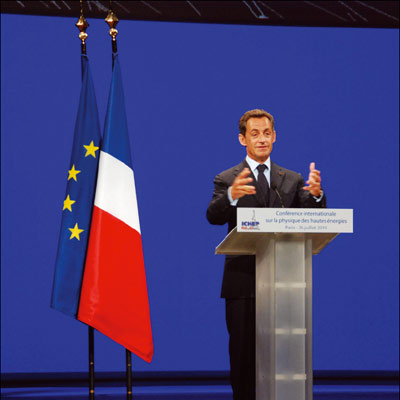
More than 1100 physicists gathered in the Palais des Congrès conference centre in Paris on 22–28 July to attend the 35th International Conference on High Energy Physics (ICHEP), the world’s largest conference on particle physics. As the first meeting in the series to announce results from the LHC, it caught the attention not only of physicists but also of media around the world and the president of the host country, France.

President Nicolas Sarkozy, addressed the conference on 26 July, at the official opening of the plenary sessions. In a spirited speech, he exhorted the particle-physics community to continue its quest to understand the nature of the universe, and stated his belief that investment in fundamental research is critical for the progress of mankind.

News from the LHC experiments had already reached the physicists during the three days of parallel sessions with which the ICHEP meetings traditionally begin. One of the items of breaking news from the ATLAS and CMS experiments was the first observation of top quark candidates at the LHC. The top, the heaviest elementary particle observed to date, has so far been produced only at Fermilab’s Tevatron collider in the US.

CCnew2_07_10

Another hotly anticipated presentation at ICHEP concerned the CDF and DØ experiments at the Tevatron. The two experiments have not yet spotted the Higgs boson but have further limited the territory in which it may be hiding. So, the Higgs is still out there waiting to be found, and the LHC experiments have shown at ICHEP that they are well on the way to joining the hunt.

With their first measurements the LHC experiments are rediscovering the particles that lie at the heart of the Standard Model – an essential step before moving on to make discoveries. The quality of the results presented at ICHEP bears witness both to the excellent performance of the LHC and to the high quality of the data in the experiments. The LHC, which is still in its early days, is making steady progress towards its ultimate operating conditions. By the time of the conference, the luminosity had already risen by a factor of more than a thousand since the end of March – and has since risen further still (Multibunch injection provides a quick fill).

The rapid progress with commissioning the LHC beam has been matched by the speed with which the data on billions of collisions have been processed by the Worldwide LHC Computing Grid. This allows data from the experiments to be analysed at collaborating centres around the world, resulting in a truly international experience.

• A feature-length report on ICHEP 2010 will appear in a future edition of the CERN Courier. For details on all of the talks, see www.ichep2010.fr.

IUPAP working group organizes two-day international symposium on plans for worldwide nuclear physics

A two-day Symposium on Nuclear Physics and Nuclear Physics Facilities, held at TRIUMF on 2–3 July, provided the opportunity for proponents of nuclear science across the world to learn about and discuss present and future plans for research in nuclear physics, as well as the upgraded and new research facilities that will be required to realize these plans.

The Working Group on International Cooperation in Nuclear Physics (WG.9) of the International Union of Pure and Applied Physics (IUPAP) organized the symposium. It was held as a response to the mandate given to the group by the OECD Global Science Forum in a missive from its chair, Hermann-Friedrich Wagner, following the recent report of the OECD Global Science Forum Working Group on Nuclear Physics. Three half-day presentations were arranged by the US Nuclear Science Advisory Committee (NSAC), by the Nuclear Physics European Collaboration Committee (NuPECC) and by the Asian Nuclear Physics Association (ANPhA), which was formed about two years ago on the urging of IUPAP WG.9.

The presentations at the symposium focused on five main themes of nuclear physics today: “Can the structure and interactions of hadrons be understood in terms of QCD?”, “What is the structure of nuclear matter?”, “What are the phases of nuclear matter?”, “What is the role of nuclei in shaping the evolution of the universe, with the known forms of matter comprising only a meagre 5%?” and “What is the physics beyond the Standard Model?”

The presentations led to extensive discussions among the various representatives. On the final half day, after a synopsis of the presentations and discussions by Robert Tribble of Texas A&M University, a panel discussion took place between the three nuclear-physics groupings of NSAC, NuPECC and ANPhA. This was followed by a series of statements by science administrators from the US Department of Energy, the Office of Science Nuclear Physics, the National Science Foundation Nuclear Physics, the INFN Third Commission, the French research bodies IN2P3/CNRS and the CEA/Service de Physique Nucleaire, the Japan Ministry of Education, Science, and Technology, the Korea Research Council and the China Institute of Atomic Energy.

For the first time, the symposium brought together nuclear-physics researchers, laboratory directors and nuclear-science administrators in an international setting. It showed a vigorous field of nuclear physics with demanding forefront challenges and large nuclear physics facilities being upgraded or coming on line presently or in the near future: CEBAF 12 GeV at Jefferson Laboratory, FRIB at Michigan State University, SPIRAL2 at GANIL, ISAC at TRIUMF, RIBF at RIKEN Nishina Center, J-PARC, FAIR at GSI, the upgraded RHIC at Brookhaven and in the more distant future EIC at Brookhaven or Jefferson Lab, ENC at FAIR, EURISOL (Europe charts future for radioactive beams) and LHeC at CERN. There are also several nuclear-physics facilities planned for China and Korea.

IUPAP WG.9 has given great encouragement to efforts aimed at strengthening co-operation in regional and international nuclear physics. At the symposium the nuclear-physics community was informed of the formation of a Latin America Nuclear Physics Association (ALAFNA) to strengthen nuclear physics in Latin America. Similar attempts may be undertaken in Africa.

• For further details about the working group, see the WG.9 website at www.iupap.org/wg/icnp.html.

bright-rec iop pub iop-science physcis connect