Comsol -leaderboard other pages

Topics

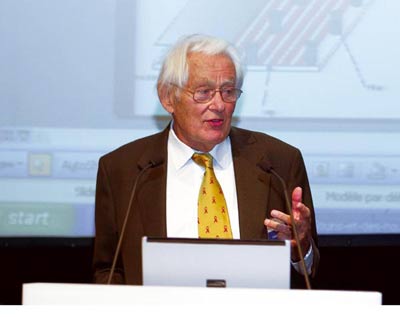
Georges Charpak – a true man of science

Georges Charpak, who died on 29 September, worked at CERN for most of his scientific career (CERN Courier November 2010 p6). It was there that he invented and developed the multiwire proportional chamber (MWPC), which led not only to a host of related detector techniques and applications, but also to the ultimate recognition of his contributions – the award of the Nobel Prize in Physics in 1992.

Born in eastern Poland, Georges moved to Paris with his family in 1932 when he was seven. As a teenager he became active in the French resistance to fight against Nazi occupiers and was imprisoned by the French government in 1943, before being transferred to the Nazi concentration camp at Dachau in 1944. He survived because the guards did not realize that their political prisoner was Jewish. After the war he became a French citizen and in 1954 he received his doctorate in nuclear physics from the Collège de France in Paris, where he studied in the laboratory of Nobel laureate Frédéric Joliot-Curie. He devoted his early career to nuclear physics before making the transition to high-energy particle physics.

Pioneering times

Georges arrived at CERN in 1959, his first contributions being to the team that in 1961 precisely measured the anomalous magnetic-moment of the muon, predicted by QED (CERN Courier December 2005 p12). Testing this prediction to high accuracy is of paramount importance in particle physics because a small deviation from the theoretical value would imply new physics beyond the Standard Model. The pioneering experiment at CERN inspired many physicists in a line of research that continues to this day.

Only a few years later, in 1967–1968, he developed the MWPC, a gas-filled box with a large number of parallel detector wires, each connected to individual amplifiers. Unlike earlier detectors – such as the bubble chamber, which records a few photographs per second – the multiwire chamber could record up to a million tracks a second when linked to a computer. This new technology came at just the right moment as the computer era began to blossom and proper data-acquisition electronics were under intensive development.

With the new detector, particle physics entered a new era. The speed and precision of the multiwire chamber and its offspring – the drift chamber and the time-projection chamber – revolutionized the field. Particle physicists must often sort through many millions of tracks to find one or two examples of the particles they seek, so they need fast detectors. The invention of the MWPC opened the way to operate experiments at much higher particle-collision rates and to test theories predicting the production of rare events and new massive particles. The discoveries of the W and Z bosons at CERN, the charm quark at SLAC and Brookhaven and the top quark at Fermilab would not have been possible without this type of detector, and current research in high-energy physics continues to depend on these devices.

It was an experimental technique that many others had attempted without much success, but the previous experience Georges had with similar detectors was a key to his achievement. Working with a cylindrical counter in the Collège de France in 1948, he had realized that signals were produced not by the drifting electrons released by the passage of an ionizing particle but rather by the movement of positive ions, which induce pulses of opposite polarity on the anode-sense wire. The MWPC amplifies the few ionization electrons through electron multiplication near the anode wires. The resulting avalanche produces a signal that can be timed, leading to a variety of high-precision spatial measurement systems. As Georges and his collaborators discovered, the pulses induced in orthogonal cathode strips in a MWPC permit a bi-dimensional read-out. Moreover, determination of the charge centroid provides a better accuracy along the cathode wires (better than 100 μm) than in the other direction, where the accuracy is limited by the spacing of the anode wires. This type of read-out has been used by many experiments and is still in use today at the LHC.

The pitch of the wires limits spatial resolution in the MWPC and the coverage of large areas requires many wires and, therefore, many channels of amplification and read-out. However, Georges and his co-workers found that delayed signals were seen in the MWPC and that the measurement of the time of these signals – the drift time – could provide high-accuracy spatial information. This forms the basis of the operation of the drift chamber, where the wires are much more widely spaced. Drift chambers have been developed by groups worldwide and are used in many experiments because of their economical read-out, high accuracy and the possibility to build detectors with large areas.

The combination of drift-time information with charge-centroid read-out offered the possibility of 3D read-out from a single chamber and in 1974 David Nygren at Berkeley proposed a new evolution of the drift chamber, the time-projection chamber (CERN Courier January/February 2004 p40). This has since been widely used by many experiments, in particular ALEPH and DELPHI at CERN’s Large Electron–Positron collider and now ALICE at the LHC.

In 1970 Fabio Sauli joined the group at CERN and played an important role in the subsequent developments of the multiwire chamber and the drift chamber. Among these was another promising concept, the multistep avalanche chamber. This was developed in the period 1979–1989 with the aim of reaching even higher counting rates. The basic idea was to split the amplification into two stages and overcome space-charge effects that otherwise counteracted the gain. Here, other distinguished physicists participated in the experimental effort, including Amos Breskin, Stan Majewski, Wotjek Dominic and Vladimir Peskov.

These detectors were subsequently developed further and adapted for detecting UV light to tackle new applications, ranging from fundamental research to medicine, biology and industry. One approach is to use a multistep parallel-plate avalanche chamber coupled to an image intensifier and a CCD to read the UV light emitted during the avalanche. In comparison with photographic emulsions, there is a significant gain in time for data acquisition, with the added advantages of linearity, wider dynamic range in the intensity measurement and a greatly improved signal-to-noise ratio. In collaboration with Tom Ypsilantis and his group, a particular effort was devoted to improving the ring-imaging Cherenkov (RICH) counter, which is used to identify elementary particles. From these investigations, new solid and gas UV photocathodes have been invented and developed.

Georges spent time and effort to push the application of these detectors in medical radiology, where the trend is for digital read-out to replace photographic film so as to improve sensitivity and spatial resolution. The multistep avalanche chambers found important applications in β-radiography, which is employed in medical and biological investigations to form “images” of human or animal tissues labelled with β-emitting radionuclides. In 1989 Georges founded a new company, Biospace Instruments, aimed at using this technology for biomedical applications as well as a high-pressure xenon multiwire chamber for low-dose radiography.

In the 1980s Georges and I began a close collaboration at CERN, developing new detector concepts adapted to solve specific problems in particle physics, including a high-energy gamma telescope with good energy resolution. In 1990 we began working with Leon Lederman on a new device – the “optical trigger” – which was to select particles containing the b quark in real time in high-intensity proton collisions. These particles fly a short distance before decaying and this serves to differentiate the decay products from other particles produced in the target. In a suitably positioned, thin crystal cell, internal reflection enhances the Cherenkov light produced by the decay products – while that from other relativistic particles passes straight through. This provides a way to tag the b-quark particles and enrich the collected sample with good events.

In 1991 we proposed the Hadron Blind Detector, which was then developed by an international collaboration. In this concept, most of the particles produced in proton collisions, which are hadrons, are not seen by the detector, while electrons and high-momentum muons are reconstructed efficiently. This selection criterion filters out unwanted events. The concept was demonstrated in October 1992 at CERN, just before the announcement of the Nobel prize, at a time when Georges and other team members were conducting experiments at night. In these investigations we used a gaseous parallel-plate detector and while optimizing it we demonstrated experimentally the advantage of a narrow amplification gap. This triggered the idea of building a device with an even narrower amplification gap and from that a new detector concept was born: the Micro-Mesh gaseous structure or MicroMegas, which our group at Saclay has developed since 1995. Georges used to say that this detector and some other new concepts belonging to the family of micropattern gaseous detectors (MPGDs) will revolutionize nuclear and particle physics just as his detector did.

Georges spent many weekends and summer holidays at his house in Cargèse, a village established by Greeks at the end of the 18th century in Corsica. His house was located two steps from the Institut d’Etudes Scientifiques de Cargèse. Developed by the physicist Maurice Lévy in the 1960s, the institute became an important summer school for theoretical physics, gathering together some distinguished physicists and many of those involved in the Standard Model, which was under intense development at that time. Georges used to join these lectures during summer and always welcomed the participants at his house nearby for a sip of wine. He invited many physicists to his house to discuss new ideas in physics as well as many other subjects. Among these visitors was Alvaro De Rújula, who with Georges, Sheldon Glashow and Robert Wilson proposed the use of neutrinos produced by a multi-tera-electron-volt proton synchrotron as a tool for geological research: at these energies, the neutrinos are suitable for “tomography” of the Earth because they have a range comparable to its diameter.

A concern for people

Given his experiences during the Second World War as a political prisoner it is perhaps not surprising that later in life Georges became a highly motivated humanitarian campaigner. In particular, he was a founder member of the Yuri Orlov committee, the human-rights group that was set up by a group of accelerator and particle physicists at CERN in 1980. Orlov, a Soviet physicist who had been imprisoned for his support of human rights, soon became a cause célèbre in the western scientific world. Shortly afterwards the committee broadened its scope to support Anatoly Shcharansky and Andrei Sakharov – also in the Soviet Union – and many individuals elsewhere from the worlds of science, mathematics and technology who, for political or ideological reasons, were being persecuted or imprisoned by authoritarian régimes of differing political colours. One of Georges’ many public actions in this context was at the press conference organized by the Yuri Orlov committee at the United Nations in Geneva in October 1980. Already an eminent figure in science at that time, and well respected for his complete freedom from ideological bias, he was able to contribute much to the influence of this and similar events. The combined efforts of such groups and individual activists eventually bore fruit in the form of favourable outcomes in these three particular cases as well as in others worldwide.

In the mid-1990s Georges returned to Paris and a new life with highly diversified activities began for him. Keen to popularize science, he became widely known to the general public through several books that made physics accessible to as wide an audience as possible. Together with Richard Garwin he wrote Megawatts and Megatons: A Turning Point in the Nuclear Age in which they evaluate the benefits of nuclear energy and show how it can provide an assured, economically feasible and environmentally responsible supply of energy that avoids the hazards of weapon proliferation. They make a strong statement in favour of arms control and outline specific strategies for achieving this goal worldwide. In 2004, with Henri Broch, he wrote Devenez Sorciers, Devenez Savants, later translated into English, which derided pseudoscience, astrology and other misconceptions (CERN Courier March 2005 p48).

Education was also of great importance to Georges. He created La Main à la P√¢te, an association to introduce hands-on science education in primary schools in France, an idea that had been first initiated in Chicago by his friend Leon Lederman. From 1996, with the support of the French Academy of Sciences and some of his colleagues, Georges propagated the new idea of teaching science in primary schools. The prestigious Ecole Nationale Superieur des Mines (ENSM) at Saint Etienne created a laboratory in his honour and established the “puRkwa Prize” to reward pedagogical initiatives that help children to acquire the scientific spirit.

Since returning to Paris, part of his scientific activity was connected to the work in my laboratory at Saclay, which he used to visit several times a year. We kept an old oscilloscope especially for him, as he disliked the new digital devices. He co-signed many publications related to our research. One example in 1996 was the new development by CERN and Saclay of a promising way of fabricating the MicroMegas detector, referred to as “bulk” technology, which is now widely used by many experiments and allows the fabrication of large and cost-effective detectors (CERN Courier December 2009 p23). Every two years, since 2002, we have organized a conference in Paris on Large TPCs for Low-Energy Detection. The purpose of the meeting is an extensive discussion of present and future projects using a large time-projection chamber (TPC) for low-energy and low-background detection of rare events (low-energy neutrinos, double beta decay, dark matter, solar axions etc.). Georges actively participated in the conference, giving introductory talks that pointed out links between science, education and technology.

Georges was active until the end. He recently published, together with François Vannucci, a new book, which can be considered as his testament, celebrating the physics that he loved. I met him at his home a day before his death and was impressed by the clarity of his mind. He was excited to hear of the new progress in physics and in detector developments conducted by my group. He was himself thinking about a novel radon detector, believing that its industrial success would allow him “to buy new shoes”, a phrase he used the day of the award of the Nobel prize 18 years ago.

Georges liked music and especially classic songs. He often invited musicians to his home in Paris and enjoyed the company of artists from the opera and friends at a typical Parisian bistro where they would sing around a piano player. For his last resting place, as he had wished, several musicians played classical music during the ceremony. I will keep in my memory a kind man, a humanist, who was enthusiastic, optimistic and always open to new ideas. I have the feeling, as many other colleagues do, that our second “father” has passed away.

I would like to thank Fabio Sauli, John Eades and Peter Schmid for their help in the preparation of this tribute.
The window opens on physics at 7 TeV

After almost six months of operation in a new energy region, the experiments at the LHC are yielding papers on physics at 7 TeV in the centre-of-mass. They include results aired at the International Conference on High-Energy Physics in Paris in July.

CCnew1_0910

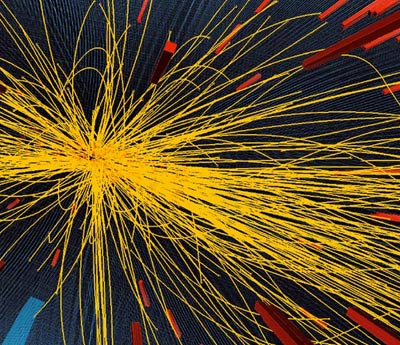
At the end of September, the CMS collaboration announced the observation of intriguing correlations between particles produced in proton–proton collisions at 7 TeV. It measured two-particle angular correlations in collisions at 0.9, 2.36 and 7 TeV – the three centre-of-mass energies at which the LHC has run. At 7 TeV, a pronounced structure emerges in the two-dimensional correlation function for particle pairs in high-multiplicity events, with at least 100 charged particles and a transverse momentum of 1–3 GeV/c. The ridge-like structure occurs at ΔΦ (a measure of the difference in transverse angle) near zero and spans a rapidity range of 2.0 <|Δη| <4.8 (CMS collaboration 2010). This implies that some pairs of particles emerging with a wide longitudinal angle (which is related to Δη) are closely correlated in transverse angle. The effect bears some similarity to those already seen in heavy-ion collisions at the Relativistic Heavy Ion Collider at the Brookhaven National Laboratory, which have been linked to the formation of hot, dense matter in the collisions. However, as the CMS collaboration stresses, there are several potential explanations.

These developments will be of interest to the ALICE collaboration, whose detector is optimized for the study of heavy-ion collisions at the LHC, the first period of which is scheduled to begin in November. In the meantime, one of the interesting results from ALICE in proton–proton collisions concerns the ratio of the yields of antiprotons to protons at both 0.9 TeV and 7 TeV. The measurement relates to the question of whether baryon number can transfer from the incoming beams to particles emitted transversely (at mid-rapidity). Any excess of protons over antiprotons would indicate such a transfer, which would be related to the slowing down of the incident proton. The results show that the ratio rises from about 0.95 at 0.9 TeV to close to 1 at 7 TeV and is independent of both rapidity and transverse momentum (ALICE collaboration 2010). These findings are consistent with the conventional model of baryon-number transport, setting stringent limits on any additional contributions.

In the search for new physics, the ATLAS experiment recently set new limits on the mass of excited quarks by looking in the mass distributions of two-jet events, or dijets. Now, the collaboration has also produced the first measurements of cross-sections for the production of jets in proton–proton collisions at 7 TeV. It has measured inclusive single-jet differential cross-sections as functions of the jet’s transverse momentum and rapidity and dijet cross-sections as functions of the dijet’s mass and an angular variable Χ. The results agree with expectations from next-to-leading-order QCD, so providing a validation of the theory in a new kinematic regime.

The LHCb collaboration is also measuring cross-sections in the LHC’s new energy region. With its focus on the physics of b quarks, the experiment has looked, for example, at the decays of b hadrons into final states containing a D0 meson and a muon to measure the bb production cross-section at 7 TeV (LHCb collaboration 2010). While some earlier results on the production of b-flavoured hadrons at 1.8 TeV at the Tevatron appeared to be higher than theoretical predictions, more recent measurements there at 1.96 TeV by the CDF experiment were consistent with theory. Now, LHCb’s results have extended the measurements to a much higher centre-of-mass energy – and again show consistency with theory, this time at 7 TeV. Such measurements of particle yields are vital to LHCb in assessing the sensitivity for studying fundamental parameters, for example, in CP violation.

Council approves the Medium Term Plan

During an intense series of meetings, which concluded on 17 September, the CERN Council overwhelmingly approved the laboratory’s revised Medium Term Plan for the period 2011 to 2015. The plan was originally presented to Council at its June session, at which Council asked CERN management to introduce cost-saving measures. In the revised plan, contributions from the member states will be reduced by a total SFr135 m over the five-year period; measures to consolidate CERN’s social security systems will bring the total reduction to the programme to SFr343 m.

The plan protects the LHC programme, achieving cost savings by slowing down the pace of other programmes. CERN management considers this a good result for the laboratory given the current financial environment. “The plan we presented to Council is firmly science-driven,” explained CERN’s director-general, Rolf Heuer. “It reduces spending on research and consolidation through careful and responsible adjustment of the pace originally foreseen in a way that does not compromise the future research programme unduly. The reductions will be painful, but in the current financial environment, they are fair.”

Among the programmes to be affected is the upgrade to the LHC’s beam intensity. This will now proceed later than originally planned, with the new linear accelerator expected to be connected in 2016 instead of 2015. In addition, there will be no running of CERN’s accelerators in 2012. The decision not to run the LHC in 2012 had already been taken in February for purely technical reasons; now the complete CERN accelerator complex will join the LHC in a year-long shutdown.

Looking further ahead, the plan allows for continuing R&D on the Compact Linear Collider (CLIC) study and on high-intensity proton sources, but at a slower pace than originally foreseen. Work on CLIC may provide technology for the development of a new machine to study in depth the discoveries made by the LHC, while high-intensity proton sources will allow CERN to play its part in global developments for neutrino physics.

“Council’s decision is an important one for European science,” said Council president Michel Spiro. “Although Council acknowledges that the cuts will be painful, we recognize the excellent performance of the LHC and its detectors, and consequently took decisions that minimize the disruption to CERN and its global user community. Council’s decision underlines Europe’s commitment to basic research, and is testimony to the robustness of the CERN model of international collaboration in science. Council is grateful for the pragmatism, and the realism of the CERN management in proposing real cost savings in time of crisis.”

Georges Charpak 1924–2010

CCnew2_0910

Many people around the world, not only particle physicists, were deeply saddened to learn that Georges Charpak passed away on 29 September.

A student of Frédéric Joliot-Curie at the Collège de France, Charpak joined CERN in 1959, just five years after the organization’s foundation. From the start, he applied himself to the development of new particle-detector techniques. His outstanding and pioneering efforts – particularly the invention of the multiwire proportional chamber in 1968 – revolutionized particle physics, taking the field into the electronic age. The techniques he pioneered are reflected in many experiments today, not only in particle physics but in many other areas of research.

The significance of his work did not go unnoticed and was crowned with the award of the Nobel Prize in Physics in 1992. In making this award, the Swedish Academy recognized not only Charpak’s contribution to science but also to society. Detectors evolved from his pioneering work have found applications in many walks of life ranging from medicine to security.

A full tribute and obituary will appear in the next issue of CERN Courier.

Graphene gathers Nobel Prize

The Nobel Prize in Physics for 2010 has been awarded to Andre Geim and Konstantin Novoselov, both of the University of Manchester, for their “groundbreaking experiments regarding the two-dimensional material graphene”. Graphene – which consists of a layer of carbon just one atom thick – has exceptional properties that have made it a micro-laboratory for quantum physics (for example, see. At a time when many researchers believed it was impossible for such thin crystalline materials to be stable, Geim and Novoselov extracted the graphene from a piece of graphite using only normal adhesive tape to obtain monatomic layers of carbon and transfer them to a silicon substrate. They used an optical method to identify the monolayers.

Not only is graphene the thinnest material ever made, it is also the strongest; it is also an excellent conductor and is almost completely transparent. These properties suggest applications that include very fast transistors and transparent touch screens. When mixed into plastics, graphene can make new very strong materials, which are nevertheless thin, elastic and lightweight.

Novoselov, 36, first worked with Andre Geim, 51, as a PhD student in the Netherlands. He subsequently followed Geim to the UK. Both studied and began their careers in Russia and are now professors at Manchester.

European XFEL project passes milestones

CCnew4_0910

On 3 September, the tunnel-boring machine TULA – for TUnnel for Laser – broke through the wall of its reception shaft to complete the first 480 m of the tunnel system for the European XFEL project, which will extend for 3.4 km from Schenefeld in northern Germany to the site of the DESY laboratory in Hamburg. The machine will excavate two of the photon tunnels plus the main tunnel (p32) for the superconducting linear accelerator that will drive the free-electron laser. It will be joined in late 2010 by a second, smaller machine that will excavate the other sections of the photon-tunnel system.

When TULA set out on its “maiden journey” at the beginning of July, it was not at all sure that it would reach its goal on schedule eight weeks later. How long the machine would take depended on the composition of the soil and on the presence of unknown potential obstacles underground. However, all apparently worked out perfectly and TULA has completed the first section of photon tunnel. The machine will now be dismantled and the various parts transported back to Schenefeld and reassembled again for its second assignment on a 594 m-long photon-tunnel section to begin in early November.

Another important milestone was reached on 7 September, this time towards the construction of the superconducting linac. Two workshops took place to co-ordinate the future collaboration of DESY with two firms elected for the industrial production of the superconducting accelerator structures. These structures are a joint contribution of DESY and INFN Milano, co-ordinated by DESY.

At the workshops, representatives of the firms and of DESY met to discuss their collaboration. DESY has commissioned each of the two firms – Research Instruments (Bergisch-Gladbach, Germany) and Zanon (Schio, Italy) – to produce 300 superconducting cavities, for a total of about €50 m. Each company will first deliver eight pre-production units to test the infrastructure newly installed at the firms. Another 280 cavities will follow together with 12 accelerator structures manufactured within the framework of the EU ILC HiGrade project. DESY is not only acting as a commissioner for the cavities but is also providing the superconducting niobium, its own machines and know-how for quality control.

The delivery of the pre-production cavities is to begin in the coming year, while that of the series production will start at the beginning of 2012 and should be finished within two years. After successful testing at DESY, the cavities will be transferred to Saclay, for the assembly of the XFEL accelerator modules.

Fermilab constructs accelerator test facility

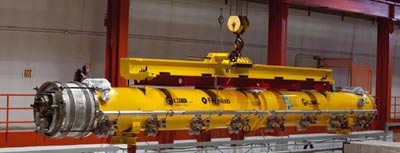
When complete, the prototype accelerator will comprise six cryomodules like this first example. Each weighs about 8 tonnes and contains eight SRF cavities. (Courtesy Fermilab Visual Media Services.)

CCnew5_0910

Fermilab has announced the start of phase II of the construction of a new facility to advance superconducting RF (SRF) technology. The facility, which will host a 140 m-long test accelerator, will be the first of its kind in the US.

Construction of the SRF Accelerator Test Facility is part of Fermilab’s SRF R&D programme, which it is advancing with $52.7 m in funding from the American Recovery and Reinvestment Act (ARRA). Phase I of the construction began in March with the $2.8 m expansion of an existing building. For phase II, the laboratory has awarded a contract worth $4.2 m for the construction of two new buildings. Additional ARRA funds will go towards equipment and infrastructure that are needed for the building’s operation.

The new facility will allow Fermilab to test SRF components and validate the manufacturing capability of vendors from US industry. The superconducting structures operate at low temperatures inside cryomodules and the plans are to test modules designed for two projects for future accelerators: Project X, a high-intensity proton accelerator complex that would be built at Fermilab, and the International Linear Collider, an electron–positron collider that could become the world’s next high-energy machine, designed and built through an international effort. Researchers will also use the particle beams generated by the test accelerator to help them develop instruments and accelerator technology for application in other fields, including medicine and industry.

Barton Malow Inc, a company based in Michigan, will do the civil construction for the new facility. This will consist of three interconnected structures: one will house the SRF test accelerator; the second will accommodate the area for testing cryomodules; and the third will house the equipment for a powerful new cryogenic plant to cool the cryomodules in the test accelerator and the test area. The company plans to finish the project by autumn 2011.

Jefferson Lab goes into the ultraviolet

The free-electron laser (FEL) at Jefferson Lab has produced its first beams at ultraviolet wavelengths. On 31 August, its first day of generating ultraviolet light, the FEL produced more than 50 W of laser light at a wavelength of 372 nm. It was then tuned from 363–438 nm, through many ultraviolet wavelengths and into the visible range.

Jefferson Lab’s FEL, which is based on a superconducting energy-recovery linac, is well known as the most powerful tunable laser in the infrared and also as a powerful source of terahertz light. Its high-power beams of infrared laser light, deliver more than 10 kW in continuous wave operation. Now, a four-year effort has succeeded in extending the spectrum to the shorter wavelengths of the ultraviolet region.

By producing 372 nm at 50 watts in August, the Jefferson Lab team has also demonstrated that it can produce milliwatts of laser light at 124 nm, the third harmonic of the light at 372 nm. So far, the FEL, has produced UV laser light only in the vault, which contains the accelerator and the mirrors that produce the primary wavelength of laser light. Before experiments at the shorter wavelength can begin, the team will need to install a different mirror to extract the 124 nm light and characterize it. In the meantime, the FEL operators plan to test the machine’s capabilities in the ultraviolet region. They expect the FEL to be capable of delivering more than a kilowatt of laser light at 372 nm. This should be ideal for studying many novel materials.

Countries sign international treaty on construction of FAIR

CCnew6_0910

The Facility for Antiproton and Ion Research (FAIR) was officially launched on 4 October in Wiesbaden. Nine countries signed the convention for the construction of the new facility: Germany, Finland, France, India, Poland, Romania, Russia, Slovenia and Sweden. This international agreement forms the framework for FAIR.

Immediately after the signing, FAIR GmbH was established as a company. The first shareholders are Germany, Russia, India, Romania and the Swedish–Finnish consortium. In its first session, the council of the company appointed Boris Sharkov as scientific managing director and Simone Richter as administrative managing director. Beatrix Vierkorn-Rudolph was appointed as the first chair of the FAIR council.

The countries that could not yet join because of their internal ratification procedures (France, Poland and Slovenia) are expected to do so within the next year. China, Saudi Arabia, Spain and the UK are also planning to contribute to FAIR.

FAIR is one of the largest projects for basic research in physics worldwide. Its accelerators will generate antiproton and ion beams of a previously unparalleled intensity and quality. When completed, the facility will comprise two linear accelerators and as many as eight circular accelerators – the two biggest being 1100 m in circumference. Altogether it will contain around 3.5 km of beam pipe. It is to be built in Darmstadt, where existing accelerators at the GSI will serve as injectors for the new facility.

Scientists from around the world will use FAIR to gain new insights into the structure of matter and the evolution of the universe since the Big Bang, complementing the research of CERN. Some 3000 scientists from more than 40 countries are already working on the planning of the experiment and accelerator facilities.

Elettra operates in top-up mode

CCnew7_0910

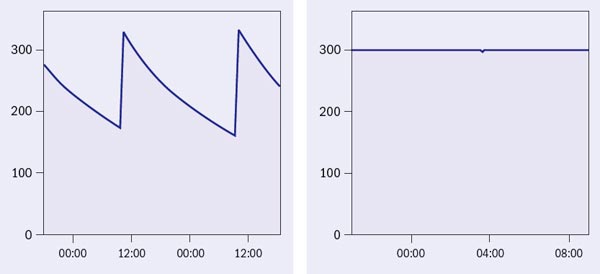
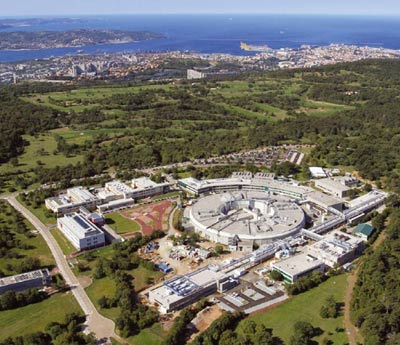
Elettra, the 2/2.4 GeV third generation Italian light source, has successfully joined the synchrotron facilities that operate fully in top-up mode. Located on the outskirts of Trieste, Elettra has operated for users since 1994, but during the past few years a large upgrade programme has taken place. This has included the construction and start-up operation of a full-energy injector. The new injector chain and the other machine and beam-line upgrades, together with the demands for intensity and thermal stability, naturally led to the change to top-up mode, in which frequent beam injections maintain a constant beam current in the storage ring during user operations. This is in contrast with the decay mode, where the stored beam is allowed to decay to some level before refilling occurs.

Elettra was not originally designed for this type of operation (and indeed even operated for many years without a full-energy injector). However, in May, only a year after establishing the stable operations of the new injector, the storage ring began to work successfully with top-up at the two user energies of 2 GeV and 2.4 GeV. Elettra has thus become another example showing how a third-generation synchrotron that previously operated in decay mode can advance to full top-up operation, in this case at multiple energies.

With top-up operation the photon intensity produced at Elettra is stable and the integrated intensity is 60% higher over a time period equal to the beam lifetime. Thus while keeping the optical components of the beam lines in thermal equilibrium, the integrated number of photons is also higher, so providing an additional gain in beam time for the experiments. At the same time the intensity-dependent electronics also remain stable, allowing submicron accuracy in the position of the electron beam and hence a higher stability of the photon beam.

CCnew8_0910

Elettra’s upgrade to top-up started in 2009 and included the addition of various diagnostic and radiation-safety instruments, modification of the control and interlock software, fine tuning of the timing of the kicker and septa, as well as a revised operation strategy. A great deal of effort in collaboration with the radiation-protection team resulted in a high-level application with a “top-up controller” handling and controlling all aspects of the procedure. Careful radiation measurements at each beam line under various conditions of the injected beam, together with the high injection efficiencies achieved at both energies, meant that no additional shielding was required for the beam lines. Radiation levels in all beam lines remain below 1 μSv/h for efficiencies higher than 90%.

The project for the full-energy injector started in 2005 and finished by providing beam in March 2008 on time and within budget. The new injection chain consists of a 100 MeV linear accelerator and a 2.5 GeV booster that sends the beam into the storage ring at a rate of up to 3 Hz. The storage ring beam current at 2 GeV is set by the users to 300 mA and top-up occurs every 6 minutes by injecting 1 mA in 4 s, thus keeping the current level constant to 3‰. At 2.4 GeV the stored beam current is set to 140 mA and top-up occurs every 20 minutes, injecting 1 mA in 4 s to maintain the current level constant to 7‰.

The users have chosen fixed current-interval top-up (1 mA) instead of a fixed time interval. The injection system is perfectly tuned and for the majority of the beam lines does not produce interference with data-acquisition processes. A gating signal is also provided, but up to now only a few, very sensitive beam lines see some interference and therefore are gated.

The change to top-up mode required no transition period and once it began all went exceptionally smoothly, thanks to the very good preparation and the high level of expertise of the personnel involved. Although at the beginning, the operation in top-up was programmed for 20% of users’ beam time, it became immediately clear that the users strongly preferred this mode and so Elettra has operated in top-up for 100% of the beam time dedicated to users right from the start in May.

bright-rec iop pub iop-science physcis connect