The 23rd edition of Flavor Physics and CP Violation (FPCP) attracted 100 physicists to Cincinnati, USA, from 2 to 6 June 2025. The conference reviews recent experimental and theoretical developments in CP violation, rare decays, Cabibbo–Kobayashi–Maskawa matrix elements, heavy-quark decays, flavour phenomena in charged leptons and neutrinos, and the interplay between flavour physics and high-pT physics at the LHC.
The highlight of the conference was new results on the muon magnetic anomaly. The Muon g-2 experiment at Fermilab released its final measurement of aμ = (g-2)/2 on 3 June, while the conference was in progress, reaching a precision of 127 ppb on the published value. This uncertainty is more than four times smaller than that reported by the previous experiment. One week earlier, on 27 May, the Muon g-2 Theory Initiative published their second calculation of the same quantity, following that published in summer 2020. A major difference between the two calculations is that the earlier one used experimental data and the dispersion integral to evaluate the hadronic contribution to aμ, whereas the update uses a purely theoretical approach based on lattice QCD. The strong tension with the experiment of the earlier calculation is no longer present, with the new calculation compatible with experimental results. Thus, no new physics discovery can be claimed, though the reason for the difference between the two approaches must be understood (see “Fermilab’s final word on muon g-2“).
The MEG II collaboration presented an important update to their limit on the branching fraction for the lepton-flavour-violating decay μ → eγ. Their new upper bound of 1.5 × 10⁻¹³ is determined from data collected in 2021 and 2022. The experiment recorded additional data from 2023 to 2024 and expects to continue data taking for two more years. These data will be sensitive to a branching fraction four to five times smaller than the current limit.
LHCb, Belle II, BESIII and NA62 all discussed recent results in quark flavour physics. Highlights include the first measurement of CP violation in a baryon decay by LHCb and improved limits on CP violation in D-meson decay to two pions by Belle II. With more data, the latter measurements could potentially show that the observed CP violation in charm is from a non-Standard-Model source.
The Belle II collaboration now plans to collect a sample between 5 to 10 ab–1 by the early 2030s before undergoing an upgrade to collect a 30 to 50 ab–1 sample by the early 2040s. LHCb plan to run to the end of the High-Luminosity LHC and collect 300 fb–1. LHCb recorded almost 10 fb–1 of data last year – more than in all their previous running, and now with a fully software-based trigger with much higher efficiency than the previous hardware-based first-level trigger. Future results from Belle II and the LHCb upgrade are eagerly anticipated.
The 24th FPCP conference will be held from 18 to 22 May 2026 in Bad Honnef, Germany.
FCC Week 2025 gathered more than 600 participants from 34 countries together in Vienna from 19 to 23 May. The meeting was the first following the submission of the FCC’s feasibility study to the European Strategy for Particle Physics (CERN Courier May/June 2025 p9). Comprising three volumes – covering physics and detectors, accelerators and infrastructure, and civil engineering and sustainability – the study represents the most comprehensive blueprint to date for a next-generation collider facility. The next phase will focus on preparing a robust implementation strategy, via technical design, cost assessment, environmental planning and global engagement.
CERN Director-General Fabiola Gianotti estimated the integral FCC programme to offer unparalleled opportunities to explore physics at the shortest distances, and noted growing support and enthusiasm for the programme within the community. That enthusiasm is reflected in the growing collaboration: the FCC collaboration now includes 162 institutes from 38 countries, with 28 new Memoranda of Understanding signed in the past year. These include new partnerships in Latin America, Asia and Ukraine, as well as Statements of Intent from the US and Canada. The FCC vision has also gained visibility in high-level policy dialogues, including the Draghi report on European competitiveness. Scientific plenaries and parallel sessions highlighted updates on simulation tools, rare-process searches and strategies to probe beyond the Standard Model. Detector R&D has progressed significantly, with prototyping, software development and AI-driven simulations advancing rapidly.
In accelerator design, developments included updated lattice and optics concepts involving global “head-on” compensation (using opposing beam interactions) and local chromaticity corrections (to the dependence of beam optics on particle energy). Refinements were also presented to injection schemes, beam collimation and the mitigation of collective effects. A central tool in these efforts is the Xsuite simulation platform, whose capabilities now include spin tracking and modelling based on real collider environments such as SuperKEKB.
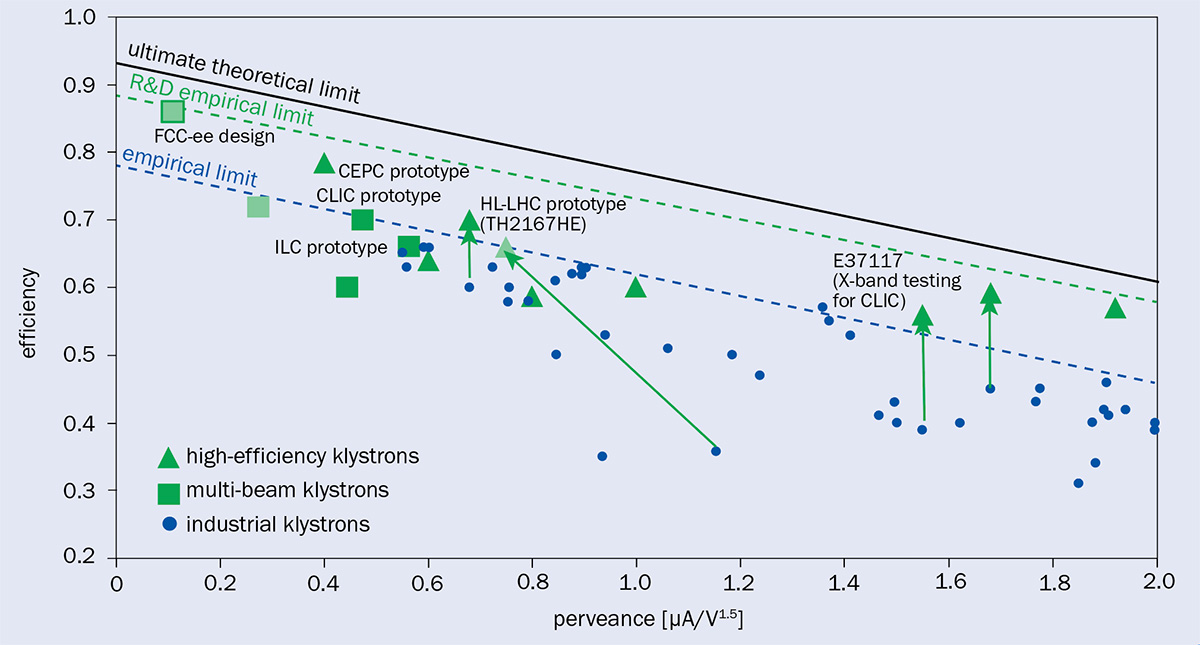
Technical innovations also came to the fore. The superconducting RF system for FCC-ee includes 400 MHz Nb/Cu cavities for low-energy operation and 800 MHz Nb cavities for higher-energy modes. The introduction of reverse-phase operation and new RF source concepts – such as the tristron, with energy efficiencies above 90% (CERN Courier May/June 2025 p30) – represent major design advances.
Design developments
Vacuum technologies based on ultrathin NEG coating and discrete photon stops, as well as industrialisation strategies for cost control, are under active development. For FCC-hh, high-field magnet R&D continues on both Nb3Sn prototypes and high-temperature superconductors.
Sessions on technical infrastructure explored everything from grid design, cryogenics and RF power to heat recovery, robotics and safety systems. Sustainability concepts, including renewable energy integration and hydrogen storage, showcased the project’s interdisciplinary scope and long-term environmental planning.
FCC Week 2025 extended well beyond the conference venue, turning Vienna into a vibrant hub for public science outreach
The Early Career Researchers forum drew nearly 100 participants for discussions on sustainability, governance and societal impact. The session culminated in a commitment to inclusive collaboration, echoed by the quote from Austrian-born artist, architect and environmentalist Friedensreich Hundertwasser (1928–2000): “Those who do not honour the past lose the future. Those who destroy their roots cannot grow.”
This spirit of openness and public connection also defined the week’s city-wide engagement. FCC Week 2025 extended well beyond the conference venue, turning Vienna into a vibrant hub for public science outreach. In particular, the “Big Science, Big Impact” session – co-organised with the Austrian Federal Economic Chamber (WKO) – highlighted CERN’s broader role in economic development. Daniel Pawel Zawarczynski (WKO) shared examples of small and medium enterprise growth and technology transfer, noting that CERN participation can open new markets, from tunnelling to aerospace. Economist Gabriel Felbermayr referred to a recent WIFO analysis indicating a benefit-to-cost ratio for the FCC greater than 1.2 under conservative assumptions. The FCC is not only a tool for discovery, observed Johannes Gutleber (CERN), but also a platform enabling technology development, open software innovation and workforce training.
The FCC awards celebrate the creativity, rigour and passion that early-career researchers bring to the programme. This year, Tsz Hong Kwok (University of Zürich) and Audrey Piccini (CERN) won poster prizes, Sara Aumiller (TU München) and Elaf Musa (DESY) received innovation awards, and Ivan Karpov (CERN) and Nicolas Vallis (PSI) were honoured with paper prizes sponsored by Physical Review Accelerators and Beams. As CERN Council President Costas Fountas reminded participants, the FCC is not only about pushing the frontiers of knowledge, but also about enabling a new generation of ideas, collaborations and societal progress.
Mary K Gaillard, a key figure in the development of the Standard Model of particle physics, passed away on 23 May 2025. She was born in 1939 to a family of academics who encouraged her inquisitiveness and independence. She graduated in 1960 from Hollins College, a small college in Virginia, where her physics professor recognised her talent, helping her get jobs in the Ringuet laboratory at l’École Polytechnique during a junior year abroad and for two summers at the Brookhaven National Laboratory. In 1961 she obtained a master’s degree from Columbia University and in 1968 a doctorate in theoretical physics from the University of Paris at Orsay. Mary K was a research scientist with the French CNRS and a visiting scientist at CERN for most of the 1970s. From 1981 until she retired in 2009, she was a senior scientist at the Lawrence Berkeley National Laboratory and a professor of physics at the University of California at Berkeley, where she was the first woman in the department.
Mary K was a theoretical physicist of great power, gifted both with a deep physical intuition and a very high level of technical mastery. She used her gifts to great effect and made many important contributions to the development of the Standard Model of elementary particle physics that was established precisely during the course of her career. She pursued her love of physics with powerful determination, in the face of overt discrimination that went well beyond what may still exist today. She fought these battles and produced beautiful, important physics, all while raising three children as a devoted mother.
Undeniable impact
After obtaining her master’s degree at Columbia, Mary K accompanied her first husband, Jean-Marc Gaillard, to Paris, where she was rebuffed in many attempts to obtain a position in an experimental group. She next tried and failed, multiple times, to find an advisor in theoretical physics, which she actually preferred to experimental physics but had not pursued because it was regarded as an even more unlikely career for a woman. Eventually, and fortunately for the development of elementary particle physics, Bernard d’Espagnat agreed to supervise her doctoral research at the University of Paris. While she quickly succeeded in producing significant results in her research, respect and recognition were still slow to come. She suffered many slights from a culture that could not understand or countenance the possibility of a woman theoretical physicist and put many obstacles in her way. Respect and recognition did finally come in appropriate measure, however, by virtue of the undeniable impact of her work.
Her contributions to the field are numerous. During an intensely productive period in the mid-1970s, she completed a series of projects that established the framework for the decades to follow that would culminate in the Standard Model. Famously, during a one-year visit to Fermilab in 1973, using the known properties of the “strange” K mesons, she successfully predicted the mass scale of the fourth “charm” quark a few months prior to its discovery. Back at CERN a few years later, she also predicted, in the framework of grand unified theories, the mass of the fifth “bottom” quark – a successful though still speculative prediction. Other impactful work, extracting the experimental consequences of theoretical constructs, laid down the paths that were followed to experimentally validate the charm-quark discovery and to search for the Higgs boson required to complete the Standard Model. Another key contribution showed how “jets”, streams of particles created in high-energy accelerators, could be identified as manifestations of the “gluon” carriers of the strong force of the Standard Model.
In the 1980s in Berkeley, when the Superconducting Super Collider and the Large Hadron Collider were under discussion, she showed that they could successfully uncover the mechanism of electroweak symmetry breaking required to understand the Standard Model weak force, even if it was “dynamical” – an experimentally much more challenging possibility than breaking by a Higgs boson. For the remainder of her career, she focused principally on work to address issues that are still unresolved by the Standard Model. Much of this research involved “supersymmetry” and its extension to encompass the gravitational force, theoretical constructs that originated in the work of her second husband, the late Bruno Zumino, who also moved from CERN to Berkeley.
Mary K’s accomplishments were recognised by numerous honorary societies and awards, including the National Academy of Sciences, the American Academy of Arts and Sciences, and the J. J. Sakurai Prize for Theoretical Particle Physics of the American Physical Society. She served on numerous governmental and academic advisory panels, including six years on the National Science Board. She tells her own story in a memoir, A Singularly Unfeminine Profession, published in 2015. Mary K Gaillard will surely be remembered when the final history of elementary particle physics is written.
Friedhelm “Fritz” Caspers, a master of beam cooling, passed away on 12 March 2025.
Born in Bonn, Germany in 1950, Fritz studied electrical engineering at RWTH Aachen. He joined CERN in 1981, first as a fellow and then as a staff member. During the 1980s Fritz contributed to stochastic cooling in CERN’s antiproton programme. In the team of Georges Carron and Lars Thorndahl, he helped devise ultra-fast microwave stochastic cooling systems for the then new antiproton cooler ring. He also initiated the development of power field-effect transistors that are still operational today in CERN’s Antiproton Decelerator ring. Fritz conceived novel geometries for pickups and kickers, such as slits cut into ground plates, as now used for the GSI FAIR project, and meander-type electrodes. From 1988 to 1995, Fritz was responsible for all 26 stochastic-cooling systems at CERN. In 1990 he became a senior member of the Institute of Electrical and Electronics Engineers (IEEE), before being distinguished as an IEEE Life Fellow later in his career.
Pioneering diagnostics
In the mid-2000s, Fritz proposed enamel-based clearing electrodes and initiated pertinent collaborations with several German companies. At about the same time, he carried out ultrasound diagnostics on soldered junctions on LHC interconnects. Among the roughly 1000 junctions measured, he and his team found a single non-conform junction. In 2008 Fritz suggested non-elliptical superconducting crab cavities for the HL-LHC. He also proposed and performed pioneering electron-cloud diagnostics and mitigation-using microwaves. For the LHC, he predicted a “magnetron effect”, where coherently radiating cloud electrons might quench the LHC magnets at specific values of their magnetic field. His advice was highly sought after on laboratory-impedance measurements and electromagnetic interference.
Throughout the past three decades, Fritz was active and held in high esteem not only at CERN but all around the world. For example, he helped develop the stochastic cooling systems for GSI in Darmstadt, Germany, where his main contact was Fritz Nolden. He contributed to the construction and commissioning of stochastic cooling for GSI’s Experimental Storage Ring, including the successful demonstration of the stochastic cooling of heavy ions in 1997. Fritz also helped develop the stochastic cooling of rare isotopes for the RI Beam Factory project at RIKEN, Japan.
He helped develop the power field-effect transistors still operational today in CERN’s AD ring
Fritz was a long-term collaborator of IMP Lanzhou at the Chinese Academy of Sciences (CAS). In 2015, stochastic cooling was commissioned at the Cooling Storage Ring with his support. Always kind and willing to help anyone who needed him, Fritz also provided valuable suggestions and hands-on experience with impedance measurements for IMP’s HIAF project, especially the titanium-alloy-loaded thin-wall vacuum chamber and magnetic-alloy-loaded RF cavities. In 2021, Fritz was elected as a Distinguished Scientist of the CAS President’s International Fellowship Initiative and awarded the Dieter Möhl Award by the International Committee for Future Accelerators for his contributions to beam cooling.
In 2013, the axion dark-matter research centre IBS-CAPP was established at KAIST, Korea. For this new institute, Fritz proved to be just the right lecturer. Every spring, he visited Korea for a week of intensive lectures on RF techniques, noise measurements and much more. His lessons, which were open to scientists from all over Korea, transformed Korean researchers from RF amateurs into professionals, and his contributions helped propel IBS–CAPP to the forefront of research.
Fritz was far more than just a brilliant scientist. He was a generous mentor, a trusted colleague and a dear friend who lit up a room when he entered, and his absence will be deeply felt by all of us who had the privilege of knowing him. Always on the hunt for novel ideas, Fritz was a polymath and a fully open-minded scientist. His library at home was a visit into the unknown, containing “dark matter”, as we often joked. We will remember Fritz as a gentleman who was full of inspiration for the young and the not-so-young alike. His death is a loss to the whole accelerator world.
Sandy Donnachie, a particle theorist and scientific leader, passed away on 7 April 2025.
Born in 1936 and raised in Kilmarnock, Scotland, Sandy received his BSc and PhD degrees from the University of Glasgow before taking up a lectureship at University College London in 1963. He was a CERN research associate from 1965 to 1967, and then senior lecturer at the University of Glasgow until 1969, when he took up a chair at the University of Manchester and played a leading role in developing the scientific programme at NINA, the electron synchrotron at the nearby Daresbury National Laboratory. Sandy then served as head of the Department of Physics and Astronomy at the University from 1989 to 1994, and as dean of the Faculty of Science and Engineering from 1994 to 1997. He had a formidable reputation – if a staff member or student asked to see him, he would invite them to come at 8 a.m., to test whether what they wanted to discuss was truly important.
Sandy played a leading role in the international scientific community, maintaining strong connections with CERN throughout his career, as scientific delegate to the CERN Council from 1989 to 1994, chair of the SPS committee from 1988 to 1992, and member of the CERN Scientific Policy Committee from 1988 to 1993. In the UK, he chaired the UK’s Nuclear Physics Board from 1989 to 1993, and served as a member of the Science and Engineering Research Council from 1989 to 1994. He also served as an associate editor for Physical Review Letters from 2010 to 2016. In recognition of his leadership and scientific contributions, he was awarded the UK’s Institute of Physics Glazebrook Medal in 1997.
The “Donnachie–Landshoff pomeron” is known to all those working in the field
Sandy is perhaps best known for his body of work with Peter Landshoff on elastic and diffractive scattering: the “Donnachie–Landshoff pomeron” is known to all those
working in the field. The collaboration began half a century ago and when email became available, they were among its early and most enthusiastic users. Sandy only knew Fortran and Peter only knew C, but somehow they managed to collaborate and together wrote more than 50 publications, including a book Pomeron Physics and QCD with Günter Dosch and Otto Nachtmann published in 2004. The collaboration lasted until, so sadly, Sandy was struck with Parkinson’s disease and was no longer able to use email. Earlier in his career, Sandy had made significant contributions to the field of low-energy hadron scattering, in particular through a collaboration with Claud Lovelace, which revealed many hitherto unknown baryon states in pion–nucleon scattering, and through a series of papers on meson photoproduction, initially with Graham Shaw and then with Frits Berends and other co-workers.
Throughout his career, Sandy was notable for his close collaborations with experimental physics groups, including a long association with the Omega Photon Collaboration at CERN, with whom he co-authored 27 published papers. He and Shaw also produced three books, culminating in Electromagnetic Interactions and Hadronic Structure with Frank Close, which was published in 2007.
In his leisure time, Sandy was a great lover of classical music and a keen sailor, golfer and country walker.
Fritz Ferger, a multi-talented engineer who had a significant impact on the technical development and management of CERN, passed away on 22 March 2025.
Born in Reutlingen, Germany, on 5 April 1933, Fritz obtained his electrical engineering degree in Stuttgart and a doctorate at the University of Grenoble. A contract with General Electric in his pocket, he visited CERN, curious about the 25 GeV Proton Synchrotron, the construction of which was receiving the finishing touches in the late 1950s. He met senior CERN staff and was offered a contract that he, impressed by the visit, accepted in early 1959.
Fritz’s first assignment was the development of a radio-frequency (RF) accelerating cavity for a planned fixed-field alternating-gradient (FFAG) accelerator. This was abandoned in early 1960 in favour of the study of a 2 × 25 GeV proton–proton collider, the Intersecting Storage Rings (ISR). As a first step, the CERN Electron Storage and Accumulation Ring (CESAR) was constructed to test high-vacuum technology and RF accumulation schemes; Fritz designed and constructed the RF system. With CESAR in operation, he moved on to the construction and tests of the high-power RF system of the ISR, a project that was approved in 1965.
After the smooth running-in of the ISR and, for a while having been responsible for the General Engineering Group, he became division leader of the ISR in 1974, a position he held until 1982. Under his leadership the ISR unfolded its full potential with proton beam currents up to 50 A and a luminosity 35 times the design value, leading CERN to acquire the confidence that colliders were the way to go. Due to his foresight, the development of new technologies was encouraged for the accelerator, including superconducting quadrupoles and pumping by cryo- and getter surfaces. Both were applied on a grand scale in LEP and are still essential for the LHC today.
Under his ISR leadership CERN acquired the confidence that colliders were the way to go
When the resources of the ISR Division were refocussed on LEP in 1983, Fritz became the leader of the Technical Inspection and Safety Commission. This absorbed the activities of the previous health and safety groups, but its main task was to scrutinise the LEP project from all technical and safety aspects. Fritz’s responsibility widened considerably when he became leader of the Technical Support Division in 1986. All of the CERN civil engineering, the tunnelling for the 27 km circumference LEP ring, its auxiliary tunnels, the concreting of the enormous caverns for the experiments and the construction of a dozen surface buildings were in full swing and brought to a successful conclusion in the following years. New buildings on the Meyrin site were added, including the attractive Building 40 for the large experimental groups, in which he took particular pride. At the same time, and under pressure to reduce expenditure, he had to manage several difficult outsourcing contracts.
When he retired in 1997, he could look back on almost 40 years dedicated to CERN; his scientific and technical competence paired with exceptional organisational and administrative talent. We shall always remember him as an exacting colleague with a wide range of interests, and as a friend, appreciated for his open and helpful attitude.
We grieve his loss and offer our sincere condolences to his widow Catherine and their daughters Sophie and Karina.
Physicists have long been suspicious of the “quantum measurement problem”: the supposed puzzle of how to make sense of quantum mechanics. Everyone agrees (don’t they?) on the formalism of quantum mechanics (QM); any additional discussion of the interpretation of that formalism can seem like empty words. And Hugh Everett III’s infamous “many-worlds interpretation” looks more dubious than most: not just unneeded words but unneeded worlds. Don’t waste your time on words or worlds; shut up and calculate.
But the measurement problem has driven more than philosophy. Questions of how to understand QM have always been entangled, so to speak, with questions of how to apply and use it, and even how to formulate it; the continued controversies about the measurement problem are also continuing controversies in how to apply, teach and mathematically describe QM. The Everett interpretation emerges as the natural reading of one strategy for doing QM, which I call the “decoherent view” and which has largely supplanted the rival “lab view”, and so – I will argue – the Everett interpretation can and should be understood not as a useless adjunct to modern QM but as part of the development in our understanding of QM over the past century.
The view from the lab
The lab view has its origins in the work of Bohr and Heisenberg, and it takes the word “observable” that appears in every QM textbook seriously. In the lab view, QM is not a theory like Newton’s or Einstein’s that aims at an objective description of an external world subject to its own dynamics; rather, it is essentially, irreducibly, a theory of observation and measurement. Quantum states, in the lab view, do not represent objective features of a system in the way that (say) points in classical phase space do: they represent the experimentalist’s partial knowledge of that system. The process of measurement is not something to describe within QM: ultimately it is external to QM. And the so-called “collapse” of quantum states upon measurement represents not a mysterious stochastic process but simply the updating of our knowledge upon gaining more information.
Valued measurements
The lab view has led to important physics. In particular, the “positive operator valued measure” idea, central to many aspects of quantum information, emerges most naturally from the lab view. So do the many extensions, total and partial, to QM of concepts initially from the classical theory of probability and information. Indeed, in quantum information more generally it is arguably the dominant approach. Yet outside that context, it faces severe difficulties. Most notably: if quantum mechanics describes not physical systems in themselves but some calculus of measurement results, if a quantum system can be described only relative to an experimental context, what theory describes those measurement results and experimental contexts themselves?
One popular answer – at least in quantum information – is that measurement is primitive: no dynamical theory is required to account for what measurement is, and the idea that we should describe measurement in dynamical terms is just another Newtonian prejudice. (The “QBist” approach to QM fairly unapologetically takes this line.)
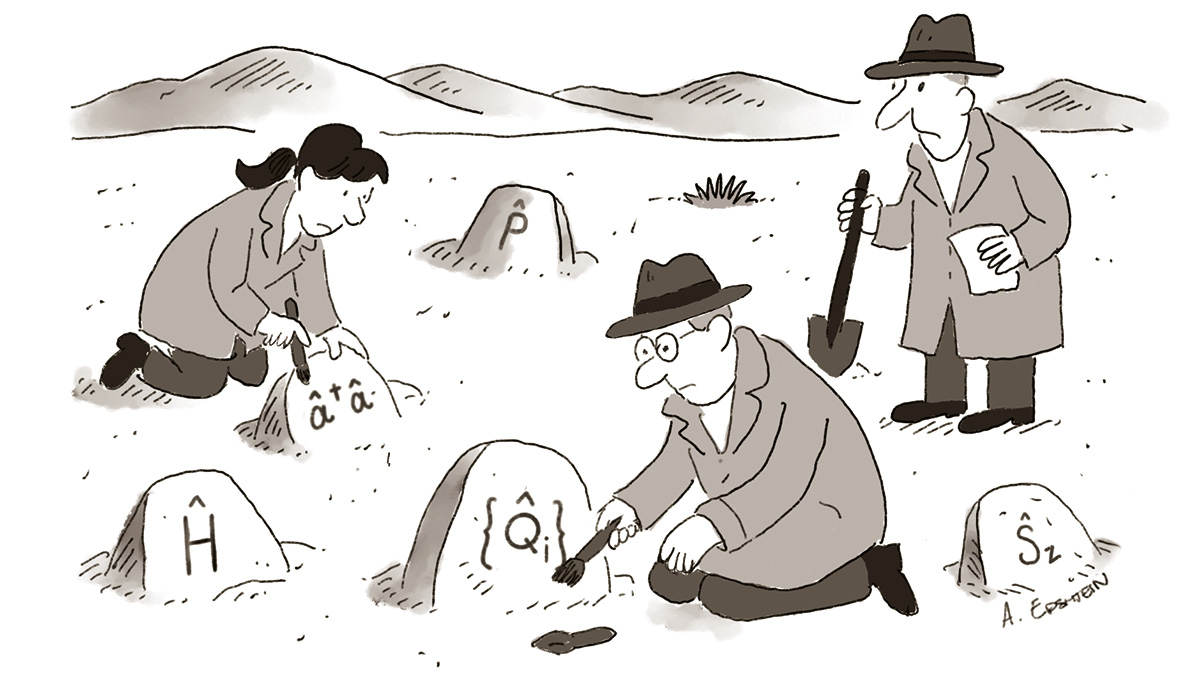
One can criticise this answer on philosophical grounds, but more pressingly: that just isn’t how measurement is actually done in the lab. Experimental kit isn’t found scattered across the desert (each device perhaps stamped by the gods with the self-adjoint operator it measures); it is built using physical principles (see “Dynamical probes” figure). The fact that the LHC measures the momentum and particle spectra of various decay processes, for instance, is something established through vast amounts of scientific analysis, not something simply posited. We need an account of experimental practice that allows us to explain how measurement devices work and how to build them.
Perhaps this was viable in the 1930s, but today measurement devices rely on quantum principles
Bohr had such an account: quantum measurements are to be described through classical mechanics. The classical is ineliminable from QM precisely because it is to classical mechanics we turn when we want to describe the experimental context of a quantum system. To Bohr, the quantum–classical transition is a conceptual and philosophical matter as much as a technical one, and classical ideas are unavoidably required to make sense of any quantum description.
Perhaps this was viable in the 1930s. But today it is not only the measured systems but the measurement devices themselves that essentially rely on quantum principles, beyond anything that classical mechanics can describe. And so, whatever the philosophical strengths and weaknesses of this approach – or of the lab view in general – we need something more to make sense of modern QM, something that lets us apply QM itself to the measurement process.
Practice makes perfect
We can look to physics practice to see how. As von Neumann glimpsed, and Everett first showed clearly, nothing prevents us from modelling a measurement device itself inside unitary quantum mechanics. When we do so, we find that the measured system becomes entangled with the device, so that (for instance) if a measured atom is in a weighted superposition of spins with respect to some axis, after measurement then the device is in a similarly-weighted superposition of readout values.
In principle, this courts infinite regress: how is that new superposition to be interpreted, save by a still-larger measurement device? In practice, we simply treat the mod-squared amplitudes of the various readout values as probabilities, and compare them with observed frequencies. This sounds a bit like the lab view, but there is a subtle difference: these probabilities are understood not with respect to some hypothetical measurement, but as the actual probabilities of the system being in a given state.
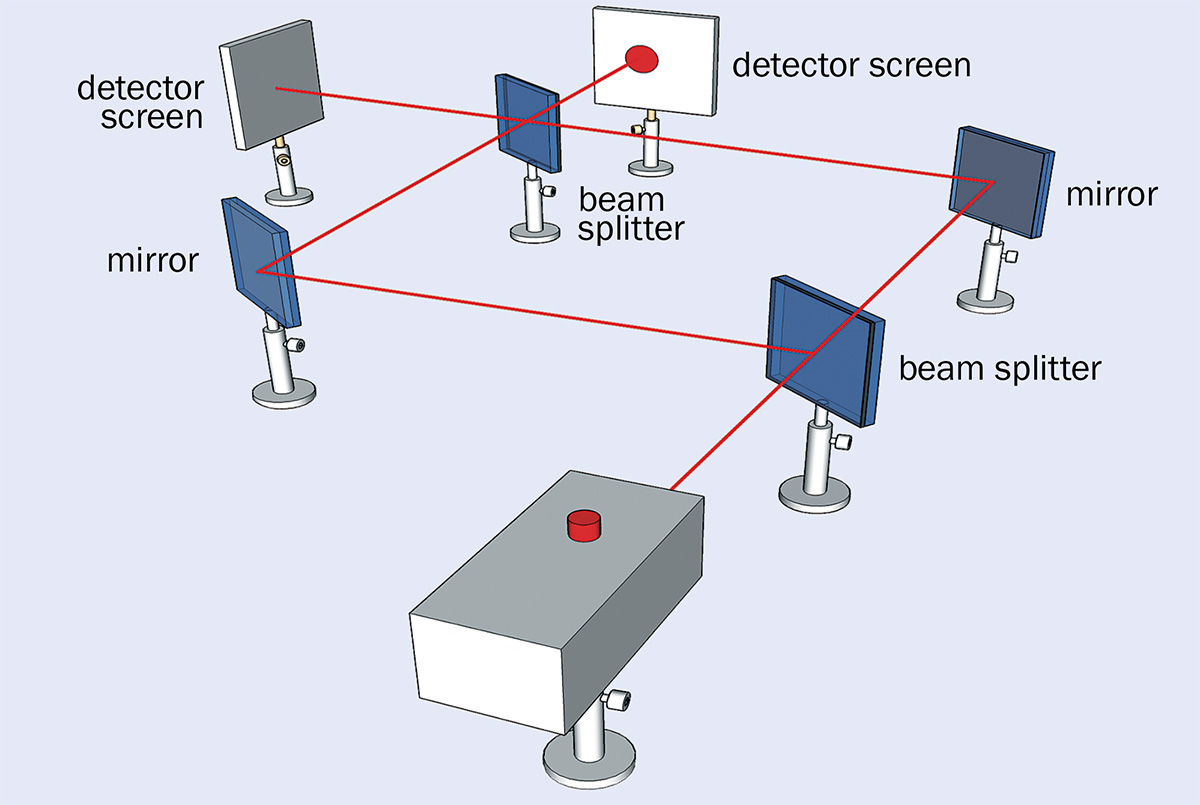
Of course, if we could always understand mod-squared amplitudes that way, there would be no measurement problem! But interference precludes this. Set up, say, a Mach–Zehnder interferometer, with a particle beam split in two and then re-interfered, and two detectors after the re-interference (see “Superpositions are not probabilities” figure). We know that if either of the two paths is blocked, so that any particle detected must have gone along the other path, then each of the two outcomes is equally likely: for each particle sent through, detector A fires with 50% probability and detector B with 50% probability. So whicheverpath the particle went down, we get A with 50% probability and B with 50% probability. And yet we know that if the interferometer is properly tuned and both paths are open, we can get A with 100% probability or 0% probability or anything in between. Whatever microscopic superpositions are, they are not straightforwardly probabilities of classical goings-on.
Unfeasible interference
But macroscopic superpositions are another matter. There, interference is unfeasible (good luck reinterfering the two states of Schrödinger’s cat); nothing formally prevents us from treating mod-squared amplitudes like probabilities.
Anddecoherence theory has given us a clear understanding of just why interference is invisible in large systems, and more generally when we can and cannot get away with treating mod-squared amplitudes as probabilities. As the work of Zeh, Zurek, Gell-Mann, Hartle and many others (drawing inspiration from Everett and from work on the quantum/classical transition as far back as Mott) has shown, decoherence – that is, the suppression of interference – is simply an aspect of non-equilibrium statistical mechanics. The large-scale, collective degrees of freedom of a quantum system, be it the needle on a measurement device or the centre-of-mass of a dust mote, are constantly interacting with a much larger number of small-scale degrees of freedom: the short-wavelength phonons inside the object itself; the ambient light; the microwave background radiation. We can still find autonomous dynamics for the collective degrees of freedom, but because of the constant transfer of information to the small scale, the coherence of any macroscopic superposition rapidly bleeds into microscopic degrees of freedom, where it is dynamically inert and in practice unmeasurable.
Emergence and scale
Decoherence can be understood in the familiar language of emergence and scale separation. Quantum states are not fundamentally probabilistic, but they are emergently probabilistic. That emergence occurs because for macroscopic systems, the timescale by which energy is transferred from macroscopic to residual degrees of freedom is very long compared to the timescale of the macroscopic system’s own dynamics, which in turn is very long compared to the timescale by which information is transferred. (To take an extreme example, information about the location of the planet Jupiter is recorded very rapidly in the particles of the solar wind, or even the photons of the cosmic background radiation, but Jupiter loses only an infinitesimal fraction of its energy to either.) So the system decoheres very rapidly, but having done so it can still be treated as autonomous.
On this decoherent view of QM, there is ultimately only the unitary dynamics of closed systems; everything else is a limiting or special case. Probability and classicality emerge through dynamical processes that can be understood through known techniques of physics: understanding that emergence may be technically challenging but poses no problem of principle. And this means that the decoherent view can address the lab view’s deficiencies: it can analyse the measurement process quantum mechanically; it can apply quantum mechanics even in cosmological contexts where the “measurement” paradigm breaks down; it can even recover the lab view within itself as a limited special case. And so it is the decoherent view, not the lab view, that – I claim – underlies the way quantum theory is for the most part used in the 21st century, including in its applications in particle physics and cosmology (see “Two views of quantum mechanics” table).
Two views of quantum mechanics
Quantum phenomenon
Lab view
Decoherent view
Dynamics
Unitary (i.e. governed by the Schrödinger equation) only between measurements
Always unitary
Quantum/classical transition
Conceptual jump between fundamentally different systems
Purely dynamical: classical physics is a limiting case of quantum physics
Measurements
Cannot be treated internal to the formalism
Just one more dynamical interaction
Role of the observer
Conceptually central
Just one more physical system
But if the decoherent view is correct, then at the fundamental level there is neither probability nor wavefunction collapse; nor is there a fundamental difference between a microscopic superposition like those in interference experiments and a macroscopic superposition like Schrödinger’s cat. The differences are differences of degree and scale: at the microscopic level, interference is manifest; as we move to larger and more complex systems it hides away more and more effectively; in practice it is invisible for macroscopic systems. But even if we cannot detect the coherence of the superposition of a live and dead cat, it does not thereby vanish. And so according to the decoherent view, the cat is simultaneously alive and dead in the same way that the superposed atom is simultaneously in two places. We don’t need a change in the dynamics of the theory, or even a reinterpretation of the theory, to explain why we don’t see the cat as alive and dead at once: decoherence has already explained it. There is a “live cat” branch of the quantum state, entangled with its surroundings to an ever-increasing degree; there is likewise a “dead cat” branch; the interference between them is rendered negligible by all that entanglement.
Many worlds
At last we come to the “many worlds” interpretation: for when we observe the cat ourselves, we too enter a superposition of seeing a live and a dead cat. But these “worlds” are not added to QM as exotic new ontology: they are discovered, as emergent features of collective degrees of freedom, simply by working out how to use QM in contexts beyond the lab view and then thinking clearly about its content. The Everett interpretation – the many-worlds theory – is just the decoherent view taken fully seriously. Interference explains why superpositions cannot be understood simply as parameterising our ignorance; unitarity explains how we end up in superpositions ourselves; decoherence explains why we have no awareness of it.
(Forty-five years ago, David Deutsch suggested testing the Everett interpretation by simulating an observer inside a quantum computer, so that we could recohere them after they made a measurement. Then, it was science fiction; in this era of rapid progress on AI and quantum computation, perhaps less so!)
Could we retain the decoherent view and yet avoid any commitment to “worlds”? Yes, but only in the same sense that we could retain general relativity and yet refuse to commit to what lies behind the cosmological event horizon: the theory gives a perfectly good account of the other Everett worlds, and the matter beyond the horizon, but perhaps epistemic caution might lead us not to overcommit. But even so, the content of QM includes the other worlds, just as the content of general relativity includes beyond-horizon physics, and we will only confuse ourselves if we avoid even talking about that content. (Thus Hawking, who famously observed that when he heard about Schrödinger’s cat he reached for his gun, was nonetheless happy to talk about Everettian branches when doing quantum cosmology.)
Alternative views
Could there be a different way to make sense of the decoherent view? Never say never; but the many-worlds perspective results almost automatically from simply taking that view as a literal description of quantum systems and how they evolve, so any alternative would have to be philosophically subtle, taking a different and less literal reading of QM. (Perhaps relationalism, discussed in this issue by Carlo Rovelli, see “Four ways to interpret quantum mechanics“, offers a way to do it, though in many ways it seems more a version of the lab view. The physical collapse and hidden variables interpretations modify the formalism, and so fall outside either category.)
The Everett interpretation is just the decoherent view taken fully seriously
Does the apparent absurdity, or the ontological extravagance, of the Everett interpretation force us, as good scientists, to abandon many-worlds, or if necessary the decoherent view itself? Only if we accept some scientific principle that throws out theories that are too strange or that postulate too large a universe. But physics accepts no such principle, as modern cosmology makes clear.
Are there philosophical problems for the Everett interpretation? Certainly: how are we to think of the emergent ontology of worlds and branches; how are we to understand probability when all outcomes occur? But problems of this kind arise across all physical theories. Probability is philosophically contested even apart from Everett, for instance: is it frequency, rational credence, symmetry or something else? In any case, these problems pose no barrier to the use of Everettian ideas in physics.
The case for the Everett interpretation is that it is the conservative, literal reading of the version of quantum mechanics we actually use in modern physics, and there is no scientific pressure for us to abandon that reading. We could, of course, look for alternatives. Who knows what we might find? Or we could shut up and calculate – within the Everett interpretation.
Lake Baikal, the Mediterranean Sea and the deep, clean ice at the South Pole: trackers. The atmosphere: a calorimeter. Mountains and even the Moon: targets. These will be the tools of the neutrino astrophysicist in the next two decades. Potentially observable energies dwarf those of the particle physicist doing repeatable experiments, rising up to 1 ZeV (1021 eV) for some detector concepts.
The natural accelerators of the neutrino astrophysicist are also humbling. Consider, for instance, the extraordinary relativistic jets emerging from the supermassive black hole in Messier 87 – an accelerator that stretches for about 5000 light years, or roughly 315 million times the distance from the Earth to the Sun.
Alongside gravitational waves, high-energy neutrinos have opened up a new chapter in astronomy. They point to the most extreme events in the cosmos. They can escape from regions where high-energy photons are attenuated by gas and dust, such as NGC 1068, the first steady neutrino emitter to be discovered (see “The neutrino sky” figure). Their energies can rise orders of magnitude above 1 PeV (1015 eV), where the universe becomes opaque to photons due to pair production with the cosmic microwave background. Unlike charged cosmic rays, they are not deflected by magnetic fields, preserving their original direction.
Breaking into the exascale calls for new thinking
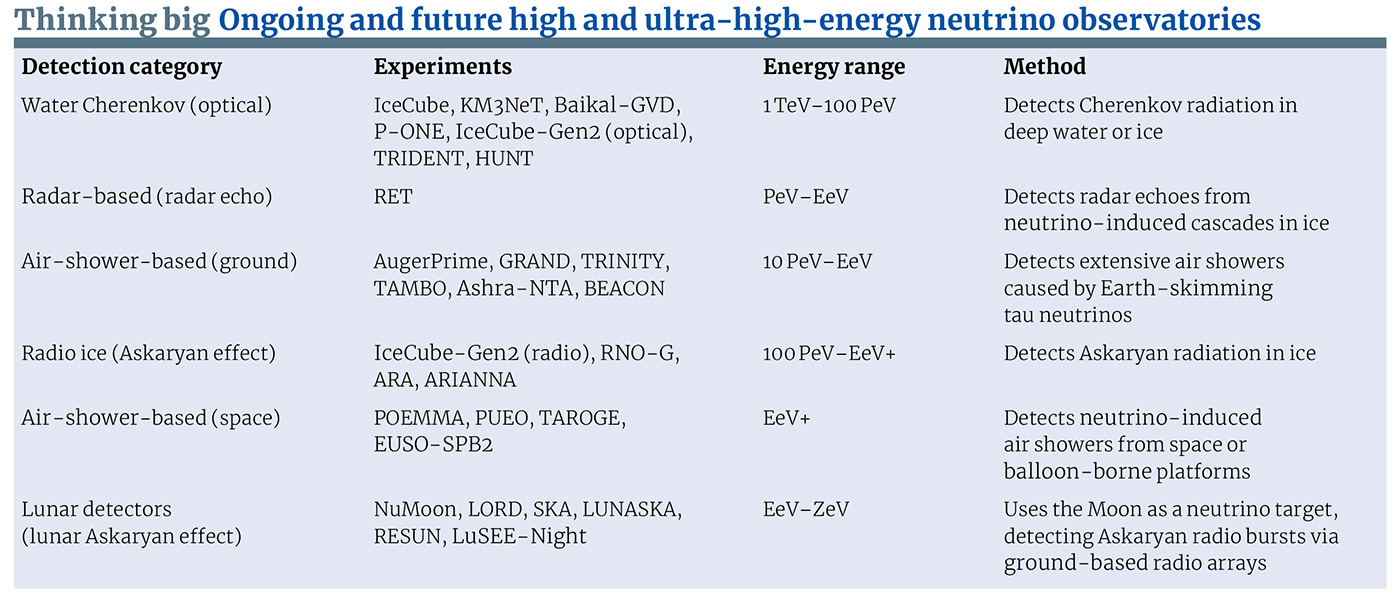
High-energy neutrinos therefore offer a unique window into some of the most profound questions in modern physics. Are there new particles beyond the Standard Model at the highest energies? What acceleration mechanisms allow nature to propel them to such extraordinary energies? And is dark matter implicated in these extreme events? With the observation of a 220+570–110 PeV neutrino confounding the limits set by prior observatories and opening up the era of ultra-high-energy neutrino astronomy (CERN Courier March/April 2025 p7), the time is ripe for a new generation of neutrino detectors on an even grander scale (see “Thinking big” table).
A cubic-kilometre ice cube
Detecting high-energy neutrinos is a serious challenge. Though the neutrino–nucleon cross section increases a little less than linearly with neutrino energy, the flux of cosmic neutrinos drops as the inverse square or faster, reducing the event rate by nearly an order of magnitude per decade. A cubic-kilometre-scale detector is required to measure cosmic neutrinos beyond 100 TeV, and Earth starts to be opaque as energies rise beyond a PeV or so, when the odds of a neutrino being absorbed as it passes through the planet are roughly even depending on the direction of the event.
The journey of cosmic neutrino detection began off the coast of the Hawaiian Islands in the 1980s, led by John Learned of the University of Hawaii at Mānoa. The DUMAND (Deep Underwater Muon And Neutrino Detector) project sought to use both an array of optical sensors to measure Cherenkov light and acoustic detectors to measure the pressure waves generated by energetic particle cascades in water. It was ultimately cancelled in 1995 due to engineering difficulties related to deep-sea installation, data transmission over long underwater distances and sensor reliability under high pressure.
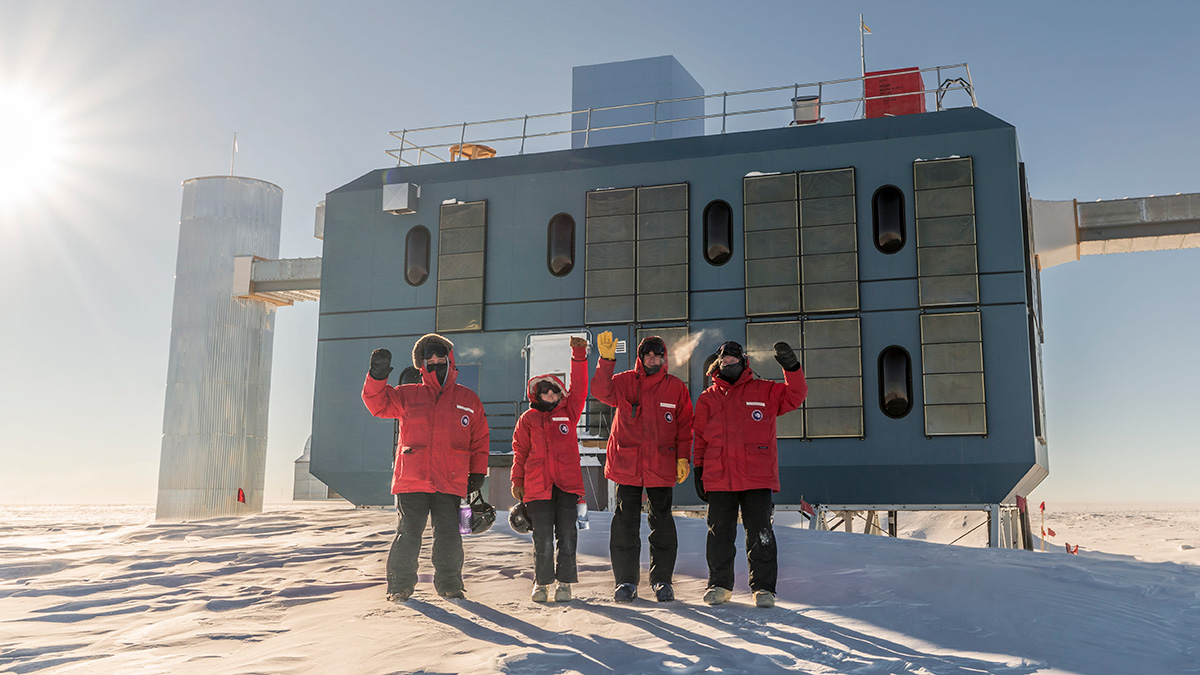
The next generation of cubic-kilometre-scale neutrino detectors built on DUMAND’s experience. The IceCube Neutrino Observatory has pioneered neutrino astronomy at the South Pole since 2011, probing energies from 10 GeV to 100 PeV, and is now being joined by experiments under construction such as KM3NeT in the Mediterranean Sea, which observed the 220 PeV candidate, and Baikal–GVD in Lake Baikal, the deepest lake on Earth. All three experiments watch for the deep inelastic scattering of high-energy neutrinos, using optical sensors to detect Cherenkov photons emitted by secondary particles.
A decade of data-taking from IceCube has been fruitful. The Milky Way has been observed in neutrinos for the first time. A neutrino candidate event has been observed that is consistent with the Glashow resonance – the resonant production in the ice of a real W boson by a 6.3 PeV electron–antineutrino – confirming a longstanding prediction from 1960. Neutrino emission has been observed from supermassive black holes in NGC 1068 and TXS 0506+056. A diffuse neutrino flux has been discovered beyond 10 TeV. Neutrino mixing parameters have been measured. And flavour ratios have been constrained: due to the averaging of neutrino oscillations over cosmological distances, significant deviations from a 1:1:1 ratio of electron, muon and tau neutrinos could imply new physics such as the violation of Lorentz invariance, non-standard neutrino interactions or neutrino decay.
The sensitivity and global coverage of water-Cherenkov neutrino observatories is set to increase still further. The Pacific Ocean Neutrino Experiment (P-ONE) aims to establish a cubic-kilometre-scale deep-sea neutrino telescope off the coast of Canada; IceCube will expand the volume of its optical array by a factor eight; and the TRIDENT and HUNT experiments, currently being prototyped in the South China Sea, may offer the largest detector volumes of all. These detectors will improve sky coverage, enhance angular resolution, and increase statistical precision in the study of neutrino sources from 1 TeV to 10 PeV and above.
Breaking into the exascale calls for new thinking.
Into the exascale
Optical Cherenkov detectors have been exceptionally successful in establishing neutrino astronomy, however, the attenuation of optical photons in water and ice requires the horizontal spacing of photodetectors to a few hundred metres at most, constraining the scalability of the technology. To achieve sensitivity to ultra-high energies measured in EeV (1018 eV), an instrumented area of order 100 km2 would be required. Constructing an optical-based detector on such a scale is impractical.
One solution is to exchange the tracking volume of IceCube and its siblings with a larger detector that uses the atmosphere as a calorimeter: the deposited energy is sampled on the Earth’s surface.
The Pierre Auger Observatory in Argentina epitomises this approach. If IceCube is presently the world’s largest detector by volume, the Pierre Auger Observatory is the world’s largest detector by area. Over an area of 3000 km2, 1660 water Cherenkov detectors and 24 fluorescence telescopes sample the particle showers generated when cosmic rays with energies beyond 10 EeV strike the atmosphere, producing billions of secondary particles. Among the showers it detects are surely events caused by ultra-high-energy neutrinos, but how might they be identified?
Out on a limb
One of the most promising approaches is to filter events based on where the air shower reaches its maximum development in the atmosphere. Cosmic rays tend to interact after traversing much less atmosphere than neutrinos, since the weakly interacting neutrinos have a much smaller cross-section than the hadronically interacting cosmic rays. In some cases, tau neutrinos can even skim the Earth’s atmospheric edge or “limb” as seen from space, interacting to produce a strongly boosted tau lepton that emerges from the rock (unlike an electron) to produce an upward-going air shower when it decays tens of kilometres later – though not so much later (unlike a muon) that it has escaped the atmosphere entirely. This signature is not possible for charged cosmic rays. So far, Auger has detected no neutrino candidate events of either topology, imposing stringent upper limits on the ultra-high-energy neutrino flux that are compatible with limits set by IceCube. The AugerPrime upgrade, soon expected to be fully operational, will equip each surface detector with scintillator panels and improved electronics.
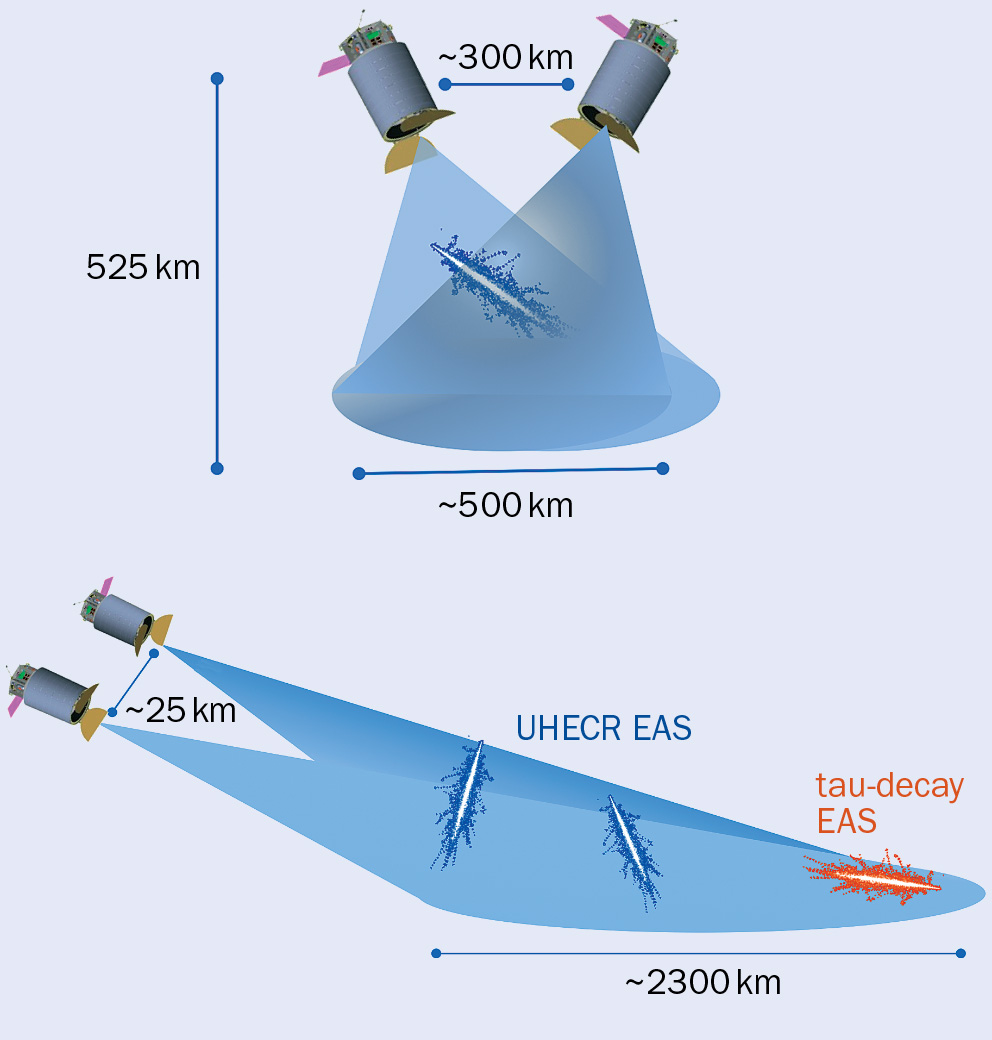
Experiments in space are being developed to detect these rare showers with an even larger instrumentation volume. POEMMA (Probe of Extreme Multi-Messenger Astrophysics) is a proposed satellite mission designed to monitor the Earth’s atmosphere from orbit. Two satellites equipped with fluorescence and Cherenkov detectors will search for ultraviolet photons produced by extensive air showers (see “Exascale from above” figure). EUSO-SPB2 (Extreme Universe Space Observatory on a Super Pressure Balloon 2) will test the same detection methods from the vantage point of high-atmosphere balloons. These instruments can help distinguish cosmic rays from neutrinos by identifying shallow showers and up-going events.
Another way to detect ultra-high-energy neutrinos is by using mountains and valleys as natural neutrino targets. This Earth-skimming technique also primarily relies on tau neutrinos, as the tau leptons produced via deep inelastic scattering in the rock can emerge from Earth’s crust and decay within the atmosphere to generate detectable particle showers in the air.
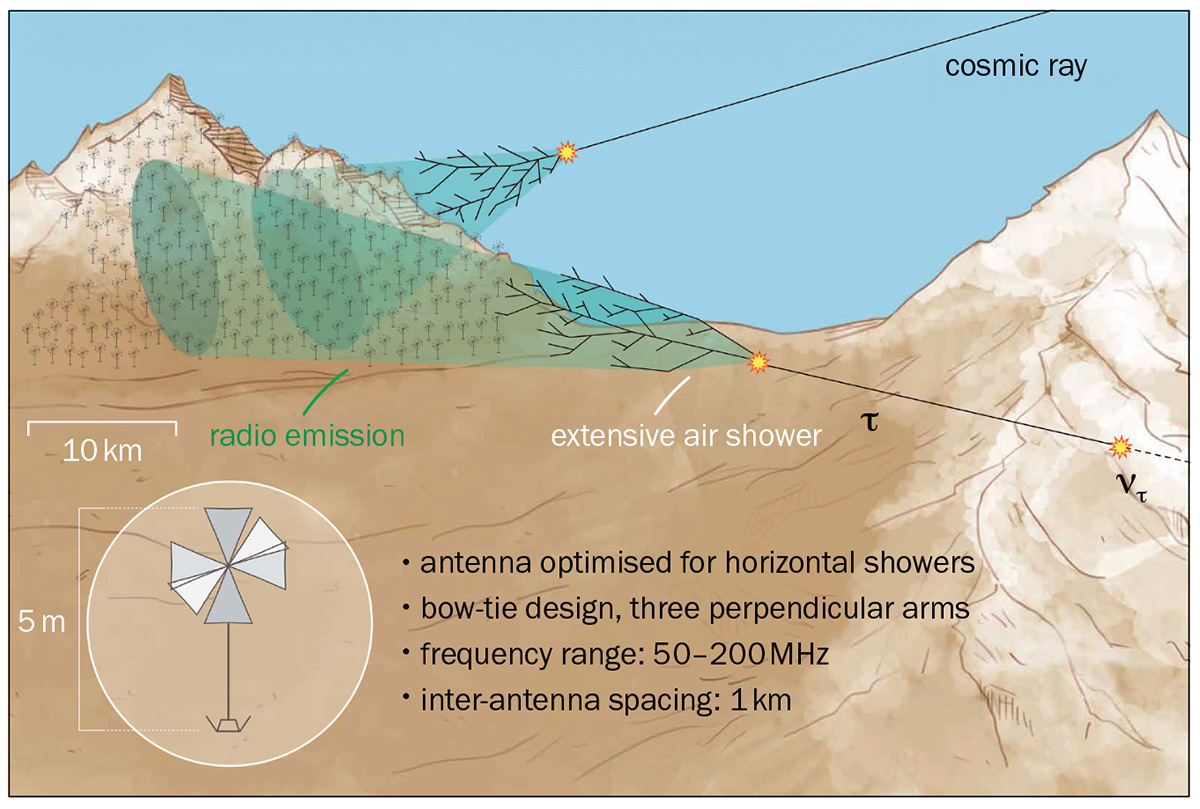
The Giant Radio Array for Neutrino Detection (GRAND) aims to detect radio signals from these tau-induced air showers using a large array of radio antennas spread over thousands of square kilometres (see “Earth skimming” figure). GRAND is planned to be deployed in multiple remote, mountainous locations, with the first site in western China, followed by others in South America and Africa. The Tau Air-Shower Mountain-Based Observatory (TAMBO) has been proposed to be deployed on the face of the Colca Canyon in the Peruvian Andes, where an array of scintillators will detect the electromagnetic signals from tau-induced air showers.
Another proposed strategy that builds upon the Earth-skimming principle is the Trinity experiment, which employs an array of Cherenkov telescopes to observe nearby mountains. Ground-based air Cherenkov detectors are known for their excellent angular resolution, allowing for precise pointing to trace back to the origin of the high-energy primary particles. Trinity is a proposed system of 18 wide-field Cherenkov telescopes optimised for detecting neutrinos in the 10 PeV–1000 PeV energy range from the direction of nearby mountains – an approach validated by experiments such as Ashra–NTA, deployed on Hawaii’s Big Island utilising the natural topography of the Mauna Loa, Mauna Kea and Hualālai volcanoes.
All these ultra-high-energy experiments detect particle showers as they develop in the atmosphere, whether from above, below or skimming the surface. But “Askaryan” detectors operate deep within the ice of the Earth’s poles, where both the neutrino interaction and detection occur.
In 1962 Soviet physicist Gurgen Askaryan reasoned that electromagnetic showers must develop a net negative charge excess as they develop, due to the Compton scattering of photons off atomic electrons and the ionisation of atoms by charged particles in the shower. As the charged shower propagates faster than the phase velocity of light in the medium, it should emit radiation in a manner analogous to Cherenkov light. However, there are key differences: Cherenkov radiation is typically incoherent and emitted by individual charged particles, while Askaryan radiation is coherent, being produced by a macroscopic buildup of charge, and is significantly stronger at radio frequencies. The Askaryan effect was experimentally confirmed at SLAC in 2001.
Optimised arrays
Because the attenuation length of radio waves is an order of magnitude longer than for optical photons, it becomes feasible to build much sparser arrays of radio antennas to detect the Askaryan signals than the compact optical arrays used in deep ice Cherenkov detectors. Such detectors are optimised to cover thousands of square kilometres, with typical energy thresholds beyond 100 PeV.
The Radio Neutrino Observatory in Greenland (RNO-G) is a next-generation in-ice radio detector currently under construction on the ~3 km-thick ice sheet above central Greenland, operating at frequencies in the 150–700 MHz range. RNO-G will consist of a sparse array of 35 autonomous radio detector stations, each separated by 1.25 km, making it the first large-scale radio neutrino array in the northern hemisphere.
In the southern hemisphere, the proposed IceCube-Gen2 will complement the aforementioned eightfold expanded optical array with a radio component covering a remarkable 500 km2. The cold Antarctic ice provides an optimal medium for radio detection, with radio attenuation lengths of roughly 2 km facilitating cost-efficient instrumentation of the large volumes needed to measure the low ultra-high-energy neutrino flux. The radio array will combine in-ice omnidirectional antennas 150 m below the surface with high-gain antennas at a depth of 15 m and upward-facing antennas on the surface to veto the cosmic-ray background.
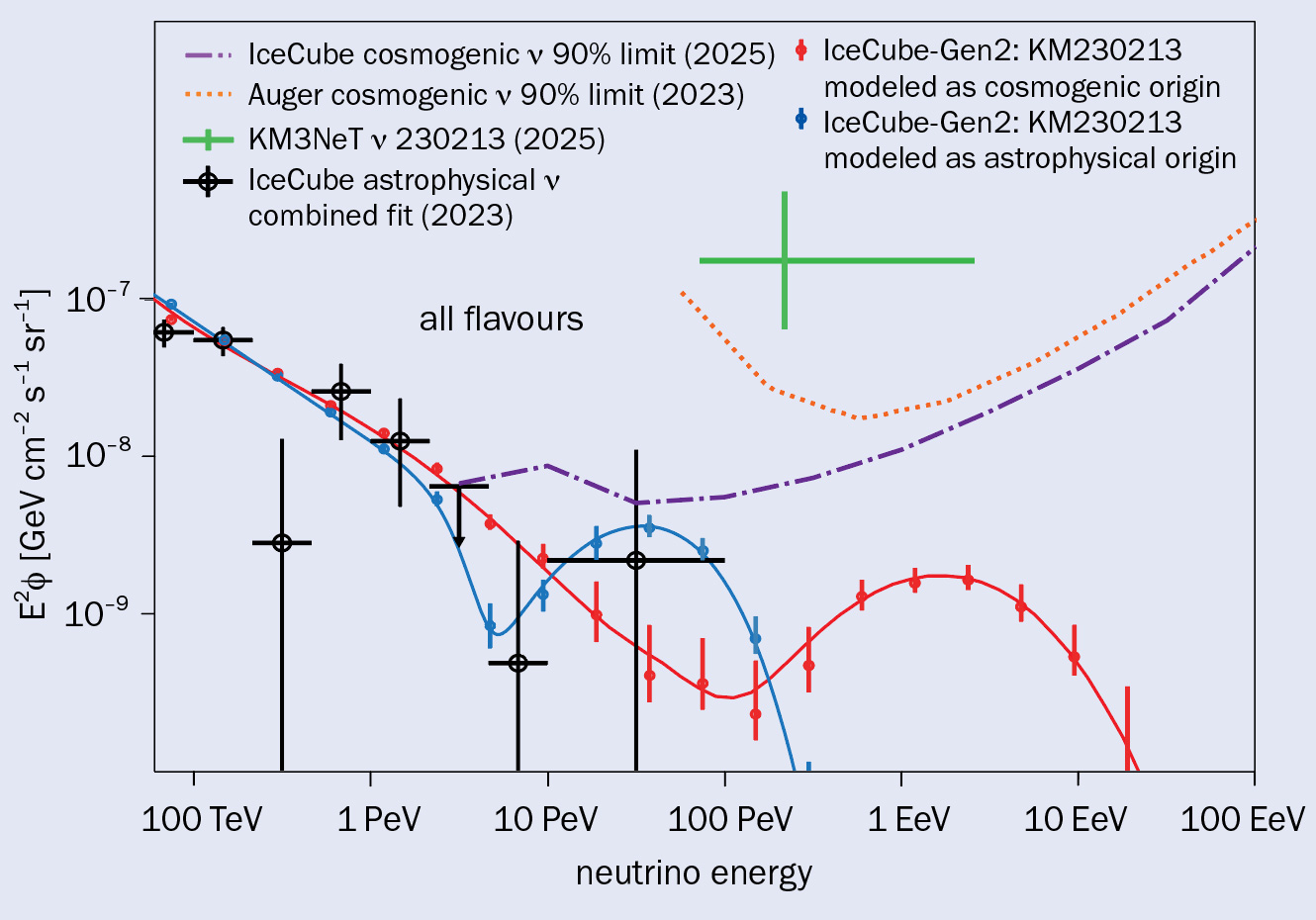
The IceCube-Gen2 radio array will have the sensitivity to probe features of the spectrum of astrophysical neutrino beyond the PeV scale, addressing the tension between upper limits from Auger and IceCube, and KM3NeT’s 220 +570–110PeV neutrino candidate – the sole ultra-high-energy neutrino yet observed. Extrapolating an isotropic and diffuse flux, IceCube should have detected 75 events in the 72–2600 PeV energy range over its operational period. However, no events have been observed above 70 PeV.
Perhaps the most ambitious way to observe ultra-high-energy neutrinos is to use the Moon as a target
If the detected KM3NeT event has a neutrino energy of around 100 PeV, it could originate from the same astrophysical sources responsible for accelerating ultra-high-energy cosmic rays. In this case, interactions between accelerated protons and ambient photons from starlight or synchrotron radiation would produce pions that decay into ultra-high-energy neutrinos. Alternatively, if its true energy is closer to 1 EeV, it is more likely cosmogenic: arising from the Greisen–Zatsepin–Kuzmin process, in which ultra-high-energy cosmic rays interact with cosmic microwave background photons, producing a Δ-resonance that decays into pions and ultimately neutrinos. IceCube-Gen2 will resolve the spectral shape from PeV to 10 EeV and differentiate between these two possible production mechanisms (see “Diffuse neutrino landscape” figure).
Moonshots
Remarkably, the Radar Echo Telescope (RET) is exploring using radar to actively probe the ice for transient signals. Unlike Askaryan-based detectors, which passively listen for radio pulses generated by charge imbalances in particle cascades, RET’s concept is to beam a radar signal and watch for reflections off the ionisation caused by particle showers. SLAC’s T576 experiment demonstrated the concept in the lab in 2022 by observing a radar echo from a beam of high-energy electrons scattering off a plastic target. RET has now been deployed in Greenland, where it seeks echoes from down-going cosmic rays as a proof of concept.
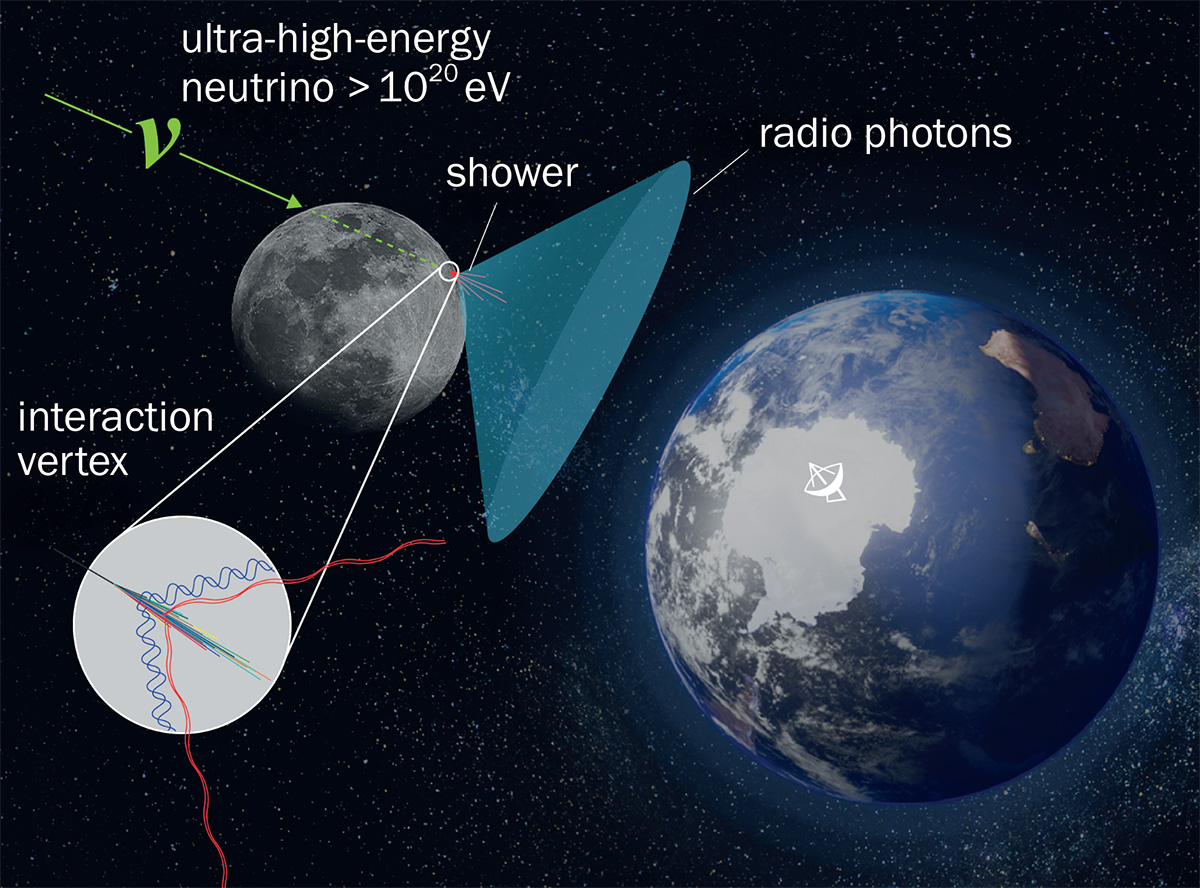
Perhaps the most ambitious way to observe ultra-high-energy neutrinos foresees using the Moon as a target. When neutrinos with energies above 100 EeV interact near the rim of the Moon, they can induce particle cascades that generate coherent Askaryan radio emission which could be detectable on Earth (see “Moon skimming” figure). Observations could be conducted from Earth-based radio telescopes or from satellites orbiting the Moon to improve detection sensitivity. Lunar Askaryan detectors could potentially be sensitive to neutrinos up to 1 ZeV (1021 eV). No confirmed detections have been reported so far.
Neutrino network
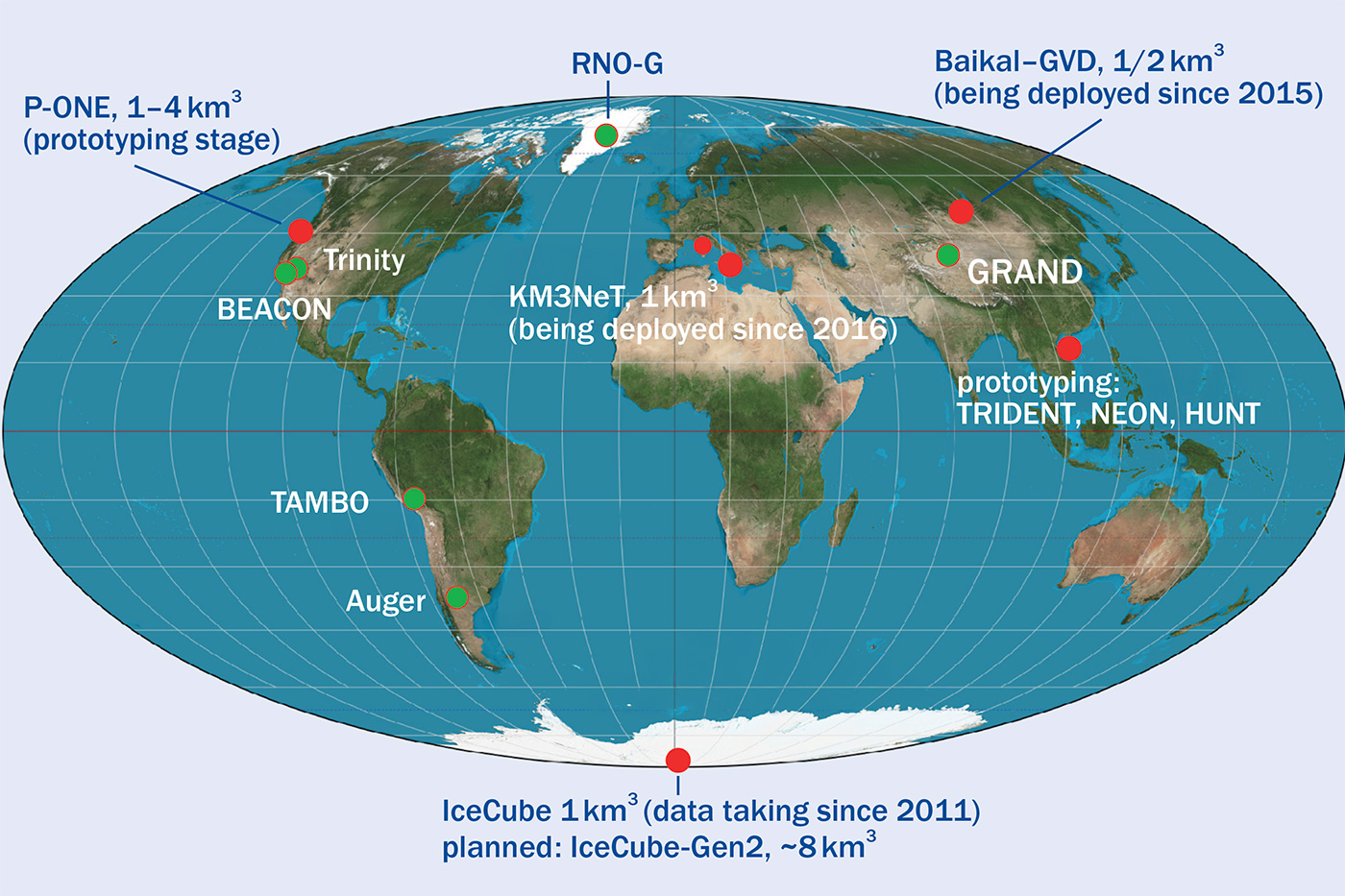
Proposed neutrino observatories are distributed across the globe – a necessary requirement for full sky coverage, given the Earth is not transparent to ultra-high-energy neutrinos (see “Full-sky coverage” figure). A network of neutrino telescopes ensures that transient astrophysical events can always be observed as the Earth rotates. This is particularly important for time-domain multi-messenger astronomy, enabling coordinated observations with gravitational wave detectors and electromagnetic counterparts. The ability to track neutrino signals in real time will be key to identifying the most extreme cosmic accelerators and probing fundamental physics at ultra-high energies.
Particle accelerators can be surprisingly temperamental machines. Expertise, specialisation and experience is needed to maintain their performance. Nonlinear and resonant effects keep accelerator engineers and physicists up late into the night. With so many variables to juggle and fine-tune, even the most seasoned experts will be stretched by future colliders. Can artificial intelligence (AI) help?
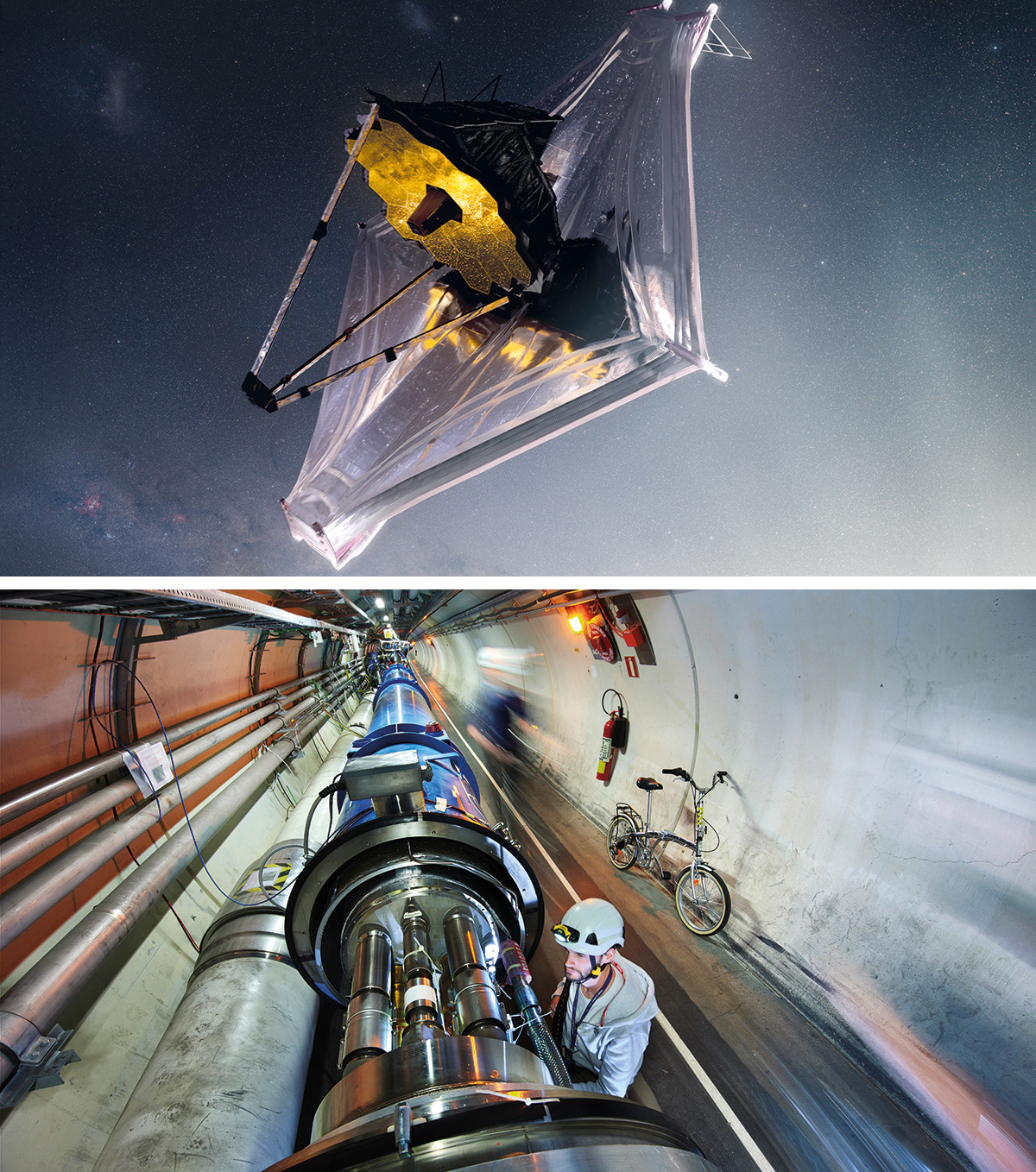
Proposed solutions take inspiration from space telescopes. The two fields have been jockeying to innovate since the Hubble Space Telescope launched with minimal automation in 1990. In the 2000s, multiple space missions tested AI for fault detection and onboard decision-making, before the LHC took a notable step forward for colliders in the 2010s by incorporating machine learning (ML) in trigger decisions. Most recently, the James Webb Space Telescope launched in 2021 using AI-driven autonomous control systems for mirror alignment, thermal balancing and scheduling science operations with minimal intervention from the ground. The new Efficient Particle Accelerators project at CERN, which I have led since its approval in 2023, is now rolling out AI at scale across CERN’s accelerator complex (see “Dynamic and adaptive” image.
AI-driven automation will only become more necessary in the future. As well as being unprecedented in size and complexity, future accelerators will also have to navigate new constraints such as fluctuating energy availability from intermittent sources like wind and solar power, requiring highly adaptive and dynamic machine operation. This would represent a step change in complexity and scale. A new equipment integration paradigm would automate accelerator operation, equipment maintenance, fault analysis and recovery. Every item of equipment will need to be fully digitalised and able to auto-configure, auto-stabilise, auto-analyse and auto-recover. Like a driverless car, instrumentation and software layers must also be added for safe and efficient performance.
On-site human intervention of the LHC could be treated as a last resort – or perhaps designed out entirely
The final consideration is full virtualisation. While space telescopes are famously inaccessible once deployed, a machine like the Future Circular Collider (FCC) would present similar challenges. Given the scale and number of components, on-site human intervention should be treated as a last resort – or perhaps designed out entirely. This requires a new approach: equipment must be engineered for autonomy from the outset – with built-in margins, high reliability, modular designs and redundancy. Emerging technologies like robotic inspection, automated recovery systems and digital twins will play a central role in enabling this. A digital twin – a real-time, data-driven virtual replica of the accelerator – can be used to train and constrain control algorithms, test scenarios safely and support predictive diagnostics. Combined with differentiable simulations and layered instrumentation, these tools will make autonomous operation not just feasible, but optimal.
The field is moving fast. Recent advances allow us to rethink how humans interact with complex machines – not by tweaking hardware parameters, but by expressing intent at a higher level. Generative pre-trained transformers, a class of large language models, open the door to prompting machines with concepts rather than step-by-step instructions. While further R&D is needed for robust AI copilots, tailor-made ML models have already become standard tools for parameter optimisation, virtual diagnostics and anomaly detection across CERN’s accelerator landscape.
Progress is diverse. AI can reconstruct LHC bunch profiles using signals from wall current monitors, analyse camera images to spot anomalies in the “dump kickers” that safely remove beams, or even identify malfunctioning beam-position monitors. In the following, I identify four different types of AI that have been successfully deployed across CERN’s accelerator complex. They are merely the harbingers of a whole new way of operating CERN’s accelerators.
1. Beam steering with reinforcement learning
In 2020, LINAC4 became the new first link in the LHC’s modernised proton accelerator chain – and quickly became an early success story for AI-assisted control in particle accelerators.
Small deviations in a particle beam’s path within the vacuum chamber can have a significant impact, including beam loss, equipment damage or degraded beam quality. Beams must stay precisely centred in the beampipe to maintain stability and efficiency. But their trajectory is sensitive to small variations in magnet strength, temperature, radiofrequency phase and even ground vibrations. Worse still, errors typically accumulate along the accelerator, compounding the problem. Beam-position monitors (BPMs) provide measurements at discrete points – often noisy – while steering corrections are applied via small dipole corrector magnets, typically using model-based correction algorithms.
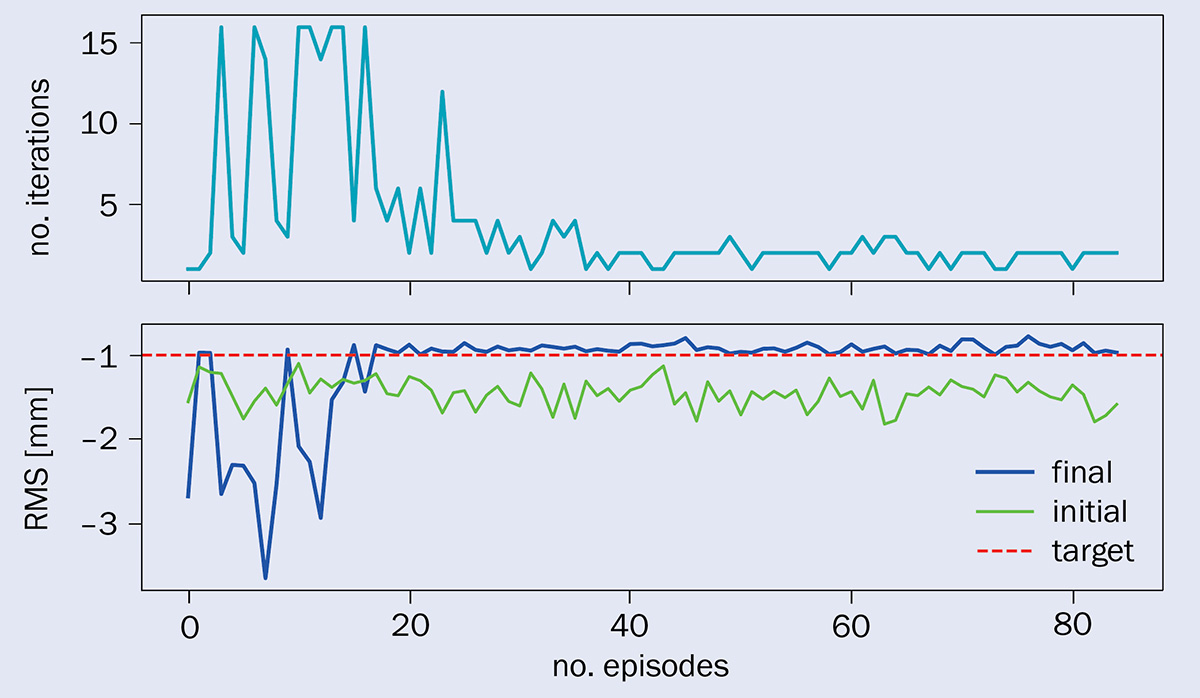
In 2019, the reinforcement learning (RL) algorithm normalised advantage function (NAF) was trained online to steer the H– beam in the horizontal plane of LINAC4 during commissioning. In RL, an agent learns by interacting with its environment and receiving rewards that guide it toward better decisions. NAF uses a neural network to model the so-called Q-function that estimates rewards in RL and uses this to continuously refine its control policy.
Initially, the algorithm required many attempts to find an effective strategy, and in early iterations it occasionally worsened the beam trajectory, but as training progressed, performance improved rapidly. Eventually, the agent achieved a final trajectory better aligned than the goal of an RMS of 1 mm (see “Beam steering” figure).
This experiment demonstrated that RL can learn effective control policies for accelerator-physics problems within a reasonable amount of time. The agent was fully trained after about 300 iterations, or 30 minutes of beam time, making online training feasible. Since 2019, the use of AI techniques has expanded significantly across accelerator labs worldwide, targeting more and more problems that don’t have any classical solution. At CERN, tools such as GeOFF (Generic Optimisation Framework and Frontend) have been developed to standardise and scale these approaches throughout the accelerator complex.
2. Efficient injection with Bayesian optimisation
Bayesian optimisation (BO) is a global optimisation technique that uses a probabilistic model to find the optimal parameters of a system by balancing exploration and exploitation, making it ideal for expensive or noisy evaluations. A game-changing example of its use is the record-breaking LHC ion run in 2024. BO was extensively used all along the ion chain, and made a significant difference in LEIR (the low-energy ion ring, the first synchrotron in the chain) and in the Super Proton Synchrotron (SPS, the last accelerator before the LHC). In LEIR, most processes are no longer manually optimised, but the multi-turn injection process is still non-trivial and depends on various longitudinal and transverse parameters from its injector LINAC3.
In heavy-ion accelerators, particles are injected in a partially stripped charge state and must be converted to higher charge states at different stages for efficient acceleration. In the LHC ion injector chain, the stripping foil between LINAC3 and LEIR raises the charge of the lead ions from Pb27+ to Pb54+. A second stripping foil, between the PS and SPS, fully ionises the beam to Pb82+ ions for final acceleration toward the LHC. These foils degrade over time due to thermal stress, radiation damage and sputtering, and must be remotely exchanged using a rotating wheel mechanism. Because each new foil has slightly different stripping efficiency and scattering properties, beam transmission must be re-optimised – a task that traditionally required expert manual tuning.
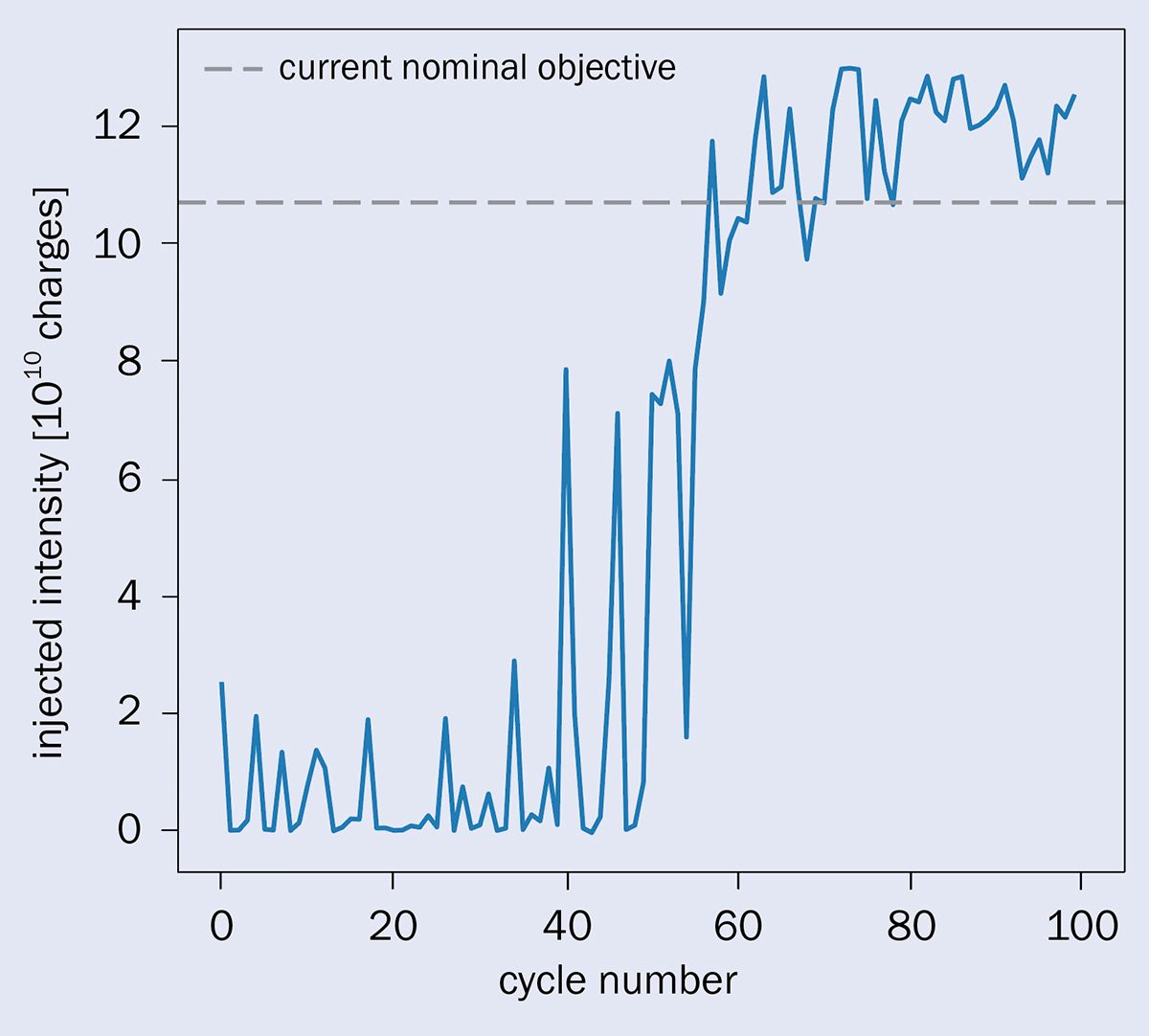
In 2024 it was successfully demonstrated that BO with embedded physics constraints can efficiently optimise the 21 most important parameters between LEIR and the LINAC3 injector. Following a stripping foil exchange, the algorithm restored the accumulated beam intensity in LEIR to better than nominal levels within just a few dozen iterations (see “Quick recovery” figure).
This example shows how AI can now match or outperform expert human tuning, significantly reducing recovery time, freeing up operator bandwidth and improving overall machine availability.
3. Adaptively correcting the 50 Hz ripple
In high-precision accelerator systems, even tiny perturbations can have significant effects. One such disturbance is the 50 Hz ripple in power supplies – small periodic fluctuations in current that originate from the electrical grid. While these ripples were historically only a concern for slow-extracted proton beams sent to fixed-target experiments, 2024 revealed a broader impact.
In the SPS, adaptive Bayesian optimisation (ABO) was deployed to control this ripple in real time. ABO extends BO by learning the objective not only as a function of the control parameters, but also as a function of time, which then allows continuous control through forecasting.
The algorithm generated shot-by-shot feed-forward corrections to inject precise counter-noise into the voltage regulation of one of the quadrupole magnet circuits. This approach was already in use for the North Area proton beams, but in summer 2024 it was discovered that even for high-intensity proton beams bound for the LHC, the same ripple could contribute to beam losses at low energy.
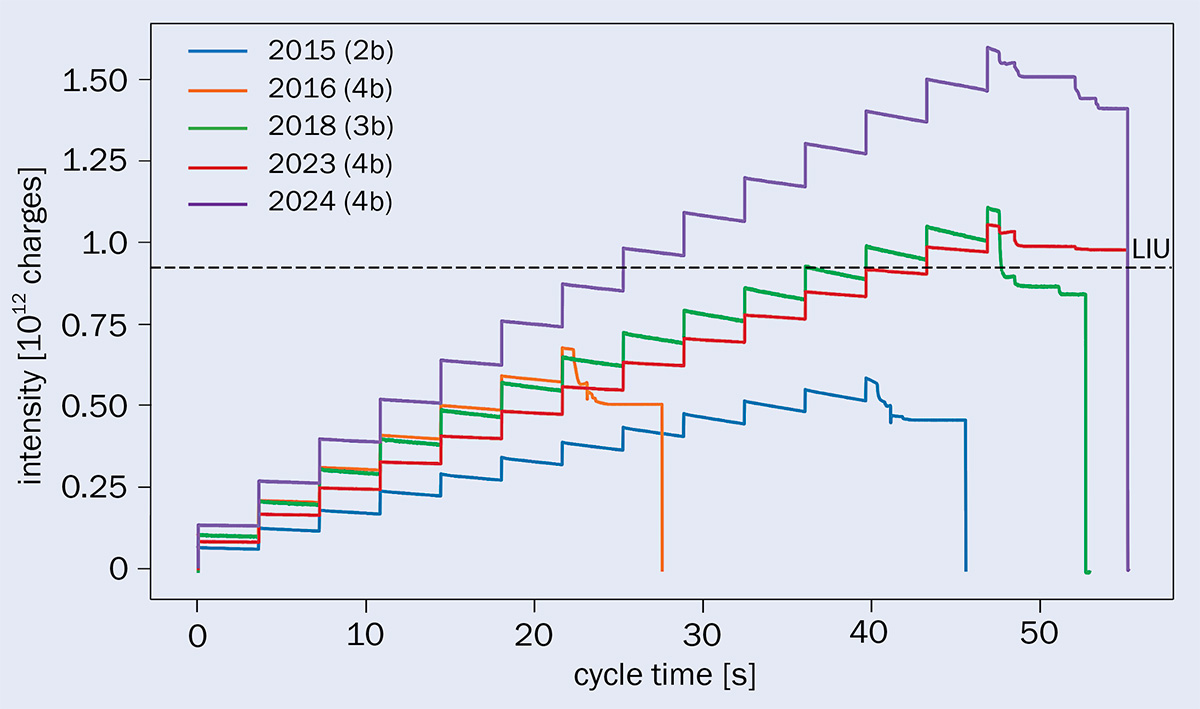
Thanks to existing ML frameworks, prior experience with ripple compensation and available hardware for active noise injection, the fix could be implemented quickly. While the gains for protons were modest – around 1% improvement in losses – the impact for LHC ion beams was far more dramatic. Correcting the 50 Hz ripple increased ion transmission by more than 15%. ABO is therefore now active whenever ions are accelerated, improving transmission and supporting the record beam intensity achieved in 2024 (see “SPS intensity” figure).
4. Predicting hysteresis with transformers
Another outstanding issue in today’s multi-cycling synchrotrons with iron-dominated electromagnets is correcting for magnetic hysteresis – a phenomenon where the magnetic field depends not only on the current but also on its cycling history. Cumbersome mitigation strategies include playing dummy cycles and manually re-tuning parameters after each change in magnetic history.
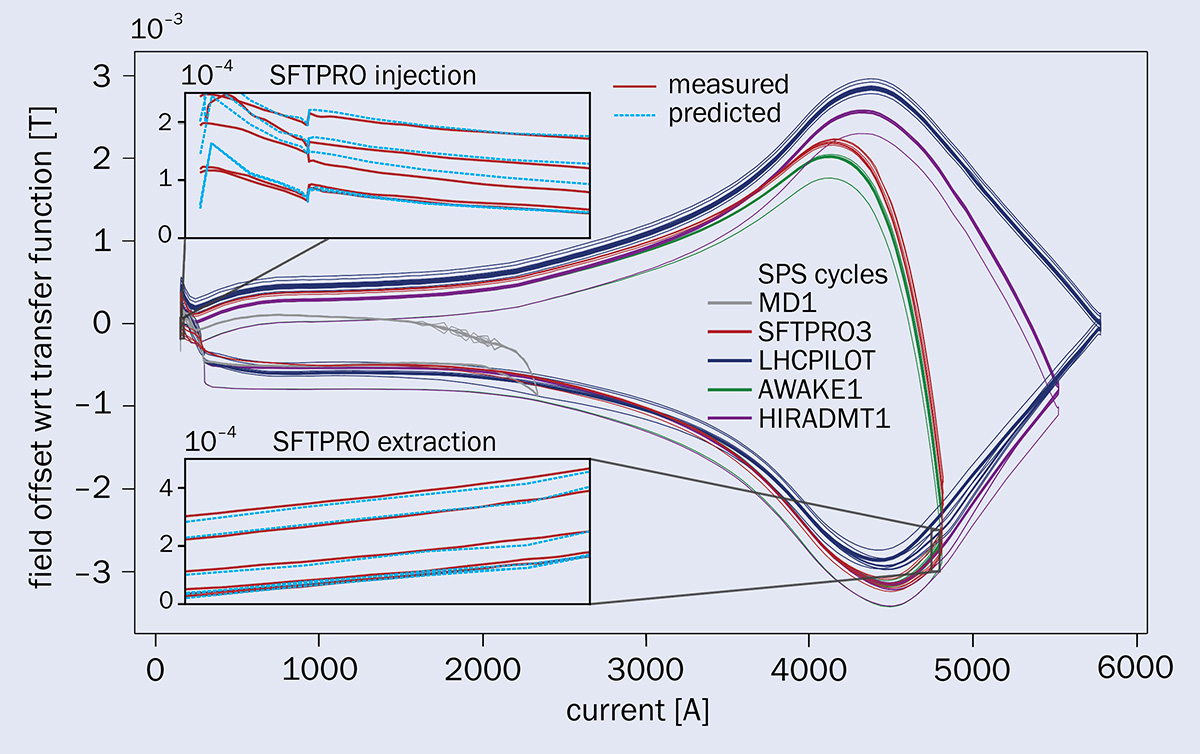
While phenomenological hysteresis models exist, their accuracy is typically insufficient for precise beam control. ML offers a path forward, especially when supported by high-quality field measurement data. Recent work using temporal fusion transformers – a deep-learning architecture designed for multivariate time-series prediction – has demonstrated that ML-based models can accurately predict field deviations from the programmed transfer function across different SPS magnetic cycles (see “SPS hysteresis” figure). This hysteresis model is now used in the SPS control room to provide feed-forward corrections – pre-emptive adjustments to magnet currents based on the predicted magnetic state – ensuring field stability without waiting for feedback from beam measurements and manual adjustments.
A blueprint for the future
With the Efficient Particle Accelerators project, CERN is developing a blueprint for the next generation of autonomous equipment. This includes concepts for continuous self-analysis, anomaly detection and new layers of “Internet of Things” instrumentation that support auto-configuration and predictive maintenance. The focus is on making it easier to integrate smart software layers. Full results are expected by the end of LHC Run 3, with robust frameworks ready for deployment in Run 4.
AI can now match or outperform expert human tuning, significantly reducing recovery time and improving overall machine availability
The goal is ambitious: to reduce maintenance effort by at least 50% wherever these frameworks are applied. This is based on a realistic assumption – already today, about half of all interventions across the CERN accelerator complex are performed remotely, a number that continues to grow. With current technologies, many of these could be fully automated.
Together, these developments will not only improve the operability and resilience of today’s accelerators, but also lay the foundation for CERN’s future machines, where human intervention during operation may become the exception rather than the rule. AI is set to transform how we design, build and operate accelerators – and how we do science itself. It opens the door to new models of R&D, innovation and deep collaboration with industry.
The Higgs boson is the most intriguing and unusual object yet discovered by fundamental science. There is no higher experimental priority for particle physics than building an electron–positron collider to produce it copiously and study it precisely. Given the importance of energy efficiency and cost effectiveness in the current geopolitical context, this gives unique strategic importance to developing a humble technology called the klystron – a technology that will consume the majority of site power at every major electron–positron collider under consideration, but which has historically only achieved 60% energy efficiency.
The klystron was invented in 1937 by two American brothers, Russell and Sigurd Varian. The Varians wanted to improve aircraft radar systems. At the time, there was a growing need for better high-frequency amplification to detect objects at a distance using radar, a critical technology in the lead-up to World War II.
The Varian’s RF source operated around 3.2 GHz, or a wavelength of about 9.4 cm, in the microwave region of the electromagnetic spectrum. At the time, this was an extraordinarily high frequency – conventional vacuum tubes struggled beyond 300 MHz. Microwave wavelengths promised better resolution, less noise, and the ability to penetrate rain and fog. Crucially, antennas could be small enough to fit on ships and planes. But the source was far too weak for radar.
Klystrons are ubiquitous in medical, industrial and research accelerators – and not least in the next generation of Higgs factories
The Varians’ genius was to invent a way to amplify the electromagnetic signal by up to 30 dB, or a factor of 1000. The US and British military used the klystron for airborne radar, submarine detection of U-boats in the Atlantic and naval gun targeting beyond visual range. Radar helped win the Battle of Britain, the Battle of the Atlantic and Pacific naval battles, making surprise attacks harder by giving advance warning. Winston Churchill called radar “the secret weapon of WWII”, and the klystron was one of its enabling technologies.
With its high gain and narrow bandwidth, the klystron was the first practical microwave amplifier and became foundational in radio-frequency (RF) technology. This was the first time anyone had efficiently amplified microwaves with stability and directionality. Klystrons have since been used in satellite communication, broadcasting and particle accelerators, where they power the resonant RF cavities that accelerate the beams. Klystrons are therefore ubiquitous in medical, industrial and research accelerators – and not least in the next generation of Higgs factories, which are central to the future of high-energy physics.
Klystrons and the Higgs
Hadron colliders like the LHC tend to be circular. Their fundamental energy limit is given by the maximum strength of the bending magnets and the circumference of the tunnel. A handful of RF cavities repeatedly accelerate beams of protons or ions after hundreds or thousands of bending magnets force the beams to loop back through them.
Thanks to their clean and precisely controllable collisions, all Higgs factories under consideration are electron–positron colliders. Electron–positron colliders can be either circular or linear in construction. The dynamics of circular electron–positron colliders are radically different as the particles are 2000 times lighter than protons. The strength required from the bending magnets is relatively low for any practical circumference, however, the energy of the particles must be continually replenished, as they radiate away energy in the bends through synchrotron radiation, requiring hundreds of RF cavities. RF cavities are equally important in the linear case. Here, all the energy must be imparted in a single pass, with each cavity accelerating the beam only once, requiring either hundreds or even thousands of RF cavities.
Either way, 50 to 60% of the total energy consumed by an electron-positron collider is used for RF acceleration, compared to a relatively small fraction in a hadron collider. Efficiently powering the RF cavities is of paramount importance to the energy efficiency and cost effectiveness of the facility as a whole. RF acceleration is therefore of far greater significance at electron–positron colliders than at hadron colliders.
From a pen to a mid-size car
RF cavities cannot simply be plugged into the wall. These finely tuned resonant structures must be excited by RF power – an alternating microwave electromagnetic field that is supplied through waveguides at the appropriate frequency. Due to the geometry of resonant cavities, this excites an on-axis oscillating electrical field. Particles that arrive when the electrical field has the right direction are accelerated. For this reason, particles in an accelerator travel in bunches separated by a long distance, during which the RF field is not optimised for acceleration.
Despite the development of modern solid-state amplifiers, the Varians’ klystron is still the most practical technology to generate RF when the power required is in the MW level. They can be as small as a pen or as large and heavy as a mid-size car, depending on the frequency and power required. Linear colliders use higher frequency because they also come with higher gradients and make the linac shorter, whereas a circular collider does not need high gradients as the energy to be given each turn is smaller.
Klystrons fall under the general classification of vacuum tubes – fully enclosed miniature electron accelerators with their own source, accelerating path and “interaction region” where the RF field is produced. Their name is derived from the Greek verb describing the action of waves crashing against the seashore. In a klystron, RF power is generated when electrons crash against a decelerating electric field.
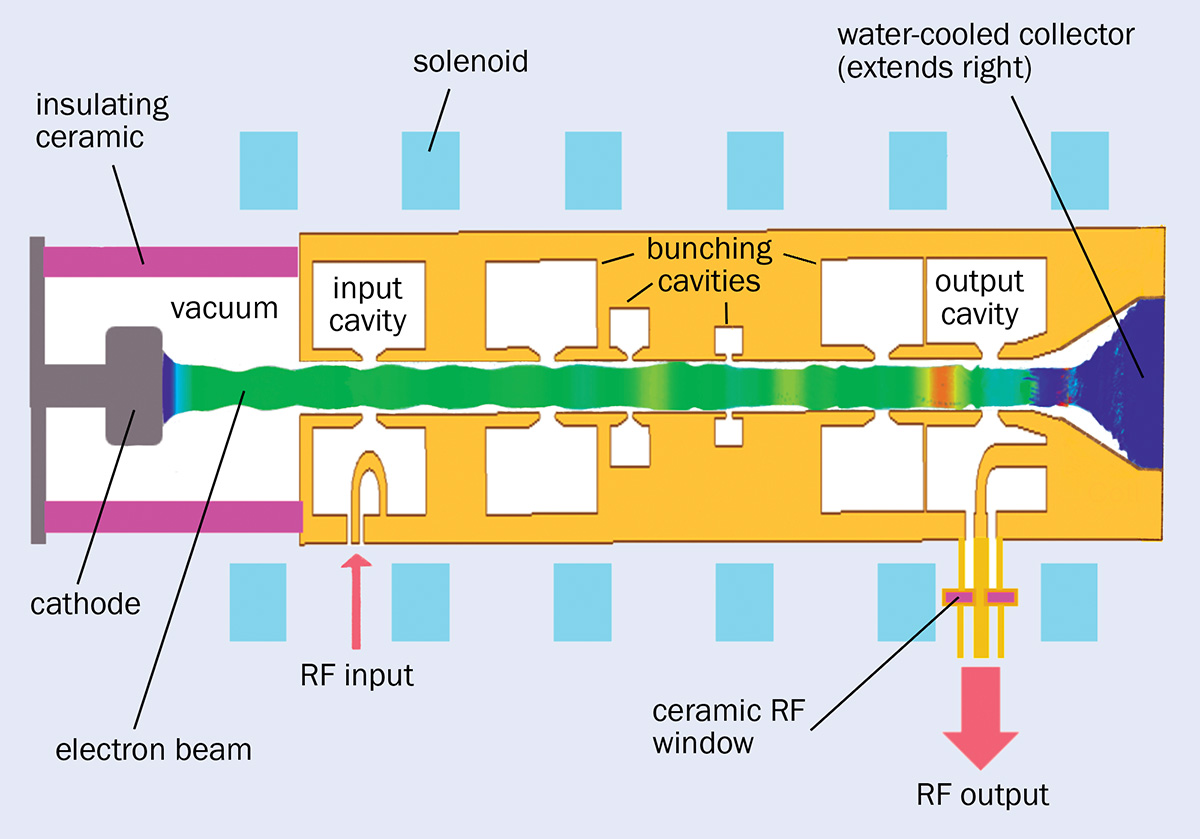
Every klystron contains at least two cavities: an input and an output. The input cavity is powered by a weak RF source that must be amplified. The output cavity generates the strongly amplified RF signal generated by the klystron. All this comes encapsulated in an ultra-high vacuum volume inside the field of a solenoid for focusing (see “Operating principle” figure).
Thanks to the efforts made in recent years, high-efficiency klystrons are now approaching the ultimate theoretical limit
Inside the klystron, electrons leave a heated cathode and are accelerated by a high voltage applied between the cathode and the anode. As they are being pushed forward, a small input RF signal is applied to the input cavity, either accelerating or decelerating the electrons according to their time of arrival. After a long drift, late-emitted accelerated electrons catch up with early-emitted decelerated electrons, intersecting with those that did not see any net accelerating force. This is called velocity bunching.
A second, passive accelerating cavity is placed at the location where maximum bunching occurs. Though of a comparable design, this cavity behaves in an inverse fashion to those used in particle accelerators. Rather than converting the energy of an electromagnetic field into the kinetic energy of particles, the kinetic energy of particles is converted into RF electromagnetic waves. This process can be enhanced by the presence of other passive cavities in between the already mentioned two, as well as by several iterations of bunching and de-bunching before reaching the output cavity. Once decelerated, the spent beam finishes its life in a dump or a water-cooled collector.
Optimising efficiency
Klystrons are ultimately RF amplifiers with a very high gain of the order of 30 to 60 dB and a very narrow bandwidth. They can be built at any frequency from a few hundred MHz to tens of GHz, but each operates within a very small range of frequencies called the bandwidth. After broadcasting became reliant on wider bandwidth vacuum tubes, their application in particle accelerators turned into a small market for high-power klystrons. Most klystrons for science are manufactured by a handful of companies which offer a limited number of models that have been in operation for decades. Their frequency, power and duty cycle may not correspond to the specifications of a new accelerator being considered – and in most cases, little or no thought has been given to energy efficiency or carbon footprint.
When searching for suitable solutions for the next particle-physics collider, however, optimising the energy efficiency of klystrons and other devices that will determine the final energy bill and CO2 emissions is a task of the utmost importance. Therefore, nearly a decade ago, RF experts at CERN and the University of Lancaster began the High-Efficiency Klystron (HEK) project to maximise beam-to-RF efficiency: the fraction of the power contained in the klystron’s electron beam that is converted into RF power by the output cavity.
The complexity of klystrons resides on the very nonlinear fields to which the electrons are subjected. In the cathode and the first stages of electrostatic acceleration, the collective effect of “space-charge” forces between the electrons determines the strongly nonlinear dynamics of the beam. The same is true when the bunching tightens along the tube, with mutual repulsion between the electrons preventing optimal bunching at the output cavity.
For this reason, designing klystrons is not susceptible to simple analytical calculations. Since 2017, CERN has developed a code called KlyC that simulates the beam along the klystron channel and optimises parameters such as frequency and distance between cavities 100 to 1000 times faster than commercial 3D codes. KlyC is available in the public domain and is being used by an ever-growing list of labs and industrial partners.
Perveance
The main characteristic of a klystron is an obscure magnitude inherited from electron-gun design called perveance. For small perveances, space-charge forces are small, due to either high energy or low intensity, making bunching easy. For large perveances, space-charge forces oppose bunching, lowering beam-to-RF efficiency. High-power klystrons require large currents and therefore high perveances. One way to produce highly efficient, high-power klystrons is therefore for multiple cathodes to generate multiple low-perveance electron beams in a “multi-beam” (MB) klystron.
Overall, there is an almost linear dependence between perveance and efficiency. Thanks to the efforts made in recent years, high-efficiency klystrons are now outperforming industrial klystrons by 10% in efficiency for all values of perveance, and approaching the ultimate theoretical limit (see “Battling space charge” figure).
One of the first designs to be brought to life was based on the E37113, a pulsed klystron with 6 MW peak power working in the X-band at 12 GHz, commercialised by CANON ETD. This klystron is currently used in the test facility at CERN for validating CLIC RF prototypes, which could greatly benefit from a larger power. As part of a collaboration with CERN, CANON ETD built a new tube, according to the design optimised at CERN, to reach a beam-to-RF efficiency of 57% instead of the original 42% (see “CLIC klystron” image and CERN Courier September/October 2022 p9).
As its interfaces with the high-voltage (HV) source and solenoid were kept identical, one can now benefit from 8 MW of RF power for the same energy consumption as before. As changes in the manufacturing of the tube channel are just a small fraction of the manufacture of the instrument, its price should not increase considerably, even if more accurate production methods are required.
Another successful example of re-designing a tube for high efficiency is the TH2167 – the klystron behind the LHC, which is manufactured by Thales. Originally exhibiting a beam-to-RF efficiency of 60%, it was re-designed by the CERN team to gain 10% and reach 70% efficiency, while again using the same HV source and solenoid. The tube prototype has been built and is currently at CERN, where it has demonstrated the capacity to generate 350 kW of RF power with the same input energy as previously required to produce 300 kW. This power will be decisive when dealing with the higher intensity beam expected after the LHC luminosity upgrade. And all this again for a price comparable to previous models (see “High-luminosity gains” image).
The quest for the highest efficiency is not over yet. The CERN team is currently working on a design that could power the proposed Future Circular collider (FCC). Using about a hundred accelerating cavities, the electron and positron beams will need to be replenished with 100 MW of RF power, and energy efficiency is imperative.
The quest for the highest efficiency is not over yet
Although the same tube in use for the LHC, now boosted to 70% efficiency, could be used to power the FCC, CERN is working towards a vacuum tube that could reach an efficiency over 80%. A two-stage multi-beam klystron was initially designed that was capable of reaching 86% efficiency and generating 1 MW of continuous-wave power (see “Towards an FCC klystron” figure).
Motivated by recent changes in FCC parameters, we have rediscovered an old device called a tristron, which is not a conventional klystron but a “gridded tube” where the electron beam bunching mechanism is different. Tristons have a lower power gain but much greater flexibility. Simulations have confirmed that they can reach efficiencies as high as 90%. This could be a disruptive technology with applications well beyond accelerators. Manufacturing a prototype is an excellent opportunity for knowledge transfer from fundamental research to industrial applications.
To provide the best experiences, we use technologies like cookies to store and/or access device information. Consenting to these technologies will allow us to process data such as browsing behavior or unique IDs on this site. Not consenting or withdrawing consent, may adversely affect certain features and functions.
Functional
Always active
The technical storage or access is strictly necessary for the legitimate purpose of enabling the use of a specific service explicitly requested by the subscriber or user, or for the sole purpose of carrying out the transmission of a communication over an electronic communications network.
Preferences
The technical storage or access is necessary for the legitimate purpose of storing preferences that are not requested by the subscriber or user.
Statistics
The technical storage or access that is used exclusively for statistical purposes.The technical storage or access that is used exclusively for anonymous statistical purposes. Without a subpoena, voluntary compliance on the part of your Internet Service Provider, or additional records from a third party, information stored or retrieved for this purpose alone cannot usually be used to identify you.
Marketing
The technical storage or access is required to create user profiles to send advertising, or to track the user on a website or across several websites for similar marketing purposes.