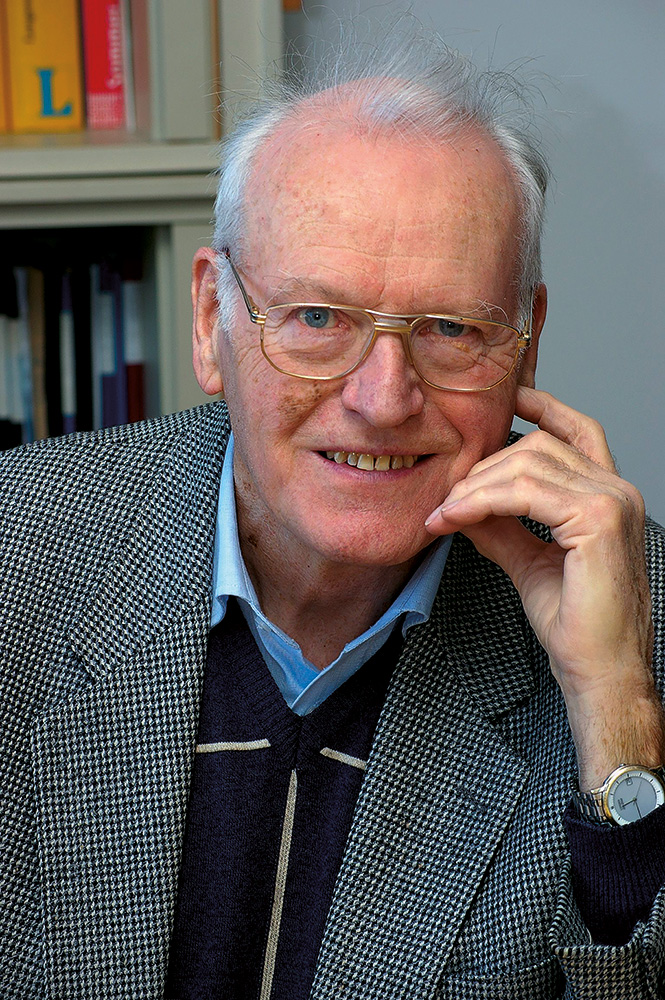
Ernst-Wilhelm Otten received his doctorate in 1962 at the University of Heidelberg under the supervision of atomic and nuclear physicist Hans Kopfermann. From 1972 until his retirement in 2002, he headed the department of experimental atomic and nuclear physics (EXAKT) at the University of Mainz. Ernst spent numerous research stays abroad, including at CERN and at the Ecole Normale Supérieure in Paris. After his retirement Ernst continued his research activities, especially for the KATRIN neutrino experiment. The hallmark of his work was the extraordinary breadth across almost all disciplines of physics, which earned him a large number of distinctions and prizes.
In Heidelberg, Ernst developed the method of optical pumping for polarising the nuclear spins of radioactive isotopes to determine their nuclear moments. He also recognised, from its start-up in the late 1960s, the opportunities offered by the on-line isotope separator ISOLDE at CERN. He became a pioneer of optical spectroscopy with accelerators. The discovery of unexpected nuclear-shape coexistence and nuclear-size changes in neutron-deficient mercury isotopes is one of the most outstanding results obtained at ISOLDE, as early as 1972. In Mainz, his group developed the high-resolution method of collinear laser spectroscopy – now a workhorse at ISOLDE for the determination of nuclear ground-state properties of short-lived nuclei – and with his collaborators initiated laser-based trace analysis for the detection of radionuclides in the environment.
The electron accelerators at Mainz enabled spectacular experiments: the test of parity non-conservation by neutral currents in polarised–electron nucleon scattering, and the determination of the neutron electric form factor using polarised 3He targets at high density. With hyperpolarised 3He gas, Ernst performed lung diagnostics by magnetic resonance imaging in collaboration with the German Cancer Research Centre in Heidelberg and the department of radiology at the University of Mainz.
In the 1980s, when a group reported a 30 eV mass of the antineutrino, Ernst developed a novel high-resolution beta spectrometer at Mainz to determine the neutrino mass very precisely from tritium decay. Together with his team he succeeded in setting an upper limit of 2 eV. After the discovery of neutrino oscillations in 1998, proving the existence of finite neutrino masses, Ernst initiated the KATRIN experiment at the Karlsruhe Institute of Technology to measure the neutrino mass. The construction of this technically extremely difficult spectrometer started in 2001, and Ernst was very actively involved until his death on 8 July. As such, he was able to witness the first successful result: the setting of a new upper limit on the neutrino mass of 1 eV (see KATRIN sets first limit on neutrino mass).
Ernst leaves deep traces in science and in the physics community. We will remember him as a great scientist, teacher, mentor and friend.
A cross-party committee of the legislature of the Republic of Ireland has unanimously recommended joining CERN. In a report published last week, the Joint Committee on Business, Enterprise and Innovation recommended that negotiations to become an Associate Member State begin immediately. The report follows the country’s Innovation 2020 science strategy, published in 2015, which identified CERN as one of four international research bodies which Ireland would benefit from joining. Since then, Ireland has joined the other three organisations, namely the European Southern Observatory, the intergovernmental life-science collaboration ELIXIR, and the LOFAR network of radio-frequency telescopes.
Ireland is one of only three European countries that do not have any formal agreement with CERN, said committee chair Mary Butler. “Innovation 2020’s vision is for Ireland to be a global innovation leader driving a strong sustainable economy and a better society. If Ireland is to deliver on this vision, membership of organisations such as CERN, which are at the forefront of innovation, is critical.” CERN already enjoys a productive relationship with physicists in Ireland, with University College Dublin a longstanding member of the LHCb and CMS collaborations, Dublin City University working on ISOLDE, University College Cork contributing civil engineering expertise, and theorists from several institutions involved in CERN projects. In January 2016, Ireland notified CERN of its intention to initiate deliberations on potential associate membership.
“I welcome this report and endorse its recommendations, which are pragmatic and cost-effective,” says Ronan McNulty, leader of the LHCb group at University College Dublin, and witness to the committee. “Delivery of these recommendations would enormously improve Irish academic links to CERN and create a new landscape for training the next generation of scientists and engineers, as well as developing business opportunities in the technology sector, and beyond.”
Ireland has a strong particle-physics community and CERN would welcome stronger institutional links
Charlotte Warakaulle
The report envisages a “multiplier effect” for return on investment to the Irish economy as a result of joining CERN. Although around 20 Irish companies already have contracts with CERN, it notes that they are at a competitive disadvantage as the laboratory prioritises companies from member countries. Under associate membership, says the report, contracts with Irish companies could rise to one third of the country’s financial contribution to the laboratory, which for Associate Member States must be at least of 10% of the cost of full membership. The cost of full membership, which yields voting rights at the CERN Council and eliminates the investment cap, depends on a country’s GDP, and would currently be estimated to be of the order of €12.5 million per year in Ireland’s case.
“We note the positive report from the committee, which clearly sets out the opportunities that membership or associate membership of CERN would bring to Ireland,” said Charlotte Warakaulle, CERN’s director for international relations. “Ireland has a strong particle-physics community and CERN would welcome stronger institutional links, which we believe would be mutually beneficial.”
The Irish government will now consider the committee’s findings.
A first-of-its-kind experiment at CERN has brought dark matter and antimatter face to face. The fundamental nature of dark matter, inferred to make up around a quarter of the universe, is unknown, as is the reason for the observed cosmic imbalance between matter and antimatter. Investigating potential links between the two, researchers working on the Baryon Antibaryon Symmetry Experiment (BASE) at CERN, in collaboration with members of the Helmholtz Institute at Mainz, have reported the first laboratory search for an interaction between antimatter and a dark-matter candidate: the axion.
Axions are extremely light, spinless bosons that were originally proposed in the 1970s to resolve the strong charge–parity problem of quantum chromodynamics and, later, were predicted by theories beyond the Standard Model. Being stable, axions produced during the Big Bang would still be present throughout the universe, possibly accounting for dark matter or some portion of it. In this case, Earth would experience a “wind” of gravitationally interacting dark-matter particles that would couple to matter and antimatter and periodically modulate their fundamental properties, such as their magnetic moment. However, no evidence of such an effect has so far been seen in laboratory experiments with ordinary matter, setting stringent limits on the microscopic properties of cosmic axion-like particles.
Our ALP–antiproton coupling limits are much more stringent than limits derived from astrophysical observations
Stefan Ulmer
The BASE team has now searched for the phenomenon in antimatter via measurements of the precession frequency of the antiproton’s magnetic moment, which it is able to determine with a fractional precision of 1.5×10⁻⁹. The technique relies on single-particle spin-transition spectroscopy – comparable to performing NMR with a single antiproton – whereby individual antiprotons stored in a Penning trap are spin-flipped from one state to another (CERN Courier March 2018 p25). An observed variation in the precession frequency over time could provide evidence for the nature of dark matter and, if antiprotons have a stronger coupling to these particles than protons do, such a matter–antimatter asymmetric coupling could provide a link between dark matter and the baryon asymmetry in the universe.
“We’ve interpreted these data in the framework of the axion wind model where light axion like particles (ALP’s) oscillate through the galaxy, at frequencies defined by the ALP mass,” explains lead author and BASE co-spokesperson Christian Smorra of RIKEN in Japan. “The particles couple to the spins of Standard Model particles, which would induce frequency modulations of the Larmor precession frequency.”
Accruing around 1000 measurements over a three-month period, the team determined a time-averaged frequency of the antiproton’s precession of around 80 MHz with an uncertainty of 120 mHz. No signs of regular variations were found, producing the first laboratory constraints on the existence of an interaction between antimatter and a dark-matter candidate. The BASE data constrain the axion-antiproton interaction parameter (a factor in the matrix element inversely proportional to the postulated coupling between axions and antiprotons) to be above 0.1 GeV for an axion mass of 2×10⁻²³ and above 0.6 GeV for an axion mass of 4×10⁻¹⁷ eV, at 95% confidence. For comparison, similar experiments using matter instead of antimatter achieve limits of above 10 and 1000 TeV for the same mass range – demonstrating that a major violation of established charge-party-time symmetry would be implied by any signal given the current BASE sensitivity. The collaboration also derived limits on six combinations of previously unconstrained Lorentz- and CPT-violating coefficients of the non-minimal Standard Model extension.
“We have not observed any oscillatory signature, however, our ALP–antiproton coupling limits are much more stringent than limits derived from astrophysical observations,” says BASE spokesperson Stefan Ulmer of RIKEN, who is optimistic that BASE will be able to improve the sensitivity of its axion search. “Future studies, with a ten-fold improved frequency stability, longer experimental campaigns and broader spectral scans at higher frequency resolution, will allow us to increase the detection bandwidth.”
Accelerator physicists in the US have proposed an alternative approach to the design of the proposed Future Circular electron-positron Collider (FCC-ee), generating lively discussions in the community on the eve of the update of the European strategy for particle physics. A 360-page long conceptual design report for the 100 km FCC-ee, a possible successor to the high-luminosity LHC at CERN, was published in January following a five-year study by the international FCC collaboration. A key consideration of the baseline design was to minimise energy consumption — a challenge addressed by the novel US proposal based on technology recently explored for future electron-ion and electron-proton colliders.
The modified acceleration scheme, laid out in a preprint published recently by Vladimir Litvinenko (Stony Brook) and Thomas Roser and Maria Chamizo-Llatas (Brookhaven National Laboratory), uses Energy Recovery Linacs (ERLs) to purportedly reduce synchrotron radiation by a factor of ten compared to the FCC-ee baseline design. “In addition to the potential power saving, the ERL version of the FCC-ee could extend the centre-of-mass energy reach up to 600 GeV while providing very high luminosities,” says Chamizo-Llatas. The maximum energy discussed in the conceptual design report for the FCC-ee baseline is 365 GeV, as required for top-antitop production.
First proposed by Maury Tigner in 1965, ERLs recoup the kinetic energy of particle bunches by manipulating their arrival time in the radio-frequency (RF) cavities. Previously accelerated bunches encounter a decelerating electric field, and the regained energy, stored once again in the cavity’s field, may be recycled to accelerate subsequent bunches. Though an old idea, ERLs are only now becoming feasible due to the high quality of modern superconducting RF cavities.
In June the Cornell–Brookhaven ERL Test Accelerator (CBETA) facility, which was envisaged as an ERL demonstrator for the Electron-Ion Collider (EIC) proposed in the US, achieved full energy recovery for a single pass. Prior to this, the concept was demonstrated at Jefferson Laboratory in the US and at Daresbury Laboratory in the UK. Further R&D with cavity technology compatible with FCC-ee proposal is planned for the Powerful Energy-Recovery Linac for Experiments (PERLE) project at Orsay, which was conceived as a test facility for electron-proton colliders.
The basic feasibility of the proposed concept must still be demonstrated
Frank Zimmermann
The US trio’s alternative FCC-ee proposal, which was inspired by past design work for the EIC, maintains high beam quality by decelerating the beams after every collision at one of the interaction points, and “cooling” them in dedicated rings. The use of ERLs allows the beams to be decelerated, cooled and re-accelerated with minimal energy expended, potentially yielding much lower emittances than found in conventional circular machines. “The electric power consumption of a future FCC-ee will be a limiting factor for luminosity and centre-of-mass energy,” says Roser. “During our design studies for the EIC we realised that using an ERL for the electrons could produce significantly more luminosity for a given electron beam current,” he explains, though the team admits that their concept would require extensive studies similar to what the FCC-ee design team did for the storage-ring design.
The BNL proposal is certainly tantalising, agrees FCC deputy study leader Frank Zimmermann of CERN. “Presently, Energy Recovery Linacs are a topic of great worldwide interest, with efforts ongoing, for example, at Cornell, Jefferson Lab, KEK, Mainz, and Orsay,” he says. “However, the basic feasibility of the proposed concept must still be demonstrated and the potentially high investment cost understood, before this approach could be considered as a highest-energy option for a future circular lepton collider.”
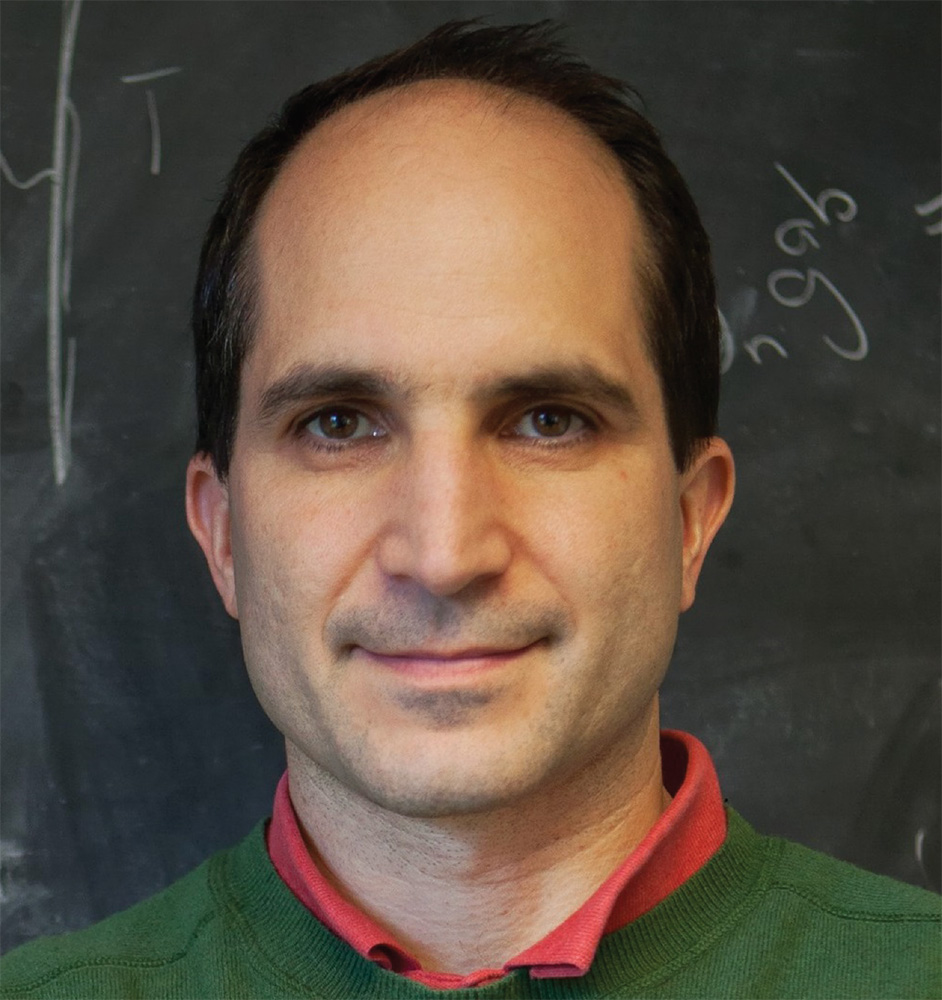
The paper conjectured a relation between certain quantum field theories and gravity theories. The idea was that a strongly coupled quantum system can generate complex quantum states that have an equivalent description in terms of a gravity theory (or a string theory) in a higher dimensional space. The paper considered special theories that have lots of symmetries, including scale invariance, conformal invariance and supersymmetry, and the fact that those symmetries were present on both sides of the relationship was one of the pieces of evidence for the conjecture. The main argument relating the two descriptions involved objects that appear in string theory called D-branes, which are a type of soliton. Polchinski had previously given a very precise description for the dynamics of D-branes. At low energies a soliton can be described by its centre-of-mass position: if you have N solitons you will have N positions. With D-branes it is the same, except that when they coincide there is a non-Abelian SU(N) gauge symmetry that relates these positions. So this low-energy theory resembles the theory of quantum chromodynamics, except that with N colours and special matter content.
On the other hand, these D-brane solitons also have a gravitational description, found earlier by Horowitz and Strominger, in which they look like “black branes” – objects similar to black holes but extended along certain spatial directions. The conjecture was simply that these two descriptions should be equivalent. The gravitational description becomes simple when N and the effective coupling are very large.
Did you stumble across the duality, or had you set out to find it?
It was based on previous work on the connection between D-branes and black holes. The first major result in this direction was the computation of Strominger and Vafa, who considered an extremal black hole and compared it to a collection of D-branes. By computing the number of states into which these D-branes can be arranged, they found that it matched the Bekenstein–Hawking black-hole entropy given in terms of the area of the horizon. Such black holes have zero temperature. By slightly exciting these black holes some of us were attempting to extend such results to non-zero temperatures, which allowed us to probe the dynamics of those nearly extremal black holes. Some computations gave similar answers, sometimes exactly, sometimes up to coefficients. It was clear that there was a deep relation between the two, but it was unclear what the concrete relation was. The gravity–gauge (AdS/CFT) conjecture clarified the relationship.
Are you surprised by its lasting impact?
Yes. At the time I thought that it was going to be interesting for people thinking about quantum gravity and black holes. But the applications that people found to other areas of physics continue to surprise me. It is important for understanding quantum aspects of black holes. It was also useful for understanding very strongly coupled quantum theories. Most of our intuition for quantum field theory is for weakly coupled theories, but interesting new phenomena can arise at strong coupling. These examples of strongly coupled theories can be viewed as useful calculable toy models. The art lies in extracting the right lessons from them. Some of the lessons include possible bounds on transport, a bound on chaos, etc. These applications involved a great deal of ingenuity since one has to extract the right lessons from the examples we have in order to apply them to real-world systems.
What does the gravity–gauge duality tell us about nature, given that it relates two pictures (e.g. involving different dimensionalities of space) that have not yet been shown to correspond to the physical world?
It suggests that the quantum description of spacetime can be in terms of degrees of freedom that are not localised in space. It also says that black holes are consistent with quantum mechanics, when we look at them from the outside. More recently, it was understood that when we try to describe the black-hole interior, then we find surprises. What we encounter in the interior of a black hole seems to depend on what the black hole is entangled with. At first this looks inconsistent with quantum mechanics, since we cannot influence a system through entanglement. But it is not. Standard quantum mechanics applies to the black hole as seen from the outside. But to explore the interior you have to jump in, and you cannot tell the outside observer what you encountered inside.
One of the most interesting recent lessons is the important role that entanglement plays in constructing the geometry of spacetime. This is particularly important for the black-hole interior.
I suspect that with the advent of quantum computers, it will become increasingly possible to simulate these complex quantum systems that have some features similar to gravity. This will likely lead to more surprises.
In what sense does AdS/CFT allow us to discuss the interior of a black hole?
It gives us directly a view of a black hole from the outside, more precisely a view of the black hole from very far away. In principle, from this description we should be able to understand what goes on in the interior. While there has been some progress on understanding some aspects of the interior, a full understanding is still lacking. It is important to understand that there are lots of weird possibilities for black-hole interiors. Those we get from gravitational collapse are relatively simple, but there are solutions, such as the full two-sided Schwarzschild solution, where the interior is shared between two black holes that are very far away. The full Schwarzschild solution can therefore be viewed as two entangled black holes in a particular state called the thermofield double, a suggestion made by Werner Israel in the 1970s. The idea is that by entangling two black holes we can create a geometric connection through their interiors: the black holes can be very far away, but the distance through the interior could be very short. However, the geometry is time-dependent and signals cannot go from one side to the other. The geometry inside is like a collapsing wormhole that closes off before a signal can go through. In fact, this is a necessary condition for the interpretation of these geometries as entangled states, since we cannot send signals using entanglement. Susskind and myself have emphasised this connection via the “ER=EPR” slogan. This says that EPR correlations (or entanglement) should generally give rise to some sort of “geometric” connection, or Einstein–Rosen bridge, between the two systems. The Einstein–Rosen bridge is the geometric connection between two black holes present in the full Schwarzschild solution.
Are there potential implications of this relationship for intergalactic travel?
Gao, Jafferis and Wall have shown that an interesting new feature appears when one brings two entangled black holes close to each other. Now there can be a direct interaction between the two black holes and the thermofield double state can be close to the ground state of the combined system. In this case, the geometry changes and the wormhole becomes traversable.
One can find solutions of the Standard Model plus gravity that look like two microscopic magnetically charged black holes joined by a wormhole
In fact, as shown by Milekhin, Popov and myself, one can find solutions of the Standard Model plus gravity that look like two microscopic magnetically charged black holes joined by a wormhole. We could construct a controllable solution only for small black holes because we needed to approximate the fermions as being massless.
If one wanted a big macroscopic wormhole where a human could travel, then it would be possible with suitable assumptions about the dark sector. We’d need a dark U(1) gauge field and a very large number of massless fermions charged under U(1). In that case, a pair of magnetically charged black holes would enable one to travel between distant places. There is one catch: the time it would take to travel, as seen by somebody who stays outside the system, would be longer than the time it takes light to go between the two mouths of the wormhole. This is good, since we expect that causality should be respected. On the other hand, due to the large warping of the spacetime in the wormhole, the time the traveller experiences could be much shorter. So it seems similar to what would be experienced by an observer that accelerates to a very high velocity and then decelerates. Here, however, the force of gravity within the wormhole is doing the acceleration and deceleration. So, in theory, you can travel with no energy cost.
How does AdS/CFT relate to broader ideas in quantum information theory and holography?
Quantum information has been playing an important role in understanding how holography (or AdS/CFT) works. One important development is a formula, due to Ryu and Takayanagi, for the fine-grained entropy of gravitational systems, such as a black hole. It is well known that the area of the horizon gives the coarse-grained, or thermodynamic, entropy of a black hole. The fine-grained entropy, by contrast, is the actual entropy of the full quantum density matrix describing the system. Surprisingly, this entropy can also be computed in terms of the area of the surface. But it is not the horizon, it is typically a surface that lies in the interior and has a minimal area.
If you could pick any experiment to be funded and built, what would it be?
Well, I would build a higher energy collider, of say 100 TeV, to understand better the nature of the Higgs potential and look for hints of new physics. As for smaller scale experiments, I am excited about the current prospects to manipulate quantum matter and create highly entangled states that would have some of the properties that black holes are supposed to have, such as being maximally chaotic and allowing the kind of traversable wormholes described earlier.
How close are we to a unified theory of nature’s interactions?
String theory gives us a framework that can describe all the known interactions. It does not give a unique prediction, and the accommodation of a small cosmological constant is possible thanks to the large number of configurations that the internal dimensions can acquire. This whole framework is based on Kaluza–Klein compactifications of 10D string theories. It is possible that a deeper understanding of quantum gravity for cosmological solutions will give rise to a probability measure on this large set of solutions that will allow us to make more concrete predictions.Matth
There is an increasing consensus that the next large accelerator after the LHC should be an electron–positron collider. Several proposals are on the table, circular and linear. Around 75 collaborating institutes worldwide are involved in the CERN-hosted studies for the Compact Linear Collider (CLIC), which offers a long-term and flexible physics programme that is able to react to discoveries and technological developments.
The 11 km-long initial stage of CLIC is proposed for operation at a centre-of-mass energy of 380 GeV, providing a rich programme of precision Higgs-boson and top-quark measurements that reach well beyond the projections for the high-luminosity LHC. From a technical point of view, operation of the initial stage by around 2035 is possible, with a cost of approximately 5.9 billion Swiss francs. This is similar to the cost of the LHC and of the proposed International Linear Collider in Japan, and considerablyless than that of future circular lepton colliders.
Extensions beyond the initial CLIC energy into the multi-TeV regime allow much improved precision on Standard Model (SM) measurements and greater reach for physics beyond the SM, with upgrade costs of 5 (to 1.5 TeV) and 7 billion Swiss francs (to 3 TeV) for the two further stages. A key part of the CLIC study has been the physics and detector studies showing that beam-induced backgrounds can indeed be mitigated, compatible with the clean experimental conditions expected in electron–positron colliders.
The question of what follows after the initial stage of a linear electron–positron collider is premature to answer. It is crucial to choose the most flexible approach now, and to develop technically mature and affordable options, encouraging a broad and exciting R&D programme. The option of expanding CLIC from its initial phase is already built into its staging scheme. Novel acceleration technologies can potentially push linear colliders even further in energy, although significantly more work is needed on beam qualities and energy efficiency for such options. High-energy proton and muon colliders are also potential future directions that need to be developed. While for protons the challenges are related to magnet performance, collider size and costs, for muons the technical design concepts need to mature and the radiation and experimental conditions need to be better understood.
CLIC offers a unique combination of precision and energy reach, and has a long history dating back to around 1985. At that time, the LEP tunnel was under construction and the first LHC workshop had just taken place. The motivation then was to move well beyond the W- and Z-boson studies foreseen at LEP to search for and study the top quark, Higgs boson and possible supersymmetric particles in a mass range from hundreds of GeV to several TeV. After the top-quark discovery at Fermilab and Higgs-boson discovery at CERN, we know that CLIC can do exactly that – even though the search arena for new physics is much more open than considered at that time.
Successful formula
High-energy electron–positron collisions, together with proton–proton or proton–antiproton collisions, have been a successful formula for progress in particle physics for half a century. Increasing the energy and luminosity of such machines is challenging. CLIC’s drive-beam concept was instrumental in providing a credible and scalable powering option at multi-TeV energies. A cost optimisation combined with the practical need of radio-frequency (RF) power units for R&D and testing led to the present normal-conducting 12 GHz “X-band” accelerating structures with an accelerating gradient of up to 100 MV/m. In parallel, CLIC’s energy use at 380 GeV has been scrutinised to keep it well below CERN’s annual consumption today, and less than 50% of the estimation for a future circular electron–positron collider.
The question of what follows after the initial stage of a linear electron–positron collider is premature to answer
The next steps needed for CLIC are clear. The project-implementation plan foresees a five-year preparation phase prior to construction, which is envisaged to start by 2026. The preparation phase would focus on further design optimisation and technical and industrial development of critical parts of the accelerator. System verification in free-electron-laser linacs and low-emittance rings will be increasingly important for performance studies, while civil engineering and infrastructure preparation will become progressively more detailed, in parallel with an environmental impact study. Detector preparation will need to be scaled up, too.
The increasing use of X-band technology – either as the main RF acceleration for CLIC or for compact test facilities, light sources, medical accelerators or low-energy particle physics studies – provides new collaborative opportunities towards a technical design report for the CLIC accelerator.
It is for the broader particle-physics community and CERN to decide whether CLIC proceeds. We are therefore eagerly looking forward to the conclusion of the European strategy process next year. For now, it is important to communicate how CLIC-380 can be implemented rapidly involving many collaborative partners, and at the same time provide unique and timely opportunities for R&D to keep future options open.
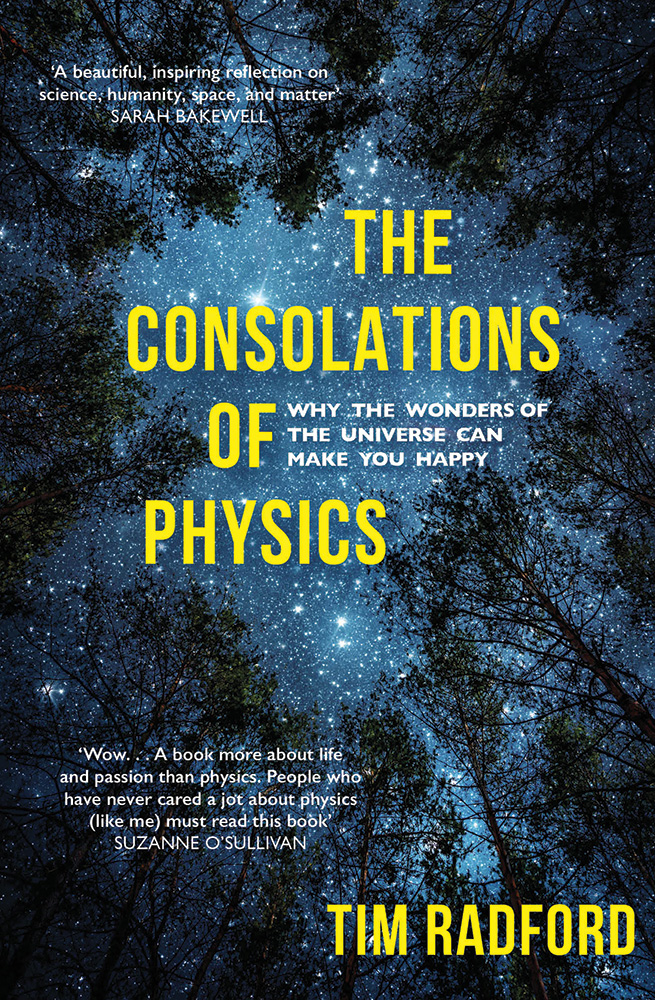
As someone who lives and breathes physics every day, I have to confess that when I curl up with a book, it’s rarely a popularisation of science. But when I saw that Tim Radford had written such a book, and that it was all about how physics can make you happy, it went straight to the top of my reading list.
Despite Radford’s refusal to be pigeonholed as a science journalist, insisting instead that a good journalist moves from beat to beat, never colonising any individual space, he was science correspondent for The Guardian for a quarter of a century. Now retired, he remains one of the most respected science writers around.
The book is a joy to read. More a celebration of human curiosity than a popular science book, it’s an antidote to the kind of narrow populism so prevalent in popular discourse today: a timely reminder of what we humans are capable of when we put differences aside and work together to achieve common goals.
Boethius, who took consolation in philosophy as he languished in a sixth-century jail is another recurring presence
The Voyager mission, along with LIGO and the LHC, serves as a guiding thread through Radford’s vast and winding exploration of human curiosity. Right from the opening lines, the reader is taken on a breathtaking tour of the full spectrum of human inventiveness, from science to religion, and from art to philosophy. On the way, we encounter thinkers as diverse as St Augustine, Dante and H G Wells. Boethius, who took consolation in philosophy as he languished in a sixth-century jail is another recurring presence, the book’s title being a nod to him.
We’re treated to a concise and clear consideration of the roles of science and religion in human societies. “Religious devotion demands unquestioning faith,” says Radford, whereas “science demands a state of mind that is always open to doubt”. While many can enjoy both, he concludes that it may be easier to enjoy science because it represents truth in a way that can be tested.
No sooner have we dealt with religion than we find ourselves listening to echoes of the great Richard Feynman as Radford considers the beauty of a dew-laden cobweb on an English autumn morning. “Does it make it any less magical a sight to know that this web was spun from a protein inside the spider?”, he asks, bringing to mind Feynman’s wonderful monologue about the beauty of a flower in Christopher Sykes’ equally wonderful 1981 documentary, The Pleasure of Finding Things Out. Both conclude that science can only enhance the aesthetic beauty of the natural world.
The overall effect is a bit like a roller-coaster ride in the dark: you’re never quite sure when the next turn will come, or where it will take you. That’s part of the joy of the book. There are few writers who could pull so many diverse threads together, spanning such a broad spectrum of time and subjects. Radford pulls it off brilliantly.
Someone expecting a popularisation of physics might be disappointed. Indeed, the physics is sometimes a little cursory. Yes, the LHC takes us back to the first unimaginably brief instants of the universe’s life, and that’s indeed something that catches the imagination. But that’s just a part of what the LHC does – it’s also about the here and now, and it’s about the future as well. But to dwell on such things would be to miss the point of this book entirely.
An elegant manifesto for physics is how the publisher describes this book, but it’s more than that. It’s a celebration of the best in humanity, built around the successes of CERN, LIGO and most of all the Voyager mission. What such projects bring us may be intangible and uncertain, but their results are available to all, and they enrich anyone who cares to look. Like any good roller coaster, when you get off, you just want to get right back on again, because if there’s something else that can make you happy, it’s Tim Radford’s writing.
Prominent French particle physicist Michel Spiro has been appointed president of the International Union of Pure and Applied Physics (IUPAP), replacing theorist Kennedy Reed of Lawrence Livermore National Laboratory. IUPAP, which aims to stimulate and promote international cooperation in physics, was established in 1922 with 13 member countries and now has close to 60 members. Spiro, who participated in the UA1 experiment, the GALLEX solar-neutrino experiment and the EROS microlensing dark-matter search, among other experiments, has held senior positions in the French CNRS and CEA, and was president of the CERN Council from 2010 to 2013.
The first direct image of a black hole, obtained by the Event Horizon Telescope (EHT, a network of eight radio dishes that creates an Earth-sized interferometer) earlier this year, has been recognised by the 2020 Breakthrough Prize in Fundamental Physics. The $3 million prize will be shared equally between 347 researchers who were co-authors of the six papers published by the EHT collaboration on 10 April. Also announced were six New Horizons Prizes worth $100,000 each, which recognise early-career achievements. In physics, Jo Dunkley (Princeton), Samaya Nissanke (University of Amsterdam) and Kendrick Smith (Perimeter Institute) were rewarded for the development of novel techniques to extract fundamental physics from astronomical data. Simon Caron-Huot (McGill University) and Pedro Vieira (Perimeter Institute) were recognised for their “profound contributions to the understanding of quantum field theory”.
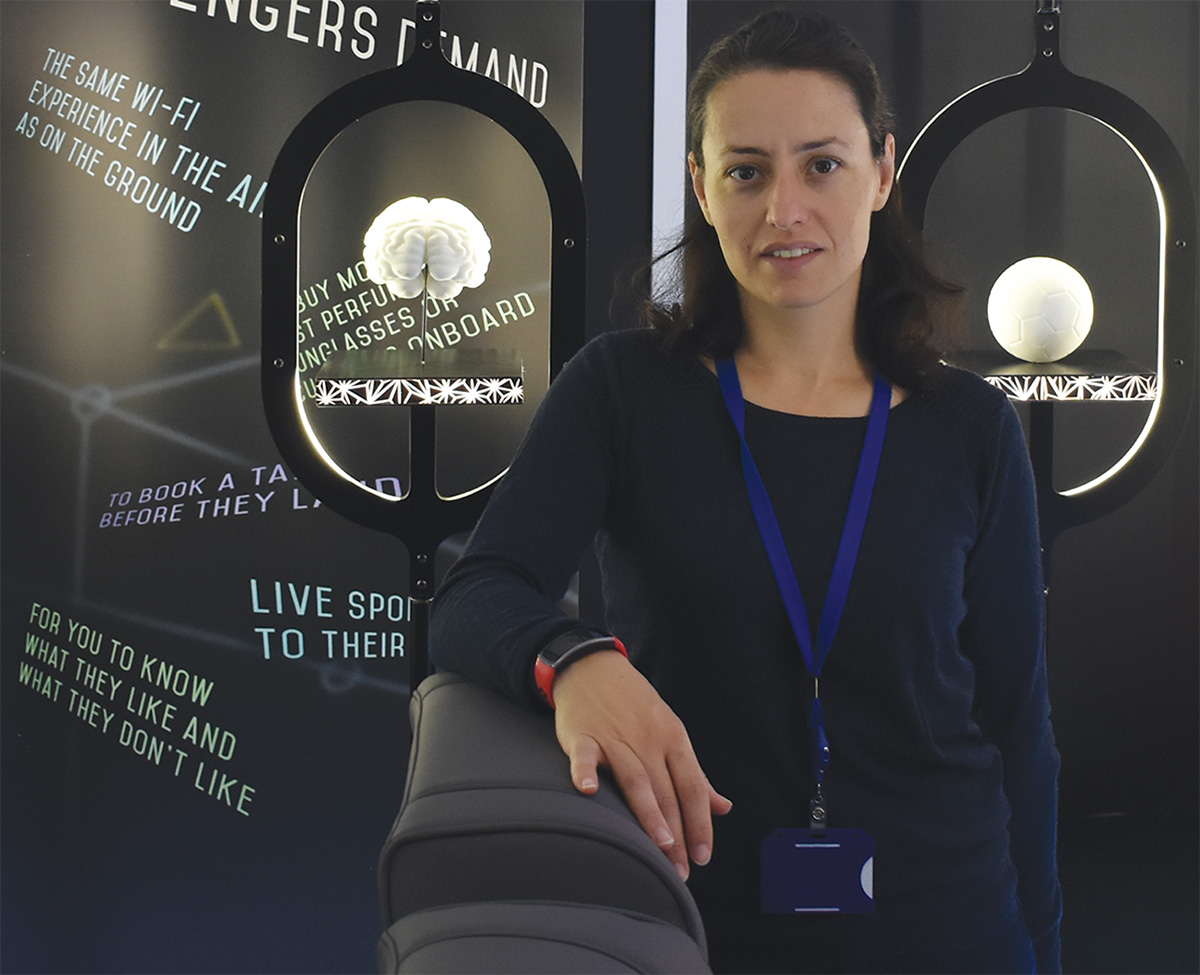
In 2018, Eleni Mountricha’s career in particle physics was taking off. Having completed a master’s thesis at the National Technical University of Athens (NTUA), a PhD jointly with NTUA and Université Paris-Sud, and a postdoc with Brookhaven National Laboratory, she had just secured a fellowship at CERN and was about to select a research topic. A few weeks later, she ditched physics for a career in industry. Having been based at CERN for more than a decade, and as a member of the ATLAS team working on the Higgs boson at the time of its discovery in 2012, leaving academia was one of the toughest decisions she has faced.
“On the one hand I was looking for a more permanent position, which looked quite hard to achieve in research, and on the other, in the years after the Higgs-boson discovery, my excitement and expectation about more new physics had started to fade,” she says. “There was always the hope of staying in academia, conducting research and exploring new fields of physics. But when the idea of possibly leaving kicked in, I decided that I should explore the potential of all alternatives.”
Mountricha had just completed initial discussions about her CERN research project when she received an offer of a permanent contract at Inmarsat – a provider of mobile satellite communications based in the nearby Swiss town of Nyon. It was unexpected, given how few positions she had applied for. “I felt a mixture of happiness and satisfaction at having succeeded in something that I didn’t expect I had many chances for, and frustration at the prospect of leaving something that I had spent many years on with a lot of dedication,” she explains. “What made it even harder was the discussions with other CERN experiments during the first month of the fellowship, which sparked my physics excitement again.”
New pastures
Mountricha’s idea to leave physics first formed after attending, out of curiosity, a career networking event for LHC-experiment physicists in November 2017. “The main benefit I got out of the event was a feeling that, even if I left, this would not be the end of the world; and that, if I searched enough, I could always find exciting things to do.” The networking event now takes place annually.
The Inmarsat job was brought to Mountricha’s attention by a fellow CERN alumnus and it was the only job that she had applied for outside physics. “I believe that I was lucky but I also had invested a lot of personal time to polish my skills, prepare for the interview and, in the end, it all came together,” she says.
People should not feel disappointed for having to move outside physics
Today, Mountricha’s official job title is “aero-service performance manager”. She works in the data-science team of the company’s aviation department collecting and reporting on data about aircraft connectivity and usage. This involves the use of Python to develop custom applications, analysing data using Python and SQL, and developing reporting and monitoring tools such as web applications. Her daily tasks vary from data analysis to developing new products. “Much of the work that I do, I had no clue about in the past and I had to learn. Some other pieces of work, like the data analytics, I used to do in a research context. However, the level at which I was doing it at CERN was much more sophisticated and complex. Many people in my team are physicists, all of them from CERN. Besides the technical aspects though, it is really at CERN that I learned how to collaborate, discuss with people, bring and collect ideas, solve problems, present arguments, and all those soft skills that are very important in my current job.”
As for advice to others who are considering taking the leap, Mountricha thinks that people should not feel disappointed for having to move outside physics. “Fundamental research is a lot of fun and does equip us with much sought-after skills and experience. On the other hand, there are many exciting projects out there, where we can apply everything that we have learned and develop much further.”
Higgs nostalgia
While happy to be on a new career path at the age of 37, working on the search for the Higgs boson will take some beating. “The announcement of the discovery was made in July, the papers were published in August and I defended my PhD thesis in September, so there was much pressure to finalise my work for all of those deadlines,” recalls Mountricha. “Even the times when I was sleeping on top of my PC, exhausted, I still remember them with love and nostalgia. In particular, I remember the day of the announcement of the discovery, there were people sleeping outside the main auditorium the night before in order to make it to the presentation. As a result, I ended up watching it remotely from building 40 together with the whole analysis team. I was slightly disappointed not to be physically present in the packed auditorium, but this nevertheless remains such an important moment of my life.”
To provide the best experiences, we use technologies like cookies to store and/or access device information. Consenting to these technologies will allow us to process data such as browsing behavior or unique IDs on this site. Not consenting or withdrawing consent, may adversely affect certain features and functions.
Functional
Always active
The technical storage or access is strictly necessary for the legitimate purpose of enabling the use of a specific service explicitly requested by the subscriber or user, or for the sole purpose of carrying out the transmission of a communication over an electronic communications network.
Preferences
The technical storage or access is necessary for the legitimate purpose of storing preferences that are not requested by the subscriber or user.
Statistics
The technical storage or access that is used exclusively for statistical purposes.The technical storage or access that is used exclusively for anonymous statistical purposes. Without a subpoena, voluntary compliance on the part of your Internet Service Provider, or additional records from a third party, information stored or retrieved for this purpose alone cannot usually be used to identify you.
Marketing
The technical storage or access is required to create user profiles to send advertising, or to track the user on a website or across several websites for similar marketing purposes.