Read article 'LEP’s electroweak leap'
LEP’s electroweak leap
In the autumn of 1989 the Large Electron Positron collider (LEP) delivered the first of several results that still dominate the landscape of particle physics today.

 Read article 'LEP’s electroweak leap'
In the autumn of 1989 the Large Electron Positron collider (LEP) delivered the first of several results that still dominate the landscape of particle physics today.
 Read article 'Muon g−2 collaboration prepares for first results'
Fermilab's E989 experiment aims to improve experimental errors by a factor of four.
 Read article 'Higgs hunters still hungry in Paris'
Some Higgs measurements are on the verge of being systematics dominated.
 Read article 'Report reveals full reach of LHC programme'
The High-Luminosity LHC, scheduled to operate from 2026, will increase the instantaneous luminosity of the LHC by at least a factor of five beyond its initial design luminosity.
 Read article 'Probing gauge-boson polarisation'
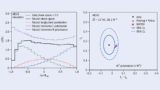
WZ production, with its clean experimental signature, offers a sensitive way to search for anomalies.
 Read article 'Exploring the spin of top-quark pairs'
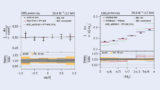
The Standard Model makes precise predictions for the frequency at which the spin of the top quark is aligned with the spin of the top antiquark.
 Read article 'ATLAS observes scattering of vector bosons'
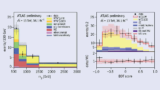
The cross-section of longitudinal weak-boson scattering would diverge, resulting in meaningless values, were it not for the exact cancellation due to Higgs-boson contributions.
 Read article 'CMS detects first production of top quark and photon'
The predicted cross section for tγj, including the branching fraction, is 81 fb, which corresponds to a few hundred events in the whole dataset.
 Read article 'A decade of advances in jet substructure'
Recent focus on measuring Standard Model properties using jet substructure has motivated ATLAS to measure the energy and mass response of large-radius jets with the highest possible precision.
 Read article 'Observation of Higgs-boson decay to bottom quarks'
Processes that include the Higgs boson’s favoured decay mode to b quarks (with about 58% probability) have until now remained elusive.