Big Science, Innovation & Societal Contributions: The Organisations and Collaborations in Big Science Experiments, edited by Shantha Liyanage, Markus Nordberg and Marilena Streit-Bianchi, Oxford University Press
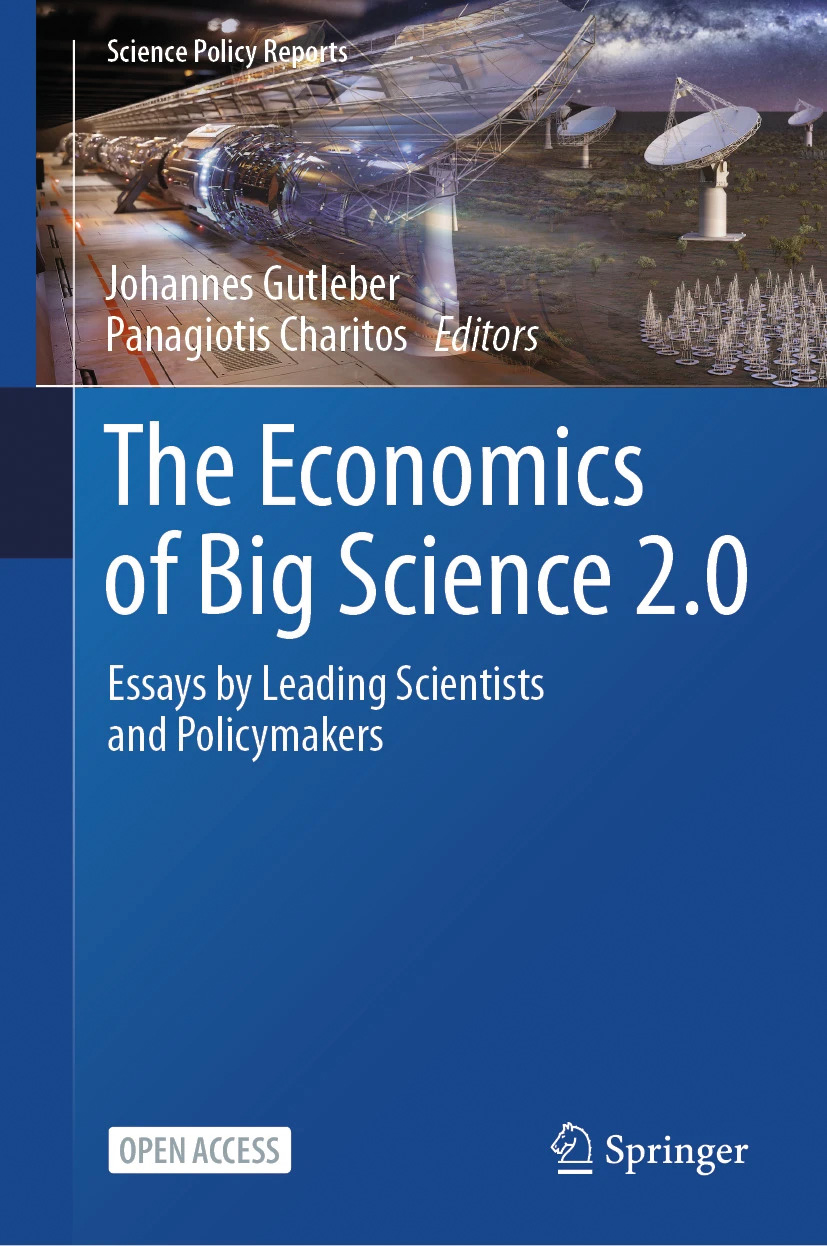
The Economics of Big Science 2.0: Essays by Leading Scientists and Policymakers, edited by Johannes Gutleber and Panagiotis Charitos, Springer
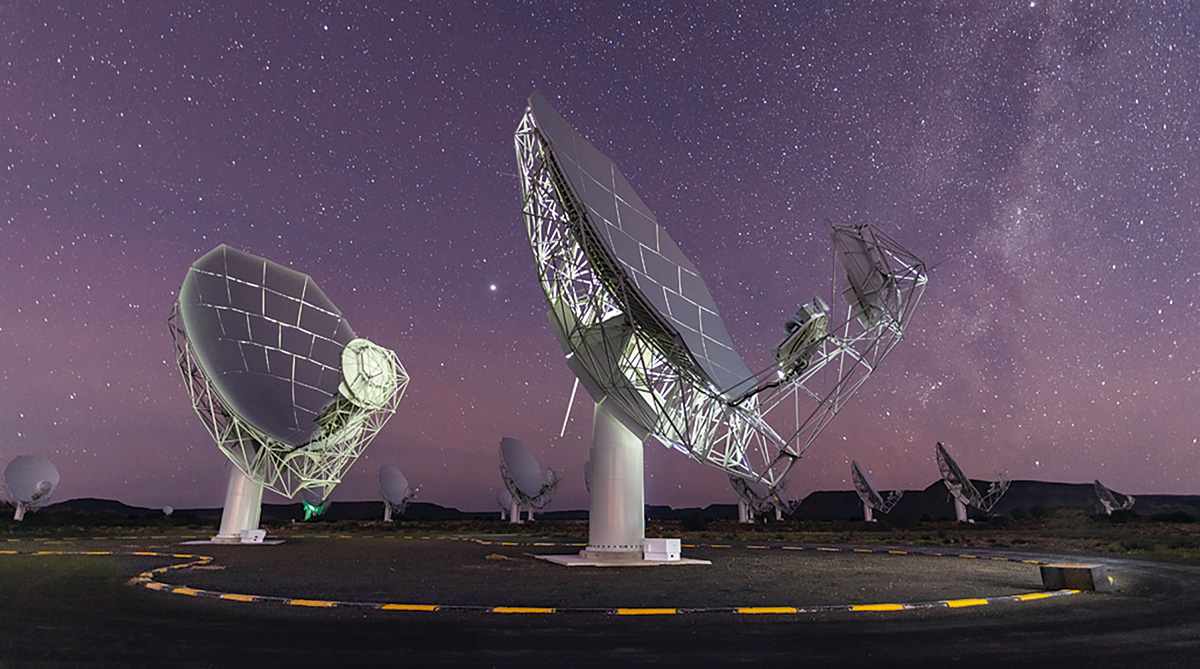
At the 2024 G7 conference on research infrastructure in Sardinia, participants were invited to think about the potential socio-economic impact of the Einstein Telescope. Most physicists would have no expectation that a deeper knowledge of gravitational waves will have any practical usage in the foreseeable future. What, then, will be the economic impact of building a gravitational-wave detector hundreds of metres underground in some abandoned mines? What will be the societal impact of several kilometres of lasers and mirrors?
Such questions are strategically important for the future of fundamental science, which is increasingly often big science. Two new books tackle its socio-economic impacts head on, though with quite different approaches, one more qualitative in its research, and the other more quantitative. What are the pros and cons of qualitative versus quantitative analysis in social sciences? Personally, as an economist, at a certain point I would tend to say show me the figures! But, admittedly, when assessing the socio-economic impact of large-scale research infrastructures, if good statistical data is not available, I would always prefer a fine-grained qualitative analysis to quantitative models based on insufficient data.
Big Science, Innovation & Societal Contributions, edited by Shantha Liyanage (CERN), Markus Nordberg (CERN) and Marilena Streit-Bianchi (vice president of ARSCIENCIA), takes the qualitative route – a journey into mostly uncharted territory, asking difficult questions about the socio-economic impact of large-scale research infrastructures.
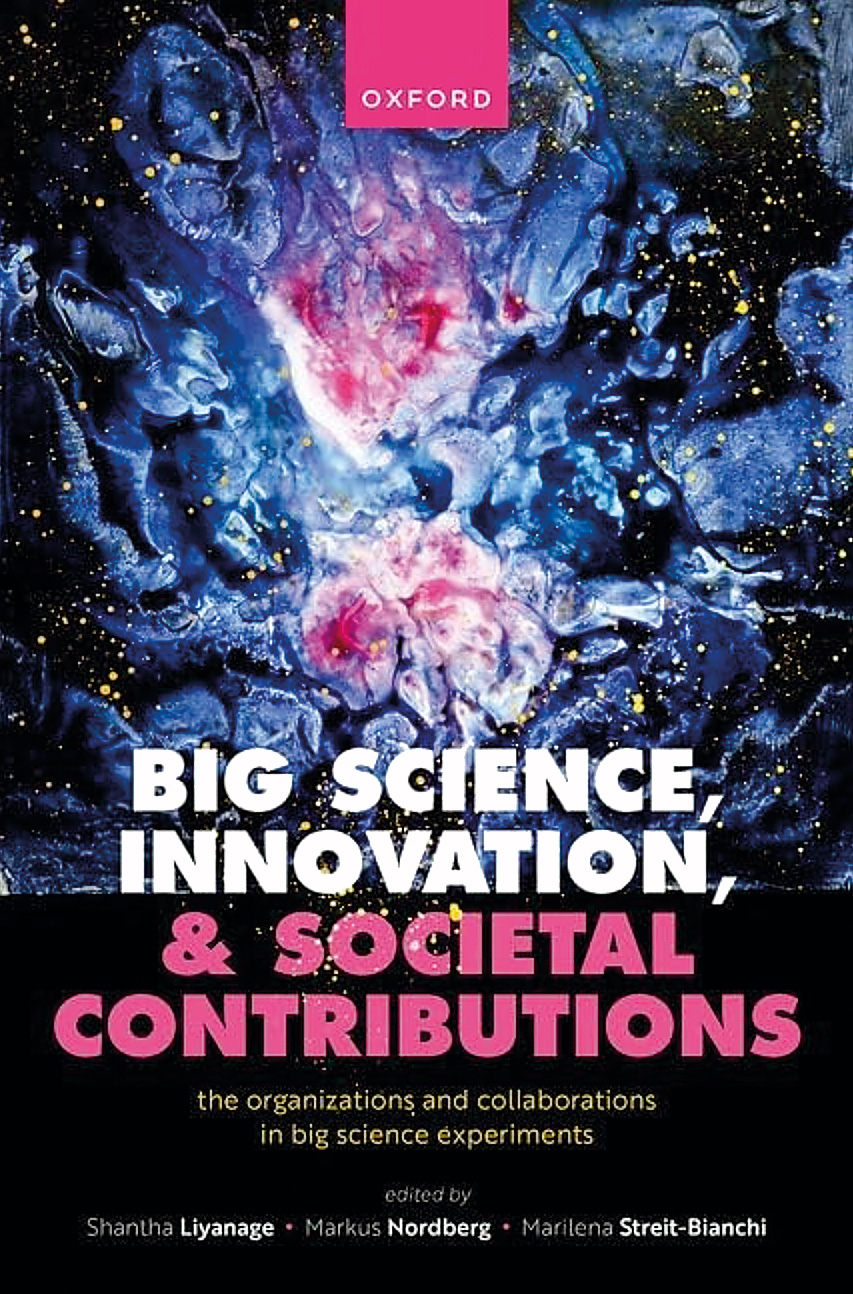
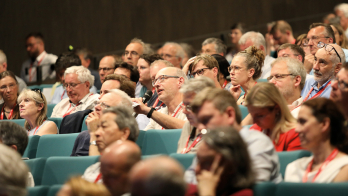
Some figures about the book may be helpful: the three editors were able to collect 15 chapters, with about 100 figures and tables, to involve 34 authors, to list more than 700 references, and to cover a wide range of scientific fields, including particle physics, astrophysics, medicine and computer science. A cursory reading of the list of about 300 acronyms, from AAI (Architecture Adaptive Integrator) to ZEPLIN (ZonEd Proportional scintillation in Liquid Noble gas detector), would be a good test to see how many research infrastructures and collaborations you already know.
After introducing the LHC, a chapter on new accelerator technologies explores a remarkable array of applications of accelerator physics. To name a few: CERN’s R&D in superconductivity is being applied in nuclear fusion; the CLOUD experiment uses particle beams to model atmospheric processes relevant to climate change (CERN Courier January/February 2025 p5); and the ELISA linac is being used to date Australian rock art, helping determine whether it originates from the Pleistocene or Holocene epochs (CERN Courier March/April 2025 p10).
A wide-ranging exploration of how large-scale research infrastructures generate socio-economic value
The authors go on to explore innovation with a straightforward six-step model: scanning, codification, abstraction, diffusion, absorption and impacting. This is a helpful compass to build a narrative. Other interesting issues discussed in this part of the book include governance mechanisms and leadership of large-scale scientific organisations, including in gravitational-wave astronomy. No chapter better illustrates the impact of science on human wellbeing than the survey of medical applications by Mitra Safavi-Naeini and co-authors, which covers three major domains of applications in medical physics: medical imaging with X-rays and PET; radiotherapy targeting cancer cells internally with radioactive drugs or externally using linacs; and more advanced but expensive particle-therapy treatments with beams of protons, helium ions and carbon ions. Personally, I would expect that some of these applications will be enhanced by artificial intelligence, which in turn will have an impact on science itself in terms of digital data interpretation and forecasting.
Sociological perspectives
The last part of the book takes a more sociological perspective, with discussions about cultural values, the social responsibility to make sure big data is open data, and social entrepreneurship. In his chapter on the social responsibility of big science, Steven Goldfarb stresses the importance of the role of big science for learning processes and cultural enhancement. This topic is particularly dear to me, as my previous work on the cost–benefit analysis of the LHC revealed that the value of human capital accumulation for early-stage researchers is among the biggest contributions to the machine’s return on investment.
I recommend Big Science, Innovation & Societal Contributions as a highly informative, non-technical and updated introduction to the landscape of big science, but I would suggest complementing it with another very recent book, The Economics of Big Science 2.0, edited by Johannes Gutleber and Panagiotis Charitos, both currently working at CERN. Charitos was also the co-editor of the volume’s predecessor, The Economics of Big Science, which focuses more on science policy, as well as public investment in science.
Why a “2.0” book? There is a shift of angle. The Economics of Big Science 2.0 builds upon the prior volume, but offers a more quantitative perspective on big science. Notably, it takes advantage of a larger share of contributions by economists, including myself as co-author of a chapter about the public’s perception of CERN.
It is worth clarifying that economics, as a domain within the paradigm of social sciences more generally, has its rules of the game and style. For example, the social sciences can be used as an umbrella encompassing sociology, political science, anthropology, history, management and communication studies, linguistics, psychology and more. The role of economics within sociology is to build quantitative models and to test them with statistical evidence, a field also known as econometrics.
Here, the authors excel. The Economics of Big Science 2.0 offers a wide-ranging exploration of how large-scale research infrastructures generate socio-economic value, primarily driven by quantitative analysis. The authors explore a diverse range of empirical methods, from forming cost–benefit analyses to evaluating econometric modelling, allowing them to assess the tangible effects of big science across multiple fields. There is a unique challenge for applied economics here, as big science centres by definition do not come in large numbers, however the authors involve large numbers of stakeholders, allowing for a statistical analysis of impacts, and the estimation of expected values, standard errors and confidence intervals.
Societal impact
The Economics of Big Science 2.0 examines the socio-economic impact of ESA’s space programmes, the local economic benefits from large-scale facilities and the efficiency benefits from open science. The book measures public attitudes toward and awareness of science within the context of CERN, offering insights into science’s broader societal impacts. It grounds its analyses in a series of focused case studies, including particle colliders such as the LHC and FCC, synchrotron light sources like ESRF and ALBA, and radio telescopes such as SARAO, illustrating the economic impacts of big science through a quantitative lens. In contrast to the more narrative and qualitative approach of Big Science, Innovation & Societal Contributions, The Economics of Big Science 2.0 distinguishes itself through a strong reliance on empirical data.