Commercial software can’t keep pace with experimental precision when it comes to large-scale computer-algebra calculations in quantum field theory. Maintained by a single theorist for decades, FORM is often the only option, underpinning a remarkable fraction of papers in high-energy physics. The Courier interviewed key figures from its past, present and future.
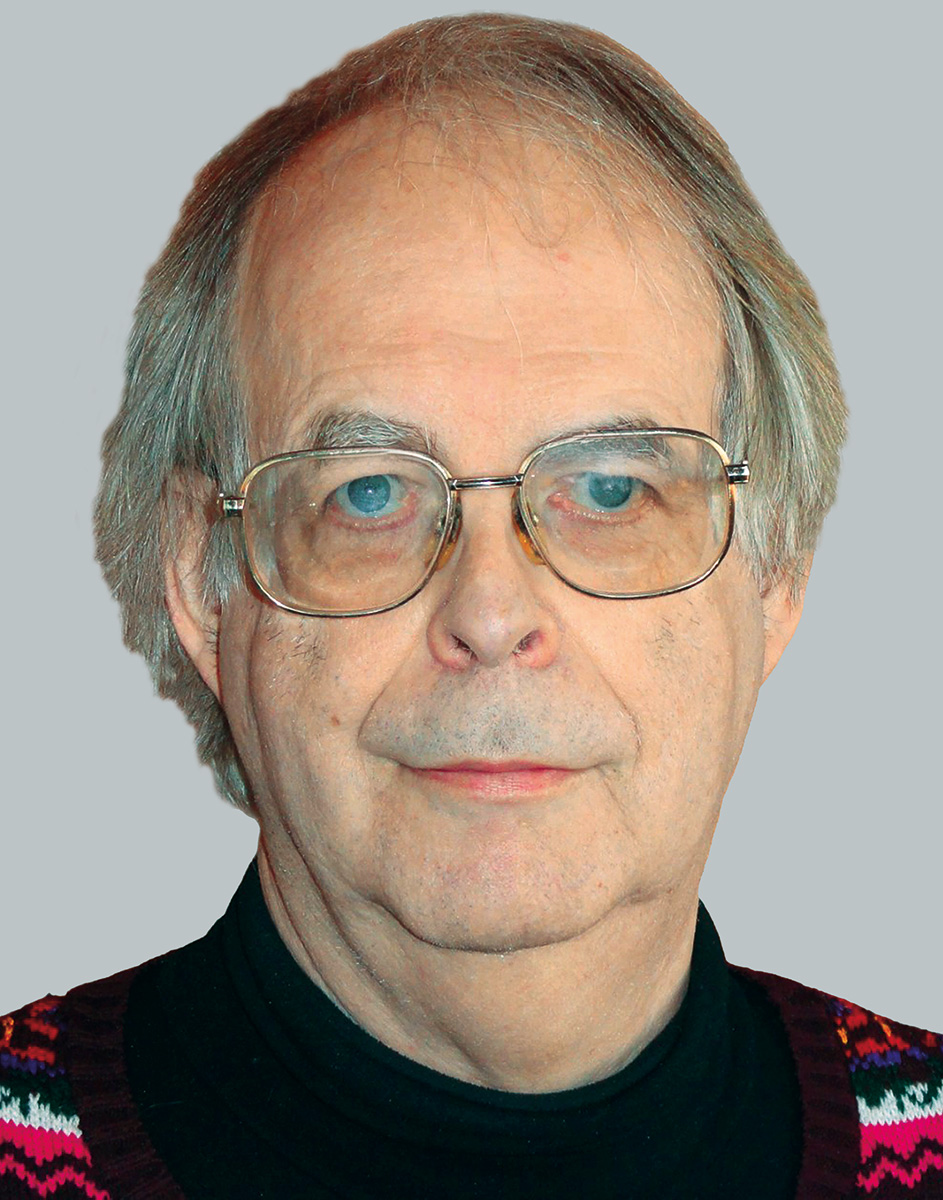
Jos, FORM has been at the heart of precision calculations for decades. But the story starts earlier, with Martinus Veltman (see “The pioneer” image). What was he trying to do?
Jos Vermaseren In 1963, Veltman was interested in the renormalisation of Yang–Mills theories. He wanted to check whether certain models produced unphysical infinities that could not be removed. These calculations are a lot of work: you don’t do that by hand. So he built himself a program, which he called Schoonschip, to do that calculation.
What was computing like in those days?
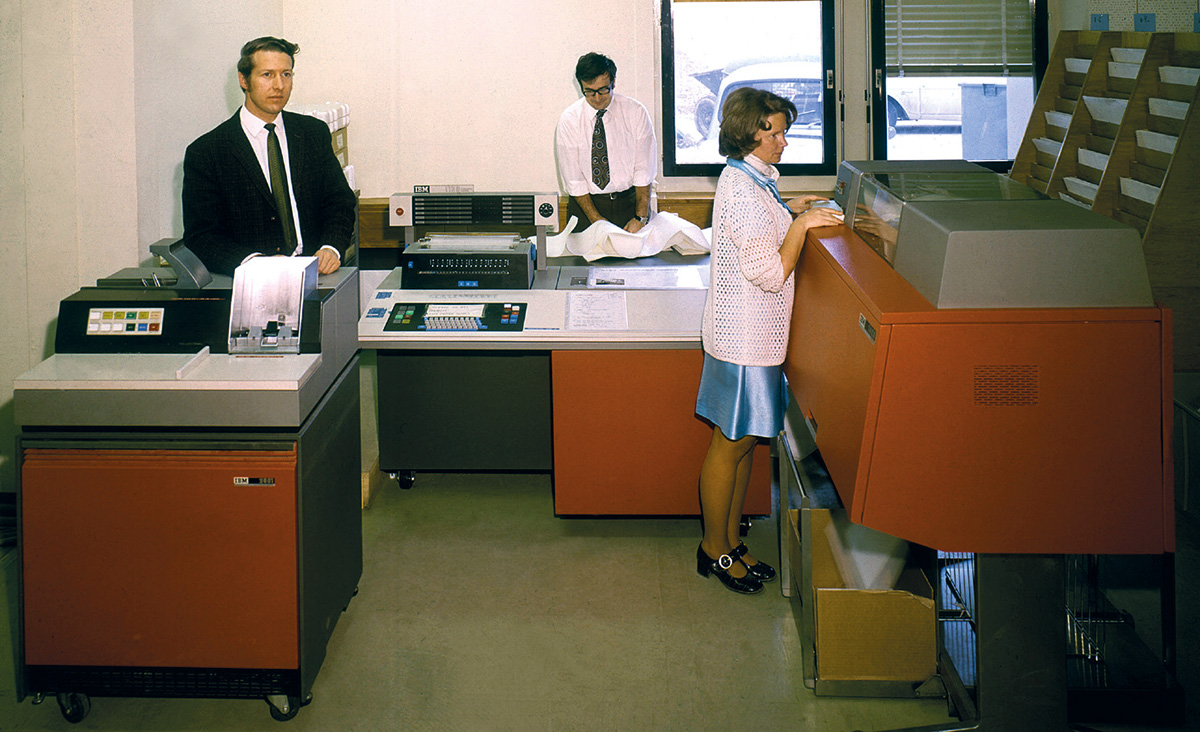
Vermaseren Very primitive by current standards. When Veltman started at CERN, they had a CDC 6600, which was for a while the biggest computer in the world. But you had to share it with maybe a few thousand people, so you had to wait for your program to come out (see “The first supercomputer” image). At Nijmegen University in the early 1970s, we had an IBM computer where you had to hand in your computer cards, then wait a few hours for output. If your program was big, it would only run during the night. Make a typo, and you’d find out the next day that nothing had happened. That kind of primitive computing was left behind when personal computers came in the 1980s. I bought an Atari ST in late 1985, and the fun part was that at Nikhef, the Dutch National Institute for Subatomic Physics, we had a CDC 173, but my Atari had more memory! That was quite amazing. Every decade, the computers became more powerful, and with that the calculations became larger. I’ve been involved in calculations where the intermediate formulas were terabytes big. That is kind of hard to imagine. But if you put in enough effort and enough checking, you still get the correct answer. There is simply no way you could ever do that by hand. No way. That’s why we absolutely need these algebra programs.

Where did Schoonschip – I apologise for my pronunciation – fit in the landscape of early computer algebra?
Vermaseren Ah, Veltman did that intentionally to tease all the foreigners. [chuckles] There were already ideas about algebraic software in the 1960s – Feynman was suggesting something in the 1950s – but nothing really usable for physics calculations when Veltman started. Around the same time, Tony Hearn started with the REDUCE program, which was formally more elegant but less powerful. Those were the main players for a while, but they all had limitations. REDUCE wasn’t nearly as fast as Schoonschip and couldn’t handle very big expressions. Schoonschip’s limitation was that Veltman had written it in assembly, so you could only use it if you had the correct computer.
How did you enter this story?
Vermaseren I was very much used to Schoonschip and was quite a good programmer with it, but CDC computers were expensive and being phased out. So there I was, faced with the idea that I wouldn’t have Schoonschip any longer. I also wanted to make a giant system for doing automated calculations that would need computer algebra in a more flexible way than Schoonschip provided. If I needed new features, I’d have to go to Veltman and wait probably a year. Veltman had built in what he needed and was so nice to provide other people with his program. But if you get a free program, you shouldn’t come up with too many demands. The conclusion was that if I really wanted to make what I needed, I would need my own program.
Schoonschip had a couple of weak points. One was the sorting mechanism, which meant that with very large expressions, the program became outrageously slow. The handling of functions and function arguments was not flexible at all. And then there was the whole business of computer availability. I asked Nikhef management if they would allow me to take some time out to work on it, and they thought it was a good idea, so my back was covered.
This may resonate with early-career researchers who want to build long-lived tools today. What would you tell them?
Vermaseren You have to put in an enormous amount of time, and if you want to get a job in physics, you can only get credit for that if at the same time you use what you make for good calculations that draw attention. You need physics publications. If you go in as a postdoc to just write useful software, you have a problem, unless somebody has already promised you a decent job.
People like to count citations, and organisations usually look at citations in the first two years. But when you have a paper about a calculation, the opposite usually occurs. In the beginning you don’t get very many citations because people aren’t using it yet. I have a lot of papers that started with hardly anything, and then after a few years they pick up and keep growing. But for a postdoc, that is a disaster.

Thomas Gehrmann I’d add to this that recognition for contributions to scientific software is usually underrated when evaluating a researcher’s performance. It’s not recognised at the same level as publications or plenary talks. We should really try to communicate to senior people making funding decisions the importance of the whole body of scientific output. Scientific software development is very useful to the community but much less easily quantifiable than citations.
Vermaseren Although, for universities it is very nice to eventually have somebody there who is generating a lot of citations and educating people to do big calculations, they just don’t recognise it. The world of theory software development needs more institutional support.
Thomas, can you describe FORM’s impact on particle physics?
Gehrmann FORM enabled calculations that would never have been possible with any other tool. At each given moment in time, ever since the inception of FORM version one in the late 1980s, early 1990s, the cutting-edge calculations were usually done with FORM. Many of these calculations were redone a few years later with other tools, but what had changed was that computers became more powerful, had more memory, more storage space and were faster, so you could also do similar calculations in Mathematica or Maple. However, FORM was always at the avant-garde of the calculations.
In groups that are performing multi-loop calculations, the first-week’s task for a new student is usually: learn FORM on a simple example, compute the scattering matrix elements in FORM to get you used to its environment. For students working on cutting-edge projects – the next loop on a scattering amplitude, the next order on a benchmark cross-section – it’s made clear from the very onset that FORM is the tool to be used, because it’s only with this tool that there’s a realistic chance to get through the project in a finite amount of time.
Can you give an example of a particularly important calculation?
Gehrmann The LHC is a proton–proton collider, but the hard scattering processes underlying the collisions are not proton–proton but collisions of quarks and gluons. To make precise predictions for anything you observe at the LHC, you need to know how quarks and gluons are distributed inside the proton. These parton distribution functions are extracted from combined fits to huge sets of data from different experiments at vastly different energy scales. I mean, from a 35 GeV electron beam at SLAC up to multi-TeV collisions at the LHC. That’s almost three orders of magnitude.
Parton distributions evolve with energy scales via the Altarelli–Parisi evolution equations: knowing the Altarelli–Parisi splitting functions to sufficient theoretical precision is one of the cornerstones enabling these fits. The calculation that enabled the current level of precision was done in the early 2000s by Jos and his collaborators Sven Moch and Andreas Vogt. It went alongside the development of FORM version three, and was a crucial result for the entire LHC physics programme.
Looking ahead to the High-Luminosity LHC and a potential FCC, how important is FORM’s continued development?
Gehrmann Both are extremely high-statistics, high-luminosity machines. They’ll give us measurements at a statistical precision never achieved before in a collider experiment. Researchers need to be empowered with proper tools to make the most of the physics, with a whole new generation of precision calculations. FORM has grown with the field, due to both the ingenious design choices Jos made at inception, when a lot was already conceived in a scalable fashion, and through continuous development addressing bottlenecks. It’s very hard to predict what will be the bottlenecks for High-Luminosity LHC calculations, and it’s even harder for the FCC. But they will require adaptations to how we do computer algebra. And, of course, committed developers.
Josh, you’ve been working on FORM 5. Why is a major release necessary now?
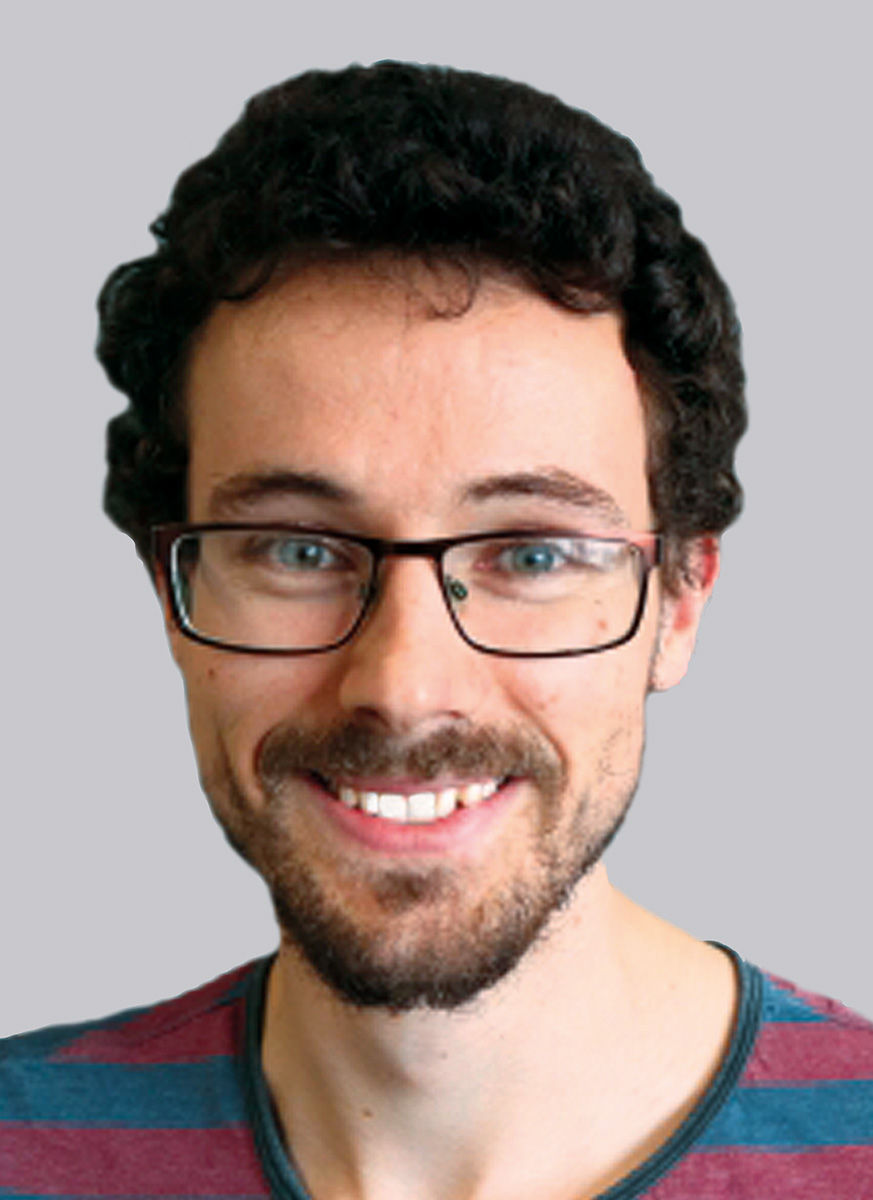
Joshua Davies Being able to release new versions helps convey to the community that there’s progress. Most users stick to a released version rather than rebuilding from GitHub. Being able to say “this is a new version with well-tested new features” is important for users to trust it for their work.
What are the major new features?
Davies The first is a Feynman graph generator built into FORM, from a collaborator of Jos, Toshiaki Kaneko. FORM now has an interface to this generator that lets you produce graphs from within the code without relying on external tools. It’s written in a more flexible way, which lets you add features or modify it much more easily than other tools. I also put in an interface that improved polynomial arithmetic performance. This is increasingly necessary now that people study processes with higher multiplicities or more mass scales. You end up with computations depending on many more variables than in the past.
Vermaseren The third main feature is the ability to have floating-point coefficients as opposed to rational numbers. Modern algorithms still can’t determine everything through normal calculations. You’re restricted to doing certain parts in arbitrary-precision floating point. But these capabilities have other good features. If you want to do a calculation for the LHC, in the end these run in Monte Carlo integration programs: you take a very big formula and sample it billions of times. But how numerically stable is that formula? If I have floating-point capability, I can figure out the numerical stability before I evaluate it billions of times in another program. I can determine whether I’ll run into disasters.
What does the future hold for FORM’s development?
Davies It seems unlikely that anyone is suddenly going to fund a permanent job where the main role is looking after FORM. But if we can foster an environment where postdocs or PhD students feel they can contribute and be recognised for it, and it helps them apply for their next position, this needs to be the way packages like FORM are developed. I’m a postdoc trying to apply for longer-term positions, but the future of FORM isn’t secure. I’ve put in a lot of effort, alongside Coenraad Marinissen and Takahiro Ueda, to get FORM to version five, but it’s not guaranteed people working on FORM will be able to continue.
Do we need a different institutional framework to support this kind of development?
Davies We need more recognition from the people who decide where funding goes for contributions to software work. On the experimental side, there are people whose job is the LHC software that goes into the analysis chain. We don’t really have this equivalent on the theory side. People work on software alongside their physics projects, and you always have to have physics results coming out if you want to continue to get jobs. No one can truly focus one hundred percent on the tools. What would really help is if contributing to a project like FORM was clearly recognised as a valuable scientific output in its own right, alongside physics papers. If young researchers felt that contributing to core tools genuinely strengthened their career prospects rather than putting them at risk, it would completely change how sustainable projects like this are.
Gehrmann This is exactly right. Over the years, it was crucial to have Jos as a developer in the background regularly talking to the community, getting feedback: “This is the current bottleneck we’re up against.” But that only worked because Jos could actually focus on it. We’ve been trying to improve community involvement over the past five years with dedicated workshops, bringing together developers with users pushing FORM to their limits and students coming into the field. This format has started to take off successfully. At these workshops, in the mornings the senior developers explain the internal structure of the code. And then in the afternoons people work on concrete exercises like bug fixes or small features, almost like a hackathon. But this is a bottom-up initiative. It needs a top-down approach to make the project sustainable and create career perspectives for FORM developers like Josh. I can only hail the visionary decisions Nikhef management made 40 years ago when they decided to leave Jos alone for a few years to develop version one. Without institutional recognition that creates actual career paths for theory software developers, we risk losing the very people who can secure FORM’s future – and with it, our ability to make the most of the next generation of colliders.