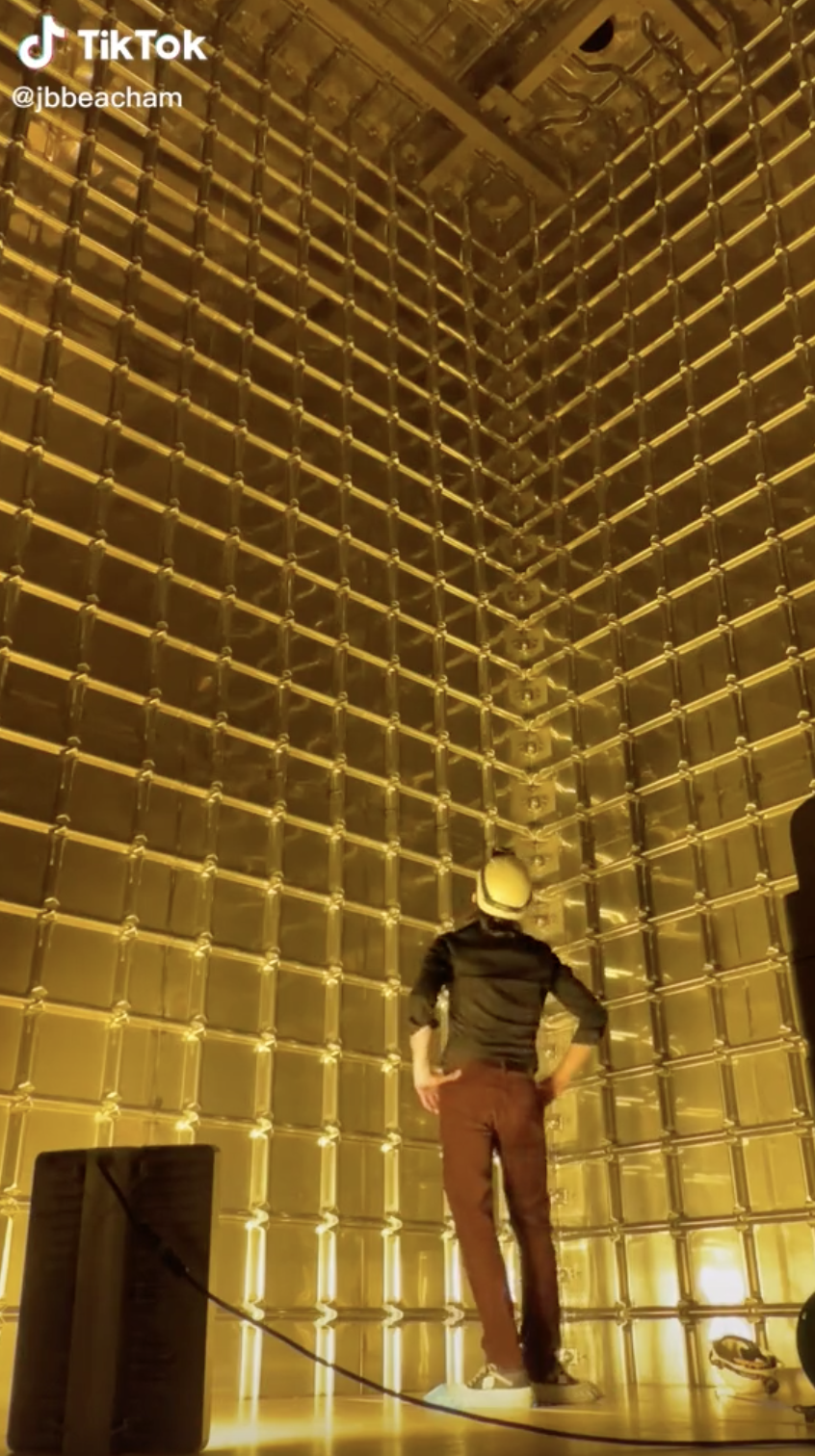
After being shown the app by her mother during lockdown, ATLAS physicist Clara Nellist downloaded TikTok and created her first two “shorts” in January this year. Jumping on a TikTok trend, the first saw her sing a CERN-themed sea shanty, while the second was an informal introduction to her page as she meandered around a park near the CERN site. Together, these two videos now total almost 600,000 views. Six months later, another ATLAS physicist, James Beacham, joined the platform, also with a quick introduction video explaining his work while using the ATLAS New Small Wheels as a backdrop. The video now has over 1.7 million views. With TikTok videos giving other social-media channels a run for their money, soon more of the high-energy physics community may want to join the rising media tide.
Surfing the wave
From blogs in the early 2000s through to Twitter and YouTube today, user-generated ‘Web 2.0’ platforms have allowed scientists to discuss their work and share their excitement directly. In the case of particle physics, researchers and their labs have never been within closer reach to the public, with a tour of the Large Hadron Collider always just a few clicks away. In 2005, as blogs were mushrooming, CERN and other players in particle physics joined forces to create Quantum Diaries. As the popularity of blogs began to dwindle towards the late noughties, CERN hopped on the next wave, joining YouTube in 2007 and Twitter in 2008 – at a time when public interest in the LHC was at its peak. CERN’s Twitter account currently boasts an impressive 2.5 million followers.
While joining later than some other laboratories, Fermilab caught onto a winning formula on YouTube, with physicist Don Lincoln fronting a long-standing educational series that began in 2011 and still runs today, attracting millions of views. Most major particle-physics laboratories also have a presence on Facebook and Instagram, with CERN joining the platforms in 2011 and 2014 respectively, not to mention LinkedIn, where CERN also possesses a significant following.
Particle physics laboratories are yet to launch themselves on TikTok. But that hasn’t stopped others from creating videos about particle physics, and not always “on message”. Type ‘CERN’ into the TikTok search bar and you are met with almost a 50/50 mix of informative videos and conspiracy theories – and even then, some of the former are merely debunking the latter. Is it time for institutions to get in on the trend?
Rising to the moment
Nellist, who has 123,000 followers on TikTok after less than nine months on the site, believes that it’s the human aspect and uniqueness of her content that has caused the quick success. “I started because I wanted to humanise science – people don’t realise that normal humans work at CERN. When I started there was nobody else at CERN doing it.” Beacham also uses CERN as a way of capturing attention, as illustrated in his weekly livestreams to his 230,000 followers. “If someone is scrolling and sees someone sitting in a DUNE cryostat discussing science, they’re going to stop and check it out,” he says. Beacham sees himself as a filmmaker, rather than a “TikTok-er”, and flexes his bachelor’s degree in film studies with longer form videos that take him across the CERN campus. “There is a desire on TikTok to know about CERN,” he says.
TikTok is different to other social-media platforms in several ways, one being incompatibility. While a single piece of media such as a video can be shared across YouTube, Twitter, Instagram, Facebook, etc., this same media would not work on TikTok. Videos can also only be a maximum of three minutes, although the majority are shorter. This encourages concise productions, with a lot of information put across in a short period of time. Arguably the biggest difference is that TikTok insists that every video is in portrait mode – creating a feeling of authenticity and an intimate environment. YouTube and Instagram are now following suit with their portrait-mode ‘YouTube Shorts’, and ‘Instagram Reels’ respectively, with CERN already using the latter to create quick and informative clips that have attracted large audiences.
Nellist and Beacham, both engaging physicists in their own right who the viewer feels they can trust, create a perfect blend for TikTok. While there are some topics that will always generate more interest, they have a core audience that consistently returns for all videos. This gives a strong sense of editorial freedom, says Nellist. “While it is important to be aware of views, I get to make what I want.”
Changing demographics
When CERN joined Twitter in 2008, says James Gillies, head of CERN communications at the time, young people were a key factor as CERN tried to maximise its digital footprint. But things have changed since then. It is estimated that there are over 1 billion active TikTok users per month, and according to data firm Statista, in the US almost 50% of them are aged 30 and under, with other reports stating that up to 32.5% of users are between the ages of 10 and 19. Statista also estimates that only 24% of today’s Twitter users are under 25 – the so-called ‘Gen-Z’ who will fund and possibly work on future colliders.
If you want to lead the conversation, you have to be part of it
James Gillies
Another reason for CERN to enter the Twitter-verse (and which facilitated the creation of Quantum Diaries), says Gillies, was to allow CERN to take their communication into their own hands. Although Nellist and Beacham are already encouraging this discussion on TikTok, they are not official CERN communication channels. Were they to decide to stop or talk about different topics, it would be hard to find any positive high-energy physics discussions on the most popular app on the planet.
Whilst Nellist believes CERN should be joining the platform, she urges that someone “who knows about it” should be dedicated to creating the content, as it is obvious to TikTok audiences when someone doesn’t understand it. Beacham states, “humans don’t respond to ideas as much as they respond to people.” Creators have their own unique styles and personalities that the viewers enjoy. So, if a large institution were to join, how would it create this personal environment?
The ATLAS experiment is currently the only particle-physics experiment to be found on the platform. The content is less face-to-face and more focused on showing the detector and how it works – similar in style to a CERN Instagram story. Despite being active for a similar amount of time as Nellist and Beacham, however, the account has significantly fewer followers. Nellist, who runs the ATLAS TikTok account, thinks there is room for both personal and institutional creators on the platform, though the content should be different. Beacham agrees, stating that it should show individual scientists expressing information in an off-the-cuff way. “There is a huge opportunity to do something great with it, there are thousands of things you could do. There are amazing visuals that CERN is capable of creating that can grab a viewer’s attention.”
Keeping up
There may be some who scoff at the idea of CERN joining a platform that has a public image of creating dance crazes rather than educational content. It is easy to forget that when first established, YouTube was seen as the place for funny cat videos, while Twitter was viewed as an unnecessary platform for people to tell others what they had for breakfast. Now these two platforms are the only reason some may know CERN exists, and unfortunately, not always for the right reasons.
Social media gives physicists and laboratories the opportunity to contact and influence audiences more directly than traditional channels. The challenge is to keep up with the pace of change. It’s clearly early days for a platform that only took off in 2018. Even NASA, which has the largest number of social-media followers of any scientific institution, is yet to launch an official TikTok channel. But, says Gillies, “If you want to lead the conversation, you have to be part of it.”
The 22nd International Workshop on Neutrinos from Accelerators (NuFact 2021) was held from 6 to 11 September, attracting a record 450 participants either online or in Cagliari, Italy. NuFact addresses topics in neutrino oscillations and neutrino-scattering physics, neutrino beams, muon physics, neutrinos beyond the Standard Model and the latest generation of neutrino detectors. The 2021 edition was organised by the Cagliari Division of INFN, the Italian Institute for Nuclear Physics and the University of Milano-Bicocca.
At the time of the first NuFact in 1999, it wasn’t at all clear that accelerator experiments could address leptonic CP violation in neutrinos. Fits still ignored θ13, which expresses the relatively small coupling between the third neutrino mass eigenstate and the electron, and the size of the solar-oscillation mass splitting, which drives the CP-violating amplitude. Today, leading experiments testify to a precision era of neutrino physics where every parameter in the neutrino mixing matrix must be fitted. TK2, NOvA and MINERvA all reported new analyses and speakers from Fermilab updated the conference on the commissioning of the laboratory’s short-baseline experiments ICARUS, MicroBooNE and SBND, which seek to clarify experimental hints of additional “sterile” neutrinos. After a long journey from CERN to Fermilab, the ICARUS detector, the largest and most downstream of the three liquid-argon detectors in the programme, has been filled with liquid argon, and data taking is now in full swing.
g-2 anomaly
As we strive to pin down the values of the neutrino mixing matrix with a precision approaching that of the CKM matrix, NuFact serves as a key forum for collaborations between theorists and experimentalists. Simon Corrodi (Argonne) showed how the latest results from Fermilab on the g-2 anomaly may suggest new physics in lepton couplings, with potential implications for neutrino couplings and neutrino propagation. Collaboration with accelerator physicists is also important. After the discovery in 2012 that θ13 is nonzero, the focus of experiments with artificial sources of neutrinos turned to the development of multi-MW beams and the need for new facilities. Keith Gollwitzer (Fermilab) kicked off the discussion by summarising Fermilab’s outstanding programme at the intensity frontier, paving the way for DUNE, and Megan Friend (KEK) presented impressive progress in Japan last year. The J-PARC accelerator complex is being upgraded to serve the new T2K near detector, for which the final TPC anode and cathode are now being tested at CERN. The J-PARC luminosity upgrade will also serve the Hyper-Kamiokande experiment, which is due to come online on approximately the same timeline as DUNE. Though the J-PARC neutrino beam will be less intense and by design more monochromatic than that from Fermilab to DUNE, the Hyper-Kamiokande detector will be both closer and larger, promising comparable statistics to DUNE, and addressing the same physics questions at a lower energy.
ENUBET and nuSTORM could operate in parallel with DUNE and Hyper-Kamiokande
A lively round-table discussion featured a dialogue between two of the experiments’ co-spokespersons, Stefan Söldner-Rembold (Manchester) and Francesca Di Lodovico (King’s College London). Both emphasised the complementarity of DUNE and Hyper-Kamiokande, and the need to reduce systematic uncertainties with ad-hoc experiments.J-PARC director Takahashi Kobayashi explored this point in the context of data-driven models and precision experiments such as ENUBET and nuSTORM. Both experiments are in the design phase, and could operate in parallel with DUNE and Hyper-Kamiokande in the latter half of this decade, said Sara Bolognesi (Saclay) and Kenneth Long (Imperial). A satellite workshop focused on potential synergies between these two CERN-based projects and a muon-collider demonstrator, while another workshop explored physics goals and technical challenges for “ESSnuSB” – a proposed neutrino beam at the European Spallation Source in Lund, Sweden. In a plenary talk, Nobel laureate and former CERN Director-General Carlo Rubbia went further still, exploring the possibility of a muon collider at the same facility.
The next NuFact will take place in August 2022 in Salt Lake City, Utah.
• Earlier this summer, the Advanced Light Source (ALS), a synchrotron user facility at the US Department of Energy’s (DOE) Lawrence Berkeley National Laboratory, received federal approval (known as Critical Decision 2) for the $590 million budget, schedule and technical scope of a major upgrade project (ALS-U) that will boost the brightness of its X-ray beams at least a hundredfold. In addition to the replacement of the existing electron storage ring, the upgrade involves construction of two new beamlines to take full advantage of ALS-U’s enhanced beam properties. The project will also provide for the realignment of existing beamlines and a seismic and shielding upgrade of the storage-ring tunnel. A key challenge with ALS-U is the construction of a second concentric ring, called an accumulator, inside the already-cramped concrete tunnels that house the storage ring. This unique feature enables a technique called on-axis, swap-out injection, which allows the electron beam to be injected into the storage ring with minimal perturbation.
• While construction work for the $815 million upgrade of Argonne National Laboratory’s Advanced Photon Source (APS) is already well under way, the replacement of the facility’s existing electron storage ring – which will require a year-long shutdown of the APS experimental programme – is now scheduled to kick off in April 2023. That represents a 10-month delay versus the original planned refit owing to the operational impacts of the COVID-19 pandemic. The upgrade of the APS, a national synchrotron research facility funded by the US DOE, will reduce electron beam emittance by a factor of 70 from its present value which, together with a doubling of stored beam current and the introduction of high-performance insertion devices (some superconducting), will yield X-ray beams two to three orders of magnitude brighter than the current machine. Delaying the shutdown for the storage-ring upgrade will allow the APS to continue operating for all three experimental runs in 2022.
• The US DOE’s Brookhaven National Laboratory (BNL) has named Wolfram Fischer as chair of its Collider–Accelerator Department (C-AD). C-AD develops, improves and operates BNL’s suite of particle and heavy-ion accelerators – including the Relativistic Heavy Ion Collider (RHIC) and Alternating Gradient Synchrotron (AGS) – and will also play a key role in supporting the upcoming construction of the Electron-Ion Collider (see Partnership yields big wins for the EIC). Fischer previously served as accelerator division head in C-AD.
The Proton Improvement Plan II (PIP-II) is an essential upgrade – and ambitious reimagining – of the Fermilab accelerator complex. An all-new, leading-edge superconducting linear accelerator, combined with a comprehensive overhaul of the laboratory’s existing circular accelerators, will deliver multimegawatt proton beam power and, in turn, enable the world’s most intense beam of neutrinos for the international Long Baseline Neutrino Facility (LBNF) and Deep Underground Neutrino Experiment (DUNE). While positioning Fermilab at the forefront of accelerator-based neutrino research, PIP-II will also provide the “engine room” for a diverse – and scalable – experimental programme in US particle physics for decades to come. Put simply, PIP-II will be the highest-energy and highest-power continuous-wave (CW) proton linac ever built, capable of delivering both pulsed and continuous particle beams.
Another unique aspect of PIP-II is that it is the first US Department of Energy (DOE)-funded particle accelerator that will be built with significant international participation. With major “in-kind” contributions from institutions in India, Italy, the UK, France and Poland, the project’s international partners bring wide-ranging expertise and know-how in core accelerator technologies along with an established track-record in big-physics initiatives. What’s more, PIP-II is not going to be the last DOE project to benefit from international collaboration – there will be more to come – so a near-term priority is to provide a successful template that others can follow.
Operationally, LBNF/DUNE is a global research endeavour comprising three main parts: the experiment itself (DUNE); the facility that produces the neutrino beam plus associated infrastructure to support the experiment (LBNF); and the PIP-II upgrade to the Fermilab accelerator complex, which will power the neutrino beam.
At Fermilab, PIP-II will accelerate protons and smash them into an ultrapure graphite target. The resulting beam of neutrinos will travel through the DUNE near detector on the Fermilab site, then through 1300 km of earth (no tunnel required), and finally through the DUNE far detector at Sanford Lab in South Dakota (see figure). Data from neutrino interactions collected by the experiment’s detectors will be analysed by a network of more than 1000 DUNE collaborators around the world.
In this way, DUNE will enable a comprehensive programme of precision neutrino-oscillation measurements using νμ and νμ beams from Fermilab. Key areas of activity will include tests of leptonic charge-parity conservation; determining the neutrino mass ordering; measuring the angle θ23 in the Pontecorvo–Maki–Nakagawa–Sakata mixing matrix; and probing the three-neutrino paradigm. Furthermore, DUNE will search for proton decay in several decay modes and potentially detect and measure the νe flux from any supernovae that take place in our galaxy.
To provide unprecedented detail in the reconstruction of neutrino events, the DUNE experiment will exploit liquid-argon time-projection-chamber (LArTPC) detectors on a massive scale (technology itself that was first deployed at scale in 2010 for the ICARUS detector as part of the CERN Neutrinos to Gran Sasso facility). The LArTPC implementation for DUNE is currently being developed in two prototype detectors at CERN via the CERN Neutrino Platform, an initiative inaugurated in 2014 following the recommendations of the 2013 European Strategy for Particle Physics to provide a focal point for Europe’s contributions to global neutrino research.
In addition to the prototype DUNE detectors, the CERN Neutrino Platform is contributing to the long-baseline Tokai-to-Kamioka (T2K) and future Hyper-Kamiokande experiments in Japan. Construction of the underground caverns for DUNE and Hyper-Kamiokande is under way, with both experiments chasing similar physics goals and offering valuable scientific complementarity when they come online towards the end of the decade.
A key driver of change was the recommendation of the 2014 US Particle Physics Project Prioritization Panel (P5) that the US host a world-leading international programme in neutrino physics. “Its centrepiece,” the P5 report asserts, “would be a next-generation long-baseline neutrino facility (LBNF). LBNF would combine a high-intensity neutrino beam and a large-volume precision detector [DUNE] sited underground a long distance away to make accurate measurements of the oscillated neutrino properties… A powerful, wideband neutrino beam would be realised with Fermilab’s PIP-II upgrade project, which provides very high intensities in the Fermilab accelerator complex.”
Fast forward to December 2020 and full DOE approval of the PIP-II baseline plan, at a total project cost of $978m and with completion scheduled for 2028. Initial site preparation actually started in March 2019, while construction of the cryoplant building got under way in July 2020. Commissioning of PIP-II is planned for the second half of this decade, with the first delivery of neutrino beam to LBNF/DUNE in the late 2020s (see “Deconstructing neutrino physics” panel). With the help of Fermilab’s network of international partners, a highly capable, state-of-the-art accelerator will soon be probing new frontiers in neutrino physics and, more broadly, redefining the roadmap for US high-energy physics.
Then, now, next
If that’s the future, what of the back-story? Fermilab’s particle-accelerator complex originally powered the Tevatron, the first machine to break the TeV energy barrier and the world’s most powerful accelerator before CERN’s Large Hadron Collider (LHC) came online a decade ago. The Tevatron was shut down in 2011 after three illustrious decades at the forefront of particle physics, with notable high-points including discovery of the top quark in 1995 and direct discovery of the tau neutrino in 2000.
A powerful, wideband neutrino beam would be realised with Fermilab’s PIP-II upgrade project
Today, about 4000 scientists from more than 50 countries rely on Fermilab’s accelerators, detectors and computing facilities to support their cutting-edge research. The laboratory comprises four interlinking accelerators and storage rings: a 400 MeV room-temperature linac; an 8 GeV Booster synchrotron; an 8 GeV fixed-energy storage ring called the Recycler; and a 60–120 GeV Main Injector synchrotron housed in the same tunnel with the Recycler. The Main Injector generates more than 800 kW of proton beam power, in turn yielding the world’s most intense beams of neutrinos for Fermilab’s flagship NOvA experiment (with the far detector located in Ash River, Minnesota), while supporting a multitude of other research programmes exploring fundamental particles and forces down to the smallest scales.
A leading-edge SRF proton linac
The roll-out of PIP-II will make the Fermilab complex more powerful again. Replacing the 50-year-old linear accelerator with a high-intensity, superconducting radiofrequency (SRF) linac will enable Fermilab to deliver 1.2 MW of proton beam power to the LBNF target, providing a platform for scale-up to multimegawatt levels and the capability for high-power operation across multiple particle-physics experiments simultaneously.
Deconstructed, the PIP-II linac is an 800 MeV, 2 mA H– machine consisting of a room-temperature front-end (up to 2.1 MeV) followed by an SRF section designed to operate in CW mode. The CW operation, and the requirements it places on the SRF systems, present some unprecedented challenges in terms of machine design.
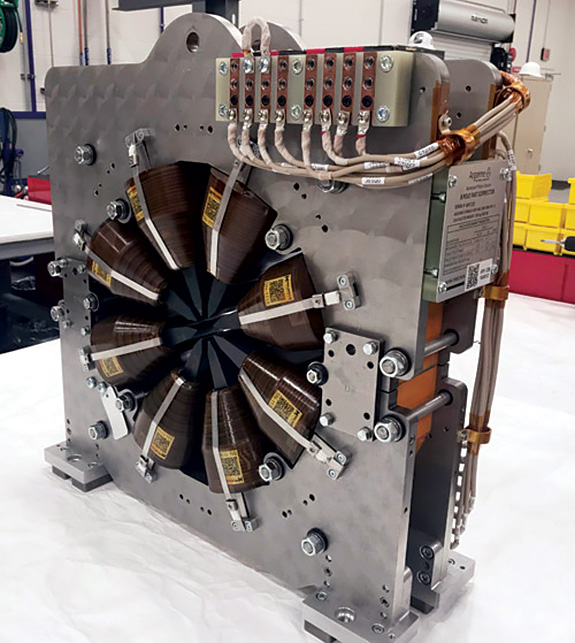
The H– source (capable of 15 mA beam current) is followed by a low-energy beam transport (LEBT) section and a radiofrequency quadrupole (RFQ) that operates at a frequency of 162.5 MHz and is capable of 10 mA CW operation. The RFQ bunches, focuses and accelerates the beam from 30 keV to 2.1 MeV. Subsequently, the PIP-II MEBT includes a bunch-by-bunch chopping system that removes undesired bunches of arbitrary patterns from the CW beam exiting the RFQ. This is one of several innovative features of the PIP-II linac design that enables not only direct injection into the Booster RF bucket – thereby mitigating beam losses at injection – but also delivery of tailored bunch patterns for other experiments. The chopper system itself comprises a pair of wideband kickers and a 20 kW beam absorber.
In terms of the beam physics, the H– ions are non-relativistic at 2.1 MeV and their velocity changes rapidly with acceleration along the linac. To achieve efficient acceleration to 800 MeV, the PIP-II linac employs several families of accelerating cavities optimised for specific velocity regimes – i.e. five different types of SRF cavities at three RF frequencies. Although this arrangement ensures efficient acceleration, it also increases the technical complexity of the project owing to the unique challenges associated with the design, fabrication and commissioning of a portfolio of accelerating systems.
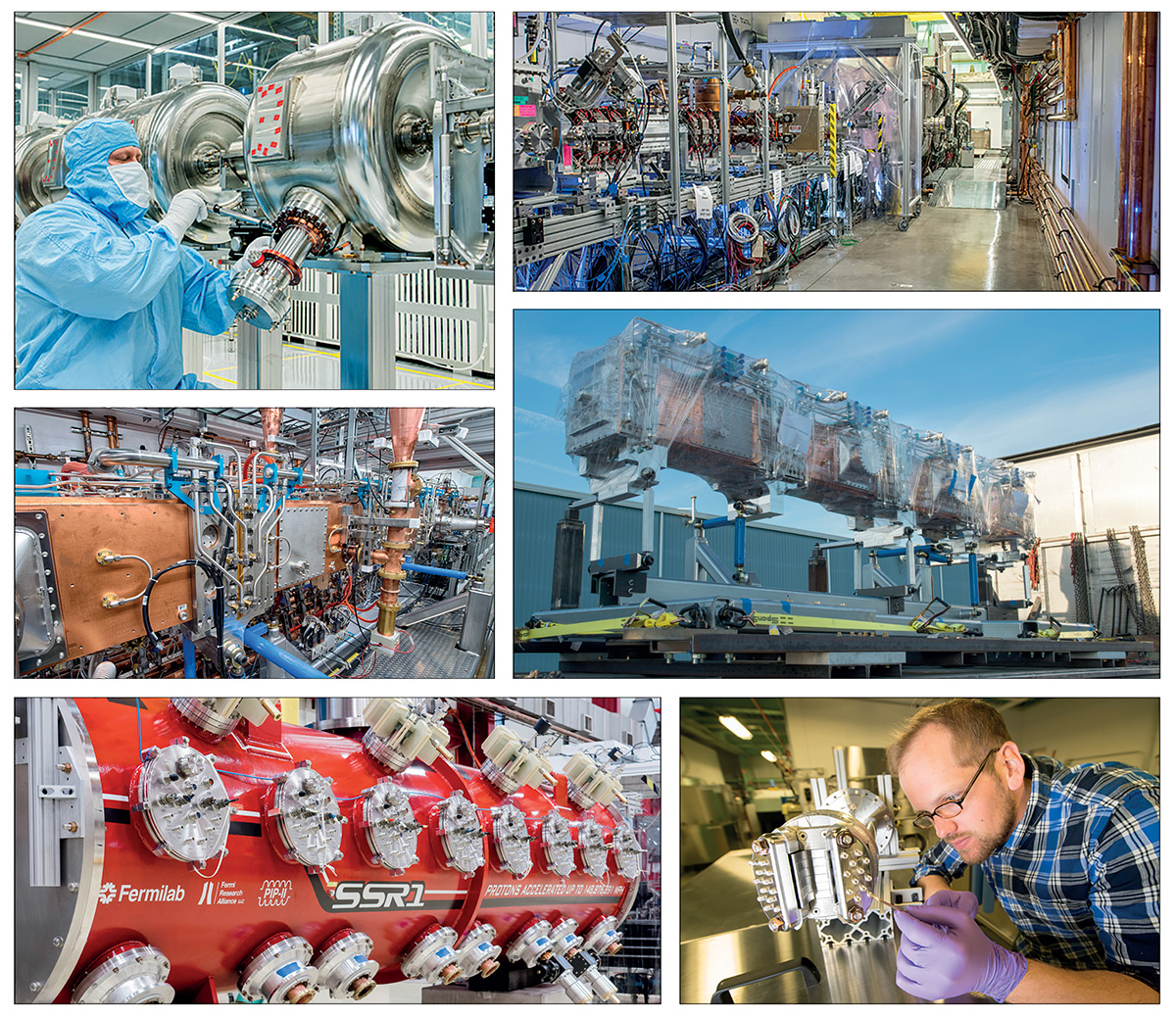
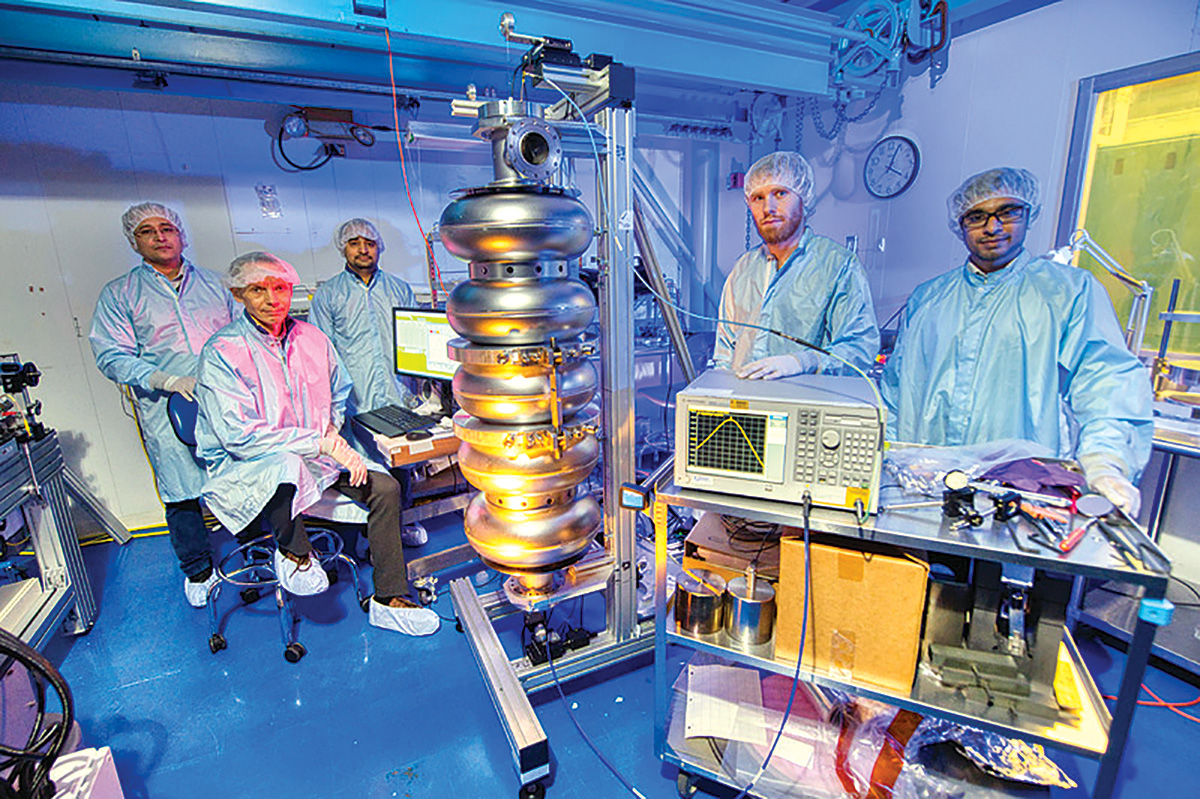
Mapped versus increasing energy, the PIP-II linac consists of a half-wave resonator (HWR) operating at 162.5 MHz at optimal beta-value of 0.112; two types of single-spoke resonators (SSR1, SSR2) at 325 MHz and optimal betas equal to 0.222 and 0.472, respectively; and two types of elliptical cavities with low and high beta at 650 MHz (LB650, HB650) and optimal betas equal to 0.65 and 0.971. The HWR cryomodule has been built by the DOE’s Argonne National Laboratory (Lemont, Illinois), while an SSR1 prototype cryomodule was constructed by Fermilab, with a cavity provided by India’s Department of Atomic Energy. Both cryomodules have now been tested successfully with beam by the PIP-II accelerator physics team.
Innovation yields acceleration
Each of the five accelerating systems comes with unique technical challenges and requires dedicated development to validate performance requirements. In particular, the CW RF mode of operation necessitates SRF cavities with high-quality factors at high gradient, thereby minimising the cryogenic load. For the SSR2, LB650 and HB650 cavities, the Qo and accelerating gradient specifications are: 0.82 × 10¹⁰ and 11.4 MV/m; 2.4 × 10¹⁰ and 16.8 MV/m; 3.3 × 10¹⁰ and 18.7 MV/m, respectively – figures of merit that are all beyond the current state-of-the-art. Nitrogen doping will enable the elliptical cavities to reach this level of performance, while the SSR2 cavities will undergo a rotational-buffered chemical polishing treatment.
PIP-II is the first DOE-funded particle accelerator to be built with significant international participation, leveraging in-kind contributions of equipment, personnel and expertise from a network of partners across six countries. It’s a similar working model to that favoured by European laboratories like CERN, the European X-ray Free Electron Laser (XFEL) and the European Spallation Source (ESS) – all of which have shared their experiences with Fermilab to inform the PIP-II partnership programme.
US
Partners: Argonne National Laboratory; Fermilab (lead partner); Lawrence Berkeley National Laboratory; Thomas Jefferson National Accelerator Facility
Key inputs: HWR, RFQ and resonance control systems
INDIA
Partners: Bhabha Atomic Research Centre (BARC); Inter-University Accelerator Centre (IUAC); Raja Ramanna Centre for Advanced Technology (RRCAT); Variable Energy Cyclotron Centre (VECC)
Partner: Italian Institute for Nuclear Physics (INFN)
Key inputs: SRF cavities (LB650)
UK
Partner: Science and Technology Facilities Council as part of UK Research and Innovation (STFC UKRI)
Key inputs: SRF cryomodules (HB650)
FRANCE
Partners: French Alternative Energies and Atomic Energy Commission (CEA); French National Centre for Scientific Research/National Institute of Nuclear and Particle Physics (CNRS/IN2P3)
Key inputs: cryomodules (LB650) and SRF cavity testing (SSR2)
POLAND
Partners: Wrocław University of Science and Technology; Warsaw University of Technology; Lodz University of Technology
Key inputs: cryogenic distribution systems and high-performance electronics (e.g. low-level RF and RF protection instrumentation).
A further design challenge is to ensure that the cavity resonance is as narrow as possible – something that is necessary to minimise RF power requirements when operating in CW mode. However, a narrow-bandwidth cavity is prone to detuning owing to small acoustic disturbances (so-called microphonic noise), with adverse effects on the required phase, amplitude stability and ultimately RF power consumption. The maximum detuning requirement for PIP-II is 20 Hz – achieved via a mix of passive approaches (e.g. cryomodule design, decoupling cavities from sources of vibration and more rigid cavity design) and active intervention (e.g. adaptive detuning control algorithms).
Another issue in the pulsed RF regime is Lorentz force cavity detuning, in which the thin walls of the SRF cavities are deformed by forces from electromagnetic fields inside the cavity. This phenomenon can be especially severe in the SSR2 and LB650 cavities – where detuning may be approximately 10 times larger than the cavity bandwidth – though initial operation of PIP-II in CW RF and pulsed beam mode will help to mitigate any detuning effects.
The management of risk
Given the scale and complexity of the linac development programme, the Fermilab project team has constructed the PIP-II Injector Test facility (also known as PIP2IT) as a systems engineering testbed for PIP-II’s advanced technologies. Completed last year, PIP2IT is a near-full-scale prototype of the linac’s room-temperature front-end, which accelerates protons up to 2.1 MeV, and the first two PIP-II cryomodules (HWR and SSR1) that then take the beam up to about 20 MeV.
The testbed is all about risk management: on the one hand, validating design choices and demonstrating that core enabling technologies will meet PIP-II performance goals in an operational setting; on the other, ensuring seamless integration of the in-kind contributions (including SRF cavities, magnets and RF amplifiers) from PIP-II’s network of international partners (see “PIP-II prioritises international partnerships”). Beam commissioning in PIP2IT was completed earlier this year, with notable successes versus a number of essential beam manipulations and technology validations including: the PIP-II design beam parameters; the bunch-by-bunch chopping pattern required for injection into the Booster; and acceleration of beam to 17.2 MeV in the first two PIP-II cryomodules. Significant progress was also registered with successful testing of the SRF/cryomodule technologies, first operation of the laser-wire profile monitor, and the application of machine-learning algorithms to align the orbit through the cryomodules.
There’s no duplication of effort here either. Post-commissioning, after completion of full system and design validation, the PIP2IT accelerator will be disassembled, moved and reinstalled in the PIP-II facility as the SRF linac’s upstream front-end. The testbed location, meanwhile, is being transformed into the PIP-II Cryomodule Test Facility, where most of the cryomodules will be tested with full RF power before being installed in the tunnel.
Notwithstanding construction of the new SRF linac, PIP-II also involves fundamental upgrades to Fermilab’s existing circular accelerators – the Booster, Recycler Ring and Main Injector – to enable the complex to achieve at least 1.2 MW of proton beam power while providing a scalable platform towards multi-MW capability. More specifically, the path to 1.2 MW from Fermilab’s Main Injector, over the energy range 60 to 120 GeV, requires a number of deliverables to come together: increase of the Fermilab Booster beam intensity by roughly 50% compared to current operation (i.e. an increase in the number of protons extracted per Booster cycle from 4.3 × 10¹² to 6.3 × 10¹²); reduction of the Main Injector cycle from 1.33 to 1.2 s; and an increase of the Booster repetition rate from 15 to 20 Hz.
PIP-II: a flexible, versatile design
If PIP-II is primarily about providing a platform for doubling the beam power from Fermilab’s Main Injector, the project is also designed with scalability in mind to enable future upgrades versus a broad spectrum of scientific opportunities.
At 2 mA average beam current at 800 MeV, the PIP-II linac is capable of delivering up to 1.6 MW of CW beam power. The LBNF/DUNE experiment requires approximately 17 kW of that power budget – which constitutes 1% of the available beam power – though that requirement will scale to twice as much over the long term. The rest of the beam can be delivered to other user programmes by combining RF separators and fast switching magnets, yielding a high-power beam with flexible bunch patterns for diverse experiments simultaneously.
One key outcome of PIP-II is an upgrade path for a 10-fold increase in beam power delivered to the Mu2e experiment. The resulting Mu2e-II project will measure how muons decay to electrons with the aim of observing forbidden processes that could point to physics beyond the Standard Model. PIP-II will also underpin a low-energy muon research programme, using not only its large beam power but also its extremely flexible bunch structure to support two different classes of slow-muon experiments – i.e. those involving continuous beams and those involving pulsed beams.
Along the energy coordinate, meanwhile, the PIP-II linac tunnel currently includes space and infrastructure for two more HB650 cryomodules – additions that would increase the beam energy above 1 GeV. There is considerable interest, for example, in using the excess protons at about 1 GeV that PIP-II could provide when operated in continuous mode. Coupling to a proton storage ring to drive a MW-class proton beam dump facility would support new lines of enquiry in high-energy physics, including the search for accelerator-produced dark matter. Extending the tunnel (and adding even more cryomodules) would offer an upgrade path to further increase the beam energy to roughly 2 GeV.
Versatility is a given. Although the PIP-II linac accelerates H– ions, it’s worth noting that most of the accelerator components are also suitable for acceleration of protons without modifications or changes to their polarity or phase.
Right now, beam losses in the Booster – which occur during injection, transition and extraction – prevent the intensity increase and limit the performance of the accelerator complex to roughly 900 kW. The PIP-II SRF linac injection into the Booster mitigates high-intensity effects and reduces losses on two fronts: first, the higher injection energy (800 MeV vs 400 MeV) will mitigate space-charge forces at higher beam intensities; second, the high-quality, lower-emittance beam will allow “beam painting” at injection in all three degrees of freedom, further reducing space-charge forces and beam losses at high intensity. Other upgrades are also in the works to further reduce and control losses, with some of them to be made available early, several years before PIP-II commissioning, to benefit the NOvA experiment.
In PIP-II, the 8 GeV Booster beam will be injected into the Fermilab Recycler ring – equipped with new 53 MHz RF cavities capable of larger beam current – where 12 Booster transfer batches are accumulated and slip-stacked. Next, the Recycler beam will enter Fermilab’s Main Injector – equipped with double the number of power amplifiers and vacuum tubes – which accelerates this intense beam anywhere from 60 to 120 GeV, delivering at least 1.2 MW of beam power at 120 GeV. Further, the Booster upgrade to 20 Hz will support an 8 GeV science programme, including Fermilab’s muon-to-electron conversion experiment (Mu2e) and studies of short-baseline neutrinos (see “PIP-II: a flexible, versatile design”).
International collaboration
Over the next decade, the PIP-II roadmap is clear. Phase one of the project will see the front-end of the Fermilab accelerator complex replaced with an 800 MeV SRF linac while performing necessary upgrades to the existing rings. Completion will see PIP-II deliver an initial beam power of 1.2 MW on the LBNF target, though the longer-term objective is to upgrade to 2.4 MW through replacement of the Booster synchrotron.
Operationally, it’s worth reiterating that PIP-II is very much a collective endeavour
Operationally, it’s worth reiterating that PIP-II is very much a collective endeavour – in fact, the first US accelerator to be built with the help of a network of international partnerships. In this way, PIP-II is very much a trail-blazer, with the excellence and sustained commitment of the project’s international partners essential for the construction – and ultimately the successful delivery – of this next-generation accelerator complex by the end of the decade.
The $730 million Facility for Rare Isotope Beams (FRIB) at Michigan State University (MSU) is scheduled to come online in early 2022 – a game-changer in every sense for the US and international nuclear-physics communities. With peer review and approval of the first round of experimental proposals now complete, an initial cohort of scientists from 25 countries is making final preparations to exploit FRIB’s unique capabilities. Their goal: to open up new frontiers in the fundamental study of rare and unstable isotopes as well as identifying promising candidate isotopes for real-world applications.
The engine-room of the FRIB scientific programme is an all-new 400 kW superconducting radiofrequency (SRF) linac. In short: the world’s most powerful heavy-ion driver accelerator, firing beams of stable isotopes at targets of heavier nuclei (for example, carbon or beryllium). Amid the chaos of flying particles, two nuclei will occasionally collide, fusing to form a rare and unstable isotope – a process that ultimately delivers high-intensity beams of rare isotopes to FRIB’s experimental end-stations and a suite of scientific instruments.
Funded by the US Department of Energy Office of Science (DOE-SC), and supported by MSU cost-share and contributions, FRIB will operate as a traditional big-science user facility, with beam-time granted via merit review of proposals and access open to all interested researchers. Here, FRIB’s scientific director, Bradley Sherrill, tells CERN Courier how the laboratory is gearing up for “go-live” and the importance of wide-ranging engagement with the international user community, industry and other rare-isotope facilities.
What are the overarching objectives of the FRIB scientific mission?
There are four main strands to the FRIB science programme. For starters, user experiments will generate a wealth of data to advance our understanding of the nucleus – how it’s put together and how we can develop theoretical nuclear models and their approximations. At the same time, the research programme will yield unique insights on the origins of the chemical elements in the universe, providing access to most of the rare isotopes involved in extreme astrophysical processes such as supernovae and neutron-star mergers. Other scientists, meanwhile, will use isotopes produced at FRIB to devise experiments that look beyond the Standard Model, searching for subtle indications of hidden interactions and minutely broken symmetries. Finally, FRIB will generate research quantities of rare isotopes to feed into R&D efforts on next-generation applications – from functional medical imaging to safer nuclear reactors and advanced detector technologies.
What is FRIB’s biggest differentiator?
The 400 kW SRF linac is the heart of FRIB’s value proposition to the research community, opening up access to a much broader spectrum of rare isotopes than hitherto possible – in fact, approximately 80% of the isotopes predicted to exist. It is worth noting, though, that FRIB does not exist in isolation. It’s part of a global research ecosystem, with a network of collaborations ongoing with other rare-isotope facilities – among them RIKEN’s RI Beam Factory in Japan, RAON in Korea, ISOLDE at CERN, FAIR in Germany, GANIL in France and ISAC at TRIUMF in Canada. Collectively, FRIB and this global network of laboratories are well placed to deliver unprecedented – and complementary – advances across the nuclear-science landscape over the coming decades.
Is it realistic to expect broader commercial opportunities to emerge from FRIB’s research programme?
There’s a high likelihood of FRIB yielding spin-off technologies and commercial applications down the line. One of the game-changers with FRIB is the quantities of rare isotopes the beamline can produce with high efficiency – a production scheme that enables us to make a broad swathe of isotopes relatively quickly and with high purity. That capability, in turn, will enable potential early-adopters in industry to fast-track the evaluation of novel applications and, where appropriate, to figure out how to produce the isotopes of interest at scale (see “FRIB’s bumper harvest will fuel applied science and innovation”).
How is FRIB engaging with the scientific user community across academia, industry and government agencies?
FRIB enjoys strong links with its future users – both here in the US and internationally – and meets with them regularly at planning events to identify and coordinate research opportunities. Earlier this year, in response to our first call for proposals, we received 82 project submissions and six letters of intent from 130 institutions across 30 countries. Those science proposals were subsequently peer-reviewed by the FRIB Programme Advisory Committee (PAC), an international group of nuclear science experts which I convene, to yield an initial set of experiments that will get underway once FRIB commences user operations in early 2022.
Those PAC-recommended experiments align with national science priorities across the four FRIB priority areas: properties of rare isotopes; nuclear astrophysics; fundamental interactions; and applications for society. The headline numbers saw 34 (out of 82 requested) experiments approved with a projected 4122 facility-use hours. There are 88 institutions, 24 US states and 25 countries represented in the initial experimental programme.
FRIB’s bumper harvest will fuel applied science and innovation
An excess of useful radioisotopes will be formed as FRIB fulfils its basic science mission of providing rare-isotope beams to feed a broad-scope international user programme. For the FRIB beams to reach high purity, though, the vast majority of these “surplus” isotopes will end up discarded in a water-filled beam dump – stranded assets that go unused and remain largely unexplored.
With this in mind, the DOE-SC Office of Nuclear Physics, through the DOE Isotope Programme, has awarded FRIB scientists $13 million in funding over the next four years to build up FRIB’s isotope harvesting capabilities. The hope is that systematic recovery of the surplus isotopes – without impacting FRIB’s primary users – could open up novel lines of enquiry in applied research – from biochemistry to nuclear medicine, and from radiothermal generators to nuclear-weapons stockpile stewardship.
“This grant is about broadening the scientific impact of FRIB,” says Greg Severin, lead investigator for the harvesting project at FRIB. “While physicists at FRIB are making ground-breaking fundamental discoveries, our team will be supporting exciting opportunities in applied science.”
In 2018, the DOE-SC awarded Severin and colleagues an initial grant to prove that isotope harvesting is feasible. Their proof-of-concept involved building a small-scale isotope harvester in FRIB’s predecessor, the National Superconducting Cyclotron Laboratory at MSU.
Now, with follow-on funding secured, Severin’s team is scaling up, with construction of a dedicated Isotope Harvesting Vault at FRIB in the works and set for completion in 2024.
See also “Isotope harvesting at FRIB: additional opportunities for scientific discovery” (J. Phys. G: Nucl. Part. Phys. 2019 46 100501).
What are the opportunities for early-career scientists and engineers at FRIB?
Developing the talent pipeline is part of the organisational DNA here at FRIB. There’s a structured educational framework to pass on the expertise and experience of senior FRIB staff to the next generation of researchers, engineers and technicians in nuclear science. MSU’s Accelerator Science and Engineering Traineeship (ASET) programme is a case in point. ASET leverages multidisciplinary expertise from FRIB and MSU colleagues to support specialisation in four key areas: physics and engineering of large accelerators; SRF technology; radiofrequency power engineering; and large-scale cryogenic systems.
There’s a high likelihood of FRIB yielding new spin-off technologies as well as commercial applications
Many MSU ASET students supplement their courses through participation in the US Particle Accelerator School, a national programme that provides graduate-level training and workforce development in the science of particle beams and associated accelerator technologies. At a more specialist level, there’s also the MSU Cryogenic Initiative, a unique educational collaboration between the university’s college of engineering and FRIB’s cryogenics team. Meanwhile, we continue to prioritise development of a more diverse workforce, partnering with several academic institutions that traditionally serve under-represented groups to broaden participation in the FRIB programme.
In what ways does FRIB ensure a best-practice approach to facilities management?
Sustainability and continuous improvement underpin all FRIB working practices. We are an ISO14001-registered organisation, which means we measure ourselves against an international standard specifying requirements for effective environmental management. That’s reflected, for example, in our use of energy-efficient superconducting technologies, and also our efforts to minimise any helium wastage through an exhaustive capture, recovery and reuse scheme within FRIB’s cryogenic plant.
We also have an ISO 9001-registered quality management system that guides how we address scientific user needs; an ISO 45001-registered occupational health and safety management system to keep our workers safe; and an ISO 27001-registered information security management system.
How important is FRIB’s relationship with industry?
Our strategic partnerships with industry are also significant in driving organisational efficiencies. The use of standard industry components wherever possible reduces maintenance and training requirements, minimises the need for expensive product inventory, and lowers our operational costs. We engage with manufacturers on a co-development basis, fast-tracking innovation and knowledge transfer so that they are able to produce core enabling technologies for FRIB at scale – whether that’s accelerator cavities, superconducting magnets, or vacuum and cryogenic subsystems.
An ambitious upgrade of the US’s flagship X-ray free-electron-laser facility – the Linac Coherent Light Source (LCLS) at the SLAC National Accelerator Laboratory in California – is nearing completion. Set for “first light” in 2022, LCLS-II will deliver X-ray laser beams that are 10,000 times brighter than LCLS at repetition rates of up to a million pulses per second – generating more X-ray pulses in just a few hours than the current laser has delivered through the course of its 12-year operational lifetime. The cutting-edge physics of the new X-ray laser – underpinned by a cryogenically cooled superconducting radiofrequency (SRF) linac – will enable the two beams from LCLS and LCLS-II to work in tandem. This, in turn, will help researchers observe rare events that happen during chemical reactions and study delicate biological molecules at the atomic scale in their natural environments, as well as potentially shed light on exotic quantum phenomena with applications in next-generation quantum computing and communications systems.
Strategic commitment
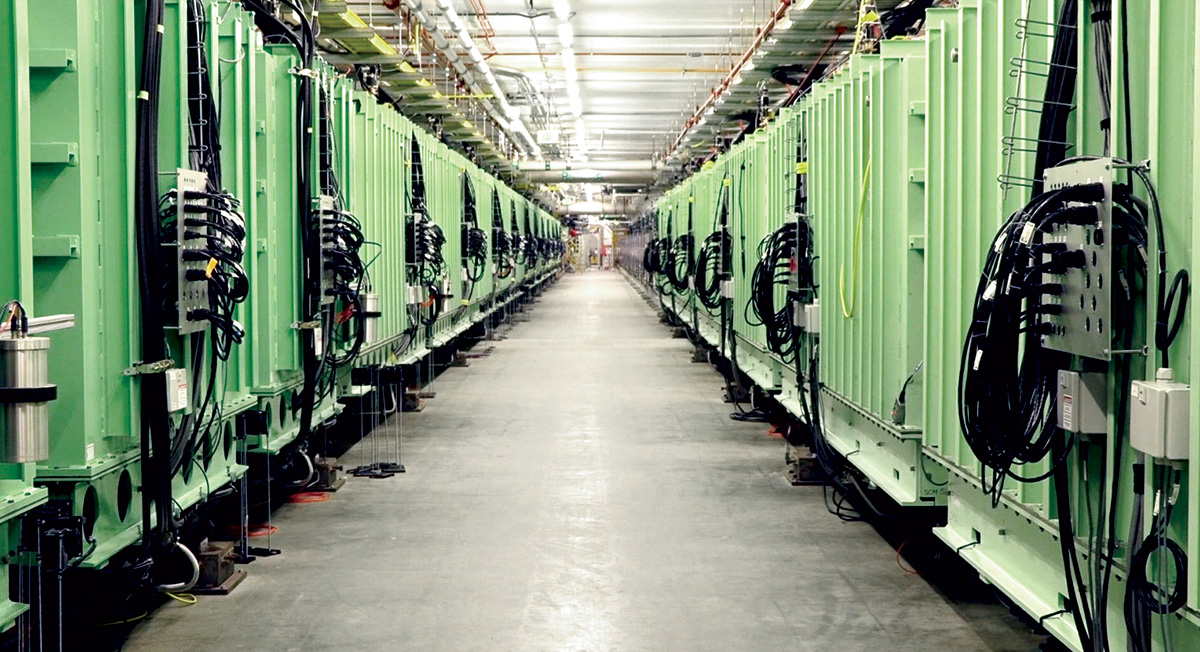
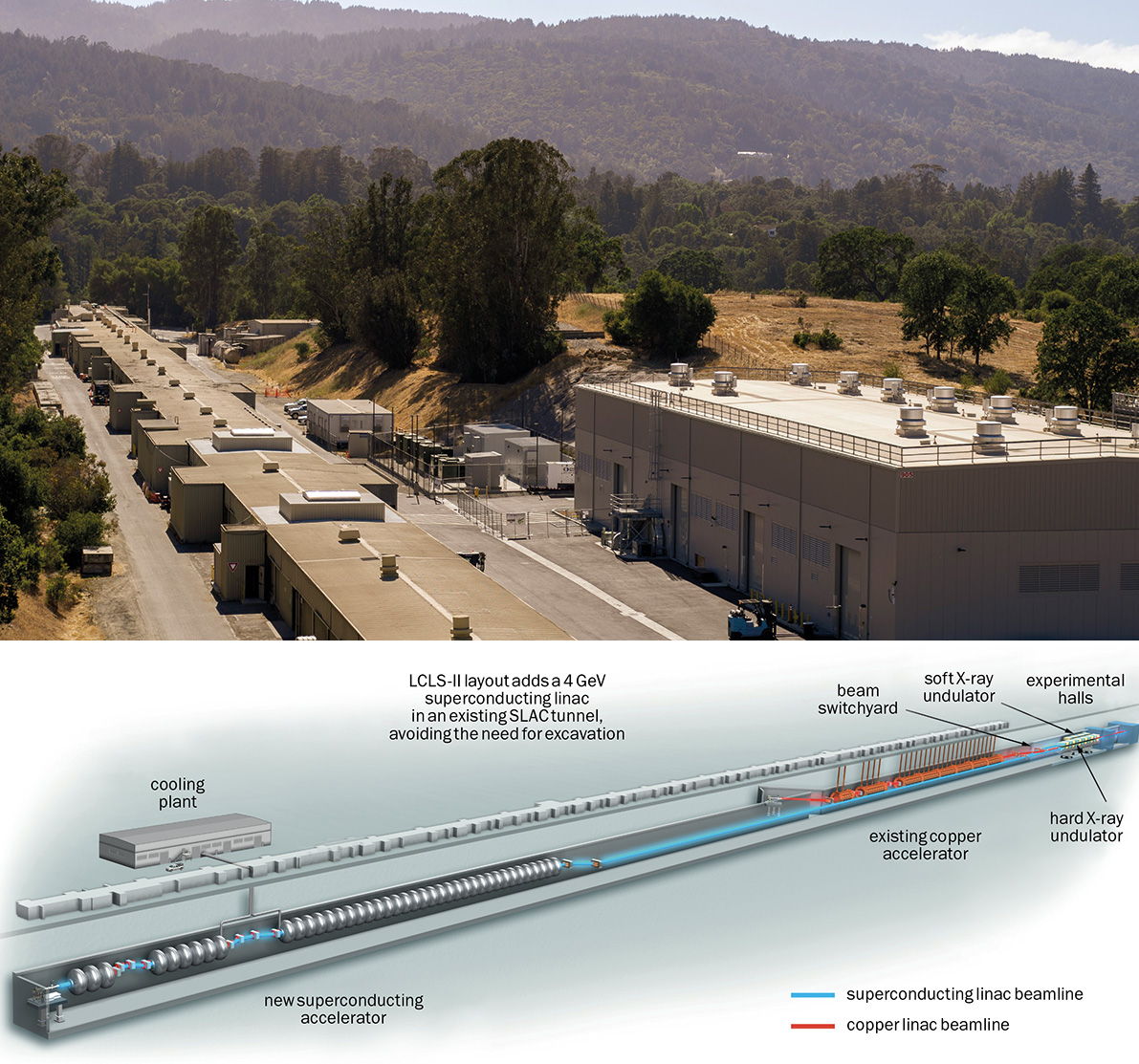
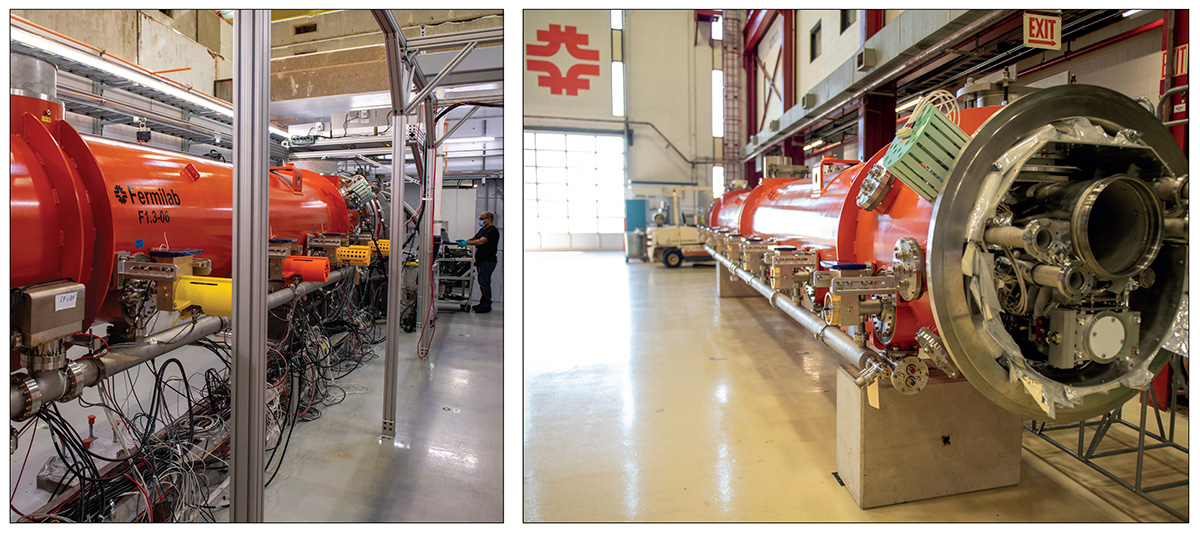
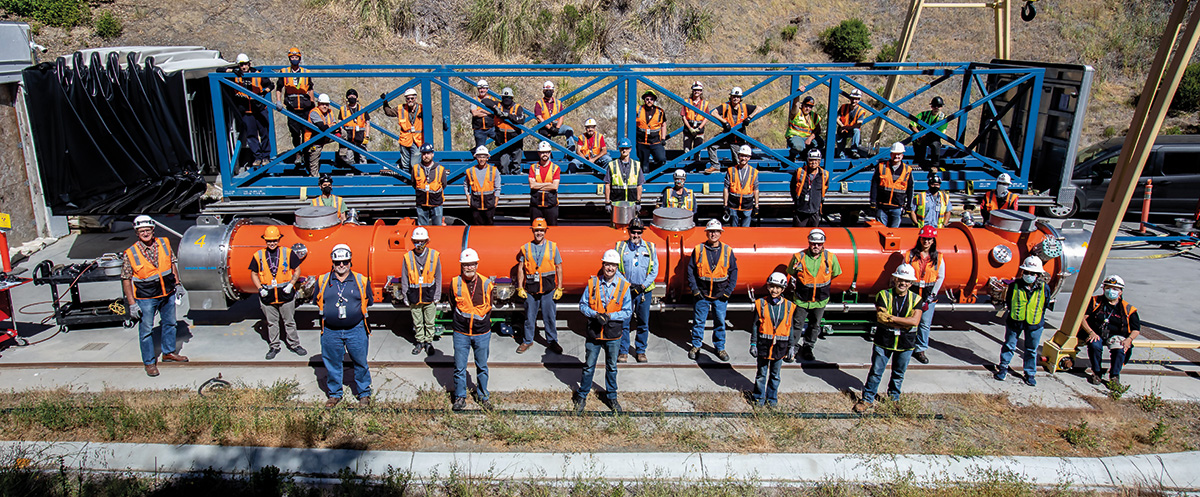
Successful delivery of the LCLS-II linac was possible thanks to a multicentre collaborative effort involving US national and university laboratories, following the decision to pursue an SRF-based machine in 2014 through the design, assembly, test, transportation and installation of a string of 37 SRF cryomodules (most of them more than 12 m long) into the SLAC tunnel (see figures “Tunnel vision” and “Keeping cool”). All told, this non-trivial undertaking necessitated the construction of 40 1.3 GHz SRF cryomodules (five of them spares) and three 3.9 GHz cryomodules (one spare) – with delivery of approximately one cryomodule per month from February 2019 until December 2020 to allow completion of the LCLS-II linac installation on schedule by November 2021.
This industrial-scale programme of works was shaped by a strategic commitment, early on in the LCLS-II design phase, to transfer, and ultimately iterate, the established SRF capabilities of the European XFEL project into the core technology platform used for the LCLS-II SRF cryomodules. Put simply: it would not have been possible to complete the LCLS-II project, within cost and on schedule, without the sustained cooperation of the European XFEL consortium – in particular, colleagues at DESY (Germany), CEA Saclay (France) and several other European laboratories (as well as KEK in Japan) that generously shared their experiences and know-how so that the LCLS-II collaboration could hit the ground running.
Better together
These days, large-scale accelerator or detector projects are very much a collective endeavour. Not only is the sprawling scope of such projects beyond a single organisation, but the risks of overspend and slippage can greatly increase with a “do-it-on-your-own” strategy. When the LCLS-II project opted for an SRF technology pathway in 2014 (to maximise laser performance and future-proofing), the logical next step was to build a broad-based coalition with other US Department of Energy (DOE) national laboratories and universities. In this case, SLAC, Fermilab, Jefferson Lab (JLab) and Cornell University contributed expertise for cryomodule production, while Argonne National Laboratory and Lawrence Berkeley National Laboratory managed delivery of the undulators and photoinjector for the project. For sure, the start-up time for LCLS-II would have increased significantly without this joint effort, extending the overall project by several years.
Each partner brought something unique to the LCLS-II collaboration. While SLAC was still a relative newcomer to SRF technologies, the lab had a management team that was familiar with building large-scale accelerators (following successful delivery of the LCLS). The priority for SLAC was therefore to scale up its small nucleus of SRF experts by recruiting experienced SRF technologists and engineers to the staff team.
In contrast, the JLab team brought an established track-record in the production of SRF cryomodules, having built its own machine, the Continuous Electron Beam Accelerator Facility (CEBAF), as well as cryomodules for the Spallation Neutron Source (SNS) linac at Oak Ridge National Laboratory in Tennessee. Cornell, too, came with a rich history in SRF R&D – capabilities that, in turn, helped to solidify the SRF cavity preparation process for LCLS-II.
Finally, Fermilab had, at the time, recently built two cutting-edge cryomodules of the same style as that chosen for LCLS-II. To fabricate these modules, Fermilab worked closely with the team at DESY to set up the same type of production infrastructure used on the European XFEL. From that perspective, the required tooling and fixtures were all ready to go for the LCLS-II project. While Fermilab was the “designer of record” for the SRF cryomodule, with primary responsibility for delivering a working design to meet LCLS-II requirements, the realisation of an optimised technology platform was, in large part, a team effort involving SRF experts from across the collaboration.
Challenges are inevitable when developing new facilities at the limits of known technology
Operationally, the use of two facilities to produce the SRF cryomodules – Fermilab and JLab – ensured a compressed delivery schedule and increased flexibility within the LCLS-II programme. On the downside, the dual-track production model increased infrastructure costs (with the procurement of duplicate sets of tooling) and meant additional oversight to ensure a standardised approach across both sites. Ongoing procurements were divided equally between Fermilab and JLab, with deliveries often made to each lab directly from the industry suppliers. Each facility, in turn, kept its own inventory of parts, so as to minimise interruptions to cryomodule assembly owing to any supply-chain issues (and enabling critical components to be transferred between labs as required). What’s more, the close working relationship between Fermilab and JLab kept any such interruptions to a minimum.
Collective problems, collective solutions
While the European XFEL provided the template for the LCLS-II SRF cryomodule design, several key elements of the LCLS-II approach subsequently evolved to align with the CW operation requirements and the specifics of the SLAC tunnel. Success in tackling these technical challenges – across design, assembly, testing and transportation of the cryomodules – is testament to the strength of the LCLS-II collaboration and the collective efforts of the participating teams in the US and Europe.
For starters, the thermal performance specification of the SRF cavities exceeded the state-of-the-art and required development and industrialisation of the concept of nitrogen doping (a process in which SRF cavities are heat-treated in a nitrogen atmosphere to increase their cryogenic efficiency and, in turn, lower the overall operating costs of the linac). The nitrogen-doping technique was invented at Fermilab in 2012 but, prior to LCLS-II construction, had been used only in an R&D setting.
Adapatability in real-time
The priority was clear: to transfer the nitrogen-doping capability to LCLS-II’s industry partners, so that the cavity manufacturers could perform the necessary materials processing before final helium-vessel jacketing. During this knowledge transfer, it was found that nitrogen-doped cavities are particularly sensitive to the base niobium sheet material – something the collaboration only realised once the cavity vendors were into full production. This resulted in a number of process changes for the heat treatment temperature, depending on which material supplier was used and the specific properties of the niobium sheet deployed in different production runs. JLab, for its part, held the contract for the cavities and pulled out all stops to ensure success.
At the same time, the conversion from pulsed to CW operation necessitated a faster cooldown cycle for the SRF cavities, requiring several changes to the internal piping, a larger exhaust chimney on the helium vessel, as well as the addition of two new cryogenic valves per cryomodule. Also significant is the 0.5% slope in the longitudinal floor of the existing SLAC tunnel, which dictated careful attention to liquid-helium management in the cryomodules (with a separate two-phase line and liquid-level probes at both ends of every module).
However, the biggest setback during LCLS-II construction involved the loss of beamline vacuum during cryomodule transport. Specifically, two cryomodules had their beamlines vented and required complete disassembly and rebuilding – resulting in a five-month moratorium on shipping of completed cryomodules in the second half of 2019. It turns out that a small, what was thought to be inconsequential, change in a coupler flange resulted in the cold coupler assembly being susceptible to resonances excited by transport. The result was a bellows tear that vented the beamline. Unfortunately, initial “road-tests” with a similar, though not exactly identical, prototype cryomodule had not surfaced this behaviour.
As with many accelerator projects, LCLS-II is not an end-point in itself, more an evolutionary transition within a longer term development roadmap. In fact, work is already under way on LCLS-II HE – a project that will increase the energy of the CW SRF linac from 4 to 8 GeV, enabling the photon energy range to be extended to at least 13 keV, and potentially up to 20 keV at 1 MHz repetition rates.
To ensure continuity of production for LCLS-II HE, 25 next-generation cryomodules are in the works, with even higher performance specifications versus their LCLS-II counterparts, while upgrades to the source and beam transport are also being finalised.
In addition to LCLS-II HE, other SRF disciplines will benefit from the R&D and technological innovation that has come out of the LCLS-II construction programme. SRF technologies are constantly evolving and advancing the state-of-the-art, whether that’s in single-cavity cryogen-free systems, additional FEL CW upgrades to existing machines, or the building blocks that will underpin enormous new machines like the proposed International Linear Collider.
Such challenges are inevitable when developing new facilities at the limits of known technology. In the end, the problem was successfully addressed using the diverse talents of the collaboration to brainstorm solutions, with the available access ports allowing an elastomer wedge to be inserted to secure the vulnerable section. A key take-away here is the need for future projects to perform thorough transport analysis, verify the transport loads using mock-ups or dummy devices, and install adequate instrumentation to ensure granular data analysis before long-distance transport of mission-critical components.
Upon completion of the assembly phase, all LCLS-II cryo-modules were subsequently tested at either Fermilab or JLab, with one module tested at both locations to ensure reproducibility and consistency of results. For high Q0 performance in nitrogen-doped cavities, cooldown flow rates of at least 30 g/s of liquid helium were found to give the best results, helping to expel magnetic flux that could otherwise be trapped in the cavity.
Overall, cryomodule performance on the test stands exceeded specifications, with an average energy gain per cryomodule of 158 MV (versus specification of 128 MV) and average Q0 of 3 × 10¹⁰ (versus specification of 2.7 × 10¹⁰). Looking ahead, attention is already shifting to the real-world cryomodule performance in the SLAC tunnel – something that will be measured for the first time in 2022.
Transferable lessons
For all members of the collaboration working on the LCLS-II cryomodules, this challenging project holds many lessons. Most important is the nature of collaboration itself, building a strong team and using that strength to address problems in real-time as they arise. The mantra “we are all in this together” should be front-and-centre for any multi-institutional scientific endeavour – as it was in this case. With all parties making their best efforts, the goal should be to utilise the combined strengths of the collaboration to mitigate challenges. Solutions need to be thought of in a more global sense, since the best answer might mean another collaborator taking more onto their plate. Collaboration implies true partnership and a working model very different to a transactional customer–vendor relationship.
Collaboration implies true partnership and a working model very different to a transactional relationship
From a planning perspective, it’s vital to ensure that the initial project cost and schedule are consistent with the technical challenges and preparedness of the infrastructure. Prototypes and pre-series production runs reduce risk and cost in the long term and should be part of the plan, but there must be sufficient time for data analysis and changes to be made after a prototype run in order for it to be useful. Time spent on detailed technical reviews is also time well spent. New designs of complex components need detailed oversight and review, and should be controlled by a team, rather than a single individual, so that sign-off on any detailed design changes are made by an informed collective.
Planning ahead
Work planning and control is another essential element for success and safety. This idea needs to be built into the “manufacturing system”, including into the cost and schedule, and be part of each individual’s daily checklist. No one disagrees with this concept, but good intentions on their own will not suffice. As such, required safety documentation should be clear and unambiguous, and be reviewed by people with relevant expertise. Production data and documentation need to be collected, made easily available to the entire project team, and analysed regularly for trends, both positive and negative.
Supply chain, of course, is critical in any production environment – and LCLS-II is no exception. When possible, it is best to have parts procured, inspected, accepted and on-the-shelf before production begins, thereby eliminating possible workflow delays. Pre-stocking also allows adequate time to recycle and replace parts that do not meet project specifications. Also worth noting is that it’s often the smaller components – such as bellows, feedthroughs and copper-plated elements – that drive workflow slowdowns. A key insight from LCLS-II is to place purchase orders early, stay on top of vendor deliveries, and perform parts inspections as soon as possible post-delivery. Projects also benefit from having clearly articulated pass/fail criteria and established procedures for handling non-conformance – all of which alleviates the need to make critical go/no-go acceptance decisions in the face of schedule pressures.
Finally, it’s worth highlighting the broader impact – both personal and professional – to individual team members participating on a big-science collaboration like LCLS-II. At the end of the build, what remained after designs were completed, problems solved, production rates met, and cryomodules delivered and installed, were the friendships that had been nurtured over several years. The collaboration amongst partners, both formal and informal, who truly cared about the project’s success, and had each other’s backs when there were issues arising: these are the things that solidified the mutual respect, the camaraderie and, in the end, made LCLS-II such a rewarding project.
Entrepreneurial scientists and engineers take note: the next round of applications to Cyclotron Road’s two-year fellowship programme will open in the fourth quarter, offering a funded path for early-stage start-ups in “hard tech” (i.e. physical hardware rather than software) to fast-track development of their applied research innovations. Now in its sixth year, Cyclotron Road is a division of the US Department of Energy’s Lawrence Berkeley National Laboratory (Berkeley, California) and is run in partnership with non-profit Activate, a specialist provider of entrepreneurship education and training.
Successful applicants who navigate the rigorous merit-review process will receive $100,000 of research support for their project as well as a stipend, health insurance and access to Berkeley Lab’s world-class research facilities and scientific expertise. CERN Courier gets the elevator pitch from Rachel Slaybaugh, Cyclotron Road division director.
Summarise your objectives for Cyclotron Road
Our mission is to empower science innovators to develop their ideas from concept to first product, positioning them for broad societal impact in the long term. We create the space for fellows to commercialise their ideas by giving them direct access to the world-leading scientists and facilities at Berkeley Lab. Crucially, we reinforce that support with a parallel curriculum of specialist entrepreneurship education from our programme partner Activate.
What are the benefits of embedding the fellowship programme at Berkeley Lab?
Cyclotron Road is not a one-size-fits-all programme, so the benefits vary from fellow to fellow. Some of the fellows and their teams only loosely make use of Berkeley Lab services, while others will embed in a staff scientist’s lab and engage in close collaborative R&D work. The value proposition is that our fellows have access to Berkeley Lab and its resources but can choose what model works best for them. It seems to work: since 2015, Cyclotron Road fellows have collaborated with more than 70 Berkeley Lab scientists, while the organisations they’ve founded have collectively raised more than $360 million in follow-on funding.
What do you look for in prospective Cyclotron Road fellows?
We want smart, talented individuals with a passion to develop and grow their own early-stage hard-tech venture. Adaptability is key: Cyclotron Road fellows need to have the technical and intellectual capability to pivot their business plan if needed. As such, our fellows are collaborative team players by default, coachable and hungry to learn. They don’t need to take all the advice they’re given in the programme, but they do need to be open-minded and willing to listen to a range of viewpoints regarding technology innovation and commercial positioning.
Explain the role of Activate in the professional development of fellows
Activate is an essential partner in the Cyclotron Road mission. Its team handles the parallel programme of entrepreneurship education, including an onboarding bootcamp, weekly mentoring and quarterly “deep-dives” on all aspects of technology and business development. The goal is to turn today’s talented scientists and engineers into tomorrow’s technology CEOs and CTOs. Activate also has staff to curate strategic relationships for our fellows, helping start-ups connect with investors, industry partners and equipment suppliers. That’s reinforced by the opportunity to link up with the amazing companies in Cyclotron Road’s alumni network.
How does Cyclotron Road benefit Berkeley Lab?
There are several upsides. We’re bringing entrepreneurship and commercial thinking into the lab, helping Berkeley scientists build bridges with these new technology companies – and the innovators driving them. That has paybacks in terms of future funding proposals, giving our researchers a better understanding of how to position their research from an applications perspective. The knowledge transfer between Cyclotron Road fellows and Berkeley Lab scientists is very much a two-way process: while fellows progress their commercial ideas, they are often sparking new lines of enquiry among their collaborators here at Berkeley Lab.
How are you broadening participation?
Fellows receive a yearly living stipend of $80,000 to $110,000, health insurance, a relocation stipend and a travel allowance – all of which means they’re able to focus full-time on their R&D. Our priority is to engage a diverse community of researchers – not just those individuals who already have a high net worth or access to a friends-and-family funding round. We’re building links with universities and labs outside the traditional technology hot-spots like Silicon Valley, Boston and Seattle, as well as engaging institutions that serve under-represented minorities. Worth adding that Cyclotron Road welcomes international applicants in a position to relocate to California for two years.
The international nuclear-physics community will be front-and-centre as a unique research facility called the Electron–Ion Collider (EIC) moves from concept to reality through the 2020s – the latest progression in the line of large-scale accelerator programmes designed to probe the fundamental forces and particles that underpin the structure of matter.
Decades of research in particle and nuclear physics have shown that protons and neutrons, once thought to be elementary, have a rich, dynamically complex internal structure of quarks, anti-quarks and gluons, the understanding of which is fundamental to the nature of matter as we experience it. By colliding high-energy beams of electrons with high-energy beams of protons and heavy ions, the EIC is designed to explore this hidden subatomic landscape with the resolving power to image its behaviour directly. Put another way: the EIC will provide the world’s most powerful microscope for studying the “glue” that binds the building blocks of matter.
Luminous performance
When the EIC comes online in the early 2030s, the facility will perform precision “nuclear femtography” by zeroing in on the substructure of quarks and gluons in a manner comparable to the seminal studies of the proton using electron–proton collisions at DESY’s HERA accelerator in Germany between 1992 and 2007 (see “Nuclear femtography to delve deep into nuclear matter” panel). However, the EIC will produce a luminosity (collision rate) 100 times greater than the highest achieved by HERA and, for the first time in such a collider, will provide spin-polarised beams of both protons and electrons, as well as high-energy collisions of electrons with heavy ions. All of which will require unprecedented performance in terms of the power, intensity and spatial precision of the colliding beams, with the EIC expected to provide not only transformational advances in nuclear science, but also transferable technology innovations to shape the next generation of particle accelerators and detectors.
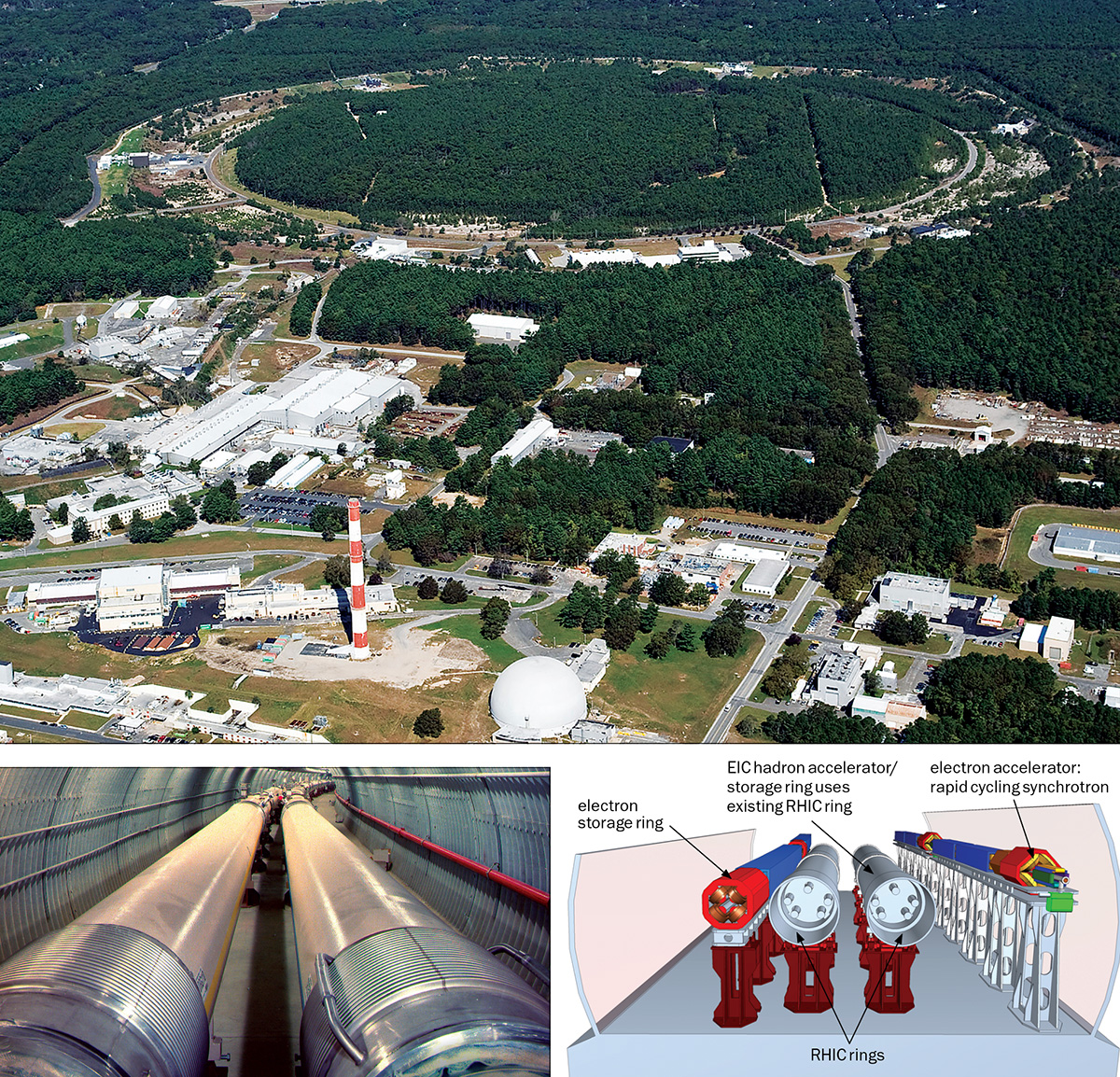
The US Department of Energy (DOE) formally initiated the EIC project in December 2019 with the approval of a “mission need”. That was followed in June of this year with the next “critical decision” to proceed with funding for engineering and design prior to construction (with the estimated cost of the build about $2 billion). The new facility will be sited at Brookhaven National Laboratory (BNL) in Long Island, New York, utilising components and infrastructure from BNL’s Relativistic Heavy Ion Collider (RHIC), including the polarised proton and ion-beam capability and the 3.8 km underground tunnel. Construction will be carried out as a partnership between BNL and Thomas Jefferson National Accelerator Facility (JLab) in Newport News, Virginia, home of the Continuous Electron Beam Accelerator Facility (CEBAF), which has pioneered many of the enabling technologies needed for the EIC’s new electron rings.
Beyond the BNL–JLab partnership, the EIC is very much a global research endeavour. While the facility is not scheduled to become operational until early in the next decade, an international community of scientists is already hard at work within the EIC User Group. Formed in 2016, the group now has around 1300 members – representing 265 universities and laboratories from 35 countries – engaged collectively on detector R&D, design and simulation as well as initial planning for the EIC’s experimental programme.
A cutting-edge accelerator facility
Being the latest addition to the line of particle colliders, the EIC represents a fundamental link in the chain of continuous R&D, knowledge transfer and innovation underpinning all manner of accelerator-related technologies and applications – from advanced particle therapy systems for the treatment of cancer to ion implantation in semiconductor manufacturing.
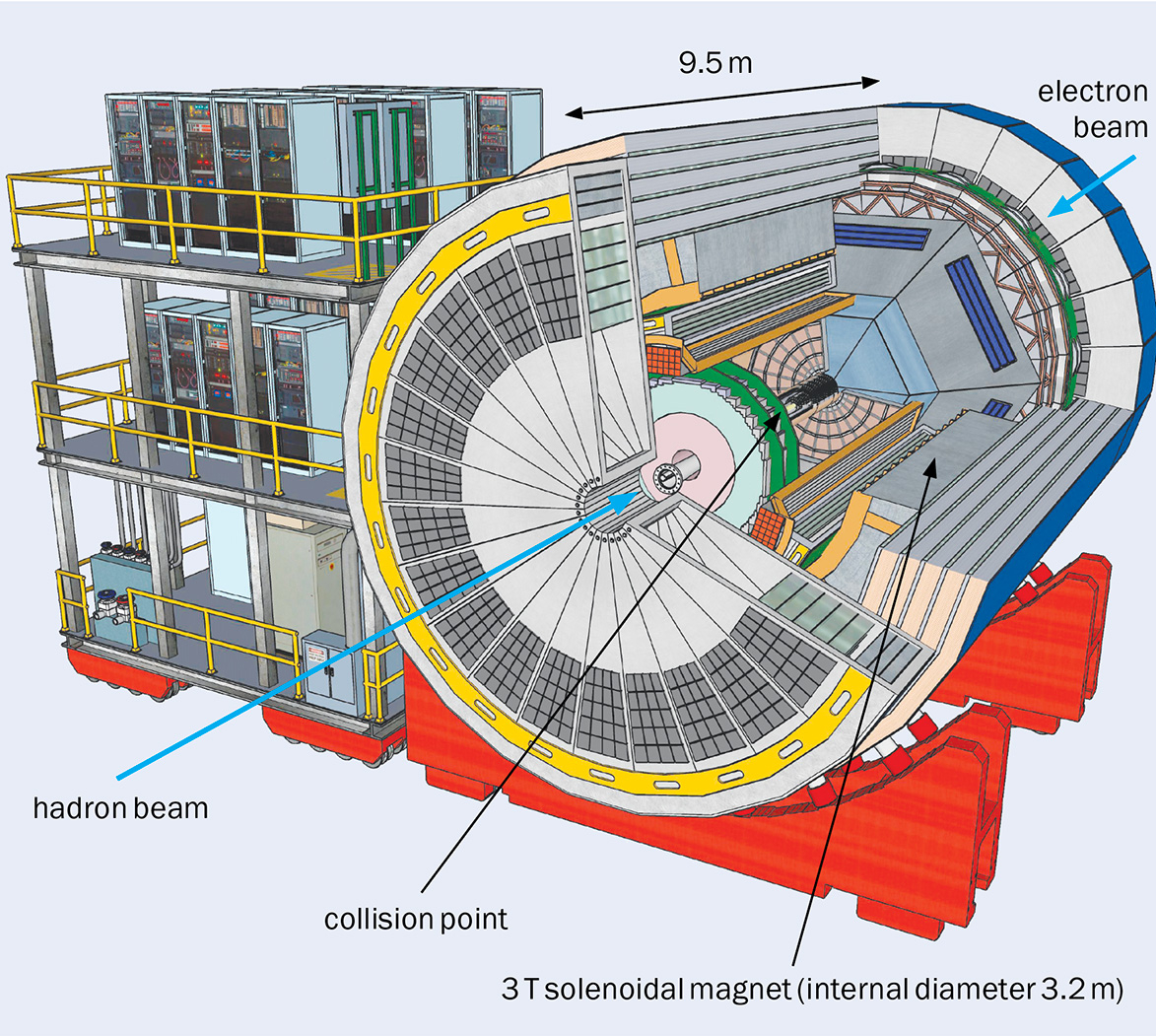
The images “The EIC in outline” and “Going underground” show the planned layout of the EIC, where the primary beams circulate inside the existing RHIC tunnel to enable the collisions of high-energy (5–18 GeV) electrons (and possibly positrons) with high-energy ion beams of up to 275 GeV/nucleon. One thing is certain: the operating parameters of the EIC, with luminosities of up to 1034 cm–2 s–1 and up to 85% beam polarisation, will push the design of the facility beyond the limits set by previous accelerator projects in a number of core technology areas.
For starters, the EIC will require significant advances in the field of superconducting radiofrequency (SRF) systems operating under high current conditions, including control of higher-order modes, beam RF stability and crab cavities. A major challenge is the achievement of strong cooling of intense proton and light-ion beams to manage emittance growth owing to intrabeam scattering. Such a capability will require unprecedented control of low-energy electron-beam quality with the help of ultrasensitive and precise photon detection technologies – innovations that will likely yield transferable benefits for other areas of research reliant on electron-beam technology (e.g. free-electron lasers).
The EIC design for strong cooling of the ion beams specifies a superconducting energy-recovery linac with a virtual beam power of 15 MW, an order-of-magnitude increase versus existing machines. With this environmentally friendly new technology, the rapidly cycling beam of low-energy electrons (150 MeV) is accelerated within the linac and passes through a cooling channel where it co-propagates with the ions. The cooling electron beam is then returned to the linac, timed to see the decelerating phase of the RF field, and the beam power is thus recovered for the next accelerating cycle – i.e. beam power is literally recycled after each cooling pass.
The EIC will also require complex operating schemes. A case in point: fresh, highly polarised electron bunches will need to be frequently injected into the electron storage ring without disturbing the collision operation of previously injected bunches. Further complexity comes in maximising the luminosity and polarisation over a large range of centre-of-mass energies and for the entire spectrum of ion beams. With a control system that can monitor hundreds of beam parameters in real-time, and with hundreds of points where the guiding magnetic fields can be tuned on the fly, there is a vast array of “knobs-to-be-turned” to optimise overall performance. Inevitably, this is a facility that will benefit from the use of artificial intelligence and machine-learning technologies to maximise its scientific output.
At the same time, the EIC and CERN’s High-Luminosity LHC user communities are working in tandem to realise more capable technologies for particle detection as well as innovative electronics for large-scale data read-out and processing. Exploiting advances in chip technology, with feature sizes as small as 65 nm, multipixel silicon sensors are in the works for charged-particle tracking, offering single-point spatial resolution better than 5 µm, very low mass and on-chip, individual-pixel readout. These R&D efforts open the way to compact arrays of thin solid-state detectors with broad angular coverage to replace large-volume gaseous detectors.
Coupled with leading-edge computing capabilities, such detectors will allow experiments to stream data continuously, rather than selecting small samples of collisions for readout. Taken together, these innovations will yield no shortage of downstream commercial opportunities, feeding into next-generation medical imaging systems, for example, as well as enhancing industrial R&D capacity at synchrotron light-source facilities.
The BNL–JLab partnership
As the lead project partners, BNL and JLab have a deep and long-standing interest in the EIC programme and its wider scientific mission. In 2019, BNL and JLab each submitted their own preconceptual designs to DOE for a future high-energy and high-luminosity polarised EIC based around existing accelerator infrastructure and facilities. In January 2020, DOE subsequently selected BNL as the preferred site for the EIC, after which the two labs immediately committed to a full partnership between their respective teams (and other collaborators) in the construction and operation of the facility.
Nuclear femtography to delve deep into nuclear matter
Nuclear matter is inherently complex because the interactions and structures therein are inextricably mixed up: its constituent quarks are bound by gluons that also bind themselves. Consequently, the observed properties of nucleons and nuclei, such as their mass and spin, emerge from a dynamical system governed by quantum chromodynamics (QCD). The quark masses, generated via the Higgs mechanism, only account for a tiny fraction of the mass of a proton, leaving fundamental questions about the role of gluons in the structure of nucleons and nuclei still unanswered.
The underlying nonlinear dynamics of the gluon’s self-interaction is key to understanding QCD and fundamental features of the strong interactions such as dynamical chiral symmetry-breaking and confinement. Yet despite the central role of gluons, and the many successes in our understanding of QCD, the properties and dynamics of gluons remain largely unexplored.
If that’s the back-story, the future is there to be written by the EIC, a unique machine that will enable physicists to shed light on the many open questions in modern nuclear physics.
Back to basics
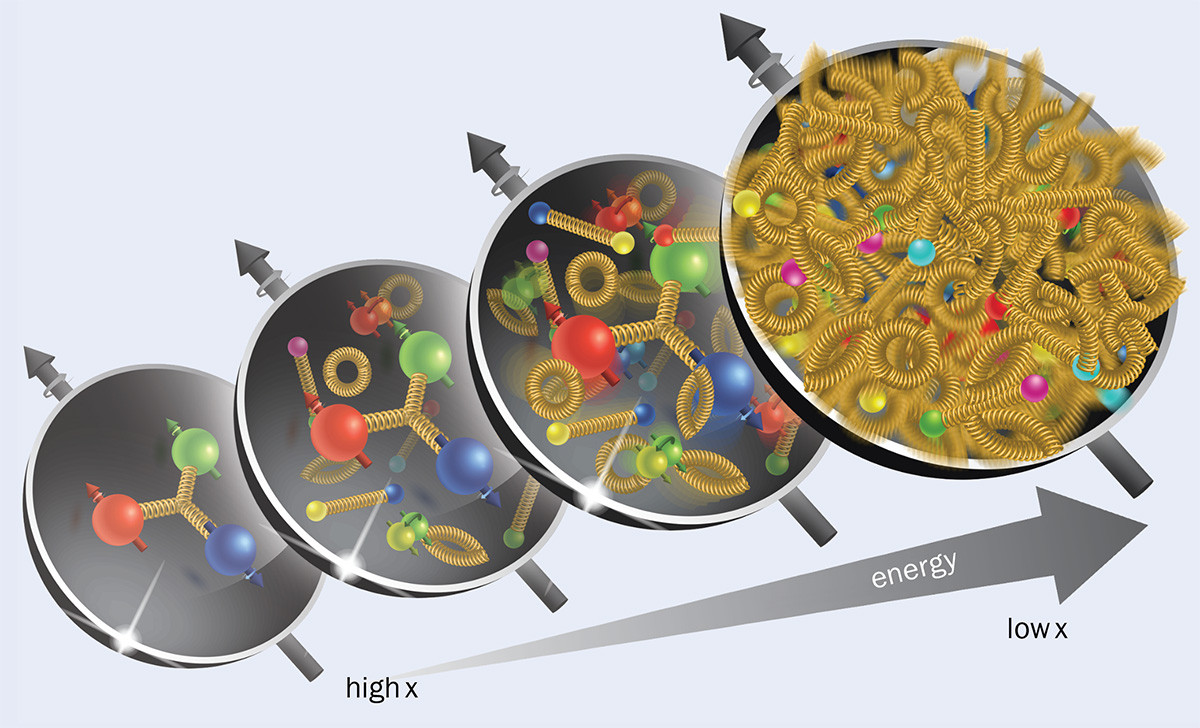
At the fundamental level, the way in which a nucleon or nucleus reveals itself in an experiment depends on the kinematic regime being probed. A dynamic structure of quarks and gluons is revealed when probing nucleons and nuclei at higher energies, or with higher resolutions. Here, the nucleon transforms from a few-body system, with its structure dominated by three valance quarks, to a regime where it is increasingly dominated by gluons generated through gluon radiation, as discovered at the former HERA electron–proton collider at DESY. Eventually, the gluon density becomes so large that the gluon radiation is balanced by gluon recombination, leading to nonlinear features of the strong interaction.
The LHC and RHIC have shown that neutrons and protons bound inside nuclei already exhibit the collective behaviour that reveals QCD substructure under extreme conditions, as initially seen with high-energy heavy-ion collisions. This has triggered widespread interest in the study of the strong force in the context of condensed-matter physics, and the understanding that the formation and evolution of the extreme phase of QCD matter is dominated by the properties of gluons at high density.
The subnuclear genetic code
The EIC will enable researchers to go far beyond the present one-dimensional picture of nuclei and nucleons, where the composite nucleon appears as a bunch of fast-moving (anti-)quarks and gluons whose transverse momenta or spatial extent are not resolved. Specifically, by correlating the information of the quark and gluon longitudinal momentum component with their transverse momentum and spatial distribution inside the nucleon, the EIC will enable nuclear femtography.
Such femtographic images will provide, for the first time, insight into the QCD dynamics inside hadrons, such as the interplay between sea quarks and gluons. The ultimate goal is to experimentally reconstruct and constrain the so-called Wigner functions – the quantities that encode the complete tomographic information and constitute a QCD “genetic map” of nucleons and nuclei.
The construction project is led by a joint BNL–JLab management team that integrates the scientific, engineering and management capabilities of JLab into the BNL design effort. JLab, for its part, leads on the design and construction of SRF and cryogenics systems, the energy-recovery linac and several of the electron injector and storage-ring subsystems within the EIC accelerator complex.
More broadly, BNL and JLab are gearing up to work with US and international partners to meet the technical challenges of the EIC in a cost-effective, environmentally responsible manner. The goal: to deliver a leading-edge research facility that will build upon the current CEBAF and RHIC user base to ensure engagement – at scale – from the US and international nuclear-physics communities.
As such, the labs are jointly hosting the EIC experiments in the spirit of a DOE user facility for fundamental research, while the BNL–JLab management team coordinates the engagement of other US and international laboratories into a multi-institutional partnership for EIC construction. Work is also under way with prospective partners to define appropriate governance and operating structures to enhance the engagement of the user community with the EIC experimental programme.
With international collaboration hard-wired into the EIC’s working model, the EIC User Group has been in the vanguard of a global effort to develop the science goals for the facility – as well as the experimental programme to realise those goals. Most importantly, the group has carried out intensive studies over the past two years to document the measurements required to deliver EIC’s physics objectives and the resulting detector requirements. This work also included an exposition of evolving detector concepts and a detailed compendium of candidate technologies for the EIC experimental programme.
Cornerstone collaborations
The resulting Yellow Report, released in March 2021, provides the basis for the ongoing discussion of the most effective implementation of detectors, including the potential for complementary detectors in the two possible collision points as a means of maximising the scientific output of the EIC facility (see “Detectors deconstructed”). Operationally, the report also provides the cornerstone on which EIC detector proposals are currently being developed by three international “proto-collaborations”, with significant components of the detector instrumentation being sourced from non-US partners.
The EIC represents a fundamental link in the chain of continuous R&D and knowledge transfer
Along every coordinate, it’s clear that the EIC project profits enormously from its synergies with accelerator and detector R&D efforts worldwide. To reinforce those benefits, a three-day international workshop was held in October 2020, focusing on EIC partnership opportunities across R&D and construction of accelerator components. This first Accelerator Partnership Workshop, hosted by the Cockcroft Institute in the UK, attracted more than 250 online participants from 26 countries for a broad overview of EIC and related accelerator-technology projects. A follow-up workshop, scheduled for October 2021 and hosted by the TRIUMF Laboratory in Canada, will focus primarily on areas where advanced “scope of work” discussions are already under way between the EIC project and potential partners.
Nurturing talent
While discussion and collaboration between the BNL and JLab communities were prioritised from the start of the EIC planning process, a related goal is to get early-career scientists engaged in the EIC physics programme. To this end, two centres were created independently: the Center for Frontiers in Nuclear Science (CFNS) at Stony Brook University, New York, and the Electron-Ion Collider Center (EIC2) at JLab.
The CFNS, established jointly by BNL and Stony Brook University in 2017, was funded by a generous donation from the Simons Foundation (a not-for-profit organisation that supports basic science) and a grant from the State of New York. As a focal point for EIC scientific discourse, the CFNS mentors early-career researchers seeking long-term opportunities in nuclear science while simultaneously supporting the formation of the EIC’s experimental collaborations.
Core CFNS activities include EIC science workshops, short ad-hoc meetings (proposed and organised by members of the EIC User Group), alongside a robust postdoctoral fellow programme to guide young scientists in EIC-related theory and experimental disciplines. An annual summer school series on high-energy QCD also kicked off in 2019, with most of the presentations and resources from the wide-ranging CFNS events programme available online to participants around the world.
In a separate development, the CFNS recently initiated a dedicated programme for under-represented minorities (URMs). The Edward Bouchet Initiative provides a broad portfolio of support to URM students at BNL, including grants to pursue masters or doctoral degrees at Stony Brook on EIC-related research.
Meanwhile, the EIC2 was established at JLab with funding from the State of Virginia to involve outstanding JLab students and postdocs in EIC physics. Recognising that there are many complementary overlaps between JLab’s current physics programme and the physics of the future EIC, the EIC2 provides financial support to three PhD students and three postdocs each year to expand their current research to include the physics that will become possible once the new collider comes online.
Beyond their primary research projects, this year’s cohort of six EIC2 fellows worked together to organise and establish the first EIC User Group Early Career workshop. The event, designed specifically to highlight the research of young scientists, was attended by more than 100 delegates and is expected to become an annual part of the EIC User Group meeting.
The future, it seems, is bright, with CFNS and EIC2 playing their part in ensuring that a diverse cadre of next-generation scientists and research leaders is in place to maximise the impact of EIC science over the decades to come.
Most processes resulting from proton–proton collisions at the LHC are affected by the strong force – a difficult-to-model part of the Standard Model involving non-perturbative effects. This can be problematic when measuring rare processes not mediated by strong interactions, such as those involving the Higgs boson, and when searching for new particles or interactions. To ensure such processes are not obscured, precise knowledge of the more dominant strong-interaction effects, including those caused by the initial-state partons, is a prerequisite to LHC physics analyses.
The electromagnetic production of a photon pair is the dominant background to the H → γγ decay channel – a process that is instrumental to the study of the Higgs boson. Despite its electromagnetic nature, diphoton production is affected by surprisingly large strong-interaction effects. Thanks to precise ATLAS measurements of diphoton processes using the full Run-2 dataset, the collaboration is able to probe these effects and scrutinise state-of-the-art theoretical calculations.
Measurements studying strong interactions typically employ final states that include jets produced from the showering and hadronisation of quarks and gluons. However, the latest ATLAS analysis instead uses photons, which can be very precisely measured by the detector. Although photons do not carry a colour charge, they interact with quarks as the latter carry electric charge. As a result, strong-interaction effects on the quarks can alter the characteristics of the measured photons. The conservation of momentum allows us to quantify this effect: the LHC’s proton beams collide head-on, so the net momentum transverse to the beam axis must be zero for the final-state particles. Any signs to the contrary indicate additional activity in the event with equivalent but opposite transverse momentum, usually arising from quarks and gluons radiated from the initial-state partons. Therefore, by measuring the transverse momentum of photon pairs, and related observables, the strong interaction may be indirectly probed.
A surprising role of the strong interaction in electro-magnetic diphoton production is revealed
Comparing the measured values to predictions reveals the surprising role of the strong interaction in electromagnetic diphoton production. In a simple picture without the strong interaction, the momentum of each photon should perfectly balance in the transverse plane. However, this simplistic expectation does not match the measurements (see figure 1). Measuring the differential cross-section as a function of the transverse momentum of the photon pair, ATLAS finds that most of the measured photon pairs (black points) have low but non-zero transverse momenta, with a peak at approximately 10 GeV, followed by a smoothly falling distribution towards higher values.
Extending calculations to encompass next-to-next-to-leading order corrections in the strong-interaction coupling constant (purple line), the impact of the strong interaction becomes manifest. The measured values at high transverse momenta are well described by these predictions, including the bump observed at 70 GeV, which is another manifestation of higher-order strong-interaction effects. Monte Carlo event generators like Sherpa (red line), which combine similar calculations with approximate simulations of arbitrarily many-quark and gluon emissions – especially relevant at low energies – properly describe the entire measured distribution.
The results of this analysis, which also include measurements of other distributions such as angular variables between the two photons, don’t just viscerally probe the strong interaction – they also provide a benchmark for this important background process.
Arthur M (Art) Poskanzer, distinguished senior scientist emeritus at Lawrence Berkeley National Laboratory (LBNL), passed away peacefully on 30 June 2021, two days after his 90th birthday. Art had a distinguished career in nuclear physics and chemistry. He made important discoveries of the properties of unstable nuclei and was a pioneer in the study of nuclear collisions at very high energies.
Born in New York City, Art received his degree in physics and chemistry from Harvard in 1953, an MA from Columbia in 1954, and a PhD in Chemistry from MIT in 1957 under Charles D Coryell. He spent the first part of his career studying the properties of nuclei far from stability produced in high-energy proton collisions. After graduating from MIT, he joined Gerhard Friedlander’s group at Brookhaven National Laboratory (BNL), which was using the Cosmotron to produce beta-delayed proton emitters and neutron-rich light nuclei. In 1966 he moved to the Lawrence Radiation Laboratory (now LBNL) and continued to study nuclei far from stability at the Bevatron in collaboration with Earl Hyde, Joe Cerny and others. He also began his long connection to research in Europe as a Guggenheim fellow at Orsay in 1970–1971, during which he worked with Robert Klapisch’s group on a ground-breaking experiment at the CERN Proton Synchrotron measuring the masses of sodium isotopes.
Soon after Art’s return to Berkeley, beams from the SuperHILAC were injected into the Bevatron, creating the Bevalac, the world’s first high-energy nuclear accelerator. Together with Hans Gutbrod he led the Plastic Ball Project. Analysis of its data in 1984 by Art and Hans Georg Ritter identified directed flow, the first definitive demonstration of the collective behaviour of nuclear matter in nuclear collisions. In 1986 the experiment was moved to CERN and the collaboration with GSI continued with a series of experiments at the Super Proton Synchrotron. During these years, Art made two more extended visits to CERN as a Senior Alexander von Humbold Fellow: first in 1986–1987 working on the WA80 experiment, and then in 1995–1996 on NA49.
From 1990 to 1995 Art was the founding head of LBNL’s relativistic nuclear collisions programme, bringing together local groups to plan an experiment at the Relativistic Heavy Ion Collider (RHIC) under construction at BNL. This resulted in the proposal for STAR, one of the two large multi-purpose RHIC detectors. Art stepped down as programme head in 1995 and returned to research, authoring a seminal paper with Sergey Voloshin on methods for flow analysis and leading the measurement of elliptic flow by STAR. After his retirement in 2002, he remained active for a further decade, leading the successful search for higher order flow components at STAR, and enthusiastically mentoring many postdocs and young scientists.
Art was a well-known and well-loved member of the heavy-ion community. For his work on nuclei far from stability, he was awarded the Nuclear Chemistry Prize of the American Chemical Society in 1980. For the discovery of collective flow, he was awarded the Tom Bonner Prize of the American Physical Society in 2008. This rare “double” is a lasting tribute to his half-century career at the frontiers of nuclear science.
To provide the best experiences, we use technologies like cookies to store and/or access device information. Consenting to these technologies will allow us to process data such as browsing behavior or unique IDs on this site. Not consenting or withdrawing consent, may adversely affect certain features and functions.
Functional
Always active
The technical storage or access is strictly necessary for the legitimate purpose of enabling the use of a specific service explicitly requested by the subscriber or user, or for the sole purpose of carrying out the transmission of a communication over an electronic communications network.
Preferences
The technical storage or access is necessary for the legitimate purpose of storing preferences that are not requested by the subscriber or user.
Statistics
The technical storage or access that is used exclusively for statistical purposes.The technical storage or access that is used exclusively for anonymous statistical purposes. Without a subpoena, voluntary compliance on the part of your Internet Service Provider, or additional records from a third party, information stored or retrieved for this purpose alone cannot usually be used to identify you.
Marketing
The technical storage or access is required to create user profiles to send advertising, or to track the user on a website or across several websites for similar marketing purposes.