The ALICE collaboration has recently reported the first measurement of the hadronic resonance Λ(1520) in heavy-ion collisions at the LHC. In such collisions, a deconfined plasma of quarks and gluons called quark–gluon plasma (QGP) is formed, which expands and cools. Eventually, the system undergoes a transition to a dense hadron gas (hadronisation), which further expands until all interactions among hadrons cease. Short-lived hadronic resonances are sensitive probes of the dynamics and properties of the medium formed after hadronisation. Due to their short lifetimes, they decay when the system is still dense and the decay products scatter in the hadron gas, reducing the observed number of decays.
The production yield of the Λ(1520) baryon resonance was measured at mid-rapidity in lead–lead (Pb–Pb) collisions at a centre of mass energy per nucleon–nucleon pair of 2.76 TeV. The resonance is reconstructed in the Λ(1520) → pK− (and its charge-conjugate) hadronic decay channel and its production is measured as a function of the collision centrality. The ratio of the number of
measured Λ(1520) baryons to that of its stable counterpart, Λ, highlights the characteristics of resonance production directly related to the particle lifetime, since possible effects due to valence-quark composition (e.g. strangeness enhancement) cancel in the ratio. A gradual decrease of the Λ(1520)/Λ yield ratio with increasing charged-particle multiplicity is observed from peripheral to central Pb–Pb collisions (see figure).
The result provides the first evidence for Λ(1520) suppression in central heavy-ion collisions compared to peripheral collisions, achieving a 3.1σ confidence level once cancellations of correlated systematics are taken into account. An earlier measurement at lower collision energy by the STAR experiment at Brookhaven’s Relativistic Heavy-Ion Collider showed a similar suppression, but with much larger uncertainties. The ratio of the Λ(1520) resonance yield with respect to non-resonant Λ baryons reduces by about 45% in central collisions compared to peripheral collisions.
The EPOS3 model, which describes the full evolution of a heavy-ion collision and includes re-scattering in the hadronic phase, describes this suppression well, although it systematically overestimates the data. The relative decrease of the Λ(1520) resonance yield is also slightly smaller in the EPOS3 model than observed in the data, suggesting a longer lifetime of the hadronic phase (about 8.5 fm/c in EPOS3), or that the description of the relevant hadronic cross-sections in the transport phase is imprecise. The mean transverse momentum is also shown to increase with increasing charged-particle multiplicity, hence with increasing collision centrality. The EPOS3 model can quantitatively describe this feature. It is noteworthy that the model does not describe the data when the microscopic transport stage responsible for the re-scattering effect inside the hadronic medium (as described by the UrQMD model), is disabled.
In summary, these measurements add further support to the formation of a dense hadronic phase in Pb–Pb collisions, highlighting its relevance and the importance of a microscopic description of the latest stages of the evolution of heavy-ion collisions.
The Standard Model (SM) is a triumph of modern physics, with unprecedented success in explaining the subatomic world. The Higgs boson, discovered in 2012, was the capstone of this amazing theory, yet this newly known particle raises many questions.For example, interactions between the Higgs boson and the top quark should lead to huge quantum corrections to the Higgs boson mass, possibly as large as the Planck mass (>1018 GeV). Why, then, is the observed mass only 125 GeV? Finding a solution to this “hierarchy problem” is one of the top motivations of many new theories of particle physics.
A common feature in several of these theories is the existence of vector-like quarks – in particular, a vector-like top quark (T) that could naturally cancel the large quantum corrections caused by the SM top quark. Like other quarks, vector-like quarks are spin-½ particles that interact via the strong force and, like all spin-½ particles, they have left-handed and right-handed versions. The unique feature of vector-like quarks is their ambidexterity: while the weak force only interacts with left-handed SM particles, it would interact the same way with both the right- and left-handed versions of vector-like quarks. This also gives vector-like quarks more options in how they can decay. Unlike the Standard Model top quark, which almost always decays to a bottom quark and W boson (t→Wb), a vector-like top quark could decay three different ways: T→Wb, T→Zt, or T→Ht.
The search for vector-like quarks in ATLAS spans a wide range of dedicated analyses, each focusing on a particular experimental signature (possibly involving leptons, boosted objects or large missing transverse energy). The breadth of the programme allows ATLAS to be sensitive to most relevant decays of vector-like top quarks, and also those of vector-like bottom quarks, thus increasing the chances of discovery. The creation of particle–antiparticle pairs is the most probable production mechanism for vector-like quarks with mass around or below 1 TeV. For higher masses, single production of vector-like quarks may have a larger rate.
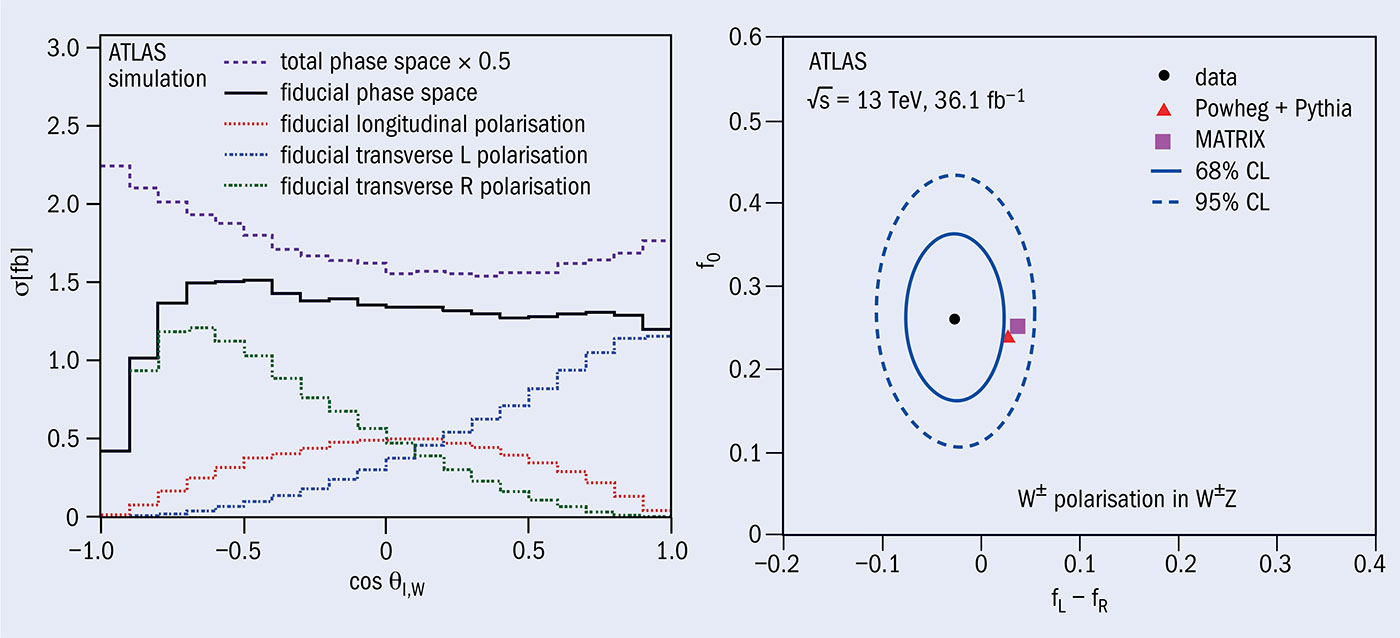
ATLAS recently performed a statistical combination of all the individual searches that looked for pair-production of vector-like quarks. While the individual analyses were designed to be sensitive to particular sets of decays, the combined results provide increased sensitivity to all considered decays of vector-like top quarks with masses up to 1.3 TeV. No vector-like top or bottom quarks were found. The combination allowed ATLAS to set the most stringent exclusion bounds on the mass of a vector-like top quark for arbitrary sets of branching ratios to the three decay modes (figure, left).
As the limits on vector-like quarks reach higher masses, the importance of searching for their single production rises. Such searches are also interesting from a theoretical perspective, since they allow one to constrain parameters of the production model (figure, right).
Given these new strong limits on vector-like quarks and the lack of evidence for supersymmetry, the theoretical case for a naturally light Higgs boson is not looking good! But nature probably still has a few tricks up her sleeve to get out of this conundrum.
It is well known that the top quark, the heaviest known elementary particle, plays an important role in electroweak-symmetry breaking, and is also one of the most promising particles to be investigated in the search for new physics. Numerous measurements of top-quark interactions have been performed at the Tevatron and LHC since the discovery of this particle at the Tevatron in 1995. The associated production of a top quark with a photon (tγj, where j indicates a jet) via electroweak interactions provides a powerful tool to probe the couplings of the top quark with the photon and the couplings of the W boson with the photon. The small production rate of the tγj process at the LHC makes its observation very challenging. However, any excess observed above the Standard Model (SM) rate would indicate new physics.
The CMS collaboration has released evidence for the tγj process using events with one isolated muon, a photon and jets in the final state. The results are based on proton–proton collision data recorded in 2016 at a centre-of-mass-energy of 13 TeV. The tγj process results in an interesting final state, which requires information from all sub-detectors of the CMS experiment, from the innermost tracker layers to the outermost muon systems.
The predicted cross section for tγj, including the branching fraction, is 81 fb, which corresponds to a few hundred events in the whole dataset. Therefore, a sophisticated method is needed to separate the signal events from the huge number of background events originating from several other SM processes. In addition, to achieve the highest signal-to-background ratio, a robust multivariate technique is used to estimate the contribution of the background in which a jet is misidentified as a photon. After these methods are employed, the largest background contribution comes from events that contain a top-quark pair associated with a photon.
CMS observed an excess of tγj events over the background-only hypothesis with a significance of 4.4 standard deviations, which corresponds to a p-value of 4.3 × 10⁻⁶. The measured value of the signal cross section in the considered phase space is 115 ± 34 fb. The measurement is in agreement with the SM prediction within one standard deviation. This result is the first experimental evidence of the direct production of a top quark and a photon. Upcoming results, exploiting the full 13 TeV dataset, will further improve the precision of the measurement.
Burton Richter, a major figure in particle physics who shared the Nobel Prize for the co-discovery of the J/ψ meson, passed away on 18 July in Palo Alto, California, at the age of 87.
Born in Brooklyn, New York, in 1931, Richter’s love of science began with the nightly blackouts during World War II, which revealed an unparalleled view of the night sky.
He studied physics at the Massachusetts Institute of Technology (MIT), where he was introduced to the electron–positron system by Martin Deutsch, who was conducting classical positronium experiments. He wrote his thesis on the quadratic Zeeman effect in hydrogen and completed his PhD in 1956 on the photoproduction of pi-mesons from hydrogen.
That year, Richter moved to Stanford University’s high-energy physics laboratory as a research associate. In 1960, he became an assistant professor of physics, then associate professor in 1963 and professor in 1967. During this time, Richter married his wife, Laurose, and had two children, Elizabeth and Matthew. By 1970, Richter’s talents in experimental particle physics and accelerator physics led to the Stanford Positron-Electron Asymmetric Ring (SPEAR) at the Stanford Linear Accelerator Center (SLAC). It included a groundbreaking type of general-purpose detector that has been used in particle colliders ever since, and it would eventually produce his biggest discovery.
After Richter secured funding for SPEAR in 1970, it took him just 27 months to build the accelerator, at a cost of $6 million. Experiments commenced in 1973 and, famously, in November 1974, SPEAR flushed out what the SLAC team dubbed the “psi” meson – a bound state of two charm quarks. Simultaneously, at Brookhaven National Laboratory on the other side of the continent, Sam Ting and his group had spotted the same resonance, which they christened the “J”. Just two years later, Richter and Ting shared the 1976 Nobel Prize in Physics for their pioneering discovery of the J/ψ, which proved the existence of a fourth type of quark (charm). It was a major step towards the establishment of the Standard Model of particle physics.
Before he received the Nobel Prize, in 1975 Richter began a sabbatical year at CERN, during which he pursued an experiment at CERN’s Intersecting Storage Rings (ISR) – the world’s first hadron collider. He was hosted by Pierre Darriulat and worked on adding a muon spectrometer arm to the R702 experiment. Richter also worked out the general energy-scaling laws for high-energy electron–positron colliding-beam storage rings, looking specifically at the parameters of a collider with a centre-of-mass energy in the range 100–200 GeV, arguing that such a machine would be required to better understand the relationship between the weak and electromagnetic interactions: “That study turned into the first-order design of the 27 km-circumference LEP project at CERN that was so brilliantly brought into being by the CERN staff in the 1980s,” he wrote in his Nobel biography.
His influential paper “Very High Energy Electron–Positron Colliding Beams for the Study of the Weak Interactions” (Nucl. Instrum. Methods136 47) was followed by two detailed studies: one concerning the physics, published in November 1976 as CERN Yellow Report 76-18, of which Burt was a co-author, and an accelerator study headed by Kjell Johnsen. “Burt’s paper and his personal advocacy of high-energy electron–positron collision triggered interest at CERN, and had a powerful impact on the development of the Laboratory, also paving the way for the LHC and the discovery of the Higgs boson,” says CERN’s John Ellis.
In 1978, along with others at SLAC, Richter began to investigate the possibility of turning the 3.2 km linear accelerator at SLAC into a linear electron–positron collider. Construction of the SLAC Linear Collider (SLC) began in 1983, and Richter became director of SLAC the following year, until stepping down in 1999. During that time, he oversaw the construction of the SLC, the only linear electron–positron collider yet to be built, and led the way to other machines for photon science. While SLAC director, Richter also initiated interregional collaborations with DESY in Germany and KEK in Japan, and was a proponent of bringing into existence a high-energy linear collider as a global collaboration.
“Perhaps his greatest contribution as director was, in the 1990s, designing a future for SLAC that would look very different from the past,” said Stanford Provost Persis Drell, who served as SLAC director from 2007 to 2012. “He recognised that pursuing an X-ray free-electron laser at SLAC could be used to provide a revolutionary science opportunity to the photon science community, who use X-rays as their tool for discovery. This vision became the Linac Coherent Light Source. Burt recognised that outstanding science needed to drive the future of the institution, and he did not flinch from designing that future.”
When he stepped down as SLAC director, Richter focused on public policy issues in science and energy, for which he received the prestigious 2007 Philip Hauge Abelson Prize from the American Association for the Advancement of Science. In 2010, he published Beyond Smoke and Mirrors: Climate Change and Energy in the 21st Century, an apolitical layperson’s exploration of the facts of climate and energy. Among his many accolades, Richter received the US National Medal of Science, the nation’s highest scientific honour, in 2014; the Enrico Fermi Award in 2012; and the Ernest Orlando Lawrence Award in 1976.
“In my career I have met no one who has made more fundamental contributions in electron–positron and electron–electron colliders, in the precision instrumentation used in colliders and in experimental physics,” says Ting. “After we received the Nobel Prize together in 1976, I met him many times and we became good friends. My wife, Susan, and I are going to miss him deeply.”
This year’s Nobel Prize in Physics was shared between three researchers for groundbreaking inventions in laser physics. Half the prize went to Arthur Ashkin of Bell Laboratories in the US for his work on optical tweezers, while the other half was awarded jointly to Gérard Mourou of the École Polytechnique in Palaiseau, France, and Donna Strickland of the University of Waterloo in Canada “for their method of generating high-intensity, ultra-short optical pulses”.
Mourou and Strickland’s technique, called chirped-pulse amplification (CPA), opens new perspectives in particle physics. Proposed in 1985, and forming the foundation of Strickland’s doctoral thesis, CPA uses a strongly dispersive medium to temporally stretch (“chirp”) laser pulses to reduce their peak power, then amplifies and, finally, compresses them – boosting the intensity of the output pulse dramatically without damaging the optical medium. The technique underpins today’s high-power lasers and is used worldwide for applications such as eye surgery and micro-machining.
Surfing the waves
But CPA’s potential for particle physics was clear from the beginning. In particular, high-power ultra-short laser pulses can drive advanced plasma-wakefield accelerators in which charged particles are brought to high energies over very short distances by surfing longitudinal plasma waves.
“After we invented laser-wakefield acceleration back in 1979, I was acutely aware that the laser community at that time did not have the specification that we needed to drive wakefields, which needed ultrafast and ultra-intense pulses,” explains Toshi Tajima of the University of California at Irvine, a long-time collaborator of Mourou. Tajima became aware of CPA in 1989 and first met Mourou in 1993 at a workshop at the University of Texas at Austin devoted to the future of accelerator physics upon the demise of the Superconducting Super Collider. “Ever since then, Gérard and I have formed a strong scientific and personal bond to promote ultra-intense lasers and their applications to accelerators and other important societal applications such as medical accelerators, transmutation and intense X-rays,” he says.
Today, acceleration gradients two-to-three orders of magnitude higher than existing radio-frequency (RF) techniques are possible at state-of-the-art laser-driven plasma-wakefield experiments, promising more compact and potentially cheaper particle accelerators. Though not yet able to match the quality and reliability of conventional acceleration techniques, plasma accelerators might one day be able to overcome the limitations of today’s RF technology, thinks Constantin Haefner, program director for advanced photon technologies at Lawrence Livermore National Laboratory in the US. “The race has started,” he says. “The ability to amplify lasers to extreme powers enabled the discovery of new physics, and even more exciting, some of the early envisioned applications such as laser plasma accelerators are on the verge of moving from proof-of-principle to real machines.”
Electrons can also be used to drive plasma accelerators, as is being explored at SLAC and in European labs such as LNF in Italy and DESY in Germany. Meanwhile, the AWAKE experiment at CERN has recently demonstrated the first proton-driven plasma-wakefield acceleration (CERN Courier October 2018 p7). Although AWAKE does not use a laser to drive the plasma, it employs a high-power laser to generate the plasma from a gas, at the same time seeding the proton self-modulation process that allows charged particles to be accelerated. CERN is also a partner in a recent project called the International Coherent Amplification Network, led by Mourou and funded by the European Union, to explore advanced wakefield drivers based on the coherent combination of multiple high-intensity fibre lasers that can run at high repetition rates and efficiencies.
“We have a long way to go, but plasma accelerators have game-changing potential for high-energy physics,” says Wim Leemans, director of the accelerator technology and applied physics division and Berkeley Lab Laser Accelerator Center (BELLA) at Lawrence Berkeley National Laboratory. “Other applications already being explored include free-electron lasers, a quasi-monoenergetic gamma-ray source for nonproliferation and nuclear security purposes, and a miniaturised method for brachytherapy, a cancer-treatment modality in which radiation is delivered directly to the site of a tumour.”
Beyond accelerators, the enormous intensity of single-shot pulses enabled by CPA offer new types of experiments in high-energy physics. In 2005, Mourou initiated the Extreme Light Infrastructure (ELI), nearing completion in the Czech Republic, Hungary and Romania, to explore the use of high-power PW lasers such as Livermore Lab’s HAPLS facility (see image on previous page). Going beyond ELI is the International Center for Zetta- and Exawatt Science and Technology (IZEST), established in France in 2011 to develop and build a community around the emerging field of laser-based particle physics. Under Mourou and Tajima’s direction, IZEST will extend existing laser facilities (such as PETAL at the Megajoule Laser facility in France) to the exa- and zettawatt scale, opening studies including “searches for dark matter and energy and probes of the nonlinearity of the vacuum via zeptosecond dynamical spectroscopy.”
CHARM, a unique facility at CERN to test electronics in complex radiation environments, has been used to test its first full space system: a micro-satellite called CELESTA, developed by CERN in collaboration with the University of Montpellier and the European Space Agency. Built to monitor radiation levels in low-Earth orbit, CELESTA was successfully tested and qualified during July under a range of radiation conditions that it can be expected to encounter in space. It serves as an important validation of CHARM’s potential value for aerospace applications.
CELESTA’s main goal is to enable a space version of an existing CERN technology called RadMon, which was developed to monitor radiation levels in the Large Hadron Collider (LHC). RadMon also has potential applications in space missions that are sensitive to the radiation environment, ranging from telecom satellites to navigation and Earth-observation systems.
The CELESTA cubesat, a technological demonstrator and educational project made possible with funding from the CERN Knowledge Transfer fund, will play a key role in validating potential space applications by using RadMon sensors to measure radiation levels in low-Earth orbit. An additional goal of CELESTA is to demonstrate that the CHARM facility is capable of reproducing the low-Earth orbit radiation environment. “CHARM benefits from CERN’s unique accelerator facilities and was originally created to answer a specific need for radiation testing of CERN’s electronic equipment,” explains Markus Brugger, deputy head of the engineering department and initiator of both the CHARM and CELESTA projects in the frame of the R2E (Radiation to Electronics) initiative. The radiation field at CHARM is generated through the interaction of a 24 GeV/c proton beam extracted from the Proton Synchrotron with a cylindrical copper or aluminium target. Different shielding configurations and testing positions allow for controlled tests to account for desired particle types, energies and fluences.
It is the use of mixed fields that makes CHARM unique compared to other test facilities, which typically use mono-energetic particle beams or sources. For the latter, only one or a few discrete energies can be tested, which is usually not representative of the authentic and complex radiation environments encountered in aerospace missions. Most testing facilities also use focused beams, limiting tests to individual components, whereas CHARM has a homogenous field extending over an area of least one square metre, which allows complete and complex satellites and other systems to be tested.
CELESTA is now fully calibrated and will be launched as soon as a launch window is provided. When in orbit, in-flight data from CELESTA will be used to validate the CHARM test results for authentic space conditions. “This is a very important milestone for the CELESTA project, as well as an historical validation of the CHARM test facility for satellites,” says Enrico Chesta, CERN’s aerospace applications coordinator.
In late August, a beam of electrons successfully circulated for the first time through a new particle accelerator at Fermilab in the US. The Integrable Optics Test Accelerator (IOTA), a 40 m-circumference storage ring, is one of only a handful of facilities worldwide dedicated to beam-physics studies. It forms the centrepiece of the Fermilab Accelerator Science and Technology (FAST) facility, and is the first research accelerator that will be able to switch between beams of electrons and protons.
Researchers will use IOTA to explore multiple accelerator technologies, including several that have been proposed but never tested, in particular targeting ultrahigh-intensity beams. More fundamentally it will allow precise control of a single electron – also opening the door to unique experiments in fundamental physics, such as understanding how the electron’s quantum-mechanical nature blurs its position in space.
For accelerator physicists, IOTA’s key focus is to test the concept of a nonlinear integrable focusing lattice in a realistic storage ring. Whereas contemporary accelerators are designed with linear focusing lattices, in reality machines always have nonlinearities, e.g. resulting from magnet imperfections, which lead to resonant behaviour and particle losses. A nonlinear integrable focusing lattice, proposed in 2010, is predicted to significantly suppress collective instabilities via Landau damping and thus could improve the performance of accelerators such as a Future Circular Collider. IOTA scientists will also capitalise on Fermilab’s existing strengths in accelerator technologies, such as cooling, to make more orderly beams that are easier to manipulate and accelerate.
Over the next year, the Fermilab team will install the proton injector. Once it is in place, it will complete the trio of particle accelerators that make up Fermilab’s FAST facility: the proton injector, the electron injector (completed in 2017) and the IOTA ring. FAST has already attracted 29 institutional partners, including European institutions, US universities, national laboratories and members from industry.
“IOTA is one of a kind – a particle storage ring designed and built specifically to host novel experiments with both electrons and protons, and to develop innovative concepts in accelerator science,” says Fermilab physicist Alexander Valishev, head of the team that developed and constructed IOTA. “This facility offers a flexibility that can be useful to a wider community – above and beyond the needs of high-energy physics.”
The world’s largest liquid-argon neutrino detector has recorded its first particle tracks in tests at CERN, marking an important step towards the international Deep Underground Neutrino Experiment (DUNE) under preparation in the US. The enormous ProtoDUNE detector, designed and built at CERN’s neutrino platform, is the first of two prototypes for what will be a much larger DUNE detector. Situated deep beneath the Sanford Underground Research Facility in South Dakota, four final DUNE detector modules (each 20 times larger than the current prototypes and containing a total of 70,000 tonnes of liquid argon) will record neutrinos sent from Fermilab’s Long Baseline Neutrino Facility some 1300 km away.
DUNE’s scientific targets include CP violation in the neutrino sector, studies of astrophysical neutrino sources, and searches for proton decay. When neutrinos enter the detector and strike argon nuclei they produce charged particles, which leave ionisation traces in the liquid from which a 3D event can be reconstructed. The first ProtoDUNE detector took two years to build and eight weeks to fill with 800 tonnes of liquid argon, which needs to be cooled to a temperature below –184 degrees. It adopts a single-phase architecture, which is an evolution from the 170 tonne MicroBooNE detector at Fermilab’s short-baseline neutrino facility. The second ProtoDUNE module adopts a different, dual-phase, scheme with a second detection chamber.
The construction and operation of ProtoDUNE will allow researchers to validate the membrane cryostat technology and associated cryogenics for the final detector, in addition to the networking and computing infrastructure. Now that the first tracks have been seen, from beam tests involving cosmic rays and charged-particle beams from CERN’s SPS, ProtoDUNE’s operation will be studied in greater depth. The charged-particle beam test enables critical calibration measurements necessary for precise calorimetry, and will also produce valuable data for optimising event-reconstruction algorithms. These and other measurements will help quantify and reduce systematic uncertainties for the DUNE far detector and significantly improve the physics reach of the experiment. “Seeing the first particle tracks is a major success for the entire DUNE collaboration,” said DUNE co-spokesperson Stefan Soldner-Rembold of the University of Manchester, UK.
More than 1000 scientists and engineers from 32 countries in five continents are working on the development, design and construction of the DUNE detectors. For CERN, it is the first time the European lab has invested in infrastructure and detector development for a particle-physics project in the US. “Only two years ago we completed the new building at CERN to house two large-scale prototype detectors that form the building blocks for DUNE,” said Marzio Nessi, head of the neutrino platform at CERN. “Now we have the first detector taking beautiful data, and the second detector, which uses a different approach to liquid-argon technology, will be online in a few months.”
In July, the US Department of Energy also formally approved PIP-II, an accelerator upgrade project at Fermilab required to deliver the high-power neutrino beam required for DUNE. First data at DUNE is expected in 2026. Meanwhile, in Japan, an experiment with similar scientific goals and also with scientific links to the CERN neutrino platform – Hyper-Kamiokande – has recently been granted seed funding for construction to begin in 2020 (CERN Courier October 2018 p11). Together with several other experiments such as KATRIN in Germany, physicists are closing in on the neutrino’s mysteries two decades after the discovery of neutrino oscillations (CERN Courier July/August 2018 p5).
The 2018 Global Physics Photowalk brought hundreds of amateur and professional photographers to 18 laboratories around the world, including CERN, to capture their scientific facilities and workforce. The science of the participating labs ranges from exploring the origins of the cosmos to understanding our planet’s climate, and from improving human and animal health to helping deliver secure and sustainable food and energy supplies for the future.
Following local competitions, each lab submitted its top three images to the global competition. A public online vote chose the top three from those images, and a jury of expert photographers and scientists also picked their three favourites. The photowalk was organised by the Interactions collaboration, and was supported by the Royal Photographic Society and Association of Science-Technology Centers (ASTC). The winning entries, shown here, were announced on 30 September at the ASTC annual conference in Hartford, Connecticut.
Simon Wright bagged first place in the expert jury’s choice with this shot taken at the UK’s STFC Boulby Underground Laboratory, which is located 1.1 km underground in Europe’s deepest operating mine and contributes to the search for dark matter. The photograph captures STFC’s Tamara Leitan as she scanned an information board at the lab. To highlight Leitan’s face, Wright used a miner’s lamp instead of a flash to minimise interference with light reflected from the safety equipment that workers must wear at the mine.
Simon Wright received another award, this time third prize in the people’s choice category, for this image of green fluorescent lighting at an underground tunnel at the UK’s STFC Chibolton Observatory, which is home to a wide range of science facilities.
Jon McRae took third place in the expert jury’s selection, as well as second place in the people’s choice, for this photo of the DESCANT neutron detector at Canada’s TRIUMF laboratory. The detector can be mounted on the TIGRESS and GRIFFIN experiments to study nuclear structure. Holding a small, spherical lens between the camera and the detector array, McRae recreated a miniature simulacrum of DESCANT in the crystal-clear glass ball.
Stefano Ruzzini won the expert jury’s second prize for this photograph of a silicon-strip particle detector, which was first used in CERN’s NA50 experiment but is now at Italy’s INFN Frascati National Laboratories. The photo was praised by the judges for portraying the three-dimensional aspect of the detector.
This picture from Gianluca Micheletti was also awarded third place in the expert jury’s selection. It shows a researcher observing the XENON1T dark-matter experiment at Italy’s INFN Gran Sasso National Laboratories. The judges commended Micheletti’s composition of the image in evoking the sense of curiosity at the heart of physics.
Luca Riccioni snapped a picture of the KLOE-2 experiment at Italy’s INFN Frascati National Laboratories, which recently concluded its data-taking campaign at the DAΦNE electron–positron collider. The photograph was awarded first place in the people’s choice category.
Is it fun to learn physics from a textbook? According to many teenage participants in CERN’s Beamline for Schools (BL4S) programme, physics lessons at school are much too theoretical. Students from some countries do not even have physics lessons at all, let alone any contact with current science.
Many years back, in 2011, experimental particle physicist Christoph Rembser of CERN had an idea to get high-school students engaged with particle physics by offering them the chance to carry out their own experiment on a CERN beamline. Three years later, the 60th anniversary of CERN in 2014 offered an opportunity for what was meant to be a one-off worldwide science competition: BL4S was born. With the help of media attention in CERN around the time of the anniversary, teams of high-school students and their teachers were invited to propose an experiment at CERN. The response was overwhelming: almost 300 teams involving more than 3000 students from 50 countries submitted a proposal.
When the first two teams came to CERN in September 2014, it was clear that BL4S would not be a one-off event. Clearly the competition had the potential to attract large numbers of high-school students every year to get deeply involved with physics at the crucial stage in their education, two years before leaving school to take up further study. Ashish Tutakne, a member of the 2018 winning team from the Philippines, sums this up: “I believe the experience holds significant weight as it is not only a chance to collaborate with some of the smartest people in the world on a scientific project, it is also a taste of what conducting research is actually like. It is this experience that I believe that will in fact prove valuable to me … throughout the rest [of] my life.”
CERN and society
Thanks to the huge success of the first edition, institutes and foundations around the world also recognised the potential of the competition. Through the CERN & Society Foundation, an independent charitable organisation supported by private donors, BL4S has since been provided with the financial help without which it would not have been possible to turn the competition into an annual event. The CERN & Society Foundation has the aim of spreading CERN’s spirit of scientific curiosity for the benefit of society, and supports young talent through high-quality, hands-on training. This year, for example, in addition to the BL4S initiative, the foundation has helped more than 80 educators participate in CERN’s national teacher programme and granted more than 60 Summer Student scholarships.
So far, more than 900 teams with almost 8500 students from 76 countries have taken part in the BL4S competition, with one third of these students being female. While in the first edition in 2014 about 70% of the teams came from member states of CERN, this year roughly two-thirds of the participating teams were from associate and non-member states. This emphasises the international character of the competition and its global appeal.
The announcement of each edition of BL4S is usually made during the summer the year before, with a deadline for submitting a proposal of up to 1000 words and a one-minute video by 31 March. After about two months of evaluation, involving more than 50 volunteer physicists, the two winning teams and up to 30 shortlisted teams are announced in June. Besides certificates, which every participant receives, the shortlisted teams win special prizes such as BL4S T-shirts for every team member. The two winning teams are finally invited to CERN in September/October for a period of about 12 days to carry out their experiments.
Of course they are not doing this alone, but are guided by two professional scientists. These scientists, typically young PhD students in physics, make the largest contribution to the success of BL4S. They are not only responsible for the fine-tuning and implementation of the experiments of the winning teams but have, in collaboration with the CERN detector workshops, also developed bespoke devices for use in the BL4S experiments. Even though these support scientists were only involved with the project for less than a year, it offered them the opportunity to carry out a complete physics experiment from the beginning to the end; the skills that they acquired helped several of them to find interesting postdoc positions.
Beamline specifics
From the beginning, BL4S attracted a lot of CERN staff members as well as users and even retired staff to make voluntary contributions to the organisation of the event. This involves answering questions from the student teams, evaluating proposals, developing detectors and software, helping the winners with the analysis of the data, and many other things. These volunteers have become a crucial part of the competition.
CERN’s accelerator complex is vast, and is in constant use by thousands of physicists worldwide. Since the first edition, the BL4S experiments have taken place at the T9 beamline of the Proton Synchrotron fixed-target area in the “East Hall” on the main CERN site. This beamline offers a secondary beam with a momentum of 0.5–10 GeV/c and a mixture of electrons, pions, kaons, protons and some muons. Regarding detectors, CERN provides a range of technologies: scintillators, Cherenkov counters, delay wire chambers, multigap resistive plate chambers, micro-mesh gaseous structure detectors, lead-glass calorimeters and Timepix detectors. In addition, students are allowed to build their own detectors and bring them to CERN. For the triggering, NIM modules are used, while the data-acquisition system is based on the RCD-TDAQ system of the ATLAS experiment. The student teams are provided with a detailed document that describes all of these components.
The students are completely free with respect to the experiment and use of these materials as long as it does not raise any safety concerns. Quite often we are surprised by their creativity, and the ten winning proposals from the past five years illustrate the wide spectrum of their ideas (see table above). Besides these winning proposals, all of the proposals received show what captures the attention of curious teenagers. Just a few examples are: the shielding of spacecraft to protect astronauts from the dangers of cosmic radiation; the analysis of the atmosphere with respect to greenhouse gasses; the exploration of natural resources; the creation of artificial aurora borealis; and the artistic translation of signals of elementary particles into sights or sounds.
For a successful participation in BL4S, the role of teachers and other mentors is paramount. Many teachers do not feel confident enough and might not propose their students to take part in BL4S. Partly they feel not qualified enough for such a challenge or they do not get the support from their schools that is necessary to coach a team for many weeks if not months. After all, many teachers are severely limited in the time that they can devote to such activities. In some cases, the students go ahead without any mentors and complete their proposal in a self-directed way. In other cases, they contact physicists at local universities or at one of the national or regional contact points established in almost 30 individual countries. Usually, however, the main burden is on the teacher and we are very grateful to the many teachers who every year dedicate a substantial part of their free time to coach a team of students. Unfortunately, our surveys show that due to the high workload only a few teachers are able to participate several years in a row.
The effect that BL4S has on the many students that are not lucky enough to be invited to CERN is difficult to assess. We know, however, via feedback from several teachers, that BL4S is appreciated as a means of motivating their students. In addition, the students themselves often write that their participation was a great experience for them and many are even motivated to work on their proposals and improve them to take part again in the next edition.
The winning teams are encouraged to stay together after having been at CERN and to write a paper about their experiment. So far, three papers have been published in an international peer-reviewed journal, Physics Education, with the following titles: Building and testing a high school calorimeter at CERN; The secret chambers in the Chephren pyramid; and Testing the validity of the Lorentz factor (see further reading). Papers are typically published one to two years after the completion of the experiment. At least one further paper is currently in the pipeline. This is not a mandatory step for the teams, but it represents a unique opportunity to have authored a scientific publication before even starting at university.
According to a recent survey among the previous winners, most take up studies of natural sciences, engineering or mathematics. Max Raven of the 2016 winning team “Relatively Special” from Colchester Royal Grammar School in the UK remarked: “The most beneficial impact of BL4S has been the strong team-working and communication skills I developed… This invaluable experience has been instrumental to developing my interpersonal skills, which are vital for a successful career in engineering.” After taking part in the BL4S competition Raven was accepted to study engineering by the Massachusetts Institute of Technology.
Students and teachers alike are clearly very happy to be associated with the competition, and this also benefits CERN and its educational aims. Winning BL4S often creates a lot of media attention in the home region of the teams or even at the national level, and recently the two Italian teams that won BL4S in 2015 and 2017 were invited to the ministry of foreign affairs in Rome for a special ceremony. At the same time, BL4S makes a contribution to physics education by leading students into a field of physics rarely touched upon in school curricula. Being able to do hands-on physics with detectors and accelerators used also for other current experiments presents a huge motivation for students to learn even in their free time. Yash Karan, a member of the Philippine winning team in 2018, remarked: “I have learnt much more in the last two weeks at CERN than in the last six months in school!”
Next stop DESY
At the end of this year, CERN’s accelerator complex will be shut down for a period of two years to make way for maintenance and upgrades, in particular for the High-Luminosity LHC. This opens a new chapter in the history of the BL4S competition. In close collaboration with the DESY laboratory in Germany, the competition will continue there in 2019. DESY will provide beam time at the DESY II facility, offering electron and positron beams, and employ a dedicated support scientist on a three-year staff contract. Other institutes such as INFN-Frascati in Italy and the Paul Scherrer Institut in Switzerland are also interested in hosting the competition in the future.
What remains is the never-ending challenge of spreading the word. Even though CERN has many traditional and modern channels of communication, making BL4S known to high-school students and teachers around the world takes the effort of a large number of people at all levels. In particular, volunteers are needed to spread the word in their region and through their available channels, where they play several roles: acting as additional regional contacts for candidate teams; providing coaching if no teacher is available; taking part in the evaluation of proposals; assisting the winning teams with their data analysis and writing of scientific papers; and, finally, finding additional sponsors. Anyone interested can contact the BL4S team via bl4s.team@cern.ch.
As this article went to press, the 2018 winners were completing their experiments, which were hugely successful. All students claimed to have gained an immense increase in knowledge and they admired the passion that surrounded them everywhere they went at CERN. Working together in mixed shift crews each day, the teams have also learned about one another’s experiments, fostering cooperation and personal growth. Quotes such as “Beamline for Schools was a life-changing experience” are not uncommon, and many of this year’s students have made up their minds that they would like to pursue a career in particle physics or engineering.
The registration and proposal-submission for BL4S 2019 are now open. Hopefully the next edition will attract even more students from all around the globe to participate in this unique opportunity.
To provide the best experiences, we use technologies like cookies to store and/or access device information. Consenting to these technologies will allow us to process data such as browsing behavior or unique IDs on this site. Not consenting or withdrawing consent, may adversely affect certain features and functions.
Functional
Always active
The technical storage or access is strictly necessary for the legitimate purpose of enabling the use of a specific service explicitly requested by the subscriber or user, or for the sole purpose of carrying out the transmission of a communication over an electronic communications network.
Preferences
The technical storage or access is necessary for the legitimate purpose of storing preferences that are not requested by the subscriber or user.
Statistics
The technical storage or access that is used exclusively for statistical purposes.The technical storage or access that is used exclusively for anonymous statistical purposes. Without a subpoena, voluntary compliance on the part of your Internet Service Provider, or additional records from a third party, information stored or retrieved for this purpose alone cannot usually be used to identify you.
Marketing
The technical storage or access is required to create user profiles to send advertising, or to track the user on a website or across several websites for similar marketing purposes.