The European Union (EU) funded DataGrid project passed its first-year review at the beginning of March. In a one-day exercise, external experts appointed by the EU watched as a grid testbed was put through its paces. Jobs submitted from several institutes across Europe used grid technology to make the best use of distributed network resources.
The DataGrid project brings together five European institutions engaged in particle physics research: CERN; the French CNRS; Italy’s INFN; NIKHEF in the Netherlands; and PPARC in the UK, along with the European Space Agency as principal contractors. A total of 17 institutions are involved in developing the so-called “middleware” software to analyse distributed computing, storage and data resources and to determine the best place to run a job. Middleware is also responsible for distributing the computation, as well as handling all necessary logging and bookkeeping, and providing fast, secure data transfer and cataloguing.
For the first-year review, computing centres run by the five principal particle physics contractors took part, and 15 jobs were submitted. These came mostly from particle physics experiments, with a smaller number being submitted by the Earth observation and computational biology communities. The jobs were efficiently distributed across the available resources on the testbed network, providing a strong demonstration that the middleware was doing its job correctly. A few of the jobs did not finish as expected, but the reviewers accepted this, saying that they would not have believed that the demonstration was live if there had been no glitches.
The main motivation behind the DataGrid project is storing and processing the enormous amount of data that will be produced by experiments at CERN’S Large Hadron Collider. A data flow of a few petabytes per year is anticipated, and more than 50,000 workstations will be needed for analysis. Although the jobs in the first-year review consumed a total of less than one hour of computing time, they demonstrated the principle that such a task can be handled using a grid approach. In its current state, the testbed can provide 8 months of CPU time in a single day on a total of 242 machines. The next step is to expand testbed use to more users and to conduct more challenging tests.
The Spanish government gave the green light in March to a project to build a synchrotron light source near Barcelona. Scheduled to be constructed between 2003 and 2007, the synchrotron will have a beam energy of 2.5 GeV and will serve an international user community estimated at more than 160 research groups. The project’s construction budget of € 120 million and the running costs of € 12 million per year will be shared between the Spanish central government and the government of Catalonia.
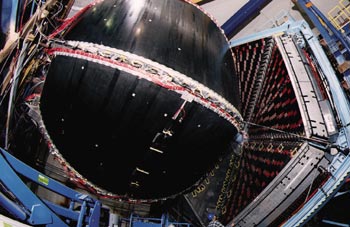
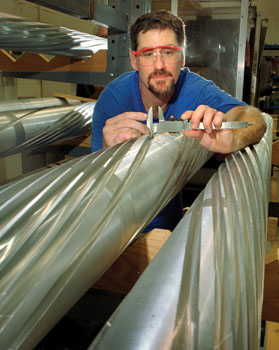
The first of eight 25 m coil casings for the ATLAS experiment’s barrel toroid magnet system arrived at CERN in March by road from Germany. The remaining casings, along with vacuum vessels and the coils themselves, will be making their way across Europe from Germany, Spain and Italy at the rate of about one per month for assembly and testing at CERN. ATLAS installation is scheduled to begin by the end of 2003.
Thomas Jefferson is remembered as the man who penned the US Declaration of Independence. Less well known is his leadership of his era’s scientific enterprise. Jefferson graduated from the College of William and Mary and founded the University of Virginia – institutions that two centuries later led the formation of the Southeastern Universities Research Association (SURA), which runs Jefferson Lab (JLab) for the US Department of Energy. With the recent addition of the Massachusetts Institute of Technology, SURA now incorporates 59 institutions. As well as carrying out essential basic and applied research, JLab also runs an innovative science education programme with local schools.
JLab’s mission is to investigate the boundary between nuclear and particle physics, with the aims of understanding the forces between quarks and how hadrons are constructed from quarks, and of exploring the limits of our understanding of nuclear structure. Its history goes back to the mid-1970s, when scientists identified the need for a new tool to address emerging questions about the quark structure of matter. SURA’s proposal for a 4 GeV linear accelerator and pulse-stretcher ring was selected after the ensuing call for proposals. In 1984 Newport News, Virginia was chosen as the home of the future laboratory.
The laboratory’s first director, Hermann Grunder, came from Berkeley the following year to set up the new facility. His team soon threw out the original design and replaced it with something radically new. By then, it was clear that over the lifetime of the laboratory, a beam energy of 4 GeV would not be enough. The new proposal was to build a pair of superconducting linacs with bending arcs to recirculate the beam up to five times. This would give a high-energy beam with very low energy spread and emittance, and with an intrinsically continuous wave (CW) time structure. These factors are the keys to JLab’s success in taking our understanding of nucleon structure to a new level. A conceptual design report was ready in 1986, and through a fruitful collaboration with Cornell University, an accomplished centre for superconducting radiofrequency (SRF) accelerator technology (see Cornell’s laboratory is at the crossroads), the Continuous Electron Beam Accelerator Facility (CEBAF) was fully operational at an initial 4 GeV by 1997.
Probing hadron structure
CEBAF uses the electromagnetic interaction to probe hadron structure. It is a 1500 MHz machine serving three experimental halls with interlaced 500 MHz beams. The beams in all three halls have the same CW time structure, but their intensities can be varied independently and the energies can be chosen from integer multiples of the single-pass accelerator energy gain, providing final energies of between 1 and 6 GeV.
The three experimental halls have complementary facilities, and each has a different mode of operation. Hall A is devoted to precision measurements, and houses twin high-resolution spectrometers that can each be placed at different angles with respect to the beam. These were instrumented by an international collaboration and are maintained by JLab, leaving experimenters to supply targets and any additional instrumentation they may need. Hall C is similar, but is used for what JLab calls major set-up experiments – those that require complex dedicated apparatus. Hall B would look more familiar to denizens of any of the world’s major particle physics laboratories. It contains the CEBAF Large Acceptance Spectrometer (CLAS), a detector with a toroidal magnetic field configuration that covers 90% of 4π, and is run by a collaboration of some 200 scientists.
Highlights of the CEBAF programme include studies on deuterium, the simplest nucleon bound state. These address the same problem as the classic high-energy muon and electron scattering experiments of the 1980s that measured quark distributions within nucleons, but they approach it from the other end of the energy scale and with higher precision. CEBAF experiments have shown that elastic scattering from deuterons follows a classical nuclear physics description to around one-tenth of the size of the nucleon. Complementary deuteron studies examining photodisintegration indicate that for shorter distance scales, a description of the deuteron based on quarks and gluons provides a much more economical description of the data. These experiments have identified the murky region where nuclear physics gives way to particle physics. Understanding the boundary is still some way off, but CEBAF is taking the first step to map out the terrain.
Another major strand of CEBAF research is studying the electric and magnetic form factors of nucleons. This has shown that the magnetic and electric size of nucleons is not the same, as would be naively expected from a simple quark model. CEBAF experiments are mapping the spatial distributions of up, down and strange quarks, and have already revealed important differences from the predictions of simple quark models.
At CLAS, a major line of investigation is the study of the excited state structure of the nucleon. One of the first results provides new data on the quadrupole deformations of the Delta particle, the nucleon’s first excited state. These data allow discrimination between nucleon models and show that models where the pion cloud is taken into consideration as well as quarks and gluons work best – another indication that CEBAF scientists are working right on the edge between nuclear and particle physics.
For the future, JLab is planning a scientifically ambitious but economical upgrade for CEBAF. This will involve a polarized photon beam of 9 GeV (obtained by coherent bremsstrahlung using a 12 GeV electron beam and a carefully oriented crystal) being delivered to a new experimental hall at the opposite end of the linacs from the existing halls. Halls A to C will receive beams of up to 11 GeV. Most of the infrastructure is already in place, so the cost of the upgrade is modest.
One motivation for the upgrade is to test the origin of quark confinement by probing the flux-tube model. The 9 GeV photon beam will be able to “pluck” the flux tubes many theoreticians believe form between quarks. Experiments will look for such flux tube excitations in meson spectroscopy.
Particle physicists involved in the Alpha Magnetic Spectrometer (AMS) experiment are eagerly scanning data recorded during a December 2001 NASA space shuttle mission.
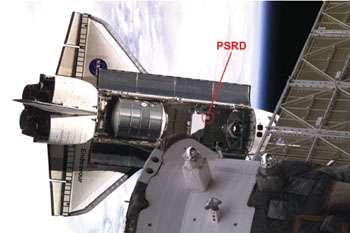
When the space shuttle Endeavour blasted off from Cape Kennedy on 5 December 2001, its main mission was to switch crew and transport supplies to the International Space Station, but it was also the focus of a range of scientific studies. As part of the AMS development programme, the Endeavour carried as a “hitch-hiker” a Prototype Synchrotron Radiation Detector (PSRD). On the shuttle’s return to Earth on 17 December, the PSRD was shipped back to ETH Zurich. The data-storage disks were then read out and analysis of the results collected during the 110 h deployment window began.
The product of a major international collaboration masterminded by the 1976 Nobel prize winner Samuel C C Ting, many functions familiar from collider experiments will be incorporated into the AMS detector. It is the first major particle-physics detector to be sent into space; the prototype AMS-01 first flew on a shuttle in June 1998. Findings from last year’s flight will have a vital bearing on the final configuration of the full detector, which is being prepared for a mission aboard the International Space Station. The 3 tonne prototype developed in 1998 was impressive enough, but the final configuration will weigh approximately 6 tonnes.
A fundamental goal of the AMS experiment is to look for antiparticles in the primary cosmic radiation of outer space. Other objectives include searching for otherwise invisible “dark matter” and carefully analysing details of the cosmic-ray spectrum. The detector will therefore be equipped with a powerful superconducting magnet and sophisticated tracking capability.
When high-energy charged particles are bent by a magnetic field, they emit a “screech” of electromagnetic synchrotron radiation. The characteristic wavelength of this radiation can be used to identify the charged particles.
The Synchrotron Radiation Detector (SRD) will consist of an array of yttrium aluminium perovskite (YAP) crystals. Not available for 1998’s prototype mission, the new SRD technology is seen as an integral part of the final AMS configuration, mounted as the outermost layer of the complete detector. The energy- resolving power of the array depends on its size, but it is hoped that ultimately the SRD will be able to detect multi-TeV (1012 eV) electrons and positrons.
As well as monitoring the constant flux of cosmic rays in deep space, the AMS detector will be sensitive to special cosmic events such as the gamma-ray bursts now known to occur almost daily. These cataclysmic events are the largest explosions in the universe other than the Big Bang itself, but their origins are still a mystery. The extreme energies released in the bursts could provide new insights into the creation of matter and open up novel physics possibilities.
An imaginative theory proposed by John Ellis, Dimitri Nanopoulos and colleagues is the possibility that at this energy, the velocity of light could show a dispersion owing to quantum gravity effects. One objective of the SRD programme is to make careful measurements of the velocity of light under these conditions.
A 14 month programme to dismantle CERN’s Large Electron-Positron collider (LEP) reached its conclusion in February, when the last LEP half-dipole was removed from the collider tunnel. Some 30,000 tonnes of material have been brought back to the surface, clearing the way for the installation of CERN’s next major facility, the Large Hadron Collider (LHC). Many components have been given to other scientific institutes around the world, where they will be put to use in future research programmes. Quadrupoles, for example, were sent to the US, while current generators have gone to South Korea. Other items have been kept for possible future use at CERN and some have been donated to museums.
The tunnel will not be empty for long. Surveyors are already working on tracing out the positions of LHC components, and the installation of utilities has begun.
The expansion of the University of Minnesota’s Soudan underground laboratory is now complete. Installation of the Main Injector Neutrino Oscillation Search (MINOS) far detector began in summer 2001. The Soudan laboratory is located 710 m underground in north-east Minnesota and also houses the Soudan 2 proton-decay detector and the Cold Dark Matter Search experiment (CDMSII), which is searching for weakly interacting massive particle candidates for dark matter.
The new MINOS far detector experimental hall at Soudan includes an upper-level gallery for first-hand observation of physics research by the public. The laboratory is located in a state park, which offers tours of the historic mine workings. Regularly scheduled public visits to the underground science facility will begin in summer 2002.
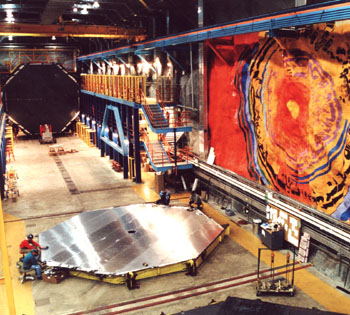
The MINOS far detector (to the rear of the photograph) is now about 25% complete. It is an octagonal magnetized-steel and plastic-scintillator cylinder 8 m in diameter, with a total design mass of 5400 tonnes. The assembly area for the far detector’s 484 planes can be seen in the foreground of the image.
A unique element of the Soudan laboratory is the 18 m long by 9 m high mural that is mounted on the wall opposite the public gallery. The mural depicts the artist Joseph Giannetti’s perception of neutrinos and neutrino science. The art work is now about half finished and completion is expected in time for the summer tours.
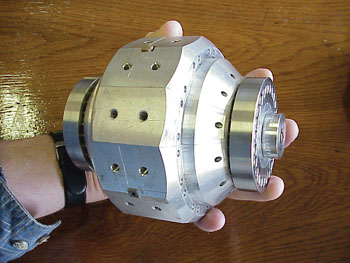
A group of laboratories in Grenoble has built a permanent magnet that produces a world-record field of 5 T at room temperature. The magnet has already found an application at the Grenoble-based European Synchrotron Radiation Facility (ESRF).
The Grenoble magnet is the work of doctoral student Frederic Bloch, who built on the ideas of Berkeley’s Klaus Halbach, a 1970s pioneer of using permanent magnet “wigglers” and “undulators” to produce synchrotron radiation from electron beams. In 1985, Halbach devised a configuration of permanent magnets that concentrates magnetic flux on one side of the array and cancels it on the other. His ideas have since been taken up by designers of magnetic levitation transport systems as well as those with accelerator applications in mind.
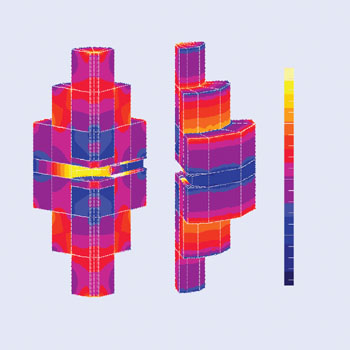
Bloch’s device is a 120 mm sphere of rare-earth permanent magnets. Its usable magnetic volume is an air gap with an adjustable diameter up to 6 mm. The magnet’s peak field of 5 T was measured with a gap of 0.15 mm. Its first application was in an ESRF experiment making magnetic measurements on thin films. The compact nature of the magnet meant that it could be inserted into an ESRF beamline in which the maximum field available using electromagnets had previously been 2.5 T.
The Brookhaven National Laboratory’s Relativistic Heavy-Ion Collider (RHIC) collided its first polarized protons last November. Since its start-up in 2000, the RHIC research programme has concentrated on the physics of heavy-ion collisions. Polarized protons open up a new avenue of research into the spin structure of nucleons.
In 1988, CERN’s European Muon Collaboration announced that quarks alone could not account for the spin of the nucleon. Since then, experiments at CERN, Hamburg’s DESY laboratory and SLAC in California have progressively pinned down this phenomenon, attributing the missing spin partly to the gluons that bind quarks into nucleons and partly to the intrinsic angular momentum of nucleons. RHIC’s polarized proton beams provide an ideal tool for studying the gluon contribution.
For RHIC’s first proton run, which finished at the end of January, four Siberian snakes, a spin-flipper and polarimeters were installed into RHIC and a new high-intensity polarized proton source was commissioned.
The Siberian snakes were built at Brookhaven and funded by the Japanese Institute of Physical and Chemical Research (RIKEN) as part of the RIKEN-Brookhaven Research Center initiative. This is the first time that Siberian snakes have been used in a high-energy machine. They quickly proved their worth by maintaining beam polarization up to RHIC’s full collision energy.
By the end of the run, 25% beam polarization was being maintained at a centre-of-mass collision energy of 200 GeV. Substantial improvements are expected when the Alternating Gradient Synchrotron’s Siberian snake is upgraded. The big PHENIX and STAR detectors were also upgraded to make the most of polarized proton collisions. They, along with the smaller PP2PP proton elastic scattering experiment, have reported that useful data were recorded during RHIC’s first polarized proton run.
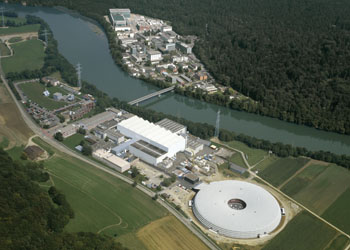
The Swiss Light Source (SLS) marks a milestone in Swiss science policy, as well as in the development of multidisciplinary and complementary research facilities at the Paul Scherrer Institute (PSI). The combination of the SLS with PSI’s existing SINQ spallation neutron source and high-intensity muon beams from its proton cyclotron allows a diversity of probes to be used. It also makes a range of new applications available, from structural research in biology, physics, chemistry and materials sciences to nanotechnology and X-ray lithography.
Growing popularity
Synchrotron radiation, originally viewed by machine designers and experimentalists as a troublesome by-product of high-energy accelerators, has developed over the years into a powerful, multidisciplinary tool that is now fully exploited in modern synchrotron radiation light sources. The first dedicated source came into operation 35 years ago and there are now about 44 in operation worldwide. The demand for high-quality synchrotron radiation is still increasing, with an estimated 6000 users in Europe alone.
At present, third-generation light sources fall into two main categories according to machine energy. Both categories are typically based on storage rings optimized for magnetic insertion devices – wigglers and undulators – that enhance the brilliance (a simultaneous measure of the intensity and collimation) of the photon beams.
Facilities with electron energies below 3 GeV are particularly suited to the generation of radiation in the ultraviolet and soft X-ray region. Examples are national facilities such as the US’s Advanced Light Source, France’s SuperACO, Italy’s ELETTRA and MAX-Lab in Sweden. Larger-scale international centres, based on machines with electron energies above 5 GeV, are optimized for the production of hard X-rays. There are now three such facilities in operation: the 6 GeV European Synchrotron Radiation Facility in France, the 7 GeV Advanced Photon Source in the US, and the 8 GeV SPring-8 in Japan.
The SLS was designed as an advanced third-generation light source capable of exceeding the performance of low-energy national sources and able to overlap with the hard X-ray spectral range of high-energy sources. Its performance is optimized for the production of light with a maximum brilliance in the vacuum ultraviolet to soft X-ray regions.
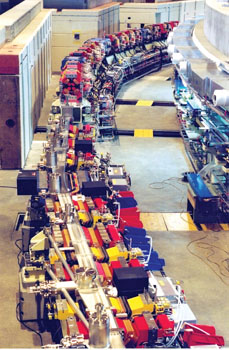
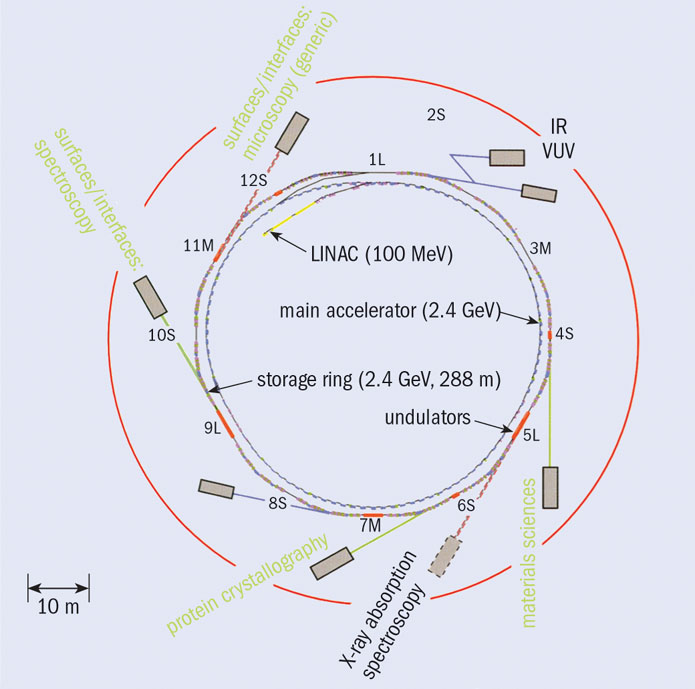
The SLS machine complex has three main components. There is a two-stage acceleration phase comprising a 100 MeV electron linear accelerator followed by a booster synchrotron to accelerate the electrons to their final energy of 2.4 GeV, and the storage ring itself. It takes about 3 min to reach the design current of 400 mA in the 288 m circumference ring. The radius of each ring is similar, allowing them to be in the same shielding tunnel. The storage ring is a polygon with 12 straight sections where wigglers and undulators are installed. Together with the ring’s bending magnets, these are the spectral sources of synchrotron radiation produced at the facility.
Wigglers and undulators consist of linear arrays of alternating magnetic poles placed above and below the beam axis. Depending on the strength of the magnetic field and the periodicity of the poles, the electrons either “wiggle” or “undulate” in the horizontal plane, greatly enhancing the emission of synchrotron radiation by multiple transverse acceleration. The higher magnetic fields and larger periodicity of the arrays in the case of wigglers leads to a wider spectral range of photons compared with undulators, where a much narrower cone of radiation is produced at each set of poles. This creates peak intensities at certain energies and high-brilliance beams that are tunable to experimental requirements.
Four beamlines are currently available to users at the SLS, spanning the spectral range of 10 eV – 40 keV. For the future, the facility has a projected capability of nine insertion devices and 24 bending magnet sources. Because of the high brilliance of the emitted radiation, several characteristics associated with this attribute, such as high flux density, a high degree of coherence, high energy resolution, good spatial resolution and good timing resolution can be simultaneously optimized in experiments. This opens up the possibility for novel imaging techniques such as holography to be exploited, or for time-dependent investigations of systems at the picosecond scale. The polarization of X-rays from linear to circular is also possible at the SLS, providing an important tool for investigating the magnetic properties of materials, for example, by imaging magnetic domains.
From initial ideas in 1990 to the start of the SLS project in 1997 was a process that involved around 30 votes and decisions. The project was first presented in 1993 and approved by the Swiss Government in 1996. Its budget of SwFr 159 m (Euro108 m) received near unanimous approval from both Houses of Parliament the following year, marking the official start of the project. The building and construction phase, which began in summer 1998, was followed by the start of machine installation just a year later. Commissioning of the machines proceeded rapidly, starting with the LINAC in February 2000 and ending with a Christmas present in the form of the first stored beam in the storage ring on 15 December 2000. By the following June, the design current of 400 mA was reached, and with the measurement of the first sample diffraction pattern in the protein crystallography beamline one month later, an exemplary commissioning phase was complete, bringing the new light source on stream in time and on budget.
The construction of the beamlines and experimental facilities benefited greatly from co-operation with sister synchrotron sources around the world, and by August 2001, 70% of available beamtime could be given over to a few selected users. A test phase running to the end of 2001 ensued before the facilities were made available to the full SLS user community of around 80 groups.
The SLS was officially inaugurated on 19 October 2001 at an event celebrated by more than 200 prominent guests from the worlds of politics, science and industry. It was headed by Ruth Dreifuss, Swiss federal minister for internal affairs. Among the scientific guests at the inauguration were Nobel Laureates Heinrich Rohrer and K Alexander Müller, who had been involved in the assessment process of the project.
Festivities began with an official welcome by PSI director Meinrad K Eberle and were followed by speeches from minister Dreifuss, Stephan Bieri, vice-president of council of the Swiss Federal Institutes of Technology, and Heinrich Rohrer. All stressed the importance of the SLS in the context of international scientific co-operation. Director Eberle reviewed the project’s history from conception to realization, while the technical aspects and the research prospects were covered in talks from project leader Albin Wrulich and research leader Frisco van der Veen.
The highlight of the inauguration festivities was a tour of the complex, the inside of the space-age building being bathed in a spectral extravaganza of light and sound. The inauguration was performed by Dreifuss and Eberle, who operated the power key to start up a symbolic “light source” that slowly appeared above the shielding wall, in the form of three chandeliers, and came to rest over a well decked buffet.
The whole event was, to the amusement of the guests, accompanied by film clips of historic scenes from previous ceremonies that were not executed quite so smoothly, while the musical ambience was provided by a modern jazz quartet. The festivities were rounded off with a series of congratulations from representatives of local government and sister laboratories, including Eberhard Jaeschke, technical director of the BESSY laboratory in Berlin, and Massimo Altarelli, scientific director of ELETTRA.
To provide the best experiences, we use technologies like cookies to store and/or access device information. Consenting to these technologies will allow us to process data such as browsing behavior or unique IDs on this site. Not consenting or withdrawing consent, may adversely affect certain features and functions.
Functional
Always active
The technical storage or access is strictly necessary for the legitimate purpose of enabling the use of a specific service explicitly requested by the subscriber or user, or for the sole purpose of carrying out the transmission of a communication over an electronic communications network.
Preferences
The technical storage or access is necessary for the legitimate purpose of storing preferences that are not requested by the subscriber or user.
Statistics
The technical storage or access that is used exclusively for statistical purposes.The technical storage or access that is used exclusively for anonymous statistical purposes. Without a subpoena, voluntary compliance on the part of your Internet Service Provider, or additional records from a third party, information stored or retrieved for this purpose alone cannot usually be used to identify you.
Marketing
The technical storage or access is required to create user profiles to send advertising, or to track the user on a website or across several websites for similar marketing purposes.