Comsol -leaderboard other pages

Topics

Physics in collision

CCphy1_01_11

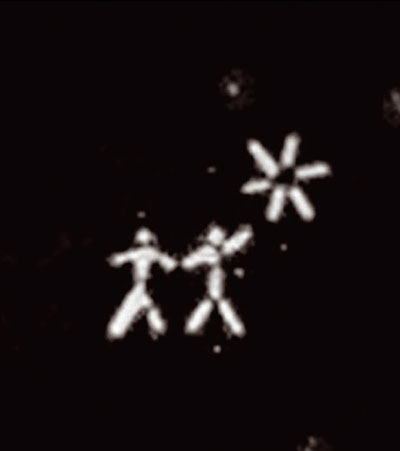
It is difficult to imagine a greater contrast than that between the particle detectors installed at the ISR, when the first proton–proton collisions took place 40 years ago, and those ready for the first collisions at the LHC in 2009. Several experiments were waiting in the wings, but in January 1971 just a few simple scintillation counters were in place to detect the first collisions at the ISR, while an oscilloscope trace showed left-moving and right-moving beam halo and some left–right coincidence signals from collisions.

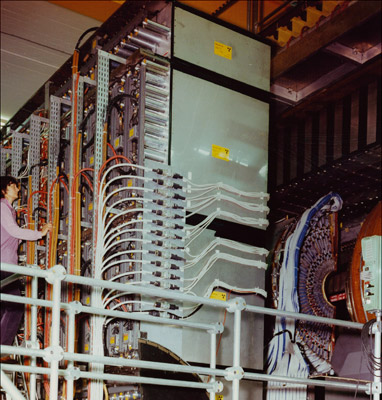
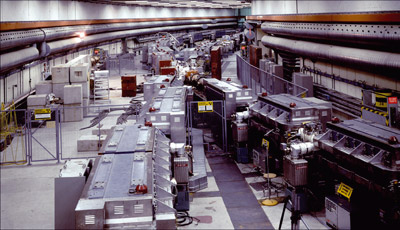
The ISR was in many ways a “transitional machine”, a bridge between relatively low-energy, fixed-target accelerators and today’s extremely high-energy colliders, as well as between detectors based largely on scintillation and Cherenkov counters, spark chambers or bubble chambers and today’s (almost) full-solid-angle trackers, calorimeters and muon detectors that record gigabytes of data per second. For example, the last large ISR experiment, the Axial Field Spectrometer (AFS), pictured right, with its full-azimuth drift chamber and uranium-scintillator calorimeter, bore no resemblance to any of the first-generation experiments but had much in common with the detectors found in later colliders. Also, from the theoretical point of view, the decade of the ISR saw the transition from confusion to today’s Standard Model, even though other machines made some dramatic key discoveries – charm, the W and Z bosons, and the third family of quarks and leptons.
CCphy2_01_11

Before the start of the ISR, the idea that fractionally charged quarks could be produced there led to a special session of the ISR Committee (ISRC-70-34) that reviewed eight quark-search proposals, of which three were “encouraged”. It was later established that fewer than one charged particle in 1010 has a charge 1/3 or 2/3. It would be a stretch to claim that this was “observation of quark confinement”, but being at a higher energy than other accelerator experiments and with much greater sensitivity than cosmic-ray studies, the ISR played a role in our current belief that free quarks do not exist outside hadronic matter. However, quarks can still be “seen” confined inside hadrons – as the deep-inelastic, electron-scattering experiments at SLAC discovered in 1968.

In 1971, today’s theory of strong interactions, QCD, was also “waiting in the wings”; theorists were groping towards the light. Simple (experimentally, not theoretically) two-body reactions such as proton–proton (pp) elastic scattering or π + p → π0 + n were described by Regge theory, which was based on the sound principles of unitarity (no probabilities higher than 1.0), analyticity (no instantaneous changes) and the crossing symmetry (“what goes in can come out”) of scattering amplitudes. While Regge theory is still a more useful approach than QCD for those reactions, calculations became difficult because the strong interaction between hadrons is strong and the calculations do not converge. It was also clear that at the higher ISR collision energies – jumping from the 28 GeV beams of the Proton Synchrotron (PS) at CERN and the Alternating Gradient Synchrotron (AGS) at Brookhaven to an equivalent beam energy of 2000 GeV – many hadrons could be created and that Regge theory had little to say about it except for certain “inclusive” reactions, discussed below.

At the first ISRC meetings in 1968 and 1969 the decision was taken to devote one of the eight intersection regions to a “large, general-purpose magnet system”. Three systems had been proposed and a working group was asked to make a rapid decision. The choice fell on the Split Field Magnet (SFM) – primarily because its field was strong and simple (a dipole) in the forward directions, where most particles would be produced. Unfortunately, the field was zero at 90° and, with pole pieces above and below the beams, it was unsuitable for physics at high-transverse momentum, pT. By 1978 the SFM had been upgraded with greatly improved detectors, but it remained focused on forward and diffractive particle production.

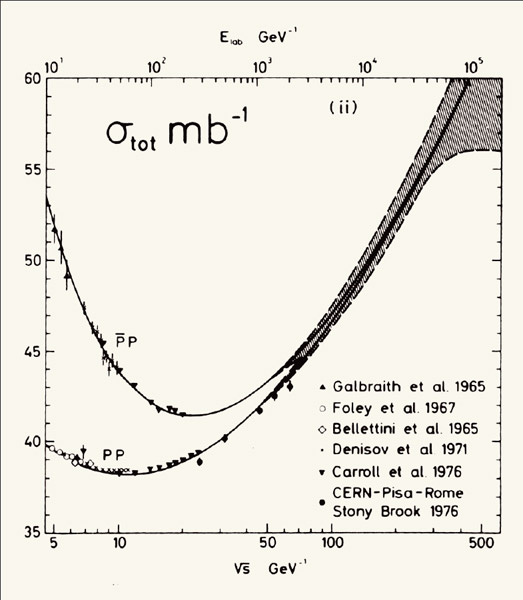
Hadronic diffraction at high energies, the simplest example being elastic scattering, is described in Regge theory as arising mainly from the exchange of a pomeron between the scattering protons. This has quite different properties from other, virtual meson (or “Reggeon”) exchanges. Before the ISR, the total pp cross-section was known to decrease with energy, as it did for πp (but not for K+p). The early discovery that it rises (as in figure 1), which was a surprise to many, had been predicted if, and only if, the pomeron is an allowed exchange. Today we take it for granted that the total pp cross-section rises with energy but at the time the rise led to much experimental and theoretical activity: does the proton become more opaque? Or larger? Or both? Beautiful experiments, for example by the CERN-Rome group that developed “Roman pots” to place detectors very close to the circulating beam, showed that the slope (in momentum transfer, t) of elastic scattering increases with energy. Thus protons in effect become larger but they also become more opaque. Roman pots have been used at all subsequent hadron colliders, including the LHC.

CCphy3_01_11

The first ISR experiments were mostly concerned with strong interactions at large distances, or small momentum transfers. On the menu, in addition to searches for free quarks, monopoles and weak vector-bosons, were elastic scattering and low- and high- multiplicity final states. How could such complicated final states be handled experimentally? A popular approach, still common today, was to measure the angular and momentum distributions of a single particle from each collision and ignore all of the others – the so-called “inclusive single particle” spectra. As mentioned, Regge theory could be adapted to describe such data, but only at low pT. Experiment R101 (intersection 1, experiment 1) was simplicity itself: literally a toy train with photographic emulsions in each wagon. When colliding beams were established it was shunted alongside the collision region, and left there to measure the angular distribution of produced particles. The first physics publication from the LHC was of the same distribution, although not measured with a toy train set!

Pre-ISR experiments at the PS typically installed detectors for a few weeks or months and then moved on. It was (jokingly?) said that you should not have more photomultipliers than physicists. That mindset persisted in the early ISR days. Four experiments shared Intersection 2 (I2). Three single-arm spectrometers measured inclusive particle spectra at small and large angles. They discovered Feynman scaling – in which forward particle spectra are proportional to the beam energy – at small (but not at large) pT, high-mass diffraction and co-discovered high pT particles. Feynman scaling was shown to be approximate only; indeed, scaling violations are a key feature of QCD. Two of these spectrometers were combined in 1975 to look for hadrons with open charm but, in retrospect, the acceptance was far too small. The fourth experiment at I2 was a large, steel-plate spark chamber designed to look for muons from the decay of the then-hypothetical W boson, supposing its mass might be only a few giga-electron-volts. (It was later found to have a mass of 81 GeV, much too high for the ISR.) Unfortunately, with hindsight, the muon detector was not made in two halves on opposite sides so as to have more acceptance for muon pairs; had the collaboration persevered as the luminosity increased they might have seen J/ψ → μ+μ. One reason they gave for not persisting was that the background from charged π → μ decays was much larger than they had expected.

The reputation of the ISR as a physics-discovery machine suffered greatly from missing the discovery of the J/ψ particle, which made its dramatic entrance in November 1974 at Brookhaven’s AGS and the e+e collider at SLAC. The “November Revolution” convinced remaining doubters of the reality of quarks, with important implications for electroweak interactions. How did the ISR miss it? There is no single answer. Today’s intense interaction between theorists and experimenters hardly existed in the early 1970s – but even if it had, there would have been few, if any, voices insisting on a search for narrow states in lepton pairs.

R103, one of the early experiments designed to measure electron (and π0) pairs by the CERN-Columbia-Rockefeller collaboration (CCR), already had two large lead-glass arrays on opposite sides of the collision region in 1972–1973 and found an unexpectedly high rate of events. This was the important discovery of high-pT hadron production from quark and gluon scattering, but it had the unfortunate consequence that the team had to turn their trigger threshold (with 10 Hz rate-limited spark chambers) up to 1.5 GeV, just too high to accept J/ψ → e+e. This was followed in 1974 by R105 (by CCR plus Saclay), which included a gas Cherenkov counter. There were about a dozen J/ψ events on tape at the end of 1974 but not clear enough and not in time for a discovery. However, before November 1974, R105 (together with Fermilab experiments) had already discovered direct lepton production, in a proportion e/π of 10–4, which was later described by a “cocktail” of processes (J/ψ, open charm and Drell-Yan qq annihilation).
CCphy4_01_11

High-pT particle production was not promoted by theorists until after the ISR started up. In December 1971, Sam Berman, James Bjorken and John Kogut (BBK) used Richard Feynman’s parton model, which was supported by deep-inelastic electron scattering, to predict a much higher production rate of hadrons and photons at high pT than expected from a simple extrapolation of the then-known exponentially falling spectra (Berman et al. 1971). The rates that they calculated were for electromagnetic scattering of the charged partons, but they noted that these were lower bounds and strong scattering (the exchange of a spin-1 gluon) would give much larger cross sections. They also suggested that scattered partons (now known to be quarks and gluons) would fragment into jets (“cores”) of hadrons along the direction of the parent parton. Feynman had similar ideas.

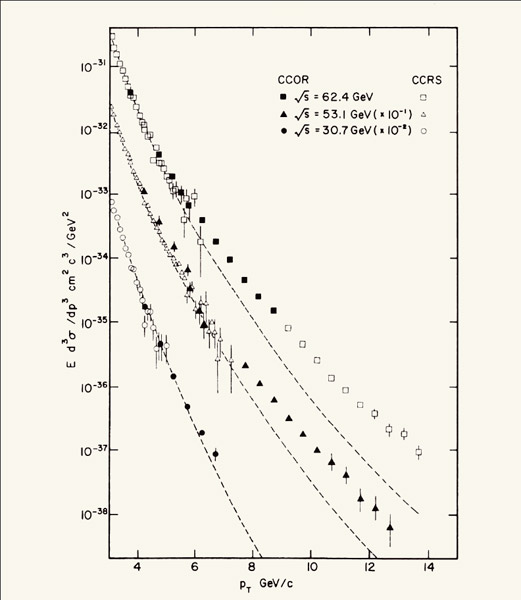
The observation of unexpectedly high rates of high-pT hadron production at the ISR was a major discovery (figure 3); it showed that parton–parton scattering indeed occurred through the strong interaction, but with a weaker coupling than between two protons. This behaviour was later understood in QCD in terms of a decreasing strong coupling at smaller distances – the phenomenon of asymptotic freedom for which David Gross, David Politzer and Frank Wilczek received the Nobel Prize in Physics in 2004. Unfortunately, the high pT discovery – made by the CCR collaboration (for π0) and the British–Scandinavian and Saclay-Strasbourg collaborations (for charged hadrons) – masked the J/ψ in the e+e channel. As noted earlier, high-pT pions produced an unexpected large background also to muon measurements, so the muon pairs were not pursued.

The high-pT jets predicted by BBK took another decade to be discovered in hadron–hadron collisions, almost 10 years after jets had been seen in e+e collisions. One needed to select events with large, total transverse energy in an area much greater than the jets themselves, and with a hadron calorimeter with excellent energy resolution as in the AFS (see photo p39). After a long struggle, the collaborations of the AFS (R807) at the ISR and UA2 at the Super Proton Synchrotron (SPS) running in proton–antiproton (pp) collider mode (SppS), submitted papers on the same day to Physics Letters with convincing evidence for jets. The ISR data extended to a jet-transverse energy, ET = 14 GeV, but the SppS data reached 50 GeV with 1/1000 the luminosity of the ISR. At all post-ISR colliders, high-ET jets are considered as “objects” that are almost as clear as electrons, muons and photons. The experiments at the LHC are already studying the 2-jet mass spectrum for evidence of new particles with masses of up to 2 TeV.

The scattering of two quarks is described in QCD by the exchange of a gluon – the strong-force equivalent of the photon. Gluons must also be present as constituents of protons, being continuously emitted and absorbed by quarks. The “discovery of the gluon” is credited to the observation at DESY of e+e annihilation to three jets, which showed clearly that outgoing q and q jets could be accompanied by gluon radiation. Although not as dramatic, it was clear at the ISR that the high-pT particle production required more scattering partons in the proton than just the three valence quarks, and that the inclusion of gluons gave sensible fits to the data.

A related ISR discovery was the production of high-pT photons, produced directly rather than coming from the decay of hadrons (such as π0); these are direct probes of the processes q + q → g + γ and q + g → q + γ. Direct high-pT γγ production was later observed. Now, at the LHC, direct γγ production is a promising search channel for the Higgs boson.
CCphy5_01_11

With the advent of the parton model most physicists – theorists and experimenters – were happy to be able to leave the complicated, difficult world of hadrons at the femtometre scale and dive down to the next, partonic, layer, which was both simpler theoretically and experimentally exciting. But what they left behind is still unfinished business. While QCD is frequently said to be the theory of strong interactions it still can not calculate hadron processes. Every hadronic collision involves large-distance processes, which we are not yet able to calculate using QCD. The problem is that the strong interaction becomes too strong when distances become as large as the size of hadrons (about 1 fm); indeed, this is responsible for the permanent confinement of quarks and gluons inside hadrons. Calculations that work well on smaller distance scales (or larger momentum transfers), do not converge; they blow up and become intractable.

So, while QCD cannot be used to calculate small-angle elastic scattering, Regge theory with pomeron exchange can describe it, although we recognize that it is less fundamental. High-mass diffraction provided a new tool for studying pomeron exchange and eventually double-pomeron reactions such as pomeron + pomeron → π+π (and to other hadron states) were found. We now understand that the pomeron is, to leading order, a colourless pair of gluons. The idea that there could be quarkless hadrons, or “glueballs”, also motivated these studies. Not finding them implied that if they exist they must be heavy (at least about 1 GeV) and so short-lived that they could not emerge from the collision as free hadrons.

The pomeron itself is not a particle, but an exchanged “entity” with Regge properties (complex angular momentum, negative mass-squared). Heroic attempts have been made to calculate its properties in QCD. Perhaps one day Regge theory will be proved to be a large-distance limit of QCD. While at the ISR, central masses in double-pomeron reactions were limited to less than about 3 GeV, at the LHC they extend to masses a hundred times greater, allowing Higgs bosons – if they exist – to be produced in the simple, final state p + H + p, with no other particles produced. Both the ATLAS and CMS collaborations have groups proposing to search for this process, which can be called “diffractive excitation of the vacuum” because the Higgs field fills (in some sense “is”) the vacuum.

A string theory of hadrons was briefly in vogue in the 1970s, with qq mesons as open strings and pomerons as closed strings. Regge theory is compatible with this idea and can explain the relationship between the mass and spin of mesons. Thirty years later, string theory is in vogue once again but on a much smaller, near-Planck scale, with electrons and quarks as open strings and gravitons being closed strings. Despite the enormous progress in collider technology, no one can imagine a collider that could see such superstrings, unless extra dimensions exist on an LHC scale.

Many other studies of strong interaction physics were made at the ISR. These included particle correlations, short-range order in rapidity, resonance production etc. Multiparticle forward spectrometers also made systematic studies of diffraction, including the production of charmed baryons and mesons.

With its two independent rings, the ISR was more versatile than any other collider – then or since. Not only were pp collisions studied, but antiprotons and deuterons and α-particles were also made to collide with each other and with protons. For the last run, an antiproton beam was stored in the ISR for more than 350 hours, colliding with a hydrogen gas-jet target to form charmonium. So the swansong of the ISR was a fixed-target experiment measuring the very particle that it had missed because high pT physics got in the way!

The ISR machine was outstanding and the detectors eventually caught up and led the way to the modern collider physics programme. When it was closed in 1984, there was still plenty to do, despite the higher energy SppS collider, whose UA1 and UA2 detectors owed so much to the ISR experience. However, the ISR had to make way for the Large Electron–Positron collider, which in turn made way for the LHC, so that proton–proton collisions are once again exciting.

• This has been a personal, and far from comprehensive, view of the physics that we learnt at the ISR. I thank Leslie Camilleri, Luigi Di Lella and Norman McCubbin for careful reading and redressing some balance. I also pay homage to Maurice Jacob, who did so much to bridge the gap between theorists and experimenters.
LHC begins physics with lead ions

CCnew1_10_10

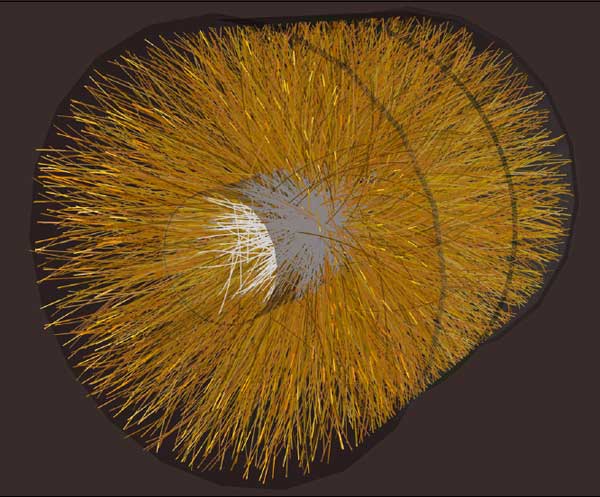
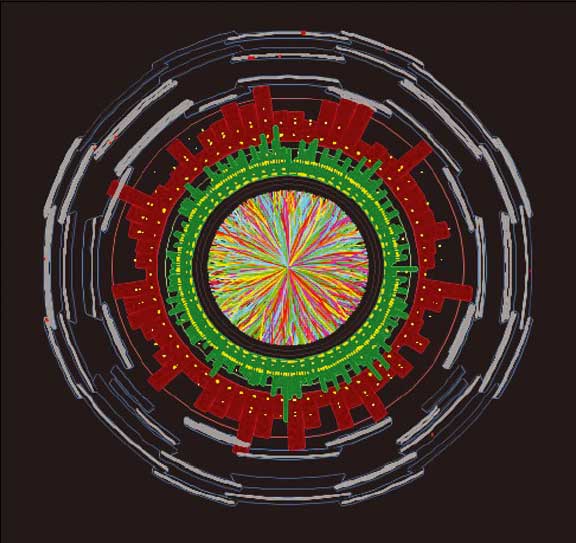
Four days is all that it took for the LHC operations team at CERN to complete the transition from protons to lead ions in the LHC. After extracting the final proton beam of 2010 on 4 November, commissioning the lead-ion beam was underway by early afternoon. First collisions were recorded at 0.30 a.m. on 7 November, and stable running conditions marked the start of physics with heavy ions at 11.20 a.m. on 8 November.

Since the first proton collisions occurred at 7 TeV in the centre-of-mass at the end of March, the machine and experiment teams have achieved all of their objectives for the first year of proton physics in the LHC at this record energy. A major target for 2010 was to reach a peak luminosity of 1032 cm–2s–1. This was achieved on 13 October, with two weeks to spare. Before proton running came to an end the machine had reached twice this figure, allowing experiments to double the amount of data collected in the space of only a few days. For the rest of the year the LHC is moving to a different phase of operation, with lead ions being brought into collision in the machine for the first time.

CCnew2_10_10

Operating the LHC with lead ions is completely different from operating it with protons. From the source to collisions, operational parameters have to be re-established for the new type of beam. For lead ions, as for protons before them, the procedure started with threading a single beam round the ring in one direction and steadily increasing the number of orbits before repeating the process for the other beam.

Once circulating beams were established, they could be accelerated to the full energy of 287 TeV per beam – an energy much higher than for proton beams, because the lead ions contain 82 protons. Another period of careful adjustment was needed before lining the beams up for collision, and then finally declaring that nominal data-taking conditions had been established. The three experiments recording data with lead ions, ALICE, ATLAS and CMS, can now look forward to continuous lead-ion running until CERN’s winter technical stop begins on 6 December.

CCnew3_10_10

Lead-ion running opens up an entirely new avenue of exploration for the LHC programme, probing matter as it would have been in the first instants of the universe’s existence. One of the main objectives is to produce tiny quantities of such matter, which is known as quark-gluon plasma, and to study its evolution into the kind of matter that makes up the universe today. This exploration will shed further light on the properties of the strong interaction, which binds the particles called quarks, into bigger objects, such as protons and neutrons.

Following the winter technical stop, operation of the collider will start again with protons in February and physics runs will continue through 2011.

Raman amplification could boost plasma-based acceleration

CCnew4_10_10

Researchers using the first large-scale particle-in-cell simulations have found that Raman amplification of laser beams in a plasma can produce multi-petawatt peak powers – albeit in a definite parameter window – without the plasma medium being destroyed through instabilities. The control of these instabilities promises big reductions in costs and complexity for producing ultra-intense laser pulses, which in turn would allow greater access to higher intensities for use in inertial laser fusion or in laser-based particle accelerators. The process also scales to short wavelengths allowing, for example, the compression of free-electron laser pulses to durations of an attosecond.

Since the invention of the laser 50 years ago, the drive to produce increasingly intense lasers for investigating physical processes at the intensity frontier has required larger amplifying media. This progress has followed a path similar to development in accelerators as described by the Livingston curve: as one technique saturates another is discovered. At present, conventional amplifying media are based on solid-state lasers, which have already proved successful at reaching powers on the petawatt scale. Such lasers, when focused, can produce intensities of the order of 1021 W/cm2 on target, equivalent to 109 atmospheres, the pressure found inside stars. However, the intensity threshold for the breakdown of the optical components in these systems demands metre-scale beams.

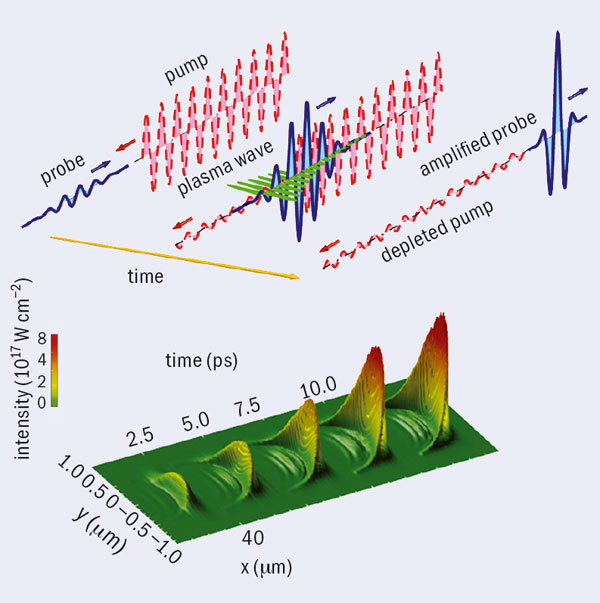
A promising new technique uses a much smaller amplifying medium – millimetre-diameter plasmas, which can be 100,000 times smaller than conventional optics, making the system compact and less expensive. Raoul Trines and colleagues of the Central Laser Facility, STFC Rutherford Appleton Laboratory, St Andrews University and the Instituto Superior Técnico, Lisbon, have made the first systematic study of high-power Raman amplification. In this process a long pump pulse and a counter-propagating short probe pulse are sent into a plasma where they couple through a plasma wave and energy transfers from the pump to the probe pulse, resulting in amplification (see figure).

Using multidimensional, fully relativistic particle-in-cell simulations the team has discovered how to produce short multi-petawatt laser pulses while controlling instabilities, for example, from forward Raman scattering. They find that although increasing the pump intensity or plasma density can lead to efficiency in the amplification process, it can also increase the instabilities in both the pump and the probe. Nevertheless, they identify a parameter regime in which a 4 TW, 700 μm full-width at half-maximum (FWHM), 25-ps-long laser pulse with 800 nm wavelength can be amplified to 2 PW peak intensity with 35% efficiency, as the lower part of the figure shows.

One major application of ultra-high-power laser systems is laser-driven electron acceleration in plasma. Earlier this year, Samuel Martins and colleagues of the Instituto Superior Técnico and University of California Los Angeles, found that electrons can be accelerated to beyond 10 GeV when the driver pulse contains 300 J in 110 fs (2.8 PW peak power). Starting from a kilo-joule pump laser beam with a duration of 100 ps, such a pulse could be produced via Raman amplification in a plasma column only 15 mm long and just a few millimetres in diameter. Producing the same pulse via conventional glass optics would require gratings that are at least one metre across. This is just one of the many applications of high-power lasers that could benefit hugely from the application of the novel technique of Raman amplification.

The global linear collider comes together in Geneva

CCnew6_10_10

The International Workshop on Linear Colliders (IWLC2010) recently brought together many experts involved in research and development for an electron–positron linear collider – the favoured future facility to complement the LHC. Organized by the European Committee for Future Accelerators (ECFA) and hosted by CERN, the meeting took place on 18–22 October and attracted 479 registered participants.

Two complementary technologies are currently being developed for a future linear collider: the International Linear Collider (ILC), based on superconducting RF technology in the tera-electron-volt energy range for colliding beams; and the Compact Linear Collider (CLIC), based on a novel scheme of two-beam acceleration to extend to energies of multi-tera-electron-volts. Taking advantage of a large number of synergies, the two studies are already collaborating closely on a number of technical subjects. These include: beam-delivery systems and machine-detector interfaces; physics and detectors; positron generation; beam dynamics; damping rings; civil engineering and conventional facilities; and cost and schedule.

IWLC2010 merged previously separate workshops on CLIC and ILC for the first time. Covering accelerators as well as detectors and physics, it provided an environment where researchers could exchange ideas, inform their peers about recent achievements and work together on common issues. It also took full advantage of synergies between the two studies, with common working groups to discuss the many shared challenges. The lively discussions, together with the scientific and technical presentations, showed the progress that has been made towards unifying the two study teams into a single linear-collider community.

While the opening and final plenary sessions were held at CERN to facilitate participation and information flow beyond the linear-collider community, the parallel sessions (up to a maximum of 16 simultaneously) were held in the International Conference Centre Geneva. Scheduled activities and satellite meetings started half a day before the workshop formally began and continued throughout. For example, Steinar Stapnes, CERN’s Linear Collider studies leader, presented a colloquium, “Towards a future linear collider”, as an introduction for CERN staff.

CERN’s director-general, Rolf Heuer, introduced the workshop with a presentation on “The LC roadmap” in which he referred to the active role that CERN can play towards defining global linear-collider governance and siting. A plenary session followed that reviewed the physics prospects of linear colliders, the status of the ILC and CLIC accelerators, the concepts for detectors (ILD, SiD and CLIC) and R&D activities for detectors. Another plenary session addressed the potential impact of LHC and Tevatron physics on the linear collider.

Three days were filled with parallel sessions. Some took place as separate accelerator or physics and detector sessions, but many came together in various combinations, with strong interaction between the two communities. In particular, there was a lively discussion session on the scientific imperative to vary the machine energy over a wide range and to scan over energy thresholds, while maintaining adequate luminosity. The progress of the machine designs towards this goal was reviewed and discussed. Excellent progress has been made on both studies towards their next milestones: CLIC will present its Conceptual Design Report for accelerator and detectors in 2011, while the ILC accelerator and the two validated ILC detector concepts – ILD and SiD – will publish a more advanced technical design report and a detailed baseline design, respectively, in 2012.

In particular, the ILC study has achieved its 2010 goal of demonstrating that half of the superconducting accelerating structures produced for the ILC reach the desired acceleration gradient. The successful operation of two advanced test facilities, CESR-TA at Cornell, in the US, and ATF2 at KEK, in Japan, have led to major advances across a range of subjects. The work at CESR-TA has significantly deepened understanding of electron-cloud effects, leading to several promising ways in which they could be mitigated. ATF2 continues to produce important results in many areas of beam instrumentation and beam optics.

As far as CLIC is concerned, the CTF3 test facility, which adresses the major feasibility issues of the novel CLIC technology, is near completion and is being commissioned. There has been important progress on the high-intensity drive-beam generation, which uses complex beam manipulation; on the use of this beam to produce RF power with special power-extraction and transfer structures (PETS); and on the use of this power to accelerate a probe beam, thus demonstrating the feasibility of the two-beam acceleration scheme. First measurements of the beam quality have shown current stability better than the demanding CLIC requirements. Accelerating structures that include waveguide damping features have achieved performances close to CLIC’s target in the first tests at KEK and SLAC. Measurements on a model of the mechanical quadrupole-stabilization system showed good decoupling from ground motion with a residual level consistent with the beam stability specifications.

Regarding the ILC detectors, community-wide detector R&D has led to important advances on high-precision vertex technology, highly granular calorimetry for particle flow, as well as developments in time-projection chambers based on micro-pattern gas detectors. Many of these efforts now proceed together with the CLIC study. For the CLIC detector study, recent simulations of detector performances under CLIC beam conditions have allowed the detector geometries for the CLIC_ILD and CLIC_SiD concepts to be fixed for presentation in the conceptual design report.

In all, this first joint linear-collider workshop was unanimously considered a great success, fostering mutual co-operation on both a regional and a global basis. The next joint workshop is planned to take place in Grenada on 26–30 September 2011.

• For more about IWLC2010, see https://espace.cern.ch/LC2010/default.aspx.

SuperB project reports progress

Plans for SuperB

The SuperB collaboration has completed a series of reports detailing the progress made since publishing the Conceptual Design Report (CDR), in consolidating the physics case and in the design, cost and schedule of the detector and accelerator. The SuperB collider consists of two rings, in which beams of electrons and positrons collide to produce tens of billions of heavy quarks and heavy leptons per year for a sensitive exploration of their decays (B O’Leary et al. 2010).

The new detector represents a substantial advance, with improved resolution, radiation hardness and background-rejection capability (Grauges et al. 2010). There have been similar advances in the accelerator design compared with the preliminary CDR (Biagini et al. 2010). It is now smaller (1250 m circumference), has a fully worked-out lattice, incorporates a polarized electron beam and includes flexibility in reaching its design goal of a luminosity of 1036 cm–2s–1.

How lasers cast a light on accelerator science

CClas1_10_10

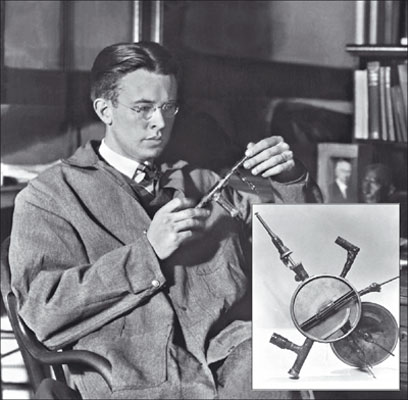
Particle accelerators, invented during the first half of the 20th century, and lasers, invented during the latter half of the 20th century, are arguably the two most successful tools of scientific discovery ever devised. The first cyclotron, which Ernest Lawrence conceived of in 1930, and the first laser, which Theodore Maiman produced exactly 30 years later, were both palm-size devices (figure 1). Just as the cyclotron was followed by betatrons, synchrotrons and colliders, the ruby laser was followed by other solid-state, liquid, gaseous and semiconductor lasers. Since their inception, both lasers and accelerators have found applications in science, medicine and industry. Today, in contrast to their humble antecedents, the LHC at CERN and the laser of the National Ignition Facility at Lawrence Livermore National Laboratory (LLNL) are indisputably the most complex scientific instruments ever constructed for particle physics and inertial-fusion research, respectively.

CClas2_10_10

The relationship between these two inventions runs deeper than this parallel history. Accelerator-based free-electron lasers (FELs) have over the past three decades been extending the capabilities of coherent light sources (Making X-rays: bright times ahead for FELs). On the flip side, intense, short-pulse lasers are being used to accelerate charged particles at a rate thousands of times greater than is possible using conventional microwave accelerators. There is little doubt that these two great inventions will continue to be the premier tools of scientific discovery in the foreseeable future.

Laser Compton scattering

Lasers began to play an important role in accelerator-based science not long after their invention. In a head-on collision between photons and electrons the Compton scattered (CS) photons are shifted up in frequency by a double Doppler shift. Within four years of the invention of the laser in 1960, a ruby laser was used to demonstrate Compton scattering of laser photons off a 6 GeV electron beam at the Cambridge Electron Accelerator (Bemporad et al. 1965). This was the first time that photons of a few electron-volts had been frequency up-shifted more than 100 million times to produce gamma-ray photons with energies of more than 100 MeV. Since then, laser CS photons at these energies have been used for nuclear physics. It was not until the late 1990s – when lasers had become sufficiently powerful – that collisions between giga-electron-volt CS photons, off relativistic electrons, and multiple laser photons were able to produce electron–positron pairs in the first demonstration of light-by-light scattering (Burke et al. 1997).

These early experiments used head-on collisions between giga-electron-volt electrons and visible laser photons to produce CS photons in the giga-electron-volt range. However, X-ray photons with an energy of a few kilo-electron-volts are needed for many scientific applications, such as to probe structural dynamics in condensed matter. In 1996, using the 50 MeV injector beam of the Advanced Light Source at the Lawrence Berkeley National Laboratory (LBNL), experimenters made a laser pulse collide with the electrons at 90° to produce the first subpicosecond pulses of X-ray photons with a wavelength of 0.04 nm (Schoenlein et al. 1996).

Compton scattering can also occur when an electron beam passes through a periodically varying magnetic field, such as in a magnetic wiggler or an undulator. Here, the static magnetic field looks like an electromagnetic wave in the frame of the relativistic electrons: the electrons Compton scatter these photons, which in classical terms is just synchrotron radiation. In an FEL, Compton scattering provides the noise photons (spontaneous emission) that are subsequently amplified by the FEL instability (stimulated emission). The subpicosecond photon-pulse facility (SPPS) at SLAC – a precursor of the Linac Coherent Light Source (LCLS) – showed that sub-100 fs X-ray pulses could be obtained via an undulator-based CS source of photons in the 10 kV range (Cornacchia et al. 2001).

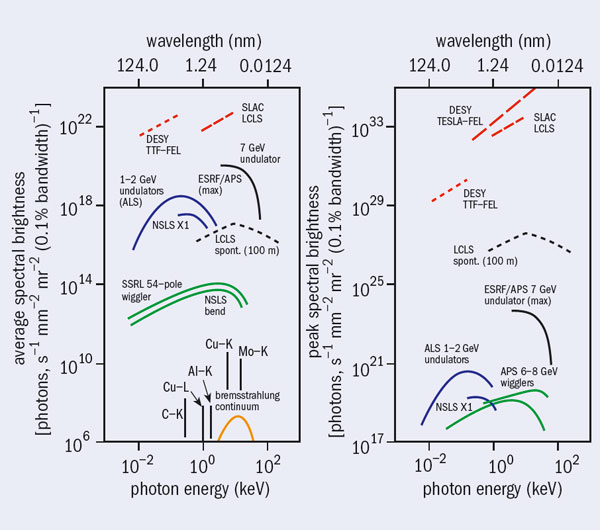
It is extremely difficult for an electronic transition to provide laser action at such short wavelengths because the pumping density – required to achieve gain – scales as the frequency of the photons to the fourth power. Therefore, it is likely that above a photon energy of 1 kV, FELs are the only way to generate high-power, coherent radiation. In an FEL, the electron beam must be bunched on the scale of the photon wavelength so that the phases of the emitted photons all add coherently. This places a stringent requirement on the normalized emittance (εN) of the electron beam. However, the recent success of the LCLS has shown that accelerators are capable of producing beams of the necessary brightness (I/ε2N, where I is peak current) to produce tunable coherent photon beams in the 1–10 kV range (figure 2).

Lasers at light sources and accelerators

CClas3_10_10

Synchrotron-radiation facilities such as the European Synchrotron Radiation Facility, France, the Advanced Photon Source, US, and Spring-8, Japan, are now being used by thousands of scientists in virtually every field. The key innovation that led to orders of magnitude increase in the brilliance of the emitted radiation was the introduction of insertion devices, i.e. magnetic wigglers and undulators. Many “pump-probe” experiments on these machines use undulator-produced X-ray photons to pump or induce change/damage in atoms/molecules, electronic and biological samples, together with a time-delayed laser pulse to probe the induced change, or vice versa. These pump-probe experiments on ultrafast phenomena using accelerator-based light sources will continue to push the boundaries of experimental science in the coming years.

How are the high-brightness electron beams needed for X-ray FELs and for future colliders for high-energy particle physics produced? Here, again, lasers have played a critical role. Until the mid-1980s, thermionic cathodes embedded in RF cavities were used to produce electron bunches. It was realized that the emittance of beams from these RF guns could be greatly improved by replacing the thermionic cathode (LaB6 for instance) by a photocathode (Cu, Mg or alkali cathode). Richard Sheffield and colleagues at Los Alamos National Laboratory carried out pioneering work on the first photo-injector gun with a Cs3Sb cathode (Sheffield et al. 1996). By illuminating the photocathode with a short laser pulse of photons with an energy just greater than the work function of the cathode material and by operating the gun at high gradients, very high currents of electron bunches with emittances less than 1 mm mrad have been produced (Akre et al. 2008). For FELs, the short duration combined with low emittance implies a beam of high brightness that can be readily bunched by the FEL instability on the wavelength scale of the emitted radiation. Almost all recent FELs, including FLASH at DESY (FLASH: the king of VUV and soft X-rays), the high-gain harmonic-generation (HGHG) FEL at Brookhaven National Laboratory and the LCLS at SLAC, use photo-injector guns as the source of electrons.

CClas4_10_10

Lasers are also routinely used for alignment and diagnostics in particle accelerators. A “laser wire” is a type of beam-profile monitor used to sample nondestructively the transverse profile of intense electron or positron beams that would ordinarily destroy a thin metallic wire. The local density of the beam is sampled through collisions with a tightly focused laser pulse that has a spot size smaller than the particle beam. The relative CS yield provides a measure of the beam profile.

Future linear colliders for particle physics will bring nanometre-sized beams of electrons and positrons into head-on collision, maximizing the luminosity. Conventional techniques for measuring the size of the beam spot, such as the laser-wire scanning described above, are not suitable for measuring submicron spots. Instead, laser photon CS at 90° has been used as a noninvasive diagnostic technique for measuring ultrasmall beam sizes (Shintake 1992). Two counter-propagating laser beams produce a standing-wave interference pattern. As the focused electron bunch is scanned across this interference pattern (using a weak steering magnet) the gamma-ray yield is modulated and the depth of modulation of the CS gamma-ray flux gives the spot size. This technique has been used at the Final Focus Test Beam Facility at SLAC to measure a 47 GeV beam with a transverse size as small as 60 nm. A modified version of this technique using a propagating beat-wave interference pattern can be used as a bunch-length monitor.

Measurement of the width of highly relativistic electron bunches shorter than 100 fs poses a serious challenge. Fortunately, the transverse electric field of such bunches can itself be used to induce a change in the polarization of a synchronized laser pulse in an electro-optic crystal that is placed in the vicinity of the beam (Cavalieri et al. 2005). The duration of the photons that are affected by the polarization change can then be measured to give the pulse width of the electrons.

Accelerating with lasers

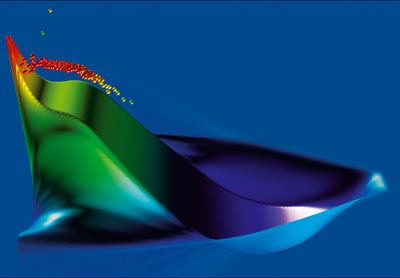
Lasers are now being used directly to produce medium-energy (100 MeV–1 GeV) electron beams (Leemans and Esarey 2009). Indeed, laser particle acceleration has grown into a distinct subfield of research since the first Laser Acceleration of Particles Workshop at Los Alamos in 1982. A short but intense laser pulse propagating through plasma can excite a wave in space-charge density, also called a wake, behind the pulse. The longitudinal electric field of this wake can be tens of giga-volts per metre, which is large enough to capture some of the plasma electrons and accelerate them (figure 3). However, the wake propagates at a phase velocity that is equal to the group velocity of the laser pulse in the plasma. Since the group velocity of a photon packet in a medium is always less than the speed of light, the accelerating electrons continuously dephase with respect to the wake. A combination of beam loading and dephasing leads to a quasi-monoenergetic beam of electrons whose energy increases as the plasma density is decreased. The transverse spread of the electrons can be a few microns and the emittance less than 1 mm mrad. Several groups are embarking on research programmes to demonstrate the coherent amplification of undulator radiation, with the eventual goal of demonstrating a tabletop, extreme-ultraviolet FEL based on a laser-wakefield accelerator (LWFA).

Although a laser-based plasma accelerator operating at the energy frontier is at this stage far into the future, the US Department of Energy (DoE) has funded the construction of a research facility called BELLA at LBNL whose goal is to demonstrate a 1 m-scale 10 GeV LWFA that can then be staged multiple times to give high energies.

An alternative approach is to use a laser pulse to produce an accelerating electromagnetic mode directly in a miniature photonic band-gap structure or a slow wave structure in a plasma medium. It is too early to say what the eventual architecture of a high-energy accelerator based on these concepts would look like but the research is fascinating in its own right.

A bright future

In the future we are likely to see even greater merging of lasers and accelerators. Laser CS has been proposed as a method for generating polarized positrons for a future e+e collider using a high-finesse laser cavity in conjunction with an electron storage ring operating at a few giga-electron-volts. In this proposal the electron micro-bunches collide with (the circularly polarized) laser photons circulating in the cavity to produce the CS photons. These polarized multimega-electron-volt photons then collide with a target of high atomic number (Z) to produce a copious number of polarized positrons via pair production (Araki et al. 2005).

A CS-based gamma–gamma collider would be a natural second interaction region for any future e+e collider because cross-sections for some reactions are larger for gamma–gamma collisions than for e+e collisions (Telnov 1990). With a proper choice of laser wavelength and intensity, much of the electron energy can be converted into the gamma-ray photon and, with a net yield of about one photon per electron, the final luminosity of a gamma-gamma collider can be comparable to that of an e+e collider (Kim and Sessler 1996). While the peak power (1 TW) and the pulse width (1 ps) required for the laser used in a gamma–gamma collider are easily obtained today, the repetition rate of such lasers is still a couple of orders of magnitude lower than in state-of-the-art lasers. There is reason for optimism, however, because diode-pumped solid-state lasers appear promising for achieving the high average powers needed.

Other possible uses of laser CS photons are for nuclear spectroscopy, where the transition energies are in the multimega-electron-volt range, as mentioned above, and for the detection of hidden fissionable materials via the observation of nuclear resonance fluorescence (NRF). If the line-width of the CS photons can be made to be less than that of nuclear transitions, then such a source could revolutionize nuclear spectroscopy much in the same way that tunable lasers have transformed atomic spectroscopy. An example of an ambitious CS source is MEGa-ray (mono-energetic gamma-ray), now under development at LLNL. It uses a state-of-the-art 250 MeV, X-band accelerator to generate an extremely bright beam of electrons at an effective repetition rate of 1 kHz, together with a high average power, picosecond laser to generate high fluxes of narrow-bandwidth mega-electron-volt photons for NRF (Gibson et al. 2010). A kilo-joule-class nanosecond laser end-station is proposed at the LCLS facility to generate matter of high energy-density that will then be probed by the highly directional X-rays from the FEL.

Laser cooling normally conjures up images of cooling atoms of low thermal energy. However, at a number of places, laser cooling has already been demonstrated on high-energy beams. For example, experiments at GSI, Darmstadt, have used laser cooling on C3+ ions at around 1.5 GeV, leading to an unprecedented momentum spread of 10–7. Laser cooling has been proposed as a method for achieving beams of ultra-low emittance for future e+e linear colliders (Telnov 2000).

There is no doubt that lasers will play an ever increasing role in accelerators, and vice versa.

• This work was supported by the US DoE grant number DE-FG02-92ER40727. The author thanks Andy Sessler for his input to this article.

Making X-rays: bright times ahead for FELs

CCfel1_10_10

The X-ray FELs will open a new chapter in the biological and physical sciences

With these breakthrough characteristics the X-ray FEL provides a new window on dynamical processes at the atomic and molecular level. Imaging of non-crystalline matter at nanometre and subnanometre scales is also made possible by the coherence properties of the radiation. Taking an atomic-scale motion picture of a chemical process in a time of a few femtoseconds or less, and unravelling the structure and dynamics of complex molecular systems, such as proteins, are among the exciting experiments made possible by this novel source of X-rays. The LCLS – and the other hard X-ray FELs now being built at DESY in Germany and at Spring-8 in Japan – will open a new chapter in the biological and physical sciences, together with other hard X-ray FEL projects being developed in China, Korea and Switzerland.

The soft X-ray region, at wavelengths from a few nanometres to about 50 nm, has also seen a dramatic increase in performance with the equally successful operation of FLASH at DESY. Another soft X-ray FEL, Fermi@Elettra in Trieste, will be completed by the beginning of 2011 and new soft X-ray FELs are being designed at the Lawrence Berkeley National Laboratory and at SLAC, as part of LCLS II, an addition to the existing LCLS.

Another important aspect of FELs has been the successful construction and operation at the Jefferson Laboratory of an FEL with high average power, up to 9–15 kW, at wavelengths ranging from about 1.6 to 6 μm. A distinctive characteristic of this FEL, critical for high average-power operation, is the use of a recirculating superconducting linac to recover the electron energy after the beam has amplified the FEL radiation (figure 2). A similar approach to reach even higher average power is being used in an extension of the programme sponsored by the US Navy.

Soft and hard X-ray FELs represent the latest success in the development of FELs, which began a few decades ago. Many FEL oscillators have been in operation since the 1980s, at laboratories around the world, but mainly in the near- to far-infrared region. Scientists have used their unique properties of full tunability from the visible to the far-infrared and high peak power of tens to hundreds of megawatts to explore many areas of physical, chemical and biological sciences.

FEL oscillators operating in the infrared, visible or near ultraviolet part of the electromagnetic spectrum can take advantage of the existence of high-reflectivity mirrors to use an optical cavity and so operate at small gain, as John Madey first proposed (Madey 1971). In this mode of operation the undulator magnet, where the electron beam emits the radiation, can be rather short, although many electron bunches are needed to amplify the radiation in small steps up to the maximum saturation value. For an oscillator system the radiation pulse is nearly Fourier-transform and diffraction limited.

In the X-ray spectral region, research is being done to develop the mirrors and other components, in particular a very high-frequency electron gun, needed for an X-ray oscillator (Kim et al. 2008). Mirrors in general have small reflectivity and an optical cavity is complicated and, until now, impractical. The main approach – used for the LCLS, FLASH and most other new X-ray FELs – is not to use an optical cavity, but to operate in the high-gain regime, reaching saturation in a single pass of an electron bunch through a long undulator. The system can start either by amplifying the spontaneous radiation in the undulator within the bandwidth of the FEL gain (a self-amplified spontaneous emission, or SASE, FEL) or by amplifying an external laser signal (a seeded FEL) (Bonifacio et al. 1984). A SASE FEL is nearly diffraction limited but is not transform limited, except when a very short electron bunch is used to generate and amplify the radiation (Reiche et al. 2008). Seeded FELs can be nearly diffraction and transform limited.

The physics of the high-gain regime is that of a collective instability. Under the effect of an input field, external or self-generated from noise, the longitudinal distribution of the electron beam evolves from a random initial state to one in which the electrons are captured in microbunches separated by one radiation wavelength. In a SASE FEL, such as the LCLS, the collective instability leads to self-organization of the electrons in the equivalent of a 1D relativistic electron crystal propagating through the undulator at a speed near that of light. Because the crystal planes are separated by one radiation wavelength, the electrons emit in phase. As the radiation power grows exponentially, the electron longitudinal distribution changes from disorder to order. The result is that, while in the case of spontaneous radiation the total intensity is proportional to the number of electrons, Ne, in the high-gain case the total intensity is proportional to a power of Ne between 4/3 and 2. The number of electrons in a bunch is typically of the order of 109–1010, so the change in intensity can be quite large. The number of coherent photons emitted spontaneously by one electron going through an undulator is approximately given by the fine structure constant, or about 10–2. When a high-gain FEL reaches saturation the number can be as large as 103–104.

New levels of sophistication

CCfel2_10_10

The electron beams for X-ray FELs require a new level of sophistication in their generation, handling and diagnostics. An FEL operating as an oscillator or a single-pass amplifier requires an electron beam with a large six-dimensional phase-space density, becoming larger as the wavelength decreases. However, the scaling is much more favourable than for other kinds of laser, a key reason for the success of FELs in the X-ray spectral region. In the high-gain regime, the six-dimensional density required for the electron beam scales only as the inverse of the square root of the radiation wavelength.

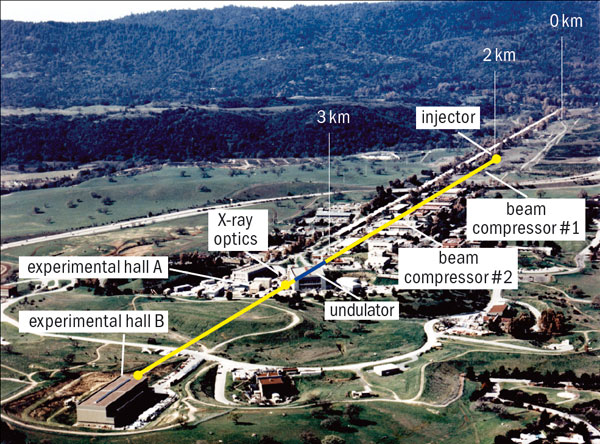
The electron beam for the LCLS is generated by a radio-frequency electron gun before passing down the last kilometre of the 3 km-long SLAC linac (figure 3). This beam has the highest six-dimensional phase-space density ever generated. The density is preserved through the process of beam acceleration and longitudinal compression, minimizing the effect of all of the collective instabilities that can dilute the density of a high-intensity beam. In turn, the high phase-space density is used to allow the self-organization of the beam – the FEL collective instability that leads to lasing. It is interesting to note that much of the beam physics needed to control the instabilities during acceleration and compression has evolved in the study of electron–positron linear colliders.

CCfel3_10_10

The main difference between the LCLS at SLAC, the European XFEL and the Spring-8 Compact SASE Source (SCSS), Japan, is in the choice of the linear accelerator to produce the electron beam – an existing S-band room-temperature linac for the LCLS, a superconducting linac for the XFEL and a C-band linac for the SCSS. While the peak intensity and power will be similar for the room-temperature and superconducting systems, a superconducting linac can produce more electrons and more X-rays per second. The wakefields in the two types of linac are also different but in both cases will produce a beam with the required characteristics.

FELs, notwithstanding their larger size, cost and complexity, offer attractive advantages over atomic/molecular lasers: complete and continuous tunability, capability of high average power and a more favourable scaling for gain at short wavelengths. These characteristics, in particular the capability of lasing in the soft and hard X-ray regions, with control of the pulse length from a few to hundreds of femtoseconds, gigawatt peak power and full tunability, are making FELs attractive to an ever wider number of scientists. On the other hand, FELs are large and expensive, justifying their use only when their characteristics are fully utilized and when atomic and molecular lasers are not available to produce radiation with similar characteristics.

With the development of high repetition-rate electron guns and by making use of continuous-wave superconducting linacs, FELs can reach repetition rates of megahertz. Using the extraordinary brightness of electron beams produced by radio-frequency or other novel types of electron sources, together with high-frequency, high–gradient room-temperature linacs, it is possible to reduce the size and cost of the accelerators driving the FELs – a particularly important factor for hard and soft X-ray devices. Ongoing research into short-period undulators, as well as the novel laser/plasma accelerators being developed in many laboratories, might lead in the future to compact, table-top FELs, at a cost and size compatible with a university-scale laboratory.

CCfel4_10_10

Such developments in scale hold promise not only for the FELs. The six-dimensional density of the LCLS electron beam is so large that if the beam is further compressed in the transverse direction, it generates on its surface electric fields as high as many tera–electron-volts per metre (Rosenzweig et al. 2010). Because of these properties, the electron beam itself could be used for the exploration of atomic physics or for exciting plasma wakefields exceeding 1 TV/m, thus opening the way to a table-top tera-electron-volt accelerator for use in frontier high-energy physics. While the success of short-wavelength FELs owes much to the advances in the physics of particle beams stimulated by work on electron–positron linear colliders, it is now possible to look to a future in which the development of FELs will help to continue the exploration of matter at the subatomic level.

In summary, FELs are being developed to operate in an ever larger spectral region, from hard X-ray to terahertz frequencies, generating pulses with femtosecond to attosecond duration, or pulses with extremely small line width. Longitudinal coherence can be pushed to near the Fourier-transform limit using seeding and other techniques. Such high-power, diffraction- and transform-limited X-ray pulses, with a duration that can be controlled between attoseconds and hundreds of femtoseconds, will lead to new discoveries and new knowledge in many areas of science.

FLASH: the king of VUV and soft X-rays

CCvuv1_10_10

The FLASH free-electron laser at DESY is the first user facility to deliver, over the past five years, short and intense light pulses in the vacuum ultraviolet (VUV) and soft X-ray region. As such, it provides the photon-science community with unprecedented opportunities to explore new territory, ranging from physics via chemistry to biology.

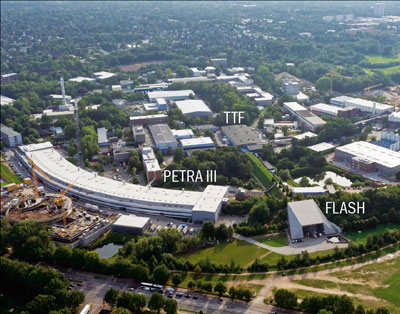
FLASH was initially built as a test facility for the “TESLA Linear Collider with Integrated X-Ray Free-Electron Laser Facility”. At the beginning of the 1990s, DESY initiated a vigorous R&D programme towards an e+e linear collider. Because there were indications from the funding agencies in Germany that such a facility should be attractive not just to the particle-physics community, DESY and its international partners developed a conceptual design for a 500 GeV e+e linear collider featuring an integrated X-ray laser facility – the TESLA project.

Based on the good experience with superconducting technology at the hadron–lepton collider HERA at DESY and the need for high luminosity at the linear collider, the challenge to realize the accelerator in superconducting RF technology was taken up by a large international effort, the TESLA collaboration. To achieve the ambitious goal of increasing the accelerating gradient while reducing the cost of the cryomodules, in each case by a factor of five, DESY built a test facility and decided to combine it with a free-electron laser (FEL) in the VUV spectral range.

Pioneering with the TTF

With excellent results achieved at the TESLA Test Facility (TTF), in March 2001 the collaboration published the technical design report for the TESLA project. In February 2003, the German government decided that the X-ray FEL part of the proposal should be realized in Hamburg as a European project, with Germany paying half of the cost. Construction of the facility, named the European XFEL, started in January 2009 and the first electron beams are expected in 2014. As for the TTF, it was expanded and converted to the soft X-ray FEL user facility FLASH, which has been serving the photon-science community at DESY since August 2005.

CCvuv2_10_10

The FLASH experimental area. The FEL beam can be switched to five experimental stations (in the background close to the window) by moving plane mirrors. Similarly, a synchronized optical-laser beam can be transported in vacuum to each of the stations by switching plane mirrors, which are mounted in the four cylindrical vacuum vessels in the foreground. The optical laser is located in a hutch on the right, just outside the picture.
Image credit: DESY.

In its first stage of expansion, the approximately 100 m-long TTF consisted of a low-emittance laser-driven photocathode electron gun, a pre-accelerator, two superconducting accelerator modules, three sections of undulator structures (each 4.5 m long) and various electron- and photon-beam diagnostics. Lasing at saturation at a wavelength of 98 nm was achieved in September 2001, setting a world first and proving the feasibility of FELs using the principle of self-amplified spontaneous emission (SASE) in the VUV range. Subsequently, tunability between 80–120 nm was demonstrated, as well as a high degree of lateral coherence of the beam. The duration of the gigawatt radiation pulses was estimated to be between 30 and 100 fs, but a tool for the direct measurement of such ultrashort pulses was not available at the time. The peak brilliance of the FEL radiation was around 1029 photons/(s mrad2 mm2 0.1% bandwidth), i.e. about eight orders of magnitude higher than that available at the best synchrotron radiation storage rings.

Given the huge increase in brilliance from state-of-the-art third-generation synchrotron sources to FELs, it is crucial for all experiments performed at FELs to understand the interaction of the extremely intense, ultrashort X-ray pulses with matter on the atomic and molecular level. It was therefore natural to perform the first experiments at the TTF on atoms and clusters, the latter being on an intermediate scale between atoms and condensed matter.

CCvuv3_10_10

Thomas Möller’s group studied xenon clusters using 98 nm FEL radiation at power densities up to 7 × 1013 W cm–2 (Wabnitz et al. 2002). The most striking result revealed in the single-shot time-of-flight mass spectra is the big difference between the spectra measured for xenon atoms and for large clusters. Whereas only single-charged ions are observed after irradiation of isolated atoms, atomic ions with charges up to 8+ are observed when irradiating clusters, although the photon energy of 12.7 eV is only slightly higher than xenon’s ionization potential of 12.1 eV. This effect is strongly dependent on the power density of the photon pulses. At a power density of 7 × 1013 W cm–2, each atom in large clusters absorbs up to 400 eV, corresponding to 30 photons during about 100 fs, the duration of the FEL pulse. Möller’s team suggests that the clusters are heated up very efficiently by the VUV radiation. Electrons are emitted after acquiring sufficient energy, before the clusters finally disintegrate completely by Coulomb explosion. These first results obtained at the TTF stimulated a broad discussion in the community and a wealth of further experimental and theoretical work.

The operation of the first stage of expansion of the TTF, where emphasis was on the development and test of the superconducting linac for the TESLA project, was concluded in December 2002. In the next phase it was extended to 260 m and converted to a soft X-ray FEL user facility, the commissioning of which started in autumn 2004. The first lasing at a wavelength of 32 nm – another world record – was observed in January 2005. After the official start of user operation in August 2005, the facility was renamed FLASH, for Free-Electron Laser in Hamburg.

The FLASH user facility

Compared with the first expansion stage, the most important changes were the increase in electron energy from about 240 MeV to 700 MeV by adding/replacing cryomodules, installing a second bunch-compressor, increasing the number of undulators from three to six and installing a collimator section to protect the undulator against bremsstrahlung and in case of electron-beam steering accidents. The electron bypass allowed accelerator studies without danger of damaging the undulators. Additionally, an experimental station was installed in the bypass inside the tunnel for damage and other studies using the electron beam. Later, a sixth cryomodule was added and the electron energy increased to around 1 GeV, which enabled lasing at 6.5 nm, first observed in October 2007. The photon beams are delivered to five experimental stations in the FLASH experiment hall.

CCvuv4_10_10

In 2006/2007, the spectral range of FLASH was also extended into the far-infrared (IR) by installing a long-period undulator and a new IR beamline. The device produces intense, truly synchronized IR pulses tunable in a broad spectral range, e.g. for two-colour pump-probe experiments. The first experiments at the IR beamline aimed to determine the spatial and temporal properties of individual pulses from FLASH and to unveil their temporal substructure.

During a major upgrade from September 2009 to February 2010, key components of FLASH were replaced or improved. A third-harmonic accelerator module that is now installed creates a much more homogeneous electron distribution in the bunch. Also, the linac was fitted with a seventh cryomodule, boosting the electron energy to 1.2 GeV and the wavelength to 4.45 nm. At the end of September 2010 the electron energy was pushed to 1.25 GeV and FLASH achieved lasing at 4.12 nm, thus reaching the “water window” in the fundamental harmonic, which opens up exciting new research opportunities for biological studies in particular.

In addition, an external “seeding” experiment called sFLASH has been installed. With sFLASH, the FEL process is seeded by pulses of 38 nm wavelength and 20 fs (FWHM) in duration, which are produced via high-harmonics generation. These pulses are overlaid with the FLASH electron bunches and amplified by being passed through 10 m of undulators. The photon beam is reflected out to an experimental hutch where time-resolved, pump-probe experiments will be pursued. The goal is to run the seeded FEL parasitically to normal FLASH operation by taking only one bunch out of each bunch train.

Recently, the decision was taken within the Helmholtz Association of German Research Centres to construct an extension of FLASH by adding a second undulator beamline and a second experimental hall with up to six experimental stations. The extension will have tunable gap undulators, use various seeding schemes and in a later stage provide polarized FEL radiation.

First experiments with FLASH

CCvuv5_10_10

FLASH is the world’s first FEL user facility in the VUV and soft X-ray spectral range, and many pioneering experiments in a large variety of fields have been performed to date. These include work on atoms, molecules and clusters; matter in extreme conditions, warm dense matter, radiation damage; single-shot, lensless imaging of cells and diffraction from nanoscale crystals; condensed matter spectroscopy and scattering; and photon-beam diagnostics. Today the FLASH website lists 126 publications in refereed journals.

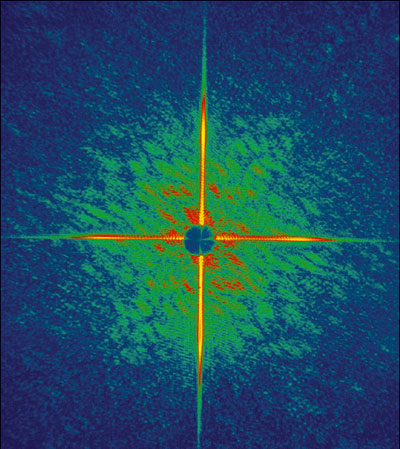
One of the most attractive scientific drivers for X-ray FELs is the single-shot coherent imaging of nanoscale objects. Obtaining enough signal in a single-shot image requires about 1012 photons focused on a spot a few micrometres in diameter. However, such high-power densities destroy the sample and the question is whether an experiment can obtain the structural information before the target explodes. Model calculations show that to achieve this goal, the duration of the FEL pulses should be of the order of 10 fs. Henry Chapman and colleagues have performed the proof-of-principle experiment at FLASH using intense (4 × 1013 W cm–2) pulses of around 25 fs duration that contain some 1012 photons at 32 nm wavelength (Chapman et al. 2006). Figure 1 shows the experimental set-up. The graded multilayer mirror also acts as a filter for the 32 nm FEL radiation and thus improves the signal-to-noise ratio on the CCD detector. Figure 2 shows the single-shot scattering picture, together with the reconstructed image. The agreement with the transmission electron microscopy picture of the target shown in figure 1 is excellent. After transmission of the FLASH pulse, the target heats up to about 60,000 K on picosecond timescales. As a result, the scattering picture taken later with a second FLASH pulse corresponds essentially to a hole in the target.

Figure 3 shows the spectral peak brilliance calculated for FLASH, the Linac Coherent Light Source (LCLS) at SLAC (Making X-rays: bright times ahead for FELs) and the future European XFEL, in comparison with the performance of third-generation synchrotron radiation facilities. Overall, the gain with FELs amounts to approximately nine orders of magnitude. It is interesting to note that the experimental results achieved at FLASH for the fundamental harmonic at 13.7 nm, as well as for the third and fifth harmonics, nicely reproduce the earlier theoretical predictions. The peak brilliance exceeds 1030 photons/(s mrad2 mm2 0.1% bandwidth) and for an average pulse energy of 40 μJ of the fundamental at 13.7 nm, a power of 0.25 ± 0.1 μJ was measured for the third (4.6 nm) and 10 ± 4 nJ for the fifth (2.75 nm) harmonic. By going to higher-order radiation, the number of photons per pulse is reduced by two to four orders of magnitude. These weaker beams allow, for example, the spectroscopic studies of condensed matter where the full beam intensity would create space charges that mask the ground-state properties of the system under investigation. For example, in combination with a synchronized optical laser, femtosecond time-resolved, core-level photoelectron spectroscopy experiments were performed at FLASH using 118.5 ± 0.2 eV photons from the third harmonic.

FELs such as FLASH have already opened up new vistas in time-resolved science. With the advent of X-ray lasers of even shorter wavelengths with shorter pulses and higher peak powers, such as the LCLS in the US, the SPring-8 XFEL in Japan and the European XFEL in Germany, the photon-science community will finally accomplish the transition from the study of static systems to time-resolved investigations of the dynamics of physical, chemical and biological processes on atomic length and timescales.

European XFEL project passes milestones

CCnew4_0910

On 3 September, the tunnel-boring machine TULA – for TUnnel for Laser – broke through the wall of its reception shaft to complete the first 480 m of the tunnel system for the European XFEL project, which will extend for 3.4 km from Schenefeld in northern Germany to the site of the DESY laboratory in Hamburg. The machine will excavate two of the photon tunnels plus the main tunnel (p32) for the superconducting linear accelerator that will drive the free-electron laser. It will be joined in late 2010 by a second, smaller machine that will excavate the other sections of the photon-tunnel system.

When TULA set out on its “maiden journey” at the beginning of July, it was not at all sure that it would reach its goal on schedule eight weeks later. How long the machine would take depended on the composition of the soil and on the presence of unknown potential obstacles underground. However, all apparently worked out perfectly and TULA has completed the first section of photon tunnel. The machine will now be dismantled and the various parts transported back to Schenefeld and reassembled again for its second assignment on a 594 m-long photon-tunnel section to begin in early November.

Another important milestone was reached on 7 September, this time towards the construction of the superconducting linac. Two workshops took place to co-ordinate the future collaboration of DESY with two firms elected for the industrial production of the superconducting accelerator structures. These structures are a joint contribution of DESY and INFN Milano, co-ordinated by DESY.

At the workshops, representatives of the firms and of DESY met to discuss their collaboration. DESY has commissioned each of the two firms – Research Instruments (Bergisch-Gladbach, Germany) and Zanon (Schio, Italy) – to produce 300 superconducting cavities, for a total of about €50 m. Each company will first deliver eight pre-production units to test the infrastructure newly installed at the firms. Another 280 cavities will follow together with 12 accelerator structures manufactured within the framework of the EU ILC HiGrade project. DESY is not only acting as a commissioner for the cavities but is also providing the superconducting niobium, its own machines and know-how for quality control.

The delivery of the pre-production cavities is to begin in the coming year, while that of the series production will start at the beginning of 2012 and should be finished within two years. After successful testing at DESY, the cavities will be transferred to Saclay, for the assembly of the XFEL accelerator modules.

Fermilab constructs accelerator test facility

When complete, the prototype accelerator will comprise six cryomodules like this first example. Each weighs about 8 tonnes and contains eight SRF cavities. (Courtesy Fermilab Visual Media Services.)

CCnew5_0910

Fermilab has announced the start of phase II of the construction of a new facility to advance superconducting RF (SRF) technology. The facility, which will host a 140 m-long test accelerator, will be the first of its kind in the US.

Construction of the SRF Accelerator Test Facility is part of Fermilab’s SRF R&D programme, which it is advancing with $52.7 m in funding from the American Recovery and Reinvestment Act (ARRA). Phase I of the construction began in March with the $2.8 m expansion of an existing building. For phase II, the laboratory has awarded a contract worth $4.2 m for the construction of two new buildings. Additional ARRA funds will go towards equipment and infrastructure that are needed for the building’s operation.

The new facility will allow Fermilab to test SRF components and validate the manufacturing capability of vendors from US industry. The superconducting structures operate at low temperatures inside cryomodules and the plans are to test modules designed for two projects for future accelerators: Project X, a high-intensity proton accelerator complex that would be built at Fermilab, and the International Linear Collider, an electron–positron collider that could become the world’s next high-energy machine, designed and built through an international effort. Researchers will also use the particle beams generated by the test accelerator to help them develop instruments and accelerator technology for application in other fields, including medicine and industry.

Barton Malow Inc, a company based in Michigan, will do the civil construction for the new facility. This will consist of three interconnected structures: one will house the SRF test accelerator; the second will accommodate the area for testing cryomodules; and the third will house the equipment for a powerful new cryogenic plant to cool the cryomodules in the test accelerator and the test area. The company plans to finish the project by autumn 2011.

bright-rec iop pub iop-science physcis connect