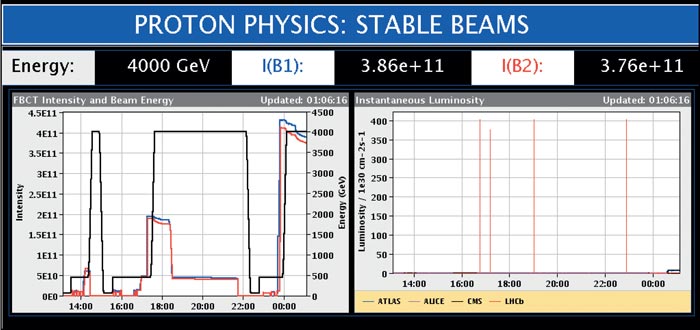
At 12.38 a.m. on 5 April, the LHC shift crew declared “stable beams” as two 4 TeV proton beams were brought into collision at the LHC’s four interaction points. This signalled the start of physics data-taking by the LHC experiments for 2012. The collision energy of 8 TeV is a new world record. By 11 April the LHC had already delivered a total integrated luminosity of 0.2 fb–1 to the experiments. Last year, it took six weeks achieve the same number.
Although the increase in collision energy is relatively modest, it translates to an increased discovery potential that can be several times higher for certain hypothetical particles. Some, such as those predicted by supersymmetry, would be produced much more copiously at 8 TeV than the 7 TeV of 2011. Larger numbers of Standard Model Higgs bosons, if they exist, will also be produced at 8 TeV but background processes that mimic the Higgs signal will also increase. That means that the full year’s running will still be necessary to convert the tantalizing hints seen in 2011 into a discovery – or to rule out the Standard Model Higgs particle altogether.
Protons were accelerated to 4 TeV for the first time on the evening 16 March just two days after beam returned to the machine for 2012. A period of beam commissioning followed, during which the teams checked that the various systems are working flawlessly with beam. The optics measurements included setting the β* of the squeezed beam at the interaction regions. The aim this year is to have a smaller β* of 60 cm for the ATLAS and CMS experiments. The smaller β* is then the thinner and more squeezed the beams are at the collision points, but it also requires that the collimators are positioned closer to the beam. The collimation system is therefore carefully set up in different machine modes: injection energy; full energy; full energy with squeezed bunches; and full energy with collisions. By provoking beam losses and making “loss maps”, the operators verify that the beam is lost in the collimation region and not in places where it can cause damage. All of these checks take place with a few, often low-intensity, bunches.
The LHC is now scheduled to run until the end of 2012, when it will go into its first long shutdown in preparation for running at an energy of 6.5 TeV per beam in late 2014, with the ultimate goal of ramping up to the full design energy of 7 TeV per beam.
A leading figure of 20th-century experimental physics, Edoardo Amaldi was one of the main players in the process that turned the dreams of large, transnational scientific projects among European countries into reality. While his role in the establishment of CERN is the prime example, he was also an active advocate for a European programme for space research and was instrumental in founding the organizations that were the precursors to ESA.
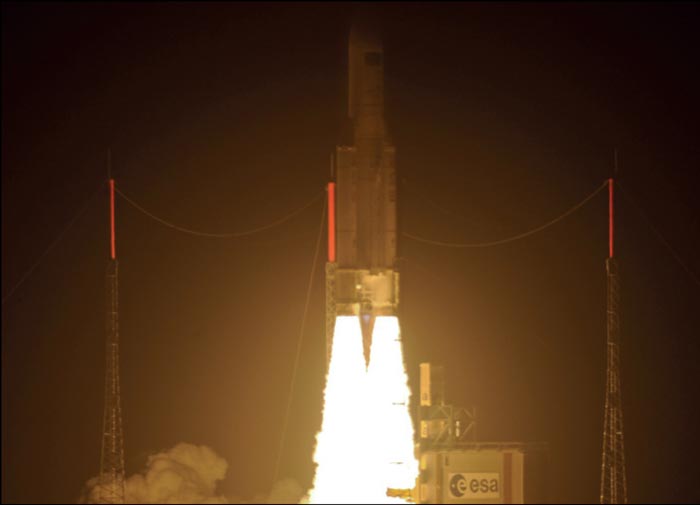
On 23 March ESA’s third Automated Transfer Vehicle (ATV), named in honour of Amaldi, was launched on board an Ariane rocket. It successfully docked with the International Space Station six days later, where it will remain for five months. The 20-tonne vessel, flying autonomously while being monitored from the ground, is delivering essential supplies and propellant, as well as reboosting the station’s altitude. The ATV docked with the 450-tonne orbital complex with a precision of 6 cm while circling the Earth at more than 28,000 km/h.
This month sees the final touches being made to a detailed, 500-page report on the physics programme, a detector design and the accelerator options for the proposed Large Hadron Electron Collider (LHeC) project. Following invitations by CERN and the European Committee for Future Accelerators (ECFA) and after three annual workshops, a study group of nearly 200 physicists and engineers from 60 institutes has now laid out the motivation and design concepts for a next-generation collider and a detector to explore the tera-electron-volt energy scale. The technical and particle physics aspects of the report have been refereed by more than 20 world experts, who were invited by CERN last year to scrutinize the design. The design process was monitored by ECFA and the Nuclear Physics European collaboration Committee (NuPECC), as well as by a scientific advisory committee. The potential for electron–ion scattering led NuPECC in 2010 to include the LHeC in its long-range plan for European nuclear physics.
The LHeC project involves extending the capabilities of the LHC with a 60 GeV polarized electron beam, which in collisions with the intense proton (and ion) beams of the LHC would reach luminosities about 100 times larger than at HERA, the world’s first electron–proton collider that ran at DESY in the years 1991–2007. The aim would be to exceed HERA’s maximum four-momentum-transfer squared, Q2, by a factor of 20. This would open up a new chapter in the physics of deep inelastic-scattering (DIS), a story that began at SLAC with the discovery of quarks as the smallest constituents of the proton in 1968. More recently it led to the discovery at HERA that at small relative parton momenta, x, the proton is largely determined by gluon interactions, which also give mass to the visible matter of the universe.
The electron beam for the LHeC could be supplied by a new electron storage-ring mounted on top of the LHC, for which new, lighter, high-quality dipole magnets have been successfully developed both at CERN and at the Budker Institute of Nuclear Physics, Novosibirsk, in accordance with the design report. An alternative is to use an electron linac in a “racetrack” configuration of 1/3 the circumference of the LHC. This would consist of some 120 accelerating-cavity cryomodules placed in two linacs, each 1 km long and connected by triple return arcs (figure 1). These superconducting cavities operate in a continuous-wave mode at a gradient of about 20 MV/m, similar to the European XFEL project at DESY, and at a frequency that is likely to be 721 MHz. The limitation of the total power consumption to 100 MW and the necessity to achieve maximum luminosity, in excess of 1033 cm–2 s–1, led to the linac for the LHeC being designed as an energy-recovery linac. The concept of energy recovery is growing in popularity and with the LHeC, CERN and its partners would develop the highest-energy application. With a linac length of 2 km, the new accelerator is no longer than SLAC’s famous linac; however, the reach in Q2 is enlarged by a factor of almost 105 owing to the collider configuration and the high-energy beams of the LHC.
The design report describes the machine physics, such as optics and beam–beam dynamics, for both options for the LHeC’s electron beam, as well as schemes to achieve high positron currents in the linac option. It also gives details for the various elements of the accelerator system, such as the warm dipole and cold interaction-region magnets, the cryogenics and the power supply (RF) components.
To achieve the high integrated luminosity at the LHeC, the design envisages that the LHC would operate synchronously with electron–proton and proton–proton collisions. This would turn the LHC into a novel three-beam facility; it also determines the time schedule for building and operating the LHeC (figure 2).
The report also covers a new collider detector, designed for high acceptance – down to 1° to the beam axis – and for the highest precision. Relying on novel technologies, as used in the ATLAS and CMS experiments and being developed for their upgrades, and based on the experience from the H1 and ZEUS detectors at HERA, the detector could be built in the 10 years or so available. Figure 3 shows the main detector, which is complemented by forward devices to tag protons, neutrons and deuterons for diffractive-scattering studies, and by backward electron and photon calorimeters for tagging events at low Q2 (photo-production) and for measuring the luminosity with Bethe-Heitler scattering. With the assumption of only one interaction region being available for the LHeC in the 2020s, the report considers only one collider detector, with possibly two analysis collaborations to ensure independent and competing analysis approaches – a novel concept for particle physics
The design report will provide valuable input to the discussion on the future of European particle physics. The next steps towards the LHeC will be discussed at a workshop near Coppet, near Geneva, on 14–15 June. The project offers the promise for a new multipurpose experiment for particle physics at CERN. It is reminiscent of the time when the SppS operated while CERN was also the centre of DIS with its muon- and neutrino-scattering experiments such as BCDMS and CDHSW. The LHeC builds on the LHC, enriching its physics harvest substantially and continuing the tradition of DIS as part of the exploration of the energy frontier. The accelerator technology and the experimental prospects are fascinating. By increasing the energy or the positron intensity there is also a bright future for further developments, reaching into the time when the LHC could be replaced by a new high-energy proton–proton collider and where the maximum Q2 could approach 10 TeV2.
LHeC points of view
The physics chapters of the design report discuss the rich and unique programme of the LHeC. There exist different and complementary points of view on the interest in such a project:
• The LHC point of view sees the LHC as the natural, highest-energy collider for finding physics beyond or complementing the Standard Model. New particles observed in proton–proton collisions may also be produced in electron–proton interactions and their characteristics studied. One example would be the Standard Model scalar boson at 125 GeV, if confirmed; its charge-parity properties and decays to b-quark pairs may be cleanly investigated at the LHeC in the process of WW fusion. If new particles or phenomena are so heavy that they can be seen only at the LHC, the precise understanding of quarks and gluons, mostly at large Bjorken x, could become crucial in distinguishing new observations from instrumental or merely partonic effects.
• The precision-physics point of view recognizes the unique potential related to ultraprecise electron–proton measurements. A far-reaching programme of investigations in experimental DIS physics and in perturbative QCD is linked to the possibility of measuring the strong coupling constant αs(MZ2) with tenfold improved precision (to per mille accuracy) as required in supersymmetric grand-unification scenarios of the electromagnetic, weak and strong interactions.
• The parton-distribution function (PDF) point of view emphasizes that the LHeC, for the first time, provides a complete foundation based not on fits but on data for the determination of the distributions of the two valence and six sea quarks, including the first mapping of those for the strange and top quarks. The LHeC maps the gluon distribution to unprecedented precision in a range from very low x > 10–6 to x close to 1. The complete set of precision PDFs is crucial for extending the ranges of searches at the LHC or for measuring the mass of the W boson.
• From a QCD point of view, this precision needs to be matched by calculations of a further order of perturbation theory. New theoretical concepts, such as generalized parton distributions (based on scattering amplitudes), unintegrated parton distributions (that take transverse parton momenta into account) and diffractive parton distributions, are in their infancy. Factorization and resummation may be tested decisively in combining data from the LHC and LHeC. The investigation of high-energy electron–proton scattering can also be important for constructing a non-perturbative approach to QCD based on effective string theory in higher dimensions.
• From a neutron point of view, tagging the spectator proton in electron–deuteron collisions leads to a removal of the corrections for Fermi motion. Moreover, the nuclear-shadowing effects may be controlled with diffractive scattering as proposed by Vladimir Gribov. These new methods would put tests of neutron structure, parton-symmetry relations and the evolution of QCD on new, firm ground.
• The heavy-ion point of view notes that the LHeC will extend the kinematic range in electron–ion scattering by almost four orders of magnitude and lead to essential innovations in understanding nuclear parton distributions. This is deeply related to the initial state of the quark–gluon plasma and will allow the black-body limit of deep inelastic electron–ion scattering to be established experimentally. Such a possibility would complete the exciting programme of physics with heavy ions at the LHC.
• From the HERA point of view, there is a large programme to be performed with higher luminosity. Examples include precision measurements of the longitudinal structure function down to low x, or the solution of the up-to-down quark limit at high x, with data free of both nuclear and power corrections.
• The photon point of view recognizes that the most elementary boson yet has a quantum mechanical, partonic (gluon, charm etc.) structure, which could be uniquely investigated at the LHeC. It will allow both new phenomena and classic QCD subjects in photoproduction to be studied at much higher energy. The LHeC design with a linear accelerator could also generate a real photon beam, allowing the possibility of the first-ever photon–proton collider.
• The surprise point of view, finally, relies on the greatly extended kinematic range and high luminosity for observing fundamentally new phenomena. HERA discovered the marked rise of parton densities towards low x and that in 10% of the events the proton remained intact despite the violence of the interaction – a fact that remains surprising. Known candidates for discovery are: a three-gluon state, the odderon; a topological QCD phenomenon, the instanton; a currently hypothetical substructure of the top quark or weak bosons; and the exclusion of the saturation phenomenon. Top quarks have never been noticeably produced in deep inelastic-scattering but they will appear copiously at the LHeC. Steps into an unknown kinematic region have always led to surprises, either through new particles or through their absence.
Nuclear fragmentation is the name given to the break-up of nuclei. It can happen when a high-energy hadron hits an intact nucleus. This is the process that is used to produce beams of exotic projectiles, such as radioactive nuclei, at CERN’s ISOLDE facility, which has served a worldwide community for many years. However, nuclear fragmentation also takes place in inelastic peripheral collisions between heavy ions, a process that is now being put to use to generate beams of light ions in the North Area at CERN.
In a heavy-ion collision, the nuclear matter is unstable outside the region where the interacting nuclei overlap – mainly because of the mismatch between shape and surface-energy – and it disintegrates into a mixture of different nuclei. The composition of the fragments produced, in terms of particle mass (A), charge (Z) and momentum, varies considerably from one collision event to another, even for fixed initial conditions in energy and impact parameter. This type of nuclear fragmentation has been studied extensively and found to occur over a range of incident energies, from as low as 20 MeV per nucleon up to highly relativistic energies. For a given collision system (that is, with specific values of A and Z for the projectile and target), the distributions of mass and charge of the nuclei in the final state are, to a good approximation, independent of the incident energy. The same independence is also true for the momenta of the produced ions in the rest frame of the corresponding parent nucleus. In the laboratory frame, however, the fragments experience an energy-dependent boost, which causes a forward-peaked angular distribution.
Fragmentation of beams of heavy nuclei is used at a variety of facilities, including GANIL, RIKEN, GSI and the National Superconducting Cyclotron Laboratory at Michigan State University. However, a different application of nuclear fragmentation was introduced 12 years ago at CERN, when beams of fragments with energies of 40A GeV/c and 158A GeV/c were produced in a primary carbon target and delivered to the North Area at the Super Proton Synchrotron (SPS).
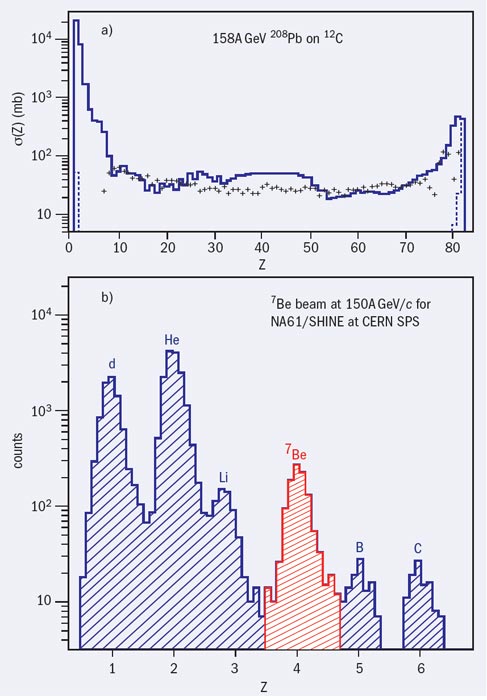
Figure 1a shows the production cross-section of ion-fragment projectiles as a function of the fragment’s charge that was measured when lead nuclei at an energy of 158 GeV per nucleon collided with the carbon target (Cecchini et al. 2002, Thuillier et al. 2002). The results were in good agreement with model calculations and confirmed that there is a relatively high probability of producing ions with either low or high charge, giving rise to a U-shaped distribution of the kind previously observed at much lower energies (Trautmann et al. 1992, Schüttauf et al. 1996). At the same time a fragmented lead-ion beam was used by the NA49 experiment for physics, in which fragments with A/Z values close to two were transported to the experimental area. Charge measurements of the beam particles allowed “tagging” of the charge states Z = 6 or 14, corresponding to the 12C and 28Si ions whose interactions with the secondary target in NA49 were recorded and analysed. Fragmentation was also used to produce beams of mixed ions, with a large spread of combinations of A and Z, for the calibration of detectors such as the ring imaging Cherenkov counter for the Alpha Magnetic Spectrometer experiment in 2002 (Efthymiopoulos and Buenerd 2003).
The NA61/SHINE collaboration has recently revived this method with the aim of producing light-ion beams with increased purity (NA61/SHINE 2009). The work is part of an effort to study the onset of deconfinement in heavy-ion collisions and search for the critical point of hadronic/partonic matter by scanning systematically both in collision energy and in the size of the colliding nuclei. For the light-ion part of the programme, the collaboration decided to begin with a fragment beam, as primary light ions will become available in the North Area only in 2014. To create the light ions, a primary beam of lead ions from the SPS was directed towards a stationary target in the North Area, where a secondary beamline was tuned to transport projectile fragments with an optimized content of 7Be ions to NA61/SHINE, for studying the reaction 7Be + 9Be.
The selection and transport of a specific ion species from a fragmented heavy-ion (208Pb) beam is not straightforward. The secondary beamlines in the North Area are designed to transport particles emerging from the primary targets to the experiments. They basically consist of two large spectrometers, which can select particles with a range in rigidity (momentum-to-charge ratio, Bρ ≈ 3.31γA/Z) of ±1.5%. The desired ions produced in the fragmentation of the primary beam will be immersed in a variety of other nuclei that have a similar mass-to-charge ratio and, therefore, a rigidity value within the beam acceptance. Moreover, overlaps in rigidity occur not only for ions with the same mass-to-charge ratio but also for neighbouring elements. This is because the momentum of the ions varies as a result of the nuclear Fermi motion of the fragments. Without Fermi motion, the fragments would leave the interaction region almost undisturbed, with the same velocity (or momentum per nucleon) as the incident lead ions. Instead, the Fermi motion, which depends on the masses of the fragment and the projectile, can spread the longitudinal momenta of light nuclear fragments by up to 3–5% – i.e. much, more than the beam acceptance.
The 7Be ion was chosen for the beam for the NA61/SHINE experiment because it has no long-lived near-neighbours, thus allowing the production of a light-ion beam with a large proportion of the desired ions. The near neighbours to 7Be are its isotopes 6Be and 8Be and nuclei with a charge-difference of one and a similar mass-to-charge ratio (e.g. 5Li,9B). Furthermore 7Be has more protons (Z = 4) than neutrons (N = 3). Such nuclear configurations are disfavoured with increasing nuclear mass because a surplus of protons causes a Coulomb repulsion that cannot be balanced by the attractive potential of the smaller number of neutrons. Figure 1b shows ion rates in the fragment beam delivered to NA61/SHINE. It indicates that 7Be fragments are accompanied mainly by deuterons and helium ions, whose rigidity overlaps with that of the wanted ions because of the Fermi motion. A counter-example for the choice of ion-species would have been a nucleus with a mass-to-charge ratio of two, which would be accompanied by a range of stable or long-lived nuclei from 2D up to 56Ni.
At low energies, the insertion of a “degrader” into the beamline improves the separation of the desired ions (Münzenberg et al. 1992, Geissel et al. 1995), profiting from the double spectrometer configuration of the secondary beamline. The first spectrometer selects ions within a rigidity range that maximizes the proportion of wanted ions produced by the primary fragmentation target; on passing through the degrader, a piece of material introduced at the spectrometer’s focal point, these ions lose energy in a charge-dependent way. The second spectrometer then separates the ions spatially according to their charge so that they can then be selected by using a thin collimator slit.
The drawback of this method is a loss of beam intensity, through both the nuclear interactions and the beam blow-up caused by multiple scattering in the material of the degrader, which rises with increasing thickness. So the high separation power is accompanied by a high loss of intensity. Furthermore, for a given degrader thickness both the nuclear cross-section and the energy loss are energy independent to a large extent. This means that the separation power (ΔE/E) increases with decreasing energy.
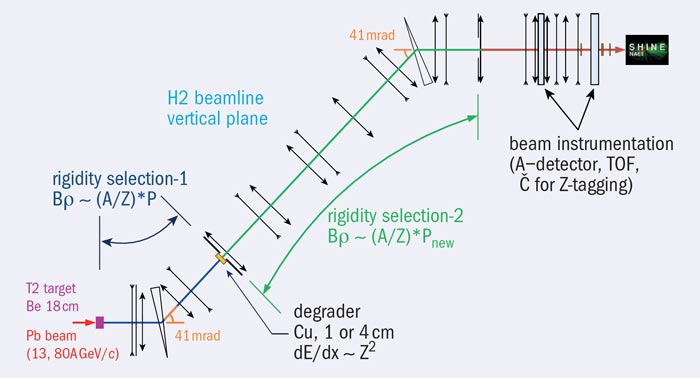
NA61/SHINE is located on the H2 beamline in the North Area, where lead ions from the SPS are focused onto a primary beryllium fragmentation target, 180 mm long. In passing through the target the lead beam undergoes collisions, mostly peripheral, with the light target-nuclei. Part of the resulting mixture of nuclear fragments is captured by the beamline, which is tuned to a rigidity that maximizes the ratio of the created 7Be to all ions. Figure 2 shows the layout of the H2 beamline with its two-step spectrometer. The optional degrader (a copper plate either 1 cm or 4 cm in thickness) is located between the two spectrometer sections. The composition of the ion beam can be monitored by scintillation counters that measure the charge (Z2) and time-of-flight of the ions. The latter allows the determination of the mass (A) of the ions for momenta lower than 20 GeV/c per nucleon.
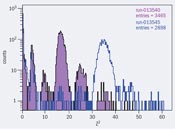
Investigations of fragment separation in the H2 beamline took place during test-beam time in 2010, using a 13A GeV/c lead beam incident on the primary target and with the 4 cm degrader in place. Figure 3 shows, for a given rigidity setting, the charge distributions detected with the collimator set to optimize the selection of either 7Be or 11C ions. During running in 2011 the NA61/SHINE collaboration used the configuration without degrader to record a total of 6 × 1067Be + 9Be collisions at beam momenta of 158A GeV/c, 80A GeV/c and 40A GeV/c. A typical charge spectrum for a fragment beam selected by the spectrometer is indicated in figure 1b. With an incident beam from the SPS of several 108 lead ions per spill, typical beam intensities at NA61/SHINE were 5000 to 10,000 7Be particles per spill, with 10 to 20 times as many unwanted ions (Efthymiopoulos et al. 2011).
A second period with a 7Be beam is scheduled for autumn this year. It will be devoted to data-taking at beam momenta of 30A GeV/c, 20A GeV/c and 13A GeV/c. The latter is close to the lower limit of what is possible given the characteristics of the SPS accelerator and the external beamlines.
Running the LHC at 4 TeV per beam in 2012 was a key outcome of this year’s LHC Performance workshop in Chamonix. Announcing this in his concluding statement, Steve Myers, CERN’s Director for Accelerators and Technology, gave the main priorities for the year: delivering enough luminosity to the ATLAS and CMS experiments to allow them independently to discover or exclude the Higgs; the proton–lead-ion run; and a machine-development programme to target operation after the long technical shutdown (LS1) planned for 2013–2014. The 2012 integrated-luminosity target is to achieve more than 15 fb–1, and LHC progress will be monitored carefully with two checkpoints in the year to see if a run extension is needed to meet this target.
These conclusions derived from week-long discussions in Chamonix, which had begun with a critical review of 2011. Looking back on an excellent year for the machine and its experiments, the workshop identified possible improvements to critical systems – such as beam instrumentation and machine protection – to maximize the performance of the 2012 run.
The experiments provided their requirements for 2012, namely the need for at least 15 fb–1 either to discover the Higgs or to exclude it at 95% confidence level down to a mass of 115 GeV. Potential improvements to performance and machine availability include maximizing the time that the LHC delivers collisions to the experiments, as well as the potential of injectors to provide bunches with higher intensities and the smallest-possible beam size (translating directly into higher collision rates).
One of the big successes of 2011 was the “squeeze” – the reduction of the beam size at the interaction point – which was pushed in the latter part of the year. Further squeezing in 2012 might be possible in combination with the use of tighter collimator settings. This could give a peak luminosity of around 6 × 1033 cm–2 s–1, to be compared with a maximum of 3.6 × 1033 cm–2 s–1 in 2011. With a bunch spacing of 50 ns and a total of 1380 bunches (as in 2011), an integrated luminosity of 15 fb–1 seems to be in reach if the tighter collimator settings prove to be operationally robust and the impressive performance of the LHC’s many hardware systems continues.
While discussions took place in Chamonix, the full maintenance programme of the winter technical stop was nearing completion. The long operational periods now in place at the LHC allow only a few short technical stops between beam runs. This meant that time was tight for the much needed maintenance and upgrades during this winter stop.
When the 2011 beam run ended on 7 December, the cryogenics team emptied the magnets of helium to work on their full programme of maintaining and improving the already good level of availability. In addition, there were planned interventions to the essential technical-infrastructure systems, such as electricity, cooling and ventilation. An impressive list of maintenance included enhancements to vacuum, power converters, RF, beam instrumentation, safety, collimation, the beam dump and injection. To improve machine performance, measures were taken to mitigate the effects of radiation on equipment in and around the LHC tunnel, including the installation of additional shielding in points 1 and 5, as well as the relocation of radiation-sensitive electronics to less exposed areas.
Additional work was required around Point 5 to repair RF fingers at the connection of two beam-vacuum chambers in CMS. The repair was completed successfully and the sector was then put under vacuum. The cool-down to 1.9 K of all LHC sectors, which had been floating at about 80 K over the Christmas break, took place in February so that powering and cryogenic tests could occur before the machine restart in March. The tests included electrical qualification of the superconducting circuit, to check insulation and instrumentation integrity, followed by powering tests aimed at pushing the performance of all LHC circuits to their operational level. The tests injected current through the superconducting circuits while checking the correct behaviour of the protection mechanisms – an essential element for the safe operation of the machine. Much attention is needed to power the main dipole and quadrupole circuits at a different current level for operation at 4 TeV.
Following this impressive progress, the machine is set to run at 4 TeV. After operating at 3.5 TeV per beam for two years, the LHC is now entering another domain at a new energy level.
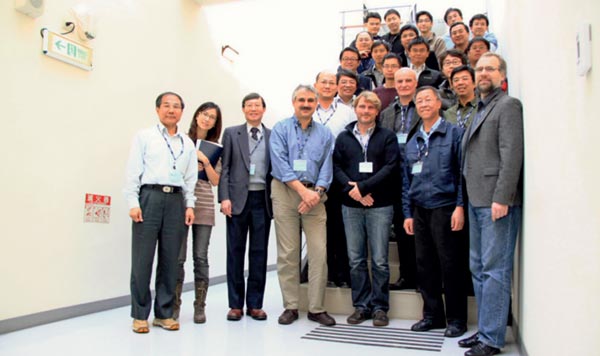
With a view to sustaining a large-scale facility at a time of worldwide economic crisis and soaring energy costs and to provide efficient use of beam time, the National Synchrotron Radiation Research Center (NSRRC) in Hsinchu has been exploring ways to make the most of its facilities. One possibility is an ultrafast X-ray source. This is being considered through a feasibility study and technological investigation aimed at gaining additional leverage for NSRRC’s second accelerator, the Taiwan Photon Source (TPS), which is currently under construction. To this end, NSRRC held a mini-workshop on “Storage-ring ultrafast X-ray sources and their applications” on 16–17 January. Nearly 40 participants attended, including speakers invited to join discussions with NSRRC staff and the ultrafast-science research groups from neighbouring universities, including National Tsing Hua University and National Chiao Tung University.
On the first day, Shaukat Khan of the Technical University, Dortmund, offered a comprehensive overview of ring-based, ultrafast and coherent light-sources, including topics such as laser slicing, low-alpha lattice, coherent harmonic generation and echo-enabled harmonic generation. Gerhard Ingold of PSI introduced several topics: the operational performance of the FEMTO source at the Swiss Light Source at PSI; the proposed upgrade of beamline optics and the laser repetition rate from 2 kHz to 10 kHz (or even 20 kHz); and the study of the ultrafast structural dynamics in condensed matter. Karsten Holldack of the Helmholtz-Zentrum Berlin described the laser system of the femtoslicing facility at the BESSY II synchrotron, known as FEMTOSPEX, which was upgraded to a 6 kHz repetition rate in 2010. It has been over-booked by a factor of three, indicating the growing demand in this domain. At Brookhaven’s National Synchrotron Light Source (NSLS) a feasibility study has been carried out on the NSLS II laser-slicing source with a 4.8 m modulator wiggler in response to users’ requests, as Li Hua Yu of Brookhaven explained.
On the second day, Andreas Streun of PSI discussed in-depth the beam-dynamics issues involved in a high-repetition-rate laser-slicing source, saying that noise caused by beam halo is a critical issue. In general, the side effects of laser slicing on storage-ring performance are mainly contributed by the modulator wiggler and chicane. In addition, a series of presentations by NSRRC team members covered the design requirements and considerations of a proposed beamline for the NSRRC TPS laser-slicing source and its potential applications. Yu also chaired a discussion about how to improve the performance of laser-slicing sources. Methods such as maximizing radiator length, reducing the loss of photon flux in the photon-beamline design, multiple slicing, increasing laser repetition rate and single-bunch current are considered essential for a state-of-the-art laser-slicing source.
Based on input generated at the mini-workshop, the preliminary design of the TPS laser-slicing source with a modulator wiggler, one hard-X-ray radiator and one soft-X-ray radiator in three separate, 7-m straight sections, appears to be a feasible scheme and will provide 10 times more flux than the SLS FEMTO source. However, Ingold suggested a different scenario that requires only two straight sections, with a modulator wiggler and a hard-X-ray radiator in one 12-m-long straight section plus a soft-X-ray radiator in one 7-m-long straight section – and this is regarded as an attractive alternative.
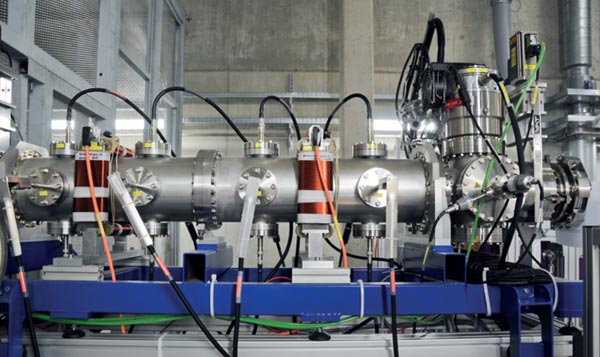
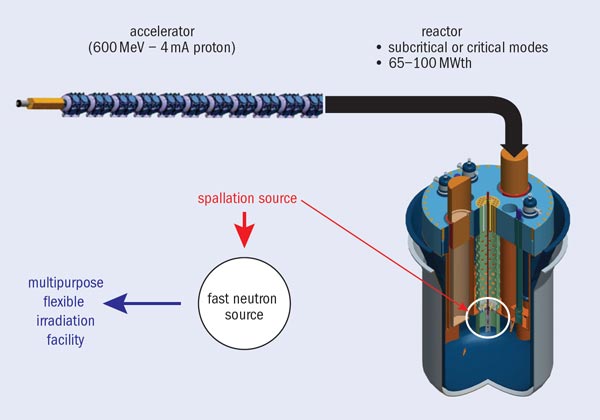
A particle accelerator has been successfully coupled to a nuclear reactor for the first time at the Belgian Nuclear Research Centre (SCK•CEN). The demonstration model GUINEVERE is now in operation, showing the feasibility of an accelerator-driven system (ADS) for nuclear energy. By using an ADS, the accelerator can be turned off to stop the reactor immediately. This system, known as subcritical, is safer than standard nuclear reactors.
GUINEVERE is a test installation of limited power to fine-tune the operation and control of future subcritical reactors. Unlike conventional reactor systems, it produces fast neutrons that can be used for the transmutation of high-level radioactive waste into less-toxic products with shorter life spans, helping to improve their geological disposal.
The GUINEVERE project involves a dozen European laboratories and the European Commission. The accelerator was built by the Centre National de la Recherche Scientifique in France. The French Commissariat à l’Energie Atomique et aux Energies Alternatives helped develop the concept and provided the reactor fuel. Following the inauguration of GUINEVERE in March 2010, the accelerator, as well as the ventilation and monitoring of the installation, were tested exhaustively. In February 2011 the reactor was started in critical mode and was subjected to a long series of tests. The accelerator and reactor have now been connected successfully, making the system subcritical.
The successful launch of GUINEVERE is an important step towards MYRRHA, SCK•CEN’s multipurpose research facility, which will become operational in 2023.
The collaboration working to design the Long-Baseline Neutrino Experiment (LBNE) in the US has recently made major decisions about the experimental configuration, while the collaboration itself continues to grow. More than 600 researchers have now signed on to an experimental programme that will reach unprecedented sensitivity and precision for addressing the neutrino-mass hierarchy, CP-violation in neutrino mixing and the mixing angle θ13 – recently measured for the first time by the Daya Bay experiment (Daya Bay experiment measures θ13).
The first in the series of decisions involved the configuration of the neutrino beamline. The accelerator complex at Fermilab would be used to generate neutrinos for LBNE. The chosen configuration would send the beam up a small hill before it heads underground towards the LBNE far detector at the Homestake Mine in South Dakota. This configuration would make construction easier and more cost-effective, as well as protect the aquifer at Fermilab.
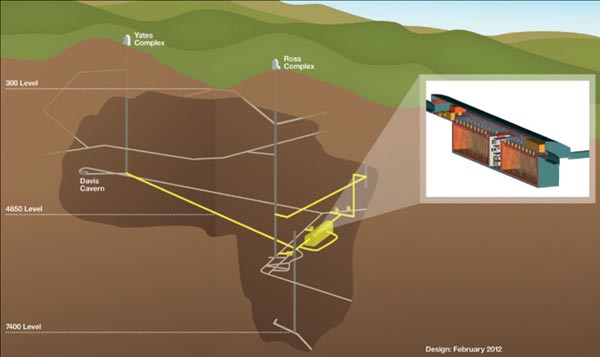
The collaboration then reached consensus on the depth of the facilities at the site of the far detector, choosing a depth of 4850 ft (1470 m). This is optimal for not only the LBNE scientific programme but for other experiments such as direct dark-matter and neutrinoless double-beta-decay searches.
The last crucial decision was the selection of the technology for LBNE’s far detector. Liquid-argon and water-Cherenkov technologies had both been studied and were considered viable options, but either choice would require a significant scaling-up of existing technology to meet the needs of LBNE. While its scaling-up challenge is greater, liquid-argon has more potential because of the detailed information provided on each neutrino event. After an extensive process that involved physics studies and analysis of the technical feasibility of various configurations – as well as external reviews organized by the collaboration – the project manager made the final recommendation to base the far detector on liquid-argon.
Many steps remain before LBNE becomes reality, notably a decision by the US Department of Energy to proceed with detailed design and eventual construction of the project.
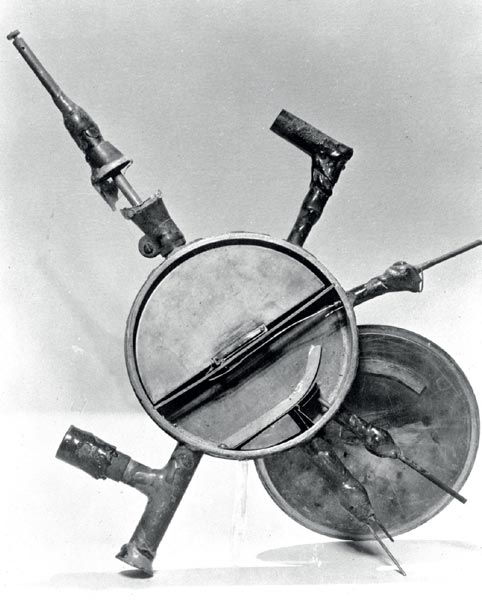
The first cyclotron, built in 1930 by Ernest Lawrence and Stanley Livingston, was 4.5″ (11 cm) in diameter and capable of accelerating protons to an energy of 80 keV (figure 1). Lawrence soon went on to construct higher-energy and larger-diameter cyclotrons to provide particle beams for research in nuclear physics. Eighty years ago this month, he and Livingston published a seminal paper in which they described the production of light ions with kinetic energies in excess of 1 MeV using a device with magnetic pole-pieces 28 cm across (Lawrence and Livingston 1932). By 1936 John Lawrence, Ernest’s brother, had made the first recorded biomedical use of a cyclotron when he used the 36″ (91 cm) machine at Berkeley to produce 32P for the treatment of leukaemia. Since then, the physics design of the cyclotron has improved rapidly, with the introduction of alternating-gradient sector focusing, edge focusing, external ion-source injection, electron cyclotron-resonance sources, negative-ion acceleration, separated-sector technology and the use of superconducting magnets.
Historical developments
However, other accelerator designs were evolving even faster, with the construction of the synchrocyclotron, the invention of the synchrotron, of linear accelerators and of particle colliders that were capable of generating the extremely high energies needed by the particle-physics community. The usefulness of the cyclotron appeared to diminish but in 1972 the TRIUMF laboratory in Canada turned on the world’s largest cyclotron, at 2000 tonnes with a beam-orbit diameter of 18 m and negative-ion acceleration. Two years later, in Switzerland, PSI brought into commission a large separated-sector, 590 MeV proton cyclotron. Both of these machines have contributed to isotope-production programmes. More recently, a superconducting ring cyclotron delivering a proton beam energy of 2400 MeV has been built in Japan at the Riken research institute.
Nevertheless, the value of the cyclotron as a method for producing medical isotopes had come under further pressure in the 1950s and early 1960s from the availability of numerous nuclear-research reactors that had high neutron fluxes, large-volume irradiation positions and considerable flexibility for isotope production. These attributes allowed the generation of important radioisotopes such as 99Mo, 131I, 35S and even 32P more easily and more cost effectively.
Nevertheless, there remained a few radionuclides with neutron-deficient nuclei that were important for medical imaging but could be produced only by particle accelerators. These included 123I and 201Tl, used for nuclear cardiology, and others such as 111In. The production reactions needed were often of the type where a proton knocks out only a few neutrons, (p,xn) with x=1 or 2 or 3, so that the accelerator energy required was usually no more than around 30 MeV. Consequently the use of the medium-energy cyclotron was revived. The first dedicated medical-isotope cyclotron was designed and built at the Hammersmith Hospital in London in 1955 and was followed by dozens of research-based cyclotrons, often with their own bespoke designs.
The routine use of radioisotope-labelled medical products and the demand for radiopharmaceutical injections for patients led to the creation of a new sector of industry: to supply cyclotron systems capable of the production of medical isotopes. Commercial companies started to design, build and supply complete cyclotron systems specifically for this purpose. The first generation of these industrial cyclotrons was made available by companies such as Philips in the Netherlands and The Cyclotron Corporation (TCC) in the US, but these machines were usually complicated instruments requiring considerable physics expertise for operations and maintenance. Second-generation cyclotrons, with more compact designs and improved engineering, were developed later by Scanditronix in Sweden, Thompson CSF in France and Sumitomo and JSW in Japan, all with designs that led to lower radiation doses to the operators. Around 1980, the first negative-ion industrial cyclotron, the CP-42, became available from TCC, with 40 MeV proton extraction.
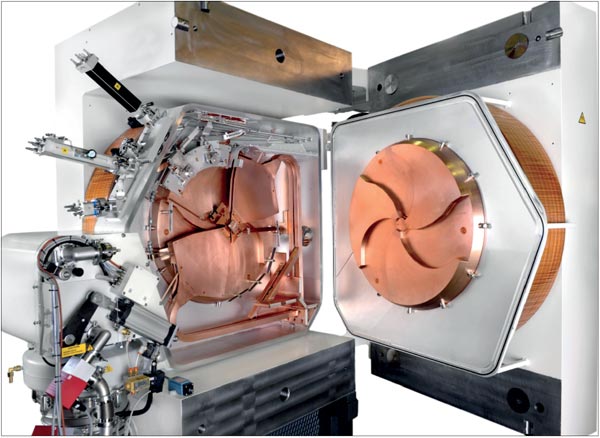
In 1988, a major step forward occurred with the development by Yves Jongen at the University of Louvain-la-Neuve, Belgium, of an industrial cyclotron customized for medical-isotope production – the Cyclone-30 (figure 2). This new cyclotron was power efficient, had a user-friendly control system and incorporated negative-ion acceleration and charge-exchange stripping for extraction, as developed earlier at the TRIUMF cyclotron. It spawned the start of a new accelerator company in Belgium, IBA SA, and this concept of an optimized industrial design was subsequently adopted by other companies, including Ebco Industries in Canada. Most of these isotope-producing cyclotrons were in the energy range of 20–40 MeV – some having an extracted beam capability of 500 μA or more – and several companies have made available a range of cyclotrons operating at different energies (Schmor 2010).
In addition, a range of positron-emitting, neutron-deficient radio¬nuclides were found to be particularly effective for biomedical human imaging via positron-emission tomography (PET), i.e. 18F, 11C, 15O and 13N. The production energies required for these PET isotopes were lower – from around 5 MeV to 20 MeV – with 18F being the most commonly used. Many of the same industrial companies designed even smaller cyclotrons at around either 17 MeV, for high-output 18F production, or around 11 MeV, for lower, hospital-based 18F production, and some cyclotron designs had radiation self-shielding arrangements. PET had long been an imaging technique used in research but by 1998, the medical regulator in the US – i.e. the Food and Drug Administration – had approved the use of PET imaging for several clinical indications. However, 18F has a half-life of only two hours, which limits delivery to small geographic regions. This led to the building of numerous manufacturing facilities for lower-energy PET cyclotrons. It is estimated that by 2010 the world market for small PET cyclotrons was between 50 and 60 a year.
Although 18F, in the form of 18F-deoxyglucose or FDG, has remained the most commonly used radionuclide for PET, numerous other tracers labelled with 18F are in advanced stages of clinical development and eventual commercialization. However, the process of their drug licensing has been particularly slow. Despite the considerable investment made in R&D and manufacturing of FDG by industry, there is a growing concern that the potential for its use in PET imaging and its implementation in personalized medicine has not been achieved fully. There also exist numerous other tracers that provide good images of the human body, many of which use 11C as the radiolabel. However, 11C has an extremely short half-life of only 20 minutes and it would have to be produced inside the facilities of the smallest general hospitals, as well as at larger research institutions.
The drive towards smaller, hospital-based cyclotrons dedicated to producing small quantities of injectable radioisotopes started back in 1989 when IBA, following on from the success of the Cyclone-30, designed the Cyclone 3D – a 3 MeV deuteron cyclotron for 15O production. Some five models have been delivered, but unfortunately 15O has remained a research tool used primarily for blood-flow studies rather than becoming a regular commercial product with its own pharmaceutical-marketing authorization licence.
Another approach towards reducing the size of the cyclotron was the OSCAR cyclotron, originally designed and delivered in 1990 by Oxford Instruments in the UK, and now distributed by EuroMeV. OSCAR is a 12 MeV, 100 μA superconducting cyclotron with an external ion source. Around eight models with this more complicated design have been delivered.
Latest trends
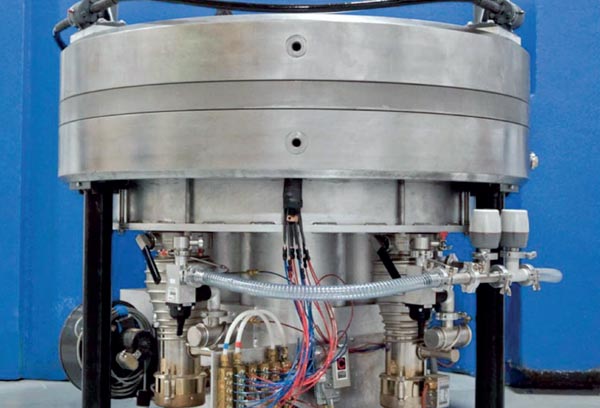
The concept of producing quantities of PET radionuclides that are suitable for one dose to a single patient was not really addressed until 2009, when Ron Nutt of ABT Molecular Imaging Inc developed a small cyclotron with 7.5 MeV energy, positive ion (i.e. proton) acceleration and an internal target for the production of unit doses of 18F. This cyclotron was designed as a component of an integrated production system that also included targetry, a chemistry system based on microfluidic processing, an online chemistry quality-control system and a methodology for radiopharmaceutical product release. The physics of this cyclotron reverts to the more traditional method of proton acceleration and internal targets to reduce the radiation burden associated with stripping inside negative-ion cyclotrons. Nevertheless, this cyclotron system has established a new strategy of producing unit-patient doses of radionuclides with short half-lives. Moreover, the production can be located in smaller clinical facilities, possibly in remote and rural locations around the world.
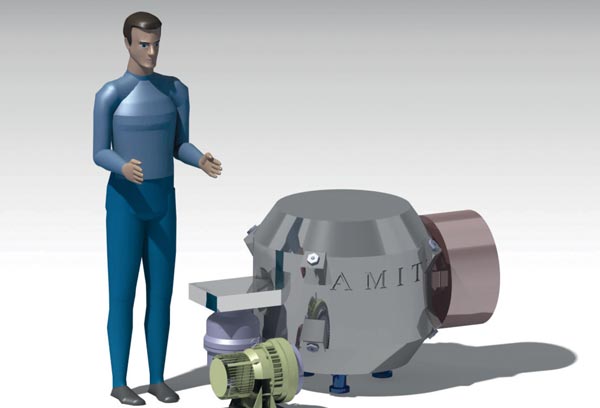
The use of negative-ion acceleration, the ease of charged-particle stripping-extraction and the convenience of having external targets have been preferred by other developers. General Electric Healthcare has recently reported success in the development of a small, vertical cyclotron with a proton energy of around 8 MeV. In Spain, a public–private consortium has announced a development project called AMIT, which is funded by the Spanish Centre for Industrial Technology Development. Within this consortium, the accelerator institute CIEMAT in Madrid will be delivering a cyclotron with a low-energy proton beam. A collaboration has been set up between CIEMAT and CERN to design and build the smallest-possible cyclotron using superconducting technology with a proton energy of around 8 MeV, the objective being to produce single-patient doses of both 18F and 11C in particular. This collaboration with CERN will include the use of some of the accelerator technology and expertise used in building the LHC.
Figure 5 shows a schematic of this cyclotron. A trade-off exists between increasing the magnetic field with higher levels of Lorentz stripping of negative ions and associated increases in the neutral beam-radiation field against the requirement of increasing the size of the radiation shielding around the cyclotron periphery. The nominal extraction radius for this machine will be around 11 cm. In other words, the size of the latest industrial medical-isotope producing cyclotrons have reverted to dimensions close to those of Lawrence’s first cyclotron developed over 80 years ago.
On 11–14 December, the city of Mumbai was the setting for the Second International Workshop on Accelerator Driven Sub-Critical Systems and Thorium Utilization. Only a month later, a team in Belgium announced the first successful operation of GUINEVERE, a prototype lead-cooled nuclear reactor driven by a particle accelerator – one of the milestones in progress towards the type of accelerator-driven system (ADS) envisioned in Mumbai.
Today’s nuclear reactors are based on a core with fissile fuel configured such that neutrons emitted in the fission process can maintain a chain reaction. In an ADS, by contrast, the neutrons necessary to establish a sustainable fission chain reaction are knocked out of a spallation target by high-energy protons from an accelerator. Because these neutrons are produced externally from the core, an ADS reactor has a great deal of flexibility in the elements and isotopes that can be fissioned. Indeed, the ADS – long advocated by Nobel laureate Carlo Rubbia – is increasingly seen as offering promise for nuclear-waste transmutation and for generating electricity from thorium, uranium or spent nuclear fuel (Clements 2012).
Setting the scene
The Mumbai workshop attracted 160 researchers from nine countries to discuss developments in this burgeoning field. Srikumar Banerjee, chair of India’s Department of Atomic Energy, opened the workshop by welcoming all of the participants and providing an overview of India’s efforts in ADS research. He described several thrusts in the country’s R&D programmes: development of a low-energy (20 MeV) accelerator front end; design studies for a 1 GeV, 30 mA superconducting RF (SRF) linac; and development of a spallation neutron source. He also emphasized the importance of thorium in India’s three-phase, long-term development strategy for nuclear power, as well as the key role of the ADS concept both for power production and for management of minor actinides and used nuclear fuel.
Kumar Sinha, director of the Bhabha Atomic Research Centre (BARC) in Mumbai, which hosted the workshop, also spoke during the opening session. He discussed some of the challenges facing the ADS scientific community and stressed the value of international collaboration in large-scale projects of this kind, where it is important to co-ordinate efforts and optimize the use of financial and human resources.
The workshop convener, K C Mittal of BARC, outlined the overall context of the meeting – in particular the wish of India to exploit a thorium-based ADS to enhance the sustainability, safety and the proliferation resistance of nuclear-power generating systems. He noted that researchers worldwide have proposed innovative physics concepts and that several laboratories have succeeded in the design and construction of the new generation of accelerator required. Mittal underlined SRF accelerating technology and noted the potential importance of using ingot niobium for cost savings (see box). He also highlighted the continued ADS-related developments in India and China, at Belgium’s Multi-purpose hYbrid Research Reactor for High-tech Applications (MYRRHA) and for the European Spallation Source (ESS), which is being built in Lund, Sweden.
Hamid Aït Abderrahim spoke about MYRRHA, the project to build a €960 million subcritical research reactor at the Belgian Nuclear Research Centre SCK•CEN (Studiecentrum voor Kernenergie, Centre d’Etude de l’é nergie Nuclé aire), which is scheduled to become operational in 2023. The centre is also the site of the GUINEVERE demonstration model, which is seen as a key step for developing procedures for regulating and controlling the operation of future subcritical reactors such as MYRRHA. The objectives for MYRRHA are to demonstrate the ADS concept at a significant power level and to prove the technical feasibility of transmuting minor actinides and long-lived fission products. Belgium welcomes international participation in the MYRRHA consortium, with eligibility based on a balanced in-cash/in-kind contribution to the project.
The technological advances for neutron spallation sources, such as the ESS, have obvious relevance for an ADS. Each type of facility requires a high-power, high-intensity linac to provide a proton beam for generating neutrons by spallation. A big difference, however, is the relative stringency of requirements for reliability, as measured by the rate at which faults trip the accelerator off-line. Colin Carlile reported on the outlook for ESS, noting that there are five spallation sources in four countries but, unlike the others, the ESS will produce neutrons in millisecond-scale bursts rather than on the microsecond scale. The linac will operate at 2.5 GeV, with 50 mA peak and 2 mA average current for 5 MW of proton-beam power with a 357 kJ/pulse. The ESS has 17 partners and expects to be the world’s best source of slow neutrons. They aim to begin producing neutrons in 2019.
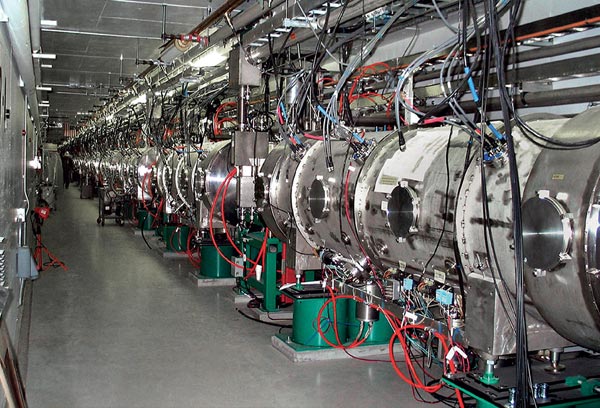
The Spallation Neutron Source (SNS) at Oak Ridge National Laboratory in Tennessee in the US has an SRF proton linac that is sometimes seen as being close to a proof of principle for an ADS accelerator. The SNS now has two years of experience at the megawatt level, having reached 1 MW within three years of operation. John Galambos of Oak Ridge summarized information on SNS operation that is pertinent to an ADS. He said that initial proton experiments indicate a favourable beam loss for an ADS and that although the SNS was never designed for low trip rates, the declining trip rate seems encouraging. Data from 2008, which are still considered current and applicable, indicate that four of the world’s neutron facilities have roughly similar performance: many tens of trips a day lasting more than a minute, with far fewer than one trip a day lasting more than three hours.
Not all of ADS approaches call for SRF linacs. Swapan Chattopadhyay of the Cockcroft Institute in the UK told workshop participants about research into an ADS using a novel fixed-field, alternating-gradient driver. Collaborators in this effort represent PSI in Switzerland, Fermilab in the US, the International Atomic Energy Agency in Vienna, the Japan Proton Accelerator Research Complex, MYRRHA, ESS and BARC. In Japan itself, meanwhile, efforts are focusing on SRF, as Akira Yamamoto of KEK explained – but overlap with R&D for a future International Linear Collider and for energy-recovering linacs. KEK foresees building an in-house SRF fabrication and test facility.
As of early 2012, no government-funded ADS initiatives for nuclear-waste disposal or power generation are underway in the US. Nevertheless many of the country’s scientists and engineers are actively working in ADS-related efforts. Two high-power accelerators, both built by Jefferson Lab, already operate with SRF technology: the SNS at Oak Ridge and Jefferson Lab’s own Continuous Electron Beam Accelerator Facility (CEBAF). A third project, the SRF-based Project X, is in the design and prototyping stage at Fermilab and is foreseen to serve several scientific purposes with 3 GeV, 3 MW protons.
CEBAF pioneered the large-scale application of SRF when it became operational for nuclear-physics experiments in the mid-1990s at 4 GeV. It progressed to operate at 6 GeV and 1 MW through incremental improvements in technology. Researchers there have sought to reduce RF trips and develop tools to characterize them. A consortium of Virginia universities, industrial partners and Jefferson Lab has been established to pursue ADS R&D while preparing to host an ADS facility.
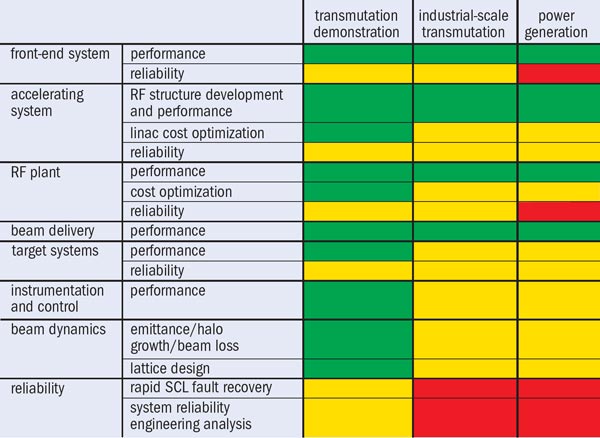
The efforts of the Virginia consortium fall in line with the sentiments of the September 2010 white paper written by 13 scientists from laboratories in the US and Europe, which was published by the US Department of Energy’s Office of Science: ‘Accelerator and Target Technology for Accelerator Driven Transmutation and Energy Production’ (Aït Abderrahim et al. 2010). The paper notes that many of the key technologies required for industrial-scale transmutation requiring tens of megawatts of beam power, including front-end systems and accelerating systems, have already been demonstrated. The report also points out, however, that demonstration is still required for other components, such as those that enable improved beam quality and halo control, as well as highly reliable subsystems.
At Mumbai, an informal international collaboration to attack these and other ADS challenges continued to coalesce. Participants recognized the magnitude of the challenges that must be overcome for an ADS scheme to be completely successful: well thought-out, long-term development plans and international collaboration are going to be indispensable for its realization. One of the strengths of the workshop was that it gathered experts from the various subfields relevant to an ADS and gave them the opportunity to discuss the different struggles that they each face while still achieving optimization for the overall system. With this in mind, participants decided to meet again next year for a third International Workshop on Accelerator Driven Sub-Critical Systems, probably in Europe.
To provide the best experiences, we use technologies like cookies to store and/or access device information. Consenting to these technologies will allow us to process data such as browsing behavior or unique IDs on this site. Not consenting or withdrawing consent, may adversely affect certain features and functions.
Functional
Always active
The technical storage or access is strictly necessary for the legitimate purpose of enabling the use of a specific service explicitly requested by the subscriber or user, or for the sole purpose of carrying out the transmission of a communication over an electronic communications network.
Preferences
The technical storage or access is necessary for the legitimate purpose of storing preferences that are not requested by the subscriber or user.
Statistics
The technical storage or access that is used exclusively for statistical purposes.The technical storage or access that is used exclusively for anonymous statistical purposes. Without a subpoena, voluntary compliance on the part of your Internet Service Provider, or additional records from a third party, information stored or retrieved for this purpose alone cannot usually be used to identify you.
Marketing
The technical storage or access is required to create user profiles to send advertising, or to track the user on a website or across several websites for similar marketing purposes.