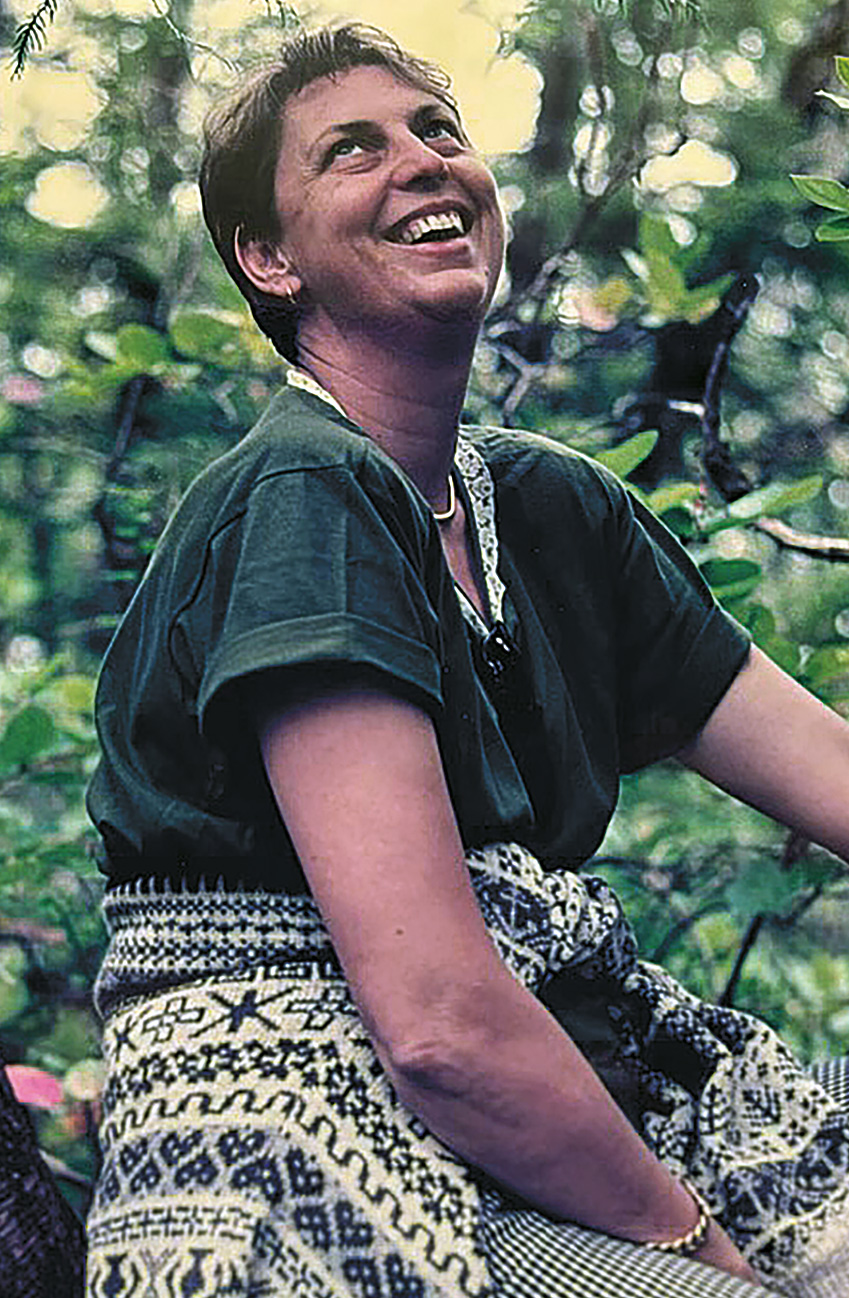
Experimental particle physicist Max Klein, whose exceptional career spanned theory, detectors, accelerators and data analysis, passed away on 23 August 2024.
Born in Berlin in 1951, Max earned his diploma in physics in 1973 from Humboldt University of Berlin (HUB, East-Germany, GDR) with a thesis on low-energy heavy-ion physics. He received his PhD in 1977 from the Institute for High Energy Physics (IHEP) of the Academy of Sciences of the GDR in Zeuthen (now part of DESY) on the subject of multiparticle production, and his habilitation degree in 1984 from HUB. From 1973 to 1991 he conducted research at IHEP Zeuthen, spending several years from 1977 at the Joint Institute for Nuclear Research in Dubna, and from the 1980s at DESY and CERN. For his role in determining the asymmetry of the interaction of polarised positive and negative muons with the NA4 muon spectrometer at CERN’s SPS M2 muon beam, he was awarded the Max von Laue Medal by the Academy of Sciences of the GDR in 1985.
Max worked as a scientist at DESY from 1992 to 2006. As a member of the H1 experiment at the lepton–proton collider HERA since 1985, his research focused on investigating the internal structure of protons using deep inelastic scattering. He served as spokesperson of the H1 collaboration from 2002 to 2006 for two mandates.
Max became a professor at the University of Liverpool in 2006, and the following year he joined the ATLAS collaboration. He served as chair of the ATLAS publication committee and as editorial-board chair of the ATLAS detector paper and other important works. Max made key contributions to data analysis, notably on the high-precision 7 TeV inclusive W and Z boson production cross sections and associated properties, and was a convener of the PDF forum in 2015–2016. From 2017 to 2019, Max was chair of the ATLAS collaboration board, during which he made invaluable contributions to the experiment and collaboration life. He led the Liverpool ATLAS team from 2009 to 2017. Under his guidance, the 30-strong group contributed to the maintenance of the SCT detector, as well as to ATLAS data preparation and physics analyses. The group also developed hybrids, mechanics and software for the new ITk pixel and strip detectors.
In recent years, Max’s scientific contributions extended well beyond ATLAS. He was a strong advocate for the development of an electron-beam upgrade of the LHC, the LHeC, and collaborated closely with the CERN accelerator group and international teams on the development of energy-recovery linacs. Here, he was influential in the development of the PERLE demonstrator accelerator at IJCLab, for which he acted as spokesperson until 2023.
A strong advocate for the responsibility of scientists toward their societies
In 2013 Max was awarded the Max Born Prize by the Deutsche Physikalische Gesellschaft and the UK Institute of Physics for his fundamental experimental contributions to the elucidation of the proton structure using deep-inelastic scattering. The prize citation stands as a testament to his scientific stature: “In the last 40 years, Max Klein has dedicated himself to the study of the innermost structure of the proton. In the 1990s he was a leading figure in the discovery that gluons form a surprisingly large component of proton structure. These gluons play an important role in the production of Higgs bosons in proton–proton collisions for which experiments at CERN have recently found promising candidates.”
Besides being a distinguished scientist, Max was a man of unwavering principles, grounded in his selfless interactions with others and his deep sense of humanity. Drawing from his experience as a bridge between East and West, he was a strong advocate for international scientific collaboration and the responsibility of scientists toward their societies. He had a strong desire and ability to mentor and support students, postdocs and early-career researchers, and an admirably wise and calm approach to problem solving.
Max Klein had a profound knowledge of physics and a tireless dedication to ATLAS and to experimental particle physics in general. His passing is a profound loss for the entire community, but his legacy will endure.
Experimental particle physicist Ian Shipsey, a remarkable leader and individual, passed away suddenly and unexpectedly in Oxford on 7 October.
Ian was educated at Queen Mary University of London and the University of Edinburgh, where he earned his PhD in 1986 for his work on the NA31 experiment at CERN. Moving to the US, he joined Syracuse as a post-doc and then became a faculty member at Purdue, where, in 2007, he was elected Julian Schwinger Distinguished Professor of Physics. In 2013 he was appointed the Henry Moseley Centenary Professor of Experimental Physics at the University of Oxford.
Ian was a central figure behind the success of the CLEO experiment at Cornell, which was for many years the world’s pre-eminent detector in flavour physics. He led many analyses, most notably in semi-leptonic decays, from which he measured four different CKM matrix elements, and oversaw the construction of the silicon vertex detector for the CLEO III phase of the experiment. He served as co-spokesperson between 2001 and 2004, and was one of the intellectual leaders that saw the opportunity to re-configure the detector and the CESR accelerator as a facility for making precise exploration of physics at the charm threshold. The resulting CLEO-c programme yielded many important measurements in the charm system and enabled critical experimental validations of lattice–QCD predictions.
Influential voice
At CMS, Ian played a leading role in the construction of the forward-pixel detector, exploiting the silicon laboratory he had established at Purdue. His contributions to CMS physics analyses were no less significant. These included the observation of upsilon suppression in heavy-ion collisions (a smoking gun for the production of quark–gluon plasma) and the discovery, reported in a joint Nature paper with the LHCb collaboration, of the ultra-rare decay Bs→ μ+μ–. He was also an influential voice as CMS collaboration board chair (2013–2014).
After moving to the University of Oxford and, in 2015, joining the ATLAS collaboration, Ian became Oxford’s ATLAS team leader and established state-of-the-art cleanrooms, which are used for the construction of the future inner tracker (ITk) pixel end-cap modules. Together with his students, he contributed to measurements of the Higgs boson mass and width, and to the search for its rare di-muon decay. Ian also led the UK’s involvement in LSST (now the Vera Rubin Observatory), where Oxford is providing deep expertise for the CCD cameras.
Following his tenure as the dynamic head of the particle physics sub-department, Ian was elected head of Oxford physics in 2018 and re-elected in 2023. Among his many successful initiatives, he played a leading role in establishing the £40 million UKRI “Quantum Technologies for Fundamental Physics” programme, which is advancing quantum-based applications across various areas of physics. With the support of this programme, he led the development of novel atom interferometers for light dark matter searches and gravitational-wave detection.
Ian took a central role in establishing roadmaps for detector R&D both in the US and (via ECFA) in Europe. He was one of the coordinators and driving force of the ECFA R&D roadmap panel, and co-chair of the US effort to define the basic research needs in this area. As chair of the ICFA instrumentation, innovation and development panel, he promoted R&D in instrumentation for particle physics and the recognition of excellence in this field.
Among his many prestigious honours, Ian was elected a Fellow of the Royal Society in 2022 and received the James Chadwick Medal and Prize from the Institute of Physics in 2019. He served on numerous collaboration boards, panels, and advisory and decision-making committees shaping national and international science strategies.
The success of Ian’s career is even more remarkable given that he lost his hearing in 1989. He received a cochlear implant, which restored limited auditory ability, and gave unforgettable talks on this subject, explaining the technology and its impact on his life.
Ian was an outstanding physicist and also a remarkable individual. His legacy is not only an extensive body of transformative scientific results, but also the impact that he had on all who met him. He was equally charming, whether speaking to graduate students or lab directors. Everyone felt better after talking to Ian. His success derived from a remarkable combination of optimism and limitless energy. Once he had identified the correct course of action, he would not allow himself to be dissuaded by cautious pessimists who worried about the challenges ahead. His colleagues and many graduate students will continue to benefit for many years from the projects he initiated. The example he set as a physicist, and the memories he leaves as friend, will endure still longer.
On 1 October a high-level ceremony at CERN marked 70 years of science, innovation and collaboration. In attendance were 38 national delegations, including eight heads of state or government and 13 ministers, along with many scientific, political and economic leaders who demonstrated strong support for CERN’s mission and future ambition. “CERN has become a global hub because it rallied Europe, and this is even more crucial today,” said president of the European Commission Ursula von der Leyen. “China is planning a 100 km collider to challenge CERN’s global leadership. Therefore, I am proud that we have financed the feasibility study for CERN’s Future Circular Collider. As the global science race is on, I want Europe to switch gear.” CERN’s year-long 70th anniversary programme has seen more than 100 events organised in 63 cities in 28 countries, bringing together thousands of people to discuss the wonders and applications of particle physics. “I am very honoured to welcome representatives from our Member and Associate Member States, our Observers and our partners from all over the world on this very special day,” said CERN Director-General Fabiola Gianotti. “CERN is a great success for Europe and its global partners, and our founders would be very proud to see what CERN has accomplished over the seven decades of its life.”
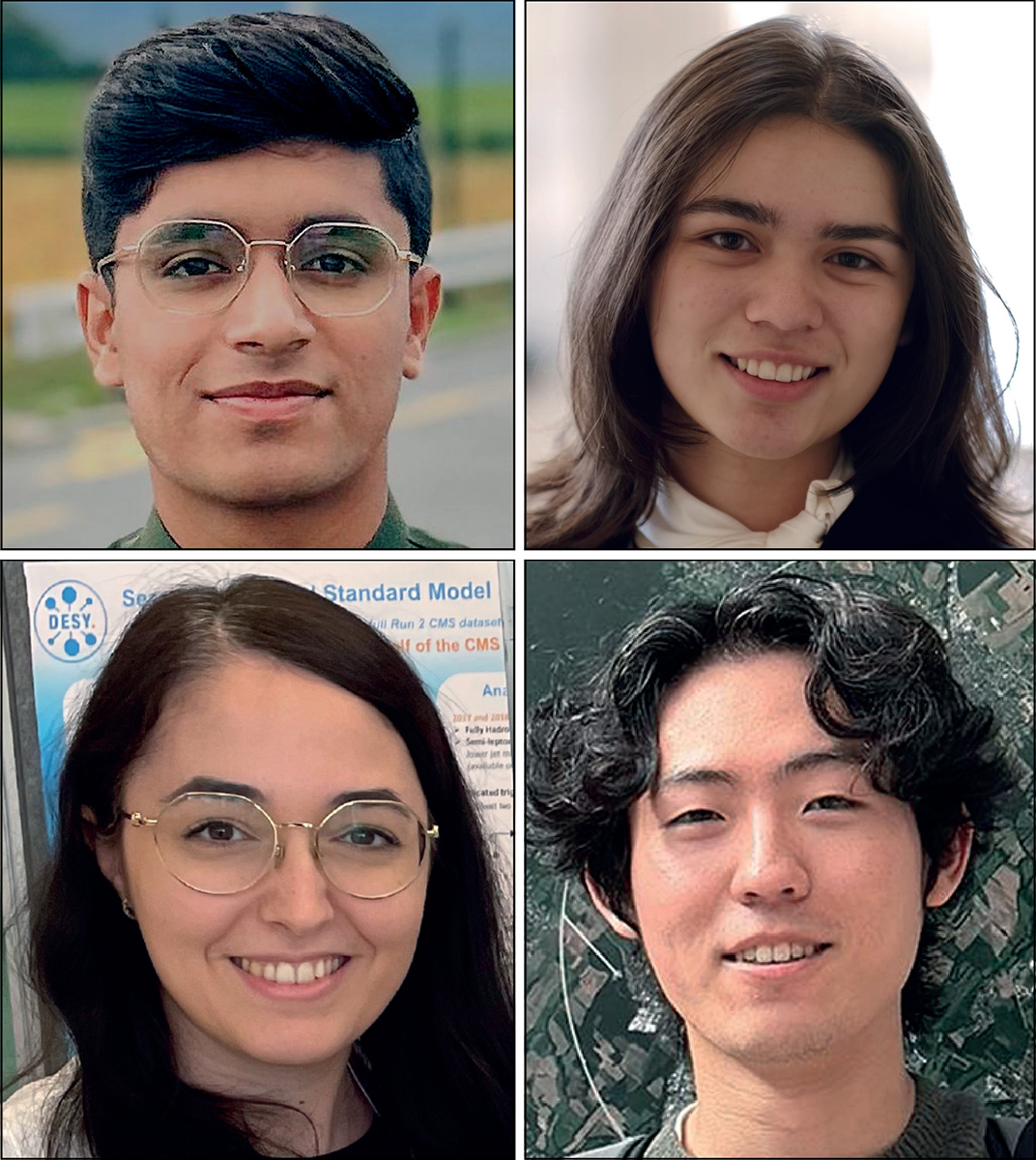
High-school physics curricula don’t include much particle physics. The Beamline for Schools (BL4S) competition seeks to remedy this by offering high-school students the chance to turn CERN or DESY into their own laboratory. Since 2014, more than 20,000 students from 2750 teams in 108 countries have competed in BL4S, with 25 winning teams coming to the labs to perform experiments they planned from blackboard to beamline. Though, at 10 years old, the competition is still young, multiple career trajectories have already been influenced, with the impact radiating out into participants’ communities of origin.
For Hiroki Kozuki, a member of a winning team from Switzerland in 2020, learning the fundamentals of particle physics while constructing his team’s project proposal was what first sparked his interest in the subject.
“Our mentor gave us after-school classes on particle physics, fundamentals, quantum mechanics and special relativity,” says Kozuki. “I really felt as though there was so much more depth to physics. I still remember this one lecture where he taught us about the fundamental forces and quarks… It’s like he just pulled the tablecloth out from under my feet. I thought: nature is so much more beautiful when I see all these mechanisms underneath it that I didn’t know existed. That’s the moment where I got hooked on particle physics.” Kozuki will soon graduate from Imperial College London, and hopes to pursue a career in research.
Sabrina Giorgetti, from an Italian team, tells a similar story. “I can say confidently that the reason I chose physics for my bachelor’s, master’s and PhD was because of this experience.” One of the competition’s earliest winners from back in 2015, Giorgetti is now working on the CMS experiment for her PhD. One of her most memorable experiences from BL4S was getting to know the other winning team, who were from South Africa. This solidified her decision to pursue a career in academia.
“You really feel like you can reach out and collaborate with people all over the world, which is something I find truly amazing,” she says. “Now it’s even more international than it was nine years ago. I learnt at BL4S that if you’re interested in research at a place like CERN, it’s not only about physics. It may look like that from the outside, but it’s also engineering, IT and science communication – it’s a very broad world.”
The power of collaboration
As well as getting hands-on with the equipment, one of the primary aims of BL4S is to encourage students to collaborate in a way they wouldn’t in a typical high-school context. While physics experiments in school are usually conducted in pairs, BL4S allows students to work in larger teams, as is common in professional and research environments. The competition provides the chance to explore uncharted territory, rather than repeating timeworn experiments in school.
2023 winner Isabella Vesely from the US is now majoring in physics, electrical engineering and computer science at MIT. Alongside trying to fix their experiment prior to running it on the beamline, her most impactful memories involve collaborating with the other winning team from Pakistan. “We overcame so many challenges with collaboration,” explains Vesely. “They were from a completely different background to us, and it was very cool to talk to them about the experiment, our shared interest in physics and get to know each other personally. I’m still in touch with them now.”
One fellow 2023 winner is just down the road at Harvard. Zohaib Abbas, a member of the winning Pakistan team that year, is now majoring in physics. “In Pakistan, there weren’t any physical laboratories, so nothing was hands-on and all the physics was theoretical,” he says, recalling his shock at the US team’s technical skills, which included 3D printing and coding. After his education, Abbas wants to bring some of this knowledge back to Pakistan in the hopes of growing the physics community in his hometown. “After I got into BL4S, there have been hundreds of people in Pakistan who have been reaching out to me because they didn’t know about this opportunity. I think that BL4S is doing a really great job at exposing people to particle physics.”
All of the students recalled the significant challenge of ensuring the functionality of their instruments across one of CERN’s or DESY’s beamlines. While the project seemed a daunting task at first, the participants enjoyed following the process from start to finish, from the initial idea through to the data collection and analysis.
“It was really exciting to see the whole process in such a short timescale,” said Vesely. “It’s pretty complicated seeing all the work that’s already been done at these experiments, so it’s really cool to contribute a small piece of data and integrate that with everything else.”
Kozuki concurs. Though only he went on to study physics, with teammates branching off into subjects ranging from mathematics to law and medicine, they still plan to get together and take another crack at the data they compiled in 2020. “We want to take another look and see if we find anything we didn’t see before. These projects go on far beyond those two weeks, and the team that you worked with are forever connected.”
For Kozuki, it’s all about collaboration. “I want to be in a field where everyone shares this fundamental desire to crack open some mysteries about the universe. I think that this incremental contribution to science is a very noble motivation. It’s one I really felt when working at CERN. Everyone is genuinely so excited to do their work, and it’s such an encouraging environment. I learnt so much about particle physics, the accelerators and the detectors, but I think those are somewhat secondary compared to the interpersonal connections I developed at BL4S. These are the sorts of international collaborations that accelerate science, and it’s something I want to be a part of.”
What role does science communication play in your academic career?
When I was a postdoc I started to realise that the science communication side of my life was really important to me. It felt like I was having a big impact – and in research, you don’t always feel like you’re having that big impact. When you’re a grad student or postdoc, you spend a lot of time dealing with rejection, feeling like you’re not making progress or you’re not good enough. I realised that with science communication, I was able to really feel like I did know something, and I was able to share that with people.
When I began to apply for faculty jobs, I realised I didn’t want to just do science writing as a nights and weekends job, I wanted it to be integrated into my career. Partially because I didn’t want to give up the opportunity to have that kind of impact, but also because I really enjoyed it. It was energising for me and helped me contextualise the work I was doing as a scientist.
How did you begin your career in science communication?
I’ve always enjoyed writing stories and poetry. At some point I figured out that I could write about science. When I went to grad school I took a class on science journalism and the professor helped me pitch some stories to magazines, and I started to do freelance science writing. Then I discovered Twitter. That was even better because I could share every little idea I had with a big audience. Between Twitter and freelance science writing, I garnered quite a large profile in science communication and that led to opportunities to speak and do more writing. At some point I was approached by agents and publishers about writing books.
Who is your audience?
When I’m not talking to other scientists, my main community is generally those who have a high-school education, but not necessarily a university education. I don’t tailor things to people who aren’t interested in science, or try to change people’s minds on whether science is a good idea. I try to help people who don’t have a science background feel empowered to learn about science. I think there are a lot of people who don’t see themselves as “science people”. I think that’s a silly concept but a lot of people conceptualise it that way. They feel like science is closed to them.
The more that science communicators can give people a moment of understanding, an insight into science, I think they can really help people get more involved in science. The best feedback I’ve ever gotten is when students have come up to me and said “I started studying physics because I followed you on Twitter and I saw that I could do this,” or they read my book and that inspired them. That’s absolutely the best thing that comes out of this. It is possible to have a big impact on individuals by doing social media and science communication – and hopefully change the situation in science itself over time.
What were your own preconceptions of academia?
I have been excited about science since I was a little kid. I saw that Stephen Hawking was called a cosmologist, so I decided I wanted to be a cosmologist too. I had this vision in my head that I would be a theoretical physicist. I thought that involved a lot of standing alone in a small room with a blackboard, writing equations and having eureka moments. That’s what was always depicted on TV: you just sit by yourself and think real hard. When I actually got into academia, I was surprised by how collaborative and social it is. That was probably the biggest difference between expectation and reality.
How do you communicate the challenges of academia, alongside the awe-inspiring discoveries and eureka moments?
I think it’s important to talk about what it’s really like to be an academic, in both good ways and bad. Most people outside of academia have no idea what we do, so it’s really valuable to share our experiences, both because it challenges stereotypes in terms of what we’re really motivated by and how we spend our time, but also because there are a lot of people who have the same impression I did: where you just sit alone in a room with a chalkboard. I believe it’s important to be clear about what you actually do in academia, so more people can see themselves happy in the job.
At the same time, there are challenges. Academia is hard and can be very isolating. My advice for early-career researchers is to have things other than science in your life. As a student you’re working on something that potentially no one else cares very much about, except maybe your supervisor. You’re going to be the world-expert on it for a while. It can be hard to go through that and not have anybody to talk to about your work. I think it’s important to acknowledge what people go through and encourage them to get support.
There are of course other parts of academia that can be really challenging, like moving all the time. I went from West coast to East coast between undergrad and grad school, and then from the US to the UK, from the UK to Australia, back to the US and then to Canada. That’s a lot. It’s hard. They’re all big moves so you lose whatever local support system you had and you have to start over in a new place, make new friends and get used to a whole new government bureaucracy.
So there are a whole lot of things that are difficult about academia, and you do need to acknowledge those because a lot of them affect equity. Some of these make it more challenging to have diversity in the field, and they disproportionately affect some groups more than others. It is important to talk about these issues instead of just sweeping people under the rug.
Do you think that social media can help to diversify science and research?
Yes! I think that a large reason why people from underrepresented groups leave science is because they lack the feeling of belonging. If you get into a field and don’t feel like you belong, it’s hard to power through that. It makes it very unpleasant to be there. So I think that one of the ways social media can really help is by letting people see scientists who are not the stereotypical old white men. Talking about what being a scientist is really like, what the lifestyle is like, is really helpful for dismantling those stereotypes.
Your first book, The End of Everything, explored astrophysics but your next will popularise particle physics. Have you had to change your strategy when communicating different subjects?
This book is definitely a lot harder to write. The first one was very big and dramatic: the universe is ending! In this one, I’m really trying to get deeper into how fundamental physics works, which is a more challenging story to tell. The way I’m framing it is through “how to build a universe”. It’s about how fundamental physics connects with the structure of reality, both in terms of what we experience in our daily lives, but also the structure of the universe, and how physicists are working to understand that. I also want to highlight some of the scientists who are doing that work.
So yes, it’s much harder to find a catchy hook, but I think the subject matter and topics are things that people are curious about and have a hunger to understand. There really is a desire amongst the public to understand what the point of studying particle physics is.
Is high-energy physics succeeding when it comes to communicating with the public?
I think that there are some aspects where high-energy physics does a fantastic job. When the Higgs boson was discovered in 2012, it was all over the news and everybody was talking about it. Even though it’s a really tough concept to explain, a lot of people got some inkling of its importance.
A lot of science communication in high-energy physics relies on big discoveries, however recently there have not been that many discoveries at the level of international news. There have been many interesting anomalies in recent years, however in terms of discoveries we had the Higgs and the neutrino mass in 1998, but I’m not sure that there are many others that would really grab your attention if you’re not already invested in physics.
Part of the challenge is just the phase of discovery that particle physics is in right now. We have a model, and we’re trying to find the edges of validity of that model. We see some anomalies and then we fix them, and some might stick around. We have some ideas and theories but they might not pan out. That’s kind of the story we’re working with right now, whereas if you’re looking at astronomy, we had gravitational waves and dark energy. We get new telescopes with beautiful pictures all the time, so it’s easier to communicate and get people excited than it is in particle physics, where we’re constantly refining the model and learning new things. It’s a fantastically exciting time, but there have been no big paradigm shifts recently.
How can you keep people engaged in a subject where big discoveries aren’t constantly being made?
I think it’s hard. There are a few ways to go about it. You can talk about the really massive journey we’re on: this hugely consequential and difficult challenge we’re facing in high-energy physics. It’s a huge task of massive global effort, so you can help people feel involved in the quest to go beyond the Standard Model of particle physics.
You need to acknowledge it’s going to be a long journey before we make any big discoveries. There’s much work to be done, and we’re learning lots of amazing things along the way. We’re getting much higher precision. The process of discovery is also hugely consequential outside of high-energy physics: there are so many technological spin-offs that tie into other fields, like cosmology. Discoveries are being made between particle and cosmological physics that are really exciting.
Every little milestone is an achievement to be celebrated
We don’t know what the end of the story looks like. There aren’t a lot of big signposts along the way where we can say “we’ve made so much progress, we’re halfway there!” Highlighting the purpose of discovery, the little exciting things that we accomplish along the way such as new experimental achievements, and the people who are involved and what they’re excited about – this is how we can get around this communication challenge.
Every little milestone is an achievement to be celebrated. CERN is the biggest laboratory in the world. It’s one of humanity’s crowning achievements in terms of technology and international collaboration – I don’t think that’s an exaggeration. CERN and the International Space Station. Those two labs are examples of where a bunch of different countries, which may or may not get along, collaborate to achieve something that they can’t do alone. Seeing how everyone works together on these projects is really inspiring. If more people were able to get a glimpse of the excitement and enthusiasm around these experiments, it would make a big difference.
During its September session, the CERN Council was presented with a revised schedule for Long Shutdown 3 (LS3) of the LHC and its injector complex. For the LHC, LS3 is now scheduled to begin at the start of July 2026, seven and a half months later than planned. The overall length of the shutdown will increase by around four months. Combined, these measures will shift the start of the High-Luminosity LHC (HL-LHC) by approximately one year, to June 2030. The extensive programme of work for the injectors will begin in September 2026, with a gradual restart of operations scheduled to take place in 2028.
“The decision to shift the start of the HL-LHC by approximately one year and increase the length of the shutdown reflects a consensus supported by our scientific committees,” explains Mike Lamont, CERN director for accelerators and technology. “The delayed start of LS3 is primarily due to significant challenges encountered during the Phase II upgrades of the ATLAS and CMS experiments, which have led to the erosion of contingency time and introduced considerable schedule risks. The challenges faced by the experiment teams included COVID-19 and the impact of the Russian invasion of Ukraine.”
LS3 represents a pivotal phase in enhancing CERN’s capabilities. During the shutdown, ATLAS and CMS will replace many of their detectors and a large part of their electronics. Schedule contingencies have been insufficient for the new inner tracker for ATLAS, and for the HGCAL and new tracker for CMS. The delayed start of LS3 will allow the collaborations more time to develop and build these highly sophisticated detectors and systems.
On the machine side, a key activity during LS3 is the drilling of 28 vertical cores to link the new HL-LHC technical galleries to the LHC tunnel. Initially expected to take six months, this timeframe was reduced to two months in 2021 to optimise the schedule. However, challenges encountered during the tendering process and in subsequent consultations with specialists necessitated a return to the original six-month timeline for core excavation.
In addition to high-luminosity enhancements, LS3 will involve a major programme of work across the accelerator complex. This includes the North Area consolidation project and the transformation of the ECN3 cavern into a high-intensity fixed-target facility; the dismantling of the CNGS target to make way for the next phase of wakefield-acceleration research at AWAKE; improvements to ISOLDE to boost the facility’s nuclear-studies potential; and extensive maintenance and consolidation across all machines and facilities to ensure operational safety, longevity and availability.
“All these activities are essential to ensuring the medium-term future of the laboratory and allowing full exploitation of its remarkable potential in the coming decades,” says Lamont.
ICFA, the International Committee for Future Accelerators, was formed in 1976 to promote international collaboration in all phases of the construction and exploitation of very-high-energy accelerators. Its 96th meeting took place on 20 and 21 July during the recent ICHEP conference in Prague. Almost all of the 16 members from across the world attended in person, making the assembly lively and constructive.
The committee heard extensive reports from the leading HEP laboratories and various world regions on their recent activities and plans, including a presentation by Paris Sphicas, the chair of the European Committee for Future Accelerators (ECFA), on the process for the update of the European strategy for particle physics (ESPP). Launched by CERN Council in March 2024, the ESPP update is charged with recommending the next collider project at CERN after HL-LHC operation.
A global task
The ESPP update is also of high interest to non-European institutions and projects. Consequently, in addition to the expected inputs to the strategy from European HEP communities, those from non-European HEP communities are also welcome. Moreover, the recent US P5 report and the Chinese plans for CEPC, with a potential positive decision in 2025/2026, and discussions about the ILC project in Japan, will be important elements of the work to be carried out in the context of the ESPP update. They also emphasise the global nature of high-energy physics.
An integral part of the work of ICFA is carried out within its panels, which have been very active. Presentations were given from the new panel on the Data Lifecycle (chair Kati Lassila-Perini, Helsinki), the Beam Dynamics panel (new chair Yuan He, IMPCAS) and the Advanced and Novel Accelerators panel (new chair Patric Muggli, Max Planck Munich, proxied at the meeting by Brigitte Cros, Paris-Saclay). The Instrumentation and Innovation Development panel (chair Ian Shipsey, Oxford) is setting an example with its numerous schools, the ICFA instrumentation awards and centrally sponsored instrumentation studentships for early-career researchers from underserved world regions. Finally, the chair of the ILC International Development Team panel (Tatsuya Nakada, EPFL) summarised the latest status of the ILC Technological Network, and the proposed ILC collider project in Japan.
ICFA noted interesting structural developments in the global organisation of HEP
A special session was devoted to the sustainability of HEP accelerator infrastructures, considering the need to invest efforts into guidelines that enable better comparison of the environmental reports of labs and infrastructures, in particular for future facilities. It was therefore natural for ICFA to also hear reports not only from the panel on Sustainable Accelerators and Colliders led by Thomas Roser (BNL), but also from the European Lab Directors Working Group on Sustainability. This group, chaired by Caterina Bloise (INFN) and Maxim Titov (CEA), is mandated to develop a set of key indicators and a methodology for the reporting on future HEP projects, to be delivered in time for the ESPP update.
Finally, ICFA noted some very interesting structural developments in the global organisation of HEP. In the Asia-Oceania region, ACFA-HEP was recently formed as a sub-panel under the Asian Committee for Future Accelerators (ACFA), aiming for a better coordination of HEP activities in this particular region of the world. Hopefully, this will encourage other world regions to organise themselves in a similar way in order to strengthen their voice in the global HEP community – for example in Latin America. Here, a meeting was organised in August by the Latin American Association for High Energy, Cosmology and Astroparticle Physics (LAA-HECAP) to bring together scientists, institutions and funding agencies from across Latin America to coordinate actions for jointly funding research projects across the continent.
The next in-person ICFA meeting will be held during the Lepton–Photon conference in Madison, Wisconsin (USA), in August 2025.
The Southeastern European Network in Mathematical and Theoretical Physics (SEENET-MTP) has organised scientific training and research activities since its foundation in Vrnjačka Banja in 2003. Its PhD programme started in 2014, with substantial support from CERN.
The Thessaloniki School on Field Theory and Applications in HEP was the first school in the third cycle of the programme. Fifty-four students from 16 countries were joined by a number of online participants in a programme of lectures and tutorials.
We are now approaching 110 years since the general theory of relativity was founded and the theoretical prediction of the existence of black holes. There is subsequently at least half a century of developments related to the quantum aspects of black holes. At the Thessaloniki School, Tarek Anous (Queen Mary) delivered a pivotal series of lectures on the thermal properties of black holes, entanglement and the information paradox, which continues to be unresolved.
Nikolay Bobev (KU Leuven) summarised the ideas behind holography; Daniel Grumiller (TU Vienna) addressed the application of the holographic principle in flat spacetimes, including Carrollian/celestial holography; Slava Rychkov (Paris-Saclay) gave an introduction to conformal field theory in various dimensions; while Vassilis Spanos (NKU Athens) provided an introduction to modern cosmology. The programme was completed by Kostas Skenderis (Southampton), who addressed renormalisation in conformal field theory, anti-de Sitter and de Sitter spacetimes.
Sustainable HEP 2024, the third online-only workshop on sustainable high-energy physics, convened more than 200 participants from 10 to 12 June. Emissions in HEP are principally linked to building and operating large accelerators, using gaseous detectors and using extensive computing resources. Over three half days, delegates from across the field discussed how best to participate in global efforts at climate-crisis mitigation.
HEP solutions
There is a scientific consensus that the Earth has been warming consistently since the industrial revolution, with the Earth’s surface temperature now about 1.2 °C warmer than in the late 1800s. The Paris Agreement of 2015 aims to limit this increase to 1.5 °C, requiring a 50% cut in emissions by 2030. However, the current rise in greenhouse-gas emissions far exceeds this target. The relevance of a 1.5 °C limit is underscored by the fact that the difference between now and the last ice age (12,000 years ago) is only about 5 °C, explained Veronique Boisvert (Royal Holloway) in her riveting talk on the intersection of HEP and climate solutions. If temperatures rise by 4 °C in the next 50 years, as predicted by the Intergovernmental Panel on Climate Change’s high-emissions scenario, it could cause disruptions beyond what our civilisation can handle. Intensifying heat waves and extreme weather events are already causing significant casualties and socio-economic disruptions, with 2023 the warmest year on record since 1850.
Masakazu Yoshioka (KEK) and Ben Shepherd (Daresbury) delved deeply into sustainable accelerator practices. Cement production for facility construction releases significant CO2, prompting research in material sciences to reduce these emissions. Accelerator systems consume significant energy, and if powered by electricity grids coming from grid fossil fuels, they increase the carbon footprint. Energy-saving measures include reducing power consumption and recovering and reusing thermal energy, as demonstrated by CERN’s initiative to use LHC cooling water to heat homes in Ferney-Voltaire. Efforts should also focus on increasing CO2 absorption and fixation in accelerator regions. Such measures can be effective – Yoshioka estimated that Japan’s Ichinoseki forest can absorb more CO2 annually than the construction emissions of the proposed ILC accelerator over a decade.
Suzanne Evans (ARUP) explained how to perform lifecycle assessments of carbon emissions to evaluate environmental impacts. Sustainability efforts at C3, CEPC, CERN, DESY and ISIS-II were all presented. Thomas Roser (BNL) presented the ICFA strategy for sustainable accelerators, and Jorgen D’Hondt (Vrije Universiteit Brussel) outlined the Horizon Europe project Innovate for Sustainable Accelerating Systems (CERN Courier July/August 2024 p20).
Gaseous detectors contribute significantly to emissions through particle detection, cooling and insulation. Ongoing research to develop eco-friendly gas mixtures for Cherenkov detectors, resistive plate chambers and other detectors were discussed at length – alongside an emphasis from delegates on the need for more efficient and leak-free recirculating systems. On the subject of greener computing solutions, Loïc Lannelongue (Cambridge) emphasised the high-energy consumption of servers, storage and cooling. Collaborative efforts from grassroots movements, funding bodies and industry will be essential for progress.
Stopping global warming is an urgent task for humanity
Thijs Bouman (Groningen) delivered an engaging talk on the psychological aspects of sustainable energy transitions, emphasising the importance of understanding societal perceptions and behaviours. Ayan Paul (DESY) advocated for optimising scientific endeavours to reduce environmental impact, urging a balance between scientific advancement and ecological preservation. The workshop concluded with an interactive session on the “Know Your Footprint” tool by the Young High Energy Physicists (yHEP) Association, facilitated by Naman Bhalla (Freiburg), to calculate individual carbon impacts (CERN Courier May/June 2024 p66). The workshop also sparked dynamic discussions on reducing flight emissions, addressing travel culture and the high cost of public transport. Key questions included the effectiveness of lobbying and the need for more virtual meetings.
Jyoti Parikh, a recipient of the Nobel Peace Prize awarded to Intergovernmental Panel on Climate Change authors in 2007 and member of India’s former Prime Minister’s Council on Climate Change, presented the keynote lecture on global energy system and technology choices. While many countries aim to decarbonise their electricity grids, challenges remain. Green sources like solar and wind have low operating costs but unpredictable availability, necessitating better storage and digital technologies. Parikh emphasised that economic development with lower emissions is possible, but posed the critical question: “Can we do it in time?”
Stopping global warming is an urgent task for humanity. We must aim to reduce greenhouse-gas emissions to nearly zero by 2050. While collaboration within local communities and industries is imperative; and individual efforts may seem small, every action is one step toward global efforts for our collective benefit. Sustainable HEP 2024 showcased innovative ideas, practical solutions and collaborative efforts to reduce the environmental impact of HEP. The event highlighted the community’s commitment to sustainability while advancing scientific knowledge.
Cristiana Peroni, former team leader of the Torino group of the CMS collaboration, passed away on 19 June 2024.
Peroni obtained her degree in physics in 1974 at the University of Torino. She worked at an experiment on low-energy proton–antiproton collisions at the CERN Proton Synchrotron, before joining the European Muon Collaboration and, later, the New Muon Collaboration. After this, she moved to ZEUS at DESY and then CMS at the LHC, and was appointed full professor at the University of Torino in 2001.
Thanks to Cristiana’s initiative, in collaboration with Fabrizio Gasparini (project manager of the drift-tube project of CMS’s muon system), the Torino group joined the CMS collaboration in the late 1990s. The group took responsibility for the construction of the MB4 muon chambers, together with groups at Padua, Madrid and Aachen, which were responsible for the construction of the MB3, MB2 and MB1 layers of CMS’s drift-tube system, respectively.
At the same time, Cristiana started a collaboration with the JINR–Dubna group led by Igor Golutvin to realise a critical part of the system: the deposition of the field electrodes on the aluminium planes that form the structural element of the chambers. This was a very successful collaboration, in spite of the crucial issues related to complex logistics, which worked extremely well, guaranteeing the construction of the system within the required timeframe. Alongside hardware commitments, the team coordinated by Cristiana took on important roles of responsibility in the physics groups of the collaboration (in particular in the Higgs sector), and soon saw its expansion with the addition and merger of other groups in Torino, which added activities related to the tracker, electromagnetic calorimeter and precision proton spectrometer.
“Cris” was a determined and capable leader, highly appreciated for the attention she always paid to the professional growth of her collaborators, the career development of early-stage researchers, as well as the team building and mutual support that made her group united and coherent.
In the last part of her professional life, Cris turned her attention to research in medical physics, leaving the management of the CMS group to her collaborators, and carrying out research on hadron therapy. In this field, not only did she establish a new course on medical physics at Torino, but she was instrumental to the CNAO hadron-therapy facility in Pavia, which has been treating cancer patients for more than a decade.
To provide the best experiences, we use technologies like cookies to store and/or access device information. Consenting to these technologies will allow us to process data such as browsing behavior or unique IDs on this site. Not consenting or withdrawing consent, may adversely affect certain features and functions.
Functional
Always active
The technical storage or access is strictly necessary for the legitimate purpose of enabling the use of a specific service explicitly requested by the subscriber or user, or for the sole purpose of carrying out the transmission of a communication over an electronic communications network.
Preferences
The technical storage or access is necessary for the legitimate purpose of storing preferences that are not requested by the subscriber or user.
Statistics
The technical storage or access that is used exclusively for statistical purposes.The technical storage or access that is used exclusively for anonymous statistical purposes. Without a subpoena, voluntary compliance on the part of your Internet Service Provider, or additional records from a third party, information stored or retrieved for this purpose alone cannot usually be used to identify you.
Marketing
The technical storage or access is required to create user profiles to send advertising, or to track the user on a website or across several websites for similar marketing purposes.