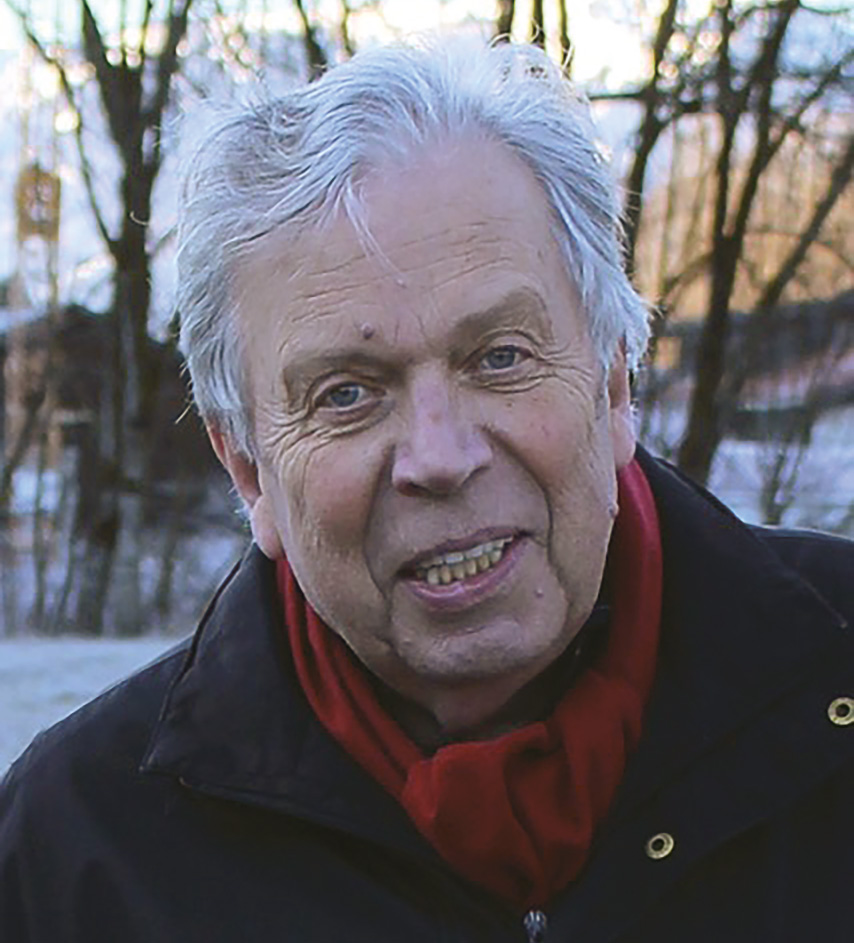
Walter Oelert, founding spokesperson of COSY-11 and an experimentalist of rare foresight in the study of antimatter, passed away on 25 November 2024.
Walter was born in Dortmund on 14 July 1942. He studied physics in Hamburg and Heidelberg, achieving his diploma on solid-state detectors in 1969 and his doctoral thesis on transfer reactions on samarium isotopes in 1973. He spent the years from 1973 to 1975 working on transfer reactions of rare-earth elements as a postdoc in Pittsburgh under Bernie Cohen, after which he continued his nuclear-physics experiments at the Jülich cyclotron.
With the decision to build the “Cooler Synchrotron” (COSY) at Forschungszentrum Jülich (FZJ), he terminated his work on transfer reactions, summarised it in a review article, and switched to the field of medium-energy physics. At the end of 1985 he conducted a research stay at CERN, contributing to the PS185 and the JETSET (PS202) experiments at the antiproton storage ring LEAR, while also collaborating with Swedish partners at the CELSIUS synchrotron in Uppsala. In 1986 he habilitated at Ruhr University Bochum, where he was granted an APL professorship in 1996.
With the experience gained at CERN, Oelert proposed the construction of the international COSY-11 experiment as spokesperson, leading the way on studies of threshold production with full acceptance for the reaction products. From first data in 1996, COSY-11 operated successfully for 11 years, producing important results in several meson-production channels.
At CERN, Walter proposed the production of antihydrogen in the interaction of the antiproton beam with a xenon cluster target – the last experiment before the shutdown of LEAR. The experiment was performed in 1995, resulting in the production of nine antihydrogen atoms. This result was an important factor in the decision by CERN management to build the antiproton–decelerator (AD). In order to continue antihydrogen studies, he received substantial support from Jülich for a partnership in the new ATRAP experiment aiming for CPT violation studies in antihydrogen spectroscopy.
Walter retired in 2008, but kept active in antiproton activities at the AD for more than 10 years, during which time he was affiliated with the Johannes Gutenberg University of Mainz. He was one of the main driving forces on the way to the extra-low-energy antiproton ring (ELENA), which was finally built within time and financial constraints, and drastically improved the performance of the antimatter experiments. He also received a number of honours, notably the Merentibus Medal of the Jagiellonian University of Kraków, and was elected as an external member of the Polish Academy of Arts and Sciences.
Walter’s personality – driven, competent, visionary, inspiring, open minded and caring – was the type of glue that made proactive, successful and happy collaborations.
Grigory Vladimirovich Domogatsky, spokesman of the Baikal Neutrino Telescope project, passed away on 17 December 2024 at the age of 83.
Born in Moscow in 1941, Domogatsky obtained his PhD in 1970 from Moscow Lomonosov University and then worked at the Moscow Lebedev Institute. There, he studied the processes of the interaction of low-energy neutrinos with matter and neutrino emission during the gravitational collapse of stars. His work was essential for defining the scientific programme of the Baksan Neutrino Observatory. Already at that time, he had put forward the idea of a network of underground detectors to register neutrinos from supernovae, a programme realised decades later by the current SuperNova Early Warning System, SNEWS. Together with his co-author Dmitry Nadyozhin, he showed that neutrinos released in star collapses are drivers in the formation of isotopes such as Li-7, Be-8 and B-11 in the supernova shell, and that these processes play an important role in cosmic nucleosynthesis.
In 1980 Domogatsky obtained his doctor of science (equivalent to the Western habilitation) and in the same year became the head of the newly founded Laboratory of Neutrino Astrophysics at High Energies at the Institute for Nuclear Research of the Russian Academy of Sciences, INR RAS. The central goal of this laboratory was, and is, the construction of an underwater neutrino telescope in Lake Baikal, a task to which he devoted all his life from that point on. He created a team of enthusiastic young experimentalists, starting site explorations in the following year and obtaining first physics results with test configurations later in the 1980s. At the end of the 1980s, the plan for a neutrino telescope comprising about 200 photomultipliers (NT200) was born, and realised together with German collaborators in the 1990s. The economic crisis following the breakdown of the Soviet Union would surely have ended the project if not for Domogatsky’s unshakable will and strong leadership. With the partial configuration of the project deployed in 1994, first neutrino candidates were identified in 1996: the proof of concept for underwater neutrino telescopes had been delivered.
He shaped the image of the INR RAS and the field of neutrino astronomy
NT200 was shut down a decade ago, by which time a new cubic-kilometre telescope in Lake Baikal was already under construction. This project was christened Baikal–GVD, with GVD standing for gigaton volume telescope, though these letters could equally well denote Domogatsky’s initials. Thus far it has reached about half of the size of the IceCube neutrino telescope at the South Pole.
Domogatsky was born to a family of artists and was surrounded by an artistic atmosphere whilst growing up. His grandfather was a famous sculptor, his father a painter, woodcrafter and book illustrator. His brother followed in his father’s footsteps, while Grigory himself married Svetlana, an art historian. He possessed an outstanding literary, historical and artistic education, and all who met him were struck by his knowledge, his old-fashioned noblesse and his intellectual charm.
Domogatsky was a corresponding member of the Russian Academy of Sciences and the recipient of many prestigious awards, most notably the Bruno Pontecorvo Prize and the Pavel Cherenkov Prize. With his leadership in the Baikal project, Grigory Domogatsky shaped the scientific image of the INR RAS and the field of neutrino astronomy. He will be remembered as a carefully weighing scientist, as a person of incredible stamina, and as the unforgettable father figure of the Baikal project.
Elena Accomando, a distinguished collider phenomenologist, passed away on 7 January 2025.
Elena received her laurea in physics from the Sapienza University of Rome in 1993, followed by a PhD from the University of Torino in 1997. Her early career included postdoctoral positions at Texas A&M University and the Paul Scherrer Institute, as well as a staff position at the University of Torino. In 2009 she joined the University of Southampton as a lecturer, earning promotions to associate professor in 2018 and professor in 2022.
Elena’s research focused on the theory and phenomenology of particle physics at colliders, searching for new forces and exotic supersymmetric particles at the Large Hadron Collider. She explored a wide range of Beyond the Standard Model (BSM) scenarios at current and future colliders. Her work included studies of new gauge bosons such as the Z′, extra-dimensional models, and CP-violating effects in BSM frameworks, as well as dark-matter scattering on nuclei and quantum corrections to vector-boson scattering. She was also one of the authors of “WPHACT”, a Monte Carlo event generator developed for four-fermion physics at electron–positron colliders, which remains a valuable tool for precision studies. Elena investigated novel signatures in decays of the Higgs boson, aiming to uncover deviations from Standard Model expectations, and was known for connecting theory with experimental applications, proposing phenomenological strategies that were both realistic and impactful. She was well known as a research collaborator at CERN and other international institutions.
She authored the WPHACT Monte Carlo event generator that remains a valuable tool for precision studies
Elena played an integral role in shaping the academic community at Southampton and was greatly admired as a teacher. Her remarkable professional achievements were paralleled by strength and optimism in the face of adversity. Despite her long illness, she remained a positive presence, planning ahead for her work and her family. Her colleagues and students remember her as a brilliant scientist, an inspiring mentor and a warm and compassionate person. She will also be missed by her longstanding colleagues from the CMS collaboration at Rutherford Appleton Laboratory.
Elena is survived by her devoted husband, Francesco, and their two daughters.
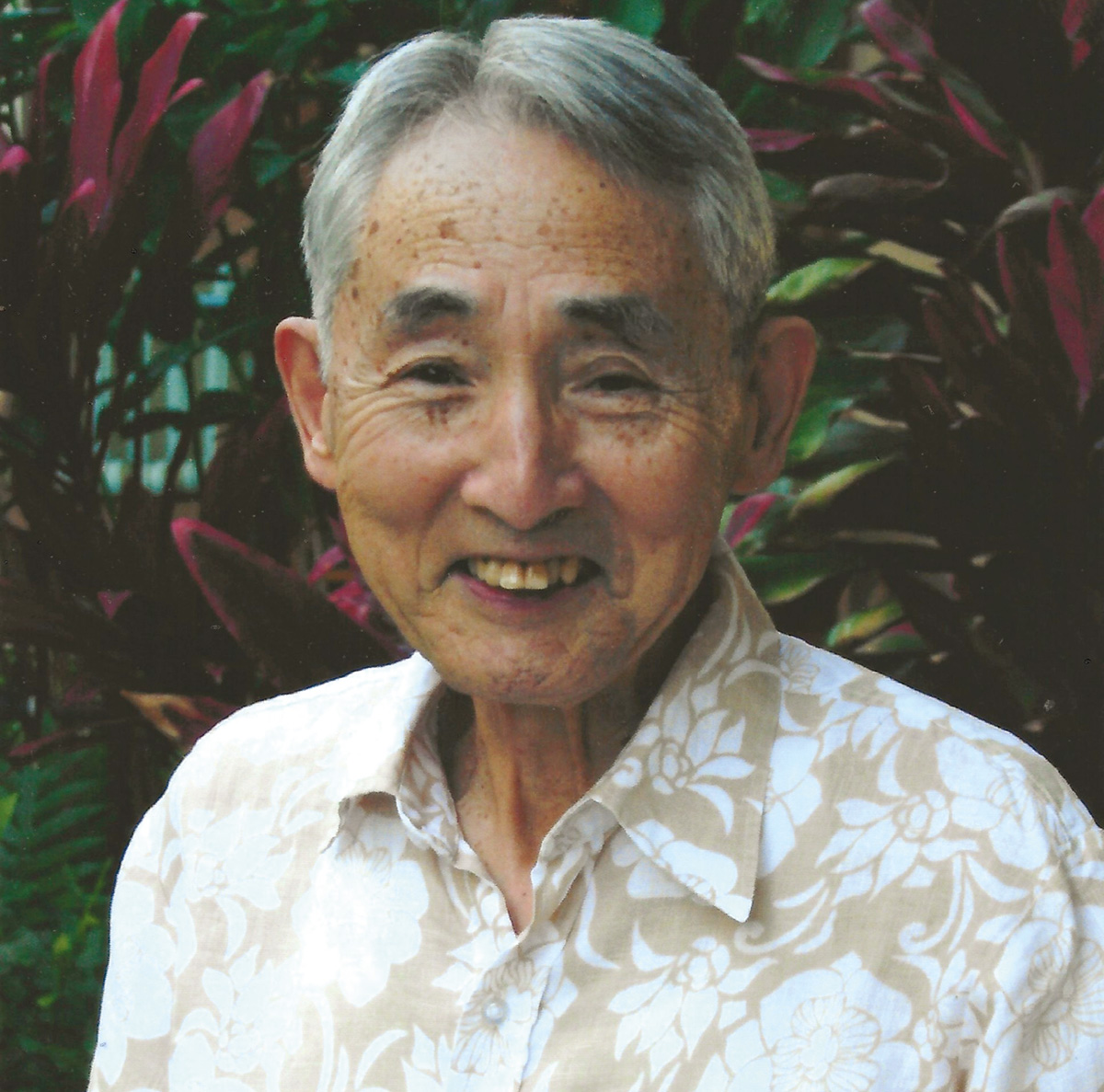
Shoroku Ohnuma, who made significant contributions to accelerator physics in the US and Japan, passed away on 4 February 2024, at the age of 95.
Born on 19 April 1928, in Akita Prefecture, Japan, Ohnuma graduated from the University of Tokyo’s Physics Department in 1950. After studying with Yoichiro Nambu at Osaka University, he came to the US as a Fulbright scholar in 1953, obtaining his doctorate from the University of Rochester in 1956. He maintained a lifelong friendship with neutrino astrophysicist Masatoshi Koshiba, who received his degree from Rochester in the same period. A photo published in the Japanese national newspaper Asahi Shimbun shows him with Koshiba, Richard Feynman and Nambu when the latter won the Nobel Prize in Physics – Ohnuma would often joke that he was the only one pictured who did not win a Nobel.
Ohnuma spent three years doing research at Yale University before returning to Japan to teach at Waseda University. In 1962 he returned to the US with his wife and infant daughter Keiko to work on linear accelerators at Yale. In 1970 he joined the Fermi National Accelerator Laboratory (FNAL), where he contributed significantly to the completion of the Tevatron before moving to the University of Houston in 1986, where he worked on the Superconducting Super Collider (SSC). While he claimed to have moved to Texas because his work at FNAL was done, he must have had high hopes for the SSC, which the first Bush administration slated to be built in Dallas in 1989. Young researchers who worked with him, including me, made up an energetic but inexperienced working team of accelerator researchers. With many FNAL-linked people such as Helen Edwards in the leadership of SSC, we frequently invited professor Ohnuma to Dallas to review the overall design. He was a mentor to me for more than 35 years after our work together at the Texas Accelerator Center in 1988.
Ohnuma reviewed accelerator designs and educated students and young researchers in the US and Japan
After Congress cancelled the SSC in 1993, Ohnuma continued his research at the University of Houston until 1999. Starting in the late 1990s, he visited the JHF, later J-PARC, accelerator group led by Yoshiharu Mori at the University of Tokyo’s Institute for Nuclear Study almost every year. As a member of JHF’s first International Advisory Committee, he reviewed the accelerator design and educated students and young researchers, whom he considered his grandchildren. Indeed, his guidance had grown gentler and more grandfatherly.
In 2000, in semi-retirement, Ohnuma settled at the University of Hawaii, where he continued to frequent the campus most weekdays until his death. Even after the loss of his wife in 2021, he continued walking every day, taking a bus to the university, doing volunteer work at a senior facility, and visiting the Buddhist temple every Sunday. His interest in Zen Buddhism had grown after retirement, and he resolved to copy the Heart Sutra a thousand times on rice paper, with the sumi brush and ink prepared from scratch. We were entertained by his panic at having nearly achieved his goal too soon before his death. The Heart Sutra is a foundational text in Zen Buddhism, chanted on every formal occasion. Undertaking to copy it 1000 times exemplified his considerable tenacity and dedication. Whatever he undertook in the way of study, he was unhurried and unworried, optimistic and cheerful, and persistent.
Last June, the United Nations and UNESCO proclaimed 2025 the International Year of Quantum (IYQ): here is why it really matters.
Everything started a century ago, when scientists like Niels Bohr, Max Planck and Wolfgang Pauli, but also Albert Einstein, Erwin Schrödinger and many others, came up with ideas that would revolutionise our description of the subatomic world. This is when physics transitioned from being a deterministic discipline to a mostly probabilistic one, at least when we look at subatomic scales. Brave predictions of weird behaviours started to attract the attention of an increasingly larger part of the scientific community, and continued to appear decade after decade. The most popular ones being: particle entanglement, the superposition of states and the tunnelling effect. These are also some of the most impactful quantum effects, in terms of the technologies that emerged from them.
One hundred years on, and the scientific community is somewhat acclimatised to observing and measuring the probabilistic nature of particles and quanta. Lasers, MRI and even sliding doors would not exist without the pioneering studies on quantum mechanics. However, it’s common opinion that today we are on the edge of a second quantum revolution.
“International years” are proclaimed to raise awareness, focus global attention, encourage cooperation and mobilise resources towards a certain topic or research domain. The International Year of Quantum also aims to reverse-engineer the approach taken with artificial intelligence (AI), a technology that came along faster than any attempt to educate and prepare the layperson for its adoption. As we know, this is creating a lot of scepticism towards AI, which is often felt to be too complex and designed to generate a loss of control in its users.
The second quantum revolution has begun and we are at the dawn of future powerful applications
The second quantum revolution has begun in recent years and, while we are rapidly moving from simply using the properties of the quantum world to controlling individual quantum systems, we are still at the dawn of future powerful applications. Some quantum sensors are already being used, and quantum cryptography is quite well understood. However, quantum bits need further studies and the exploration of other quantum fields has not even started yet.
Unlike AI, we still have time to push for a more inclusive approach to the development of new technology. During the international year, hundreds of events, workshops and initiatives will emphasise the role of global collaboration in the development of accessible quantum technologies. Through initiatives like the Quantum Technology Initiative (QTI) and the Open Quantum Institute (OQI), CERN is actively contributing not only to scientific research but also to promoting the advancement of its applications for the benefit of society.
The IYQ inaugural event was organised at UNESCO Headquarters in Paris in February 2025. At CERN, this year’s public event season is devoted to the quantum year, and will present talks, performances, a film festival and more. The full programme is available at visit.cern/events.
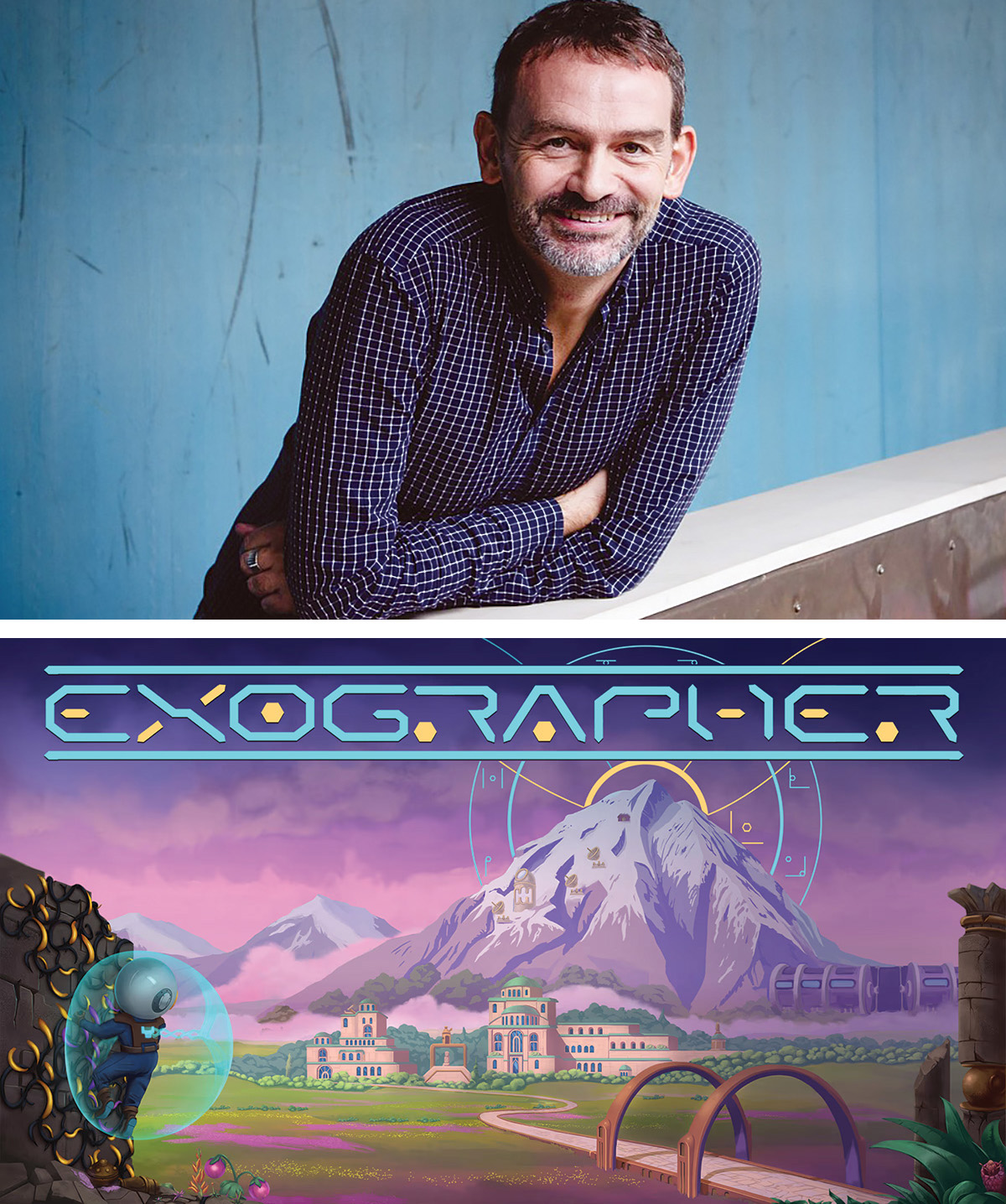
“Confucius famously may or may not have said: ‘When I hear, I forget. When I see, I remember. When I do, I understand.’ And computer-game mechanics can be inspired directly by science. Study it well, and you can invent game mechanics that allow you to engage with and learn about your own reality in a way you can’t when simply watching films or reading books.”
So says Raphael Granier de Cassagnac, a research director at France’s CNRS and Ecole Polytechnique, as well as member of the CMS collaboration at the CMS. Granier de Cassagnac is also the creative director of Exographer, a science-fiction computer game that draws on concepts from particle physics and is available on Steam, Switch, PlayStation 5 and Xbox.
“To some extent, it’s not too different from working at a place like CMS, which is also a super complicated object,” explains Granier de Cassagnac. Developing a game often requires graphic artists, sound designers, programmers and science advisors. To keep a detector like CMS running, you need engineers, computer scientists, accelerator physicists and funding agencies. And that’s to name just a few. Even if you are not the primary game designer or principal investigator, understanding the
fundamentals is crucial to keep the project running efficiently.
Root skills
Most physicists already have some familiarity with structured programming and data handling, which eases the transition into game development. Just as tools like ROOT and Geant4 serve as libraries for analysing particle collisions, game engines such as Unreal, Unity or Godot provide a foundation for building games. Prebuilt functionalities are used to refine the game mechanics.
“Physicists are trained to have an analytical mind, which helps when it comes to organising a game’s software,” explains Granier de Cassagnac. “The engine is merely one big library, and you never have to code anything super complicated, you just need to know how to use the building blocks you have and code in smaller sections to optimise the engine itself.”
While coding is an essential skill for game production, it is not enough to create a compelling game. Game design demands storytelling, character development and world-building. Structure, coherence and the ability to guide an audience through complex information are also required.
“Some games are character-driven, others focus more on the adventure or world-building,” says Granier de Cassagnac. “I’ve always enjoyed reading science fiction and playing role-playing games like Dungeons and Dragons, so writing for me came naturally.”
Entrepreneurship and collaboration are also key skills, as it is increasingly rare for developers to create games independently. Universities and startup incubators can provide valuable support through funding and mentorship. Incubators can help connect entrepreneurs with industry experts, and bridge the gap between scientific research and commercial viability.
“Managing a creative studio and a company, as well as selling the game, was entirely new for me,” recalls Granier de Cassagnac. “While working at CMS, we always had long deadlines and low pressure. Physicists are usually not prepared for the speed of the industry at all. Specialised offices in most universities can help with valorisation – taking scientific research and putting it on the market. You cannot forget that your academic institutions are still part of your support network.”
Though challenging to break into, opportunity abounds for those willing to upskill
The industry is fiercely competitive, with more games being released than players can consume, but a well-crafted game with a unique vision can still break through. A common mistake made by first-time developers is releasing their game too early. No matter how innovative the concept or engaging the mechanics, a game riddled with bugs frustrates players and damages its reputation. Even with strong marketing, a rushed release can lead to negative reviews and refunds – sometimes sinking a project entirely.
“In this industry, time is money and money is time,” explains Granier de Cassagnac. But though challenging to break into, opportunity abounds for those willing to upskill, with the gaming industry worth almost $200 billion a year and reaching more than three billion players worldwide by Granier de Cassagnac’s estimation. The most important aspects for making a successful game are originality, creativity, marketing and knowing the engine, he says.
“Learning must always be part of the process; without it we cannot improve,” adds Granier de Cassagnac, referring to his own upskilling for the company’s next project, which will be even more ambitious in its scientific coverage. “In the next game we want to explore the world as we know it, from the Big Bang to the rise of technology. We want to tell the story of humankind.”
After winning the Nobel Prize in Physics in 1979, Abdus Salam wanted to bring world-class physics research opportunities to South Asia. This was the beginning of the BCSPIN programme, encompassing Bangladesh, China, Sri Lanka, Pakistan, India and Nepal. The goal was to provide scientists in South and Southeast Asia with new opportunities to learn from leading experts about developments in particle physics, astroparticle physics and cosmology. Together with Jogesh Pati, Yu Lu and Qaisar Shafi, Salam initiated the programme in 1989. This first edition was hosted by Nepal. Vietnam joined in 2009 and BCSPIN became BCVSPIN. Over the years, the conference has been held as far afield as Mexico.
The most recent edition attracted more than 100 participants to the historic Hotel Shanker in Kathmandu, Nepal, from 9 to 13 December 2024. The conference aimed to facilitate interactions between researchers from BCVSPIN countries and the broader international community, covering topics such as collider physics, cosmology, gravitational waves, dark matter, neutrino physics, particle astrophysics, physics beyond the Standard Model and machine learning. Participants ranged from renowned professors from across the globe to aspiring students.
Speaking of aspiring students, the main event was preceded by the BCVSPIN-2024 Masterclass in Particle Physics and Workshop in Machine Learning, hosted at Tribhuvan University from 4 to 6 December. The workshop provided 34 undergraduate and graduate students from around Nepal with a comprehensive introduction to particle physics, high-energy physics (HEP) experiments and machine learning. In addition to lectures, the workshop engaged students in hands-on sessions, allowing them to experience real research by exploring core concepts and applying machine-learning techniques to data from the ATLAS experiment. The students’ enthusiasm was palpable as they delved into the intricacies of particle physics and machine learning. The interactive sessions were particularly engaging, with students eagerly participating in discussions and practical exercises. Highlights included a special talk on artificial intelligence (AI) and a career development session focused on crafting CVs, applications and research statements. These sessions ensured participants were equipped with both academic insights and practical guidance. The impact on students was profound, as they gained valuable skills and networking opportunities, preparing them for future careers in HEP.
The BCVSPIN conference officially started the following Monday. In the spirit of BCVSPIN, the first plenary session featured an insightful talk on the status and prospects of HEP in Nepal, providing valuable insights for both locals and newcomers to the initiative. Then, the latest and the near-future physics highlights of experiments such as ATLAS, ALICE, CMS, as well as Belle, DUNE and IceCube, were showcased. From physics performance such as ATLAS nailing b-tagging with graph neural networks, to the most elaborate mass measurement of the W boson mass by CMS, not to mention ProtoDUNE’s runs exceeding expectations, the audience were offered comprehensive reviews of the recent breakthroughs on the experimental side. The younger physicists willing to continue or start hardware efforts surely appreciated the overview and schedule of the different upgrade programmes. The theory talks covered, among others, dark-matter models, our dear friend the neutrino and the interactions between the two. A special talk on AI invited the audience to reflect on what AI really is and how – in the midst of the ongoing revolution – it impacts the fields of physics and physicists themselves. Overviews of long-term future endeavours such as the Electron–Ion Collider and the Future Circular Collider concluded the programme.
BCVSPIN offers younger scientists precious connections with physicists from the international community
A special highlight of the conference was a public lecture “Oscillating Neutrinos” by the 2015 Nobel Laureate Takaaki Kajita. The event was held near the historical landmark of Patan Durbar Square, in the packed auditorium of the Rato Bangala School. This centre of excellence is known for its innovative teaching methods and quality instruction. More than half the room was filled with excited students from schools and universities, eager to listen to the keynote speaker. After a very pedagogical introduction explaining the “problem of solar neutrinos”, Kajita shared his insights on the discovery of neutrino oscillations and its implications for our understanding of the universe. His presentation included historical photographs of the experiments in Kamioka, Japan, as well as his participation at BCVSPIN in 1994. After encouraging the students to become scientists and answering as many questions as time allowed, he was swept up in a crowd of passionate Nepali youth, thrilled to be in the presence of such a renowned physicist.
The BCVSPIN initiative has changed the landscape of HEP in South and Southeast Asia. With participation made affordable for students, it is a stepping stone for the younger generation of scientists, offering them precious connections with physicists from the international community.
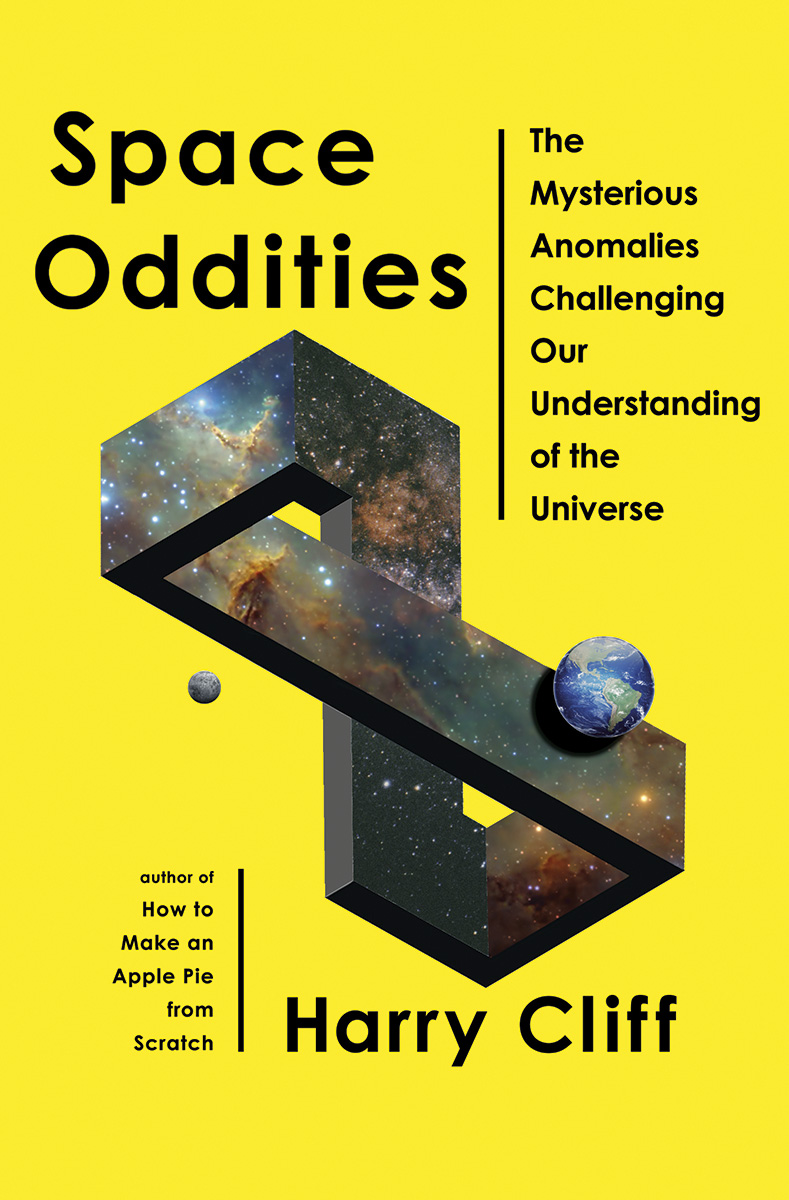
Space Oddities takes readers on a journey through the mysteries of modern physics, from the smallest subatomic particles to the vast expanse of stars and space. Harry Cliff – an experimental particle physicist at Cambridge University – unravels some of the most perplexing anomalies challenging the Standard Model (SM), with behind-the-scenes scoops from eight different experiments. The most intriguing stories concern lepton universality and the magnetic moment of the muon.
Theoretical predictions have demonstrated an extremely precise value for the muon’s magnetic moment, experimentally verified to an astonishing 11 significant figures. Over the last few years, however, experimental measurements have suggested a slight discrepancy – the devil lying in the 12th digit. 2021 measurements at Fermilab disagreed with theory predictions at 4σ. Not enough to cause a “scientific earthquake”, as Cliff puts it, but enough to suggest that new physics might be at play.
Just as everything seemed to be edging towards a new discovery, Cliff introduces the “villains” of the piece. Groundbreaking lattice–QCD predictions from the Budapest–Marseille–Wuppertal collaboration were published on the same day as a new measurement from Fermilab. If correct, these would destroy the anomaly by contradicting the data-driven theory consensus. (“Yeah, bullshit,” said one experimentalist to Cliff when put to him that the timing wasn’t intended to steal the experiment’s thunder.) The situation is still unresolved, though many new theoretical predictions have been made and a new theoretical consensus is imminent (see “Do muons wobble faster than expected“). Regardless of the outcome, Cliff emphasises that this research will pave the way for future discoveries, and none of it should be taken for granted – even if the anomaly disappears.
“One of the challenging aspects of being part of a large international project is that your colleagues are both collaborators and competitors,” Cliff notes. “When it comes to analysing the data with the ultimate goal of making discoveries, each research group will fight to claim ownership of the most interesting topics.”
This spirit of spurring collaborator- competitors on to greater heights of precision is echoed throughout Cliff’s own experience of working in the LHCb collaboration, where he studies “lepton universality”. All three lepton flavours – electron, muon and tau – should interact almost identically, except for small differences due to their masses. However, over the past decade several experimental results suggested that this theory might not hold in B-meson decays, where muons seemed to be appearing less frequently than electrons. If confirmed, this would point to physics beyond the SM.
Having been involved himself in a complementary but less sensitive analysis of B-meson decay channels involving strange quarks, Cliff recalls the emotional rollercoaster experienced by some of the key protagonists: the “RK” team from Imperial College London. After a year of rigorous testing, RK unblinded a sanity check of their new computational toolkit: a reanalysis of the prior measurement that yielded a perfectly consistent R value of 0.72 with an uncertainty of about 0.08, upholding a 3σ discrepancy. Now was the time to put the data collected since then through the same pasta machine: if it agreed, the tension between the SM and their overall measurement would cross the 5σ threshold. After an anxious wait while the numbers were crunched, the team received the results for the new data: 0.93 with an uncertainty of 0.09.
“Dreams of a major discovery evaporated in an instant,” recalls Cliff. “Anyone who saw the RK team in the CERN cafeteria that day could read the result from their faces.” The lead on the RK team, Mitesh Patel, told Cliff that they felt “emotionally train wrecked”.
One day we might make the right mistake and escape the claustrophobic clutches of the SM
With both results combined, the ratio averaged out to 0.85 ± 0.06, just shy of 3σ away from unity. While the experimentalists were deflated, Cliff notes that for theorists this result may have been more exciting than the initial anomaly, as it was easier to explain using new particles or forces. “It was as if we were spying the footprints of a great, unknown beast as it crashed about in a dark jungle,” writes Cliff.
Space Oddities is a great defence of irrepressible experimentation. Even “failed” anomalies are far from useless: if they evaporate, the effort required to investigate them pushes the boundaries of experimental precision, enhances collaboration between scientists across the world, and refines theoretical frameworks. Through retellings and interviews, Cliff helps the public experience the excitement of near breakthroughs, the heartbreak of failed experiments, and the dynamic interactions between theoretical and experimental physicists. Thwarting myths that physicists are cold, calculating figures working in isolation, Cliff sheds light on a community driven by curiosity, ambition and (healthy) competition. His book is a story of hope that one day we might make the right mistake and escape the claustrophobic clutches of the SM.
“I’ve learned so much from my mistakes,” read a poster above Cliff’s undergraduate tutor’s desk. “I think I’ll make another.”
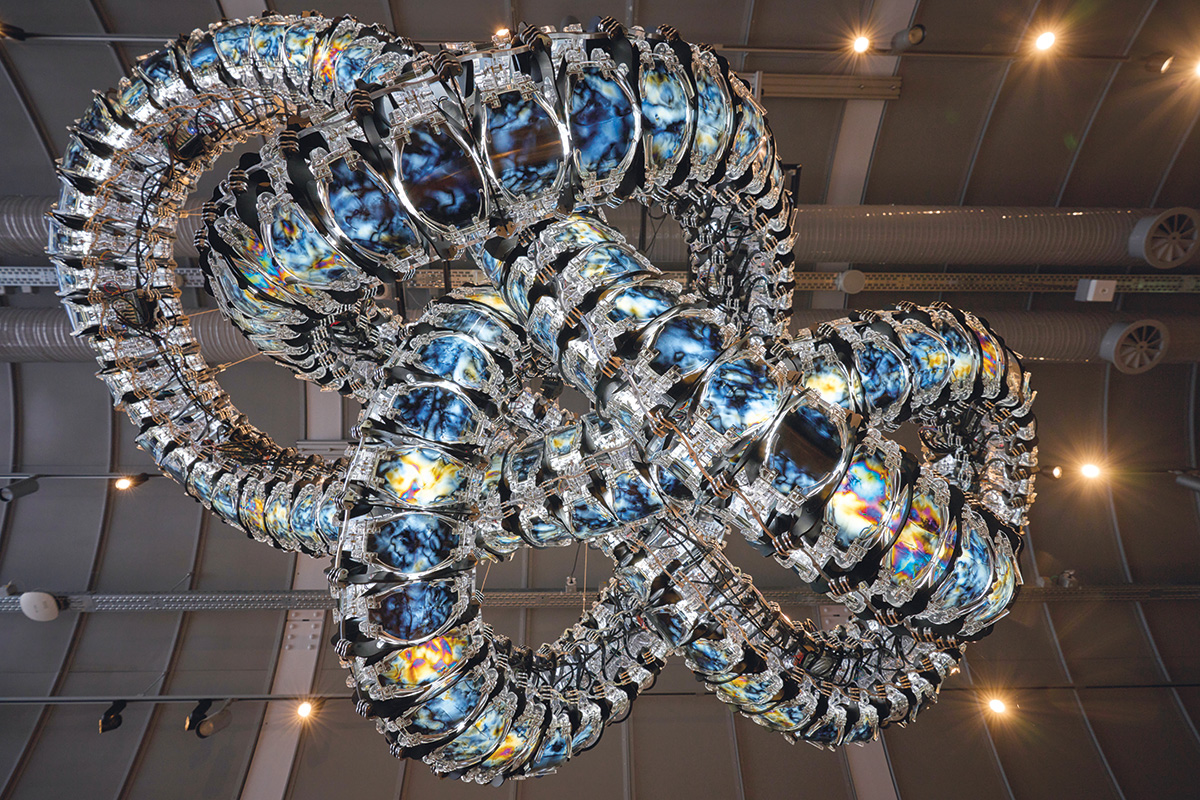
Throughout my experiences in the laboratory, I have seen how art is an important part of a scientist’s life. By being connected with art, scientists recognise that their activities are very embedded in contemporary culture. Science is culture. Through art and dialogues with artists, people realise how important science is for society and for culture in general. Science is an important cultural pillar in our society, and these interactions bring scientists meaning.
Are science and art two separate cultures?
Today, if you ask anyone: “What is nature?” they describe everything in scientific terms. The way you describe things, the mysteries of your research: you are actually answering the questions that are present in everyone’s life. In this case, scientists have a sense of responsibility. I think art helps to open this dialogue from science into society.
Do scientists have a responsibility to communicate their research?
All of us have a social responsibility in everything we produce. Ideas don’t belong to anyone, so it’s a collective endeavour. I think that scientists don’t have the responsibility to communicate the research themselves, but that their research cannot be isolated from society. I think it’s a very joyful experience to see that someone cares about what you do.
Why should artists care about science?
If you go to any academic institution, there’s always a scientific component, very often also a technological one. A scientific aspect of your life is always present. This is happening because we’re all on the same course. It’s a consequence of this presence of science in our culture. Artists have an important role in our society, and they help to spark conversations that are important to everyone. Sometimes it might seem as though they are coming from a very individual lens, but in fact they have a very large reach and impact. Not immediately, not something that you can count with data, but there is definitely an impact. Artists open these channels for communicating and thinking about a particular aspect of science, which is difficult to see from a scientific perspective. Because in any discipline, it’s amazing to see your activity from the eyes of others.
Creativity and curiosity are the parameters and competencies that make up artists and scientists
A few years back we did a little survey, and most of the scientists thought that by spending time with artists, they took a step back to think about their research from a different lens, and this changed their perspective. They thought of this as a very positive experience. So I think art is not only about communicating to the public, but about exploring the personal synergies of art and science. This is why artists are so important.
Do experimental and theoretical physicists have different attitudes towards art?
Typically, we think that theorists are much more open to artists, but I don’t agree. In my experiences at CERN, I found many engineers and experimental physicists being highly theoretical. Both value artistic perspectives and their ability to consider questions and scientific ideas in an unconventional way. Experimental physicists would emphasise engagement with instruments and data, while theoretical physicists would focus on conceptual abstraction.
By being with artists, many experimentalists feel that they have the opportunity to talk about things beyond their research. For example, we often talk about the “frontiers of knowledge”. When asked about this, experimentalists or theoretical physicists might tell us about something other than particle physics – like neuroscience, or the brain and consciousness. A scientist is a scientist. They are very curious about everything.
Do these interactions help to blur the distinction between art and science?
Well, here I’m a bit radical because I know that creativity is something we define. Creativity and curiosity are the parameters and competencies that make up artists and scientists. But to become a scientist or an artist you need years of training – it’s not that you can become one just because you are a curious and creative person.
Not many people can chat about particle physics, but scientists very often chat with artists. I saw artists speaking for hours with scientists about the Higgs field. When you see two people speaking about the same thing, but with different registers, knowledge and background, it’s a precious moment.
When facilitating these discussions between physicists and artists, we don’t speak only about physics, but about everything that worries them. Through that, grows a sort of intimacy that often becomes something else: a friendship. This is the point at which a scientist stops being an information point for an artist and becomes someone who deals with big questions alongside an artist – who is also a very knowledgeable and curious person. This is a process rich in contrast, and you get many interesting surprises out of these interactions.
But even in this moment, they are still artists and scientists. They don’t become this blurred figure that can do anything.
Can scientific discovery exist without art?
That’s a very tricky question. I think that art is a component of science, therefore science cannot exist without art – without the qualities that the artist and scientist have in common. To advance science, you have to create a question that needs to be answered experimentally.
Did discoveries in quantum mechanics affect the arts?
Everything is subjected to quantum mechanics. Maybe what it changed was an attitude towards uncertainty: what we see and what we think is there. There was an increased sense of doubt and general uncertainty in the arts.
Do art and science evolve together or separately?
I think there have been moments of convergence – you can clearly see it in any of the avant garde. The same applies to literature; for example, modernist writers showed a keen interest in science. Poets such as T S Eliot approached poetry with a clear resonance of the first scientific revolutions of the century. There are references to the contributions of Faraday, Maxwell and Planck. You can tell these artists and poets were informed and eager to follow what science was revealing about the world.
You can also note the influence of science in music, as physicists get a better understanding of the physical aspects of sound and matter. Physics became less about viewing the world through a lens, and instead focused on the invisible: the vibrations of matter, electricity, the innermost components of materials. At the end of the 19th and 20th centuries, these examples crop up constantly. It’s not just representing the world as you see it through a particular lens, but being involved in the phenomena of the world and these uncensored realities.
From the 1950s to the 1970s you can see these connections in every single moment. Science is very present in the work of artists, but my feeling is that we don’t have enough literature about it. We really need to conduct more research on this connection between humanities and science.
What are your favourite examples of art influencing science?
Feynman diagrams are one example. Feynman was amazing – a prodigy. Many people before him tried to represent things that escaped our intuition visually and failed. We also have the Pauli Archives here at CERN. Pauli was not the most popular father of quantum mechanics, but he was determined to not only understand mathematical equations but to visualise them, and share them with his friends and colleagues. This sort of endeavour goes beyond just writing – it is about the possibility of creating a tangible experience. I think scientists do that all the time by building machines, and then by trying to understand these machines statistically. I see that in the laboratory constantly, and it’s very revealing because usually people might think of these statistics as something no one cares about – that the visuals are clumsy and nerdy. But they’re not.
Even Leonardo da Vinci was known as a scientist and an artist, but his anatomical sketches were not discovered until hundreds of years after his other works. Newton was also paranoid about expressing his true scientific theories because of the social standards and politics of the time. His views were unorthodox, and he did not want to ruin his prestigious reputation.
Today’s culture also influences how we interpret history. We often think of Aristotle as a philosopher, yet he is also recognised for contributions to natural history. The same with Democritus, whose ideas laid foundations for scientific thought.
So I think that opening laboratories to artists is very revealing about the influence of today’s culture on science.
When did natural philosophy branch out into art and science?
I believe it was during the development of the scientific method: observation, analysis and the evolution of objectivity. The departure point was definitely when we developed a need to be objective. It took centuries to get where we are now, but I think there is a clear division: a line with philosophy, natural philosophy and natural history on one side, and modern science on the other. Today, I think art and science have different purposes. They convene at different moments, but there is always this detour. Some artists are very scientific minded, and some others are more abstract, but they are both bound to speculate massively.
It’s really good news for everyone that labs want to include non-scientists
For example, at our Arts at CERN programme we have had artists who were interested in niche scientific aspects. Erich Berger, an artist from Finland, was interested in designing a detector, and scientists whom he met kept telling him that he would need to calibrate the detector. The scientist and the artist here had different goals. For the scientist, the most important thing is that the detector has precision in the greatest complexity. And for the artist, it’s not. It’s about the process of creation, not the analysis.
Do you think that science is purely an objective medium while art is a subjective one?
No. It’s difficult to define subjectivity and objectivity. But art can be very objective. Artists create artefacts to convey their intended message. It’s not that these creations are standing alone without purpose. No, we are beyond that. Now art seeks meaning that is, in this context, grounded in scientific and technological expertise.
How do you see the future of art and science evolving?
There are financial threats to both disciplines. We are still in this moment where things look a bit bleak. But I think our programme is pioneering, because many scientific labs are developing their own arts programmes inspired by the example of Arts at CERN. This is really great, because unless you are in a laboratory, you don’t see what doing science is really about. We usually read science in the newspapers or listen to it on a podcast – everything is very much oriented to the communication of science, but making science is something very specific. It’s really good news for everyone that laboratories want to include non-scientists. Arts at CERN works mostly with visual artists, but you could imagine filmmakers, philosophers, those from the humanities, poets or almost anyone at all, depending on the model that one wants to create in the lab.
When I was an undergraduate physics student in the mid-1980s, I fell in love with the philosophy of quantum mechanics. I devoured biographies of the greats of early-20th-century atomic physics – physicists like Bohr, Heisenberg, Schrödinger, Pauli, Dirac, Fermi and Born. To me, as I was struggling with the formalism of quantum mechanics, there seemed to be something so exciting, magical even, about that era, particularly those wonder years of the mid-1920s when its mathematical framework was being developed and the secrets of the quantum world were revealing themselves.
I went on to do a PhD in nuclear reaction theory, which meant I spent most of my time working through mathematical derivations, becoming familiar with S-matrices, Green’s functions and scattering amplitudes, scribbling pages of angular-momentum algebra and coding in Fortran 77. And I loved that stuff. There certainly seemed to be little time for worrying about what was really going on inside atomic nuclei. Indeed, I was learning that even the notion of something “really going on” was a vague one. My generation of theoretical physicists were still being very firmly told to “shut up and calculate”, as many adherents of the Copenhagen school of quantum mechanics were keen to advocate. To be fair, so much progress has been made over the past century, in nuclear and particle physics, quantum optics, condensed-matter physics and quantum chemistry, that philosophical issues were seen as an unnecessary distraction. I recall one senior colleague, frustrated by my abiding interest in interpretational matters, admonishing me with: “Jim, an electron is an electron is an electron. Stop trying to say more about it.” And there certainly seemed to be very little in the textbooks I was reading about unresolved issues arising from such topics as the EPR (Einstein–Podolsky–Rosen) paradox and the measurement problem, let alone any analysis of the work of Hugh Everett and David Bohm, who were regarded as mavericks. The Copenhagen hegemony ruled supreme.
What I wasn’t aware of until later in my career was that a community of physicists had indeed continued to worry and think about such matters. These physicists were doing more than just debating and philosophising – they were slowly advancing our understanding of the quantum world. Experimentalists such as Alain Aspect, John Clauser and Anton Zeilinger were devising ingenious experiments in quantum optics – all three of whom were only awarded the Nobel Prize for their work on tests of John Bell’s famous inequality in 2022, which says a lot about how we are only now acknowledging their contribution. Meanwhile, theorists such as Wojciech Zurek, Erich Joos, Deiter Zeh, Abner Shimony and Asher Peres, to name just a few, were formalising ideas on entanglement and decoherence theory. It is certainly high time that quantum-mechanics textbooks – even advanced undergraduate ones – should contain their new insights.
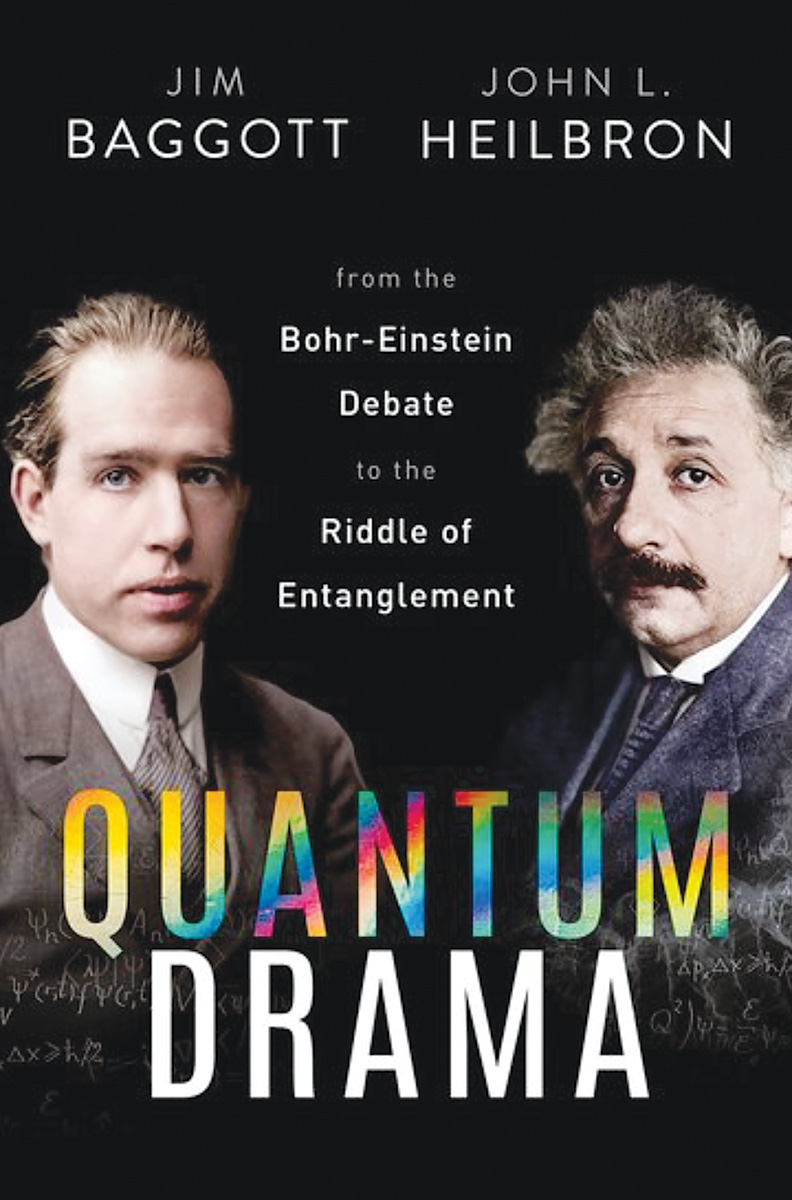
All of which brings me to Quantum Drama, a new popular-science book and collaboration between the physicist and science writer Jim Baggott and the late historian of science John L Heilbron. In terms of level, the book is at the higher end of the popular-science market and, as such, will probably be of most interest to, for example, readers of CERN Courier. If I have a criticism of the book it is that its level is not consistent. For it tries to be all things. On occasion, it has wonderful biographical detail, often of less well-known but highly deserving characters. It is also full of wit and new insights. But then sometimes it can get mired in technical detail, such as in the lengthy descriptions of the different Bell tests, which I imagine only professional physicists are likely to fully appreciate.
Having said that, the book is certainly timely. This year the world celebrates the centenary of quantum physics, since the publication of the momentous papers of Heisenberg and Schrödinger on matrix and wave mechanics, in 1925 and 1926, respectively. Progress in quantum information theory and in the development of new quantum technologies is also gathering pace right now, with the promise of quantum computers, quantum sensing and quantum encryption getting ever closer. This all provides an opportunity for the philosophy of quantum mechanics to finally emerge from the shadows into mainstream debate again.
A new narrative
So, what makes Quantum Drama stand out from other books that retell the story of quantum mechanics? Well, I would say that most historical accounts tend to focus only on that golden age between 1900 and 1927, which came to an end at the Solvay Conference in Brussels and those well-documented few days when Einstein and Bohr had their debate about what it all means. While these two giants of 20th-century physics make the front cover of the book, Quantum Drama takes the story on beyond that famous conference. Other accounts, both popular and scholarly, tend to push the narrative that Bohr won the argument, leaving generations of physicists with the idea that the interpretational issues had been resolved – apart that is, from the odd dissenting voices from the likes of Everett or Bohm who tried, unsuccessfully it was argued, to put a spanner in the Copenhagen works. All the real progress in quantum foundations after 1927, or so we were told, was in the development of quantum field theories, such as QED and QCD, the excitement of high-energy physics and the birth of the Standard Model, with the likes of Murray Gell-Mann and Steven Weinberg replacing Heisenberg and Schrödinger at centre stage. Quantum Drama takes up the story after 1927, showing that there has been a lively, exciting and ongoing dispute over what it all means, long after the death of those two giants of physics. In fact, the period up to Solvay 1927 is all dealt with in Act I of the book. The subtitle puts it well: From the Bohr–Einstein Debate to the Riddle of Entanglement.
The Bohr–Einstein debate is still very much alive and kicking
All in all, Quantum Drama delivers something remarkable, for it shines a light on all the muddle, complexity and confusion surrounding a century of debate about the meaning of quantum mechanics and the famous “Copenhagen spirit”, treating the subject with thoroughness and genuine scholarship, and showing that the Bohr–Einstein debate is still very much alive and kicking.
To provide the best experiences, we use technologies like cookies to store and/or access device information. Consenting to these technologies will allow us to process data such as browsing behavior or unique IDs on this site. Not consenting or withdrawing consent, may adversely affect certain features and functions.
Functional
Always active
The technical storage or access is strictly necessary for the legitimate purpose of enabling the use of a specific service explicitly requested by the subscriber or user, or for the sole purpose of carrying out the transmission of a communication over an electronic communications network.
Preferences
The technical storage or access is necessary for the legitimate purpose of storing preferences that are not requested by the subscriber or user.
Statistics
The technical storage or access that is used exclusively for statistical purposes.The technical storage or access that is used exclusively for anonymous statistical purposes. Without a subpoena, voluntary compliance on the part of your Internet Service Provider, or additional records from a third party, information stored or retrieved for this purpose alone cannot usually be used to identify you.
Marketing
The technical storage or access is required to create user profiles to send advertising, or to track the user on a website or across several websites for similar marketing purposes.