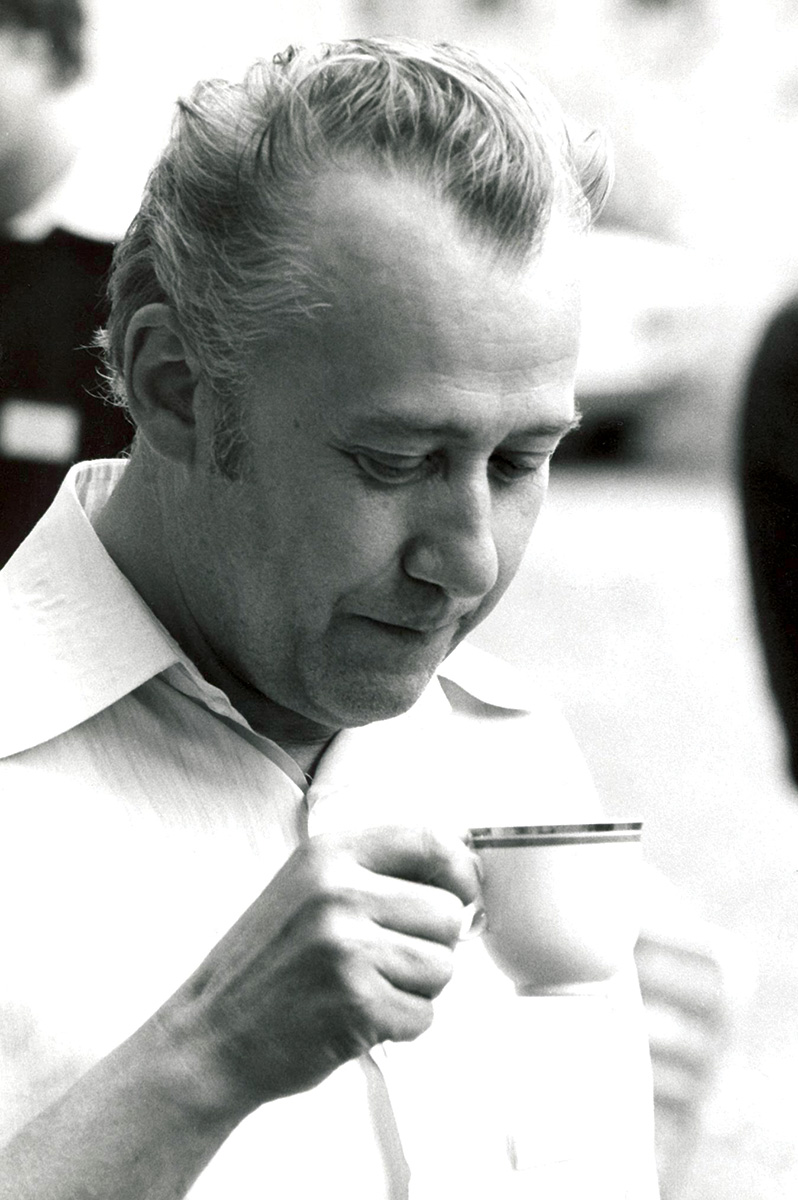
French actor Irène Jacob rose to international acclaim for her role in the 1991 film The Double Life of Véronique. She is the daughter of Maurice Jacob (1933 – 2007), a French theoretical physicist and Head of CERN’s Theory Division from 1982 to 1988. Her new novel, Big Bang, is a fictionalised account of the daughter of a renowned physicist coming to terms with the death of her father and the arrival of her second child. Keen to demonstrate the artistic beauty of science, she is also a Patron of the Physics of the Universe Endowment Fund established in Paris by George Smoot.
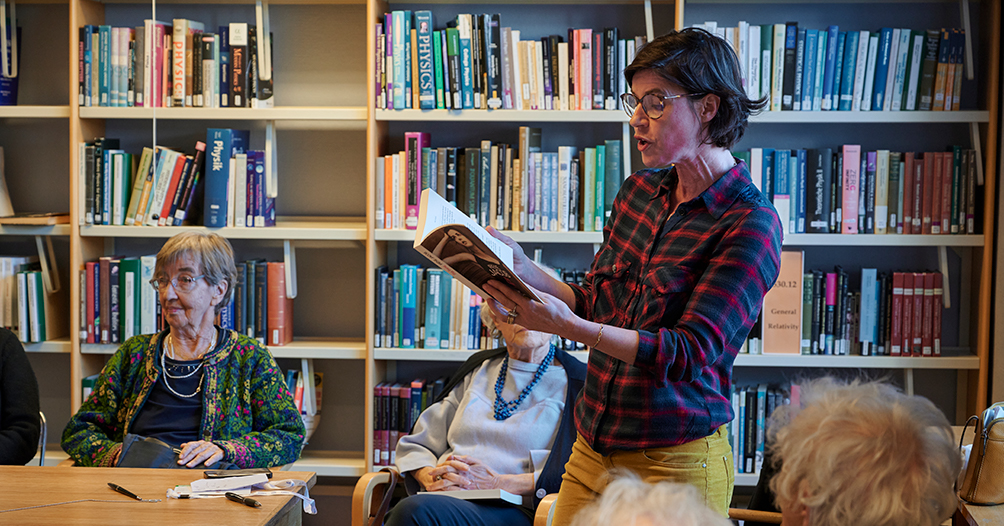
When Irène Jacob recites from her book, it is more than a reading, it’s a performance. That much is not surprising: she is after all the much-feted actor in the subtly reflective 1990s films of Krzysztof Kieślowski. What did come as a surprise to this reader is just how beautifully she writes. With an easy grace and fluidity, she weaves together threads of her life, of life in general, and of the vast mysteries of the universe.
The backdrop to the opening scenes is the corridors of the theory division in the 70s and 80s
Billed as a novel, Big Bang comes across more as a memoir, and that’s no accident. The author’s aim was to use her entourage, somewhat disguised, to tell a universal story of the human condition. Names are changed, Irène’s father, the physicist Maurice Jacob, becomes René, for example, his second name. The true chronology of events is not strictly observed, and maybe there’s some invention, but behind the storytelling there is nevertheless a touching portrait of a very real family. The backdrop to the opening scenes is CERN, more specifically the corridors of the theory division in the 70s and 80s, a regular stomping ground for the young Irène. The reader discovers the wonders of physics through the wide-open eyes of a seven-year-old child. Later on, that child-become-adult reflects on other wonders – those related to the circle of life. The book ties all this together, seen from the point in spacetime at which Irène has to reconcile her father’s passing with her own impending motherhood.
For those who remember the CERN of the 80s, the story begins with an opportunity to rediscover old friends and places. For those not familiar with particle physics, it offers a glimpse into the field, to those who devote their lives to it, and to those who share their lives with them. The initial chapters open the door to Irène Jacob’s world, just a crack.
The atmosphere soon changes, though, as she flings the door wide open. More than once I found myself wondering whether I had the right to be there: inside Irène Jacob’s life, dreams and nightmares. It is a remarkably intimate account, looking deep in to what it is to be human. Highs and lows, loves and laughs, kindnesses and hurts, even tragedies: all play a part. Irène Jacob’s fictionalised family suffers much, yet although Irène holds nothing back, Big Bang is essentially an optimistic, life affirming tale.
Science makes repeated cameo appearances. There’s a passage in which René is driving home from hospital after welcoming his first child into the world. Distracted by emotion, he’s struck by a great insight and has to pull over and tell someone. How often does that happen in the creative process? Kary Mullis tells a similar story in his memoirs. In his case, the idea for Polymerase Chain Reaction came to him at the end of hot May day on Highway 128 with his girlfriend asleep next to him in the passenger seat of his little silver Honda. Mullis got the Nobel Prize. Both had a profound impact on their fields.
Bohr can be paraphrased as saying: the opposite of a profound truth is another profound truth
Alice in Wonderland is a charmingly recurrent theme, particularly the Cheshire cat. Very often, a passage ends with nothing left but an enigmatic smile, a metaphor for life in the quantum world, where believing in six impossible things before breakfast is almost a prerequisite.
Big Bang is not a page turner. Instead, each chapter is a beautifully formed vignette of family life. Take, for example, the passage that begins with a quote from Niels Bohr taken René’s manuscript, Des Quarks et des Hommes (published as Au Coeur de la Matière). Bohr can be paraphrased as saying: the opposite of a profound truth is another profound truth. As the passage moves on, it plays with this theme, ending with the conclusion: if my story does not stand up, it’s because reality is very small. And if my story is very small, it is because reality does not stand up.
Whatever the author’s wish, Big Bang comes across as an admirably honest family portrait, at times uncomfortably so. It’s a portrait that goes much deeper than the silver screen or the hallowed halls of academia. The cast of Big Bang is a very human family, and one that this reader came to like very much.
During its 197th session, which took place for the first time by videoconference on 19-20 March, the CERN Council addressed the impact of the current COVID-19 situation on the update of the European strategy for particle physics (ESPPU).
The ESPPU got under way in September 2017, when the CERN Council appointed a European Strategy Group (ESG) – headed by Halina Abramowicz of Tel Aviv University and comprising a scientific delegate from each of CERN’s member and associate-member states, plus directors and representatives of major European laboratories and organisations and invitees from outside Europe – to organise the process. Following two years of discussions and consultation with the high-energy physics and related communities, the ESPPU entered its final stages in January with a week-long drafting session in Bad Honnef, Germany. Afterwards, the ESG released a statement reporting convergence on recommendations to guide the future of high-energy physics in Europe. These were due to be submitted for final approval at an extraordinary session of the CERN Council on 25 May in Budapest, Hungary, before being publicly released.
Discussing with various stakeholders in the Member States will take more time
Ursula Bassler
Acknowledging that the COVID-19 outbreak threatens the lives and health of hundreds of thousands of people, and affects the everyday lives of millions, the CERN Council has now agreed that it would not be appropriate to release the ESG update (and an accompanying deliberation document) to a wider audience, nor for the Council to make any further comment on the contents of the documents for the time being. The Budapest event has been cancelled and replaced by a new extraordinary session, to be held by videoconference on the same date, at which the Council will further discuss how to proceed.
“In these exceptional circumstances it is not the right time to release the strategy, and discussing with various stakeholders in the Member States will take more time,” says Ursula Bassler, president of the CERN Council. “Even though this will come as a disappointment to many physicists after all the effort put into the ESPPU, everyone can understand, that in this situation, the process will last longer.”
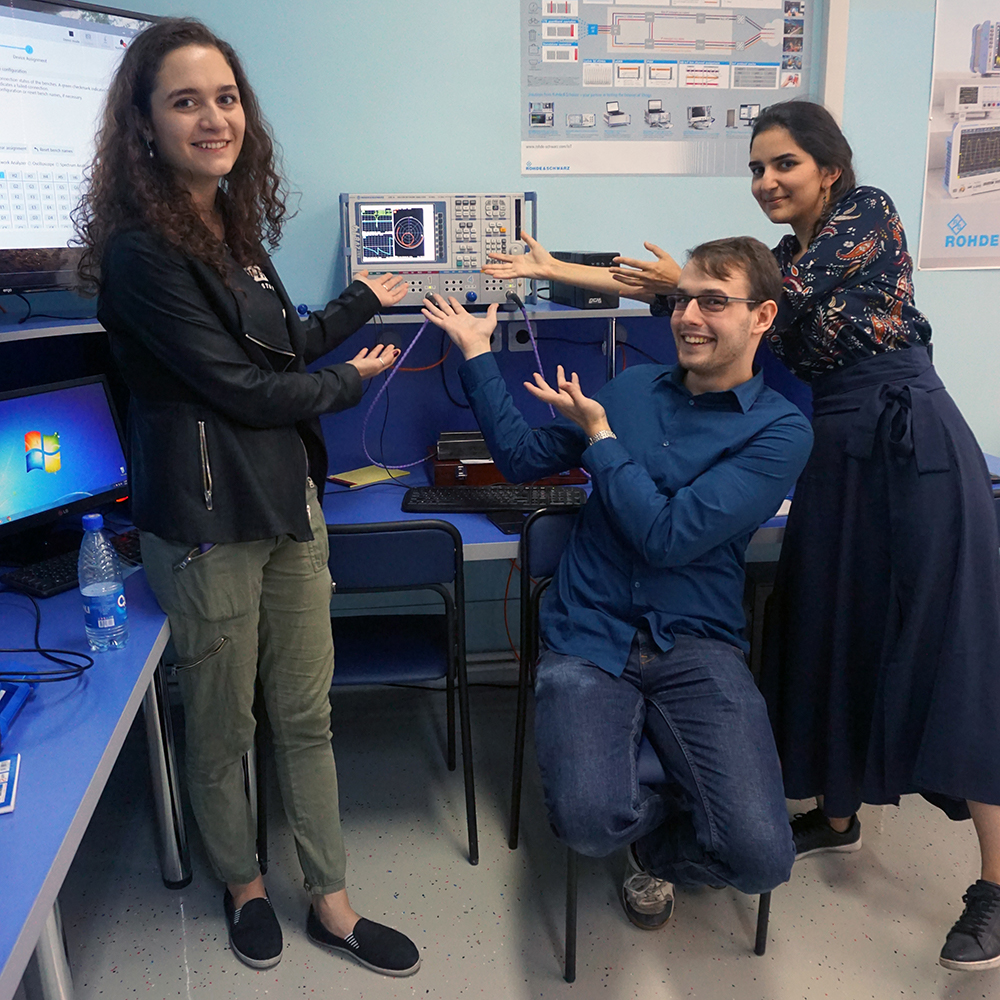
The inaugural joint German-Armenian internship in accelerator physics was held at the CANDLE Institute in Yerevan, Armenia, from 29 September to 5 October. In this first round, twelve undergraduates at Universität Hamburg joined eleven students from Yerevan State University to form eight small teams. Each team worked its way through an experiment under the supervision of experts from both nations, interacting with physicists in a laboratory setting for the first time in many cases. The goal of the programme of week-long internships, which was supported by the German Federal Foreign Office, is to integrate accelerator physics and technology into undergraduate courses and provide students with an early experience of international cooperation. It will make use of eight experimental stations recently set up to foster young academics learning accelerator technology in Armenia.
CANDLE is the Armenian synchrotron-radiation storage-ring project. As a first step towards its realisation, AREAL, an ultrafast laser-driven electron accelerator, has been constructed. The next steps are S-band linac acceleration up to 20-50 MeV and the generation of coherent and tunable THz-radiation in an undulator.
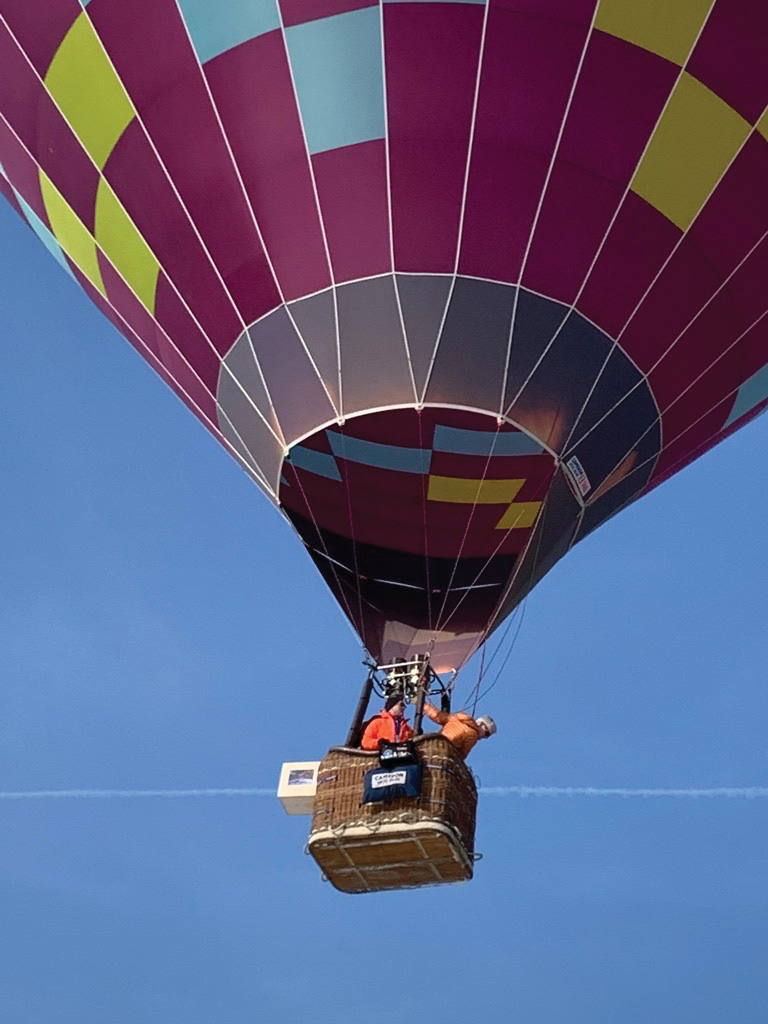
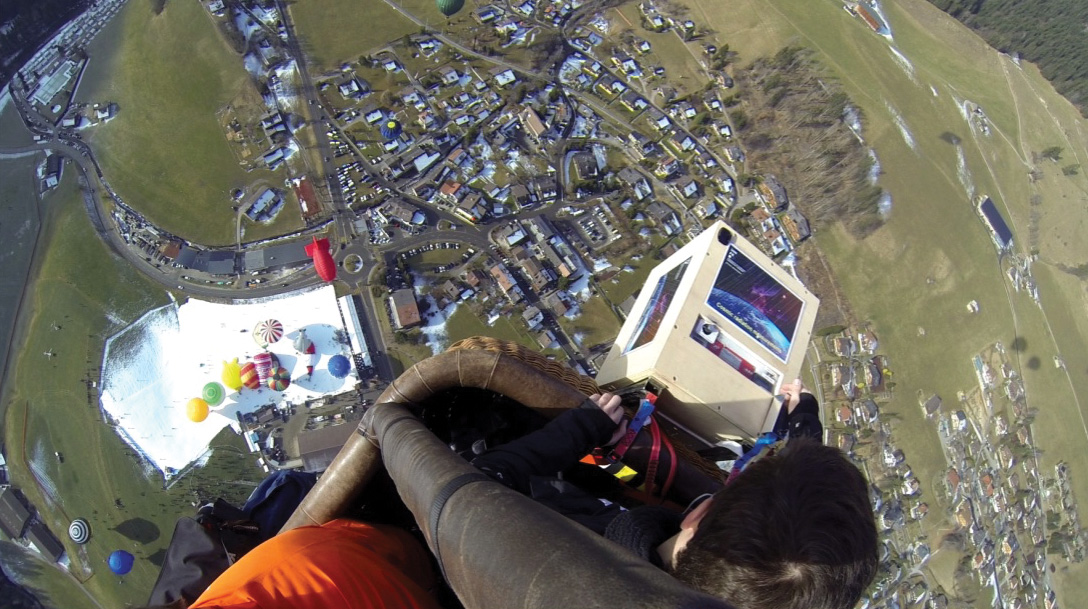
On 25 January, a muon detector, a particle physicist and a prizewinning pilot ascended 4000 m above the Swiss countryside in a hot-air balloon to commemorate the discovery of cosmic rays. The event was the highlight of the opening ceremony of the 42nd Château-d’Oex International Balloon Festival, attended by an estimated 30,000 people, and attracted significant media coverage.
In the early 1900s, following Becquerel’s discovery of radioactivity, studying radiation was all the rage. Portable electrometers were used to measure the ionisation of air in a variety of terrestrial environments, from fields and lakes to caves and mountains. With the idea that ionisation should decrease with altitude, pioneers adventured in balloon flights as early as 1909 to count the number of ions per cm3 of air as a function of altitude. First results indeed indicated a decrease up to 1300 m, but a subsequent ascent to 4500 m by Albert Gockel, professor of physics at Fribourg, concluded that ionisation does not decrease and possibly increases with altitude. Gockel, however, who later would coin the term “cosmic radiation”, was unable to obtain the hydrogen needed to go to higher altitudes. And so it fell to Austrian physicist Victor Hess to settle the case. Ascending to 5300 m in 1912, Hess clearly identified an increase, and went on to share the 1936 Nobel Prize in Physics for the discovery of cosmic rays. Gockel, who died in 1927, could not be awarded, and for that reason is almost forgotten by history.
ATLAS experimentalist Hans Peter Beck of the University of Bern, and a visiting professor at the University of Fribourg, along with two students from the University of Fribourg, reenacted Gockel’s and Hess’s pioneering flights using 21st-century technology: a muon telescope called the Cosmic Hunter, newly developed by instrumentation firm CAEN. The educational device, which counts coincidences in two scintillating-fibre tiles of 15 × 15 cm2 separated by 15 cm, verified that the flux of cosmic rays increases as a function of altitude. Within two hours of landing, including a one-hour drive back to the starting point, Beck was able to present the data plots during a public talk attended by more than 250 people. A second flight up to 6000 m is planned, with oxygen supplies for passengers, when weather conditions permit.
“Relating balloons with particle physics was an easy task, given the role balloons played in the early days for the discovery of cosmic rays,” says Beck. “It is a narrative that works and that touches people enormously, as the many reactions at the festival have shown.”
The event – a collaboration with the universities of Bern and Fribourg, the Swiss Physical Society, and the Jungfraujoch research station – ran in parallel to a special exhibition about cosmic rays at the local balloon museum, organised by Beck and Michael Hoch from CMS, which was the inspiration for festival organisers to make physics a focus of the event, says Beck: “Without this, the festival would never have had the idea to bring ‘adventure, science and freedom’ as this year’s theme. It’s really exceptional.”
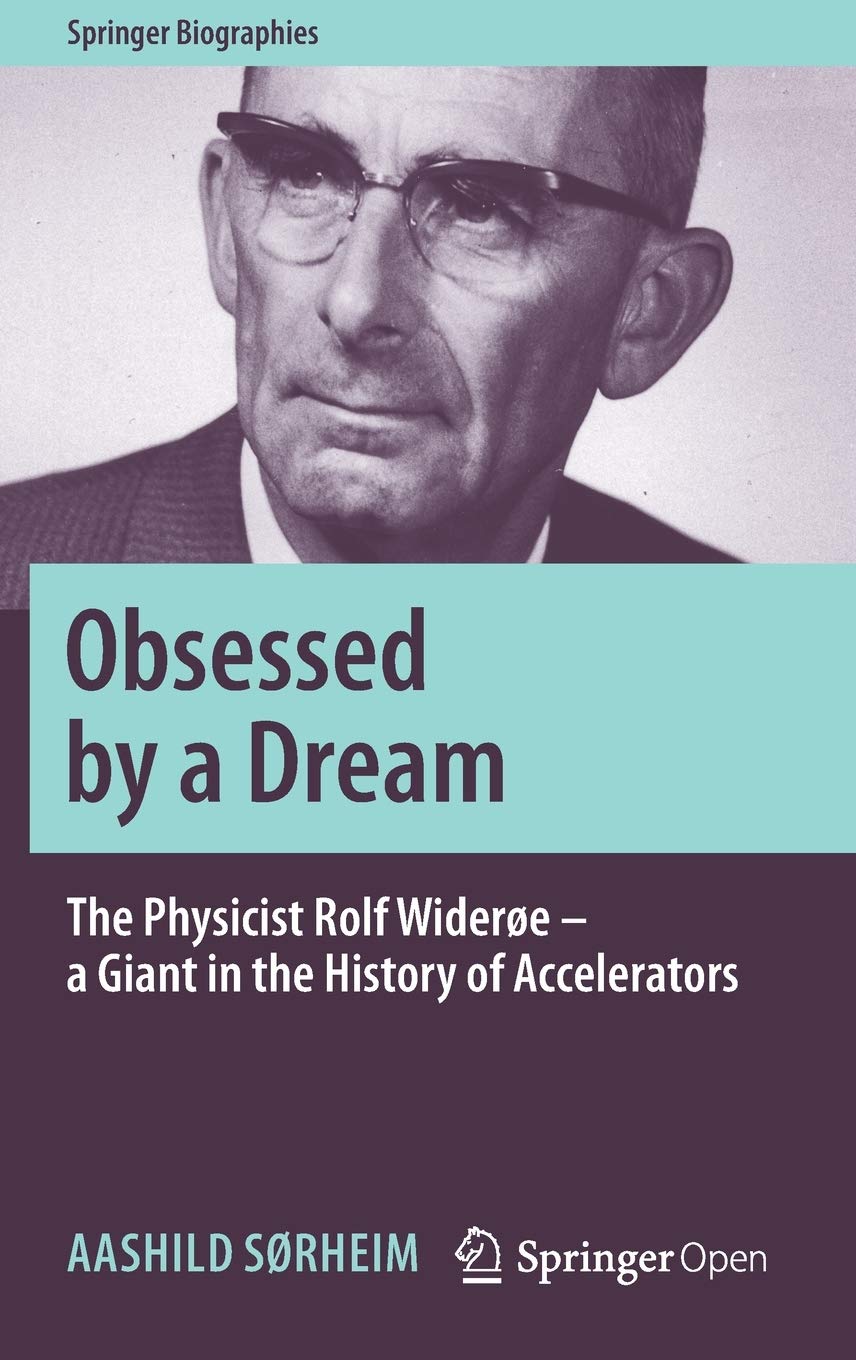
The betatron is an early type of MeV-range electron accelerator which uses the electric field induced by a varying magnetic field to accelerate electrons, or beta particles. It operates like a transformer with the secondary winding replaced by a beam of electrons circulating in a vacuum tube. It was invented by pioneering Norwegian accelerator physicist Rolf Widerøe when a student in 1925. Since the construction failed at the time, he had to find another theme for his thesis, and so in 1927 he constructed the first linear accelerator (50 keV), before later proposing the principle of colliding beams to fully exploit the energy of accelerated particles. Through these innovations, Rolf Widerøe decisively influenced the course of high-energy physics, with betatrons shaping the landscape in the early days, and linear accelerators and colliding beams becoming indispensable tools today.
Aashild Sørheim, a professional writer, now presents a new biography of this visionary engineer, who had a seminal impact on accelerator physics. Her book covers Widerøe’s whole life, from 1902 to 1996, and from his childhood in a well-to-do family in Oslo to his retirement in Switzerland. Certainly, many who read Pedro Waloscheck’s 1994 biography, The Infancy of Particle Accelerators: Life and Work of Rolf Widerøe, will be curious how this new book will complement the former. Sørheim‘s new offering is based on new documentary evidence, the result of painstaking sifting through archives, and a large number of interviews. She has opened new perspectives through her interviews, and the access she has gained in several countries to hitherto restricted archives has provided a wealth of new material and insights, in particular in relation to the second world war. Sørheim’s book focuses not on physics or technology, but on Widerøe himself, and the social and political environment in which he had to find his way. In particular, it gravitates to the question of his motivation to work in Germany in the troubled years from 1943 to 1945, when he constructed a betatron, the accelerator he had invented two decades earlier while a student in Karlsruhe.
Occupied Oslo
In the most interesting parts, the book provides background information about the entanglement of science, industrial interests and armament, and in particular the possible reasons for the “recruitment” of Rolf Widerøe in occupied Oslo in the spring of 1943 by three German physicists mandated by the German air force, who insinuated that willingness to cooperate might well help to improve the conditions of his brother Viggo, who was in prison in Germany for helping Norwegians escape to England. The apparent motivation was that a powerful betatron could produce strong enough X-rays to neutralise allied bomber pilots. Though leading German scientists quickly discovered this to be nonsense, the betatron project was not interrupted. The book describes the difficult working conditions in Hamburg, and the progress towards a 15 MeV betatron. Among the key players was Widerøe’s assistant Bruno Touschek, who was finally arrested by the Gestapo in 1945 as his mother was Jewish. It was during this time that Widerøe patented his idea to use colliding beams to maximise the energy available, against the advice of Touschek, who found the idea too trivial to publish. It was the Touschek though, who in 1961 used first used this principle in ADA, the e+e– ring in Frascati which was the first collider of the world.
Widerøe faced official prosecution on the ludicrous charge of having helped develop V2 rockets
After Widerøe’s return to Oslo in March 1945, when the betatron was operational and the advancing English army made a study of a 200 MeV betatron illusionary, he faced official prosecution on the ludicrous main charge of having helped develop V2 rockets, explains Sørheim. Released from prison after 47 days, he got away without trial, but had to pay a substantial fine. Unemployed, seeing no basis for pursuing his dream of further developing betatrons in his home country, and with the stigma of a collaborator in the understandably overheated atmosphere of the time, he moved his family to Switzerland in 1946. One chapter, strangely put near the beginning of the book, describes how Widerøe then became a successful leader of the betatron production at Brown-Boveri in Switzerland, a respected lecturer at the ETH in Zurich and a promoter of radiation therapy until late into his retirement. He was a CERN consultant in the early days, and worked with Odd Dahl and Frank Goward in Brookhaven 1952 where they became acquainted with the alternating-gradient focusing principle which was then boldly proposed to the CERN Council as basis for the design of the 25 GeV Proton Synchrotron.
The book leaves the reader somehow overwhelmed by the amount of material presented, the non-chronological presentation, and the many repetitions of the same facts, conveying the impression that the author had difficulty in putting the information in a coherent order. However, the many interviews and new documentary evidence, including a hitherto unknown letter from his brother Viggo, open novel perspectives on this extraordinary engineer and scientist who, besides receiving many honours abroad, finally also received recognition in his home country, after a lengthy reconciliation process.
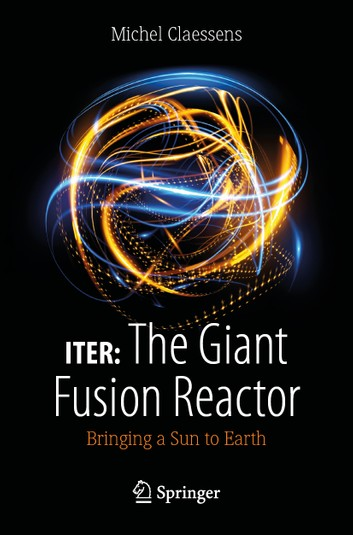
The International Thermonuclear Experimental Reactor — now simply ITER — is a unique exercise in scientific diplomacy, and a politically driven project. It is also the largest international collaboration, and a milestone in the technological history of mankind. These, I would say, are the main conclusions of Michel Claessens’ new book ITER: The Giant Fusion Reactor. He unfolds a fascinating story which criss-crosses more than 40 years of the history of nuclear fusion in a simple, but not simplistic, way which is accessible to anyone with a will to stick to facts without prejudices. The full range of opinions on ITER’s controversial benefits and detriments are exposed and discussed in a fair way, and the author never hides his personal connection to the project as its head of communications for many years.
Why don’t we more resolutely pursue a technology that could contribute to the production of carbon-free energy? ITER’s path has been plagued by rivalries between strong personalities, and difficult technical and political decisions, though, in retrospect, few domains of science and technology have received such strong and continuous support from governments and agencies. Claessens’ book begins by discussing the need for fusion among other energy sources — he avoids selling fusion as the “unique and final” solution to energy problems — and quickly brings us to the heart of a key problem humanity is facing today. Travelling through history, the author shows that when politicians take decisions of high inspiration, as at the famous fireside summit between presidents Reagan and Gorbachev in Geneva in November 1985, where the idea for a collaborative project to develop fusion energy for peaceful purposes was born, they change the course of history — for the better! The book then goes through the difficulties of setting up a complex project animated by a political agenda (fusion was on the agenda of political summits between the USA and the USSR since the cold war) without a large laboratory backing it up.
The author shows that when politicians take decisions of high inspiration they change the course of history
Progress with ITER was made more difficult by a complex system of in-kind contributions which were not optimised for cost or technical success, but for political “return” to each member state of ITER (Europe, China, Japan, Russia, South Korea, the US, and most recently India). Claessens’ examples are striking, and he doesn’t skirt around the inevitable hot questions: what is the real cost of ITER? Will it even be finished given its multiple delays? How much of these extra costs and delays are due to the complex and politically oriented governance structures established by the partners? The answers are clear, honestly reported, and quantitative, though the author makes it clear that the numbers should be taken cum grano salis. Assessing the cost of a project where 90% of the components are in-kind contributions, with each partner having its own accounting structures, and in certain cases no desire to reveal the real cost, is a doubtful enterprise. However, we can say with some certainty that ITER is taking twice as long and likely costing more than double what was initially planned — and as the author says on more than one occasion, further delays will likely entail additional costs. By comparison, the LHC needed roughly an additional 25% in both budget and time compared to what was initially planned.
Price tag
Was the initial cost estimate for ITER simply too low, perhaps to help the project get approved, or would a better management, with a different governance structure, have performed better? Significantly, I have not met a single knowledgeable person who did not strongly express that ITER is a textbook case of bad management organisation, though in my opinion the book does not do justice to the energetic action of the current director general, Bernard Bigot. His directorate has been a turning point in ITER’s construction, and has set the project back on track in a moment of real crisis when many scientists and mangers expected the project to fail. A key question surfaces in the book: is the price tag important? ITER’s cost is peanuts compared to the EU’s budget, for example, and the cost is not significant by comparison to the promise it delivers: carbon-free energy in large quantities, at an affordable cost to environment, and based on widely distributed fuel.
Michel Claessens’ book explores different points of view without fanaticism
Though there is almost no intrinsic innovation in ITER, Claessens shows how the project has nevertheless pushed tokamak technology beyond its apparent limits by a sheer increase in size, though he neglects some key points, such as the incredible stored energy of the superconducting magnets. An incident similar to that suffered by the LHC in 2008 would be a logistical nightmare for ITER, as it contains more than three times the stored energy of the entire LHC and its detectors in an incomparably smaller volume. Comparisons with CERN are however a feature throughout the book, and a point of pride for high-energy physicists — clearly, CERN has set the standard for high-tech international collaboration, and ITER has tried to follow its example (CERN Courier October 2014 p45). Having begun my career as a plasma scientist, before turning to accelerators at the beginning of the 1980s, I know some of the stories and personalities involved, including CERN’s former Director General, and recognised father of ITER, Robert Aymar, and ITER’s head of superconductor procurement, my close friend Arnaud Devred, also now of CERN.
I recommend Michel Claessens’ well written and easy-to-read book. It is passionate and informative and explores different points of view without fanaticism. Interestingly, his conclusion is not scientific or political, but socio-philosophical in nature: ITER will be built because it can be, he says, according to a principle of “technological necessity”.
This attractive and exciting book gives easy access to the history of the two main pillars of modern physics of the first half of the 20th century: the theory of relativity and quantum mechanics. The history unfolds along the parallel biographies of the two giants in these fields, Albert Einstein and Werner Heisenberg. It is a fascinating read for everybody interested in the science and culture of their time.
At first sight, one could think that the author presents a twin biography of Einstein and Heisenberg, and that’s all. However, one quickly realises that there is much more to this concise and richly illustrated text. Einstein and Heisenberg’s lives are embedded in the context of their time, with emphasis given to explaining the importance and nature of their interactions with the physicists of rank and name around them. The author cites many examples from letters and documents for both within their respective environments, which are most interesting to read, and illustrate well the spirit of the time. Direct interactions between both heroes of the book were quite sparse though.
At several stages throughout the book, the reader will become familiar with the personal life stories of both protagonists, who were, in spite of some commonalities, very different from each other. Common to both, for instance, was their devotion to music and their early interest and outstanding talent in physics as boys at schools in Munich, but on the contrary they were very different in their relations with family and partners, as the author discusses in a lively way. Many of these aspects are well known, but there are also new facets presented. I liked the way this is done, and, in particular, the author does not shy away from also documenting the perhaps less commendable human aspects, but without judgement, leaving the reader to come to their own conclusion.
Topics covering a broad spectrum are commented on in a special chapter called “Social Affinities”. These include religion, music, the importance of family, and, in the case of Einstein, his relation to his wives and women in general, the way he dealt with his immense public reputation as a super scientist, and also his later years when he could be seen as “scientifically an outsider”. In Heisenberg’s case, one is reminded of his very major contributions to the restoration of scientific research in West Germany and Europe after World War II, not least of course in his crucial founding role in the establishment of CERN.
Do not expect a systematic, comprehensive introduction to relativity and quantum physics; this is not a textbook. Its great value is the captivating way the author illustrates how these great minds formed their respective theories in relation to the physics and academic world of their time. The reader learns not only about Einstein and Heisenberg, but also about many of their contemporary colleagues. A central part in this is the controversy about the interpretation of quantum mechanics among Heisenberg’s colleagues and mentors, such as Schrödinger, Bohr, Pauli, Born and Dirac, to name just a few.
Another aspect of overriding importance for the history of that time was of course the political environment spanning the time from before World War I to after World War II. Both life trajectories were influenced in a major way by these external political and societal factors. The author gives an impressive account of all these aspects, and sheds light on how the pair dealt with these terrible constraints, including their attitudes and roles in the development of nuclear weapons.
A special feature of the book, which will make it interesting to everybody, is the inclusion of various hints as to where relativity and quantum mechanics play a direct role in our daily lives today, as well as in topical contemporary research, such as the recently opened field of gravitational-wave astronomy.
This is an ambitious book, which tells the story of the birth of modern physics in a well-documented and well-illustrated way. The author has managed brilliantly to do this in a serious, but nevertheless entertaining, way, which will make the book a pleasant read for all.
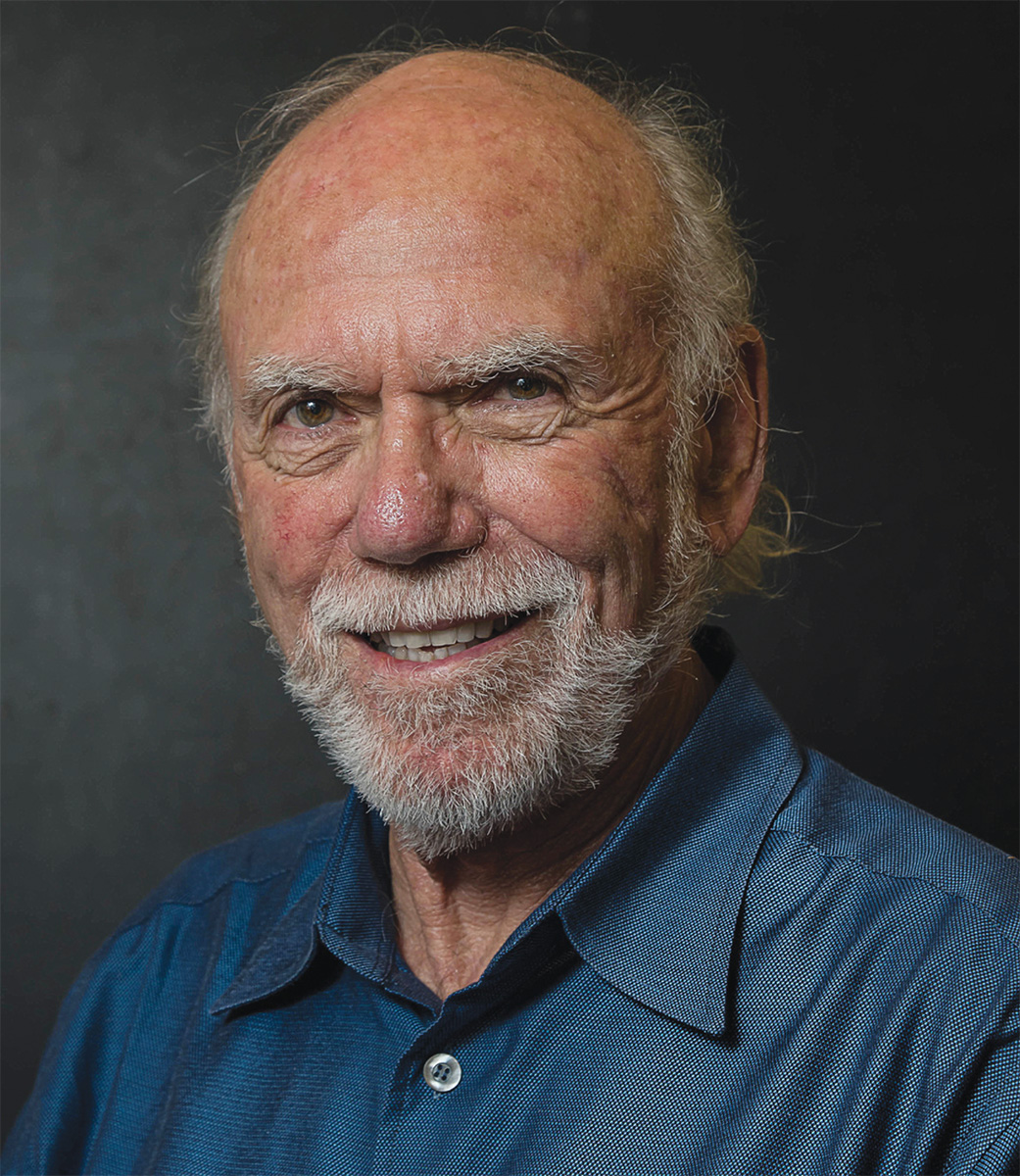
Your co-Nobelists in the discovery of gravitational waves, Kip Thorne and Rainer Weiss, have both recognised your special skills in the management of the LIGO collaboration. When you landed in LIGO in 1994, what was the first thing you changed?
When I arrived in LIGO, there was a lot of dysfunction and people were going after each other. So, the first difficult problem was to make LIGO smaller, not bigger, by moving people out who weren’t going to be able to contribute constructively in the longer term. Then, I started to address what I felt were the technical and management weaknesses. Along with my colleague, Gary Sanders, who had worked with me on one of the would-be detectors for the Superconducting Super Collider (SSC) before the project was cancelled, we started looking for the kind of people that were missing in technical areas.
For example, LIGO relies on very advanced lasers but I was convinced that the laser that was being planned for, a gas laser, was not the best choice because lasers were, and still are, a very fast-moving technology and solid-state lasers were more forward-looking. Coming from particle physics, I’m used to not seeing a beam with my own eyes. So I wasn’t disturbed that the most promising lasers at that time emitted light in the infrared, instead of green, and that technology had advanced to where they could be built in industry. People who worked with interferometers were used to “little optics” on lab benches where the lasers were all green and the alignment of mirrors etc was straightforward. I asked three of the most advanced groups in the world who worked on lasers of the type we needed (Hannover in Germany, Adelaide in Australia and Stanford in California) if they’d like to work together with us, and we brought these experts into LIGO to form the core of what we still have today as our laser group.
Project management for forefront science experiments is very different, and it is hard for people to do it well
This story is mirrored in many of the different technical areas in LIGO. Physics expertise and expertise in the use of interferometer techniques were in good supply in LIGO, so the main challenge was to find expertise to develop the difficult forefront technologies that we were going to depend on to reach our ambitious sensitivity goals. We also needed to strengthen the engineering and project-management areas, but that just required recruiting very good people. Later, the collaboration grew a lot, but mostly on the data-analysis side, which today makes up much of our collaboration.
According to Gary Sanders of SLAC, “efficient management of large science facilities requires experience and skills not usually found in the repertoire of research scientists”. Are you a rare exception?
Gary Sanders was a student of Sam Ting, then he went to Los Alamos where he got a lot of good experience doing project work. For myself, I learned what was needed kind of organically as my own research grew into larger and larger projects. Maybe my personality matched the problem, but I also studied the subject. I know how engineers go about building a bridge, for example, and I could pass an exam in project management. But, project management for forefront science experiments is very different, and it is hard for people to do it well. If you build a bridge, you have a boss, and he or she has three or four people who do tasks under his/her supervision, so generally the way a large project is structured is a big hierarchical organisation. Doing a physics research project is almost the opposite. For large engineering projects, once you’ve built the bridge, it’s a bridge, and you don’t change it. When you build a physics experiment, it usually doesn’t do what you want it to do. You begin with one plan and then you decide to change to another, or even while you’re building it you develop better approaches and technologies that will improve the instruments. To do research in physics, experience tells us that we need a flat, rather than vertical, organisational style. So, you can’t build a complicated, expensive ever-evolving research project using just what’s taught in the project-management books, and you can’t do what’s needed to succeed in cost, schedule, performance, etc, in the style found in a typical physics-department research group. You have to employ some sort of hybrid. Whether it’s LIGO or an LHC experiment, you need to have enough discipline to make sure things are done on time, yet you also need the flexibility and encouragement to change things for the better. In LIGO, we judiciously adapted various project-management formalities, and used them by not interfering any more than necessary with what we do in a research environment. Then, the only problem – but admittedly a big one – is to get the researchers, who don’t like any structure, to buy into this approach.
How did your SSC experience help?
It helped with the political part, not the technical part, because I came to realise how difficult the politics and things outside of a project are. I think almost anything I worked on before has been very hard, because of what it was or because of some politics in doing it, but I didn’t have enormous problems that were totally outside my control, as we had in the SSC.
How did you convince the US government to keep funding LIGO, which has been described as the most costly project in the history of the NSF?
It’s a miracle, because not only was LIGO costly, but we didn’t have much to show in terms of science for more than 20 years. We were funded in 1994, and we made the first detection more than 20 years later. I think the miracle wasn’t me, rather we were in a unique situation in the US. Our funding agency, the NSF, has a different mission than any other agency I know about. In the US, physical sciences are funded by three big agencies. One is the DOE, which has a division that does research in various areas with national labs that have their own structures and missions. The other big agency that does physical science is NASA, and they have the challenge of safety in space. The NSF gets less money than the other two agencies, but it has a mission that I would characterise by one word: science. LIGO has so far seen five different NSF directors, but all of them were prominent scientists. Having the director of the funding agency be someone who understood the potential importance of gravitational waves, maybe not in detail, helped make NSF decide both to take such a big risk on LIGO and then continue supporting it until it succeeded. The NSF leadership understands that risk-taking is integral to making big advancements in science.
What was your role in LIGO apart from management?
I concentrated more on the technical side in LIGO than on data analysis. In LIGO, the analysis challenges are more theoretical than they are in particle physics. What we have to do is compare general relativity with what happens in a real physical phenomenon that produces gravitational waves. That involves more of a mixed problem of developing numerical relativity, as well as sophisticated data-analysis pipelines. Another challenge is the huge amount of data because, unlike at CERN, there are no triggers. We just take data all the time, so sorting through it is the analysis problem. Nevertheless, I’ve always felt and still feel that the real challenge for LIGO is that we are limited by how sensitive we can make the detector, not by how well we can do the data analysis.
What are you doing now in LIGO?
Now that I can do anything I want, I am focusing on something I am interested in and that we don’t employ very much, which is artificial intelligence and machine learning (ML). In LIGO there are several problems that could adapt themselves very well to ML with recent advances. So we built a small group of people, mostly much younger than me, to do ML in LIGO. I recently started teaching at the University of California Riverside, and have started working with young faculty in the university’s computer-science department on adapting some techniques in ML to problems in physics. In LIGO, we have a problem in the data that we call “glitches”, which appear when something that happens in the apparatus or outside world appears in the data. We need to get rid of glitches, and we use a lot of human manpower to make the data clean. This is a problem that should adapt itself very well to a ML analysis.
Now that gravitational waves have joined the era of multi-messenger astronomy, what’s the most exciting thing that can happen next?
For gravitational waves, knowing what discovery you are going to make is almost impossible because it is really a totally new probe of the universe. Nevertheless, there are some known sources that we should be able to see soon, and maybe even will in the present run. So far we’ve seen two sources of gravitational waves: a collision of two black holes and a collision of two neutron stars, but we haven’t yet seen a black hole with a neutron star going around it. They’re particularly interesting scientifically because they contain information about nuclear physics of very compact objects, and because the two objects are very different in mass and that’s very difficult to calculate using numerical relativity. So it’s not just checking off another source that we found, but new areas of gravitational-wave science. Another attractive possibility is to detect a spinning neutron star, a pulsar. This is a continuous signal that is another interesting source which we hope to detect in a short time. Actually, I’m more interested in seeing unanticipated sources where we have no idea what we’re going to see, perhaps phenomena that uniquely happen in gravity alone.
The NSF leadership understands that risk-taking is integral to making big advancements
Will we ever see gravitons?
That’s a really good question because gravitons don’t exist in Einstein’s equations. But that’s not necessarily nature, that’s Einstein’s equations! The biggest problem we have in physics is that we have two fantastic theories. One describes almost anything you can imagine on a large scale, and that’s Einstein’s equations, and the other, which describes almost too well everything you find here at CERN, is the Standard Model, which is based on quantum field theory. Maybe black holes have the feature that they satisfy Einstein’s equations and at the same time conserve quantum numbers and all the things that happen in quantum physics. What we are missing is the experimental clue, whether it’s gravitons or something else that needs to be explained by both these theories. Because theory alone has not been able to bring them together, I think we need experimental information.
Do particle accelerators still have a role in this?
We never know because we don’t know the future, but our best way of understanding what limits our present understanding has been traditional particle accelerators because we have the most control over the particles we’re studying. The unique feature of particle accelerators is that of being able to measure all the parameters of particles that we want. We’ve found the Higgs boson and that’s wonderful, but now we know that the neutrinos also have mass and the Higgs boson possibly doesn’t describe that. We have three families of particles, and a whole set of other very fundamental questions that we have no handle on at all, despite the fact that we have this nice “standard” model. So is it a good reason to go to higher energy or a different kind of accelerator? Absolutely, though it’s a practical question whether it’s doable and affordable.
What’s the current status of gravitational-wave observatories?
We will continue to improve the sensitivity of LIGO and Virgo in incremental steps over the next few years, and LIGO will add a detector in India to give better global coverage. KAGRA in Japan is also expected to come online. But we can already see that
next-generation interferometers will be needed to pursue the science in the future. A good design study, called the Einstein Telescope, has been developed in Europe. In the US we are also looking at next-generation detectors and have different ideas, which is healthy at this point. We are not limited by nature, but by our ability to develop the technologies to make more sensitive interferometers. The next generation of detectors will enable us to reach large red shifts and study gravitational-wave cosmology. We all look forward to exploiting this new area of physics, and I am sure important discoveries will emerge.
David Mark Ritson, professor emeritus of physics at Stanford University, died peacefully at home on 4 November 2019, just shy of his 95th birthday. He was the last of the leaders of the original seven physics groups formed at SLAC: four of the other leaders were awarded Nobel prizes in physics.
Dave Ritson was born in London and grew up in Hampstead. His ancestors emigrated from Australia, Germany and Lithuania, and his father, a Cambridge alumnus, wrote Helpful Information and Guidance for Every Refugee, distributed in the 1930s and 1940s. Dave won scholarships to Merchant Taylors’ School and to Christ Church, Oxford. His 1948 PhD work included deploying the first high-sensitivity emulsion at the Jungfraujoch research station, and then developing it. Within the data were two particle-physics icons: the whole π → μ → e sequence, and τ-meson decay.
Dave moved to the Dublin IAS, to Rochester and to MIT, doing experiments which helped prove that the s-quark exists. His results were among many that underpinned the “τ–θ puzzle”, solved by the discovery of parity violation in beta and muon decay. Dave also assisted accelerator physicist Ken Robinson with the proof that stable storage of an electron beam in a synchrotron was possible. In 1961 he and Ferdinando Amman published the equation for disruption caused by colliding e+e– beams. “Low beta” collider interaction regions are based on the Amman–Ritson equation.
Dave edited the book Techniques of High Energy Physics, published in 1961, and then took a faculty position in the Stanford physics department – bringing British acuity and economy to the ambitious SLAC team. Between 1964 and 1969, he and Burt Richter submitted four proposals to the US Atomic Energy Commission (AEC) for an e+e– collider, all of which were rejected. Dave designed the 1.6 GeV spectrometer in End Station A to detect proton recoils, which were used to reconstruct “missing mass” and to measure the photoproduction of hard-to-detect bosons.
After 1969 Dave founded Fermilab E-96, the Single Arm Spectrometer Facility, and obtained contributions from many institutions, including Argonne, CERN, Cornell, INFN Bari, MIT and SLAC. It was unusual for accelerator labs to support the fabrication of experiments at other lab’s facilities. Meanwhile, SLAC found internal funding for the SPEAR e+e– collider, a stripped-down version of the last proposal rejected by the AEC and led by Richter, driving the epic 1974 c-quark discovery.
Dave returned to SLAC and in 1976 led the formation of the MAC collaboration for SLAC’s new PEP e+e– collider. The MAC design of near-hermetic calorimetry with central and toroidal outer spectrometers is now classic. Bill Ford from Colorado used MAC to first observe the long b-quark lifetime. In 1983 Dave led the close-in tracker (vertex detector) project with the first layer only 4.6 cm from the e+e– beams, and verified the long b-quark life with reduced errors.
He formally retired in 1987 but was active until 2003 in accelerator design at SLAC, CERN, Fermilab and for the SSC. He helped guide the SLC beams through their non-planar path into collision, and wrote several articles for Nature. He also contributed to the United Nations’ Intergovernmental Panel on Climate Change.
Dave was intensely devoted to his wife Edda, from Marsala, Sicily, who died in 2004, and is survived by their five children.
Experimental particle physicist and founder of antiproton physics in Czechoslovakia (later the Czech Republic), Vladislav Šimák, passed away on 26 June 2019. Since the early 1960s his vision and organisational skills helped shape experimental particle physics, not only in Prague, but the whole of the country.
After graduating from Charles University in Prague, he joined the group at the Institute of Physics of the Czechoslovak Academy of Sciences studying cosmic rays using emulsion techniques, earning a PhD in 1963. Though it was difficult to travel abroad at that time, Vlada got a scholarship and went to CERN, where he joined the group led by Bernard French investigating collisions of antiprotons using bubble chambers. It was there and then that his lifelong love affair with antiprotons began. He brought back to Prague film material showing the results of collisions of 5.7 GeV antiprotons and protons from a hydrogen bubble chamber, and formed a group of physicists and technicians, involving many diploma and PhD students who processed them. Vlada also fell in love with the idea of quarks as proposed by Gell-Mann and Zweig, and was the first Czech or Slovak physicist to apply a quark model to pion production in proton–antiproton collisions.
In the early 1970s, when contacts with the West were severely limited, Vlada exploited the experiences he accumulated at CERN and put together a group of Czech and Slovak physicists involved in the processing and analysis of data from proton–antiproton collisions, using the then-highest-energy beam of antiprotons (22.4 GeV) and a hydrogen bubble chamber at the Serpukhov accelerator in Russia. This experiment, which in the later stage provided collisions of antideuterons with protons and deuterons, gave many young physicists the chance to work on unique data for their PhDs and earned Vlada respect in the international community.
After the Velvet Revolution he played a pivotal role in accession to CERN membership
In the late 1980s, when the political atmosphere in Czechoslovakia eased, Vlada together with his PhD student joined the UA2 experiment at CERN’s proton–antiproton collider, where he devoted his attention to jet production. After the Velvet Revolution in November 1989 he played a pivotal role in the decision of the Czech and Slovak particle-physics community to focus on accession to CERN membership.
In 1992 Vlada took Czechoslovak particle physicists into the newly formed ATLAS collaboration, and in 1997 he joined the D0 experiment at Fermilab. He was active in ATLAS until very recently, and in 2014, in acknowledgment of his services to physics, the Czech Academy of Sciences awarded Vlada the Ernst Mach Medal for his contributions to the development of physics.
Throughout his life he combined his passion for physics with a love for music, for many years playing the violin in the Academy Chamber Orchestra. For many of us Vlada was a mentor, colleague and friend. We all admired his vitality and enthusiasm for physics, which was contagious. Vlada clearly enjoyed life and we very much enjoyed his company.
To provide the best experiences, we use technologies like cookies to store and/or access device information. Consenting to these technologies will allow us to process data such as browsing behavior or unique IDs on this site. Not consenting or withdrawing consent, may adversely affect certain features and functions.
Functional
Always active
The technical storage or access is strictly necessary for the legitimate purpose of enabling the use of a specific service explicitly requested by the subscriber or user, or for the sole purpose of carrying out the transmission of a communication over an electronic communications network.
Preferences
The technical storage or access is necessary for the legitimate purpose of storing preferences that are not requested by the subscriber or user.
Statistics
The technical storage or access that is used exclusively for statistical purposes.The technical storage or access that is used exclusively for anonymous statistical purposes. Without a subpoena, voluntary compliance on the part of your Internet Service Provider, or additional records from a third party, information stored or retrieved for this purpose alone cannot usually be used to identify you.
Marketing
The technical storage or access is required to create user profiles to send advertising, or to track the user on a website or across several websites for similar marketing purposes.