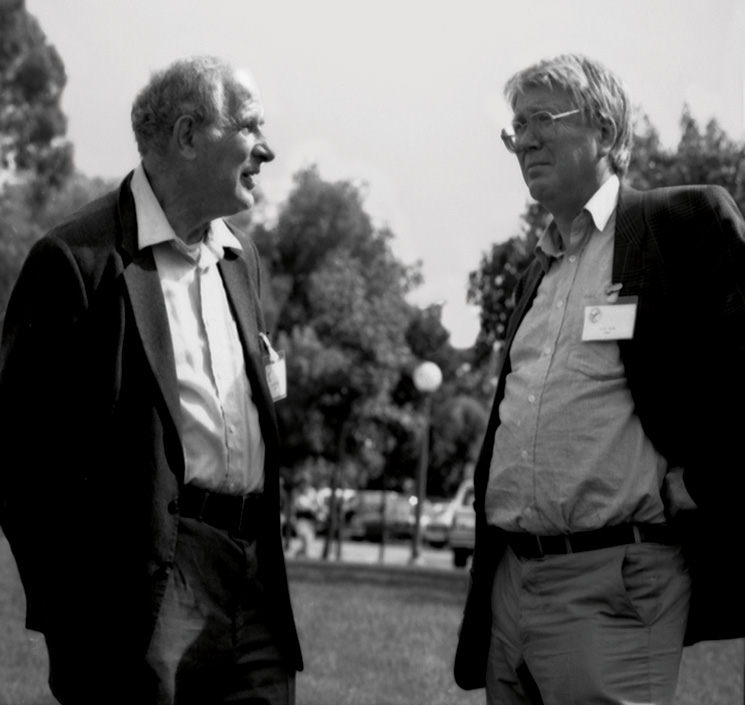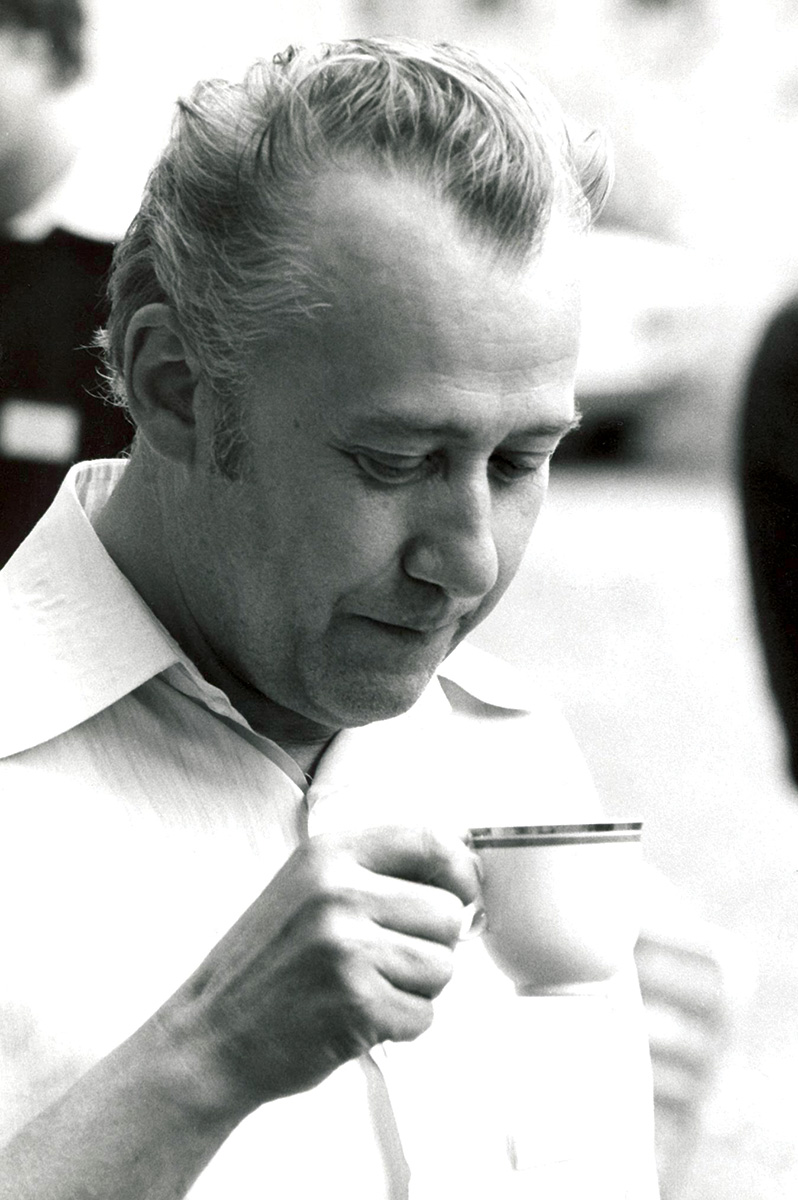
Jean-Pierre Blaser, a former director of the Swiss Institute of Nuclear Research (SIN), passed away in his home in Switzerland on 29 August 2019 at the age of 96.
In 1948 Blaser finished his physics studies at ETH Zurich, going on to participate in the development of a cyclotron at ETH built by Paul Scherrer during the Second World War. From 1952–1955 he carried out experiments with mesons at the synchrocyclotron in Pittsburgh before becoming director of the observatory in Neuchâtel from 1955–1959. In 1959 he was appointed as Scherrer’s successor and inherited from him the planning group for a new cyclotron. Originally, Scherrer wanted to copy the 88-inch cyclotron at Berkeley and use it for research in nuclear physics, but Blaser wanted something more ambitious. After receiving advice from accelerator experts at CERN, among them Pierre Lapostolle, he proposed a 500 MeV cyclotron for the production of mesons.
The key for such a meson factory was to extract the high-intensity proton beam with very low losses. The leader of Blaser’s cyclotron group, Hans Willax, realised that a conventional cyclotron would have high losses at extraction and in 1962 had the brilliant idea to break up the cyclotron magnets into separate sectors to leave space for high-voltage cavities. Blaser immediately supported the idea and pushed to get this expensive project approved by the Swiss government. Against all odds and against some strong opposition, he finally succeeded. In 1968 he founded SIN in Villigen and was its director for the next 20 years.
In a last-minute decision, based on results of CERN experiments which showed that the production of pions would strongly increase with energy, the energy of the SIN cyclotron was increased from 500 to 590 MeV. Even top accelerator specialists like the late Henry Blosser had doubts that the SIN crew would reach the ambitious design goal of a 100 μA beam current. But Blaser and Willax were convinced, anticipating that the original 72 MeV injector cyclotron would be the limiting factor and eventually would have to be replaced. In January 1974 the first protons were extracted from the ring, and at the end of 1976 the design current of 100 μA was reached. More highlights followed, right up to 2009 with 2.4 mA protons at 590 MeV and a new world record of 1.4 MW in average beam power achieved – a record that still holds today. These results gave Blaser great satisfaction, even after his retirement in 1990. Before that date he initiated in 1988 the new Paul Scherrer Institute (PSI), a combination of SIN and the neighbouring reactor institute EIR.
From the start of the accelerator project, Blaser saw the potential of particle beams to irradiate tumours. The first step, for which a superconducting solenoid was constructed, was to use pions for the treatment of deep-seated tumours. In 1984 the irradiation of eye tumours started, using protons, and to date more than 7000 patients have been treated. Later, a new superconducting cyclotron was acquired and two more gantries are now in operation. Blaser strongly supported all activities in the medical application of cyclotrons, and gave his advice to a new cyclotron project in South Africa – becoming elected as a foreign associate of the Royal Society of South Africa for his efforts.
Jean-Pierre Blaser was blessed with great intuition based on a thorough knowledge of the basic laws of physics. He was open to new and unconventional ideas and he fully motivated young scientists with his trust in their abilities. In his free time he enjoyed exploring the landscapes of Switzerland either by foot or as a pilot with a light aeroplane. But his top priority was his family. He enjoyed enormously the company of his wife Frauke, their two daughters Claudine and Nicole, and their four grandchildren. In Jean-Pierre, his family and the accelerator community loses a great personality.
Badanaval Venkatasubba Sreekantan, a pioneering cosmic-ray physicist and a member of Homi Bhabha’s team of scientists, who played an important role in the development of post-colonial Indian science, died at his home in Bangalore on 27 October 2019.
Sreekantan was born on 30 June 1925 near Mysore in South India. After receiving his master’s degree in physics in 1947 with a specialisation in wireless technology from Mysore University, he joined the Indian Institute of Science at Bengaluru as a research scholar, where he heard about Bhabha and his newly formed Tata Institute of Fundamental Research (TIFR) in Mumbai. Attracted by Bhabha’s charisma, he joined TIFR in July 1948 and began a long, illustrious scientific career of almost 44 years.
In 1951 Bhabha sent Sreekantan down the deep Champion Reef Gold Mine at Kolar Gold Fields (KGF) near Bengaluru to measure the flux of cosmic-ray muons at varying depths. This pioneering initiative not only earned Sreekantan a PhD but also paved the way for setting up a deep underground laboratory. A series of follow-up experiments at KGF, carried out during the early 1960s, extended his previous measurements of muon intensity to the deepest level available; finally, after reaching a depth of 2700 m, recording no muons after two months of exposure. Sreekantan and his collaborators realised that such a deep underground site with minimal cosmic-ray muon background would be an ideal site to detect atmospheric neutrinos. A series of seven neutrino telescopes were quickly set up at a depth of 2300 m and in early 1965 they recorded the first atmospheric-neutrino event, contemporaneously with the detection from another underground neutrino experiment set up by Fred Reines in a South African mine. It was an important milestone, given how important the study of neutrinos underground would later become.
During early 1980s Sreekantan and his collaborators built two detectors, one at a depth of 2300 m and the other at 2000 m, to study the stability of the proton. These two experiments ran for more than a decade and put strong limits on the proton lifetime. He was also instrumental in starting a high-altitude cosmic-ray laboratory at Udhagamandalam (Ooty) in the State of Tamil Nadu to study the hadronic components of cosmic-ray showers.
Sreekantan quickly recognised the importance of the emerging field of X-ray astronomy for probing high-energy processes in the universe. In 1967 he started balloon-borne experiments to study cosmic X-ray sources and built a strong group that went on to develop expertise in the fabrication of highly sophisticated X-ray detectors for space-borne astronomy missions. The multi-wavelength astronomy observatory Astrosat, launched by the Indian Space Research Organisation in September 2015, is a testimony to the strength of the group. A very high-energy gamma-ray observation programme using the atmospheric Cherenkov technique, which was started by Sreekantan and his collaborators in Ooty in the 1970s, is being continued in Ladakh with a low-energy threshold.
Sreekantan became director of TIFR in 1975, and over the next 12 years steered the institute with distinction and left a rich legacy of high-quality research programmes as well as several new TIFR centres and field stations. In 1992, after a long and eventful scientific carrier at TIFR, Sreekantan moved to Bengaluru and was offered a chair at the newly created National Institute of Advance Studies. His research interest shifted from physical sciences to the philosophical aspects of science and in particular to the abstract topic of consciousness and its scientific and philosophical basis. He remained an alert and active researcher and was engaged in his academic activities with great eagerness until the very end. His death marks the end of a glorious chapter of experimental cosmic-ray research in India.
On 24 November 1959, CERN’s Proton Synchrotron (PS) first accelerated beams to an energy of 24 GeV. 60 years later, it is still at the heart of CERN’s accelerator complex, delivering beams to the fixed-target physics programme and the LHC with intensities exceeding the initial specifications by orders of magnitude. To celebrate the anniversary a colloquium was held at CERN on 25 November 2019, with PS alumni presenting important phases in the life of the accelerator.
The PS and its sister machine, Brookhaven’s Alternating Gradient Synchrotron, are the world’s oldest accelerators
The PS is CERN’s oldest operating accelerator, and, together with its sister machine, the Alternating Gradient Synchrotron (AGS) at Brookhaven National Laboratory in the US, one of the two oldest still operating accelerators in the world. Both designs are based on the innovative concept of the alternating gradient, or strong-focusing, principle developed by Ernest Courant, Milton Stanley Livingston, Hartland Snyder and John Blewett. This technique allowed a significant reduction in the size of the vacuum chambers and magnets, and unprecedented beam energies. In 1952 the CERN Council endorsed a study for a synchrotron based on the alternating-gradient principle, and construction of a machine with a design-energy range from 20 to 30 GeV was approved in October 1953. Its design, manufacture and construction took place from 1954 to 1959. Protons made first turns on 16 September 1959, and on 24 November beam was accelerated beyond transition and to an energy of 24 GeV. On 8 December the design energy of 28.3 GeV was reached and the design intensity exceeded, at 3 × 10¹⁰ protons per pulse.
The PS has proven to be a flexible design, with huge built-in potential. Though the first experiments were performed with internal targets, extractions to external targets were soon added to the design, and further innovative extraction schemes were added through the years. On the accelerator side, the intensity was progressively ramped up, with the commissioning of the PS Booster in 1972, the repeated increase of the injection energy, and many improvements in the PS itself. Through the years more and more users requested beam from the PS, for example the EAST area, antiproton physics, and a neutron time-of-flight facility.
With the commissioning of the ISR, SPS, LEP and LHC machines, the PS took on a new role as an injector of protons, antiprotons, leptons and ions, while continuing its own physics programme. A new challenge was the delivery of beams for the LHC: these beams need to be transversely very dense (“bright”), and have a longitudinal structure that is generated using the different radio-frequency systems of the PS, with the PS thereby contributing its fair share to the success of the LHC. And there are more challenges ahead. The LHC’s high-luminosity upgrade programme demands beam parameters out of reach for today’s injector complex, motivating the ambitious LHC Injectors Upgrade Project. Installations are now in full swing, and Run 3 will take CERN’s PS into a new parameter regime and into another interesting chapter in its life.
What would you say were the best and the worst of times in your half-century-long career as a theorist?
The two best times, in chronological order, were the 1979 discovery of the gluon in three-jet events at DESY, which Mary Gaillard, Graham Ross and I had proposed three years earlier, and the discovery of the Higgs boson at CERN in 2012, in particular because one of the most distinctive signatures for the Higgs, its decay to two photons, was something Gaillard, Dimitri Nanopoulos and I had calculated in 1975. There was a big build up to the Higgs and it was a really emotional moment. The first of the two worst times was in 2000 with the closure of LEP, because maybe there was a glimpse of the Higgs boson. In fact, in retrospect the decision was correct because the Higgs wasn’t there. The other time was in September 2008 when there was the electrical accident in the LHC soon after it started up. No theoretical missing factor-of-two could be so tragic.
Your 1975 work on the phenomenology of the Higgs boson was the starting point for the Higgs hunt. When did you realise that the particle was more likely than not to exist?
Our paper, published in 1976, helped people think about how to look for the Higgs boson, but it didn’t move to the top of the physics agenda until after the discovery of the W and Z bosons in 1983. When we wrote the paper, things like spontaneous symmetry breaking were regarded as speculative hypotheses by the distinguished grey-haired scientists of the day. Then, in the early 1990s, precision measurements at LEP enabled us to look at the radiative corrections induced by the Higgs and they painted a consistent picture that suggested the Higgs would be relatively light (less than about 300 GeV). I was sort of morally convinced beforehand that the Higgs had to exist, but by the early 1990s it was clear that, indirectly, we had seen it. Before that there were alternative models of electroweak symmetry breaking but LEP killed most of them off.
To what extent does the Higgs boson represent a “portal” to new physics?
The Higgs boson is often presented as completing the Standard Model (SM) and solving lots of problems. Actually, it opens up a whole bunch of new ones. We know now that there is at least one particle that looks like an effective elementary scalar field. It’s an entirely new type of object that we’ve never encountered before, and every single aspect of the Higgs is problematic from a theoretical point of view. Its mass: we know that in the SM it is subject to quadratic corrections that make the hierarchy of mass scales unstable.
Every single aspect of the Higgs is problematic from a theoretical point of view
Its couplings to fermions: those are what produce the mixing of quarks, which is a complete mystery. The quartic term of the Higgs potential in the SM goes negative if you extrapolate it to high energies, the theory becomes unstable and the universe is doomed. And, in principle, you can add a constant term to the Higgs potential, which is the infamous cosmological constant that we know exists in the universe today but that is much, much smaller than would seem natural from the point of view of Higgs theory. Presumably some new physics comes in to fix these problems, and that makes the Higgs sector of the SM Lagrangian look like the obvious portal to that new physics.
In what sense do you feel an emotional connection to theory?
The Higgs discovery is testament to the power of mathematics to describe nature. People often talk about beauty as being a guide to theory, but I am always a bit sceptical about that because it depends on how you define beauty. For me, a piece of engineering can be beautiful even if it looks ugly. The LHC is a beautiful machine from that point of view, and the SM is a beautiful theoretical machine that is driven by mathematics. At the end of the day, mathematics is nothing but logic taken as far as you can.
Do you recall the moment you first encountered supersymmetry (SUSY), and what convinced you of its potential?
I guess it must have been around 1980. Of course I knew that Julius Wess and Bruno Zumino had discovered SUSY as a theoretical framework, but their motivations didn’t convince me. Then people like Luciano Maiani, Ed Witten and others pointed out that SUSY could help stabilise the hierarchy of mass scales that we find in physics, such as the electroweak, Planck and grand unification scales. For me, the first phenomenological indication that indicated SUSY could be related to reality was our realisation in 1983 that SUSY offered a great candidate for dark matter in the form of the lightest supersymmetric particle. The second was a few years later when LEP provided very precise measurements of the electroweak mixing angle, which were in perfect agreement with supersymmetric (but not non-supersymmetric) grand unified theories. The third indication was around 1991 when we calculated the mass of the lightest supersymmetric Higgs boson and got a mass up to about 130 GeV, which was being indicated by LEP as a very plausible value, and agrees with the experimental value.
There was great excitement about SUSY ahead of the LHC start-up. In hindsight, does the non-discovery so far make the idea less likely?
Certainly it’s disappointing. And I have to face the possibility that even if SUSY is there, I might not live to meet her. But I don’t think it’s necessarily a problem for the underlying theory. There are certainly scenarios that can provide the dark matter even if the supersymmetric particles are rather heavier than we originally thought, and such models are still consistent with the mass of the Higgs boson. The information you get from unification of the couplings at high energies also doesn’t exclude SUSY particles weighing 10 TeV or so. Clearly, as the masses of the sparticles increase, you have to do more fine tuning to solve the electroweak hierarchy problem. On the other hand, the amount of fine tuning is still many, many orders of magnitude less than what you’d have to postulate without it! It’s a question of how much resistance to pain you have. That said, to my mind the LHC has actually provided three additional reasons for loving SUSY. One is the correct prediction for the Higgs mass. Another is that SUSY stabilises the electroweak vacuum (without it, SM calculations show that the vacuum is metastable). The third is that in a SUSY model, the Higgs couplings to other particles, while not exactly the same as in the SM, should be pretty close – and of course that’s consistent with what has been measured so far.
To what extent is SUSY driving considerations for the next collider?
I still think it’s a relatively clear-cut and well-motivated scenario for physics at the multi-TeV scale. But obviously its importance is less than it was in the early 1990s when we were proposing the LHC. That said, if you want a specific benchmark scenario for new physics at a future collider, SUSY would still be my go-to model, because you can calculate accurate predictions. As for new physics beyond the Higgs and more generally the precision measurements that you can make in the electroweak sector, the next topic that comes to my mind is dark matter. If dark matter is made of weakly-interacting massive particles (WIMPs), a high-energy Future Circular Collider should be able to discover it. You can look at SUSY at various different levels. One is that you just add in these new particles and make sure they have the right couplings to fix the hierarchy problem. But at a more fundamental level you can write down a Lagrangian, postulate this boson-fermion symmetry and follow the mathematics through. Then there is a deeper picture, which is to talk about additional fermionic (or quantum) dimensions of space–time. If SUSY were to be discovered, that would be one of the most profound insights into the nature of reality that we could get.
If SUSY is not a symmetry of nature, what would be the implications for attempts to go beyond the SM, e.g. quantum gravity?
We are never going to know that SUSY is not there. String theorists could probably live with very heavy SUSY particles. When I first started thinking about SUSY in the 1980s there was this motivation related to fine tuning, but there weren’t many other reasons why SUSY should show up at low energies. More arguments came later, for example, dark matter, which are nice but a matter of taste. I and my grandchildren will have passed on, humans could still be exploring physics way below the Planck scale, and string theorists could still be cool with that.
How high do the masses of the super-partners need to go before SUSY ceases to offer a compelling solution for the hierarchy problem and dark matter?
Beyond about 10 TeV it is difficult to see how it can provide the dark matter unless you change the early expansion history of the universe – which of course is quite possible, because we have no idea what the universe was doing when the temperature was above an MeV. Indeed, many of my string colleagues have been arguing that the expansion history could be rather different from the conventional adiabatic smooth expansion that people tend to use as the default. In this case supersymmetric particles could weigh 10 or even 30 TeV and still provide the dark matter. As for the hierarchy problem, obviously things get tougher to bear.
What can we infer about SUSY as a theory of fundamental particles from its recent “avatars” in lasers and condensed-matter systems?
I don’t know. It’s not really clear to me that the word “SUSY” is being used in the same sense that I would use it. Supersymmetric quantum mechanics was taken as a motivation for the laser setup (CERN Courier March/April 2019 p10), but whether the deeper mathematics of SUSY has much to do with the way this setup works I’m not sure. The case of topological condensed-matter systems is potentially a more interesting place to explore what this particular face of SUSY actually looks like, as you can study more of its properties under controlled conditions. The danger is that, when people bandy around the idea of SUSY, often they just have in mind this fermion–boson partnership. The real essence of SUSY goes beyond that and includes the couplings of these particles, and it’s not clear to me that in these effective-SUSY systems one can talk in a meaningful way about what the couplings look like.
Has the LHC new-physics no-show so far impacted what theorists work on?
In general, I think that members of the theoretical community have diversified their interests and are thinking about alternative dark-matter scenarios, and about alternative ways to stabilise the hierarchy problem. People are certainly exploring new theoretical avenues, which is very healthy and, in a way, there is much more freedom for young theorists today than there might have been in the past. Personally, I would be rather reluctant at this time to propose to a PhD student a thesis that was based solely on SUSY – the people who are hiring are quite likely to want them to be not just working on SUSY and maybe even not working on SUSY at all. I would regard that as a bit unfair, but there are always fashions in theoretical physics.
Following a long and highly successful period of theory-led research, culminating in the completion of the SM, what signposts does theory offer experimentalists from here?
I would broaden your question. In particle physics, yes, we have the SM, which over the past 50 years has been the dominant paradigm. But there is also a paradigm in cosmology and gravitation – general relativity and the idea of a big bang – initiated a century ago by Einstein. The 2016 discovery of gravitational waves almost four years ago was the “Higgs moment” for gravity, and that community now finds itself in the same fix that we do, in that they have this theory-led paradigm that doesn’t indicate where to go next.
The discovery of gravitational waves almost four years ago was the “Higgs moment” for gravity
Gravitational waves are going to tell us a lot about astrophysics, but whether they will tell us about quantum gravity is not so obvious. The Higgs boson, meanwhile, tells us that we have a theory that works fantastically well but leaves many mysteries – such as dark matter, the origin of matter, neutrino masses, cosmological inflation, etc – still standing. These are a mixture of theoretical, phenomenological and experimental problems suggesting life beyond the SM. But we don’t have any clear signposts today. The theoretical cats are wandering off in all directions, and that’s good because maybe one of the cats will find something interesting. But there is still a dialogue going on between theory and experiment, and it’s a dialogue that is maybe less of a monologue than it was during the rise of the SM and general relativity. The problems we face in going beyond the current paradigms in fundamental physics are the hardest we’ve faced yet, and we are going to need all the dialogue we can muster between theorists, experimentalists, astrophysicists and cosmologists.
To explore all our coverage marking the 10th anniversary of the discovery of the Higgs boson ...
We have many fantastic achievements in our wonderful field of research, most recently the completion of the Large Hadron Collider (LHC) and its discovery of a new form of matter, the Higgs boson. The field is now preparing to face the next set of challenges, in whatever direction the European Strategy for Particle Physics recommends. With ambitious goals, this strategy update is the right time to ask: “How do we make ourselves as good as we need to be to succeed?”
Big science has brought more than fundamental knowledge: it has taught us that we can achieve more when we collaborate, and to do this we need to communicate both within and beyond the community. We need to communicate to our funders and, most importantly of all, we need to communicate with wider society to give everyone an opportunity to engage in or become a part of the scientific process. Yet some of the audiences we could and should be reaching are below the radar.
Reaching high-science capital people – those who will attend a laboratory open day, watch a new documentary on dark energy or read a newspaper article about medical accelerators – is a vital part of our work, and we do it well. But many audiences have barriers to traditional modes of outreach and engagement. For example, groups or families with an inherently low science background, perhaps linked to socio-economic grouping, will not read articles in the science-literate mainstream press as they feel, incorrectly, that science is not for them. Large potential audiences with physical or mental disabilities will be put off coming to events for practical reasons such as accessibility or perhaps being unable to read or understand printed or visual media. In the UK alone, millions of people are registered as visually impaired (VI) to some degree. To reach these and other “invisible” audiences, we need to enter their space.
When it comes to science engagement, which is a predominantly visual interaction, the VI audience is underserved. Tactile Collider is a communication project aimed at addressing this gap. The idea came in 2014 when a major LHC exhibition came to Manchester, UK. Joining in panel discussions at a launch party held at the Museum for Science and Industry, it became clear that the accessibility of the exhibition could be improved. Spurring us into action, we also had a request from a local VI couple for an adapted tour. I gathered together some pieces of the ATLAS forward detector and some radio-frequency cavity models, both of which had a pleasing weight and plenty of features to feel with fingers, and gave the couple a bespoke tour of the exhibition. The feedback was fantastic, and making this tactile, interactive and bespoke form of engagement available to more people, be it sighted or VI, was a challenge we accepted.
With the help of the museum staff, we developed the idea further and were soon put in touch with Kirin Saeed, an independent consultant on accessibility and visually impaired herself. Together, we formulated a potential project to a stage where we could approach funders. The UK’s Science and Technology Facilities Council (STFC) recognised and supported our vision for a UK-wide project and funded the nascent Tactile Collider for two years through a £100,000 public-engagement grant.
We wanted to design a project without preconceptions about the techniques and methods of communication and delivery. With co-leaders Chris Edmonds of the University of Liverpool and Robyn Watson, a teacher of VI students, our team spent one year listening to and talking with audiences before we even considered producing materials or defining an approach. We spent time in focus groups, in classrooms across the north of England, visiting museums with VI people, and looking at the varied ways of learning and accessing information for VI groups of all ages. Training in skills such as audio description and tactile-map production was crucial, as were the PhD students who got involved to design materials and deliver Tactile Collider events.
Early on, we focused on a science message based around four key themes: the universe is made of particles; we accelerate these particles using electric fields in cavities; we control particle beams using magnets; and we collide particle beams to make the Higgs boson. The first significant event took place in Liverpool in 2017 and since then the exhibition has toured UK schools, science festivals and, in 2019, joined the CERN Open Days for our first Geneva-region event.
Content development
A key aspect of Tactile Collider is content developed specifically for a VI audience, along with training the delivery team in how to sight-guide and educating them about the large range of visual impairments. As an example, take the magnetic field of a dipole – the first step to understanding how magnets are used to control and manipulate charged particle beams. The idea of a bar magnet having a north pole and a south pole, and magnetic field lines connecting the two, is simple enough to convey using pencil and paper. To communicate with VI audiences, by contrast, the magnet station of Tactile Collider contains a 3D model of a bar magnet with tactile bumps for north and south poles, partnered with tactile diagrams. In some areas of Tactile Collider, 3D sound is employed to give students a choice in how to interact.
The lessons learned during the project’s development and delivery led us to a set of principles for engagement, which work for all audiences regardless of any particular needs. We found that all science engagement should strive to be authentic, with no dumbing down of the science message and delivered by practicing scientists striving to involve the audience as equals. Alongside this authentic message, VI learners require close interaction with a scientist-presenter in a group of no bigger than four. The scientist should also be trained in VI-audience awareness, sighted guiding, audio description and in the presentation of a tactile narrative linked to the learning outcomes. Coupled with this idea is the need to train presenters to be able to use the differing materials with diverse audience groups.
Tactile Collider toured the UK in 2017 and 2018, visiting many mainstream and specialist schools, and meeting many motivated and enthusiastic students. We have also spent time at music festivals, with a focus on raising awareness of VI issues and giving people a chance to learn about the LHC using senses other than their eyes. One legacy of Tactile Collider is educating our community, and we are planning “VI in science” training events in 2020 in addition to a third community meeting bringing together scientists and communication professionals.
There is now a real interest and understanding in particle physics about the importance of reaching underrepresented audiences. Tactile Collider is a step towards this, and we are working to share the skills and insights we have gained in our journey so far. The idea has also appeared in astronomy: Tactile Universe, based at the Institute of Cosmology and Gravitation at the University of Portsmouth, engages the VI community with astrophysics research, for example by creating 3D printed tactile images of galaxies for use in schools and at public events. The first joint Tactile Collider/Universe event will take place in London in 2020 and we have already jointly hosted two community workshops. The Tactile Collider team is happy to discuss bringing the exhibition to any event, lab or venue.
Fundamental science is a humbling and levelling endeavour. When we consider the Higgs boson and supernovae, none of us can directly engage with the very small or the far or the very massive. Using all of our senses shows us science in a new and fascinating way.
The next major European project after the LHC should be a 100-km circumference circular collider, argue more than 50 senior particle physicists in a preprint posted on arXiv at the end of last year. The authors — who include two previous CERN Council presidents, two former CERN Directors-General, leading members of the LHC experiments and high-energy theorists – say that the sequential electron-positron and hadron-hadron programme of the CERN-led Future Circular Collider (FCC) offers the most promising way to explore in full detail the Higgs sector and extend substantially the reach for new physics, and is the best option to maintain Europe’s place at the high-energy frontier during the coming decades.
“The combination of FCC-ee and FCC-hh will provide a forefront scientific programme for CERN for many decades, just as the combination of LEP and LHC has done,” says coauthor and former CERN Council president Michel Spiro. “We consider FCC to be a visionary programme for the future of CERN.”
“We consider FCC to be a visionary programme for the future of CERN”
The 15-page long preprint comes as the update of the European strategy for particle physics enters its final stages, and notes that several important new facts have emerged during the past year: the FCC conceptual design reports were published in January; in March, Japan postponed the decision about an International Linear Collider to an indefinite date; in May, Europe discussed its particle physics strategy at an open symposium in Granada, where several high-energy options were presented; and in September, the European Strategy Group (ESG) published a Physics Briefing Book and prepared a supporting note which included five possible scenarios for major new accelerator facilities and raised a number of important issues. In Europe the options for a post-LHC collider are the FCC and Compact Linear Collider (CLIC) projects, both proposed to be located at CERN. “The supporting note had the cardinal virtue of posing directly the central question: linear or circular?” write the authors. “We summarise our view on the key issues, which contain the answer to this question.”
The estimated physics reach of both machines is explored in detail. In terms of an initial-stage 380 GeV CLIC or 365 GeV FCC-ee, the report finds that both machines cover in comparable ways the number-one priority of the particle physics community: exploring more fully the Higgs sector, and covering top-quark physics. FCC compares favourably with CLIC on the expected accuracy of the Higgs couplings, it claims, and its much higher luminosity means it can operate as a “tera-Z” and WW facility, providing a new generation of precision electroweak measurements. FCC-ee combines several new accelerator technologies, but “will be built using the vast experience accumulated with previous circular electron-positron colliders,” notes the report. CLIC would require “a vertical beam size in the collision region at the nanometre level”, and the authors raise concerns that CLIC would be restricted to electron–positron collisions with only a single interaction point and one experimental facility.
The differences between the physics reach of a linear and circular machine become sharper for “stage 2”: a 1– 3 TeV CLIC or a 100 TeV FCC-hh. Here, the authors conclude that CLIC will have very interesting capabilities for physics exploration, such as double-Higgs production, assuming that the design performance is achieved, whereas a 100 TeV FCC-hh opens a new energy regime, provided the 16 T magnet technology can be mastered technically and cost-effectively. FCC would have the last word on Standard Model measurements, and “an unrivalled discovery potential, with an increased reach for direct discovery at the highest masses”.
Whichever project is chosen, the necessary time and resources will require a new style for CERN
Both CLIC and FCC require a new scale of investment, the report notes, and success in this formidable task may be achieved “only if the particle physics community at large shows overwhelming support for the recommended programme”. The authors note that the integrated FCC-ee and FCC-hh programme is estimated to be a factor 1.5 more expensive than a 3 TeV CLIC, but will provide a greater range of research opportunities for a larger physics community over a longer time span. The costs are also to be seen in the perspective of the long timeframes of these programmes, each of which will extend over several decades, as well as the expected physics advances.
Whichever project is chosen, conclude the authors, the necessary time and resources will require a new style for CERN, for the particle-physics community – including innovative ways of guiding the careers of young researchers – and for the interaction between politics and society. “The FCC programme that we support will keep particle physics at the high-energy frontier vibrant, but it will require a deep and lasting commitment by society to fundamental research, which the high-energy community must strive to merit and justify,” says Spiro.
The next step in the European strategy update is the ESG drafting session to take place in Bad Honnef, Germany, from 20-24 January. Recommendations to CERN will be formally presented at an event in Budapest in May.
“I read an article recently that said this was all a waste of taxpayers’ money, but now I am less sure because I have seen today that there are a lot of applications.”
Experimental particle physicist Gaspar Barreira, co-founder of the Portuguese Laboratory for Instrumentation and Experimental Particle Physics (LIP), passed away on 1 June. He was the Portuguese delegate to the CERN Council and to the SESAME Council, and was a strong proponent of international cooperation.
Gaspar’s life proceeded in cycles, each lived intensely with great energy and focus. He had a vision to foster progress, to change the world here and now. Each time, despite arriving as an outsider, he was able to make great impact thanks to his intelligence and capability to transmit enthusiasm. He always chose grand objectives: let’s build something that doesn’t exist at all in the country; let’s do something that was never done before. He was not afraid of dreaming, nor of obstacles.
Born in Braga, in the north of Portugal, Gaspar arrived in Lisbon at the age of 18 to study physics and mathematics. He fought against the dictatorship of Salazar, which gagged Portugal for more than 40 years until the Carnation Revolution of 25 April 1974, and was imprisoned more than once. In the early 1970s he taught himself electronics, and soon found himself at the Nuclear Physics Centre in Lisbon, saving the day for many colleagues with his ability to fix the scarce equipment or assemble non-existing parts. He also entered into pioneering collaborations with archaeologists to date ancient artefacts – a path that in 1980 led him to the International Centre for Theoretical Physics in Trieste, Italy, where he soon become director of the microprocessors laboratory.
In 1985 Gaspar retuned to Portugal to get involved in the county’s accession to CERN, founding LIP with José Mariano Gago and Armando Policarpo, and building LIP’s instrumentation division. NA38 at the SPS was the first experiment in which LIP participated as an institution. He greatly contributed to establish LIP as a reference laboratory in particle and astroparticle physics, instrumentation, technology and computing.
Gaspar was a strong believer in CERN and international cooperation. He had a fundamental role in bringing Portugal into the DELPHI experiment at LEP, and was a strong supporter of the LHC from the early days. He was a strong advocate of distributed computing, and did not spare efforts to have Portugal and LIP in the main projects in this area, at CERN and at a European level. Gaspar was responsible for the creation of the Portuguese Tier-2 in the CERN Worldwide LHC Computing Grid, and was active in several related initiatives.
From the turn of the century, Gaspar was fully involved in science policy. He was the Portuguese representative to a variety of international organisations and boards, and coordinated the Portuguese participation in the Alpha Magnetic Spectrometer for its shuttle flight in 1998. Gaspar was always particularly concerned with knowledge-transfer to society. He co-coordinated the training programmes for young Portuguese engineers at CERN, ESA and ESO, and the creation of the Portuguese language teachers programme.
Before and after the revolution of 1974, Gaspar worked towards the construction of a world where knowledge, freedom and rationality were decisive. We have lost a great friend of CERN, LIP and physics, an excellent scientist and a truly unique personality. Though departed, Gaspar leaves us an immense legacy of vision, endurance and resilience. His last big project, the installation in Portugal of a treatment and research centre for cancer therapy with protons, is not yet accomplished. For this we will strive.
Giovanni Muratori received a double degree in naval and mechanical engineering at the University of Genoa in 1949, after which he worked at ENI-AGIP on the construction of instruments for oil exploration. He started at CERN in August 1959 in the PS division, where he worked on the heavy-liquid bubble chamber designed to study neutrino physics. Giovanni oversaw the design of the cameras – not an easy task in view of the strong magnetic field that precluded the use of electric motors – and, after some initial setbacks, the chamber was ready for data-taking in early 1961. Finding the event rate to be insufficient, a crash programme was set in motion to improve the beam (using van der Meer’s magnetic horn) and to increase the total mass of detectors (by adding spark chambers downstream). Giovanni embarked on the design of the mechanics and optics for these spark chambers, which were operational in 1963.
At the end of 1961 he was transferred to the nuclear physics division and in April 1966 was appointed leader of the technical assistance group, which was involved in the design and construction of optical and mechanical equipment. The group developed and constructed a wide variety of detectors and associated equipment, including the R-108 experiment at the ISR where the group built a set of novel cylindrical drift chambers allowing track positions along the wire to be measured using the difference of arrival times of the signal at the ends of each wire. For NA31 the group built drift chambers installed in a helium-filled tank as well as a lightweight Kevlar window separating the helium from a vacuum tank.
Early-on, the group designed and constructed an automatic machine for winding large wire spark chambers and soon became specialised in the construction of arrays for the new multiwire proportional chambers. Led by Giovanni, the group developed equipment and facilities for Cherenkov detectors, including a dry lab for handling lithium foil and methods of producing precision glass spherical mirrors coated with highly reflecting aluminium coatings. Mirrors made using these techniques were later used in the RICH detector at LEP’s DELPHI experiment.
Towards the end of his CERN career he worked on the initial designs of the TPC detector for another LEP detector, ALEPH. He also started a collaboration with a group searching for the existence of a “fifth force” and designed and built a rotor that generated a dynamic gravitational field at around 450 Hz, which was used in the first absolute calibration of the gravitational wave detector EXPLORER at CERN.
Giovanni remained at CERN for several years after his retirement in 1986, during which time he worked on several problems including the initial design of a prototype liquid argon chamber for use in underground experiments at Gran Sasso. He was a superb engineer. His work was highly appreciated and his opinions respected. He participated actively in the design of equipment with innovative and ingenious ideas. He also loved solving machining and manufacturing problems, whether on a large or Swiss-watch scale. With his common-sense attitude and his warm and generous spirit, his advice was often sought on personal matters. Giovanni will be remembered with respect and affection by all.
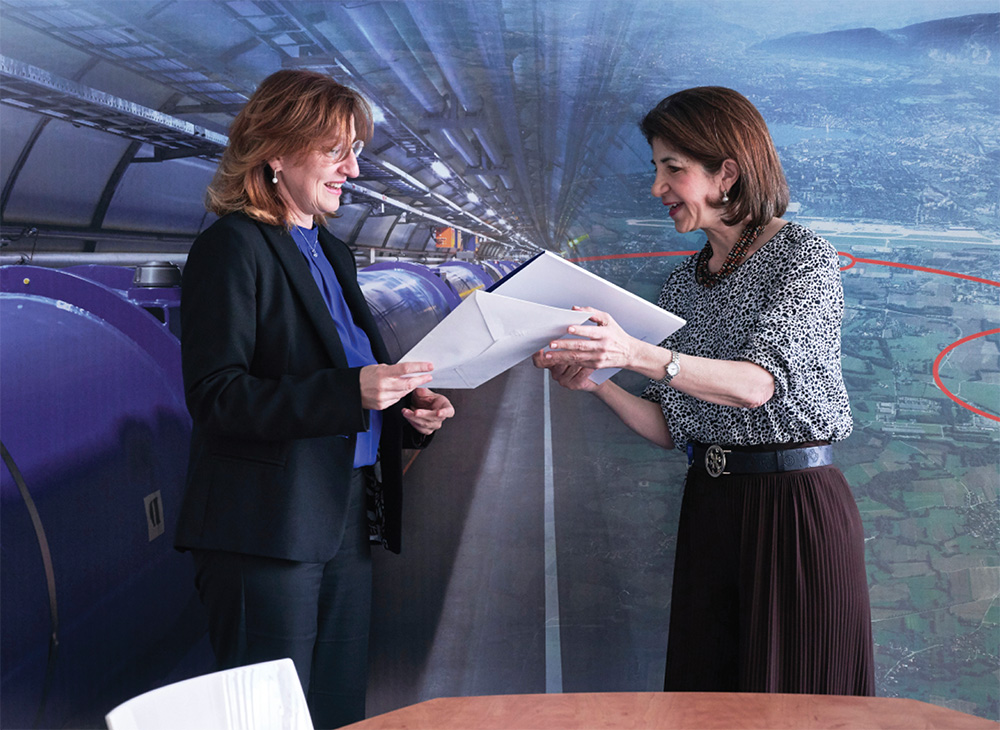
The first joint meeting of the European Committee for Future Accelerators (ECFA), the Nuclear Physics European Collaboration Committee (NuPECC), and the Astroparticle Physics European Consortium (APPEC) took place from 14 – 16 October in Orsay, France. Making progress in domains such as dark matter, neutrinos and gravitational waves increasingly requires interdisciplinary approaches to scientific and technological challenges, and the new Joint ECFA-NuPECC-APPEC Seminar (JENAS) events are designed to reinforce links between astroparticle, nuclear and particle physicists.
Jointly organised by LAL-Orsay, IPN-Orsay, CSNSM-Orsay, IRFU-Saclay and LPNHE-Paris, the inaugural JENAS meeting saw 230 junior and senior members of the three communities discuss overlapping interests. Readout electronics, silicon photomultipliers, big-data computing and artificial intelligence were just a handful of the topics discussed. For example, the technological evolution of silicon photomultipliers, which are capable of measuring single-photon light signals and can operate at low voltage and in magnetic fields, will be key both for novel calorimeters and timing detectors at the high-luminosity LHC. They will also be used in the Cherenkov Telescope Array – an observatory of more than 100 telescopes which will be installed at La Palma in the northern hemisphere, and in the Atacama Desert in the southern hemisphere, becoming the world’s most powerful instrument for ground-based gamma-ray astronomy.
As chairs of the three consortia, we issued a call for novel expressions of interest
Organisational synergies related to education, outreach, open science, open software and careers are also readily identified, and a diversity charter was launched by the three consortia, whereby statistics on relevant parameters will be collected at each conference and workshop in the three subfields. This will allow the communities to verify how well we embrace diversity.
As chairs of the three consortia, we issued a call for novel expressions of interest to tackle common challenges in subjects as diverse as computing and the search for dark matter. Members of the high-energy physics and related communities can submit their ideas, in particular those concerning synergies in technology, physics, organisation and applications. APPEC, ECFA and NuPECC will discuss and propose actions in advance of the next JENAS event in 2021.
To provide the best experiences, we use technologies like cookies to store and/or access device information. Consenting to these technologies will allow us to process data such as browsing behavior or unique IDs on this site. Not consenting or withdrawing consent, may adversely affect certain features and functions.
Functional
Always active
The technical storage or access is strictly necessary for the legitimate purpose of enabling the use of a specific service explicitly requested by the subscriber or user, or for the sole purpose of carrying out the transmission of a communication over an electronic communications network.
Preferences
The technical storage or access is necessary for the legitimate purpose of storing preferences that are not requested by the subscriber or user.
Statistics
The technical storage or access that is used exclusively for statistical purposes.The technical storage or access that is used exclusively for anonymous statistical purposes. Without a subpoena, voluntary compliance on the part of your Internet Service Provider, or additional records from a third party, information stored or retrieved for this purpose alone cannot usually be used to identify you.
Marketing
The technical storage or access is required to create user profiles to send advertising, or to track the user on a website or across several websites for similar marketing purposes.